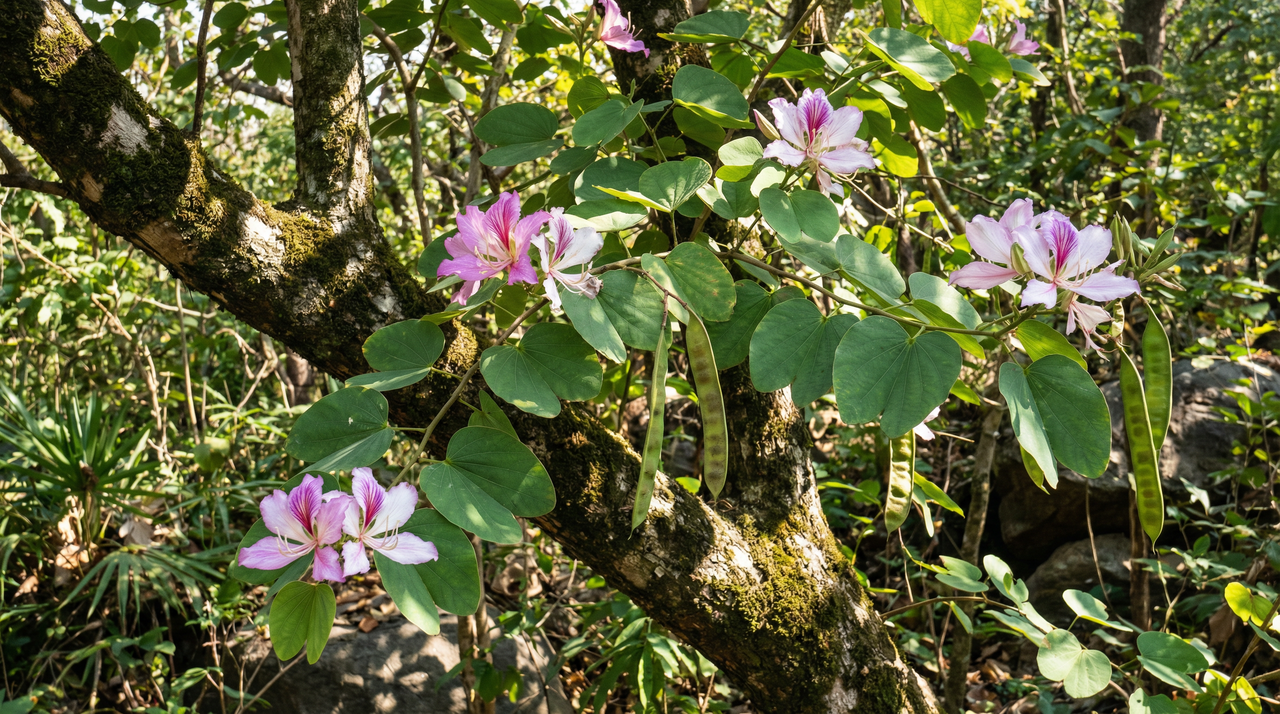
Nobody warned me that an orchid tree isn't an orchid. I planted my first Bauhinia variegata expecting something fussy and tropical-fragile, the way the name suggests, and instead got a scrappy, drought-shrugging legume that fixed nitrogen into my clay-heavy Central Florida soil while putting on a late-winter bloom show so extravagant that neighbors slowed their cars to look. The flowers genuinely do resemble orchids, big and ruffled and arriving in colors that range from pale lilac to deep magenta, but the tree underneath them is closer in spirit to a tough pioneer species that has been quietly rebuilding degraded forest edges across South Asia for centuries.
Those distinctive bilobed leaves, the ones that look like a butterfly mid-flight or a cow's hoof depending on your mood, carried enough symbolic weight in Hindu tradition to earn the tree a place in ancient Ayurvedic texts as Kovidara, while the very same leaves and bark were being boiled for wound treatments and inflammation in households across the subcontinent.[1] Sacred grove specimen and village medicine cabinet, ornamental showpiece and functional nitrogen-fixer: this tree has always been doing more than one thing at once, and that's exactly what makes it worth growing.
Origin and History of the Orchid Tree (Bauhinia variegata)
Botanical Background and Native Range
The orchid tree has deep roots in the tropical dry forests of South and Southeast Asia, native to a sweep of terrain that runs from India, Nepal, Pakistan, and Bangladesh through Myanmar, Thailand, Vietnam, southern China, and into Malaysia.[2][3] As a member of the Fabaceae family, Bauhinia variegata fixes nitrogen through symbiotic rhizobia and grows as a deciduous tree or large shrub, typically reaching 6 to 12 meters with a broad, spreading canopy.[4][5] I've seen the root nodules on young transplants, and they're just as robust as on other legumes I grow in food forests; this is a tree genuinely earning its keep in the soil while it dazzles overhead.
In cultivation, expect a lifespan of 20 to 50 years, with polycarpic plants flowering and setting seed repeatedly across that span.[6] Grown from seed under good subtropical conditions, it reaches first bloom in 2 to 4 years; wild populations may wait 5 to 8 years.[7] The species behaves as a pioneer, favoring moderate to high canopy openness and colonizing disturbed edges before longer-lived forest trees close the gaps.[8] In zone 9b, mild winters can push it toward semi-evergreen behavior; true dormancy kicks in with a chill. Globally, the species is listed as Least Concern by the IUCN, though overharvesting for medicinal bark and leaves is putting real pressure on wild populations, and cultivation is the recommended path to reducing that strain.[9]
Visual Characteristics of the Orchid Tree
What stops people in their tracks is the flower. Each bloom is 5 to 8 cm across with five petals in a loosely bilabiate arrangement, fragrant, and ranging from white to pink, mauve, and deep purple, frequently bicolored or softly variegated.[4] They appear in short racemes at the branch tips in late winter to early spring, often before a single leaf has unfurled, which gives the whole tree a startling, almost theatrical quality in February and March.[4][10] The resemblance to orchid flowers is close enough to be genuinely confusing to newcomers, and it's the honest source of the common name.
The leaves are equally distinctive: simple, alternate, and deeply bilobed into a butterfly or camel's-foot shape, typically 3 to 6 cm long.[4] The first time I germinated orchid tree seeds, the seedlings' miniature bilobed leaves looked so much like small butterfly wings that I had to label the tray carefully to avoid mixing them up with other Fabaceae I was starting at the same time. Once you've seen that shape, you'll never mistake it for anything else in the landscape. After leaf drop, the tree produces flat, leathery legume pods, 10 to 30 cm long, that rattle when ripe and can disperse via wind or animals; the hard-coated seeds inside need scarification before they'll germinate reliably.[11][12]
The genus offers some close relatives worth knowing. Bauhinia purpurea, the Purple Orchid Tree, shares the bilobed leaves but typically carries deeper purple flowers and has become invasive in Florida, Hawaii, and parts of Australia.[13] Bauhinia longiracemosa, Mountain Ebony, has noticeably larger leaves (7.6 to 15.2 cm) and pink-magenta blooms on pendulous racemes.[14] And Bauhinia × blakeana, Hong Kong's floral emblem, is a sterile hybrid distinct from B. isopetala, which bears white flowers and rusty-red hairs on young shoots.[15]
Traditional and Cultural Uses Across South Asia
The bilobed leaf has meant something to people for a very long time. In Hindu tradition, the butterfly shape symbolizes duality and balance, and the tree has earned a place in temple plantings, festival decorations for Holi and Diwali, and ritual ceremonies across India and China.[16][17] The large leaves are used as eco-friendly plates called pattal at weddings and feasts, a practical application that feels perfectly suited to a tree this generous in its growth.
The earliest written records reach back to Ayurvedic texts: the Sushruta Samhita (circa 600 BCE) and Charaka Samhita (circa 300 BCE) both document it under names including 'Rakta Kanchan' and 'Kovidara,' and it appears again in the 16th-century Chinese Bencao Gangmu.[18][19] Across that long span of use, bark, leaves, flowers, and roots have been applied to treat diarrhea, dysentery, skin conditions, wounds, respiratory ailments, and diabetes, with modern pharmacological research now offering preliminary support for antioxidant, anti-inflammatory, and anti-diabetic properties.[20][21] Among Adivasi communities, the tree also figures in rituals for prosperity, protection, and fertility, a cultural weight that runs parallel to its medicinal reputation.[22]
If you're growing orchid tree and plan to harvest bark or leaves for tea, please grow your own. Sustainable cultivation isn't just good ethics; it keeps these culturally important species healthy in the wild at a time when overharvesting is already straining wild populations.[9]
Interesting Facts About Bauhinia variegata
Beyond the flowers and the folklore, the orchid tree is quietly doing ecological work that makes it genuinely useful rather than merely ornamental. Its symbiotic nitrogen fixation, deep roots for erosion control, and pioneer-species behavior in open habitats all point to a tree that rebuilds degraded ground while it beautifies it.[5][4] Frost sensitivity is the one real limitation, keeping it firmly in subtropical and tropical gardens.
The common name itself traces directly back to those orchid-like flowers and the unmistakable camel's-foot leaves, though confusion with B. purpurea is common enough that it's worth noting the differences.[23] Having observed both species in Central Florida landscapes, I find the flower color and non-invasive behavior of B. variegata make it the more straightforward choice for most permaculture gardens, even when the two look nearly identical from a distance. The butterfly leaf shape that inspired centuries of ritual symbolism is also the same leaf that tells you, once you know it, exactly which tree you're standing under. That kind of legibility in a plant always earns my respect.
Orchid Tree Varieties and Where to Buy Them
Notable Cultivars of Bauhinia variegata and Related Species
Bauhinia variegata gives us two distinct botanical starting points: var. variegata, the familiar purple-pink form, and var. candida, which flowers in clean white. From those two, horticulturists have developed a surprisingly wide palette. The cultivars you're most likely to encounter are 'Alba' and 'Candidula' (both white-flowered), 'Rosea' (soft pink), 'Profusion' (compact habit with reliably heavy bloom), and 'Compacta', which tops out around 10 to 13 feet instead of the usual 20 to 30.[7][24] After specifying Orchid Trees for client gardens across Central Florida, I can tell you that 'Profusion' and 'Compacta' flower more reliably in their first two seasons than seedling-grown standard forms. When a client has a smaller yard and needs something that blooms fast and stays tidy, those are my go-to recommendations.
White-flowered selections like 'Candida' also tend to hold their foliage better through the heavy humidity of subtropical summers, showing moderate tolerance to powdery mildew and Cercospora leaf spot compared to the standard purple types.[25][26] That's a firsthand observation I've made repeatedly, and it's worth factoring into your cultivar choice if you garden where summer rain is relentless.
Bauhinia purpurea has no recognized botanical varieties at all, yet its cultivar names will feel familiar: 'Alba', 'Rosea', 'Variegata'. The same words, different plants.[27][28] The overlapping nomenclature across the genus is genuinely confusing and another reason to buy from nurseries that can tell you exactly what they're selling. The Hong Kong orchid tree, Bauhinia blakeana, sits in its own category entirely: a sterile hybrid that cannot set seed and must be propagated vegetatively, so there are no natural varieties and the plant you buy is a clone.[29][30]
Sourcing Orchid Trees in the United States
For the purple orchid tree and its cultivars, sourcing is straightforward if you shop seasonally. Logee's Greenhouses, Rare Palm Seeds, and FastGrowingTrees.com all carry B. variegata with the best selection in spring and summer.[31][32] Seed packets run $5 to $15, small saplings $20 to $50, mid-size trees $100 to $300, and larger specimens can reach $500 to $1,000 or more.[33][34] Before you spend anything, check your county's invasive plant list. B. variegata is a Category I invasive in Florida, meaning it's prohibited from sale or planting there.[35] I no longer recommend the straight species in most Florida gardens for exactly this reason; I steer clients toward compact cultivars or sterile alternatives instead. Hawaii and California also have monitoring or regulatory frameworks in place, though neither has enacted a blanket prohibition.[36]
If you're sourcing from overseas vendors, live plants and seeds require a USDA APHIS phytosanitary permit and must clear quarantine standards on arrival.[37] Buying domestic is simply easier. For the purple orchid tree (B. purpurea) and rarer relatives, expect to hunt: specialty nurseries like Plant Delights or Moon Valley carry them occasionally, usually as seeds or small plants in the $5 to $50 range.[38] I've received plants labeled B. isopetala more than once that turned out to be B. blakeana once they flowered.[39][40] Ask for provenance before you buy anything outside the mainstream supply chain.
Orchid Tree Propagation and Planting (Bauhinia variegata)
Before you can grow an orchid tree successfully, it helps to understand what you're actually working with at the seed level. I've found that growers who skip this step end up frustrated when their germination rates are dismal or their seedlings are all over the place.
Seed Morphology, Storage, and Scarification
Orchid tree seeds are flat, oblong, and small, roughly 1 to 1.5 cm long and only 1 to 2 mm thick, with a smooth brown surface and a small elliptical hilum on the ventral side.[41][42] They arrive in flat linear pods, 10 to 20 cm long, holding 5 to 10 seeds each, and those pods open by explosive dehiscence, which means if you're not watching, they'll scatter seed across the garden before you have a chance to collect them.[41] What makes Bauhinia variegata a bit unusual within the genus is its polyembryony, producing both zygotic and nucellar embryos alongside facultative apomixis, which gives seed-grown batches higher-than-expected uniformity despite the outcrossing habits of the flowers.[43]
The seeds are orthodox, meaning they tolerate drying down to 5 to 10% moisture content and can be stored at 4 to 5°C for years, or at -18°C for long-term gene-bank conditions. They must be stored in airtight, light-proof containers with desiccant.[44][45] Viability holds for 5 to 10 years under those conditions, though at ambient tropical temperatures you're looking at 12 to 18 months before germination rates start dropping noticeably.[44] I keep a small jar of scarified seed in my refrigerator through the winter and test viability each spring with a paper towel germination check before committing to a full tray.
Scarification is non-negotiable. The seed coat is physically impermeable, and untreated seeds simply sit there. A hot water soak at 80 to 90°C for 24 hours is the most reliable low-tech method, though nicking with a file near the hilum or mechanical abrasion works equally well.[11][46] Properly treated seeds hit 70 to 90% germination rates at 25 to 30°C.[11] Even with those rates, seedlings will still vary in flower color and leaf morphology due to genetic outcrossing, which is why I label every row in my seed trays.[47] First-season seedlings can look surprisingly different from one another in leaf shape and vigor, and that variability only becomes obvious once you're standing over several dozen of them.
Germination Timeline and Conditions
After scarification, expect germination in 10 to 30 days in a well-draining medium at 25 to 30°C with consistent moisture and indirect light.[48][49] In a warm propagator during a Central Florida summer I've seen the first radicles at 10 days, but cooler nights can stretch that to the full four weeks, so don't give up early. Once true leaves appear and seedlings are a few inches tall, they're ready to move into prepared ground.
The harder truth is about time to maturity. Seed-grown orchid trees take 5 to 10 years to reach reproductive maturity at a growth rate of roughly 1 to 2 feet per year.[50][51] That's a long wait for something you planted from a seed with uncertain flower color.
Vegetative Propagation Techniques
For anyone who wants a specific flower color or faster results, vegetative methods are the clear choice. I now graft almost exclusively when a client wants reliable bloom color within a reasonable timeline. Grafting using whip-and-tongue, cleft, or veneer techniques on compatible rootstocks like B. purpurea or B. monandra yields 50 to 85% success and can put pods on the tree in just 2 to 4 years versus the decade-long wait from seed.[52][51]
Semi-hardwood cuttings taken in late spring or summer, 10 to 15 cm with 2 to 3 nodes and treated with IBA at 1,000 to 5,000 ppm, root at 40 to 70% success in 4 to 8 weeks under high humidity and 24 to 30°C.[53] Softwood cuttings root faster but rot more readily, which is a real problem in humid subtropical summers. Air layering is my preferred vegetative method for home gardeners who aren't ready to attempt grafting: girdle a mature branch, apply IBA, wrap with moist sphagnum, and expect 70 to 90% success with roots forming in 6 to 12 weeks.[54] I time it for early summer here in Florida, when ambient humidity reduces the need for any supplemental misting. Commercial producers use tissue culture on MS medium with BAP and NAA for disease-free stock at scale, but that's firmly out of reach for the home grower.[55]
Soil, Site Selection, and Planting Requirements
Once your seedlings or cuttings have rooted, site selection determines whether any of this effort pays off. Orchid tree thrives in full sun, at least 6 hours daily, in well-drained fertile loam or sandy loam with a pH of 6.0 to 7.5 and 2 to 5% organic matter.[50][4] It tolerates poor, rocky, sandy, and mildly saline coastal soils, which makes it more forgiving than many ornamentals I work with in Florida, but it is genuinely intolerant of waterlogging.[50] Root rot sets in fast during rainy season if drainage is poor, and I've seen newly planted trees decline within a single summer in compacted, water-holding sites. In that way it's less forgiving than jacaranda, which will push through moderately wet spells, and more similar to citrus: beautiful until the roots drown.
The deep taproot, which can reach 1.5 to 3 meters at maturity, is what gives established trees their drought tolerance and moderate compaction resistance, but that toughness only develops once the tree is properly settled in.[40] For containers, a mix weighted toward drainage works well: roughly 40% loam, 30% sand or perlite, 20% compost, and 10% pine bark.[7]
Spacing, Technique, and Establishment
Mature orchid trees reach 20 to 40 feet tall with a spread of 15 to 30 feet, so spacing decisions made at planting determine how much corrective pruning you'll need later.[56] The standard recommendation is 18 to 25 feet between specimens, or 25 to 30 feet in rows, with at least 15 feet of clearance from structures.[57][58] Grown as a multi-trunk shrub, you can reduce spacing to 8 to 10 feet, which works well along a property edge or informal screen. At 1 to 2 feet of growth per year, the tree is not going to fill its allocated space overnight, but crowding in older landscapes is the most common management headache I see, and heavy pruning to compensate reduces the flowering display significantly.[50]
Plant in spring after frost risk has passed, backfill with amended soil, stake young trees against wind until the taproot anchors them, and tip-prune the first season to encourage branching. Get the spacing and drainage right from the start and you'll have very little to manage from there.
Orchid Tree Care Guide
Getting orchid tree care right is mostly about site selection. Put this tree in the right spot and it will reward you with minimal fuss. Put it in the wrong spot and you'll spend years wondering why it's all leaves and no flowers.
Sunlight Requirements for Orchid Tree
Full sun is non-negotiable. Bauhinia variegata needs at least six hours of direct light daily to flower well and maintain a compact, well-branched form.[6][59][60] I've watched clients try to squeeze orchid trees into partially shaded spots and the result is always the same thing I see with poorly sited hibiscus: tall, leggy stems, sparse foliage, and maybe three flowers where there should be thirty. It stretches for light instead of putting energy into bloom.
That said, in my Central Florida gardens, unrelenting afternoon summer sun can push trees into leaf scorch territory, with margins browning and leaves bleaching out during July and August.[61][62] If you're in a reliably hot climate, afternoon shade or 30-50% shade cloth during peak summer heat prevents damage without sacrificing bloom density. The goal is morning sun and a bit of mercy in the afternoon, not shade.
Watering Needs and Drought Tolerance
The first two years are when you earn the drought tolerance an established orchid tree delivers. During establishment, water deeply two to three times per week, letting the top inch or two dry between sessions.[63][4] In my experience, the trees that got consistent deep irrigation through their first two summers bloomed earliest and grew fastest. Skip that investment and established drought tolerance arrives, but so does a smaller, slower-to-flower tree.
Once established, back off to roughly one inch per week during the growing season and let the deep roots do their job.[64] Overwatering is the more common mistake: root rot, yellowing, wilting, and leaf drop are the signals.[65] Keep two to four inches of organic mulch over the root zone, pulled a few inches back from the trunk, to hold moisture and buffer soil temperature without inviting fungal problems.[4]
Soil, Fertilization, and Nutrient Management
Because Bauhinia variegata is a legume, it fixes atmospheric nitrogen through root nodule symbiosis with Rhizobium bacteria, which means high-nitrogen fertilizers are counterproductive.[66] I tell every client the same thing: if you feed this tree like a lawn, you'll get lawn-like growth and almost no flowers. It thrives in well-drained loamy or sandy soils with a pH between 6.0 and 7.5.[66]
A balanced slow-release fertilizer like 10-10-10, applied at one to two pounds per inch of trunk diameter and split across early spring and midsummer applications, is usually sufficient for established trees.[4][67] Young trees benefit from more frequent feeding at half strength every four to eight weeks during the growing season.[40] Compost and well-aged manure work beautifully as organic alternatives. Always water deeply after applying any fertilizer.
Soil testing before planting saves a lot of trouble later. On alkaline soils above pH 7.5, iron deficiency shows up fast as interveinal chlorosis on young leaves.[68][69] I planted a young tree in a client's alkaline Central Florida bed and saw chlorosis within three weeks; chelated iron foliar sprays resolved it in about two weeks. Nitrogen deficiency reads as uniform yellowing on older leaves; magnesium deficiency causes similar interveinal chlorosis but on older leaves rather than new growth.[70] If you're seeing tip necrosis or marginal leaf burn, the more likely culprit is salt accumulation; flush the soil and hold fertilizer until it clears.[62]
Heat and Frost Tolerance
Native to tropical and subtropical South and Southeast Asia, Bauhinia variegata handles genuine heat well, tolerating daytime highs up to 40-45°C (104-113°F) in USDA zones 9-11 when water isn't limiting.[71][72] Optimal growth happens in the 21-32°C (70-90°F) range, and the tree manages through stomatal regulation, strategic leaf shedding, and deep root access to soil moisture. What does threaten it is heat combined with drought: above 35-40°C without adequate irrigation, photosynthesis drops, flowers can abort prematurely, and seedlings are genuinely at risk.[73][74] Mulching, consistent deep watering through summer, and wind barriers on exposed sites cover most of the risk.
Frost Tolerance and Cold Protection
Established orchid trees can take brief dips to around 20°F (-7°C) with minor damage and rebound in spring.[75][7] Young plants and tender new growth are a different story; damage risk climbs quickly below 28°F (-2°C), and prolonged exposure in the 25-30°F range can cause significant dieback.[76][52] I had a young container specimen survive a 24°F night in my garden with nothing but a frost blanket and trunk wrap; it showed tip dieback by morning, but the roots were fine and it pushed new growth within weeks. That experience taught me that microclimate selection matters as much as any protection method.
For in-ground trees in marginal zones, mound three to six inches of mulch over the root zone before cold snaps, protect with frost cloth, and favor sheltered southern exposures away from frost pockets.[77][78] Container culture remains the most practical solution for anyone in zone 8 or below, bringing pots indoors or into a protected garage when hard freezes threaten. After cold damage, wait until late winter or early spring to assess and prune; the roots almost always have more resilience than the canopy suggests.[7]
Pruning, Maintenance, and Seasonal Rhythm
Bauhinia variegata is deciduous to semi-evergreen, dropping leaves during the dry or cooler months (typically November through February) and then flowering on bare branches before the new leaf flush arrives with the onset of rains, usually February through May.[79][80] That bare-branch flowering window is your cue for everything: prune right after bloom finishes, fertilize as growth resumes, and ease up on irrigation through the leaf-drop period.
Pruning after flowering removes dead, crossing, or diseased branches and shapes the canopy without robbing next season's bloom.[4][81] I never remove more than 25% of the canopy in a single session; heavier cuts on my trees have consistently produced vigorous but weakly branched regrowth that flowers poorly the following year. Use sharp, clean tools and cut just above a bud. Deadheading spent flowers can extend bloom slightly. Beyond that, an established tree needs little beyond annual spring fertilization, post-flower pruning, and fresh mulch.[82][83] Good airflow and sanitation around the base reduce fungal pressure without additional intervention.[84] Watching that February bloom arrive in my garden every year is the signal I use to schedule all the season's tasks; it's a reliable clock once you know what to look for.
Harvesting Orchid Tree (Bauhinia variegata): Flowers, Pods, and Leaves
Patience is the first skill this tree teaches. I've grown Bauhinia variegata from both seed and grafted stock, and the difference in wait time is significant: my grafted trees were putting out their first reliable bloom flush by year three, while most of my seedlings didn't hit that same extravagant display until year five in my Central Florida garden.[50][40] Once flowering begins, you're looking at another four to six months before the orchid tree seed pods mature enough to harvest, turning from green to a dry, dark brown and beginning to crack along the seam.[3] In subtropical climates, that puts pod collection solidly in late summer through fall.[85] Related species like Bauhinia purpurea follow a nearly identical timeline, with Bauhinia seed pods ready roughly June through September in Florida.[86]
When and How to Harvest Orchid Tree Flowers and Pods
The bloom window runs late winter through early summer, which is your primary opportunity for flower harvest.[87] I learned early on that waiting for fully open flowers costs you. The first time I harvested for the kitchen I let them open completely and lost noticeable vase life and freshness. Now I pick in the early morning before 10 AM, targeting buds that are showing color but haven't unfurled yet.[81] For the pods, I watch for that specific shade of matte brown where they go papery and brittle. Don't wait for them to split fully on the tree, or you'll be hunting seeds off the ground. Collect them just as they begin to crack, then spread them in a single layer somewhere shaded and airy for one to two weeks until they're completely dry before breaking them open.[85]
Harvest Techniques, Post-Harvest Handling, and Sustainable Practices
For flowers destined for a vase rather than a pan, put stems in water immediately after cutting and keep them at cool temperatures to get the most out of them.[88] For edible buds from related species like B. longiracemosa, the target is a plump, closed bud about two to four centimeters long, pinched off while still green to slightly pinkish.[89]
My personal rule is to never take more than a quarter of the season's blooms from any tree. The 20 to 30 percent sustainable harvest threshold isn't arbitrary;[90] I've watched even light over-harvesting visibly reduce the next year's flush on younger specimens. When I'm pruning for flowers or cuttings, I cut just above a leaf node and move on.[91]
Edible Parts and Flavor Profile of Orchid Tree
A mature orchid tree can produce thousands of flowers in a peak season, so you won't run short on material to experiment with.[92] The flowers of B. variegata are mild and slightly sweet with soft floral notes, a faint honey-citrus fragrance, and occasionally a mild bitter edge at the finish.[3] Young pods are crispier and nuttier, honestly reminiscent of green beans or young fava pods to me, which makes sense given the family. Young leaves cooked down develop a spinach-like texture with a tangy, slightly bitter character.[3] The related species add their own range: B. purpurea flowers lean tamarind-sweet with a honey aroma, while B. longiracemosa buds carry almond or vanilla undertones.[93][89]
One firm rule: harvest only the young, tender parts. Mature leaves and pods rapidly turn fibrous and bitter.[94] I always confirm species before tasting anything from this genus, especially since B. isopetala has very limited edibility data and the young leaves of nearby Bauhinia species can look deceptively similar when growing side by side. I label my rows for exactly this reason.
Orchid Tree Preparation and Uses
The governing rule with Bauhinia variegata in the kitchen is simple but non-negotiable: only young, tender tissues at specific growth stages belong on your plate.[95][96] Mature tissues carry tannins, saponins, alkaloids, lectins, and cyanogenic glycosides in concentrations that cause real digestive distress, and no amount of enthusiasm for foraging justifies skipping that detail. Once you know which window to harvest from, though, this tree rewards you generously.
Edible Parts and Culinary Preparation
Flowers are the safest starting point, and they're the part I reach for first. Harvest them fully open but before they wilt, and you have a mild, sweet floral ingredient that works raw in salads, battered into fritters, stirred into curries, or tucked into pickles.[95][97] The classic North Indian preparation, kachnar ki sabzi, uses them with lentils in a way that's become a touchstone recipe across the tree's native range.[98] One thing I've noticed from preparing multiple batches: freshly opened flowers have a crisp, almost pea-like snap when raw, but they turn slightly mucilaginous if you overcook them, so pull them off the heat early.
Young pods come next in the hierarchy, with a narrow window that I've learned to take seriously. In warm subtropical weather, the transition from tender to fibrous happens in just a few days, so I mark my trees at the start of pod set and check them every couple of days. Once pods exceed about 5 cm and the wall starts hardening, they're past their eating window; mature pods can carry higher alkaloid concentrations and are genuinely tough to digest.[95][99] Slice the young ones and boil or steam them for 15 to 20 minutes, discarding the cooking water to leach bitter compounds, then use them in curries or with lentils.[98]
Young leaves from the first tender flush after leaf shed are edible too, but they require boiling for several minutes with salt and lemon juice to cut the bitterness and reduce anti-nutritional compounds.[95][96] I once skipped the blanching step on a quick vinegar pickle and found the residual bitterness genuinely unpleasant. Lesson learned: always pre-boil, always discard the first water. Raw consumption of young pods or leaves risks mild nausea from protease inhibitors, so thorough cooking is not optional.[100][96] Mature seeds, bark, and roots are best left entirely to traditional medicine practitioners; their alkaloid and cyanogenic glycoside loads require processing that goes well beyond home kitchen methods.[98][96]
These patterns hold across related species in the genus. B. purpurea pods cook up like green beans after boiling or stir-frying, and its flowers carry a slightly sweet-tangy bite that's more pronounced than the milder B. variegata blossom.[101][102] B. longiracemosa buds and flowers follow the same boil-then-use sequence before going into pakoras, raitas, or spiced brine pickles.[103] Where data exists for B. isopetala, the young pods apparently have a cucumber-like crispness that turns mucilaginous when cooked, though I'd treat those notes cautiously since they're largely extrapolated from related taxa rather than rigorously documented.[104] Across the whole genus, the shared principle is the same: thorough cooking, first water discarded, local guidance consulted.
Medicinal Preparations
Traditional Ayurvedic, Thai, and Chinese systems have long used B. variegata in preparations that are quite distinct from its culinary applications, and it's worth keeping those categories clearly separate. Bark decoctions are the most documented form: roughly 10 to 20 g of dried bark or leaves boiled in 200 to 400 ml of water, reduced to about 100 ml, and taken once or twice daily as an astringent for inflammation and wound care.[105][106] Bark powder in the 3 to 6 g range taken with water or honey is another documented preparation, and flowers have been used in teas valued for their antioxidant properties.[107] The phytochemical rationale behind these uses is covered in the health benefits section of this profile. What I always emphasize to anyone interested in these preparations is that they belong in the hands of qualified practitioners. A bark decoction prepared at home without proper guidance is not a substitute for professional medical care, full stop.
Non-Food Traditional Uses
Beyond the kitchen and the medicine cabinet, the orchid tree has supplied raw materials across its range for a long time. Bark has been used for tanning and dyeing leather; young leaves and flowers are documented livestock fodder, which aligns neatly with how I think about this tree in a food forest context where animals cycle through grazing areas beneath the canopy.[3][108] Related species extend the picture further: Mountain Ebony produces durable timber valued for construction and tools, and B. purpurea seeds yield an oil applied both medicinally and topically for skin conditions.[109][110] These uses reinforce what makes the orchid tree a genuinely multi-functional addition to a permaculture system, though as always, proper species identification and sustainable harvesting practices come first.
Orchid Tree Health Benefits and Medicinal Uses
Growing Bauhinia variegata in Central Florida for as long as I have, you start to see this tree as more than an ornamental showstopper. The traditional healers of South Asia, Southeast Asia, and China figured out centuries ago what researchers are now beginning to quantify: this is a pharmacologically rich plant, and almost every part of it carries some kind of biological activity. The same compounds that help the tree defend itself against herbivores and pathogens are the ones driving its medicinal reputation.
Key Phytochemicals in Orchid Tree
The compound palette in Bauhinia variegata is impressively broad. Leaves and bark contain flavonoids including quercetin, kaempferol, rutin, and myricetin derivatives, alongside phenolic acids like gallic acid, ellagic acid, and ferulic acid, plus tannins, saponins, glycosides, and triterpenoids like lupeol.[111][112][113] Where you harvest from matters, though. Leaves skew toward flavonoids and phenolics, bark runs high in tannins and steroids, flowers bring anthocyanins and glycosides, and roots hold the alkaloid fraction.[114][115]
Here's something I've observed that the research actually supports: plants grown in drier conditions or more alkaline soils tend to produce tissues with higher phenolic concentrations, and mature plants in those conditions can show 20 to 30% higher phenolics and elevated flavonoids compared to plants in wetter, more neutral soils.[116][117] I've also noticed that flowers harvested during hotter, more stressful summer months in Florida seem more fragrant and intensely colored, which tracks with the idea that environmental stress upregulates secondary metabolite production. All of these compounds together drive the antioxidant, anti-inflammatory, antimicrobial, and antidiabetic activities the plant is known for.[118][119]
Medicinal Research and Traditional Uses of Orchid Tree
Traditional practitioners got here first. Ayurvedic medicine has long used bark decoctions for diarrhea, dysentery, and piles, while leaf poultices address wounds, ulcers, and skin conditions like eczema; flowers were prescribed for menstrual irregularities and leucorrhea. Thai traditional medicine reaches for this plant for diarrhea, skin infections, and pain relief, and Traditional Chinese Medicine employs the bark and seeds for liver and kidney disorders and inflammation.[120][121][122][123] That convergence across independent healing traditions is, to me, always a signal worth paying attention to.
The preclinical science is doing a reasonable job of explaining why. Leaf and bark extracts suppress inflammation through COX-2 inhibition and NF-κB pathway interference, reducing pro-inflammatory cytokines like TNF-α, IL-1β, and IL-6; in rodent paw-edema models, some extracts achieved 40 to 60% reduction in swelling, comparable to aspirin in certain study designs.[117][124] That same anti-inflammatory activity likely underpins the wound-healing effects seen in animal models, where extracts accelerated epithelialization, boosted collagen synthesis, and reduced microbial load, exactly what you'd want from a traditional poultice plant, similar in principle to comfrey or plantain in Western herbalism.[125][105]
Antimicrobial activity has been demonstrated against Staphylococcus aureus, E. coli, Pseudomonas aeruginosa, and Candida albicans, with minimum inhibitory concentrations in the 125 to 500 μg/mL range and mechanisms including cell-membrane disruption and efflux-pump inhibition.[126][127] The antidiabetic research is where I find the human evidence most interesting: leaf extracts produce 25 to 35% blood glucose reductions in diabetic animal models through α-glucosidase and α-amylase inhibition and enhanced GLUT4 expression, and one small randomized controlled trial did show modest blood-glucose lowering in people with type 2 diabetes.[128][129] Antioxidant activity (DPPH IC50 in the 50 to 100 μg/mL range, with Nrf2 pathway activation) and some hepatoprotective signals round out the picture, while related species like B. longiracemosa show additional anticancer and apoptotic effects in cell-line studies.[130][131]
Virtually all of this data comes from in-vitro assays and animal models. That one small human diabetes trial is the only clinical study I'm aware of, and there are no large-scale RCTs or systematic reviews as of 2023.[132][133] The preclinical and traditional evidence is genuinely compelling, and I think it validates what generations of practitioners observed. But I always recommend working with a qualified practitioner rather than self-medicating with garden plants, however promising they look.
Nutritional Profile of Orchid Tree
The edible parts of Bauhinia variegata have a real place in Indian and Southeast Asian kitchens, showing up in curries, stir-fries, and salads. Fresh flowers provide roughly 3.5 g protein, 45 to 60 mg vitamin C, and 200 to 300 IU vitamin A per 100 g, along with modest fiber and around 45 to 50 calories.[134][135][136] Young leaves bring about 250 mg calcium and 4 to 6 mg iron per 100 g fresh weight, and when dried, the protein content climbs to an impressive 20 to 25%.[137][138] What I appreciate most is that the same flavonoids (quercetin, kaempferol, rutin) driving the medicinal research are present in these edible tissues too, so a light stir-fry of fresh flowers carries antioxidant value alongside the nutritional one.[139][140]
Seeds and young pods can supply 20 to 25 g protein and 30 to 40 g carbohydrates per 100 g dry weight, but they require proper preparation.[139] Tannins, phytates, oxalates, lectins, and Kunitz trypsin inhibitors are all present, and boiling, stir-frying, roasting, or fermentation reduces them substantially.[130][137] I tell clients to think of the lightly stir-fried flowers like tender young green beans: mildly sweet, slightly crisp, perfectly pleasant once heat has done its work. Related species like B. purpurea show comparable leaf protein at 15 to 20% dry weight with high calcium and vitamin C, though most of the precise quantitative data we have comes from B. variegata specifically.[141][142]
Safety Considerations for Orchid Tree
Bauhinia variegata has a reassuringly low toxicity profile for a plant with this much pharmacological activity. Acute toxicity studies show an LD50 above 2000 mg/kg in animal models with no significant genotoxicity detected, and there are no well-documented cases of severe human poisoning.[143][144] Flowers and young leaves, properly cooked, have been safely consumed across generations in traditional cuisines.
Raw mature seeds are a different matter. The lectins, Kunitz trypsin inhibitors, and other antinutritional compounds they contain can cause nausea, vomiting, and diarrhea; boiling, roasting, or fermentation brings those risks down significantly.[145][3] I advise clients never to eat raw mature seeds and always to cook leaves and flowers; that's both what traditional practice prescribes and what the antinutritional research supports.
For medicinal use, the cautions are more specific. The plant is contraindicated in pregnancy due to possible uterotonic or emmenagogue effects, and it may potentiate hypoglycemia if combined with antidiabetic medications or increase bleeding risk alongside anticoagulants. Pollen can trigger allergic responses in sensitive individuals.[146][147] For anyone managing a chronic condition or taking medication, this is a conversation to have with a healthcare provider before reaching for medicinal doses of any part of the tree.
Orchid Tree Pests and Diseases
For all its showy drama, Bauhinia variegata is not a high-maintenance patient. In my experience managing subtropical landscapes, established orchid trees shrug off most pest pressure with minimal fuss, especially once you understand what the tree is already doing to protect itself and where its genuine vulnerabilities lie.
Natural Defenses and Pest Resistance in Bauhinia variegata
The same phytochemical arsenal that makes this tree medicinally interesting also works against herbivores. Phenolics, tannins, flavonoids, alkaloids, saponins, and quercetin derivatives all function as feeding deterrents, growth inhibitors, or outright toxins to insects attempting to make a meal of it.[148][149] On top of the chemistry, the leaves themselves are physically tough, with pubescence on young growth and leathery, sclerophyllous texture at maturity that deters soft-bodied feeders.[150][151] The practical upshot is moderate resistance compared to many Fabaceae relatives, though "moderate" still means pest pressure peaks during warm, humid spring and summer conditions when population explosions are possible.[152][153]
Common Insect Pests and Damage Symptoms
The usual suspects include aphids, scale insects, mealybugs, spider mites, whiteflies, leaf miners, leaf beetles, caterpillars, and bruchid beetles.[154][25] Each leaves a recognizable signature: aphids cause leaf curl and distortion, and their honeydew deposits invite sooty mold that coats the foliage in a black film. That mold is more than cosmetic; it blocks photosynthesis and can noticeably suppress bloom production on trees that should be putting on a spectacular show. Leaf miners carve pale trails through the blade, caterpillars skeletonize whole sections, and spider mites leave characteristic stippling and fine webbing, especially on drought-stressed plants.[155][154] I've watched spider mite populations explode on trees that missed irrigation during a dry stretch, while nearby well-watered specimens stayed nearly clean, which tracks with the research on drought stress amplifying mite vulnerability.[50][153] Young trees need the closest monitoring; some Bauhinia species also produce extrafloral nectaries that attract predatory ants, giving them a built-in biological ally.[151] Sterile hybrids like Bauhinia blakeana consistently show lower pest pressure in my landscape projects, which makes them worth considering where ornamental value trumps seed production.
Disease Vulnerabilities and Management
Fungal diseases are the main concern. Cercospora leaf spot, powdery mildew, anthracnose, canker fungi, and Phytophthora root rot all show up in humid or poorly drained conditions.[156][154] Bacterial leaf blight and bacterial wilt occur but are genuinely uncommon, and viral infections are rare with no widely documented specific pathogens.[40][157] Purple orchid tree and related Bauhinia species share these same fungal vulnerabilities, though mature specimens and those in drier climates show noticeably better tolerance.[158][157] Early in my career I lost a young orchid tree to root rot in a heavy Florida clay bed that held water after every rain. I've planted every Bauhinia in raised beds or deeply amended soil ever since. Root rot rarely announces itself until the damage is done, and no amount of copper spray rescues a tree drowning at the roots. If orchid tree yellowing leaves appear alongside wilting in an otherwise well-watered tree, check drainage before anything else. Poor air circulation makes the foliar fungal issues worse, so pruning for an open canopy is part of disease prevention, not just aesthetics.
Integrated Pest and Disease Management for Orchid Trees
A solid IPM approach here starts with cultural controls: well-draining soil, appropriate spacing, pruning for airflow, drip irrigation instead of overhead watering, and prompt removal of fallen debris.[159][155] These practices amplify what the tree's own chemistry is already doing. For biological backup, ladybugs and parasitic wasps handle aphid and scale populations effectively when you're not disrupting them with broad-spectrum pesticides. I reach for neem oil and insecticidal soaps first in any garden I design; they knock back soft-bodied pests and mites without decimating the beneficial insect community or interfering with any ant-plant relationships the tree has cultivated.[155][160] Preventive copper or sulfur sprays can address fungal leaf spot and powdery mildew when conditions favor outbreaks, with systemic insecticides or stronger fungicides reserved for genuine severe infestations.[155][161] A healthy, properly sited orchid tree in good soil with decent airflow needs very little intervention. These are tough, beautiful trees, and most of the pest and disease drama I've seen over the years traces straight back to a siting or drainage mistake that was entirely preventable.
Orchid Tree in Permaculture Design
The orchid tree earns its place in a permaculture landscape on two counts: it is genuinely beautiful, and it genuinely works. Before you fall for the flowers, though, the first question to answer is whether your climate will support it.
Climate Adaptation and Hardiness Zones
Bauhinia variegata is native to tropical savanna, tropical monsoon, and humid subtropical climates, and in the United States it thrives in USDA zones 9 through 11, with the most reliable performance in central and southern Florida, southern Texas, coastal and southern California, southern Arizona, and Hawaii.[162][63][163][4] Growing several of these trees in Central Florida, I've watched them shrug off our brutal summers with ease. Heat above 100°F is no problem in humid conditions, and they genuinely prefer the full sun and warmth that wilts less heat-tolerant plants.[164][165][11] What I've also noticed is that specimens in full sun with excellent drainage flower far more prolifically than those in shadier or wetter spots, which matters a lot if you're counting on them for pollinator support.
Cold is where things get interesting. The orchid tree can shrug off a brief dip to 20-28°F, but prolonged freezes below 25°F bring real consequences: leaf drop, branch dieback, or outright death without protection.[36][166][6] In zones 10-11 it stays evergreen; in zone 9 it goes semi-deciduous to fully deciduous depending on how hard winter pushes. In marginal zone 8b, success depends almost entirely on microclimate: southern exposure, urban heat island, deep mulching, and windbreak shelter can tip the balance, but there are no guarantees.[4] I've overwintered young plants successfully in large containers moved to a sheltered patio during hard freezes, which is genuinely worth doing if you're on a climate edge and attached to a particular specimen. For soil, it adapts well from sea level up to about 1,500 meters, preferring well-drained loamy or sandy ground with a pH of 6.0-7.5 and tolerating poor, rocky, or calcareous soils; waterlogged roots are the one condition it won't forgive.[167][168]
Ecosystem Functions and Guild Roles
The functional heart of the orchid tree in permaculture is nitrogen fixation. As a Fabaceae legume, Bauhinia variegata forms symbiotic root nodules with rhizobia bacteria that can fix between 50 and 200 kg of nitrogen per hectare per year, steadily enriching the soil around it.[169][170] I routinely plant Bauhinia near young fruit trees in my designs, and after two to three seasons I consistently see improved vigor and deeper leaf color in the companions. That's not coincidence; it's the rhizobia working. Related species also accumulate potassium, phosphorus, and calcium dynamically, which makes the genus genuinely useful as a living soil amendment, not just a pretty canopy.[171]
Then there's the pollinator story, which is where this tree really earns admiration. Those large, nectar-rich flowers attract bees (the primary and most effective visitors), butterflies, moths, sunbirds, and in introduced ranges sometimes hummingbirds.[172][173] The flowers open in the early morning and remain receptive for two to three days, and the tree employs a sensitive keel mechanism with self-incompatibility that strongly favors outcrossing.[174] In my region, that early-morning nectar flow aligns almost perfectly with the honeybee foraging window, so by 7 a.m. a flowering orchid tree is already buzzing. Natural pollination success runs 70-80% with consistent insect visitors, and with hand pollination you can push that to around 90% in areas with lower native pollinator diversity.[175][176]
Beyond pollination, the tree does real landscape work. Its deciduous canopy drops abundant leaf litter that builds soil organic matter and drives nutrient cycling, while its root system stabilizes slopes and disturbed sites, cutting erosion by as much as 70%.[177][178] As a pioneer species it prepares conditions for more demanding plants, facilitating succession rather than competing with it. Related Bauhinia species demonstrate the genus's windbreak potential (reducing wind speed by 30-50%) and contribute biomass in the range of 5-10 tons per hectare per year from species like B. purpurea, useful for mulch or compost applications.[171]
Forest Layer Placement and Companion Planting
At maturity, Bauhinia variegata reaches 20-40 feet with a spreading vase-shaped crown, occasionally stretching toward 50 feet in ideal conditions.[179][180] That puts it squarely in the canopy or subcanopy layer of a food forest, where it functions as both a light-demanding pioneer and a nurse plant, providing filtered shade and habitat while its mycorrhizal associations and nitrogen fixation quietly improve conditions for everything planted beneath it.[181] In permaculture zone 2-3 it works particularly well as a living fence, windbreak, or framework tree for climbing plants, with good companions including agaves, hibiscus, lavender, palms, fruit trees, and most drought-tolerant edibles and ornamentals.[182][171]
The butterfly orchid tree isn't the only option within the genus for these roles. B. purpurea can reach similar heights (and occasionally up to 65 feet), giving it true canopy presence, while B. longiracemosa often stays more shrubby at 10-50 feet with greater shade tolerance, making it a better fit for subcanopy and understory edges. B. isopetala, at 5-33 feet, tends to slot into pioneer and open-site niches.[183][174][184] One hard lesson I've passed on to clients more than once: respect the eventual canopy spread when you're spacing your guild. A young orchid tree looks modest. Give it five years and a generous site, and smaller companions planted too close will find themselves outcompeted for light. Eighteen to twenty feet of clearance from low-growing guild members is not excessive. Plant intentionally, give everyone room, and the combination of beauty and ecological function the orchid tree promises will actually deliver.
The Tree That Made Me Slow Down
I planted my first Orchid Tree in a corner of the food forest mostly for the nitrogen fixation, if I'm honest. Then it bloomed for the first time in late February, those absurd pink-lavender flowers opening before a single leaf appeared, and I stood there in my muddy boots for longer than I'd like to admit. It's the tree that reminded me why I got into this work: not every plant has to justify itself on a spreadsheet.
Sources 184
- Bauhinia variegata: A Review on Phytochemistry and Pharmacological Activities ↩
- Bauhinia variegata - Kew Science Plants of the World Online ↩
- Bauhinia variegata - Useful Tropical Plants ↩
- Bauhinia variegata - Orchid Tree ↩
- Bauhinia variegata Profile ↩
- Bauhinia variegata - Orchid Tree ↩
- Orchid Tree (Bauhinia variegata) - Cultivation Guide ↩
- Ecological Characteristics of Bauhinia variegata in Tropical Forests ↩
- IUCN Red List: Bauhinia variegata ↩
- Bauhinia variegata ↩
- Bauhinia variegata - Kew Royal Botanic Gardens ↩
- Bauhinia variegata - Useful Tropical Plants Database ↩
- Invasive Species: Bauhinia purpurea ↩
- Bauhinia longiracemosa ↩
- Orchid Tree in Hong Kong ↩
- Sacred Trees of India: Cultural Significance ↩
- Symbolism of Trees in Hindu Mythology ↩
- Bauhinia variegata in Traditional Medicine ↩
- Bencao Gangmu: Compendium of Materia Medica ↩
- Ethnomedicinal uses and pharmacological activities of Bauhinia variegata L. ↩
- Bauhinia purpurea L. (Fabaceae): A Review of Its Ethnopharmacology, Phytochemistry and Pharmacology ↩
- Ritual Uses of Flora in Adivasi Communities ↩
- Differences between Bauhinia variegata and Bauhinia purpurea ↩
- Bauhinia variegata ↩
- Bauhinia variegata - Diseases and Pests ↩
- Diseases of Bauhinia Species ↩
- Missouri Botanical Garden Plant Finder ↩
- Cultivars of Bauhinia purpurea ↩
- Bauhinia × blakeana ↩
- Hong Kong Orchid Tree Cultivars ↩
- Logee's Greenhouses - Bauhinia variegata Product Page ↩
- Buy Orchid Tree - Bauhinia variegata ↩
- Bauhinia variegata Seeds for Sale ↩
- Bauhinia variegata (Orchid Tree) - Profile and Care ↩
- Florida Invasive Species List ↩
- Bauhinia variegata (Orchid Tree) ↩
- USDA APHIS - Plant Imports ↩
- Bauhinia purpurea - Orchid Tree ↩
- Bauhinia isopetala Seeds for Sale ↩
- Orchid Trees (Bauhinia spp.) ↩
- Flora of China - Bauhinia variegata ↩
- Legume Seeds: Bauhinia Species ↩
- Polyembryony and Apomixis in Bauhinia variegata (Leguminosae) ↩
- Seed Storage of Bauhinia variegata: Orthodox Behavior and Protocols ↩
- Longevity of Bauhinia Seeds in Gene Banks ↩
- Seed Germination Techniques for Fabaceae Species ↩
- Propagation of Bauhinia variegata ↩
- Seed Dormancy and Germination Protocols ↩
- Germination and Scarification Techniques for Bauhinia Species ↩
- Bauhinia variegata - Orchid Tree ↩
- Bauhinia variegata: Orchid Tree ↩
- Propagation of Ornamental Trees: Grafting Techniques for Bauhinia spp. ↩
- Propagation of Bauhinia Species by Cuttings ↩
- Propagation of Bauhinia variegata by Air Layering ↩
- Micropropagation of Bauhinia variegata ↩
- Bauhinia variegata (Orchid Tree) ↩
- Ornamental Tree Spacing Guidelines ↩
- Bauhinia Species for South Florida ↩
- Bauhinia variegata - Royal Horticultural Society ↩
- Effects of light intensity on growth, photosynthetic pigment content and biomass allocation in Bauhinia variegata Lam. ↩
- Plant Stress Symptoms: Sun Scorch and Heat ↩
- Sun Scorch on Tropical Plants ↩
- Bauhinia variegata, Orchid Tree - UF/IFAS Gardening Solutions ↩
- Bauhinia variegata - USDA PLANTS Database ↩
- Bauhinia Care and Cultivation ↩
- Bauhinia variegata Cultivation and Management ↩
- Fertilizing Ornamental Trees and Shrubs ↩
- Nutrient Deficiencies in Ornamental Trees: Bauhinia Species ↩
- Nutrient Management for Trees in Alkaline Soils ↩
- Nutrient Deficiencies in Ornamental Trees: Bauhinia variegata ↩
- Bauhinia variegata ↩
- Physiological Responses of Bauhinia Species to Heat and Drought Stress ↩
- Stage-Specific Heat Stress in Bauhinia variegata ↩
- Physiological Responses of Orchid Tree to Abiotic Stress ↩
- Bauhinia variegata - Missouri Botanical Garden ↩
- Bauhinia variegata - Royal Horticultural Society ↩
- Frost Protection for Tropical Plants - Royal Horticultural Society ↩
- Bauhinia Species Hardiness Guide ↩
- Bauhinia variegata - Phenology and Ecology ↩
- Flora of China ↩
- Bauhinia variegata: Propagation and Cultivation ↩
- Growing Bauhinia in Temperate Climates ↩
- Nutrient Management for Woody Ornamentals ↩
- Diseases of Bauhinia spp. ↩
- Harvesting and Storing Tree Seeds ↩
- Bauhinia purpurea - Orchid Tree ↩
- Bauhinia variegata ↩
- Postharvest Technology for Tropical Flowers Including Orchid Tree ↩
- Bauhinia: The Orchid Tree - Cultivation and Uses ↩
- Ethnobotany of Bauhinia Species: Uses and Harvesting ↩
- Bauhinia purpurea - Pruning and Care ↩
- Seed Production and Yield in Bauhinia variegata ↩
- Useful Tropical Plants Database - Bauhinia purpurea ↩
- Plants of the World Online (Kew Science) ↩
- Missouri Botanical Garden – Plant Finder (Bauhinia variegata) ↩
- Journal of Ethnopharmacology – Classical uses of Bauhinia variegata ↩
- Traditional Uses of Bauhinia variegata in Indian Cuisine ↩
- J. Ethnobot. Res. 2020 – ↩
- Kew Gardens – Plants of the World Online (Bauhinia variegata) ↩
- Flora of India – Bauhinia variegata – Ethnobotany and Toxicology ↩
- Bauhinia purpurea - Useful Tropical Plants ↩
- Toxicity and Safe Preparation of Bauhinia Species ↩
- Kachnar: A Traditional Vegetable and Medicinal Plant ↩
- Useful Tropical Plants Database ↩
- Bauhinia variegata: A Comprehensive Review on Pharmacognosy, Phytochemistry and Therapeutic Potential ↩
- Ayurvedic Pharmacopoeia of India ↩
- Ethnomedicinal Uses of Bauhinia Species in India ↩
- Ethnobotany of Bauhinia Species in India ↩
- Timber Properties of Tropical Legumes ↩
- Bauhinia purpurea: Traditional Uses and Phytochemistry ↩
- Phytochemical and pharmacological profile of Bauhinia variegata ↩
- Secondary metabolites from Bauhinia variegata and their biological activities ↩
- Chemical Constituents of Bauhinia variegata Bark ↩
- Phytochemical analysis of Bauhinia variegata leaves ↩
- Phytochemical screening of Bauhinia variegata roots and flowers ↩
- Phytochemical Diversity in Bauhinia variegata: Influence of Environment ↩
- Seasonal Variation of Secondary Metabolites in Bauhinia variegata ↩
- Phytochemical and Pharmacological Review of Bauhinia species ↩
- Chemical Constituents and Biological Activities of Bauhinia Species: A Review ↩
- Bauhinia variegata - Traditional Uses in Ayurveda ↩
- Ayurvedic Uses of Raktapushpa (Bauhinia variegata) ↩
- Medicinal Uses of Bauhinia variegata in Thai Traditional Medicine ↩
- Bauhinia Species in Traditional Chinese Medicine ↩
- Anti-inflammatory and analgesic activities of Bauhinia variegata leaf extracts ↩
- Anti-inflammatory and Wound Healing Properties of B. variegata ↩
- Antimicrobial mechanisms of Bauhinia variegata extracts against bacterial pathogens ↩
- Antimicrobial properties of Bauhinia variegata ↩
- Hypoglycemic Activity of Bauhinia variegata Leaves: A Randomized Controlled Trial ↩
- Antidiabetic potential of Bauhinia variegata in experimental models ↩
- Antioxidant activity of Bauhinia variegata bark extracts ↩
- Anticancer Mechanisms of Ethanol Extract of Bauhinia longiracemosa ↩
- Traditional Uses and Pharmacological Activities of Bauhinia Species ↩
- ClinicalTrials.gov Search for Bauhinia variegata ↩
- Bauhinia variegata - Useful Tropical Plants ↩
- Nutritional Composition of Bauhinia variegata Flowers ↩
- Nutritional Composition of Bauhinia variegata Linn. Flowers ↩
- Nutritional Evaluation of Bauhinia variegata Leaves ↩
- Nutritional Evaluation of Bauhinia variegata Leaves as a Protein Source ↩
- Proximate Composition and Mineral Content of Bauhinia variegata Seeds ↩
- Edible Flowers: A Review of Their Nutritional and Phytochemical Composition ↩
- Nutritional Evaluation of Bauhinia purpurea Leaves ↩
- Nutritional and Phytochemical Evaluation of Bauhinia variegata Linn. Flower ↩
- Toxicity Study of Bauhinia variegata Leaf Extract ↩
- Toxicity Evaluation of Bauhinia variegata Leaf Extract ↩
- Antinutritional Factors in Bauhinia variegata Seeds ↩
- Phytochemical and pharmacological profile of Bauhinia variegata ↩
- Bauhinia purpurea - An Updated Review on Pharmacology and Phytochemistry ↩
- Phytochemical Analysis and Insecticidal Activity of Bauhinia variegata ↩
- Secondary Metabolites in Legumes: Defense Against Herbivores ↩
- Leaf Traits and Herbivory Resistance in Tropical Trees ↩
- Extrafloral Nectaries in Legumes: A Review of Ant-Plant Interactions ↩
- Bauhinia variegata (Orchid Tree) ↩
- Missouri Botanical Garden Plant Finder - Bauhinia variegata ↩
- University of Florida IFAS Extension - Bauhinia Pests and Diseases ↩
- Bauhinia spp. - Pests and Disorders ↩
- Fungal Pathogens of Bauhinia ↩
- Bauhinia Diseases and Pests ↩
- Bauhinia purpurea: Care and Common Problems ↩
- Integrated Pest Management for Bauhinia ↩
- Management of Fungal Diseases in Tropical Plants ↩
- Integrated Pest Management for Ornamental Trees ↩
- Koppen Climate Classification for Bauhinia variegata Habitats - GBIF ↩
- USDA PLANTS Database ↩
- Bauhinia spp. in Florida - University of Florida IFAS Extension ↩
- Missouri Botanical Garden - Bauhinia variegata ↩
- Royal Horticultural Society - Bauhinia variegata ↩
- Bauhinia variegata L. - USDA Forest Service ↩
- Bauhinia variegata - Missouri Botanical Garden ↩
- Soil Fertility Management Using Nitrogen-Fixing Trees ↩
- Nitrogen Fixation in Legumes: Role of Bauhinia Species ↩
- Agroforestry Species: Bauhinia purpurea ↩
- Pollination Biology of Bauhinia variegata ↩
- Insect Pollinators of Orchid Tree in India ↩
- Pollination Ecology of Bauhinia Species ↩
- Seed Set and Pollination Ecology in Bauhinia Species ↩
- Insect Pollinators of Ornamental Trees in Urban Environments ↩
- Ecological Roles of Legumes in Tropical Forests - USDA Forest Service ↩
- Ecological Role of Bauhinia variegata as a Nurse Plant in Tropical Forests ↩
- Missouri Botanical Garden - Bauhinia variegata ↩
- Bauhinia variegata - Kew Science ↩
- Bauhinia variegata: Nitrogen Fixation and Rhizobia Symbiosis ↩
- Bauhinia variegata: Orchid Tree ↩
- Bauhinia purpurea - Useful Tropical Plants Database ↩
- Kew Royal Botanic Gardens - Bauhinia species information ↩