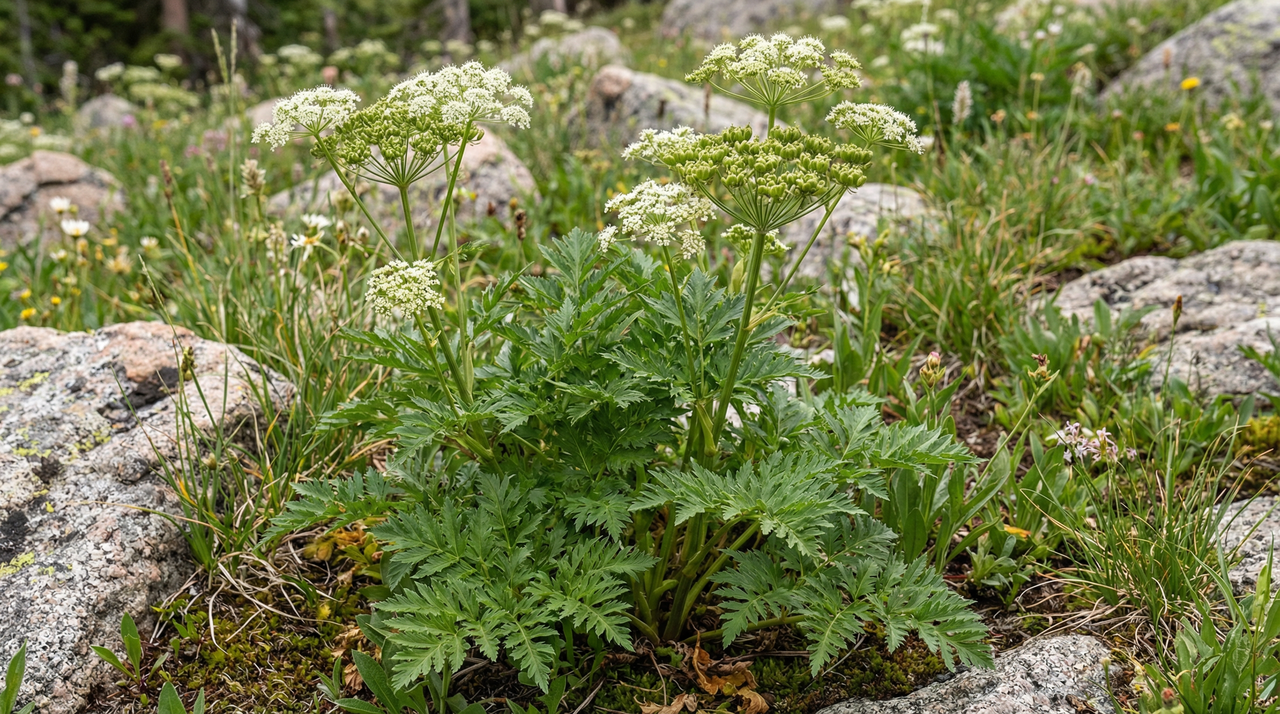
The grizzly bears knew about this plant long before any human herbalist wrote it down. Every spring in the southern Rockies, bears emerging from hibernation would dig for the thick, celery-scented roots of osha and rub them into their coats, chew them, roll in the crushed foliage. Indigenous peoples of the Southwest watched this behavior for generations, and the plant earned a name that stuck: bear root. I think about that a lot when I'm working with difficult medicinals, the ones that resist easy cultivation and resist easy explanation. Some plants just carry a kind of authority that makes you slow down.
Here's what makes osha genuinely strange as a garden plant: it's a high-altitude Rocky Mountain specialist that tops out at 12,000 feet, takes three to five years to produce a root worth harvesting, has no commercial cultivars to speak of, and is already listed as "At-Risk" in the wild because demand has outpaced its ability to recover. Yet herbalists and foragers want it badly enough that wild populations are being quietly stripped bare. The question of whether to grow it at all, and how, and where, is less a gardening question than an ethical one. That's where I want to start.
Osha Origin, History, and Traditional Uses
Botanical Background and Distribution
Osha root, known botanically as Ligusticum porteri, is about as Rocky Mountain as a plant gets. Native to subalpine zones stretching from southern Alberta and Montana down through the Rocky Mountain states into northern Mexico,[1][2] this osha herb has never wandered far from its mountains. It settles in at elevations between 1,800 and 3,500 meters, preferring moist coniferous forests, aspen groves, and subalpine meadows with cool summers, cold winters, and soils that drain well but never dry out completely.[3][4] The first formal botanical description came in 1864 from American botanist Thomas C. Porter, working from specimens collected in Colorado.[5]
What I find striking about osha is how it rewards patience the way very few plants do. It's a long-lived herbaceous perennial that persists through underground rhizomes and can survive 10 to 50 years in the wild, yet it won't reach maturity for five to seven years.[2][1] Anyone considering growing it should approach it with the same mindset they'd bring to ginseng or goldenseal: this isn't a season-long commitment, it's a decade-long one. Plants grow in upright clumps reaching up to two meters under good conditions, anchored by a thick fleshy taproot adapted to mountain soils.[1]
Physical Characteristics
The osha plant is architecturally handsome in a wild, unfussy way. Large pinnately compound leaves form a basal rosette early in the season before climbing the stem, with ovate to lanceolate leaflets ranging from two to eight centimeters long.[1][6] By mid-summer, stout hollow stems, often purple-tinged at the base and one to three centimeters across, carry the plant up toward its compound umbels of small white flowers that bloom June through August.[6][3] Below ground, the taproot can run one to three feet deep and grow two to three inches across, with horizontal rhizomes storing mucilaginous compounds against the short alpine growing season.[7]
The single most reliable field identification cue is the aroma. Crush a leaf or nick a root and you get an immediate hit of something between celery and spiced earth, sharp and unmistakable.[8] I rely on that smell every time I work with this plant, because the Apiaceae family contains some genuinely dangerous look-alikes, poison hemlock among them. The scent isn't just pleasant; for me it's a safety check.
Traditional and Cultural Significance
Long before Thomas Porter ever pressed a specimen, Indigenous peoples across the Southwest had been working with osha root for generations. The Ute, Zuni, Navajo, Apache, Hopi, and Southern Paiute all counted it among their most important medicines, using it primarily for respiratory ailments like coughs, bronchitis, and sore throats, as well as a general immune tonic.[9][10] Its role extended further into digestive support, pain relief, wound care, altitude sickness, and ceremonially for smudging, purification, and protection; the Ute hold it as a sacred plant.[11][12] My own relationship with the osha herb is rooted in respectful cultivation and the occasional tea; I've learned about the ceremonial and spiritual dimensions through ethnobotanical literature, and I think it's important to hold that knowledge with care rather than appropriate it.
Wild harvesting dominated for centuries, with limited culinary use as a celery-like seasoning on the side.[3] The late twentieth century surge in commercial herbalism changed everything. Wild populations are now under serious pressure in parts of the range, and while Ligusticum porteri isn't federally listed as endangered, it's considered a species of special concern in some areas.[13] Sustainable wild-harvest guidelines recommend leaving at least 70% of a root system intact and skipping small or isolated populations entirely.[13] Because wild populations cannot keep pace with demand, I only work with ethically sourced seed and encourage every gardener I know to do the same rather than pulling from declining wild stands.
Fun Facts and Ecology
The common name "bear root" isn't poetic license. Both black and grizzly bears actively dig up and eat the roots,[3] and many ethnobotanists believe Indigenous peoples observed bear behavior as one pathway to understanding the plant's medicine. Beyond bears, elk and deer browse the foliage, and the seeds travel by wind and animal.[3] The plant is well-suited to its demanding environment: basal rosettes with dense trichomes on leaf undersides reduce wind exposure and water loss, while those fleshy rhizomes stockpile mucilaginous compounds against the short alpine growing window.[7][14] When I see these adaptations, I think of the other high-elevation Apiaceae I've grown and how much of their architecture is a direct conversation with wind, cold, and short seasons. Osha is just doing what it's always done. Growing it well means listening to that conversation rather than trying to override it.
Osha Varieties and Where to Source Plants
Notable Varieties and Cultivation Potential of Osha (Ligusticum porteri)
Unlike most medicinal herbs in a well-stocked nursery catalog, osha root has no named cultivars, no selected strains, no "improved" varieties bred for garden performance. Ligusticum porteri is still overwhelmingly wild-collected, and that fact alone explains why it carries an At-Risk designation from United Plant Savers and is treated as a sensitive species by the U.S. Forest Service.[13][15] Demand for the root as a respiratory medicine has simply outpaced the plant's slow, high-altitude regeneration cycle, and without cultivars to grow at scale, the gap keeps widening.
There is real cultivation interest, and the data is cautiously encouraging. Cultivated plants can reach harvestable maturity in two to three years and may produce yields up to 20% higher than wild plants under optimal conditions.[16] The trade-off is potency. Wild roots grown under high-altitude stress tend to show stronger medicinal character, likely because environmental pressure concentrates the active compounds. That said, in my experience growing osha in a well-drained mountain garden bed, cultivated roots that are given time to develop still produce genuinely effective material. They're not identical to wild-harvested specimens, but they're far more than a consolation prize.
If you want to see what selective breeding can eventually achieve in this genus, look east to Ligusticum striatum, the Chinese medicinal relative known as Chuanxiong. Breeders there have developed distinct cultivars including Chuanxiong No. 1 (selected for high ferulic acid content), Chuanxiong No. 2 (improved yield and disease resistance), plus rhizome-focused selections like Dujiao and fine-rooted types like Xujiao.[17] The genus clearly responds to breeding pressure. Osha just hasn't been there yet, partly because conservation efforts have prioritized protecting wild-type genetics over developing garden strains.
Where to Buy Osha Seeds and Plants: Ethical Sourcing and Conservation
Finding osha root plants or seeds through mainstream nursery channels is genuinely difficult. Its native range is restricted to high-altitude Rocky Mountain habitats, it requires cold stratification for 60 to 90 days, it may depend on mycorrhizal associations to establish well, and its conservation status makes commercial propagation both logistically and ethically complicated.[18][19] That combination keeps it off the standard nursery shelf.
The reputable sources I'd point you toward include Prairie Moon Nursery, Strictly Medicinal Seeds, High Country Gardens, Native Seeds/SEARCH, and Mountain Rose Herbs for dried root.[20][21][22] Seed packets run $10 to $25 for 50 to 100 seeds, dried root typically lands between $30 and $60 per ounce, and fresh root when available runs $10 to $20 per pound.[20] I've had the best germination results from Prairie Moon seed after a full 90-day cold stratification, so don't cut that short.
On ethics: osha has no CITES protections and no international trade restrictions, but state-level sustainable harvesting guidelines exist, and responsible practice means never removing the entire taproot from a wild plant.[23][24] In my own practice, I've stopped purchasing any wild-harvested osha root entirely and work only with cultivated or home-grown material. The population decline data is clear enough that this isn't optional for me anymore. If a supplier can't tell you whether their root is cultivated or wild-collected, that's your answer.
Osha Propagation and Planting (Ligusticum porteri)
If you're trying to figure out how to grow osha root, the first thing to accept is that this plant has never made itself easy. It didn't evolve for garden beds. It evolved for rocky subalpine slopes above 6,000 feet, and every step of propagation reflects that origin. Most commercial growers and wildcrafters skip the seed work entirely and go straight to root division, and honestly, that's usually the right call.
Seed Morphology, Storage, and Stratification Requirements
Ligusticum porteri seeds are schizocarps that split into two mericarps at maturity; each one is dark brown to black, oblong-ovate, 2-5 mm long, with five prominent dorsal ribs, two wing-like lateral ribs, and oil tubes running in the furrows.[6][1] They're beautiful under a hand lens. Less beautiful in a germination tray. The embryo inside is linear, underdeveloped, and embedded in a large endosperm, which is the Apiaceae family pattern of morphophysiological dormancy.[25][26] The embryo needs time and cold to finish developing before it can germinate. You cannot rush it.
Seeds display orthodox storage behavior, which is good news for seed savers. Dried to 3-10% moisture and held at 0-5°C in airtight containers with silica gel, they stay viable for 2-5 years under home conditions and up to a decade in proper seed bank protocols.[27][28] Before you stratify older stored seed, run a tetrazolium test: cut a few seeds, soak them, and viable embryos will stain red within 24-48 hours.[29] Skip this step and you may spend three months stratifying seeds that have no embryo activity left.
Breaking dormancy requires 30-90 days of cold moist stratification at 1-5°C, which mimics the long winters that osha roots spend under snowpack at altitude. After that, germination happens at 15-20°C in well-drained medium.[25][30] Fresh seed from known populations can reach 50-80% germination after stratification; stored seed often drops to 20-50%.[25][31] Osha is the plant that taught me patience. Even with perfect cold stratification and ideal germination temperatures, I still budget for 30-50% success most seasons, so I always start two or three times more seed than I think I need and share the extras with other growers.
The related Ligusticum striatum (Chuan-xiong) follows a similar Apiaceae pattern, needing 4-6 weeks at 4°C for 50-70% germination.[32] It's useful confirmation that cold stratification isn't optional across this genus. Because wild populations outcross freely, seedlings from sexual propagation show high morphological and vigor variability.[33][25] I now source seed only from known high-elevation populations because those plants produce noticeably denser taproots and stronger aromatic oils at harvest. The chemistry you're chasing is population-dependent.
Root Division as the Preferred Commercial Method
Root division is the primary propagation method for Ligusticum porteri in commercial and horticultural settings according to USDA guidance.[34][3] Divisions are taken from dormant plants in early spring or late fall, separating clumps that carry multiple crown buds. The thickened taproot structure makes osha well-suited to this approach, and the resulting divisions carry the exact root chemistry that herbalists and wildcrafters prize rather than the variable offspring you get from seed.
I've divided osha roots in early spring for several seasons, and the single most reliable thing I can tell you is to ensure each division carries at least two strong crown buds. One bud is survivable; two buds gives the plant enough reserve to establish a root system without stalling through the whole first season. The parallel in the Ligusticum genus holds: Chuan-xiong divisions planted with at least one bud reach 80-90% establishment when set 10-15 cm deep in well-drained partial-shade conditions.[35][36] Osha doesn't hit those numbers reliably, but the bud-count principle translates directly.
Soil and Site Preparation for High-Elevation Natives
In the wild, osha grows between 1,800 and 3,500 meters on limestone-derived, well-drained loamy, sandy, or gravelly soils at the edges of coniferous forests and subalpine meadows, where it gets moisture from snowmelt and summer precipitation but never sits in waterlogged ground.[6][3] That profile is your target. Replicate it as closely as you can and the plant rewards you; deviate significantly and it struggles.
Aim for soil pH between 6.0 and 7.5, with 6.5 as the sweet spot. Push above 7.5 and iron and manganese lock out, causing chlorosis. Drop below 5.5 and growth inhibits noticeably.[3][37] I've seen the alkaline chlorosis firsthand on a slightly high-pH bed; a top-dressing of pine needles and a light sulfur amendment corrected it within one season, but prevention through a proper soil test before planting is easier. The taproot needs at least 18-24 inches of uncompacted, well-drained depth to develop properly, so raised beds or gently bermed planting areas often outperform flat garden beds in heavier soils.
My current approach for potting and raised-bed osha is a 50/50 blend of garden loam and crushed granite, with compost worked into the upper layer. That gritty mix gives the taproot something to penetrate without the compaction issues I've observed in straight compost. The related Ligusticum holopetalum shows moderate compaction tolerance on gravelly and limestone-derived substrates,[38] which confirms the genus-level preference for structure over richness.
Spacing, Planting Technique, and Timeline to Maturity
Mature osha plants reach 0.6-1.8 meters tall with clumps spreading 30-60 cm wide.[39] Space transplants or divisions 30-46 cm apart within rows, with 61-91 cm between rows for hand harvest; if you're ever fortunate enough to be growing at scale with mechanized harvest, open rows to 122-152 cm.[39][1] That spacing isn't just about root room; adequate airflow between plants reduces the fungal pressure that cultivation tends to invite compared to wild populations.
If you're direct-seeding, sow densely and thin to 30 cm once seedlings are established. I label every osha division at planting because early-season foliage can look deceptively similar to other umbellifers, and in a mixed medicinal bed that ambiguity costs you. Best planting windows are spring after the last hard frost or fall when the soil has cooled.
Go into this with honest expectations: harvestable roots take three to five years to develop. That's not a rounding error or a pessimistic estimate. It's the reality of working with a plant that hasn't been domesticated and still operates on mountain time. Start more plants than you think you'll need, tend them well, and plan to wait.
Osha Care Guide
Growing osha root outside its native range is an exercise in humility. Every cultural decision you make should ask the same question: does this feel like a shaded slope in the Sangre de Cristos at 9,000 feet? If the answer is no, the plant will tell you.
Sunlight and Heat Tolerance
In its native high-altitude habitat, osha can handle full sun because the air is thin, the UV is intense, and the temperatures stay cool. In a lowland garden, those conditions don't exist, so the full-sun logic doesn't transfer. Cultivation guidelines consistently recommend 50-70% shade, with afternoon protection being non-negotiable in warmer climates.[3][40] I've grown osha from stratified seed in containers through three seasons, and even with careful shade management, once daytime temperatures held above 82°F for more than a week the plants started flagging hard. The research backs that observation: osha performs best in AHS Heat Zones 1-3 and struggles above 80°F, with sustained temperatures over 86°F triggering wilting, reduced photosynthesis, and genuine rhizome decline.[41][3][42] Cool nights below 50°F are equally important; if your summers stay warm after dark, shade cloth and deep organic mulch over the root zone become your best tools for keeping things survivable.[3][1] I've had better luck with osha in containers I can move to a north-facing wall in July than with in-ground plantings that get baked by radiant heat from nearby paving. Valerian and goldenseal, two other mountain herbs I've trialed, share this intolerance for heat stress -- but osha is the most sensitive of the three.
Water Needs
Osha wants consistent moisture delivered deep, not frequent shallow sprinkles. Aim for 1-2 inches per week during the growing season, watered slowly enough to reach the 12-24 inch taproot zone.[1][43] The crown, though, cannot sit wet. Root rot moves fast in a waterlogged osha, so drainage matters as much as moisture. In dormancy, pull back significantly; the plant doesn't need much at all once it's gone underground for winter.[44][1] Water quality matters more than most people expect. After I noticed tip burn on my container plants, I switched from my local hard tap water to collected rainwater and the symptoms cleared up within a few weeks. Osha is genuinely sensitive to salinity and high mineral content, so if your municipal supply is heavy, rainwater or filtered water is worth the effort.
Soil, Fertility, and Feeding
Osha is a plant of nutrient-poor Rocky Mountain soils, and it wants to stay that way. The ideal substrate is a well-drained loamy to rocky mix with modest organic matter (5-10%) and a pH of 6.0-7.5.[45][46] Run a soil test before you amend anything. My first-year plants got a standard balanced feed and produced beautiful lush foliage that tested low for the phthalides that make osha medicinally valuable. Since switching to a single early-spring application of a low-nitrogen 5-10-10 organic blend, the root quality has been measurably better. High nitrogen pushes top growth at the expense of root chemistry.[47][48] Watch the leaves for deficiency signals: yellowing indicates low nitrogen, purple tones or stunting point to phosphorus, and marginal scorch suggests potassium is short.[49][50] Over-fertilization is the more common mistake, and it shows as lush, medicinally inferior growth rather than any dramatic collapse.
Frost Tolerance and Winter Protection
The roots are extraordinary cold survivors. Hardy in USDA zones 4-8, osha root can withstand -30°F underground, particularly under an insulating snow pack.[45][41][51] Emerging spring shoots are a different story entirely, and late frost will hit them with water-soaked lesions that progress to necrosis quickly. I leave the previous season's dried stems standing through the winter and remove them only after the last hard freeze has passed; they provide a small but real buffer for the crown. Apply 2-4 inches of organic mulch in late fall, and if your site is exposed, a simple windbreak will prevent the freeze-thaw cycling and winter desiccation that cause far more damage than low temperatures alone.[52][53]
Pruning, Maintenance, and Seasonal Rhythm
Cultivated osha demands very little in terms of active maintenance, which suits its slow, deliberate pace. Clear winter-damaged foliage in spring once new growth is visible, and cut spent flower stalks after seed dispersal if you're not saving seed.[54][55] The seasonal rhythm follows its mountain origins closely: vegetative growth kicks off after the last frost, flowering happens mid-summer, seed set completes before dormancy.[1][56] Expect 3-5 years before the root reaches harvestable size, and up to 7 years for full maturity. That timeline is the hardest thing to accept, but it's also the point. Osha is a 10-to-50-year perennial with deep mycorrhizal relationships that can't be rushed or replaced with synthetic shortcuts. Every well-grown garden plant reduces pressure on wild populations, and that slow arc toward maturity is part of the bargain you make when you commit to cultivating it.
Harvesting Osha Roots: Timing, Technique, and Flavor
When to Harvest Osha: The 3-5 Year Timeline
Osha root demands something most gardeners aren't used to giving: genuine patience. Plants need three to five years before their roots carry the full medicinal character that herbalists and traditional harvesters prize.[3][57] I've learned to judge readiness by more than a calendar date: rub a small side root between your fingers and bruise it slightly. If that sharp, celery-meets-anise scent hits you immediately and hard, you're getting close. If it's faint or barely there, put the root back and wait another season. This slow timeline is exactly why wild populations across the Rocky Mountains are under real pressure, and it's a big part of why I'd rather see people grow this plant than forage it.
Flavor, Aroma, and Texture of Fresh Osha Root
The moment you pull a mature osha root from the soil, you immediately know it. The aroma is immediate and complex: pungent, warming, with layered notes of celery, parsley, licorice, and anise underneath a bitter edge that lingers on the back of the throat.[58][59][3] I grow lovage in my kitchen garden and the comparison is a useful one: imagine lovage turned up several notches, stripped of any culinary friendliness, and pointed firmly toward medicine. That character comes primarily from Z-ligustilide, which can make up 39 to 50 percent of the essential oil, supported by myrcene, sabinene, α-pinene, and several other volatile compounds.[58][60][61] I've also noticed that roots harvested after a dry summer are noticeably more pungent than those pulled after a wet one, which tracks with what the research says about compositional variability based on geography and growing conditions.
The texture surprised me the first time I chewed a fresh piece. Raw osha root is chewy, fibrous, and decidedly woody; this is not a root vegetable in any conventional sense.[3] Think of it as medicine you experience rather than food you eat. Cooking softens the fiber somewhat, and traditional preparation methods work with that texture rather than against it. Harvest only what you'll actually use, and if you have any option to take from cultivated plants rather than wild ones, take it. These slow-growing mountain plants can't keep pace with demand, and every root left in the ground is a root worth protecting.
Osha Preparation and Uses
Culinary Applications and Flavor Profile
The osha root's primary identity is medicinal, but it does straddle the culinary-medicinal divide in a few meaningful ways. The raw root has a strong aromatic character that reads as celery crossed with lovage, with a sharp medicinal bite underneath that signals its potency immediately.[3] In my experience, that intensity amplifies dramatically once the root is dried; what starts as a mild celery note becomes a concentrated medicinal punch that most people find more palatable tempered into a honey syrup than chewed straight. Traditional preparations include teas, decoctions, broths, soups, and rubs, though "culinary use" is generous framing since it's rarely about flavor for its own sake.[62][63] Related species like Ligusticum holopetalum offer more leaf-based options, with young stems eaten sparingly in salads or soups like parsley or celery,[64] but documentation on eating L. porteri leaves is thin, and I'd approach that territory cautiously.
The misidentification risk here is not abstract. Poison hemlock (Conium maculatum) and water hemlock (Cicuta spp.) share the same habitat and look unsettlingly similar to an untrained eye.[3][65] I always tell people to verify their identification with a local expert before the first harvest, not once but repeatedly until the difference is instinctive. Even when you have the right plant, small amounts are the rule; excess consumption can cause nausea, vomiting, and gastrointestinal upset, and photosensitivity is a real consideration for some people.
Medicinal Preparations, Dosages, and Safety
Traditional medicinal preparations run the full spectrum: decoctions made by simmering the root for 15 to 30 minutes, teas steeped 10 to 15 minutes, alcohol tinctures extracted over several weeks, and powdered root.[66] General adult guidance suggests 1 to 2 teaspoons of dried root per cup of water for tea up to three times daily, or 10 to 30 drops of tincture in water two to three times daily, with short-term use around 1 to 2 grams of dried root per day. These are starting points, not prescriptions, and individual guidance from a qualified herbalist or practitioner is essential.
On safety, I cannot be more direct: if you are pregnant or nursing, osha root is not for you. Its traditional use as an emmenagogue and uterine stimulant is well documented, and the risk of miscarriage is real.[67][68][69] Beyond pregnancy, the coumarin-like compounds in the root can interact with anticoagulants, sedatives, and blood pressure medications. Modern clinical validation of most traditional uses remains limited,[70] which is exactly why professional guidance matters and why I'd always recommend sourcing from reputable, cultivated suppliers rather than wildcrafted material of uncertain provenance.
Non-Food and Traditional Uses
Osha's story extends well beyond the medicine bag. Among Navajo, Zuni, and other Southwestern communities, the root held a place in protective charms, ceremonial healing rites, and spiritual practice, used to guard against illness and harmful spirits alike.[71] That cultural weight is worth acknowledging honestly: these uses carry meaning that belongs to specific traditions, and the plant's conservation status makes ethical sourcing not just a preference but a responsibility. The genus Ligusticum extends these applications into Traditional Chinese Medicine through the related L. striatum (Chuan Xiong), prized there for blood circulation, pain relief, and menstrual disorders[72][73] -- a reminder that this is a genus with deep roots in healing traditions across two continents. L. porteri itself has no meaningful role as a dye or fiber plant, and its biomass is only modestly useful for compost or mulch. Its value is almost entirely in what that aromatic root carries chemically and culturally.
Osha Health Benefits
There's a reason osha root has stayed in continuous use for centuries across the Southwest and Rocky Mountain West. This is not a plant that drifted into folk medicine on rumor. Its reputation was earned root by root, season by season, by people who depended on it.
Traditional Uses Among Native American Tribes
Among the Zuni, Navajo, Apache, Ute, and Pueblo peoples, Ligusticum porteri was a primary remedy for the full spectrum of respiratory ailments: colds, flu, bronchitis, sore throat, cough, and congestion.[70][71][74] Traditional applications extended to digestive complaints, pain relief, and general immune support as well.[75] The common name "bear root" or "bear medicine" speaks to how deeply the plant was woven into the natural and spiritual ecology of its home range.
The genus reaches further than just the Rocky Mountain West. Related species like Ligusticum holopetalum and Ligusticum striatum (known as Chuanxiong in Traditional Chinese Medicine) carry parallel reputations for respiratory and anti-inflammatory support across Tibetan, Himalayan, and TCM traditions.[76][77] That cross-cultural convergence on the same genus for the same complaints tells you something. When I've thought about which plants in my medicinal collection have the deepest roots of documented human use, osha belongs near the top of that list.
Key Phytochemicals in Osha Root
Osha roots contain 1 to 3% essential oil, and within that oil, Z-ligustilide typically dominates at anywhere from 45 to 85% of the total composition.[78][79] That phthalide compound is widely considered the primary driver of osha's observed bioactivity, and it's largely responsible for the distinctive heavy, warm, almost celery-meets-camphor scent that hits you the moment you cut into a fresh or recently dried root. I've noticed that the aroma fades noticeably with age and improper storage, which makes practical sense given that drying alone can cause a 10 to 20% loss of volatile oils.[80]
Beyond Z-ligustilide, the roots carry a broad supporting cast: monoterpenes including sabinene, alpha-pinene, and limonene;[81][82] coumarins like osthenol, imperatorin, and columbianadin; flavonoids including quercetin and kaempferol glycosides; and phenolic acids like ferulic and caffeic acid that contribute measurable antioxidant activity.[83][84] The roots also contain polysaccharides (up to 20% by some analyses) with immunomodulatory activity, along with polyacetylenes, sesquiterpenes, and minor constituents including alkaloids and saponins.[85][86] All of these figures come with a caveat worth internalizing: chemical composition shifts significantly depending on plant part, altitude, plant age, harvest season, and extraction method.[87] The roots are consistently the richest source, but "osha root" harvested from a young cultivated plant at low elevation may look very different in a lab than material from a mature wild specimen at 9,000 feet.
Scientific Research on Osha's Medicinal Properties
Lab work has done a reasonable job of explaining why traditional practitioners reached for this root during respiratory illness. In vitro studies show antimicrobial activity against respiratory pathogens including Streptococcus, E. coli, Mycobacterium, influenza, and herpes viruses.[88][89] Anti-inflammatory effects have been demonstrated through inhibition of NF-κB and reductions in TNF-α, IL-6, prostaglandins, and COX-2.[90][91] Animal studies also suggest analgesic, adaptogenic, and mild sedative effects.[77][92]
Human clinical trials are essentially absent, though. The scarcity of that data isn't just a research funding problem; it's partly a conservation problem. You can't run large trials on a vulnerable wild plant without either devastating wild populations or first solving cultivation at scale, neither of which has happened yet. I only work with cultivated or verifiably sustainable sources, and I say the same to anyone I'm advising. The ethnobotanical record across multiple independent cultures is meaningful evidence, even without randomized controlled trials to back it up, but I think it's important to hold both truths at once: the traditional use is compelling, and the human clinical data is genuinely thin.
Nutritional Profile of Osha
Osha is not a food plant in any meaningful sense, and its nutritional data reflects that. No entry exists in USDA FoodData Central, and what preliminary analyses do exist suggest a modest mineral profile: roughly 150 to 200 mg calcium, 50 to 80 mg magnesium, 300 to 500 mg potassium, and 5 to 10 mg iron per 100g dried root, alongside modest vitamin C levels and small amounts of protein.[93][1] These numbers vary widely depending on growing conditions and should be treated as rough indicators rather than dietary targets.
The more meaningful nutritional story is the antioxidant activity. The combined action of polyphenolics, flavonoids, and the essential oil fraction produces measurable free-radical scavenging and inhibition of lipid peroxidation.[94][95] Compared to more familiar kitchen herbs I grow regularly, osha's antioxidant performance in assays is competitive with plants like thyme and oregano, which are themselves considered high-performers. That said, given how small medicinal doses are, osha isn't something you'd turn to for dietary antioxidant loading. It's the targeted delivery of specific bioactive compounds that matters here, not grams consumed. How you prepare it also shapes what you get: decoctions pull out water-soluble polysaccharides well but can degrade heat-sensitive compounds, while tinctures preserve the volatile fraction more effectively.[80]
Safety Considerations and Contraindications
Traditional use history and limited animal toxicology studies (LD50 above 2000 mg/kg in rodents) suggest osha is reasonably safe at moderate medicinal doses.[96] Standard starting guidance runs around 1 to 2 grams of dried root per day as a tea, or 10 to 30 drops of tincture two to three times daily, beginning low to assess individual response.[97] Possible side effects include gastrointestinal upset, allergic reactions, contact dermatitis, and photosensitivity, particularly in those sensitive to the Apiaceae family.[98][99]
There are two primary contraindications that deserve unambiguous treatment. First: I do not use osha medicinally during pregnancy, and I don't recommend it to any clients who are expecting. The ligustilide content gives it documented emmenagogue and potential uterine-stimulant activity, and the coumarin content raises anticoagulant interaction concerns as well.[100][101] If you're on blood thinners, consult your prescribing physician before using this herb. Second: misidentification within the Apiaceae family can be fatal. Water hemlock (Cicuta spp.) and poison hemlock (Conium maculatum) share enough superficial resemblance that foragers have made deadly errors.[2][102] I've studied osha's identification characters carefully precisely because the stakes are so high in this family. The root's unmistakable pungent, resinous aroma is one of the most reliable field markers, but that alone is not sufficient for a positive ID. Learn the full suite of diagnostic traits before you harvest anything. When in doubt, buy from a reputable cultivated source and skip the guesswork entirely.
Osha Pests and Diseases
Natural Pest Resistance in Osha
One thing I've noticed growing Osha alongside other herbs is how few insects bother it. There's almost always something nibbling on the neighboring parsley or lovage, but the Osha tends to be left alone. That tracks with multiple phytochemical analyses: the plant's volatile essential oils, dominated by sabinene at 30 to 50 percent of total volatiles and rounded out with myrcene, pinenes, and furanocoumarins, actively deter herbivorous insects and demonstrate measurable insecticidal activity against aphids and stored-product pests.[103][104][105] Wild populations show minimal insect damage overall, a combination of those chemical defenses, the glandular trichomes on leaves and stems that physically discourage feeding and egg-laying, and the harsh conditions of high-altitude habitat that most soft-bodied pests simply can't handle.[104][106]
In its native Rocky Mountain range, the biggest pest concern is actually elk, deer, and livestock. Overgrazing and habitat disturbance do far more damage to wild osha root populations than any insect ever has.[3] Bring it into a garden setting, though, and that toughness gets tested. Stressed or greenhouse-grown plants become susceptible to the usual Apiaceae suspects: green peach aphids, leaf beetles, carrot weevils, and root maggots, any of which can cause leaf distortion, wilting, or general loss of vigor.[107][108] There are no commercial cultivars bred for enhanced resistance, so management comes down to integrated pest management: consistent monitoring, good spacing for airflow, companion planting, and encouraging beneficial predators.[109][13] Most of what growers know here is adapted from broader Apiaceae family guidelines rather than Osha-specific research, so I lean on that carrot-and-parsley knowledge base while staying observant about what's actually happening in my beds.
Common Diseases and Cultivation Challenges
Gardeners cultivating osha outside the Rocky Mountains must pay strict attention to disease pressure. In its native high-altitude habitat, no major disease outbreaks have been recorded in wild osha root populations; the combination of cool dry air, fast-draining rocky soils, and cold winters simply doesn't favor fungal spread.[110] Cultivated plants, especially in humid climates, are a different story. Downy mildew, root rot from Pythium, Phytophthora, or Fusarium species, powdery mildew, Septoria or Alternaria leaf spots, and damping-off in seedlings are all documented concerns in garden conditions.[111][112] I learned this the hard way: even a few days of poor drainage after a heavy rain was enough to trigger early root rot in one of my plants. Raised beds with amended, gritty soil aren't optional for Osha in humid climates; they're the whole game.
When it comes to downy mildew, osha behaves like a highly sensitive version of parsley. Once you see the fuzzy gray coating on leaf undersides, you're usually already behind. Good airflow from the start prevents it far better than any reactive treatment. Related species offer some instructive context: Ligusticum holopetalum shows better tolerance to Alternaria leaf spot, and breeding lines of the Asian relative Ligusticum striatum benefit from antimicrobial ligustilide compounds that improve resistance to root rot and powdery mildew.[113][114] No such cultivars exist for Osha itself, so cultural prevention is everything: excellent drainage, careful watering, appropriate spacing, and steady airflow.[115][116] Because osha root is valued medicinally, I avoid synthetic fungicides entirely; contaminating the root you're growing to use as medicine defeats the purpose. The honest reality is that wild habitat loss and overharvesting remain far greater threats to this plant than any pathogen, which is exactly why getting cultivation right matters so much.
Osha in Permaculture Design
Every design decision you make with osha root flows directly from one foundational truth: this is a high-elevation Rocky Mountain specialist, and it will not pretend otherwise. Getting the conditions right isn't optional fine-tuning; it's the whole game.
Climate and Growing Zones for Osha
Ligusticum porteri is native to subalpine and lower alpine zones between 6,000 and 12,000 feet, spanning the Southern Rockies, the Wasatch and Uinta Mountains, and into the Arizona and New Mexico highlands.[1][117] Climatically, that puts it squarely in subpolar oceanic and cold humid continental territory, where winters are hard and dry, snowmelt delivers consistent spring moisture, and summers are cool.[118] Annual precipitation in its native range runs 20 to 40 inches, with much of that arriving as snow or concentrated summer rain.[1][117] It prefers moist, well-drained rocky or loamy soils in open woodlands and conifer forests, tolerating full sun to partial shade and a neutral to slightly acidic pH.[3][1]
Rated for USDA zones 4 through 8, it performs best between 5,000 and 10,000 feet.[1][31] If you're gardening outside its native range, as I've experimented with at lower elevations, you're essentially engineering a subalpine analog: cold-draining raised beds, shade cloth for summer afternoon heat, and supplemental irrigation that mimics snowmelt rhythm. It's doable, but go in with honest expectations.
Ecosystem Functions and Guild Contributions
The most immediately useful permaculture function osha brings to a high-elevation guild is late-season pollinator support. The compound umbels bloom June through August, drawing native bumblebees, mining bees, mason bees, syrphid flies, butterflies, and occasional beetles at a time when montane nectar sources can be genuinely sparse.[3][119] Over 20 insect visitor species have been recorded on the flowers.[120] The small white to purplish florets have a notably fetid scent that I'd describe as more functional than pleasant, but that smell is exactly what pulls in the syrphid flies that make the whole pollination network tick.[6]
There's a practical catch worth knowing before you plant: osha is self-incompatible, meaning cross-pollination between plants is required for seed set.[121] Plan for at least two or three individuals in any planting, and if your site has low insect diversity, hand-pollination with a small brush becomes necessary.[122] I also label osha carefully in the garden because the early-season foliage looks remarkably similar to other Apiaceae, and accidental harvest or misidentification is a real risk before the plant gets established and recognizable.
On the soil side, the deep taproot helps stabilize slopes and prevent erosion in exactly the kind of disturbed, steeply graded sites where you'd want a mountain perennial doing structural work.[3] Foliage breakdown contributes organic matter over the growing season, which is meaningful in lean subalpine soils. What it doesn't do: osha does not fix nitrogen, so you'll need to cover that function through companion species.[7] The aromatic oils in the foliage may offer some incidental pest deterrence, but this is largely inferred from Apiaceae family traits rather than documented for this species specifically,[123] and I don't rely on it as a primary guild function. Its upright, sparse growth to about 1.5 meters also means it won't serve as ground cover or a windbreak.
Forest Layer and Companion Planting
In its native landscape, osha occupies the herbaceous understory of coniferous forests, aspen groves, rocky slopes, streambanks, and montane meadows.[1][6] It's a perennial that dies back to its thick fleshy taproot each winter and re-emerges in spring, and it forms arbuscular mycorrhizal associations that compensate for the low nutrient availability of subalpine soils.[124] That mycorrhizal dependence shapes how I think about introducing it into designed systems: pairing it with mycorrhizal-friendly trees like aspen, Gambel oak, or coniferous species helps the root network establish. Inoculating the planting hole directly is another approach I've used when establishing osha in food forest understories at elevations below its natural range.
Its natural associates include bearberry, sticky geranium, columbine, and various sedges and grasses in mixed conifer and aspen communities,[125][124] which gives you a blueprint for guild building. In permaculture plantings, space osha at 2 to 3 feet with nitrogen-fixing shrubs, native ferns, asters, and other mountain perennials to create layered diversity that supports pollinators and soil biology simultaneously.[126] Because this plant is self-incompatible and increasingly at-risk in the wild, sourcing multiple cultivated individuals rather than single wild-collected specimens is both a practical and ethical design consideration. The related Pacific Northwest species Ligusticum holopetalum, found in coniferous understories alongside arnica, valerian, and sedges, expands the design palette for gardeners in that region.[124][127]
The Plant That Taught Me to Garden More Slowly
I still remember pulling my first cultivated root after four years of waiting, crouching in the cool morning air and catching that sharp, resinous smell before it was even out of the ground. It stopped me completely. Some plants reward patience in a way that feels almost instructional, and Osha is one of them. You can't rush it, you can't domesticate it on your terms, and honestly, that's the whole lesson.
Sources 127
- Ligusticum porteri ↩
- Osha (Ligusticum porteri) ↩
- Ligusticum porteri ↩
- Ligusticum porteri ↩
- A Revision of the North American Ligusticum ↩
- Ligusticum porteri ↩
- USDA PLANTS Database: Ligusticum porteri ↩
- Identification of Osha - American Herbalists Guild ↩
- Native American Ethnobotany ↩
- Medicinal Plants of the Mountain West ↩
- Ethnobotany of the Southern Ute ↩
- Traditional Uses of Osha by the Ute People ↩
- Osha: Conservation and Sustainable Harvesting ↩
- Flora of North America: Ligusticum porteri ↩
- Sensitive Plant Species: Ligusticum porteri ↩
- Cultivation of Osha (Ligusticum porteri) ↩
- Breeding and Cultivation of Chuanxiong (Ligusticum chuanxiong Hort.) ↩
- Osha (Ligusticum porteri): A Review of Its Botany, Ethnobotany, and Uses ↩
- USDA PLANTS Database: Ligusticum porteri ↩
- Ligusticum porteri - Osha ↩
- Osha Seeds (Ligusticum porteri) ↩
- Osha Root ↩
- USDA PLANTS Profile for Ligusticum porteri ↩
- Osha Root Availability and Sustainability ↩
- Seed Dormancy and Germination of the Medicinal Plant Ligusticum porteri ↩
- Seed Dormancy and Germination of Medicinal Plants in the Apiaceae Family ↩
- Seed Storage of North American Prairie Plants ↩
- Germination and Storage of Osha (Ligusticum porteri) Seeds ↩
- Tetrazolium Testing for Seed Viability in Medicinal Plants ↩
- Seed Germination of Native Colorado Plants ↩
- Growing Osha Root: A Guide to Ligusticum porteri Cultivation ↩
- Seed Germination of Medicinal Plants in the Apiaceae Family ↩
- Genetic Variation in Wild Populations of Ligusticum porteri ↩
- PLANTS Database Response - Ligusticum porteri ↩
- Flora of China - Ligusticum striatum ↩
- Cultivation and Propagation of Chuanxiong (Ligusticum striatum) ↩
- Ligusticum porteri ↩
- Ligusticum holopetalum Habitat and Ecology - Montana Field Guide ↩
- Cultivating Osha (Ligusticum porteri) ↩
- Horticultural Guidelines for Medicinal Plants: Osha ↩
- Ligusticum porteri (Osha Root) Plant Profile ↩
- AHS Heat Zone Map and Plant Tolerances ↩
- Ligusticum porteri - Missouri Botanical Garden Plant Finder ↩
- Grow Osha Root (Ligusticum porteri) - High Country Gardens ↩
- Osha (Ligusticum porteri) Plant Guide ↩
- Growing Osha (Ligusticum porteri) ↩
- Cultivation of Medicinal Plants: Osha ↩
- Growing Osha: A Guide to Cultivation ↩
- Nutrient Management for Native Medicinal Plants ↩
- Plant Nutrient Toxicities and Symptoms in the Carrot Family ↩
- Cold Hardiness of Alpine Perennials in the Apiaceae Family ↩
- Perennial Frost Protection Techniques - Missouri Botanical Garden ↩
- Growing Ligusticum Species - Lady Bird Johnson Wildflower Center ↩
- Growing Osha: A Guide for Herbalists ↩
- Cultivation Guide for Osha (Ligusticum porteri) ↩
- Ligusticum porteri ↩
- American Herbalists Guild: Sustainable Harvesting of Osha-like Roots ↩
- Chemical Composition of the Volatile Oil from Ligusticum porteri ↩
- Aroma Characterization of Ligusticum porteri ↩
- Essential Oil Analysis of Osha Root (Ligusticum porteri) ↩
- Chemical Composition of Osha Root - PubMed ↩
- Medicinal Plants of the Mountain West ↩
- Edible and Medicinal Plants of the West ↩
- Wild Edible Plants of the Rocky Mountains ↩
- USDA PLANTS Database: Conium maculatum ↩
- USDA PLANTS Database - Ligusticum porteri ↩
- Natural Medicines Database - Osha ↩
- Medicinal Plants of the American Southwest - Ligusticum Species ↩
- American Herbal Products Association - Botanical Safety Handbook ↩
- Ethnobotany of Ligusticum Species in Native American Medicine ↩
- Ethnobotany of Ligusticum porteri ↩
- Chuan Xiong (Ligusticum chuanxiong Hort.) - A Review of Chemistry and Pharmacology ↩
- Traditional Uses and Pharmacological Properties of Chuanxiong ↩
- USDA PLANTS Database ↩
- USDA Plants Database - Ligusticum porteri ↩
- Conservation Status of Osha ↩
- Ligusticum Species in Traditional Medicine ↩
- Chemical composition and biological activities of essential oils from the roots of Ligusticum porteri ↩
- Phytochemical and pharmacological review of Osha (Ligusticum porteri) ↩
- Nutrient Retention in Dried and Processed Medicinal Herbs ↩
- Essential Oil Composition of Ligusticum porteri from Colorado ↩
- Phytochemical investigation of the roots of Ligusticum porteri ↩
- Phytochemical investigation of Ligusticum porteri ↩
- Antioxidant flavonoids in Ligusticum species ↩
- Secondary metabolites from Osha (Ligusticum porteri) and their bioactivities ↩
- Phytochemical and Pharmacological Profile of Osha (Ligusticum porteri) ↩
- Essential oil composition of Ligusticum porteri from different regions ↩
- Antimicrobial activity of the essential oil of Ligusticum porteri ↩
- Journal of Ethnopharmacology study on Ligusticum porteri ↩
- Anti-inflammatory effects of Z-ligustilide from Ligusticum porteri ↩
- Pharmacological Activities of Ligusticum chuanxiong Hort ↩
- Analgesic activity of ligustilide in pain models ↩
- Nutritional and Phytochemical Analysis of Osha (Ligusticum porteri) ↩
- Antioxidant and Antimicrobial Activities of Ligusticum porteri Extracts ↩
- Chemical Composition and Antioxidant Activity of Essential Oil from Osha (Ligusticum porteri) ↩
- Phytochemical and Pharmacological Profile of Osha (Ligusticum porteri) ↩
- Osha Root Monograph ↩
- Allergic Contact Dermatitis Caused by Apiaceae Species ↩
- Herbal Medicine: Biomolecular and Clinical Aspects - Osha ↩
- Ligusticum porteri - American Herbal Pharmacopoeia ↩
- Ligusticum chuanxiong Hort. (Chuan Xiong) - Drugs and Lactation Database (LactMed) ↩
- Plant Look-Alikes: Poison Hemlock and Osha ↩
- Chemical Composition and Antioxidant Activity of Essential Oil of Ligusticum porteri ↩
- Chemical Ecology of Ligusticum porteri ↩
- Insecticidal Activity of Extracts from Ligusticum porteri against Stored-Product Insects ↩
- Plant Defense Mechanisms in Apiaceae: Role of Trichomes and Secondary Metabolites ↩
- Insect Pests of Apiaceae Crops ↩
- Pest Management in Apiaceae Crops ↩
- Integrated Pest Management for Medicinal Herbs ↩
- Ligusticum porteri Plant Profile ↩
- Diseases of Apiaceae Crops ↩
- Root Rot Disease of Chuanxiong (Ligusticum chuanxiong Hort.) Caused by Fusarium oxysporum ↩
- Ligusticum Species: Cultivation and Medicinal Uses ↩
- Cultivation and Diseases of Ligusticum chuanxiong ↩
- Growing Guide for Ligusticum porteri ↩
- Cultivation of Osha (Ligusticum porteri): Challenges and Opportunities ↩
- Distribution of Ligusticum porteri ↩
- Köppen Climate Classification Map ↩
- Pollination Ecology of Apiaceae in Western North America ↩
- Pollination Ecology of Rocky Mountain Wildflowers ↩
- New Mexico Rare Plant Technical Assistance: Ligusticum porteri ↩
- Missouri Botanical Garden - Ligusticum porteri ↩
- Essential Oils from Ligusticum Species as Insect Repellents ↩
- Ligusticum in North America ↩
- Ecological Role of Osha in Subalpine Plant Communities ↩
- Using Osha in Food Forests - Permaculture Research Institute ↩
- Flora of North America ↩