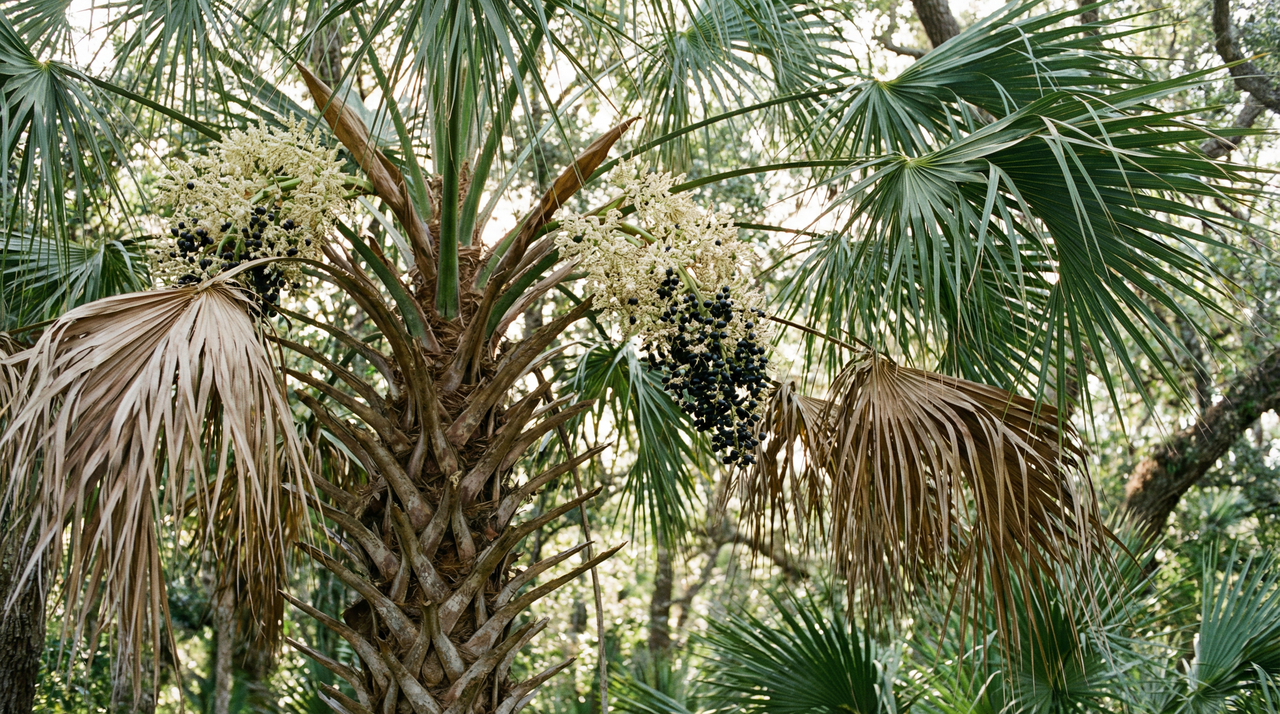
Few native trees possess the stubborn resilience of the palmetto (Sabal palmetto). During the Revolutionary War, British warships bombarded Fort Moultrie on Sullivan's Island, South Carolina, and the cannonballs kept bouncing off the walls. Not because the fort was particularly well-built, but because the walls were made from palmetto logs, and palmetto wood is so fibrous and spongy that it absorbs impact rather than shattering under it.[1] That single biological quirk changed the outcome of a battle. It's also, I'd argue, the best possible introduction to how this plant operates in the world: quietly, stubbornly, by refusing to break.
I've planted Sabal palmetto in coastal food forests where nothing else would establish, watched it shrug off saltwater flooding that killed neighboring trees, and seen it come back from fire with a composure that felt almost deliberate. Most gardeners either take it for granted as a landscape filler or overlook it entirely because it doesn't fruit quickly or fit neatly into the "productive plant" category. Both responses miss the point. This is a plant with a history as layered as its fibrous trunk, and understanding it changes how you design with it.
Origin and History of Palmetto (Sabal palmetto)
Botanical Background and Native Range
Sabal palmetto is about as native as a plant can get to the southeastern United States. Its range stretches from coastal North Carolina south through Florida and west into Texas, with additional populations in Mexico and the Caribbean.[2][3] What makes it remarkable isn't just where it grows, but the conditions it tolerates: poor sandy soils, periodic flooding, salt spray, and the kind of sites where most trees simply give up.[4][5] I've specified it on coastal restoration projects where I needed a canopy element that could take a direct hit from salt-laden wind and still be standing a decade later, and it has never let me down.
The tree is polycarpic, meaning it flowers and fruits repeatedly throughout its life without dying after reproduction. It lives a long time to do it: 80 to 200-plus years under natural conditions, with first flowering typically around 10 to 15 years and fruiting following a few years after that.[2][6] Its relationship with disturbance is nuanced: after a hurricane, Sabal palmetto shows 80 to 90 percent survival rates, with flexible trunks that bend rather than break and basal sprouting that restarts growth after damage.[7][8] Fire is more complicated: adult trees benefit from burns that reduce competition, but intense fires can push seedling mortality higher.[9] Recruitment actually picks up in disturbed wetland and post-fire areas, since the seedlings struggle to establish in dense shade.[10] The primary threat to individual longevity isn't storm or fire but the palmetto weevil, which bores into stressed trees and can cut a centuries-long lifespan dramatically short.[11]
The common name "Cabbage Palm" comes directly from human experience with the tree: the young inner growth, known as "swamp cabbage" in the Carolinas, has a pale, cabbage-like appearance and was eaten as a food source long before European settlement.[12] Despite all of this, the species is currently listed as Least Concern by the IUCN, though habitat loss from coastal development, sea-level rise, and repeated hurricane seasons remain genuine long-term pressures.[4]
Visual Characteristics
Mature Sabal palmettos typically reach 30 to 60 feet, with champion specimens pushing past 80 feet and trunk diameters that can exceed 36 inches in the largest recorded individuals.[13][14] The trunk starts with a swollen, bottle-shaped base in young plants and matures into a straight column textured with the fibrous, diamond-patterned remnants of old leaf bases.[15] One of the first things I point out when teaching identification is the leaves: costapalmate fans 4 to 6 feet long, green on top and distinctly silvery-glaucous on the undersides.[16] That glaucous underside shows up early in seedlings, which is a useful field marker when you're sorting young palmettos from other seedlings in the nursery or the wild. The shallow, fibrous root system spreads horizontally near the surface, which partly explains both its wind resilience and its tolerance for the thin, often saturated coastal soils it calls home.[17]
Traditional and Cultural Uses
Carl Linnaeus first formally described the species in 1753 as Palma palmetto, though it was later reclassified into the genus Sabal.[18] But indigenous peoples across the Southeast had already been working with this palm for generations by then. The Seminole, Timucua, Calusa, and Catawba all used it extensively: the heart of the tree as a food source rich in vitamins A and C, the leaves for weaving baskets, thatching roofs, and making mats, and the berries medicinally for urinary complaints, respiratory issues, and as a general tonic.[19][20] Spanish colonists arriving in the 16th through 18th centuries adopted many of these same uses, incorporating palm fiber into mission architecture and tabby construction and sometimes fermenting the heart into alcohol.[21]
Cutting the apical meristem for heart-of-palm harvesting kills the tree.[22] I don't recommend it in modern landscape settings where this palm functions as a keystone species for dozens of other species. The commercial uses that grew from indigenous knowledge have also raised legitimate concerns about appropriation without acknowledgment, and those conversations matter in regenerative design circles. The contrast with its close relative, Bermuda palmetto (Sabal bermudana), makes the point sharply: that species, used for the same thatching, weaving, and construction traditions, is now critically endangered with fewer than 100 mature individuals remaining due to overharvesting and habitat loss.[23] I only source nursery-grown stock for my projects, and this is exactly why.
Historical Significance and Fun Facts
Sabal palmetto carries a remarkable piece of American history in its wood. As demonstrated during the 1776 Battle of Sullivan's Island, those same spongy palm logs famously absorbed British cannonballs, a property of the palm's soft, spongy, fibrous interior that no one had deliberately engineered but everyone quickly recognized.[24][25] The same flexible structure that let those logs absorb cannonballs is what lets mature palmettos survive Category 3 winds while oaks and pines fall around them. I've walked sites after major storms and seen this play out firsthand. That resilience earned the palmetto the nicknames "sponge tree" and "Liberty Tree," and eventually state tree status in both South Carolina (1939) and Florida (1953), with its silhouette prominently featured on the South Carolina flag to this day.[26][27] For a tree that thrives in marginal, difficult conditions, that's a remarkable cultural footprint, and it's part of why I find this species so compelling to work with.
Palmetto Varieties and Cultivars
Sabal palmetto is a plant where the nursery world has done more interesting work than the taxonomists. Botanically, it has very few formally recognized cultivars, varieties, or subspecies, since it's primarily propagated from seed and wild-collected material.[28] But over decades, keen-eyed growers have pulled exceptional individuals from wild populations and named them for traits that genuinely matter to designers: compact size, cold hardiness, and foliage color you can actually plan around.[2][29]
Notable Cultivars of Sabal palmetto
For most homeowners, size is the first question. A wild Florida sabal palmetto palm can push 40 to 80 feet tall, which is magnificent but not exactly practical under a power line or in a suburban courtyard. That's where the compact selections earn their keep. I've used dwarf cultivars with clients who fell in love with the look of palmetto but had a 15-foot vertical budget to work with, and the difference is immediately legible in the design. 'Compacta' (sometimes sold as 'Dwarf Palmetto') maxes out around 10 to 15 feet with a dense, umbrella-shaped crown.[30] 'Taylor's Dwarf' is slower-growing still, typically landing at 6 to 8 feet, and works well in tight spots where you'd otherwise have no business planting a palm.[29] 'Lisa' is the most diminutive of the bunch at 4 to 6 feet with a tidy rounded canopy.[29]
For gardeners pushing into zone 7, 'Birmingham' is the name to know. It was selected specifically for enhanced cold tolerance from a superior wild specimen and is reliably hardy into USDA zone 7.[29] I've seen it used successfully in marginal climates where people assumed any palmetto was out of reach. On the color side, 'Georgia Blue' and 'Carolina Blue' offer genuinely striking blue-gray fronds drawn from southeastern coastal populations.[29] The blue-gray really does pop against darker-leaved companions like wax myrtle or live oak in a way the standard green form just doesn't. The typical 'Florida' form remains the default in native landscaping, representing the reliable wild-type most people picture.[29] A variegated form called 'Variegata' exists, but it's uncommon and reportedly unstable, so I'd treat it as a curiosity rather than a landscape staple.
By contrast, Bermuda palmetto (Sabal bermudana) has no widely recognized named cultivars at all; cultivation sticks to the straight species.[31] That gap makes the breadth of selection available in the Florida sabal palm look downright generous.
Sourcing Palmetto Plants and Seeds
Across Central and South Florida, cabbage palmetto is practically a commodity at native plant nurseries, which is a good thing because it means you have real choices on quality and provenance. Availability thins out as you head north, but mail-order options exist.[15][3] Reputable sources include Fairchild Tropical Botanic Garden, Arrowhead Native Gardens, and Florida Trees Nursery for containerized plants; for seed, Sheffield's Seed Company and Carolina Native Nursery both carry cultivated stock.[32][33][34][35] Budget roughly $10 to $60 for small 1-to-3-foot plants, $40 to $150 for 4-to-6-foot specimens, and anywhere from $150 to well over $2,000 for the big landscape-ready trees.[36]
There are no significant legal hurdles here. As the official state tree of both Florida and South Carolina, Sabal palmetto carries no invasive or noxious-weed designation, and procurement is straightforward from reputable vendors.[37][38] Where I do get particular is provenance. I always ask for documentation confirming nursery-propagated rather than wild-dug stock, and I've found that reputable Florida growers are almost always happy to provide it.[39][40] Supporting nurseries affiliated with botanical gardens or native-plant conservation societies is the cleanest path to stock that's both ethically sourced and correctly labeled.
Palmetto Propagation and Planting (Sabal palmetto)
Seed is the primary propagation method for Sabal palmetto, and for home gardeners it's really the only practical one.[28][41] The catch is that these seeds are recalcitrant, meaning they're sensitive to desiccation and simply don't tolerate the dry storage conditions we use for most garden seeds.[42][43] They need to stay moist, around 30-50% moisture content, and cool (5-15°C) to remain viable, and even under ideal storage they'll only last a year or two at most.[44] Fresh is genuinely best here, not just a preference.
Propagation Methods for Sabal palmetto
I've started Sabal palmetto from locally collected fresh seed several times, and every batch where I cleaned the pulp immediately after harvest outperformed any seed I tried to hold onto. That sticky fruit flesh is an invitation for fungal rot, and it works fast. Rinse the seeds the same day you collect them. The seeds themselves are small, ovoid to ellipsoid, measuring roughly 1.0-1.5 cm long by 0.8-1.2 cm wide, and they shift from green or yellow to dark brown or black when ripe.[45][46] They also exhibit polyembryony, meaning a single seed can contain multiple embryos from nucellar tissue, which is biologically interesting but doesn't mean you'll get clones. The plant is cross-pollinated, so seedlings carry unique genetic combinations and show reliable phenotypic variation rather than carbon copies of the parent.[47][48]
If you're lucky enough to have a mature specimen that's produced offsets, division is an option. Remove pups that are at least one-third the parent's size, keeping roots intact, treat cut surfaces with fungicide, and plant into sandy soil kept consistently moist until they establish.[15] It's less common than starting from seed, but it can work in spring with a little patience. Tissue culture achieves 70-90% success rates in laboratory settings using shoot tip explants, but it requires specialized equipment and media that aren't remotely practical outside a research facility.[49] Grafting and cuttings are rarely successful given the monocot architecture of palms and their poor adventitious rooting, so skip both.[50]
Germination Timeline and Seed Requirements
Soak seeds for 24-48 hours before sowing, or lightly scarify the seed coat. Either method helps water penetrate and speeds germination. Maintain soil temperatures between 70-90°F (21-32°C) throughout the process. Under these conditions, expect germination in 1-3 months with success rates somewhere between 50-80%, though fresh seeds sown immediately after harvest routinely push toward 90% or better.[28][51] This mirrors what I've seen starting other slow-growing palms: timing and freshness are the variables that move the needle most.
Spring through early summer, roughly March through June, is the optimal window, when humidity is climbing and temperatures support consistent warmth.[28] Avoid starting seeds when nighttime temperatures drop below 65°F; germination stalls and rot risk climbs. Wait to transplant seedlings until they've developed 3-4 true leaves, which typically takes 1-2 years, since moving them earlier risks disrupting root development.[52][53] Trunk formation generally begins around year 3-5. For anyone primarily interested in berry production, know that seed-grown plants typically take 8-15 years to reach fruiting maturity.[54] Most growers I know have made peace with that timeline because the structural and wildlife value arrives long before the fruit does.
Soil, Site Selection, and Planting Technique
Sabal palmetto tolerates a remarkably wide pH range (4.5-8.5), but targets a sweet spot of 6.0-7.0 for optimal uptake.[52][55] I test soil before planting any palm, and I've corrected iron deficiency showing up as interveinal chlorosis with targeted foliar sprays when pH was creeping too alkaline. Sandy or loamy, well-drained soils are ideal, though it tolerates clay as long as drainage is adequate. What it won't tolerate is compacted, oxygen-depleted soil around its fibrous shallow root system, so avoid heavy clay with persistent wetness.[56]
Young plants prefer full sun to partial shade, and I've had good results using temporary shade cloth in that first season to buffer intense afternoon sun in hot subtropical settings. Mature specimens thrive in full sun, but seedlings under water stress plus intense sun will scorch.[57][58] If you're planting the smaller Dwarf Palmetto (Sabal minor) instead, it handles more shade and tolerates flooding better, which makes it a useful option for wetter or shadier woodland-edge spots where Sabal palmetto wouldn't shine.[59]
For direct sowing, plant seeds about 1/4 inch deep in a moist but well-draining sandy mix, amended with pine bark if needed for drainage. Keep the medium consistently moist without waterlogging throughout germination. Once transplanted to the landscape, plan on about an inch of water per week through the establishment period.[41][51]
Spacing and Early Establishment
Mature Sabal palmetto reaches 30-40 feet tall with a crown spread of 10-20 feet, growing at about 1-2 feet per year once established.[52][60] Standard landscape spacing is 10-15 feet apart, though you can tighten to 6-8 feet for a hedge effect or spread to 15-20 feet for windbreaks and rows.[61] If you're working with Dwarf Palmetto in the same design, its smaller mature size of 2-6 feet tall calls for closer spacing of 3-10 feet, and it extends hardiness to zone 7 for growers at the northern edge of palmetto territory.[62]
Plant in spring after the last frost, or in fall in mild climates, to give roots the best possible window before temperature extremes set in. Dig the hole twice as wide as the root ball, keep the root flare at grade, and resist the urge to amend heavily since these palms evolved in lean soils. The first 1-2 years are the most critical; once that fibrous root system has spread and deepened, you'll have a tree that can handle drought, salt, and the occasional hurricane with minimal intervention from you.
Cabbage Palmetto Care Guide: Growing and Maintaining Sabal palmetto
If there's one thing I've come to appreciate about Sabal palmetto after years of working with southeastern coastal landscapes, it's that this palm rewards patience and restraint more than attention. The first couple of years demand some hands-on care, but once it's established, stepping back is often the most useful thing you can do.
Sunlight Requirements for Healthy Growth
Full sun is where palmetto thrives. Give it at least six hours of direct light daily and you'll get the strongest form, best frond development, and most consistent flowering.[16][63] It can tolerate partial shade, especially in hotter inland sites, but growth slows and the form becomes less compact. In my experience, plants sited in dappled light stretch toward openings and lose that characteristic upright silhouette. For site selection, think open dunes, coastal hammock edges, and any sunny spot with reasonable drainage. Sabal minor, by contrast, handles shade more gracefully, but Sabal palmetto is fundamentally a full-sun species.
Watering Needs and Drought Tolerance
The palmetto's native range tells you everything about its water preferences. It evolved on coastal plains through periodic flooding, salt spray, and extended dry spells, in sandy or loamy soils with a wide pH tolerance (roughly 5.5 to 7.5, and it'll push that range further in either direction).[3][64] What it dislikes is constant saturation. Standing water around the roots is the fastest route to problems.
Young plants need consistent moisture during establishment, about one to two inches of water per session, two to three times per week in the first growing season.[65] After that first year or two, the shallow but extensive fibrous root network kicks in and the palm becomes genuinely drought-tolerant, capable of going four to eight weeks without irrigation in zones 8 through 11.[16][66] I've watched established specimens in zone 9B sail through dry summers with zero supplemental water. Those thick, waxy, leathery fronds aren't just beautiful; they're cutting transpiration losses in the same way you see in saw palmetto along Florida's scrub edges.[67] Over-watering signs to watch for include yellowing fronds and mushy roots; under-watering shows up as dry, brittle foliage with brown tips.[36]
Feeding and Fertilization Best Practices
Sabal palmetto is a moderate feeder that evolved on nutrient-poor soils, so it's efficient with what it gets.[68][63] The formula I use is a slow-release palm fertilizer with an NPK ratio around 8-2-12 or 12-4-12, with micronutrients included, particularly magnesium, manganese, and iron.[55][69] For young trees, two to four split applications between March and September works well, broadcast around the drip line and watered in. Wait six to eight weeks after planting before starting. Mature specimens typically need only one or two applications per year.[28]
On sandy or alkaline soils, watch the fronds for early deficiency signals. Potassium deficiency shows up as necrosis and a frizzling at leaflet tips on older fronds; magnesium presents as yellowing from tip inward on the older leaves, sometimes called "frizzle top."[70][55] I caught potassium deficiency on a young Sabal palmetto in a sandy central Florida yard by noticing those classic frizzled tips, and a targeted potassium and magnesium application turned things around within a few weeks. Over-fertilizing is equally damaging: too much nitrogen on sandy soils causes root burn and marginal frond necrosis, so follow rates carefully and soil test every year or two.[71]
Heat and Frost Tolerance
Rated for AHS heat zones 8 through 11, mature palmetto handles up to around 110°F in humid conditions with minimal damage, though flowering and fruiting may dial back above 100°F before the plant bounces back.[16][15] Seedlings are more vulnerable above 95°F, so in the establishment phase, 30 to 50 percent afternoon shade, deep morning irrigation, and a good mulch layer will carry them through summer heat.[64]
On the cold end, established specimens are hardy from USDA zone 8a through 11, tolerating brief dips to 10 to 20°F, and mature trees have survived down to 5°F with significant frond damage but an intact trunk.[52][16] Young plants are more vulnerable below 20°F. The critical vulnerability is the apical meristem: if the growing tip is exposed to prolonged cold below about 20°F, there's no recovery.[57] In zone 8 and colder margins, I protect the crown with four to six inches of organic mulch at the roots and burlap wrapping around the trunk and crown before hard freezes.[72][73] I've seen marginal zone 8 specimens come back beautifully after a hard winter when they were properly mulched; the palms that didn't survive were almost always ones where someone got impatient and pruned the crown before the freeze had fully passed.
Pruning, Maintenance, and Seasonal Care
Palmetto pruning philosophy is simple: less is more, and protecting the apical meristem is non-negotiable. Remove only fronds that are completely brown and dry, cutting close to the trunk with sterilized, sharp tools. Never remove green fronds, never cut into the central bud, and never remove more than about 20 percent of the canopy at once.[74][63] I've advised clients against the so-called "hurricane cut" that strips most of the fronds off for years, both because research doesn't support it and because I've watched stressed, slow-recovering palms in multiple landscapes following that treatment. The palm is already hurricane-resilient when left intact; the aggressive cut weakens rather than protects it.
Spent flower stalks and seed heads can be removed optionally to reduce litter, but it's cosmetic, not necessary. Keep two to three inches of organic mulch around the base, pulled back from the trunk itself. Harvesting heart of palm from a landscape tree is regulated or prohibited in many contexts.[15] In my native plant restoration work, I've seen enough wild stands decline from this practice to feel strongly about leaving trees standing.
Seasonal Rhythm and Growth Cycle
Patience is the prerequisite here. Sabal palmetto is a slow-growing evergreen that takes decades to reach its mature 30 to 40 feet, so gardeners expecting rapid results should recalibrate expectations before planting.[75] The calendar rhythm for care is fairly intuitive once you know the phenology: flowers open May through July on inflorescences up to eight feet long, with fruits ripening to black drupes between August and October.[76][58] Time your fertilizer application in early spring to support that flowering push, prune in late winter before new growth emerges, reduce irrigation through the cooler months, and supplement water during the hottest dry stretches of summer.[75] Sabal minor follows a similar seasonal pattern but extends the useful range into zone 7 with greater cold and flood tolerance, and it needs even less fertilization than the main species.[59] After watching a mature specimen cycle through years of flowering, drought, and the occasional hard freeze without missing a beat, I have genuine affection for how little this palm asks of you once it's settled in.
When and How to Harvest Palmetto
Palmetto offers more than one thing worth harvesting, but not all of those harvests are equal in what they cost the tree. Understanding the difference between sustainable, repeatable yields and the one-time terminal option shapes everything that follows.
Timing and Ripeness Cues for Palmetto Fruits and Hearts
Sabal palmetto flowers in spring, typically April through June, and then takes another four to six months for fruits to develop fully.[77][78] That puts peak ripeness from September through November in Florida, though a long, hot summer can push things earlier. I time my own fruit collection for the exact week the berries shift from dull purple to glossy jet-black and detach with the gentlest tug. If they resist, I wait. Pull them green and you'll get bitterness; ripe fruits are soft, black, and yield easily from the cluster.[79][3] The heart, technically harvestable after ten to twenty years depending on growth rate, is something most home gardeners will never reach anyway since these trees put on only one to three feet per year.[6][17] By the time a sabal is big enough to consider, it's been years of fronds, wildlife habitat, and seasonal beauty. That context matters.
Sustainable Harvesting Techniques and Yields
Harvesting the heart of palm from a wild Sabal palmetto in Florida is illegal.[80] Even for cultivated palms, permits are required, and the harvest always kills the tree. Having worked on restoration projects across the state, I've watched unregulated heart harvesting set back palm populations for decades. It's simply not worth it. Commercial heart-of-palm comes from managed plantations under permit; that's where it should stay.
The good news is that fronds and fruits offer genuinely renewable yields. For fronds, remove only outer mature leaves, staying under twenty to thirty percent of the crown at one time, and never touch the central bud.[81][82] I pull a few each late summer for garden stakes and that's plenty. For fruits, collect in late summer to early fall once berries are fully black and soft; overharvesting in wild stands has contributed to local population declines, so take what you'll actually use.[83][82]
Flavor Profiles and Expected Yields
The heart of palm, when harvested at the right stage, is mild, slightly sweet, and nutty with a texture reminiscent of artichoke hearts or asparagus.[2][84] Fresher than anything canned, honestly. The fruits are a different experience entirely: small, olive-sized, with a sweet date-like quality and a mild astringent finish.[2][3] There's not a lot of pulp around that big seed, so expect to process a substantial cluster for a modest yield. If you're growing Dwarf Palmetto (Sabal minor), its fruits are equally sweet when ripe, and its heart is notably more tender and juicy than the taller species.[85][86] Fronds, meanwhile, are the most reliably renewable material this palm offers, useful for thatching, weaving, and mulch season after season.[87][81] Go in with realistic expectations and you'll never be disappointed.
Palmetto Preparation and Uses
Culinary Uses of Cabbage Palmetto Hearts, Fruits, and Seeds
Florida and South Carolina named the palmetto their state symbol for good reason, and the Calusa, Timucua, and Seminole knew its edible potential long before European settlers arrived. The heart, that tender terminal bud at the crown, is the part most people have heard of, and the flavor genuinely earns the attention: mild, nutty, faintly sweet, with a creamy texture that works raw, roasted, boiled, or folded into stews and pies.[2][88] I've handled fresh hearts on a couple of carefully processed specimens, and what struck me most was that crisp, faintly sweet crunch before cooking, somewhere between young artichoke and fresh bamboo shoot. Treat it like the canned heart of palm from the grocery store and you won't go wrong.
Here's the non-negotiable caveat: harvesting that heart kills the tree.[88] The bud is the only growing point, and once it's gone, so is the palm. Raw hearts also contain cyanogenic glycosides capable of releasing cyanide, so proper cooking with multiple water changes isn't optional, it's food safety.[88] Wild harvest was never a primary staple even for the Native groups who practiced it, precisely because of the labor and permanent loss involved, and today commercial harvesting is banned or heavily regulated in Florida to protect wild populations.[89][90] In years of designing native landscapes across the Southeast, I've never once recommended harvesting hearts from a landscape tree. The tree is simply too valuable standing.
The fruits are a different story entirely. Those ripe black, olive-shaped drupes carry a sweet, date-like flavor with hints of pineapple[2][91] and can be eaten fresh, dried, or cooked into jellies, jams, and wines[92], all without harming the tree. I encourage clients to collect fallen fruits for small-batch jelly rather than anything that requires cutting. Seeds are hard and starchy with a slight bitterness; shelling and then boiling or grinding them into flour makes them usable, but they're not something you'd snack on raw in any quantity.[91] Young roots were historically boiled like turnips for their starch[93], and leaf extracts have been used in teas with diuretic and antioxidant properties.[94] Sustainable practice means collecting fallen fruit, getting permits where required, and leaving the canopy intact.[95][58]
Medicinal Preparations and Modern Extracts
Those same berries that Native communities once dried, preserved, and steeped have become the basis for one of the more recognizable botanical supplements on pharmacy shelves. Standardized liposterolic extracts, typically capsules or softgels standardized to 85 to 95 percent fatty acids, are the form used in clinical research on benign prostatic hyperplasia, with most trials working from 160 to 320 mg daily.[96][97] That specificity matters: a handful of dried berries is not the same thing as a product standardized to a defined phytochemical profile, and the clinical evidence speaks to the extract, not the raw fruit. If you're using palmetto medicinally, a quality standardized supplement is the responsible path, not wild harvesting. The berries have traveled a long way from Seminole preserves to evidence-based phytotherapy, and the most respectful thing we can do with that history is use the plant thoughtfully.
Palmetto Health Benefits
Long before anyone packaged saw palmetto extract into a supplement capsule, the Seminole and Creek were treating urinary tract complaints, reproductive disorders, and infected wounds with the berries and preparations of cabbage palmetto.[98][99][20] This wasn't incidental folk medicine. The plant was woven into a detailed indigenous pharmacopoeia alongside food and material uses, with berries specifically applied to cystitis, gonorrhea, and enlarged prostate long before Western science had a model for why they worked.[100] Working with southeastern native plants as long as I have, I've come to see these ethnobotanical traditions as the first clinical data set, imperfect but genuinely informative about where to look for biological activity.
Traditional and Modern Medicinal Uses of Palmetto
The primary mechanism that modern research has focused on is inhibition of 5-alpha reductase, the enzyme that converts testosterone to dihydrotestosterone (DHT). Elevated DHT is a key driver of benign prostatic hyperplasia, and Sabal palmetto extracts have demonstrated inhibition of both type I and type II isoforms of that enzyme in lab settings.[101][102][103] Preclinical studies also show the plant inhibiting inflammatory mediators like prostaglandins and cytokines through the NF-kappaB pathway, and antioxidant assays have measured free-radical scavenging capacity comparable to vitamin E.[104][101] In vitro work has even confirmed antimicrobial activity against Staphylococcus aureus and some fungi, largely attributed to lauric acid.[105]
For BPH specifically, I'd describe the clinical picture as genuinely mixed. Some trials have shown modest improvements in urinary flow and symptom scores, but the Cochrane review found saw palmetto no more effective than placebo for reducing prostate size or symptom severity in larger, well-controlled studies.[106][97][96] When clients ask me about palmetto berry supplements alongside other botanical approaches, I frame it honestly: the preclinical evidence is biologically plausible and the traditional use is well-documented, but I wouldn't position it as a first-line treatment. As a complementary element within a broader wellness strategy, a standardized extract at 160-320 mg daily is the range most commonly studied.[107][108] The fruit is the medicinal focus here, richer in the lipids and sterols that drive bioactivity, with extraction method and plant part both influencing what you end up with.[101]
Key Phytochemicals in Palmetto: Fatty Acids, Phytosterols, and Flavonoids
The berries are phytochemically dense in a way that makes the traditional reputation make sense. The lipophilic fraction makes up 80-95% of the bioactive extract and is dominated by free fatty acids: lauric, oleic, myristic, palmitic, stearic, and linoleic.[101][109] The phytosterol fraction includes beta-sitosterol at around 0.2-0.4%, along with campesterol and stigmasterol, and these sterols are directly implicated in the hormonal activity discussed above.[110][111] Flavonoids, including rutin, quercetin, and kaempferol, along with phenolic acids like ferulic, gallic, and chlorogenic, round out the profile and contribute the antioxidant and anti-inflammatory activity.[112]
The leaves carry higher flavonoid and phenolic concentrations than the fruit, while bark holds tannins and roots yield saponins and triterpenoids, so where you harvest matters for what you get.[113][114] Secondary compounds like sesquiterpenes (alpha-pinene, beta-pinene, limonene) appear in leaf essential oils and have demonstrated antimicrobial activity, while alkaloids are absent or trace at best.[110][115] One thing I find genuinely fascinating as a designer working in zone 9B is that this chemistry isn't static. Flavonoid content in leaves peaks in summer, and both soil composition and regional climate shift the phytochemical profile measurably between populations.[116][117] The stressed, heat-baked specimens I see growing in compacted sandy soils often produce noticeably more pungent fruit than those in irrigated landscapes, which tracks with what the literature suggests about environmental stress and secondary metabolite accumulation.
Nutritional Profile of Palmetto Hearts and Fruits
The edible heart of palm, harvested from the apical bud, is low-calorie (roughly 20-30 kcal per 100g), high in water (85-90%), and offers modest fiber, potassium, calcium, and vitamin C.[118][119] The fruits contain 40-50% lipids and provide 100-150 kcal per 100g, with vitamins A and E in small amounts alongside the essential fatty acids that make them medicinally interesting.[119]
The apical meristem is the sole growing point, and once it's gone, so is the palm.[120] Early in my career I harvested a heart from a landscape tree that was being removed, reasoning it was going anyway. Watching the stump sit there was enough to make me reconsider wild or casual harvest entirely. Commercial heart of palm comes from managed plantations of other species like Euterpe oleracea for good reason.[121] In a regenerative landscape, the nutritional value of the heart isn't worth the permanent loss of a keystone tree that may have taken a decade or more to reach maturity. The fruits are where I'd focus for any edible or medicinal interest, since they can be harvested without harming the plant.
Safety Considerations and Potential Side Effects
Sabal palmetto itself is non-toxic to humans, dogs, cats, horses, and most livestock.[122][53] Ripe fruits are edible and historically eaten; large quantities of unripe fruits or berries from related species may cause mild GI upset due to saponin content, but that's a dose issue rather than a toxicity concern.[123] The side effects commonly attributed to "saw palmetto" supplements -- headache, nausea, dizziness, and rare hepatotoxicity -- refer to Serenoa repens extracts, not Sabal palmetto directly.[96][107] Contraindications for those supplements include pregnancy, breastfeeding, hormone-sensitive conditions, and potential interactions with blood thinners or hormone therapies, so anyone using standardized extracts should bring that conversation to a healthcare provider.[124][125]
The identification issue is one I take seriously after years of specifying native palms and educating clients in Florida landscapes: cabbage palmetto and sago palm (Cycas revoluta) are genuinely confused by homeowners, and that confusion can be dangerous. Sago palm contains cycasin, a compound capable of causing severe liver failure in both pets and people.[126][28] Cabbage palmetto has none of that chemistry. Its insect-pollinated flowers produce minimal airborne allergens, and while the leaf margins can cause mechanical skin irritation during pruning, there are no cyanogenic compounds present.[127][128] Proper identification is non-negotiable before any foraging or medicinal use.
Palmetto Pests and Diseases
Sabal Palmetto's Natural Pest Resistance
Part of what makes Sabal palmetto so satisfying to work with in subtropical food forest designs is how much the plant does for its own defense. The physical architecture alone is impressive: silica phytoliths embedded in the fronds, dense sclerenchyma fibers, and a thick waxy cuticle combine to make the foliage genuinely tough to penetrate.[129][130] I've noticed firsthand that those upright, waxy fronds shed water in a way that actively discourages scale insects from settling, especially compared to softer-leaved palms I've maintained in the same humid landscapes. Then there's the chemistry: tannins at 5-15% dry weight, plus phenolics, flavonoids, and saponins that make the tissue bitter and inhospitable to most herbivores.[131][132] If you've ever handled fresh palmetto fronds and noticed that faint astringent quality, that's the tannins at work. Compared to more palatable but pest-prone species like queen palm, this plant just isn't that appetizing.
Common Pests of Sabal Palmetto
The threat that deserves the most attention is the red palm weevil (Rhynchophorus ferrugineus), an invasive that bores into trunks and crowns and can kill a mature tree before symptoms are obvious from the ground.[133][134] During my routine late spring and early summer pruning visits, I always scan the trunk for entry holes and frass before I do anything else. That habit has caught infestations early enough to save trees. Pheromone traps are worth installing in high-risk properties, especially anywhere in Florida where warm, humid conditions favor the weevil's rapid spread.[135]
Beyond the palmetto beetle and weevil threat, scale insects (particularly Aspidiotus destructor) are the most common nuisance, sapping fronds and producing honeydew that leads to sooty mold.[136][137] Horticultural oil handles most infestations without heavy chemistry. Spider mites (Oligonychus and Panonychus spp.) show up during dry, hot stretches, causing stippling and webbing; a good overhead rinse and a bump in humidity usually resolves minor outbreaks before miticides are needed.[136] Leaf skeletonizers, mealybugs, aphids, and burrowing nematodes round out the list, but in healthy established specimens these rarely do more than cosmetic damage.[136][138] Stress changes that equation fast. Plants under drought, flood, or drainage pressure in Florida's subtropical conditions become far more vulnerable, and younger specimens are especially exposed.[139][138]
Disease Resistance and Major Fungal Threats
Sabal palmetto holds up well against the diseases that devastate other palm species, showing strong resistance to both lethal yellowing and Fusarium wilt, two pathogens that have wiped out entire palm populations across Florida.[140][141] Bacterial and viral diseases are rarely a concern.[140] The real fungal threats are environmental in character: Ganoderma zonatum (butt rot) thrives in the 25-35°C range, Phytophthora species take hold in saturated soils, and leaf spot fungi (Bipolaris setariae, Cercospora spp.) proliferate in high humidity.[142][143][142] Cold stress below 0°C can also weaken defenses and open the door for opportunistic pathogens, which is worth keeping in mind for growers at the northern edge of the palm's range. Maintaining soil pH between 6.0 and 7.5 supports the plant's baseline disease resistance.[144]
Prevention and Management Strategies
My approach with palmetto in client designs starts long before any pest or disease shows up: site selection and drainage are the first line of defense, not something to revisit after problems emerge. Good airflow reduces leaf spot pressure. Avoiding trunk wounds during maintenance eliminates the main entry point for Ganoderma, and using sterilized tools between trees prevents spreading pathogens you can't see.[145][143] When Ganoderma does appear, I recommend removing and destroying the infected tree. There's no fungicide that controls it, and I've never seen a half-measure work.[142] Phytophthora responds to phosphonate applications, and copper-based fungicides combined with better air circulation can bring leaf spots under control.[146][145] For insects, an integrated approach combining monitoring, horticultural oils, insecticidal soaps, and targeted biological controls keeps intervention proportionate to actual risk.[147] One thing I always remind clients: avoid broad chemical sprays anywhere near the flowers, where native pollinators are actively working.[148] The palmetto earns its reputation as a low-fuss native, and most of its problems trace back to site stress rather than inherent weakness.
Palmetto in Permaculture Design
Sabal palmetto earns its place in a designed system the same way it earns its place in a wild hammock: by being the plant that's still standing after the storm, the drought, and the salt-laden wind. For permaculture designers working along the Gulf and Atlantic coasts, that resilience isn't just interesting biology. It translates directly into lower maintenance, fewer replacements, and a canopy element you can actually build a food forest around.
Climate Adaptation and Suitable Zones for Sabal palmetto
Native to coastal regions from North Carolina through Florida and west to Texas, Sabal palmetto is reliably hardy in USDA zones 8a through 11, with mature plants tolerating brief dips to around 10°F.[3][149][16] It thrives in warm, humid conditions between 60°F and 90°F with annual rainfall in the 30 to 60 inch range.[75][58] That description fits most of the southeastern coastal plain almost perfectly, which is exactly why this palm feels inevitable in those landscapes.
What I find myself emphasizing when clients ask about cold hardiness is that the number on paper undersells the plant's real-world performance. Cold tolerance improves substantially with age[67][150]; in my zone 9b plantings, mature specimens sail right through brief freezes that leave younger palms looking rough. Young transplants do need a bit of protection at the colder edge of the range, and mulching around the root zone during the first few winters is worth the effort.[151] Once the deep fibrous root system is down, though, you can largely step back. Established plants push through multi-week dry spells without supplemental irrigation; that drought resilience is one of the main reasons the species makes sense in low-input coastal designs rather than fussier alternatives.[152]
The salt and wind tolerance deserves equal attention. Sabal palmetto withstands soil salinity up to 10 to 15 ppt and shrugs off direct salt spray[153][154], and after several seasons watching its costapalmate fronds flex dramatically in tropical-storm-force winds without shredding, I've stopped worrying about wind exposure when siting it. That behavior is structural, not lucky. It's now my default canopy choice for exposed coastal lots where other trees would need staking, babying, or replacing after every major blow.
Ecosystem Functions and Pollination Ecology
The long inflorescences, which can reach three to eight feet, emerge between April and July and produce small, cream-white, mildly fragrant flowers that draw primarily nitidulid beetles as their star pollinators, followed by halictid and andrenid bees, various flies, and secondarily wind.[155][156][157] Pollination success peaks when temperatures are in the 68 to 86°F range with relative humidity between 60 and 80 percent[156], which is another way of saying: design for diverse native habitat, and the system largely handles itself. I've noticed a clear surge in beetle activity at the palmetto inflorescences once the understory natives start flowering, and that observation shapes how I build guilds around this tree. Adding companion nectar sources, keeping broad-spectrum pesticides out of the picture entirely, and working with native pollinators rather than around them are the practical tools that improve reproductive success in managed settings.[158]
Contrast this for a moment with Bermuda palmetto (Sabal bermudana), a critically endangered island endemic whose flowers rely primarily on wind with insects in a secondary role, and which lacks the nectar production and fragrance that make S. palmetto such a pollinator magnet.[159][160] The comparison underscores how much ecological generosity the cabbage palm brings to a design.
Below ground, the fibrous root system is doing equally important work: stabilizing sandy soils, anchoring dunes and riverbanks, and building soil organic matter through leaf litter accumulation.[161][58] As a fire-, flood-, and wind-tolerant pioneer, it helps establish and sustain hammock, marsh, and maritime forest communities while yielding 10 to 15 tons per hectare of biomass that can be cycled back as mulch.[3][162] Its canopy and fruit also support birds, raccoons, and a wide range of insects[58], so you're getting wildlife habitat stacked on erosion control stacked on pollinator support, all from one tree.
Forest Layer Placement and Guild Companions
In natural ecosystems, Sabal palmetto operates as canopy or co-dominant, typically reaching 30 to 40 feet with exceptional individuals pushing toward 80 feet under ideal conditions.[3][163] In a food forest, it fills the same role: canopy anchor or sub-canopy element depending on what surrounds it and how much vertical space you're designing into.
The fronds cast dappled rather than dense shade, which means shade-tolerant edibles, berries, ferns, and nitrogen-fixing understory companions can perform well directly beneath mature palms.[164] Once I adjusted my expectations, I started planting with more confidence under established specimens and getting better results. Its wind resistance makes it a natural for coastal windbreaks and sandy slopes where you need something with roots strong enough to hold the soil and a form flexible enough to survive what the weather throws at it.
For designers working in smaller or more constrained subtropical spaces, Bermuda palmetto offers an interesting genus comparison at 10 to 16 feet[165], though its critically endangered status means it's not a practical planting choice outside conservation contexts. The point is that Sabal palmetto itself, with its variable height and adaptable form, already fits a wide range of design scales, from a windbreak specimen on a quarter-acre lot to the canopy anchor of a larger food forest guild in the coastal Southeast.
The Palm That Taught Me to Think in Centuries
I planted a Sabal palmetto at a client's coastal property eight years ago, and it's still what I'd call adolescent. That timeline humbles me every time I visit. Most of what I plant, I expect to see mature. This one I'm growing for someone who hasn't been born yet, and honestly, that feels like exactly the right relationship to have with a tree that outlasted hurricanes, colonization, and a war fought partly behind its logs.
Sources 165
- Fort Moultrie - South Carolina Encyclopedia ↩
- Sabal palmetto - Wikipedia ↩
- USDA Plants Database: Sabal palmetto ↩
- IUCN Red List: Sabal palmetto ↩
- Sabal palmetto (Cabbage Palmetto) ↩
- Sabal palmetto ↩
- Hurricane Impacts on Cabbage Palm (Sabal palmetto) Demographics in Florida ↩
- Hurricane Impacts on Cabbage Palms ↩
- Fire Regime Effects on Sabal palmetto Population Dynamics ↩
- Longevity and Recruitment Patterns of Sabal palmetto in Wetland Habitats ↩
- Palmetto Weevil: Rhynchophorus cruentatus ↩
- Missouri Botanical Garden Plant Finder ↩
- Missouri Botanical Garden Plant Finder ↩
- Florida Champion Big Trees ↩
- Sabal palmetto - University of Florida IFAS Extension ↩
- Sabal palmetto - Missouri Botanical Garden ↩
- University of Florida IFAS Extension - Sabal palmetto ↩
- Species Plantarum ↩
- Native American Uses of Sabal palmetto ↩
- Historical Uses of Sabal palmetto in Florida ↩
- Spanish Colonial Uses of Florida Plants ↩
- Sabal palmetto: The Cabbage Palm ↩
- Sabal bermudana - IUCN Red List ↩
- The Palmetto and the Revolutionary War ↩
- Fort Moultrie and the Palmetto Logs ↩
- Sabal palmetto: Florida's State Tree ↩
- State Tree: Cabbage Palmetto ↩
- Horticulture of Sabal palmetto - University of Florida IFAS Extension ↩
- Sabal palmetto Cultivars and Selections - Palm & Cycad Societies of the World ↩
- Missouri Botanical Garden Plant Finder - Sabal palmetto 'Compacta' ↩
- Sabal bermudana - Palm and Cycad Societies of Australia ↩
- Fairchild Tropical Botanic Garden Shop ↩
- Arrowhead Native Gardens - Natives to Buy ↩
- Sabal palmetto Seeds ↩
- Sabal palmetto - Cabbage Palm ↩
- Cabbage Palm Tree Costs in Florida ↩
- Florida's Invasive Plants ↩
- State Tree of Florida ↩
- Florida Native Plant Society - Find Native Plants ↩
- Florida Biodiversity Collaborative - Native Plant Nurseries ↩
- Sabal palmetto (Cabbage Palmetto) ↩
- Seed Information Database - Sabal palmetto ↩
- Seed Storage Behaviour of Sabal Species ↩
- Recalcitrant Seeds in Palms: Conservation Implications ↩
- Reproductive Biology of Sabal palmetto ↩
- Flora of North America: Sabal palmetto ↩
- USDA PLANTS Database: Sabal palmetto ↩
- Genetics of Sabal palmetto Pollination and Propagation ↩
- Micropropagation of Palms: Sabal palmetto ↩
- Grafting Palms: A Review ↩
- Cabbage Palm (Sabal palmetto) Production and Propagation Guide ↩
- Cabbage Palm (Sabal palmetto) ↩
- Sabal palmetto: The Cabbage Palm ↩
- Cabbage Palm (Sabal palmetto) Plant Guide ↩
- Nutrient Deficiencies of Palms ↩
- Sabal palmetto Plant Guide ↩
- Palms for Florida Landscapes ↩
- Sabal palmetto ↩
- Dwarf Palmetto (Sabal minor) ↩
- Sabal palmetto (Cabbage Palm) ↩
- Sabal palmetto (Cabbage Palm) ↩
- Sabal minor - North Carolina Extension Gardener Plant Toolbox ↩
- Cabbage Palm (Sabal palmetto) ↩
- Salinity Tolerance of Landscape Plants ↩
- Sabal palmetto - Cabbage Palm ↩
- Sabal Palms, 'Cabbage Palmetto' ↩
- Sabal palmetto ↩
- USDA PLANTS Database: Sabal palmetto ↩
- Fertilizing Palms in the Home Landscape ↩
- Nutritional Disorders of Palms ↩
- Palm Plant Disorders ↩
- Protecting Palms from Cold Damage ↩
- Palms in the Landscape: Frost and Freeze Damage Guidelines ↩
- Pruning Palms ↩
- Sabal palmetto (Cabbage Palm, Cabbage Palm, Palmetto, Sabal Palm) ↩
- Sabal palmetto: Cabbage Palm ↩
- Sabal palmetto ↩
- Phenology of Sabal palmetto ↩
- Cabbage Palm (Sabal palmetto) ↩
- Florida's Endangered and Threatened Species: Cabbage Palm Harvesting Regulations ↩
- Sabal palmetto: Cabbage Palm ↩
- Harvesting Sabal palmetto: Sustainable Practices for Heart of Palm ↩
- Propagation and Seed Collection of Cabbage Palm ↩
- Florida's Edible Native Plants: Sabal Palmetto ↩
- Sabal minor - Wikipedia ↩
- Dwarf Palmetto (Sabal minor) - Eat The Weeds ↩
- Palms of the Southeastern United States ↩
- Cabbage Palm Edible Uses and Harvesting ↩
- Sabal palmetto - Native American Ethnobotany Database ↩
- Sabal palmetto: The Cabbage Palm ↩
- Sabal palmetto: Edible Uses and Taste Descriptions ↩
- Florida Wildflower Foundation: Sabal palmetto ↩
- Kew Science - Sabal palmetto ↩
- Antioxidant Properties of Sabal palmetto Extracts ↩
- Sustainable Harvesting of Palms ↩
- Saw Palmetto for Benign Prostatic Hyperplasia ↩
- Saw Palmetto Extracts for Treatment of Benign Prostatic Hyperplasia: A Systematic Review ↩
- Ethnobotany of Sabal palmetto ↩
- Traditional Uses and Phytochemistry of Sabal palmetto ↩
- Ethnobotany of the Seminole Indians of Florida ↩
- Saw Palmetto for Benign Prostatic Hyperplasia ↩
- Mechanisms of Action of Phytotherapeutic Agents in BPH ↩
- Inhibition of 5-alpha-reductase by Saw Palmetto Extract ↩
- Antioxidant and Anti-inflammatory Activities of Sabal palmetto ↩
- Antimicrobial Properties of Saw Palmetto Extracts ↩
- Serenoa repens for benign prostatic hyperplasia ↩
- Safety and Toxicology of Saw Palmetto ↩
- Saw Palmetto - Mayo Clinic ↩
- Chemical Composition of Saw Palmetto Fruit ↩
- Phytochemical Analysis of Sabal serrulata (Saw Palmetto) Berry Extract ↩
- Chemical Composition and Bioactivity of Cabbage Palm (Sabal palmetto) ↩
- Chemical Constituents and Biological Activities of Saw Palmetto (Sabal serrulata) ↩
- Secondary Metabolites from Saw Palmetto: Flavonoids and Phenolics ↩
- Phytochemical Analysis of Sabal palmetto Fruit and Leaf Extracts ↩
- Antimicrobial Properties of Phenolic Compounds from Cabbage Palm (Sabal palmetto) ↩
- Seasonal Variation in Flavonoids of Sabal palmetto Leaves ↩
- Chemical Constituents of Saw Palmetto (Sabal palmetto) ↩
- Hearts of palm, raw ↩
- Nutritional Composition of Palm Hearts ↩
- Missouri Botanical Garden: Sabal palmetto ↩
- North Carolina Plant Naratives: Sabal Palmetto ↩
- Sabal palmetto - ASPCA Toxic and Non-Toxic Plants ↩
- Cabbage Palm Edibility and Uses - Eat The Weeds ↩
- Saw Palmetto - Mayo Clinic ↩
- Saw Palmetto - StatPearls - NCBI Bookshelf ↩
- Sago Palm Toxicity - ASPCA ↩
- Assessing the Allergenic Potential of Non-Frondiculate Palms ↩
- Toxicity of Palms to Animals - University of Florida IFAS Extension ↩
- Plant Finder: Sabal palmetto ↩
- Insect Resistance in Palms: A Review ↩
- Chemical Defenses in Sabal palmetto ↩
- Tannins and Plant Defense Against Insects ↩
- Red Palm Weevil in Florida ↩
- Red Palm Weevil: Threat to Florida Palms ↩
- Palmetto Weevil and Other Pests of Palms ↩
- Insects and Mites of Palms ↩
- Scale Insects on Palms ↩
- Pests of Palms and Cycads ↩
- Palms in the Landscape: Sabal Palms Under Attack ↩
- Sabal Palmetto: The Cabbage Palm ↩
- Lethal Yellowing of Palms ↩
- Ganoderma Root and Butt Rot of Palms ↩
- Phytophthora Crown Rot of Palms ↩
- Sabal palmetto: The Cabbage Palm ↩
- Phytophthora Crown, Butt, and Root Rot of Palms ↩
- Diseases and Pests of Palms ↩
- Integrated Pest Management for Florida Palms ↩
- Pests of Palms ↩
- Sabal palmetto - University of Florida IFAS Extension ↩
- Sabal palmetto ↩
- Sabal palmetto: Cabbage Palm ↩
- Palms for Central Texas Landscapes ↩
- Salinity Tolerance of Cabbage Palmetto (Sabal palmetto) ↩
- Adaptations of Sabal palmetto to Coastal Environments ↩
- Pollination Ecology of the Cabbage Palmetto, Sabal palmetto (Arecaceae) ↩
- Pollination Biology of Sabal palmetto in Central Florida ↩
- Pollinators of Woody Plants, Palms: Sabal palmetto L. ↩
- Habitat Restoration for Pollinators in Florida ↩
- IUCN Red List: Sabal bermudana ↩
- Pollination in Palms - New Phytologist ↩
- Erosion Control with Native Palms - NC State Extension ↩
- Florida Natural Areas Inventory - Sabal palmetto ↩
- Missouri Botanical Garden Plant Finder ↩
- Permaculture Plants: Cabbage Palm - Temperate Climate Permaculture ↩
- Sabal bermudana ↩