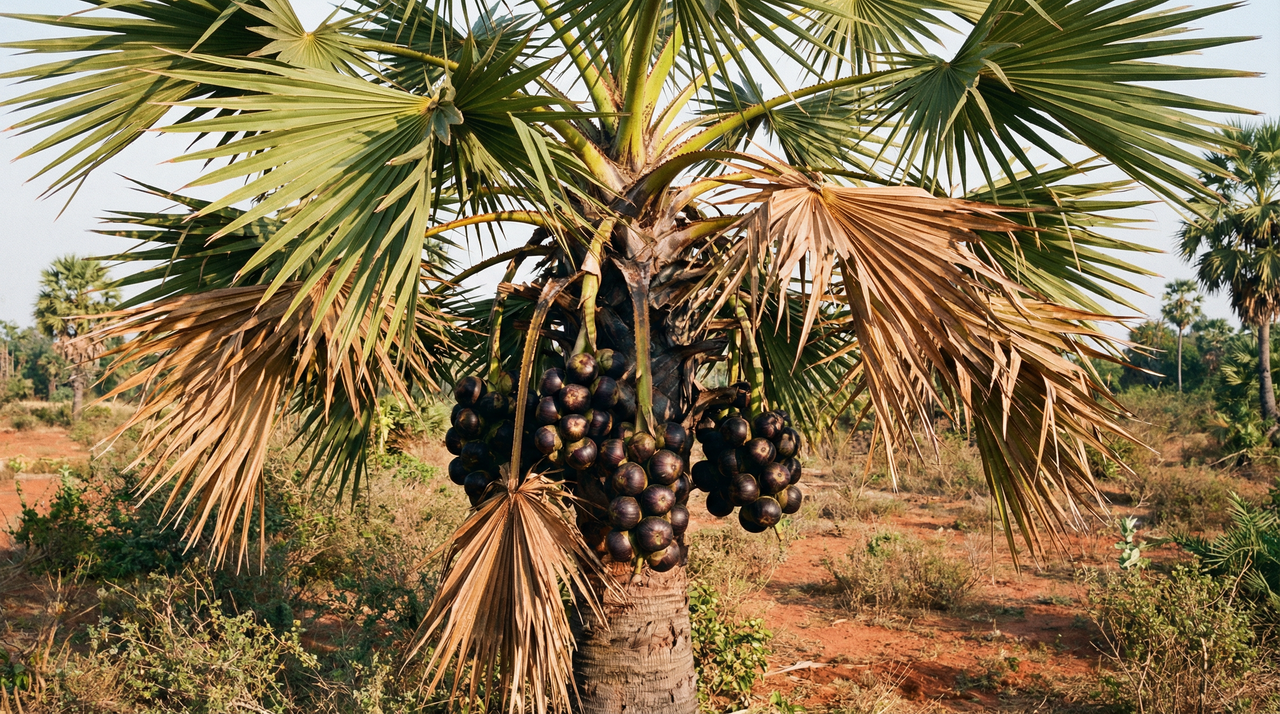
There's a Sanskrit word, "tala," that refers specifically to the Palmyra palm, and ancient texts list over 800 distinct uses for this single tree. I've spent years growing useful plants, and that number stopped me cold the first time I encountered it. Most food forest staples earn their keep in five or six ways if you're creative. Eight hundred means this palm was clothing people, feeding them, housing them, healing them, and writing their sacred literature long before anyone was keeping score. The leaves were used as paper for palm-leaf manuscripts; some of those manuscripts are still legible after a thousand years.[1]
What trips up Western gardeners is the timeline. You plant a Palmyra and you are, genuinely, planting for your grandchildren. It can take fifteen to twenty years to fruit, and the tree may live for over a century after that. Most of us aren't wired to think that way anymore. But that slowness is exactly the point, because what you're establishing isn't a crop; it's a keystone, a structural anchor for an entire landscape system that will outlast the gardener who put it in the ground.
Palmyra Palm Origin, History, and Traditional Uses
Botanical Background and Native Range
The palmyra palm, known scientifically as Borassus flabellifer, is native to the tropical lowlands of South and Southeast Asia, with its core range spanning India, Sri Lanka, Myanmar, Thailand, Cambodia, Vietnam, and southern China.[2][3] From those origins it traveled remarkably far via ancient trade routes, becoming naturalized across Madagascar, Mauritius, the Pacific Islands, parts of tropical Africa, and the Caribbean.[4] Anywhere you find it growing, one thing becomes obvious quickly: this is a tree that plays a long game. Mature specimens reach 15 to 30 meters tall and live between 100 and 150 years, with some pushing past 200, flowering and fruiting repeatedly across that entire lifespan rather than expending everything on one terminal event.[3][5] It won't reach reproductive maturity for 15 to 25 years, and on poor sites that window stretches to 30.[3][6] As a permaculture designer, I think of it the same way I think about white oak or chestnut: establishing this species demands honest, long-term intention.
The species thrives between 20 and 40°C across a wide rainfall window of 500 to 2,500 mm annually, tolerates semi-arid conditions once established, and grows from sea level up to around 1,200 meters, though most wild stands sit below 500 m.[7][8] Its close African relative, Borassus aethiopum, mirrors many of these preferences across savanna woodlands and seasonally dry biomes from Senegal to Ethiopia, showing that drought and fire tolerance are genus-wide traits rather than quirks of any single species.[9][10]
Visual Characteristics of the Palmyra Palm
Standing beneath a mature Borassus palm is a genuinely humbling experience. The trunk runs straight and robust, 30 to 60 cm across at the base, rising with barely a taper to a crown of enormous costapalmate leaves, each fan blade reaching up to 3 meters across on petioles of similar length armed with sharp marginal spines.[11][12] Each leaf blade divides into 50 to 100 linear segments, bifid at the tips, giving the canopy a sculptural quality that no other palm quite replicates at that scale. The overall canopy spread sits at 3 to 5 meters, which sounds modest until you account for the height those leaves are riding at.
The tree is dioecious, meaning individual plants are either male or female, and you won't know which until flowering.[12] Male plants produce branched inflorescences 1 to 1.5 meters long packed with small creamy-white flowers, while females carry shorter, unbranched spikes with larger greenish-yellow blooms.[13] I've learned from working with other dioecious species like Ginkgo and sea buckthorn that careful labeling of young plants matters enormously; nobody wants to discover a decade in that they've planted only males. The root system starts with a prominent taproot that gradually gives way to a deep, extensive lateral network as the tree ages, a structural shift that underpins its formidable drought tolerance.[14]
The African fan palm offers a useful contrast in form. Where B. flabellifer stands rigidly upright, B. aethiopum often leans, its trunk flanged and swollen at the base for water storage, producing globose brownish-orange fruits about 10 to 12 cm across with a fibrous mesocarp encasing three seeds.[10][15] Same genus, meaningfully different architecture, which matters when you're choosing one for a specific site.
Historical Roots and Cultural Significance
Few plants have a paper trail as deep as this one. Sanskrit Vedic texts from around 1000 BCE, including the Atharva Veda, already describe tapping its sap for fermented beverages and using its trunk in construction.[16] Carbonized seeds excavated from Neolithic sites in Thailand and Cambodia date the palm's cultivation to roughly the same era, and the fifth-century Mahavamsa chronicles royal cultivation in Sri Lanka.[17][18] Han Dynasty Chinese texts from the second century BCE even mention "wine palms" arriving through Austronesian trade networks. Three thousand years of documented use across multiple civilizations and trade systems: that's not a background crop, that's a civilizational anchor.
The palmyra palm tree carries deep sacred weight in both Hindu and Buddhist traditions. It appears in the Ramayana and the Puranas, holds associations with Shiva and Rama, and features in Bengali and Tamil fertility rituals and festivals.[5][19] Its leaves, durable enough to resist both rain and termites, were the preferred medium for writing Hindu law codes and religious manuscripts across South Asia for centuries. I find that history genuinely moving: a plant whose leaves carry the weight of sacred law is a plant people decided was worth protecting across generations, which is exactly the logic behind designing with perennial keystone species today.
From a practical standpoint, virtually every part earns its place. Sap tapped from the inflorescences is concentrated into jaggery or fermented into toddy. Immature fruits yield a cooling jelly-like pulp; mature fruits provide dense fibrous food. Leaves thatch roofs, weave mats and baskets, and fold into handicrafts. The trunk timber goes into construction, furniture, and tools.[20][21] Indigenous communities including Adivasi tribes, Thai folk healers, and Malaysian ethnic groups have maintained detailed botanical knowledge of these applications across medicine, craft, and ritual alike.[22][23] Across tropical Africa, B. aethiopum carries an equivalent cultural load among Fulani, Hausa, and Yoruba communities, where it symbolizes longevity and anchors community ceremonies much as the Asian species does in its homeland.[24]
Both species are currently listed as Least Concern on the IUCN Red List with stable global populations, but that status masks real local pressure.[25][26] Improper sap tapping can girdle and kill trees outright; habitat conversion compounds the problem. My own recommendation in any design involving this palm is to rotate tapping across mature trees only and integrate it within an agroforestry context where no single specimen carries the full harvest burden.[27] Tradition and ecological reality have to be held together, not traded off against each other.
Fascinating Facts About the Palmyra Palm
The fruits of B. flabellifer rank among the largest produced by any palm, reaching up to 20 cm in diameter and exceeding 1 kg each, and they depend on large mammals including elephants, cattle, and water buffalo to disperse their seeds across the landscape.[28][29] That's a seed dispersal strategy built around megafauna, which is a reminder of how long this species has been embedded in large-animal ecosystems. The drought survival toolkit is equally impressive: taproots that can reach 10 to 15 meters into the soil for groundwater, thick waxy leaves that minimize transpiration, and a water-use budget that keeps it alive on as little as 500 mm of annual rainfall once established, alongside moderate fire and salt tolerance.[30]
As a keystone species in tropical dry forests and savannas, it stabilizes soils, provides wildlife habitat, and supports nutrient cycling at a landscape scale.[31] Cultivated trees planted at roughly 10 by 10 meter spacing in sandy loam yield 50 to 100 kg of fruit annually, compared to 20 to 40 kg from wild specimens, which gives some sense of what attentive management can unlock over the long arc of this palm's productive life.[32][33] The African fan palm mirrors this keystone role across its own savanna range, with a swollen trunk base evolved for water storage and a similarly dense canopy that creates microhabitats for surrounding species.[10][15] Planting either species is a multi-generational act, and I think that's exactly the point. A tree that outlives you by a century forces a kind of long-view humility that more permaculture designs could use.[34]
Palmyra Palm Varieties and Sourcing
Notable Varieties and Regional Selections
If you're searching for a named Palmyra palm cultivar to plant, I'll save you the time: they don't exist. Borassus flabellifer has no formally recognized cultivars or varieties in standard horticultural nomenclature, and there are no active breeding programs working to change that.[3][35] What does exist are regional selections passed down through generations of growers in South and Southeast Asia, chosen informally for superior fruit quality, sweetness, or sap yield for toddy and sugar production.[36] These aren't catalog entries; they're more like a farmer's trusted seed stock, saved because that particular tree produced more or tasted better.
This matters enormously for anyone planning to grow one. I've grown several large tropical palms from seed in my Central Florida landscape, and the lesson is always the same: when a tree takes 15 to 20 or more years to reach productive maturity, your seed source is the single most consequential decision you'll make.[37] Think of it like planting a fruit tree with a two-decade delay before you taste the first result. Sourcing from known high-yielding regional types, even without a formal variety name attached, is as close to a cultivar decision as this palm allows.
The closely related African fan palm (Borassus aethiopum, sometimes called the African palmyra palm) offers a useful contrast here. Unlike its Asian cousin, it does have two taxonomically recognized varieties: var. aethiopum, the typical spiny-leaved form, and var. sylvaticus, distinguished by spineless leaves.[4] Var. aethiopum produces 50 to 100 large fruits weighing 2 to 4 kg each, while other forms show notably smaller fruit output.[38] I've observed specimens of Borassus aethiopum in botanical garden collections, and the sheer scale is humbling. Both species share a solitary, non-clustering growth habit, a dioecious reproductive system, and slow maturity, which I'll get to in a moment. Neither has formal horticultural cultivars or breeding programs behind it.[39]
The palmyra palm itself tops out between 70 and 100 feet tall with a canopy spread of 30 to 40 feet and fan-shaped leaves that can reach 10 to 20 feet in length.[37] For reference, a mature royal palm runs 60 to 80 feet; this is in that league or taller. A productive tree can yield 50 to 100 fruits annually and push 10 to 15 liters of sap per day during peak tapping season.[8] Since female trees are required for fruit production and sexing seeds is impossible, it is smart to start multiple seedlings and plan to keep females once you can sex them out, since there's no way to tell male from female at the seed stage.
How to Source Palmyra Palm Seeds and Plants
Finding a palmyra palm in the US market takes real effort. The species isn't listed through mainstream commercial channels and sits almost entirely outside the ornamental trade.[12] Your best options are specialty tropical nurseries, particularly those operating in South Florida, and online seed retailers who source directly from Southeast Asia or India. Seeds typically run $5 to $15 per packet; rooted saplings, when you can find them, range from $20 to $50; and mature container specimens can reach $200 to $500 or more. Stock fluctuates, so calling ahead beats browsing a website.
The regulatory side deserves your attention before you order anything. Both Borassus flabellifer and Borassus aethiopum require a USDA APHIS import permit for live plants and seeds under federal plant quarantine rules, primarily to prevent introduction of the red palm weevil.[40] Seeds are generally allowable when treated and certified pest-free; whole plants face additional scrutiny.[41] Neither species appears on CITES appendices, so there's no international trade restriction layered on top of the import rules.[42] Florida aligns with federal protocols but maintains its own palm quarantine framework; California adds strict invasive-species screening on top of that.[40] I've navigated APHIS paperwork when ordering seeds from tropical specialty sources, and my honest advice is to treat any regulatory information you read online, including here, as a starting point. Check the current rules directly with APHIS before you place an order, because these requirements shift.
Live plants of Borassus aethiopum are even rarer in the trade than the Asian species, partly because of import logistics and partly because of its sheer size at any transplantable stage.[10] Seeds do surface occasionally through online specialty retailers.[43] Germination for both species is notoriously slow and unpredictable, often requiring scarification, sustained warmth, and two to three months or longer, with high seedling mortality along the way.[44] That difficulty compounds the scarcity. The upshot: source carefully, verify the origin of your seed, and if you can trace it to a regionally selected high-producing female tree, consider that your variety decision made.
Palmyra Palm Propagation and Planting Guide
If there's one thing I tell every grower who's excited about adding a Palmyra palm to their food forest, it's this: these seeds do not wait around. Unlike the orthodox seeds of most temperate trees, which you can dry, packet up, and store in a cool drawer for years, Palmyra palm seeds are recalcitrant. Let them drop below about 20% moisture content and viability collapses fast. They're also polyembryonic, meaning a single seed can throw multiple seedlings, which is a pleasant bonus once you understand what you're working with.[45][46][47]
Seed Characteristics and Viability
The seeds themselves are substantial objects. Each one sits inside a drupe that can weigh up to 4 kg, and the seed proper is a dense, dark-brown-to-black capsule roughly 3 to 4 cm long, packed with oily white ruminate endosperm and a haustorial embryo tucked off to one side.[48][49] When you crack one open for the first time, the sheer density of it makes sense: this seed is built to outlast a dry season underground, not to sit on a nursery shelf.
Fresh seeds start with 70 to 90% viability, but that window closes quickly.[50][51] If you absolutely must hold them, keep seeds at 40 to 50% moisture in moist sand or vermiculite, at around 15 to 25°C and 80 to 90% relative humidity; even then, viability drops sharply after the first month and rarely lasts beyond twelve.[52] Sow as soon as possible after collection. I've lost entire flats to non-viable stock, which is exactly why I now run a quick tetrazolium stain (1% TTC on bisected seeds) or request an X-ray radiograph on any stored seed before I invest nursery space in it.[53][54] It takes an extra hour, and it has saved me more than once.
Before sowing, I always soak seeds for 48 hours in warm water, which helps breach the physical dormancy component.[55] More aggressive options include mechanical scarification, chemical scarification, or gibberellic acid treatment; moist warm stratification at 25 to 35°C is another documented approach for stubborn batches.[56][57] After soaking, I sow horizontally in deep trays of well-drained sandy loam at 5 to 10 cm depth, then move the whole setup under 50% shade for the first season. At 25 to 30°C, germination starts somewhere between 8 weeks and 6 months depending on pretreatment and seed freshness, with realistic success rates landing between 20 and 70%.[58] The related African fan palm (Borassus aethiopum) follows similar logic but goes in shallower at 2 to 3 cm and can be transplanted earlier; worth knowing if you're working with both species. Vegetative offshoots from mature Palmyra palms are possible and succeed at 30 to 60%, but they're uncommon and hard to source; tissue culture and grafting remain largely experimental with no real commercial availability yet.[59][60]
Germination and Timeline to Fruit
Here's the reality check that every permaculture designer needs before they fall in love with this palm: seed-grown plants typically take 15 to 20 years to first fruit.[3][61] Offshoots shorten that to 7 to 10 years. Experimental grafting under ideal conditions has brought it down to 4 to 6 years, though I'd treat that as aspirational until the technique matures commercially.[62][63] Early height gain runs around 30 to 50 cm per year, with the plant prioritizing root and trunk structure long before it thinks about reproduction.[64] Since the species is dioecious, you won't know the sex of your seedlings for years, so I label every individual at transplanting and keep meticulous records. Losing track of sex after a decade of patient growing is a painful mistake to make.
Transplant seedlings once they carry 2 to 3 leaves and stand 15 to 20 cm tall, usually after 1 to 2 years in the nursery.[59] This is a deliberate pace, and embracing it is part of working with this species honestly.
Soil, Site Selection, and Planting Technique
In its native range across tropical South and Southeast Asian floodplain margins, riverbanks, and coastal plains, the Palmyra palm grows in well-drained sandy loam, lateritic, or alluvial soils.[65][66] Replicate that texture and you're most of the way there. Soil pH between 6.0 and 7.5 is optimal, with the species tolerating up to 8.0, and you'll want at least 1.5 m of uncompacted depth to accommodate its deep taproot and moderate organic matter content of around 1 to 3%.[67] Full sun is non-negotiable for the long term, meaning a minimum of 6 to 8 direct hours daily.[8]
Drainage is the single biggest establishment variable. This palm can tolerate short waterlogging of 7 to 10 days, but prolonged saturation causes root rot, and a rotted root system on a palm is rarely recoverable.[68][12] Once past establishment, the adult palm shrugs off drought, low fertility, and moderate salinity, but none of that resilience is available to a seedling in wet clay. I always soil-test before planting; pH outside the 6.0 to 7.5 window can trigger iron, manganese, or phosphorus deficiencies that show up as interveinal chlorosis or leaf spotting.[69][70] Elemental sulfur brings pH down, lime raises it, and chelated iron addresses the deficiency while you correct the underlying cause. For container-grown nursery stock, a mix of 40 to 50% sand, 30 to 40% loam, and 20% organic matter gives the drainage and fertility balance that young palms need.[71]
Spacing, Guild Placement, and Establishment Care
Mature Palmyra palms reach 20 to 30 m tall with canopy spreads of 6 to 9 m and trunk diameters approaching 1 m.[3] That scale demands generous spacing, and once you absorb those numbers the standard commercial recommendation of 8 to 12 m between trees in all directions (roughly 80 to 120 trees per hectare) stops feeling extravagant.[72][64] Agroforestry systems open that up to 15 to 20 m between rows to keep the understory functional for companion crops.[73] Urban or high-density plantings can go as tight as 4 to 6 m, but root and canopy competition becomes a real management issue at that scale. I've settled on 10 m for my own specimen plantings, which still leaves enough room to interplant short-term guild species through the first decade while the palms claim their eventual territory.
For fruit production, remember the dioecious arithmetic: one male to every 8 to 15 females is the accepted planting ratio.[66] Orient rows north to south for even light exposure, plant into deep, non-compacted soil (bulk density below 1.6 g per cubic centimeter), and incorporate 10 to 20 kg of well-rotted manure or compost per planting pit at establishment.[74][75] Stake young palms to encourage a straight trunk during those first vulnerable years. The spacing decision you make on planting day is one you'll be living with for decades, so treat it with the same seriousness as you'd give any long-term infrastructure in the garden.
Palmyra Palm Care Guide
After years of designing tropical food forests and ornamental landscapes, I've learned to treat the palmyra palm as a tree that rewards restraint far more than attention. Most of the care mistakes I see come from gardeners applying the same fussy schedules they'd use on a banana or a hibiscus. This palm wants strong sun, lean soil, and to be largely left alone once it finds its footing. The challenge is getting it to that point without losing it in the early years.
Water Needs and Drought Tolerance
The palmyra palm's drought tolerance is genuinely extraordinary. A mature specimen can go 8 to 12 weeks without rainfall once its taproot reaches groundwater, and that taproot can push down to 6 meters.[76][77][78] The African fan palm goes even deeper, with roots documented at 10 to 15 meters in arid African savannas,[79] which tells you something about how this genus evolved: it builds infrastructure first and asks for nothing later. But that drought strategy only kicks in after the palm establishes that deep root system, which takes years, and young plants are genuinely vulnerable.
Seedlings need water every 2 to 3 days during the first year, keeping the soil evenly moist but letting the top inch or two dry slightly between applications.[80][81] I check mine by pressing a finger into the soil about an inch down; if it still feels damp, I wait. Once a tree is established, deep watering every one to two weeks during dry spells is usually sufficient, and truly mature specimens rarely need supplemental irrigation at all.[82]
The soil needs to drain freely. Overwatering shows up as yellowing or browning fronds, soft mushy roots, and stunted growth; Phytophthora root rot is the usual culprit.[83][82] Underwatering produces frond wilting, tip browning, and scorched margins. The palm prefers a well-drained sandy loam with a pH between 6.0 and 7.5, though it tolerates a range from 5.5 to 8.0, and handles mild salinity up to an EC of 2 dS/m.[84] When in doubt, err dry rather than wet.
Sunlight, Heat Tolerance, and Temperature Requirements
Full sun is non-negotiable. The palmyra palm needs 6 to 8 hours of direct sunlight daily and thrives in the 25 to 35°C range, tolerating air temperatures up to 45 to 50°C at reproductive maturity.[66][85] In my landscape designs I never shade this palm to improve its situation; reduced sun produces weak, elongated trunks and dramatically cuts into long-term productivity. When clients push back, I point to the savanna it evolved in. This tree grew up in full tropical sun with no apologies.
Seedlings are the exception. Young plants show leaf scorch, wilting, and necrosis under sustained temperatures above 40°C combined with drought stress,[86] so I use 30 to 50% shade cloth during the hottest months of the first season and make sure irrigation doesn't lapse. The palm's thick leaves, deep root system, and efficient photosynthesis handle heat stress well once the tree is established, and it tolerates the 70 to 90% relative humidity typical of coastal tropical climates without issue.[87] The African fan palm shares comparable heat tolerance through the same physiological toolkit,[88] which confirms this is a genus-level adaptation rather than anything fragile or site-specific.
Feeding and Nutrient Management
I always start with a soil test before applying anything to a palmyra palm, and I'd recommend making that a non-negotiable annual or biennial habit.[89] This palm evolved on nutrient-scarce tropical soils, which means it's genuinely sensitive to fertilizer salt buildup in a way that more pampered crops aren't.[90] Over-fertilizing is a real risk, and I've seen gardeners burn roots trying to push faster growth on a palm that simply doesn't want to be rushed.
Mature trees do well on 1 to 2 kg of fertilizer per year, using an NPK formulation that prioritizes potassium, such as 8-2-12 or a 1:0.5:1 ratio, split across 2 to 3 applications during the rainy season. Supplement with around 50 kg of well-decomposed compost or organic matter annually.[91][92] Potassium is the most critical macronutrient, with uptake peaking during the wet season and directly influencing fruit production.[93] I've watched frizzle top resolve once a client shifted to a high-potassium program guided by actual soil data; it's satisfying to see new fronds come out clean after that kind of correction.
Classic deficiency patterns to watch: yellowing older fronds signal nitrogen shortage, orange-brown spotting on older leaves points to potassium, interveinal chlorosis suggests magnesium, and chlorosis of young fronds with green veins means iron, which is especially common in alkaline or sandy soils.[94][95] The organic matter you add helps on all of these fronts by improving micronutrient availability and soil structure simultaneously. Excess nitrogen, by contrast, pushes vegetative growth at the expense of fruiting, a pattern documented across the Borassus genus.[95][96] Lean and targeted beats heavy and frequent every time with this palm.
Frost Tolerance and Cold Protection
There's no softening this: the palmyra palm is a strictly tropical species, and frost will kill it. Prolonged exposure below 5°C causes significant damage or death, and young palms are especially vulnerable.[97][98] USDA zones 10b through 12 are where it belongs in the ground; some sources extend that to zone 9 with protection, but I'd treat that as optimistic without a genuinely sheltered microclimate.[99][100]
The related African fan palm handles brief dips to around -1°C to -2°C but suffers the same frond yellowing, tip necrosis, and potential growing-point death from sustained cold below 4°C.[101][102] Neither species is saved by frost cloth in any meaningful way. In temperate climates, container culture with indoor overwintering above 10 to 12°C is the only reliable approach.[103] I plan for this from the first design conversation; if the site can't guarantee frost-free winters, I steer clients toward a palm that can handle the climate rather than gambling on protection methods that rarely hold up when temperatures actually plunge.
Pruning, Maintenance, and Seasonal Rhythm
One of the more humbling early lessons in my career was removing healthy green fronds from a young palm to tidy it up, then watching it struggle for the next two seasons. The rule I now teach every client is simple: prune only dead, diseased, or physically damaged fronds, and only during the dry season using sterilized tools. Never remove more than 20 to 25% of the live canopy at once, and never touch a green leaf.[66][104] Live fronds are photosynthetic infrastructure; removing them weakens the palm and creates wound sites that attract pests.
Space mature trees 8 to 10 meters apart to give their canopies room and avoid root competition.[66] A 3 to 4 inch mulch layer around the base improves moisture retention and suppresses weeds, kept clear of the trunk itself to prevent rot. This palm is slow-growing by any measure, reaching reproductive maturity somewhere between 10 and 30 years, and living well over a century.[3] Patience is the defining skill here.
The seasonal rhythm follows a monsoonal pattern: vigorous vegetative expansion during the wet season, with flowering and peak sap flow shifting into the drier months.[105][66] Fruits ripen from green to orange-brown between April and June; sap tapping peaks January through April and again July through October using traditional non-destructive methods.[106][107] Process fresh sap immediately to prevent unintended fermentation, and store harvested fruits at 10 to 15°C with 85 to 90% relative humidity for up to 2 to 3 weeks.[108] These sustainable, selective practices align with how traditional communities have managed this tree for generations, and for good reason: a palmyra palm that outlives its grower deserves that kind of respect.[109]
Harvesting Palmyra Palm Fruits and Sap
This is a tree you plant for your children, or honestly, your grandchildren. Once a Palmyra palm finally reaches fruiting age and begins its seasonal rhythm, though, the harvest window becomes a precise, high-stakes affair where timing and observation matter enormously.
When to Harvest Palmyra Palm: Timing, Ripeness Cues, and Seasonal Windows
From anthesis to mature fruit takes roughly 4 to 6 months, or 150 to 180 days, with the main harvest in India running June through December and peaking between September and November.[110][111] Southeast Asian timelines tend to run on the shorter end of that window, while Indian trees often push closer to 6 to 8 months.[112][5] Don't rely on the calendar alone. The real indicators are the fruit itself: a shift from deep green to yellowish-brown or orange, noticeable softening, bunches beginning to droop or drop, a sweet floral aroma coming off the skin, and sugar content climbing to 20 to 30% Brix.[113][114] I've found that fruits allowed to reach full color change and softening on the tree taste dramatically better than anything pulled early. The cues really do work in combination. The African fan palm follows a similar logic, peaking between April and June in West Africa, with its smaller single-seeded fruits turning orange-brown and releasing easily from the bunch when ready.[115][116]
How to Harvest Palmyra Palm and What to Expect in Yield and Flavor
Once the ripeness cues align, harvesting comes down to two options: collect fallen fruits from the ground, or climb the tree. Climbing a 20-meter Palmyra to pick fruit or make V-shaped cuts on the inflorescences for sap tapping is genuinely skilled, physical work, and I always advise clients to collect ground-fallen fruits whenever possible or bring in an experienced tapper.[117][118] Timing harvest during the dry season also helps; lower humidity reduces the fungal issues that can compromise fruit quality fast after collection. Sap tapping for toddy and jaggery is its own separate tradition with its own seasonal logic, covered in the preparation section.
Flavor Evolution and Yield from Immature to Mature Palmyra Fruits
Each large drupe runs 8 to 12 centimeters across and contains 1 to 3 hard, dark, wedge-shaped seeds.[3][31] What you do with those fruits depends entirely on when you harvest them. The immature fruit holds translucent, gel-like pulp, what's sold in South India as nungu or ice apple: juicy, sweet-sour, lightly astringent, and genuinely refreshing in a way that reminds me of lychee jelly or very young coconut meat.[119][120] Sugar content at this stage runs around 10 to 15%.[121] Let the fruit mature fully and the transformation is dramatic. The pulp firms into a fibrous, caramel-honey sweetness with a floral aroma and cooked-fruit depth, and sugars climb to 25 to 35%.[122][123] Think of it as the date palm's arc from khalal to tamar, but with its own distinct tropical register. The African fan palm delivers a different experience altogether: smaller, apricot-tangy, orange-brown flesh with nutty undertones and sugars rising from under 5% when unripe to 15 to 25% at peak ripeness.[124][125] With both species, full sun exposure through the growing season is non-negotiable for sugar accumulation and fruit size; in my experience designing edible landscapes, even partial shading noticeably reduces quality at harvest.[126]
Palmyra Palm Preparation and Uses
Few trees deliver as much edible diversity as this one. The Palmyra palm offers immature fruits, mature fruit pulp, seeds, freshly tapped sap, and the apical bud, each requiring a different preparation and rewarding you with something completely distinct in flavor and texture.[3][127][128]
Culinary Uses of Palmyra Palm: From Ice Apples to Jaggery
The sap story is where I'd start any kitchen conversation about this palm. Tapped from the inflorescence at up to one to two liters per tree daily, fresh neera has a sweet, mildly grassy quality with just a whisper of sour tang at the edges.[129][130] One thing I learned quickly: that fresh character fades fast. I process or start fermentation the same day I collect, because by the next morning the flavor has already shifted toward sourness you didn't invite. Allow fermentation to continue and you get toddy, effervescent and tangy.[131][129] Boil the sap down instead and you get palmyra palm jaggery, a deep caramel with toffee and butterscotch notes and occasional smoky undertones that no cane sugar can replicate.[132][123] Push fermentation further and you land in palm vinegar territory, tangy and acidic with complex ester notes worth using in a marinade.[132]
The palmyra palm fruit itself splits into two distinct eating experiences depending on maturity. Immature fruits yield the sweet, gelatinous endosperm known as nungu. Young seed kernels are soft enough to eat fresh or roasted; mature kernels can be ground into a flour used in porridges, halwa, payasam, and the crispy fried sweet panam pheni.[130][133] In Sri Lanka, the borassus palm fruit turns up in curries, jams, and syrups, and the sap becomes arrack or pressed into jaggery confections.[134][135] The closely related African fan palm produces kernels with a nuttier, coconut-cream flavor and fruit pulp described as tasting somewhere between gingerbread and apricot.[136][137] Those seeds do need thorough boiling or roasting first to knock back tannins that will absolutely upset your digestion if you skip that step, a lesson I apply with the same caution I give green plantains or unripe astringent fruits from my Florida garden.[138][139]
Traditional Medicinal Preparations from Palmyra Palm
Ayurvedic and African ethnomedicine have long worked with decoctions and infusions made from roots, leaves, fruits, and seed powders. Traditional usage ranges document root and leaf decoctions at around 50 to 100 ml taken twice daily, and seed powder at 3 to 6 grams daily, primarily targeting digestive complaints, inflammation, and wound care.[140][141] African traditional practitioners prepare Borassus aethiopum root by boiling 20 to 50 grams in 500 ml water, reducing to 250 ml, and taking it two to three times daily.[142] I treat these as historical reference ranges rather than prescriptions, and I'd encourage the same framing here. Most supporting evidence is still preclinical. When I do prepare a mild root or leaf tea following traditional ratios, I always start with a small test batch and never use any fermented palmyra palm product if I'm driving or on medications; the alcohol content and potential interactions are real considerations, not hypothetical ones. Consulting a qualified practitioner before working with concentrated preparations is genuinely good advice, not boilerplate.
Non-Food Uses and Sustainable Harvesting of Palmyra Palm
The palm's utility extends well beyond the kitchen. Leaves go into thatching, woven mats, baskets, ropes, and hats; the trunk supplies dense, durable timber for construction, furniture, and even canoe building, and it has long served as fuelwood.[5][143] I've experimented with the leaf fiber in my own garden weaving projects and found it holds up better than any temperate material I've tried. The African fan palm contributes natural red and black dyes from its fruits and bark, used in fabric work and body art, alongside its own deep ceremonial roles.[144]
All of this use means the harvesting approach matters enormously. Non-destructive sap tapping, rotational scheduling, and selective rather than wholesale heart extraction are what keep these trees producing for decades.[145][144][146] In my own multi-year plantings, careful rotational tapping has kept trees visibly healthy and productive without signs of stress. A palmyra palm can live well over a century; over-tapping for a few seasons of extra yield is a genuinely bad trade.
Palmyra Palm Health Benefits and Medicinal Uses
There are plants in the permaculture toolkit that earn their place through one standout quality, and then there are plants like the Palmyra palm that have been so deeply woven into human survival and healing for so long that it's almost hard to know where to start. What I find genuinely fascinating about Borassus flabellifer is that every part of the tree carries a medicinal history: roots, leaves, bark, sap, fruit. That breadth of use across South and Southeast Asia and, in the case of the African fan palm (Borassus aethiopum), across West and East Africa as well, is worth taking seriously even before you look at a single lab result.
Traditional Medicinal Uses Across Asia and Africa
Across India, Sri Lanka, Bangladesh, Thailand, and the Philippines, Palmyra palm roots have long been prepared as tonics for urinary and respiratory complaints, while leaves were applied directly to wounds, rheumatic joints, and skin conditions.[147][148] In Africa, Borassus aethiopum fills parallel roles, with healers using bark, fruit, and roots for fever, malaria, diarrhea, wounds, and general immune support.[142] That geographic spread, two continents, multiple cultures, overlapping applications, suggests something real is going on. While the traditional record is rich, and the modern research is promising, but almost all of it is preclinical. No human clinical trials have validated the therapeutic use of Borassus flabellifer extracts for any condition.[149][150] I wouldn't replace a doctor's visit with a palm extract, and neither should you.
Scientific Research and Preclinical Evidence
The strongest research thread so far is antioxidant activity. Fruit extracts show free radical scavenging comparable to ascorbic acid, driven by phenolics and flavonoids, and the African fan palm's leaf and fruit extracts perform similarly in DPPH assays.[151][152][153] The antidiabetic work is genuinely intriguing: fruit pulp extracts lower blood glucose in diabetic rat models via α-glucosidase and α-amylase inhibition and improved insulin sensitivity.[154][155] Anti-inflammatory effects have been demonstrated through suppression of TNF-α, IL-6, and COX-2 pathways, with seed extracts reducing paw edema in animal models.[156][157] Extracts also inhibit Staphylococcus aureus, E. coli, and Candida albicans in vitro.[158][159] Hepatoprotective and wound-healing effects round out the more consistent findings, with leaf extracts accelerating epithelialization and collagen deposition in rat wound models, and palm extracts protecting against chemically induced liver damage.[160][161] More preliminary still are in-vitro signals for anticancer activity (apoptosis induction in HeLa and MCF-7 cells), neuroprotection, and anti-obesity effects in high-fat diet models.[162][50] Those are worth watching but nowhere near actionable yet.
Key Phytochemicals in Palmyra Palm
What underpins all that activity is a genuinely diverse phytochemical profile. Flavonoids (quercetin, kaempferol, catechin, epicatechin, rutin, orientin), phenolic acids (gallic, ferulic), condensed and hydrolyzable tannins, saponins, alkaloids, terpenoids, and carotenoids (β-carotene, lycopene) have all been identified across different plant parts. Leaves and bark run highest in total phenolics, while fruits concentrate flavonoids and carotenoids.[163][164] Total phenolic content in leaves can reach 50–100 mg GAE/g, with bark at around 75 mg GAE/g; seasonal stress and drier conditions push those numbers up.[165] I've noticed this in my own harvests: fruit picked after a dry stretch tastes noticeably more astringent than rainy-season fruit, which tends to be juicier but milder. That astringency is the tannins talking. These same compounds aren't only medicinally relevant; they serve the tree too, deterring herbivores, supporting drought tolerance, and attracting pollinators through volatile compounds.[163][50] Research on the African fan palm's specific compounds is still catching up, with most studies reporting compound classes rather than isolated molecules.[50]
Nutritional Profile of Edible Parts
This is where the Palmyra palm's everyday value really lives, and I say that as someone who has eaten fresh ice apple straight from the fruit more times than I can count. The translucent, jelly-like immature endosperm (the "ice apple" or nungu) comes in around 70–80 kcal per 100 g, with 15–20 g of carbohydrates, 2–3 g of fiber, 20–30 mg of vitamin C, and meaningful amounts of potassium and calcium.[166] Ripe pulp climbs to around 30 g of sugars per 100 g but adds β-carotene, vitamin E, and iron to the picture. The African fan palm pulp runs slightly lower in energy (around 82 kcal/100 g) with more variable but often higher mineral content, including iron at 4–6 mg per 100 g.[167] The glycemic index sits around 45–50, low enough that the fresh fruit makes a sensible snack in hot climates even for people managing blood sugar, though I want to be clear: fruit is not medicine, and this is not a diabetes treatment.[168] Cooking reduces vitamin C by 15–40%, but traditional fermentation of the sap builds B-vitamins and significantly reduces antinutrients like tannins and phytates.[169][170] No major allergens have been reported for the fruits, though pollen sensitivity is occasionally documented.[168]
Safety Considerations and Potential Side Effects
The ripe fruit, fresh sap, jaggery, and cooked seeds are all generally regarded as safe and have been consumed by large populations for centuries without documented harm.[171][3] There is one safety issue every grower must take seriously: the young shoots and hypocotyls must be thoroughly cooked. Raw or inadequately processed palmyrah flour (odiyal) from these young shoots has documented neurotoxicity, mutagenicity on Ames testing, and immunosuppressive effects in animal studies.[172][173][174] Boiling reduces the risk but does not eliminate it; mature fruit and sap don't share this problem. For Borassus aethiopum, cyanogenic derivatives in raw hypocotyls drop significantly with boiling, and traditional soaking, fermentation, and roasting reduce risk further.[175] Beyond that, fermented sap carries alcohol and its usual cautions, large fibrous seeds pose a mechanical choking risk for children and pets, and excessive consumption of high-tannin parts can cause mild gastrointestinal upset.[176][177] As a landscape designer in subtropical zones, I do get asked about look-alike confusion with cycads like Cycas revoluta (sago palm), which is genuinely toxic. The Palmyra palm's enormous fan-shaped leaves and large drupes make it unmistakable once you know what you're looking at. Finally, because extracts show hypoglycemic and blood-pressure-lowering effects in preclinical work, additive interactions with antidiabetic, antihypertensive, or anticoagulant medications are plausible; clinical safety data are thin, and caution is warranted during pregnancy, lactation, and for children under twelve.[178][179]
Palmyra Palm Pests and Diseases
The Palmyra palm is not a pushover. Its thick fibrous trunk, high tannin and phenolic content, and allelopathic chemistry give it moderate pest resistance that most casual observers mistake for near-immunity.[180][50] But that resistance is variable, not absolute, and it collapses fast when the palm is under stress. Waterlogging, poor drainage, trunk injury, or the crowding that comes with monoculture planting can each flip a healthy specimen into a vulnerable one.
Disease Resistance and Major Fungal Threats
The two diseases every grower needs to know are Ganoderma basal stem rot and Phytophthora bud rot, because both can be fatal and neither offers much warning before the damage is done. Ganoderma zonatum and G. boninense cause basal decay that progresses to wilting and eventual collapse, and once the conks appear at the trunk base the infection is already well advanced.[181][182] Phytophthora palmivora follows a similar logic, exploiting poorly drained soils and physical wounds to establish bud rot and root rot before symptoms become obvious.[183] Both pathogens need a stressed or injured host to gain a foothold, which is exactly why the drainage and site-selection guidance in the care section isn't optional.
Below those two serious threats, the disease picture gets considerably more manageable. Leaf spots from Bipolaris, Curvularia, Pestalotiopsis, Cercospora, and Colletotrichum show up regularly but rarely kill a well-established palm.[184] Bacterial and viral epidemics are rarely documented across the genus, which is one area where the Palmyra genuinely does hold its own.[185] The African fan palm (Borassus aethiopum) shows stronger natural resistance in dry savanna conditions, but it shares vulnerability to Fusarium wilt, heart rot caused by Thielaviopsis paradoxa, and bacterial leaf spots when humidity rises or stress accumulates.[186]
The critical pest-disease connection is this: red palm weevil boring creates exactly the kind of open wound that Ganoderma and Phytophthora need to enter.[185][187] There are no formally documented cultivars of either Borassus species with enhanced disease resistance, so management has to rely entirely on cultural practices rather than any genetic advantage.[188] That means excellent drainage, avoiding root and trunk injury, removing infected debris promptly, and spacing plants well enough for air to move through the canopy.[189]
Pest Pressure and Integrated Management
Young Palmyra palms are significantly more vulnerable than mature ones. The thick bark and chemical defenses that make an adult specimen surprisingly tough build gradually with age, and I've seen juvenile palms in poorly drained landscape plantings go from apparently fine to weevil-damaged beyond saving in a single season. Regular crown inspections should start the day you plant, long before any symptoms appear.
The red palm weevil (Rhynchophorus ferrugineus) sits at the top of the threat list. It bores into trunks and crowns, causes structural weakening and wilting, and can bring down a tree that took decades to establish.[187][190] Anyone who has dealt with it on coconut palms will recognize the threat immediately; the biology is similar and the consequences just as serious. The rhinoceros beetle (Oryctes rhinoceros) causes a different but recognizable damage pattern: characteristic V-shaped notches in fronds, stunted new growth, and wound sites that invite secondary infection.[191] Scale insects and mealybugs, including Aspidiotus destructor, round out the major sucking pest complex, causing chlorosis and sooty mold while weakening young plants in particular.[192] Termites, leaf-eating caterpillars, leaf skeletonizers (Hispa spp.), and the palm seed weevil Alcidodes echinatus complete the picture, affecting roots, foliage, and seed viability across the palm's range.[193]
The Palmyra can host more than twenty insect species across its range in India, Sri Lanka, Southeast Asia, and parts of Africa, which is why local extension advice matters.[194] Pest pressure varies enough by region that no single protocol fits everywhere. In my own IPM practice, I reach for trunk-injected imidacloprid only as a last resort; the palm is slow-growing, replacement is prohibitively expensive, and consistent sanitation combined with entomopathogenic fungi, beneficial nematodes, Bacillus thuringiensis, pheromone traps, and the Oryctes virus for rhinoceros beetle has kept specimen palms healthy without heavy chemistry.[195][196] Since no commercially available cultivars offer enhanced pest resistance for either Borassus species, I select planting stock for site adaptation and visible vigor rather than waiting on breeding programs that don't yet exist.[32] Choose the right site, keep the soil well drained, protect young crowns, and monitor consistently; that's the whole program.
Palmyra Palm in Permaculture Design
There are plants you add to a food forest for what they produce, and then there are plants you add for what they are. The Palmyra palm falls firmly in the second category. Reaching 15 to 30 meters, with fan-shaped leaves up to 3 meters across and a fruiting cycle that draws birds, mammals, and insects from across a landscape, Borassus flabellifer doesn't just participate in an ecosystem; it structures one.[4] That's what makes it such a compelling anchor species for long-lived tropical and subtropical food systems, provided you have the climate for it and the patience to wait.
Ecosystem Functions and Ecological Roles
The physical presence of a mature Palmyra palm does serious ecological work. Those massive trunks and roots represent decades of accumulated biomass and carbon locked in place for a century or more, because these palms routinely live well past 100 years. At 15 to 30 meters, the canopy functions as a meaningful windbreak in agroforestry settings, slowing air movement and protecting understory crops from desiccating dry-season winds. The deep root system stabilizes slopes and riverbanks, reducing erosion and runoff in the semi-arid and monsoon-adapted regions where this palm evolved. And every season, that enormous canopy drops leaf litter that slowly builds organic matter and improves soil structure below.
Below ground, the story gets even better. The Palmyra palm forms partnerships with arbuscular mycorrhizal fungi that improve phosphorus and nutrient uptake in the poor, sandy soils it often colonizes, and it functions as a dynamic accumulator, pulling potassium and other minerals from deep layers and depositing them back into the topsoil through leaf litter decomposition.[197] The related African fan palm (Borassus aethiopum) shows us the same pattern at genus level, returning phosphorus and nitrogen to nutrient-poor savanna soils as its litter breaks down. That resilience in impoverished systems is a hallmark of the whole Borassus genus, and it's one reason I keep reaching for these palms when designing for degraded or marginal tropical sites.
Pollination is where the design complexity really comes in. The Palmyra palm is dioecious, meaning you need both male and female trees for any fruit. It's primarily beetle-pollinated: scarab beetles in the Rhynchophorus and Oryctes genera are drawn to the yeasty, fermented scent of male inflorescences, timed to the hot, dry pre-monsoon season.[198][50] I've watched beetle activity around male flowers in my own plantings and it's genuinely fascinating, but in isolated garden settings or areas with pollinator pressure, you can't rely on it. Natural fruit set can drop to 10 to 20 percent under stress from pollinator decline, habitat loss, or toddy harvesting that removes inflorescences before they do their job. Hand pollination can push that number above 50 percent.[199][200] If you're growing isolated female trees, learn to hand-pollinate. The difference in yield is stark. The African fan palm, by contrast, uses both beetle and wind pollination adapted for open savanna, with pollen capable of traveling several kilometers.[201] Different strategy, same genus-level lesson about resilience across unpredictable environments.
Forest Layer and Guild Integration
In a permaculture food forest, the Palmyra palm sits in the tall canopy or emergent layer, full stop.[202] What I appreciate about it as a canopy species is that it delivers dappled shade without the aggressive lateral root competition you get from some large tropical trees. That opens the understory to a productive guild: shade-tolerant root crops, leafy greens, gingers, and nitrogen-fixing shrubs can all work beneath it as the palm matures. The microclimate moderation is real too; the canopy reduces evaporation and buffers temperature swings in a way that benefits everything growing below.[203][197] Over time, the rough trunk even supports epiphytic orchids and ferns, adding vertical biodiversity without any management on your part.
The mycorrhizal partnerships and deep erosion-control roots I mentioned above are part of this guild picture too.[197] Seed dispersal in the wild is handled by elephants, deer, monkeys, and rodents eating the large fruits and moving seeds considerable distances,[204] which tells you something about the scale of ecosystem the palm evolved within. In a garden context, you're handling dispersal yourself, but that zoochorous relationship is a reminder that this palm belongs in systems designed to attract and support wildlife.
The honest caveat I give everyone who asks me about designing with Palmyra palm is this: it grows roughly 30 to 60 centimeters per year in its early decades, accelerating meaningfully only after about year ten. This is a tree for designers thinking 20 to 30 years ahead, not for someone who wants canopy in five. I still include it in long-term food forest plans precisely because nothing else delivers the same combination of drought resilience, structural scale, and multigenerational productivity. The African fan palm shows us that this patient, keystone-species strategy is consistent across the genus in fire-prone and seasonally dry African savannas too,[78] which gives me confidence in the model even when the timeline feels slow.
Climate Suitability and Hardiness Zones
The Palmyra palm is reliably suited to USDA zones 10 through 12, with 10 and 11 being optimal. It can technically survive in zone 9b, but only barely: brief temperature dips to 25 to 28°F (-4 to -2°C) are about the limit, and young plants are far more vulnerable than mature specimens.[205][82][80] I learned this the uncomfortable way: I had a young palm in a marginally zone 9 site take serious cold damage during a brief freeze that a mature specimen a few properties over shrugged off without a mark. Now, in any zone 9 design, I only specify this palm in south-facing, thermally sheltered microclimates, with frost cloth ready for juveniles. The research on cold damage is unambiguous, and a slow-growing palm is not something you want to gamble on.
On the heat and drought side, the picture flips entirely. Native to the monsoon and semi-arid zones of South and Southeast Asia, this palm thrives across a broad rainfall range: it prefers 2,500 to 3,000 mm annually but tolerates as little as 500 to 1,500 mm once established, thanks to drought adaptations built over millennia.[205][4][206] It handles temperatures up to 45°C routinely and can push through brief spikes near 50°C in low humidity, which makes it genuinely useful in the hot subtropical regions of frost-free southern Florida, Hawaii, and sheltered coastal southern California.[82][207]
For siting, moderate salt tolerance makes coastal plantings workable, and the palm performs best in well-drained sandy or loamy soils with a pH anywhere from 6.0 to 8.0.[208] Drainage is non-negotiable; waterlogging is one of the fastest ways to undermine an otherwise tough tree. If your site checks those boxes and you're genuinely in zone 10 or warmer, this is one of the most structurally and ecologically rewarding canopy anchors you can plant in a tropical food system.
The Tree That Humbles Me Every Time I Walk Past It
I planted my Palmyra from seed twelve years ago. It's about eight feet tall now, still decades from fruiting, and I tend it with this quiet, almost absurd faith that someone will eventually eat what it produces. That's the thing about this palm; it asks you to care about a future you probably won't fully see. Not many plants teach that lesson so plainly, and I think a lot of us in permaculture need the reminder.
Sources 208
- Palmyra Palm - Britannica ↩
- Borassus flabellifer - Plants of the World Online ↩
- Borassus flabellifer ↩
- Kew Science - Plants of the World Online ↩
- Kew Royal Botanic Gardens - Borassus flabellifer ↩
- Palmyra Palm Cultivation - FAO ↩
- Environmental Requirements of Palmyra Palm - FAO ↩
- Borassus flabellifer - Useful Tropical Plants Database ↩
- Borassus aethiopum - Plants of the World Online ↩
- Borassus aethiopum ↩
- Borassus flabellifer - Plants of the World Online | Kew Science ↩
- Borassus flabellifer - Missouri Botanical Garden Plant Finder ↩
- The Palmyra Palm: Morphology and Reproduction ↩
- Palm Root Anatomy - FAO ↩
- Borassus aethiopum ↩
- The Atharva Veda: A Study of Palm References ↩
- Neolithic Sites in Southeast Asia ↩
- Mahavamsa: Chronicles of Sri Lanka ↩
- Ethnobotany of Borassus flabellifer in India ↩
- Palmyra Palm: Traditional Uses and Cultural Significance in India ↩
- Traditional Uses of Borassus flabellifer in Sri Lanka ↩
- Ethnobotanical Survey of Palmyra Palm in India ↩
- Ethnobotany of Palmyra Palm in India ↩
- Borassus aethiopum: The African Fan Palm and Its Uses ↩
- Borassus flabellifer (Palmyra Palm) ↩
- Borassus aethiopum (African Palmyra Palm) ↩
- Sustainable Harvesting of Palm Wine from Borassus flabellifer ↩
- Royal Horticultural Society: Borassus flabellifer Profile ↩
- Ecological Role of Palmyra Palm in Tropical Ecosystems ↩
- Drought Tolerance in Palmyra Palm (Borassus flabellifer L.): A Review ↩
- Ecological Role of Palmyra Palm in South Asia ↩
- Palmyra Palm Cultivation in India ↩
- Yield and Production of Borassus flabellifer ↩
- Borassus flabellifer - Palmyra Palm ↩
- Palmyra Palm (Borassus flabellifer L.) - An Important Economic Plant ↩
- Horticulture of Palmyra Palm in India ↩
- Missouri Botanical Garden Plant Finder ↩
- Palms of the World ↩
- Royal Botanic Gardens, Kew - Seed Information Database ↩
- Importation of Plants and Plant Products ↩
- Plants for Planting Manual ↩
- CITES Species Database - Borassus flabellifer ↩
- Borassus aethiopum - African Palmyra Palm Seeds ↩
- Palms for Florida Landscapes ↩
- Seed Storage Behaviour: Recommendations for Ecosystem Restoration ↩
- Seed Storage of Recalcitrant Species in the Arecaceae Family ↩
- Embryology of Palms: A Review ↩
- The Palmyra Palm (Borassus flabellifer L.) - Morphology and Anatomy ↩
- Fruit and Seed Morphology of Palmyra Palm ↩
- Seed Storage of Palmyra Palm (Borassus flabellifer) ↩
- Ex Situ Conservation of Recalcitrant Seeds: Palmyra Palm Case Study ↩
- Seed Storage of Recalcitrant Species from the Genus Borassus ↩
- Seed Viability Testing of Palmyra Palm (Borassus flabellifer L.) ↩
- X-ray Analysis of Palm Seed Viability ↩
- Dormancy and Germination in Palmyra Palm Seeds ↩
- Germination and Dormancy in Palms: A Review Including Borassus madagascariensis ↩
- Germination Protocol for Borassus flabellifer ↩
- Nursery Techniques for Palmyra Palm Seeds ↩
- Nursery and Propagation Techniques for Palmyra Palm ↩
- Micropropagation of Borassus flabellifer Through Tissue Culture ↩
- Propagation and Cultivation of Palmyra Palm ↩
- Palmyra Palm (Borassus flabellifer) - Cultivation and Uses ↩
- Vegetative Propagation in Palms ↩
- Borassus aethiopum: Ecology and Uses ↩
- Borassus flabellifer - Plants of the World Online ↩
- Palmyra Palm Cultivation Guide ↩
- FAO - Palmyra Palm Cultivation Guide ↩
- Soil and Water Requirements for Borassus flabellifer - FAO Agroforestry ↩
- Soil pH Effects on Palm Trees ↩
- Soil Requirements for Palmyra Palm ↩
- Production of Palms in Containers: Soil Mixes and Nutrition ↩
- Palmyra Palm Cultivation Guide ↩
- Planting Density and Spacing for Palmyra Palms in Semi-Arid Regions ↩
- Soil and Nutrient Management for Palmyra Palm ↩
- Root System Architecture of Palms ↩
- Drought Tolerance of Palmyra Palm (Borassus flabellifer) ↩
- Borassus flabellifer: A Drought-Resistant Palm Species ↩
- Cultivation of Palmyra Palm - FAO Guidelines ↩
- Root System of Borassus aethiopum ↩
- Palmyra Palm Seedling Care - University of Florida IFAS Extension ↩
- Cultivation of Palmyra Palm (Borassus flabellifer) ↩
- Tropical Palm Watering Tips - University of Florida IFAS ↩
- Missouri Botanical Garden Plant Finder - Borassus flabellifer ↩
- Soil and Water Requirements for Palmyra Palm ↩
- Heat and Drought Tolerance in Borassus flabellifer at Reproductive Stages ↩
- Response of Palmyra Palm (Borassus flabellifer L.) Seedlings to Heat Stress ↩
- Ecological and Physiological Adaptations of Palmyra Palm (Borassus flabellifer L.) to Drought and Heat Stress ↩
- African Fan Palm (Borassus aethiopum) ↩
- Nutrient Deficiencies in Palms ↩
- Journal of Horticultural Science: Nutrient Disorders in Palms (2017) ↩
- Palmyra Palm Cultivation Guide - Tamil Nadu Agricultural University ↩
- Nutrient Management in Palmyra Palm - ICAR-Central Plantation Crops Research Institute ↩
- Nutrient Management for Tropical Palms ↩
- Nutrient Deficiencies in Palms ↩
- Nutrient Management for Palms ↩
- Soil Fertility and Growth of African Palmyra Palm ↩
- Borassus flabellifer - Tropical Plants Database ↩
- Borassus flabellifer - Missouri Botanical Garden Plant Finder ↩
- USDA Plants Database - Borassus flabellifer ↩
- Gardening Know How - Growing Palmyra Palm Trees ↩
- Royal Horticultural Society - Plant Finder: Borassus aethiopum ↩
- Frost Damage in Palms ↩
- Borassus aethiopum - Missouri Botanical Garden Plant Finder ↩
- Pruning Palms: Best Practices ↩
- Missouri Botanical Garden Plant Finder - Borassus flabellifer ↩
- Palmyra Palm Cultivation and Uses ↩
- Toddy Tapping in Palmyra Palms ↩
- Post-Harvest Management of Palmyra Palm Products ↩
- Non-wood Forest Products: Palmyra Palm ↩
- Palmyra Palm: Cultivation and Utilization ↩
- Seasonal Harvest Calendar for Minor Fruits in India ↩
- Palmyra Palm (Borassus flabellifer) Cultivation Practices ↩
- Palmyra Palm: Cultivation and Utilization ↩
- Fruit Ripening Characteristics of Borassus flabellifer ↩
- Phenology of Borassus aethiopum in West Africa ↩
- Maturity Indices and Post-Harvest Quality of Borassus Fruits ↩
- Traditional Harvesting Practices of Borassus in West Africa ↩
- Post-Harvest Management of Palmyra Fruits ↩
- Ice Apple (Nungu) - The Fruit of Palmyra Palm ↩
- Palmyra Palm Fruit: Nutrition and Uses ↩
- Nutritional and Phytochemical Evaluation of Palmyra Fruit ↩
- Flavor Profile of Toddy Palm Products ↩
- Traditional Uses and Processing of Palmyra Palm in India ↩
- Physicochemical Properties of Borassus aethiopum Fruit at Different Maturity Stages ↩
- Utilization of Borassus aethiopum Fruits in West Africa ↩
- Missouri Botanical Garden - Borassus madagascariensis ↩
- Palmyra Palm - PROTA (Plants Resources of Tropical Africa) ↩
- FAO - Non-wood forest products: Palmyra palm ↩
- FAO - Palmyra Palm (Borassus flabellifer L.) ↩
- Palmyra Palm - Kew Royal Botanic Gardens ↩
- University of Florida IFAS Extension - Plant Directory ↩
- Sensory and Physico-chemical Characteristics of Palmyra Jaggery ↩
- Borassus flabellifer - Missouri Botanical Garden ↩
- Culinary and medicinal uses of Palmyra palm in India ↩
- Traditional Foods from Palmyra in Sri Lanka - FAO Document ↩
- Borassus aethiopum - Useful Tropical Plants ↩
- Borassus aethiopum ↩
- Edible Oils from African Palms ↩
- Toxicity and Nutritional Value of Borassus aethiopum Seeds ↩
- Medicinal Uses of Palmyra Palm (Borassus flabellifer) ↩
- Ayurvedic Pharmacopoeia of India: Borassus flabellifer ↩
- Medicinal uses of Borassus aethiopum in Africa ↩
- Multipurpose Trees for Agroforestry Systems ↩
- Traditional Uses and Sustainability of Borassus aethiopum in West Africa ↩
- FAO - Palmyra Palm: A Sustainable Resource ↩
- IUCN Red List: Borassus aethiopum ↩
- Traditional Uses and Pharmacological Properties of Borassus flabellifer ↩
- Medicinal Uses of Borassus flabellifer in Traditional Medicine of Sri Lanka ↩
- Pharmacological properties of Borassus flabellifer: A review ↩
- Pharmacological Activities of Borassus flabellifer: A Review ↩
- Antioxidant and free radical scavenging activity of fruit extracts of Borassus flabellifer ↩
- Phytochemical Screening and Antioxidant Activity of Borassus flabellifer Leaf Extract ↩
- Antioxidant and Anti-inflammatory Activities of Borassus aethiopum Leaf Extract ↩
- Antidiabetic activity of Borassus flabellifer fruit pulp in alloxan-induced diabetic rats ↩
- Antidiabetic Potential of Borassus flabellifer Extracts ↩
- Anti-inflammatory and analgesic activities of Borassus flabellifer seed extract ↩
- Frontiers in Pharmacology - Study on anti-inflammatory effects ↩
- Journal of Ethnopharmacology - Antimicrobial properties ↩
- Antimicrobial properties of Borassus flabellifer extracts against pathogenic microorganisms ↩
- Hepatoprotective effect of Borassus flabellifer against CCl4-induced toxicity ↩
- Wound healing potential of Borassus flabellifer leaf extract in rats ↩
- Cytotoxic and anticancer activity of Borassus flabellifer methanolic extract ↩
- Phytochemical and Pharmacological Profile of Borassus flabellifer L.: An Updated Review ↩
- Polyphenols and Carotenoids in Ice Apple (Borassus flabellifer) Edible Pulp ↩
- Seasonal Variation in Phenolic Content of Palmyra Palm (Borassus spp.) Under Different Environmental Conditions ↩
- Nutritional Composition of Borassus flabellifer Fruits ↩
- Nutritional Composition of Borassus aethiopum Fruit ↩
- Nutritional and antioxidant properties of Palmyrah Borassus flabellifer L. fruit pulp ↩
- Processing Effects on Nutrient Retention in Palmyra Palm Products ↩
- Nutritional and Anti-Nutritional Composition of Borassus aethiopum Mart. Fruits and Seeds ↩
- Missouri Botanical Garden - Plant Finder: Borassus flabellifer ↩
- A toxin from the palmyra palm, Borassus flabellifer: Partial purification and effects in rats ↩
- Mutagenicity of flour from the palmyrah palm in Salmonella typhimurium and Escherichia coli ↩
- The neurotoxic effect of palmyrah (Borassus flabellifer) flour re-visited ↩
- Nutritional and Phytochemical Screening of Raw and Boiled Hypocotyls of African Fan Palm (Borassus aethiopum) ↩
- Cycas revoluta Toxicity - ASPCA ↩
- Palmyra Palm (Borassus flabellifer) - Allergenic Potential ↩
- Medicinal uses of Palmyra palm: A review ↩
- Medicinal uses and pharmacological activities of Borassus aethiopum ↩
- Pest Resistance in Borassus flabellifer: A Review ↩
- Rhodes, A.G. et al. (2010). Ganoderma basal stem rot of oil palm and other economically important palms. Plant Disease, 94(10): 1146-1162. ↩
- Ganoderma Root and Butt Rot of Palms - University of Florida IFAS Extension ↩
- Phytophthora Bud Rot of Palms - University of Florida IFAS Extension ↩
- Fungal Diseases of Palmyra Palm in India - ResearchGate ↩
- Pests and Diseases of Tropical Palms ↩
- Diseases of Palms and Their Management ↩
- Red Palm Weevil: Rhynchophorus ferrugineus ↩
- Kew Science - Borassus flabellifer Fact Sheet ↩
- Diseases of Palms in Florida - Integrated Pest Management ↩
- Rhynchophorus ferrugineus on Borassus flabellifer ↩
- Rhinoceros Beetle on Oil Palm and Other Species ↩
- Pests and Diseases of Palms ↩
- Termite Pests of Palmyra Palm ↩
- Borassus flabellifer - FAO ↩
- Management of Red Palm Weevil in Palms ↩
- Integrated Pest Management for Palms ↩
- Ecological Role of Palmyra Palm in Tropical Savannas ↩
- Pollination Biology of Borassus flabellifer ↩
- Manual Pollination in Palms: A Review ↩
- Pollination Biology of Palms - Royal Botanic Gardens, Kew ↩
- Pollination Biology of Borassus aethiopum in West Africa ↩
- Borassus flabellifer - Plants of the World Online | Kew Science ↩
- Palmyra Palm in Agroforestry Systems - FAO Document ↩
- Pollination and Seed Dispersal in Arecaceae Family ↩
- USDA Plants Database - Borassus flabellifer ↩
- FAO - Palmyra Palm ↩
- Growing Palmyra Palm in California - California Rare Fruit Growers ↩
- Salt Tolerance and Habitat of Borassus flabellifer ↩