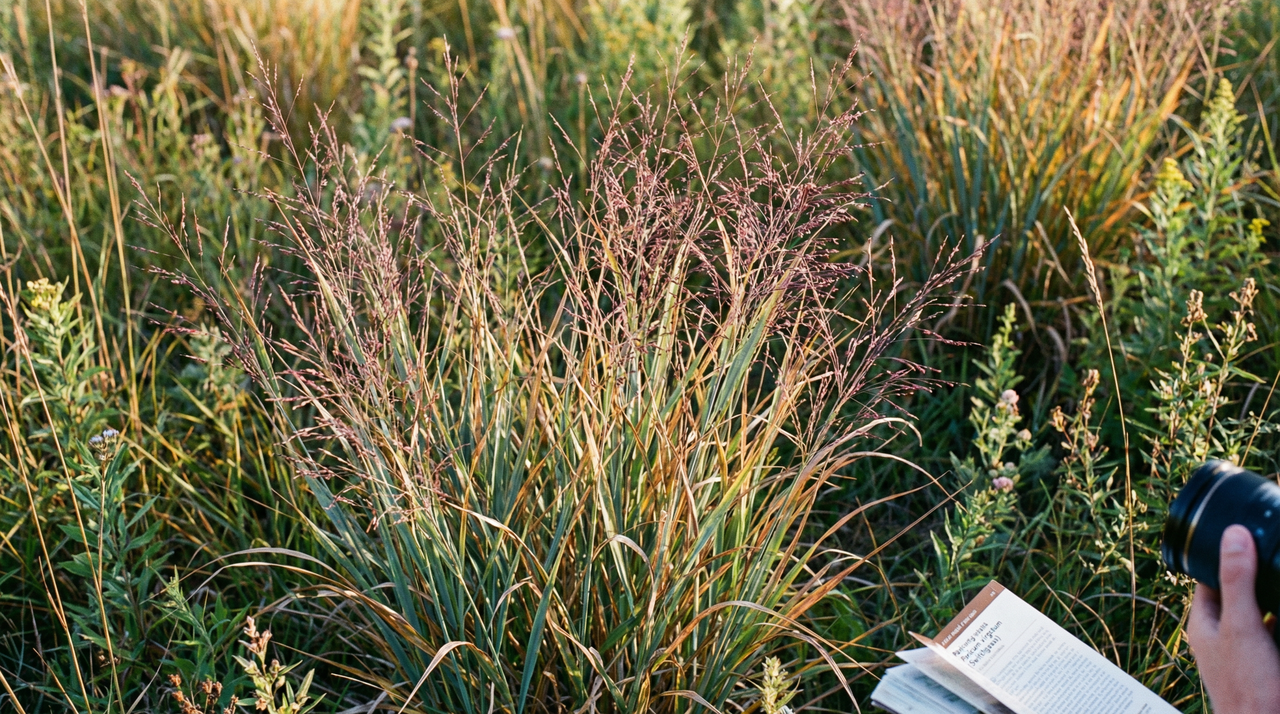
Nobody names a plant "panic grass" by accident. The common name comes from the Latin panicum, a word Romans used for millet and related grasses, but I'll be honest: the first time I heard it, I thought someone was describing how I feel every spring when half my seedlings don't germinate. What actually earns the name some poetic justice is how switchgrass behaves when you ignore it. It doesn't panic. It deepens. While annual crops sulk through drought and compacted clay, Panicum virgatum is quietly pushing roots twelve feet into the earth,[1] banking carbon, holding slopes together, and feeding everything from upland sandpipers to pollinators that most ornamental borders never see.
Here's what catches most people off guard: this plant was a food source, a medicine, a fiber crop, and a ceremonial material for Indigenous peoples across North America long before anyone thought to run it through a bioenergy pilot program or slot it into a rain garden plan. We've been so busy marveling at its soil-building credentials and its ornamental cultivars that the deeper story, the one rooted in actual human relationships with this grass over centuries, tends to get skipped. I don't want to skip it. Because once you understand where switchgrass has been, what you do with it in your own landscape starts to mean something more.
Origin and History of Panic Grass (Panicum virgatum)
Botanical Background and Life Cycle
While the name "panic grass" covers a sprawling genus, most permaculture growers use it to refer to Panicum virgatum, or switchgrass. This is a warm-season perennial bunchgrass native to a remarkable sweep of North American habitats, from tallgrass prairies and open savannas to wetland edges and roadsides, spanning much of the United States and into Canada.[2][3] What makes it genuinely interesting as a design plant is its longevity. Once established, a stand typically persists 10 to 20 years and can push past 30 under good conditions.[4][5] It's polycarpic, flowering and seeding year after year rather than burning out after one reproductive cycle, though it asks for patience up front: full reproductive maturity from seed takes two to three years.[3][6] I've learned to embrace that timeline. The first season I planted a switchgrass stand, I interplanted buckwheat and crimson clover to hold the ground and fix some nitrogen while the grass got its roots down. It felt slow, but by year three I had a stand that looked like it had always been there.
Switchgrass uses C4 photosynthesis, hitting its stride at daytime temperatures of 86 to 95°F, and it spreads both by rhizomes and through wind-pollinated seed.[3][7] Two distinct ecotypes explain much of its adaptability across climates: upland forms run shorter, handle cold and drought, and suit northern ranges, while lowland forms grow taller, tolerate flooding, and perform best in southern and wetter sites.[8][9] Matching ecotype to site is genuinely important, and I'd flag it as one of those decisions worth researching before you buy. The genus itself is wide. Proso millet (Panicum miliaceum) shares the name but little else, being a monocarpic annual from East Asia that completes its full life cycle in 60 to 140 days.[10][11] They're distant relatives sharing a genus label, not the same plant in different seasons. A related taxonomic note worth knowing: Panicum anabaptistum, sometimes sold or referenced as blue switch grass, is a narrow endemic of north-central Oklahoma and eastern Kansas whose classification is actively debated, with some databases folding it into Panicum virgatum and others moving it to Dichanthelium.[12][13] I check multiple databases when sourcing grasses for clients precisely because of flux like this.
Visual Characteristics of Switchgrass
In the landscape, switchgrass reads as a tall, upright clump, typically 3 to 8 feet high with a spread of 2 to 3 feet, though some cultivars push toward 10 feet in ideal conditions.[14][3] The stems are erect and unbranched with hollow internodes; leaves run linear-lanceolate and flat, 8 to 24 inches long, with a distinctive ligule of dense short hairs.[7] What catches most people's eye first, though, is the inflorescence: an open, diffuse panicle 6 to 20 inches long with purplish or silvery spikelets that catch late-afternoon light beautifully.[15] Cultivars like 'Shenandoah' turn a deep burgundy-red by fall, and I've used them as a seasonal focal point in naturalistic borders where that color reliably shows up even in warmer climates.
Below ground is where switchgrass really distinguishes itself. The fibrous, rhizomatous root system extends 6 to 10 feet or deeper, which is what gives the plant its extraordinary drought tolerance and makes it such a reliable soil binder on slopes and disturbed ground.[16][3] Proso millet, for contrast, roots only 2 to 5 feet and grows to maybe 4 feet tall, illustrating just how different life strategies play out even within the same genus.[17][18]
Traditional and Cultural Uses
Long before switchgrass became a bioenergy talking point or a prairie restoration standard, Indigenous peoples across North America had built deep, practical relationships with it. Tribes ground the seeds into flour or boiled them into porridge, particularly during lean seasons, and wove the stems into baskets, mats, and thatching material, or used dried bundles for brooms and bedding.[19][20] Medicinally, it was used as a diuretic and to treat urinary and digestive complaints, sore throats, wounds, and convulsions.[21] The plant also held ceremonial significance, appearing in smudging practices and as a symbol of the prairie's regenerative capacity. Uses varied considerably across regions, much like the plant's ecotypes vary across climates, so it would be wrong to flatten this into a single "Native American use."
Panicum virgatum was formally described in 1836 by Constantine Samuel Rafinesque, and European settlers adopted it for thatching, furniture stuffing, and similar domestic applications.[22] Its conservation role expanded significantly during the Dust Bowl era, when U.S. programs promoted it aggressively for soil stabilization and erosion control, drawing on precisely the deep-rooting habit that Indigenous communities had always benefited from.[23] Today it's prominent in bioenergy research, prairie restoration, and ornamental horticulture, with biomass yields reaching 5 to 15 tons per acre.[24] I've made it a practice to source seed from nurseries that work with tribal partners, because the traditional knowledge embedded in this plant's uses deserves more than a footnote in a scientific paper.[25] Proso millet traveled a very different trajectory, becoming a cereal crop staple in Asia and Africa with its own parallel food and medicinal traditions,[26] a reminder that the genus holds multitudes.
Notable Traits and Ecological Facts
Switchgrass roots running 6 to 10 feet deep aren't just a statistic. They bind soil on eroding slopes, access moisture and nutrients far below the surface (often via mycorrhizal partnerships), and allow the plant to resprout after fire from undamaged rhizomes.[27][28][29] The full tolerance envelope is genuinely striking: temperatures from -40°F to 115°F, soil pH anywhere from 4.5 to 8.5, periodic flooding (aerenchyma tissue helps move oxygen to submerged roots), and extended drought.[8][30][31] In my experience, it outcompetes weeds reliably once that root system is established, which makes those first two seasons of careful establishment feel very worthwhile.
Above ground, switchgrass grows rapidly under ideal conditions and forms dense, wildlife-supporting clumps that provide nesting cover for ground-nesting birds, mammal forage, and pollinator habitat through its open-structured panicles.[32][33] In European plantings it shows low to moderate invasive potential, which is worth knowing if you're working with it outside its native range, though in North American systems it consistently supports biodiversity rather than threatening it.[34] The feathery late-summer panicles and fiery fall color of ornamental selections are a genuine draw, but the ecological resume is what earns it a permanent spot in any serious food forest or restoration planting.
Panicum virgatum Varieties and Cultivars
Upland vs. Lowland Ecotypes: The Foundation of Cultivar Selection
Before you buy a single plug or packet, you need to know which ecotype you're working with. Switchgrass breaks into two botanical varieties: Panicum virgatum var. virgatum (upland) and Panicum virgatum var. amarum (lowland/coastal).[35][36] Upland types run 3 to 6 feet, tolerate drought and well-drained soils, and are generally more cold-hardy. Lowland types push 4 to 8 feet, handle wet feet without complaining, and produce significantly more biomass in warmer southern conditions.[35] Getting this wrong means the wrong plant in the wrong spot, and panic grass has a way of making that obvious by its second season.
Hardiness follows the same ecotype logic. The species as a whole spans USDA zones 3 through 9, but cultivar selection tightens that range considerably.[37] 'Northwind' is reliably hardy to zone 3; 'Heavy Metal' and 'Shenandoah' extend to zone 4; most ornamental selections sit comfortably in zones 5 through 9.[38] I've grown 'Northwind' in exposed, storm-prone sites and its strictly columnar habit resists lodging in heavy summer rain far better than more arching types. That structural difference matters a lot when you're designing for visibility or screening.
Top Switchgrass Cultivars for Biofuel, Forage, Conservation, and Ornamental Use
USDA-ARS and university breeding programs have produced more than 50 documented cultivars since the 1940s, optimized across four broad categories: bioenergy, forage, conservation, and ornamental.[39] On the functional side, Alamo (lowland, high biomass, southern-adapted), Kanlow (lowland, winter-hardy, released 1963), Cave-in-Rock (upland, drought-tolerant, excellent northern performance), Shawnee (upland, improved yield and disease resistance), and Blackwell (upland, cold-tolerant northern selection) represent the workhorses.[35] These aren't plants you'd typically put in a front garden bed, but they're essential if you're doing restoration, silvopasture, or biomass work.
For ornamental use, the roster is genuinely impressive. 'Heavy Metal' offers steel-blue leaves in a stiffly upright form and holds an RHS Award of Garden Merit. 'Shenandoah' tops out around 3 to 4 feet with vivid red-purple fall color that I think rivals any ornamental grass on the market. 'Rotstrahlbusch' carries red-tinged foliage through the season. 'Cumberland', 'Brazos', and 'Reach' round out the mid-range options at 4 to 6 feet.[40][41][42] Heights vary with soil and climate, so treat catalog numbers as guides rather than guarantees.
On disease, no cultivar is immune to switchgrass rust (Puccinia emaculata), but breeding has moved the needle.[43] I've seen unprotected plantings develop orange pustules by late summer in humid, poorly drained conditions. For high-humidity sites, I steer toward Kanlow or Shawnee, which show better field resistance.[39] Proso millet (Panicum miliaceum), despite sharing the genus name, is an entirely different proposition: an annual grain crop reaching 2 to 4 feet with shallow roots, grown primarily for seed and birdseed rather than landscape or biomass purposes.[44] Don't let the shared "Panicum" confuse your planning.
Sourcing Switchgrass Plants and Seed
Switchgrass is genuinely easy to source responsibly. Prairie Moon Nursery, Ernst Conservation Seeds, Roundstone Native Seed Company, Native American Seed Company, and High Country Gardens all carry strong selections, from single home-gardener packets through bulk quantities for restoration work.[45][46] I always ask nurseries for ecotype information before purchasing; upland versus lowland provenance matters more than the cultivar name alone, and the Lady Bird Johnson Wildflower Center's Native Plant Nursery directory is a reliable starting point for verified ecological sourcing.[47]
Budget-wise: container plants of 'Heavy Metal', 'Northwind', and 'Shenandoah' typically run $8 to $25 per quart or one-gallon pot; seed packets range from $5 to $20 per ounce, scaling to $50 to $100 per pound for bulk; plugs generally land at $2 to $5 each.[48][49] Conservation cultivars like Cave-in-Rock are almost always sold in bulk seed form rather than as potted plants. One firm caution: if you see "Blue Switch Grass (Panicum anabaptistum)" in a nursery listing, skip it. That name doesn't appear in USDA PLANTS, Kew's World Checklist of Vascular Plants, or GRIN; it's almost certainly a mislabeled cultivar like 'Heavy Metal' or 'Northwind' with blue-toned foliage.[50][51] I once received a mislabeled flat based on exactly this confusion, and I've cross-checked Latin names against USDA or POWO before every order since.
Panic Grass (Panicum virgatum) Propagation and Planting
Getting switchgrass established is one of the more rewarding propagation puzzles in the native plant world, because the plant gives you two genuinely different paths forward, and the one you choose shapes everything about your results. I've gone down both roads more times than I can count, and each taught me something the other couldn't.
Understanding Switchgrass Seeds: Morphology, Dormancy, and Genetic Reality
Switchgrass seeds are small, dry caryopses where the seed coat is fused directly to the ovary wall, typically 1.5–3 mm long, light brown to reddish-brown, and weighing only 2–5 mg, which works out to roughly 200–500 seeds per gram.[7][52] They often retain fragments of the lemma and palea, which gives them a slightly fuzzy, husked appearance that can fool you into thinking they're heavier than they are. To germinate reliably, they need cold stratification at 4–10°C (39–50°F) for 30–60 days to break physiological dormancy, after which germination rates run 50–80% when soil temperatures climb above 60°F, with optimal performance between 65–75°F.[53][54] Surface sow or cover no deeper than a quarter to half an inch, because these seeds require light to germinate.[6]
Here's the piece that changes everything for gardeners buying named cultivars: seed-grown switchgrass has low potential to come true-to-type.[55][56] The species is an obligate outcrosser with significant polyploidy and ecotypic differentiation, so the genetic lottery is real. After growing several cultivars from both seed and division, I've learned that first-year seedlings are nearly impossible to distinguish from weedy grasses without meticulous labeling, and even well-grown seed batches produce plants with wildly variable height, color, and habit. If you're restoring a prairie meadow with straight species, seed is a fine and cost-effective choice. If you want 'Shenandoah' to actually be 'Shenandoah,' divide, don't sow.
Propagation Methods: Seeds, Division, Cuttings, and Tissue Culture
Vegetative propagation consistently outperforms seed in terms of reliability. Division and rhizome cuttings produce 80–95% success rates versus seed's 50–80%, and the results are genetically identical to the parent plant.[57][58] Division works best in spring before active growth or in early fall, and an established clump can be broken into multiple sections with a sharp spade. Plug transplants come in close behind at roughly 85% survival when spaced properly.[59]
Stem cuttings are possible but fussier, requiring 80–90% humidity and temperatures of 25–30°C (77–86°F) to root successfully.[60] That's a propagation-bench setup, not a windowsill project. Tissue culture is a step further into specialized territory, with variable success rates of 50–70% and a requirement for cytokinin- and auxin-supplemented media; it's used in breeding programs, not backyard gardens.[61] Grafting is not a viable method for switchgrass and isn't practiced.[62] For most growers, the practical toolkit is seed for species-level meadow seeding and division for everything else.
Soil, Site, and Light Requirements for Successful Establishment
Switchgrass evolved in tallgrass prairies on deep, fertile mollisols, but don't let that fool you into thinking it needs coddling.[63] It tolerates sandy, loam, clay, and silty textures, handles moderate compaction through its extensive fibrous root system, and asks only for reasonably well-drained soil with at least 50–75 cm of depth to accommodate those deep roots.[64] Soil testing before planting is something I never skip, especially on new sites. I've watched aluminum toxicity symptoms appear on unamended acidic sands in Florida, where the root tips stall and phosphorus uptake drops noticeably. The sweet spot for pH is 5.5–7.5, though the plant tolerates a wider range of 4.5–8.5.[65] Lime strongly acidic soils; use elemental sulfur on alkaline ones. The rhizophagy cycle, where endophytic bacteria help extract nutrients from soil under stress, gives switchgrass some buffer against pH-induced deficiencies, but that resilience has limits.[66]
Full sun, meaning 6–8 or more hours of direct light daily, is where this grass performs best. It maximizes root development, drought tolerance, and cold hardiness.[67] I tried 'Northwind' under a light canopy once and watched it lose almost all of its signature upright habit within a single season, flopping and losing density in a way that made it unrecognizable. Full shade causes chlorosis and etiolation; partial shade is manageable in hotter climates but still reduces quality.[68]
Germination Timeline, Spacing, and Planting Techniques
Once stratified seeds hit warm soil above 60°F, germination takes 10–21 days.[54] But the first year is largely about roots, not shoots. Switchgrass typically needs 1–2 years after planting before it's ready for any real harvest or heavy disturbance.[59] Patience here pays off enormously. A mature plant can produce up to 1 million seeds, so the long-term ecological payoff on a well-sited planting is significant.[52]
Spacing depends entirely on what you're doing with the planting. For ornamental use, 18–36 inches (panicum virgatum shenandoah spacing and most named cultivars fall in this range) gives clumps room to develop their characteristic form.[69] Restoration or conservation seedings can go tighter at 12–24 inches, and erosion control applications sometimes push down to 6–12 inches. Row spacing for larger plantings typically runs 3–6 feet, with seeding rates of 5–10 pounds of pure live seed per acre.[70] In humid climates, I consistently give plants the wider end of the panicum virgatum spacing range, because that airflow matters when rust pressure is high. In my drier sites I'll pull it in to 12–18 inches without worry. Switchgrass is not invasive in the United States, so don't let spread concerns push you toward overcrowded plantings that create their own problems.[52]
Seed Storage, Viability Testing, and Long-Term Preservation
Switchgrass seeds behave orthodoxly in storage, meaning they tolerate drying down to low moisture contents without damage. For short- to medium-term storage of up to 5–10 years, keep seeds at 5–10% moisture content in airtight containers at 4°C (39°F). For long-term seed banking of 10 years or more, drop to -18°C (0°F) or lower, where viability can extend 20 years or beyond.[71][3] Temperatures above 15°C or moisture content above 10% accelerate deterioration noticeably, so a warm garage shelf is not a storage solution.[72]
I keep small batches of cold-stratified seed in the refrigerator through winter for spring sowing and have maintained 70–80% germination rates after two years with this approach, which lines up well with the research showing 80–90% germination under optimal conditions for several years. Before planting stored seed, viability testing via tetrazolium (TZ) assay or standard germination testing following ISTA pre-chilling protocols gives you a realistic picture of what you're actually working with before you commit to a full seeding.[73][74] For anyone building a prairie guild or restoring a larger site, that step saves real time and money.
Panic Grass (Switchgrass) Care Guide
Most of the care advice for panic grass splits cleanly into two phases: the first two years, when you're babying a new planting into establishment, and everything after, when the plant largely takes care of itself. That shift happens because of the root system. Mature switchgrass sends roots 6 to 10 feet into the ground, sometimes deeper, giving it access to moisture and nutrients that shallower-rooted plants simply cannot reach.[3] Once those roots are down, the plant you're caring for is fundamentally different from the seedling you started with.
Water Needs for Switchgrass
New transplants and seedlings need consistent attention. For the first four to six weeks, light watering every two to three days keeps the soil moist to six to twelve inches while roots anchor in.[75] Through the rest of year one and into year two, aim for about an inch of water per week in dry conditions.[69] I lost a first-year planting in heavy summer rains once because the bed didn't drain well enough. The plants looked fine until they didn't, and by then the roots had already rotted. Now I wait until the top three to four inches of soil are dry before I add any supplemental water, and I never site switchgrass anywhere that puddles after a downpour.
Established plants thrive on 12 to 40 inches of annual rainfall and rarely need irrigation at all once the root system is fully developed.[76] The deep roots can sustain the plant through four to eight weeks without water, sometimes longer in optimal conditions.[3] Switchgrass does need well-drained soil; it tolerates moderate salinity up to 6 to 8 dS/m and a wide pH range of 4.5 to 8.5, but prolonged waterlogging will kill it.[77][78] Overwatering signals are easy to miss early: yellowing leaves, wilting despite wet soil, and stunted growth that gets chalked up to slow establishment.[69] Underwatering, on the other hand, shows up as leaf rolling and tip browning, which are much easier to catch in time.
Feeding and Fertility Requirements
Switchgrass is a moderate feeder, and the biggest mistake I see is treating it like a heavy-feeding garden perennial. Established stands need roughly 50 to 150 lbs of nitrogen per acre annually, and that wide range reflects real variation in soil type, ecotype, and intended use.[79][80] In my low-fertility sites, I consistently see strong performance at the lower end of that range after year two, sometimes without any added nitrogen at all if the site was well-chosen. The research tables are useful, but they were built for bioenergy-scale production; a home gardener with a few clumps should start conservative.
During the first year, pull nitrogen rates back to 20 to 60 lbs per acre and let a soil test drive phosphorus and potassium decisions.[81] For maintenance years, phosphorus and potassium amendments are only warranted if tests show deficiency; target 40 to 60 lbs P₂O₅ and 40 to 60 lbs K₂O per acre when needed.[82] Soil tests every three to five years at a pH of 5.8 to 7.5 keeps nutrient uptake efficient.[83] Compost and aged manure can supply the equivalent of 60 to 100 lbs N per acre, just more slowly.[84] Over-fertilizing is the bigger risk here: excess nitrogen causes lodging, increases disease pressure, and sends nutrients into runoff rather than roots.[85] If you notice chlorosis on older leaves, suspect nitrogen. Purple-tinged leaves with weak roots point to phosphorus deficiency. Scorched leaf margins and floppy stems usually mean potassium is short.[86] One firm rule: avoid late-season nitrogen applications. They push tender growth right before dormancy, which is exactly the wrong thing to do heading into winter.
Sunlight Requirements
Switchgrass wants full sun, meaning six to eight hours of direct light daily at minimum.[3] Partial shade can be tolerated in the hottest climates, but the plant will tell you it's unhappy: stems get leggy, flowers thin out, and cold hardiness declines.[69] In my experience, afternoon sun in hot summers actually tightens the habit and improves drought resilience, which ties directly into how the plant handles heat. The C4 photosynthetic pathway that makes switchgrass so efficient at capturing carbon is optimized for high light and high temperature, so full sun isn't just a preference; it's where the plant's biology is built to operate.
Frost Tolerance and Winter Care
Mature switchgrass is genuinely cold-hardy, rated for USDA zones 4 through 9, with some cultivars surviving zone 3.[87] Established plants can handle temperatures down to -20°F to -40°F, and upland ecotypes tend to outperform lowland types at the cold end of that range.[88] The physiology helps: the plant accumulates soluble sugars and antifreeze proteins as temperatures fall, an acclimation response that buffers against cell damage.[89] New growth and seedlings are far more vulnerable, with damage possible anywhere from 28°F down to 0°F during active growth phases, showing up as leaf yellowing, purpling, or tip dieback.[90]
I leave the dried foliage standing all winter. Compared to miscanthus or big bluestem, the stiff upright stalks of upland switchgrass cultivars trap snow beautifully, and that snowpack insulates the crown better than any mulch I've put down. For gardeners in zones 4 to 5, add two to six inches of organic mulch after the ground freezes as a backup measure.[91] The standing stalks also provide overwintering habitat for beneficial insects, so cutting in fall would mean losing twice.
Heat Tolerance
As a C4 grass, switchgrass handles heat that would flatten most cool-season species. Optimal growth runs between 77°F and 95°F, and the plant tolerates daytime temperatures up to 104°F with short spikes to 113°F.[92] Seedlings and plants in the flowering or seed-set stage are most sensitive; heat above 95°F can cut germination rates in half or reduce seed yield by 20 to 40%.[93] The symptoms to watch for are leaf scorching, wilting, and the characteristic rolling of leaves as stomata close to limit water loss.[94]
In zone 9B summers, I see leaf rolling only when heat and drought hit simultaneously, which makes sense given how deeply the roots normally buffer against moisture stress. When that combination does occur, deep infrequent irrigation of one to one and a half inches to a depth of 12 to 18 inches is more effective than frequent shallow watering.[95] Cultivar selection matters too. 'Cave-in-Rock' holds its color and resists leaf scorch noticeably longer than some lowland types in humid heat, and 'Blackwell' performs similarly well.[93]
Pruning and Maintenance
The annual cutback is one of my favorite late-winter rituals. Sometime in February or March, just as the tips of new growth begin to push up at the base of the clump, I cut the whole thing back to six to twelve inches.[96][97] Seeing those fresh shoots emerge tells you the timing is right; cut too early and you risk exposing the crown to a late frost. Fall cutting is a mistake I made once. The standing material really does serve as insulation, and removing it before dormancy stresses the root system heading into winter.
Beyond the annual cutback, switchgrass needs very little. Divide clumps every three to five years in spring to keep them vigorous and prevent crowding; plants reach three to six feet at maturity depending on cultivar and ecotype.[98] If a clump starts looking hollow or sparse at the center, that's your cue to dig it up, split it, and replant the healthy outer sections.
Seasonal Rhythm and Growth Cycle
Switchgrass is stubbornly warm-season in its timing. It breaks dormancy in spring when soil temperatures reach 60 to 65°F, not when the calendar says spring, a distinction that catches new growers off guard when adjacent cool-season grasses are already lush.[52] Growth accelerates through summer, flowering kicks off in late summer as days shorten, and the plant slides into dormancy in fall when temperatures drop below 50°F.[99] Northern ecotypes tend to flower earlier than southern ones, so the photoperiod response is tuned to latitude; cultivar selection matters if bloom timing is part of your design.
What I find most reassuring about panic grass is its longevity. This reliable perennial return means you won't need to replant a well-sited stand for decades.[100][101] Once you've watched the full cycle a few times, the seasons become a reliable calendar: wait for warm soil before expecting green-up, watch for the airy seed heads in August, leave the structure standing through winter, then cut back in late winter just as the new growth appears. Patience in year one and two pays off with a decade or more of nearly effortless performance.
Panic Grass (Switchgrass) Harvesting
Switchgrass is primarily a landscape and biomass plant, and I think it's worth approaching harvest with that framing front and center. You're not going to fill a grain bin. What you might do is cut a stand for forage, collect a bag of seed for restoration work, or strip a small patch of seed heads for an experimental kitchen project. The harvest calendar shifts quite a bit depending on which of those goals you're working toward.
When to Harvest: Timing and Visual Cues
Switchgrass reaches harvest maturity roughly 90 to 120 days after planting, depending on your variety and location, and the plant tells you clearly when it's ready if you know what to watch for.[102][103] I've watched seed heads in warmer demonstration plantings shift from bright green to a golden-tan over the course of about two weeks in late summer, and that color transition is your primary cue. For seed harvest specifically, aim for the window when 50 to 70 percent of seeds have turned brown, resist thumbnail pressure, and moisture has dropped to somewhere in the 15 to 20 percent range.[104][105] Move too early and viability suffers; wait too long and you'll lose seeds to shattering.
The broader harvest calendar looks like this: seed in August through September, forage from August into October at boot to early seedhead stage, and biomass from October through December in northern regions or as late as January to March in the south after the plant has fully senesced.[106][107] Southern stands color up and dry faster than northern ones, so lean on your local first-frost date and a simple stem snap test rather than a fixed date on the calendar.
How to Harvest: Techniques by End Use
Cutting height is the one thing I'd tell every new grower to tattoo on their brain. Leave 4 to 6 inches of stubble for forage cuts; drop to 2 to 4 inches for biomass after frost.[106][108] I once cut a young stand lower than I should have during a trial planting and watched it come back noticeably slower the following spring. The crown needs that stubble buffer, especially through its first couple of winters. For seed, hand-stripping works well at small scales; at larger scale you'd use a combine or stripper header timed to that 50 to 70 percent maturity window to minimize shattering losses.[103] For a home forage plot, a scythe does the job cleanly. Whatever method you use, established plantings that are two or more years old will bounce back far more reliably than first-year stands, which are better left alone entirely.
Yield, Flavor, and Practical Considerations
Here's where I have to be genuinely honest with you. The seeds taste fine, mildly earthy and nutty, somewhere between millet and sorghum with a faint grassy note.[109] Young shoots are edible raw or cooked with a mild grassy flavor.[53] But the seeds are tiny, and the yield per hour of effort is humbling. Its documented history as a supplementary or famine food provides a framing that tells you almost everything you need to know about its culinary role.[20][110] Gluten-free and roughly 60 to 70 percent carbohydrate in composition, yes, but commercially impractical and a lot of work for a small return.[20]
I've parched panic grass seed and folded the meal into flatbreads out of curiosity, but I reach for amaranth or proso millet when I actually want a harvest I can rely on. If you do experiment, use seed only from stands you know have not been sprayed, and always leave the majority of the plant intact for wildlife, soil stability, and next season's growth. That's not a throwaway safety note; it's the whole point of growing this plant in the first place.
Panic Grass (Panicum virgatum) Preparation and Uses
Switchgrass is fundamentally a prairie plant, a soil-builder, a wildlife corridor, a biomass crop. Its culinary story is real but slim, and I think being honest about that upfront actually makes the traditional uses more interesting rather than less.
Culinary Applications and Traditional Food Uses
Native American tribes did use panic grass seeds as food, parching and grinding them into meal for flatbreads, porridge, and mush.[21][20] The seeds carry a modest nutritional profile, around 10-15% protein and 60-70% carbohydrates, and they're gluten-free, which makes them theoretically interesting as a supplemental grain.[111][112] Practically speaking, though, the flour is gritty and sandy even after parching unless you mill and sift it repeatedly, and the mature leaves and stems are simply not worth eating given their toughness and high silica content.[53][113] I've processed small batches in abundant seed years, and I'll say that compared to other wild grasses I've worked with, the effort-to-reward ratio is humbling. I treat it as an experiment, not a harvest I'd count on. Young shoots can be nibbled in survival situations and have a mild grassy flavor raw or cooked,[114] but I've only ever tried them in tiny, controlled tastings. The silica content makes any quantity beyond a taste genuinely unwise.
Medicinal Preparations
Traditional ethnobotanical records include decoctions and infusions made from switchgrass leaves or roots, typically a teaspoon or two of dried material per cup of water steeped for 10-15 minutes.[115][116] These preparations are generally considered low-risk for humans, though moldy material is a real concern and should always be discarded.[117] None of this is clinically validated, and dosages weren't standardized historically. For a clearer picture of grain-based preparations within the genus, proso millet (Panicum miliaceum) offers more established use: seed decoctions of 10-30 grams boiled 20-30 minutes, or powders taken at 3-6 grams daily, with leaf and stem extracts used topically for wounds and inflammation.[118] It's a useful reminder that panicum millet relatives carry more robust medicinal traditions than switchgrass itself.
Non-Food and Practical Uses
This is honestly where switchgrass earns its keep in my gardens. As a dynamic accumulator paired with nitrogen-fixing companions like clover or alfalfa, it improves soil nutrient cycling in ways you can see in the vigor of neighboring plants over time.[119] The stems have genuine traditional craft value too: Native Americans wove them into baskets, mats, and cordage, used them for thatching and building, and prepared root poultices and decoctions for medicinal purposes.[120][121] I grow several cultivars as screens and rain garden plants, and once the stems dry, they're wonderfully flexible for small weaving demonstrations. Related proso millet extends that picture further into fiber rope, thatching, broom production, and biomass.[26] If you're designing a polyculture and want a grass that contributes ecologically, structurally, and as a craft material, switchgrass belongs in the conversation long before it belongs on your plate.
Panic Grass Health Benefits and Medicinal Uses
Switchgrass is one of those plants where the medicinal story is genuinely interesting and genuinely incomplete at the same time. I've grown it in Central Florida landscapes for years, drawn to its drought tolerance and wildlife value, but I've never thought of it as something to harvest for medicine or food. That's not oversight; it's just where the evidence sits right now. The bioactive potential is real. The clinical foundation isn't there yet.
Traditional Native American Uses of Switchgrass
The ethnobotanical record for panic grass is richer than most people expect. Cherokee, Meskwaki, Ojibwe, and Omaha peoples used it in teas, decoctions, poultices, and tinctures to address colds, coughs, sore throats, skin conditions, wounds, boils, digestive complaints, urinary issues, and even snakebite.[122][123][124] That's a broad range of traditional applications across multiple distinct cultures, which suggests some kind of consistent observed effect rather than isolated local knowledge.
The same plant that tribes used medicinally is classified by Missouri Botanical Garden, the USDA, Kew, and the RHS primarily as a utilitarian prairie species valued for thatching, erosion control, fodder, and biofuel.[125][126][127] Neither framing is wrong. They're just answering different questions.
Modern Research on Antioxidant, Anti-Inflammatory, and Antimicrobial Activity
Preclinical research gives those traditional uses some plausible chemistry to stand on. Switchgrass extracts have shown antioxidant activity across multiple assay types (DPPH, FRAP, ABTS), anti-inflammatory effects including inhibition of pro-inflammatory cytokines and the NF-κB pathway, and antimicrobial activity against organisms including Staphylococcus aureus.[128][129][130] Preliminary in vitro work has also shown cytotoxicity against breast and colon cancer cell lines,[131] though in-vitro cytotoxicity is a very long way from a clinical outcome.
The honest summary is that almost all the research sits at the preclinical level, and what peer-reviewed attention switchgrass does attract is overwhelmingly focused on biofuel, forage, and ecological restoration.[132][5] The pharmacological work is sparse. There are no standardized preparations, no dosage guidelines, no clinical trials. If you are considering any medicinal use of switchgrass, I always tell clients the same thing: traditional uses are fascinating, but we defer to clinical evidence and consult professionals before using any wild plant therapeutically.
Genus-Wide Context from Proso Millet
Widening the lens to the Panicum genus, the picture gets more interesting. Proso millet (Panicum miliaceum) has considerably stronger traditional credentials and some actual clinical signals. It features in Traditional Chinese Medicine to tonify the spleen and stomach and ease digestive complaints, in Mongolian ethnobotany for convalescence, and in Ayurveda as a diuretic and Pitta-balancing food.[133][134][135] Research backs up some of those uses too: proso millet shows antidiabetic potential by lowering blood glucose and improving insulin sensitivity, along with meaningful antioxidant and anti-inflammatory activity driven by ferulic acid, p-coumaric acid, and flavonoids like luteolin and quercetin.[136][137] That doesn't transfer directly to switchgrass, but it tells you the genus has real bioactive capacity. Switchgrass just hasn't been studied enough yet to say how much of that capacity it shares.
Phytochemical Profile of Panic Grass
The compounds driving switchgrass's preclinical activity are primarily phenolic acids and flavonoids. Leaves show the highest concentrations, with total phenolic content ranging from roughly 5 to 20 mg per gram dry weight, and the profile includes ferulic acid, p-coumaric acid, sinapic acid, and tricin alongside flavonoids such as quercetin, kaempferol, and luteolin derivatives.[138][139] Those numbers move around considerably depending on cultivar, soil, season, drought stress, and geography,[140][141] so any specific figure is a snapshot rather than a fixed value.
Some related Panicum species contain trace alkaloids, coumarins, and condensed tannins, but these are minor or absent in switchgrass itself.[142][143] These phenolics are likely serving ecological roles first (UV protection, allelopathy, herbivore defense) rather than evolving for our benefit, which is worth keeping in mind when the research gets exciting.
Nutritional Composition as Forage
Early foragers did occasionally consume seeds and young shoots,[144] but switchgrass is not a human food crop today, and there's no standardized nutritional data for it in any major food database.[145] The numbers that do exist come from forage analyses for livestock: seeds run roughly 12 to 18 percent protein, 2 to 5 percent fat, and 60 to 70 percent carbohydrates on a dry-matter basis, with calcium, phosphorus, potassium, and iron also present.[146] Those numbers shift with harvest timing, plant part, and soil conditions, and they are not validated for human bioavailability. The plant's high structural fiber (cellulose, hemicellulose, lignin) and anti-nutritional factors like phytic acid make regular human consumption both impractical and nutritionally inefficient.[147]
Safety Considerations and Research Gaps
Under normal conditions switchgrass is generally considered non-toxic to humans, livestock, and wildlife, and it doesn't harbor the toxic endophytes found in some turf grasses.[148] The livestock risks, though, are real and worth understanding if you're running animals through any system that includes it. Steroidal saponins in the plant can cause hepatogenous photosensitization in young animals, especially lambs and foals, particularly under drought or overgrazing stress; adult animals are less susceptible.[149] This is different from prussic acid toxicity, which is a Sorghum problem, not a switchgrass one. Under stress conditions like drought, frost, or high nitrogen, switchgrass can also accumulate nitrates that cause methemoglobinemia in ruminants; forage testing and gradual introduction help manage that risk.[150][151] I think about this the way I think about any forage grass in a permaculture silvopasture: know what's in your paddock and rotate carefully.
For human contact, pollen is the main concern. Switchgrass is a documented allergen that can trigger hay fever, and skin contact may cause contact dermatitis in sensitive individuals.[152] Anyone designing meadow or pollinator gardens in humid climates should factor that in; tall native grasses hit their pollen peak in late summer when hay fever season is already peaking. Excessive consumption could cause gastrointestinal irritation from silica content,[153] though this is essentially a moot point since regular human consumption isn't practiced. The bottom line on medicinal use: the research gaps are too large, and the absence of clinical trials or standardized preparations means there's simply no responsible basis for recommending it therapeutically.[132] Fascinating prairie plant. Not ready for the medicine cabinet.
Panic Grass Pests and Diseases
Switchgrass earns its reputation as a low-fuss perennial partly because it has spent thousands of years co-evolving with the insects, fungi, and soil pathogens of its native range. That history shows. In most well-sited plantings, serious pest or disease pressure is genuinely rare. But "generally resistant" is not the same as "bulletproof," and knowing where the vulnerabilities are lets you head off problems before they take hold.
Common Diseases and Resistance Strategies
Rust caused by Puccinia emaculata is the one disease that can actually stop panic grass in its tracks. Under the right conditions, cool to warm temperatures between 60 and 80°F combined with relative humidity above 80%, susceptible varieties can lose up to 50% of their biomass yield.[154][155] In my zone 9B Florida landscapes, I watch for it on lower leaves first after several days of sustained high humidity; catching it early means removing infected material before it climbs the stem and spreads.
Cultivar selection is your most powerful tool here, by a wide margin. 'Kanlow' and 'Alamo', both lowland ecotypes adapted to the Southeast, show strong resistance to rust and smut and are the first two I recommend to clients in humid southern regions; I've watched them hold green, productive stands while older neighboring cultivars yellowed and thinned.[156][157] 'Cave-in-Rock' offers moderate rust resistance with solid vigor; 'Trailblazer' performs well in southern trials; 'Shawnee' is the go-to for northern growers wanting a less susceptible option. Secondary diseases including leaf spot (Bipolaris, Cercospora, and Drechslera species), crown rot, Fusarium head blight, and even Switchgrass mosaic virus do occur, but none approaches rust in severity.[154][158]
Cultural practices do the rest of the work. Keeping soil pH between 5.5 and 7.5, ensuring excellent drainage, spacing plants for airflow, avoiding overhead irrigation, removing infected debris, and rotating planting areas every two to three years all significantly reduce disease pressure.[159][160] I never recommend blanket fungicide programs on established plants; the cultivar and the drainage situation matter infinitely more than anything in a spray tank. For the variant known as Blue Switch Grass, moderate rust and smut resistance has been observed in its native wetland habitats.[161] I treat it like other native panic grasses in my designs: good drainage, appropriate siting, and diversity in the guild carry more weight than any protocol built from incomplete trial data.
Key Insect Pests and Natural Defenses
Switchgrass arms itself against insects through an impressive suite of defenses: phenolics, alkaloids, and benzoxazinoids on the chemical side; silica deposits and tough trichomes on the physical side; and endophytic fungi working at the biological level.[162][163][164] This co-evolutionary toolkit gives it moderate to high insect resistance compared to most non-native grasses, which is a big part of why established prairie plantings tend to hum along without intervention.
That said, chinch bugs, aphids, fall armyworm, grasshoppers, billbugs, stem borers, leafhoppers, spider mites, and fall webworm can all show up, particularly in monocultures, during drought stress, or in the humid Southeast where pest pressure generally runs higher.[165][166] I've watched chinch bug populations surge on drought-stressed switchgrass in a landscape project while neighboring plants that received supplemental water during dry spells stayed largely clean. Stress is the common thread; a thirsty, overcrowded, overfertilized plant is an invitation. 'Alamo', 'Kanlow', and 'Cave-in-Rock' show better overall pest tolerance than older varieties, and stands older than three years tend to become noticeably more resilient as root systems deepen and endophyte relationships mature.[146]
For Blue Switch Grass, limited evidence suggests it may be somewhat less susceptible to aphids and stem borers, possibly because of elevated benzoxazinoids and its characteristically hairy leaf surfaces, though grasshoppers, leafhoppers, and fall armyworm can still build to damaging densities under pressure.[167][168] Most of that inference comes from related Panicum species rather than direct trials, so I treat it cautiously and rely on diverse companions and good drainage rather than assumed immunity.
Across the board, integrated pest management built around resistant cultivars, proper spacing, balanced fertility (excess nitrogen is a particular problem, it produces lush soft growth that insects love), debris removal, and conservation of natural predators handles almost everything switchgrass will face.[169][170] Targeted insecticides or fungicides stay on the shelf unless you've genuinely crossed an economic or aesthetic threshold. In a diverse polyculture, that threshold rarely arrives.
Panic Grass in Permaculture Design
Switchgrass earns its place in permaculture systems not by doing one thing well, but by doing several things simultaneously and largely without fuss. As a native of the North American tallgrass prairie, ranging from southern Canada through the central and eastern United States down into northern Mexico,[52][171] it evolved under conditions that selected for toughness, persistence, and productive soil relationships. That backstory matters for design. You're not coaxing a plant into a habitat it tolerates; you're working with one that genuinely wants to be there.
Climate Adaptability and Hardiness Zones
Switchgrass grows across USDA Zones 3 through 9, with acclimated upland forms surviving down to -40°F.[52][41][172] At the other extreme, heat-tolerant varieties push through temperatures above 100°F, with active growth happening anywhere from 50°F to 95°F.[173][174] Once established, it thrives on as little as 15-30 inches of annual rainfall while handling up to 54 inches without complaint.[175][176] It performs across clay, loam, and sand in a pH range of 4.5 to 7.6, tolerates moderate salinity and coastal conditions, and grows from sea level up past 2,000 meters elevation.[177][178]
I grow it in zone 9B in Central Florida, and it performs well through long, humid summers. That said, I've learned to select upland cultivars specifically to ensure a clean winter die-back and a strong spring flush, because without that seasonal rhythm the plants can look ragged and lose some of their vigor. Good drainage matters more in my climate than in drier zones, so I pay close attention to microclimates when siting it. If you're gardening in the northern end of that range, snow cover is actually an asset for root protection, which is something worth factoring into site selection.
For context on genus breadth, proso millet (Panicum miliaceum) runs as an annual across Zones 3-10 on as little as 10 inches of rain,[179][180] which illustrates just how wide a climatic envelope this genus occupies. Switchgrass is the perennial anchor of that range; proso millet is the quick annual for filling gaps.
Ecosystem Functions and Soil Benefits
The real story with panic grass is underground. Those deep fibrous roots, extending anywhere from 3 to 10 feet into the soil profile,[181] are what make switchgrass so valuable on marginal ground. They break compaction, improve water infiltration, and cycle nutrients up from layers other plants can't reach. Carbon sequestration runs between 1 and 3.7 metric tons per hectare per year depending on soil, climate, and management,[182] and on sloped or erosion-prone sites the root mass holds soil together in ways that are hard to replicate with annuals alone.
I've watched it transform a heavy clay area in one of my Central Florida guilds over about two seasons. The first year it looked unremarkable. By the second year, you could feel the difference underfoot after a rain, far less ponding, much better drainage. Those root-driven gains compound over time.
Switchgrass doesn't fix nitrogen, but intercropped with clover, alfalfa, or other legumes it significantly improves nitrogen cycling and retention across the system.[181][183] Aboveground biomass production is genuinely impressive, from 8 to 15 dry tons per acre under low-input conditions, up to 30 in high-performance scenarios.[184] That biomass doesn't have to go to bioenergy; chopped and dropped or composted, it feeds the soil food web. The winter structure also shelters beneficial insects and provides seed for songbirds through the cold months, supporting over 100 wildlife species in total.[185][186] I've spent winter mornings watching native sparrows work through dried panicles in my plantings; it's a reminder that "wildlife habitat" isn't just an abstract checkbox.
Proso millet fills a different role here: as a fast-maturing annual (30-60 days to maturity), it can suppress weeds through competition and mild allelopathy while adding quick biomass to new beds before switchgrass canopy establishes.[187] The two work well together in short-rotation or establishment-phase plantings.
Role in Forest Gardens, Guilds, and Agroforestry
Switchgrass is a classic herbaceous layer plant: clump-forming, 3 to 9 feet tall, and bluntly intolerant of shade.[188][189] It fits full-sun systems: alley-cropping corridors, silvopasture understories at the canopy edge, and open prairie-style guilds. Its C4 photosynthesis makes it ruthlessly efficient in hot, bright conditions, and its mycorrhizal associations amplify nutrient uptake and drought resistance while benefiting neighboring plants through shared fungal networks.[190][191] Add fire tolerance with rapid basal regrowth and roots exceeding 3 meters, and you have a plant that stabilizes a guild against multiple stressors simultaneously.[192]
The competitive side is real, though, and it deserves honest treatment. Switchgrass can shade out shorter companions and form dense sod that reduces overall guild diversity if you let it run unchecked.[193][194] I made that mistake early on, planting it too densely in a small guild and losing lower-growing herbs within a single season. I treat switchgrass like comfrey in the garden: powerful and useful, but you must give it room or it will take over. That's not a flaw; it's information for good design. Generous spacing, interplanting with robust nitrogen-fixers like clover or alfalfa, and periodic division keep the system diverse and productive.
On the taxonomy front: "blue switch grass" (Panicum anabaptistum) appears in some databases but is widely considered a synonym or near-variant of P. virgatum with little independent data to support treating it as a distinct design plant.[195][12] Don't chase it as a separate species when sourcing plants; the cultivar selection within P. virgatum is rich enough to cover any design goal, and the varieties section covers that ground in detail.
The ornamental dimension is worth naming too, because it often closes the sale with clients who aren't yet convinced by ecosystem services alone. Switchgrass turns copper, burgundy, and gold in fall, and its upright winter silhouette with persistent seed heads reads as intentional structure rather than neglect.[41] In edible-ornamental landscapes, that four-season interest makes it easy to justify in a front garden where the neighbors might otherwise raise an eyebrow at a "meadow."
The Prairie Grass That Taught Me to Stop Harvesting and Start Watching
I spent my first season with switchgrass trying to figure out what I could get from it, counting seeds, testing shoots, reading about biofuel yields. Then one November morning I walked past a stand of 'Shenandoah' backlit by low sun, stems full of sparrows, roots quietly holding a slope I'd been fighting for three years, and I understood. Some plants aren't here to fill your pantry. They're here to hold the whole system together while everything else figures itself out.
Sources 195
- Switchgrass as a bioenergy crop, Biomass and Bioenergy ↩
- USDA PLANTS Database: Panicum virgatum ↩
- USDA Plant Guide: Switchgrass ↩
- Switchgrass Production in Ohio: Longevity and Management ↩
- Switchgrass: Panicum virgatum ↩
- Establishment and Management of Switchgrass ↩
- Flora of North America - Panicum virgatum ↩
- Switchgrass Production in Missouri ↩
- Ecotypic Variation in Switchgrass ↩
- Origin and domestication of Panicum miliaceum - PNAS ↩
- FAO - Proso Millet Production Guidelines ↩
- USDA Plants Database - Panicum anabaptistum ↩
- Kew Science Plants of the World Online ↩
- Panicum virgatum Missouri Botanical Garden ↩
- Panicum virgatum - Switchgrass ↩
- Panicum virgatum (Switchgrass) ↩
- Missouri Botanical Garden Panicum miliaceum description ↩
- Flora of North America Panicum miliaceum ↩
- Ethnobotanical Uses of Switchgrass (Panicum virgatum) by Selected Native American Tribes - Gessel & Meyer (2022) ↩
- Native American Ethnobotany Database ↩
- Native American Ethnobotany Database ↩
- Panicum virgatum - Plant Details (Missouri Botanical Garden) ↩
- NRCS Technical Notes: Switchgrass for Soil Stabilization ↩
- Bioenergy Research Initiative for Switchgrass ↩
- Cultural Appropriation in Plant Biotechnology ↩
- FAO - Proso Millet Uses and Production ↩
- Panicum virgatum - Switchgrass ↩
- Fire Ecology and Adaptation of Switchgrass ↩
- Root System Architecture and Adaptations in Panicum virgatum ↩
- Flood Tolerance Mechanisms in Panicum virgatum ↩
- C4 Photosynthesis and Drought Tolerance in Switchgrass ↩
- Wildlife Benefits of Switchgrass ↩
- Switchgrass in Prairie Restoration ↩
- Invasive Potential of Switchgrass in Europe ↩
- Switchgrass Cultivars and Their Performance ↩
- Panicum virgatum L. - Switchgrass ↩
- Switchgrass Production in the Midwest ↩
- Panicum virgatum 'Northwind' ↩
- Switchgrass Cultivars and Their Development ↩
- Panicum virgatum ↩
- Panicum virgatum Cultivars ↩
- Switchgrass Ornamental Varieties ↩
- Diseases of Switchgrass ↩
- Proso Millet Production Guide ↩
- Switchgrass Seeds ↩
- Switchgrass (Panicum virgatum) ↩
- Native Plant Nursery & Marketplace ↩
- Switchgrass 'Heavy Metal' ↩
- Switchgrass Seed Prices ↩
- USDA PLANTS Database ↩
- World Checklist of Vascular Plants ↩
- Panicum virgatum L. (Switchgrass) ↩
- Switchgrass Planting Guide - University of Minnesota Extension ↩
- Seed Germination of Switchgrass - University of Nebraska-Lincoln ↩
- Plant Finder - Panicum virgatum ↩
- Genetic Variation and Breeding in Switchgrass (Panicum virgatum): A Review ↩
- Switchgrass Establishment and Production ↩
- Propagation of Switchgrass (Panicum virgatum) ↩
- Switchgrass Production Guide for the Upper Southeastern USA ↩
- Propagation of Switchgrass (Panicum virgatum L.) by Stem Cuttings ↩
- Micropropagation of Switchgrass (Panicum virgatum L.) from Shoot-Tip Explants ↩
- Propagation of Switchgrass (Panicum virgatum L.): A Review ↩
- Switchgrass (Panicum virgatum) Plant Guide ↩
- Rooting Characteristics of Switchgrass ↩
- Switchgrass Production Guide for the South ↩
- Rhizophagy Cycle: An Oxidative Process in Plants for Nutrient Extraction from Symbiotic Microbes ↩
- Switchgrass Production Guide ↩
- Physiological Responses of Panicum virgatum to Light Intensity ↩
- Ornamental Grasses: Switchgrass ↩
- Planting and Managing Switchgrass as a Biomass Energy Crop ↩
- Seed Storage of North American Grassland Plants ↩
- Long-term Storage of Switchgrass Seeds ↩
- International Seed Testing Association (ISTA) Rules ↩
- Tetrazolium Testing for Seed Viability ↩
- Switchgrass Production Guide - University of Minnesota Extension ↩
- Missouri Botanical Garden - Switchgrass ↩
- Tolerance of Switchgrass to Salinity and pH ↩
- Soil and Water Requirements for Switchgrass ↩
- Fertilization of Switchgrass for Biomass Production ↩
- Nutrient Management for Switchgrass ↩
- Switchgrass Production for Bioenergy ↩
- Nutrient Management for Switchgrass Production ↩
- Switchgrass Production Guide for the Upper Southeastern USA ↩
- Nitrogen Response of Lowland Switchgrass Ecotypes ↩
- Soil Fertility for Switchgrass ↩
- Nutrient Management for Switchgrass ↩
- USDA Plant Hardiness Zone Map ↩
- Winter Survival of Switchgrass ↩
- Growing Switchgrass ↩
- Frost Tolerance in Warm-Season Grasses ↩
- Switchgrass Production in Ohio: Stresses and Cultural Practices ↩
- Physiological Responses of Switchgrass to Temperature Stress ↩
- Heat Stress Effects on Seed Germination and Seedling Growth of Switchgrass ↩
- Physiological and Morphological Responses of Switchgrass to Drought and Heat Stress ↩
- Switchgrass Cultivars for Texas ↩
- Missouri Botanical Garden - Panicum virgatum ↩
- How to Prune Ornamental Grasses ↩
- University of Illinois Extension - Switchgrass in the Landscape ↩
- Switchgrass Phenology and Management - University of Illinois Extension ↩
- Switchgrass Production in Missouri ↩
- Growing Switchgrass - University of Minnesota Extension ↩
- Switchgrass Production in Missouri ↩
- Switchgrass Production for Bioenergy ↩
- Switchgrass Seed Production and Harvesting ↩
- Seed Production of Warm-Season Grasses ↩
- Harvesting Switchgrass for Seed - University of Nebraska-Lincoln ↩
- Switchgrass Production for Bioenergy - NDSU Extension ↩
- Forage Harvest Management - Penn State Extension ↩
- Ethnobotany of Switchgrass ↩
- Ethnobotany of Switchgrass by Native Americans ↩
- Nutritional Composition of Switchgrass (Panicum virgatum L.) Forages and Diets ↩
- Nutritional Composition of Switchgrass (Panicum virgatum L.) ↩
- Switchgrass: A Guide to Uses and Benefits ↩
- Panicum virgatum - Wikipedia ↩
- Ethnobotany of the Blackfoot Indians ↩
- Medicinal Plants of Native America ↩
- Toxicity of Forage Grasses Including Switchgrass ↩
- Nutritional and Therapeutic Potential of Proso Millet ↩
- Switchgrass in Permaculture ↩
- Native American Uses of Grasses ↩
- Panicum virgatum Overview - Missouri Botanical Garden ↩
- Native American Ethnobotany: A Database of Plants Used as Drugs, Foods, Dyes, and Other Uses by Native People of North America ↩
- Medicinal Wild Plants of the Prairie: An Ethnobotanical Guide ↩
- Medicinal Plants of Native America ↩
- Missouri Botanical Garden - Plant Finder: Panicum virgatum ↩
- USDA PLANTS Database: Panicum virgatum ↩
- Kew Science - Panicum virgatum ↩
- Phytochemical Screening and Antioxidant Activity of Panicum virgatum L. ↩
- Antioxidant and Anti-inflammatory Activities of Switchgrass (Panicum virgatum L.) Extracts ↩
- Anti-inflammatory and Antimicrobial Properties of Switchgrass Extracts ↩
- Potential Anticancer Properties of Switchgrass Phenolics ↩
- Antioxidant and Anti-Inflammatory Properties of Panicum virgatum Extracts ↩
- Traditional Chinese Medicine: Panicum miliaceum Uses ↩
- Ethnobotanical Uses of Panicum miliaceum ↩
- Medicinal Uses of Millets in Ayurveda ↩
- Antioxidant Activity of Proso Millet (Panicum miliaceum L.) Phenolics ↩
- Antidiabetic Potential of Panicum miliaceum ↩
- Phenolic Profiles and Antioxidant Activity of Switchgrass (Panicum virgatum L.) Extracts ↩
- Phenolic Compounds in Switchgrass (Panicum virgatum L.) ↩
- Antioxidant and Anti-inflammatory Activities of Switchgrass (Panicum virgatum L.) Extracts ↩
- Geographic Variation in Switchgrass Secondary Metabolites ↩
- Tannins and Saponins in Forage Grasses Including Switchgrass ↩
- Alkaloids and Coumarins in Grasses of the Genus Panicum ↩
- Ethnobotany of Switchgrass ↩
- USDA PLANTS Database - Panicum virgatum ↩
- Nutritional Composition of Switchgrass Seed ↩
- Anti-Nutritional Factors in Grasses ↩
- PLANTS Profile for Panicum virgatum (switchgrass) ↩
- Switchgrass (Panicum virgatum) Toxicity in Rodents, Sheep, Goats and Horses - Stegelmeier et al. ↩
- Nitrate Toxicity in Forages ↩
- Switchgrass as a Forage Crop ↩
- Allergenic Potential of Switchgrass (Panicum virgatum L.) Biomass ↩
- Phytochemical Screening and Toxicity Profile of Switchgrass ↩
- Switchgrass Diseases and Management ↩
- Switchgrass Rust: A New Disease Threat ↩
- Evaluation of Switchgrass Cultivars for Disease Resistance ↩
- Switchgrass Rust Management - USDA ARS ↩
- Viral Pathogens of Switchgrass ↩
- Switchgrass Production Guide for the Lake States ↩
- Switchgrass Production Guide - University of Nebraska-Lincoln Extension ↩
- USDA Plants Database - Panicum anabaptistum Profile ↩
- Chemical and Structural Defense in Switchgrass Against Herbivores ↩
- Silica-Mediated Defenses in Poaceae Grasses Including Panicum virgatum ↩
- Role of Endophytes in Switchgrass Resistance to Insects ↩
- Insect Pests of Switchgrass ↩
- Insect Pests of Warm-Season Grasses ↩
- Insect Resistance in Native Grasses: A Review of Panicum Species ↩
- Secondary Metabolites in Panicum Species: Role in Plant-Insect Interactions ↩
- Integrated Pest Management for Forages ↩
- Switchgrass Production Guide for Bioenergy ↩
- Distribution and Ecology of Switchgrass (Panicum virgatum L.) ↩
- Cold Tolerance of Switchgrass Cultivars ↩
- Switchgrass Production in Ohio: Temperature Considerations ↩
- Heat and Drought Tolerance in Switchgrass ↩
- Panicum virgatum - Switchgrass ↩
- Switchgrass (Panicum virgatum) ↩
- Switchgrass Production in the Southern Great Plains ↩
- Ornamental Grasses for Coastal Gardens ↩
- Proso Millet Production Guide ↩
- Millet Production - NDSU Agriculture ↩
- USDA Natural Resources Conservation Service - Switchgrass Fact Sheet ↩
- Soil Carbon Sequestration in Switchgrass (USDA-ARS Study) ↩
- GCB Bioenergy Article by McCarty et al. ↩
- Bioenergy Production from Switchgrass ↩
- Ecological Role of Switchgrass in Biodiversity (Journal of Applied Ecology) ↩
- Lady Bird Johnson Wildflower Center - Panicum virgatum ↩
- Proso Millet as a Cover Crop ↩
- Flora of North America – Panicum virgatum ↩
- Missouri Botanical Garden – Plant Finder: Panicum virgatum ↩
- Switchgrass (Panicum virgatum L.) Biology and Use in Agroforestry ↩
- Mycorrhizal associations of Panicum virgatum ↩
- Role of switchgrass in nitrogen cycling in restored tallgrass prairie ↩
- Sisson, J. A. et al. (2009). Allelopathic potential of switchgrass (Panicum virgatum) under water stress ↩
- Kleijn, D. et al. (2006). Competitive interactions between native grasses and invasive weeds in grassland restoration ↩
- Panicum anabaptistum ↩