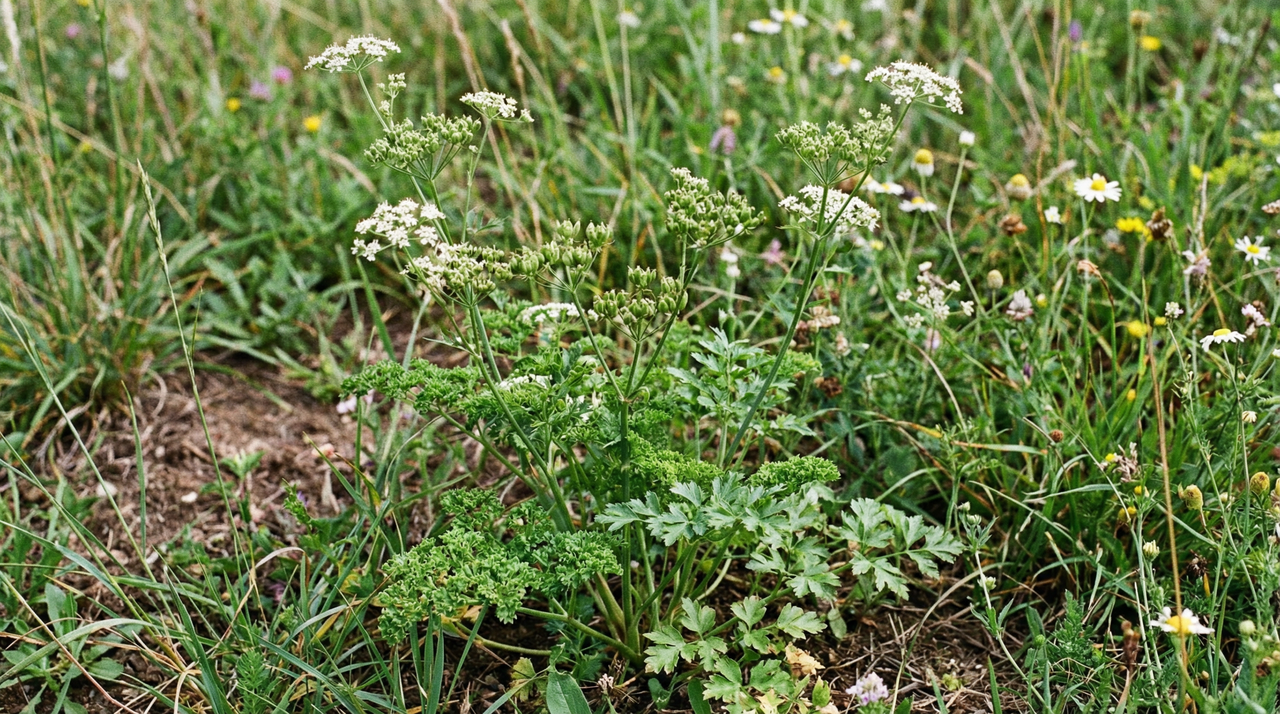
Most people have never actually tasted parsley. They've eaten it, sure, but tasting it is different. I mean really biting into a flat-leaf stem, still warm from the sun, and paying attention. There's a brightness there, almost electric, and underneath it something deeper and a little resinous that has nothing to do with the pale, flavorless frills that have been decorating steakhouse plates since the 1950s. That garnish habit is, I'd argue, one of the more unfortunate legacies of mid-century American cooking, because it trained generations of home gardeners to treat parsley as decoration rather than food. And here's where it gets strange: the ancient Greeks agreed with the decorating impulse, but for reasons that had nothing to do with aesthetics. They draped parsley at funerals and planted it on graves, because to them this plant was fundamentally associated with death.
I think about that sometimes when I'm tucking a new parsley seedling into a guild around my tomatoes, or watching a second-year plant bolt into a lacy canopy that sends beneficial wasps into a frenzy. There's a lot of history crammed into this unassuming biennial, and most of it gets lost the moment someone calls it a garnish. It's worth growing just for what it teaches you about how wrong a common assumption can be.
Parsley Origin and History
Botanical Background and Native Range
Parsley (Petroselinum crispum) is a biennial herb in the Apiaceae family native to the central and eastern Mediterranean, with its heartland spanning southern Europe, North Africa, the Middle East, Greece, Italy, and Turkey.[1][2][3] Though we usually treat it as an annual in cultivation, its true nature is a two-year cycle: leafy rosette in year one, then flowers, seeds, and the end of the line in year two.[4][5] Before Linnaeus separated the genus, this plant went by Apium petroselinum; Petroselinum crispum is now the accepted scientific name.[6][7] In the wild, it colonizes coastal bluffs, rocky slopes, disturbed ground, and woodland edges from sea level up to about 1,500 meters.[8] That rocky-slope preference tells me a lot as a designer: I always give parsley a slightly raised, well-drained spot in the bed to mimic those free-draining Mediterranean conditions, and it rewards that small consideration with noticeably stronger growth. Introduced to temperate regions including parts of the United States, it's naturalized without becoming aggressively invasive, though it self-seeds readily in Mediterranean-type climates.[9][10] I've found that once you let a plant go to seed in its second year, you often get a reliable self-sustaining patch that barely needs replanting.
Visual Characteristics of Parsley Plants
In the garden, parsley typically reaches 30 to 60 cm tall and about 12 to 18 inches wide, sending up slender, hollow, grooved stems from the base above a sturdy taproot that anchors it through dry spells.[11][12] The leaves are alternate, triangular-ovate, and two- to three-times pinnately compound, and that taproot is a big part of why it bounces back after a dry week when shallower herbs have given up. The defining visual distinction is between the two main leaf forms: curly-leaf types with their tightly ruffled, deeply lobed leaflets, and flat-leaf (Italian) types with broader, flatter, more serrated foliage.[13][14] I've always preferred the flat-leaf types; they're more vigorous in my beds and the flavor is fuller, more complex. The curly forms are undeniably pretty as edible borders, but side by side, the Italian type wins on substance every time. When the plant finally bolts in its second year, it sends up compound umbels of small white or greenish-white flowers 1 to 2 inches across from June through August, followed by tiny yellowish-brown ribbed fruits about 2 to 3 mm long.[15][16] Even before you taste a leaf, crushing one between your fingers releases that unmistakable green, slightly grassy scent that's entirely its own.
Traditional and Cultural Uses Through the Ages
Parsley has been in human hands since at least the Bronze Age, roughly 3,000 years ago, with its earliest written appearance in Homer's Iliad.[17] Ancient Egyptians, Greeks, and Romans all cultivated it, but not primarily for cooking. Greek tradition fundamentally connected the plant to the myth of Archemorus, a figure whose name means "forerunner of doom." The Greeks also deployed it medicinally as a digestive aid, diuretic, and kidney tonic.[18] I find it a bit startling to think about, given how casually we scatter it on a plate today. Pliny the Elder documented its cultivation, its role in Roman garlands and feasts, and even noted leaf mutations that sound very much like our curly forms.[19] Romans and Egyptians used it in burial ceremonies and as a symbol of protection.[18] That somber thread continued into medieval and Renaissance Europe, where herbals prescribed it for digestion, bad breath, and protection against evil spirits, while it still appeared on memorial tables and with the dead.[20] Across these eras, traditional practitioners used it as a diuretic, menstrual regulator, and anti-inflammatory, and its active compounds apiol and myristicin were employed historically as an emmenagogue.[18][21] European settlers brought it to North America in the 17th century, carrying both the culinary habit and that long medicinal tradition with them.[22] Its precise origins within the Mediterranean are still somewhat contested, with some accounts pointing to Sardinia or regions near modern-day Croatia alongside the more broadly cited central Mediterranean range.[17]
Fun Facts and Etymology
The parsley botanical name is one of the more satisfying in the herb world. Petroselinum derives from the Greek "petros" (rock) and "selinon" (celery), which together paint an accurate picture of this plant clinging to rocky Mediterranean slopes and tasting vaguely of its carrot-family relatives.[20] The species epithet "crispum" is Latin for curled, a nod to the leaf texture of the type most familiar to early European botanists. Knowing that Petroselinum essentially means "rock celery" has changed how I site it in guild plantings; it's a good reminder that this is an Apiaceae through and through, and it appreciates the same well-drained, mineral-rich conditions as its cousins. The common English name traveled a winding road: from the Latin "petroselinum" through Old French "persil," into Old English as "petersilie," and through Middle English forms like "percil" and even "peter-silly" before landing on the familiar word we use today.[20] Unlike many herbs that fragment into regional dialects and local names, "parsley" has stayed remarkably consistent across English-speaking countries.[23] A plant that has kept its name intact across centuries of travel and trade is telling you something about how deeply embedded it is in the culture that carried it.
Parsley Varieties and Sourcing
Main Parsley Cultivar Groups
All the parsley you'll ever encounter in a seed catalog or nursery bed traces back to a single species, Petroselinum crispum, split into two primary cultivar groups: var. crispum (curly-leaf parsley) and var. neapolitanum (flat-leaf, Italian, or Neapolitan parsley).[9][24][25] The curly types are tightly ruffled and visually ornamental; the flat-leaf Italian types are broader, more upright, and, in my honest opinion, considerably more flavorful.[26][27] I've grown both side-by-side for years, and on a hot, humid Tennessee summer, 'Giant of Italy' just keeps going while my curly-leaf plants sulk and slow down.
Within those two paths, named cultivars give you more targeted choices. On the curly side, 'Triple Curl', 'Moss Curled', 'Forest Green', and 'Envy' are easy to find and reliable performers. On the flat-leaf side, 'Giant of Italy', 'Dark Green Italian', and 'Italian Plain' are the ones most commonly stocked by reputable seed companies. 'Burgundy' is an interesting ornamental outlier worth tracking down if you want something unexpected at the garden's edge.
Where and How to Source Parsley
Parsley is one of the most widely available herbs in North America, which makes sourcing genuinely easy. It's naturalized across nearly every US state[28][29] and commercially grown in California, Texas, and New Jersey, with fresh local supply running from May through November and greenhouse production filling the winter gap.[30] For gardeners in zones 5-9, it's reliably in stock at most nurseries through the main growing season.[28]
For seed, I keep coming back to Johnny's Selected Seeds and Baker Creek Heirloom Seeds as my first stops, though Burpee, Territorial Seed Company, High Mowing Seeds, Seed Savers Exchange, and FedCo Cooperative all carry solid selections. Packets typically run $3.95 to $5.95 for 500 to 1,000 seeds, and bulk seed lands around $10 to $25 per ounce. Nursery seedlings cost $3 to $6 each; if you're finding specialty starts from a farm or herb grower, expect $8 to $15 for a larger plant. I personally prefer starting from seed rather than buying transplants, partly because it's cheaper and partly because it sidesteps any risk of importing nursery pests onto my beds.
If you're thinking about ordering seed from overseas sources, know that importing parsley seed into the US may require a USDA APHIS permit, and some states have their own quarantine rules for nursery stock.[31][32] I always check current APHIS guidelines before placing any international seed order. For most home gardeners, though, domestic suppliers have everything you need and parsley remains one of the most forgiving and accessible herbs to grow from zones 5 through 9.
Parsley Propagation and Planting
Parsley Seed Characteristics and Germination Requirements
Seed is the way to go with parsley, full stop. The seeds are tiny (around 2-3 mm), monoembryonic, and orthodox, meaning they store and germinate predictably if you treat them right.[33][34] They do have a physiological dormancy baked in, which is the main reason new gardeners panic when nothing appears for two weeks. Patience is genuinely the skill here. Pre-treatments like cold stratification can help break dormancy faster, but consistent moisture and correct soil temperature do most of the work.[34]
Germination needs soil temperatures between 50 and 75 °F, with the sweet spot around 60-70 °F, and the seeds want light, so sow on the surface or press them no deeper than a quarter inch.[35][36] Keep the soil consistently moist throughout germination and expect to wait 14 to 30 days for those first green threads to appear.[37] I always label my rows because those early seedlings look almost exactly like young carrot tops. I learned to wait until I could smell the actual parsley aroma before I trusted what I was looking at. If you're direct sowing in a mixed bed, that habit will save you from accidentally thinning the wrong seedlings entirely.
On storage: under standard cool, dry home conditions, seeds stay viable for 1-3 years, but kept at 0-10 °C with low humidity and a desiccant in an airtight jar, viability can stretch to 5-10 years.[23][38] I keep a dedicated jar in the back of my fridge with silica packets and have germinated two-year-old seed at rates I'd happily call reliable. You don't need lab conditions, just a cool, dry spot away from temperature swings.
Vegetative propagation exists as an option, but barely. Stem cuttings root slowly (3-6 weeks) and succeed less than 30% of the time, while root division works a bit better for curly types in spring, around 50-70% success.[39][40] I tried rooting cuttings once to save a curly cultivar I loved, right in the middle of a zone 9B summer. It was an instructive failure. Seed is easier, cheaper, and almost always more reliable for the home gardener. The one case for vegetative methods is preserving a very specific cultivar where genetic stability matters, since parsley is predominantly self-pollinating and produces true-to-type seed anyway.[41] If you do save your own seed in year two, just isolate varieties to prevent insect-mediated cross-pollination from neighboring plants.[41]
Soil, Site Selection, and Planting Technique
Parsley wants fertile, well-drained loamy soil with plenty of organic matter (ideally 3-6%) and a pH between 6.0 and 7.0, though it tolerates 5.5 to 7.5 before performance starts sliding noticeably.[37][36] Full sun is preferred, minimum six hours direct light, though it handles partial shade especially in hotter months.[25] Its wild origins in rocky, calcareous Mediterranean soils explain why it tolerates a touch of alkalinity better than many herbs, but the real non-negotiable is drainage.[10] Parsley has very low tolerance for compaction or waterlogging, and its taproot needs at least 15-20 cm of loose soil depth, ideally 25-30 cm, to develop properly.[36]
I test my beds every season here in Central Florida, because even small pH shifts from heavy rainfall or organic additions show up in the leaves. Below pH 6.0, aluminum toxicity becomes a real risk and uptake of phosphorus, calcium, and magnesium all suffer; above 7.5, iron, manganese, and zinc deficiencies appear as interveinal chlorosis.[42][43] Amending with lime at roughly 5-10 lb per 100 square feet brings pH up; sulfur at 1-2 lb per 100 square feet brings it down.[44] When I see pale, yellowing new growth on an otherwise healthy plant, pH is the first place I look before assuming pest or disease problems.
Spacing, Depth, and Timeline from Seed to Harvest
For home gardens, space plants 6-8 inches apart within the row and leave 12-18 inches between rows.[35][37] A mature parsley plant spreads 12-18 inches wide, and crowding creates the same problem as an unthinned carrot patch: weak, leggy stems competing for light and airflow, with fungal issues following close behind. Give each plant room to form a full, bushy clump and you'll harvest far more from fewer plants.
On timing: start seeds indoors 10-12 weeks before your last frost date, or direct sow in early spring after frost passes in zones 4-9.[36][45] In warmer zones, a late summer sowing for fall and winter harvest is worth trying. From seed to the first leaves you can actually harvest takes 70-90 days, so factor that in when you're planning your garden calendar.[46] If you let a plant bolt into its second year to save seed, expect 30-45 days from flowering to mature seed.[46]
Once your seedlings are in the ground, consistent watering through establishment matters as much as anything else, roughly an inch per week to keep soil evenly moist without letting it sit wet.[47] Wilting, chlorosis, or stunted growth in newly transplanted parsley almost always traces back to compacted soil or poor drainage rather than pests, so the soil prep you do before planting pays dividends for the whole season.[48] Taller plants, particularly in a second-year biennial left to flower, may need light staking to prevent lodging once the seed heads form.[47]
Parsley Care Guide: Sunlight, Water, Feeding, and Seasonal Management
Most of the parsley problems I see in other people's gardens trace back to two things: too much sun in summer and inconsistent watering. Get those right, and the rest of caring for this biennial falls into place surprisingly easily. Get them wrong, and you'll spend the season chasing yellowing leaves and early bolting instead of harvesting.
Sunlight Requirements for Healthy Growth
Parsley wants full sun in cool weather and some relief when temperatures climb. The sweet spot is 4-6 hours of direct sun daily, with full sun preferred in spring and fall and afternoon shade welcomed once summer heat arrives.[5][4] Too little light and the plant tells you immediately: stems stretch, leaves pale and shrink, aroma drops off, and the whole thing slows down before bolting prematurely.[49] Too much sun in heat and you'll see midday wilting, scorched leaf margins going brown and crispy, and that beautiful dark green bleaching out.[50][51]
After several seasons in my zone 9B garden, I've learned that rigging 30-50% shade cloth over beds in June, or simply positioning parsley where a taller companion casts afternoon shadow, turns a six-week harvest into four months of usable leaves. If your parsley suddenly stretches and pales mid-season, it's asking for more light; I've moved seedlings into brighter spots and seen dramatic recovery within a week. But in a hot summer, that same plant might need shade by noon the very next day.
Watering Needs and Soil Moisture Management
Parsley's taproot runs 6-12 inches deep, so shallow surface irrigation doesn't cut it. The rule I follow: water deeply when the top 1-2 inches of soil feel dry, aiming for about 1 inch per week for established plants.[5][52] In spring and fall that usually means once a week; in summer, every 2-3 days. Seedlings are far less forgiving and show stress after just 2-3 days without water, while established plants tolerate 3-7 days between deep drinks.[36]
Parsley has low drought tolerance overall and doesn't handle salty irrigation water well, so if you're on heavily chlorinated municipal water, letting it sit overnight or collecting rainwater is worth the small effort.[53] I lay 2-4 inches of organic mulch around every parsley planting once the weather warms; it holds moisture, moderates soil temperature, and dramatically cuts how often I need to water during Florida's brutal August heat.
Feeding and Nutrient Management
Parsley evolved on lean Mediterranean soils, so it's a moderate feeder, not a heavy one. My starting point is always 2-3 inches of finished compost worked in before planting, with a pH target of 6.0-7.0.[54][55] If I supplement beyond that, I use a balanced 10-10-10 fertilizer applied lightly every 4-6 weeks, never heavily, because too much at once produces the kind of lush, floppy growth that tastes surprisingly bitter.[36][56]
I learned that lesson firsthand after over-fertilizing a bed one spring. The plants looked spectacular; the flavor was nearly inedible. Now I soil-test annually and let the results guide me rather than guessing. Nitrogen drives leaf and chlorophyll production but excess produces dark, weak, bitter growth with increased disease pressure.[57] Potassium supports flavor, disease resistance, and water regulation, while phosphorus builds a strong taproot.[58] As a diagnostic shortcut: uniform yellowing on older leaves signals nitrogen deficiency; purplish discoloration points to phosphorus; marginal yellowing and browning at leaf edges suggests potassium. Pull back on nitrogen once plants approach bolting or when you're growing for root harvest.
Temperature Tolerance: Frost and Heat
Parsley is hardier in cold than most gardeners expect. Established plants tolerate brief dips to 14°F (-10°C) with protection and handle light frost with ease; they're reliably hardy in USDA zones 5-9, though young seedlings become stressed below 40°F (4°C).[59][60] Frost damage shows up as wilting, water-soaked leaves, blackened or mushy tissue, and necrotic edge burn; stems may die back while the roots survive to resprout.[61] In zones 5-6, mulching with 3-4 inches of leaf litter and draping row cover over the rosette will carry plants through winter; I've watched outer leaves take a light frost while fresh growth pushes from the center come late February.[25]
Heat is the harder problem. Parsley thrives at 59-70°F and slows noticeably above 80°F.[36] Vegetative plants begin bolting above that threshold; seedlings stress out even sooner, above 75°F.[62] Flat-leaf Italian types consistently outlast curly varieties in prolonged 85°F+ spells, bolting later and recovering faster after heat events.[63] If you're in zone 7 or warmer, plant flat-leaf, add that afternoon shade cloth, keep mulch 2-4 inches deep, and increase watering to every other day when the heat settles in.[64]
Seasonal Rhythm, Pruning, and Maintenance
Understanding parsley's biennial nature makes every care decision more intuitive. In year one it builds a vegetative rosette; in year two, after a cold spell triggers vernalization, it flowers, sets seed, and dies.[65] Most gardeners treat it as an annual precisely because the second-year plant stops producing good leaves and bolts quickly, especially if summer heat combines with long days to accelerate the process. In warmer zones that bolt can arrive annoyingly early in the first year if the plant has experienced enough stress.
The practical maintenance loop that keeps parsley productive is simple once you internalize it. Pinch growing tips when plants hit 6 inches or show 4-6 true leaves to encourage a bushy, branching habit and push back bolting.[25][66] The moment you see a flower stalk forming, remove it. Deadheading consistently has transformed my parsley from a 6-week crop into a near-constant kitchen supply. Harvest outer leaves successively rather than stripping the plant, always leaving the central crown intact to keep driving new growth.
Water adjustments follow the season: roughly once weekly in spring and fall, every 2-3 days through summer, and minimal irrigation for overwintering plants every 7-10 days in dormancy.[67] Pull back on nitrogen feeding as plants approach the end of their vegetative phase or when you're managing for root production. Good airflow, base watering rather than overhead irrigation, and clearing old debris go a long way toward keeping the fungal and insect issues that affect parsley from gaining a foothold; the pest and disease specifics get their own treatment in the section that follows.[54][68]
How to Harvest Parsley for Maximum Flavor and Yield
Parsley is one of those herbs that rewards patience upfront and generosity later. Get through that first season, and you'll have a plant that keeps producing right through summer and into fall if you handle it right.
When to Harvest Parsley: Timing, Maturity Cues, and Variety Differences
From seed to first harvest, expect 70-90 days depending on which type you're growing. Curly varieties are typically ready in 70-85 days, while flat-leaf Italian types take a little longer, usually 75-90 days.[36][69] The visual cues are pretty reliable: outer leaves 4-6 inches long, a rich green color, and that satisfying crispness when you pinch a stem.[70][71] In most temperate US gardens, peak harvest runs June through September.[72] If you're growing Hamburg (root) parsley, the timeline is a whole different commitment: 120-150 days before those roots have swelled enough to dig.[35][36]
Parsley Flavor, Aroma, and Texture at Harvest
What you're actually harvesting when you cut fresh parsley is a concentration of volatile compounds, mainly myristicin, apiol, β-phellandrene, and a handful of other aromatics that give the herb that signature peppery, herbaceous kick with a clean citrus thread underneath.[73][74] The chemical disparity between curly and flat-leaf varieties is distinct and worth considering before you pick. Flat-leaf Italian types carry significantly higher concentrations of myristicin and apiol (up to 40-50% versus 20-30% in curly), which translates to that longer, more insistent bitterness I'd compare to arugula versus mild butter lettuce.[75] Curly parsley leans sweeter with more limonene, fading faster on the palate. I've also found that flat-leaf types hold their quality longer into summer heat before bolting, which makes them my default for most kitchen uses. One practical note on drying: the process strips out 50-70% of monoterpenes and 30-50% of phenylpropanoids, so dried parsley is genuinely a shadow of what comes off a living plant.[76] Fresh is almost always worth the extra step.
Best Techniques for Cutting Parsley to Encourage Regrowth
I always harvest in the morning, after the dew has dried but before the midday heat settles in.[77][44] The difference is tangible: rub a leaf between your fingers at 8am and you get an immediate burst of that green, herbaceous aroma. Try the same thing at 2pm and the scent is noticeably flatter. That simple sensory test has become my signal to always pick early. Cut from the plant's outer edge first, working inward, and always leave the central growing crown untouched.[25][78] Sharp, clean scissors matter here; crushed stems heal poorly and invite disease. I learned this the hard way early on by overharvesting a young plant, stripping too much before it had fully established, and watching it sulk for weeks. Now I only take leaves that are fully expanded and never touch anything that looks like it belongs to that tender central rosette. Once you develop that habit, parsley becomes genuinely generous; the more you cut the outer leaves, the more vigorously the plant pushes new growth from the center all the way through fall.
Parsley Preparation and Uses
One thing I genuinely love about parsley is that there's almost nothing to waste. Every part of the plant -- leaves, stems, roots (especially in Hamburg root varieties), flowers, and seeds -- is edible.[79][9] I spent years reflexively composting the stems before I realized that chopping them finely and folding them into soups or pestos adds genuine flavor depth without any bitterness, provided you use them fresh. It's a small shift with a noticeable payoff.
Culinary Uses: From Garnish to Star Ingredient
The herb earned its place across Mediterranean, Middle Eastern, and European kitchens because it brightens almost anything it touches -- garlic, lemon, fish, roasted meats, root vegetables.[4][80] Tabbouleh and Italian gremolata are the famous showcases, but Persian ghormeh sabzi stews use it as a foundational green, and it anchors countless soups, sauces, and compound butters across European traditions.[81][82] My garden rule of thumb: flat-leaf for cooking, curly for borders and garnish. The flat-leaf handles heat, blending, and bold flavors better; the curly holds its shape on a plate and makes a pretty edible edge in a kitchen garden bed.
Medicinal Preparations and Safe Usage Guidelines
The firm boundary worth knowing first: parsley essential oil is not safe for internal use, and topical applications should be diluted to 1-2% for adults.[83][84] Beyond that concentrated form, the plant has a long, sensible tradition as a gentle home remedy. I've used parsley tea as part of my own seasonal rhythm for mild digestive support, always staying well within culinary quantities.
For tea or infusion, the EMA and AHP guidance I consistently return to recommends 2-4 grams of dried leaf or root per cup, up to three times daily.[83][84] Tincture dosage runs 2-4 mL three times daily; root or seed decoctions follow the same 2-4 gram range boiled in water. The daily cap matters: up to 10-15 grams of fresh parsley is a normal culinary amount, but dried herb intake shouldn't exceed 6-12 grams total to avoid apiol accumulation.[83][84][85] Everyday kitchen use is a genuinely different territory from concentrated medicinal forms, and that distinction is worth keeping clear.
Non-Food Applications and Sustainability Considerations
Traditional medicine has long called on parsley for digestive complaints, breath-freshening, and its mild diuretic effects -- the same uses that show up across the ethnopharmacological record.[86] That part of the story lives in the health benefits section; what I want to add here is a word about sourcing.
Commercial parsley production carries a real water burden -- up to 25 inches per season -- plus pesticide residue concerns and uneven labor conditions in the supply chain.[87][88] Compared to basil or cilantro in my own garden, parsley actually holds up well with drip irrigation and needs far less intervention once established -- which is exactly why home production sidesteps so many of those commercial pressures. Crop rotation, organic methods, and basic IPM aren't complicated additions; they're just good garden hygiene. Seed trade is regulated under UPOV and CBD frameworks without significant controversy for parsley specifically,[88] so saving your own from second-year plants remains a simple, low-barrier way to close the loop between kitchen use and responsible growing.
Parsley Health Benefits and Medicinal Uses
Most people think of parsley as the green sprig that gets pushed to the side of the plate. That reputation does it a real disservice. What's sitting next to your entrée is one of the most nutrient-dense herbs in the kitchen garden, with a phytochemical profile that traditional healers across three continents have relied on for centuries and that modern researchers are now starting to take seriously.
Phytochemicals in Parsley: Flavonoids, Phenolics, and Essential Oil Compounds
The bioactive backbone of parsley is built from several distinct compound classes, and where those compounds concentrate matters. The leaves are richest in flavonoids, particularly apigenin, luteolin, apiin, and quercetin.[89][90][91] The roots and seeds carry more phenolic acids, including rosmarinic, caffeic, ferulic, and chlorogenic acids, with rosmarinic acid showing particular anti-inflammatory activity through NF-κB pathway inhibition.[89][92] Roots and seeds also contain coumarins like umbelliferone and bergapten, which connect chemically to parsley's traditional use as a digestive and diuretic agent.[89][93]
Then there's the essential oil fraction, which is where things get both interesting and important. The oil can contain up to 50% apiol and between 5 and 20% myristicin, though concentrations shift considerably depending on cultivar, plant part, and growing conditions.[94][95] I've noticed over years of growing parsley that plants pushed hard by heat or poor soil produce noticeably more pungent leaves and seeds. That's the essential oil content rising under stress, the same compounds responsible for medicinal activity at moderate levels and toxicity at high ones. It's a good reminder that the dose really does make the poison, and I'll come back to that in the safety section.
Nutritional Profile of Parsley
A standard cup of chopped raw parsley weighs about 33 grams[96] and delivers an almost absurdly favorable nutrient-to-calorie ratio. The whole plant comes in at just 36 calories per 100 grams, with around 3 grams of protein, 6 grams of carbohydrates, and over 3 grams of dietary fiber.[96] What stops you in your tracks is the micronutrient density. Per 100 grams, parsley delivers 1640 µg of vitamin K (that's over 1300% of the daily value), 133 mg of vitamin C, 421 µg RAE of vitamin A, 152 µg of folate, 554 mg of potassium, and meaningful amounts of iron, magnesium, and calcium.[96]
Vitamin K is the real standout. Nobody talks about parsley as a vitamin K source, but it blows most other greens out of the water. I keep a pot on my kitchen windowsill year-round partly for that reason, tossing a handful into salads or grain bowls as an easy, low-effort way to cover multiple micronutrients at once. If you're on blood thinners, that K content matters, and I'll address it properly in the safety discussion below.
Scientific Evidence for Parsley's Medicinal Properties
Traditional healers in Europe, the Mediterranean, and the Middle East have used parsley for centuries to address indigestion, flatulence, menstrual irregularity, urinary tract support, and general detoxification.[97][98] Modern research has been working backward from those applications, and some of what it's finding is genuinely compelling.
The strongest evidence centers on antioxidant and anti-inflammatory activity. Multiple studies confirm that parsley's flavonoids, particularly apigenin and luteolin, scavenge free radicals effectively.[99][100] On the inflammation side, parsley extracts have been shown to inhibit pro-inflammatory cytokines, downregulate NF-κB signaling, and reduce paw edema in rat models.[99][101][100]
The diuretic story has the most robust human backing of any parsley benefit. Clinical trials alongside animal data show that parsley increases urine output without significant electrolyte disruption, with some comparisons holding up against furosemide as a reference drug.[102][18] In my own experience, adding fresh parsley generously to meals each day does seem to have a mild, noticeable diuretic effect, nothing dramatic, but the kind of gentle support the traditional uses describe. The benefits of parsley tea appear to work through similar mechanisms, though concentrated preparations amplify both the benefit and the risk.
Parsley's essential oils, specifically myristicin and apiol, show antimicrobial activity against bacteria including E. coli and Staphylococcus aureus, as well as against fungi.[103][104] Animal models also support analgesic and antispasmodic effects, with parsley extracts relaxing smooth muscle in both uterine and intestinal tissue and reducing pain responses comparably to some standard drugs.[102][99] Preclinical research points toward antihypertensive effects via vasodilation and ACE inhibition, anti-diabetic potential through improved glucose tolerance and insulin sensitivity, wound-healing properties, and preliminary anticancer activity driven partly by myristicin-induced apoptosis.[105][99]
The honest caveat is that most of this evidence is still preclinical. In vitro and animal studies dominate the literature, and large-scale human trials are limited.[106] The diuretic research is the exception. For everything else, traditional use and lab data are pointing in the same direction, but more rigorous human studies are still needed before anyone can make firm clinical claims. That's not a reason to dismiss the evidence; it's just an honest read of where the science currently stands.
Safety Considerations and Potential Side Effects
Parsley is GRAS-listed by the FDA, and at ordinary culinary amounts there's no significant toxicity concern for healthy adults.[107][108] Growing and eating it freely is safe. The concerns arise when people move into concentrated seeds, extracts, or essential oil territory.
Apiol, which can reach 50-70% of seed oil content, is hepatotoxic and can stimulate uterine contractions at toxic thresholds around 200-500 mg/kg. Myristicin is neurotoxic in excess.[109][110] These risks live squarely in the realm of medicinal doses and concentrated preparations, not the handful of fresh leaves over your lentils. On pregnancy specifically, I never recommend parsley essential oil or large medicinal doses to anyone who is pregnant or trying to conceive. The research on apiol's emmenagogue and uterine-stimulant effects is clear enough that the risk isn't worth taking.[111][85]
That standout vitamin K content, 1640 µg per 100 grams, can interfere with warfarin and similar anticoagulants, and the diuretic effect can interact additively with prescription diuretics or alter lithium levels.[112][113] My practical advice for anyone on blood thinners who wants to keep growing and eating parsley: just track your weekly intake of high-K greens rather than cutting them out entirely. Consistency matters far more than avoidance.
Allergic reactions are uncommon, affecting fewer than 1% of people, but cross-reactivity with celery, carrot, and mugwort is a real pattern in Apiaceae-sensitive individuals.[114][115] The furanocoumarins in parsley can also cause phytophotodermatitis if you handle a lot of wet plant material and then go out in the sun, a genuine risk for harvesters in bright conditions.[110] Oxalate content sits around 156-170 mg per 100 grams fresh weight, low enough at culinary quantities to be a non-issue for most people, though those with a history of kidney stones should be mindful.[116]
The one safety point I feel most strongly about is look-alike identification. Poison hemlock, water hemlock, fool's parsley, and cow parsley are all plausible mistaken-identity candidates when foraging near wild edges.[117][118] The smooth, hairless stems of poison hemlock compared to parsley's finely divided, slightly downy leaves have saved me from confusion more than once when walking wild edges. If you didn't grow it yourself, be certain before you eat it. And if you have pets, note that parsley is mildly toxic to dogs and cats in large quantities due to its essential oils, though a small garnish amount is generally harmless.[119]
Parsley Pests and Diseases
Parsley is genuinely more forgiving than most of its Apiaceae relatives. Celery is a fungal nightmare; carrots have their own Alternaria drama. Parsley sits somewhere in the middle: resilient enough that a well-sited plant in good soil rarely falls apart, but susceptible enough that ignoring a few key threats can turn a productive patch into a soggy, spotted mess by midsummer.[120][121] The key is knowing what to watch for first.
Common Diseases of Parsley
Downy mildew is the headline problem. Caused by Peronospora petroselini, it thrives in exactly the conditions early spring or late fall parsley loves: cool temperatures and persistent humidity. Leaves yellow from the top while a grayish-purple fuzz develops on the undersides, and once you see significant sporulation, you're already behind.[122][123] I've learned to check the undersides of outer leaves during any damp spell lasting more than three or four days and immediately open up spacing if I see anything suspicious. Catching it at the first yellowing spot makes a real difference.
Septoria leaf spot and bacterial leaf blight are the next concerns. Septoria (Septoria apiicola) can defoliate a planting under repeated overhead watering, and bacterial lesions from Xanthomonas or Pseudomonas species spread quickly via water splash in wet conditions.[124][125][36][126] Fusarium wilt is a moderate risk too, especially in warm soils where root rot can develop before the foliage shows obvious stress.[127] Powdery mildew and cucumber mosaic virus are relatively uncommon and low impact by comparison.[36]
Variety selection handles a surprising amount of this before you even turn over a shovel of soil. 'Fakir', 'Moors', and 'Green Pearl' have shown partial resistance to downy mildew in European trials; 'Forest Green' and 'Banquet' hold up better against Alternaria; and 'Titan' or 'Giant of Italy' are good picks if root rots have been a persistent issue.[128][129][130] Beyond variety, the cultural basics are non-negotiable: a 3-to-4-year rotation away from any Apiaceae crop, well-drained soil or raised beds, drip irrigation or at-the-base watering, and prompt removal of any infected debris.[131][132] When cultural prevention falls short, neem oil, copper-based fungicides, or a Bacillus subtilis biofungicide are the organic tools I reach for, roughly in that order.[131][132]
Key Pests Affecting Parsley
Aphids are the insect problem I hear about most, and for good reason. Green peach aphid (Myzus persicae) colonizes parsley readily, and pressure gets worse in covered or greenhouse growing where natural predators can't reach them.[133][134] Leafminers (Liriomyza spp.) leave their telltale squiggly trails through leaves in summer heat, and carrot fly is a serious root threat if you're in an area where it's established.[133][135][136] Flea beetles, thrips, slugs in wet conditions, and spider mites round out the list, with seedlings most at risk because their cuticles are thinner and their chemical defenses haven't fully developed yet.[133][137]
The difference in aphid pressure between curly and flat-leaf varieties is consistently noticeable. Italian flat-leaf types have smoother, broader leaves with fewer sheltered microhabitats, and I reliably find denser aphid colonies tucking into the tight ruffles of curly cultivars.[138][139] If bug pressure is a recurring frustration, switching to a flat-leaf type solves a lot of it before any spraying enters the picture. The plant also produces furanocoumarins and trichomes that offer some built-in feeding deterrence, and letting a few plants flower each year actively draws in ladybugs and parasitoid wasps.[140][141][142] That said, parsley is moderately to low resistant to insects overall compared to dill or coriander, so realistic expectations matter.[143]
Integrated Pest and Disease Management
My honest approach is a simple ladder. Cultural practices first, always: 2-to-4-year rotation, 8 to 12 inches of spacing for real airflow, well-drained soil, and base watering instead of overhead irrigation.[144][145] Those four steps prevent the majority of fungal, bacterial, and insect problems before anything else is needed. Biological allies come next: I let flowering parsley stay put to encourage ladybugs for aphid control and parasitic wasps like Diglyphus isaea for leafminers.[146][144] Row covers or fine netting go on if carrot fly is active in the area; I keep yellow sticky traps around to catch early leafminer pressure before it escalates.
Targeted interventions are a last resort, and threshold matters. For thrips I wait until I'm seeing 5 to 10 insects per plant before reaching for spinosad; insecticidal soap or dilute neem handles aphid outbreaks when beneficial insects haven't kept pace.[144][147] The same humidity management that prevents downy mildew also keeps aphid populations lower, so solving one problem often solves the other. In my experience, consistent airflow and a well-chosen cultivar handles roughly 80 percent of what this plant faces before a single spray bottle comes out of the shed.
Parsley in Permaculture Design
Parsley doesn't get nearly enough credit in the permaculture world. It's not a nitrogen fixer, it won't grow into a canopy tree, and it lives fast and dies in two years. But that's actually what makes it such a useful design element: a small, tireless worker that slots into the herb layer, does multiple jobs at once, and asks very little in return.
Ecosystem Functions and Guild Roles
The moment parsley bolts in its second year and sends up those flat-topped, greenish-yellow umbels, something remarkable happens in the garden. I've watched it firsthand: solitary bees, hoverflies, and parasitic wasps descend on those flowers like they've been waiting all season. That's not an accident. The Apiaceae family produces compound umbels with shallow, exposed nectaries that short-tongued insects can actually reach, and parsley is one of the more accessible of the bunch.[148][149] Pollination is most active in that comfortable 60-75°F window at moderate humidity,[150] which in most temperate gardens means spring and early fall, exactly when beneficial insect populations need a boost.
I now deliberately leave two or three plants to flower every year, and I'm convinced those resident hoverfly populations knock back aphid pressure on my nearby brassicas without any intervention on my part. Parsley also serves as a larval host for certain swallowtail butterflies, which adds another thread to the food web that a purely productive garden mindset would miss.
The companion planting case for parsley is well-supported by practical observation. It repels carrot rust flies, asparagus beetles, and tomato hornworms while drawing in the predatory insects that police the rest of the guild.[151][152] I've grown parsley tucked into the base of my tomato plants and alongside asparagus beds for several seasons now, and hornworm pressure in those areas has been noticeably lighter than in beds without it. I can't claim a controlled study, but the pattern has been consistent enough that I don't design those guilds without it anymore.
Forest Layer Placement and Companion Planting
In the vertical stack of a food forest or kitchen guild, parsley belongs to the herb layer. At 30-60 cm in its first year,[153][154] it fits naturally at the feet of tomatoes, roses, and taller perennials where it can do its pest-deterring work without competing for canopy space. Its Mediterranean origins in rocky, calcareous scrubland and woodland edges[155] actually tell you something about where it performs: it's adapted to well-drained, fertile soils at pH 6.0-7.0, with dappled or transitional light,[5] which maps almost perfectly onto the conditions at the edge of a food forest guild.
Below ground, the taproot system reaches 20-30 cm with fibrous lateral branches, pulling up calcium and potassium and making them available at the surface when the plant is chopped and dropped.[156][157] I started doing this intentionally at the end of each first-year season in a heavy clay bed, and over several cycles the soil crumb structure improved in a way that was hard to attribute to anything else. It's not nitrogen fixation, but dynamic accumulation is genuinely useful in a system that's still building its biology. The root activity also favors bacterial communities in the rhizosphere rather than mycorrhizal networks, which is worth knowing when you're thinking about how it interacts with neighboring plants.
As a living mulch, parsley suppresses weeds, retains moisture, and contributes mild allelopathic pressure that slows certain weed species without smothering its neighbors.[158] The design versatility extends above ground too: curly-leaf types make a tidy, textured edible border, while flat-leaf forms read as more naturalistic filler in a polyculture planting. One firm caveat on guild design: keep parsley away from carrots and other Apiaceae. I planted them close together in an early garden and wound up with cross-pollinated seed that produced nothing worth saving the following year. That was an easy lesson to learn once, and I haven't repeated it since.
Climate Adaptation and Suitable Growing Zones
Parsley is reliably hardy in USDA zones 5-9,[3][9] with its sweet spot for leaf quality landing squarely in zones 6-9; gardeners in zones 3-4 can still grow it successfully as a well-mulched annual started indoors.[36] With protection it can survive brief dips to -7°C to -15°C (20°F to 5°F),[159][25] which is genuinely useful for extending the season in cold climates. The harder challenge, at least in my experience growing in zone 9B, is the heat. Temperatures above 80-85°F push plants toward bolting and degrade leaf flavor fast.[160]
What I've learned in hot, humid summers is that placement matters more than watering frequency. Siting parsley in the dappled shade of a taller guild member, whether that's a pepper plant, a trellised cucumber, or a young fruit tree, can extend the productive window by several weeks and keeps the leaves milder and more flavorful than plants baking in full afternoon sun. The research backs this up: partial shade or afternoon protection reduces heat stress and delays bolting in warm climates,[161] while cooler zones benefit from full sun exposure of six or more hours.[8] Parsley's tolerance for coastal salt air and sandy soils also expands the range of workable microclimates for those designing seaside or estuarine gardens. If you're in zone 7 or warmer and want to complete the biennial cycle and save seed, the conditions are usually cooperative; colder zones will almost always see the plant winter-killed before it flowers.[162]
The Herb I Keep Underestimating
I've killed more parsley through impatience than through any real neglect; those three weeks of bare soil after sowing used to make me pull the tray and start over, convinced something had gone wrong. Now I just water it, walk away, and wait. There's something quietly instructive about a plant that refuses to be rushed, then gives you months of leaves the moment you stop hovering.
Sources 162
- Petroselinum crispum ↩
- Petroselinum crispum ↩
- Parsley: A Review of Its Phytochemicals and Health Benefits ↩
- Petroselinum crispum ↩
- Petroselinum crispum ↩
- The Plant List - Petroselinum crispum ↩
- Plants of the World Online ↩
- Petroselinum crispum ↩
- Petroselinum crispum ↩
- Petroselinum crispum ↩
- Petroselinum crispum ↩
- Petroselinum crispum ↩
- Petroselinum crispum ↩
- Petroselinum crispum ↩
- Petroselinum crispum Plant Finder ↩
- Petroselinum crispum Description ↩
- Parsley: History and Origins ↩
- Parsley in Ancient Medicine ↩
- Natural History ↩
- Historical Uses of Parsley in Medieval Herbals ↩
- Medicinal Herbs: Parsley ↩
- The Cambridge World History of Food ↩
- Petroselinum crispum (Parsley) | North Carolina Extension Gardener Plant Toolbox ↩
- Missouri Botanical Garden - Petroselinum crispum ↩
- Royal Horticultural Society - Parsley Types ↩
- Missouri Botanical Garden Plant Finder ↩
- USDA PLANTS Database ↩
- Missouri Botanical Garden - Petroselinum crispum ↩
- Petroselinum crispum L. ↩
- Parsley Production and Availability ↩
- Importation of Plants and Plant Products ↩
- FDA Regulations for Imported Produce ↩
- Royal Horticultural Society - Petroselinum Crispum Profile ↩
- Seed Dormancy and Germination in Parsley (Petroselinum crispum) ↩
- Parsley Growing Guide ↩
- Growing Parsley ↩
- Petroselinum crispum ↩
- Seed Storage of Horticultural Crops ↩
- Herb Propagation: Parsley from Stem Cuttings ↩
- Vegetative Propagation of Herbs ↩
- The Biology of Petroselinum crispum (Parsley) ↩
- Soil pH for Vegetables - University of Minnesota Extension ↩
- Soil pH and Nutrient Availability - University of Minnesota Extension ↩
- Parsley Growing Guide - Old Farmer's Almanac ↩
- Parsley Production Guide ↩
- Parsley Seed Saving Guide ↩
- Parsley Production Guidelines ↩
- Growing Parsley ↩
- Missouri Botanical Garden Plant Finder ↩
- Missouri Botanical Garden Plant Finder ↩
- Royal Horticultural Society Plant Profile ↩
- Parsley in the Home Garden ↩
- Parsley (Petroselinum crispum) - Garden Plant Care ↩
- Soil Fertility for Herbs ↩
- Plant Care: Parsley (Curly) ↩
- Parsley Production ↩
- Nutrient Deficiency Symptoms in Parsley ↩
- Parsley: Nutrient Deficiencies and Toxicities ↩
- Herb Frost Tolerance ↩
- Petroselinum crispum - RHS Gardening ↩
- Frost and Freeze Injuries to Plants ↩
- Heat Stress in Herbs: Parsley ↩
- Bolting Resistance in Flat vs. Curly Parsley ↩
- Growing Parsley in Warm Climates ↩
- Parsley (Petroselinum crispum) ↩
- Herb Gardening: Parsley ↩
- Missouri Botanical Garden: Growing Herbs ↩
- Parsley Pests and Diseases ↩
- Parsley ↩
- Parsley Varieties & Growing Guide ↩
- Parsley Production ↩
- Parsley ↩
- Volatile Constituents and Biological Properties of Petroselinum crispum ↩
- Volatile Composition of Parsley Essential Oil ↩
- Volatile Composition of Parsley Essential Oils: Curly vs. Flat Leaf Cultivars ↩
- Effects of Drying Methods on Aroma Compounds in Petroselinum crispum ↩
- Harvesting Herbs ↩
- Growing Parsley - UC ANR ↩
- Parsley ↩
- Growing and Using Parsley ↩
- Ethnobotany of Italian Herbs ↩
- Persian Culinary Herbs and Health ↩
- European Medicines Agency (EMA) Assessment Report on Petroselinum crispum ↩
- American Herbal Pharmacopoeia (AHP) Monograph on Parsley ↩
- Herbal Medicine: Biomolecular and Clinical Aspects - Parsley Chapter ↩
- Parsley: A review of ethnopharmacology, phytochemistry and biological activities ↩
- Sustainable Parsley Cultivation Practices ↩
- Guidelines for Herb Farming Sustainability ↩
- Phytochemical Composition of Parsley (Petroselinum crispum): A Review ↩
- Secondary Metabolites in Petroselinum crispum: Flavonoids and Phenolics ↩
- Flavonoids from Petroselinum crispum and Their Biological Activities ↩
- Rosmarinic Acid in Herbs: Anti-Inflammatory Mechanisms ↩
- Phytochemical profile and biological activities of parsley (Petroselinum crispum) roots ↩
- Phytochemical Composition and Health Benefits of Parsley (Petroselinum crispum) ↩
- Essential Oils of Petroselinum crispum: Apiaceae ↩
- Parsley, raw - USDA FoodData Central ↩
- National Center for Complementary and Integrative Health: Parsley Fact Sheet ↩
- Ethnobotanical Survey of Medicinal Plants in Turkey: Focus on Petroselinum crispum ↩
- Pharmacological Activities of Petroselinum crispum: A Review ↩
- Antioxidant and Anti-inflammatory Activities of Parsley (Petroselinum crispum) Extracts ↩
- Anti-Inflammatory Effects of Parsley Extracts in Experimental Models ↩
- Diuretic and Analgesic Effects of Parsley Extracts ↩
- Antimicrobial Activity of Petroselinum crispum Essential Oil ↩
- Antibacterial Properties of Parsley Essential Oil: An In Vitro Study ↩
- Review of Pharmacological Properties of Parsley ↩
- Systematic Review of Petroselinum crispum: Pharmacology and Health Benefits ↩
- Safety of parsley and its essential oil ↩
- Herbal Medicine: Biomolecular and Clinical Aspects - Parsley Chapter ↩
- Phytochemical and Toxicological Review of Apiol and Myristicin in Parsley ↩
- Parsley - StatPearls - NCBI Bookshelf ↩
- Parsley - Drugs and Lactation Database (LactMed) ↩
- Vitamin K Content in Foods Including Herbs ↩
- Herbal Interactions with Lithium ↩
- The celery-carrot-mugwort-condiment syndrome: cross-reactivity among Apiaceae and spices ↩
- Oral allergy syndrome to parsley ↩
- Calcium and Oxalate Contents of Curly Leaf and Flat Leaf Parsley Cultivars - SCIRP ↩
- Poison Hemlock Plant Profile ↩
- Fool's Parsley (Aethusa cynorrhoeum) ↩
- Toxicity of Parsley ↩
- Petroselinum crispum - Missouri Botanical Garden ↩
- Apiaceae Family Diseases - USDA ARS ↩
- Downy Mildew on Parsley ↩
- Downy Mildew of Parsley - USDA ARS ↩
- Parsley Diseases - RHS Gardening ↩
- Diseases of Herbs: Parsley ↩
- Bacterial Blight of Parsley - APSnet ↩
- Management of Fusarium in Apiaceae ↩
- Downy Mildew of Parsley ↩
- Parsley Production and Pest Management ↩
- Selecting Disease-Resistant Herb Varieties ↩
- Parsley: Diseases and Disorders ↩
- Organic Disease Management in Herbs ↩
- Parsley Pest Management ↩
- Management of Aphids on Herbs in Greenhouses ↩
- Leafminer Pests of Vegetable Crops: Field Observations ↩
- Carrot Fly Trap Crops ↩
- Slug Control in Protected Cropping Systems ↩
- Petroselinum crispum (Parsley) Plant Profile ↩
- Parsley Production Pest Management ↩
- Missouri Botanical Garden - Plant Database ↩
- Antimicrobial properties of Apiaceae secondary metabolites ↩
- Pubescence as a defense mechanism ↩
- USDA PLANTS Database: Petroselinum crispum ↩
- Parsley Pest Management Guidelines ↩
- Integrated Pest Management for Parsley ↩
- Biological Control of Leafminers in Herbs ↩
- Managing Downy Mildew in Umbelliferous Crops ↩
- Pollination Ecology of Umbellifers (Apiaceae) ↩
- Hoverflies as Pollinators in Vegetable Gardens ↩
- Environmental Requirements for Herb Crops ↩
- Companion Planting with Parsley ↩
- Companion Planting Guide for Parsley ↩
- Petroselinum crispum - Missouri Botanical Garden Plant Finder ↩
- RHS - Parsley ↩
- Kew Gardens - Petroselinum crispum ↩
- USDA PLANTS Database - Petroselinum crispum ↩
- Phytochemical and Root Distribution Study of Apiaceae Species - Mazar et al., 2005 ↩
- Parsley in Permaculture and Agroforestry ↩
- University of California Agriculture and Natural Resources - Parsley ↩
- Herb Growing: Temperature Requirements ↩
- University of California Agriculture and Natural Resources - Parsley ↩
- USDA Plant Hardiness Zone Map ↩