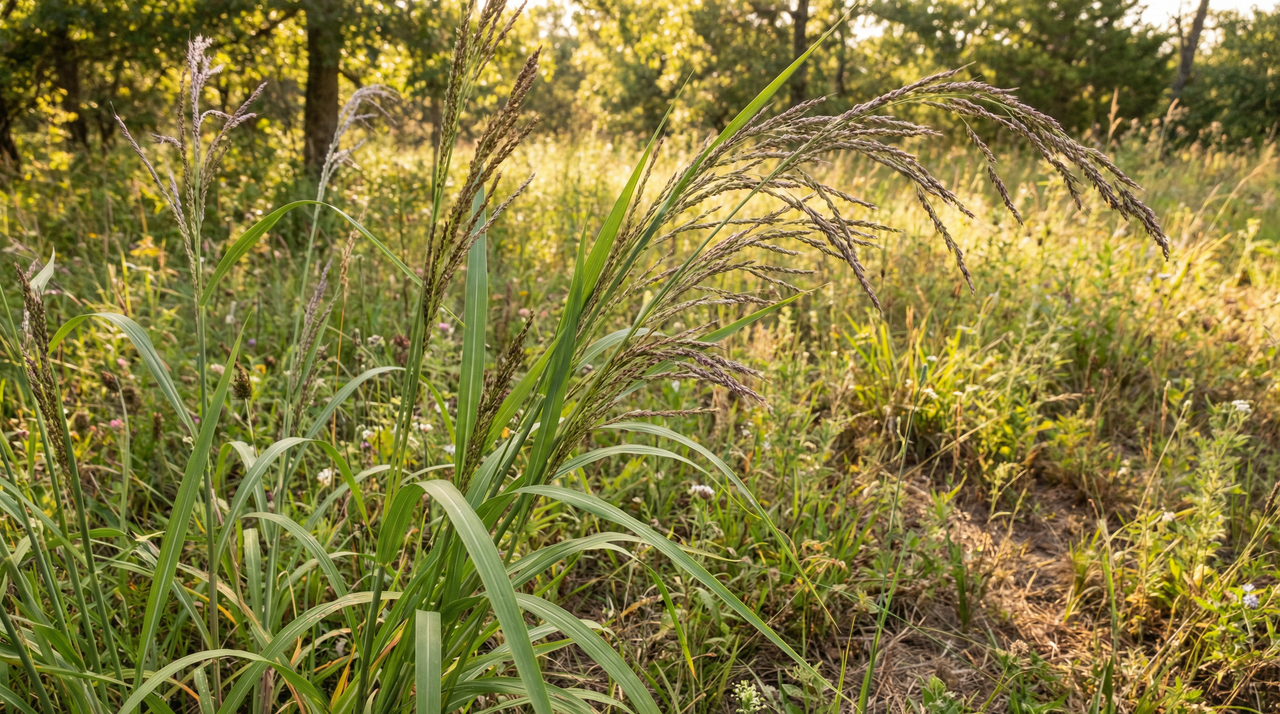
Nobody plans to plant Paspalum. That's the thing. I've had it show up in three of my food forests without ever putting it there, spreading in from roadsides and disturbed edges while I was busy thinking about nitrogen fixers and fruit tree guilds. And yet every single time someone asks me about it, the conversation goes sideways fast, because the plant most people actually mean when they say "Paspalum virgatum" isn't Paspalum at all. It's switchgrass. Panicum virgatum. A completely different genus that somehow inherited the name through decades of misapplied labeling, seed catalog shortcuts, and well-meaning but slightly wrong internet propagation.[1]
I'm not being pedantic for the sake of it. The mix-up matters because these two grasses have genuinely different ecologies, different tolerances, different roles in a designed system. One is a deep-rooted prairie powerhouse with centuries of Indigenous use and a growing body of bioenergy research behind it. The other is a salt-tolerant coastal species that most Great Plains gardeners will never encounter outside a brackish restoration site. Getting them confused means potentially planting the wrong thing in the wrong place, which is exactly the kind of quiet mistake that costs you two years of establishment time. So let's start where we actually are, with the real plant, and work forward from there.
Origin and History of Paspalum (Panicum virgatum)
Taxonomic Clarification: Why Paspalum virgatum Is Not Switchgrass
Before anything else, let's clear something up, because I've seen this mistake show up in seed catalogs, restoration plans, and even a few well-meaning permaculture guides. The name Paspalum virgatum refers to a distinct tropical and subtropical coastal grass, sometimes listed under the accepted synonym Paspalum vaginatum, native to low-elevation shorelines from the southeastern United States through the Caribbean, Mexico, and South America, primarily valued for its salt and drought tolerance in turfgrass applications.[2][3][4] What most people searching for "Paspalum" or "switchgrass" are actually thinking of is Panicum virgatum, a completely separate warm-season perennial bunchgrass in the Poaceae family, native to central and eastern North America.[5][6] I've cross-referenced USDA, Plants of the World Online, and Flora of North America on this, and the distinction is unambiguous. Planting the wrong one in an inland prairie guild is a costly mistake I'd rather help you avoid.
Switchgrass (Panicum virgatum) is native across 38 states and provinces, from Manitoba and Nova Scotia south into northern Mexico, where it was historically a foundational species in tallgrass prairie systems.[7][5] It's a long-lived plant, easily persisting 10 to 30 years in cultivation and over 50 years in undisturbed sites, thanks to rhizomatous growth and an impressively tenacious root system.[8] Two main ecotypes exist: upland forms suited to drier sites and lowland forms that thrive in wetter conditions, with significant genetic diversity between them.[9] That ecological range, from prairies and savannas to floodplains, wetlands, and roadsides, tells you a lot about its character before you've even touched it.[10]
Visual Characteristics and Growth Habit of Switchgrass
In the garden or a restored prairie planting, switchgrass has real presence. It grows in upright clumps from short rhizomes, typically reaching 3 to 6 feet tall, though lowland ecotypes in ideal conditions can push 6 to 10 feet.[7][8] The culms are erect and rounded, often with reddish bases, and the leaves are linear to lanceolate, 20 to 70 centimeters long with a prominent white midvein, turning warm shades of yellow and orange in autumn.[5][11] In late summer through fall, it produces loose, airy, often drooping panicles up to 70 centimeters long, which catch low light beautifully and carry the seed heads well into winter.[7]
Below ground is where switchgrass really earns its keep. That deep, fibrous root system extends 6 to 10 feet into the soil profile,[12] which is something I find myself describing to clients when they ask why it holds banks so well. You're not just planting a grass; you're essentially anchoring the soil through multiple feet of living root mass.
Native Range, Habitat, and Ecological Adaptations
Switchgrass occupied the heart of the North American continent long before European settlement, thriving across prairies, savannas, meadows, and floodplains from Canada to Mexico.[7][5] Its adaptations are genuinely remarkable. Using C4 photosynthesis and those deep roots, it can survive on as little as 10 inches of annual precipitation, while aerenchyma tissue allows it to tolerate temporary flooding.[12][13] Some ecotypes handle salinity up to 12 to 15 dS/m, temperature swings from -40°F to 100°F, soil pH anywhere from 4.5 to 7.6, and periodic fire.[14] I've specified it in riparian buffer designs precisely because of this tolerance stack; few plants give you that range of assurance on marginal or disturbed ground.
Traditional and Cultural Uses by Indigenous Peoples
Indigenous peoples across the Great Plains and Eastern Woodlands found practical value in switchgrass long before it appeared in any restoration catalog. The Cherokee, Menominee, Potawatomi, Omaha, and other nations used the fibrous stems for basket weaving, thatching roofs, making mats and cordage, crafting arrow shafts, and producing brooms and bedding materials.[15][16] Having worked with cattail and willow in thatching and weaving demonstrations myself, I can appreciate why a grass with culms this sturdy and consistent would be a reliable material across seasons. Seeds were occasionally ground into flour or cooked into porridges during times of scarcity,[17] and some tribes prepared poultices and teas for skin conditions and wounds.[18][19] These uses varied considerably by region and tribe, which is typical of a plant distributed across such a wide and ecologically diverse range. That multifunctionality, material, food, and medicine from one plant, is something permaculture thinking still draws on today.
Modern Uses and Fun Facts About Switchgrass
The modern story of switchgrass is essentially a rediscovery. As a prairie keystone species, it supports sparrows, finches, and quail on its seeds, provides browsing for bison, elk, and rabbits, and shelters ground-nesting birds like meadowlarks through the winter months.[16][20] Its bioenergy potential has generated substantial research attention, with cultivars like 'Alamo' selected for high biomass in the South, 'Northwind' valued for drought tolerance and blue foliage, 'Shawnee' for disease resistance and upland yield, and 'Warren' bred for cold-hardiness in northern sites.[21][22] I've evaluated 'Northwind' for humid subtropical projects and found that ecotype matching matters enormously; what performs beautifully in Kansas can stall in coastal conditions. Globally, the species remains stable, but some wild populations face pressure from tallgrass prairie habitat loss, complicated further by the difficulty of distinguishing remnant stands from escaped cultivated material.[5][7] For a plant with this much ecological history behind it, that's a conservation puzzle worth taking seriously.
Paspalum Varieties and Where to Buy
If you searched for "Paspalum virgatum" expecting switchgrass, you've landed in a naming tangle that trips up even experienced gardeners. Paspalum virgatum and Panicum virgatum are distinct species in separate genera, both sitting in the Poaceae family but with meaningfully different habits and uses.[23][3] The plant most readers are after for prairie restoration, erosion control, or ornamental bunchgrass plantings is true switchgrass, Panicum virgatum. The true Paspalum virgatum, sometimes called coastal paspalum or seashore paspalum grass, is a specialist for saline and coastal sites. Keep that distinction in your back pocket as you read.
Notable Varieties of Switchgrass (Panicum virgatum)
Switchgrass cultivar selection is genuinely fun once you realize how much visual range this grass carries. Foliage runs from cool blue-green to warm green, and some cultivars shift to fiery red come fall. 'Shenandoah' is the one I point people toward first for that reason: the red-tipped foliage it develops in late summer turns heads in any prairie-style planting.[24] I've watched it anchor a food forest edge planting in ways that kept the space looking intentional through the whole growing season, not just when everything was lush and green.
Sourcing Paspalum and Switchgrass Plants
Switchgrass is native across 45 U.S. states, which means the sourcing landscape is robust and competitive.[25] Prairie Moon Nursery, Ernst Seed Company, Prairie Nursery, Roundstone Native Seed, and Native Seeds/SEARCH are all suppliers I've used or recommended without hesitation.[26][27][28][29] The biggest lesson I learned early: buy from a supplier who can tell you the seed's regional ecotype. I've seen prairie-sourced seed underperform badly in humid southeastern sites compared to locally matched genetics. Cultivars like 'Cave-in-Rock' and 'Shelter' are solid options from certified sources, and the USDA NRCS registry lists approved sources for conservation plantings if you need documentation for a grant or restoration contract.[3][30]
Format matters for your budget and your project scale. Seeds run roughly $5 to $15 per packet and $25 to $60 per pound in bulk depending on seed quality and order size, with cleaned seed typically landing between $35 and $50 per pound.[31][32][33] Plugs run $2 to $5 each.[34] My rule of thumb: one ounce of switchgrass seed can start thousands of plants, so for larger erosion-control swales I always go bulk seed. For placing individual specimens in a guild, plugs win on reliability and establishment speed.[34] Prices shift with season, demand, and shipping, so verify current listings before you order. Within its native range, switchgrass carries no invasive designation and no federal restrictions, though checking your state's warm-season grass guidelines before specifying it in a design is always worth doing.[25][35]
If your site is genuinely coastal or saline and true seashore paspalum is what you need, the sourcing path is different. Look to turf-focused suppliers like Johnston Seed Company or specialized sod providers rather than prairie nurseries.[36][37] It's a legitimate and useful grass for southern coastal lawns on salty or poor soils, just a very different plant with a very different purpose than what most people land on this page looking for.[27]
How to Propagate and Plant Paspalum (Switchgrass)
Although the name "Paspalum virgatum" circulates widely in gardening searches, the plant behind most of that practical growing advice is actually Panicum virgatum, the North American switchgrass.[5][38] The two are distinct species in the Poaceae family, and the propagation details below reflect that research-rich Panicum species unless I specifically note otherwise.
Propagation Methods for Paspalum virgatum and Panicum virgatum
Switchgrass gives you three realistic propagation paths: seed, clump division, or stem cuttings.[39] Which one to choose depends almost entirely on your timeline and how much ground you're covering.
Seed is the standard for large-scale prairie restorations and meadow plantings, but it comes with a catch. Switchgrass seeds carry physiological dormancy and need four to twelve weeks of cold stratification or after-ripening before they'll germinate reliably, with optimal germination happening at alternating temperatures around 20 to 30°C under moist, well-aerated conditions.[40] The good news is that seeds store beautifully if you keep them cool and dry: orthodox seeds tolerate desiccation down to 5 to 10% moisture content and stay viable for five to ten or more years at 3 to 5°C in an airtight container.[41] If you're questioning older seed stock, a tetrazolium stain or a standard ISTA germination test at alternating 20/30°C temperatures will tell you what you're actually working with before you invest in bed preparation.[42] One hard-won tip: mark your seedling rows carefully. In my zone 9B plots, first-year switchgrass leaves look disconcertingly similar to a dozen other warm-season grasses pushing up at the same time, and I've accidentally weeded out good seedlings more than once.
For home gardens and specific cultivars, clump division is genuinely the most reliable method. I've used it repeatedly to create an instant privacy screen that would have taken two full seasons to achieve from seed. Split established clumps in early spring or fall, replant the healthy root-and-shoot sections immediately at the same depth, and plan to divide again every three to five years before the center of the clump goes woody and hollow.[43] Divisions establish within four to six weeks, while seeded stands typically need one to two years to reach anywhere near full productivity.[44]
Stem cuttings are a less common but viable option when you need to preserve genetic fidelity without tissue culture. Base cuttings taken from actively growing plants, treated with IBA at 1,000 to 3,000 ppm under high humidity and 25 to 30°C, can achieve 50 to 80% rooting success.[45] Grafting and layering aren't worth attempting; as a monocot with a bunchgrass habit, switchgrass anatomy simply doesn't support those techniques.[46] Disease is the other practical caveat for anyone starting from seed in humid conditions: rust, smut, and leaf spot can cause 20 to 50% stand losses in nursery production if you're not using sterile media, controlling moisture carefully, and staying ahead of weeds.[47]
If you're working with true Paspalum virgatum, the seashore paspalum, the picture shifts. That species spreads readily via seed or stolons and is much more comfortable in saline, coastal conditions within USDA zones 8 to 10.[48]
Soil and Site Requirements
Switchgrass has a reputation for tolerating nearly anything, and that reputation is mostly earned. It grows in soils ranging from sand to heavy clay, including genuinely marginal land, though it establishes fastest and roots deepest in well-drained loams with around 1 to 4% organic matter and good aeration.[16] That deep fibrous root system, reaching six to ten feet at maturity, is what gives established plants their impressive drought tolerance and ability to handle periodic flooding without complaint.[49]
The pH sweet spot sits between 5.5 and 7.5, with a wider survival range of 4.5 to 8.5, but seedlings are noticeably more sensitive than established plants.[50] Push below 5.5 and you risk aluminum toxicity and increased rust pressure; climb above 7.5 and iron chlorosis starts showing up in the new growth. I learned this firsthand when a trial planting in slightly alkaline amended soil came up stunted and yellowing until a soil test pointed to the problem. A targeted lime or sulfur amendment based on your actual numbers, rather than a guess, makes a meaningful difference in establishment speed.[51] Targeting 6.0 to 6.5 in my own experience gives the fastest early root development, even though the plant will eventually tolerate conditions well outside that range.
Full sun is non-negotiable for healthy establishment, at least six hours of direct light daily. The C4 photosynthetic pathway makes switchgrass genuinely efficient under intense light in a way that shallow-rooted lawn turf grasses simply can't match, but shade knocks that advantage out completely and leads to etiolation and thin, weak stands.[52]
True seashore paspalum (Paspalum virgatum) has a different soil profile entirely: it's adapted to sandy, saline, and poorly drained coastal soils with pH between 5.5 and 8.0, which is why it ends up in coastal turf applications rather than prairie restorations.[53]
Spacing, Planting Technique, and Establishment Timeline
For seeded stands, standard rates run five to ten pounds of pure live seed per acre, with row spacing typically set at 30 to 48 inches and plants or clusters 12 to 18 inches apart within the row.[16] Erosion-control applications tend toward the tighter end of that range; bioenergy production generally uses wider spacing. In ornamental borders, I space clumps about three feet on center so each plant has room to develop its characteristic arching habit without crowding out neighbors.
Mature switchgrass reaches three to six feet tall and two to three feet wide, occasionally pushing eight feet in optimal conditions.[54] First-year growth is modest, usually one to three feet, and full stand maturity from seed takes two to three years.[52] That timeline is the single most common frustration I hear from new growers, and it's the clearest argument for using divisions when your project has a defined deadline. Cultivar choice and local rainfall can shift all these figures by ten to twenty percent in either direction, so treat the numbers as a starting framework rather than a guarantee.
Paspalum Care Guide: Sunlight, Water, Soil, and Maintenance
Most of what you'll find under "Paspalum virgatum" in growing guides, extension publications, and nursery catalogs actually refers to Panicum virgatum, true switchgrass. That's the plant this care guide addresses. If you're searching for seashore paspalum (Paspalum vaginatum) for a saline lawn situation, some of what follows still applies, but the zone hardiness and water requirements differ significantly, and I'll flag those distinctions where they matter most.
Sunlight Requirements for Healthy Growth
Switchgrass wants full sun, and I mean genuinely full sun, not "mostly sunny with some afternoon shade." At minimum six hours of direct light daily is the threshold, and I always site it in the brightest part of a design without compromise.[5][55] The reason is its C4 photosynthetic pathway, which is purpose-built for high light intensity and heat. Put it in moderate shade and you'll get chlorosis, etiolated growth, and a floppy, thin stand that looks nothing like the bold, upright clumps you see in prairie plantings.[52] The intense sun that might stress other plants is precisely where switchgrass earns its keep. That said, full sun combined with drought is the real pressure point to manage, and that's where water strategy becomes critical.
Water Needs and Drought Tolerance
This is where switchgrass genuinely impresses. Native across North America from Canada to Mexico and hardy in USDA zones 5 through 9, it develops roots that push six to ten feet into the soil profile, accessing moisture that shallow-rooted plants never reach. Once established, it typically needs no supplemental irrigation if annual rainfall hits 20 to 30 inches.[56][57][58] I've watched established stands in Central Florida sail through summer dry spells on rainfall alone after the first two years, much like muhly grass once it's properly rooted in.
The first two years are the exception. Young plants need about an inch of water per week to build that root architecture, tapering to half an inch or less once mature.[59][60] I've learned to mark new rows carefully because seedlings look disconcertingly like fine-textured lawn grass at first, and it's easy to forget which patches got watered. Water stress in established plants shows as leaf tip scorch, blue-gray foliage, and wilting during the hottest part of the day.[61][62] In heavy soils, though, overwatering is the more common mistake. I've seen promising stands turn mushy and rotten within weeks when drainage was poor; roots go soft, foliage yellows, and the whole clump slumps despite wet soil.[61] Now I either ensure excellent drainage or raise the bed slightly before planting. Switchgrass tolerates a wide soil range from sandy to clay, and a pH anywhere from 5.0 to 8.0, with moderate salinity tolerance up to about 5 dS m⁻¹.[63][64]
Fertility and Feeding Recommendations
Switchgrass is a prairie plant adapted to marginal soils, and its perennial root system recycles nutrients efficiently enough that it rarely needs much help. I almost never fertilize established stands beyond an occasional compost top-dressing, and I'd argue that over-fertilizing is far more common a problem than under-fertilizing in home gardens.[65][66] That lesson came from early experience watching excess nitrogen produce floppy, lodge-prone growth in humid conditions. Nitrogen is the nutrient most likely to limit production at a commercial scale, where rates of 50 to 150 lbs per acre are used annually, while phosphorus and potassium are only warranted if soil tests show a genuine deficiency.[67]
Run a soil test before planting anything; that's non-negotiable for me. The optimal pH range is 5.5 to 7.5, and high pH can lock out iron, manganese, zinc, and boron.[68][69] Nitrogen deficiency shows as uniform yellowing on older leaves with stunted, thin stems; phosphorus deficiency produces purplish discoloration; potassium deficiency causes marginal leaf scorch on older growth.[70] If you do fertilize, split nitrogen applications between spring and early summer. Late-season feeding is a rookie mistake that produces tender growth going into winter and can cost you hardiness.[71][72] Compost, well-aged manure, or interplanted legume cover crops handle the nutrition story beautifully in a permaculture context.
Heat and Frost Tolerance
Switchgrass handles heat well, tolerating AHS Heat Zones 4 through 9 and temperatures up to 100°F without folding, thanks again to that C4 pathway and its ability to pull moisture from deep in the soil profile.[73][74] Heat combined with humidity, which is a constant reality in my part of Florida, is the real combination to watch. When transpiration is limited by thick air, the plant can't cool itself as effectively, and stress symptoms like leaf rolling, tip burn, and wilting appear even in plants that would breeze through the same temperatures in drier climates.[75] Upland cultivars handle hot, dry sites better than lowland types. For seedlings in their first summer, a 30 to 50 percent shade cloth in the afternoon, two to four inches of organic mulch, and deep early-morning irrigation make a meaningful difference.[76][77]
On the cold end, this is where switchgrass and seashore paspalum part ways dramatically. Switchgrass is cold-hardy in USDA zones 4 through 9, with established plants surviving temperatures down to -20°F or -30°F.[5][78] Seashore paspalum, by contrast, is limited to zones 7 through 11 and begins suffering at 10 to 20°F.[79] If frost does damage switchgrass foliage, you'll see brown or blackened leaf tips, yellowing, and wilting. Don't pull the plant; recovery happens from the crown in spring, and disturbing it prematurely only slows that process.[80][81] For new plantings in their first winter, two to four inches of organic mulch over the crown provides meaningful insulation.[82]
Pruning, Maintenance, and Seasonal Care
Once established, switchgrass is about as low-maintenance as a garden plant gets. Plant into warm soil, ideally when temperatures hit 60°F or higher in late spring, and spend the first two years keeping weeds suppressed and moisture consistent. After that, the plant essentially manages itself.[83] I never cut mine back in fall. The tawny standing stalks provide structure through winter, insulate the crown, and keep the birds busy through the lean months. I cut them to the ground only when I see new growth pushing from the base in early spring, usually March here in Central Florida. The timing matters: cut too early and you lose that insulation and habitat value; cut too late and you're chopping through emerging green shoots.
Divide clumps every three to five years in spring if the center starts to thin out or vigor drops.[58] Beyond that, monitor occasionally for rust, smut, barley yellow dwarf virus, aphids, stem borers, and armyworms, particularly in dense plantings with reduced airflow. Choosing disease-resistant cultivars and maintaining good site conditions handles most of these before they become real problems.[84][85] If you're growing it for biomass or seed, late-fall harvest after seed set is standard, with dry matter yields typically running five to fifteen tons per acre at scale.[86] For garden purposes, just leave the standing structure and enjoy it.
When and How to Harvest Paspalum (Vaseygrass)
Almost every piece of harvest guidance you'll find under "Paspalum virgatum" actually describes Panicum virgatum, the true switchgrass. The two get conflated constantly in extension bulletins and seed catalogs, and I've personally double-checked labels mid-project only to realize I was reading the wrong spec sheet.[87][88] The data below draws from that Panicum research because it's simply far more robust, but keep the distinction in mind.
When and How to Harvest Vaseygrass for Forage, Seed, or Ecological Use
The first rule I'd pass on to anyone establishing Vaseygrass intentionally: leave it alone the first year. I learned this the hard way with a warm-season bunchgrass guild years ago in a humid subtropical site. I cut too early, and the stand came back noticeably thinner the following season. Root development takes priority in year one, and both forage yields and viable paspalum seed head production don't really get going until year two, with peak output settling in by year three.[87][88][89]
For seed collection, the window from anthesis to physiological maturity runs about 30 to 50 days, averaging around 40 under decent conditions, with harvest typically falling between late September and November depending on where you are.[90][91] The cues I watch for in Central Florida: when 50 to 70 percent of the spikelets have shifted from green to cream or golden tan, the seeds feel hard when you press them between your fingers, and moisture content has dropped into the 15 to 20 percent range.[92][89] I usually catch that subtle tan shift in late September while mowing around volunteer clumps, and that's my cue to strip a few seed heads by hand for propagation rather than fight the plant as a weed.
Biomass harvests follow a different calendar. Wait until after the first frost, when stems have gone brown and stiff, and aim for 15 to 25 percent moisture content for clean drying and storage.[89][93] Ecotype matters here too: lowland types like 'Alamo' mature two to four weeks later than upland varieties like 'Sunburst,' so southern-adapted selections generally hit their window earlier than northern cultivars.[94][95] That's a real scheduling variable if you're managing a mixed planting.
One thing I want to be direct about: neither Paspalum virgatum nor the switchgrass it's commonly confused with is a human food crop. The fiber content, silica, and anti-nutritional factors make these grasses genuinely unsuitable for eating, and while there are scattered historical accounts of related grasses being processed into flour by Indigenous peoples, I wouldn't attempt to replicate that without much deeper ethnobotanical research and preparation knowledge than most of us have. The real harvest story here belongs to forage, mulch, soil stabilization, and ecological seeding. The preparation and uses section covers all of that in full.
Paspalum (Switchgrass) Preparation and Uses
Paspalum virgatum (Vaseygrass) has no recognized culinary or medicinal tradition.[96][97] Every use documented below comes from research on Panicum virgatum (switchgrass), the species most people actually mean when they look this plant up.[98] Keep that distinction in mind as you read.
Culinary Uses and Historical Food Preparation
Some Native American groups did grind switchgrass seeds into flour or meal for porridge and flatbread, and young shoots were occasionally eaten as greens, but these were seasonal, opportunistic uses rather than dietary staples.[99][100] The seeds themselves contain roughly 10 to 15 percent protein and are gluten-free, which has attracted some modern research interest as a potential alternative grain.[101] In practice, though, those seeds are tiny, numbering close to a million or two per pound, and the plant's high silica and fiber content make chewing or processing the material genuinely unpleasant.[101] I've chewed on mature switchgrass stems while walking restoration sites in Central Florida, and the rough, sandpapery texture is a quick reminder of why it's primarily a livestock forage crop, not a table vegetable.[102] Agricultural research has largely shelved the human-food angle in favor of bioenergy and forage; regular consumption is not recommended without expert guidance.[101][103]
Traditional Medicinal Preparations
Indigenous peoples prepared switchgrass as teas and decoctions, and applied crushed leaves or stems as poultices for snakebite, sore throat, and diuretic or emetic purposes, with some ceremonial applications as well.[17][104] Related species like Paspalum notatum (bahiagrass) share similar folk preparations, typically a decoction of 10 to 20 grams of dried leaf or root per liter of water, taken once or twice daily, or leaves crushed and applied directly to skin.[105] I respect that traditional knowledge, but I don't harvest either of these grasses for tea, especially not from roadsides or fertilized pastures where nitrate accumulation and misidentification risks are real concerns. If you're exploring these preparations at all, site cleanliness and confident identification are non-negotiable.
Non-Food and Practical Applications
This is where switchgrass genuinely earns its place in a regenerative system. Its documented values include livestock forage, erosion control, slope stabilization, wildlife habitat, ornamental use in prairie-style plantings, and biomass production for biofuel, all with relatively low inputs once established.[5][103][106] Historically, Native American groups also used the stems far more often for basket weaving, thatching, and cordage than for anything edible.[100] After years of watching Vaseygrass stabilize disturbed banks and host nesting birds in Florida restoration zones, my honest assessment is that both of these grasses belong in the landscape, not the kitchen. That's not a limitation; that's the whole point.
Paspalum Health Benefits and Traditional Uses
The scientific name "Paspalum virgatum" occasionally attached to this plant is a misnomer; the plant most readers are actually researching is Panicum virgatum L., commonly called switchgrass, a species entirely distinct from the Paspalum genus.[107][108][109] That distinction matters enormously when you're evaluating medicinal claims, because conflating the two genera leads you down research rabbit holes that don't apply to the plant in your garden. I flag this early and often in my own design work, and I'm flagging it here too.
Taxonomic Clarification and Medicinal Research on Panicum virgatum
Switchgrass is, at its core, an agricultural and ecological species. Its primary value lies in biofuel production, soil stabilization, forage, and wildlife habitat, and no robust body of evidence repositions it as a medicinal herb.[110][1] Some Native American communities did use it medicinally in limited ways: poultices for wounds and skin conditions, diuretic teas for urinary complaints, and occasional use as an emetic. But these were peripheral applications. Most ethnobotanical records point toward non-medicinal crafts like brooms, thatching, and basketry as the dominant traditional uses.[111][100]
Where current science does show promise is in laboratory settings. Extracts of Panicum virgatum demonstrate antioxidant activity with DPPH radical scavenging exceeding 70% at 100–500 μg/mL, anti-inflammatory effects including inhibition of TNF-α and nitric oxide in stimulated macrophages, and antimicrobial activity against E. coli and S. aureus at MIC values of 0.5–2 mg/mL.[112][113][114] Those are genuinely interesting numbers. The problem is that all of this research is preliminary, conducted in vitro or in animal models, with no human clinical trials and no established dosages.[114] Bahiagrass (Paspalum notatum) shows a similar pattern: limited folk medicine uses in South American and African traditions, principally for wounds and digestive complaints, without advancing into established herbal practice.[115][105] These are forage and turf grasses that happen to contain bioactive compounds, not herbs that happen to grow tall.
Key Phytochemicals in Switchgrass
The phytochemical profile of switchgrass is legitimately interesting, even if it hasn't translated into practical medicine. Leaves and aerial parts concentrate phenolic acids, including ferulic acid at up to 1–2 mg/g dry weight, alongside p-coumaric, sinapic, and vanillic acids. Flavonoids including tricin, luteolin, quercetin, kaempferol, and rutin are present as well, with tannins, terpenoids, and minor alkaloids rounding out the picture.[116][117][118] These compounds drive the antioxidant, antimicrobial, and anti-inflammatory activity seen in lab assays, and also serve the plant's own ecological needs: herbivore defense, allelopathy, and pathogen resistance.[119][120]
I'll compare it to familiar kitchen herbs this way: the in vitro antioxidant capacity from these phenolics is comparable to assay results I've seen for oregano or thyme, but the forage matrix, silica content, and sheer fibrous bulk of switchgrass make it completely impractical to prepare the same way I'd prepare an herbal tea. What's worth knowing for permaculture designers is that phenolic content peaks in late summer and climbs in nutrient-poor, acidic soils.[121][122] Plants I've grown on leaner sites often look sturdier in late season, which now makes chemical sense. It also means phytochemical concentration is a moving target depending on cultivar, soil fertility, and environmental stress. Most research attention has focused on phenolics for cell wall structure and biofuel processing rather than for human health applications, leaving alkaloid and terpenoid profiles comparatively undercharacterized.[123]
Nutritional Profile of Switchgrass
Switchgrass is not a food crop, and I'd never incorporate it into an edible design for human nutrition. Its primary roles are bioenergy, erosion control, prairie restoration, and wildlife habitat.[108][16] Native American communities did use seeds as a famine food, ground into flour or porridge in survival contexts, and stems for basketry and mats.[124] The forage data we do have comes from animal nutrition science, not food databases: leaves and stems run 8–15% crude protein (declining sharply with maturity), 55–75% neutral detergent fiber, and a modest mineral profile including potassium, calcium, and phosphorus.[125][126] Seeds offer more protein (12–18% dry matter) with a reasonable carbohydrate fraction, but no vitamin analysis exists in standard food databases because this plant simply isn't recognized as a food item.[108] A quick note: some literature conflates switchgrass with Paspalum scrobiculatum (Kodo millet), which has a fully established nutritional profile for human consumption. They are not the same plant.[127] Anti-nutritional factors including oxalates, tannins, nitrates, and prussic acid under stress, combined with high silica content affecting palatability, make switchgrass a poor candidate for regular human consumption with no established safe use guidelines.[128]
Safety Considerations for Switchgrass
Under normal grazing conditions, switchgrass is generally safe for livestock. Secondary metabolites like saponins and tannins occur at levels too low to cause toxicity, and it's a reliable warm-season forage species when managed well.[129][130] That safety profile changes under stress. Drought, frost, or heavy fertilization can trigger nitrate accumulation sufficient to cause poisoning, and immature or stressed plants may produce cyanogenic compounds.[131][132] Ergot fungi on seed heads present another conditional risk, and the plant's phytoremediation capacity means heavy metal uptake from contaminated soils becomes a concern if any part is consumed.[133] In my own permaculture systems I avoid over-fertilizing warm-season grasses, test soil before letting livestock near new plantings, and cut before seed heads fully form as a baseline practice.
For humans, young shoots may be edible in genuine survival situations but shouldn't be eaten routinely. High fiber causes digestive discomfort, silica undermines palatability, and leaf margins can cause minor skin abrasion from handling.[130] Pollen is also a documented allergen and can trigger hay fever in sensitized individuals.[134] One clarification worth making: "paspalum staggers," the ergot alkaloid toxicity caused by Claviceps paspali infection, is a condition specific to certain Paspalum species like bahiagrass. It does not apply to switchgrass.[135] Peak nutritional quality and lowest risk occur during the late vegetative to early reproductive stage before flowering, when lignin and fiber are still relatively low.[130] Any use beyond that window, for either livestock or experimental human purposes, warrants professional guidance. This plant earns its keep in the landscape, not on the plate.
Paspalum Pests and Diseases
Nomenclature Note: Paspalum virgatum and Switchgrass
"Paspalum virgatum" as a species name doesn't hold up in modern taxonomy.[136] What you'll find under that label is almost always switchgrass (Panicum virgatum), with occasional older references pointing to bahiagrass or related Paspalum species. The pest and disease information below draws on all three, and I'll flag which grass I'm talking about as we go.
Inherent Pest Resistance and Defense Mechanisms
These grasses earned their reputation as tough natives. Switchgrass in particular carries layered defenses that make significant pest damage genuinely uncommon compared to annual crops.[137] The chemistry alone is impressive: secondary metabolites including benzoxazinoids and phenolic compounds act as feeding deterrents and can be toxic to insect herbivores.[138] I've run my hand across switchgrass leaves enough times to appreciate the physical side of this too: the silica-rich trichomes give the leaves a noticeably abrasive texture that seems to deter chewing insects in a pretty straightforward mechanical way.[139] Add in endophytic fungi (Epichloë species) that produce alkaloids further discouraging herbivores, and you have a plant that's doing a lot of its own pest management.[140]
Common Insect Pests of Switchgrass
That said, the defenses aren't impenetrable. Aphids, especially greenbug (Schizaphis graminum), are among the most frequent visitors; heavy infestations can cause yellowing and stunting and, in severe cases, shave 20-30% off yield.[141][142] Stem borers tunnel into stalks and cause lodging; chinch bugs inject toxins that leave wilted or dead patches; billbug larvae go after roots and crowns.[143] Southern growers tend to see more chinch bug and billbug pressure, particularly during seedling establishment, so that first year deserves closer scouting.[144] In my designs I rely on diverse polycultures and beneficial insect habitat far more than sprays; natural predators like lady beetles and parasitoids usually keep aphid populations below the economic threshold of roughly 50-100 per plant before intervention becomes necessary.
Major Diseases: Rust, Smut, Leaf Spot, and Others
Switchgrass holds moderate to high disease resistance overall, but rust (Puccinia emaculata) is the one to watch. Severe infections can cut yield by up to 50%, showing as orange pustules spreading across leaves.[145][146] Leaf smut (Tilletia maclaganii) and various leaf spot diseases caused by Bipolaris and Cercospora species round out the common foliar problems, with southern-adapted cultivars generally showing better smut tolerance.[147] Cultivar choice matters here more than most people realize: in my restoration plantings in humid conditions, Cave-in-Rock and Kanlow consistently show less rust pressure than Alamo in the same beds.[148] Bahiagrass faces a similar cast of fungal problems, including rust (P. substriata), smut, leaf spot, and ergot (Claviceps paspali).[149] Seashore paspalum shows reasonable resistance to brown patch, dollar spot, and Pythium blight but can still succumb to leaf spot and rust when humidity is high.[150] For bahiagrass, Argentine holds up better against rust than Pensacola, while newer selections like Tifton 9 have improved foliar disease resistance across the board.[151]
Environmental Factors That Increase Susceptibility
These grasses are resilient until they're stressed, and then the fungi move in fast. Rust on bahiagrass favors cool, humid conditions around 60-75°F with humidity above 90%; leaf spot prefers moderate warmth (70-85°F) paired with persistent moisture; southern blight shows up in warm, poorly drained soils with a pH above 7.0.[152][153] Salinity stress, temperature extremes, and drought all lower switchgrass's disease threshold too.[154] From where I sit, drainage and spacing are the two variables growers most often underestimate.
Integrated Management and Cultivar Selection
IPM for these grasses is mostly about prevention. Selecting resistant cultivars, maintaining balanced soil fertility, allowing adequate spacing (18-24 inches for switchgrass), and scouting regularly through the growing season handles the bulk of it.[155] For bahiagrass, mowing at the right height (2-4 inches), watering deeply and infrequently, and improving drainage prevent most disease outbreaks; azoxystrobin or propiconazole can supplement when needed.[156] One cautionary note from my own landscape work: quinclorac will damage bahiagrass, so I avoid it entirely in mixed plantings.[157] Ongoing breeding programs continue strengthening both switchgrass and Paspalum species against fungal pathogens and insect pressure,[158] and I follow those cultivar trials closely because stronger genetic resistance means healthier soil life and lower inputs over the long run.
Insights from Related Paspalum Species
Seashore paspalum (Paspalum vaginatum) and bahiagrass sit in the same family of concerns: rust and leaf spot under high humidity, ergot risk in seed production settings, and sensitivity to a narrower chemical toolkit than you might expect from a tough turfgrass.[150][159] The same cultural through-line applies across all three: build the system well (right cultivar, good drainage, diverse planting), and you'll rarely need to intervene beyond a watchful eye.
Paspalum in Permaculture Design
What most permaculture resources improperly call "Paspalum virgatum" is almost always switchgrass, correctly named Panicum virgatum.[5][160] The true Paspalum virgatum, Virginia paspalum, is a distinct coastal species with a narrower, saltmarsh-focused niche.[161] They are not interchangeable in design. The rest of this section covers switchgrass as the plant with genuine permaculture depth, while Virginia paspalum gets its moment in the climate discussion below.
Key Ecosystem Functions and Services
The first thing that hooked me on switchgrass for marginal-land design was the erosion data. Those roots go down about three meters, and on degraded slopes they can cut soil loss by up to 90% compared to bare ground.[162][163] After establishing prairie-style buffer strips on a few steep, compacted sites, I watched runoff measurably slow by the second season and puddle formation nearly disappear by the third. The improvement wasn't theoretical; it was visible after every heavy rain.
Biodiversity follows quickly once the grass matures. Switchgrass supports over 100 species of wildlife, including birds, pollinators, small mammals, and beneficial insects that use its structure for nesting and overwintering.[164][165] Seed-eating sparrows and juncos discovered my plantings almost immediately, and by year three the surrounding beds had noticeably more beneficial insect pressure than any area I hadn't planted with a native grass buffer.
The longer-term soil benefits are just as compelling. Switchgrass sequesters between 3.7 and 11.3 Mg of carbon per hectare per year across its roots and biomass,[166] and while it doesn't fix nitrogen, its mycorrhizal associations and endophytic bacteria support nutrient cycling of potassium, phosphorus, and calcium in ways that benefit surrounding plants indirectly.[167][115] The practical payoff I reach for every fall is biomass: five to ten dry tons per acre annually,[168] which I either chop and drop as winter mulch or layer into hugelkultur beds. Those carbon sequestration figures aren't abstract when you're stacking dried culms around your perennials in November.
Climate Adaptations and Suitable Zones
Switchgrass is a USDA zones 3 through 9 plant, with the sweet spot running from zones 5 to 8.[5] Established clumps handle winter lows down to around -29°C to -34°C and summer peaks well above 38°C, as long as drainage is solid enough to prevent crown rot over winter.[169][55] For zone-edge plantings in the colder end of that range, I've had reliable results with 'Cave-in-Rock' and 'Shenandoah'; 'Heavy Metal' stays more upright and handles wet clay better than most.[170] Soil pH tolerance is remarkably wide, from 5.0 to 8.5, so it fits into difficult sites that defeat less adaptable grasses.[171]
Virginia paspalum, the true coastal species, occupies a completely different niche. It thrives in zones 7 through 11[161] and tolerates salinity up to 30 to 40 parts per thousand, making it a genuine option for saline lawn rehabilitation, dune stabilization, or brackish edge planting where switchgrass would simply fail.[55][3] Coastal subtropical designers in Florida or along the Gulf Coast should think of these two plants as occupying entirely separate functional layers in a regional design palette.
Forest Layer Placement and Guild Design
Switchgrass is a prairie species and a savanna-edge species. It is not a forest understory plant.[5] I treat it as a "prairie transition" plant in my designs: outstanding in open biomass strips, riparian buffers, and erosion-control swales, but a liability under developing tree canopy where it will sulk from shade and eventually fail. Its strongest roles in permaculture are as a ground-layer erosion anchor and a soil-building species in open systems, where its deep roots improve water infiltration and feed the soil food web.[172][173]
It pairs well with nitrogen-fixing legumes like clover or alfalfa in open guild plantings, where their fertility contributions offset what switchgrass cycles through biomass.[173] But I learned the hard way that an unmanaged clump growing one to two meters tall can completely overwhelm young tree understory companions in a single season. I once planted switchgrass too close to some young pawpaw guilds and watched the grass shade out everything beneath it by midsummer. Annual mowing, fire-mimic cutting in late winter, or occasional grazing pressure resets it beautifully; without that disturbance, it becomes the whole story rather than one chapter of it. Plan for management before you plant, and it's a genuinely useful design element. Skip that planning, and you'll be pulling it out from around your fruit trees by year two.
The Plant That Taught Me to Slow Down and Read the Label
I'll be honest: I planted what I thought was one thing and got another, and it took me an embarrassingly long time to sort out why my research kept contradicting my field observations. That confusion is exactly what drew me deeper into this genus than I ever expected to go. There's something humbling about a grass that forces you to stop, look closer, and question what you think you know before you put anything in the ground.
Sources 173
- USDA Plants Database: Panicum virgatum ↩
- Flora of North America - Paspalum virgatum ↩
- Paspalum virgatum - USDA Plants Database ↩
- USDA PLANTS Database - Paspalum vaginatum ↩
- USDA PLANTS Database: Panicum virgatum ↩
- Plants of the World Online: Panicum virgatum ↩
- Flora of North America - Panicum virgatum ↩
- Switchgrass - USDA Natural Resources Conservation Service ↩
- Switchgrass Information - Oklahoma State University ↩
- Switchgrass Overview ↩
- Missouri Botanical Garden: Panicum virgatum ↩
- Switchgrass (Panicum virgatum L.) ↩
- Physiological and Morphological Responses of Switchgrass to Flooding ↩
- Switchgrass: A Bioenergy Crop for Saline and Drought-Prone Areas ↩
- Native American Ethnobotany ↩
- USDA NRCS Plant Guide: Switchgrass ↩
- Native American Ethnobotany Database ↩
- Ethnobotany of the Omaha Indians ↩
- Ethnobotany of the Forest Potawatomi Indians ↩
- Plant Finder: Panicum virgatum (Switchgrass) ↩
- Switchgrass: Production, Uses, and Potential ↩
- Cultivar Selection for Switchgrass Bioenergy Production ↩
- ITIS Report for Panicum virgatum ↩
- University of Minnesota Extension: Switchgrass Cultivars ↩
- Panicum virgatum USDA PLANTS Profile ↩
- Switchgrass Seeds (Panicum virgatum) ↩
- Paspalum virgatum (Coastal Paspalum) ↩
- Switchgrass (Panicum virgatum) - Prairie Nursery ↩
- Switchgrass - Native Seeds/SEARCH ↩
- Panicum virgatum - Missouri Botanical Garden ↩
- Switchgrass - Panicum virgatum ↩
- Panicum virgatum ↩
- Switchgrass Seed for Sale ↩
- Panicum virgatum (Switchgrass) ↩
- Switchgrass (Panicum virgatum) - Lady Bird Johnson Wildflower Center ↩
- Seashore Paspalum Seed ↩
- Where to Buy Seashore Paspalum ↩
- The Plant List: Paspalum virgatum L. ↩
- Propagation of Switchgrass (Panicum virgatum) ↩
- Seed Dormancy and Germination of Switchgrass (Panicum virgatum L.) ↩
- Seed Storage of Native Plants ↩
- Seed Viability Testing Methods for Switchgrass ↩
- Propagation of Ornamental Grasses ↩
- Switchgrass Establishment and Management Guide for Tennessee ↩
- Vegetative Propagation of Switchgrass (Panicum virgatum L.) Using Stem Cuttings ↩
- Vegetative Propagation of Switchgrass: A Review ↩
- Diseases of Switchgrass ↩
- Paspalum virgatum Description ↩
- Soil Adaptation of Switchgrass ↩
- Switchgrass Production Guide ↩
- Soil pH and Nutrient Availability for Switchgrass ↩
- Panicum virgatum ↩
- Seashore Paspalum for Florida Lawns ↩
- Switchgrass Production Guide - North Dakota State University ↩
- Panicum virgatum (Switch Grass) ↩
- Panicum virgatum (switchgrass) Plant Profile ↩
- Drought Tolerance of Bioenergy Crops ↩
- Switchgrass Production Guide ↩
- Switchgrass Production Guide for Bioenergy ↩
- Managing Switchgrass for Forage and Bioenergy Production ↩
- Switchgrass Care: Watering and Common Problems ↩
- Symptoms of Water Deficiency in Tallgrasses ↩
- Panicum virgatum (Switchgrass) ↩
- Perennial Plant without Borders Study on Native US Grasses: Salt Tolerance Assessment ↩
- Nutrient Management for Switchgrass Production ↩
- Switchgrass Nutrient Uptake and Cycling ↩
- Fertilization of Switchgrass for Biomass Production ↩
- Micronutrient Deficiencies in Switchgrass on Marginal Lands ↩
- Switchgrass Production Guide ↩
- Symptoms of Nutrient Deficiencies and Toxicities in Grasses ↩
- Switchgrass Production in Missouri ↩
- Fertilizer Recommendations for Switchgrass ↩
- Panicum virgatum ↩
- Heat Tolerance in Panicum virgatum: Implications for Bioenergy Crops ↩
- Physiological Responses of Panicum virgatum to Environmental Stress ↩
- Heat Stress Effects on Seedling Establishment in Switchgrass ↩
- Cultivar Evaluation for Heat Tolerance in Panicum virgatum ↩
- USDA Plant Hardiness Zone Map ↩
- Seashore Paspalum (Paspalum vaginatum) ↩
- Frost Injury in Forage Grasses ↩
- Overwintering Ornamental Grasses ↩
- Winter Protection for Ornamental Grasses ↩
- Panicum virgatum (Switch Grass) ↩
- Diseases of Switchgrass (Panicum virgatum L.) ↩
- Pest Management in Switchgrass ↩
- Harvesting and Storing Switchgrass for Bioenergy ↩
- Switchgrass Production Guide ↩
- Switchgrass for Bioenergy and Bioproducts ↩
- Switchgrass Production Handbook ↩
- Switchgrass Seed Production ↩
- Phenology and Seed Development in Switchgrass ↩
- Seed Production of Switchgrass ↩
- Harvesting and Storing Switchgrass for Bioenergy ↩
- Panicum virgatum Switchgrass : Characteristics and Uses ↩
- Switchgrass Varieties for Forage Production ↩
- USDA PLANTS Database Profile: Paspalum virgatum ↩
- Flora of North America: Paspalum virgatum ↩
- USDA NRCS Plant Profile: Panicum virgatum (Switchgrass) ↩
- Ethnobotany of the Prairie: Native American Uses of Switchgrass ↩
- Native American Ethnobotany Database ↩
- Extension Illinois: Switchgrass Historical Use and Modern Potential ↩
- Forage Quality of Warm-Season Grasses Including Switchgrass ↩
- Switchgrass: A Valuable Biomass Crop for the U.S. ↩
- USDA Forest Service: Panicum virgatum L. ↩
- Useful Tropical Plants Database: Paspalum notatum ↩
- Native Plant Hub: Switchgrass (Panicum virgatum) Care & Growing Guide ↩
- Missouri Botanical Garden Plant Finder ↩
- USDA PLANTS Database ↩
- Kew Science - POWO ↩
- Missouri Botanical Garden Plant Finder - Switchgrass ↩
- Ethnobotany of Panicum virgatum ↩
- Phytochemical and Pharmacological Profile of the Genus Paspalum ↩
- Antioxidant and Antimicrobial Activities of Switchgrass (Panicum virgatum L.) Extracts ↩
- Pharmacological Potential of Panicum virgatum L.: A Review ↩
- Ethnobotany of Paspalum Species ↩
- Identification of Phenolic Compounds in Switchgrass ↩
- Flavonoids in Panicum virgatum: Identification and Quantification ↩
- Secondary Metabolites in Switchgrass: Flavonoids and Terpenoids ↩
- Antioxidant Activity of Phenolic Compounds from Switchgrass ↩
- Secondary Metabolites and Defense Mechanisms in Switchgrass ↩
- Soil Type Influences on Bioactive Compounds in Panicum virgatum ↩
- Seasonal Dynamics of Phenolics in Switchgrass ↩
- Phytochemical and Pharmacological Importance of Panicum virgatum L. ↩
- Native American Ethnobotany Database ↩
- Nutritional Characteristics of Forages ↩
- Switchgrass as a Bioenergy Crop: Forage Quality and Nutritive Value ↩
- Nutritional and phytochemical composition of Kodo millet (Paspalum scrobiculatum L.) ↩
- Forage Grasses: Safety and Use ↩
- Panicum virgatum Profile ↩
- Nutritional Value of Switchgrass for Forage ↩
- Toxicity of Switchgrass to Livestock ↩
- Prussic Acid Poisoning in Livestock ↩
- Phytoremediation of Heavy Metal-Contaminated Soil by Switchgrass ↩
- Grass Pollen Allergens ↩
- Ergotism and Paspalum Staggers in Livestock ↩
- USDA PLANTS Database - Paspalum virgatum ↩
- Switchgrass Production Guide for the South ↩
- Secondary Metabolites in Switchgrass: Biosynthesis and Role in Insect Resistance ↩
- Trichomes and Silica in Panicum virgatum: Physical Defenses Against Herbivores ↩
- Endophyte-Mediated Resistance to Insects in Switchgrass ↩
- Insect Pests of Switchgrass ↩
- Field Evaluation of Insect Damage in Panicum virgatum ↩
- Switchgrass Production Guide: Insect Management ↩
- Insect Pests of Switchgrass ↩
- Switchgrass (Panicum virgatum) Diseases ↩
- Switchgrass Rust and Other Diseases ↩
- Diseases of Switchgrass and Strategies for Management ↩
- Switchgrass Cultivar Evaluation for Bioenergy ↩
- Bahiagrass for Florida Lawns ↩
- Seashore Paspalum - University of Florida IFAS Extension ↩
- USDA GRIN - Paspalum notatum Cultivars ↩
- Bahiagrass Management Guide ↩
- Turfgrass Diseases in Florida ↩
- Impact of Abiotic Stress on Switchgrass Pathogens ↩
- Integrated Pest Management for Switchgrass Production ↩
- Managing Diseases of Bahiagrass ↩
- University of Florida IFAS Extension - Bahiagrass for Texas and Florida ↩
- Switchgrass (Panicum virgatum): A Model Bioenergy Crop ↩
- Turfgrass Disease Management for Seashore Paspalum - Penn State Extension ↩
- USDA PLANTS Database ↩
- Paspalum virgatum - Virginia Paspalum ↩
- Switchgrass: Establishment and Management ↩
- Switchgrass for Soil Stabilization and Erosion Control ↩
- Wildlife Benefits of Switchgrass ↩
- Biodiversity Benefits of Native Grasses like Switchgrass ↩
- Carbon Sequestration in Switchgrass ↩
- Switchgrass as a Bioenergy Crop ↩
- Peer-Reviewed Study on Biomass Production ↩
- Windmill Grass (Paspalum virgatum) - Feedipedia ↩
- Royal Horticultural Society - Panicum cv. 'Shenandoah' ↩
- Missouri Botanical Garden Plant Finder - Panicum virgatum ↩
- Vertical Stratification and Agroforestry Potential of Panicum virgatum ↩
- Switchgrass in Permaculture and Ecological Design ↩