Most people smell patchouli before they ever see the plant, and they've already made up their mind about it. Too heavy. Too hippie. Too much. I get it. I had the same reaction the first time someone handed me a sprig in a market garden outside of Chiang Mai and said, here, crush this. What hit me wasn't the dusty, incense-soaked scent I expected from a vintage record store. It was greener, sharper, almost medicinal, with something underneath it that I can only describe as deep earth after a long rain. The dried and aged oil that defined a generation's worth of cultural associations bears almost no resemblance to a fresh leaf still warm from the sun.
That gap between reputation and reality is exactly where this plant lives. Pogostemon cablin spent centuries moving through Ayurvedic apothecaries, Chinese medicine chests, and Southeast Asian textile trade routes before it ever became the scent of 1960s counterculture, and the living plant carries all of that complexity in its glandular, velvety leaves. Growing it changed how I think about aromatic herbs entirely, because it refuses to behave like the caricature. What it actually does in a garden, in a medicine cabinet, and in a well-designed food forest is considerably more interesting than its reputation suggests.
Patchouli Origin, History, and Botanical Background
Few plants carry as much cultural baggage as patchouli, and fewer still deserve it quite as much. What most people know as a fragrance was, long before the perfume industry got hold of it, a forest-floor herb thriving in the humid lowlands of Southeast Asia, doing exactly what mint-family plants do: growing fast, smelling strong, and finding a way to be useful.
Botanical Background and Native Habitat of Pogostemon cablin
Patchouli's scientific name is Pogostemon cablin, and it belongs to the Lamiaceae, the same family as mint, basil, and lavender. Its native range spans the humid tropical and subtropical lowland forests of Malaysia, Indonesia, and the Philippines, with related species in the genus extending into southern India, Myanmar, Thailand, and southern China at elevations up to 1,500 meters.[1][2] In favorable tropical and subtropical climates (roughly USDA zones 9 through 12), it behaves as a perennial, but it's a relatively short-lived one. Most sources put productive lifespan somewhere between three and five years before the plant gets woody and yields drop, at which point propagating fresh cuttings is the practical solution.[3][4] I've found this to be true in my own garden; around year three the stems start to lignify and the fragrance seems to thin out, so now I take cuttings every second or third season and keep the patch perpetually young.
Unlike some of its cousins, P. cablin is polycarpic, meaning it flowers and fruits repeatedly across its lifespan rather than dying after a single reproductive event. Reaching that first flowering typically takes two to three years from seed, with blooms appearing mainly in late summer to fall in subtropical regions.[5] A related name you might encounter in older literature is Pogostemon atropurpureus, which major taxonomic databases now treat as a synonym of P. cablin rather than a separate species.[6][7] And as a quick note on genus character: species like Pogostemon championii, native to shaded, damp valleys of southern China, share the same preference for moist forest understory conditions, reinforcing just how well this genus is adapted to life in the filtered light beneath a canopy.[8]
Visual Characteristics and Growth Habit
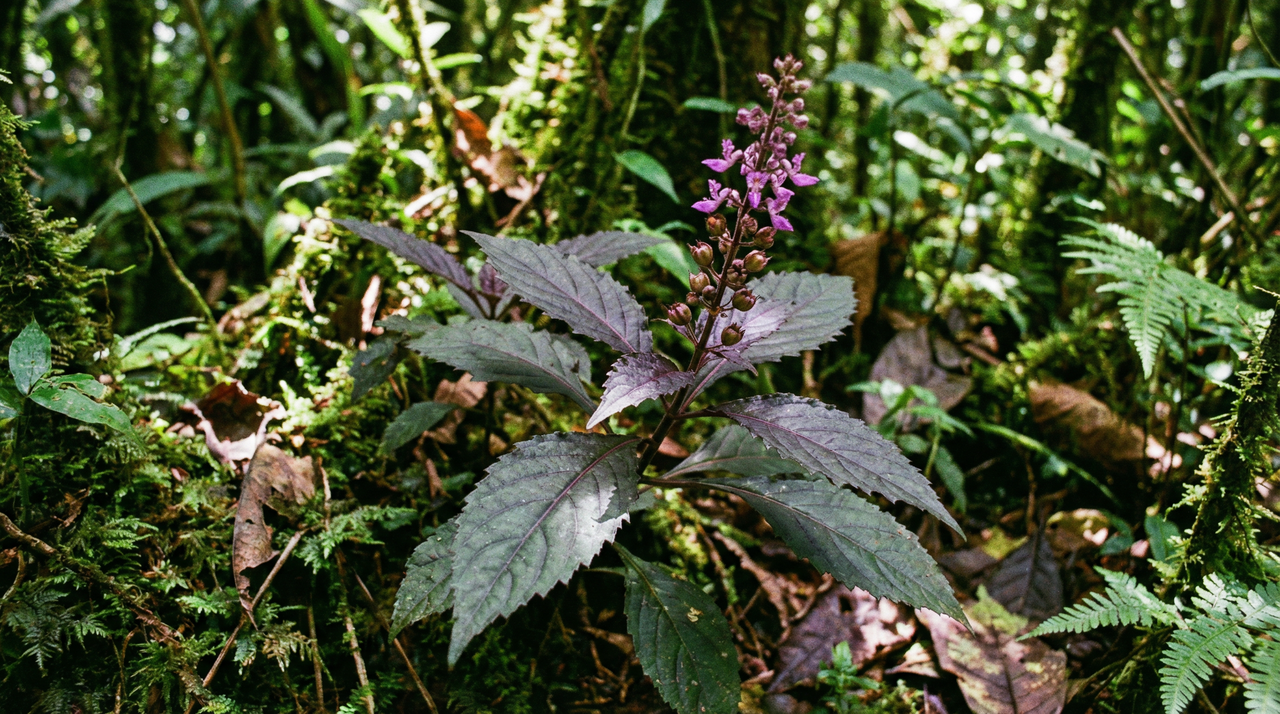
If you know what basil or garden mint looks like, patchouli will feel immediately familiar. The stems are square and hairy, classic Lamiaceae architecture, and the plant grows as an erect, bushy mound somewhere between 0.5 and 1.5 meters tall depending on conditions, spreading about 0.3 to 0.6 meters wide.[5][2] Without pruning it gets leggy fast, another trait it shares with overgrown basil. The leaves are opposite, ovate to elliptic, roughly 5 to 10 centimeters long, with toothed margins and a noticeably velvety texture from dense surface hairs.[2][9] The underside of each leaf is packed with glandular trichomes, tiny secretory structures that are the source of the essential oil and, by extension, that instantly recognizable scent.[2]
One thing I love about this plant is how responsive it is to light. Plants grown in the dappled shade of a food-forest understory tend to produce larger, softer leaves with a more pronounced fragrance than those pushed into full sun, where leaves come out smaller, thicker, and denser in trichomes but somehow less expressive in aroma.[5] The flowers are small, pale lavender to white or softly purplish, clustered in dense terminal spikes, and they appear from late summer into fall in the Northern Hemisphere.[5] Fruit is a dry schizocarp that splits into four tiny brown nutlets, and the root system is fibrous and shallow with no dominant taproot.[2][9] The ornamental form sometimes grown at places like Kew Gardens, now folded taxonomically into P. cablin, stands out visually with its purple-tinged stems, purplish leaf undersides, and violet-purple flowers, a striking contrast to the typical green commercial type.[10][11]
Traditional and Cultural Uses Across Asia and Beyond
Patchouli's medicinal record stretches back at least to the 1st century, with early Chinese texts later formalized in the Bencao Gangmu documenting its use under the name Guang Huo Xiang or Huoxiang to dispel dampness, relieve nausea, treat diarrhea, headaches, and summer-heat syndromes.[12][13] Roughly contemporaneous Ayurvedic traditions employed the leaves and oil for skin infections, fever, inflammation, anxiety, and wound healing, framing its actions through the lens of balancing pitta and kapha doshas.[14][15] Across Southeast Asia, Javanese, Malay, Orang Asli, and Philippine communities have long used the leaves as an insect repellent, wound treatment, and remedy for rheumatism and respiratory complaints, as well as in spiritual ceremonies.[16] Hindu and Buddhist practices also give it ritual weight, using it in incense, puja offerings, and ceremonies tied to prosperity, purification, and protection from evil.[17]
The plant's Western story begins with textiles. In the 19th century, dried patchouli leaves were packed with Indian cashmere shawls destined for European markets specifically to repel moths during the voyage.[18] European buyers began associating that earthy scent with the real thing, a signal of authenticity that French Empress Eugénie and the East India Company trade helped cement into high fashion.[18][19] The first time I crushed a fresh patchouli leaf rather than smelling a commercial perfume, I immediately understood the connection; there's a damp-forest depth to it that no synthetic quite captures. That same grounding, earthy character is what the 1960s counterculture latched onto, turning a humble tropical herb into a fragrance synonymous with natural living and, depending on who you ask, rebellion.[19]
Fun Facts and Historical Curiosities
Most essential oils fade or go off with age. Patchouli oil does the opposite. Oxidation of its sesquiterpene compounds over time produces a richer, smoother, woodier character that perfumers actively seek out, particularly from high-patchoulol Indonesian genotypes.[20] Vintage patchouli oil commands real premiums in natural perfumery, which makes it almost unique among botanical extracts. The same potent aroma that improves in a bottle also made the plant practically useful for centuries: its natural insect-repellent properties against moths and mosquitoes were recognized globally well before its rise as a perfume ingredient.[18] And for those with a taste for botanical oddities, the purple-stemmed form sometimes still grown at Kew for its maroon-tinged stems, violet-blue flower whorls, and dramatically colored leaf undersides is a reminder of how much visual variation can exist within what taxonomy now considers a single species.[11][7]
Patchouli Varieties and Where to Buy
Notable Patchouli Cultivars and Chemotypes
If you've ever gone looking for a named patchouli cultivar at a garden center and come up empty, there's a good reason for that. Because Pogostemon cablin is propagated almost exclusively from stem cuttings rather than seed, the commercial nursery trade has never had much incentive to develop and register standardized cultivars the way you'd see with, say, basil or lavender.[21][22] What you get instead are regional landraces, selections shaped by geography, climate, and generations of grower selection rather than formal breeding programs.
The most meaningful way to distinguish these selections is by their essential-oil chemotype. High-patchoulol types, which run 30-40% patchoulol in Indonesian material, are what perfumers and serious home distillers want because that compound is responsible for the deep, earthy, lingering character everyone associates with the scent.[23][24] Low-patchoulol types exist, but if fragrance is your goal, they're not where you want to spend your growing season.
Among the recognized regional selections, 'Johore' (from Malaysia) is valued for strong growth and good oil yield, while 'Shahbaz' is an Indian selection prized for productivity. 'Sumatra' and other Indonesian landraces consistently deliver the highest patchoulol content, which is why Indonesian material dominates global perfumery supply.[21][22][25] Overall, essential oil content runs 2-4% of dry leaf weight, and Indonesian genotypes consistently outperform Indian ones on patchoulol concentration; that difference is the primary reason growers select specific landraces rather than just grabbing whatever cutting is available.[23][22]
Then there's 'Singapore,' which I've grown side-by-side with a generic Indonesian cutting, and the difference in scent is genuinely striking. The 'Singapore' type produced a more complex, refined fragrance after the same number of weeks of growth. The catch is that it really does need sharper drainage than you might expect. I learned this the hard way when I lost a container plant to root rot after one too many rainy weeks without adequate drainage holes. The literature flags its susceptibility, and I can confirm that warning is not overstated.
Sourcing Live Patchouli Plants and Seeds
Don't expect to find Pogostemon cablin at a big-box garden center. Live plants are a specialty item, and your best domestic sources in the US are Logee's Greenhouses, Plant Delights Nursery, Mountain Valley Growers, and Richters Herbs.[26][27] I've ordered from Logee's and Mountain Valley Growers multiple times and been genuinely impressed with plant quality and how well they ship a tropical herb. Expect to pay $6-12 for a 4-inch pot and $18-30 for a gallon-size plant, with the best availability in spring and summer.[28][29]
Seeds are available from some of the same suppliers, priced at roughly $4-16 per packet, but germination rates of only 20-50% make them a frustrating starting point for most people.[28][29] That low viability is exactly why the industry runs on cuttings. Large-scale domestic cultivation remains limited compared to Indonesia and India, so the US market for live plants is still a niche corner of the herb trade.[30] When I source patchouli, I always go with domestic nursery stock to avoid USDA-APHIS phytosanitary complications; untreated plant material imported from Asia is generally prohibited because of soil-borne pathogens and nematode risk, and navigating that paperwork isn't worth it when quality domestic plants are a few clicks away.[31][32]
For the collectors among us, Pogostemon atropurpureus is a rare Southeast Asian relative that occasionally turns up through specialist tropical importers, botanical garden plant sales, and rare-seed exchanges.[33][34][35] Just be aware that taxonomic labeling in the exotic plant trade is inconsistent, so do your homework before assuming something sold as a "patchouli relative" is actually what the vendor claims.
Patchouli Propagation and Planting Guide
If you've tried to source patchouli seeds, you've probably already discovered the first plot twist: the plant doesn't make it easy. Seed propagation is technically possible, but almost nobody does it commercially, and once you understand why, you'll reach for the pruning shears instead.
Understanding Patchouli Seeds: Morphology, Viability, and Why Cuttings Dominate
Patchouli seeds are tiny, oblong structures, roughly 0.8-1.2 mm long and barely half a millimeter wide, and they're classified as recalcitrant, meaning they lose viability rapidly when dried rather than storing reliably like orthodox seeds do.[36][37] Even under optimal conditions, germination rates hover between 10-30%.[38] The seedlings that do emerge don't grow true to type either, showing real genetic variation in oil content, aroma strength, and plant vigor.[39] I've grown seed-started patchouli exactly once, purely out of curiosity, and I learned to sniff-test every seedling before committing it to the production bed because the fragrance difference between siblings was striking. Interesting experiment. Terrible production strategy.
Commercial growers rely almost exclusively on clonal vegetative methods to keep essential oil yield and aroma consistent batch after batch.[5][22] For home growers, the math is even simpler: cuttings root faster, perform predictably, and save you six months of waiting.
Step-by-Step Guide to Stem Cuttings, Air Layering, and Tissue Culture
Stem cuttings are your workhorse. Take semi-hardwood sections 10-15 cm long with 2-3 nodes, strip the lower leaves, and stick them into a well-draining sand-perlite mix. Keep temperatures between 21-30°C with 70-80% relative humidity and you can expect 70-95% rooting in two to four weeks.[40][41] Spring and early monsoon season are the preferred times to take cuttings in tropical production settings, and I've found that warm, humid early-summer months in my zone 9B garden produce noticeably higher rooting percentages than anything I attempt in winter, regardless of what I do with the heat mat.
Patchouli cuttings behave a lot like rosemary or lavender cuttings in that they want warm, humid, well-drained conditions, but they're even less forgiving of cold feet. I always use a bottom-heat mat when starting them indoors, and a simple humidity dome makes the difference between 60% and 90% success. A dip in IBA rooting hormone helps but isn't strictly required if your environmental conditions are dialed in. During propagation, watch for aphids, spider mites, and early Pythium fungal issues; keep your tools clean, maintain humidity without letting air stagnate, and use a neem-based drench proactively if you see any damping-off pattern starting.[42][43]
Air layering is worth knowing about, with 80-95% success reported: wound a flexible branch, apply rooting hormone, wrap the wound in moist sphagnum moss sealed in plastic, and sever the new plant once roots are visible after three to six weeks.[40][44] I use this method when I want to propagate a particularly fragrant specimen without sacrificing any stem material. Tissue culture using shoot tips on MS medium with BAP and NAA achieves near-100% clonal success and is the gold standard for disease-free commercial scale-up, though it's well outside what most home growers need to think about.[45] Grafting onto Lamiaceae rootstocks has been attempted for disease resistance, but vascular compatibility is unpredictable enough that I'd file it under scientific curiosity rather than practical technique.[46]
Soil, Site, and Light Requirements for Successful Establishment
I lost my first batch of patchouli to root rot before I understood that drainage matters more than almost any other variable at establishment. The plant's shallow fibrous root system is exquisitely sensitive to compaction and waterlogging, and once Pythium or Fusarium get a foothold in soggy soil, you'll see yellowing leaves, wilting, and dark mushy roots before you can do much about it.[47][48] Now everything goes into raised beds or containers with at least 30% perlite, and I haven't lost another plant to waterlogging since.
Beyond drainage, you want fertile loamy or sandy loam soil with 2-5% organic matter and a pH sitting between 5.5 and 7.5, with the sweet spot around 6.0-7.0.[49][47] I test my soil every season; when pH creeps above 7.2, the plants tell me with yellowing foliage, and a light dressing of elemental sulfur followed by a re-test a month later brings it back without guesswork. Lime raises it back up if you've overcorrected.[50]
For light, patchouli wants 50-70% shade that mimics the dappled tropical rainforest understory it evolved under, with temperatures in the 20-30°C range and consistent moisture short of saturation.[11][22] Think impatiens or ferns in a Florida shade garden. For container growers, a mix of roughly 40% coco coir, 30% perlite, 20% compost, and 10% pine bark hits the drainage-and-fertility balance reliably.[51]
Spacing, Timing, and Planting Techniques
Commercial production uses 30-45 cm between plants within rows and 60-90 cm between rows, roughly 20,000-30,000 plants per hectare, and the reasoning is sound: adequate spacing promotes airflow that discourages fungal disease, allows enough light interception for strong essential-oil production, and keeps biomass yields balanced against oil quality.[52][53] In my own beds I space plants about 18 inches apart in a staggered pattern so I can reach every plant to harvest without stepping on neighbors, and I still get good leaf density.
Timing outdoors depends on your climate. In USDA zone 9, transplant hardened cuttings after the last frost when nighttime temperatures are reliably above 10-15°C, typically March through April.[5] In Central Florida I wait until overnight lows stay above 55°F consistently; even a single cold, damp night can set back a freshly transplanted cutting significantly. Keep soil evenly moist through the establishment period, and if you're planting into raised beds, build them high enough to guarantee the drainage that prevents those Pythium problems before they start.
Germination and Growth Timelines from Seed or Cutting to First Harvest
If you do go the seed route, expect germination in 10-21 days at 21-29°C in a moist, well-draining medium under bright indirect light. Seedlings take another 3-4 months to reach transplant size, and first harvest won't happen until 8-12 months from germination.[54][47] Vegetatively propagated plants cut that timeline to 6-12 months from rooting, and under ideal tropical conditions some growers see first harvest in as little as 4-7 months.[55][56]
In my experience, the real clock starts the day you stick the cutting in the medium. Once you see new leaf growth pushing out rather than just the cutting sitting there looking alive, you know the plant has shifted from root development into active shoot production. That's the moment the timeline to harvest actually begins, and from there a well-rooted cutting in good soil moves faster than any seed-started plant you'll grow.
Patchouli Care Guide: Growing and Maintaining Pogostemon cablin
Caring for patchouli really comes down to two things: keeping it warm and keeping it consistently moist without drowning it. Everything else, the feeding, the pruning, the seasonal shuffling of pots, flows from those two non-negotiables. I've grown mine in large containers on my Central Florida patio for several years now, and that experience has taught me more about this plant's preferences than any technical bulletin ever could.
Sunlight Requirements and Light Management
Patchouli evolved in the dappled light of Southeast Asian forest understories, and that origin shapes everything about how it handles sun. The sweet spot is 4-6 hours of direct or filtered light daily.[38][57] It can tolerate up to 6 hours of direct sun,[58] but in hot climates, afternoon shade isn't optional. In my July and August garden, I run 40% shade cloth from about 1 p.m. onward, and the difference in leaf quality is immediate and obvious. Balanced light exposure also correlates with higher patchoulol concentrations in the oil,[38] so this isn't just about aesthetics.
The diagnostic cues are clear once you know them. Too little light produces etiolated, leggy stems reaching toward any available source; too much sun produces crispy brown leaf margins.[48] If you're seeing either, adjust before the plant declines further.
Watering Needs and Soil Moisture Management
The core rule is consistent moisture without waterlogging. Water when the top 1-2 inches of soil feel dry, which works out to roughly every 3-7 days depending on your conditions.[59] Container plants dry out considerably faster than in-ground ones, so I check mine every other day in summer. The well-drained, loamy soil in a 50-80% field-capacity range is the target;[60] anything below that and you start seeing leaf curl and browning tips, anything above and you're courting root rot.
Growth stage matters too. Seedlings need lighter, more frequent water every 2-3 days; established plants in active vegetative growth need deep watering every 4-7 days; flowering plants want steady moisture every 3-5 days.[61] Established plants can weather short dry spells of 7-14 days, but prolonged drought cuts vigor and oil content noticeably.[62] Root rot kills more patchouli than anything else I've seen, and it's entirely preventable with good drainage and a consistent checking habit.
Fertilizing and Nutrient Management
Patchouli responds well to balanced feeding, but the keyword is balanced. The plant prefers a slightly acidic to neutral soil with pH between 5.5 and 7.5, optimally around 6.0-6.5.[63] For nutrients, the research points clearly toward a 2:1:2 NPK ratio, with nitrogen driving leaf biomass, phosphorus supporting root development, and potassium enhancing oil quality and stress resistance.[64] Proper balanced application can push essential oil content from around 1.5% to 2.1%.[65] I've noticed this myself: regrowth after a 2:1:2 top-dressing smells noticeably more pungent than after a straight nitrogen feed.
For home growers, a balanced 10-10-10 or similar applied monthly through the growing season works well. The thing to avoid is nitrogen excess, which produces lush, fast-growing leaves at the expense of oil quality.[65] Deficiency symptoms to watch for: yellowing on older leaves signals nitrogen shortage, purplish leaves suggest phosphorus deficiency, marginal necrosis points to potassium, and interveinal chlorosis on newer leaves means iron.[65] The first time I saw that interveinal pattern I waited too long to act; now I keep chelated iron on hand and address it within days.
Frost Tolerance and Cold Protection
Patchouli is a tropical plant with no meaningful frost tolerance. Damage begins below 41-45°F (5-7°C), and anything approaching freezing is lethal to unprotected plants.[66] It's reliably perennial only in USDA zones 9b-11; in cooler zones it needs to come indoors or be treated as an annual.[67] I think of it the way I think of sweet basil: the same temperatures that blacken basil overnight will defoliate patchouli just as fast.
I move my containers under cover the moment forecasts drop toward 50°F, and that habit has turned what could be an annual into a reliable perennial that I've kept going for several seasons. Cold injury progresses from wilting and yellowing through leaf drop and, in severe cases, root damage.[48] A sunny windowsill above 59°F (15°C) works well for overwintering indoors.[67] Prevention is far easier than nursing a frost-damaged plant back to health.
Heat Tolerance and Summer Stress Management
The ideal temperature range is 70-85°F during the day and 60-70°F at night.[68] Short-term spikes to 95°F are survivable, but above that threshold growth slows and oil production drops.[69] Heat stress shows up as scorching, wilting, leaf curl, and chlorosis.[70] Seedlings and flowering plants are especially vulnerable.[71]
The mitigation toolkit is straightforward: 30-50% shade cloth during peak summer hours, consistent moisture, 2-4 inches of mulch to keep roots cool, and enough spacing for airflow between plants.[72] In my humid subtropical summers, that combination of shade cloth and mulch is genuinely the difference between stressed, sparse, low-scented plants and the full, aromatic canopy that makes growing patchouli worthwhile.
Pruning, Maintenance, and Seasonal Rhythm
Pruning directly determines yield. Pinch young plants at 15-20 cm height two or three times in the first year to encourage branching, then cut mature plants back to 30-45 cm above ground after each harvest.[73] I prune lightly every 4-6 months and consistently find the regrowth is more compact and more pungent than growth on unpruned stems. Skip this step and you get a tall, floppy plant with declining oil density.
The seasonal rhythm follows the plant's tropical instincts: active, productive growth through warm humid months, reduced vigor and watering in cooler periods, and either full dormancy indoors or a fresh start from cuttings for growers north of zone 9b.[4][74] Mulch year-round, maintain airflow by not crowding plants, and the whole care cycle becomes predictable: sun management in summer, cold protection in winter, consistent moisture and balanced feeding throughout, and regular pruning to keep the bush dense and the oil flowing.
Harvesting Patchouli for Maximum Essential Oil Yield
The best harvest cue isn't a calendar date. It's the leaves themselves. After growing patchouli from cuttings for a few seasons, I've come to rely on one signal above almost everything else: the moment foliage shifts from bright, almost apple-green to a deeper, darker green (sometimes with purplish undertones), the essential oil content is peaking. Research backs this up. Optimal harvest for Pogostemon cablin falls around 100-120 days after flowering begins, with leaves reaching 5-10 cm and oil content hitting 1.5-3% dry weight.[75][76][77] I used to cut earlier and consistently got weaker scent. Patience makes a real difference.
Timing and Maturity Cues for Harvesting Patchouli
First harvest typically comes 6-12 months after planting from cuttings, once plants are at least 30-60 cm tall and approaching flower bud development.[78][79] In subtropical climates, that window tends to open between June and August, though in Florida-like conditions it can stretch from May through October.[78] I always harvest in the morning. In the humid conditions I garden in, the dew-covered leaves picked at dawn distill noticeably more cleanly than anything cut mid-afternoon when heat has already started volatilizing the oils.
Once established, plants can sustain 3-4 harvests per year in suitable climates, roughly every 3-4 months.[76][80] The second and third years are consistently more productive and pungent than the first, which aligns with research showing peak essential oil yield and quality building with plant maturity.[76] The related species Pogostemon atropurpureus follows a slower arc, reaching optimal yield after 1-2 years of growth, with its own May-October peak in subtropical regions.[78]
Harvest Technique, Yield, and Flavor Profile of Patchouli
Crush a fresh leaf and you'll get something green and herbaceous, with earthy-musky undertones that hint at what the plant will become.[81] It's a softer, velvety sensation from the fine surface hairs. Dry those same leaves and everything intensifies: woody, spicy, camphoraceous, with a resinous linger and a bitterness that can overwhelm culinary applications quickly.[82][81] I think of it the way dried mint transforms from bright and fresh to something almost medicinal; the shift is dramatic and intentional depending on your end use.
After cutting, move quickly. I've found that waiting longer than 48 hours lets the volatiles start to fade noticeably. Shade-dry immediately in a single layer with good airflow, and distill or process as soon as the material is ready. Steeped as a tea, the aroma softens considerably to something milder and herbal with faint sweetness,[83] which matters if you're growing it for anything beyond perfumery or aromatherapy.
Patchouli Preparation and Uses: From Herbal Tea to Perfume
Because of its reputation as a fragrance ingredient, many people are surprised to learn that patchouli leaves are technically edible. I'll save you the experiment: they're not something you want on your dinner plate.[2][84] The leaves hold 2-4% essential oil by weight, and that concentration is immediately obvious the moment you bruise one in your hand. After years growing patchouli in Central Florida, I've learned to handle the foliage gently during harvest because that earthy, musky scent clings to skin and clothing for hours. It's evocative. It's also a clear signal that this plant is built for your apothecary, not your kitchen.
Culinary Uses and Flavor Profile of Patchouli
Traditional Southeast Asian, Ayurvedic, and TCM practitioners have occasionally added fresh patchouli leaves to salads or stir-fries, and in some contexts the leaves are chewed directly.[85][86] The flavor is intensely earthy and musky with bitter, camphoraceous, and woody undertones.[87] Think of over-steeped yerba mate crossed with a bold culinary sage, then turned up considerably. It's the kind of flavor profile that makes sense in tiny doses as an herbal tea, which is exactly how most traditional systems use it: 3-9 g of dried herb per day as an infusion or decoction for digestive support.[88] Ingesting large amounts can cause nausea, vomiting, or liver irritation, and undiluted essential oil should never be consumed regardless of its GRAS status in food-grade flavoring applications.[89][90] One more caution worth flagging: patchouli has look-alike neighbors in the Lamiaceae family, including Indian borage and common sage, and Pogostemon atropurpureus can itself be confused with toxic pennyroyal.[5][91] Since it's rare outside cultivation in the US, foraging wild plants isn't advisable; grow your own so you know exactly what you have.[92]
Medicinal Preparations and Safety Guidelines
The traditional herbalist's approach to patchouli is straightforward: dried leaf tea or decoction at 3-9 g daily for digestive complaints, and diluted essential oil applied topically for its antimicrobial, anti-inflammatory, and wound-healing properties.[88][93] Most supporting research on those benefits is still preclinical, so the wise position is to appreciate the historical record while waiting for human trials to catch up. For the essential oil, 1-2% dilution in a carrier oil (roughly 2-3 drops per teaspoon) applied once or twice daily is the standard guidance; internal use is discouraged by most aromatherapy authorities.[90][94]
I learned the dilution lesson the hard way: an early homemade insect-repellent spray I made at a stronger concentration left my forearms irritated for two days. Always patch test first, and if you're formulating something for regular skin contact, start at the lower end of that range. The safety picture gets more serious with certain populations. If you're pregnant or taking blood thinners, I don't use patchouli medicinally at all; the research on its emmenagogue and antiplatelet actions is clear enough that I err on the side of caution every time.[95][96] It can also potentiate CNS depressants and burden liver function in those with existing hepatic issues.[97] For children under six, avoid oral use entirely and limit any topical application to very high dilution (0.5-1%) with pediatric guidance.[98][99]
Non-Food and Aromatherapy Applications
Here's where patchouli genuinely earns its keep. Steam-distilled from the dried leaves, the essential oil underpins a significant portion of global fine perfumery, and its role in aromatherapy, cosmetics, and skin care is well-established.[2][18] I harvest my plants every 3-4 months using the sustainable cutting approach outlined in organic cultivation protocols, which keeps the oil quality high and the plants bushy rather than leggy. That fresh-dried material goes directly into sachets for moth and insect deterrence, a use Southeast Asian communities have relied on for generations.[16][100] The dried leaf sachets I tuck into linen closets work noticeably well, and the oil itself performs as a mosquito repellent in diluted spray form.[101] Beyond pest management, the plant has minor traditional uses in natural dyes and ornamental planting for fragrant foliage in warm-climate containers.[102] For most home growers, though, growing patchouli for aromatherapy oil and natural pest management is the most rewarding path, the one that connects the plant's chemistry directly to everyday garden-to-stillroom practice.
Patchouli Health Benefits and Medicinal Uses
Patchouli's chemistry tends to get talked about in terms of fragrance rather than pharmacology. That's a shame, because the same compounds responsible for that deep, earthy aroma are also the ones driving the most interesting research on this plant's therapeutic potential.
Phytochemical Composition of Patchouli
Nearly everything pharmacologically interesting about patchouli traces back to its essential oil, which is dominated by sesquiterpenes. Patchoulol (also called patchouli alcohol) is the headline compound, making up 30 to 50% of the oil, with α-bulnesene, α-guaiene, seychellene, β-patchoulene, and pogostone rounding out the profile.[103][104] I've noticed in my own aromatic garden designs that the scent intensity varies noticeably based on where and how the plants are grown. That matches the research: composition shifts by plant part (leaves are richest in sesquiterpenoids, while roots concentrate norpatchoulenol), geographic origin, altitude, soil pH, and harvest timing.[105][106][107] Plants harvested during dry conditions at low altitudes, from well-drained slightly acidic soil, consistently yield richer oil. The chemistry is the garden management, in other words.
Beyond the essential oil, the leaves contain flavonoids (quercetin, kaempferol, rutin), phenolic acids (rosmarinic, caffeic, protocatechuic), and minor secondary metabolites including tannins, coumarins, and saponins.[103][108] Alkaloids are present only in trace amounts, worth a mention but not a centerpiece. These phenolic compounds contribute meaningfully to antioxidant and anti-inflammatory activity, and they also serve the plant ecologically: deterring insect herbivores, resisting pathogens, and buffering against UV stress in its tropical habitat.[109] The purple-leafed relative Pogostemon atropurpureus shares a similar phenolic profile but adds anthocyanins responsible for its distinctive coloring.[77][110]
Traditional and Modern Medicinal Research
Patchouli has deep roots in both Ayurveda and Traditional Chinese Medicine (where it's known as Guang Huo Xiang), used historically for skin disorders, digestive complaints like nausea and diarrhea, headaches, fever, and as an insect repellent and wound poultice.[111][112][113] Modern preclinical research has largely validated those traditional applications, while also pointing in some genuinely exciting new directions.
The antimicrobial evidence is among the strongest. The essential oil disrupts cell membranes and inhibits quorum sensing in both Gram-positive bacteria like Staphylococcus aureus and Gram-negative bacteria like E. coli, and shows antifungal activity against Candida albicans, with MIC values in the 0.5 to 2 mg/mL range.[114][115][116] Anti-inflammatory effects are mediated through inhibition of NF-κB and MAPK pathways, reducing pro-inflammatory cytokines like TNF-α and IL-6, with patchoulol and pogostone identified as the key contributors in cell and animal models.[117][118][119] In my own regenerative skincare blends, I combine diluted patchouli oil with calendula and helichrysum for clients dealing with minor skin irritations; I've observed faster resolution than with carrier oil alone, and that antiseptic-plus-anti-inflammatory synergy is exactly what the preclinical data would predict. I patch-test every single time, without exception.
Antioxidant activity in DPPH and ABTS assays comes in at an IC50 of roughly 20 to 50 μg/mL, with Nrf2 pathway activation upregulating protective enzymes SOD and catalase.[120][121] The anxiolytic research is intriguing too: animal models show patchoulol acting on GABAergic pathways to promote calm, with comparisons drawn to benzodiazepines but potentially with a gentler side-effect profile.[122][123] I do recommend patchouli aromatherapy in garden meditation spaces for stress relief, but I'm careful to frame it as a complement to wellness practices, not a substitute for professional mental-health support.
Preliminary findings also point toward analgesic, antispasmodic, wound-healing, antitumor (with 30 to 50% tumor inhibition in some sarcoma models), anti-diabetic (20 to 30% glucose reduction in rats), and neuroprotective effects via Nrf2 pathways.[124][125][126] These are genuinely exciting leads, but the overwhelming majority of this research is preclinical. Human clinical trials remain limited and small-scale, concentrated primarily in topical dermatology and aromatherapy for anxiety.[127][128] The gap between "compelling in a petri dish" and "proven in humans" is still wide, and I think anyone recommending patchouli therapeutically should say that plainly.
Nutritional Profile of Patchouli Leaves
Patchouli is not a culinary herb. Unlike the edible mints and basils I grow alongside it in Lamiaceae polycultures, Pogostemon cablin isn't heading to anyone's kitchen.[129][66] Raw leaf consumption isn't recommended due to potential irritants, and the plant isn't listed in USDA food composition databases precisely because it's cultivated for essential oil, not food.[130]
From limited studies, the fresh leaf composition approximates 10 to 15 g protein, 10 to 20 g carbohydrates, 15 to 20 g fiber, and around 50 to 70 kcal per 100 g fresh weight. Dried leaves are notably mineral-rich, with approximately 1200 mg potassium, 800 mg calcium, and 400 mg magnesium per 100 g, plus meaningful phosphorus and iron.[131][132] Vitamin C is low (2 to 5 mg per 100 g fresh weight), and other vitamins are minimal. Those minerals and the plant's flavonoid-phenolic matrix do connect to its documented antimicrobial and antioxidant pharmacology,[133] similar to what we see in other Lamiaceae. But the nutritional story here is supporting detail, not headline news.
Safety Considerations for Patchouli
The patchouli plant itself has low toxicity and is generally safe to handle, grow, and use ornamentally.[134] The concentrated essential oil is a different conversation. Patchoulialdehyde is a documented allergen, showing positive reactions in 0.5 to 2% of tested dermatitis patients, and skin sensitization or allergic contact dermatitis is a real risk with undiluted or improperly diluted oil.[94][135] In my work with clients who incorporate essential oils into their wellness routines, I always provide a 1 to 2% dilution chart (that's 6 to 12 drops per ounce of carrier oil) and require a patch test before any topical use.[94][136] The contact-dermatitis research is too clear to wave away.
Ingesting the essential oil can cause nausea and vomiting; internal use without practitioner oversight is something I never recommend, full stop.[137] Acute oral toxicity is low (LD50 greater than 5 g/kg in rats), and available studies show no significant genotoxicity or mutagenicity. The FDA does recognize patchouli oil as GRAS for use as a food flavoring in very small quantities.[138] Those last two facts don't mean "safe to drink by the dropper" -- they mean the risk profile, at appropriate trace levels, is acceptable in a regulated food context.
Pet owners should know that while the ASPCA considers the patchouli plant non-toxic to dogs and cats in small amounts, the concentrated oil can cause vomiting, lethargy, or neurological signs if ingested or applied undiluted.[139][140] Keep bottles secured. For humans, the oil is contraindicated during pregnancy and breastfeeding due to potential emmenagogue effects, not recommended for children under six or those with epilepsy or kidney conditions, and may potentiate sedative medications or antidiabetic drugs.[94][141] Traditional low-risk tea use in moderation carries a different risk profile than the concentrated oil, but for any internal or therapeutic application, a conversation with a qualified healthcare provider is the right starting point. Safety data for Pogostemon atropurpureus specifically is limited and largely extrapolated from P. cablin research, so extra caution applies there.[139]
Patchouli Pests and Diseases
Natural Pest Resistance and Vulnerabilities
One of the reasons I love tucking patchouli into my guilds is that it genuinely earns its keep as a garden defender. The essential oils stored in its glandular trichomes, rich in patchoulol and other sesquiterpenes, actively repel mosquitoes, leaf miners, and a range of other insects.[102][142][143] I've planted it alongside basil and tender herbs specifically for this reason, and the results have been noticeably better than leaving those beds unguarded. The mycorrhizal associations patchouli forms with Glomus species add another layer of resilience, improving nutrient uptake and helping the plant handle stress before it becomes a visible problem.[144][145]
That said, the armor isn't complete. Pogostemon cablin is highly susceptible to aphids and root-knot nematodes (Meloidogyne incognita), and moderately so to spider mites, leafhoppers, thrips, whiteflies, and mealybugs, all of which can cause leaf curling, stippling, reduced vigor, and lower oil yields when populations build unchecked.[146][147][148] In my experience, spider mites tend to show up first during the drier spells that sneak into an otherwise rainy season. Staying on top of monitoring and hitting them early with neem oil or insecticidal soap has kept my plants productive without compromising the harvest. Cultivars like 'Johore' and 'Singapore' have been bred with improved resistance to aphids, thrips, and nematodes, which is worth knowing when you're sourcing plants.[77] Even with a standard cutting, though, IPM practices combining good spacing, biological controls like ladybugs, and low-toxicity sprays make an enormous difference in keeping pest pressure manageable.[149][51]
Common Diseases and Prevention Strategies
Patchouli has moderate overall disease resistance, but it's genuinely susceptible to a lineup of fungal and bacterial problems: Phytophthora root rot in poorly drained soils, powdery mildew, Botrytis blight, Cercospora and Alternaria leaf spots, Fusarium wilt, and bacterial wilt from Ralstonia solanacearum.[48][40][150] Most of these thrive in the same warm, humid conditions patchouli prefers, so the margin for error is narrow. Keeping temperatures between 25 and 30°C, soil pH between 6.0 and 6.5, and humidity around 70 to 80% with adequate airflow tips the balance away from infection.[72][151]
Root rot taught me the most important lesson I've carried into every patchouli planting since: drainage is non-negotiable. I lost a planting early on to Phytophthora after a heavy rainy stretch, and I've grown in raised beds or heavily amended soil ever since. Prevention genuinely beats treatment here, especially once a wilt disease takes hold. For growers in humid subtropical climates, Indian-bred cultivars like 'CIM-Arsh' and 'CIM-Silashri' offer meaningfully improved resistance to leaf spot and other fungal diseases, and 'Java' provides moderate resistance as a fallback.[152][153] Good site selection, sanitation, proper spacing for airflow, and avoiding overwatering handle the vast majority of disease pressure without reaching for a fungicide at all.[48][154] That's the permaculture answer: design conditions where disease can't get a foothold rather than waiting to fight it after the fact.
Patchouli in Permaculture Design
Before you start planning where patchouli goes in your food forest, there's a question that has to come first: can you even grow it outside? The answer depends entirely on where you live. Pogostemon cablin is hardy in USDA zones 9 through 11, sensitive to frost, and damaged by anything below 10 °C (50 °F).[155][5][18] It evolved in humid tropical rainforest conditions: 1,500 to 3,000 mm of annual rainfall, temperatures in the 25 to 30 °C range, and relative humidity sitting between 60 and 90 percent.[18] That's the baseline the plant is always trying to find.
Climate Suitability and Hardiness Zones
In South Florida and frost-free coastal California, patchouli can stay in the ground year-round without drama.[48][156] In marginal zone 9 you can keep it as a perennial, but you'll need a frost cloth ready and a contingency plan when cold snaps arrive.[157] Anywhere colder than that, you're looking at either a container plant you bring indoors each winter or a warm-season annual you treat like a basil: plant it out after last frost, enjoy it through summer, and let it go. I'm in Central Florida, where patchouli sails through long steamy summers without complaint, but I still keep pots I can pull under cover when a rare front pushes through. The care guide covers frost protection specifics; the point here is that climate decides your strategy before design even begins.
Ecosystem Functions and Guild Roles
For those of us in the right zones, patchouli earns its ground space through a stack of ecosystem services that work simultaneously. The essential-oil-laden foliage functions as a natural pest deterrent, repelling mosquitoes, aphids, and nematodes while doing nothing to discourage the beneficial insects a healthy garden needs.[158][159] It also acts as a dynamic accumulator, pulling up minerals and cycling them back into the soil via leaf drop and decomposition. The dense canopy of foliage is genuinely useful as chop-and-drop mulch.[160][161] It won't fix nitrogen, but the organic matter contribution to soil structure is real. I've watched the mulch layer under my citrus stay locked in place through heavy Florida downpours specifically because patchouli roots and stems are holding it together.
The flowers add one more layer. Those pale lavender to pinkish-purple blooms attract bees, butterflies, and other pollinators, supporting broader garden biodiversity.[158][162] I've noticed that isolated patchouli plants set almost no seed, while the same species grown inside a buzzing polyculture produces seed readily. That contrast tells you something fundamental about why diverse guilds outperform monocultures, and it's one of those things that becomes obvious only after watching the same plants over several growing seasons.[163]
Forest Layer Placement and Companion Planting
Patchouli occupies the herbaceous understory or groundcover layer, growing as a bushy perennial between 0.5 and 1 meter tall under normal conditions, occasionally reaching 2 meters in ideal humid circumstances.[11][5] It prefers partial shade to dappled light, and in practice I've found 30 to 50 percent shade under a food forest canopy produces the lushest, most aromatic foliage. Full Florida sun turns the leaves pale and slightly sad; the understory is where this plant wants to be.[158]
Commercially, patchouli is intercropped under fruit trees, coffee, cocoa, and rubber plantations precisely because it mirrors its natural understory niche, and it spreads gently via stolons in warm, humid conditions to eventually form a soft living mulch.[11][164] In a home food forest, it integrates well with nitrogen-fixers, fruit trees, ferns, and other moisture-loving companions.[158] One guild combination I'd avoid from personal trial and error: fennel nearby. That aromatic antagonism showed up clearly in my own beds, and I don't recommend it.[158]
If you're interested in the broader genus, it's worth knowing that Pogostemon atropurpureus tolerates 50 to 70 percent shade and pairs especially well with wet-shade companions, while P. championii functions as a subtropical forest understory groundcover.[34][165] Those two can extend the design toolkit in shadier or wetter microclimates where P. cablin might struggle. For most subtropical food forest designers, though, the main species planted under citrus or banana, fed by the canopy's filtered light and mulch layer, is the place to start.
The Plant That Made Me Stop and Actually Smell My Own Garden
I grew patchouli the first time mostly out of curiosity, half-expecting to feel like I was tending a cliché. What I didn't expect was how much I'd come to rely on it, not for the oil or the medicine, but for the way brushing past it on a humid Florida morning could completely reset my mood before I'd even had coffee. Some plants earn their place through yield. This one earned it through something harder to put on a plant list.
Sources 165
- Pogostemon cablin - Plants of the World Online ↩
- Pogostemon cablin - Wikipedia ↩
- Patchouli (Pogostemon cablin) Plant Profile ↩
- Pogostemon cablin (Patchouli) ↩
- Patchouli (Pogostemon cablin) - Profile ↩
- The Plant List - Pogostemon atropurpureus ↩
- Pogostemon cablin ↩
- Flora of China - Pogostemon championii ↩
- Botanical Description of Patchouli (Pogostemon cablin) ↩
- Pogostemon atropurpureus ↩
- Kew Royal Botanic Gardens - Patchouli ↩
- Historical Uses of Patchouli in Traditional Medicine ↩
- Historical Uses of Patchouli in Chinese Medicine ↩
- Patchouli in Traditional Indian Medicine ↩
- Patchouli in Ayurveda: Therapeutic Applications ↩
- Ethnobotany of Pogostemon cablin in Southeast Asia ↩
- Patchouli: Cultural and Medicinal Heritage ↩
- Patchouli: Botany, Phytochemistry, Pharmacology and Industrial Importance ↩
- The Genus Pogostemon ↩
- Chemical Composition and Biological Activities of Pogostemon cablin Essential Oil ↩
- Patchouli Cultivation and Varieties ↩
- Pogostemon cablin: An Overview of Cultivation and Essential Oil ↩
- Variation in Essential Oil Composition of Patchouli Genotypes ↩
- Patchouli Cultivation Practices ↩
- Essential Oil Yield in Patchouli Cultivars ↩
- Patchouli Plant Care and Availability ↩
- Growing Patchouli in the US ↩
- 200 Patchouli Herb Seeds - Pogostemon Cablin ↩
- Pogostemon Cablin - Patchouli, Organic ↩
- Patchouli Market Overview ↩
- Pogostemon cablin Profile ↩
- Importation of Plants: Pogostemon spp. Regulations ↩
- Pogostemon atropurpureus (Lamiaceae), a new record for the Philippines ↩
- Pogostemon atropurpureus - Plant Profile ↩
- Pogostemon atropurpureus - RHS Plant Finder ↩
- Pogostemon cablin - Patchouli ↩
- Seed Storage Behaviour of Pogostemon cablin ↩
- Propagation of Patchouli (Pogostemon cablin Benth.): A Review ↩
- Patchouli Cultivation and Propagation ↩
- Propagation Techniques for Patchouli (Pogostemon cablin) ↩
- Nursery Techniques for Aromatic Plants: Patchouli ↩
- Pest Management in Patchouli ↩
- Diseases of Patchouli and Management ↩
- Vegetative Propagation Techniques for Aromatic Plants ↩
- In Vitro Propagation of Pogostemon cablin ↩
- Propagation of Patchouli (Pogostemon cablin): Methods and Challenges ↩
- Patchouli Cultivation Guide ↩
- Root Rot in Aromatic Plants ↩
- Patchouli Cultivation Guide ↩
- Adjusting Soil pH ↩
- Growing Patchouli: A Guide for Gardeners ↩
- Patchouli Cultivation Guide ↩
- Effects of Plant Population Density on Growth, Yield and Essential Oil Content of Pogostemon cablin ↩
- Patchouli Cultivation Guide ↩
- Essential Oil Crops: Patchouli ↩
- Propagation and Harvesting of Pogostemon spp. ↩
- Patchouli Cultivation Guide ↩
- Growing Patchouli: Soil and Light Requirements ↩
- University of Hawaii - Patchouli Production Guide ↩
- Patchouli Cultivation Practices ↩
- Patchouli Cultivation Guide ↩
- Growing Patchouli: Care Guide ↩
- Patchouli Cultivation Guide - ICAR ↩
- Effect of Nitrogen, Phosphorus and Potassium on Growth and Yield of Patchouli ↩
- Influence of NPK Fertilizers on Essential Oil Yield and Composition in Patchouli ↩
- Patchouli (Pogostemon cablin) - North Carolina Extension Gardener Plant Toolbox ↩
- Missouri Botanical Garden - Plant Finder ↩
- Patchouli Cultivation Guide ↩
- Heat Stress Responses in Pogostemon cablin ↩
- Response of Patchouli to Heat Stress: Physiological and Biochemical Changes ↩
- AHS Heat Zone Map and Plant Suitability ↩
- Patchouli Cultivation Practices in Tropical Climates ↩
- Pruning and Harvesting Techniques for Essential Oil Crops ↩
- Patchouli Plant Profile ↩
- Cultivation of Patchouli (Pogostemon cablin Benth.) ↩
- Agronomy of Patchouli ↩
- Essential Oil Yield in Patchouli: Influence of Harvest Timing ↩
- Patchouli Cultivation Guide ↩
- Essential Oil Composition and Yield of Patchouli (Pogostemon cablin) as Affected by Harvest Date and Plant Age ↩
- Patchouli Oil Production and Harvesting ↩
- Aroma Characterization of Patchouli ↩
- Sensory Profile of Patchouli Oil ↩
- Patchouli and Related Pogostemon Species: Cultivation and Essential Oil Production ↩
- Patchouli (Pogostemon cablin): A Review of Its Phytochemistry and Pharmacological Activities ↩
- Ethnobotany of Patchouli in Southeast Asia ↩
- Pogostemon cablin - Useful Tropical Plants Database ↩
- Patchouli (Pogostemon cablin): Botany, Uses, and Essential Oil ↩
- Chinese Herbal Medicine: Materia Medica ↩
- Toxicity of Essential Oils: Patchouli ↩
- Patchouli Oil: Uses, Benefits, and Safety ↩
- Toxic Plants: Pennyroyal ↩
- Patchouli Cultivation Guide ↩
- Phytochemical and Pharmacological Profile of Pogostemon cablin ↩
- Essential Oil Safety: A Guide for Health Care Professionals ↩
- Essential Oils During Pregnancy ↩
- Effects of Patchouli Oil on Platelet Aggregation ↩
- Herbal Medicinals: Selected Clinical Considerations Focusing on Known or Potential Drug-Herb Interactions ↩
- Allergic Contact Dermatitis from Patchouli Oil ↩
- Essential Oil Safety for Children ↩
- Pogostemon cablin - Useful Tropical Plants Database ↩
- Essential Oils as Insect Repellents ↩
- Patchouli Plant Care - The Spruce ↩
- Chemical Composition and Biological Activities of Pogostemon cablin (Blanco) Benth.—An Overview ↩
- Chemical Composition of Essential Oils of Pogostemon cablin ↩
- Influence of Soil Types on Patchouli Essential Oil Yield and Composition ↩
- Harvesting Time and Seasonal Effects on Patchouli Oil Quality ↩
- Cultivation Factors Affecting Secondary Metabolites in Patchouli ↩
- Secondary Metabolites from Patchouli Plant Parts ↩
- Missouri Botanical Garden - Plant Finder: Pogostemon cablin ↩
- Secondary Metabolites from Pogostemon Species: A Review ↩
- Pogostemon cablin: A Review on its Ethnobotany and Phytochemistry ↩
- Traditional Uses of Pogostemon in Chinese Medicine ↩
- Ethnobotany of Patchouli in Southeast Asia ↩
- Antimicrobial Activity of Pogostemon cablin Essential Oil ↩
- Antimicrobial mechanisms of patchouli essential oil ↩
- Antibacterial and Anti-inflammatory Properties of Patchouli Oil ↩
- Anti-inflammatory Effects of Patchouli Oil ↩
- Anti-inflammatory Effects of Patchouli Alcohol via NF-κB Inhibition ↩
- Anti-inflammatory effects of pogostone on NF-κB pathway ↩
- Antioxidant Properties of Pogostemon cablin Extracts ↩
- Nrf2 activation by Pogostemon cablin components ↩
- Anxiolytic-like Effects of Patchouli Oil in Mice ↩
- Pharmacological Activities of Patchouli Essential Oil: A Review ↩
- Antitumor Activity of Patchouli Alcohol in Vivo ↩
- Anti-diabetic and neuroprotective effects of Pogostemon cablin ↩
- Cytotoxic Effects of Pogostemon Extracts on Cancer Cell Lines ↩
- Systematic Review of Patchouli in Dermatology ↩
- Pogostemon cablin: A Review on Botany, Phytochemistry, and Pharmacology ↩
- Patchouli (Pogostemon cablin) - Herbal Monograph ↩
- Traditional Uses of Patchouli in Medicine ↩
- Proximate Analysis of Pogostemon cablin Leaves ↩
- Mineral Composition of Pogostemon cablin Leaves ↩
- Pharmacological Activities of Pogostemon cablin ↩
- Missouri Botanical Garden - Plant Finder ↩
- Allergic Contact Dermatitis from Patchouli Oil ↩
- Patchouli Oil - Safety Review ↩
- Toxicity Profile of Patchouli Oil (Pogostemon cablin) ↩
- FDA GRAS Substances ↩
- Toxicity of Essential Oils to Pets ↩
- ASPCA Toxic and Non-Toxic Plants List ↩
- Traditional Uses and Safety of Patchouli in Medicine ↩
- Insecticidal Activity of Patchouli Essential Oil ↩
- Insect Repellent Activity of Pogostemon cablin Essential Oil and Its Constituents ↩
- Glandular Trichomes in Patchouli (Pogostemon cablin): Structure and Secretion ↩
- Mycorrhizal Associations in Aromatic Plants: Case of Pogostemon cablin ↩
- Pest Management in Patchouli Cultivation ↩
- Insect Pests of Patchouli and Their Management ↩
- Major Pests and Diseases of Aromatic Crops in India ↩
- Integrated Pest Management for Patchouli ↩
- Patchouli (Pogostemon cablin) Pests and Diseases ↩
- Environmental Factors Affecting Fungal Diseases in Aromatic Plants ↩
- Breeding for Disease Resistance in Patchouli (Pogostemon cablin Benth.) ↩
- Fungal Diseases of Patchouli and Resistant Varieties ↩
- Management of Diseases in Patchouli (Pogostemon cablin) ↩
- USDA Plant Hardiness Zone Map for Pogostemon cablin ↩
- Patchouli Cultivation Guide ↩
- Tropical Perennials for Florida Landscapes ↩
- Patchouli in Permaculture Systems ↩
- Ecological Role of Aromatic Plants in Southeast Asian Forests ↩
- Dynamic Accumulators in Permaculture ↩
- Medicinal and Aromatic Plants: Patchouli ↩
- Pollination Biology of Lamiaceae ↩
- Floral Biology and Pollination in the Lamiaceae ↩
- Patchouli Cultivation and Habitat ↩
- Flora of China - Pogostemon championii ↩