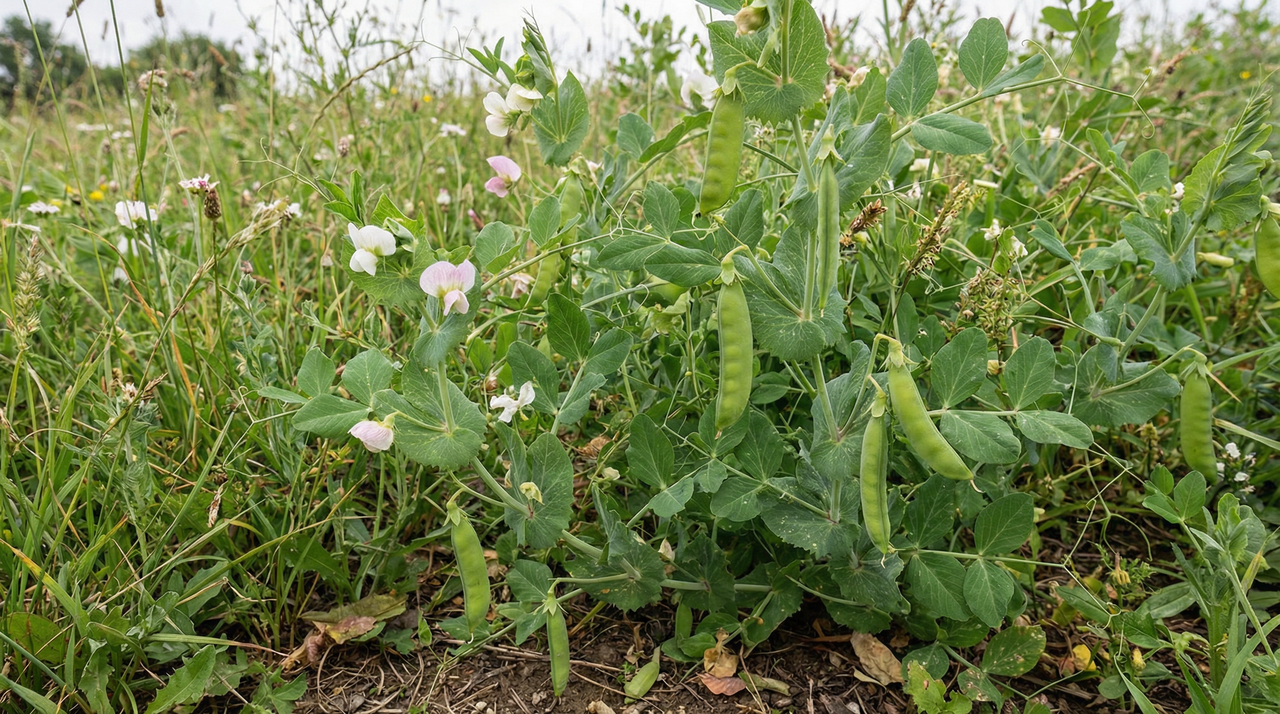
Nobody talks about how fast a pea loses its sweetness. I mean that literally: within hours of picking, the sugars that make a fresh pea taste like spring itself are already converting to starch, and by the time a supermarket pea reaches your plate, you're eating something that only faintly remembers what it once was. I've eaten peas straight off the vine in February cold frames and I've eaten them from frozen bags, and the difference isn't a matter of preference, it's almost a different vegetable. That gap between "fresh" and "what most people have actually tasted" is, I think, why peas get underestimated so consistently by gardeners who should know better.
And here's the contradiction that keeps drawing me back to this plant: something so fleeting and fussy about its harvest window is also one of the most forgiving, beginner-friendly crops you can put in the ground. Peas fix their own nitrogen. They tolerate a frost that would kill your tomatoes outright. They've been feeding humans for roughly 10,000 years[1] across climates and cultures and kitchen traditions so different they barely resemble each other. Gregor Mendel quietly unlocked the laws of genetics using nothing but this plant and a monastery garden.[2] A plant that shaped modern biology is also the one your kids will actually eat off the vine. That's worth paying closer attention to.
Origin and History of the Pea (Pisum sativum)
Botanical Background and Lifecycle
Few vegetables have been with us as long as the pea. Pisum sativum is native to the Mediterranean Basin, the Middle East, and Central Asia, where it evolved in the hot, dry-summered climates we now call Mediterranean zones.[3][4] Farmers in the Fertile Crescent coaxed it into cultivation from wild relatives like Pisum fulvum and Pisum elatius somewhere between 10,000 and 12,000 years ago, making it one of the earliest plants humans deliberately grew for food.[5][6] That's a sobering thought when you're tucking a packet of seeds into cool spring soil.
As a true annual, Pisum sativum runs its entire life in one season, typically 60 to 120 days from germination to finished pod.[7][8] Seeds germinate in 7 to 14 days when soil sits between 50 and 75°F, vegetative growth runs roughly 20 to 40 days to first flowers, and pods mature within a further 10 to 20 days after flowering.[9][10] Planting should wait until soil tops 5°C, but don't dawdle; peas genuinely hate summer heat and need to finish before temperatures climb. Cultivar choice matters here too. Determinate bush types concentrate their harvest into a tighter window, while indeterminate vining types produce over a longer stretch before eventually giving up to heat.[7][11] Wild relatives can show perennial tendencies that domesticated garden peas have entirely lost. Pests and diseases, aphids, weevils, powdery mildew, and Fusarium wilt chief among them, can shorten that window considerably if they get a foothold early.[12][13]
Visual Characteristics
The first thing most people notice about a pea plant is the climbing habit. Vining types reach 3 to 6 feet or taller, hauling themselves upward with tendrils that coil on contact with any available support.[14][12] Bush types stay compact at 18 to 24 inches, which makes them useful in tighter spaces, though I find vining types more rewarding to work with once I've got something for them to grab. Look closely at the stems and you'll see they're angular, almost square in cross-section, hollow inside, and slightly ridged. Not at all like a bean stem. Below ground, the roots are a taproot system with fibrous lateral branches, and those roots form the symbiotic nodules with Rhizobium bacteria that gardeners tend to get excited about.[7][14]
The leaves are pinnately compound with 3 to 5 pairs of oval leaflets and large, clasping stipules that wrap partway around the stem.[15][16] I've learned to use those stipules as an ID cue in early spring; the combination of paired leaflets and large semi-sagittate stipules makes young pea seedlings look like tiny snow-pea plants rather than weeds, which saves me second-guessing myself when the bed is crowded. The terminal leaflets convert into those touch-sensitive tendrils. The flowers themselves are unmistakably Fabaceae: papilionaceous, with a banner petal, two wings, and a keel that conceals the stamens and pistil inside.[17][14] Wild types typically flower purple or violet; most garden cultivars are white. Pods run 2 to 4 inches long, holding 4 to 10 round seeds that are usually green or yellow depending on variety.[18][19] Cool temperatures in the 15 to 20°C range produce taller, more vigorous plants with sweeter pods; heat above 25°C shortens internodes and toughens pods noticeably.[20][9]
Traditional, Cultural, and Historical Uses
The archaeological record for peas is remarkably rich. Carbonized seeds turn up at Neolithic sites across the Fertile Crescent: Çayönü in Turkey, Jericho in the Jordan Valley, Tell Aswad in Syria, and Nahal Hemar Cave in Israel.[21][5] By the Bronze Age they'd reached Egypt, turning up in tombs. Theophrastus and Columella both documented cultivation in the classical world. Medieval monasteries relied on dried peas through hungry winters, and the crop reached China during the Song Dynasty before European colonists carried it to the Americas in the 16th and 17th centuries.[22][23] That's a genuinely global migration, and it happened because peas were storable, nutritious, and easy to cook under almost any circumstance.
Culturally, peas have carried a lot of symbolic weight. European folklore linked them to fertility, luck, and life's cyclical nature, and of course Hans Christian Andersen immortalized one as the instrument of royal sensitivity testing in "The Princess and the Pea."[24][25] Traditional healers used them too: Ayurvedic practitioners valued their diuretic properties, TCM practitioners associated them with spleen tonification, and European folk medicine employed poultices for wound healing.[26] Whether I'm shelling a handful fresh from the vine or thinking about those 10,000 years of gardeners who did the same thing, there's something quietly connecting about it. What concerns me now is what we're quietly losing: as commercial agriculture narrows its focus to uniform hybrids, the genetic diversity locked in traditional landraces keeps eroding.[27] I make a point of seeking out odd heirloom varieties at seed swaps every spring, not out of nostalgia but because that diversity is irreplaceable once it's gone.
Fun Facts About Peas
Those tendrils aren't just charming. They respond to physical contact by coiling, a behavior called thigmonasty, and they're remarkably fast about it once they find a support.[14][28] Vining types can leverage this to scramble 6 feet or more; bush types forego tendrils almost entirely and stay tidily compact. Down at the root level, peas partner with Rhizobium bacteria to fix atmospheric nitrogen into plant-available forms, which is why pulling a mature pea plant reveals little pinkish nodules clinging to the roots.[20][7] I always follow peas with tomatoes or brassicas in my rotations specifically because of those nodules. The soil genuinely benefits.
Then there's Gregor Mendel, who chose Pisum sativum to work out the laws of inheritance, studying seven distinct traits including seed shape, seed color, flower color, pod form, pod color, flower position, and stem height.[29][30] Growing peas yourself makes his observations click in a way that textbooks never quite manage. Seeing round and wrinkled seeds sitting side by side in the same pod is a living genetics lesson. Finally, the longest documented pea pod on record measured 13.5 cm, roughly 5.37 inches, which sounds modest until you're staring at one in your garden and realize it's genuinely extraordinary.
Pea Varieties and How to Source Them
The Four Main Pea Types: Garden, Field, Snap, and Snow
Before you buy a single packet of pea seed, it helps to understand that "pea" covers four genuinely different crops.[31][32] Garden (shelling) peas are what most people picture: sweet immature seeds inside fibrous pods you don't eat.[33] Snap peas give you thick-walled, rounded pods that you eat whole, seeds and all, at near-maturity. Snow peas are harvested earlier still, when the pods are flat and the seeds barely visible inside.[33][9] Field peas are the outlier for home gardeners; their pods are thicker and dehiscent, bred for drying into the split peas that end up in soup.[31] Seed size follows the same gradient: field peas are the biggest, garden peas sit in the middle, and snow peas are the smallest, with pod colors ranging across green, yellow, and purple-tinged depending on the cultivar.[31][32] Your choice between these groups is really a question of how you want to eat them, and that decision shapes everything downstream.
Popular Cultivars and Disease Resistance
Among shelling peas, 'Green Arrow' is the one I keep coming back to: 55-65 days to maturity, a manageable 18-24 inches tall, and genuine resistance to both Fusarium wilt and powdery mildew.[12] 'Lincoln' (60-70 days, 20-24 inches) and compact 'Little Marvel' round out the reliable workhorses for small spaces, with 'Progress #9' as another solid option if you want very early harvests.[12] For snap peas, the classic 'Sugar Snap' (60-70 days, 2-3 feet) has powdery mildew resistance baked in, and 'Super Sugar Snap' pushes to 5-6 feet of vining growth if you have a sturdy trellis to spare.[12][34] I've found the height difference between those two alone is worth thinking through before you commit; 'Super Sugar Snap' is productive but it will absolutely take over a modest trellis. On the snow pea side, 'Oregon Sugar Pod II' (60-65 days, 24-30 inches) resists common wilt and several viruses, while bushy 'Snow Green' finishes in 55-60 days and fits nicely into tighter raised-bed layouts.[12][9]
After years of trialing peas through humid springs, I've learned that disease resistance isn't a bonus feature — it's the deciding factor. Modern breeding programs are pushing hard on Fusarium wilt, powdery mildew, Ascochyta blight, Aphanomyces root rot, and Pea Seedborne Mosaic Virus, among others.[35][36] Specific cultivars like 'Arvika' and 'Delta' target Aphanomyces, while 'CDC Frontier' and 'AAC Carver' address Ascochyta blight, and 'Sparkle Plus' handles downy mildew.[36][37] Climate-adapted lines like 'Explorer' and 'Zodiac' are targeting drought and heat tolerance for regions like the Pacific Northwest and Midwest where conditions don't always cooperate.[38] This continuous breeding effort relies on a deep genetic history.[39] Today the USDA Agricultural Research Service runs an active pea breeding program at Prosser, Washington, backed by more than 10,000 Pisum sativum accessions in the National Plant Germplasm System — a deep reservoir of genetic diversity that keeps future breeding options open.[40][41]
Sourcing Pea Seeds: Availability, Pricing, and Regulations
Pea seed is genuinely easy to find. Retail seed companies, nurseries, garden centers, and online suppliers all carry it, with the best selection showing up in early spring catalogs.[7] I've noticed that the newer disease-resistant releases tend to sell out fast — if you see a cultivar you want in a January catalog, order it then. Most home gardeners will pay $3-5 for a retail packet of 50-100 seeds; bulk seed for cover-crop or field-scale use typically runs $20-50 per pound, with organic certification and specialty varieties pushing that higher.[42][43] Understanding that commercial pea production spans over 100,000 harvested acres concentrated in Washington, Oregon, and Wisconsin helps explain why certain organic or heirloom varieties carry a price premium at the garden center — the supply chains for specialty seed are simply smaller.[44][45]
Peas grow well across USDA zones 3-9, thriving particularly in the Pacific Northwest, Midwest, and Northeast where cool springs give the crop the growing window it needs.[15][46] On the regulatory side: if you're importing seed from outside the US, a phytosanitary certificate is required, and interstate commerce seed must meet Federal Seed Act standards of at least 85% germination and 99% purity.[47][48] I always check for that germination guarantee on the packet label — even emergence from a reliable batch makes a real difference in stand quality. Organic seed production follows National Organic Program rules, prohibiting synthetic inputs and requiring annual inspection.[49] For most home gardeners buying domestically, none of this is complicated; it's worth knowing the standards exist so you can recognize a quality packet when you see one.
Pea Propagation and Planting Guide
After years of growing peas, I have never once reached for a cutting knife or a grafting tool. You don't need them. Peas are among the most beginner-friendly crops in the garden precisely because everything you need for propagation comes in a seed packet.
Seed Propagation: The Only Practical Method
Researchers have explored vegetative propagation for Pisum sativum, but the results tell you everything: cuttings succeed less than 20% of the time, layering tops out around 30-50%, and grafting lands somewhere between 10-30%.[50][51][52] These methods stay in the lab, not the garden. Direct seeding wins, every time, and pea seeds are practically designed to cooperate: they're orthodox and monoembryonic, with two fat cotyledons storing everything the seedling needs to push out of the ground.[53] They have no significant dormancy, so there's no cold stratification or scarification required.[54] Drop them in the ground when conditions are right and they go.
Peas are also over 95% self-fertilizing, which means varieties stay remarkably true to type year after year.[55] Left to their own devices, a mature pod will eventually split explosively and scatter seeds across the bed, but most of us harvest before that happens. The seeds themselves are kidney-shaped to spherical, 3-9 mm across, green when fresh, drying to yellow or light brown.[56] Recognizing what you're planting matters more than it sounds when you're working quickly in early spring.
Seed Characteristics and Storage for Long-Term Viability
One of my favorite things about growing peas is how well leftover seed keeps. I routinely store mine in an airtight jar in the refrigerator and still get 80-90% germination two or three years later. The science backs that up: at cool temperatures with moisture held between 5-8%, pea seeds remain viable for a decade or more.[57][58] Typical home storage at room temperature gives you 3-5 years, which is still excellent for an annual vegetable.[59] The practical rules are simple: keep moisture below 10% and keep it cold. Every 1% rise in seed moisture above that threshold halves storage life, and every 10°C increase in storage temperature doubles the rate of deterioration.[58] If you want to test older seed before committing a bed to it, a damp paper towel at room temperature for 7-10 days will give you a reliable germination count.
Soil and Site Requirements for Strong Establishment
Most pea problems I see in other gardeners' plots trace back to two things: wrong pH and poor drainage. Peas want soil in the 6.0-7.5 range.[12] Drop below 6.0 and aluminum becomes available at toxic levels, chlorosis sets in, and the Rhizobium bacteria responsible for nitrogen fixation can't do their job properly.[60] I learned this the hard way when I lost an entire early crop to yellowing leaves and stunted plants on soil I assumed was fine. Now I test every spring and add agricultural lime if needed; the difference in nodulation and pod set is dramatic.
Drainage matters just as much. Waterlogged or compacted soil invites Pythium and Fusarium root rots, and yield losses from those conditions can hit 20-50%.[61] A well-drained loamy soil with 2-5% organic matter is the target.[9] If your ground is heavy clay, work in compost before planting; if it's genuinely poor, raised beds solve the problem faster than any amendment. Peas fix their own nitrogen, so hold back on high-nitrogen fertilizers, which push leafy growth at the expense of pods.[62] Full sun, at least 6-8 hours daily, rounds out the site requirements; partial shade can cut yields by up to 50% and raises disease pressure.[12] In warmer parts of my season I've found that afternoon shade keeps pods from toughening prematurely, so a spot with morning sun and light afternoon protection can actually outperform a fully exposed bed once temperatures start climbing.
Planting Timing, Depth, Spacing, and Technique
Sow direct, 1-2 inches deep, 4-6 weeks before your last frost date.[12] That early timing is the whole point of growing peas; they're the first real vegetable of the year, and they need that cool window to produce before heat shuts them down. For in-row spacing, I've settled on 2-3 inches between seeds. The research supports 2-4 inches for garden peas, with rows 18-24 inches apart for bush types and 3-4 feet for trellised vining varieties.[63] I never crowd tighter than that anymore; the improvement in airflow and reduction in powdery mildew is striking and absolutely worth the extra row space. Bush types (1-3 feet tall) need minimal support, but vining types (4-8 feet) need a sturdy trellis in place at sowing, not after the tendrils are already searching for something to grab.[9]
Germination Timeline and Early Growth
Pea seeds will germinate in soil as cool as 39°F, which is part of what makes them such a reliable early-spring crop.[12] At that low temperature germination is slow, but once soil hits the mid-40s to 50s you'll see seedlings emerging in 7-14 days. Growth accelerates through the cool window of 55-75°F, and plants are generally ready to harvest 50-70 days from sowing.[9] One thing I'd warn new pea growers about: young seedlings look remarkably similar to other thin-leafed seedlings sharing the bed in early spring, so label your rows clearly or sow peas in their own dedicated block. Losing track of a row is easier than you'd think when everything is 2 inches tall in cold March light. Once you've watched a few successful harvests come and go, saving seed from your best plants and storing it for the following season becomes the natural next step, closing the loop on one of the most satisfying cycles in the kitchen garden.
Pea Plant Care and Growing Guide
Peas are genuinely low-maintenance once you understand what they actually want, which is mostly just cool weather and a little patience. The mistakes I see most often in the garden come from treating them like summer vegetables, pushing them too hard with fertilizer or planting too late, and then wondering why the pods never filled out. Get the basics right and peas mostly take care of themselves.
Sunlight Requirements for Peas
Peas need full sun, ideally six or more hours of direct light per day.[9] In cooler climates I've never had to compromise on this, but in warmer zones where afternoon temperatures regularly climb toward 85°F, a bit of dappled shade during the hottest part of the day can actually help. Heat stress above that threshold shuts down pod set fast,[12] so what looks like a shady corner might be doing you a favor come June. In full shade, though, you'll get leggy vines and almost no harvest worth mentioning.
Watering Needs
During active growth, peas need about 1 to 1.5 inches of water per week.[12][64] Consistent moisture is especially important during flowering and pod fill; that's when irregular watering hits you hardest in yield. Overwatered peas will show yellowing leaves and stunted growth, sometimes root rot in poorly drained beds, while underwatered plants wilt and stop setting pods. Neither direction is good, but in my experience gardeners are more likely to overwater during cool, cloudy spells when the soil feels cold and they assume it must be dry.
Feeding Peas in the Garden
Here's where peas really set themselves apart from heavier feeders. Because they fix atmospheric nitrogen through Rhizobium bacteria in their root nodules, they can supply somewhere between 50 and 200 pounds of nitrogen per acre from the air itself.[65][12] I always inoculate my seed before planting, and the difference in vine color and pod weight compared to uninoculated seasons is genuinely striking. Piling on extra nitrogen fertilizer actually works against you, suppressing that root nodule activity and pushing leafy growth at the expense of pods.[66][9]
What peas do benefit from is phosphorus and potassium. For a home garden, that means incorporating about 2 to 3 lbs of phosphorus (P₂O₅) and 2 to 4 lbs of potassium (K₂O) per 1,000 square feet before planting, based on soil test results.[65][67] Soil pH should sit between 6.0 and 7.5 for optimal nutrient availability.[12] After seeing purplish-red leaves on phosphorus-starved peas in a new bed one season, I now amend with bone meal every time I open a new planting area, and the difference shows up fast. Organically, compost or well-rotted manure at planting covers most bases; for synthetic options, a low-nitrogen formula like 5-10-10 at 1 to 2 lbs per 100 square feet, banded to avoid root burn, is a reasonable starting point.[68][69]
If something looks off mid-season, it's usually readable in the leaves. Yellowing climbing from the bottom up is classic nitrogen deficiency; purplish or red-tinged lower leaves point to phosphorus.[70][71] Marginal yellowing on older leaves with weak stems usually signals low potassium, while interveinal chlorosis on young leaves is often iron or manganese.[70] On the flip side, if your vines are unusually dark green and slow to flower, excess nitrogen is almost always the culprit.[72]
Frost Tolerance and Protection
The RHS classifies peas as half-hardy,[9] which in practice means mature plants can handle a light frost down to about 25°F (-4°C) without serious damage, but seedlings become vulnerable below 28°F (-2°C).[12] Flowers are the most frost-sensitive part; even a brief dip can cause petal burn or bud abortion that costs you pods.[73] I use lightweight row covers on every pea planting in early spring and have watched seedlings come through brief dips to 28°F that would have flattened them otherwise, easily buying two extra weeks of growing time. A layer of floating fabric provides 2 to 6°F of protection,[12] and 2 to 3 inches of straw mulch helps stabilize soil temperature through freeze-thaw cycles.[9]
Heat Tolerance for Peas
Peas thrive between 60 and 70°F during the day and prefer nights around 50 to 60°F.[12] Once daytime temperatures regularly exceed 85°F, flowering stalls, pollination becomes erratic, and pod quality drops;[74] at 90°F the damage is often severe enough to effectively end the season. Peas fall within AHS Heat Zones 1 through 7, meaning they're suited to areas with relatively few extreme-heat days per year.[75] In warmer parts of my region I've had success using taller companion plants on the west side to provide afternoon shade, and the shaded rows continue setting pods two to three weeks longer than exposed plants. Mulching heavily also keeps root zone temperatures lower and extends the productive window into early summer.[9]
Seasonal Growth and Maintenance
Most garden peas mature in 60 to 120 days from sowing, with flowering triggered once day length stretches to 12 to 16 hours in most varieties, though some modern cultivars are day-neutral.[76][77] That long-day flowering cue, combined with heat sensitivity, means the window between "ready to bloom" and "too hot to set pods" can be surprisingly narrow. Everything covered above, early sowing protected by row covers, restrained feeding, and microclimate management, is really about maximizing that window. I find that successive small sowings every two weeks, starting as soon as the soil hits 39°F, spread the harvest rather than creating a single glut before summer heat arrives. Get trellising or pea sticks in place before vines need them; once the tendrils start grasping, they set quickly and tangled stems at flowering are one of the easier ways to lose a crop to broken vines and poor air circulation.
Harvesting Peas: Timing, Technique, and Flavor
Peas are one of those crops that teach you humility. You can do everything right from sowing to trellis, and still end up with starchy, mealy pods because you missed the harvest window by three days. The race from flower to edible pod is genuinely fast, typically 10 to 20 days depending on type and conditions, with overall maturity from planting landing somewhere between 50 and 70 days.[12][78][79] After growing peas for years, I've learned to taste-test one pod from each variety the first time I pick. No calendar or days-to-maturity number fully captures the difference between a sweet, ready pea and one that's already turning starchy. Your mouth will tell you.
When to Harvest Pisum sativum: From Flowering to Pod Maturity
The three cultivar groups each have their own harvest cues, and conflating them is where a lot of gardeners go wrong. Garden peas are ready at 60 to 70 days when pods are full, bright green, and seeds are plump but still give a little when you squeeze them.[12][80] Snap peas come in earlier, around 50 to 65 days, and you want to catch them when the pod has filled out slightly but before the seeds push hard against the walls.[12][80] Snow peas are earlier still; pick them while the pod is flat and the seeds inside are barely visible. The moment you see those seeds start to swell, you've already pushed it.
A gentle squeeze tells you most of what you need to know. Pods should feel full and firm but not hard, and the color should be vivid, bright green.[12][78][81] Any yellowing is a signal of over-maturity for fresh eating. (For dry field peas, you actually want that yellow-brown shift, waiting until pods are papery and seeds have hardened.) Once pods start coming in, expect to visit the vines every two to three days through late spring into early summer.[12][82]
How to Harvest Peas Without Damaging the Plants
I harvest in the morning, and not just for the quality benefits. There's something genuinely lovely about cool, slightly damp vines and the clean snap of a pod that's perfectly ready. Morning harvest also means sugar levels are at their peak before the heat of the day.[12][78] Use scissors or a gentle twist-and-snip motion; yanking at a pod risks pulling the whole stem or knocking off nearby flowers. The plant is still working while you're picking, and every blossom you damage is a pod you won't get two weeks from now. Consistent, careful harvesting every two to three days keeps the vine productive far longer than sporadic picking does.
Pea Yields and Flavor Profiles at Harvest
Expect somewhere between half a pound and two pounds of pods per plant, with that range driven by variety, consistent picking, and growing conditions.[31][20] What you're harvesting also differs dramatically by type: garden peas deliver fibrous, parchment-like pods with sweet, plump seeds you shell out; snap peas give you thick, crisp, entirely edible pods; snow peas offer thin, translucent pods with barely-there seeds inside.[31][83]
The flavor difference between types comes down to chemistry. Garden peas carry 4 to 8 percent sugar content, which is why a just-shelled pea can taste almost candy-sweet.[84][85] Snow peas sit at 2 to 3 percent sugar and lean into a greener, more vegetal character, driven by volatile compounds like hexanal and (E)-2-hexenal.[86][87] Cooking softens the texture and nudges everything toward mild earthiness and starch, which is fine but a different experience entirely from raw.
Storage matters more than people realize. Peas held at 32 to 40°F with high humidity will last 7 to 14 days technically, but in my experience they lose that just-picked sweetness within two or three days no matter how carefully you store them.[88] Temperatures above 50°F accelerate sugar-to-starch conversion noticeably. I've started planning meals around harvest days rather than harvest days around meals, because the pea you eat within the hour of picking is simply not the same vegetable as the one that spent three days in a produce drawer.
Pea Preparation and Uses
Few vegetables give you this many entry points in the kitchen. Pisum sativum offers immature seeds, dry mature seeds, edible pods, shoots, tendrils, and leaves, each with its own flavor signature and culinary logic.[89][90] I harvest pea shoots and tendrils in early spring before the plants even set pods, tossing them raw into salads where they taste like something between young spinach and a fresh garden pea -- grassy and sweet in a way that's genuinely hard to describe until you've grown them yourself.
Culinary Uses and Flavor Profiles of Garden Peas
Young green peas carry that sweet, nutty, slightly creamy flavor because their sugars haven't yet converted to starch.[91] Once they mature and dry, the flavor turns earthier and more substantial, suited entirely to long-cooked applications like traditional split pea and ham soups. Snow peas and sugar snap pea varieties occupy a different flavor register altogether -- crisp and mild, equally good raw in salads as they are tossed in a quick stir-fry.[92]
Young, tender peas can be eaten raw in moderation, but a quick blanch or light steam genuinely improves digestibility by reducing lectins.[12][93] I always do a fast blanch before adding garden peas to a green pea salad; they stay bright, hold their texture, and sit easier on the stomach than raw. For processing, fresh scores highest in sweetness and that grassy aroma, frozen retains 80-90% of quality, and canned lands last due to softer texture and metallic notes.[94] When I freeze my own, straight from the garden, there's a noticeable difference over store-bought -- the sugars are still bright.
Globally, peas appear in split pea recipes from India's sambar to British split pea ham recipes, fresh-boiled throughout Europe, and as pea sprouts across Korean and Chinese cuisines.[95][96] Mint, carrots, and ham are the classic garden pea pairings for good reason; they each lift different notes in the pea without competing.[97]
Traditional Medicinal Preparations from Peas
While I grow peas almost entirely for the table, folk traditions have made use of more than just the seed. Leaf and pod infusions were historically prepared for mild diuretic effects, roots and seeds were boiled into decoctions for stronger preparations, and alcohol tinctures served as concentrated extracts.[98] Traditional adult dosages ran roughly one to two cups of infusion daily, one to three grams of dried herb in decoction, or two to five milliliters of tincture two to three times daily.[98][99] These are historical practices, not clinically validated protocols; for most purposes, simply eating peas regularly covers far more nutritional ground than any extract.
Non-Food and Industrial Applications
Beyond the kitchen, the whole pea plant has real economic value. Hull fiber goes into dietary fiber additives and animal feed.[100] Industrial fractionation pulls pea protein isolate at up to 80% protein concentration for plant-based meat alternatives and supplements.[101] Pea straw contributes to biomass energy in circular farming systems.[102] In the garden, I rely on peas as companion plants near brassicas specifically because they help deter aphids and Colorado potato beetles while their roots quietly fix nitrogen for whatever follows them in the rotation.[103][104] A plant that feeds you, feeds the soil, and feeds the broader food system deserves its place in any regenerative design.
Pea Health Benefits and Medicinal Uses
Garden peas don't get nearly enough credit as a nutritional plant. We talk about kale and broccoli constantly, but a fresh-picked bowl of Pisum sativum quietly delivers fiber, plant protein, vitamins, and a surprisingly rich array of bioactive compounds. The health story here isn't dramatic; it's steady, practical, and well-supported for an everyday food.
Nutritional Profile of Peas
Per 100 grams, raw green peas provide 81 calories, 5.42 g of protein, and 5.7 g of dietary fiber, with less than half a gram of fat and about 5.67 g of natural sugars.[105] That fiber-to-calorie ratio is genuinely impressive for a vegetable people often dismiss as a starchy side dish. On the micronutrient side, raw peas contain 40 mg of vitamin C, meaningful amounts of vitamin A from carotenoids, notable vitamin K, 244 mg potassium, and 1.47 mg iron per 100 g.[105] From my experience, peas picked straight from the vine and eaten within the hour have a vibrancy that grocery-store peas simply can't match; that freshness almost certainly reflects better vitamin retention before sugars start converting and nutrients degrade in transit.
Cooking reduces vitamin C, but protein digestibility jumps from around 78% to roughly 92%, and fiber holds relatively steady at 5.1 to 5.5 g in cooked peas.[105][106] Raw peas also contain trypsin inhibitors and oligosaccharides like raffinose and stachyose that can cause real digestive discomfort; boiling reduces these anti-nutritional factors by 50 to 90%.[107][108] I've learned through trial that a quick steam or microwave isn't really enough. My rule for family meals is a full rolling boil for at least 10 to 15 minutes, which handles both the lectins and the digestibility issue without fuss. It's a modest trade-off compared to the indigestion you risk from undercooked legumes.
Key Phytochemicals in Peas
The bioactive picture in peas is genuinely diverse. Seeds, pods, leaves, roots, and flowers each carry distinct phytochemical profiles.[109][110] The seeds contain flavonoids including quercetin (1 to 5 mg per 100 g), kaempferol, myricetin, and catechins, along with saponins, carotenoids, polyphenols, and pea protein hydrolysates.[111][112] Total phenolic content in peas ranges from 50 to 200 mg per 100 g fresh weight, which is respectable for a food most people don't think of as particularly "functional."[111] Pea sprouts are notably rich in flavonoids, and leaves carry allantoin alongside phenolics; roots contain pisatin, a phytoalexin produced in response to pathogen stress.[110][113]
What I find fascinating from a permaculture growing standpoint is how much the environment shapes the phytochemical load. Cultivars can differ by 20 to 30% in flavonoid content, summer-grown peas show up to 50% higher phenolics than winter-grown, and drought stress elevates isoflavones by around 40%.[114][115][116] I've noticed that peas grown in my slightly acidic beds produce pods with a more pronounced earthy depth than those in more neutral soil, which makes biological sense since acidic conditions naturally enhance phenolic production. It's one reason I pay close attention to soil health in the guild rather than just chasing yield numbers.
Medicinal Properties and Research
Traditional medicine systems recognized peas long before the science caught up. Ayurvedic practice used them to support digestion and reduce inflammation; Traditional Chinese Medicine prescribed them to tonify the spleen and ease abdominal pain; European folk healers applied pea pods topically for skin conditions and used the plant internally as a diuretic for edema and urinary complaints.[117][118][119] Modern research is partially validating these uses, though the clinical picture is still developing.
The strongest evidence centers on antioxidant and anti-inflammatory activity. Pea extracts activate the Nrf2 pathway and upregulate antioxidant enzymes including SOD, CAT, HO-1, and NQO1, confirming potent free-radical scavenging activity in laboratory models.[109][120] On the inflammatory side, pea polyphenols inhibit TNF-α, IL-6, NF-κB, and COX-2 in cell studies, with some flavonoids showing IC50 values in the 5 to 20 µM range.[121] The antidiabetic and cardiovascular evidence is arguably the most human-relevant: peas have a low glycemic index of 22 to 51, and their fiber and bioactive compounds inhibit α-glucosidase and DPP-IV, with clinical improvements in HbA1c observed in type 2 diabetics.[122][123] Pea protein hydrolysates also yield ACE-inhibitory peptides with IC50 values of 10 to 50 µM, suggesting modest blood pressure support.[124]
Other areas including antimicrobial activity against E. coli and S. aureus, analgesic effects, diuresis, immunomodulation via pea lectins, potential anticancer activity, and phytoestrogenic effects from coumestrol have all shown up in laboratory and animal research.[109][125][126] Most of this remains in vitro or animal-model territory and needs human trials before strong claims are warranted. That's not a dismissal; it's just where the science stands. What I value most about peas in a whole-food diet is the cumulative effect of eating a nutrient-dense, fiber-rich legume regularly rather than any single dramatic pharmacological action.
Safety and Cautions
Peas are GRAS (generally recognized as safe), with no documented cases of poisoning from properly prepared garden peas.[127] The lectins and trypsin inhibitors present in raw seeds are largely inactivated by boiling for 10 to 15 minutes, bringing digestibility well above 90%.[128] For context, peas are dramatically less risky than undercooked kidney beans or raw red lentils; the concern is real but proportionate, and proper cooking resolves it completely.
Pea allergies affect fewer than 1% of the population, though cross-reactivity with peanuts and other legumes affects roughly 5 to 10% of peanut-allergic individuals and can range from hives and GI upset to anaphylaxis in rare cases.[129][130] For the specific populations who do need to pay attention: if you're on warfarin, keep your pea intake consistent rather than avoiding them entirely, since their vitamin K content (around 25 µg per serving) affects INR stability when consumption is erratic, not when it's steady.[131] For kidney disease, the moderate potassium and phosphorus levels warrant portion awareness and a conversation with your doctor, but a modest serving of fresh peas is usually manageable for most people, and the fiber benefits often outweigh the mineral load when portions are respected.[132] On purines: peas contain 19.6 to 67.1 mg per 100 g, but plant-based purines are not associated with increased gout risk.[133]
During pregnancy, peas are genuinely beneficial: their folate content of 59 to 70 µg per 100 g supports neural tube development, and the low glycemic index is a practical asset for blood glucose management.[134] For foragers, garden peas are distinguished from toxic common vetch (Vicia sativa, which contains alkaloids causing favism) by their plump, rounded pods, pinnate leaves with branched tendrils, and characteristic papilionaceous flowers.[135][136] In my years working with edible landscapes, I've found that proper preparation makes peas one of the safest crops in the food garden for almost any household.
Pea Pests and Diseases
Peas hold their own reasonably well against insects, at least compared to some of their legume relatives. Pisum sativum shows moderate resistance to pea aphids (Acyrthosiphon pisum) through both antibiosis and antixenosis mechanisms, though how well any given plant performs depends heavily on which cultivar you've chosen.[137][138] Species-level ratings only tell part of the story; cultivar selection often does more work than the plant's baseline tolerance.
Common Insect Pests of Peas
Aphids are almost always the first pest I notice, and my cue is curled terminal leaves before I ever spot the insects themselves. At that point I either release ladybugs or look for hoverfly activity nearby, and in my experience that early response keeps colonies from exploding. Insecticidal soap or neem oil work when you catch things early too.[88] Pea weevils (Sitona lineatus) are a different story: standard cultivars offer little resistance, and the root and pod feeding is harder to intercept.[139] Leafminers (Liriomyza spp.) fall somewhere in between, with moderate tolerance across most garden types.[140] Peas sit at a moderate overall pest susceptibility compared to other legumes -- behind soybeans on aphid resistance, but ahead of chickpeas when it comes to pod borers.[141] A diverse planting that encourages beneficial insects goes a long way toward keeping all three in check.
Major Diseases of Peas
This is where the picture gets more complicated. Garden pea diseases represent the bigger challenge, and the list is long: Ascochyta blight, Fusarium wilt, Aphanomyces root rot, powdery mildew, and downy mildew are all capable of wrecking a planting.[142][143] Bean yellow mosaic virus and Pea enation mosaic virus add viral pressure on top of that, with BYMV alone capable of cutting yields by half.[144]
Environmental conditions drive most outbreaks. Pea plant leaves turning yellow and collapsing near the soil often signal Aphanomyces or Fusarium root rot, both favored by poor drainage and soil pH above 7.0.[145][146] I learned that lesson the hard way after losing an entire early planting to Aphanomyces in a low corner of my garden that held water. I don't plant peas there anymore, full stop. Pea plant leaves turning white or showing chalky coating points toward powdery mildew, which thrives in 70-90% humidity at 15-25°C, while downy mildew prefers cooler, wetter conditions around 10-20°C with leaf wetness above 90% relative humidity.[147][148]
Cultivar choice is the most powerful tool in this toolbox. Sparkle carries high powdery mildew resistance, Delta, Lifter, and CDC Striker hold up well against Ascochyta blight, and Fusarium wilt resistance (the Fw gene) shows up in cultivars like Arvika.[88][149] I've trialed Sparkle specifically in my humid Pacific Northwest climate and seen it brush off the early powdery mildew that takes out less resistant types by mid-season. For multi-disease protection, AAC Carver, AAC Profusion, and Eclipse are worth seeking out.[88] Field peas generally outperform garden types on disease ratings because breeding programs have focused there longer, and peas as a group are more susceptible to Ascochyta than lentils or chickpeas.[150]
Beyond cultivar selection, I treat a few cultural practices as non-negotiable. I never plant peas in the same bed two years running; a 3-4 year rotation with non-host crops is the single most effective way to break soil-borne disease cycles.[151][152] Spacing at 20-30 plants per square meter with adequate row spacing for airflow, pulling all crop residue at season's end, and starting every season with certified disease-free seed rounds out the prevention toolkit. For organic powdery mildew management, weekly sprays of a 1% milk solution or baking soda combined with good airflow genuinely help when resistant varieties aren't available.[153][154] Breeding programs are now using QTL mapping and marker-assisted selection to stack multiple resistance traits into single cultivars, so the options are only improving.[155][156] Choose the right variety, rotate your beds, and start with clean seed, and peas become one of the most dependable cool-season crops in the garden.
Pea Permaculture Design: Nitrogen Fixation, Guilds, and Climate Adaptation
Peas don't read like a permaculture superstar at first glance. They're annuals, they die back completely, and they don't anchor a guild the way a fruit tree or a comfrey patch does. But I've come to think of them as one of the most useful seasonal tools in a temperate food forest or kitchen garden, precisely because they work fast, build soil while producing food, and cycle out cleanly before the summer succession takes over.
Ecosystem Functions and Soil Health Benefits
The keystone service peas provide is nitrogen fixation. Through their symbiotic relationship with Rhizobium leguminosarum bacteria in root nodules, a healthy stand can fix 50 to 150 kg of nitrogen per hectare, with 40 to 100 kg N/ha remaining available in the soil after the crop is removed or turned under as green manure.[157][158][159] I've seen this play out in my own beds: the brassicas and corn that follow a spring pea crop in my rotation reliably outperform anything planted in beds that didn't get a legume the season before. The soil just feels different when you fork it over, more crumbly and alive.
The root system does more work than most gardeners realize. Reaching 12 to 24 inches deep, pea roots stabilize soil, reduce erosion on any slope at all, and contribute meaningful organic matter when the whole plant is cut and incorporated.[160][161] A dense planting also suppresses weeds and acts as a living mulch, moderating soil temperature and moisture through the cool weeks when you'd otherwise be fighting wind-desiccation.[162] The combination of nitrogen deposition and improved soil structure is genuinely regenerative, not in the marketing-copy sense, but in the measurable-tilth sense.
Companion planting amplifies these benefits. Peas pair well with carrots, turnips, cucumbers, corn, beans, and most brassicas, supplying nitrogen while deterring some pest species.[163][164] In my guild designs I tend to interplant peas with kale or broccoli starts in early spring; the peas are up first, fixing nitrogen and shading the soil, and by the time the brassicas need that nitrogen boost the peas are heading into pod-set and starting their decline.
Pollination Ecology and Biodiversity Support
Peas are almost exclusively self-pollinating. The papilionaceous flower structure, specifically the keel petal that encloses the reproductive parts, promotes pollination within the unopened bud through a process called cleistogamy, with self-pollination rates typically exceeding 99%.[165][166] That trait is what made peas so useful to Mendel, predictable crosses, consistent outcomes. From a seed-saving standpoint, it means you can grow multiple varieties without elaborate isolation.
But self-pollination doesn't mean pollinators are irrelevant. Bumblebees can physically trip the keel petal and access pollen through buzz-pollination, and I've noticed in my polyculture beds that the sections planted near borage and marigolds consistently set more pods than isolated rows. Research bears this out: insect visitors can boost pod set and yields by 20 to 30% in some settings.[167][12] Planting pollinator-attracting companions like borage or phacelia alongside your peas is a low-effort way to capture that extra yield while also supporting broader garden biodiversity.[168][169]
Pollination can be compromised by aphid pressure (aphids vector viruses that deform flowers), powdery mildew or botrytis infecting blooms, and temperature swings outside the 55 to 75°F sweet spot.[170] In dense guild plantings with limited airflow I've watched powdery mildew move fast, so I'd rather give peas a bit more spacing than I think they need than pack them in tight and lose flowers to fungal pressure later.
Forest Layer Placement and Companion Guilds
Peas sit in the herbaceous layer of a permaculture system, and cultivar choice determines exactly where.[15][171] Climbing types reach up to two meters on a trellis or fence and function as a vertical element, useful along the sunny edge of a guild where they can climb without shading out shorter neighbors. Bush types stay under 50 cm and work beautifully as groundcover or living mulch between taller plants.[12] I learned early on not to plant peas under the dripline of trees that cast afternoon shade in spring: even a few hours of shade daily produces leggy, low-yielding plants that look healthy but never perform. Full sun is a genuine requirement, not a preference.
Because peas are annuals, they don't contribute to long-term succession the way a nitrogen-fixing shrub like Siberian pea shrub would. Their value is in the dynamic herbaceous layer, as a seasonal soil-builder that hands off to a summer successor. Building on the soil-building functions already described, the practical guild logic is to follow peas with heavy feeders: corn, squash, brassicas, or alliums that can capitalize on the residual fertility. Climbing peas on trellises also create useful microclimates, a north-facing side that's cooler and moister, which can extend the season of shade-tolerant herbs tucked alongside. Climbing varieties need rows spaced 18 to 24 inches apart with plants 1 to 2 inches apart within rows; bush types can be grown slightly tighter.[9]
Climate Adaptability and Hardiness Zones
Peas grow as cool-season annuals across USDA Hardiness Zones 3 to 11, but that wide range obscures the real story: they're essentially a spring and fall crop almost everywhere.[15][12] Optimal growth happens between 55 and 75°F, germination is fastest at 60 to 70°F, and in Zones 3 to 7 you're planting in early spring while in Zones 8 to 11 fall is the productive window.[172] They'll tolerate light frost down to 25 to 28°F, which makes them genuinely frost-hardy as seedlings, but heat stress above 80°F causes bolting, reduced pod set, and opens the door to Fusarium wilt and other fungal problems that thrive when temperatures and humidity climb together.[12][173] Think of them like spinach or lettuce in this regard: the window is real and you can't negotiate your way out of it.
For site selection, peas want full sun (6 to 8 hours), well-drained loamy or sandy soil at pH 6.0 to 7.5, moderate humidity between 40 and 60%, and roughly 350 to 500 mm of annual precipitation.[174][9] They're distributed across all 50 U.S. states as cultivated or introduced, which speaks to their adaptability when timing is respected.[15]
The practical tools for pushing those boundaries are row covers and shade cloth. Row covers extend frost protection by 4 to 8°F and let you get seed in the ground two to three weeks earlier than you otherwise would in a marginal spring.[175] A 20 to 30% shade cloth can knock 5 to 10°F off soil and canopy temperature during a late-spring heat spike, buying time before the crop tops out.[176] I've used both in my own garden and they genuinely extend the harvest window. Peas also have no chill-hour requirement and are day-length neutral, so there's no complicated photoperiod math to do; timing is purely about temperature.[177] Choose disease-resistant cultivars wherever powdery mildew or Fusarium are recurring problems in your region, and you'll spend far less time troubleshooting and more time harvesting.
The First Pea I Ever Ate Standing in the Garden
I was maybe seven years old, and my grandmother caught me splitting pods into a bucket before I'd eaten a single one. She told me I was doing it wrong. I didn't understand until she handed me an open pod and said nothing. That's the thing about peas; they don't need improving, explaining, or convincing. They just need to be eaten immediately, still warm from the vine, before you've had time to think about it.
Sources 177
- Pea | Description, Cultivation, & Facts | Britannica ↩
- Mendel's laws of heredity on his 200th birthday | Nature Reviews Genetics ↩
- The Domestication of Pea (Pisum sativum L.): Position of the Wild Pea... ↩
- Pisum sativum L. ↩
- The Origins of Agriculture in the Near East ↩
- The Pea (Pisum sativum L.): A Review of Its Nutritional Value and Health Benefits ↩
- Pisum sativum L. ↩
- Pea - Pisum sativum ↩
- How to grow peas ↩
- Pea Production ↩
- Growing Peas: UC Cooperative Extension ↩
- Pea Production ↩
- Peas ↩
- Pisum sativum (Garden Pea) ↩
- Pisum sativum ↩
- Pea (Pisum sativum) ↩
- Pea ↩
- Pisum sativum - USDA Plants Database ↩
- Pisum sativum var. sativum ↩
- Peas (Pisum sativum) ↩
- Archaeological Evidence for the Domestication of Peas ↩
- Columella: On Agriculture (De Re Rustica) ↩
- Historical Crops: Peas in America ↩
- The Princess and the Pea ↩
- Ethnobotany of Grain Legumes: A Global Perspective ↩
- Traditional Uses of Pisum sativum in Mediterranean Folk Medicine ↩
- FAO Pulses 2016 Overview ↩
- Pea Plant Growth and Cultivation ↩
- Gregor Mendel ↩
- Experiments on Plant Hybridization ↩
- Pisum sativum Profile - National Plant Data Team, USDA NRCS ↩
- Peas (Pisum sativum) - RHS Plant Finder ↩
- Pea Varieties for Home Gardens ↩
- Snap and Snow Peas ↩
- Pea Diseases and Their Management in the US ↩
- Breeding for Resistance to Aphanomyces Root Rot in Pea ↩
- Ascochyta Blight Resistance in Pea: Recent Progress ↩
- Climate-Resilient Pea Cultivars for the US ↩
- Mendel's Pea Plants ↩
- USDA ARS National Program 301: Plant Genetic Resources, Genomics and Genetic Improvement ↩
- Pisum sativum Germplasm ↩
- 2023 Field Crops Costs and Returns ↩
- Seed Cost Estimator for Cover Crops ↩
- Field Peas: Production and Costs ↩
- Vegetables 2022 Summary ↩
- Pea Production Guide ↩
- Importation of Seeds and Seedling Plants ↩
- Federal Seed Act Regulations ↩
- Organic Certification Guidelines ↩
- Garden Pea (Pisum sativum) - Plant Finder ↩
- Micropropagation of Pea (Pisum sativum L.) ↩
- Grafting Adaptation in Legumes ↩
- The Biology of Peas (Pisum sativum L.) ↩
- Germination and Dormancy in Pea Seeds ↩
- Pisum sativum Description and Ecology ↩
- Seed Morphology of Pisum sativum ↩
- Genebank Standards for Acquisition, Storage and Management ↩
- Seed Storage of Horticultural Crops ↩
- Seed Longevity and Storage Guidelines - FAO ↩
- Soil pH Effects on Legume Nodulation and Nitrogen Fixation ↩
- Soil Compaction Effects on Pea Production ↩
- Peas in the Home Garden ↩
- Effects of Plant Density and Row Spacing on Yield and Quality of Field Pea ↩
- Pea Production Guide ↩
- Fertilizing Peas ↩
- Pea Production: Fertilizer Guidelines ↩
- Nutrient Management for Peas ↩
- Fertilizing Peas ↩
- Garden Pea Fertilizer Recommendations ↩
- Nutrient Deficiencies in Peas ↩
- Diagnosing Nutrient Deficiencies in Peas ↩
- Pea Disorders: Nutrient Deficiencies and Toxicities ↩
- Frost Protection for Peas ↩
- Pea Production ↩
- AHS Heat Zone Map and Information ↩
- Pea Production Guide ↩
- Cool-Season Vegetables: Peas ↩
- Pea Production Guide ↩
- Phenology of Field Peas ↩
- Harvesting Peas ↩
- Snap Pea Production Guide ↩
- Cool Season Vegetables: Peas ↩
- Variation in Pericarp Thickness among Pea Cultivars ↩
- Volatile Compounds in Green Peas (Pisum sativum L.) ↩
- Sensory Properties of Peas (Pisum sativum) ↩
- Flavor Chemistry of Peas: Volatile Compounds in Pisum sativum ↩
- Biochemical Composition of Edible Pod Peas vs. Shelling Peas ↩
- Postharvest Handling of Peas ↩
- Peas: Botany, Production and Uses ↩
- Garden Pea (Pisum sativum) - Cornell Cooperative Extension ↩
- Pisum sativum - Royal Horticultural Society ↩
- Pea Types and Varieties ↩
- Lectins in Legumes: Safety and Cooking ↩
- Sensory Differences Among Pea Cultivars and Processing Methods ↩
- Pisum sativum - Royal Horticultural Society ↩
- Pisum sativum - FAO Biodiversity Information ↩
- Peas: University of Minnesota Extension ↩
- The Encyclopedia of Herbal Medicine ↩
- Medicinal Plants of the World ↩
- Uses of Peas in Food and Industry ↩
- Pea Protein: Production and Applications ↩
- Biomass from Agricultural Residues: Pea Straw ↩
- Companion Planting with Peas: Benefits and Strategies ↩
- Peas in Permaculture: Companion Planting and Three Sisters Adaptation ↩
- Peas, green, raw ↩
- Green Peas, cooked, boiled, drained, without salt ↩
- Effect of Cooking on the Nutritional Quality of Legumes ↩
- Anti-nutritional Factors in Peas and Their Reduction by Processing ↩
- Bioactive Compounds and Pharmacological Activities of Peas (Pisum sativum L.): A Review ↩
- Phytochemicals in Edible Pea Plants: Seeds, Pods, and Leaves ↩
- Phenolic Compounds and Antioxidant Properties of Peas (Pisum sativum L.) ↩
- Flavonoid Content and Antioxidant Activity in Different Pea Varieties ↩
- Phenolic Compounds in Pea (Pisum sativum L.) ↩
- Varietal Differences in Secondary Metabolites of Pea Cultivars ↩
- Seasonal Dynamics of Secondary Metabolites in Pisum sativum ↩
- Stress-Induced Secondary Metabolites in Peas under Drought and Pests ↩
- Medicinal Plants of Ayurveda ↩
- Chinese Herbal Medicine: Materia Medica ↩
- Ethnobotany of Pisum sativum: Traditional Medicinal Uses in Europe and Asia ↩
- Polyphenols from Pea Seed Coats: Antioxidant and Anti-Inflammatory Properties ↩
- Anti-inflammatory properties of pea polyphenols ↩
- Antidiabetic Potential of Pisum sativum Bioactive Compounds ↩
- Legume Consumption and Glycemic Control in Diabetes: A Systematic Review ↩
- Identification of ACE inhibitory peptides from pea protein ↩
- Diuretic activity of Pisum sativum in experimental models ↩
- Estrogenic activity of coumestrol in pea sprouts ↩
- Lectins in Legumes: Occurrence, Analysis and Toxicity ↩
- Lectins and Anti-Nutritional Factors in Peas (Pisum sativum L.) ↩
- Legume Allergies and Sensitivities ↩
- Food Allergy Research and Education - Legume Allergies ↩
- Warfarin Diet and Vitamin K ↩
- National Kidney Foundation: Potassium in Plant-Based Foods ↩
- Purine Content of Foods: An Updated Review ↩
- Pisum sativum (Pea) ↩
- Vicia sativa (Common Vetch) ↩
- Toxic Plants: Vetch ↩
- Pea Aphid - UC IPM ↩
- Pea Aphid Host Plant Resistance - Journal of Economic Entomology ↩
- Pea Weevil - RHS Gardening ↩
- Insect Pests of Peas - University of Minnesota Extension ↩
- Legume Crop Pest Susceptibility - FAO Agronomy Factsheet ↩
- Common Diseases of Peas ↩
- Pea Disease Management ↩
- Diseases of Peas ↩
- Fusarium Wilt of Peas ↩
- Pea Diseases and Their Management ↩
- Downy Mildew on Peas ↩
- Powdery Mildew on Peas ↩
- Evaluation of Pea Cultivars for Resistance to Ascochyta Blight ↩
- Disease Resistance in Peas ↩
- Pea Production Guide ↩
- Garden Peas: Cultural Practices for Disease Management ↩
- Powdery Mildew on Peas ↩
- Organic Disease Management in Peas ↩
- QTL Mapping for Aphanomyces Root Rot Resistance in Pea ↩
- Marker-Assisted Selection in Pea Breeding for Disease Resistance ↩
- Nitrogen Contributions from Legume Cover Crops ↩
- Field Peas in Crop Rotations ↩
- Nitrogen Fixation in Legumes ↩
- Role of Peas in Soil Conservation ↩
- Field Peas as a Cover Crop ↩
- Cover Crops for Sustainable Agriculture ↩
- Pea Companion Plants ↩
- Companion Planting Guide for Peas ↩
- Mendel's Pea Plants and Self-Fertilization ↩
- The Pea Flower: Morphology and Pollination ↩
- Pollination and Seed Set in Peas ↩
- Biodiversity in Legume Crops ↩
- Pollination in Vegetable Crops ↩
- Impact of Aphids and Viral Diseases on Pea Flower Development ↩
- Pisum sativum in Agroforestry Systems ↩
- Peas ↩
- Managing Heat Stress in Cool-Season Crops ↩
- Pea Production Guide ↩
- Using Row Covers for Vegetable Protection ↩
- Using Shade Cloth for Vegetable Protection ↩
- Growing Peas in the High Plains and Rocky Mountains ↩