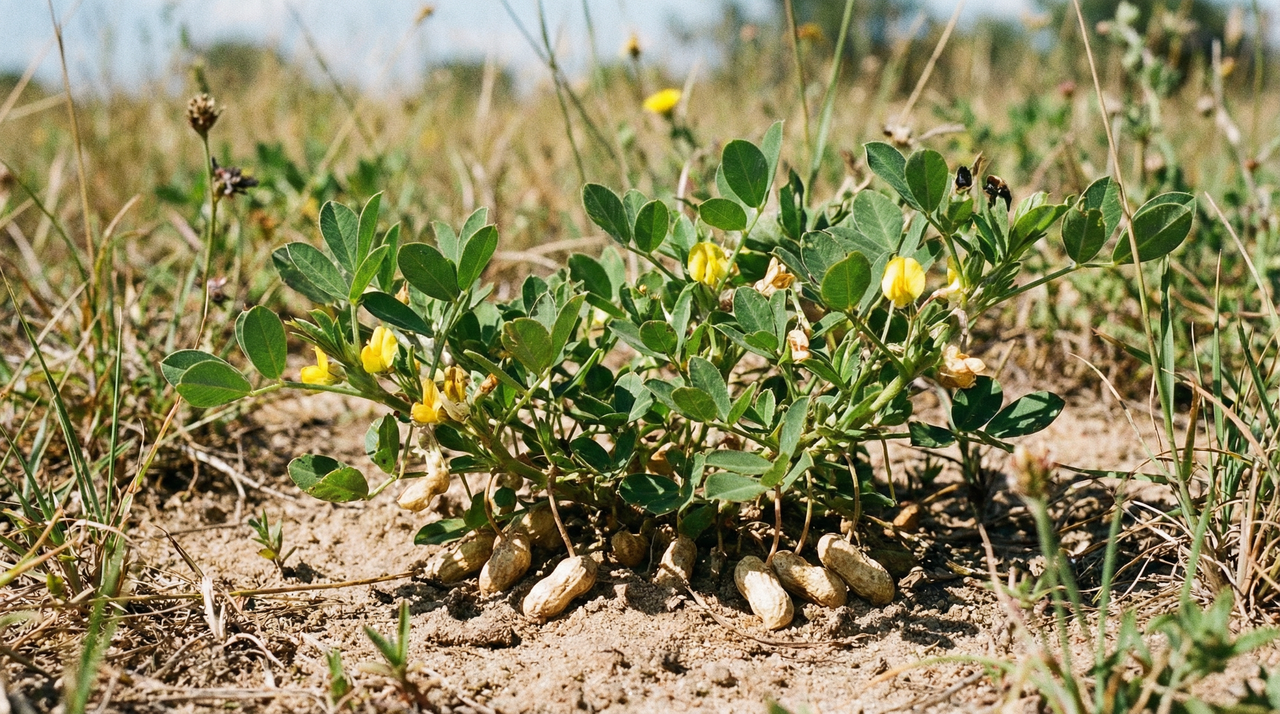
Most people have no idea they've been eating a fruit that buries itself. That's not a metaphor or a loose botanical technicality; it's what peanuts literally do. The flower blooms above ground, gets pollinated, and then the fertilized ovary extends a stalk called a gynophore downward, drilling its own tip into the soil so the pod can develop in darkness underground. I've knelt in my garden watching this happen in real time and still found it slightly surreal. We call them nuts, we treat them like nuts, we shelve them next to cashews at the grocery store, but the peanut is a legume that fruits below the soil surface, which puts it in genuinely strange biological company.
What gets me is how thoroughly that one weird trait shapes everything about growing them: the soil texture you need, the way you water, when and how you harvest, why you can't just yank the plant straight up without losing half your crop. Understand the geocarpic habit, and suddenly all the other advice about peanuts stops feeling like a list of arbitrary rules and starts making complete sense. That's where I want to start.
Peanut Origin and History
Botanical Background of the Peanut
The peanut (scientific name Arachis hypogaea) is native to South America, specifically the warm, sandy-soiled lowlands stretching from southern Bolivia and northern Argentina through parts of Brazil and Paraguay.[1][2] Genetic studies confirm it was domesticated from two wild progenitors, Arachis duranensis and Arachis ipaensis, somewhere between 3,500 and 7,600 years ago in the eastern Andean foothills.[2][3] What makes this annual herbaceous legume genuinely unusual is the process that defines its entire 120-to-150-day life cycle: geocarpy.[4][5] After the flowers are pollinated, fertilized ovaries develop into structures called gynophores, or "pegs," that actively elongate downward and bury the developing pods in the soil. The plant, in other words, deliberately plants its own seeds. Every other legume I grow, from beans to cowpeas, fruits in plain sight; watching a peanut peg push into the ground for the first time still stops me mid-sentence when I'm explaining it to clients. That underground habit is also precisely why the species thrives where it does: warm temperatures between 20 and 30°C, moderate rainfall, and the well-drained sandy loam soils that let those pegs penetrate easily.[6] The plant's deep taproot system and nitrogen-fixing nodules were equally well-suited to those conditions, building soil fertility even in relatively nutrient-poor ground.[7]
Visual Characteristics of the Peanut Plant
Above ground, Arachis hypogaea is a compact, spreading plant, typically 30 to 60 cm tall with a footprint of 60 to 90 cm, growing in either an upright bunch habit or a low, sprawling runner form.[8] The pinnate leaves carry two pairs of soft, slightly fuzzy leaflets, and the flowers are a clear, cheerful yellow with the classic butterfly shape of the Fabaceae family.[4][9] I always point those flowers out to clients because they look so unexpectedly ornamental, like tiny snapdragons in yellow, and people genuinely do not believe this cheerful, flowering plant is about to produce peanuts underground. Then the pegs emerge. The taproot can push 1 to 2 meters down with lateral roots hosting the symbiotic nitrogen-fixing nodules, and the gynophores themselves can stretch up to 20 cm to reach the soil.[10][11] I've learned to grow mine in raised beds with especially loose, amended soil so those pegs meet as little resistance as possible, and the difference in pod yield is real. The whole plant is a study in how a species can look gentle and tidy aboveground while doing something extraordinary beneath the surface.
Traditional and Cultural Uses of Peanuts
Indigenous peoples of South America recognized the value of this plant thousands of years before anyone else did, cultivating peanuts for over 7,000 years as food, ritual offering, and medicine, with archaeological evidence placing them in Peru as far back as 3000 BCE.[12][13] That depth of traditional knowledge is something I think deserves more acknowledgment, because what those cultures understood intuitively about digestion and nourishment, modern research keeps catching up to. After the Columbian Exchange in the late 15th century, peanuts spread rapidly: Portuguese traders brought them to West Africa in the 16th century, where they became deeply woven into local cuisine and ritual life, and they traveled to China, where traditional medicine adopted them to support digestion, nourish the spleen, and treat dry cough.[14][15] Peanuts arrived in the United States in the early 18th century but didn't hit their economic stride until after the Civil War, when they became a staple of Southern agriculture and cuisine. Few crops have had their economic trajectory changed so dramatically by a single person: George Washington Carver's relentless promotion of peanuts as a viable cash crop for Southern farmers, along with his development of products from peanut oil to early peanut butter preparations, genuinely transformed the plant's role in American agriculture.[16][17]
Fun Facts About Peanuts
Global peanut production reached approximately 53.5 million metric tons in 2022, led by China, India, Nigeria, Sudan, and the United States.[18] Those numbers reflect a crop that traveled from a narrow Andean homeland to become a cornerstone of agriculture on four continents, and geocarpy is a big part of why: a plant that buries its own seeds in sandy soil is naturally suited to warm, seasonally dry landscapes where it found an immediate niche wherever it landed. The nitrogen-fixing nodules that helped it thrive in South America's leaner soils made it an equally appealing crop for farmers wherever soil fertility was a concern, and I've seen that firsthand in cover-cropping situations where peanuts leave the soil measurably improved for whatever follows them in rotation.[7][19] The drought adaptations, deep roots, fuzzy leaves, and compounds like resveratrol that protect against stress and pests are the same traits that made this plant resilient enough to spread globally in the first place. And for a bit of levity: the largest recorded peanut pod reportedly measured around 10 cm long and weighed over 100 grams, which, if you've ever shelled peanuts by hand, sounds almost implausible. The biological wonder here is real, though, and it starts with that peg pushing downward into the dark.
Peanut Varieties and How to Source Them
The Four Main Market Types: Runner, Virginia, Spanish, and Valencia
Before you order seeds, it helps to know that peanut variety selection isn't really about botanical subspecies. It's about four U.S. market types: Runner, Virginia, Spanish, and Valencia, each bred for a specific culinary destiny.[20] My advice to home growers is to choose the type based on how you want to eat the harvest, not on what happens to be labeled "peanuts" at the local feed store.
Runner peanuts dominate, accounting for roughly 80% of U.S. production, mostly from the southeastern states.[20] They have a consistent kernel size that made commercial peanut butter possible, and cultivars like Florunner, Tifguard, and Georgia-06G layer disease resistance and yield improvements onto that reliable foundation.[21] Virginia peanuts are the ones you crack open at a ballgame: large, oval kernels roasted in-shell for premium snack markets.[20] Spanish types run smaller, with elliptical kernels and high oil content that makes them ideal for confections and salted peanuts.[20] Valencia peanuts are the odd and delightful outlier: typically three seeds per pod, genuinely sweet, and the preferred choice for boiling fresh.[20]
I've grown Runner and Valencia types side-by-side, and the difference at harvest is striking. The Valencia's sweetness really does shine when you boil the fresh pods; the Runner's higher yield and longer shelf life make it the better call for roasting and storing. Botanically, these market types largely correspond to cultivar groups within Arachis hypogaea var. hypogaea,[4][22] but for practical seed selection, the market type language is what seed catalogs, extension offices, and experienced growers all use.
Sourcing Peanut Seeds: Regulations, Certified Suppliers, and Practical Tips
Domestic seed is easy to find. Retailers like Johnny's Selected Seeds, Burpee, Gurney's, Baker Creek Heirloom Seeds, and university-affiliated extension services all carry peanut seed regularly.[23] Prices are reasonable: roughly $3 to $6 for a small packet, or $10 to $20 per pound for bulk planting stock. What isn't simple is sourcing from outside the U.S. Peanut seeds are regulated articles under USDA APHIS Plant Protection and Quarantine, and importation is generally prohibited or heavily restricted because of quarantine pests like the peanut root-knot nematode.[24] Any importation of peanut plant material requires a PPQ 526 permit, and peanuts are listed under 7 CFR 319.37 as ineligible without specific authorization.[25]
Even domestically, peanut cultivation is approved primarily in southern states: Georgia, Florida, Alabama, Texas, North Carolina, Virginia, and Oklahoma among them, with other states carrying restrictions to prevent pest spread.[24][26] I always check the current APHIS approved-state list before ordering from a new vendor, and I'd encourage anyone doing the same to treat that step as non-negotiable rather than optional fine print.
Buy certified seed. I learned this the hard way after purchasing inexpensive peanuts from a feed store one season and spending the early weeks of summer battling a fungal problem I'm convinced came in with those seeds. University-recommended sources and Plant Variety Protection-registered cultivars exist for good reason. For more specialized germplasm, the USDA ARS Germplasm Resource Information Network (GRIN) and the USDA Plant Variety Protection Office provide access to approved material and registered breeders.[27][28] The extra effort protects your crop and, in a small but real way, the entire U.S. peanut industry from avoidable disease spread.
Propagating and Planting Peanuts
Everything about growing peanuts from seed makes more sense once you understand geocarpy. The plant flowers above ground, sends pegs downward into the soil, and matures its pods underground. That single biological reality shapes every decision you'll make about seed storage, soil preparation, timing, and spacing. Get those conditions right, and peanuts are genuinely easy to grow from seed. Get them wrong, and you'll find yourself staring at a patch of healthy-looking foliage with nothing buried beneath it.
Seed Storage, Viability, and Propagation Methods
For home gardeners and commercial growers alike, direct seeding is essentially the only method worth thinking about.[29][30] Vegetative propagation through stem cuttings, tissue culture, or grafting onto wild relatives exists, but those techniques stay firmly in the realm of breeding research. For the rest of us, seed is what we're working with.
The good news is that peanut seeds have what seed scientists call orthodox storage behavior, meaning they tolerate being dried down to 5-9% moisture and kept for long periods under the right conditions.[31][32] Short-term, you want 10-15°C at 40-50% relative humidity; genebanks push viability to decades by storing seed at 4-10°C or even -18°C with humidity under 20%.[33][34] For home gardeners, that translates to: vacuum-sealed bags in the refrigerator. I've done exactly that with leftover seed and found germination rates holding well into the second year. Leave the same seed in a garage through a humid Florida summer, though, and you'll lose 10-20% viability annually while risking lipid oxidation and Aspergillus flavus growth that produces aflatoxins.[33][35] Peanuts are high-oil seeds, and that fat content is exactly what makes them vulnerable to both rancidity and fungal contamination when moisture and heat creep up together.
The seeds themselves are 1.5-2.0 cm long, almost entirely self-fertilizing (90-100% self-pollination), monoembryonic, and germinate with the cotyledons staying below ground rather than pushing up into the air.[5][4] That hypogeal germination, combined with the geocarpic fruiting strategy, is why loose, deep soil matters so fundamentally throughout the life of the plant. If you're working with seed that's been stored more than a season, run a quick germination test on a damp paper towel at room temperature for 7-10 days before committing to a bed, since fungal pathogens like Rhizoctonia, Pythium, and Sclerotium rolfsii can compromise germination even when the seed looks fine.[36]
Germination Timeline and Planting Conditions
Soil temperature is the most important variable when deciding when to plant peanuts. Wait until the soil at 2-4 inches deep reads consistently above 65-70°F (18-21°C) before you put seed in the ground.[37][38] I've jumped the gun on this more than once, planting into soil that felt warm enough but wasn't quite there yet, and paid for it with slow, patchy stands where cool-moist conditions gave soilborne fungi time to attack the seed. Now I just wait until I hit 68-70°F reliably, and germination happens in 7-14 days without drama.[39]
Plant seed at 1.5-2 inches (4-5 cm) deep. Once plants are up and growing, flowering starts 25-40 days after planting, and within 7-10 days of pollination the pegs begin elongating downward, seeking the soil.[37][38] That peg-to-soil contact is the whole game. Loose, friable soil at planting time isn't just nice to have, it's what allows those pegs to actually bury themselves and form pods rather than arching uselessly in the air.
Soil and Site Requirements for Growing Peanuts
Peanuts evolved on the slightly acidic, well-drained sandy loams of South American savannas, and that heritage tells you most of what you need to know about site selection.[4] They need full sun, at least 6-8 hours of direct light daily, and shade tolerance is essentially nonexistent. Yields can fall 20-30% under prolonged partial shade, and uneven maturation follows close behind.[40]
Soil depth matters more than most gardeners expect. Pegs need a minimum of 12 inches of loose soil to work with, and 18-24 inches is better.[6] I've grown peanuts in both deep sandy beds and in heavier amended garden soil, and the difference is visible. In loose, sandy ground, pegs disappear cleanly into the soil within days of touching it. In a heavier, compacted zone, they press against the surface and curl, sometimes forming pods that never properly develop. Compaction can reduce yields by 20-50% by restricting both peg penetration and root growth.[41] Avoid running heavy equipment or even a loaded wheelbarrow repeatedly over your peanut beds during the season.
Soil pH should sit between 5.8 and 6.5, with 6.0-6.5 being the sweet spot.[42] I test every bed before planting and apply dolomitic lime if I need to raise pH, partly because the calcium in dolomitic lime directly supports pod fill. Drop below 5.5 and you're looking at aluminum toxicity, calcium lockout, poor rhizobial nodulation, and heavier nematode pressure. Push above 7.0 and iron, manganese, and zinc become unavailable, and pod fill suffers.[43]
Drainage is non-negotiable. Peanuts can manage short dry spells of 2-3 weeks reasonably well, but they have very low tolerance for waterlogged conditions, which quickly invite Pythium and Phytophthora root rots.[44][36] Raised beds and naturally sandy soil both solve this problem. If you're working with a heavier clay loam, consider comparing your approach to pinto peanut (Arachis pintoi), the perennial relative, which tolerates a bit more compaction (up to 1.6-1.8 g/cm³ bulk density) and can actually improve soil structure over time in pasture systems[45][46] -- though for food production, you'll still want to put in the work to build loose, aerated soil.
Watch for early warning signs of poor soil conditions: stunted growth, yellowing or browning leaves, minimal pod set, and surface rooting that tells you the plant can't get where it needs to go underground.[41][47] These symptoms usually trace back to compaction, pH imbalance, or waterlogging rather than nutrient deficiency.
Spacing, Row Patterns, and Planting Technique
Standard commercial spacing runs 30-36 inch (76-91 cm) rows with seeds placed 4-8 inches (10-20 cm) apart in the row, targeting roughly 4-6 plants per foot of row and overall densities of 85,000-150,000 plants per acre.[6][48] Those numbers might look oddly precise for a home garden, but the logic behind them translates directly to backyard scale: mature peanut plants spread 12-24 inches and need room for pegs to reach the soil without competing with their neighbors. Runner types stay low and prostrate; Virginia types grow taller, up to 36 inches.[49] Think of the spacing as similar to what you'd give bush beans or okra along the row, but with wider lanes between rows to accommodate that spreading habit and the fact that harvest involves actually digging the whole plant.
Twin-row configurations, where two rows are paired about 7-8 inches apart on 30-inch centers, improve light interception and canopy closure and are worth considering if you're managing a larger plot.[6] Narrower rows (24-30 inches) can boost yield, but reduced airflow raises fungal disease pressure. Organic systems often go wider, to 36 inches or more, specifically to allow mechanical cultivation for weed control.[50]
Proper spacing isn't just about plant size. Good airflow through the canopy directly reduces humidity at ground level, which is where early leaf spot and rust infections get their start.[51][52] I've learned the hard way that crowded plants create a dense, humid mat that's almost impossible to scout through by midsummer. Give them room, and you'll spend less time managing disease and far less frustration at harvest when you're trying to untangle individual plants from their neighbors to dig them cleanly.
Peanut Care Guide: Water, Nutrients, Temperature, and Maintenance
Peanuts are easier to grow than most gardeners expect, but they do have a few non-negotiable requirements. Get these right and the plant practically takes care of itself. Get them wrong and you'll harvest a tangle of empty pegs wondering what happened.
Water Needs and Irrigation Schedule
Peanuts need 20-30 inches of water across the growing season, roughly 1 to 1.5 inches per week during peak growth.[38][39] That sounds like a straightforward rule until you realize that timing matters as much as total volume. The two stages where moisture stress will genuinely cost you are pegging and pod fill. Let the soil dry out during either window and you're looking at a 20-30% yield reduction.[53] I've found that once plants are established they tolerate short dry spells reasonably well, but once those pegs start pushing into the soil you need to stay consistent. Keep soil moisture between 50 and 75% of field capacity; that's the sweet spot where yield holds up and you're not creating conditions that invite Aspergillus and aflatoxin problems.[53] Check your local extension guidelines rather than following any single universal rule, because soil type and rainfall patterns shift the math considerably.
Sunlight Requirements and Heat Management
Peanuts need full sun, at least 6-8 hours of direct light per day, and in my experience the difference between partially shaded plants and fully exposed ones shows up unmistakably at harvest. Fuller pods, better fill, cleaner skins. What the full-sun recommendation doesn't tell you is that temperatures above 90 °F combined with intense afternoon light can cause leaf scorch, wilting, and bleaching, all of which suppress photosynthesis at exactly the moment your plants need it most.[6] I cover the specifics of managing extreme heat below, but the short version is: full sun is essential, and unrelenting heat is a separate problem that needs its own response.
Frost Tolerance and Temperature Requirements
Peanuts are tender annuals. Temperatures below 32 °F for any extended period will kill the plant outright, and visible frost damage shows up fast as blackened leaf margins, wilting, and in severe cases complete defoliation with pod damage.[36][54] I've lost early plantings to late cold snaps more than once, which is why I now wait until soil temperature is reliably above 65 °F (optimal is 68-75 °F) before putting seeds in the ground.[54][55] Peanuts are typically grown as annuals in USDA zones 5-9, requiring 120-150 frost-free days to complete their underground fruiting cycle; in zones 9-11 they can behave as short-lived perennials where winters stay above freezing.[4] In marginal zones, row covers on young transplants buy you insurance, but nothing replaces waiting for genuinely warm soil.
Feeding and Nutrient Management
The most counterintuitive thing about feeding peanuts is how little nitrogen they actually want. As nitrogen-fixing legumes properly inoculated with rhizobia, they need only 0-30 lbs of nitrogen per acre at planting, and excess nitrogen actively suppresses nodulation while increasing disease risk.[6][39] I learned this the hard way early on: a heavy nitrogen application at flowering produced gorgeous, dark-green foliage and very few pods. Now I let the rhizobia do their job and focus fertilizer attention elsewhere.
Phosphorus (40-80 lbs P₂O₅/acre) and potassium (50-150 lbs K₂O/acre) matter, but the specific amounts depend entirely on what a soil test tells you, with target ranges of 20-40 ppm phosphorus and 100-180 ppm potassium.[56] Calcium deserves special attention because pod fill depends on it directly. You need 500-1000 ppm in the top 4-6 inches of soil, and the standard practice is to apply gypsum at 500-1000 lbs/acre right at pegging, which delivers calcium without affecting pH.[57] I've seen hollow-heart and poorly filled pods in beds that tested low on calcium, so gypsum at pegging is now a fixed step in my season. Target pH is 5.8-6.2, though the crop tolerates 5.5-6.5, and annual soil testing is the only way to make confident fertilizer decisions across soil types and climates.[58] Micronutrients round out the picture: boron deficiency causes hollow heart, zinc deficiency produces chlorosis and poor growth, and low molybdenum limits nitrogen fixation itself.[59] For organic growers, peanut meal (roughly 6-2-1) at 500-1000 lbs/acre works well, and rotating peanuts into a legume system can cut external fertilizer needs by 20-30%.[60]
Pruning, Maintenance, and Seasonal Care
Peanuts need essentially no pruning.[61] The maintenance work is cultural: spacing plants correctly (4-6 per linear foot in 30-36 inch rows, with bunch types tolerating narrower spacing than sprawling runner types),[6] rotating out of the same bed for at least 3-4 years using non-hosts like corn or sorghum to interrupt nematode and soil-borne disease cycles,[6] and keeping weed pressure under control early. Weeds left unchecked in the first weeks can reduce yields by up to 50%.[6] I've made that rotation practice a permanent part of my bed planning, and it's made a real difference in how clean the soil stays over successive seasons. Regular scouting keeps small problems small, and good airflow from proper spacing does quiet disease-prevention work that no spray can fully replicate.
Heat Tolerance and Mitigation Strategies
Peanuts belong in AHS Heat Zones 7-11 and genuinely thrive at daytime temperatures of 85-90 °F (29-32 °C).[62] Push past 95-100 °F (35-38 °C) during flowering or pod fill and yields can drop 20-50%, with aflatoxin risk climbing alongside.[63][64] Heat stress during flowering causes pollen sterility; during pegging it produces abnormal elongation; during pod fill it means smaller kernels with lower oil and protein content, all driven by oxidative damage and reduced photosynthesis.[65] The leaf scorch I see on peanuts during a July heat wave looks similar to what happens on nearby basil, which is useful shorthand for knowing when the conditions have crossed a threshold.
Mitigation is practical and stackable. Choosing a heat-tolerant cultivar like Georgia-06G or Tifrunner is the single highest-leverage decision,[66] and in my hottest summers the difference between a tolerant and a standard variety is visible in pod count. Pairing drip irrigation with 5-10 cm of organic mulch drops soil temperature by 2-5 °C, which keeps root-zone conditions stable even when air temperatures spike into the upper 90s. Thirty to fifty percent shade cloth during the worst heat waves lowers canopy temperature without sacrificing too much of the full-sun benefit, and windbreaks can improve yields by 10-20% under stress conditions.
Harvesting Peanuts: Timing, Technique, and Post-Harvest Care
Unlike tomatoes or beans, peanuts give you almost nothing to look at above ground when they're ready. That invisible maturity is what trips up first-time growers, myself included. My earliest harvest came about two weeks too soon, and I ended up with bitter, starchy kernels that were a genuine disappointment after a full season of careful tending. The plant looked fine. The calendar said it should be close. But the pods weren't.
Knowing When Your Peanuts Are Ready
Runner and Virginia types need 130-150 days from planting to reach peak maturity, while Spanish and Valencia varieties typically finish in 90-120 days, and compact bunch types often come in 10-20 days ahead of sprawling runners.[67][68] But those day counts are starting points, not guarantees. Temperature stress, drought during pod fill, or cool spells can push maturity back by two weeks or more.[69] I've learned to treat calendar days like I treat garlic scapes -- a rough signal to start paying real attention, not permission to dig.
The reliable method is the hull scrape test. Pull a few pods from different spots in the bed, scrape the inner hull surface with your thumbnail, and read the color. White or pale green means too early. Yellow with pink veins is getting close. Tan to brown with a well-defined net pattern means you're in the window. You want 65-80% of pods to show that darker inner coloring before you commit to digging the whole planting.[70][71] Firm pods with tight seams and kernels that detach cleanly from the hull are the physical confirmation. In most U.S. gardens this lands somewhere between September and November, though early-maturing types in warm southern regions can be ready by August.[72]
How to Harvest and Handle the Crop
Commercial growers run specialized diggers that slice under the root zone, invert the plant, and leave it to cure in the field for several days. In the garden, a garden fork does the same job -- slide it in several inches away from the plant's center, lever up slowly, and lift the whole root mass intact. The fragile pegs connecting pods to the crown snap easily if you rush or pull from the stem, and a snapped peg is a lost peanut.[73][74] I water two days before digging so the soil is moist but not muddy; too-dry soil causes pods to snap off and stay behind in the ground.[75]
Once lifted, shake off loose soil and invert the plant so the pods face up and the foliage sits below. Lay them on a screen or slatted surface in a shaded, well-ventilated spot for 3-7 days until pods reach 8-12% moisture.[76] In humid Florida summers I run a small box fan across the drying rack because still air at high humidity invites mold faster than almost anything else I've dealt with in the garden. After field curing, remove pods from the vines, sort out anything damaged or visibly immature, and continue drying until pods reach 5-8% moisture before storage.[76] Store in an airtight container at 50-60°F and 50-60% relative humidity; properly dried peanuts saved for seed will hold viability for 1-2 years and stay well below the moisture threshold where aflatoxin-producing molds become a serious risk.[77]
Yield Expectations and Flavor at Harvest
Commercial yields run 3,000-5,000 pounds per acre, and at home-garden scale that translates to roughly 50-100 pounds per 1,000 plants depending on spacing, variety, and how well the season went.[78] Early in my peanut-growing years I was consistently on the low end of that range. Tightening up irrigation during pod fill and giving plants a bit more lateral spacing made a noticeable difference; now I reliably hit the upper end of what that estimate suggests is possible in a well-managed bed. A 10x10 patch producing 3-5 pounds of clean peanuts feels like a genuine reward for a season's patience.
Harvesting at exactly the right moment is also what determines how good those peanuts actually taste. Raw kernels from a properly matured pod have a mild, earthy-sweet flavor with a satisfying snap; pull too early and you get that starchy bitterness I mentioned. Roasting transforms them entirely -- the Maillard reaction develops rich, caramelized nuttiness that is noticeably deeper and fresher than anything from a commercial bag.[79] Boiling green peanuts right after harvest gives a softer, more legume-like result that surprises people expecting the familiar roasted version. Valencia types lean sweet, Spanish lean intense and oily, and runners deliver that consistent mild nuttiness that made them the commercial standard.[64] The variety you chose in spring shapes the flavor you'll get in fall, which is one of the better arguments for growing several types at once.
Peanut Preparation, Culinary Uses, and Beyond
The seed kernel is where most people start with peanuts, and honestly it's where most of the action is.[80] But after growing them for years, I've come to appreciate how generously useful this plant really is, from root to tip, and that perspective changes how I think about every harvest.
Culinary Uses and Preparation Methods
Most gardeners don't realize that peanut leaves are genuinely edible, harvested as a leafy vegetable in parts of Asia and Africa and reasonably rich in vitamins A and C.[81] Immature green pods are worth grabbing too; harvested young and boiled or stir-fried, they eat a bit like edamame with a faint earthiness.[82] Taking a handful of leaves or a few young pods doesn't hurt your final yield at all, and it gives the garden a genuinely dual-purpose crop.
How you prepare the mature kernels shapes everything. Raw peanuts have a mild, earthy, slightly sweet flavor that I'd compare to freshly dug chestnuts; pleasant, but quiet.[83] Boiling improves digestibility by reducing antinutrients and kills pathogens, making it the safest first step for fresh-dug nuts.[84] Roasting at 140-180°C is where the flavor completely transforms, the Maillard reaction building deep, toasted, caramelized notes that store-bought bags rarely match when you've done it yourself at home.[85][86] Worth keeping in mind: roasting reduces microbial hazards but won't fully eliminate aflatoxins if contamination is already present, which is why starting with clean, well-dried nuts matters so much.[85]
From there, peanuts feed an enormous culinary world. West African groundnut stews and mafé, Indonesian and Thai satay sauce (a recipe with peanut sauce that's become a staple in my kitchen), Latin American mole, and the classic American peanut butter sandwich all depend on this single crop.[87] Pressed into oil, the seeds yield a mild, nutty aroma with clean aldehydes that makes it one of the more neutral high-heat cooking fats available.[88] Processed into flour, butter, or refined oil each requires roasting, refining, and pasteurization steps that extend shelf life and standardize safety.[84]
Traditional Medicinal Preparations
Peanuts have long been treated as a nourishing, building food in traditional medicine rather than a potent botanical remedy. Ayurvedic practice uses peanut powder, typically 3-6 g per day taken with honey, to support lactation and vitality.[89] Traditional Chinese Medicine uses peanuts in decoction at 10-15 g daily to nourish qi and blood.[90] The oil extracted from the seeds has a practical first-aid history too: applied topically to rashes, eczema, and wounds, or taken orally at 15-30 mL as a mild laxative.[91][92] I keep a small jar of cold-pressed peanut oil in my pantry specifically for dry-skin situations; it absorbs well and has none of the heaviness of coconut oil.
One thing I'll say directly: roasting can increase the proteins that trigger allergic reactions through protein aggregation, while traditional fermentation may partially degrade some allergens. If anyone in your household has a peanut allergy, I keep roasted and raw strictly separated and always consult an allergist before experimenting with any home preparations. This isn't an area for improvisation.
Non-Food and Industrial Applications
The shells that pile up after shelling are not waste. Peanut hulls make up 20-30% of pod weight and have genuine uses: animal feed, garden mulch, paper production, abrasive compounds, biofuel pellets, and industrial filler materials.[93] In my garden I spread them directly around beds where they break down slowly, suppress weeds adequately, and eventually add organic matter without matting the way finer mulches can. The seeds themselves yield 40-50% oil, and the residual meal left after pressing is a high-protein animal feed that closes the loop cleanly on the whole harvest.[93] That same oil, scaled industrially, goes into biodiesel and lubricants. A plant that fixes nitrogen, feeds your family, and mulches your beds for free is a permaculture designer's kind of crop.
Peanut Health Benefits and Medicinal Uses
Most people think of peanuts as a snack food. I think of them as a remarkably complex pharmacological package that happens to taste good. After years of growing and harvesting them, I've come to see the nutritional profile as just the entry point. The deeper story is in the bioactive compounds, and those compounds have serious research behind them alongside serious safety caveats that don't get enough airtime.
Key Phytochemicals in Peanuts: Resveratrol, Flavonoids, Phytosterols, and Beyond
The real engine behind most peanut health effects is a dense collection of secondary metabolites: resveratrol (0.01-0.26 mg/100g), flavonoids including quercetin and kaempferol glycosides (15-25 mg/100g), phenolic acids, phytosterols concentrated around beta-sitosterol (140-220 mg/100g), and isoflavones like genistein and daidzein, plus resorcinol derivatives arachidin-1 and arachidin-3.[94][95][96] These aren't evenly distributed across the plant. The highest concentrations of polyphenols, isoflavones, and stilbenes sit in the seed coats and cotyledons, while leaves carry hydroxycinnamic acids and quercetin, and pod shells contain stilbenes and ferulic acid.[97] I've made a habit of saving the skins when I process my harvest, folding them into teas or baked goods, because they carry the strongest flavor and almost certainly the heaviest resveratrol load of any edible part of the plant.
As a grower, you can actually influence these concentrations. Runner types tend to be higher in isoflavones than other cultivars, and plants grown under moderate stress, think nutrient-lean sandy soils or dry spells, often produce 20-30% more polyphenols than pampered ones, particularly in fall harvests when cooler, drier conditions favor accumulation.[98][99] Wild Arachis relatives show even higher phenolic diversity than cultivated varieties, a reminder that domestication has traded some chemical complexity for yield and uniformity.[100]
Evidence-Based Health Benefits: Heart Health, Blood Sugar, Brain Protection, and More
The cardiovascular case for peanuts is the strongest in the clinical literature. Multiple meta-analyses and randomized trials show regular consumption produces 5-10% reductions in LDL cholesterol, with improved endothelial function driven partly by arginine conversion to nitric oxide and partly by phytosterols competing with cholesterol for intestinal absorption.[101][102][103] That phytosterol-to-cholesterol competition is something I think about when comparing peanuts to other nuts I grow; it gives them a genuine edge in lipid management backed by actual human data, not just lab assays.
The antioxidant and anti-inflammatory activity traces primarily to resveratrol activating the Nrf2 and SIRT1 pathways and inducing protective enzymes like HO-1 and NQO1,[104] while flavonoids and arachidins suppress NF-kappa-B, reducing inflammatory cytokines TNF-alpha and IL-6 and inhibiting COX-2.[105] For blood sugar, peanuts have a low glycemic index, and bioactive peptides appear to activate AMPK for improved glucose uptake while specific compounds inhibit alpha-glucosidase.[106] Neuroprotective and anticancer effects, including resveratrol-induced apoptosis in cancer cell lines and amyloid-beta modulation, are genuinely interesting, but I want to be clear that most of this data comes from animal models and cell studies, not human trials.[107][108] Promising, but "promising in mice" and "proven in people" are not the same sentence. Traditional Ayurvedic and Chinese medicine used peanuts for inflammation, wounds, and coughs,[109] and modern research does align with the anti-inflammatory and antioxidant applications specifically.
On a genuinely encouraging note, the LEAP randomized trial found that introducing peanut to high-risk infants between 4-6 months reduced allergy development by up to 80%, with only a 1-3% allergy rate in the early-introduction group versus 17% in those who avoided it.[110] That finding has reshaped pediatric allergy guidance, and it's worth knowing.
Nutrition Profile of Peanuts
Per 100g of raw kernels, peanuts deliver 567 kcal, 25.8g protein, 49.2g fat (predominantly monounsaturated oleic acid), 16.1g carbohydrates, and 8.5g fiber.[111] The micronutrient density is impressive: 8.33 mg vitamin E, 12 mg niacin, 240 mcg folate, 168 mg magnesium (40% DV), 376 mg phosphorus, 1.1 mg copper (127% DV), and meaningful amounts of zinc, potassium, and iron,[94] alongside roughly 140-180 mg polyphenols and 221 mg phytosterols per 100g that underpin the medicinal effects described above.
Processing changes the picture in ways that matter practically. Roasting slightly reduces protein digestibility through Maillard reactions while eliminating some anti-nutritional factors; boiling improves digestibility but can strip 20-50% of folate and up to 40% of thiamin.[112] From a storage standpoint, keeping harvested peanuts cool (5-10°C) and dry (under 7% moisture) preserves vitamin E and prevents the oxidation that degrades both flavor and nutritional quality.[113] I learned this the hard way during a humid fall season when I was lazy about drying; the quality drop was obvious. Proper curing and cool storage aren't just good practice, they're the difference between a functional food and a compromised one.
Safety Considerations and Allergies
Properly processed Arachis hypogaea is not inherently toxic. Raw seeds contain mild anti-nutritional factors like trypsin inhibitors, but cooking reduces these significantly.[4][114] The serious risks are two: allergy and aflatoxin.
Peanut allergy affects 1-2% of U.S. children and is a leading cause of anaphylaxis, with symptoms ranging from hives and GI upset to respiratory distress.[115] Cross-reactivity with tree nuts occurs in 30-50% of allergic individuals.[116] If you have a peanut allergy in your household, I'd recommend treating even trace cross-contact as a serious risk; the anaphylaxis data is too clear to approach casually. One useful distinction: highly refined peanut oil typically has proteins removed and is usually tolerated by allergic individuals, though cold-pressed oils are not.[117]
Aflatoxin, produced by Aspergillus flavus under drought, heat above 25-30°C, and moisture above 13-15%, is a genuine carcinogen linked to liver cancer with chronic exposure. Regulatory limits sit at 20 ppb in food.[118][119] My post-harvest routine is non-negotiable: dry to below 10% moisture, store below 25°C, and never allow peanuts to sit in warm humid conditions. Stressed plants are more susceptible, so avoiding drought stress during pod fill matters as much as what happens after harvest.[120]
One final note on look-alikes: pinto peanut (Arachis pintoi), commonly used as a groundcover, lacks the major peanut allergens but contains tannins, saponins, lectins, and trypsin inhibitors that make it unsuitable for eating.[121][122] Know what you're growing and harvesting. This is a powerful food plant, but it rewards people who treat it with appropriate respect.
Peanut Pests and Diseases
Peanuts face a genuinely long list of threats, and understanding the range of them before you plant saves a lot of grief later. The major insect pests include aphids, thrips, leafhoppers, pod borers, corn earworms, southern green stink bugs, cutworms, leafminers, and root-knot nematodes.[123][6] That's not a list to memorize all at once, but knowing which ones carry the biggest economic punch helps you prioritize your scouting time.
Common Insect Pests and Their Impact
Thrips are my personal nemesis in peanuts. They feed directly on foliage, trimming yields by 15-40% on their own, but the real danger is that they vector Tomato Spotted Wilt Virus, which can take out half a planting in susceptible varieties.[124][125] The damage I've learned to catch early shows up as silvery stippling on young leaflets, the kind of symptom that's easy to write off as drought stress. Once I started flipping leaves and looking for the insects themselves, I started catching infestations before the virus had a chance to establish.
Corn earworm causes 20-30% pod damage in untreated fields, while southern green stink bug punctures contribute 10-25% yield loss and, perhaps more worryingly, open the door for aflatoxin contamination at the same wound sites.[126][68][127] Aphids add another layer, causing 10-20% yield loss through both direct feeding and transmission of groundnut rosette and peanut mottle viruses.[128] Below ground, root-knot nematodes are particularly destructive in sandy soils with a pH between 5.5 and 6.5, where they form galls on roots and gut the plant's ability to absorb water and nutrients.[129] I lost my first real peanut patch to nematodes in exactly that kind of soil. Now I test pH and calcium levels before planting and reach for Tifguard-type varieties whenever nematode history is a factor.
Major Diseases and Environmental Triggers
Peanut rust and early leaf spot are the foliar diseases that keep growers up at night. Rust can strip 50-70% of yield through severe defoliation when it goes unmanaged, while early leaf spot thrives in warm, humid conditions and rust actually prefers cooler temperatures, meaning the two can take turns through a season depending on weather patterns.[130][131] If your peanut plant has yellow leaves appearing across the canopy mid-season, leaf spot is usually the first suspect worth investigating.
Aflatoxin from Aspergillus flavus is the food-safety issue I take most seriously. Drought stress and high temperatures during pod fill create exactly the conditions this mold favors.[132] Drought-stressed pods are where Aspergillus loves to grow, so I keep irrigation consistent through pod fill and haven't had a detectable issue in my own harvests. Soil pH matters here too: Sclerotium rolfsii stem rot is favored by acidic soils, and calcium deficiency is linked to pod rots that look superficially like nutrient problems.[132] Cultivar choice can blunt these risks considerably; Tifguard offers resistance to root-knot nematodes and Florunner has shown reliable tolerance to Tomato Spotted Wilt Virus.[130][133]
Natural Defenses and Cultivar Resistance
Peanuts aren't defenseless, and understanding their own toolkit makes it easier to work with the plant rather than against its biology. The crop deploys phenolic compounds including flavonoids and resveratrol, physical defenses like leaf and stem trichomes, antimicrobial defensins, and thick lignified pod walls that protect developing kernels from a surprising range of insect and microbial threats.[134][135][136][137] The sticky trichomes remind me of what you see on some wild grapes, a physical deterrent that slows insects down long enough for other defenses to kick in.
Modern breeding has amplified these natural traits into cultivar-specific resistance. NC 3033 and TMV-2 carry aphid resistance, Georgia-06G and Tifrunner show thrips tolerance, and ICRISAT lines like ICGV 86855 have demonstrated leafminer resistance, with wild Arachis species continuing to contribute resistance genes absent in domesticated lines.[138][139][133] No variety is bulletproof, but matching your cultivar to your site's documented pest and virus pressure is one of the highest-return decisions you can make before you even buy seed.
Integrated Pest and Disease Management Strategies
I rarely need to spray peanuts, and the main reason is rotation. Cycling peanuts on a 3-4 year schedule with non-host crops like corn or sorghum breaks the life cycles of nematodes, soil-borne pathogens, and several insect populations simultaneously.[140][141][142] The difference in pest pressure between a well-rotated bed and one planted in the same spot two years running is dramatic, and it's something any small-scale grower can replicate without spending anything. Certified disease-free seed is the other non-negotiable; bringing in contaminated seed undermines everything else.
From there, IPM for peanuts comes down to consistent scouting and honest threshold discipline. Warm, humid conditions signal heightened foliar disease risk and favor thrips and aphid buildup, while drought and heat during pod fill should immediately trigger closer attention to irrigation and aflatoxin prevention.[132][143] Fungicides and insecticides have a place, but only when economic thresholds are genuinely exceeded. Reach for the spray bottle before that point and you're disrupting the beneficial insects and soil biology that do a lot of your pest management work for free. Peanuts are genuinely pest-challenged, but they reward growers who observe carefully and intervene thoughtfully.
Peanut in Permaculture Design: Ecosystem Functions, Guilds, and Climate Fit
The peanut is one of those plants that rewards you the more you understand its biology. Arachis hypogaea is a warm-season annual legume native to South America, specifically the region spanning Paraguay and northern Argentina,[4][144] and its geocarpic fruiting habit is the single trait that drives almost every permaculture design decision you'll make around it. After pollination, a fertilized ovary elongates into a peg that actively grows downward into the soil, where the tip swells into a pod.[145][146] I've watched those pegs stall and fail in heavy clay, and it taught me quickly that this plant demands loose, well-drained soil above almost anything else.
Ecosystem Functions and Soil-Building Benefits of Peanuts
The headline ecosystem service peanuts provide is nitrogen fixation. Through symbiotic Bradyrhizobium bacteria living in root nodules, they convert atmospheric nitrogen into plant-usable forms at rates of 50 to 150 kg N per hectare, depending on conditions.[109][147] I've seen the difference in practice. After a peanut planting, the corn and squash that follow visibly outperform the same crops grown in rotation without a legume predecessor. The soil doesn't forget what was there.
Beyond nitrogen, peanuts function as a living mulch. Their dense, low canopy suppresses weeds and can reduce soil erosion by up to 90% in intercropped systems.[4][148] When grown alongside maize, the nitrogen subsidy from peanuts has been shown to increase maize productivity by 20 to 30%.[149][150] There's also evidence that peanuts in polyculture help suppress nematodes and other pests when grown with corn or cotton, and the combined habitat provided by these mixed systems builds resilience to both pest pressure and climate variability.[148][150] For biodiversity, the flowers attract insects and the plant structure offers foraging habitat for small mammals.[151]
Peanut Pollination Biology: Self-Fertile Yet Pollinator-Friendly
Peanuts are overwhelmingly self-pollinating. Their flowers are cleistogamous, meaning fertilization happens before the flower even fully opens, resulting in 95 to 99% self-pollination and tight genetic uniformity within a variety.[152][153] The flowers themselves are bright yellow and papilionaceous, about 1 to 2 cm across, and anthesis occurs between 6 and 9 AM.[154] That timing lines up neatly with peak bee foraging, which is one reason I always make sure there are flowering companions nearby even for a "self-fertile" crop.
Honeybees and bumblebees do visit peanut flowers, and that activity can boost yields by 5 to 15% in some cultivars, even though cross-pollination rates remain below 2%.[155][156] Planting bee-attracting border flowers around my peanut patches has noticeably improved pod set, and I consider it a low-effort, high-return guild design habit. Heat stress is the bigger concern for pollination: temperatures above 35°C during flowering reduce pollen viability and flower retention, and at 38°C you can lose up to half your pod set.[157][156] For practical pollinator support, the research suggests deploying bee hives at 2 to 4 per hectare and avoiding broad-spectrum insecticides during the flowering window.[158]
Peanuts as Groundcover in Permaculture Guilds and Forest Layers
In permaculture zone planning, peanuts occupy the herbaceous and groundcover layer, spreading low and dense enough to shade out competing weeds while their roots quietly build soil fertility below.[159][160] They slot naturally into a classic Three Sisters-style guild, pairing with corn as a nitrogen-hungry heavy feeder and beans as a vertical companion. I've also used them as a warm-season groundcover beneath young fruit tree guilds in zone 9, where their canopy suppresses weeds through summer while the nitrogen accumulates for the next season's plantings.
One caveat I take seriously is Aspergillus flavus, the fungal pathogen that produces aflatoxins in peanut pods under stress or poor storage conditions.[161] In a home system, this risk is manageable with good airflow around plants, prompt harvest before wet weather, and thorough drying of pods before storage. Cracked pods go to the compost, not the kitchen. It's one of those food-safety realities that I think every home peanut grower should know before they start, not after.
Climate and Hardiness Zones for Growing Peanuts
Peanuts are frost-tender without exception. Any temperature below 0°C kills them outright, and growth effectively stalls below 15 to 18°C.[162][163] Soil temperature at planting must be at least 18°C, and they need 120 to 150 consecutive frost-free days to reach a proper harvest.[164][144] That non-negotiable season length is why they're reliably suited to USDA zones 8 through 11, though short-season cultivars and row cover protection can extend them into zone 7 gardens with careful timing.[165]
Their optimal temperature range sits between 20 and 30°C, and once things push above 35°C during flowering and pod development, yields drop sharply; at 38°C, pod set losses can reach 50%, and at 45°C, leaf scorch begins.[166][167] In my zone 9B garden, I time planting so that peak flowering happens in June rather than mid-July, dodging the absolute worst heat of summer. It's the same instinct I apply to peppers and beans, but the stakes feel higher with peanuts because a bad pod-set month can wipe out most of the harvest.
On the water side, peanuts need at least 500 mm of rainfall annually, with 500 to 1000 mm as the productive sweet spot, distributed reasonably through the season.[168][169] They tolerate moderate drought better than many annuals, but waterlogging is genuinely damaging and opens the door to the fungal issues that make aflatoxin risk worse.[170] This is why drainage matters as much as heat in site selection. The subtropical Southeast United States, where Georgia accounts for over half of domestic production, and the major global producers in China, India, and Nigeria,[171][172] all share the same combination of warm, long seasons and reasonably well-drained soils. That pattern is your best guide to whether a given site will let peanuts do what they're built to do.
The First Time I Dug Up My Own Peanuts
I still remember pulling that first plant from the ground and just staring at all those pods clustered at the roots, completely stunned that something I'd watched flower all summer had been quietly finishing its work underneath me the whole time. I'd grown legumes for years, but nothing prepares you for that. It's the most generous kind of surprise a garden can offer, and I think about it every single time I plant them.
Sources 172
- Arachis hypogaea - Plants of the World Online | Kew Science ↩
- Origin and Early Dispersal of the Domesticated Peanut (Arachis hypogaea) - PMC ↩
- The Domestication of Peanut (Arachis hypogaea L.): A Review ↩
- Arachis hypogaea - USDA Plants Database ↩
- The Peanut Plant: Growth and Development ↩
- Peanut Production Guide - University Extension ↩
- Drought Tolerance in Peanut (Arachis hypogaea L.): Physiological and Molecular Aspects ↩
- Arachis hypogaea - Missouri Botanical Garden ↩
- Flora of North America - Arachis hypogaea ↩
- Arachis hypogaea - Missouri Botanical Garden Plant Finder ↩
- Peanut Root System and Nitrogen Fixation ↩
- The Peanut (Arachis hypogaea) in South American Prehistory ↩
- Ethnobotany of Arachis hypogaea in South America ↩
- Domestication and Diffusion of the Peanut ↩
- Peanuts in Traditional Chinese Medicine ↩
- The Peanut: Its History and Role in Southern Agriculture ↩
- George Washington Carver and the Peanut ↩
- FAOSTAT - Crops and livestock products ↩
- Secondary Metabolites and their Role in Peanut Defense Mechanisms ↩
- USDA Peanut Market Types ↩
- Peanut Cultivar Development ↩
- Arachis hypogaea ↩
- University of Georgia Cooperative Extension ↩
- Peanut Regulated Articles and Quarantine ↩
- Importation of Fruits and Vegetables Regulations ↩
- Peanut Production in the United States ↩
- GRIN-Global ↩
- USDA Plant Variety Protection ↩
- Peanut Production Guide ↩
- USDA PLANTS Database: Arachis hypogaea ↩
- Seed Storage of Horticultural Crops ↩
- Genebank Standards - FAO ↩
- Seed Storage of Peanut (Arachis hypogaea L.) ↩
- Influence of Temperature and Moisture on Peanut Seed Viability ↩
- Aflatoxin Prevention in Peanut Storage ↩
- Peanut Seed Quality and Germination ↩
- Peanut Growth and Development ↩
- Peanut Production Guide - USDA ↩
- Peanut Production in Florida ↩
- Peanut Production Guide - Sunlight Requirements ↩
- Soil Compaction Effects on Peanut Production ↩
- Soil pH and Lime for Peanuts ↩
- Peanut Soil Fertility and Nutrient Management ↩
- Peanut Water Relations ↩
- Arachis pintoi: A Legume for Tropical Pastures ↩
- Perennial Peanut Production in the United States ↩
- Peanut Disease Handbook: Root and Crown Rots ↩
- Peanut Production Guide ↩
- Peanut Production 2022 ↩
- Organic Peanut Production Guidelines ↩
- Peanut Disease Management: Spacing and Airflow ↩
- North Carolina Peanut Production Guide ↩
- Peanut Irrigation Management - University of Georgia ↩
- Peanut Growth and Development ↩
- Growing Peanuts - University of California Agriculture and Natural Resources ↩
- Soil Fertility Recommendations for Peanuts - University of Georgia ↩
- Peanut Production Guide - Nutrient Management ↩
- Peanut Soil Fertility and Nutrient Management - Virginia Tech Extension ↩
- Florida Peanut Production Guide - University of Florida IFAS Extension ↩
- Organic Fertilizer Options for Peanuts - NC State Extension ↩
- North Carolina State University Extension - Peanut Production Guide ↩
- Peanut Production Guide ↩
- Temperature Effects on Peanut Production ↩
- Impact of High Temperature on Aflatoxin Contamination in Peanuts ↩
- Heat Stress Impacts on Peanut Seedling and Vegetative Growth ↩
- Screening Peanut Cultivars for Heat Tolerance ↩
- Peanut Production Guide ↩
- Growing Peanuts in the Home Garden ↩
- Peanut Phenology and Maturity ↩
- Peanut Harvesting and Curing - University of Georgia Extension ↩
- Peanut Maturity and Harvesting ↩
- Monitoring Kernel Moisture for Peanut Harvest ↩
- Peanut Harvesting and Curing Guide ↩
- Peanut Harvesting, Curing, and Storage - Purdue Extension ↩
- Soil Moisture Management in Peanut Production ↩
- Peanut Production Guide: Post-Harvest Handling and Storage ↩
- Storage of Peanuts and By-Products ↩
- Peanut Production Guide ↩
- Volatile Compounds in Raw and Roasted Peanuts (Arachis hypogaea L.) ↩
- Edible Parts of the Peanut Plant ↩
- Peanut Leaves as a Vegetable: Nutritional Composition and Potential for Human Consumption ↩
- Immature Peanut Pods: Culinary Uses ↩
- Volatile Compounds in Peanuts ↩
- University of Georgia Extension: Safe Handling of Peanuts ↩
- Journal of Food Science: Effects of Roasting on Peanut Safety and Digestibility ↩
- Flavor Chemistry of Roasted Peanuts ↩
- Ethnobotany of the Peanut (Arachis hypogaea L.) ↩
- Aroma-Active Compounds in Peanut Oil Identified by GC-Olfactometry ↩
- Ayurvedic Pharmacopoeia of India ↩
- Chinese Herbal Medicine: Materia Medica ↩
- Kew Gardens Plant Fact Sheet ↩
- Traditional Uses of Peanuts in Medicine ↩
- Industrial Uses of Peanut By-Products - Journal of Food Science ↩
- USDA FoodData Central - Peanuts ↩
- Polyphenolic profile of peanut (Arachis hypogaea L.) seeds and the antioxidant potential of extracts ↩
- Bioactive Compounds in Peanuts and Their Health Benefits ↩
- Distribution of Phenolics in Peanut Seed Coat and Hull ↩
- Phenolic Compounds in Peanuts: Variation by Cultivar and Environment ↩
- Seasonal Dynamics of Secondary Metabolites in Arachis hypogaea ↩
- Flavonoids and Defense in Wild and Cultivated Peanuts ↩
- Cardiovascular Benefits of Peanut Consumption ↩
- Meta-Analysis of Peanut Consumption and Cardiovascular Risk ↩
- Phytosterols in Peanuts: Composition and Cholesterol-Lowering Effects ↩
- Resveratrol and Nrf2 Activation in Arachis hypogaea ↩
- Anti-inflammatory Effects of Peanut Phenolics on NF-kappa-B ↩
- Peanuts and Diabetes Management ↩
- Neuroprotective Role of Peanut Phytochemicals ↩
- Anticancer Effects of Resveratrol from Peanuts ↩
- Ethnobotanical Uses of Arachis hypogaea: A Review ↩
- LEAP Study: Early Peanut Introduction Prevents Allergy ↩
- USDA FoodData Central - Peanuts, all types, raw ↩
- Effects of Roasting on Peanut Allergenicity ↩
- Peanut Storage and Aflatoxin Prevention ↩
- A review on anti-nutritional factors: unraveling the natural gateways to human health - PMC ↩
- Peanut Allergy Facts | CDC ↩
- Peanut allergy ↩
- Refined Peanut Oil and Allergies ↩
- Aflatoxins - FDA ↩
- Aflatoxins and safe storage - PMC ↩
- Increased susceptibility and reduced phytoalexin accumulation in drought-stressed peanut kernels challenged with Aspergillus flavus - PMC ↩
- Screening IgE-binding proteins in Arachis species ↩
- UF/IFAS Extension - Arachis pintoi forage guide ↩
- Insect Pests of Peanut and Their Management ↩
- Thrips and Virus Diseases in Peanut ↩
- Tomato Spotted Wilt in Peanut ↩
- Helicoverpa zea Management in Peanuts ↩
- Stink Bugs and Leaffooted Bugs (Hemiptera: Coreidae) of Importance in Peanut ↩
- Resistance to Aphids in Peanut Cultivars ↩
- Root-Knot Nematodes in Peanut Production ↩
- Management of Early Leaf Spot and Rust of Peanut ↩
- University of Florida IFAS - Peanut Disease Guide ↩
- Comprehensive Peanut Disease Research Review ↩
- Sources of Resistance to Early Leaf Spot and Rust Among Arachis hypogaea and Wild Arachis Germplasm ↩
- Phenolic Compounds in Peanut and Their Role in Insect Resistance ↩
- Trichomes and Insect Defense in Arachis hypogaea ↩
- Antimicrobial Peptides (Defensins) in Peanut Defense ↩
- Pod Structure and Protection Against Insect Pests in Peanuts ↩
- Insect Resistance in Peanut: Progress and Constraints ↩
- ICRISAT Groundnut Improvement Program ↩
- Peanut Pest Management - USDA ARS ↩
- Integrated Pest Management for Peanuts - University of Georgia Extension ↩
- UC IPM Online: Peanuts ↩
- Peanut Pest Management in the Southern United States ↩
- University of Florida IFAS Extension - Peanuts in Florida ↩
- Peanut (Arachis hypogaea L.) ↩
- Geocarpy in the Peanut ↩
- Role of Legumes in Sustainable Agroecosystems: Focus on Peanuts ↩
- Peanut Intercropping and Soil Health Benefits ↩
- Intercropping Maize with Groundnut for Improved Yield and Soil Fertility ↩
- Polyculture Systems Involving Arachis hypogaea ↩
- Kew Science - Arachis hypogaea ↩
- Floral Biology of Arachis hypogaea ↩
- USDA Plant Guide for Peanut ↩
- Peanut Pollination Mechanism - USDA Agricultural Research Service ↩
- Role of Bees in Peanut Crop Pollination ↩
- Frontiers in Plant Science: Challenges in Peanut Production ↩
- Abiotic Stresses in Peanut Production ↩
- Insect Pollinators in Peanut Production ↩
- Nitrogen Fixation by Peanuts in Permaculture Systems ↩
- Agroforestry Practices: Alley Cropping with Peanuts ↩
- Peanut Disease Management and Aflatoxin Risks ↩
- Peanut Production Guide - Temperature Requirements ↩
- Cold Tolerance in Arachis hypogaea ↩
- USDA Plant Hardiness Zones for Peanuts ↩
- USDA Plants Database - Arachis hypogaea ↩
- Peanut Temperature Requirements - North Carolina State University Extension ↩
- Heat Stress in Peanut - USDA Agricultural Research Service ↩
- Peanut Water Requirements - USDA ARS ↩
- Groundnut (Peanut) Production Guide - FAO ↩
- Peanut Production Guide - University of Georgia ↩
- Peanut Production - USDA National Agricultural Statistics Service ↩
- Groundnut (Peanut) - FAO Crop Production Data ↩
About the Author
Timothee is a 28-year-old Naturalist, Agricultural Specialist, and Author. He believes that environmental writing provides the information necessary for the cultural transformation needed to stabilize the climate.