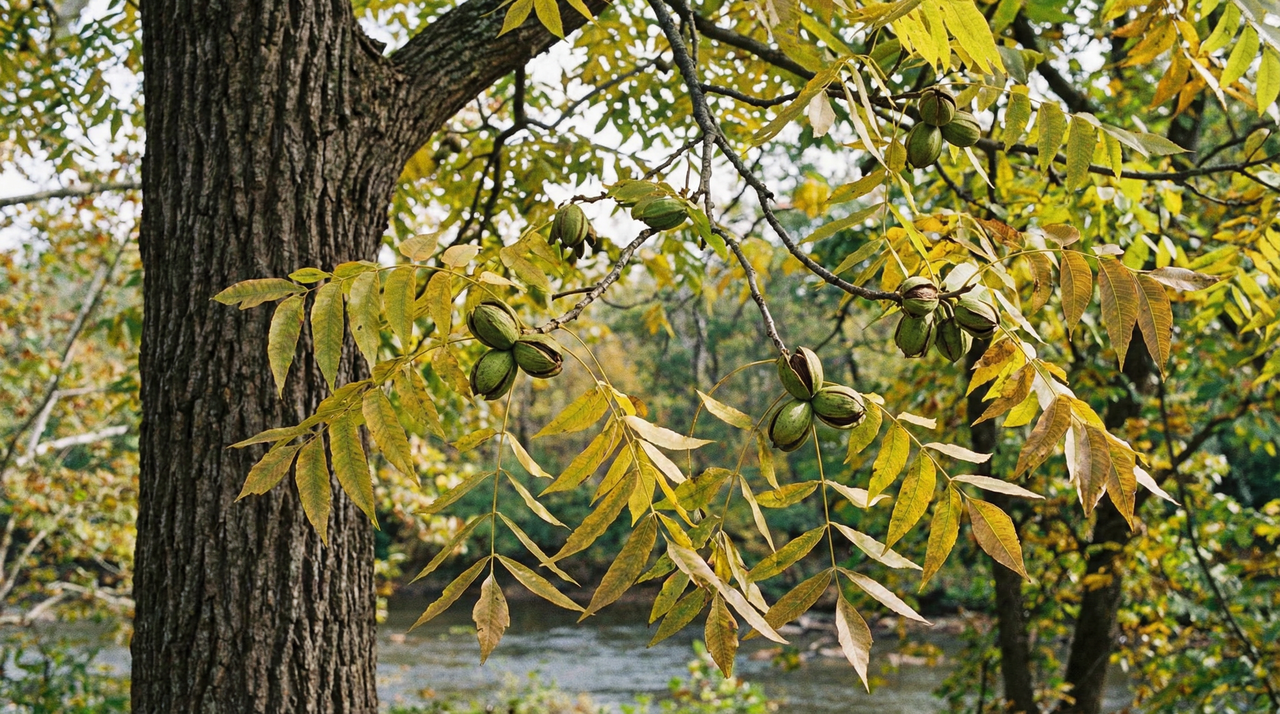
While often viewed simply as a Southern pie ingredient, pecans represent one of the oldest cultivated food trees in North America, a species that Native American tribes were actively selecting and trading long before European settlers arrived to take credit for the idea. The pecan wasn't domesticated by 19th-century breeders; it was already being tended. Those breeders just picked up where centuries of Indigenous knowledge left off.
I've worked with a lot of long-lived trees, but pecan has a way of reframing your sense of time. You're planting something that may not give you a serious crop for a decade, that will outlive you by centuries if the site is right, and that can eventually produce hundreds of pounds of nuts in a single season.[1] That's not a garden plant. That's a commitment to a piece of land. And once you understand what this tree actually needs, and what it gives back to an ecosystem in return, it's very hard to think about a large food forest design without one.
Pecan Origin, History, and Botanical Background
Native Range and Botanical Characteristics of Pecan
Few food trees have roots as deeply American as the pecan. Carya illinoinensis is native to river valleys and bottomlands stretching from southern Illinois south through Texas and east to the Atlantic coastal states of Georgia, Alabama, Mississippi, and Louisiana, with natural populations extending into northern Mexico as well.[2][3][4] Its heart is the humid subtropical South, where hot summers and mild winters define its preferred climate. The name itself comes from the Algonquian word for nuts requiring a stone to crack, a small linguistic clue to just how central this tree was to indigenous life long before any European recorded it.
Like many large canopy species, pecan tends to mast on a loose 2-3 year cycle of boom-and-bust crops.[2] Compared to its close relative Shellbark Hickory (Carya laciniosa), pecan is an early achiever: seed-grown trees can begin producing nuts in as few as 5-6 years under good conditions, versus 10-15 years for Shellbark.[5][6] That said, "early" in Carya time still means patience.
The human cultivation story began long before any USDA breeding program. Systematic selection by 19th-century horticulturists, with serious government involvement after 1910, built on centuries of Native American stewardship and eventually established an extensive catalog of formal selections bred for nut size, shell thickness, kernel quality, and disease resistance.[7][8] Today pecans are cultivated well beyond North America, in South Africa, Australia, Israel, Egypt, and Brazil, wherever growers can approximate the subtropical-to-temperate conditions the tree needs, often with irrigation.[9][10] A North American native that went global through the quality of its nut. That trajectory says something.
Visual Identification Features of Pecan Trees
Mature pecan trees are genuinely impressive to stand under. They typically reach 70-100 feet tall with canopy spreads of 40-75 feet, and exceptional specimens have topped 150 feet.[11] Below ground, a taproot pushing 10-12 feet or deeper anchors the tree and gives it surprising drought resilience once established, though it's also why young transplants need a thoughtful start. I've noticed in my own landscape work that once a pecan has been in the ground two or three seasons, it settles in with a confidence that shorter-rooted trees just don't have.
The leaves are alternate and pinnately compound, typically carrying 9-17 lanceolate leaflets each 2-6 inches long, dark glossy green above and paler below, with serrate margins; the full rachis can run 12-20 inches.[4][12] Fall color is a muted yellow to yellow-brown, nothing showy, but the bark more than compensates. On young trees it's smooth and gray-green; with age it deepens into sharply furrowed ridges, dark gray to nearly black, developing large flat plates that flake away.[13] Early in my career I spent some time getting confused between pecan and shagbark hickory in the field; the distinction matters. Shagbark and Shellbark hickories have that dramatically peeling, shaggy bark that practically announces itself. Pecan's bark is deeply furrowed but nowhere near as wild. Once you see them side by side, you won't mix them up again.
Flower and fruit structure follow the genus pattern: pecan is monoecious, with male catkins 2-6 inches long and inconspicuous female spikes appearing in spring, both wind-pollinated.[4] The fruit is a drupe with a four-valved husk that splits at maturity, releasing a nut typically 1-2 inches long, with the largest recorded specimens reaching about 2.5 inches.[14] Cultivar variation means you'll see real range in nut size, shell thickness, and kernel fill depending on what you're growing.
Traditional and Cultural Uses of Pecan
Long before the first commercial orchard, pecan was a cornerstone food. The Caddo, Cherokee, Alabama, Koasati, and Seminole peoples all harvested the nuts extensively, eating them raw, roasting them, grinding them into meal, and pressing oil from the kernels; husks found use as a dye source as well.[15] These weren't opportunistic foragers stumbling across a wild tree. This was sustained stewardship of a keystone food source, and understanding that history has genuinely shaped how I think about designing long-term edible landscapes. There's real knowledge embedded in the placement of these trees along floodplains, in the management of mast crops across communities. We're building on a foundation that's thousands of years deep.
After European settlement, pecan moved quickly into the Southern culinary identity it still holds today: pecan pie, pralines, and a cultural shorthand for hospitality that persists across the region.[16] That transition from indigenous staple to Southern icon happened fast by horticultural standards, driven by a nut that was simply too good to ignore.
Interesting Facts About Pecan Trees
The numbers around pecan longevity tend to stop people mid-conversation. Managed orchard trees reliably produce for 50-100 years, but wild specimens have been documented living over a thousand years, and yields in well-managed situations can reach up to 1,000 pounds per tree annually.[5][17] When I'm working with clients on food forest design, I find that the millennium-scale lifespan of wild pecan tends to reframe the whole conversation about what we're actually building. These are legacy trees. The generation that plants them rarely harvests peak yields.
Young pecans grow at a clip of 2-3 feet per year under good conditions before settling into a slower 1-2 feet annually as they mature.[17] People are often surprised by how vigorous a healthy young pecan looks in its first few years; the stately elder tree isn't the whole picture. That deep taproot, pushing down 3-6 meters, is building drought resilience from the start.[18]
Climate fit matters here too. Pecan requires 200-300 chilling hours for reliable bud break and performs best in the coastal plains and lower river valleys of Georgia, Texas, Arkansas, and their neighbors; productivity drops off at the northern edge of the range where growing seasons shorten and chill accumulation gets erratic.[19][20] Shellbark Hickory, by contrast, grows across 26-28 eastern and central U.S. states, tolerates greater cold, and has its own floodplain niche, but it's a slower grower at 1-2 feet per year with peak production not arriving until 40-60 years in.[21] Pecan reaches that productive phase considerably sooner, which is part of why it became the cultivated nut crop of the genus rather than its relatives.
Pecan Varieties and Cultivar Selection
With over 1,000 named cultivars of Carya illinoinensis in existence, pecan represents one of the most thoroughly bred native North American food trees we have.[22][23] Only 50 to 60 of those actually drive meaningful commercial production, but the depth of the gene pool is staggering. Early anchors like Stuart and Schley, both developed in the early 20th century, gave breeders a foundation to build on.[24] Compare that to Shellbark Hickory (Carya laciniosa), which has no formally accepted named cultivars at all; horticultural selection there focuses on wild seedlings with slightly larger nuts, and the tree's role is primarily restoration and timber rather than orchard production.[21] The contrast tells you something important about what sustained human attention can do to a genus.
The USDA ARS breeding program in College Station has been pushing that envelope further, using interspecific hybridization with species like Carya ovata and Carya cathayensis to develop cultivars with stronger scab resistance, better drought tolerance, and improved adaptation to shifting climates.[25] Newer releases like Lakota and Pawnee reflect those priorities directly, targeting lower chill-hour requirements and heat resilience for regions where production windows are changing.[25] This isn't static catalog work; it's active science responding to real grower challenges.
Notable Pecan Cultivars and Their Characteristics
While regional adaptation varies broadly, cold-hardy cultivars like Illini stretch reliable production limits down to -20°F for northern growers.[26][27] Cultivar selection is the primary tool for gardeners working marginal sites. Here's how the major players stack up across the traits that actually matter at planting time.
For the humid Southeast and Gulf Coast, Desirable is the one I'd recommend first to clients. It produces large, flavorful nuts (roughly 45 to 55 per pound), yields 2,500 to 3,500 pounds per acre, and carries high scab resistance that genuinely reduces spray pressure in wet seasons.[28][29] Stuart, the old workhorse, offers similar nut size but moderate to low scab resistance, which means a fungicide program in humid regions isn't optional.[28][29] Cape Fear splits the difference well for North Carolina and Georgia growers, with high scab resistance and solid yields, if slightly smaller nuts.[28]
Moving west and north, the trade-offs shift. Pawnee is the early-ripening choice for Oklahoma, Kansas, and the Texas plains, where shorter seasons and lower humidity favor its modest but reliable yields and earlier market timing, though scab resistance is only low to moderate.[28][29] Kiowa produces impressively large nuts (as few as 40 to 50 per pound), but it's an alternate bearer, which is something I always flag for clients designing polyculture guilds: you need to plan around off years, ideally by interplanting with perennials that produce reliably regardless of pecan's yield cycle.[28] Wichita earns its place as a reliable Type I pollinator for central and southern Texas, with decent yields and manageable scab pressure in drier areas, though it needs fungicide support in humidity.[28] For the coldest sites, Illini and Kanza are the Midwest standards; Illini handles temperatures to -20°F and benefits from the lower disease pressure that comes with northern growing.[28][27]
University extension programs give the clearest regional guidance: UGA points Southeast growers toward Desirable, Stuart, Elliot, and scab-resistant McMillan; Texas A&M backs Pawnee, Wichita, Kiowa, Desirable, and O'Henry for Texas conditions; Missouri Botanical Garden highlights cold-hardy northern types for the Midwest; and Florida extension recommends Moreland for high-humidity tolerance.[28][30][27][31] These recommendations come from real trial data, and I lean on them heavily when helping clients narrow options for their specific region.
Sourcing Pecan Trees and Grafted Cultivars
Whatever pecan tree variety you settle on, buy grafted stock. This is non-negotiable for reliable production. Seed-grown trees won't come true to type, and the variability in nut quality, yield, and disease resistance can be enormous.[32] Preferred commercial cultivars like Desirable, Pawnee, Stuart, and Western exist precisely because clonal grafting locks in the traits worth growing.[32] When I'm evaluating young trees at a nursery, I always check the graft union: it should be well-healed, with no cracking, girdling, or weak angles. A sloppy union is a long-term liability on a tree you're planning to harvest for decades.
Young grafted trees in the 1 to 5 foot range typically run $15 to $60 depending on size, container type, and vendor, with bare-root stock sold and planted in late winter to early spring.[33] Pecan trees are widely available through southern nurseries, agricultural cooperatives, and online retailers, and your local cooperative extension office is often the best starting point for finding regionally matched stock.[34] USDA APHIS regulates nursery stock movement to limit pest spread, so check state-specific rules before ordering across state lines.[35] Shellbark Hickory, by contrast, is mostly available through native plant specialists like Prairie Moon Nursery as seeds ($10 to $20 per packet) or small saplings ($25 to $60), sourced primarily for restoration work rather than orchard production.[36] The channel itself tells you the difference in intent between the two trees.
Pecan Propagation and Planting Guide
Growing a pecan tree from a pecan nut is one of those projects that rewards patience and punishes shortcuts. Before you can talk about stratification schedules or orchard layout, you have to understand what you're actually working with: a large, complex drupe consisting of an outer husk, a hard shell, and the seed inside. Those seeds typically run 2.5-4.0 cm long and 1.5-2.5 cm wide, varying by cultivar and growing conditions.[37][38] They're monoembryonic, meaning each seed develops from a single zygotic embryo (some older texts mention polyembryony, but current consensus has moved away from that).[39] That monoembryonic nature matters practically: seedlings will not reliably reproduce the parent tree's nut quality, which is exactly why serious growers eventually graft named cultivars onto seedling rootstock rather than planting from seed for production.
Seed Morphology, Storage, and Germination
The single most important concept in pecan seed handling is that these are recalcitrant seeds. They can't be dried below about 20% moisture content without losing viability, and they're sensitive to freezing temperatures.[40][41] I've learned to watch the trees closely in autumn and collect seeds the same day the husks split open naturally. That window matters more than most people realize. Leave them on the ground for a week, and you've already started the viability clock ticking hard. Skip the dehydrator entirely; that advice applies to culinary storage, not propagation seed.
Once collected, pack seeds immediately into a moist medium like sand, peat, or vermiculite, and store them at 4-10°C in airtight containers kept at 30-50% relative humidity. Check periodically for fungal growth.[42][28] Under ideal conditions, germination rates of 50-80% are achievable after one year of storage, but viability drops exponentially from there. At room temperature, germination can fall below 50% within six months.[42][43] My winter routine before any sowing includes a quick viability check on older lots using a cut test or tetrazolium stain. It takes twenty minutes and saves a whole season of wasted effort.
To break dormancy, pecan seeds need 3-6 months of cold moist stratification at roughly 5°C.[44] After stratification, sow into warm conditions (20-30°C) and expect hypogeal germination, where the cotyledons stay underground while the shoot emerges. The related shellbark hickory follows broadly similar recalcitrant seed behavior but requires an additional warm stratification phase of 60-90 days before cold treatment, so its dormancy requirements are actually more complex than pecan's.[45] With pecan, cultivar variation matters too; 'Desirable' is known for better storability than some others.[39] All of this work gets you a vigorous seedling, but not a predictable nut tree. For reliable production, grafting onto that seedling rootstock is the step that turns effort into harvest.
Soil and Site Selection for Pecan Trees
Pecan is native to the deep, fertile alluvial bottomlands of the south-central and southeastern United States, and that origin is your site-selection template.[4] The tree needs well-drained loam, sandy loam, or silt loam with a minimum practical rooting depth of 4-6 feet, though optimal depth runs 15-20 feet to accommodate the deep taproot.[46][47] Heavy clay, compacted, or waterlogged ground is unsuitable, full stop. I planted one young tree in a low spot early in my design career, not thinking carefully enough about the water table after a wet spring, and lost it within two seasons to what was almost certainly Phytophthora root rot. That lesson sticks with me every time I'm evaluating a site now.
Soil bulk density should stay below 1.3 g/cm³ to avoid restricting root elongation, and pH should land in the 6.0-7.5 range with organic matter content around 1-3%.[48] Incorporate compost or leaf mold before planting to build that organic matter baseline. Annual water requirements run 40-50 inches; sandy soils need more frequent irrigation since drought stress can seriously cut yields.[49] A 4-6 inch ring of coarse mulch around young trees (kept away from the trunk) does real work conserving moisture, moderating soil temperature, and suppressing weeds. If you're starting seedlings indoors first, a container mix of roughly 40% loamy potting soil, 30% coarse sand, 20% perlite, and 10% compost at pH 6.0-7.5 works well for the nursery stage.[28] Just know that pecan outgrows containers quickly and needs to go in the ground as soon as it's feasible.
On light, pecan wants full sun: 8-10 hours of direct sunlight daily for strong growth and nut production, with 6 hours as a bare survival minimum.[12][50] Young seedlings tolerate light shade, but mature trees and anyone growing for nuts need as much light as the site can offer. Shellbark hickory is slightly more forgiving on this front in its youth, which I've observed in shaded woodland edges where young shellbarks hold on while pecans struggle.[51] For pecan, sun, soil depth, and drainage together are what determine whether a tree thrives long-term.
Spacing, Planting Technique, and Orchard Layout
Mature pecan trees reach 70-100 feet tall with canopy spreads of 40-70 feet.[52] That scale is why spacing decisions made at planting matter so much; you're designing for a canopy that will dominate the site for generations. Standard orchard planting runs 30-40 feet between trees and 35-50 feet between rows, supporting 25-50 trees per acre.[53][54] High-density plantings starting at 20-30 feet are possible but demand intensive pruning, hedging, and eventual thinning as canopies close in.[53] I've watched overcrowded plantings in humid climates become scab nurseries within a decade because airflow was sacrificed for tree count.
Cross-pollination is non-negotiable. Compatible pollinator cultivars need to be within 200-300 feet, with pollinators placed every 4-6 rows.[55] In my orchard layouts I typically place pollinators every fifth row and keep row spacing at least 35 feet to accommodate a small tractor comfortably while still maintaining that cross-pollination coverage. That row width also helps reduce the humidity pockets that fuel fungal disease pressure.[56] For nut-production plantings, shellbark hickory follows similar generous spacing guidelines (30-60 feet), though timber and reforestation plantings often go narrower at first to reduce competition on specific site goals.[57] The bottom line with pecan: give the trees room from the start, get the drainage right, and the investment in site preparation will pay back for a very long time.
Pecan Tree Care Guide
Growing a pecan tree well is a long game. You're managing a tree that can outlive you, and the care decisions you make in the first decade set the ceiling for everything that follows. The good news is that the fundamentals are knowable. The hard part is staying patient and systematic while the tree slowly becomes what it's going to be.
Feeding and Soil Fertility Needs
Soil pH is where I always start. Pecan trees perform best between 6.0 and 7.0, with 6.5 being the sweet spot; once you drift below 5.5 or above 7.5, nutrient availability drops off sharply regardless of how much fertilizer you apply.[58][59] I test before I plant and re-test every two to three years because imbalances are genuinely easy to miss until you start seeing symptoms in the leaves.[60][61]
Pecans are genuinely heavy feeders. Mature orchards can require 100 to 300 pounds of nitrogen per acre annually, split across two or three applications to minimize leaching; young trees under five years get a much lighter hand, around 20 to 50 pounds per acre.[62][63] But the nutrient I watch most closely is zinc. I've learned to spot rosette symptoms early by walking the tree in late spring and watching for narrow, distorted terminal leaves before they fully develop; a timely foliar zinc sulfate spray has saved my yield more than once. The recommended rate runs 2 to 10 pounds of zinc per acre annually, often applied as foliar zinc sulfate.[64][65]
The other deficiency symptoms are worth memorizing for field diagnosis. Nitrogen deficiency shows up as uniform yellowing on older leaves with early drop. Potassium causes marginal scorch and necrosis on older foliage. Phosphorus deficiency produces dark green to purplish young leaves and poor fruit set. Iron shows as interveinal chlorosis on new growth.[64][66] None of these are reasons to apply more of everything; they're reasons to test and respond precisely.
If you're also growing Shellbark Hickory in your system, it's worth knowing that an established Shellbark in fertile alluvial soil often needs no routine fertilization at all.[51] Pecan's intensive input program isn't a genus-wide requirement. It's a reflection of what high yields demand from a tree growing in managed ground.
Water Requirements and Irrigation
A mature pecan tree needs 40 to 60 inches of water annually, and the timing matters as much as the total.[67] The July through August kernel-fill window is the most critical stretch, when trees can demand 3 to 4 inches per week.[28] I've watched the same orchard block respond dramatically to a single deep watering at the onset of a 100°F stretch versus trees left on rainfall alone; the irrigated trees fill noticeably better every time.
Young trees need about 1 to 2 inches per week. Established trees can tolerate 4 to 6 weeks of drought, but nut quality declines before stress symptoms become visible.[28] Overwatering is a real problem too: chlorosis, wilting in saturated soil, and root rot are all signs you've pushed past what the roots can handle.[68] Preferred irrigation water should stay between pH 6.0 and 8.5 with an EC below 3.0 dS/m.[69] A 2 to 4 inch layer of organic mulch around the root zone goes a long way toward conserving moisture and moderating soil temperature, especially through midsummer.[70]
Frost Tolerance and Protection
An established trunk and primary branch architecture is remarkably cold-hardy.[28] The tissue-specific thresholds are what really matter for growers: buds are damaged below 25°F, emerging leaves and shoots at 28°F, and open flowers or newly set nutlets at 30 to 32°F.[71] After losing several young trees to a late-April frost one year, I started deliberately choosing planting sites with good cold-air drainage, avoiding low spots where frost settles. The north side of a windbreak, where cold air moves through rather than pools, has worked well for me.
Practical protection includes site selection with air drainage, mulching the root zone, overhead sprinkling during freeze events, and avoiding late-season pruning that stimulates tender new growth. Prompt removal of frost-damaged tissue helps recovery.[72] For growers pushing the northern edge, cultivars like 'Kanza', 'Pawnee', 'Major', and 'Hark' extend reliable production into zone 6 and colder.[73] For growers in the coldest regions, the profound winter hardiness of related shellbark hickory is a meaningful reminder that the Carya genus offers options well beyond what pecan can do alone.[74]
Heat Tolerance and Summer Stress Management
Pecans are adapted to AHS Heat Zones 7 through 10, with optimal daytime temperatures between 77 and 95°F and nights between 59 and 70°F.[75] Sustained heat above 100°F causes leaf scorch, nut abortion, and impaired photosynthesis, particularly when nights stay above 75°F and the tree can't recover its metabolic efficiency in the cooler hours.[76] Recovery requires nights dropping back below 68°F.[77]
Consistent early-morning irrigation, 2 to 4 inches of organic mulch, and afternoon shade for young trees make a real difference during summer heat domes.[78] In very hot regions, cultivars like 'Wichita' and 'Choctaw' show better heat tolerance.[77] Shellbark Hickory, by contrast, prefers fewer consecutive hot days and more consistent humidity, performing better where heat extremes are less frequent.[79]
Pruning, Training, and Seasonal Maintenance
Train young pecans to a central leader or open-center system with 4 to 6 scaffolds spaced at 45 to 60 degree angles; open-center works particularly well on home-scale trees where easier harvest and spray coverage matter more than commercial canopy volume. Dormant-season pruning, done in late winter, should never remove more than 20 to 25 percent of the canopy at once.[80] I once took too much live wood off a young tree and it responded with weak, disorganized regrowth and delayed bearing. That was the lesson that made the 25% rule permanent in my practice.
Leaf analysis in mid-July is the precision tool that guides the whole fertility program, with target ranges of N 2.8 to 3.2%, P 0.12 to 0.18%, K 0.9 to 1.2%, and Zn 30 to 50 ppm, among others.[81] Once soil tests confirm adequate fertility, zinc foliar sprays remain the most reliable mid-season correction tool. Shellbark Hickory, for comparison, requires minimal pruning and rarely needs fertilization in native soils, though it takes 20 to 30 years to reach meaningful nut production.[82] The hickories in the woodland edge of my property have never shown a zinc deficiency; building a soil-rich guild can genuinely reduce inputs over time in ways that a conventionally managed orchard row cannot.
Seasonal Rhythm and Phenology
In the Southeast, pecans break dormancy and leaf out through March and April, flower in April and May, harden shells by midsummer, fill kernels through September, and drop leaves in October and November.[83] Proper bud break requires 200 to 1,000 chill hours below 45°F depending on cultivar, so matching variety to your local chill accumulation isn't optional.[84] I keep this calendar on my wall because each stage signals a different management priority: chill tracking through winter, frost vigilance in spring, zinc sprays as leaves expand, deep irrigation through kernel fill, and then patience while the crop finishes.
The 6 to 10 year wait before meaningful crops begin is the thing nobody fully prepares you for until you're living it. Shellbark Hickory follows a parallel seasonal arc but matures even more slowly and performs best in cooler, more humid climates across a wider hardiness band.[85] Both trees reward growers who think in decades. Plant a pecan for yourself; manage it for whoever comes after you.
Pecan Harvesting: Timing, Technique, Yield, and Flavor
Patience is baked into every aspect of growing pecans, and harvesting is no different. Even vigorous established trees require years of maturity before setting their first handful of nuts, and a full decade or more to reach reliable commercial yields.[86][87] Once a tree is finally bearing, each nut still needs 150-180 days from full bloom to reach physiological maturity, and certain late cultivars like 'Desirable' can push 190-210 days in cooler climates.[88] That's the whole growing season, right up to the edge of frost. If you're in the genus neighborhood, Shellbark Hickory matures a bit faster at 120-150 days from flowering, though its seedlings can take 10-25 years to reach production and it bears heavily only every other year.[89][90]
When to Harvest Pecans: Phenology, Growing Degree Days, and Maturity Indicators
The North American pecan harvest season runs September through November, peaking in October, with timing shifting earlier in zone 6 and stretching into mid-to-late November in zones 8-9.[91][59] The practical trigger to watch is husk split: you want 70-90% of husks turning brown and opening on their own before you start shaking trees.[92][93] Shell hardening to dark brown and kernels at 4-8% moisture are secondary confirmation that the nuts are actually ready.[94] For those who want a more precise management tool, shell hardening typically happens after accumulating 2,000+ growing degree days (base 50°F), with full maturity requiring 2,500-4,000 GDD from bloom depending on cultivar.[95] In humid subtropical conditions, warm nights and adequate late-summer rainfall can push GDD accumulation faster than growers further north would expect, so regional adjustment matters.
I learned the husk-split lesson the hard way early on. One season I got impatient and shook a tree when maybe half the husks had cracked open. The kernels looked fine on the outside, but they were soft and underdeveloped, and they never roasted properly. Flat flavor, gummy texture. Waiting for that 70% threshold isn't arbitrary caution; it's the difference between a nut worth eating and one that goes straight to the compost. Beating the squirrels is a real concern, but beating them to an unripe nut helps nobody.
How to Harvest, Process, Dry, and Store Pecans
For backyard trees, hand collection after natural drop is perfectly practical. Larger trees benefit from mechanical shaking, followed immediately by dehulling, cleaning, and moving the nuts into the drying setup.[92][28] The drying step is where a lot of home growers cut corners, and it costs them. Pecans need to come down to 4-5% moisture content, ideally over 2-3 days at 95-100°F with good airflow.[96][97] Skip this or rush it, and you're setting up mold and rancidity down the road.
Once properly dried, storing unshelled pecans at 32-40°F with 60-70% relative humidity will hold quality for up to 12 months.[96][97][98] I've kept home-harvested pecans in the refrigerator for a full year with no rancidity when I've been diligent about hitting that moisture target first. The USDA recommendations aren't overcautious; they reflect what actually works. Shellbark hickory nuts need slightly different handling: immediate hulling after collection to prevent mold, then a longer drying period of 2-4 weeks at 90-110°F to reach 8-10% kernel moisture, stored at similar temperatures but under 60% RH in airtight containers.[99][98]
Pecan Flavor, Texture, and Culinary Quality at Harvest
A ripe pecan husk splits to reveal a 1.5-2.5 inch hard-shelled nut with a light tan to golden kernel that fills most of the shell, the size varying considerably by cultivar.[4][100] Raw, fresh pecans are soft and moist, almost creamy, from their roughly 70% oil content.[101] Roasting changes everything structurally: moisture drops, oil character shifts, and you get that firm, crisp snap that most people associate with a good pecan.[101][102] I always compare it to what happens with hazelnuts or walnuts under heat; it's a similar transformation, but the pecan's higher oil content makes the caramel and buttery notes hit harder.
The flavor profile is richly nutty with mild sweetness, buttery depth, and a slightly bitter finish, while the aroma carries nutty, caramel-like, and woody notes driven by volatile compounds including pyrazines, furans, 2-acetyl-1-pyrroline, and aldehydes.[103][104] I've tasted a real difference between nuts left on the tree until full natural dehiscence versus those mechanically harvested a few weeks early; the later nuts have a noticeably richer, sweeter, more caramel-forward quality. Harvest timing, cultivar genetics, drying, and storage all shape the final result, and any weak link in that chain can flatten the sweetness or introduce off-flavors.[28][101] Shellbark hickory offers a comparable payoff: large, thin-shelled nuts with a sweet, buttery richness and none of the bitterness that shows up in other hickory species.[36][105] But for the full aromatic experience of a properly timed, well-dried, fresh-roasted pecan, nothing else in the genus quite gets there.
Pecan Preparation, Culinary Uses, and Non-Food Applications
Culinary Preparation and Nutritional Benefits of Pecans
The kernel is where all the reward is. Eaten raw, it's buttery and slightly sweet; roasted, it shifts into something deeper and almost caramel-like, which is why so many classic recipes from pecan pie to pralines and spiced roasted pecan nuts depend on that heat-developed flavor.[106][107] From there, the range is genuinely wide: pies and cookies, salads and sauces, trail mixes, pecan-crusted fish, candied pecan recipes for cheese boards.[108][109] The nut pairs especially well with chocolate, apple, cranberry, and warm spices like cinnamon and nutmeg, which is why I keep a jar of dry-roasted pecans in my kitchen year-round.
From a dietary perspective, even a single-ounce serving delivers a concentrated dose of heart-healthy monounsaturated oleic acid alongside meaningful amounts of manganese (58% DV) and copper (37% DV).[109][110] Regular consumption is associated with lower LDL cholesterol and improved endothelial function, two markers that matter for cardiovascular health.[111][112]
On the processing side: after harvest, dry your nuts down to 4-5% moisture before storing or roasting to prevent mold and aflatoxin development.[113] I learned this the hard way early in my food forest work, watching a beautiful harvest go soft and musty in a humid garage. If you're aiming to maximize mineral bioavailability, soaking for 12-24 hours reduces phytic acid and tannins, and roasting at 100-200°C for 10-20 minutes achieves similar results with the added bonus of flavor.[114]
The leaves, bark, husks, and shells contain juglone and tannins that cause digestive upset and shouldn't be eaten; the husks will also stain your hands and clothes permanently, so gloves are non-negotiable at harvest.[115][116] I also keep those parts out of my compost bins near sensitive crops for the same reason. Pecan is a genuine tree-nut allergen, and I've worked with clients who react to it; if you're serving pecans in shared meals, label clearly and don't assume tolerance.[117] If you're foraging, please don't: misidentifying a bitternut hickory is easy, and the bitterness from those tannins is unpleasant at best.[118] Buy organic or source from a grower you trust to sidestep pesticide concerns with conventionally grown nuts.[119]
The Choctaw, Iroquois, Shawnee, Creek, and Cherokee all processed these nuts into butter, oil, flour, and pemmican long before named cultivars existed.[120][121] Their relative, Shellbark Hickory (Carya laciniosa), figured equally in that tradition. Its large nuts have a rich, arguably deeper flavor than pecan, but the thicker shells and heavier tannin load mean you'll need to soak or boil them to get a palatable result.[122][123] I've tried both side by side, and I'll take the easier processing of a good cultivated pecan every time.
Traditional and Modern Uses of Pecan and Related Hickories
Beyond the kitchen, this tree gives generously. Cold-pressed pecan oil is excellent for both cooking and cosmetics, offering a mild flavor and a favorable fat profile.[124] The wood is dense, strong, and shock-resistant; I've used pecan handles on garden tools specifically because they absorb impact well without splitting, the same quality that makes it prized for furniture, flooring, and bows.[124][36] For smoking meats, pecan wood imparts a flavor I find noticeably sweeter and more complex than hickory smoke, and its density means it burns long and hot.
The shells and husks aren't waste, either. Shells go into abrasive cleaners, biofilters, charcoal, and garden mulch, while the green husks yield rich brown and black dyes.[113] That's the kind of zero-waste thinking that makes a pecan tree feel genuinely at home in a permaculture system.
Traditional medicinal uses of bark and leaf decoctions by Indigenous peoples included treatments for ulcers, inflammation, and diarrhea, with similar applications documented for Shellbark Hickory.[125][126] Clinical validation remains limited, and the health benefits section covers the modern research in depth. What strikes me about all of this is how completely the whole tree was understood and utilized long before we started isolating compounds in labs. A mature pecan in your landscape isn't just a nut producer; it's a material resource, a piece of living ecological history, and, if you're patient with it, one of the most generous plants you'll ever grow.
Pecan Health Benefits and Medicinal Uses
The health case for pecans doesn't rest on a single nutrient or a catchy headline. It's built from a converging stack of chemistry, traditional practice, and emerging clinical evidence that, taken together, makes a compelling argument for keeping a small handful of these nuts in your daily diet.
Scientific Research on Pecan Health Benefits
The strongest evidence starts in the lab. Pecan extracts reduce pro-inflammatory cytokines including TNF-α and IL-6, inhibit the NF-κB signaling pathway, and suppress COX-2 and iNOS expression in preclinical models.[127][128][129] That same antioxidant power shows up in DPPH and ABTS free-radical scavenging assays, with IC50 values in the 15-20 μg/mL range, and pecan extracts also upregulate the body's own antioxidant enzymes like SOD and CAT.[130][131] Those are the mechanistic foundations behind why pecans keep showing up in cardiovascular and anti-inflammatory research.
Human trial data is thinner, and worth saying so plainly. Small pilot studies have shown that regular pecan consumption improves markers of oxidative stress, inflammation, and gut microbiome composition.[132][133] Improved lipid profiles and cardiovascular markers have also been observed.[134] The results are encouraging, but large-scale randomized controlled trials are still missing. Preclinical work has pointed to anti-diabetic effects, including improved insulin sensitivity and α-glucosidase inhibition in animal models,[135] and preliminary research on pecan shell extracts suggests antiproliferative effects on cancer cell lines, partly attributed to ellagic acid.[136] Those findings are worth watching. They're not yet a prescription.
Long before any of this was published, the Cherokee and Choctaw were already using pecan medicinally. Leaf and root decoctions treated stomach complaints, dysentery, and cramps; leaf poultices addressed rashes and swelling; bark teas were used for colds, coughs, and even tuberculosis; and husks served as astringents for digestive and skin issues.[137][138] Many of those applications map cleanly onto what researchers are now finding about pecan's anti-inflammatory and antimicrobial chemistry, including its activity against Staphylococcus aureus and E. coli.[139] That alignment between traditional knowledge and pharmacological findings is something I find genuinely satisfying. The hull, leaf, and shell research is fascinating, but the everyday health benefits come primarily from eating the kernel itself.
Pecan Nutrition Facts and Macronutrients
A standard serving is one ounce, roughly 19 kernels, eaten raw or roasted.[109] Per 100 grams, pecans deliver 691 calories, nearly 72 grams of fat (mostly monounsaturated), about 9 grams of protein, and 9.6 grams of fiber.[109][140] That 70% fat content is exactly what gives a freshly cracked pecan its rich, buttery flavor. I've found that home-roasted nuts from my own trees have a noticeably deeper, more complex taste than anything off a grocery shelf, which I suspect reflects the intact polyphenol content that degrades quickly in commercial storage.
The mineral profile is genuinely impressive. Magnesium comes in at 121 mg per 100 grams, potassium at 410 mg, zinc at 4.53 mg, and copper at 1.2 mg.[109] But the standout micronutrient is vitamin E: 25.6 mg per 100 grams, which is exceptionally high for a whole food and directly ties into the antioxidant story covered above. Polyphenol content runs 20-50 mg GAE per gram dry weight, with specific compounds including ellagic acid, gallic acid, quercetin, and catechin.[141][142] Eating 1-2 ounces daily appears to support heart health, reduce inflammation, and benefit brain function through this combined nutrient density.[143]
Phytochemical Profile of Pecans
Beyond the headline nutrients, pecans contain a broad array of bioactive secondary metabolites: flavonoids, tocopherols, phytosterols, ellagitannins, tannins, and specific compounds like kaempferol, protocatechuic acid, chlorogenic acid, and epicatechin.[129][131] These aren't incidental. They're the same compounds the tree deploys to protect its seeds from fungal attack, herbivory, and competing plants, and they happen to be precisely what drives the antioxidant and anti-inflammatory effects described above.
These phytochemical levels can shift significantly based on variable growing conditions. Seasonal patterns, soil pH and fertility, geographic climate, cultivar genetics, and stress events like drought all influence the phenylpropanoid pathways responsible for producing these compounds. I've grown 'Pawnee' and 'Desirable' side by side, and the differences in nut astringency between a drought year and a well-watered one are unmistakable. Dry years produce notably more pungent nuts, which aligns with what the research says about stress upregulating secondary metabolite production. The mechanistic picture isn't fully resolved for pecans specifically, and many findings are inferred from related Carya species,[144] but the cultivar-level variation I've observed in the field is consistent with that reported phenolic range.
Safety Considerations for Pecan Consumption
Pecans are safe and genuinely nutritious for most people when eaten in reasonable quantities.[143] After years of designing edible landscapes that include nut trees, I've learned that tree-nut allergy disclosure is non-negotiable. Pecan allergy affects roughly 1-2% of the U.S. population, can trigger anaphylaxis, and cross-reacts strongly with walnuts and moderately with other tree nuts.[145][146] Even a small handful can be dangerous for sensitive individuals. Label your caches clearly if you share them.
A few other caveats are worth knowing. The leaves, green hulls, and shells contain tannins and juglone-like compounds that can cause mild gastrointestinal upset or skin irritation if handled or consumed in quantity.[147] Pecans contain low vitamin K (around 3.5 μg per 100 g) and don't pose a clinically meaningful warfarin interaction at normal dietary amounts, though anyone on anticoagulants should check with their provider.[148] Their high fat content means they're best avoided during acute pancreatitis flares, but that same fat profile makes them beneficial for blood sugar management and blood pressure support.[149]
Pecans are toxic to dogs and can cause pancreatitis from their fat content alone, and the leaves and hulls are harmful to horses and ruminants as well.[150] I pick up fallen nuts promptly during harvest season, especially in mixed gardens where dogs or chickens have access. Storage matters too: improper conditions allow Aspergillus molds to produce aflatoxins, so keep shelled or unshelled pecans cool and dry, ideally at 0-4°C.[151][28] My own harvests have stayed mold-free for years with that simple discipline.
Pecan Pests and Diseases
If there's one thing I've learned siting pecan guilds over the years, it's that you can do everything right on paper and still get humbled by what lives in the air and soil around your trees. Pecans face a genuinely serious roster of pathogens and insects, and understanding that pressure is what separates a productive orchard from a frustrating one.
Major Diseases of Pecan Trees
Pecan scab, caused by Venturia effusa, is the single most economically damaging disease in humid southeastern growing regions, and it has shaped nearly every major cultivar decision made in the last century.[152][153] The fungus thrives when temperatures sit between 25 and 30°C with humidity above 90% and leaves stay wet for six to eight hours at a stretch, which describes a normal summer morning in much of the South.[152][153] After planting 'Stuart' in a low-lying humid pocket early in my career and watching it defoliate by August, I now site pecan guilds specifically away from those damp hollows, even when the soil there is otherwise ideal. I label every tree I plant so I can track spray frequency by cultivar over time.
Cultivar choice is your best first defense, but it's not a guarantee. 'Elliott' is the standout for scab resistance, while 'Stuart' and 'Schley' are highly susceptible. 'Desirable', 'Pawnee', 'Sioux', and 'Kanza' land in the moderate range, though resistance can shift regionally and no cultivar holds up fully under relentless disease pressure.[154][155][156] Resistance buys you time and reduces spray frequency; it doesn't eliminate the need for management.
Beyond scab, bacterial leaf scorch (Xylella fastidiosa) is worth knowing about because there's no cure once a tree is infected. It spreads through sharpshooter insects and causes marginal leaf browning and premature leaf drop; 'Pawnee' and 'Kanza' show better tolerance, so vector control and resistant variety selection are the only real tools.[153][157] Phytophthora root rot becomes a problem in wet, poorly drained sites; 'Kanza' and 'Haskell' offer moderate tolerance, but the real fix is drainage before planting, not after.[158] Anthracnose follows humid conditions and hits most cultivars to some degree, with 'Desirable' and 'Stuart' showing modest resistance.[159] Cankers, downy spot, and brown spot round out the disease picture but generally cause less economic damage unless trees are already stressed.[159] Keeping soil pH between 6.0 and 7.0 reduces physiological stress that makes all of these conditions worse; trees pushed outside that range are simply more vulnerable.[152] Newer releases like 'Lakota' and 'Zinner' from the USDA breeding program are showing improved multi-disease resistance profiles, which gives me genuine optimism about the next generation of orchard plantings.[155][160]
Key Insect Pests of Pecan
The full insect pest list for pecan is long: weevil, nut casebearer, hickory shuckworm, black and yellow aphids, stink bugs, twig girdler, peachtree borer, lace bug, and psocids, among others.[161][162] Pecan weevil and nut casebearer top the economic damage list, so I give them the most attention in any orchard I design or manage.
Pecan weevil emerges when soil temperatures reach 20-25°C, and degree-day models help time any intervention.[163][164] No cultivar is fully immune, though 'Elliott', 'Pawnee', and 'Desirable' show some tolerance based on nut characteristics and maturation timing.[163] Nut casebearer can destroy 20 to 100% of a crop in bad years, with an economic action threshold of just 1-2% infested nuts; 'Desirable' and 'Pawnee' hold up better than 'Stuart'.[165] For hickory shuckworm, timing really matters: early-maturing cultivars like 'Pawnee', 'Kanza', and 'Cumberland' can mature before peak shuckworm activity and escape the worst damage.[166] That's the kind of cultivar selection logic I try to build into every planting from the start.
Pecans do mount their own defenses. The leaves and husks contain phenolic compounds, ellagitannins, and juglone, and glandular trichomes on young growth physically trap small insects while hard shell walls resist larval penetration.[167][168][169] I've noticed in my own projects that trees under drought or fertility stress seem to attract heavier aphid pressure, which lines up with what the research shows about inducible defenses: a tree that's not managing its own chemistry well is an easier target.[167] Black pecan aphid resistance is notably stronger in 'Desirable' and 'Pawnee', but neither cultivar eliminates scouting.[170] Overall insect resistance is moderate and pest-specific across the species; no variety covers every threat, and no genetically engineered resistant cultivars are commercially available.[170][171] Spotted lanternfly has been observed feeding on pecan but isn't yet a primary pest, though that may change as its range expands.[172]
Integrated Pest and Disease Management Strategies
The most important management decisions happen before you ever open a spray tank. Site selection that avoids low-lying humid pockets, good soil drainage, and appropriate cultivar choice for your region form the foundation that no fungicide program can replace. From there, pruning for airflow, removing mummified nuts and fallen debris, and maintaining balanced soil fertility reduce pressure across nearly every pest and disease category.[173][174]
When chemical management is necessary, scab programs typically require six to ten fungicide applications per season starting at budbreak, with rotating modes of action to prevent resistance.[175][174] That's a realistic expectation for anyone growing susceptible cultivars commercially in humid climates. On the insect side, I never spray at the first sign of a few aphids. Waiting until I hit 20-30 per leaflet has saved me multiple unnecessary applications while still protecting nut quality.[176][171] For weevil and casebearer, I teach every client I work with to carry a 10x hand lens in early summer and scout for emergence signs and entry holes before committing to any spray. Economic thresholds of 1-2% nut injury for casebearer and 5-10 weevils per tree guide those calls.[173] Pheromone traps for peachtree borer take the guesswork out of timing there, too.[176] Encouraging natural enemies through diverse understory plantings and minimizing broad-spectrum sprays keeps beneficial populations intact, which reduces rebound pest pressure over the long run. The genetic toolkit keeps improving, but cultural practices remain the grower's most reliable daily leverage.
Pecan in Permaculture Design: Climate, Ecosystem Role, and Guild Placement
Climate and Hardiness Zones for Pecan Trees
Pecan sits comfortably in USDA zones 6 through 9, tolerating winter lows down to -10 °F in zone 6 while still needing the heat that defines a Southern summer.[177][4] The chill-hour requirement, anywhere from 300 to 1,000 hours below 45 °F, is just as important as cold hardiness. Without enough chilling, bud break falters and flowering is erratic, which means even a tree that survives your winters might never set a reliable crop.[177] On the heat side, pecan thrives with summer highs in the 90 to 105 °F range and needs 30 to 40 inches of annual rainfall. Below 20 inches yields decline sharply; above 60 inches on poorly drained sites you start courting root rot.[178][179]
If your winters run colder, shellbark hickory stretches the Carya envelope considerably, handling zones 4 through 8 and lows to -20 °F with a chill requirement of 1,200 to 1,800 hours.[74][180] For northern food forest designers, that's the realistic alternative when pecan simply can't handle the winters. At the warm end of the range, I've stretched pecan into zone 9b plantings by leaning on early-ripening, low-chill cultivars like 'Pawnee' and choosing sites with good air drainage, because even when chill hours are technically met, a late frost on open flowers can still wipe out a season's yield.[181] Microclimate awareness matters here as much as zone maps do.
Ecosystem Functions and Wildlife Support
The reproductive biology of pecan is something I wish more designers understood before they plant. Pecan is monoecious and wind-pollinated, but it's also dichogamous, meaning male and female flowers don't open simultaneously on the same tree. Over 90% of cultivars are self-incompatible and require a pollinizer cultivar with a bloom window that overlaps by at least 3 to 5 days.[182][183] I label my nursery rows carefully from day one, because young pecan seedlings look nearly identical to other hickories in the first few seasons, and a labeling error you don't catch until year five or six can mean a whole block that never crops reliably. Spacing pollinizers every 50 to 100 feet within rows, or roughly every four to six trees, is what the research supports, and it's what I design to.[28][184] Get pollination wrong and you lose the mast that drives everything else in the system.
And what a mast it is. Pecan supports over 100 bird and mammal species, including squirrels, white-tailed deer, turkeys, and wood ducks.[185] Its deep root system stabilizes riverbanks and floodplains, and the annual leaf drop cycles significant organic matter back into the soil. Pecan does not fix nitrogen, so it's not contributing that service directly, but the sheer volume of litter, contributing 50 to 100 kg of nitrogen per hectare annually through decomposition, builds organic matter and soil structure over time in ways I've watched transform compacted ground into rich loam over the course of five to seven years.[185] Shellbark hickory plays a comparable role in bottomland systems further north, and its nuts, produced on 1 to 3 year mast cycles, support black bear, raccoon, and additional bird species in those colder floodplain ecosystems.[186]
Forest Layer, Guilds, and Companion Planting
There's no diplomatic way to say this: pecan is not a backyard tree. At 70 to 100 feet tall with a 50 to 70 foot spread and a deep taproot, it demands scale.[4] In a food forest design it belongs squarely in the overstory canopy, and everything you plant beneath it needs to be chosen with honest respect for the fact that this tree will eventually reduce light penetration by up to 50%.[187] Pecan also forms arbuscular mycorrhizal associations that support its nutrient uptake, but it produces moderate phenolic allelopathy that can inhibit the germination of sensitive understory species planted too close to the trunk.[4][188]
In practice, I avoid planting sensitive herbs directly under young pecans and instead establish shade-tolerant comfrey and nitrogen-fixers at the dripline, where the allelopathic effects taper off. After years of observation, my go-to guild structure around a mature pecan includes a shrub layer of serviceberry and hazelnut that handles the dappled light well, with dynamic accumulators filling the ground layer beyond the drip zone. Neither sun-dependent vegetables nor sprawling herbs will be happy here. The litter load alone, a dense annual blanket of compound leaves, means anything delicate will need protection in autumn. Shellbark hickory anchors comparable guilds in more northern bottomland designs, often growing alongside swamp white oak, bur oak, and sycamore in its native range.[189] In subtropical food forest contexts, Chinese hickory fills a similar canopy role and pairs naturally with nitrogen-fixing companions like alder or clover to compensate for its own non-fixing chemistry.[190] The common thread across all of them: generous spacing, compatible neighbors that read the shade honestly, and a designer who's planned for what a hundred-foot canopy actually means at maturity.
The Tree I Planted Knowing I'd Never Harvest Most of What It Gives
There's a pecan I put in the ground twelve years ago that's just now starting to mean something in terms of yield. I knew that going in, and I planted it anyway, which tells you more about how I think about food forests than any design principle I could explain. Some plants you grow for yourself. Some you grow because the land asked for something long-lived, and you had the good sense to listen.
Sources 190
- Pecan Production in Georgia, UGA Extension ↩
- Pecan - Wikipedia ↩
- Pecan: Botany and Horticulture ↩
- USDA PLANTS Database - Carya illinoinensis ↩
- Pecan Production Guidelines ↩
- Pecan Trees: From Seed to Harvest ↩
- Draft genome of the pecan nut tree ↩
- Pecan Cultivars ↩
- The Pecan Tree: Carya illinoinensis ↩
- Pecan Cultivation Guide ↩
- Silvics of North America: Hardwoods - Carya illinoinensis ↩
- Carya illinoinensis (Wangenh.) K. Koch ↩
- Plant Finder - Carya illinoinensis ↩
- Pecan (Carya illinoinensis) - Missouri Botanical Garden ↩
- Pecan Plant Profile ↩
- Pecan Culinary Uses ↩
- Carya illinoinensis Profile ↩
- Carya illinoinensis Profile ↩
- Pecan Production Guide ↩
- Pecan: The Native Nut of the South ↩
- Carya laciniosa (Shellbark Hickory) ↩
- Pecan Varieties and Rootstocks ↩
- Pecan Cultivars ↩
- History of Pecan Cultivar Development ↩
- Pecan Breeding Program ↩
- Pecan Cultivars for the Southeast ↩
- Northern Pecan Cultivars ↩
- Pecan Cultivars for the Southeast ↩
- Pecan Scab and Its Management ↩
- Selection and Care of Pecan Varieties ↩
- Recommended Pecan Cultivars for Florida ↩
- USDA ARS Cultivar Recommendations ↩
- Nursery Price Survey 2023 ↩
- USDA Pecan Availability Report ↩
- USDA APHIS Nursery Stock Regulations ↩
- Shellbark Hickory Conservation Status ↩
- Silvics of North America: Carya illinoinensis ↩
- Pecan Nut Biology and Embryogeny ↩
- Embryology of Pecan (Carya illinoinensis) ↩
- Seed Storage of North American Tree Species ↩
- Recalcitrant Seeds: Biology and Storage ↩
- Effects of Storage Conditions on Pecan Nut Viability and Vigor ↩
- Seed Storage of Pecan and Other Hardwood Species ↩
- Seed Dormancy and Germination in Pecan (Carya illinoinensis) ↩
- Seed Dormancy and Germination in Hickory Species ↩
- Pecan Production: Site Selection and Preparation ↩
- Soil Management for Pecan Orchards ↩
- Soil Fertility and Nutrient Management for Pecans ↩
- Pecan Irrigation Management ↩
- Missouri Botanical Garden Plant Finder ↩
- Silvics of North America: Carya laciniosa ↩
- Carya illinoinensis ↩
- Pecan Orchard Establishment ↩
- Pecan Orchard Management ↩
- Guidelines for Establishing a Pecan Orchard ↩
- Pecan Production: Site Selection and Orchard Planning ↩
- Nut Tree Orchards: Establishment and Management ↩
- Pecan Soil Fertility Guidelines ↩
- Soil pH for Pecan Orchards ↩
- Fertilization of Pecan Orchards - University of Georgia Extension ↩
- Nutrient Management in Pecan Orchards ↩
- Fertilizing Pecan Trees - Texas A&M AgriLife Extension ↩
- Pecan Orchard Management - University of Arkansas Division of Agriculture ↩
- Pecan Nutrient Deficiencies and Toxicity Symptoms ↩
- Zinc Nutrition in Pecan Trees ↩
- Nutritional Disorders of Pecans ↩
- Pecan Irrigation Management ↩
- Identifying Nutrient and Water Stress in Pecans ↩
- Irrigation Water Quality for Pecan Production ↩
- Pecan Production: Irrigation Management ↩
- Frost Injury to Pecans ↩
- Frost Protection for Pecan Orchards ↩
- Cold Hardiness of Pecan Cultivars in the Northern Range ↩
- Shellbark Hickory (Carya laciniosa) ↩
- Physiological Responses of Pecan Trees to Heat Stress ↩
- Heat Stress Effects on Pecan Production ↩
- Environmental Requirements for Pecan Production ↩
- Pecan Production Guide ↩
- Temperature Tolerance in North American Hickories ↩
- Training and Pruning Pecan Trees ↩
- Nutrient Management in Pecans ↩
- Shellbark Hickory (Carya laciniosa) ↩
- Pecan Phenology - Texas A&M AgriLife Extension ↩
- Chilling Requirements of Pecan Cultivars ↩
- USDA PLANTS Database - Carya laciniosa ↩
- Pecan Cultivation Guide ↩
- Growing Pecans in Missouri ↩
- Pecan Production Manual ↩
- Carya laciniosa - Shellbark Hickory ↩
- Shellbark Hickory: Characteristics and Management ↩
- Pecan Harvesting Guidelines ↩
- Pecan Harvesting and Handling ↩
- Determining Pecan Maturity ↩
- Pecan Harvesting and Handling ↩
- Pecan Phenology and Growing Degree Days ↩
- Pecan Postharvest Handling and Storage ↩
- Drying and Storing Pecans ↩
- Nut Drying and Storage Guidelines ↩
- Post-Harvest Handling of Hickory Nuts ↩
- Carya illinoinensis (Pecan) ↩
- Pecans: Production and Management ↩
- Flora of Missouri - Carya illinoinensis ↩
- Volatile Compounds and Sensory Attributes of Roasted Pecans ↩
- Sensory Evaluation of Pecan Nut Flavor Profiles ↩
- Carya laciniosa (Shellbark Hickory) ↩
- Pecans: Production, Processing, and Nutritional Qualities ↩
- Flavor Profile of Pecan Nuts ↩
- Missouri Botanical Garden Plant Finder - Carya illinoinensis ↩
- FoodData Central - Pecans, raw ↩
- Pecan Nutrient Composition ↩
- Nuts and Human Health Outcomes: A Systematic Review ↩
- Tree nuts and the heart: A review of the current evidence ↩
- Pecan Production Manual ↩
- Nutrient Content and Anti-Nutritional Factors in Tree Nuts ↩
- Pecan Toxicity ↩
- Juglone Toxicity in Walnut and Pecan Trees ↩
- Allergies to Tree Nuts ↩
- Edible Wild Nuts: Hickories ↩
- Pecan Production and Pest Management ↩
- Carya illinoinensis Profile ↩
- Choctaw Ethnobotany ↩
- Carya laciniosa - Plant Finder ↩
- Hickory Nuts ↩
- Pecan Wood and Pecan Nut for Nutritional and Medicinal Purpose: A Review ↩
- Journal of Ethnopharmacology Review of North American Ethnomedicines ↩
- Ethnobotany of Hickory (Carya spp.) ↩
- Anti-Inflammatory Effects of Pecan Hull Extract in Animal Models ↩
- In Vivo Anti-Inflammatory Activity of Pecan Leaf Extract ↩
- Antioxidant and Anti-inflammatory Activities of Pecan (Carya illinoinensis) Extracts ↩
- Antioxidant Activity of Pecan Extracts In Vitro ↩
- Molecular Mechanisms of Bioactive Compounds in Carya illinoinensis ↩
- Pecan-Enriched Diets Alter Intestinal Microbiome and Markers of Inflammation in Humans ↩
- Health Benefits of Tree Nuts: A Review of Clinical and Epidemiological Studies ↩
- Clinical Studies on Pecans and Cardiovascular Health ↩
- Pecan Extract Improves Glucose Homeostasis in Diabetic Rats ↩
- Polyphenols in Pecan Nuts: Ellagic Acid and Flavonoids ↩
- Native American Ethnobotany Database ↩
- Traditional Uses of Pecan in Native American Medicine ↩
- Antimicrobial Properties of Carya illinoinensis Kernel Extracts ↩
- Pecan Nuts: Nutritional Composition and Health Benefits ↩
- Phenolic Compounds in Pecan Nuts ↩
- Bioactive Compounds in Carya illinoinensis ↩
- Pecan Nuts: A Rich Source of Nutrients and Bioactive Compounds ↩
- Phytochemical Composition and Biological Activities of Pecan Nut ↩
- Tree Nut Allergies ↩
- Prevalence of Tree Nut Allergy in the United States ↩
- Tannins and Phenolics in Pecan Byproducts ↩
- Vitamin K content of nuts and fruits in the US diet ↩
- Nuts and Diabetes ↩
- Pecan ↩
- Aflatoxins in Tree Nuts ↩
- Pecan Scab: A Serious Pecan Disease ↩
- Pecan Scab and Its Management ↩
- Pecan Scab Resistance in Cultivars ↩
- USDA Pecan Breeding Program: Resistant Cultivars ↩
- Cultivar Resistance to Pecan Pathogens ↩
- Bacterial Leaf Scorch of Pecan - APS Journals ↩
- Phytophthora Root Rot in Pecan Trees ↩
- Pecan Diseases and Their Management ↩
- Texas A&M AgriLife Pecan Varieties ↩
- Pecan Insects and Mites ↩
- Pecan Insects and Mites ↩
- Pecan Weevil Management ↩
- Pecan Weevil Management in Pecans ↩
- Pecan Nut Casebearer ↩
- Hickory Shuckworm in Pecans ↩
- Chemical and Physical Plant Defenses Against Herbivores: Pecan Case Study ↩
- Trichomes and Glandular Secretions in Carya illinoinensis ↩
- Role of Tannins in Pecan Resistance to Insect Pests ↩
- Breeding Pecans for Insect Resistance ↩
- Insect Pests of Pecans ↩
- Spotted Lanternfly Host List ↩
- Pecan Integrated Pest Management: Insects ↩
- Pecan Scab: Disease Management ↩
- Integrated Pest Management for Pecan Scab ↩
- Managing Insect and Mite Pests of Commercial Pecans in Texas ↩
- Pecan Trees: USDA Zones and Care ↩
- Pecan Production in the Southern United States ↩
- Pecan: Carya illinoinensis ↩
- Shellbark Hickory (Carya laciniosa) ↩
- Recommended Pecan Cultivars for the Southwest ↩
- Pecan Flowering and Pollination ↩
- Pecan Pollination Basics ↩
- Pecan Orchard Management: Pollination ↩
- Pecan (Carya illinoinensis) - USDA Forest Service ↩
- Carya laciniosa - Flora of North America ↩
- PlantFinder - Carya illinoinensis ↩
- Mycorrhizal associations in Carya illinoinensis ↩
- Shellbark Hickory (Carya laciniosa) - Missouri Botanical Garden ↩
- Nutrient Cycling and Soil Stabilization by Chinese Hickory ↩