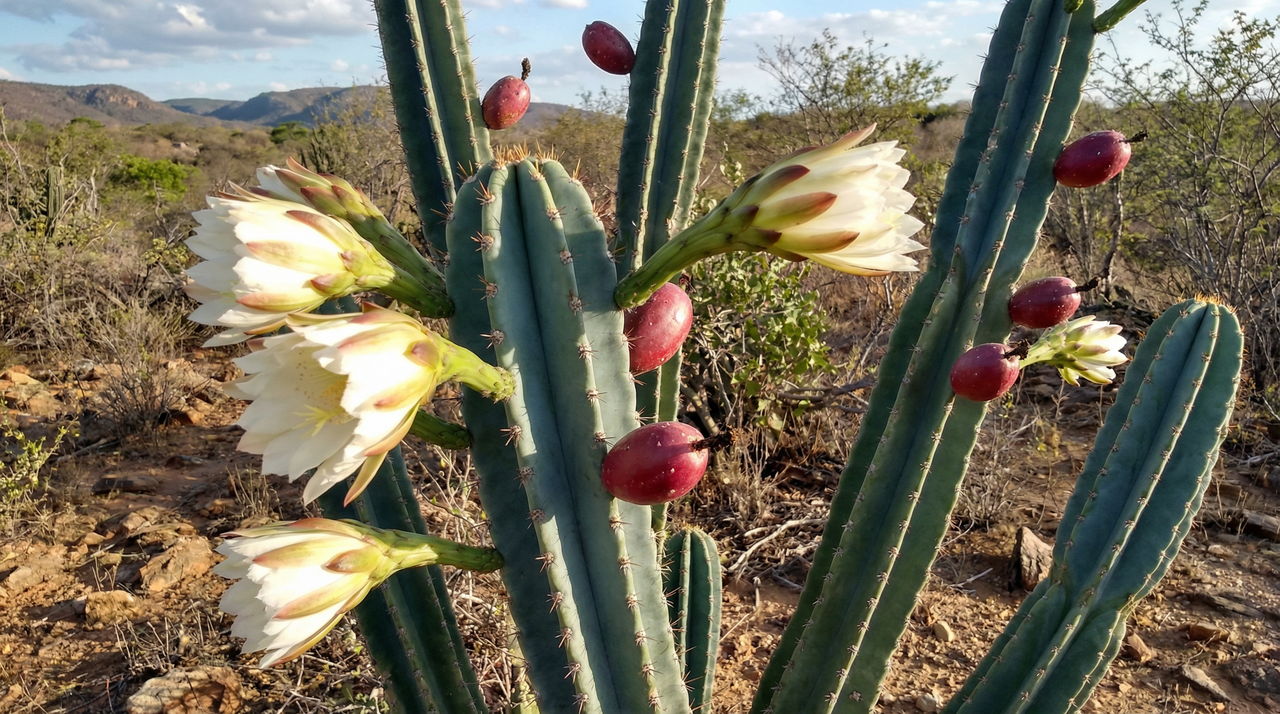
Nobody warned me that the fruit would bleed. I sliced into my first ripe Peruvian Apple Cactus fruit expecting something firm and contained, the way you'd cut a dragon fruit, and instead the deep magenta juice ran straight down my wrist and stained the cutting board like I'd punctured something alive. That color is betalain pigment, the same antioxidant compound found in beets and pitaya,[1] and I mention it first because the fruit is almost always an afterthought with this plant. Most people fixate on the drama above ground: a ribbed, blue-green column that can push past thirty feet, armed with yellowish spines and crowned, once a year, with enormous white flowers that open only after dark.
That nocturnal flowering habit is the detail that stops most new growers cold when they first hear it. You can have a healthy, well-established specimen in your food forest for years and never actually see it bloom, simply because you went to bed too early. The flowers open after sunset and collapse before morning,[2] pollinated in the dark by bats while you're asleep. There's something genuinely humbling about a plant that does its most important work when nobody's watching, and I think that tension between spectacle and subtlety is exactly why Mandacaru rewards patient, observant gardeners more than impatient ones.
Peruvian Apple Cactus Origin, History, and Cultural Significance
The plant most gardeners know as Peruvian Apple Cactus carries a bit of botanical identity complexity worth understanding before you buy one. Formally, it goes by Cereus jamacaru, and that's still the name you'll find at most nurseries, in horticultural catalogs, and at places like Missouri Botanical Garden.[3] Taxonomically, Kew's Plants of the World Online has reclassified it as Pilosocereus gounellei based on morphological and molecular evidence.[4] I tell my clients: use Cereus jamacaru when you're shopping, and know that Pilosocereus gounellei is what the botanists are typing into their databases. Either way, we're talking about the same magnificent, slow-growing giant. Its common name in Brazil is Mandacaru, and it's native primarily to the semi-arid Caatinga biome of northeastern Brazil, spanning Bahia, Pernambuco, Paraíba, Ceará, and neighboring states, with a range that extends into Argentina, Bolivia, Paraguay, and Uruguay.[5][6]
Botanical Background and Visual Characteristics
Mandacaru is a polycarpic perennial, meaning it flowers and fruits repeatedly across a long life rather than dying after one reproductive event. That lifespan can stretch 50 to 300 years under good conditions, with growth averaging around 20 to 50 cm per year in the wild.[5][7] Slow, yes, but that patience pays out in genuine architectural scale: mature plants reach 6 to 12 meters tall, with ribbed stems 10 to 30 cm in diameter, yellowish spines clustered in areoles, and a woody base that looks like it belongs in a different century.[3][8] Leaves are essentially absent; photosynthesis runs entirely through the green stems.
The flowers are the dramatic payoff. Nocturnal, white, and up to 30 cm long, they open for exactly one night, pollinated by bats and moths, before closing for good.[7][9] Anyone who's grown night-blooming cereus on a trellis knows that single-night spectacle. Mandacaru delivers the same drama, but on a 10-meter column, with bats doing the pollinating. After flowering, sweet red or yellow fruits with white pulp develop and ripen from December through March.[5] Seed-grown plants take 3 to 7 years to reach reproductive maturity, though cuttings can flower in as little as 1 to 3 years.[10] Augustin Pyramus de Candolle gave it its scientific name in 1828,[11] but indigenous communities in northeastern Brazil had been working with this plant for millennia before European botanists arrived with their Latin binomials.
Traditional and Cultural Uses
Among the Xukuru people and Sertanejo communities of Brazil's northeast, Mandacaru isn't just useful; it's sacred.[12] It appears in Candomblé and Umbanda practices, in São João festival traditions, and as a symbol of protective resilience woven into daily spiritual life.[13] Traditional uses span the practical and the medicinal: edible fruits eaten fresh or juiced, stem preparations as teas and poultices for wounds, diabetes, inflammation, and respiratory problems, and the sturdy woody stems carved into tools, utensils, and walking sticks.[14][15] I've used similar columnar cacti in windbreak and living fence designs and seen firsthand how quickly they create impenetrable, drought-proof barriers that also feed birds. Sertanejo farmers were doing exactly that with Mandacaru for over two centuries before permaculture had a name.[16]
Euclides da Cunha wrote it into Os Sertões. Cordel poets made it a recurring image of endurance.[17] That's the kind of cultural resonance you don't manufacture; it grows out of genuine interdependence between people and plant across generations. Classified as Least Concern by the IUCN, Mandacaru still faces real pressure from agricultural habitat loss and overharvesting for medicinal and ornamental trade.[18][19] My strong recommendation: buy only from cultivated sources, or better yet, grow your own from seed or cuttings. Wild populations deserve protection, not further pressure from ornamental demand.
Fun Facts and Ecological Role
What makes Mandacaru genuinely remarkable as a survival machine is its CAM photosynthesis: stomata open only at night to fix CO2 into malic acid, slashing water loss during the brutal Caatinga days.[3][20] Pair that with a root system that combines a deep taproot reaching several meters down with extensive shallow laterals that soak up every rare raindrop, and you have a plant adapted for 300 to 800 mm of annual rainfall in rocky, low-fertility soils.[21] The Caatinga gives it almost nothing, and it gives back almost everything: fruit for birds, bats, and mammals; carbon locked into woody biomass; and stabilized, erosion-resistant soil in a biome that badly needs it.[22][5] That ecological generosity mirrors exactly what permaculture designers look for in keystone species. Today, specimens grow at Kew Gardens and Missouri Botanical Garden, where conservation and research keep knowledge of this plant alive even as its native biome faces ongoing pressure.[2][3]
Peruvian Apple Cactus Varieties and Sourcing
Horticultural Forms of Cereus jamacaru
Taxonomically, Cereus jamacaru is a single species with no formally described botanical varieties or subspecies.[23][24] What you'll actually encounter in collections, though, are several distinct horticultural forms: crested monstrose peruvian apple cactus selections with that wonderfully chaotic, brain-like stem growth; compact clones that stay scaled for container culture; and blue-tinged specimens whose powdery glaucous coating is striking enough that collectors trade them like heirlooms. None of these carry standardized cultivar names the way roses or hostas do. They circulate among enthusiasts clonally, sometimes labeled Cereus jamacaru monstrose or spiralis, sometimes just described as "that blue one from so-and-so's collection." I've seen the same situation with Cereus jamacaru cuddly cactus types showing up on Etsy without any consistent naming. It's a collector's market, not a breeder's market, and that's part of what makes sourcing interesting.
How to Source Peruvian Apple Cactus in the US
Cereus jamacaru is native to northeastern Brazil's Caatinga and Cerrado biomes, with range extending into parts of Paraguay and Bolivia, and it sits on CITES Appendix II.[25][26] That means any legally imported plant requires export permits from Brazil, and US buyers need to satisfy Lacey Act requirements for interstate trade.[27] I take that paperwork seriously, and so should you. Habitat loss in the Cerrado is real and ongoing,[28] and buying from suppliers who can document propagated-from-cultivation stock is the responsible move for both your conscience and your collection.
In practice, you won't find mandacaru at Home Depot. It's sold primarily through specialized online cactus nurseries, with Planet Desert and Succulents Box among the better-known options, plus a scattering of Etsy sellers. Prices scale with size: small plants under a foot run $15 to $25, a two-foot specimen typically lands between $40 and $80, and mature plants over six feet can push $150 to $400. Seed packets of 20 to 50 seeds usually go for $12 to $25 if you have the patience for the long grow-out. When I order columnar cacti from small suppliers, I quarantine new arrivals for at least two weeks and check roots immediately. Buyer reviews on shipped Peruvian apple cactus are mixed, and that's putting it charitably: people rave about the ornamental drama once it's established, but comments about variable plant health on arrival and steep shipping costs are common enough to take seriously. Verify your state's live-plant import rules before ordering, and go in with realistic expectations for what a box-shipped cactus might look like on day one.
Propagating and Planting Peruvian Apple Cactus
There are three ways to start a Peruvian Apple Cactus: seeds, stem cuttings, or grafting.[29][30] In practice, cuttings are what I reach for almost every time. They root quickly, they stay true to the parent plant, and in my Central Florida climate they're just more forgiving than babying seedlings through their first summer.
Propagation Methods for Cereus jamacaru
If you do want to start from seed, the fruit gives you plenty to work with. The seeds themselves are tiny, only about 1.2 to 1.5 mm long, jet black, kidney-shaped, with a hard lignified coat that resists desiccation and stores well for 2 to 5 years in cool, dry conditions.[31][32][33] Sow fresh seed in a sterile, well-draining cactus mix at 70 to 85°F with bright indirect light and lightly moist soil; most viable seed germinates in 7 to 14 days, though stragglers can take up to 30.[29][34][35] For older seed, a brief warm-water soak or light scarification helps. Success rates run 50 to 80 percent with fresh viable seed, which is decent for a cactus.
I've started Mandacaru from seed a few times, and the seedlings' first spines appear deceptively delicate, almost hair-like. Don't let that fool you into rushing sun exposure. Transplant after two to three months and keep them under 50 percent shade for at least that long before you start acclimating them to full sun.[35][36] The early root system is doing a lot of heavy lifting before you see much top growth, so resist the urge to fuss.
For cuttings, take 6 to 12 inch segments from healthy, mature, non-flowering stems at least two inches thick, making sure you have at least one areole on the piece.[29][37] Then let the cut end callus, and this is the step most people rush. In Central Florida's humid summers I extend the callus period to a full 14 days and keep the cuttings under a fan, because any hint of moisture at the cut surface before it's sealed is an invitation to rot. Once callused, plant in a fast-draining medium (I use 50 percent coarse sand and 50 percent potting soil), keep temperatures between 75 and 85°F with humidity above 80 percent under a dome, and roots form in 4 to 10 weeks.[29][38] Spring and early summer cuttings succeed at better than 80 percent.
Grafting onto Trichocereus pachanoi, Hylocereus undatus, or Pereskiopsis using cleft or flat technique will push that timeline and success rates run 70 to 90 percent when done in spring with careful vascular alignment and post-graft shading.[39][40] If you're impatient like I was the first year, grafting can cut your wait to fruit in half; I now keep a few Trichocereus stock plants expressly for that purpose.[41][42]
Whatever method you choose, watch for white cottony mealybugs and fungal root rot during the propagation window. A dab of rubbing alcohol handles mealybugs; rot prevention comes down to sterile media, impeccable drainage, and restraint with the watering can.[2][43]
Soil and Site Requirements
This plant comes from the Caatinga, Brazil's semi-arid scrubland where soils are sandy, rocky, and almost devoid of organic matter.[2][44] Replicate that and it thrives. Push it into a rich, moisture-retentive mix and you'll be fighting root rot from day one. I've lost more young plants to overwatering than any other cause; the first sign is a softening at the soil line, and once you see it, it's usually too late.
Soil pH should sit between 6.0 and 7.5, though the plant tolerates 5.5 to 8.0.[45] Outside that range, nutrient uptake stalls and you'll see chlorosis or necrotic patches before you identify the real problem. Test first, then amend with perlite or pumice for drainage, lime to raise pH, or elemental sulfur to lower it. My go-to mix is 50 to 70 percent coarse sand or gravel, 30 percent perlite, and the balance in cactus potting soil, with a gravel base layer in any container.[46][47] For in-ground planting, aim for at least 30 to 60 cm of loose, aerated soil at establishment.
Site in full sun, at least six to eight hours of direct light daily.[2][48] The CAM photosynthesis system this plant runs on is built for intense radiation, but seedlings and newly rooted cuttings still need gradual acclimation. A couple of weeks of morning sun only before full exposure saves a lot of grief. Slopes, raised beds, and terracotta pots with drainage holes all work well. Low-lying ground that holds water after rain does not.
Spacing, Planting Technique, and Timeline to Fruit
Before you plant, picture what you're actually working with at maturity: a columnar cactus reaching 20 to 40 feet tall with a spread of up to six feet and stems four to eight inches across.[2][49] Growth rate is 8 to 20 inches per year under good conditions, so this isn't a plant you'll be rearranging in a few seasons.
For landscape use, space plants 3 to 6 feet apart. In humid climates like mine, I push that to 8 feet to keep airflow moving through the canopy and reduce disease pressure. Row-crop or forage plantings work well at 6.5 to 10 feet between rows and 3 to 6.5 feet within rows.[50][51] Container growers need a minimum 15 to 20 gallon pot for anything long-term. I also label my seedling rows carefully because young Cereus jamacaru can look confusingly similar to other columnar cacti in the first season, and it's an annoying mistake to untangle later.
On timing: seed-grown plants typically take 5 to 10 years to produce their first fruit under optimal conditions, while grafted specimens can fruit in 3 to 5 years.[41][42] That's a real commitment either way. In a permaculture guild, though, the columnar form earns its place long before it fruits, providing vertical structure, light shade for understory planting, and eventually a living fence line. I space mine about 8 feet apart on food-forest edges specifically so I can grow shade-tolerant ginger and turmeric in the dappled light below, without competing with the taproot.
Peruvian Apple Cactus Care Guide
The simplest framework I can offer for Cereus jamacaru care is this: think like the Caatinga. That semi-arid Brazilian biome shaped every one of this plant's traits over millions of years, and the growers who struggle with it are almost always the ones fighting that evolutionary blueprint instead of working with it. Intense sun, lean soil, deep but infrequent water, and a hard rest in winter. Get those four things right and this cactus will outlive you.
Sunlight Requirements for Cereus jamacaru
Mandacaru needs a minimum of 6 to 8 hours of direct sun daily, and it genuinely wants more when it can get it.[52][53] Deprive it and you'll see etiolation: stems stretch, pale, and lose structural integrity as the plant lunges toward the light source.[52] I learned this the hard way with a young column I moved directly from a shaded greenhouse to full Central Florida sun. Within two weeks it had bleached patches and soft browning that took seasons to grow out.[52][54] Now I acclimate every new columnar cactus over 14 to 21 days, moving it incrementally into brighter exposure. If you're bringing a plant out of low light, that transition window is non-negotiable. During extreme heat spikes above 40°C, some afternoon shade helps even established plants avoid stress.[52]
Watering Needs
The architecture of this plant is essentially a water-storage and drought-survival system. Thick stems, waxy cuticles, and CAM photosynthesis that opens stomata at night rather than during the heat of the day allow Cereus jamacaru to survive months-long droughts in the wild without intervention.[55][56] In cultivation, I water deeply once the soil has dried completely through the root zone during active growth, then back off to almost nothing once dormancy sets in. Overwatering during dormancy is, in my experience, the single most common way to lose a healthy plant, especially in humid subtropical gardens where ambient moisture is already working against you.
Seasonal Growth Rhythm and Dormancy
In the native Caatinga, Mandacaru runs on a clear seasonal clock: rapid growth, flowering, and fruiting triggered by rains from November through April, followed by a pronounced dormancy from May through October where metabolic activity slows dramatically to conserve water.[7] For growers in the Northern Hemisphere, related Cereus species show a comparable pattern with active growth when nights stay above 50°F (10°C) and a quieter winter period that demands minimal water to prevent rot.[57] Recognizing this rhythm has changed how I schedule everything else: feeding, repotting, and any propagation work all happen during the active window. Trying to push growth during dormancy just creates problems.
Frost Tolerance and Cold Protection
Cereus jamacaru is rated for USDA zones 9 to 11 and, when mature and dry, can briefly handle temperatures down to 20 to 25°F (-6.7 to -4°C).[58][59][60] Young plants have meaningfully less tolerance, so that qualifier matters. A dry cactus is a hardy cactus; the research and my own observations consistently show that wet tissue is what turns a survivable frost into a fatal one.[45] In my zone 9B garden I rarely see frost, but I still bring potted specimens under cover when forecasts drop below 28°F. If cold damage does occur, look for browning or blackening, softening, and stem splitting; prune the affected tissue cleanly to prevent rot from spreading.[45][61] Frost cloth works well for in-ground plants during short cold snaps in marginal climates.
Heat and Drought Tolerance
This is where the plant genuinely impresses. Native to a biome where average temperatures run 75 to 82°F (24 to 28°C) and extremes can reach 113°F (45°C) or beyond, Cereus jamacaru deploys its full suite of CAM photosynthesis, thick stems, and waxy cuticles to keep functioning where most plants would collapse.[62][2] Optimal growth happens between 68 and 95°F (20 to 35°C); mature plants can tolerate up to 50°C while seedlings start showing stress above 40°C.[55][63] In my hot, humid Florida summers, I've kept mature plants looking healthy through 100°F+ stretches with nothing but deep, infrequent watering at the root zone and good airflow. Seedlings get a bit of afternoon shade until their stems thicken. If you see wilting, bleaching, or shriveling, shade and a deep drink usually turn things around fast.[2][42] Above 45°C, flowering may abort entirely, so if you're chasing that spectacular nocturnal bloom, the Peruvian apple cactus flower is best supported by keeping temps in the comfortable range during bud set.[55]
Soil, Fertilizer, and Feeding Requirements
Cereus jamacaru evolved in nutrient-poor sandy soils, and that origin matters enormously for how you feed it. Excess nitrogen produces soft, rapid growth that looks impressive for a season and then collapses under drought or cold stress.[64][2] I fertilize my Mandacaru far less than most guides suggest, and when I do feed, I reach for a 5-10-10 or similar low-nitrogen cactus formula at half the recommended strength, applied every four to six weeks during spring and summer only.[65][66][67] Nothing during winter dormancy, full stop. If you want to push fruit production, shift toward higher phosphorus and potassium during active growth. The plant prefers well-draining soil with a pH of 6.0 to 7.5; if you're working with alkaline conditions and notice yellowing between the veins on new growth, chelated iron usually resolves that quickly.[68][69] Drainage is foundational; no amount of careful watering will save a plant sitting in compacted, poorly draining soil.
Peruvian Apple Cactus Harvesting: Timing, Technique, and Flavor
Patience is the first skill this plant teaches. Grown from seed, a Peruvian Apple Cactus typically won't flower until it's 3 to 5 years old,[70] and the whole show happens at night. Those massive white flowers open once, last one night, and rely on bats or moths to do the pollinating before they're gone by morning.[70] It's a little dramatic, honestly. What follows is a 30 to 60 day countdown to ripe fruit, with most developing in around 45 days depending on your climate.[70][55]
When to Harvest Peruvian Apple Cactus Fruit
In its native Brazilian range, cereus jamacaru fruit peaks from February through May, timed to the tail end of the wet season that follows dry-season flowering.[55][71] Outside that range, you're reading your own plant, not a calendar. I stopped trying to count days after my first season with a fruiting specimen. Now I just walk the garden and look for that deep red or purple glow and catch a faint sweet scent in the air. Those two signals, combined with a slight softening and the fruit releasing with a gentle upward tug, tell you everything you need to know.[72][73] If it resists, wait a few more days.
There's limited documented variation across cultivars here; ripening differences are mostly driven by your local rainfall and heat rather than genetics.[74] I've found that obsessing over sourcing specific named varieties matters far less than learning your own plant's particular rhythm.
Harvest Technique, Yield, and Flavor Profile
A ripe fruit is oval to spherical, roughly 4 to 10 cm long, with that distinctive reddish-purple to vibrant red skin and sweet white pulp packed with small black seeds.[75][5] Wear gloves. I learned this the unglamorous way -- young fruit has small spines that look harmless and absolutely are not. Grip the fruit at the base rather than the sides and pull upward.
The flavor reward is real. It's sweet with a mild tangy edge, somewhere between watermelon and prickly pear, with hints that some people read as pineapple or strawberry depending on ripeness.[76][77] The first time I harvested one on a hot Florida afternoon, I was genuinely caught off guard by how hydrating it was. The flesh is loaded with water, vitamin C, and antioxidants,[78] and the aroma is subtle -- a soft melon-citrus sweetness rather than anything perfumed.[79] Once your plant is established and flowering reliably, harvests are genuinely low-effort; the plant does most of the work, and you just have to show up at the right moment.
Peruvian Apple Cactus Preparation and Uses
If you've never eaten a cactus fruit before, Mandacaru is a genuinely good introduction. The pulp is sweet and juicy, with a flavor that most people compare to grapes, dragon fruit, or tropical berries, sometimes with a faint tangy edge if you catch one slightly underripe.[5][80] In the Caatinga, it's a seasonal staple precisely because of that water content and sweetness arriving during dry months when little else is producing.
Culinary Uses and Preparation of Peruvian Apple Cactus
Is the Peruvian Apple Cactus fruit edible? Absolutely, and it's genuinely delicious. Fresh eating is the simplest approach, but the fruit also goes beautifully into juices, jams, sweets, liqueurs, and dried preparations.[81] The preparation step that matters most is handling those spines. I always scorch the fruit skin quickly with an open flame before touching it with bare hands, then peel from there wearing thick gloves. A fast flame pass loosens things, but I've learned the hard way that these spines are more tenacious than they look, even after scorching.[82]
Nutritionally, the fruit earns its reputation. You're looking at 25-30mg of vitamin C per 100g alongside potassium, calcium, magnesium, iron, and a solid mix of phenolics, flavonoids, and betalains driving meaningful antioxidant activity.[80][83] The deeper phytochemical story is covered in the health section, but from a kitchen standpoint, this fruit is more than a novelty.
Young pads are edible too, once you've removed spines and boiled or grilled them to cut the bitterness. The texture is mildly mucilaginous, very much like okra from my Florida garden, which actually makes them excellent as a natural thickener in stews. Older pads get fibrous and aren't worth the effort.[84] Flowers are occasionally eaten in traditional contexts, and seeds are generally fine in the fruit itself, though eating large quantities of seeds in isolation seems to cause some people digestive trouble.[85] On safety: I've handled a lot of cacti over the years, and the spine irritation from this species is real. Wear gloves, and don't eat the fruit by the bowlful your first time out, since the alkaloids and oxalates can trigger digestive upset if you overdo it.[86] I pick selectively, only a few mature fruits per plant, both to avoid overtaxing myself and to leave plenty for the wildlife that depends on this plant in arid habitats.[87]
Medicinal Preparations
Brazilian traditional medicine has long used Mandacaru for diabetes, wound healing, inflammation, respiratory complaints, and as a diuretic, particularly among communities like the Kariri-Xocó.[88] When I explore these preparations myself, I cross-check traditional dosages against current research before committing to anything. Standard approaches include decoctions (10-20g dried stem per liter of water, simmered 10-15 minutes, up to two cups daily), infusions of dried flowers or stem (5-10g per cup, steeped 10 minutes, up to three times daily), and tinctures prepared in 40-50% alcohol over 15-30 days, taken at 10-30 drops two to three times daily.[89][90] Start low, measure carefully, and consult a qualified practitioner, especially given the preliminary state of clinical validation for most of these uses.
Non-Food Uses of Peruvian Apple Cactus
Pharmacological research does confirm hypoglycemic, antimicrobial, and anti-inflammatory activity in this plant, lending real weight to what Caatinga communities have known for generations, though human clinical evidence is still thin.[91][92] Beyond medicine and food, the stems have supplied fibers for basket weaving and rope, fuel wood, fence posts, and structural timber in rural buildings for as long as people have lived alongside this plant.[93][94] When I see photos of those tall columnar forms planted in rows, I immediately think windbreak and living fence, two functions that map directly onto dryland permaculture design. Related Cereus species like C. hildmannianus can yield 20-30 tons per hectare of dry biomass suitable for forage or biofuel after spine removal, giving a sense of the genus-wide potential for productive arid landscapes.[95] Erosion control and ornamental use round out the picture. This is a plant that earns its space many times over.
Peruvian Apple Cactus Health Benefits
What strikes me most about Mandacaru's medicinal story is how deep it runs in Brazilian culture. This is a plant that arid-biome communities have relied on for generations, long before any laboratory confirmed what they already knew.
Traditional Medicinal Uses in Brazilian Folk Medicine
Among indigenous and rural communities of Brazil's Caatinga biome, Cereus jamacaru has long served as a multi-purpose remedy. Stem decoctions appear in traditional practice for diabetes, inflammation, wound healing, urinary tract issues, rheumatism, hypertension, respiratory complaints, and as a general tonic.[96][97][90] The laboratory has backed some of this up. In-vitro studies show potent antioxidant activity (DPPH and ABTS scavenging at IC50 values of 10–100 μg/mL), meaningful anti-inflammatory effects via COX-2, TNF-α, and NF-κB pathways, and antimicrobial action against both Staphylococcus aureus and Gram-negative pathogens like E. coli.[98][99][100] Preliminary animal studies further suggest diuretic effects, antidiabetic potential through α-glucosidase inhibition and improved insulin sensitivity, hepatoprotective activity, and some early anticancer signals in cell models.[101][102][103] That said, the honest qualifier here matters: robust human clinical trials are still lacking. I always tell people that traditional use by Caatinga communities is best viewed as a starting point, not a prescription, and I encourage consulting a qualified practitioner before using this plant medicinally.
Key Phytochemicals and Their Roles
The chemistry varies meaningfully by plant part, which is part of why different communities used different preparations. Stems are rich in phenolic acids (gallic, ferulic, caffeic), flavonoids including quercetin and kaempferol, betalains, alkaloids, saponins, and mucilaginous polysaccharides. Fruits concentrate betacyanins, anthocyanins, and vitamin C. Seeds offer an unusually high proportion of linoleic acid (around 60% of fatty acids) plus tocopherols. Roots and flowers add alkaloids and triterpenoids.[104][105][106] Total phenolic content can reach 20–150 mg GAE/100g in fresh fruit or up to 50 mg GAE/g in concentrated extracts, and it's these compounds alongside betalains and flavonoids that underpin the antioxidant, anti-inflammatory, and antimicrobial activities documented in the research.[104][107]
Here's something I find genuinely fascinating from a grower's perspective: the harsh Caatinga environment, with its months of drought, brutal UV, and poor soils, actually drives the plant to produce more of these protective compounds.[108] I see the same dynamic in drought-stressed herbs in my own garden, where the stress that makes the plant fight harder also concentrates the chemistry that makes it valuable. With Mandacaru, survival strategy and nutritional advantage are the same thing.
Nutrition Profile of the Fruit and Cladodes
The ripe fruit is genuinely good eating once the spines are off. Peel carefully with gloves and a sharp knife (I learned this lesson the first time I handled a columnar cactus carelessly), and you get a sweet, juicy pulp that calls to mind dragon fruit, consumed fresh or processed into juices and jams throughout Brazil's Northeast.[109] Per 100g of pulp: roughly 50–60 kcal, 84–85% water, around 14g carbohydrates with sugars mainly as fructose and glucose, 18–30mg vitamin C, 200–300mg potassium, 80mg calcium, and useful amounts of iron and zinc.[110][55] That vitamin C and potassium content compares respectably to prickly pear fruit. The phenolic content of the fruit (50–150mg GAE/100g) also delivers meaningful antioxidant activity, with flavonoids and betacyanins reinforcing the anti-inflammatory picture from the medicinal research.[111][112] Cladodes, while not a human food staple, are high in moisture, fiber, and minerals and have a long history as emergency forage for livestock in drought.[113] One practical note: boiling can reduce water-soluble vitamins by 20–30%, though fiber and minerals hold up well.[114]
Safety Considerations and Contraindications
Cereus jamacaru is frequently confused with San Pedro cactus (Echinopsis pachanoi, which contains mescaline) or Opuntia species; that confusion matters because the primary risks here aren't hallucinogenic or severely toxic. They're mechanical. Spine injuries, puncture wounds, and contact dermatitis are the real hazards.[115][116] The raw sap, alkaloids, oxalic acid, and saponins can cause skin or mucosal irritation and mild GI upset if unprepared material is ingested, but ripe fruit with spines and skin properly removed carries no significant toxicity for most people.[117][118]
The contraindications that I take seriously are pregnancy and lactation. Because of documented potential uterotonic activity in the literature, I don't recommend Mandacaru in any medicinal form during pregnancy or while breastfeeding; the evidence gaps are too wide to take chances.[119][120] There are also potential interactions with antidiabetic and antihypertensive medications given the plant's pharmacological activity in those areas, and high doses in animal studies have shown liver enzyme changes.[12][121] Long-term human safety data, drug interaction profiles, and reliable dosing guidance simply don't exist yet.[122] Talk to a healthcare provider before pursuing any medicinal application, and always handle the plant with thick gloves regardless of your intentions.
Peruvian Apple Cactus Pests and Diseases
In my experience, the plants that give you the least grief are usually the ones that evolved somewhere truly unforgiving. Cereus jamacaru comes out of Brazil's Caatinga, a semi-arid biome that doesn't coddle anything, and that heritage shows up in its defenses. The spines are obvious, but the plant also carries a thick waxy cuticle and a chemistry kit of alkaloids, phenolics, flavonoids, and terpenoids that actively deter insects and pathogens.[123][124] Handle a healthy specimen and you immediately understand why casual herbivores think twice. That resistance is real -- but it's conditional. Overwater this plant, crowd it, or move it somewhere humid, and those defenses erode faster than you'd expect.[125]
Common Pests of Cereus jamacaru
In native Brazilian populations, cactus weevils (Gerstaeckeria and related species) are the primary concern, boring into stems and causing dieback that's hard to reverse once established.[126][127] Weevil pressure tends to spike seasonally during dry periods in field studies, which sounds counterintuitive until you consider that plant stress lowers chemical defenses.[87] In cultivation, especially under glass or in humid subtropical gardens, the more common nuisances shift toward scale insects, mealybugs, spider mites, and aphids.[128][49] Wildlife herbivory from goats and cattle also shapes plants in the Caatinga, though spines keep the damage partial.[55] One practical reality worth knowing: there are no commercial cultivars bred for enhanced pest resistance, so when you're sourcing plants, look for vigorous wild-type cuttings from reputable growers rather than relying on any marketing claims about toughness.[55]
Diseases and Natural Resistance
Get the drainage right and disease is rarely a conversation you'll need to have. Phytophthora root rot and Fusarium infections are the headline threats, and both are almost entirely preventable because they require wet, poorly drained conditions to take hold.[129][130] I lost a couple of young Mandacaru in containers before I understood how unforgiving standing moisture is for this species; now I use an aggressively gritty mix and check drainage holes before anything gets potted. Related Cereus species like Cereus hexagonus flag additional genus-wide risks: anthracnose (sunken stem lesions from Colletotrichum spp.), bacterial soft rot from Erwinia or Pseudomonas, and powdery mildew can all appear when humidity climbs and airflow drops.[131][129] Treatment for established infections is difficult; prevention through site selection and airflow is genuinely the only reliable strategy.
Integrated Pest Management for Mandacaru
My approach with this plant follows the same sequence I use across most of my dryland guilds: culture first, biology second, targeted sprays as a last resort. Well-drained soil, good spacing for airflow, no overhead watering, and prompt removal of infested material handle the majority of problems before they escalate.[132] For biological allies, I encourage lady beetles and parasitic wasps like Anagyrus spp. in outdoor plantings; in greenhouse settings I've had good results releasing predatory mites to stay ahead of spider mite pressure before it becomes visible.[133] When targeted intervention is genuinely needed, neem oil, horticultural oils, and insecticidal soaps are effective against scale and mealybugs without disrupting the broader ecology of the guild.[134] Broad-spectrum organophosphates are counterproductive here; they'll take out the beneficials that keep secondary pests in check. Keep the site dry and well-ventilated, monitor through the dry season when weevil pressure peaks, and this columnar cactus will reward you with far fewer headaches than most tropicals in the same garden.
Peruvian Apple Cactus in Permaculture Design
Mandacaru is the kind of plant that makes you rethink what a food forest can look like in a hot, dry climate. It doesn't fit neatly into the temperate permaculture templates most of us learned from, and that's exactly what I love about it. In the right setting, this columnar giant brings structural drama, biodiversity support, and genuine ecological function to dryland systems where most trees simply can't survive.
Climate and Hardiness Zones
Cereus jamacaru evolved in Brazil's Caatinga biome, where annual rainfall runs between 250 and 800 mm and summers are hot, dry, and unforgiving.[135][136] In cultivation, it's reliably hardy in USDA zones 9a through 11b, which puts it squarely at home in southern Florida, coastal Texas, Arizona, and southern California.[137][138] Mature specimens can handle brief dips to 20-25°F, though young plants are considerably more frost-sensitive.[58] I've protected young columnar cacti through their first two winters in marginal zone 9 areas by wrapping them or keeping them in containers; once they put on a few feet of growth, they handle brief cold snaps with much more confidence.
Its xerophytic nature means it actually thrives where many gardeners struggle: hot, low-humidity summers with well-drained soil are ideal. The deep taproot, which can push down to 3 meters, gives it remarkable access to subsoil moisture, and its stems store enough water to coast through extended dry periods.[55] Rocky outcrops and coastal dunes aren't just tolerated; they're preferred. That salt spray and wind resistance makes it a smart choice for exposed sites where you'd otherwise be fighting the conditions rather than working with them. Outside zones 9-11, it's best managed in a greenhouse or as a large potted specimen that moves indoors for winter.[139]
Ecosystem Functions and Guild Roles
The nocturnal flowers are what first made me take this plant seriously as a permaculture asset. Those blooms are massive, 15 to 25 cm across, white, and intensely fragrant, opening at dusk and lasting only one night while pumping out sugary nectar.[140] The primary pollinators are bats, specifically nectar-feeding Phyllostomidae like Glossophaga soricina, with hawk moths stepping in as secondary visitors.[141][142] Watching bats work these flowers on a warm summer evening is one of those design moments that tells you the guild is actually functioning. Warm nighttime temperatures around 25-30°C seem to make a real difference in pollinator activity, and therefore fruit set.[143]
Here's the catch: Mandacaru is protandrous and self-incompatible, meaning it needs pollen from a genetically distinct plant to set fruit.[144] Habitat fragmentation in the native Caatinga has already reduced bat pollinator populations in some areas,[145] and the same problem can arise in cultivation where bat populations are sparse or where you're growing a single isolated specimen. I've hand-pollinated mine with a small soft brush at dusk, transferring pollen between flowers from two different plants, and it works reliably. It's a bit of a ritual, honestly, standing outside at twilight with a paintbrush, but it's satisfying to know you're actively supporting reproduction where the ecological network has gaps.
Beyond the pollination story, the structural functions are substantial. That deep taproot anchors slopes and controls erosion, and the columnar form creates a genuine windbreak effect.[62] Birds, reptiles, small mammals, and insects all use it for shelter and nesting habitat. As old pads and fallen fruits decompose, they build organic matter in even the most depleted lateritic soils, which is why this plant qualifies as a pioneer species on pH 4.5-6.5 ground that most fruiting plants can't touch.[62] For comparison, the related Apple Cactus (Cereus hildmannianus) brings a wide, shallow fibrous root system that handles erosion from a completely different angle[55] and can anchor a guild as a keystone focal point paired with low-growing drought-tolerant groundcovers.[146] Both species use CAM photosynthesis to open stomata at night and minimize water loss,[147] which means they're photosynthesizing efficiently during the exact conditions that would stress most other plants. Thinking in terms of complementary root architectures when I design arid guilds has made those systems noticeably more resilient.
Forest Layer and Design Guilds
In a dryland food forest, Mandacaru occupies the emergent or upper canopy position, the layer most temperate-climate designers leave empty in arid systems because nothing fits there.[148] Its towering columnar habit creates vertical structure that shifts microclimates at ground level: more shade for tender understory plants, reduced wind speed, and a slight increase in humidity immediately around the base. I've watched species that would normally struggle in full Central Florida exposure establish themselves much more comfortably in the lee of a large columnar cactus.
Pair it with drought-tolerant, low-growing groundcovers, nitrogen-fixing shrubs suited to poor soils, and perhaps an agave or two at mid-layer. The combination gives you multi-strata structure, soil-building succession, and a wildlife habitat stack that functions even in prolonged dry spells. The fruit yield, once the plant matures and cross-pollination is sorted, is the reward that justifies its place in the edible guild; but the structural and ecological payoff starts much sooner than the first harvest does.
The Cactus That Taught Me to Stop Fussing
I've killed more plants through kindness than neglect, and Mandacaru was the one that finally made me sit with that truth. It doesn't want my attention. It wants a good spot, sharp drainage, and the occasional long look on a summer evening when those enormous white flowers open for a single night and the whole garden smells different. That's the deal it offers, and honestly, it's the better end of the bargain.
Sources 148
- Betalains: A Remarkable Class of Red-Violet Pigments in Plants ↩
- Cereus jamacaru, Plants of the World Online, Kew ↩
- Cereus jamacaru - Missouri Botanical Garden ↩
- Pilosocereus gounellei ↩
- Cereus jamacaru - Wikipedia ↩
- Cereus jamacaru ↩
- Phenology and reproductive biology of Mandacaru (Cereus jamacaru DC.) in the semi-arid Caatinga of northeastern Brazil ↩
- Cereus jamacaru - Plants of the World Online (Kew Science) ↩
- Mandacaru Cactus (Cereus jamacaru) - World of Succulents ↩
- Mandacaru Cactus Care Guide - Succulent City ↩
- Prodromus Systematis Naturalis Regni Vegetabilis ↩
- Ethnobotany of the Xukuru do Ororubá: Plants and Cultural Practices ↩
- Mandacaru (Cereus jamacaru): A Symbol of Sertanejo Identity and Medicine ↩
- Ethnobotanical Survey of Medicinal Plants in the Caatinga Biome, Brazil ↩
- Ethnobotany of the Caatinga: Traditional Uses of Mandacaru ↩
- Traditional Fencing Practices with Cacti in Arid Brazil ↩
- The Mandacaru Cactus: Symbol of the Sertão ↩
- Cereus jamacaru ↩
- Cereus jamacaru DC.: Conservation Status and Threats ↩
- Ecology of Caatinga Cacti ↩
- Flora do Brasil 2020 ↩
- Ecosystem Services of Mandacaru Cactus in Brazilian Drylands ↩
- World Checklist of Selected Plant Families: Cereus jamacaru ↩
- Cereus Species in Cultivation ↩
- CITES Appendix II - Cereeae Cactus ↩
- Lacey Act - Regulations ↩
- Cacaceae em CITES ↩
- Cereus jamacaru Profile ↩
- Propagation of Cereus Species ↩
- Mandacaru (Cereus jamacaru) Care and Propagation Guide ↩
- Seed Morphology of Brazilian Cacti ↩
- Micromorphology of Cactaceae Seeds ↩
- Seed Storage of Succulents ↩
- Cereus jamacaru Propagation Guide ↩
- Seed Germination and Seedling Morphology of Cereus jamacaru ↩
- Propagation of Cacti from Seed ↩
- Propagation of Cacti and Succulents ↩
- How to Propagate Cacti and Succulents ↩
- Grafting Cacti: Techniques and Rootstocks ↩
- Propagation of Cereus Species ↩
- Cereus jamacaru Cultivation Guide ↩
- Mandacaru Cactus: Propagation and Fruit Production ↩
- Propagation of Cacti from Seed and Cuttings ↩
- Soil Requirements for Brazilian Cacti ↩
- Soil pH and Nutrient Availability for Cacti ↩
- Growing Cereus Cacti: Soil and Cultivation Tips ↩
- Mandacaru Cactus Cultivation Guide ↩
- Cacti of Brazil: Light Adaptation in Columnar Species ↩
- Cereus jamacaru - Plant Profile ↩
- Cultivo do Mandacaru (Cereus jamacaru) ↩
- Cactus Care: Pruning, Repotting & Maintenance ↩
- Cereus jamacaru Care Guide ↩
- Light Requirements for Cacti ↩
- Sunburn in Cacti: Prevention and Treatment ↩
- Adaptations of Cereus jamacaru to the Caatinga Environment ↩
- Drought Tolerance in Caatinga Succulents ↩
- Queen of the Night Cactus Care ↩
- Cereus jamacaru ↩
- Cereus jamacaru ↩
- Frost Tolerance in Cacti and Succulents ↩
- Frost Damage to Succulents: Symptoms and Recovery ↩
- Temperature Tolerance of Caatinga Cacti ↩
- Growth Stage-Dependent Heat Stress in Brazilian Cacti ↩
- Missouri Botanical Garden Plant Finder - Cereus jamacaru ↩
- Cereus jamacaru Cultivation Guide ↩
- University of Arizona Extension - Growing Cacti ↩
- Cactus and Succulent Journal - Fertilization Guidelines ↩
- Soil Requirements for Mandacaru ↩
- Nutrient Deficiencies in Cacti ↩
- Phenology and reproductive biology of Cereus jamacaru DC. in the Caatinga ↩
- Mandacaru: Ecology and Harvest in Northeast Brazil ↩
- Cereus jamacaru DC. (Cactaceae) - Species Details ↩
- Mandacaru (Cereus jamacaru): Cultivation and Uses ↩
- Plants of the World Online ↩
- Cereus jamacaru: Morphology and Fruit Characteristics ↩
- Mandacaru Fruit Description - Useful Tropical Plants ↩
- Edible Cacti of the Americas - Research Article ↩
- Cereus jamacaru: A review of its nutritional and pharmacological properties ↩
- Volatile Compounds in Cactaceae Fruits ↩
- Nutritional Composition and Antioxidant Activity of Mandacaru (Cereus jamacaru) Fruit ↩
- Ethnobotany of Cacti in Brazil: Cereus jamacaru ↩
- Culinary Uses of Brazilian Cacti Fruits ↩
- Bioactive Compounds in Cactus Fruits: A Review ↩
- Edible Cacti and Succulents ↩
- Ethnobotany of the Caatinga Biome ↩
- Edible Cacti of the Americas: Safety and Nutritional Value ↩
- Sustainable harvesting of mandacaru fruit in Northeast Brazil ↩
- Medicinal Uses of Mandacaru (Cereus jamacaru) in Brazilian Traditional Medicine ↩
- Phytotherapy with Cacti: Traditional Preparations and Dosages ↩
- Brazilian Traditional Medicine: Use of Mandacaru Cactus ↩
- Cereus jamacaru: Chemical Characterization and Assessment of Antibacterial and Antiproliferative Activities ↩
- Mandacaru (Cereus jamacaru DC.): A Review of Its Phytochemistry and Pharmacology ↩
- Traditional Crafts Using Cactus Fibers in South America ↩
- Mandacaru (Cereus jamacaru): Uses in Brazilian Agroforestry ↩
- Agroforestry Potential of Cacti Species ↩
- Traditional uses and pharmacological activities of Cereus jamacaru ↩
- Medicinal Plants of the Caatinga: Traditional Knowledge and Pharmacological Potential ↩
- Antioxidant activity of Cereus jamacaru ↩
- Study on anti-inflammatory effects of C. jamacaru ↩
- Antimicrobial activity in vitro against bacteria ↩
- Antidiabetic potential of Mandacaru cactus in Brazilian medicine ↩
- Hepatoprotective Activity of Cactus Fruits ↩
- Anticancer Properties of Brazilian Cacti ↩
- Phytochemical Composition and Biological Activities of Cereus jamacaru ↩
- Bioactive Compounds in Brazilian Cacti: Focus on Cereus jamacaru ↩
- Fatty Acid Profile of Cereus jamacaru Seeds ↩
- Antioxidant Activity of Cereus jamacaru Extracts ↩
- Secondary Metabolites of Cactaceae and Their Ecological Roles ↩
- Mandacaru (Cereus jamacaru): A Traditional Cactus Fruit in Brazilian Cuisine ↩
- Nutritional Characterization of Mandacaru Fruit (Cereus jamacaru) ↩
- Phytochemical Composition and Antioxidant Activity of Cereus jamacaru Fruit ↩
- Antioxidant and Anti-inflammatory Properties of Mandacaru Extracts ↩
- Proximate analysis and mineral composition of Mandacaru cladodes ↩
- Safety and Toxicity of Edible Cacti ↩
- Cereus jamacaru Details ↩
- Cactus Dermatitis ↩
- Irritant Effects of Cactus Sap ↩
- Toxicity of Cacti in Traditional Medicine ↩
- Toxicity and Safety of Cactus Species in Traditional Medicine ↩
- Medicinal Plants of Brazil: Safety and Efficacy ↩
- Toxicity of Cacti Species in Traditional Medicine ↩
- Ethnomedical uses, biocompounds and biological properties of Cereus Jamacaru DC. (Cactaceae): a comprehensive review ↩
- Chemical Ecology of Cacti: Defenses Against Herbivores ↩
- Phytochemical Profile of Cereus jamacaru ↩
- Cereus jamacaru: Morphology and Ecology in Caatinga ↩
- Insect Pests of Cacti in Brazil ↩
- Insect Pests of Cactaceae in South America ↩
- Pests and Diseases of Cacti and Succulents ↩
- Cactus Diseases and Pests - University of Arizona Extension ↩
- Pests and Diseases of Columnar Cacti ↩
- Anthracnose of Cacti ↩
- Succulent and Cactus Pest Management ↩
- Pest Management in Cacti Species ↩
- Integrated Pest Management for Succulents in Arid Regions ↩
- Köppen-Geiger Climate Classification Map ↩
- Flora do Brasil 2020 ↩
- Cereus jamacaru - USDA GRIN Taxonomy ↩
- USDA Plant Hardiness Zone Map ↩
- Cereus jamacaru (Mandacaru) ↩
- Pollination Ecology of Caatinga Cacti ↩
- Pollination Biology of the Cactaceae ↩
- Bat Pollination in Neotropical Cacti ↩
- Pollination Ecology of Brazilian Cacti ↩
- Reproductive Biology and Floral Imperfections in Cereus Species ↩
- Bat Pollination in Neotropical Cacti: Limiting Factors and Conservation ↩
- Permaculture Plants: Cacti and Succulents ↩
- Cereus hildmannianus - Royal Horticultural Society ↩
- Cereus jamacaru Overview ↩