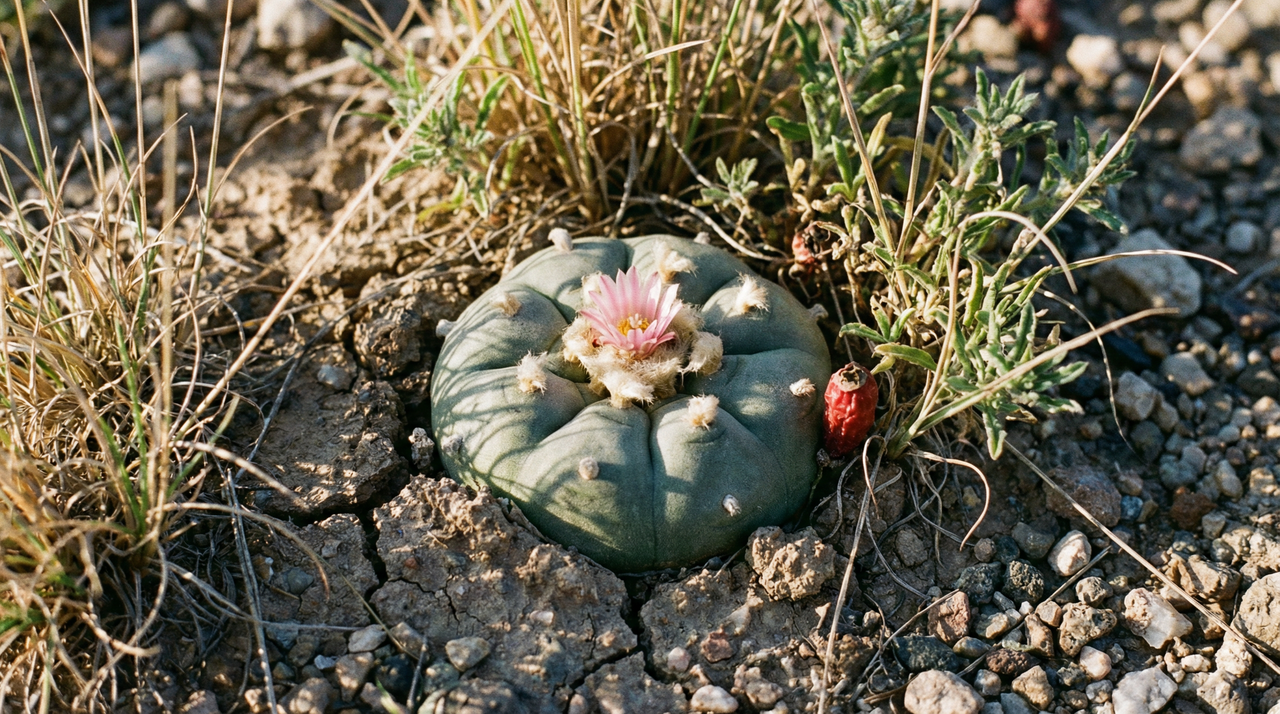
There's a cactus growing somewhere in the Chihuahuan Desert right now that was already old when Columbus landed. Not a towering saguaro, not some dramatic organ pipe silhouette against a sunset sky. A gray-green button, maybe the size of a golf ball, sitting almost flush with the limestone gravel, growing perhaps two millimeters wider this year than last. Peyote lives so slowly that "patience" doesn't quite cover it; decades pass before a plant reaches harvesting size, and specimens in undisturbed habitat may persist for a century or more.[1] That longevity is part of why dried peyote buttons recovered from a Texas cave were dated to roughly 5,700 years old and still contained detectable mescaline,[2] a chemical calling card preserved across millennia of human ceremony.
What strikes me every time I work with slow-growing succulents is how much the plant's pace reframes your relationship to it. You're not tending a crop; you're tending a relationship. With peyote, that relationship is ancient, legally protected, biologically fragile, and surrounded by more misunderstanding than almost any other plant I've encountered. The conversation about it tends to sprint straight to alkaloids and altered states, skipping right past the quiet, sun-baked desert ecology and the unbroken thread of Indigenous stewardship that actually explains why this tiny cactus matters as much as it does.
Peyote Origin, History, and Cultural Significance
Few plants carry as much weight, ecologically and culturally, as Lophophora williamsii. This small, spineless cactus has been woven into human ceremony for longer than most civilizations have existed, yet it remains one of the most biologically fragile members of its family. Understanding peyote means holding both of those truths at once.
Botanical Background and Taxonomy of Lophophora williamsii
Peyote is native to the Chihuahuan Desert, ranging across northern Mexico (Coahuila, Nuevo León, Tamaulipas, San Luis Potosí, Zacatecas, and Chihuahua) into southern Texas, with occasional occurrences reaching southern New Mexico.[3][4][5] It grows primarily on limestone-rich soils between 500 and 1,500 meters elevation, though populations have been documented anywhere from 100 to 1,900 meters.[3] What the range map doesn't communicate is just how slowly this plant moves through time. Even under optimal conditions, a peyote button adds only 0.5 to 2 centimeters in diameter per year, and wild plants typically require 10 to 30 years to reach reproductive maturity.[6][7] I've worked with some genuinely slow succulents over the years, but every time I read that figure I pause. A centimeter per year. In return, the plant can live 30 to 100 years, with exceptional individuals surviving beyond 200 years in undisturbed sites.[8]
Taxonomically, Lophophora is a small genus, and the species boundaries within it remain genuinely contested. Lophophora jourdaniana, native to limestone habitats in Querétaro and San Luis Potosí at 900 to 1,500 meters, is alternately treated as a distinct species or a synonym of L. williamsii depending on which authority you consult.[9][10] Legally, the picture is clearer: L. williamsii is listed under CITES Appendix II (since 1975) and classified as a Schedule I controlled substance under U.S. federal law, with religious exemptions granted specifically to members of the Native American Church under the 1994 American Indian Religious Freedom Act Amendments.[11][12] Despite a global classification of Least Concern by the IUCN, documented removal rates of 30 to 40 percent in some subpopulations tell a different story on the ground.[6] That slow growth makes every harvested button essentially irreplaceable on any human timescale.
Visual Characteristics and Desert Adaptations
In person, peyote is easy to overlook and impossible to mistake. Mature plants are depressed-globose to slightly flattened stems, typically 2 to 6 centimeters tall and 4 to 12 centimeters across, though exceptional specimens can reach 15 centimeters in diameter; older plants often form low cushioned clusters up to 30 to 50 centimeters wide.[13][14] The gray-green to bluish-green epidermis carries 5 to 13 low vertical ribs lined with conical to rounded tubercles arranged in spirals, and the areoles at each tubercle tip produce tufts of white wool rather than spines.[15][16] I design with spineless cacti regularly, and that woolly, button-like form is unmistakable once you've seen it, even among close relatives.
Flowers emerge solitary from the woolly apex in late spring to early summer, white to pale pink and funnel-shaped, 1 to 2.5 centimeters wide; the fruits are small, fleshy, club-shaped berries, 1 to 2 centimeters long, ripening from white-pink to brown and carrying numerous tiny black seeds.[16][17] Below ground, a thick carrot-shaped taproot extends 10 to 30 centimeters into rocky limestone soil, handling both water storage and anchorage.[18][19] Northern Texas populations tend to run smaller and greener with fewer ribs, while southern Mexican plants lean larger, more glaucous, and more heavily ribbed, the kind of geographic variation I find useful for identifying provenance the same way I might distinguish regional ecotypes of other landscape species.[18] Lophophora jourdaniana, by contrast, tends to be smaller at 3 to 7 centimeters across, with more pronounced rounded tubercles and a thicker cuticle that can redden under stress.[20][21] Every one of those morphological features, the waxy cuticle, the button shape, the mucilaginous tissue, serves the same purpose: staying alive in a desert where water is scarce and competition for it is fierce.
Traditional and Cultural Uses of Peyote
The human relationship with this plant is old in a way that reframes everything else. Dried peyote buttons recovered from Shumla Caves in Val Verde County, Texas, have been dated to approximately 3,770 BCE, putting ceremonial use at least 5,700 years into the past; pictographs from the Lower Pecos region dating to 4000 to 2000 BCE may depict its ritual context as well.[22][23] Those are the same caves, the same desert, the same limestone soils where wild peyote still grows today.
Among the Huichol (Wixárika) people, peyote, known as hikuri, remains central to annual pilgrimages to Wirikuta, the sacred desert landscape where it's harvested for healing, vision quests, and connection to the deer spirit; the rituals are preserved in oral tradition and reflected throughout Huichol yarn paintings.[24][25] In the late nineteenth century, figures including Quanah Parker formalized peyote's place within the Native American Church, a syncretic Christian-indigenous framework in which all-night meetings involving prayer, singing, drumming, and the consumption of dried buttons or tea are used for healing and spiritual insight across many tribes, including the Comanche, Kiowa, and Lakota.[26][27] Traditional medicinal applications documented across indigenous groups include treatment of rheumatism, fever, snakebite, diabetes, pain, and psychological distress, with buttons chewed fresh, dried, or brewed as tea, typically 4 to 12 buttons per ceremony.[28][29] Use is ceremonial and spiritual, not culinary.
Working within legal and cultural protocols is non-negotiable here, and I want to be plain about that. Overharvesting for both traditional and non-indigenous recreational use has created real supply shortages that threaten continued access for the indigenous practitioners whose communities have maintained these traditions for millennia.[30] The population data makes clear that every button removed from the wild matters.
Fun Facts and Ecological Insights
The chemistry that makes peyote culturally significant also makes it ecologically durable, at least against most wild predators. Mescaline and related alkaloids including lophophorine, pellotine, and anhalonidine are concentrated in the green crown and function as chemical defenses that deter most vertebrate herbivores; concentrations shift significantly with plant age, geography, season, and drought stress.[31] The morphological adaptations work in concert with that chemistry: the depressed button shape, waxy cuticle, light-scattering conical tubercles, and mucilaginous interior all reduce water loss in the arid Chihuahuan Desert, while seeds rely on harvester ants attracted to elaiosomes for dispersal, promoting slow, localized spread across limestone soils.[32][33]
Lophophora jourdaniana shares a similar alkaloid profile and the same slow-growth strategy, but its restricted range makes it considerably more vulnerable, and it's worth noting the CITES listing for L. williamsii is Appendix II rather than Appendix I, a distinction that matters for conservation management even if the practical legal situation for most people remains the same.[34] Both taxa illustrate the same genus-wide fragility: decades of growth required before a plant can even reproduce, which means poaching or habitat loss erases not just a plant but a generation of potential offspring. A species that survived 5,700 years of human ceremony is now genuinely under pressure from the pace of modern demand.
Peyote Varieties and Sourcing
Recognized Subspecies and Horticultural Forms of Lophophora williamsii
The first thing I notice when studying any Lophophora williamsii cactus up close is how immediately recognizable it is once you've spent time with spineless cacti. No areoles bristling with spines, no dramatic geometry. Just that soft, blue-green to gray-green button shape, typically 1 to 3 inches across, sitting quietly at soil level like it has nowhere better to be.[13][35] I've handled slow-growing spineless cacti in the Ariocarpus genus with similar quiet presence, and peyote reads the same way: ancient, unhurried, unmistakable.
Taxonomically, there are two accepted subspecies. The typical subsp. williamsii grows as a solitary plant in central Mexico, while subsp. caespitosa forms clusters of up to ten stems.[36][37] That clumping habit in caespitosa is actually a useful identification clue in photos, where a rosette of buttons clustered around a central stem tells you something about what you're looking at. Beyond these two, the species produces informal horticultural forms including flattened spreading growth, more upright columnar stems, and occasional color variation in the tufts.[36][37] Collectors who specialize in the genus have selected and named specific forms like 'Kiko', 'Gil', 'Peyo White', and 'True Blue' for distinctive color or growth traits.[38] These exist mostly within permitted or protected collections, not the open nursery trade.
Two names you'll encounter in older literature and hobbyist forums deserve a quick clarification. The purported variety 'cohenii' has no formal standing; it's a morphological variant, not a recognized taxon.[39][14] Lophophora jourdaniana tells a similar story: it's treated as a clone, form, or cultivar name for specific variants of L. williamsii rather than a separate species.[40][41][42] Whenever I'm helping someone identify a mystery cactus, I go straight to POWO or Kew rather than collector forums, and these names consistently resolve back to williamsii.
Legal and Conservation Considerations for Obtaining Peyote
Here's where I have to be completely direct: for the vast majority of readers, obtaining peyote is simply not a legal option. Lophophora williamsii is listed under CITES Appendix I, prohibiting international commercial trade, and is classified as a Schedule I controlled substance under the U.S. Controlled Substances Act.[43][44][45] I always tell people clearly: if you are not a member of a federally recognized tribe participating in a legitimate Native American Church ceremony, cultivation or possession is federally illegal.[46][47] Texas is the only state with licensed distributors, and those sales are restricted to religious harvest, not general commerce.[48][49] USDA import permits are rarely granted, interstate shipping is restricted, and even germinating a seed may be illegal depending on where you live.[50][51]
Prices in the ranges of $5 to $20 for seeds and $20 to $100 or more for mature plants occasionally surface in specialized discussions,[13][52] but those numbers mostly illustrate why black-market pressure exists on a plant that takes well over a decade to reach button size even under ideal conditions. Wild populations face real threats from overharvesting and habitat loss despite the IUCN's current Least Concern classification, and sustainable seed propagation in permitted contexts is the only ethical path for relieving that pressure.[53][54][55]
For readers drawn to the genus for xeriscape or ethical succulent collections, Lophophora diffusa is freely cultivated and sold as an ornamental because it lacks the psychoactive alkaloids that trigger these restrictions. I regularly recommend it to clients who want the same quiet, spineless button form in a completely legal context. It's a good reminder that botanical curiosity and legal responsibility aren't in conflict here; they just point toward a different species.
How to Propagate and Plant Peyote (Lophophora williamsii)
Peyote is one of those plants where the horticulture conversation has to start with a legal one. Before anything else about seeds or soil mix, understand that this is a reality that shapes every propagation decision you'll make.
Legal and Ethical Considerations Before You Grow
Lophophora williamsii is listed on CITES Appendix I and classified as a Schedule I controlled substance in the United States, meaning cultivation, propagation, and even possession require specific permits outside of recognized religious or scientific exemptions.[56][57][12] I want to be direct here: before you order seeds or accept a cutting from anyone, confirm you have the necessary documentation and are working with a licensed source. I only engage with legally compliant nurseries and I never propagate without that paper trail in place. No horticultural enthusiasm justifies cutting corners on this one.
Understanding Peyote Seeds: Morphology and Desert Adaptations
For those working within the appropriate legal framework, seed is the primary propagation method used by ethical specialist nurseries, and the biology of the seeds themselves explains why. They're tiny things, 1-2 mm long, kidney-shaped to teardrop, with a hard, smooth, glossy coat just 0.1-0.2 mm thick.[58] That impermeable coat evolved for the sporadic monsoon rains of the Chihuahuan Desert; germination is triggered by those intense wet pulses rather than by consistent moisture, which is exactly the opposite of what most gardeners instinctively provide.[59] Each seed carries a small white aril at the hilum that assists ant dispersal, a trait shared with quite a few other desert species I grow.[60] What strikes me every time I handle these is that the same traits ensuring survival in one of North America's harshest landscapes also make commercial-scale propagation genuinely difficult. A single fruit holds 100-500 seeds,[61] so the raw numbers look promising, but in the wild fewer than 1% of seedlings survive to maturity.[6] That survival gap is precisely why responsibly grown nursery stock matters so much for conservation.
Stored correctly, these seeds stay viable for 2-8 years, cool (around 5°C), dry, dark, and sealed.[62][63] Fresh seed hits 70-95% germination under ideal conditions; older seed drops to the 40-60% range, and fungal contamination becomes a growing threat without sterile technique.[64]
Seed Propagation Methods and Germination Timeline
Germinating lophophora from seed requires bright indirect light, temperatures in the 70-85°F (21-29°C) range, and humidity around 70-80%, all over a well-draining cactus mix.[65][66] Germination typically occurs within 1-4 weeks under those conditions. The hard seed coat can be coaxed along with light scarification, a quick hydrogen peroxide soak, or simply patience for natural weathering to do the work.[59] In my early attempts with slow-growing desert cacti I lost more seedlings to damping-off than I care to admit. Now I sterilize every tool, every tray, and every batch of mix before a seed touches it. Sterile technique isn't optional here; it's the difference between a seedling and a patch of grey fuzz.
Vegetative and Advanced Techniques: Grafting, Offsets, and Tissue Culture
Growing lophophora williamsii from seed to a mature button can take well over a decade at the plant's natural rate of 1-3 mm diameter growth per year.[67] I'll be honest: I graft many of my specimens precisely because waiting 10-15 years for a proper button tests even the most committed grower. Grafting onto vigorous rootstocks like Trichocereus pachanoi, Myrtillocactus geometrizans, or Pereskiopsis compresses that timeline to roughly 2-5 years, with success rates of 70-95% when done under sterile conditions at 25-30°C using cleft or veneer methods.[68][69] Alkaloid content isn't significantly altered by grafting, which matters for any research or ceremonial context.[70]
Where plants produce pups (basal offsets), these can be separated with a sterile knife, allowed to callus for one to two weeks, and replanted in dry mix; IBA rooting hormone may help, though offset propagation generally yields lower success rates than seed or grafting.[71] Dividing established clumps is a bad idea; the shallow, fibrous root system is too easily damaged.[13] Tissue culture on Murashige and Skoog medium with cytokinins and auxins achieves 50-90% success but belongs firmly in a laboratory, where vitrification risks are managed with activated charcoal or silver nitrate.[72] Stem cuttings fail more than half the time and layering simply doesn't apply to a compact, non-branching globe.[71] Overwatering kills more propagation attempts than any pest or pathogen; water sparingly (roughly a half-inch to one inch every two to three weeks during active growth) only after the medium has gone completely dry.[71]
Soil, Site Selection, and Planting Technique
Everything about the ideal growing medium for peyote starts with one image: thin, rocky limestone soil in the Chihuahuan Desert, low in organic matter (under 15%), high in calcium and magnesium, with a pH running from 7.0 to 8.5.[35][73] Replicate that, or accept the consequences. The cultivation mix should run 50-80% inorganic material (coarse sand, perlite, pumice, gravel, crushed limestone) blended with 20-50% low-organic cactus mix or loam, maintaining that alkaline pH range.[74][75] Containers need drainage holes. Mulch has no place here. Depth should be at least 15-20 cm to accommodate the taproot.[76]
When the pH drifts, the plant tells you. Below 6.0, aluminum and manganese become available at toxic levels, showing as spotting and necrosis. Above 8.0, or with poor drainage compounding the alkalinity, iron chlorosis sets in as interveinal yellowing and stunted growth.[75] I keep a simple soil test kit within arm's reach for all my alkaline-loving succulents and watch for that tell-tale yellowing between the veins as my first sign that something has shifted. Lime raises pH; elemental sulfur brings it down; and organic matter, as it breaks down, will slowly acidify the mix over time, so test regularly.[77] In practice, I've found that adding extra limestone grit and skipping any mulch layer is the single biggest factor in keeping young plants alive through their first two years.
Spacing, Potting, and Long-Term Establishment
Mature plants reach 5-15 cm tall and 5-8 cm across, forming clumps via basal offsets over time.[78] In the wild they occur 3-6 feet apart; in cultivation, 12-18 inches (30-45 cm) between plants gives the fibrous roots, which extend three to four times the plant's diameter, room to spread without competition, while also keeping airflow adequate to discourage fungal issues.[79][80] For containers, start juveniles in 4-6 inch pots and move to 8-10 inch pots as they develop; row spacing of 24-30 inches further reduces fungal risk in collection settings.[67]
Because these plants grow so slowly, I've learned to over-space rather than crowd them. It's far easier to add a second plant years later than to dig up and move an established button without shocking its root system. That 15-20 cm soil depth mentioned in the mix recommendations isn't incidental; it's directly tied to giving those roots the vertical run they need. And because spacing decisions here carry conservation weight, they should also consider long-term colony development and restoration ethics, not just aesthetics or density.[81][56] Every planting decision with this species is, in some small way, a conservation decision too.
Peyote Care Guide: Growing Lophophora williamsii
Caring for peyote is really an exercise in restraint. Every instinct that makes you a good gardener with most plants, the impulse to water generously, to feed regularly, to fuss, works against you here. What this plant wants is the lean, sun-drenched, limestone-grit world of the Chihuahuan Desert, and the closer you can approximate those conditions, the fewer problems you'll encounter. I've grown a lot of slow desert plants over the years, and peyote is the one that most rewards a hands-off approach.
Before anything else: in the United States, Lophophora williamsii is a Schedule I controlled substance and listed under CITES Appendix I.[57][82] Cultivation without specific federal permits is illegal, and those permits are issued almost exclusively for religious use by the Native American Church.[83] Wild collection is prohibited in Texas, the plant's primary U.S. range.[84] I've researched the DEA and state regulations carefully, and I want readers to understand this upfront, not as a footnote. Everything below describes how this plant grows; whether you can legally grow it yourself is a separate question you must answer first.
Light Requirements for Peyote
Peyote needs at least 6 to 8 hours of direct sun daily, and full sun is where it produces the tight, compact buttons I associate with healthy specimens.[85][86] Without adequate light, plants etiolate, stretching into pale, elongated forms that are structurally weak and prone to problems down the line.[87] If you're growing indoors, a south-facing window is the minimum; otherwise, full-spectrum LED grow lights at 2,000 to 5,000 lux will do the work.[87] One practical note: when moving any specimen from lower light into direct sun, acclimate it gradually over several weeks or you'll see scorching on the epidermis before the plant can adjust.[88] In areas regularly exceeding 95°F, some afternoon shade prevents surface damage without sacrificing the light levels the plant needs for compact growth.[86]
Watering Needs and Drought Tolerance
Peyote survives on less than 300 mm of annual rainfall in the wild, managing that feat through CAM photosynthesis, reduced stomatal density, and water-storing tissues that buffer it through long dry periods.[14][89] In cultivation, that translates to deep watering every two to four weeks during the growing season, and only when the soil has gone completely dry.[90] In winter, stop watering entirely for three to four months.[90]
Overwatering is what kills more cultivated peyote than anything else, and the symptoms are unmistakable once you've seen them: soft, mushy tissue at the base, blackening, a foul smell, sometimes visible mycelium.[91] Underwatering shows up as wrinkling and a lighter color, which is recoverable. Between the two, I'll always err on the dry side. Use soft, low-mineral water with a pH between 6.5 and 7.5 when you can; chlorine-heavy tap water and high-salt sources stress these plants over time.[92] Seedlings are the exception to the "less is more" rule: they need moisture every 7 to 10 days after sprouting, but kept just barely moist rather than wet to avoid damping-off.[92]
Soil, Feeding, and Nutrient Management
A good lophophora soil mix recipe leans heavily inorganic: aim for 50 to 70% coarse sand, gravel, or perlite blended with 30 to 50% organic matter, replicating the nutrient-poor, calcareous soils of its native range.[93][94] Soil pH should sit between 7.0 and 8.5; that alkalinity mimics the limestone substrates peyote evolved on.[93]
Feeding needs are minimal. A low-nitrogen cactus fertilizer (NPK around 5-10-10) at half-strength, applied every four to six weeks during spring and fall only, is plenty.[95][96] Withhold fertilizer entirely in winter. Over-fertilizing causes weak, rot-prone tissue, tip burn, and salt stress, and you want to keep EC below 1.0 mS/cm.[97] Something I've noticed with slow desert cacti generally: pale coloration and minimal growth are often just how these plants look, not deficiency signals. In an alkaline mix, what appears to be iron chlorosis on new growth is frequently a drainage or overwatering problem in disguise.[98][99] Fix the drainage before reaching for a fertilizer.
Temperature, Heat, and Frost Tolerance
Native to Chihuahuan Desert shrublands between 100 and 1,900 meters elevation, peyote has a wider thermal tolerance than most people expect.[100] The optimal range for active growth runs 68 to 95°F (20 to 35°C), but established plants can handle brief spikes up to around 118°F when conditions are dry and airflow is adequate.[69] It handles those extremes through CAM photosynthesis, antioxidant enzyme activity, and proline accumulation, which is to say it has serious physiological hardware for heat resilience.[69]
That said, above 104°F you'll start to see yellowing, browning, and wrinkling, and seedlings can be damaged at lower temperatures than mature plants.[101] During the hottest weeks of summer, I've had good results using 30 to 40% shade cloth on potted specimens, spacing plants 6 to 12 inches apart for airflow, and laying gravel mulch around the base to reflect heat and reduce moisture loss at the surface.[102] Deep, infrequent watering continues every two to four weeks through this period, supporting the plant without triggering rot.
Frost Protection and Cold Hardiness
Peyote is reliably hardy in USDA zones 8b through 11, tolerating brief dips to 20°F (-6°C) when the plant is dry and fully dormant.[103][104] The key word is dry. Sustained freezing in wet soil is a death sentence, and the damage always starts at the apical crown, where you'll see discoloration, softening, and blackening that spreads downward if the exposure continues.[105] Young plants are more sensitive than mature ones.
I treat potted peyote-type cacti the same way I handle any tender succulent: if temperatures are going below 30°F and there's any moisture in the soil, the plant comes inside and goes somewhere that stays above 50°F.[76] For in-ground plants in marginal zones, frost cloth combined with dry, perfectly drained soil and a gravel mulch layer gives you real protection.[106] Minor frost damage can recover if you remove affected tissue promptly with a sterilized blade; repeated cold exposure, especially in damp conditions, rarely allows recovery.
Pruning, Maintenance, and Sustainable Harvesting
Routine maintenance on peyote is minimal by design. Remove dead, damaged, or rotting tissue with sterilized tools when you see it, and that's essentially the extent of normal intervention. The plant naturally produces basal offsets and forms clumps over time without any encouragement.[107]
On harvesting: sustainable technique calls for cutting mature crowns (at least 2.5 to 3 cm diameter, showing 4 to 5 growth rings, from plants at least 5 years old), leaving at least one-third of the crown intact so the plant can regenerate, then allowing 5 to 7 years between harvests.[107][84] That technique matters, but it is only legally available to permitted Native American Church members in the United States.[83] For the vast majority of readers, growing or harvesting this plant is not a legal option, full stop. Lophophora jourdaniana carries the same protected status.[57] Please verify the laws in your jurisdiction before taking any action with this plant.
Seasonal Rhythm and Lifecycle Care
Peyote's yearly cycle is narrow but reliable. Active growth and flowering happen from late spring through early summer, roughly April through June, when temperatures sit between 70 and 90°F and water becomes available.[7] Small pink-white flowers appear on mature plants, typically those five years or older. Watching for those first flower buds after years of imperceptible change is genuinely satisfying; it's the plant's way of confirming that your restraint has been correct. Pinkish fruits follow in late summer to fall, with seeds ripening three to six months after pollination.[90]
Below 50°F the plant enters dormancy, ideally spending winter at 40 to 60°F with watering completely withheld for three to four months.[18][7] In extreme summer heat, plants may also pause growth temporarily. The transitions between seasons matter: gradual shifts in watering frequency and temperature exposure support long-term health far better than abrupt changes. With peyote, barely visible progress year over year isn't a problem to solve. It's exactly what success looks like.
Peyote Harvesting: Timing, Technique, and Sustainable Practices
Patience is the defining skill of anyone working with peyote. Seed-grown Lophophora williamsii typically takes 5 to 13 years to reach maturity under careful cultivation, and in the wild that timeline can stretch to 30 years or longer.[58][69] Grafting shortens that arc considerably, with buttons reaching harvestable size in 2 to 5 years, though I still spend a lot of time monitoring crown development and rib count before I'd consider any harvest decision ready. L. jourdaniana follows a broadly similar pattern, running 5 to 15 years from seed or 3 to 7 years grafted, though whether it's genuinely distinct from L. williamsii remains debated.[108][68]
When to Harvest Peyote: Maturity Cues, Seasonality, and Potency
Before any cut happens, there's a legal reality that shapes everything. Peyote sits on CITES Appendix I, and in the U.S. any cultivation or harvest requires a DEA permit; wild harvest is restricted to Native American Church members, and commercial harvest is outright banned.[57][83] In Mexico, SEMARNAT permits govern traditional indigenous harvest.[109] After researching all of this myself, I grow only my own permitted specimens and have never wild-harvested, full stop. Without proper permits, this plant cannot be legally possessed or harvested in most places, and I think it's important to say that plainly rather than hide it in footnotes.
On the plant itself, harvestable buttons reach 5 to 10 cm in diameter with 5 to 13 well-formed ribs; anything under 3 cm or with fewer than 5 ribs gets left alone.[110] Flowering, which runs roughly May through September, signals maturity, and fruit development follows over 120 to 180 days, putting peak wild harvest in October when mescaline content is relatively high after the dry season.[111][58] Mescaline content increases steadily with age, peaking in specimens over 10 years old, and is 20 to 30% higher when harvested during that late-summer-to-fall dry period.[112][113] Sustainable technique means taking only 25 to 50% of the crown from large plants, leaving enough tissue for regeneration, replanting any offsets, and never exceeding what the population can sustain.[114][115]
Peyote Button Texture, Flavor Profile, and Alkaloid Yield
I'll be honest: the first time I prepared a dried button, the bitterness caught me completely off guard. Raw buttons have a firm, leathery outer skin and a fleshy, mucilaginous interior -- not unlike a young nopal pad in texture, though nothing like one in taste.[116] The flavor is intensely bitter, alkaline, and soapy, with a numbing aftertaste that can persist for hours and frequently triggers nausea.[117] Drying doesn't fix this. Dried buttons grow harder and more brittle while developing a stronger musty, funky, almost ammoniacal odor; the bitterness mellows only slightly while the alkaloids concentrate.[118][119]
The chemistry explains the sensory experience. Volatile compounds including short-chain fatty acids like acetic and propionic acid drive that pungent aroma, while mescaline alongside alkaloids like pellotine and anhalonidine accounts for the bitterness and numbing quality.[119][120] Young plants under five years old contain just 0.1 to 0.5% mescaline by dry weight; mature specimens over ten years old can reach 1 to 3% or higher, with levels varying by geography and season.[113][121] L. jourdaniana shows a broadly comparable profile, though some accounts note slightly less bitterness when dried slowly at low temperatures.[40][121] The taste isn't something anyone enjoys. It's endured, ceremonially, because the same alkaloids making the experience so punishing are exactly what the plant has spent a decade or more building.
Peyote Preparation and Uses
I want to be straightforward before anything else: I've grown several Lophophora species ornamentally and I've spent years studying their ethnobotany, but I have never consumed peyote and would not encourage others to do so outside of legally protected Indigenous ceremonial contexts. Everything here comes from documented ethnobotanical research and cultural records, offered purely for educational understanding of a plant with profound cultural significance and serious legal restrictions.
Traditional Culinary and Ceremonial Preparation of Peyote Buttons
The part of the plant that matters for ceremonial use is the crown, the disc-shaped button sitting above the soil line, harvested and consumed while the taproot is left largely intact.[122][123] Buttons can be eaten fresh or dried, chewed directly, or brewed into tea, and in all forms the taste is genuinely brutal: intensely bitter, soapy, alkaline, with a slimy mucilaginous texture that many accounts compare to bile or vomit.[122][124][125] The closely related Lophophora jourdaniana, sometimes treated as a variety of L. williamsii, carries a similar bitterness and comparable alkaloid content ranging from 0.4 to 3% dry weight, with slight reductions in intensity sometimes reported when dried very slowly.[125][7][126]
Drying conditions matter far more than most people realize. I know from working with other heat-sensitive herbs and mushrooms that exceeding 40°C degrades active compounds fast, and peyote is no different: high-heat drying can reduce mescaline content by 20 to 30%, while room-temperature drying in a well-ventilated space away from direct sun preserves over 90%.[122][126] For tea, simmering buttons at 80 to 90°C for 30 to 60 minutes extracts roughly 80 to 90% of the mescaline, with some practitioners adding a small amount of citrus to adjust pH and improve solubility, though the resulting beverage still requires filtering and remains deeply unpleasant to drink.[122][127]
What I find genuinely moving in the Huichol tradition is that the bitterness is not a problem to be solved. It's endured as part of the ceremony itself. Some practices involve soaking buttons or working them with saliva to ease swallowing, but masking the flavor with honey or other additives is a modern, non-traditional adaptation, not part of core ceremonial protocol.[128] That distinction tells you something important about how this plant is understood: as a sacrament to be met with seriousness, not made convenient.
Medicinal and Psychoactive Preparations
Fermentation has been explored as an alternative preparation that might soften some of the bitterness by converting certain alkaloids, but it's far outside standard traditional practice and carries a real risk of reducing potency in unpredictable ways.[127] Capsule forms exist in some modern non-Indigenous contexts, again as a way to bypass the taste, but these approaches sit entirely outside the ceremonial traditions where peyote's medicinal and spiritual use has been documented for millennia.
In my work with native plants and clients interested in ethnobotany, I always come back to the same point: peyote belongs to its Indigenous stewards. It is protected by law outside of specific religious exemptions, it is threatened in the wild, and it demands a level of cultural respect that goes well beyond botanical curiosity. Understanding how it has been prepared is part of understanding what it means to the people who have carried this knowledge across thousands of years. That's where the education starts and, for most of us, where it stays.
Peyote Health Benefits and Medicinal Uses
Any honest discussion of peyote's health profile has to start with what this plant actually is: a small, spineless, slow-growing cactus native to the Chihuahuan Desert of southern Texas and northeastern Mexico.[129][130] Its medicinal and psychoactive properties don't come from its modest nutritional content. They come almost entirely from its chemistry, and that chemistry is dominated by one compound: mescaline.
Phytochemical Profile of Peyote: Mescaline and Supporting Alkaloids
Mescaline (3,4,5-trimethoxyphenethylamine) typically comprises 50-70% of the total alkaloid content in the above-ground buttons, ranging from 0.4% to 6% of dry weight.[131][132][133] It acts as a partial agonist at serotonin 5-HT2A receptors, producing hallucinogenic effects that onset within one to two hours and persist for eight to twelve hours. Supporting alkaloids, including lophophorine, anhalonidine, pellotine, anhalamine, hordenine, and tyramine, round out the profile alongside non-alkaloid compounds like quercetin and kaempferol derivatives, phenolic acids, and tannins that contribute antioxidant, anti-inflammatory, and antimicrobial activity.[134][135][136]
What I find worth understanding from a grower's perspective is how dramatically concentrations shift based on conditions. Alkaloid levels are highest in the above-ground buttons, far lower in roots, flowers, and seeds, and can increase by up to 50% under drought stress.[137][138] Calcareous, limestone-rich soils and Mexican populations tend to produce higher concentrations, and peak potency occurs in plants between five and ten years old, with seasonal highs in spring and fall.[139] I've observed this same stress-response pattern in other desert medicinals I grow; the harshest conditions often produce the most pharmacologically active material. Mature plants from the right soils consistently test higher, something that matters enormously when evaluating any alkaloid-rich species. The closely related Lophophora jourdaniana, sometimes considered synonymous with L. williamsii, shares a comparable mescaline-dominant profile with minor alkaloid variation.[140] These alkaloids likely evolved as chemical defenses against herbivores and possibly as UV protection in an intensely sun-exposed habitat, though those ecological roles remain partly hypothetical.[136][141]
Traditional Medicinal Uses and Emerging Research
Peyote has been used for thousands of years by indigenous peoples including the Huichol, Tarahumara, and members of the Native American Church for religious, spiritual, and medicinal purposes.[142] Traditional applications span pain, inflammation, rheumatism, fever, and diabetes, with the mescaline-induced visionary state understood as integral to the healing itself, not incidental to it.[143][144] That knowledge base represents thousands of years of careful, culturally embedded human observation, which is, frankly, more longitudinal data than most modern RCTs can claim.
Laboratory research confirms that peyote extracts show in-vitro antioxidant activity via the phenolic fraction, moderate antimicrobial effects against Gram-positive bacteria like S. aureus, and anti-inflammatory activity through inhibition of COX-2, NF-κB, and pro-inflammatory cytokines.[145][146][147] Preliminary evidence from controlled religious use settings also points toward potential benefits for depression, anxiety, and addiction, though clinical trials are scarce because Schedule I status creates enormous legal and logistical barriers to formal research.[148][149] The honest framing is that the best human safety and outcome data we have still comes from ceremonial settings, not from randomized controlled trials. That gap says more about legal classification than about the plant itself.
Nutritional Composition of Peyote
Peyote is not a food plant. The dried crown buttons that are traditionally consumed are roughly 90% water when fresh, with each dried button weighing somewhere between 0.5 and 2 grams.[150] On a dry weight basis, the macro profile is roughly 200-250 kcal per 100 g, with 40-50 g of carbohydrates dominated by fiber, modest protein around 2-5 g, and calcium, potassium, and magnesium as the most notable minerals.[151][152] Standardized vitamin data essentially doesn't exist, and I think we should be transparent about why: controlled-substance status means the kind of agricultural nutrition research that produces USDA food data has simply never been done on peyote in any meaningful way.
The mescaline and other alkaloids, averaging 1-2% of dry weight, dominate the pharmacologically relevant composition far more than any macro or micronutrient.[133] A traditional ceremonial dose of 4-12 dried buttons delivers roughly 200-400 mg of mescaline.[153] That's the number that matters here, not the fiber content.
Safety Considerations and Contraindications
Mescaline has low acute physical toxicity; no lethal overdoses have been reported at typical ceremonial doses, and the estimated LD50 exceeds 10 grams in animal models.[154] That's genuinely reassuring, but it's only part of the safety picture. Nausea and vomiting affect 40-75% of users, and tachycardia, hypertension, headache, anxiety, and acute psychological distress are common across an 8-12 hour experience.[155] "Low lethality" is not the same as "safe for everyone."
The contraindications are clear, and I don't soften them. Having seen the profound respect that experienced indigenous practitioners bring to ceremonial settings, I still advise anyone with a personal or family history of psychosis, schizophrenia, or bipolar disorder to avoid peyote entirely; the risk of precipitating or worsening a psychiatric episode is too real to minimize.[156] Pregnancy is an absolute contraindication given risks of miscarriage and birth defects.[157] Cardiovascular disease, glaucoma, and severe liver impairment each present specific physiological risks from mescaline's effects on heart rate, blood pressure, and drug clearance.[158] It's not appropriate for children or adolescents.
Drug interactions deserve particular emphasis. Combining peyote with MAOIs carries serious risk of serotonin syndrome or hypertensive crisis; SSRIs and SNRIs present additive serotonergic effects or may blunt efficacy; CNS depressants compound sedation.[159][160] There is no specific antidote; treatment for adverse reactions is supportive, typically benzodiazepines for severe agitation. A small percentage of users, roughly 0.5-2%, report persistent perceptual changes or hallucinogen persisting perception disorder (HPPD) as a chronic consequence.
Peyote is a Schedule I controlled substance in the United States, with religious exemptions recognized for the Native American Church, and is listed under CITES Appendix I.[161][162] Correct botanical identification is essential; Lophophora diffusa, a common look-alike, contains very little mescaline, and misidentification cuts both ways depending on what someone is expecting. This is a plant I approach with genuine respect, not casual curiosity, and I think that framing should extend to anyone reading about its potential benefits.
Peyote Pests and Diseases
Natural Chemical Defenses and Pest Resistance
Peyote is, in the wild, a remarkably well-armored plant for something with no spines whatsoever. What it lacks in physical defense it makes up for in chemistry: the high concentrations of mescaline and related alkaloids deter most mammalian and insect herbivores, and those alkaloid levels can actually rise in response to damage or stress.[163][164][165] In its native Chihuahuan Desert habitat, herbivory rates are genuinely low and arthropod pest pressure is minimal.[166][167] I've worked with other alkaloid-rich plants, some Solanaceae included, and peyote's chemical defense is impressive in the same way. The desert keeps pests in check; the alkaloids do the rest.
What the alkaloids can't do is protect the plant once it's been moved into conditions that stress it into dropping those defenses. Overwatering weakens the whole system, and a weakened peyote is a different plant entirely from the quiet survivor hugging a limestone hillside in Tamaulipas. Because CITES Appendix I status severely restricts trade and breeding research, no formally pest-resistant cultivars exist.[57][168] I focus on sourcing the healthiest clones from reputable, licensed growers and quarantining them rigorously. That's the best resistance strategy available to careful home growers right now.
Common Cultivation Pests
Move peyote into a humid greenhouse or an indoor windowsill, and that alkaloid armor starts looking a lot less impressive. Mealybugs are the most common problem, showing up as white cottony masses on roots and the plant body, sometimes dragging sooty mold along with them. Spider mites cause stippling and fine webbing, thriving especially in dry indoor conditions. Scale insects form hard waxy bumps that quietly drain the plant over time. Occasionally aphids or thrips will appear.[169][170][171] The trouble is that peyote's growth rate is so painfully slow that a small infestation can cause long-term structural damage before you even notice something is wrong.[172] I've learned to inspect mine weekly with a magnifying glass, paying close attention to the areoles and the root collar. Spider-mite stippling on those rounded green buttons is subtle at first; by the time it's obvious, you're already behind.
Fungal and Other Diseases
Root rot is the disease most likely to kill your plant, full stop. Fusarium, Pythium, and Phytophthora are the main culprits, entering through overwatered, oxygen-starved roots and turning them soft and black before collapsing the whole button.[169][173] Humid conditions invite anthracnose, crown rot, powdery mildew (Leveillula taurica leaves white powdery patches you won't miss), and Alternaria pepper spot on top of that.[174][175] Bacterial soft rot from Erwinia carotovora can enter through wounds but is less common; viral diseases in Lophophora species are rare and poorly documented.[176][177] In fifteen years of growing succulents, I've found that if you let peyote sit in anything less than bone-dry soil between waterings, rot is almost guaranteed. The research on Phytophthora lines up exactly with what I've seen.
Prevention and Management Strategies
Prevention is everything here. Disease susceptibility climbs sharply with overwatering, humidity above 50%, poor drainage, or temperatures outside the 70-90°F daytime range the plant prefers.[178][173] A gritty mix with at least 50% sand or perlite, watering only every two to four weeks with full dry-out between, and genuine air circulation are the non-negotiables.[179] Sterile tools and media, plus strict quarantine of any new plant, round out the cultural toolkit.
When something does go wrong, act fast. Remove infected tissue with sterilized tools, apply copper-based or neem-oil fungicides for fungal problems, isolate the plant, and fix the underlying cultural conditions first.[180][181] For pests, start with biological controls where possible, predatory mites for spider mites, ladybugs for aphids, then move to insecticidal soap or neem oil only if needed, used gently given how slowly this plant recovers from chemical stress.[182][183] No formally resistant cultivars exist given the legal constraints on breeding,[57] but selecting vigorous, healthy clones and treating them well is, in practice, the most effective pest and disease strategy available.
Peyote in Permaculture Design
There's a category of plants I think of as "design edge cases" -- species whose ecological value is real and demonstrable, but whose legal status, cultural weight, and biological stubbornness mean they can never be treated like a workhorse element. Peyote is the definitive example. I approach it with the same care I'd give any slow-growing, legally sensitive specimen: more observation than intervention, more respect than enthusiasm.
Ecosystem Functions and Ecological Role
Peyote is native to the Chihuahuan Desert of northern Mexico and southern Texas, growing in desert scrub and xerophytic shrublands at elevations between 150 and 760 meters.[184][14][3] In that context, it earns its place. Its shallow, diffuse root system stabilizes soil and reduces erosion on the kind of fragile calcareous slopes where almost nothing else will grow, and its button-like form creates microhabitats for small invertebrates while providing occasional forage for insects and rodents.[18][185]
Reproduction is where it gets genuinely interesting. Peyote is self-incompatible, which means it needs a neighbor and a pollinator. Its small, funnel-shaped pinkish-white flowers open from May through August and depend almost entirely on native sweat bees in the genera Perdita, Dialictus, and Andrena for cross-pollination.[186][187] I've hand-pollinated similarly small-flowered cacti like Mammillaria and Astrophytum species in my collection, and the delicacy required is the same; in a cultivated setting where those native bee species are absent, hand-pollination is often the only reliable path to fruit set. Seeds are then dispersed primarily by ants or water runoff, and the plant backs up sexual reproduction with basal offsets for vegetative resilience.[188]
All of this ecological function exists against a backdrop of serious conservation concern. Peyote is listed as Vulnerable on the IUCN Red List and regulated under CITES Appendix II, with international trade controlled because of decades of overharvesting pressure.[189][190][191] I only grow legally sourced nursery stock and never wild-collected plants, and I'd encourage every grower to hold that same line. The ecological functions this plant performs in the wild are reasons to protect wild populations, not harvest them. Lophophora jourdaniana offers similar soil-stabilizing and pollinator-support services across slightly broader semi-arid zones, making it a reasonable genus-level companion reference for analogous desert guilds.[192]
Forest Layer and Guild Placement
Peyote sits firmly in the groundcover layer of any desert permaculture system, and there's no wriggling out of that classification. At maturity it reaches 2 to 5 cm tall and 5 to 10 cm across.[184][193] That's not a limitation to work around; it's the plant's entire strategy. It stores water in those spineless, button-like stems through CAM photosynthesis and keeps a low profile in soils that are too shallow, too rocky, and too nutrient-poor to support larger growth forms.[130][3]
In its native desert scrub community, peyote tucks in beneath and between mesquite (Prosopis glandulosa), creosote bush (Larrea tridentata), and various Opuntia species on calcareous, well-draining soils.[130][194] I've visited desert botanic gardens where you almost miss it entirely until you're crouching to look at the gravel, which tells you something important about guild placement: it wants dappled protection from taller desert shrubs when young, then full exposure once roots are established. L. jourdaniana clusters similarly, occasionally grown alongside agave, yucca, and buffalo gourd in xerophytic guilds.[195] Think of peyote as a living stone in a protected observation xeriscape rather than a productive polyculture element -- once the legal realities and the sheer slowness of the plant are factored in, that framing is simply honest.
Climate Adaptation and Suitable Zones
Peyote is generally hardy in USDA zones 8b through 11, with the sweet spot in zones 9a to 11b. It can tolerate brief dips to around 20°F (-7°C), but only when the soil is bone dry.[76][14] That last qualifier is the one I've learned to take seriously. A plant I started from seed years ago survived two unexpectedly cold winters without complaint, but only because I'd withheld all water from October onward. The combination of cold and moisture is what kills, not cold alone.
Its native habitat receives 150 to 500 mm of annual rainfall, typically closer to 200 to 250 mm, under hot and cold desert Köppen classifications with relative humidity often sitting between 5 and 40 percent.[196][197] The desert taught this plant to expect almost nothing from the sky and to make the most of whatever arrives. Translating that into cultivation means exquisite drainage, slightly acidic to alkaline soil (pH 6.0 to 8.5), and sandy or gravelly substrate that never holds moisture at the root zone.[198][199] Rot is the single most common cause of failure in cultivation, and it's entirely preventable if the drainage is right. For growers in marginal zone 8 climates, L. jourdaniana extends the cold tolerance slightly, handling brief exposure to 10 to 20°F with protection, and can push into hot semi-arid BSh zones where williamsii would struggle.[200]
A seed I planted in my early design days is still only a few inches across. That's not a failure; that's peyote. The patience required here isn't incidental to the permaculture lesson -- it is the lesson.
The Plant That Taught Me Patience Isn't a Virtue, It's a Requirement
I've worked with slow plants my whole career, but peyote reframed what slow actually means. There's a button out there in the Chihuahuan Desert right now that was alive before anyone reading this was born, doing almost nothing visible, and doing it perfectly. I think about that when I'm impatient with anything, honestly. Some things can't be rushed, shouldn't be rushed, and the attempt to do so is exactly what's pushing this one toward the edge.
Sources 200
- Lophophora williamsii (Peyote) IUCN Red List Assessment ↩
- Mescaline in archaeological specimens, Peyote, and diverse cacti ↩
- Lophophora williamsii ↩
- PEY: Lophophora williamsii (Lem. ex Salm-Dyck) J.M. Coult. ↩
- Plants of the World Online ↩
- IUCN Red List: Lophophora williamsii ↩
- Lophophora williamsii - Wikipedia ↩
- Peyote (Lophophora williamsii) Biology and Conservation ↩
- Lophophora jourdaniana (Cactaceae), a new species from Querétaro, Mexico ↩
- Lophophora jourdaniana and Related Taxa ↩
- Lophophora williamsii | CITES ↩
- Mescaline and Peyote Legal Status ↩
- Lophophora williamsii (Peyote) ↩
- Lophophora williamsii ↩
- Lophophora williamsii ↩
- Lophophora williamsii ↩
- Lophophora williamsii (Peyote) ↩
- Lophophora williamsii - Peyote Cactus Morphology ↩
- Morphological Variation in Peyote Cactus (Lophophora williamsii) ↩
- Lophophora jourdaniana - A Botanical Description ↩
- Morphology of Lophophora Species ↩
- Archaeological Evidence for the Antiquity of Peyote Use in North America ↩
- Archaeological Evidence for the Antiquity of Psychoactive Plant Use in North America ↩
- Huichol Peyote Ceremonies: Cosmology and Migration ↩
- Huichol Mythology and Peyote Pilgrimage ↩
- The Native American Church of North America ↩
- Peyote and the Native American Church ↩
- Lophophora williamsii (Peyote): Ethnopharmacology and Traditional Uses ↩
- Peyote: The Divine Cactus ↩
- Conservation and Sustainable Use of Peyote ↩
- Biosynthesis of mescaline alkaloids deters vertebrate herbivory in Lophophora ↩
- Seed Dispersal by Ants in North American Cacti ↩
- Lophophora williamsii ↩
- Lophophora jourdaniana, a new spineless peyote cactus (Cactaceae) from south-east Coahuila, Mexico ↩
- Peyote Cactus (Lophophora williamsii) ↩
- The Peyote Plant: Morphology and Taxonomy ↩
- Cacti of Texas and Neighboring States ↩
- Cultivars of Lophophora williamsii - Succulent Data ↩
- Lophophora williamsii (Lem. ex Salm-Dyck) J.M.Coult. ↩
- Lophophora ↩
- Peyote Identification Guide ↩
- The Genus Lophophora: Taxonomy and Distribution ↩
- Peyote (Lophophora williamsii) ↩
- Peyote and the Native American Church ↩
- Controlled Substances Act - Schedule I ↩
- American Indian Religious Freedom Act Amendments of 1994 ↩
- Peyote and the Native American Church ↩
- Texas Peyote Distribution Laws ↩
- eBay Prohibited and Restricted Items Policy ↩
- Importation of Plants and Plant Products ↩
- Peyote Cacti (Lophophora williamsii) ↩
- Lophophora williamsii ↩
- Lophophora williamsii ↩
- Peyote (Lophophora williamsii) Conservation Assessment ↩
- Cultivation of Peyote Cactus ↩
- Peyote and Legal Status ↩
- CITES Appendix I Species: Lophophora williamsii ↩
- Seed Morphology and Anatomy of Lophophora williamsii ↩
- Seed Morphology and Germination of Lophophora williamsii ↩
- Lophophora williamsii (Peyote): Description and Cultivation ↩
- Peyote: Botany and Ecology ↩
- Viability and Dormancy in Desert Cacti Seeds ↩
- Seed Viability of Lophophora williamsii ↩
- Seed Viability and Germination in Lophophora williamsii ↩
- Cultivating Cacti from Seed: Lophophora williamsii ↩
- Seed Germination Guide for Peyote Cactus ↩
- Cultivation of Lophophora williamsii ↩
- Grafting Cacti: Techniques for Lophophora ↩
- Grafting Techniques for Peyote Cacti ↩
- Grafting Techniques for Cacti Including Lophophora ↩
- Propagation of Lophophora williamsii ↩
- Micropropagation of Lophophora williamsii (Lem.) Coult.: A CITES-Listed Endangered Medicinal Plant ↩
- Missouri Botanical Garden Plant Profile - Lophophora williamsii ↩
- Cultivation of Peyote (Lophophora williamsii) ↩
- Soil Requirements for Cacti ↩
- Lophophora williamsii Cultivation Guide ↩
- Peyote Habitat and Soil Preferences ↩
- Lophophora williamsii - Peyote Cactus Profile ↩
- Arizona-Sonora Desert Museum - Grow a Native Plant: Peyote ↩
- Desert Botanical Garden - Lophophora williamsii Care Sheet ↩
- Restoration Ecology of Peyote in Texas ↩
- Ex Situ Conservation and Propagation of Lophophora williamsii (Peyote): Lessons for a Threatened Cactus ↩
- DEA - Peyote and the Native American Church ↩
- Texas Department of Parks and Wildlife - Peyote ↩
- Plants of the World Online: Lophophora williamsii ↩
- University of Arizona Cooperative Extension: Peyote Cultivation ↩
- Cactus Etiolation: Causes and Prevention ↩
- Missouri Botanical Garden: Lophophora williamsii ↩
- Physiological Adaptations of Lophophora williamsii to Aridity ↩
- Peyote (Lophophora williamsii) ↩
- Lophophora williamsii Care Guide ↩
- Cultivation of Lophophora williamsii ↩
- Lophophora williamsii Cultivation Guide ↩
- Soil Requirements for Peyote Cultivation ↩
- Plant Care: Lophophora williamsii ↩
- Cultivating Peyote: A Guide to Lophophora williamsii ↩
- Fertilizer Burn in Cacti and Succulents ↩
- Nutrient Deficiencies in Cacti ↩
- Explore Plants Database: Lophophora williamsii ↩
- The Ecology and Distribution of Lophophora williamsii in the Chihuahuan Desert ↩
- Cultivation of Lophophora williamsii: Heat and Drought Tolerance ↩
- Heat Stress in Succulents: Identifying and Managing Symptoms ↩
- USDA Plant Hardiness Zone Map ↩
- Cactus and Succulent Care: Frost Damage in Desert Plants ↩
- Frost Damage in Cacti and Succulents ↩
- How to Grow and Care for Cacti and Succulents ↩
- Missouri Botanical Garden Plant Finder ↩
- Cultivation and Development of Lophophora Species ↩
- Norma Oficial Mexicana NOM-059-SEMARNAT-2010 ↩
- Reproductive Biology of Lophophora williamsii ↩
- Phenology of Peyote Cacti in North America ↩
- Mescaline Content in Peyote Buttons ↩
- Peyote: Botany and Chemistry ↩
- Sustainable Harvesting of Peyote Cacti ↩
- Sustainable Harvesting of Peyote ↩
- Morphological and Anatomical Studies on Lophophora williamsii ↩
- Mescaline and Peyote: Sensory and Pharmacological Aspects ↩
- The Peyote Cult ↩
- Volatile Compounds in Lophophora williamsii (Lem.) Coult. (Cactaceae) Detected by Headspace Solid-Phase Microextraction Gas Chromatography/Mass Spectrometry ↩
- Chemical Composition of Peyote (Lophophora williamsii) ↩
- Variations in Mescaline Content Across Lophophora Species ↩
- Peyote: History, Traditions, and Chemical Composition ↩
- Lophophora williamsii (Lem. ex Salm-Dyck) J.M. Coult. ↩
- Peyote: History, Tradition, and Ritual ↩
- The Peyote Cult ↩
- Traditional Preparation Methods and Alkaloid Stability in Mescaline Cacti ↩
- Traditional Preparation of Peyote ↩
- Ethnobotany of the Huichol Indians ↩
- Lophophora williamsii - Missouri Botanical Garden ↩
- Lophophora williamsii ↩
- The Alkaloids of Lophophora williamsii ↩
- Mescaline: Chemistry, Pharmacology and Therapeutic Potential ↩
- Peyote (Lophophora williamsii) Alkaloids: A Review ↩
- The Alkaloids: Chemistry and Pharmacology ↩
- Bioactive Compounds in Cacti: Focus on Lophophora Species ↩
- Phytochemistry and ecological function of mescaline and related alkaloids in peyote cactus (Lophophora williamsii): a review ↩
- Alkaloid Content of Peyote Cacti in Relation to Environmental Factors ↩
- Seasonal Variation in Mescaline Concentration in Peyote ↩
- Influence of Soil and Climate on Lophophora williamsii Metabolites ↩
- Variation of Alkaloid Content in Peyote (Lophophora williamsii) ↩
- Secondary Metabolites as Defense Compounds in Cacti ↩
- Peyote in Native American Culture - Smithsonian ↩
- Pharmacology of Peyote (Lophophora williamsii) ↩
- Traditional Uses and Modern Pharmacology of Peyote ↩
- Serotonin 5-HT2A Receptor Agonist Properties of Phenethylamine Psychedelics ↩
- Antioxidant Properties of Peyote Cactus Extracts ↩
- Anti-Inflammatory Effects of Phenolic Compounds in Mescaline-Containing Cacti ↩
- Health Effects of Religious Use of Peyote ↩
- Classic psychedelics: An integrative review of epidemiology, therapeutics, and psychological science ↩
- Peyote (Lophophora williamsii) Chemical Composition ↩
- Nutritional Composition of Cacti Species ↩
- Mineral composition of Mexican cacti including peyote ↩
- Mescaline from Peyote: Dosage and Effects ↩
- Mescaline - StatPearls - NCBI Bookshelf ↩
- Peyote (Lophophora williamsii) Drug Profile | EMCDDA ↩
- Psychedelics in Mental Health: Contraindications ↩
- Hallucinogens and Pregnancy ↩
- Mescaline - StatPearls - NCBI Bookshelf ↩
- Serotonin syndrome and recreational use of serotonergic drugs ↩
- Pharmacokinetic and Pharmacodynamic Aspects of Peyote and Mescaline - PMC ↩
- Peyote - DEA ↩
- Peyote and the Native American Church ↩
- Chemical Defense in Peyote (Lophophora williamsii) ↩
- Alkaloids of the Cactaceae and Their Biological Activities ↩
- Defensive Chemistry of Lophophora Species ↩
- Peyote: Botany and Chemistry ↩
- Lophophora williamsii (Peyote) – Plant Profile ↩
- Missouri Botanical Garden: Plants of the World Online - Lophophora williamsii ↩
- Pests and Diseases of Cacti and Succulents ↩
- Cactus and Succulent Pest Problems and Solutions ↩
- Mealybugs on Cacti ↩
- Pests and Diseases of Cacti and Succulents ↩
- Root Rot in Succulents: Phytophthora and Prevention ↩
- Fungal Pathogens of Cacti ↩
- Powdery Mildew on Succulents ↩
- Diseases of Succulent Plants ↩
- Bacterial and Fungal Diseases in Cacti ↩
- Lophophora williamsii - Plant Details ↩
- Cactus and Succulent Diseases ↩
- Cactus and Succulent Diseases ↩
- Root Rot in Cacti ↩
- Cactus and Succulent Pest Management ↩
- University of California Agriculture and Natural Resources: Integrated Pest Management for Cacti and Succulents ↩
- Lophophora williamsii - Missouri Botanical Garden Plant Finder ↩
- Soil Stabilization by Desert Cacti ↩
- Pollination Biology of the Peyote Cactus (Lophophora williamsii) ↩
- Pollination Ecology of Peyote (Lophophora williamsii) ↩
- Reproductive Biology of Lophophora williamsii ↩
- IUCN Red List - Lophophora williamsii ↩
- CITES Appendices - Lophophora williamsii ↩
- Conservation of Lophophora williamsii ↩
- Ecology of Lophophora Species in the Chihuahuan Desert ↩
- Lophophora williamsii - Kew Science Plants of the World Online ↩
- Lophophora williamsii ↩
- Desert Companion Planting ↩
- Lophophora williamsii Habitat and Ecology ↩
- Chihuahuan Desert Climate Overview ↩
- Lophophora williamsii ↩
- Why Peyote (Lophophora williamsii) Is So Difficult to Grow ↩
- Lophophora williamsii (Peyote): Hardiness and Cultivation ↩