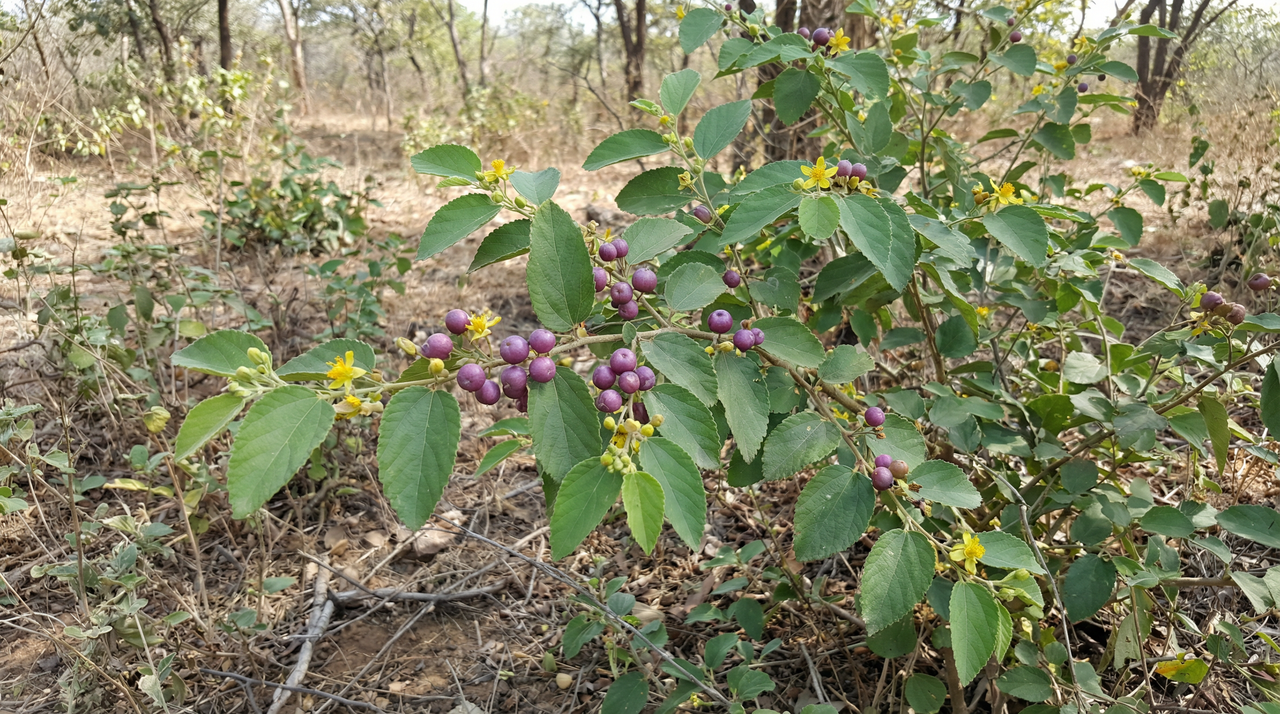
The first time someone handed me a phalsa off the bush in a Florida food forest, I assumed it would taste like a blueberry. Same size, same deep purple-black skin, same slight dusty bloom on the surface. It didn't. That first berry hit my tongue with something closer to a tamarind-cranberry collision, tart enough to make me squint, then sweet, then cooling in a way I genuinely couldn't explain. I ate about thirty more before I stopped to ask questions. That cooling sensation isn't just a subjective impression either; Ayurvedic physicians have been prescribing phalsa as a heat remedy for over two millennia,[1] specifically for heatstroke and summer fevers, which made a lot of sense standing barefoot on hot mulch in August.
What gets me about this plant is that it's simultaneously ancient and completely obscure in the Western horticultural world. Across India and Pakistan, street vendors sell phalsa sherbet by the glass every summer. Kids eat handfuls straight from backyard shrubs. But ask at most American nurseries and you'll get a blank stare. That gap between widespread traditional use and near-total Western invisibility is exactly why I think phalsa deserves a much longer look, especially from anyone gardening in a warm, dry climate who's tired of growing the same twelve fruits everyone else is growing.
Phalsa Origin, History, and Botanical Background
If you've never encountered phalsa before, you're not alone. This underappreciated fruit has been feeding people across South Asia for millennia, but it remains largely unknown to Western gardeners. That's a shame, because Grewia asiatica is exactly the kind of tough, multifunctional plant that regenerative gardens are built around.
Native Range and Botanical Characteristics of Grewia asiatica
Phalsa belongs to the Malvaceae family (the same broad clan as hibiscus, okra, and cotton, formerly classified under Tiliaceae) and is native to the dry deciduous forests, scrublands, and disturbed wastelands of South and Southeast Asia, from India, Pakistan, and Bangladesh through Nepal, Sri Lanka, Myanmar, Thailand, and into parts of southern China.[2][3] It grows wild along riverbanks and forest edges at elevations up to 1,800 meters, functioning as a true pioneer species in disturbed areas.[4][5] The center of domestication is almost certainly India, where it has been cultivated in arid and semi-arid zones for centuries before spreading via trade routes to Africa, the Middle East, and Australia.[6]
In cultivation, phalsa typically grows 3 to 5 meters tall with a lifespan of 20 to 40 years, which is considerably longer than wild plants manage (5 to 10 years, given the pressures of pests, drought, and competition).[2][7] One practical note for anyone evaluating subtropical edibles for coastal clients: phalsa is genuinely intolerant of salt-laden coastal winds and saline soils, which makes proper siting non-negotiable.[8] It will return reliable fruit across many decades in the right inland or sheltered site, and it flowers and fruits repeatedly throughout its life rather than senescing after a single reproductive cycle.[9] The genus Grewia is broader still, with relatives like the Brandy bush (Grewia flava) adapted to the arid savannas of southern Africa and Bhimal (Grewia optiva) growing across the northwestern Himalayas. This geographic spread highlights just how resilient the lineage is across drastically different climates.[10][11]
Visual Identification Features of Phalsa
The first thing I notice when handling this shrub in a nursery is the young stems. They're covered in dense stellate (star-shaped) pubescence that gives them a soft, velvety texture, and in the right light those tiny hairs catch and scatter sunlight in a way that's genuinely distinctive. Anyone familiar with related Malvaceae like hibiscus or velvet leaf will recognize the family resemblance immediately. The plant grows with an upright, rounded, multi-stemmed habit reaching 3 to 5 meters, with older stems developing rough, grayish, fissured bark beneath all that early softness.[12]
The leaves are simple, ovate to elliptic, 3 to 8 centimeters long, with prominently raised vein networks and pubescence on the undersides that reduces transpiration in arid conditions. In moister environments leaves run larger; in dry scrublands they stay smaller and more leathery.[13] Come the hot season (March through June in India), phalsa produces small, pale yellow, five-petaled star-shaped flowers in clusters along the leaf axils.[12][14] These give way to small, spherical berries, 1 to 2 centimeters across, that ripen from green to red to a deep purple-black, each holding a juicy, sweet-sour pulp around 10 to 20 hard seeds.[15][16] Below ground, a taproot extends 2 to 3 meters or deeper, with lateral fibrous roots fanning out to support the plant's impressive drought tolerance once it's established.[17] Young plants grow fast, reaching 2 to 4 meters within two to three years under reasonable conditions.[18]
Traditional and Cultural Uses in South Asia and Beyond
The historical record for phalsa runs deep. Its cooling and astringent properties appear in ancient Indian texts including the Charaka Samhita (circa 500 to 1000 BCE) and the Ashtanga Hridaya, situating it firmly within Ayurvedic tradition from very early on.[19] What strikes me about this history is how practical it is. People weren't cultivating phalsa for ceremony alone; they were planting it near homes for shade, fruit, and medicine across generations, in some of the hottest and driest inhabited landscapes on earth.
Traditional Ayurvedic and Unani practitioners documented more than 20 medicinal uses across the plant's various parts. Fruit for fever, diarrhea, and digestive complaints; leaves and bark for skin conditions and inflammation; roots for joint pain.[20] Tribal communities including the Santhal, Bhil, Minas, Khasi, and Mizo peoples wove phalsa into practices for coughs, asthma, wounds, and rheumatism, as well as purification ceremonies and harvest festivals.[21] The fruit itself became a symbol of summer refreshment across rural India, consumed fresh or turned into phalsa sharbat (a cooling drink with lime), ice cream, and preserves that remain beloved today.[22] When clients ask me why a plant with such an obscure name deserves a spot in their food forest, I point to this tradition: centuries of people in very hot climates reaching for phalsa first is a kind of field trial no laboratory can replicate.
Parallel traditions echo across the wider genus. In southern Africa, the Brandy bush (Grewia flava) serves Zulu, San, and Xhosa communities for gastrointestinal and respiratory ailments, holds ritual significance in protection and fertility ceremonies, and provides fiber for ropes and baskets from its roots, bark, and leaves.[23] These parallel stories across continents speak to how reliably the Grewia genus has inserted itself into human life wherever it grows.
Fun Facts and Ecological Role
Ripe phalsa fruit runs 12 to 18 degrees Brix with a pH of 3.5 to 4.5, delivering meaningful amounts of vitamin C (50 to 100 mg per 100 grams), calcium (150 to 200 mg per 100 grams), and iron (2 to 5 mg per 100 grams) in a berry roughly the size of a large blueberry.[24][25] Well-managed commercial orchards can reach yields of 5 to 10 tons per hectare.[26] That nutritional density is part of what makes the traditional sharbat tradition make so much sense in a summer heat context.
The drought adaptations of this plant are genuinely impressive. Beyond the deep taproot, phalsa employs thick cuticles, sunken stomata, and its characteristic pubescence to reduce water loss, while at the biochemical level it upregulates antioxidant enzymes under stress and accumulates proline to manage osmotic adjustment.[27] Ecologically, it fills the understorey of dry deciduous forests as a frugivore magnet, with bulbuls and mynas dispersing its seeds across disturbed sites, aiding succession and erosion control on slopes.[28] I've used plants with this kind of pioneer-and-persist strategy in restoration edges before, and phalsa's combination of bird attraction and soil stabilization capacity makes it genuinely useful beyond the fruit harvest.
Phalsa has no extensively documented named botanical cultivars.[29] Cultivation relies almost entirely on seedling populations, unnamed selections, and regional ecotypes, which means fruit sweetness and size can vary dramatically, with northern Indian ecotypes generally producing sweeter fruit than those from more arid southern regions.[30][25] In my experience with arid-adapted fruits, that variability makes labeling your seedling rows carefully essential. What looks identical at transplant can taste very different three years later.
Phalsa Varieties and Where to Buy
Notable Cultivars of Phalsa
Here's something that catches a lot of growers off guard: taxonomically, phalsa is a single species. Grewia asiatica has no accepted subspecies or botanical varieties in major databases like POWO or the Missouri Botanical Garden.[31][32] In practice, though, Indian horticulturists have developed a range of named selections worth knowing. 'Pant Phalsa-1', 'Hisar Phalsa', 'Gola', 'Kajli', 'Thar Shubhra', 'Red Phalsa', 'Phalsa Early', and 'Phalsa Local Selection' are among the cultivars grown for improved fruit size, yield, and flavor.[33][34][18] I've grown what's typically sold as 'Phalsa Local Selection' stock, and the fruit quality variability from seedling to seedling is real enough that named selections are worth seeking if you can find them.
Behind those cultivars sits a surprisingly broad pool of raw material. Indian germplasm collections hold 20 to 30 accessions with regional landraces that vary in maturity timing and flavor profile,[35] which gives breeders something to work with. Current improvement efforts focus on fruit yield, disease resistance, and cold tolerance, though formal breeding programs remain limited.[36] One quick note for anyone browsing nursery catalogs: don't confuse phalsa with Grewia optiva, the Bhimal, a related species that grows into a full tree up to 15 meters and is used primarily for fodder and fiber rather than fruit.[11] Same genus, very different plant.
Sourcing Phalsa Plants and Seeds
For North American growers, the honest picture is this: Grewia asiatica has limited distribution in the US, appearing mainly in introduced or escaped populations in Florida and Hawaii.[37] Commercial availability is genuinely niche, concentrated among specialty nurseries focused on tropical and edible landscaping.[38] I've ordered obscure subtropical fruit plants from Florida specialists before, and I've learned to tell the difference between a nursery that actually grows what it lists versus one that's just brokering whatever comes through. Budget accordingly: starter plants typically run $15 to $30, potted specimens $25 to $50, and mature plants $50 to $100 or more. Seed packets of 10 to 20 seeds generally cost $10 to $20, with bulk quantities running $40 to $75.
The regulatory picture is less complicated than people expect. Grewia asiatica isn't on the federal noxious weed list,[39] and there are no heightened import restrictions specific to this plant. Importing live material still requires a phytosanitary certificate from the exporting country and, for propagative material, an import permit (USDA APHIS PPQ Form 587).[40] I've navigated that paperwork for other exotic fruits and it's genuinely manageable. That said, for most people the more practical route is sourcing seeds domestically and growing your own. One hard-won tip: seed viability drops fast with phalsa, so always ask vendors for the harvest date before buying. Fresh seed germinates far more reliably than anything sitting in a warehouse.
Phalsa Propagation and Planting Guide
If someone asks me the single most important decision in growing phalsa, I tell them it's the propagation method they choose before they ever touch soil. Grewia asiatica can be grown from seed, cuttings, air layers, grafts, or even tissue culture, but those options are not equal.[41] Seed-grown plants have notoriously low germination rates (20-30% without treatment) and seeds lose viability within six months of harvest, so unless you have very fresh seed and patience to spare, you're already working against yourself.[41][42] The bigger issue is genetics: as the varieties section covered, sweet-fruited named selections must be vegetatively propagated or you're gambling on what comes out of the seedling flat. Vegetative methods are the answer every time you want to preserve a good clone.
Propagation Methods for Phalsa (Grewia asiatica)
For most home gardeners, air layering is where I'd start. It consistently achieves 70-80% success when done during the rainy season, and the technique is forgiving enough for a first attempt: wound a branch, dust with rooting hormone, wrap in moist sphagnum, and wait.[41][42] I've air-layered several selections in my zone 9B garden using a simple homemade propagator and IBA at 2000 ppm, and I was seeing roots in five weeks with success rates well above 70%. The high ambient humidity of a Florida summer essentially does half the work for you.
Semi-hardwood cuttings are slightly less reliable but still very practical. Take them from the current season's growth in June or July, treat with IBA at 2000 ppm, and keep them at 24-28°C under 80-90% humidity.[43][44] A mist bench or even a plastic-tent propagation frame works well; the non-negotiable is keeping the cuttings from drying out before roots form, which takes about four to six weeks.[45] One thing I always tell people: label every flat. Young phalsa seedlings look remarkably like hibiscus or other Malvaceae family members in the first four to six weeks, and I lost a whole row once before I started labeling religiously.
Grafting delivers the highest success rates of any method, reaching 85-95% with whip-and-tongue technique on Grewia hirsuta or G. asiatica rootstocks, using material around 1-2 cm in diameter during active sap flow in May-June or February-March.[46][47] I've worked with both G. asiatica and G. hirsuta rootstocks and found G. hirsuta gives noticeably more vigorous young trees in my subtropical climate, though compatibility is good with either. Tissue culture is also possible, producing five to ten shoots per explant on MS medium with BAP and NAA, but the sterile lab conditions required put it well outside what most of us keep in a propagation shed.[48][49] Air layering and cuttings will serve home growers far better.
Germination Timeline and Pretreatment
If you are working with seeds, pretreatment makes a real difference. A quick dip in 60-80°C water for 10-15 seconds followed by a 24-hour cold soak breaks dormancy effectively, and treated seeds sown 1-2 cm deep in a well-draining mix at 25-30°C and 70-80% humidity will germinate in two to four weeks.[50][51] With pretreatment, germination rates can climb to 60-80%, which is the difference between a usable batch and a frustrating one.[52]
The hard truth on timing: seed-grown plants typically take two to four years to first fruit, while cuttings and air layers can begin fruiting in one to two years, and grafted plants within one to three years.[53][51] In my zone 9B garden, the warm summers and consistent moisture can occasionally coax a first small harvest from a seedling by year two, but that's the optimistic end of the range. If you want fruit next season, graft; if you're willing to wait and starting cheap matters more, treat your seeds and plant plenty.
Soil, Site Selection, and Spacing Requirements
Drainage is the non-negotiable. Phalsa will tolerate sandy soils, moderately rocky ground, and even mild salinity, but waterlogged roots will kill an established plant fairly quickly.[54][55] The optimal soil is a well-drained loamy or sandy loam at pH 6.5-7.5, though the plant tolerates a wider range from around 5.5 to 8.5 if drainage is excellent.[56][57] I had a heavy clay patch where two young plants were showing root rot symptoms within a season; after I raised the beds and worked in coarse sand, those same plants turned into productive shrubs within a year. A small effort at planting time saves a lot of grief later.
Full sun drives both vigor and fruit sweetness, so aim for a minimum of six to eight hours of direct light daily.[58] Work in 1-2% organic matter at planting or a generous top-dress of compost, and mulch the root zone to retain moisture during the dry establishment period.[59][60] Once the roots go deep, this plant has genuine drought tolerance; the demanding phase is the first year.
Planting Technique and Establishment
In an orchard setting, 4x4 m spacing is the standard, giving roughly 400-625 plants per hectare, and north-south row orientation maximizes light penetration.[61][33] Home gardeners can drop that to 2-3 m if space is tight, while agroforestry or hedgerow applications can push closer still because annual hard pruning keeps the canopy in check.[54] Wider spacings of 5 m or more make sense on poorer soils where root competition matters more.
In zones 9-11, plant out in early spring after the last frost risk passes, roughly February through April.[62] Young plants need water two to three times a week to keep the soil moist to 15-20 cm depth until they're established.[63] Stake grafted plants if the graft union needs support in the first season, and train to an open center or central leader from the start; the species naturally becomes a bushy shrub reaching 3-6 m with a 2-4 m spread if left unpruned.[64] I prune mine hard to about 1.5 m after harvest and the plants come back with denser, more productive wood the following season, which also keeps everything at a comfortable picking height.
Phalsa Care Guide: Growing and Maintaining Grewia asiatica
Phalsa rewards low-intervention gardeners, but that reputation is earned over time. The first year or two demand real attention, and understanding the plant's subtropical rhythms is what separates a productive specimen from a struggling one. Once you understand what it needs at each life stage, the whole system clicks into place.
Sunlight Requirements for Optimal Growth and Fruiting
Give this plant sun. At least 6-8 hours of direct sun daily is what drives both vigor and sweet fruit quality.[54][65] In hotter climates, some afternoon shade can prevent scorch on young plants,[66][67] but don't mistake that for a shade-tolerance endorsement. I've seen phalsa squeezed between taller trees in food forests, and the result is always the same: pale, leggy growth, tiny fruit, and almost no flavor. The diagnostic checklist is pretty clear once you know it -- etiolated stems, chlorotic leaves, poor flower set, and washed-out new growth all point to insufficient light.[68][66] Site it in the sunniest spot you have, and the heat and drought resilience I'll describe below becomes far more reliable.
Watering Needs and Drought Tolerance
The watering story here is really two stories. Young plants need frequent moisture, every 2-5 days, to stay consistently hydrated while their root system develops. Established plants are a different animal entirely, thriving on deep watering every 7-15 days in summer and much less in winter.[12][69] After losing several young plants to root rot in heavy summer rains, I now insist on raised beds or amended drainage for the first two years. The symptoms of overwatering are unmistakable: yellowing lower leaves, wilting despite wet soil, soft foul-smelling roots. Underwatering shows up as curling leaf margins, brittle soil, and fruit that comes in undersized and dry.[70][71] I let the top 5 cm dry out before the next watering, and that rhythm has served me well. The deep root system that develops over time[72] is what makes the drought tolerance real, and keeping 2-4 inches of organic mulch over the root zone amplifies that effect considerably while cutting down on weed pressure.[71][73]
Feeding and Nutrient Management
Phalsa is a moderate feeder, not a heavy one. Annually working in 10-20 kg of well-decomposed farmyard manure per plant forms the foundation,[74][75] and balanced NPK applications split across three or four doses through the growing season add precision. Mature plants typically need around 400-600 g N, 200-300 g P, and 400-600 g K annually; young plants get roughly half that.[56][18] Always start with a soil test; I recommend testing every two to three years because the program should shift as the plant ages and the soil responds.[74] On alkaline soils, watch for iron chlorosis: yellowing young leaves with green veins still showing. I've corrected this with chelated iron drenches in my own landscape designs and seen plants go from yellow to green within two weeks. Zinc deficiency causes interveinal chlorosis and rosetting; magnesium deficiency hits older leaves first. All three respond well to foliar sprays or targeted soil applications.[33][53] The mistake I made early on was pushing nitrogen too hard. The plant looked magnificent: lush, dense, deeply green. Almost no fruit. Over-fertilization drives vegetative growth at the expense of fruiting, causes salt burn, and degrades fruit quality.[74][71] Feed lightly, test often, and always water in after application.
Seasonal Rhythm and Lifecycle Care
Phalsa follows a clear four-stage cycle that should drive your whole care calendar. Vegetative growth and flowering happen during the warm rainy season, typically April through June. Fruiting peaks from May through August, extending into September in the hottest regions. Then the plant drops its leaves and rests through the cooler, drier winter months from November to February.[65][3] The implications for care are direct: maintain consistent moisture and balanced feeding during active growth and fruiting, pull back on watering during dormancy, and hold the nitrogen entirely until the plant wakes back up. Prune after harvest, apply the bulk of your fertilizer at leaf-out, and let the dormant months be genuinely restful for the plant.[33][76] Once you internalize this rhythm, the phalsa plant becomes genuinely low-maintenance and predictable.
Frost Tolerance and Winter Protection
Phalsa is best suited to USDA zones 9b through 11, with a minimum survival temperature around 0 to -2°C. Prolonged exposure below that threshold, or extended periods under 5°C, causes real damage.[2][77][55] The symptoms look a lot like what you'd see on a cold-stressed citrus tree: marginal leaf scorch, wilting, blackened buds, shoot dieback, and in bad cases, bark splitting.[78][79] Young plants are the most vulnerable. My zone 9 protocol is the same one I use for tender citrus: plant on a south-facing slope with good air drainage, pile on 10-15 cm of organic mulch to insulate the root zone, and throw burlap or frost cloth over the canopy on nights that dip into danger.[80][81] Established plants that do take some frost damage typically bounce back with selective pruning of the dead wood once you're sure the cold has passed.
Heat Tolerance and Summer Stress Management
Where phalsa genuinely excels is heat. It thrives across AHS Heat Zones 8-12 and handles summer temperatures up to 45°C, though you'll see stress symptoms start to appear above 40°C: leaf scorch, wilting, premature fruit drop, and flower abortion that can hit 50% of the crop at 42°C or above, translating to yield losses of 30-40% without intervention.[82][83] In my Central Florida summers, I use 30% shade cloth on new plantings and increase mulch depth to 5-10 cm through peak heat. The difference in fruit quality is noticeable: berries from plants that get afternoon shade and consistent moisture in midsummer come in juicier and sweeter than those grown in full, unrelieved sun all day.[12] Irrigation every 3-4 days, keeping the soil at roughly 60-70% field capacity, prevents the worst of the heat stress,[71][84] and heat-tolerant selections like 'Goma Phalsa' are worth seeking out if your summers are especially brutal. Once past the establishment phase, the phalsa berry plant handles heat that would flatten many other fruits without flinching.
Pruning, Maintenance, and Mulching
Annual pruning after harvest is the one task you really can't skip. Remove dead, diseased, and crossing branches, thin the suckers down to 4-6 vigorous ones per plant, and lightly head back shoots by about one-third to encourage fruiting spurs.[33][85][86] Early in my career I went too hard with the shears and lost a season's fruit to the shock. Now I hold removal to 25% of the canopy at most, and my plants fruit more consistently for it. Train young phalsa plants to an open-center or vase shape with 4-6 strong scaffold branches, and keep the overall phalsa plant height to 1.5-3 meters so harvest stays practical.[87][12] Year-round mulching at 4-6 inches ties the whole care program together: it conserves moisture, suppresses weeds, buffers soil temperature, and slowly feeds the soil as it breaks down. It's the single lowest-effort intervention that delivers the highest return across every aspect of phalsa care.
Harvesting Phalsa Fruit
Phalsa has one of the most compressed harvest windows of any fruit I grow, and getting the timing right means paying attention to the plant rather than the calendar. In subtropical South Asia, flowering kicks off in February and March, with fruit ripening through April and May; here in Florida, that window shifts to roughly April through July depending on how warm the spring comes in.[88][89] From first flower to ripe fruit runs about 45 to 60 days, so once you see those small yellow blooms, you can start mentally counting down.[88][90]
When to Harvest Phalsa: Timing, Ripeness Cues, and Regional Seasons
The color shift is your clearest signal. Fruits move from green to reddish-purple, then deepen to dark purple or near-black as they hit full ripeness.[71][91] A gentle squeeze should yield slightly soft but not mushy, and the berry should release from the stem with minimal resistance. If it pulls hard or still looks reddish-green, give it another day or two. Over-ripe fruits drop and spoil fast, so erring on the side of slightly firm is better than waiting for perfection and finding mush on the ground.[71][92] I always tell new subtropical gardeners to taste-test a few from different parts of the shrub, because ripening is uneven across a single branch and the calendar really can't tell you what your mouth can.
How to Harvest Phalsa: Technique, Frequency, and Post-Harvest Care
I've settled into a rhythm of picking every two to three days during the phalsa season, always in the early morning before the heat builds.[93][71] In a Central Florida summer, midday heat degrades these berries faster than almost anything else I grow. What could feel like a chore turns into a genuinely pleasant part of the morning once you get into the routine of it.
The perishability is real and should not be underestimated. At room temperature you have two to three days before the fruit is past its best.[94][95] From my own trials, an ice-bath pre-cool right after picking makes a meaningful difference before moving the fruit into the refrigerator. The research backs a protocol of pre-cooling to 10 to 15°C, then holding at 4 to 7°C with 85 to 90% humidity in ventilated containers, which can stretch shelf life out to 10 to 15 days.[95][91] That extra window is what gives you enough time to make a small batch of fresh sherbet rather than racing to eat a kilogram of berries in a single sitting.
Phalsa Yield, Flavor Profile, and Genus Comparisons
Mature plants reward your patience. After about three years, a well-sited shrub in good sun and drainage produces somewhere in the range of 10 to 20 kilograms of fruit per season, and improved selections like Pant Phalsa-1 push toward the 15 to 18 kilogram end of that range.[18][36] My own plants hit that window right around year three, which lined up closely with what the production guides describe. The berries themselves are small, only about one to two centimeters across, with thin, soft, purplish-black skin when fully ripe.[96]
The flavor is the payoff that makes the frequent picking worthwhile. Ripe phalsa delivers a sweet-tangy punch from citric and ascorbic acids balanced against glucose and fructose, evolving from sharply tart when green to something I'd describe as a cross between a mulberry and a cranberry at full ripeness.[97][98] That's the reference I use when introducing friends to it for the first time. The aroma compounds add a genuinely surprising complexity: strawberry-like sweetness up front, a thread of green apple, subtle pineapple tartness, and a faint violet floral note underneath it all.[99][100] In my experience, plants grown in full sun and genuine heat express that complexity most vividly. For comparison, Brandy bush (Grewia flava) produces a sweeter, raisin-like fruit with jasmine and lychee notes in its aroma, closer to a dried fig than a fresh berry,[101] which shows how dramatically flavor expression shifts across the genus even when the plants look superficially similar. My direct experience stays firmly with Grewia asiatica in subtropical conditions, and nothing I've read about its African relatives quite prepares you for how distinctive a ripe phalsa berry actually tastes.
Phalsa Preparation and Uses
Culinary Uses and Flavor Profile of Phalsa
The first thing you notice about phalsa straight off the bush is how much the flavor changes with a single day's ripening. I've eaten berries that were firm and puckering one afternoon, then returned the next morning to find them soft, juicy, and perfumed with a floral note that's somewhere between wild blackberry and hibiscus. That tannin load in unripe fruit is real; it coats the tongue and signals the plant's self-defense chemistry at work.[37][102] Wait for full purple-black color and that slight give under your thumb, and the fruit is genuinely lovely to eat raw, seeds and all. Each berry holds one to four small seeds that crunch pleasantly without being obtrusive, and I eat them whole without a second thought.[103]
In South Asian kitchens, that peak-ripe fruit immediately becomes something cold. Sherbets, lassis, chutneys, and murabba (a candied preserve) represent centuries of tradition built around a berry that doesn't wait for you.[104][105] The classic phalsa sharbat is simple: press the fruit through a sieve, sweeten, thin with cold water, add a pinch of black salt and roasted cumin. It disappears instantly on a hot afternoon, and the reason it feels so restorative has a chemical explanation. The fruit clocks in at around 145 mg of gallic acid equivalents per 100g in total phenolics, plus roughly 24 mg of vitamin C, significant potassium, and iron.[106][107] That antioxidant profile rivals hibiscus and gives certain blueberry varieties a run for their money, which tells you why a glass of grewia juice has earned its place in traditional cooling medicine.
For preservation beyond the fresh window, fruit can be sun-dried at 40 to 50°C after washing and destoning, or processed into squash, jam, or syrup for year-round use.[108][109] Modern cooks have stretched the phalsa recipe repertoire into smoothies and cocktails, pairing it with mango, basil, or coconut.[108] I've also tossed young phalsa leaves into stir-fries and found them mild enough to disappear into the dish; in parts of India and Africa, those tender leaves appear in curries and salads as a matter of course.[55] It's that whole-plant thinking that makes phalsa so satisfying to grow in a food forest.
A quick note on the seeds, because the cyanogenic glycoside question comes up: the risk is considered low when seeds are eaten within the whole fruit in normal quantities, and roasting reduces anti-nutritional factors further if you want to grind them into flour.[110] I roast any extra seeds I collect and use them in baking without worry. General sensible consumption sits around 10 to 20 fruits or up to 30 ml of fresh juice per day.[111] If you take blood-sugar-lowering medications, start small and monitor; the hypoglycemic effect is mild but documented enough to be worth your attention.[110]
Brandy bush (Grewia flava) from southern Africa occupies a parallel culinary world within the genus, with its small fruits eaten fresh, dried into raisin-like snacks, or fermented into a mildly alcoholic drink called magôe.[112][113] Bhimal (Grewia optiva) likewise yields edible fruit and leaf preparations in Himalayan communities.[11] The genus is generous, but proper identification matters before eating any of them.
Traditional Medicinal Preparations
Ayurvedic and Unani practitioners have long reached for phalsa as a foundational apothecary ingredient, processing raw botanicals for their specific therapeutic yields.[114] Traditional preparations run from simple decoctions of fruit or leaves, typically reduced to around 100 ml and taken in 30 to 60 ml doses twice daily, to powders dosed at 3 to 6 grams.[115] These are ethnomedicinal guidelines, not clinically standardized protocols, so treat them as traditional context rather than prescriptions. Leaves are also traditionally chewed or steeped for oral health and local anti-inflammatory effects.[115] For most people, enjoying the fruit as food at normal quantities is where the line between culinary and medicinal traditions blurs most naturally, and honestly that sharbat on a 38-degree day does feel like medicine.
Non-Food Uses of Phalsa
Beyond the kitchen and medicine chest, phalsa has been woven into rural and tribal life in ways that reinforce why permaculture designers love plants with layered utility. Seeds have been used as beads, bark processed into rope fiber and dyes, and the tree planted near Buddhist temples as an auspicious species in some regions.[116] Every time I learn something like that, it deepens my appreciation for what it means to truly integrate a plant into a place rather than just harvest from it.
Phalsa Health Benefits and Medicinal Uses
Traditional Medicinal Role in Ayurveda, Unani, and Folk Medicine
Generations of South Asian healers were prescribing phalsa every summer long before modern DPPH assays proved its chemical value. Across Ayurvedic, Unani, and folk traditions throughout India, Pakistan, and Bangladesh, Grewia asiatica has been trusted as a cooling agent for heatstroke, sunstroke, biliousness, and fever, as well as a digestive remedy for acidity, diarrhea, and inflammation, and a treatment for respiratory and urinary disorders.[117][118][23] Tribal communities in Rajasthan and Madhya Pradesh took things further, using it for wound healing and even as an antidote for scorpion stings.[118] I grow Surinam cherry and carissa for similar reasons in my Florida food forest: tart summer fruits with a refreshing bite that people reach for when the heat is punishing. Phalsa occupies that same niche in South Asian gardens, and the traditional reputation is precisely what makes the modern research feel like confirmation rather than discovery.
That said, I'd be doing you a disservice if I overstated what the science currently tells us. Most of the pharmacological evidence comes from in vitro and animal studies, and robust human clinical trials are still limited.[119][120] While I find the preclinical results genuinely promising and consistent with centuries of use, I focus on enjoying the fresh fruit in season as part of a varied diet rather than treating it as a prescription. That's the honest gardener's position.
Key Phytochemicals: Flavonoids, Phenolics, and Terpenoids
The chemistry behind phalsa's reputation is remarkably well-stocked. The fruit contains a complex load of flavonoids, phenolic acids, anthocyanins, terpenoids, saponins, and tannins, alongside a solid hit of ascorbic acid.[121][122][123] Those anthocyanins are what give ripe phalsa its deep purple-black color, and that color intensity is a pretty reliable field indicator of antioxidant load. In my experience working with tropical species, plants grown with consistent moisture and balanced nutrition produce noticeably deeper-colored fruit, and the data backs that intuition: phenolic levels are higher during the rainy season, northern Indian cultivars tend to show elevated flavonoids, and optimal cultivation practices measurably increase antioxidant compounds.[124][125] These compounds also serve ecological roles in defending the plant against herbivory and environmental stress, which is why the trichome-covered leaves and astringent unripe fruit are features, not bugs.[126]
Antioxidant, Anti-Inflammatory, and Anti-Diabetic Research
The preclinical research coalesces around three areas that map directly onto traditional use. Phalsa shows strong antioxidant activity tied to its phenolic and flavonoid content across multiple assays.[127][123] Anti-inflammatory effects have been documented through COX-2 inhibition, reduction of pro-inflammatory cytokines (TNF-α, IL-6), NF-κB pathway modulation, and paw edema reduction in animal models comparable to indomethacin.[128][127] The anti-diabetic findings are consistent across multiple studies: phalsa fruit extract lowers blood glucose, improves insulin sensitivity, and inhibits both α-glucosidase and α-amylase enzymes in diabetic rat models.[129][130] Supporting these findings are related species like G. pedunculata, which shows overlapping anti-inflammatory, antimicrobial, and hepatoprotective profiles, suggesting these properties run genus-deep.[131] Broader pharmacological effects including antimicrobial activity against E. coli and S. aureus, hepatoprotective action, analgesic properties, and preliminary in vitro anticancer potential round out the picture as supporting context.[132][133][134]
Nutritional Profile of Phalsa Fruit
As a fresh fruit, phalsa is low-calorie and hydrating, coming in around 66-69 kcal per 100g with 80-85% water content, roughly 15-17g carbohydrates, modest protein and fat, and about 3.6g of dietary fiber.[135][136] Where the nutritional story gets more interesting is the micronutrients: 25-55 mg vitamin C per 100g, potassium at 330-338 mg, calcium at 83 mg, and iron around 1.2-1.3 mg, alongside B vitamins and zinc.[135][137] The polyphenol load, up to 150 mg GAE per gram, is what really distinguishes it from a nutritional standpoint and connects directly to the antioxidant research.[126] One thing worth knowing if you're planning to preserve phalsa: cooking or drying can reduce vitamin C by 30-80% while concentrating other macronutrients.[138] I've found that quick, low-heat processing preserves more of that antioxidant punch than long stovetop cooking, which aligns with what the data shows. Fresh or lightly processed is always my first recommendation.
Safety Profile and Cautions
Phalsa ripe fruit has a long, safe history of consumption across South Asia, and the toxicology data supports that reputation: acute toxicity studies show an LD50 above 2000 mg/kg in rodent models, no cyanogenic compounds have been identified in peer-reviewed seed analyses, and no significant livestock toxicity is documented.[139][140][141] Phalsa is not a recognized allergen, and unripe fruit's main offense is astringency rather than toxicity.[21][142]
The practical cautions are specific. Excess fiber intake can cause mild digestive discomfort for some people. Anyone on antidiabetic medications should be aware of phalsa's blood-sugar-lowering effects and potential for additive interaction.[21][141] Pregnancy and lactation warrant caution simply because human safety data is thin, not because harm has been demonstrated.[143] Having worked with many underutilized edible plants, my approach is consistent: the ripe fruit is safe and delicious in moderation, but clients who are pregnant, on medications, or interested in therapeutic doses get a clear referral to their healthcare provider first. That's not overcaution; it's just honesty about where the human evidence currently stands.
Phalsa Pests and Diseases
Phalsa is not a fragile plant. Its phenolic compounds, including tannins and flavonoids, function as natural feeding deterrents, and the fine trichomes covering its young leaves create a physical barrier that gives casual insect visitors pause.[144] I've noticed that well-managed plants with slightly rough leaf texture tend to show less early-season nibbling than stressed ones with soft, lush growth. The plant's built-in defenses are real. But they are not a free pass, especially once humidity climbs and air circulation collapses around a congested canopy.
Common Insect Pests of Phalsa
The pest roster for phalsa includes aphids, fruit flies, leaf miners, mealybugs, fruit borers, stem borers, and scale insects, with regional conditions and season determining which ones actually show up in force.[145][146] In warm subtropical gardens, the threats I worry about most are fruit flies and borers because they strike at the crop itself rather than just the foliage.
Fruit flies (Bactrocera spp.) are the most economically damaging pest I've encountered on phalsa. They lay eggs in developing berries, larvae infest the fruit from the inside, and by the time you notice the damage, you're already dealing with premature drop and post-harvest losses.[145][67] Pressure peaks right when the berries begin to color, which is exactly when you least want interruptions. After losing an early crop to fruit flies before I understood the timing, I now deploy pheromone traps the moment I see flowers opening. It's become the most effective low-spray intervention in my entire fruit fly toolkit. Fruit borers (Earias spp.) cause similar direct yield loss, tunneling into developing fruits and rendering them unmarketable before you even get to harvest.[147]
Aphids cause the slower, quieter kind of damage: leaf curling, honeydew excretion that leads to sooty mold, and potential transmission of mosaic virus.[145][147] Mealybugs work similarly, forming waxy white colonies that weaken the plant through sap feeding and leave the same sticky residue behind.[145][148] Leaf miners show up as serpentine trails across young foliage, cutting into photosynthetic capacity during the growth flushes when you want every leaf working.[145] Neem oil handles all three well when applied at early detection.[149]
Diseases Affecting Phalsa
Phalsa carries moderate natural resistance to powdery mildew (Oidium spp.) and leaf spot (Cercospora spp.), but it's genuinely susceptible to anthracnose and fruit rot (Colletotrichum gloeosporioides), Phytophthora root rot, bacterial wilt, bacterial leaf blight, and aphid-transmitted mosaic virus.[150][151] The pattern that ties nearly all of these together is moisture. In unmanaged orchards, disease incidence can reach 30%, and in my experience the difference almost always traces back to drainage or canopy density rather than some unavoidable regional pathogen pressure.[150]
In my Central Florida garden, the canopy congestion variable is the clearest one. A single thorough pruning pass in late winter has consistently halved my powdery mildew incidents the following spring, just by letting air move through the plant. The related Grewia flava shows somewhat better fungal resilience because dry habitats are its native baseline, but it still succumbs to leaf spot, rust, anthracnose, and bacterial wilt when conditions turn wet.[152] No named disease-resistant cultivars exist for it either, which tells you something about where the entire genus currently stands on formal resistance breeding.
For chemical and organic controls, copper-based fungicides and prompt removal of infected fruit address fruit rot specifically.[153] Mancozeb, sulfur-based products, and thiophanate-methyl are conventional options for broader fungal issues, while neem oil, potassium bicarbonate, and Trichoderma soil amendments cover most situations in an organic system.[154][155]
Integrated Pest and Disease Management
The most sustainable approach to phalsa health combines cultural practices, biological controls, regular monitoring, and targeted sprays rather than leaning on any single intervention.[155] Full sun siting, well-drained soil, proper spacing, and consistent pruning are not just care-guide items; they actively suppress both pest and disease pressure by improving airflow and reducing the humidity pockets that pathogens exploit.[156] Pheromone traps for fruit flies during the fruiting window dramatically reduce spray frequency in my own plantings while fitting neatly into a permaculture system where I'm trying to keep beneficial insect populations intact.
Most of the detailed IPM research comes from Indian orchard contexts, but the principle of "dry feet and open canopy" translates universally. A zone 9B garden in Florida faces the same root rot risk from summer monsoon rains as a Punjab orchard does from its own wet season. Prophylactic neem sprays and Bacillus thuringiensis applications during high-humidity periods are the backbone of my own low-intervention approach, supplemented with copper when fruit rot pressure is real.
Resistant Varieties and Breeding Progress
Several Indian selections show meaningfully better disease outcomes than unselected seedlings. 'Pant Phalsa-1', 'GSF-4', 'Phalsa Selection-1', and 'Pant Phalsa-3' all demonstrate moderate to high resistance against leaf spot and powdery mildew, with documented reductions in disease severity of 40-50%.[157][158] I specifically seek out 'Pant Phalsa-1' and 'GSF-4' starts when I can find them because those numbers match what I've actually seen in side-by-side comparisons under identical conditions. None of these are immune, though. No fully resistant cultivar exists yet for any major phalsa disease.
Breeding programs at CISH and GBPUAT Pantnagar continue hybridizing for improved resistance, and significant research gaps remain in epidemiology, molecular breeding, and region-specific IPM strategies.[155][159] I collaborate with local extension contacts to trial newer selections when they become available, partly because I want to know what performs in Florida humidity rather than Punjab heat, and partly because this work matters. The more growers in North America document their outcomes with specific varieties, the faster useful regional data accumulates for a crop that genuinely deserves more attention.
Phalsa in Permaculture Design
Phalsa sits in a sweet spot that not many subtropical shrubs occupy: it's productive, ecologically useful, and genuinely beautiful, without demanding the kind of intensive management that makes some exotic fruits more trouble than they're worth. I've spent years working plants like this into food forest designs across warm climates, and what keeps drawing me back to phalsa is how naturally it fits into layered systems without requiring you to bend the design around it.
Climate and Hardiness Zones for Growing Phalsa
At home in the tropical savannas and monsoon-fed landscapes of South Asia, phalsa thrives where summers are hot (think 25-40°C) and annual rainfall lands somewhere between 600 and 1500 mm.[2][56] That translates to USDA zones 9-11 in North American terms, with zones 10-11 being the real comfort zone.[160][5] In the US, that puts it squarely in Central and South Florida, coastal Southern California, the lower Rio Grande Valley in Texas, and Hawaii.[161][162]
The frost sensitivity is real and worth respecting. Plants can handle a brief dip to around -6°C, but they'll struggle and young plants can be killed outright by even a light freeze.[163][12] In my experience, a south-facing wall or a thick layer of mulch has been enough to push a young plant through the occasional light frost we see in Central Florida, but in a true zone 9 winter, container culture is the safer call until the plant is well established. What saves phalsa in marginal zones is its deep taproot, which improves drought resilience considerably once the plant matures, and waxy foliage that helps it hold moisture during dry spells.[17][12] It can even survive on as little as 250 mm of annual rainfall with supplemental irrigation, which opens up its usefulness in rainfed or lower-water landscape systems.[67]
It's worth knowing how other Grewia species slot into different climate niches. Grewia flava, the Brandy bush of southern Africa, is adapted to arid hot desert and steppe conditions with as little as 100-600 mm of rain and holds some frost tolerance down to around -5 to -7°C, making it a candidate where phalsa can't go.[10][164] Grewia pedunculata leans the other way, preferring higher rainfall of 800-2500 mm and humid tropical conditions.[165] The genus has remarkable range; phalsa just happens to occupy the subtropical middle ground that overlaps with most US food forest climates.
Ecosystem Functions and Guild Roles of Phalsa
As a deciduous shrub or small tree reaching 2-5 m, phalsa offers three to four months of abundant pollinator forage through its fragrant, pale yellow star-shaped flowers that bloom from March through June.[166] Bees are the primary visitors, specifically Apis dorsata and Apis cerana, though flies, butterflies, and ants also work the flowers.[167] I find that bloom timing is one of phalsa's underappreciated strengths in subtropical gardens. Its spring-to-early-summer flowering window fills a real gap for honeybees, coming in after citrus finishes and before mango production peaks. Under good conditions (20-30°C, 60-80% humidity), fruit set reaches 60-80%, but extreme heat, cold snaps during bloom, or heavy rain can cut that significantly.[168] Where pollinators are thin, planting companion flowering species nearby is a simple fix that pays off fast.[169]
The fruits themselves feed more than people. Birds, mammals, and insects consume and disperse them, which makes phalsa a genuine habitat plant rather than just a crop.[17] Beyond food, the plant accumulates biomass that breaks down into soil organic matter over time, and its root system (reaching 1-2 m deep) stabilizes slopes and controls erosion.[170] A Pakistan Journal of Botany study demonstrated mild leaf-litter allelopathy that can suppress certain weeds and pathogens in the root zone, though I wouldn't design around that specifically.
Phalsa does not fix nitrogen, and I want to be direct about that because I've seen it lumped in with multi-use plants that supposedly do everything. The leaf litter builds organic matter, and the biomass is excellent for chop-and-drop mulching, but it won't pull nitrogen from the air the way legumes do.[17] Plan accordingly and pair it with fixers in your guild. Beyond ecology, the plant pulls multiple non-food yields: bark fiber for rope and cloth, wood suitable for tool handles, and a purple dye from fruits and leaves.[171] The traditional Ayurvedic role as a cooling medicinal plant adds yet another reason for planting it near the house where you'll actually use it.
Forest Layer Placement and Companion Planting
In a subtropical food forest, phalsa belongs in the shrub-to-small-tree layer, typically filling space from 2 to 5 m under taller canopy species like mango or larger guavas.[17][172] Its upright, spreading habit and deciduous leaf drop create a seasonal light pulse for understory herbs when the canopy opens in winter, which you can plan around with shade-tolerant ground covers or spring-active root crops below.
I almost always pair phalsa with pigeon pea in guild designs. The legume's height provides some structural support and wind protection for young phalsa plants, and the nitrogen contribution from pigeon pea root nodules balances what phalsa isn't supplying on its own.[173] Leucaena works similarly where height is needed. Underneath, low-growing herbs, mulch plants, and edible ground covers fill the space without competing heavily for the light phalsa needs.[174]
For agroforestry applications, phalsa earns its place as a living hedge or windbreak that also produces food, a function most purely structural hedges can't match.[64] Its deep taproot and compact multi-stemmed form make it useful on berm edges and slopes where erosion is a concern. If you're looking at the Grewia genus for higher biomass production, Bhimal (Grewia optiva) is worth knowing: it produces 10-15 tons per hectare per year of biomass for fodder, fuel, and mulch in Himalayan agroforestry systems.[175][176] Our subtropical phalsa won't match that, but its deep roots and modest stature make it genuinely stackable in Florida-style food forests where every meter of vertical space counts.
The Summer I Finally Stopped Taking Phalsa for Granted
I'll be honest: the first time I grew Phalsa, I undervalued it because it came too easily. It fruited, I picked a handful, I moved on to the fussier things demanding my attention. Then a sweltering July afternoon stopped me mid-harvest, juice running down my wrist, and I just stood there. Some plants earn their place through utility. Phalsa earns it through that moment, repeated every summer, when nothing else in the garden comes close.
Sources 176
- Grewia asiatica: A Review on its Ethnobotanical, Phytochemical and Pharmacological Profile ↩
- Grewia asiatica ↩
- Grewia asiatica ↩
- Phalsa (Grewia asiatica L.): An Important Fruit of Indian Arid and Semi-Arid Regions ↩
- Phalsa (Grewia asiatica) Plant Profile ↩
- Phalsa (Grewia asiatica): A Tree of Arid and Semi-Arid Regions ↩
- Phalsa (Grewia asiatica) - Cultivation and Uses ↩
- Grassroots Rural Inclusion via Nanotechnologies (GRIN-Global) Database ↩
- Plant Finder - Grewia asiatica ↩
- Grewia flava - PlantZAfrica ↩
- Grewia optiva - Useful Tropical Plants ↩
- Grewia asiatica - Missouri Botanical Garden ↩
- Grewia asiatica - Flora of China ↩
- Grewia asiatica - Plants of the World Online (Kew Science) ↩
- Kew Science: Plants of the World Online ↩
- University of Florida IFAS Extension Submission on Tropical Fruit Species ↩
- Grewia asiatica - Useful Tropical Plants ↩
- Phalsa: Grewia asiatica L. - Production Technology ↩
- Traditional Uses of Grewia asiatica in Indian Ayurveda ↩
- Ayurvedic and Unani Medicinal Properties of Grewia asiatica ↩
- Ethnobotanical Survey of Grewia asiatica in Tribal Areas of India ↩
- Ethnobotanical uses of Grewia asiatica in South Asia: A review ↩
- Ethnobotany of the Grewia Genus in Africa ↩
- Phalsa Fruit: Nutritional Composition and Health Benefits ↩
- Phalsa (Grewia asiatica Duab): A promising fruit crop for arid and semi-arid regions ↩
- Phalsa (Grewia asiatica): Cultivation and Production ↩
- Morpho-Physiological Adaptations of Grewia asiatica to Water Stress ↩
- Ecological Role of Shrubs in Tropical Dry Forests ↩
- Grewia asiatica ↩
- Phalsa (Grewia asiatica): A Potential Fruit Crop for Arid Regions ↩
- Grewia asiatica L. ↩
- Grewia asiatica ↩
- Phalsa (Grewia asiatica) Cultivation Guide ↩
- Phalsa (Grewia asiatica): Cultivation and Varieties ↩
- Germplasm Diversity in Phalsa (Grewia asiatica Duab.) ↩
- Varietal Improvement in Phalsa (Grewia asiatica Duab) ↩
- Grewia asiatica ↩
- Phalsa (Grewia asiatica) - A Potential New Fruit Crop for Florida? ↩
- Federal Noxious Weeds List ↩
- Plants and Plant Products Import Information ↩
- Propagation Techniques of Phalsa (Grewia asiatica L.) ↩
- Propagation of Phalsa (Grewia asiatica) ↩
- Propagation of Phalsa (Grewia asiatica) through Cuttings ↩
- Vegetative Propagation of Grewia asiatica Using Rooting Hormones ↩
- Horticultural Practices for Phalsa Cultivation ↩
- Grewia Species Grafting Compatibility ↩
- Grewia asiatica Grafting Techniques ↩
- Micropropagation of Grewia asiatica through Shoot Tip Culture ↩
- Tissue Culture of Underutilized Fruits: Grewia asiatica ↩
- Grewia asiatica Growth and Management ↩
- Propagation of Phalsa (Grewia asiatica) ↩
- Seed Germination and Vegetative Propagation of Phalsa ↩
- Phalsa Cultivation Guide ↩
- Growing Phalsa in Home Gardens ↩
- Grewia asiatica - Useful Tropical Plants ↩
- Phalsa Cultivation Guide - ICAR ↩
- Phalsa (Grewia asiatica) Cultivation - ICAR ↩
- Phalsa (Grewia asiatica) Cultivation ↩
- Soil and Water Management for Phalsa ↩
- Phalsa Cultivation Guide ↩
- Phalsa Cultivation Guide ↩
- Phalsa Cultivation Practices ↩
- Grewia asiatica - Phalsa ↩
- Growing Tropical Fruits in the US: Phalsa ↩
- Missouri Botanical Garden - Grewia asiatica ↩
- ICAR - Grewia asiatica: A Multipurpose Fruit Plant ↩
- NHB - Phalsa Cultivation Practices ↩
- Missouri Botanical Garden - Grewia asiatica ↩
- CISH - Cultivation of Phalsa ↩
- RHS - Grewia asiatica Growing Guide ↩
- ICAR - Phalsa Cultivation Guide ↩
- ICAR - Grewia asiatica Cultivation and Management ↩
- Flavor Forest - Phalsa (Grewia asiatica) ↩
- NHB - Nutrient Management in Fruit Crops ↩
- TNAU - Phalsa Cultivation ↩
- Purdue - Grewia asiatica: Botanical Description and Uses ↩
- USDA Plant Hardiness Zone Map ↩
- Missouri Botanical Garden - Grewia asiatica Plant Finder ↩
- Extension UMN - Protecting Trees and Shrubs from Winter Injury ↩
- ICAR - Grewia asiatica - Phalsa Cultivation Guide ↩
- ANPSA - Growing Grewia species ↩
- Indian Journals - Abiotic Stress Management in Phalsa ↩
- IIHR - Phalsa Cultivation Guide: Managing Environmental Stress ↩
- CIAH - Irrigation and Mulching Practices for Phalsa ↩
- PAU - Pruning and Training of Fruit Trees: Phalsa ↩
- CISH - Orchard Management for Grewia asiatica ↩
- CISH - Horticultural Practices for Grewia asiatica ↩
- Phalsa (Grewia asiatica) Cultivation ↩
- Subtropical Fruit Trees for Florida ↩
- Phenology and Fruit Development in Grewia asiatica ↩
- Post-Harvest Management of Underutilized Fruits ↩
- Ripening and Harvesting of Phalsa (Grewia asiatica) ↩
- Phalsa: Production and Marketing ↩
- Post-Harvest Management of Phalsa ↩
- Storage and Preservation of Grewia asiatica ↩
- Minor Fruits: Phalsa ↩
- Phalsa (Grewia asiatica L.)-A Review ↩
- Phalsa Fruit: Nutritional and Therapeutic Values ↩
- Volatile Constituents of Grewia asiatica L. Fruit and Their Contribution to Aroma ↩
- Sensory Evaluation and Aroma Profiling of Phalsa (Grewia asiatica) Fruit ↩
- Grewia flava - Useful Tropical Plants Database ↩
- Physicochemical properties and antioxidant activities of Grewia asiatica fruit ↩
- Grewia asiatica (Phalsa) ↩
- Traditional Uses of Phalsa Fruit in Indian Beverages and Desserts ↩
- Phalsa: The Cool Summer Delight ↩
- Nutritional and Phytochemical Evaluation of Grewia asiatica (Phalsa) Fruit ↩
- Antioxidant Activity and Phenolic Content in Phalsa (Grewia asiatica) ↩
- Nutritional Composition and Culinary Applications of Underutilized Fruits: Grewia asiatica ↩
- Phalsa Fruit Processing Technologies in India ↩
- Grewia asiatica L.: A Comprehensive Review on Phytochemistry, Pharmacological Activities and Ethnomedicinal Uses ↩
- Pharmacognosy, Phytochemistry and Pharmacology of Grewia asiatica L. (Phalsa): A Review ↩
- Grewia flava - PlantZAfrica ↩
- Traditional Fermented Foods of Southern Africa ↩
- Phalsa (Grewia asiatica L.): Phytochemistry, Ethnopharmacology and Future Prospective ↩
- Grewia asiatica: A Review of Phytochemistry and Pharmacology ↩
- Ethnobotany of Phalsa (Grewia asiatica) in Northeast India ↩
- Traditional uses of Phalsa (Grewia asiatica) in Indian folk medicine ↩
- Ethnopharmacological survey of plants used by the tribals of Chhindwara district of Madhya Pradesh, India ↩
- Pharmacological Activities of Grewia asiatica: A Review ↩
- Grewia asiatica L.: A Comprehensive Review on Phytochemistry, Pharmacology and Traditional Uses ↩
- Phytochemical constituents and pharmacological activities of Grewia asiatica L.: A review ↩
- Flavonoids from Grewia asiatica: Isolation and Antioxidant Activity ↩
- Nutritional and Medicinal Value of Phalsa (Grewia asiatica) Fruit ↩
- Seasonal Variation in Phytochemical Constituents of Grewia asiatica Fruits ↩
- Geographic Variation in Phenolic Compounds of Grewia asiatica from Different Regions of India ↩
- Phytochemical Analysis and Antioxidant Properties of Grewia asiatica ↩
- Antioxidant and anti-inflammatory activities of Grewia asiatica ↩
- Anti-inflammatory Effects of Grewia asiatica Leaf Extract via NF-κB Pathway Inhibition ↩
- Antidiabetic potential of Grewia asiatica fruit extract ↩
- Anti-diabetic Effects of Grewia asiatica Fruit Extract ↩
- Pharmacognostical and Pharmacological Profile of Grewia pedunculata ↩
- Antimicrobial and Analgesic Activities of Grewia asiatica Leaves ↩
- Hepatoprotective Activity of Grewia asiatica Leaves ↩
- Antioxidant and Anticancer Potential of Grewia asiatica Fruits: Role in Apoptosis Induction ↩
- Nutritional Composition of Phalsa (Grewia asiatica) ↩
- Nutritional Composition of Phalsa (Grewia asiatica L.) Fruit ↩
- Nutritional Composition of Phalsa (Grewia asiatica L.) Fruit ↩
- Physico-chemical properties and antioxidant content of Phalsa (Grewia asiatica L.) fruits ↩
- Grewia asiatica L., a Food Plant with Multiple Uses - PMC ↩
- Acute Toxicity Study of Grewia asiatica Extracts ↩
- Toxicity and Safety Evaluation of Grewia asiatica Extracts ↩
- Allergic Contact Dermatitis from Plants ↩
- Phytochemical and pharmacological characteristics of phalsa (Grewia asiatica L.) - ScienceDirect ↩
- Phytochemical Constituents and Ethnopharmacological Properties of Grewia Species ↩
- Insect Pests of Phalsa (Grewia asiatica) and Their Management ↩
- Phalsa: Cultivation and Pest Control ↩
- Pest Management in Phalsa ↩
- Insect Pests of Grewia asiatica ↩
- Pest Management in Grewia asiatica: Role of Neem and Biopesticides ↩
- Diseases of Phalsa (Grewia asiatica) and Their Management ↩
- Pathology and Disease Resistance in Underutilized Fruits: A Review ↩
- Diseases of Grewia species in South Africa ↩
- Diseases of Phalsa and Their Management ↩
- Organic Farming Practices for Grewia asiatica ↩
- Integrated Pest Management for Fruit Crops: Phalsa ↩
- Phalsa: Cultivation and Disease Management ↩
- Breeding for Disease Resistance in Phalsa Cultivars ↩
- Phalsa: A High-Value Underutilized Fruit Crop ↩
- Phalsa: Production Technology ↩
- Grewia asiatica (Phalsa) ↩
- Phalsa (Grewia asiatica) Production Guide ↩
- Subtropical Fruit Production in Texas ↩
- Tropical Fruit Trees for Florida ↩
- Grewia flava - Wikipedia ↩
- Grewia pedunculata - Useful Tropical Plants ↩
- Missouri Botanical Garden Plant Finder - Grewia asiatica ↩
- Pollination Biology of Grewia asiatica L. ↩
- Impact of Climate on Pollination in Fruit Crops ↩
- Pollination ecology of Phalsa (Grewia asiatica) ↩
- Allelopathic Effects of Grewia asiatica ↩
- Phalsa (Grewia asiatica): A Review of Its Ethnomedicinal Uses ↩
- Flora of India - Grewia asiatica ↩
- Agroforestry Potential of Grewia Species ↩
- Missouri Botanical Garden Plant Finder: Grewia asiatica ↩
- Grewia optiva: A Multipurpose Tree for the Hills ↩
- Grewia optiva - Useful Tropical Plants ↩