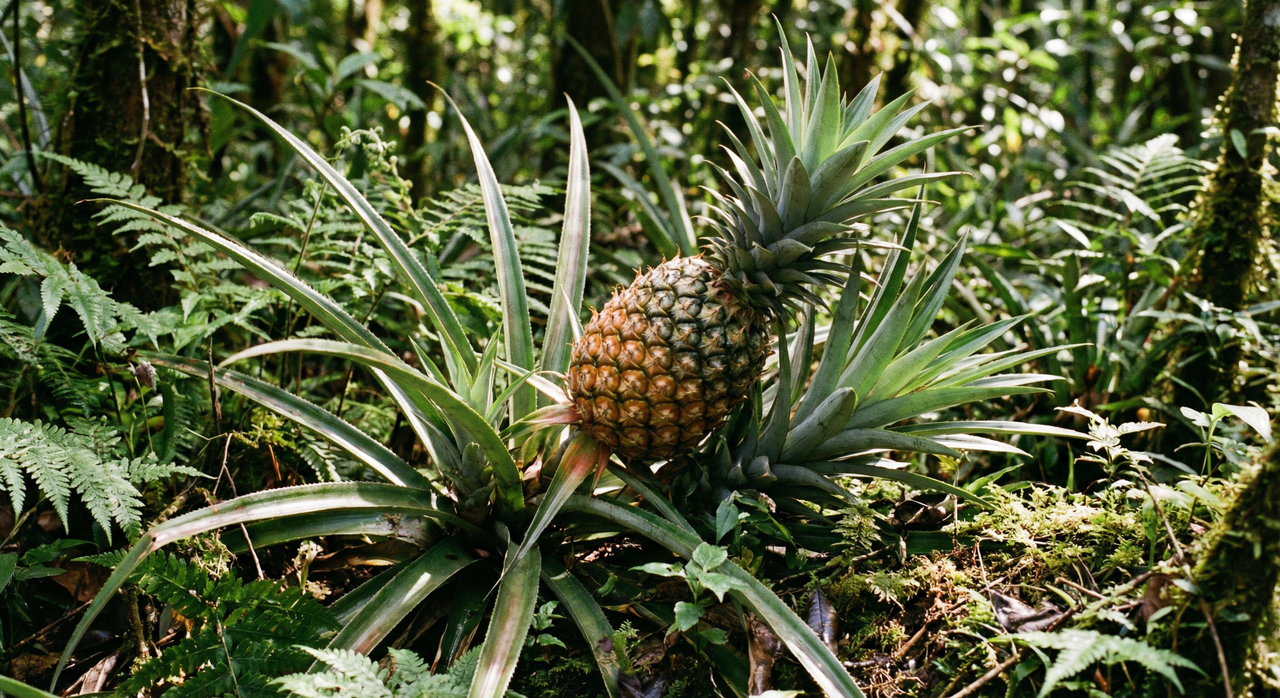
Pineapple will literally try to eat you back. That's not a metaphor. The same bromelain enzyme that makes the fruit so good at tenderizing meat is actively breaking down the soft tissue in your mouth while you eat it, which is why a big slice of fresh pineapple leaves your tongue feeling raw and slightly abraded. You're digesting it; it's digesting you. I think about that every time I harvest one from my Central Florida garden, this spiny, armored, architecturally bizarre plant that spent millions of years evolving in the Brazilian interior before anyone decided it was food.[1] The fruit doesn't want to be eaten without putting up a fight, and honestly, I respect that.
What I didn't expect when I first planted pineapples was how much the plant itself would reshape how I think about time in the garden. You're committing to a two-year relationship before you taste anything. Most food gardeners aren't wired that way. But once you understand what the plant is actually doing during those two years, living efficiently on almost nothing, cycling carbon in the dark, throwing out offsets and slips like it's hedging its bets, the wait starts to feel less like patience and more like paying attention to something genuinely strange and worth knowing.
Pineapple Origin and History
Botanical Background of Ananas comosus
The pineapple's scientific name, Ananas comosus, traces back to the Tupi word nanas, meaning "excellent fruit," and that's about as honest a name as botany ever gave anything. Native to the Paraná-Paraguay River basin spanning Paraguay, southern Brazil, and northeastern Argentina, this tropical herbaceous bromeliad evolved in warm, seasonally dry savannas with well-drained, acidic soils and temperatures averaging 22-28°C.[2][3][4] It's a monocarpic perennial, meaning the main plant flowers once and then dies, but not before handing off the lineage through a clutch of vegetative offsets. I've been propagating the same family of plants in my Central Florida garden for years by potting up the suckers, and there's something satisfying about that continuity, knowing that what I'm growing is a direct clone of the parent.
From planting to fruit, the timeline is long by most garden standards. Vegetatively propagated stock takes 14-16 months to initiate a terminal inflorescence, then another 4-6 months to fully develop fruit, putting first harvest somewhere in the 18-24 month window.[5][6][7] After fruiting, the mother plant declines over a cultivated lifespan of roughly 3-5 years, all while producing slips, suckers, and the crown that allow growers to keep the cycle going clonally.[2] In my experience, suckers from vigorous mother plants fruit faster than crown-started ones, which is worth knowing when you're looking at a two-year wait.
Visual Characteristics of Pineapple Plants
What makes pineapple so unmistakable is that silhouette: a dense basal rosette of stiff, sword-like leaves up to a meter long, spiraling outward from a short, fleshy stem so compressed it's practically hidden at ground level.[8][9] The whole plant tops out at 1 to 1.5 meters tall and maybe 60-90 centimeters wide, which makes it more compact than people expect. When the inflorescence finally emerges, it's a compact spike 13-38 centimeters long, covered in small purple tubular flowers that each fuse with their neighbors over time.[10][11] The fruit that results is a syncarp, formed by 100-200 individual flowers fusing into a single juicy structure crowned with that iconic leafy top.[12] Once you've watched that happen up close, the segmented pattern on every pineapple skin reads differently. You're not looking at skin texture; you're looking at the footprint of each individual flower.
I also grow Ananas comosus var. bracteatus, the Red Pineapple, in my landscape, and it earns its keep on drama alone: cream- and yellow-striped foliage and vivid red bracts on a cylindrical upright inflorescence that stops visitors in their tracks.[13][14] The fruit is small and not particularly sweet, but the plant earns its space as an ornamental regardless.
Traditional and Cultural Uses
Tupi-Guarani peoples had been cultivating pineapple for centuries before Europeans ever saw one, with domestication estimates ranging as far back as 1200 BCE.[15] Their uses went far beyond fresh eating: the fruit was fermented into cauim and tepache, the leaves were processed into fiber for textiles and cordage, and the plant carried ceremonial weight as a symbol of hospitality and fertility.[16][17] Medicinally, it served as a digestive aid, wound treatment, and anti-inflammatory remedy. That's an impressively complete relationship with a single plant.
Christopher Columbus encountered pineapple in Guadeloupe in November 1493, making it the first New World fruit to reach Europe, and Portuguese and Spanish traders wasted no time spreading it to Africa, Asia, and the Atlantic islands within decades.[18][19] By around 1540-1550, greenhouse-grown pineapple was being presented to King Charles V of Spain as a trophy of empire.[18] What had been a Guarani staple became a European status symbol. The contrast with today's reality is almost absurd: anyone with a sunny windowsill or a small patch of warm ground can now grow their own. The democratization of a once-royal fruit still pleases me every time I harvest one from my backyard.
The story continued in Hawaii, where pineapple was integrated into traditional food and medicine before James Dole's early 20th-century commercial operation shifted the entire industry toward industrial scale, largely displacing smallholder growing practices in the process.[20][21]
Fun Facts About Pineapple
Pineapple uses CAM photosynthesis, opening its stomata at night rather than during the day to conserve moisture, and produces bromelain, a protein-digesting enzyme that functions as both an herbivore deterrent and a nutrient-uptake aid.[22] In practice, my pineapples need considerably less supplemental irrigation than almost anything else in my Florida beds during the dry season; the CAM mechanism isn't just a textbook adaptation, it shows up in the water bill. In the wild, the plant is pollinated by hummingbirds and dispersed by mammals, but commercial growers deliberately avoid cross-pollination to keep the fruit seedless, relying entirely on vegetative propagation through crowns, slips, and suckers.[23][24]
Today, Thailand leads global production with over 2 million metric tons annually, while Hawaii, once the dominant producer, now accounts for less than 1% of world output.[25] Outside its native range, pineapple can turn invasive under the right conditions, a useful reminder that even familiar food plants carry ecological responsibilities.[26] Back in its South American homeland, the terrestrial bromeliad rosette quietly provides microhabitats for small organisms, doing what good guild plants do: earning its place by supporting the ecosystem around it.[27]
Pineapple Varieties and Cultivars
There are over 100 pineapple cultivars documented worldwide, with the USDA maintaining germplasm collections to preserve that breadth of tropical diversity.[28] In practice, commercial growers and home gardeners work with a much smaller handful, shaped by centuries of selective breeding that began when the Guarani domesticated the plant in South America and accelerated dramatically after European traders carried it into global cultivation.[29][30] My honest advice: most home growers only need to make one real decision here, sweet eating type or ornamental, and the choice practically makes itself once you know what each group offers.
Major Commercial and Edible Pineapple Cultivars
Smooth Cayenne is the cultivar you've almost certainly eaten. It accounts for roughly 70% of global production, produces fruits in the 2-3 kg range with that familiar golden-yellow flesh and sweet-tart flavor, and it's the backbone of Hawaii's pineapple industry and the global canning trade.[28][31][32] I've rooted Smooth Cayenne crowns in Central Florida, and the ones I grew in well-drained, slightly acidic raised beds produced noticeably sweeter fruit than those I tried in heavier clay-amended soil. Cultivar performance and site conditions are genuinely inseparable.
Del Monte's MD2 hybrid, developed in the 1980s, has been steadily gaining ground on Smooth Cayenne thanks to its high sweetness, disease resistance, and consistent sizing.[28] For home gardens, though, I'd point most people toward Queen (sometimes sold as Nathalie): smaller fruits in the 0.5-1 kg range, pale yellow flesh that's sweeter and less acidic than Cayenne, and better cold tolerance that makes it genuinely useful in subtropical and highland tropical climates.[28][31][32] Sugarloaf (often called Honey Pineapple) is the one I recommend to anyone who wants fresh eating without acidity: white flesh, almost no woody core, and an intensely sweet flavor profile that's hugely popular across Southeast Asia.[28] Red Spanish leans fibrous and cylindrical, better suited to juicing and processing than the fruit bowl.[28] Abacaxi, treasured in Brazil, rounds out the group with particularly tender, juicy flesh.[28]
Ornamental Pineapple Varieties
Ananas comosus var. bracteatus is a different creature entirely. Grown primarily for its striking red bracts and, in the 'Variegatus' (Tricolor) selection, its cream-striped leaves with red margins, this ornamental pineapple plant is one of my favorite accent plants for the edge of a subtropical guild.[33][34][35] The visual drama is real, and it tolerates brief temperature dips that would flatten a Smooth Cayenne. Plants stay compact at 1-1.5 m, and while they do produce fruit, those fruits are small, fibrous, and not especially sweet, so you're growing this one for the landscape, not the table.[8]
Sourcing Pineapple Plants and Fruit
Commercial pineapple in the US market is overwhelmingly imported, mostly from Costa Rica and Mexico, because Hawaiian production covers only about 10-15% of domestic demand.[36][37] When shopping for fresh fruit, USDA Grade A and FAO export standards call for at least 12-14° Brix, good shape, and uniform color with minimal defects, so those benchmarks are worth knowing at the farmers' market.[38][39]
For growing your own, pineapple is almost always propagated vegetatively from crowns, slips, or suckers because most cultivars are hybrids and effectively sterile.[40] Live plants from US nurseries typically run $10-15 for small starters and $30-40 for larger potted specimens; Costa Farms, 4Seasons Tropicals, and good local tropical nurseries are reliable sources.[41] I've ordered from a few of them and learned to inspect every incoming plant carefully for mealybugs tucked into the leaf axils before anything goes near my established beds. One more thing: live plant material faces stricter USDA Plant Protection and Quarantine restrictions than imported fruit, and cultivar mislabeling is genuinely common, so buying from a reputable source matters.[42][43] And if you'd rather start for free, a crown from a good grocery-store pineapple can absolutely grow into a producing plant. It just asks for patience.
Pineapple Propagation and Planting (Ananas comosus)
Pineapple is a crop that rewards understanding its biology before you pick up a trowel. Unlike most fruit you grow from seed, the cultivated pineapple you find at a grocery store or nursery is essentially seedless by design. Centuries of domestication suppressed seed production in favor of consistent, sweet, clonal fruit, which means the three vegetative propagules -- crowns, slips, and suckers -- are how almost every pineapple gets started, whether on a commercial farm in Costa Rica or in a backyard in Central Florida.[44][45][31]
Why Pineapple is Almost Always Propagated Vegetatively
Commercial production relies primarily on slips and suckers for speed and uniformity, with crowns used in home settings more than on farms.[24] Tissue culture exists for producing elite, disease-free stock, but the cost keeps it in the realm of commercial nurseries rather than kitchen gardens.[46] The practical reason vegetative propagation dominates is simple: seeds, when they do appear, produce genetically variable offspring that may not resemble the parent at all.[31] For a fruit crop where sweetness and texture are the whole point, that's a gamble most growers sensibly skip.
One thing worth flagging early: starting with clean, disease-free material matters more than most beginner guides let on. Soil-borne Phytophthora and mealybugs that carry pineapple mealybug wilt-associated virus can hitchhike in on propagules, especially if you're sourcing suckers from a neighbor's garden without knowing the plant's history.[47] In my experience the single best prevention is starting with sterile media and never letting the crown sit in wet soil. I've lost plants to heart rot before I learned that, and the research confirms it.
Step-by-Step Crown, Slip, and Sucker Propagation
The crown is what most home growers start with, and for good reason -- it's free with every pineapple you buy. Twist or cut it cleanly from the fruit, then strip off the lower inch or two of leaves to expose a short section of stem. Here's the step most people skip: let it sit in a shaded, well-ventilated spot for one to two days before planting so the cut end can callus over.[44][48] I've started dozens of grocery-store crowns over the years, and the ones I planted straight away in Florida's summer humidity rotted at the base within weeks. That brief drying window makes a real difference. Under warm, humid conditions -- around 70 to 85°F -- a properly callused crown roots in four to six weeks, with success rates of 85 to 90 percent.[31][48]
Slips and suckers are faster routes once you have a producing plant. Slips emerge from the base of the fruit itself; suckers push up from the base of the mother plant. Both root readily in a well-aerated mix of perlite and peat moss, and dipping suckers in IBA rooting hormone at 1000 to 2000 ppm can push success rates to 90 to 95 percent.[48][49] Slips typically root within four to eight weeks.[31] Once you've grown one pineapple, those suckers give you a much faster second and third crop, which helps offset the long wait from the original crown.
Soil, Site Selection, and Planting Requirements
Drainage is the non-negotiable. Pineapple's shallow root system -- with 80 to 90 percent of roots sitting in the top six to twelve inches of soil -- makes it acutely sensitive to waterlogging.[50][51] I think of it as similar to other bromeliads I grow: very efficient above ground, surprisingly vulnerable below it. Sandy loam or loamy sand is ideal; heavy clay that holds water will kill a pineapple faster than almost anything else.[31][52] Soil pH should sit between 4.5 and 6.5; this is one case where the naturally acidic sandy soils common in Florida and Hawaii are actually an asset.[31][53]
If your site has clay-heavy or compacted soil, raised beds aren't optional -- they're the answer.[51] For containers, a mix of equal parts potting soil, perlite or coarse sand, and peat moss or coconut coir hits the right balance of moisture retention and aeration.[54] Site the plant in full sun, at least six to eight hours daily; reduced light means reduced fruiting.[55] The site decision made at planting shapes the entire two-year journey ahead.
Spacing, Technique, and Timeline to First Fruit
Mature plants spread three to four feet and reach three to five feet tall, so home garden spacing of 24 to 36 inches between plants, with rows four to five feet apart, gives each one enough room to sucker and breathe.[56][45] Commercial operations pack them much tighter -- 40,000 to 60,000 plants per hectare -- to maximize yield per area, but in humid subtropical climates that density demands vigilant air circulation management to prevent disease.[57][58] For most backyard situations, the wider spacing wins: better sunlight, better airflow, easier harvesting access, and larger individual fruit.[59]
Plant crowns shallowly -- just deep enough that the exposed stem is anchored and the base sits firmly in soil without the lower leaves being buried. Don't plant into cold soil; pineapple roots establish best when soil temperatures are consistently above 60°F. The timeline from there requires patience: suckers typically fruit in 12 to 18 months, crowns in 18 to 24 months.[45][31] Don't let the long wait discourage you. Once your plant fruits, the suckers give you a much faster second and third crop, and by then you'll have figured out all the quirks of your particular site.
Seed Propagation (When and Why to Try It)
Growing pineapple from seed is genuinely uncommon, and for most growers it should stay that way. The genetic variability means offspring won't reliably resemble the parent, and the timeline stretches to two to three years before first fruit -- a year or more longer than crown propagation.[45][60] Seed viability drops quickly because pineapple seeds are recalcitrant: they can't tolerate drying and remain viable for only three to six months even under careful storage at 15 to 20°C and high humidity.[61][62]
Where seed propagation does make sense is in breeding work or if you're experimenting with rare seeded varieties. I've kept a few of those going out of curiosity and observed firsthand how quickly they lose vigor once pulled from their moist environment. If you do try it, pre-soak seeds at 25 to 30°C for 24 hours before sowing into warm, humid conditions; germination can reach 30 to 90 percent under optimal conditions but drops sharply with any delay or drying.[63][61] Label your rows carefully -- seedlings look like small, unassuming grass clumps for the first several months and are easy to mistake for weeds. For everyone else, stick with a crown from a ripe grocery-store pineapple. You'll get there faster, and you'll know exactly what you're growing.
Pineapple Care Guide: Watering, Sunlight, Feeding, and Seasonal Management
Pineapple is more forgiving than its tropical reputation suggests, but it has a clear set of needs and a slow, deliberate pace. Get the fundamentals right from the start and it rewards you generously. Skip them and you'll spend 18 months wondering why your plant looks sulky.
Water Needs and Drought Tolerance
The core principle is simple: water deeply, then wait. Because its tissues store water so efficiently, the plant tolerates short dry spells without drama. During active growth and fruit development, aim for 1-2 inches per week and check the top inch or two of soil before reaching for the hose. If it's still moist, leave it. That usually works out to every 7-10 days in warm weather, dropping to every 2-3 weeks in winter when the plant slows down.[31][64] One thing I've found useful: occasionally fill the central rosette cup during dry spells, which mimics the plant's bromeliad habit of collecting rainfall, but don't rely on it as your primary watering method.[65] Soil watering always comes first.
Root rot kills far more home pineapples than drought does. Overwatering symptoms are yellowing leaves, mushy dark roots, and wilting despite wet soil. Underwatering shows as curling leaves and brown tips.[66] If you're on chlorinated municipal water, letting it sit overnight or using rainwater helps avoid fluoride and chlorine buildup, especially for container plants indoors.[67]
Sunlight Requirements and Light Stress Symptoms
Pineapple wants a lot of light. Outdoors, 6-8 hours of full sun is the sweet spot; vegetative growth tolerates slightly less, but fruiting really demands that high intensity.[31][68] Too little light and you'll see pale, stretched, etiolated growth that's almost impossible to reverse once it sets in. Too much direct sun in peak summer heat and the leaves bleach, tips scorch, and fruit can sunburn. Does pineapple need full sun? Yes, consistently, but with some shade cloth (30-50%) during the hottest part of the day in high-radiation climates.[69]
For indoor pineapple plant care, a south-facing window is rarely enough on its own. Full-spectrum LED grow lights running 12-16 hours daily get much better results.[70] The CAM pathway gives the plant some resilience in variable light, but sluggish growth indoors is almost always a light deficit, not a water problem.
Feeding and Nutrient Management
Pineapple is a moderate feeder with one clear priority: potassium matters more than nitrogen, especially once flowering begins. Early on, a balanced fertilizer like 6-6-6 gets the plant established; once it shifts into reproductive mode, move to a higher-potassium formula such as 6-10-15 or 10-10-20.[31][45] I've made the beautiful-foliage-no-fruit mistake before. Once I switched to potassium-forward formulas during the reproductive stage, my yields improved noticeably. Excess nitrogen is the most common mistake home growers make.
Split applications every 6-8 weeks work better than infrequent heavy doses, and wait 2-3 months after planting before starting.[71] On sandy Central Florida soil, magnesium deficiency shows up fast as interveinal chlorosis on older leaves. A foliar spray of Epsom salts turns it around within days.[72] Iron deficiency looks similar but hits young leaves first, and it's common when soil pH creeps above 6.5. Compost and well-rotted manure support organic approaches well, and wood ash provides a useful potassium boost.[73]
Frost Tolerance and Cold Protection
Pineapple is a zone 10-11 plant, full stop. It suffers chill injury below 50°F and can handle a brief dip to 28°F, but sustained cold does real damage: roots go first below 50°F, leaves below 41°F, and flowers and developing fruit between 45-50°F.[74][75] Symptoms start as yellowing and tip burn, progressing to blackened leaves and rot if temperatures stay low.[8]
I grow a few plants in large containers specifically so I can roll them onto a bright porch on the two or three nights each winter when temperatures threaten to drop below 40°F. For in-ground plants, 3-6 inches of mulch plus a frost blanket handles most marginal-climate cold events.[76] Reduce winter watering regardless, and acclimate any plants moved between indoors and outdoors gradually.
Heat Tolerance and High-Temperature Management
Optimal growth happens between 68-86°F, with the sweet spot at 77-86°F during the day and 59-68°F at night.[77] Above 90°F the plant stresses, and prolonged exposure above 95°F can reduce photosynthesis significantly and cut yields by 20-30% or more depending on humidity and duration.[78] Fruit suffers most obviously: smaller size, lower sugars, and uneven ripening are the first signs something went wrong during development.
Cultivars like 'Smooth Cayenne' and 'MD-2' handle heat better than others through stronger antioxidant responses.[79] My most effective heat mitigation has been combining 30% shade cloth over young plants with 4-6 inches of organic mulch at the base. The mulch alone lowered soil temperatures enough to noticeably improve fruit size in the summer I tested both together. Morning watering with good spacing for airflow rounds out the strategy.[80]
Pruning, Maintenance, and Seasonal Rhythm
Sucker management is where most home growers lose months off their timeline without realizing it. Every extra pup competing with the main plant draws energy away from the fruit you're waiting for. I remove suckers every 8-10 weeks, keeping only one or two strong ratoons after harvest for the next fruiting cycle.[31] Start thinning 4-6 weeks after planting and be consistent. For pruning the main plant, remove only dead or diseased leaves from the base using sanitized tools; aggressive leaf removal sets the plant back unnecessarily.[64] Heavy fruit occasionally needs staking to prevent the plant from lodging.
Flowering can be induced at 8-12 months with an ethephon spray if natural induction hasn't occurred, which gives you control over the timing without waiting for cooler nights to trigger the process naturally.[81] The full arc from planting to fruit runs 18-24 months: 2-3 months of establishment, roughly 12 months of vegetative growth at optimal temperatures, flowering induction around month 12-18, and then 5-6 months of fruit development.[57][82] In zones 10-11 the plant cycles continuously through ratoons; everywhere else it needs winter protection or indoor overwintering. I label every pup with its origin date because the first year of growth looks deceptively slow, and it's easy to underestimate how much is happening underground before the plant finally takes off.
Pineapple Harvesting: Timing, Technique, Yield, and Flavor
When to Harvest Pineapple: Understanding the Timeline and Ripeness Cues
The first time I grew a pineapple from a crown, I genuinely underestimated how long the wait would feel. From planting to first harvest, you're looking at 18-24 months, with fruit development after bloom running another 120-180 days.[83][84] I now stagger new plants every six months so there's always something coming on, which is just basic permaculture thinking applied to a notoriously slow crop. The stretch between bloom and harvest is the window you can actually influence, by keeping temperatures in the 75-85°F sweet spot and maintaining that acidic soil pH between 4.5-6.5 that speeds ripening without stressing the roots.[83][85]
Reading ripeness is the skill that turns all that patience into an actual meal. The shell turns yellow from the base upward, and you want to pick somewhere around 25-50% color change rather than waiting for full gold.[86][87] In humid subtropical conditions I've learned to act at the first real flush of yellow at the base, because fully ripe can slide into overripe faster than you'd expect. The eyes also flatten as the fruit matures, and the flesh should feel firm but not rock hard. A Brix reading of 12-18% confirms what your eyes and fingers are already telling you: the sugars are there, and the flavor will follow.[86] Think of it like a banana ripening, except the color sweeps upward from the bottom rather than spreading evenly. Hawaii's peak season runs March through July, and Costa Rica's May through August,[36][88] but in a home garden your fruit will arrive whenever it's ready, so check it every few days once that base color starts shifting.
How to Harvest and Handle Pineapple for Best Quality
If you have multiple ratoon slips developing alongside a fruiting plant, thinning to one or two per plant before harvest gives you a larger, better-quality successor fruit rather than a cluster of small ones competing for the same root system.[31] Twist or cut the fruit free cleanly, then get it cooled as fast as possible. Rapid cooling to 45-50°F (7-10°C) right after harvest is what locks in firmness and sweetness, and storage at 45-55°F with 85-90% relative humidity will keep the fruit in good condition for two to four weeks.[89][90] Colder than that and you risk chilling injury, which turns the flesh translucent and bland. After 18-plus months of growing, a waterlogged refrigerator drawer is a heartbreaking finish. Keep it away from ethylene-producing fruit like apples and bananas too, which accelerate deterioration rather than ripening it usefully.[91]
Pineapple Yield and Flavor at Harvest
When you nail the timing, the flavor payoff is genuinely distinct from anything at a grocery store. Ripe pineapple hits hard on two fronts: intense sweetness from fructose, glucose, and sucrose, and a bright sour lift from citric and malic acids, with that refreshing tartness lingering long after you've swallowed.[68][92] The aroma comes from more than 200 volatile compounds, predominantly esters, which explains why a fresh-cut homegrown pineapple fills a room in a way a supermarket one simply doesn't.[93] The flesh itself is juicy and crisp with just enough fiber to give it a slightly chewy bite that bursts with moisture.[94] It's the difference between eating a real garden tomato and a January hothouse one. That's the benchmark your Brix readings and color checks are actually pointed toward: two years of growing, condensed into one extraordinary piece of fruit.
Pineapple Preparation, Culinary Uses, and Non-Food Applications
Edible Parts, Nutrition, and Bromelain Basics
The flesh is what you're after: that juicy, sweet-tart interior built from the swollen receptacle and fused berries of the multiple fruit structure, packed with vitamin C (about 53% of your daily value per 100g), manganese, potassium, and 1.4g of fiber.[94][8] All of that at roughly 50 calories per 100g. I've eaten pineapple straight off the plant, and the flavor really is different from anything in a grocery store: home-grown fruit that has fully ripened on the plant in hot, humid conditions gets noticeably sweeter, with a less fibrous core and a more complex aroma. That's the flavor chemistry at work, with over 200 volatile compounds (mostly esters) layering tropical and floral notes over the sugar-acid balance of sucrose, fructose, citric acid, and malic acid.[95]
The core is edible but genuinely tough chewed raw, best sent through a blender or juicer.[8] It's also where bromelain concentration is highest, and bromelain is the whole story here: a proteolytic enzyme that denatures above 60-70°C, meaning heat kills it.[96] Canned pineapple has essentially no active bromelain and loses 40-60% of its volatile flavor compounds in processing.[86] Flash-pasteurized juice holds bromelain better. The rind is too waxy and tough to eat but makes excellent tepache (a fermented Mexican beverage) or a strong simmered tea; just wash it thoroughly first given potential pesticide residues on commercial fruit.[8] The leaves are a firm no for eating: calcium oxalate crystals and high bromelain levels can cause mouth sores, digestive upset, and skin irritation.[97][4] I think of it a bit like handling rhubarb or raw spinach stems -- the oxalate sting is real and not worth testing.
Safety Considerations and Allergies
Unripe pineapple has enough bromelain to cause genuine throat and mouth irritation, so always wait for full ripeness before eating.[97] Even ripe fruit eaten in large quantities can cause GI upset, nausea, or diarrhea in sensitive people.[97] The practical lesson I learned the hard way involves meat marinades: I once left chicken thighs in a fresh pineapple marinade for nearly four hours, and the bromelain turned the surface to something approaching paste. Thirty minutes is usually plenty. If you're on anticoagulants like warfarin, the bromelain-blood-thinning interaction is worth a conversation with your doctor before eating pineapple regularly.[98] Allergic reactions do occur, from mild oral itching to hives, with anaphylaxis in rare cases.[99]
Culinary Preparations, Pairings, and Processing Tips
Raw is where pineapple shines brightest. Enjoy it as fresh slices, toss chunks into a chicken stir-fry, blend it into coladas with coconut and rum, or use a classic upside-down cake recipe where the heat caramelizes the sugars while deactivating the bromelain so the gel sets properly. Savory applications are where I keep returning: pineapple's natural tenderizing action makes it genuinely useful in marinades for pork, shrimp, and chicken, and it pairs beautifully with chili, curry, cilantro, and ginger.[100] On the sweet side, mango, coconut, vanilla, cinnamon, and cloves all work well.[100] Fermentation is my favorite zero-waste move: cores and rinds become tepache after 1-3 days at room temperature, then refrigeration slows bromelain activity and stops the process where you want it.[101] It's genuinely delicious and uses every scrap.
Non-Food Uses and Sustainability Concerns
Beyond the kitchen, pineapple earns its keep as an ornamental; the architectural rosette and colorful bracts make it a standout in tropical containers or food forest understories.[102] Leaf fibers have a long history in rope-making, fabric, and handicrafts.[103] Processing waste can feed biofuel systems.[104] But I'd be doing readers a disservice if I didn't say the obvious: commercial pineapple production is genuinely costly for ecosystems and people. Monoculture operations cause 20-30% soil loss per cycle, significant pesticide runoff, and biodiversity collapse.[104][105] Labor abuses, low wages, and hazardous pesticide exposure are documented in supply chains across Latin America and Southeast Asia.[106] When I'm not growing my own, I prioritize fair-trade or organic sourcing, and I use every bit of the fruit to respect that cost. Growing even one plant in a guild at home sidesteps most of this entirely, and that feels like the most honest argument for the home pineapple grower.
Pineapple Health Benefits and Medicinal Uses
Bromelain and Anti-Inflammatory Research
The health story of pineapple begins and ends with bromelain, and the research here is genuinely compelling. Meta-analyses of randomized controlled trials confirm that bromelain significantly reduces swelling and pain in osteoarthritis and post-surgical recovery, with human clinical data that most botanical anti-inflammatories simply cannot match.[107][108][109][110] The mechanism is fairly accessible: bromelain inhibits the NF-κB signaling pathway, dialing down production of pro-inflammatory cytokines like TNF-α and IL-6.[111] That's how it works at the molecular level; what growers care about is that the effect shows up in real people, not just lab dishes.
Beyond inflammation, randomized trials suggest bromelain may ease digestive symptoms in people with IBS, though those studies are limited by small sample sizes and need replication.[112] Clinical research also supports its role as a wound-healing agent, with fibrinolytic activity that helps break down dead tissue and support recovery.[113] In vitro and animal models add antioxidant and antimicrobial activity to the picture, with pineapple extracts showing efficacy against bacteria including Staphylococcus aureus and Escherichia coli.[114][115] Anticancer effects have also been observed in vitro, with bromelain modulating apoptosis via caspase activation and suppressing ERK and AKT signaling pathways, though that work remains largely in cell cultures and animal models and shouldn't be overstated.[116] Indigenous South American healers have used pineapple for digestive ailments, wound treatment, and inflammation for centuries, so modern science is largely confirming what traditional practice already understood.[117]
Therapeutic efficacy varies considerably depending on how bromelain is extracted, which part of the plant is used, and how it's standardized.[118] The enzyme concentrates in the stem and core, not in the soft, sweet flesh most people eat, which is an important distinction for anyone hoping to eat their way to anti-inflammatory benefits from a bowl of cut fruit.
Key Phytochemicals in Pineapple
Bromelain is a mixture of cysteine proteases with molecular weights around 20 to 30 kDa, and it's the compound that makes pineapple genuinely distinctive in the botanical world.[119] Concentrations hit their peak in the stem (roughly 1 to 2% of dry weight), while the fruit flesh contains minimal amounts, typically under 0.1% by weight.[120] Cultivar matters too: 'Smooth Cayenne' and 'Queen' show bromelain levels around 0.5 to 1.5% fresh weight, and the variation between varieties isn't trivial.[121]
Beyond bromelain, pineapple contains flavonoids like quercetin, kaempferol, and rutin; phenolic acids including ferulic, coumaric, and gallic acids; and carotenoids at around 0.5 to 1 mg beta-carotene per 100 g, all contributing antioxidant and antimicrobial activity.[122][123] Total flavonoid content is modest at roughly 5 to 10 mg per 100 g, and phenolic acids come in around 50 to 100 mg gallic acid equivalents per 100 g, so pineapple isn't in the same league as blueberries on raw antioxidant numbers. The volatile fraction adds terpenoids including limonene and β-caryophyllene, plus saponins, tannins, and β-sitosterol.[124]
Growing conditions shape what ends up on your plate more than most people realize. Soil pH between 4.5 and 6.5 enhances phenolic accumulation and bromelain production, while orange-fleshed types like 'MD2' can reach 0.5 to 2 mg beta-carotene per 100 g depending on climate and cultivation practices.[125][126] From my own trials with different varieties, the flavor and post-eating sensation differ noticeably between cultivars; the orange-fleshed types tend to feel gentler on the tongue than a high-bromelain 'Smooth Cayenne' eaten fresh from the stem. Ecologically, these compounds aren't accidental: bromelain degrades insect gut proteins as a defense, while phenolics guard against microbial attack.[127]
Pineapple Nutrition Facts
The primary edible portion is the fruit flesh, with the core technically edible when soft enough. Per 100 g of raw fruit, you're looking at roughly 50 calories, 13 g carbohydrates, 1.4 g dietary fiber, and under 10 g of sugars, with minimal protein and fat.[128] The macros are unremarkable; the micronutrients are where pineapple earns its reputation. A 100 g serving delivers 47.8 mg of vitamin C, which is 53% of the daily value, plus a modest but real contribution of thiamin, B6, and folate.[129] Minerals include potassium, manganese, magnesium, and calcium, with manganese a particularly notable presence at nearly 1 mg per 100 g serving.[94]
Processing changes the picture significantly. Canning drops vitamin C to around 9.5 mg per 100 g and eliminates bromelain entirely through heat denaturation.[130][94] In my kitchen, I keep fresh or frozen pineapple on hand for precisely this reason: you get the enzyme and the full vitamin C intact. Canned works fine for cooking where you don't care about enzymatic activity, but for anything raw, fresh is the only sensible choice. And if you've ever bitten straight into the core of a freshly harvested pineapple, you already know bromelain is there: that unmistakable tingling is the enzyme going to work on your tongue within minutes. I warn every new gardener about it the first time they harvest their own fruit.
Pineapple Safety and Precautions
Ripe pineapple fruit is broadly safe for most people, and the ASPCA lists it as non-toxic to dogs and cats, though overconsumption can cause digestive discomfort in anyone.[131] The more important safety conversation centers on bromelain itself. In fresh fruit, stem, or sap, it can cause oral irritation, mouth soreness, tingling, and gastrointestinal upset, particularly with unripe fruit, which contains higher concentrations of irritants.[132][133] Cooking or canning inactivates the enzyme and eliminates those effects.[134]
Allergies are a real consideration. Bromelain is a recognized allergen capable of causing oral allergy syndrome, skin reactions, or in rare cases anaphylaxis. Cross-reactivity with latex is documented in 30 to 50% of latex-allergic individuals.[99][135] If you have a latex allergy, start with a small piece of ripe fruit and watch carefully for any oral itching or swelling; I've seen this reaction in friends and it's not something to brush off. Separately, the leaves and sap contain calcium oxalate crystals that can cause skin irritation and contact dermatitis during handling.[136]
Bromelain's mild anticoagulant properties are clinically significant. It increases bleeding risk and is contraindicated before surgery or alongside blood thinners, and high doses above 1000 mg per day may cause gastrointestinal upset, hypotension, or dermatitis.[137][138] I stop eating fresh pineapple several days before any planned dental work because the research on bleeding risk is clear enough that I'd rather not test it. For pregnancy, moderate ripe fruit consumption appears safe, but concentrated bromelain supplements should be avoided; limited evidence suggests they may stimulate uterine smooth muscle contractions.[139][140] Finally, traditional uses of leaves, stems, or sap lack robust safety data and carry real irritation risk; this is a case where the folk medicine record is interesting but not a green light for experimentation.[141]
Pineapple Pests and Diseases: Identification and Integrated Management
Pineapple isn't a particularly fussy plant once it's established, but it's not bulletproof either. Most problems trace back to site conditions and cultivar choice rather than bad luck. Get those two right and you're already winning most battles before they start.
Common Pests of Pineapple and Natural Resistance Mechanisms
The pest list for pineapple is longer than most people expect. Pineapple mealybugs (Dysmicoccus brevipes) are the headline concern because they don't just drain sap; they vector mealybug wilt-associated virus, which compounds the damage. Root-knot nematodes (Meloidogyne spp.) quietly destroy roots and undercut vigor, and beyond those two anchors, you're also watching for symphylids, borers, thrips, fruit flies, armored scale, and ants.[142][143][144]
The plant does fight back, at least partially. Bromelain, the proteolytic enzyme the plant produces, disrupts insect digestive systems, and the spiny leaf margins plus that tightly packed rosette form create real physical barriers to feeding.[145][146] I've noticed this effect when comparing feeding damage on mature pineapple plants versus smoother-leaved crops nearby growing under similar pressure. It doesn't eliminate pest problems, but it does seem to blunt them on healthy, unstressed plants.
Cultivar matters a great deal here. 'MD-2' shows moderate resistance to mealybugs and certain nematodes compared to older 'Smooth Cayenne', while 'Queen' is more sensitive to mealybug pressure. After trialing both 'Smooth Cayenne' and 'MD-2' in mixed guilds, I now default to 'MD-2' because that reduced mealybug susceptibility means fewer interventions over a two-year growing cycle.[147][148] Red Pineapple (Ananas comosus var. bracteatus) gets some mealybug protection from its spiny bracts, but it's generally more vulnerable to scales, thrips, aphids, and fruit flies, and only moderately tolerant of root-knot nematodes. Treat it as ornamentally attractive but not pest-hardy without active management.[149]
Major Diseases and Cultivar-Specific Resistance
No single pineapple cultivar resists every disease, and that reality should shape how you plan your planting from the start.[150] Fusarium wilt resistance, for example, is high in 'Smooth Cayenne' and 'Queen', only moderate in 'MD-2', and improved in specialized hybrids like '73-50' and 'FLHOS101'.[151] Phytophthora heart rot is a different problem entirely, and this is where site design becomes everything. In well-drained soils, varieties like '59-443' and '17-66' show reasonable field resistance, but in poorly drained clay or during Florida's sustained summer rains, even a moderately resistant cultivar can collapse fast.[152] I've watched slips planted at grade turn to mush in August while plants on raised ridges just two feet away stayed clean. Drainage isn't a nice-to-have; it's the disease management strategy.
Black rot (Ceratocystis paradoxa) hits most varieties hard, and crown rot susceptibility tends to rise with rough post-harvest handling. Leaf spots like Cercospora stay low to moderate in open plantings but climb in dense, humid beds. Anthracnose follows similar logic, becoming a real problem on fruits and crowns when humidity stays above 80% for extended periods.[153][74]
Viral diseases round out the picture and deserve careful attention because most of them can't be cured, only prevented. Mealybug wilt-associated virus depends almost entirely on vector control rather than host resistance. Pineapple mosaic virus affects leaf quality but rarely tanks yield severely. Bunchy top virus has no known commercially resistant cultivar, so starting with certified, disease-free planting material is non-negotiable.[154][74] Even 'Queen', which shows tolerance to bacterial wilt in the Philippines, can succumb under prolonged wet stress. Genetics are conditional, not guarantees.
Integrated Pest and Disease Management for Pineapple
Because resistance is always partial and conditional, IPM isn't optional. I think of it as three overlapping layers. Cultural practices come first: raised beds or ridged rows for drainage, crop rotation every two to three years with non-host species to knock back nematode populations, strict sanitation by removing plant debris, and sourcing only certified disease-free crowns or slips.[155][156] One concrete habit I've maintained is sterilizing pruning tools between plants; it's tedious, but it stopped black rot from moving through one of my beds after a single infected crown slipped through my sourcing check.
Biological controls form the second layer. The parasitoid Anagyrus lopezi targets mealybugs effectively, and Pseudaphycus angelicus has been used successfully in Hawaii.[157] Trichoderma spp. and Pseudomonas fluorescens applications support soil health and suppress certain fungal pathogens. Marigolds planted as a cover crop or guild companion help suppress nematode pressure, which fits naturally into a polyculture bed anyway.[151] Targeted chemistry, phosphonate fungicides for Phytophthora, neem oil or insecticidal soaps for mealybug flare-ups, comes last and only when monitoring shows it's warranted.[144] Vigilant observation is what ties these layers together. No cultivar and no single intervention replaces watching your plants closely and responding early.
Pineapple in Permaculture Design
Before pineapple was a grocery staple or a cocktail garnish, it was a creature of South American forest edges and sun-dappled savannas.[158] That origin matters enormously to permaculture designers, because every ecosystem service the plant offers in a cultivated system is really just an extension of what it was already doing in the wild. In its native understory, Ananas comosus stabilizes soil through a dense, fibrous root mat, creates micro-habitat for insects and small wildlife in its layered rosettes, and participates in the slow, patient work of nutrient cycling and carbon sequestration that healthy tropical soils depend on.[159][160][161] It's doing all of that quietly, without anyone asking it to.
Ecosystem Functions and Guild Roles
I want to be upfront about one thing pineapple doesn't do, because I've seen it listed incorrectly in guild plant databases: it does not fix nitrogen, and it isn't a classic dynamic accumulator the way comfrey or pigeon pea are. What it does instead is subtler. Its root exudates stimulate microbial activity in the rhizosphere, and it forms mycorrhizal associations that help solubilize phosphorus and generally improve soil biology over time.[162][163] In my experience, amending the planting area generously with compost before establishing pineapples has consistently produced more vigorous plants, almost certainly because you're feeding the fungal network that the plant then plugs into. It's a quiet investment that pays off over the growing cycle.
The pollinator picture is where pineapple's ecology gets genuinely interesting for design purposes. In its native range, hummingbirds are the primary pollinators, drawn by tubular flowers loaded with nectar, a sweet fruity scent, and sticky pollen; the plant's protogynous flowering promotes outcrossing rather than self-pollination.[164][165] Commercial growers deliberately break that relationship: since the plant is parthenocarpic and self-incompatible, they propagate vegetatively and prevent pollination to keep the fruit seedless.[166][141] In a home food forest, you get to choose. I let a few plants flower freely specifically to support the hummingbirds moving through the garden, while bagging flowers on the plants I want for eating. It's a minor management step that keeps the wildlife ecology alive without sacrificing the harvest.
Forest Layer and Companion Planting
At 0.8 to 1.2 meters tall with a spreading rosette habit, pineapple belongs firmly in the herbaceous or ground-cover layer of a tropical food forest.[167][168] That stature, combined with its CAM metabolism and tolerance of up to 50% light reduction, means it can slip comfortably under a canopy of taller productive trees without sulking.[169][167] For comparison, it handles partial shade about as well as ginger does, though it stays shorter and denser than taro in similar conditions. That density is the point: the tight rosettes create a living mulch that smothers weed competition and holds moisture in the root zone during the dry season.
The real guild magic comes from its root architecture. Because pineapple's fibrous roots stay shallow, they don't compete meaningfully with the deep root systems of overstory trees.[167] After growing pineapples under coconut palms in a humid subtropical food forest, I noticed substantially better weed suppression and soil moisture retention during the wet season compared to open-planted beds. The combination of dappled shade from above and root-mat coverage below created a microclimate that the plants seemed to genuinely prefer. Coconut, cocoa, oil palm, and coffee are all proven overstory partners in tropical agroforestry systems, and weaving in nitrogen-fixing legumes or aromatic herbs like lemongrass completes a guild that handles multiple functions at once.[170][171] These aren't universal rules; they're patterns that have worked consistently in tropical and humid subtropical conditions and are worth adapting to your specific site.
Climate and Hardiness Zones
Zone is the first filter. Pineapple is reliably hardy outdoors only in USDA zones 10 and 11, where minimum temperatures stay above roughly 30°F (-1°C). Growth is happiest between 68 and 86°F (20-30°C), and the plant starts to show damage below 50°F (10°C) well before a frost even threatens.[172][31][29] I've lost unprotected plants at 28°F and now reach for frost cloth or move containers into the greenhouse the moment a cold snap is forecast. The data says it can briefly tolerate near-freezing temps with protection; my experience says don't test that theory twice.
Recreating the native Paraná-Paraguay basin conditions means aiming for 1000 to 1500mm of annual rainfall, humidity above 60%, and a well-drained, slightly acidic soil in the pH 4.5 to 6.5 range.[173][174] Most successful outdoor production falls between 25°N and 25°S latitude, with Florida, Hawaii, and coastal southern Texas representing the northern edges in the US.[7] For zone 8 and 9 gardeners, containers kept at 70 to 85°F during the day and above 60°F at night can work, and a greenhouse extends the range further still.[54][175] Coconut palms, the classic overstory companion, share the same zone requirements and coastal tolerance, and the combination is worth considering as a paired system: the palm creates humidity and filtered light below while the pineapple builds soil structure at its feet, each reinforcing the microclimate the other wants.[176][177]
The Two Years That Made Me Stop Rushing Everything
I planted my first pineapple crown in a sandy Central Florida bed and promptly forgot to be patient. Checked it weekly, moved it once, second-guessed the drainage. It fruited anyway, twenty-two months later, and the smell when I finally cut it open was so good it almost felt like an apology. Some plants teach you horticulture; this one taught me to trust a longer timeline than I'm comfortable with.
Sources 177
- Bromelain: An overview of industrial application and purification strategies - ScienceDirect ↩
- Ananas comosus - Plants of the World Online | Kew Science ↩
- Ananas comosus - Missouri Botanical Garden ↩
- Ananas comosus ↩
- Pineapple - Wikipedia ↩
- Ananas comosus (pineapple) | CABI Compendium ↩
- University of Florida IFAS Extension: Pineapple Production ↩
- Ananas comosus - Missouri Botanical Garden ↩
- Ananas comosus ↩
- Missouri Botanical Garden Plant Finder - Ananas comosus ↩
- UC Statewide Integrated Pest Management Program - Pineapple ↩
- Ananas comosus (Pineapple) ↩
- Ananas comosus var. bracteatus - Kew Science ↩
- Ornamental Pineapple Description - Missouri Botanical Garden ↩
- Ethnobotany of Pineapple (Ananas comosus) ↩
- Indigenous Uses of Pineapple in South America ↩
- Traditional Uses of Pineapple in South America ↩
- Christopher Columbus and the Pineapple ↩
- The Pineapple: History and Botany ↩
- Historical Distribution of Pineapple in Hawaii ↩
- Plants in Hawaiian Culture ↩
- Ananas comosus - Plant Profile ↩
- Pollination Biology of Bromeliaceae in Brazil ↩
- The Pineapple: Botany, Production and Uses ↩
- FAOSTAT Agricultural Production Data ↩
- Ananas comosus - USDA PLANTS Profile ↩
- Ecology of Ananas comosus in Native South American Habitats ↩
- Pineapple - Ananas comosus ↩
- USDA PLANTS Database - Ananas comosus ↩
- Pineapple Cultivation History - FAO ↩
- University of Florida IFAS Extension: Pineapple Production in Florida ↩
- FAO: Pineapple Cultivars and Characteristics ↩
- Royal Horticultural Society - Ananas bracteatus ↩
- Ornamental Pineapple Cultivars - University of Florida IFAS Extension ↩
- Ananas comosus var. bracteatus 'Variegatus' - RHS ↩
- Pineapple: Hawaii's Tropical Fruit ↩
- USDA National Agricultural Statistics Service - Pineapple Annual Summary ↩
- Commercial Pineapple Production ↩
- Pineapple: Fruit Quality Standards ↩
- Propagation of Pineapple (Ananas comosus) ↩
- Growing Pineapples in the Home Garden ↩
- Pineapple (Ananas comosus) - Import Regulations ↩
- Importation of Fruits and Vegetables ↩
- Propagation of Pineapple ↩
- Pineapple Production in Hawaii ↩
- Micropropagation of Pineapple ↩
- Pineapple Production Guide ↩
- Vegetative Propagation of Pineapple ↩
- Pineapple Propagation Techniques ↩
- Pineapple Production Guidelines ↩
- Pineapple Cultivation Guide - University of Florida IFAS Extension ↩
- Pineapple Cultivation Guide - FAO ↩
- Hawaii Pineapple Soil Management ↩
- Growing Pineapples in Containers - University of Florida IFAS Extension ↩
- University of Florida IFAS Extension: Pineapple (Ananas comosus) Fact Sheet ↩
- Ananas comosus - Missouri Botanical Garden ↩
- Pineapple Cultivation Guide - University of Hawaii ↩
- FAO Pineapple Production Manual ↩
- Agronomy of Pineapple ↩
- How to Grow Pineapple Plants from Seed ↩
- Millennium Seed Bank Data Sheet: Ananas comosus ↩
- Seed Storage of Horticultural Crops ↩
- Propagation of Pineapple from Seed ↩
- Royal Horticultural Society - Pineapple Care ↩
- Bromeliad Care Guide - University of Florida IFAS Extension ↩
- Pineapple Plant Care: Overwatering Symptoms ↩
- Cultivating Wild Pineapples - Bromeliad Society International ↩
- Royal Horticultural Society - Pineapple Care Guide ↩
- Photosynthetic Response of Ananas comosus to Light - Journal of Horticultural Science ↩
- Indoor Pineapple Growing - Missouri Botanical Garden ↩
- Fertilizer Recommendations for Pineapple - FAO ↩
- Nutrient Disorders in Pineapple ↩
- Pineapple Fertilization Guidelines ↩
- Pineapple Cold Tolerance and Damage Symptoms ↩
- Ananas comosus - Kew Science ↩
- Frost Protection for Tropical Fruits - USDA ↩
- Pineapple: Production and Protection ↩
- Physiological Responses of Pineapple to Heat Stress ↩
- Varietal Tolerance to Abiotic Stress in Pineapple ↩
- Irrigation and Mulching Practices for Pineapple ↩
- Pineapple Production Guide ↩
- Pineapple Cultivation - Kew Royal Botanic Gardens Fact Sheet ↩
- Pineapple Production in Florida ↩
- Pineapple Production Guidelines ↩
- Effect of Temperature on Pineapple Fruit Development ↩
- HS403/HS-403: Pineapple Harvesting and Postharvest Handling ↩
- Pineapple: Fruit Maturity and Quality ↩
- Costa Rica Pineapple Industry Report ↩
- Postharvest Biology and Handling of Pineapple (Ananas comosus) ↩
- FAO Guidelines: Pineapple Harvesting and Post-Harvest Management ↩
- Pineapple: Post-Harvest Handling and Storage ↩
- USDA FoodData Central - Pineapple, raw ↩
- Volatile Compounds in Pineapple Fruit and Their Sensory Impact ↩
- USDA FoodData Central - Pineapple, raw ↩
- ScienceDirect: Pineapple - From Farm to Consumption (Ester profile, Flavor Chemistry) ↩
- Bromelain: Biochemistry, Pharmacology and Medical Use ↩
- Pineapple (Ananas comosus) - Toxicity ↩
- Food-Drug Interactions with Pineapple ↩
- Allergic Reactions to Pineapple ↩
- Pineapple: Flavor and Aroma Profile ↩
- Fermenting Pineapple Safely ↩
- Ananas comosus - Missouri Botanical Garden ↩
- Ananas comosus ↩
- Environmental Impacts of Pineapple Production in Costa Rica ↩
- The Pineapple: Botany, Production and Uses ↩
- Labor Abuses in the Pineapple Industry: A Report on Dole ↩
- Bromelain: A Natural Approach to Inflammation and Pain Management ↩
- Clinical Trial on Bromelain for Osteoarthritis Pain ↩
- Meta-Analysis of Bromelain for Postoperative Swelling ↩
- Anti-Inflammatory Effects of Bromelain in Clinical Trials - PubMed ↩
- Mechanisms of Bromelain in Inhibiting NF-κB Pathway and Inflammation ↩
- Bromelain for Digestive Disorders: RCT Evidence ↩
- Clinical Trials on Bromelain for Wound Healing ↩
- Antioxidant and Antimicrobial Activities of Pineapple Extracts ↩
- In Vivo Antioxidant Effects of Bromelain in Rats ↩
- Anticancer Effects of Pineapple Extracts and Bromelain on Molecular Pathways ↩
- Ethnopharmacology of Pineapple (Ananas comosus) ↩
- Bromelain: A Natural Proteolytic Enzyme with Therapeutic Potential ↩
- Bromelain: Biochemistry and Pharmacology ↩
- Distribution of bromelain in pineapple stem and fruit ↩
- Comparative Analysis of Bromelain Content in Different Pineapple Cultivars ↩
- Phytochemical Composition of Pineapple Fruit ↩
- Antioxidant Phenolics in Pineapple ↩
- Essential Oils and Terpenoids from Pineapple Leaves ↩
- Environmental Factors Affecting Bromelain Content in Pineapple Fruits ↩
- Carotenoid Variation Among Pineapple Cultivars: A Metabolomics Approach ↩
- Bromelain Biosynthesis and Function in Ananas comosus ↩
- USDA FoodData Central - Pineapple, raw ↩
- USDA FoodData Central - Pineapple, raw ↩
- Effects of Processing on Bromelain Activity ↩
- ASPCA - Pineapple ↩
- Bromelain: Biochemistry, Pharmacology and Medical Use - NCBI ↩
- Can You Eat Unripe Pineapple? | Tasty or Toxic? ↩
- Does Cooking Pineapple Destroy Bromelain? - EatingChoice ↩
- Occupational allergy to pineapple bromelain ↩
- Calcium Oxalate in Plants - Poison Control ↩
- Bromelain and Surgical Risks ↩
- Interactions of Bromelain with Medications ↩
- Bromelain and Pregnancy Safety ↩
- Pineapple During Pregnancy - WebMD ↩
- Medicinal Uses of Pineapple Parts ↩
- Pineapple Mealybug: A Serious Pest of Pineapple ↩
- Insect Pests of Pineapple ↩
- Pineapple Pest Management ↩
- Bromelain as a Natural Insecticide ↩
- Missouri Botanical Garden Plant Finder ↩
- Journal of Economic Entomology: Mealybug Resistance in Pineapple Cultivars ↩
- Nematode Resistance in Ananas comosus Varieties ↩
- Mealybug Management in Ornamental Bromeliads ↩
- Fusarium Wilt of Pineapple: A Review ↩
- Pineapple Diseases and Their Management ↩
- Phytophthora Diseases of Pineapple ↩
- Pineapple Diseases in Hawaii ↩
- Viral Diseases of Pineapple ↩
- Integrated Pest Management for Pineapple ↩
- Cultural Practices for Pineapple IPM ↩
- Pineapple Pest Management in Hawaii ↩
- Ananas comosus - Wikipedia ↩
- Ecological Role of Bromeliads in Tropical Forests ↩
- Biodiversity and Ecosystem Services of Pineapple in Native Habitats ↩
- Soil Stabilization by Root Systems in Tropical Plants ↩
- Root Exudates and Soil Microbiome in Ananas comosus ↩
- Mycorrhizal Associations in Pineapple Cultivation ↩
- Pollination Biology of Bromeliaceae in the Neotropics ↩
- Hummingbirds as Pollinators of Pineapple (Ananas comosus) in Native Habitats ↩
- Self-Incompatibility in Pineapple (Ananas comosus) ↩
- The Pineapple: Botany, Cultivation, and Utilization - USDA ↩
- Missouri Botanical Garden Plant Finder ↩
- FAO Guidelines on Agroforestry for Tropical Fruits ↩
- Pineapple Intercropping in Agroforestry Systems ↩
- Pineapple in Agroforestry Systems - FAO Document ↩
- Pineapple Plant Profile - Missouri Botanical Garden ↩
- Pineapple Water Requirements ↩
- Growing Pineapples: Climate and Water Needs ↩
- Texas A&M AgriLife Extension: Growing Pineapples in Containers ↩
- Kew Gardens - Coconut Palm Fact Sheet ↩
- USDA PLANTS Database - Cocos nucifera ↩