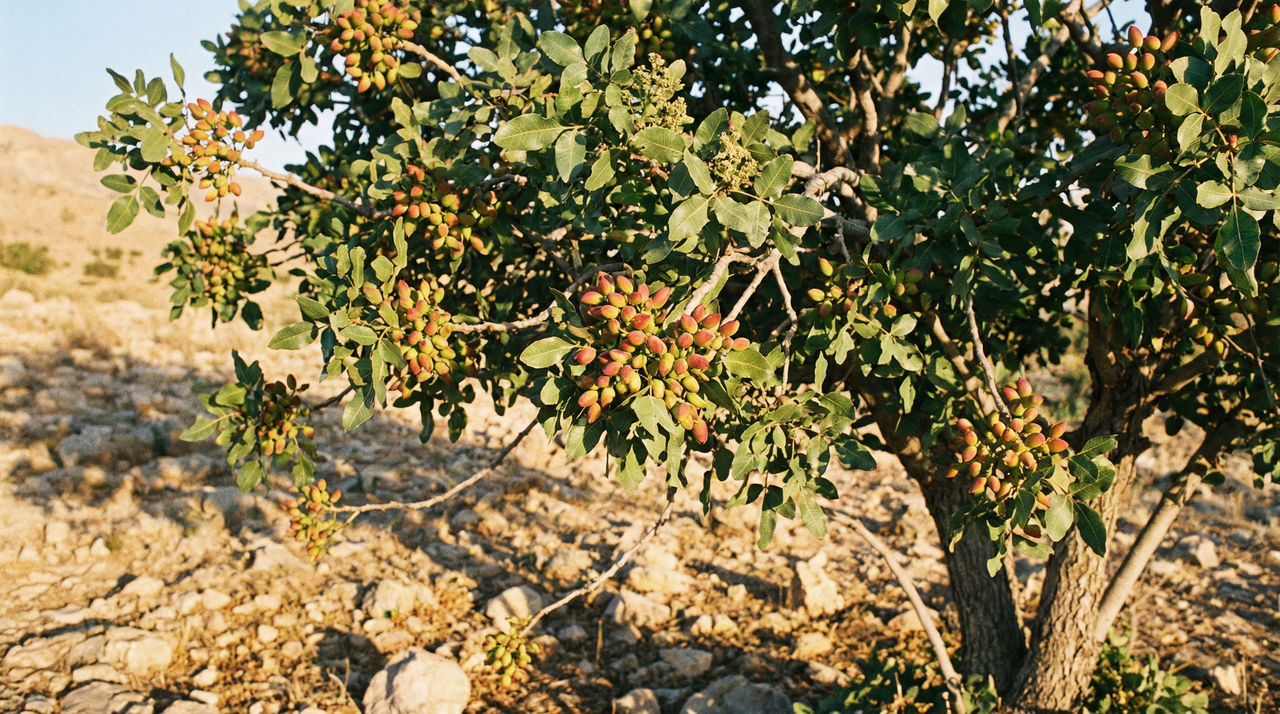
Most people who grow pistachios give up on them. Not because the tree is difficult, exactly, but because nobody told them the truth upfront: you might wait a decade before you taste a single nut from your own tree. I've watched experienced growers pull young pistachios out of the ground in frustration, convinced something was wrong, when really the tree was doing exactly what it evolved to do in the highlands of ancient Persia, where patience wasn't a virtue so much as a survival strategy. There's a reason pistachio orchards were passed down through generations like heirlooms rather than planted for personal gain. The tree isn't on your timeline.
What keeps me fascinated, though, is the contradiction tucked inside that slow life. A pistachio can push roots six meters into fractured bedrock, shrug off soil alkalinity that would kill most fruit trees, and produce for well over a century after you're gone.[1] It's one of the few canopy trees I'd plant in a climate where summer temperatures regularly top 110°F and rainfall measures in the single digits. That specific, brutal resilience is exactly why I think so many permaculture designers overlook it: they're scanning for flexibility, and pistachio offers something narrower but arguably more valuable in the right place, depth.
Pistachio Origin, History, and Cultural Significance
There's something humbling about working with a tree that was old when Rome was young. Pistacia vera has been feeding and fascinating people for millennia, and understanding where it comes from goes a long way toward understanding how to grow it well.
Botanical Background and Native Range
The pistachio tree is native to the arid and semi-arid foothills of the Irano-Turanian floristic region, a broad arc spanning parts of modern Iran, Afghanistan, Turkmenistan, and Uzbekistan, typically at elevations between 500 and 2,000 meters.[2][3][4] That origin matters. The rocky, alkaline, summer-scorched, winter-cold landscape of Central Asia essentially baked drought tolerance, deep tap roots, and extraordinary patience into Pistacia vera's DNA. When I'm siting this tree in a food forest design, I try to keep that native habitat in mind. This is not a tree that wants coddling.
And patient is the right word. A pistachio can live 300 years or more, with some specimens surviving up to 500 years under optimal conditions, though commercial orchards typically run trees for 20 to 100 years with good management.[2][5] Peak productivity takes 7 to 10 years to arrive.[6] I always tell clients who want to plant one: you're making a decision for your landscape's next generation, not just your own harvest window. I've shifted many of those clients toward grafted stock for exactly this reason, since it shaves years off the wait compared to growing from seed.
The pistachio is also dioecious, meaning you need separate male and female trees for pollination, and roughly only half of seedlings turn out female.[2] That's a guild-planning reality, not just a botanical footnote. The closely related Mastic Tree (Pistacia lentiscus) shares this dioecious habit and also flowers and fruits repeatedly across its long lifespan.[7] I've grown both in demonstration gardens. Where Pistacia vera gives you a deciduous nut producer, P. lentiscus is an evergreen Mediterranean shrub that can live over 500 years, resprouts after fire, and has been harvested for its prized mastic resin for thousands of years.[8][9] The genus gives us both a beloved edible nut and a historically significant medicinal resin, which is one of the things that makes Pistacia such a compelling palette for a designer working in warm climates.
Ancient Origins, Domestication, and Global Spread
Domestication of Pistacia vera dates back roughly 7,000 to 8,000 years, with archaeological evidence from sites like Tepe Yahya and Shahr-i Sokhta in eastern Iran pointing to cultivation in ancient Persia as early as 6,000 BCE.[10][11] From those Persian heartlands in regions like Kerman and Fars, the pistachio spread with remarkable speed along trade routes. By 3,000 BCE it had reached ancient Egypt, and by around 300 BCE the Greek botanist Theophrastus was describing it in his writings. Pliny the Elder documented pistachios in Rome around 75 CE, noting they'd been imported from Syria.[12][13][14]
In Persian culture, the pistachio became a symbol of prosperity, abundance, and fertility, woven into Nowruz celebrations and the poetry of Hafez and Saadi.[15] Islamic traditions praised the nut for digestive and cardiac benefits, and it carried significance during Eid and Ramadan.[16] Greek and Roman physicians, including Hippocrates, referenced it for urinary and vitality benefits alongside its use as a digestive aid. The broader genus enriched those traditions further: mastic resin from P. lentiscus became a prized medicine for gastrointestinal complaints, an oral health remedy, and incense in Greek Orthodox practice, while Pistacia terebinthus resin served as an anti-inflammatory and expectorant across Mediterranean folk medicine.[17][18]
Medieval Islamic scholars like Ibn al-Awwam refined grafting techniques and documented cultivation in detail, and Arab traders carried the tree into Moorish Spain by the 8th to 10th centuries.[11] Mastic cultivation on the Greek island of Chios became so culturally significant that it now holds UNESCO intangible cultural heritage status.[19] The pistachio reached California in the 1870s and 1880s, eventually becoming a commercial industry that now shapes the global market.[20]
Fun Facts and Modern Production
The name pistachio traces back to the Persian word "festanak," which feels right for a tree so deeply rooted in Persian identity.[2] Today, Iran leads global production at roughly 420,000 metric tons annually, followed by the United States at 328,000 metric tons (almost entirely from California), Turkey at 300,000, China at 120,000, and Syria at 90,000.[21]
A few traits make this tree genuinely unusual to work with. That natural shell split at maturity, where the hull dehisces cleanly as the nut ripens, is something commercial breeders have actively selected for and it's as satisfying to observe up close as you'd imagine.[2] The alternate-bearing habit, where trees swing between heavy and light crop years, is something I've learned to plan around in client designs by interplanting complementary species that fill harvest gaps in off years. It's one of those botanical quirks that turns into a design problem worth solving rather than just an inconvenience.
The climate picture is less cheerful. Models project up to a 20% yield reduction by 2050 due to warming and water scarcity, and labor exploitation of migrant workers in commercial orchards remains a serious ethical concern alongside corporate patents on hybrid varieties that could limit small-farmer access and erode genetic diversity.[22][23][24] Having spoken with growers and toured commercial operations, I believe regenerative practices and fair-labor standards aren't optional extras here. They're what keeps this ancient crop viable for the generations that will inherit these long-lived trees.
Pistachio Varieties and Cultivars
The first thing to understand about Pistacia vera is that you're never really choosing just one tree. Because it's dioecious, every planting decision is actually two decisions: which female cultivar will produce your nuts, and which male will be close enough to pollinate her when she needs it.[25] I always tell people that getting the bloom-timing overlap right between male and female is the single most consequential call a pistachio grower makes, and it's one most first-timers don't even know they need to make.
Notable Pistachio Cultivars and Rootstocks
Kerman is the dominant female, accounting for over 99% of California commercial plantings.[25][26] Its reputation is earned: thin shells, strong yields, partial Verticillium wilt resistance, and that buttery-sweet flavor profile driven by a high concentration of monoterpenes.[27] California growers I've spoken with describe freshly harvested Kerman nuts as bright and almost grassy, which tracks with what the volatile-compound research shows. Peters is its standard male pairing, though Lassen and Gum Drop offer slightly shifted bloom windows that some growers use to hedge against a cold spring.[25]
The newer cultivars tell a breeding story about pushing the crop into tougher conditions. Golden Hills delivers roughly 30% higher yields than Kerman and produces non-staining nuts, which matters more than it sounds at harvest time.[28][29] Wonderland brings broader disease resistance and adaptability for marginal sites. On the rootstock side, UCB-1 has become a go-to for improved salinity and Phytophthora tolerance.[28] I always prioritize disease-tolerant rootstocks in challenging sites because I've watched Verticillium quietly dismantle an otherwise healthy mature tree over three or four seasons with little warning. Pistacia atlantica rootstock can edge plantings into zones 6-7 with microclimate protection, which opens up geography that Kerman on its own simply couldn't survive.[30]
The flavor chemistry behind these choices is worth a moment. Researchers have identified over 300 volatile compounds in pistachio nuts, dominated by terpenoids, lipid oxidation products, and phenolics.[27] Kerman sits at the buttery, green-woody end of that spectrum. Iranian Pasri goes somewhere else entirely: earthier, more resinous, with higher sesquiterpenes and caramel-like furanones that remind me of dried fruit and roasted spices rather than fresh nuts.[27][31] That resinous quality connects the nut cultivars to the broader genus: Pistacia lentiscus selections like Regina are grown almost entirely for mastic resin yield rather than any edible nut, while Pistacia terebinthus varieties (Parker, Maia) are valued for fragrant Chian turpentine oleoresin.[32][33] Same genus, completely different design function.
Sourcing Pistachio Trees and Related Species
Pistacia vera is adapted to USDA zones 7-10, demands 600-800 chilling hours, and is rarely stocked as a general nursery ornamental because of its specific site requirements.[34][35] Grafted trees are the practical standard; seedlings are genetically unpredictable, fruit unreliably, and I've seen them become expensive disappointments for home growers who didn't realize what they were getting.[36] Look for certified grafted stock from specialty sources like Raintree Nursery, One Green World, or Haviland Nursery, where prices typically run $20-150 depending on rootstock and size.[37][38] Buying from licensed domestic nurseries also sidesteps most USDA APHIS regulatory complications around importing plant material.[39]
If you're drawn to the genus for ornamental or resin purposes rather than nut production, Pistacia lentiscus is considerably easier to source. Monrovia, Plant Delights Nursery, and Sheffield's Seed Company all carry it for zones 8-10, with container plants running $25-80 and seed packets around $5-15.[40][41][42] The evergreen mastic is visually quite different from the deciduous vera, and I often use that distinction when helping clients decide which species serves their landscape better: mastic for year-round screening or Mediterranean foliage texture, vera when the goal is actually putting nuts on the table.
Pistachio Propagation and Planting Guide
Planting a pistachio tree is a decision you'll be living with for decades, which means the propagation choice you make at the very beginning sets the trajectory for everything that follows. I want to be clear about that upfront, because I've watched home growers lose years to a simple misunderstanding about how these trees reproduce.
Choosing the Right Propagation Method
Commercial pistachio production runs almost entirely on grafted or budded trees, and for good reason: grafting preserves cultivar genetics, reduces the long juvenile period that plagues seed-grown stock, and delivers consistent fruit quality across an entire planting.[43][5] Whip-and-tongue, cleft, and T-budding techniques all work well on pistachio, with success rates typically landing between 70 and 90 percent.[44][45] Rootstock choice matters more than most gardeners realize. I've grafted 'Kerman' onto several different rootstocks over the years, and the differences in tree performance are not subtle. Pistacia atlantica gives you excellent drought tolerance and cold hardiness, P. lentiscus tends to produce a dwarfing effect that nudges trees into bearing sooner, P. terebinthus brings strong resistance to soilborne pathogens, and P. khinjuk handles poor soils and drought as well as anything in the genus.[46][47][48]
Seed propagation is another story. Because pistachios are highly heterozygous, seedlings don't produce true-to-type fruit, and any large sowing will split roughly 50/50 between males and females with no way to tell which is which until flowering.[49][5][50] I once waited years on an experimental seed-grown tree only to discover I'd grown a male. That experience alone is why I almost always recommend grafted females in any design. The one exception worth knowing: P. vera seeds are mostly monoembryonic, but polyembryony does occur occasionally, producing clonal seedlings that preserve the maternal genotype and shorten juvenility.[51][52] By contrast, the mastic tree (P. lentiscus) typically produces 2 to 5 embryos per seed and maintains viability for years in cold storage, a genus-wide illustration of how differently these species approach reproduction.[53] For the home experimenter who wants to grow pistachio from seed for rootstock purposes or pure curiosity, it's a reasonable project. As a path to reliable nut production, it isn't. Cuttings fare even worse; semi-hardwood cuttings with IBA hormone typically root at only 10 to 30 percent, air layering hits 40 to 60 percent, and tissue culture achieves 80 to 90 percent but remains a research-lab tool rather than a practical option for most growers.[54][55]
Soil, Site, and Planting Requirements
Get the soil right before you do anything else. Pistachio demands well-drained, calcareous, sandy-loam or loamy soils with a pH between 7.0 and 8.0 (the tree tolerates a slightly wider range of 6.5 to 8.5 in practice), and the profile needs to run at least one meter deep, ideally closer to 1.5 to 2 meters, to accommodate the deep taproot this species depends on.[56][57][58] Optimal organic matter sits at 1 to 3 percent. Waterlogging is not a minor inconvenience; it's a death sentence. Pistachio evolved on arid slopes between 300 and 1,500 meters elevation in Central Asia and the Middle East, and it has essentially no tolerance for compacted or saturated soils.[56][59] When I assess sites for clients, I reject any location that fails a simple penetrometer check. Bulk density above 1.3 to 1.4 g/cm³ signals compaction that will prevent the kind of deep, loose root development pistachio requires, and from there the path to Phytophthora root rot and chronic hypoxia is short.[60][61]
The tree wants full sun, minimum six to eight hours direct daily, and tolerates moderate salinity up to about 4 to 6 dS/m. For pH adjustment, work lime into the top 6 to 12 inches to raise it, or elemental sulfur to lower it, at roughly 1 to 2 tons per acre of lime or 200 to 500 pounds per acre of sulfur, and allow three to six months for the amendment to take effect. Plan to re-test soil every three to four years.[5][62] If you're trialing a young tree in a container while waiting for a permanent site, use a mix of roughly 40 percent loam, 30 percent coarse sand, and 30 percent perlite to replicate the drainage profile this tree expects in the ground.[63]
Spacing, Technique, and Initial Establishment
Mature pistachio trees reach 20 to 30 feet tall with a canopy spread of 20 to 25 feet, and that size has real implications for layout. Commercial orchards typically space trees 18 to 25 feet within rows and 20 to 25 feet between rows, supporting roughly 100 to 150 trees per acre and balancing light interception, air circulation, and equipment access.[26][64] In smaller home-scale plantings I generally work with 20 by 20 foot spacing and confirm that with whatever the soil-test results suggest about root competition.
Because pistachio is dioecious, you need both sexes to get nuts. The standard orchard ratio is one male for every 8 to 12 females, with 'Peters' as the most common pollinizer for 'Kerman'.[26][65] In small home plantings, I position the male centrally or slightly upwind of the females so pollen reaches the whole block without sacrificing a disproportionate amount of productive space. The open-center (vase) training system is standard and supports the air circulation that keeps disease pressure manageable.
Timing your planting correctly matters more than many first-time growers expect. Get grafted trees in the ground in early spring after the last frost, February through April in zones 9 and 10, or wait until soil temperature reaches 60°F in zones 7 and 8. Plant at the same depth as the nursery container and stake young trees for the first one to two years to prevent toppling, though leave enough give in the stake for the trunk to flex slightly, since some movement encourages trunk strength.[66][26]
Germination Timeline and Early Growth
If you've decided to grow from seed, whether for rootstock production or an educational experiment, the protocol is specific. Seeds need 30 to 45 days of cold moist stratification at 34 to 41°F, and scarification improves germination rates noticeably given the impermeable endocarp.[66][53] After sowing in well-drained sandy loam at 70 to 85°F with consistent moisture but no standing water, expect germination in two to four weeks and overall rates somewhere between 50 and 80 percent.[5][67] Let seedlings grow for a full year and reach 18 to 24 inches before transplanting.[26]
The timeline reality is sobering but worth knowing clearly. Seed-grown trees typically bear their first fruit at 5 to 7 years and sometimes push to 10, while grafted trees shorten that wait to 3 to 5 years. Full production doesn't arrive until 12 to 15 years in either case.[68] I only start pistachio from seed when I specifically need rootstock material or want to walk a client through the germination process for educational purposes. For nut production, I buy grafted bareroot stock every time. Propagation method is the single most consequential decision you'll make for this tree, and it's the one you make before you even dig the hole.
Pistachio Care Guide: Watering, Feeding, Climate, and Seasonal Management
Pistachio rewards growers who treat it like the arid-climate specialist it actually is, not like a typical backyard fruit tree. The care decisions you make in year one ripple forward for decades, so it's worth getting the fundamentals right from the start.
Water Needs and Drought Tolerance
Pistacia vera evolved in some of the driest landscapes on earth, and that heritage shows. Established trees can go months without supplemental irrigation, though yields typically drop 20-50% under prolonged stress, so "can survive" and "will produce" are two very different things.[69][25] For reliable nut production, mature trees need 30-45 inches of water annually, delivered March through October via drip or micro-sprinklers, with peak summer demand running 0.25-0.3 inches per day.[70][26]
Young trees under four years need irrigation every 7-21 days while roots establish. Once mature, shift to deep, infrequent applications every 2-4 weeks. There's actually a case for intentional mild stress during kernel fill: regulated deficit irrigation at 75-85% of full evapotranspiration can improve nut splitting and flavor without meaningful yield loss.[5][71] My general rule: let the top few inches dry out between waterings, but don't let that become an excuse to neglect deep moisture. The more serious danger in heavy or poorly drained soils is overwatering, which opens the door to Phytophthora root and crown rot, a disease that shows up as wilting and yellowing that looks deceptively like drought stress until you dig and find dark, mushy roots.[72][73] Keep irrigation water pH between 6.5 and 7.5, and note that while mature trees tolerate salinity up to 4-6 dS/m, young plants should stay below 2.0-3.0 dS/m.[74]
Fertility and Nutrient Management
Pistachio is a serious feeder. Mature trees want 1.0-1.5 lb of elemental nitrogen per tree per year, rising to 2-3 lb in high-yield orchards. Young trees in their first three years do well with 1-2 lb of balanced 10-10-10 split across the season.[75][76] But nitrogen is only the headline number. Boron and zinc are where nut quality actually lives. Boron deficiency produces those small, hollow, poorly split nuts that look like a bad year but are really a soil chemistry problem. Zinc deficiency causes the characteristic rosetting and interveinal chlorosis that can quietly cost you 30% of your yield before you trace it back to the source.[77][26] I've reviewed leaf-tissue results for clients and watched those numbers translate directly into harvest quality once the micronutrient program got dialed in. It's not subtle.
Soil and leaf testing every 2-3 years isn't optional here; it's the management tool that separates growers who consistently produce from those who guess and wonder why alternate bearing is so severe.[77] Excess nitrogen is its own trap: too much drives vegetative growth, delays maturity, and worsens the boom-bust alternate-bearing cycle.[74] The year after a heavy crop, I've pulled back on nitrogen deliberately and gotten a noticeably more even follow-on harvest. That's the kind of feedback loop that only clicks once you're paying close attention. The optimal soil pH for pistachio sits at 7.0-8.0, ideally around 7.5-7.8, which is conveniently alkaline enough to suit the tree but specific enough to require actual measurement rather than assumption.[74]
Frost Tolerance and Winter Protection
Pistachio grows reliably in USDA zones 7-10, with best performance in zones 8-10.[59] The hardiness story is more complicated than a single number suggests, though. Dormant mature trees can tolerate temperatures down to -10°F to -15°F, and roots actually survive quite a bit of cold.[78][26] The vulnerable moment isn't winter, it's spring. Flower buds and open blooms suffer damage at just 29-31°F, a window comparable to peaches in its unforgiving narrowness.[78] I've learned to watch bud swell in late February very closely for this reason; a single late frost event at the wrong phenological moment can eliminate most of the year's crop while the tree itself looks completely fine.
South-facing slopes add 2-3°C of effective protection and have made the difference for pistachio plantings in marginal years.[59] Young trees and new foliage need protection below 20°F regardless of site.[78] Microclimate siting at planting time is genuinely worth more than any frost cloth applied in a panic.
Heat Tolerance and Summer Stress Management
Pistachio's optimal growth happens between 77-95°F, and the tree tolerates short spikes up to 113-122°F without permanent damage.[79] Above 104°F, especially combined with drought, the symptoms get ugly fast: leaf scorch, premature drop, and a spike in blank nuts.[80] Nighttime recovery is critical, and if temperatures drop to 59-68°F overnight, trees can shake off intense daytime heat remarkably well.[79] In my experience working with hot-summer landscapes, siting for good nighttime airflow and using light canopy management to avoid heat traps has consistently outperformed any foliar intervention during kernel fill.
Cultivar selection matters here too. 'Kerman' is notably sensitive during kernel fill, while 'Su' holds yield stability better above 104°F.[81] And the chilling requirement cuts both ways: pistachio needs 700-1,000 hours below 45°F to break dormancy properly, so the ideal climate profile is genuinely specific: hot, dry summers paired with reliably cool winters.[56]
Pruning, Maintenance, and Seasonal Rhythm
The annual management calendar for pistachio follows a clear Mediterranean rhythm: winter dormancy from November through February, bud break and flowering from February through May, summer nut fill, then harvest in September and October before leaf drop.[82] Pruning slots into two windows: dormant late-winter cuts or post-harvest cuts in August-September. I've consistently gotten better bud retention the following spring from post-harvest pruning, and that matches what the UC ANR data supports, though either timing beats skipping it entirely.[26]
The target is an open-center, vase-shaped canopy with 10-20% of canopy volume removed annually, focusing on deadwood, suckers, and crowding.[26][83] Young trees in their first five years need structural training to select 3-4 primary scaffolds. Remove rootstock suckers immediately during those early years; they compete aggressively and will redirect the tree's energy if ignored.[5] Alternate bearing, the tendency to produce heavily one year and lightly the next, can be moderated through consistent pruning combined with the balanced nutrition and regulated irrigation covered above.[5] None of these are dramatic interventions; they're steady, season-by-season attention that compounds over time. A pistachio managed carefully across decades becomes a genuinely remarkable tree.
Pistachio Harvesting Guide: Timing, Technique, and Yield
Patience is the first skill a pistachio grower needs. These trees typically take 5-7 years after planting to produce their first real harvest, and they don't hit full production until somewhere around 10-15 years in.[26][5] Once that production rhythm establishes itself, the annual arc runs from bloom in April through May, into rapid kernel fill across June and July, and finally to hull split in August and September, a 160-200 day journey that rewards growers who learn to read the tree's cues rather than the calendar.[26]
When to Harvest Pistachios: Hull Split and Maturity Indicators
The clearest harvest signal is hull split: somewhere between 50 and 95 percent of nuts cracking open and shifting from green to yellow or tan, with the hull separating cleanly from the shell beneath.[26][84] Kernel moisture at that point should land between 4 and 6 percent, and the kernels themselves should look light cream-colored without any green tinge.[26] In California, this window typically runs late August through mid-October, peaking in September.[5] I've learned from watching several seasons across client orchards that "ON" years in the alternate-bearing cycle can push maturity back by one to two weeks, so the cue isn't a fixed date so much as a pattern you start to recognize.[26] Rootstocks matter here too: UCB-1 can advance maturity by up to ten days, which is worth factoring into your design from the start.[5]
How to Harvest Pistachios
Stop irrigation 3-4 weeks before harvest to encourage even drying and set up the conditions for clean collection.[26] Harvest during dry weather and in the morning when temperatures are still moderate; heat and humidity are the two things that open the door to aspergillus and hull damage.[5] Commercial operations use mechanical trunk shakers and drop-catch harvesters, but for smaller plantings, tarps spread beneath the canopy and a gentle manual shake accomplish the same basic thing without the equipment cost.[26]
Hull removal within 24 hours of harvest is non-negotiable. I've seen what happens when nuts sit in their hulls even 48 hours in humid conditions: staining, mold, and a significantly degraded finished product. The USDA research backs this up firmly.[85] After dehulling, dry the in-shell nuts either over 1-2 weeks at ambient temperatures or in a controlled environment at 90-120°F for 2-5 days, targeting 5-10% moisture content. Don't push past 120°F; that's the threshold where aflatoxin risk increases.[26][86]
Pistachio Yields, Flavor, and Storage
A mature pistachio tree yields roughly 20-50 pounds of in-shell nuts per season, with California Kerman orchards averaging toward the upper end of that range once established.[26][87] That's respectable for a permaculture canopy tree, though it's worth being realistic: compared to something like a high-yielding almond, the wait is longer and the crop is more sensitive to post-harvest handling errors.
Raw kernels are mild, slightly sweet, with subtle bitterness and earthy undertones.[88] Roasting at 120-160°C transforms that profile dramatically through Maillard reactions and the volatilization of monoterpenes like alpha-pinene and limonene, producing the complex nuttiness and crunch most people associate with a good pistachio.[89][90] Whatever form you store them in, keep moisture below 6% and hold temperatures at 32-41°F with 50-55% relative humidity. Done right, properly dried pistachios stay high quality for 12-24 months.[85][5] That cold, dry storage isn't optional; it's the single biggest variable separating exceptional nuts from a batch you'll end up discarding.
Pistachio Preparation, Culinary Uses, and Safety
Edible Parts and Flavor Profiles of Pistachio and Related Species
With Pistacia vera, the only part you're eating is the kernel inside that hard shell.[2] That sounds obvious until you start exploring the broader genus and realize how much the relatives diverge: mastic (P. lentiscus) offers edible ripe drupes for jams and liqueurs plus its famous resin, while P. eurycarpa fruits are eaten as snacks or brewed into teas after processing.[91] Understanding this distinction matters practically -- I always label my rows carefully in the first season because young grafts can look confusingly similar to sumac relatives before the hull develops.
The flavor of a pistachio kernel is buttery, nutty, and subtly sweet with a satisfying crispness. Roasting transforms it through Maillard reactions, generating pyrazines, furans, and Strecker aldehydes that push the profile into deeper caramelized, umami-rich territory while softening any raw astringency.[92][89] Home-roasted nuts from my own harvests develop a noticeably more complex aroma than anything from a bag -- the chemistry is the same, but freshness amplifies every note. Mastic resin runs in a completely different direction: pine-like, cedar, balsamic, with a sweetness that gives way to lingering bitterness,[93] which is exactly what makes it so useful in Greek desserts and breads while being completely wrong as a snacking nut substitute.
Nutritional Value and Evidence-Based Health Benefits
Per 100g, raw pistachio kernels deliver roughly 563 kcal, 45g of mostly unsaturated fat, 20g protein, and 10g of fiber, along with 100% of the daily value for vitamin B6 and 144% for copper, plus meaningful amounts of potassium, magnesium, phosphorus, and manganese.[94] The health benefits section covers the phytochemistry in depth, but the practical upshot is that regular consumption is backed by solid evidence for reduced LDL oxidation, better blood pressure, glycemic control, and anti-inflammatory effects from polyphenols.[95][96] The genus-wide pattern holds too: lentiscus fruits and mastic resin both show antioxidant and cardiovascular promise,[97] which, as a permaculture designer, I find compelling -- one genus, multiple species, each contributing something functional to a well-designed system.
Processing, Safety Considerations, and Allergies
There are a few safety points I take seriously with nut crops, and pistachio sits near the top of the list for post-harvest care. Aflatoxin from Aspergillus fungi is a real risk; the standard control is drying kernels down to below 6% moisture promptly after harvest.[98] Roasting also helps in another way -- it reduces phytic acid (an anti-nutritional factor in raw kernels) by 50-70%.[99] The unripe hull is a separate issue entirely; it contains juglone-like phenolics and tannins that cause gastrointestinal irritation and should never be consumed.[100]
On allergy: pistachio affects roughly 0.5-1% of the population, with 40-50% cross-reactivity to cashew and other Anacardiaceae family members.[101][102] If you have a cashew or pistachio allergy, avoid all parts of related Pistacia species and learn to distinguish them from poison ivy relatives in the same family -- this isn't hedging, the cross-reactivity data is clear, and I've seen gardeners genuinely surprised by skin reactions from handling resinous relatives.[103]
Culinary Applications in Mediterranean and Middle Eastern Cuisines
Pistachios belong in both sweet and savory contexts with equal authority. Baklava and halva represent the sweet tradition; pilafs, pestos, salads, and spanakopita show the savory range.[104] Pistachio cream, pistachio butter, ice cream, and layered gateau recipes all rely on that roasted kernel's fat-soluble flavor holding beautifully in dairy and oil bases. For harvest timing, watch for hulls splitting and shifting to yellow-tan, typically late August through October, then dry to 5-6% moisture and store at 0-5°C with 50-60% relative humidity.[105][106] Mastic, harvested from shallow bark incisions in July-August, flavors Greek breads, liqueurs, and chewing gum in its own right.[93]
Traditional Medicinal Preparations Across Pistacia Species
The ethnobotanical preparation record for this genus runs deep. Leaf infusions typically use 1-2 teaspoons of dried leaves per cup, up to three cups daily; decoctions run 5-10g of leaves per day, and tinctures are usually 1-2ml two to three times daily.[107] Mastic resin has the longest and most documented medicinal heritage here -- the European Medicines Agency monograph supports up to 3g of resin daily for traditional use, commonly taken as 350mg capsules three times daily or as a 2-4ml tincture.[108][109] Mastic's GRAS status makes it one of the more accessible entry points for anyone curious about the genus beyond the kitchen. I appreciate that this single genus -- one species grown primarily for its kernel, another for its resin -- models exactly the kind of multi-function plant thinking I try to encourage in permaculture clients.
Non-Food Uses, Byproducts, and Sustainability
Pistachio shells and leaves contain antioxidant compounds with antimicrobial and anti-inflammatory research potential,[110] though these remain secondary to the kernel. The bigger conversation in sustainable cultivation is water. Pistachio orchards require 3-4 acre-feet of water per year,[111] which is a genuine concern in the arid zones where the tree performs best. When I work with clients in drier Mediterranean climates, I push hard for deep mulch guilds and efficient drip systems -- not as a perfect fix, but as a meaningful reduction in an already difficult water budget. Mastic trees, by contrast, can be coppiced for biomass or mulch and regrow readily,[112] representing a lower-input parallel within the same genus. Mastic resin carries PDO protection and a history in Greek and Roman ritual and food stretching back millennia -- a reminder that responsible sourcing of these materials honors something much older than the commercial nut industry.
Pistachio Health Benefits and Medicinal Uses
Pistachios have been eaten medicinally for millennia, and it turns out the ancients were onto something real. What modern research keeps confirming is that these aren't just calorie-dense snack nuts; they're a genuinely complex food with bioactive compounds that work through several well-documented mechanisms. I find that framing helps a lot when I'm talking to clients who wonder whether the health claims they've read are marketing or science.
Nutritional Profile of Pistachios
The nutritional foundation of pistachios is worth understanding before anything else, because it explains why a relatively small daily serving actually moves the needle. Per 100g of raw kernels, you're looking at roughly 560 kcal, 45g of fat (predominantly monounsaturated), 20g of protein, and about 10.6g of dietary fiber.[94][113] That's a respectable fiber load for a nut, which matters for satiety and gut health in ways that straight calorie counts miss.
Where pistachios really differentiate themselves from most permaculture tree nuts is in micronutrients. They deliver a full day's worth of vitamin B6 at around 1.7mg per 100g, along with 144% of the daily value for copper and meaningful amounts of manganese, magnesium, and potassium.[94] Copper and B6 together in those concentrations outpace what you'd get from a comparable serving of almonds. The kernels also contain lutein (1.5-2.5mg per 100g) and gamma-tocopherol alongside polyphenols including catechin, epicatechin, and gallic acid.[114] I've noticed that home-stored pistachios hold their flavor and resist rancidity better than many other tree nuts I've kept under the same conditions, and the gamma-tocopherol load is a plausible explanation for that.
Roasting is generally fine for nutrient retention; a 2010 food science study shows 90-95% of nutrients survive the process, though fatty acid profiles do shift slightly by origin, with California-grown nuts tending toward higher oleic acid and Iranian varieties often showing higher linoleic.[115][116] Those differences matter less at home scale than sourcing quality does.
Key Phytochemicals and Bioactive Compounds
The kernel is actually the least pharmacologically dense part of this plant. Pistacia vera produces a broad spectrum of secondary metabolites across all its tissues: flavonoids like quercetin, kaempferol, and catechins; phenolic acids including gallic and ferulic acid; terpenoids; proanthocyanidins; resveratrol; ellagic acid; and phytosterols. The hulls are richest in phenolics, and the leaves concentrate quercetin glycosides at levels that make them pharmacologically interesting in their own right.[117][118] The essential oils tell a different story, dominated by monoterpenes like α-pinene (up to 30%), limonene, and β-myrcene, which contribute measurable antimicrobial activity.[119][120]
After growing and observing Pistacia species through dry summers in zone 9B, I can say the drought-stress connection to phytochemical richness is real and visible. Research confirms that drought stress drives phenolic accumulation, and phytochemical content peaks in autumn, with soil pH around 7-8 and geographic origin also shaping the final profile.[121][122] Trees that work harder produce more complex chemistry, which is a principle that holds across this entire genus. These compounds also serve the tree ecologically -- UV protection, herbivore deterrence, antimicrobial defense, and allelopathy -- which is worth remembering when thinking about pistachio's role in a designed landscape.[123]
Evidence-Based Medicinal Research
The strongest clinical territory for pistachios is cardiovascular. Meta-analyses of randomized trials show that one to two daily servings meaningfully reduce LDL cholesterol, improve HDL, and deliver better overall lipid profiles, with AMPK activation identified as a likely mechanistic driver.[124][125] Alongside that, pistachio polyphenols and tocopherols activate the Nrf2 pathway, upregulating antioxidant enzymes including SOD, CAT, and GPx.[126][127] Anti-inflammatory activity via NF-κB inhibition and reduced TNF-α, IL-6, and COX-2 expression is well-supported across cell and animal models.[128][129]
Blood sugar management is another well-supported area. Pistachio extracts inhibit alpha-amylase and alpha-glucosidase at IC50 values comparable to acarbose, and human trials back this up with measurable improvements in insulin sensitivity and glycemic control.[130][131] Cardioprotective benefits also include ACE inhibition and improved endothelial function.[132]
Neuroprotective and anti-cancer effects are promising but still largely preclinical. Acetylcholinesterase inhibition and amyloid-beta reduction have been demonstrated in model systems,[133] and apoptosis induction via caspase-3/9 and PI3K/Akt pathways has been shown in breast, colon, and prostate cell lines.[134] More long-term human trials are needed before strong claims can be made. The related mastic tree (Pistacia lentiscus) adds genuine clinical depth to the genus picture: its resin achieves 30-38% H. pylori eradication in trials and shows anti-inflammatory activity through COX-2, iNOS, and MAPK pathways,[135][136] reinforcing the pattern that this entire genus is pharmacologically sophisticated.
Safety Considerations and Allergies
Properly processed pistachios are non-toxic to humans and, per ASPCA guidance, safe for common household pets.[137] The primary risks are tree-nut allergy and aflatoxin from improper storage, both of which are real but manageable. IgE-mediated allergy affects roughly 0.2-1% of people, mediated by Pis v 1 and Pis v 2 proteins, with meaningful cross-reactivity to cashew given their shared Anacardiaceae family.[138] I always tell clients with any family history of Anacardiaceae sensitivities to introduce pistachios gradually and to keep an EpiPen accessible until they know their response.
Contact dermatitis is a separate concern for handlers: urushiol-like compounds in the hulls and shells can irritate skin, but these don't transfer to the edible kernel.[139] Aflatoxin contamination from Aspergillus mold is the other significant risk, and it's entirely a storage issue. In my subtropical climate I refrigerate harvested nuts below 10°C in airtight containers as quickly as possible, which tracks with FDA guidance.[140] Roasting at 140-160°C reduces aflatoxin levels by up to 80%, so dry-roasting promptly after harvest is worth doing even if you prefer raw nuts for eating.[141]
A few smaller cautions round out the picture. Vitamin K content is low (around 0.14mg per 28g serving), but people on warfarin still need to keep intake consistent rather than sporadic.[142] Very large quantities can cause GI discomfort from the combined fiber and fat load. For mastic gum specifically, the European Medicines Agency assessment supports tolerability up to 1g/day, and while I've seen it chewed casually in Mediterranean communities without apparent issue, the data on pregnancy safety is insufficient enough that I'd advise pregnant readers to skip concentrated preparations until more is known.[143][144]
Pistachio Pests and Diseases
There's no universal clean bill of health for pistachio trees. What I've learned from watching these trees in the field is that resistance is never absolute; it shifts depending on the cultivar you chose, the rootstock it's grafted onto, and crucially, the conditions under your feet. A tree on UCB-1 in fast-draining loam faces a very different disease landscape than the same cultivar sitting in compacted clay. That context shapes everything in this section.
Major Diseases and Their Management
The three diseases that keep California pistachio growers up at night are Verticillium wilt, Phytophthora root and crown rot, and Botryosphaeria panicle and shoot blight. Verticillium wilt (Verticillium dahliae) causes vascular damage and eventual tree decline, though commercial cultivars like 'Kerman' and 'Peters' carry high resistance; the real danger is planting into previously cropped ground with a history of susceptible hosts.[145][146] Early in my career, watching Verticillium take out a half-dozen young pistachios on a site where peppers had grown for years cost a client two seasons and serious replanting money. Now I insist on soil testing and UCB-1 rootstock (Pistacia atlantica × P. integerrima) for any planting in previously cultivated ground, full stop.[5]
Phytophthora root and crown rot hits hardest in poorly drained soils at soil temperatures between 60 and 80°F, conditions that are frustratingly common on flat or clay-heavy sites.[72] Most Pistacia vera cultivars are highly susceptible, but grafting onto Paradox or UCB-1 provides meaningful protection when drainage itself can't be improved.[147][148] Botryosphaeria canker is stress-triggered; 'Kerman' shows moderate susceptibility, while newer releases like 'Golden Hills' and 'Lost Hills' carry improved resistance and are worth serious consideration for humid or coastal-adjacent sites.[149] Alternaria late blight rounds out the foliar threats, becoming a real problem when humidity consistently exceeds 60 to 70 percent; good air circulation through thoughtful pruning is your first line of defense.[150]
For Pistacia lentiscus specifically, the disease picture is similar but drainage is even more critical. Young plants are especially vulnerable to Verticillium and Phytophthora, and humid conditions invite powdery mildew alongside fungal leaf spot pathogens like Ascochyta and Melanconis.[151][152] The good news: integrated management through resistant rootstocks, excellent drainage, disciplined irrigation, sanitation, and phosphite applications targeted by monitoring works reliably when no single element is skipped.[153][72]
Key Insect and Mite Pests
The navel orangeworm (Amyelois transitella) is the pest that defines California pistachio production. It bores into nuts, causes direct yield loss, and opens the door to fungal infection; in unmanaged orchards it can claim up to 50 percent of the crop.[154][155] The damage is deceptively easy to miss until hull split arrives, which is exactly why I learned to use degree-day models and trap counts. Sprays, when they're warranted at all, need to hit the egg-to-early-larval window rather than chasing insects that are already inside the nut.
Leaffooted bugs (Leptoglossus spp.) and stink bugs including Bagrada hilaris pierce developing nuts and inject compounds that blacken kernels outright; Bagrada has become an escalating problem in California since its 2008 arrival and shows no sign of retreating.[156] Aphids, including green peach aphid and pistachio-specific species, cause leaf curling, reduced vigor, sooty mold from honeydew, and occasionally virus transmission; young trees are the most exposed.[157][158] Pistachio phylloxera (Viteus pistaciae) adds another layer of complexity, forming galls on leaves and roots that can push young trees into decline; grafting onto Pistacia atlantica reduces susceptibility considerably.[159]
Beyond those headline pests, the supporting cast includes twig borers, leafminers, carob moth, scale insects, spider mites, and root-knot nematodes (Meloidogyne spp.) that impair water and nutrient uptake in ways that compound other stresses.[157][160] What's worth remembering is that healthy, unstressed trees aren't helpless. Both Pistacia vera and Pistacia lentiscus produce phenolics, terpenes, and volatile resins that function as antifeedants and pest deterrents.[161][162] Walking through my landscape plantings of mastic, I've genuinely noticed that the resinous scent seems to hold many generalist insects at a distance. That's the plant's own chemistry doing real ecological work, and it's a reminder that tree stress amplifies pest pressure far more than most growers account for. For nematodes on suspect ground, I always recommend a pre-plant biofumigant cover crop or soil solarization before planting. UCB-1 also shows good tolerance to root-knot nematodes, which makes it the obvious choice on sites with any history of the pest.[160][163]
Integrated Pest Management Strategies
IPM for pistachio follows a clear hierarchy: monitor first, intervene culturally before reaching for anything else, conserve natural enemies, and reserve targeted products for threshold-triggered situations only.[154] In practice, that means regular scouting, degree-day tracking for navel orangeworm, mummy-nut removal every winter without exception, pruning for airflow, and maintaining excellent drainage. The growers I've seen stay ahead of pest pressure year after year are rarely the ones with the most sophisticated spray programs; they're the ones who never skip the mummy-nut cleanup.
Conserving lady beetles and Trichogramma wasps has allowed me to pull back on broad-spectrum applications significantly across sites I manage, which tracks with the research on pistachio beneficial insect populations.[48] When intervention is necessary, biologically based products like Bt or horticultural oils, applied at the right life-stage window, do the job without collapsing the beneficial community. The foundation, though, is always site selection, rootstock choice, and those unglamorous cultural basics. Get those right, and the tree's own defenses carry a surprising amount of the load.
Pistachio in Permaculture Design
Pistachio has earned its place in arid and Mediterranean food forests not through clever marketing but through millions of years of adaptation to some of the planet's toughest growing conditions. Understanding those native ecosystem functions is what separates a productive planting from a beautiful but fruitless one.
Ecosystem Functions and Ecological Roles
At its ecological core, pistachio is a wind-pollinated tree, and harnessing that pollination effectively requires thoughtful orchard guild design.[26][164] In my designs I always ensure at least one strong male within 100 feet and orient rows perpendicular to prevailing winds. That lesson came the hard way after an under-pollinated planting gave me a beautiful canopy and almost no crop. Pollen viability peaks when humidity sits between 40-60% and temperatures hover around 20-30°C, which is precisely the kind of warm, dry spring that arid zones reliably deliver.[165]
Below ground, pistachio is doing equally serious work. The taproot can extend up to 10 meters, pulling moisture from deep reserves, anchoring the tree through high winds, and binding friable arid soils against erosion.[166][167] I've used deep-rooted trees like this on well-drained slopes in xeriscape guilds where shallower-rooted species simply can't hold the hill. Above ground, those high-energy nuts feed birds, rodents, and mammals, supporting seed dispersal and genuine biodiversity in native arid woodlands.[168][169]
Pistachio does not fix nitrogen and is not a dynamic accumulator.[170] Pairing it with legumes like carob or nitrogen-fixing shrubs is non-negotiable in the low-fertility, well-drained soils where these trees naturally excel. It prefers alkaline conditions (pH 7.0-8.5) and will suffer root rot if drainage is poor. On the brighter side, the foliage emits a resinous scent that deters some herbivores, the tree tolerates urban heat and pollution once established, and come autumn it delivers a genuinely striking display of yellow-orange fall color that I find myself recommending even in ornamental xeriscape contexts where nut production isn't the primary goal.[171][172]
Climate and Zone Requirements
Pistacia vera evolved in the arid and semi-arid zones of Central Asia and the Middle East, where annual rainfall runs just 200-500 mm and summers are fierce and dry.[87][166] That origin story is also a climate prescription. The tree survives in USDA zones 7-11, but productive nut-bearing happens in a much narrower window: zones 8-10, ideally 9-10, where winters deliver 800-1000 chilling hours below 45°F and summers push reliably above 95°F for proper kernel filling.[25][173][174]
I've evaluated zone 8b and 9a sites where the zone map looks promising but insufficient summer heat or marginal chill hours produces gorgeous trees with hollow or blank nuts. Track your own chilling hours with a data logger rather than trusting zone generalizations alone. Spring frosts are particularly damaging once buds break, with temperatures of 25-28°F enough to wipe out the season's blossoms.[175] Humidity compounds the problem on a different front: fungal diseases like Verticillium wilt, Alternaria leaf blight, and Phytophthora root rot thrive in wet, muggy conditions the tree was never designed for.[176] This is why over 99% of U.S. commercial production sits in California's San Joaquin Valley, with only limited success elsewhere in Arizona, New Mexico, and Texas.[177]
If your site sits outside that sweet spot, the broader genus offers alternatives worth knowing. Pistacia lentiscus (Mastic Tree) handles coastal Mediterranean climates with more humidity and salt tolerance and needs less winter chill.[178][171] For colder edges, Pistacia chinensis (Chinese pistache) pushes into zones 6-9, tolerating temperatures as low as -20°F (-29°C), though you're growing it for ornamental value rather than edible nuts.[171][179]
Forest Layer Placement and Guild Design
In a permaculture food forest, Pistacia vera sits in the canopy or sub-canopy layer, typically reaching 5-10 meters with a broad, rounded, deciduous crown that delivers generous seasonal shade without the year-round light suppression of an evergreen.[59][180] That open, deciduous canopy is actually an asset in hot climates: understory herbs get summer protection from the most intense radiation but still receive enough winter light to keep growing. In practice I've found that figs, pomegranates, olives, lavender, and rosemary make natural companions because they share the same full-sun, low-water preferences without competing aggressively for the resources pistachio needs.[181][182] Nitrogen-fixing legumes belong in every pistachio guild for the reasons already mentioned; without that fertility input, the surrounding system will stay lean.
Pistachio's leaf litter does have mild allelopathic properties that can suppress some weeds, which I consider a modest but real benefit in low-input designs.[183] It hasn't caused problems with the compatible Mediterranean herbs I typically plant beneath it, but I'd be cautious about experimenting with moisture-sensitive annuals directly under the drip line.
Contrast that open structure with Pistacia lentiscus, which functions as a large shrub or small evergreen sub-canopy tree in Mediterranean designs, usually 2-10 meters.[184][185] Mastic excels as a windbreak or living fence in coastal or slightly more humid microclimates, but its denser shade and more competitive roots can limit understory diversity in ways pistachio's canopy simply doesn't.[171] Pistacia terebinthus (Terebinth) fills a similar shrub-to-small-tree niche (5-12 m) in Mediterranean maquis systems and can occupy a useful mid-layer role where Pistacia vera would be oversized.[186] When the climate aligns and placement is deliberate, Pistacia vera delivers nut production, seasonal shade, erosion control, and genuine wildlife habitat from a single long-lived tree that, once established, asks remarkably little in return.
The Tree That Taught Me to Think in Decades
I planted my first grafted Kerman the year I got my design certification, half-convinced I was being impractical. That tree won't hit full production until I'm well into my fifties, and I find that oddly comforting now. There's something clarifying about committing to a plant that simply refuses to be rushed; it makes you a better designer, a more patient person, and eventually, if the climate holds, someone who gets to crack open a nut they practically grew up alongside.
Sources 186
- Pistachio Production Manual, UC ANR ↩
- Pistacia vera - Wikipedia ↩
- Pistacia vera L. - USDA PLANTS Database ↩
- Pistacia vera - Plants of the World Online ↩
- Pistachio Production Manual - UC ANR ↩
- Pistachio Production Manual - UC ANR ↩
- Pistacia lentiscus L. (Anacardiaceae) in the Mediterranean Basin ↩
- Pistacia lentiscus - Wikipedia ↩
- Longevity of Mediterranean Shrubs ↩
- The Domestication History of Pistachio (Pistacia vera L.) in Iran ↩
- Pistachios in Ancient Persia - Encyclopædia Iranica ↩
- Pistacia vera - Kew Science ↩
- Enquiry into Plants by Theophrastus ↩
- Natural History by Pliny the Elder ↩
- Cultural Significance of Pistachios in Persian Heritage ↩
- Historical Uses in Ancient Greece and Rome ↩
- Pistacia terebinthus L. (Anacardiaceae) in Traditional and Modern Medicine ↩
- Mastic resin as a traditional herbal medicine in Mediterranean folkloric system ↩
- Cultivation of the mastic on the island of Chios ↩
- History of Pistachio - University of California Agriculture ↩
- Pistachio Production Statistics - FAO ↩
- Climate Change Impacts on Pistachio Orchards: Sustainability Strategies ↩
- Migrant Labor in U.S. Pistachio Harvests: Challenges and Reforms ↩
- Intellectual Property Rights and Ethical Issues in Nut Crop Breeding ↩
- Pistachio Production Manual, UC ANR Publication 3476 ↩
- Pistachio Production Manual - UC ANR ↩
- Cultivar Differences in Pistachio Volatile Profiles: Kerman vs. Iranian Varieties ↩
- New Pistachio Cultivars - UC Davis ↩
- Pistachio Rootstocks and Cultivars - USDA ARS ↩
- Cold Tolerance of Pistachio Rootstocks Study ↩
- Terroir Effects on Pistacia vera Quality and Flavor ↩
- Mastic Tree (Pistacia lentiscus) - Missouri Botanical Garden ↩
- Pistacia terebinthus - Plants of the World Online, Kew Science ↩
- Noncitrus Fruits and Nuts 2022 Summary ↩
- Pistacia vera L. ↩
- Pistachio Production Manual ↩
- Pistachio Tree - Pistacia vera ↩
- Pistachio Trees for Sale ↩
- Plant Protection and Quarantine (PPQ) ↩
- Mastic Tree (Pistacia lentiscus) - Plants for Sale ↩
- Buying Mastic Trees Online - US Suppliers ↩
- Pistacia lentiscus Seeds ↩
- Pistachio Production Manual ↩
- Grafting Techniques for Pistachio Production ↩
- Propagation of Pistacia vera by Grafting: Success Rates and Timing ↩
- Pistachio Production in California ↩
- Pistachio Rootstock Selection ↩
- Propagation and Grafting of Pistacia Species ↩
- Pistachio (Pistacia vera) Plant Detail ↩
- Sex Determination in Dioecious Pistacia ↩
- Embryology of Pistacia vera L. ↩
- Polyembryony in Pistacia Species: A Review ↩
- Seed Information Database: Pistacia lentiscus ↩
- Propagation of Pistachio (Pistacia vera L.) ↩
- Pistachio Production Manual ↩
- Pistachio Production Manual ↩
- Pistachio Production Manual - UC ANR ↩
- Pistachio Production Manual ↩
- USDA PLANTS Database - Pistacia vera ↩
- Soil compaction effects on Pistacia vera root growth ↩
- Root Health and Waterlogging in Pistachios ↩
- Soil pH and Nutrient Management for Pistachios ↩
- Growing Pistachios in Containers ↩
- Pistachio Production Manual - UC ANR ↩
- Pistachio Orchard Planning and Development ↩
- Pistachio Production Manual ↩
- Pistachio Cultivation in the Mediterranean Region ↩
- Pistachio Production Manual ↩
- Drought Tolerance of Pistachio Trees - USDA ARS ↩
- Pistachio Irrigation Management - Arizona Cooperative Extension ↩
- Deficit Irrigation in Pistachio: Yield Response ↩
- Phytophthora Root and Crown Rot of Pistachio ↩
- Water Relations and Irrigation Scheduling of Pistachio ↩
- Pistachio Soil and Nutrient Management - UC ANR ↩
- UCANR Pistachio Fertility Management Guidelines ↩
- Pistachio Nutrient Management ↩
- Micronutrient Deficiencies in Pistachio ↩
- Frost Tolerance in Pistachios ↩
- Heat Stress in Pistacia vera: Physiological Responses ↩
- Pistachio Heat Stress Management ↩
- Varietal Differences in Heat Tolerance of Pistachio ↩
- Phenology of Pistachio in California ↩
- Pruning Schedules for Commercial Pistachio Orchards ↩
- California Pistachio Production Manual ↩
- Postharvest Handling of Pistachios ↩
- FAO: Pistachio Processing Technologies (FAO/Rap/769) ↩
- Kew Royal Botanic Gardens - Fact Sheet: Pistacia vera ↩
- Sensory Characteristics of Raw and Roasted Pistachios ↩
- Volatile Compounds in Pistachio (Pistacia vera L.) Kernels: Effect of Roasting ↩
- Effect of Roasting on the Texture of Pistachio Kernels ↩
- Ethnobotanical Uses of Pistacia Species ↩
- Journal of Agricultural and Food Chemistry - Flavor Compounds in Pistachios ↩
- Mastic (plant resin) ↩
- USDA FoodData Central - Pistachio nuts, raw ↩
- Pistachio Consumption and Cardiometabolic Risk Factors: A Systematic Review ↩
- Health Benefits of Pistachios: A Review ↩
- Antioxidant Properties of Mastic Gum from Pistacia lentiscus ↩
- Aflatoxin Control in Pistachios - USDA ARS ↩
- Anti-Nutritional Factors in Tree Nuts - Journal of Food Science ↩
- Toxicity of Unripe Pistachios ↩
- Tree Nut Allergies: Pistachio ↩
- Cross-Reactivity Between Tree Nuts ↩
- Anacardiaceae Family Overview ↩
- Culinary Uses of Pistachios in Mediterranean Diets ↩
- UC Davis Pistachio Production Manual ↩
- Pistachio Harvesting Guidelines - USDA ↩
- Herbal Medicine: Biomolecular and Clinical Aspects - Pistachio ↩
- Monograph on Pistacia lentiscus resin ↩
- Mastic Gum in Gastrointestinal Disorders ↩
- Journal of Agricultural and Food Chemistry: Pistachio Byproducts as a Source of Antioxidant Compounds ↩
- Water Use Efficiency and Sustainability in Pistachio Production ↩
- Pistacia lentiscus L.: A Review of Its Traditional Uses, Phytochemistry and Pharmacology ↩
- FAO Nutritional Composition of Pistachios ↩
- USDA FoodData Central ↩
- Effect of Roasting on Nutrient Retention in Pistachios ↩
- Study on Regional Variations in Pistachio Composition (Iran vs. USA) ↩
- Phenolic Compounds and Antioxidant Activity of Pistacia vera L. Hull Extract ↩
- Phenolics in Pistachio Hulls ↩
- Terpenoids and Essential Oils of Pistacia vera ↩
- Antimicrobial Activity of Essential Oils from Pistacia vera ↩
- Seasonal Variation of Phenolic Compounds in Pistacia vera ↩
- Drought Stress and Flavonoid Accumulation in Pistachio ↩
- Ecological Roles of Secondary Metabolites in Pistacia Species ↩
- Effects of pistachio nuts on blood lipid profiles in hypercholesterolemic subjects: A systematic review and meta-analysis ↩
- Lipid-Lowering Effects of Pistachios via AMPK Activation ↩
- Antioxidant Mechanisms of Pistacia vera Involving Nrf2 Pathway ↩
- Nutritional and phytochemical composition, and health benefits of pistachios ↩
- Pharmacological Activities of Pistacia vera: A Review ↩
- Anti-inflammatory Effects of Pistachio Hull Extract via NF-κB Inhibition ↩
- Alpha-Amylase Inhibitory Potential of Pistachio Extracts in Diabetes ↩
- Pistachio Effects on Diabetes: A Meta-Analysis ↩
- Inhibitory effects of Pistacia lentiscus on α-glucosidase and ACE ↩
- Neuroprotective Properties of Pistacia vera Polyphenols ↩
- Apoptosis Induction by Pistacia vera in Cancer Cells ↩
- Mastic gum for the treatment of Helicobacter pylori: A systematic review and meta-analysis ↩
- Anti-inflammatory effects of Pistacia lentiscus resin on NF-κB and COX-2 pathways ↩
- ASPCA - Toxic and Non-Toxic Plants List ↩
- Pistachio Allergy: Cross-Reactivity and Clinical Aspects ↩
- Chemical Composition of Pistacia vera Leaves and Hulls ↩
- FDA - Aflatoxins in Pistachios ↩
- FAO - Aflatoxins in Nuts and Dried Fruits ↩
- USDA FoodData Central ↩
- Assessment Report on Pistacia lentiscus L., Resin ↩
- Toxicological Evaluation of the Mastic Gum ↩
- Verticillium Wilt in Pistachio ↩
- Pistachio Rootstocks for Verticillium Wilt Resistance ↩
- Rootstock Resistance to Phytophthora in Pistachio ↩
- Evaluation of Pistachio Rootstocks for Tolerance to Phytophthora Root and Crown Rot ↩
- Susceptibility of Pistachio Cultivars to Botryosphaeria Canker ↩
- Pistachio Diseases and Disorders ↩
- Pests and Diseases of Pistacia lentiscus ↩
- Mastic Tree Care and Common Problems ↩
- Pistachio Disease Management Guidelines ↩
- UC IPM: Pistachio Pests ↩
- Navel Orangeworm in Pistachios ↩
- Bagrada Bug Impact on Pistachios ↩
- Insect and Mite Pests of Pistachio in California ↩
- Insect Pests of Mastic Tree (Pistacia lentiscus) ↩
- Phylloxera on Pistachio: Biology and Management ↩
- Pistachio Rootstock Characteristics and Selection ↩
- Secondary Metabolites of Pistacia vera L. Fruits ↩
- Phytochemical composition of Pistacia lentiscus leaves and their biological activities ↩
- Evaluation of Pistachio Rootstocks for Nematode Resistance ↩
- Pistachio Pollination and Pollinators ↩
- Environmental Factors Affecting Pistachio Pollination ↩
- Drought Tolerance in Pistacia vera ↩
- Pistacia vera - USDA PLANTS Database ↩
- Ecological Role of Pistachio in Arid Ecosystems ↩
- Pollination and Seed Dispersal in Pistacia Species ↩
- Missouri Botanical Garden Plant Finder: Pistacia vera ↩
- Missouri Botanical Garden Plant Finder ↩
- Pistacia vera - Royal Horticultural Society ↩
- Chilling Requirements for Pistachio Cultivars ↩
- Growing Pistachios - Texas A&M AgriLife Extension ↩
- Pistachio Cold Hardiness and Frost Protection - UC ANR ↩
- Pistachio Diseases in Humid Conditions - APS Journals ↩
- USDA National Agricultural Statistics Service - Pistachios ↩
- Pistacia lentiscus L. ↩
- USDA Plants Database - Pistacia chinensis ↩
- Pistacia vera - Missouri Botanical Garden ↩
- Pistacia vera in Permaculture Guilds and Companion Planting ↩
- FAO - Pistachio: A Versatile Tree for Arid Lands ↩
- Allelopathic Potential of Pistachio Leaf Extracts ↩
- Permaculture Plants: Mastic Tree ↩
- Ecological Role of Mastic Tree in Mediterranean Ecosystems ↩
- Kew Science: Plants of the World Online - Pistacia terebinthus ↩