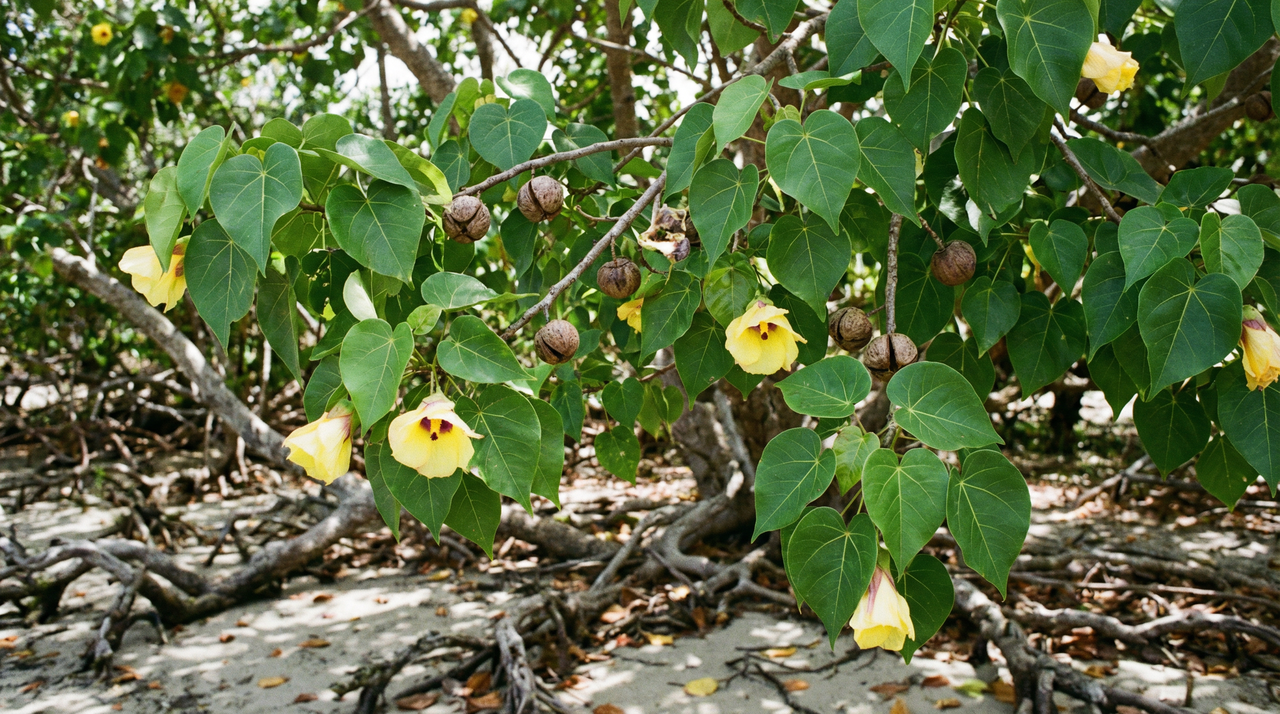
The first time I cut into a Portia tree branch, I wasn't expecting roses. But there it was: a faint, unmistakable floral scent rising from the heartwood, reddish-brown and dense as mahogany. That's the thing about Thespesia populnea that stops people mid-sentence when I describe it. Ancient Polynesian canoe builders didn't cross the Pacific with just any wood.[1] They carried this tree with them, or let the ocean carry its seeds, for thousands of miles, and it arrived on beaches and established itself like it had always belonged there. Which, ecologically speaking, it had.
What I find genuinely strange is how little attention this tree gets outside of coastal restoration circles. It tolerates salt spray, survives in pure sand, flowers year-round in the tropics, and its flowers actually change color overnight, opening yellow in the morning and fading to deep pink-purple by evening.[2] It's been used in Ayurvedic medicine, Hawaiian temple plantings, and Pacific boat-building for centuries. And yet most permaculture designers I meet have never grown one. That gap is exactly what I want to close here.
Origin and History of the Portia Tree (Thespesia populnea)
Botanical Background and Native Range
The portia tree, known scientifically as Thespesia populnea, is a coastal native of the Old World tropics, spanning from eastern Africa and Madagascar across South and Southeast Asia to northern Australia and the Pacific islands. [3][4] It is not native to the Americas, full stop; that distinction matters when you're trying to understand where it belongs in a food forest design. In its home range, it occupies beaches, mangroves, estuaries, and low-lying wetlands, functioning as a true pioneer species on soils that would humble almost anything else. [3][4] Most populations occur below 200 meters elevation, right where the land meets the sea.
Given the right site, this is a genuinely long-lived tree. In natural coastal habitats it can persist 50 to 100 years; in cultivated settings expect a somewhat shorter 40 to 60. [4][5] Growth is slow to moderate, with the tree reaching 6 to 15 meters at maturity and hitting that threshold around years 10 to 15. [6] I've grown it from seed in Central Florida, and I can tell you the young saplings earn every bit of that patience. Seeds sprout reliably within 2 to 4 weeks, [4] but the juvenile plants are genuinely vulnerable: herbivory, waterlogging, and poor soil will thin them fast. Once they push past that adolescent stage, though, the resilience snaps into place. Mature trees shrug off cyclones, salt spray, and sandy soils that would stress most landscape trees.
Visual Characteristics
Picture a medium-sized evergreen with an umbrella-shaped crown spreading 6 to 12 meters wide on a trunk that reaches up to 15 meters tall. [7] The bark is grayish-brown and smooth when young, developing light fissures over time. Leaves are the first thing I show visitors: broad, heart-shaped, 7 to 18 centimeters across, leathery and glossy on top, with five to nine palmate veins radiating from the base. [8] Coastal populations tend toward thicker leaves as a salt-tolerance adaptation, which is a nice reminder that this tree is always solving problems you didn't ask it to solve.
The flowers are the showstopper. Large, funnel-shaped, and fragrant, they open bright yellow with a deep purple or maroon basal blotch, and by afternoon they've shifted to pink or even white. [9][5] I honestly stood in my garden one morning watching this happen, thinking someone should put it on a time-lapse. If you're familiar with hibiscus or okra, you're already in the right family; this is the Malvaceae aesthetic at its most dramatic. The tree blooms year-round in warmer climates, with peaks during the drier months. Fruit follows as a leathery, globe-shaped capsule that splits into five valves to release kidney-shaped dark brown seeds. [10] Below ground, a taproot combined with lateral fibrous roots and prominent buttress roots gives the tree its legendary windthrow resistance in sandy coastal soils. [11] The heartwood, dense and reddish-brown, goes by the trade name Pacific rosewood. [12]
Traditional and Cultural Uses
Across the Pacific, this tree has been woven into human life for as long as people have been navigating the ocean. In Hawaii, Tahiti, and Fiji, it was used in pre-contact times for canoe construction, tools, cordage, dye, and medicine. [13] The hardwood resists marine borers, which made it ideal for the hulls and components of Polynesian voyaging canoes. [14] Every time I work with Pacific rosewood I think about those builders selecting timber with the knowledge that a human life would depend on it in open ocean.
In Hawaii, the tree is called milo and holds sacred status. It was planted near heiau (temples) and royal sites as a marker of spiritual power and protection, its flowers woven into leis and ceremonial garlands. [15] Medicinal traditions across South Asia and the Pacific used bark and leaf decoctions for dysentery, wounds, skin infections, and fever, while the roots and bark yielded yellow dyes and seed oil was applied externally for rheumatism. [16][17] Europeans later carried the tree westward, introducing it to Jamaica around 1750 and to South Africa in the 17th century as an ornamental and coastal-protection planting. [18][19] The IUCN currently lists the species as Least Concern, but local populations face real pressure from overharvesting and habitat loss. [20] I want to name that directly: sourcing milo wood ethically and supporting indigenous-led cultivation programs isn't optional etiquette, it's the baseline for anyone who wants to work with this tree responsibly.
Fun Facts and Ecological Notes
Here's something that still impresses me: the seeds can float in seawater and remain viable for up to a year, which is how this tree colonized islands across the Indo-Pacific long before humans showed up to help. [21] It tolerates salt not through specialized glands but through thick waxy leaves and root ion exclusion, a quietly elegant set of adaptations for a plant that parks itself right on the tide line. [12]
Readers in Florida often ask whether it's invasive, and the answer is reassuring: it's not on Florida's invasive species list, and while it has naturalized in Hawaii, it's not prioritized for active management there. [4][22] In my zone 9B garden it behaves more like a well-mannered shade tree than a spreader. It wants full sun, good drainage, and some room to develop that spreading crown; give it those things and it performs reliably through humid subtropical summers. [23] Worth noting: unlike many permaculture favorites, it does not fix nitrogen, so plan your guild accordingly. [24]
Portia Tree Varieties and Where to Buy Them
No Formal Varieties: Environmental Adaptations in Thespesia populnea
Here's the honest answer: there are no named cultivars or formal subspecies of Thespesia populnea recognized in either POWO or the USDA Plants Database.[25][24] What you see sold as "Portia tree" is the species, full stop. That said, I've noticed real differences between the specimens I've planted in exposed coastal spots versus those tucked into more sheltered groves: the open-coast trees develop dramatically broader, more horizontal branching within two years, while the sheltered ones push upward and stay tighter. That's not a variety difference; it's the tree reading its environment.[26] Occasionally you'll come across locally selected plants with variegated foliage or slightly different flower intensity, but these aren't cataloged or standardized anywhere.[25][27]
So when you're selecting a portia tree, what you're really choosing for is the species' core character. Native across coastal Old World tropics from East Africa and India through Southeast Asia and into the Pacific islands,[25][28] it can reach 10 to 20 meters in favorable tropical conditions[29] and tolerate soils with up to 50% seawater salinity, with Pacific-sourced seed stock appearing especially resilient in my trials.[29] Once established, it's genuinely low-maintenance in full sun and salty or drought-prone conditions.[26] The dense reddish-brown heartwood (600 to 700 kg/m³, fine-grained) releases a distinct rosewood-like scent when cut; I look forward to pruning season partly just for that smell. It's why the tree has long been prized for furniture, cabinetry, and musical instruments.[26][30] Ecologically it supports pollinators, anchors coastal soils, and often grows alongside mangroves.[28][26] I keep it away from undisturbed native hammocks in my own coastal-adjacent landscapes, because it does carry moderate invasive potential in disturbed Florida and Hawaii habitats.[28] Responsible siting matters more with this tree than with most.
Sourcing Portia Tree in the United States
Availability is concentrated where the climate cooperates: Florida, Hawaii, and Southern California are your best bets for finding portia tree locally.[24] Top Tropicals Nursery and regional Florida garden centers carry live plants periodically, and Sheffield's Seed Company lists seed. Etsy sellers and Logee's Greenhouses round out the options if you're comfortable with mail-order. Seeds typically run $5 to $15 per packet; small saplings land in the $20 to $50 range; larger nursery trees can cost $100 to $300 or more. I've learned the hard way that mature trees ship badly and often go into prolonged shock after transplanting. Starting with small nursery stock or direct-sown seed has consistently given me stronger long-term results. Cuttings are propagated by some specialty growers but are far less commonly available than seeds or containerized plants.
A few regulatory notes worth knowing before you order: live plants imported into the US require a USDA APHIS import permit, though the species doesn't appear on CITES appendices.[31][32] Thespesia populnea is not listed on California's or Florida's official invasive species registers, though caution near wetland and disturbed coastal edges is still sensible given its naturalization track record.[33] Stock fluctuates seasonally, so contact nurseries directly before assuming anything is available, and confirm shipping restrictions and phytosanitary certificate requirements if you're sourcing from outside the country.
Portia Tree Propagation and Planting Guide
The portia tree is genuinely easy to work with once you understand a few things about how it's built. It's a coastal pioneer that wants to grow; your job is mostly just not getting in its way. That said, there's one step that trips up nearly every first-timer, and it happens before the seed ever touches soil.
Seed Characteristics and Germination
Thespesia populnea seeds are hard to mistake once you've seen them. Each woody, roughly 2-3 cm capsule holds 4-8 seeds that are kidney-shaped, dark brown to nearly black, flattened, and glossy, averaging about 1.2 cm long by 0.8 cm wide.[5][34] They look almost lacquered. The seedlings that emerge from them, by the way, have broad, heart-shaped cotyledons that look nothing like the mature foliage, so I always label my nursery trays the moment I sow them or I end up with mystery seedlings three weeks later.
The catch with portia tree seeds is physical dormancy. That glossy coat isn't just pretty; it's essentially waterproof, and untreated seeds germinate at less than 20%.[35][36] I learned this the hard way on my first batch. I skipped the scarification step entirely and got maybe three seedlings out of thirty seeds. Once I started nicking the seed coat with a file opposite the hilum, or doing a hot-water soak at around 80-90°C overnight, my germination rates climbed to 70-80% consistently, right in line with what the research reports.[37][38] Mechanical nicking is my preference for small batches since it's controllable; acid scarification with concentrated sulfuric acid works too but requires careful neutralization and proper safety precautions.
Once scarified, sow portia tree seeds about 1-2 cm deep in a well-draining medium and keep them at 25-30°C. Germination typically happens within 10-20 days.[39][40] Use fresh seed if you can; viability drops noticeably after six months without cold storage. The good news is that these are orthodox seeds, meaning they can be dried down to 5-10% moisture content and stored for years at 5-10°C in a sealed container with silica gel, or even frozen at -18°C for long-term banking.[39][41]
Vegetative Propagation Methods
If seed feels like too much fuss, or you want to preserve a specific form, cuttings work well. Semi-hardwood cuttings taken in late spring or summer, 10-15 cm long with 2-4 nodes, treated with IBA rooting hormone at 3000-5000 ppm, and placed in a sandy or perlite-based mix under high humidity with bottom heat around 70-75°F will root in 4-8 weeks.[42][43] I've found it behaves a lot like other tropical Malvaceae in this respect; give it warmth and humidity and it really wants to root.
For more advanced needs, air layering during the rainy season on mature wood achieves 60-80% success with roots forming in 2-3 months.[44] Grafting (cleft, whip-and-tongue, or bud) works during the growing season and is worth considering if you're propagating from a particularly productive or ornamental parent tree.[45] Tissue culture on MS medium with BAP and NAA can produce disease-free plants at scale, but realistically that's a tool for commercial nurseries or conservation programs rather than home growers.[46]
Soil, Site, and Planting Requirements
This tree is a beach pioneer, and its soil preferences reflect that completely. It thrives in sandy, sandy-loam, or gritty coastal soils with moderate organic matter and excellent drainage.[47][48] It handles salt, drought, and even calcareous or saline conditions that would stress most trees. What it won't tolerate is waterlogged, heavy clay, or silty soil; root rot sets in quickly and the tree declines fast.[49] I always test drainage before planting any Malvaceae relative in a new site. Dig a hole, fill it with water, and watch. If it's still sitting there an hour later, either amend heavily or choose a different spot.
Optimal soil pH runs 6.0-7.5, though the tree can persist across a broader range of 5.0-8.5.[50][51] Above pH 8.0, interveinal yellowing from iron lock-up shows up reliably. If you see that chlorosis developing in an alkaline coastal landscape, apply a chelated iron drench promptly; I've watched it correct within two weeks in coastal Florida plantings.[52] For light, full sun is non-negotiable for good flowering and fruiting, at least 6-8 hours of direct sun daily.[53][5] It shares the same breezy, salt-wind resilience as sea grape but grows into a substantially larger shade tree, which is something to plan around from day one.
Spacing, Technique, and Establishment
Mature portia trees reach 20-50 feet tall with canopy spreads that can hit 50-60 feet, so spacing matters enormously.[54] For ornamental or landscape use, 20-30 feet between trees is appropriate; for agroforestry systems, 5-6 meters within rows and 8-10 meters between rows gives reasonable canopy separation; for windbreaks or hedges, you can tighten to 3-4 meters and let them fill in.[55][56] Keep any specimen at least 10-15 meters from structures to account for eventual root spread and leaf litter.[57]
Plant in spring or early summer in frost-free zones (USDA 9b through 12, ideally 10-12) so the tree has a full warm season to establish before any cool weather arrives.[58] For the first two summers in zone 9b, my standard protocol is deep weekly watering, roughly the equivalent of an inch per week or 5-10 gallons per young tree every 7-10 days, until roots get deep enough to find consistent moisture on their own.[59] I always stake the first year and remove any competing leaders early; getting a strong central trunk established from the start makes the whole tree more wind-resistant as it matures, which matters a lot in coastal exposures.[57]
Timeline from Seed to Fruit
Germination is quick once you've done the scarification work, typically 10-30 days and often closer to two weeks under good conditions.[35] What requires patience is everything after that. From seed, expect 3-5 years before first flowering and fruiting under optimal conditions.[4][60] Vegetative propagules, particularly rooted cuttings or grafted material, can shorten that window, which is one reason the extra effort of cuttings makes sense if you're working with a known productive tree. This is a plant that rewards consistent, patient care over time, not one that delivers in the first season.
Portia Tree Care Guide: Growing Thespesia populnea
The honest truth about the portia tree is that it wants to take care of itself. I've worked with enough tough coastal Malvaceae relatives, from hibiscus to sea rosemallow, to recognize when a plant is asking for attention versus when it just needs you to get out of the way. Thespesia populnea is mostly the latter. The challenge is getting it there, because the establishment window is where most growers either win or lose.
Sunlight Requirements for Portia Tree
Give this tree full sun, at least six hours of direct light daily, and it will reward you with consistent flowering and fruiting.[61] In shadier spots it survives but sulks, and you lose much of the flower show. That said, young trees in very hot, dry climates can show leaf scorch and curling under intense afternoon sun, especially when drought stress compounds the heat.[62] If you see those symptoms on a new planting, reach for the hose before you reach for the shade cloth. Nine times out of ten, it's a water problem wearing sun-stress clothing.
Watering Needs and Drought Tolerance
Young trees need consistent moisture, roughly one to two inches per week, through their first couple of years while they're driving that taproot down.[63][64] Once established, mature trees can go four to eight weeks without supplemental irrigation in suitable climates. In the coastal plantings I've designed in central Florida, established specimens genuinely need almost nothing after year two once those deep roots find moisture. It's one of those plants that, when you stop watering it on schedule, actually performs better.
Always water deeply and infrequently rather than shallowly and often. The root system needs encouragement to go down, not sideways.[59][65] Overwatering and waterlogged soil are the fastest routes to root rot, and my biggest early mistake with this species was being too generous with the hose on young trees. It slowed root development and invited exactly the kind of fungal trouble I was trying to avoid. The salinity tolerance that makes this tree so well-suited to coastal sites[66][67] does not extend to standing water around the crown. Watch for wilting, marginal leaf necrosis, and progressive leaf drop as signs you've let things get too dry; watch for yellowing and soft new growth as signs you've gone too wet.
Fertilizing and Nutrient Needs
The portia tree is a moderate feeder that genuinely tolerates poor, sandy, nutrient-thin soils, but it responds well to a little help.[5][61] I lean on compost and well-rotted manure as the foundation, with a balanced NPK fertilizer (10-10-10 works well) applied two to three times during the growing season at half-strength.[68][5] Soil testing before you start is worth every penny. On sandy coastal sites especially, over-fertilizing creates salt buildup that stresses roots far more than a nutrient deficit ever would.
The deficiency I run into most often on alkaline coastal soils is iron chlorosis, that distinctive interveinal yellowing on young leaves that tells you the tree can't access soil iron even when it's present.[69] A monthly foliar spray of chelated iron during the growing season clears it up quickly without having to fight the soil pH. Nitrogen deficiency shows as yellowing of older leaves, and magnesium as interveinal yellowing that responds well to Epsom salt applications. Diagnose before you treat, and you'll avoid creating new problems while solving old ones.
Heat Tolerance and Management
The thespesia populnea characteristics that make it so heat-capable are baked into its physiology: thick leaf cuticles, pubescent leaf surfaces that reduce transpiration, and a taproot system reaching two to three meters deep that accesses moisture well below where surface soils bake dry.[70][71] Optimal growth happens between 25 and 35°C (77 to 95°F), and the tree handles brief spikes to 40 to 45°C before showing stress signs like scorching, wilting, and blossom drop, especially in low humidity.[72][73] Seedlings and new growth are always the most vulnerable. During extreme heat events, the best management tools are deep irrigation before the peak, five to ten centimeters of organic mulch pulled back from the trunk, and temporary shade cloth (30 to 50%) for young plants.[70][50] The same strategy I use for other heat-loving Malvaceae relatives applies here: protect the root zone first, and the canopy tends to handle itself.
Frost Tolerance and Cold Protection
This is a tropical tree and it behaves like one around cold. Hardy in USDA zones 9b through 11, it can technically tolerate brief dips to 28 to 30°F, but even light frost causes leaf necrosis, browning, and dieback on young wood.[74][58] For best performance it wants nights consistently above 50°F (10°C). The RHS rates it H1c, meaning winter protection is required anywhere outside of frost-free climates.[75][76]
In zone 9b, where I garden, I've learned to trust microclimate selection more than hardiness maps. A southern wall exposure, four to six inches of oak-leaf mulch over the root zone, and old bedsheets thrown over young specimens during cold snaps have kept mine through some genuinely dicey nights.[77] Container growing is a legitimate strategy for anyone in a marginal zone; you get to bring the tree indoors when temperatures threaten and move it back out when conditions improve. Established trees recover from minor frost events far better than juveniles, so the first few winters are your highest-risk period.
Pruning, Maintenance, and Seasonal Rhythm
The portia tree grows at a moderate rate toward its eventual 20 to 40 feet, with an upright to spreading habit that suits it well to shade and windbreak roles.[61][57] Pruning is light and formative: late winter or early spring is the time to remove dead or crossing branches, open the canopy for airflow, and nudge the structure. Heavy pruning stresses it unnecessarily and isn't warranted.
Seasonally, the tree pushes its most vigorous vegetative growth during the wet season. Flowering happens year-round in true tropical climates, peaking in the late wet to early dry season, with fruit maturing roughly two to three months behind the flowers.[78][4] There's no true dormancy to plan around. Ongoing maintenance amounts to watching for the nutrient deficiencies already covered above, keeping an eye on aphids, scale, or caterpillar pressure, and catching any early signs of root rot or leaf spot before they escalate.[79][80] Past the establishment phase, this tree earns its keep with very little from you, which is exactly what a well-designed permaculture system needs from its upper canopy.
Harvesting Portia Tree (Thespesia populnea)
Patience is the first tool you need with this tree. Fruit production typically begins around year three to five after planting, and if you're growing it for timber, you're looking at a 20-30 year timeline before harvest.[26] What I find compelling about the portia tree in a permaculture context is that you don't have to wait for the long game to start getting value from it. Young leaves and flowers are available within the first few growing seasons, which is exactly the kind of stacked yield that makes a tree worth planting.
Timing, Maturity Cues, and Seasonal Windows
Once the tree reaches productive size, fruit development runs 90-120 days from flower to mature capsule.[81] In Florida, where flowering peaks from June through October, that puts the primary seed harvest window from July into September.[82][83] Florida's long rainy season, which stretches from May through November, can extend that window, but cold snaps below about 50°F or high-wind events can knock unripe fruit off prematurely.[82]
The maturity cues on these capsules are wonderfully readable once you know what to look for. The fruits are small woody discs, roughly 2-3 cm across, with five flattened lobes that remind me of a tiny, compressed okra pod.[84][85] As they ripen, they shift from green to dry brown or grey-brown, and fine fissures appear along the dorsal sutures.[86] My most reliable signal, though, is the rattle. When I shake a capsule and hear the seeds moving freely inside, that's my cue that they've dried down and hardened to their mature dark brown-to-black color.[85] I've picked too many under-ripe capsules by relying on color alone; the rattle doesn't lie.
Because these fruits are non-climacteric, there's no post-harvest ripening to bail you out if you pick early.[81] Extract the seeds promptly after harvest to head off mold, especially during Florida's humid late summer. Properly dried seeds stored in an airtight container at room temperature will hold 70-80% viability for about twelve months, declining from there, but remain usable for up to two years.[81] In tropical regions with a true dry season, timing your harvest to align with drier conditions makes this whole process easier.[87]
Harvest Techniques, Yields, and Flavor Profiles
The most immediate edible harvests from this tree are leaves and flowers, and neither requires waiting for the fruit cycle. I pick young leaves throughout the wet season whenever I need them; they have that characteristic mucilaginous quality you'd recognize from okra, which makes sense given they're both in the Malvaceae family.[85] Boiling, steaming, or a quick sauté tames the slipperiness and gives you something close to a mild spinach, well-suited to dal or sambar in the South Indian tradition. The flowers are gentler still, mild and velvety, good raw as a garnish or cooked into stews at peak bloom.[85][42] Gather them in the morning before the heat sets in and they start to fade.
Seeds are a different matter and require deliberate preparation before eating. Properly roasted, they develop a mild nuttiness that reads somewhere between chestnut and a mild almond; fermentation softens them further and adds a slight tang while reducing bitterness.[88] I treat every batch with that same preparation step, both for flavor and to address any bitterness compounds, and I'd recommend doing the same rather than skipping it. The mature fruit capsule itself is woody and inedible; it's the vehicle, not the harvest. The preparation_and_uses section covers safety details and traditional detoxification methods in more depth.
So yes, the portia tree asks for a long commitment. But even in the early years, before those fruit capsules start rattling, you've got a kitchen supply of tender greens and edible blooms, with a slow-building timber resource underneath it all.
Portia Tree Preparation and Uses
Culinary Uses and Edibility
The Portia tree isn't a food forest centerpiece the way moringa or breadfruit might be, but it earns its place at the table in a supporting role. Young leaves are the most approachable starting point: traditionally eaten cooked or occasionally raw across Pacific Island communities, India, and Southeast Asia, prepared in curries, steamed dishes, and with coconut milk to temper bitterness.[16][85] I've harvested the youngest, palest leaves and found that boiling them first, then finishing in coconut milk, gives you something velvety and mild with a faint nuttiness -- genuinely reminiscent of a subtler okra, which makes sense given they're in the same family. The leaves offer a respectable nutritional profile with vitamins A and C, B vitamins, calcium, iron, and roughly 10-15% protein, though the data is still thin on exact values.[16][89] Boiling or fermentation does real work here, reducing the tannins and anti-nutritional compounds that make raw leaves unpleasant.[5]
Flowers are occasionally used in salads, teas, and curries, often paired with coconut milk, ginger, or seafood,[16][90] and immature green pods share that same mucilaginous, okra-like quality that makes them useful in soups and curries with tamarind or fish.[5][91] Ripe fruits aren't worth attempting; the woody capsule is inedible and the flesh bitter. Seeds are a harder conversation: they contain thespesin, a cyanogenic glycoside that makes raw seeds genuinely unsafe and capable of causing nausea or worse.[92][93] I've roasted seeds out of curiosity and the bitterness does drop significantly, revealing something earthy underneath, but I defer entirely to traditional preparers for proper detoxification through leaching or fermentation before anyone eats them in quantity. One practical field note: if you're foraging coastal Malvaceae and confusing this tree with Hibiscus tiliaceus, check the leaf underside for a woolly texture and look for the reddish center on the flower; that's Portia.[5][94] I made that misidentification once early on and it stuck with me. Overall, edibility here is real but secondary, grounded more in ethnobotanical tradition than modern nutritional science.[95]
Medicinal Preparations
Traditional medicine systems across India, including Ayurveda and Siddha, have long relied on bark decoctions for wound healing and dysentery, while leaf poultices address skin ailments, boils, and inflammation -- applications that align with the anti-inflammatory and antimicrobial activities now documented in preclinical studies.[96][97] Typical traditional dosages run around 10-30 ml of decoction taken two to three times daily, but these vary widely by culture, plant part, and preparation method, and there are no standardized phytotherapy guidelines to lean on.[98][99] My approach with any tropical medicinal where the evidence base is primarily ethnobotanical: start small, go slow, and talk to someone with genuine traditional knowledge rather than treating research abstracts as dosing instructions.
Contraindications deserve direct attention. I never recommend Portia tree preparations during pregnancy because both the traditional signals and pharmacological data point clearly toward potential uterine stimulant effects.[95] People with Malvaceae allergies should be cautious, and possible interactions with diuretics or antidiabetic medications are worth flagging given the tree's effects on blood sugar and fluid balance.[95] Respect the limits of what's been formally studied.
Non-Food Uses and Traditional Applications
Here is where Thespesia populnea genuinely earns its reputation. The timber, sold commercially as Pacific rosewood, is dense, termite-resistant, rot-resistant, and tolerant of saltwater exposure -- a combination that made it the material of choice for Polynesian canoes, outriggers, agricultural implements, and eventually furniture and boat-building across its range.[100][19] I've handled tool handles made from it and the density is immediately apparent; it outlasts softer tropical hardwoods in wet coastal conditions by a significant margin. Bark fibers have served Pacific Island cultures for ropes, cordage, netting, and clothing including Samoan siapo tapa cloth, while bark extracts yield a reddish dye for fabric.[5][101] In a permaculture system, the biomass alone is worth considering: the tree produces substantial material for fuelwood, fodder, mulch, and charcoal, and its dense canopy makes it an effective windbreak in coastal agroforestry guilds.[102][103] Almost nothing goes to waste with this tree when you know what you're working with, and connecting with local or regional traditional knowledge holders is the best way to fill in what the written record still lacks.[16]
Portia Tree Health Benefits and Medicinal Uses
Across tropical Asia, the Pacific Islands, and coastal Africa, healers have been reaching for Thespesia populnea for centuries.[104][105] What I find compelling about the Portia tree's medicinal story is the sheer breadth of it: this isn't a plant with one celebrated folk use. Ayurvedic and Siddha practitioners developed distinct applications for the bark, leaves, roots, and flowers, each matched to specific complaints.[16] Leaves were used for gastrointestinal trouble and skin conditions, bark for rheumatism and respiratory ailments, roots for postpartum care and inflammation, and flowers for eye problems and menstrual irregularities, applied as decoctions, poultices, and washes depending on the tradition.[16][106] Science is now doing what it always eventually does: finding mechanisms behind what traditional practitioners already knew.
Traditional and Scientific Medicinal Research on Thespesia populnea
The anti-inflammatory data is the most robust piece of the pharmacological picture. Animal studies show bark and leaf extracts reducing carrageenan-induced paw edema in rats by 40 to 60 percent at 200 mg/kg, with some results running comparable to diclofenac.[107][108] The mechanisms appear to involve NF-κB pathway modulation and suppression of pro-inflammatory cytokines including TNF-α and IL-6.[109] For a formulator looking to translate lab data into a real extract, those edema-reduction percentages at that dose range represent realistic working parameters, not just interesting footnotes.
Antioxidant capacity is well-documented too, with DPPH and ABTS radical scavenging IC50 values landing between 20 and 80 µg/mL depending on the extract and plant part.[110][111] Antimicrobial studies show inhibition against both gram-positive and gram-negative bacteria (Staphylococcus aureus and E. coli among them) as well as fungi like Candida albicans, with MIC values of 50 to 200 µg/mL and zones of inhibition reaching 10 to 20 mm.[112][113] Anti-diabetic research in streptozotocin-induced rat models shows blood glucose reductions of 20 to 30 percent alongside alpha-amylase inhibition, which lines up neatly with the traditional use for diabetes.[114][115] Flower extracts have been specifically studied for wound healing, showing enhanced collagen synthesis and epithelialization in animal excision and incision models.[116] Seed and flavonoid extracts also show cytotoxic activity against HeLa and MCF-7 cell lines with IC50 values around 20 to 50 µg/mL, with apoptosis induction implicated as a possible mechanism.[117][118]
I treat all of this as genuinely promising validation of traditional knowledge, not as a therapeutic green light. The typical studies use animal groups of six to ten subjects at doses of 200 to 400 mg/kg, and human clinical trials are essentially absent.[119][107] Until more human trials appear, I mainly reach for Portia preparations in topical or occasional culinary contexts, not as a primary therapeutic tool.
Key Phytochemical Compounds in Portia Tree
The pharmacological activity makes a lot more sense once you look at the chemistry. Leaves are richest in flavonoids (quercetin, kaempferol, rutin, gossypetin, herbacetin), phenolic acids including gallic and ellagic acid, tannins, and saponins. Seeds carry a different profile: an oil rich in oleic acid (45 to 50%) and linoleic acid (20 to 25%), plus cyclopropenoid fatty acids (malvalic and sterculic acids) that account for 20 to 30 percent of the seed oil.[120][121] Total phenolics range widely, from 45 to 150 mg GAE/g depending on the part sampled and when it was collected.[122]
That range matters. Flavonoid and phenolic concentrations are meaningfully higher in dry-season leaf material, and coastal populations grown under salinity stress tend to upregulate these secondary metabolites compared with inland trees in richer soils.[123][124] I've noticed that leaves harvested from coastal, salt-stressed trees tend to be noticeably more astringent on the palate, with a deeper, slightly resinous character. It makes ecological sense: the plant is producing these compounds partly as chemical defenses, and the stress response concentrates them.[125] Traditional Ayurvedic and Siddha applications for skin disorders, dysentery, wounds, and urinary conditions all map onto this phytochemical toolkit in ways that feel consistent rather than coincidental.[126]
Nutritional Profile of Portia Tree Leaves, Seeds, and Fruit
On a dry-weight basis, Portia tree leaves contain 15 to 24 percent protein alongside 40 to 50 percent carbohydrates and 10 to 15 percent dietary fiber.[127][128] Seeds push higher still, at 25 to 30 percent protein with 15 to 20 percent oil content. The mineral numbers are genuinely impressive: 100 g of dried leaves supplies roughly 1,200 to 1,500 mg calcium, 800 to 1,000 mg potassium, and 5 to 10 mg iron.[122] For context, that calcium figure puts it in conversation with moringa leaf meal, which I've incorporated into several food forest designs specifically for its mineral density in coastal settings. The fruit contributes a modest 50 to 70 kcal per 100 g fresh weight, though detailed vitamin data remains scarce in the literature.[129][127]
There is a practical catch. Leaves contain tannins at 2 to 5 percent alongside phytates, both of which reduce bioavailability of those proteins and minerals in raw form.[130] Cooking or fermentation brings protein digestibility up to 70 to 80 percent, which is a meaningful improvement.[128] Think of it the way you'd think about any leafy green in the Malvaceae family: good raw in small amounts, better cooked if you're relying on it as a regular protein or mineral source. The research base here is considerably thinner than the phytochemical and pharmacological literature, so I'd treat these numbers as directional rather than definitive, especially since soil quality, climate, and processing method all shift the figures.
Safety Considerations and Potential Side Effects
The reassuring baseline is that Portia tree is not listed as toxic by USDA, Kew, or ASPCA, and acute toxicity studies put the LD50 above 2,000 mg/kg in animal models.[131][132][133] Centuries of use across multiple traditional medicine systems have generated no significant toxicity pattern, and moderate culinary use of young leaves and flowers fits that same low-risk profile.
That said, a few specific cautions are worth taking seriously. Excessive ingestion of raw seeds or bark can cause mild gastrointestinal irritation from the tannins, saponins, and thespesin content.[5] Sensitive individuals may develop contact dermatitis or respiratory irritation from pollen, sap, or wood dust.[134] The anti-diabetic activity I mentioned earlier is real enough that it warrants a direct conversation with a prescribing physician for anyone already managing blood glucose with medication; additive lowering is a genuine pharmacological risk, not a remote theoretical concern.[135][136] Pregnant women, nursing mothers, and children should avoid medicinal preparations entirely until human safety data for those groups actually exists, which it currently does not.[136] I'm not being overly cautious here; both the research record and traditional practice support these limits, and the absence of clinical trial data is reason to stay conservative rather than permissive with concentrated preparations.
Portia Tree Pests and Diseases
Natural Disease Resistance and Common Fungal Issues
The portia tree earns its reputation as a tough coastal performer. In its native shoreline habitats, it shows moderate to high disease resistance, buffered by adaptations to salt spray, poor soils, and periodic drought that leave many pathogens with little foothold.[137][138] Cultivated specimens, though, run into trouble when those conditions break down, and the usual culprit is excess moisture with poor airflow.
Fungal leaf spots are the most common problem in practice: several species, including Cercospora thespesiae, Pseudocercospora thespesiae, Phoma thespesiae, and Phyllosticta, produce circular to irregular dark brown spots with yellow halos, especially during warm, humid stretches.[139][79] In my experience with coastal Malvaceae relatives, these spots usually appear first on lower, shaded foliage after a long wet spell. A quick walkthrough after heavy rain catches it early, before it climbs up through the canopy.
Root rot from Phytophthora species and Ganoderma applanatum is the threat I take most seriously, because by the time you see symptoms above ground, you're often already behind.[140][79] I've lost young trees to Phytophthora when I skipped drainage amendments in heavy soil. Lesson learned. Now I always mound or amend before planting this species, consistent with the site prep covered in the care guide. Anthracnose (Colletotrichum), powdery mildew, occasional rust, and sporadic bacterial leaf spot from Xanthomonas round out the disease list in high-rainfall areas,[141][79] though Verticillium wilt and viral problems are rarely reported, and Fusarium wilt typically stays limited to already-stressed plants.[12]
Young trees are more vulnerable to damping-off and leaf spots than established ones. Mature specimens develop thicker bark and carry antimicrobial compounds in their sap; leaf extracts have demonstrated direct activity against Colletotrichum, which goes some way toward explaining why older trees shrug off problems that trouble seedlings.[142] Disease resistance peaks in warm conditions (65 to 85°F) with neutral to slightly alkaline soil pH and consistent but not excessive irrigation; high humidity above 80% combined with poor air circulation is where the tree's defenses start to slip.[143] Good drainage, proper spacing, and debris removal prevent most issues; copper-based fungicides are an option for severe outbreaks, though they're rarely needed with sound cultural management.[79] There are no cultivars bred for enhanced disease resistance, so I select seed-grown plants for vigorous establishment from local sources and let the tree's own biochemistry do the heavy lifting.[144]
Major Insect Pests and Defense Mechanisms
Pest pressure is manageable for most growers, though it scales up with humidity and during monsoon seasons.[145] The sucking insects arrive first: cotton leafhoppers (Amrasca biguttula biguttula) cause yellowing, curling, and hopper burn, while aphids (Aphis gossypii) distort young growth and scale insects including Aspidiotus destructor produce the familiar sooty mold and dieback pattern.[146] Leaf beetles (Chrysomelidae, including Podagrica spp.) skeletonize foliage, and caterpillars from Noctuidae and Hyblaea puera can defoliate branches; the tree's fast growth helps it recover from both.[147] Wood borers, particularly Cerambycidae and Hypsipyla robusta, are the most structurally damaging, tunneling into stems of young or stressed trees; mealybugs and spider mites are occasional problems in greenhouse settings.[146]
What keeps this tree so comparatively trouble-free is its chemical arsenal: flavonoids, tannins, saponins, alkaloids, and terpenoids in the leaves and bark act as anti-feedants, leaf trichomes add physical deterrence, and mycorrhizal associations boost overall vigor.[122][148] I've grown portia tree alongside hibiscus and okra, and the difference in aphid pressure is noticeable; the portia gets far less attention from them, which I'd attribute directly to those secondary metabolites rather than luck. For early infestations on young trees, a strong jet of water clears aphids and soft scale without disrupting the beneficial insects that make a permaculture planting work, a tip that suits this tree's salt tolerance and fits naturally into an IPM approach that also includes neem oil, biological controls, and the pruning and monitoring practices already outlined in the care guide.[149][150] Planted well and monitored seasonally, this is a tree that largely takes care of itself.
Portia Tree in Permaculture Design
The portia tree is not a plant you slot into just any food forest and forget about. It has a specific ecological niche it fills brilliantly, and understanding that niche is what separates a thriving design from a future management headache. I've worked with this tree in several Central Florida coastal-adjacent landscapes, and what it does well, it does remarkably well. What it doesn't do, you need to plan around.
Climate Adaptations and Growing Zones
Thespesia populnea is a warm-coast specialist. Its sweet spot is tropical and humid, with temperatures between 20–35°C and annual rainfall somewhere in the 1000–2500 mm range.[151][23] In USDA terms, that translates to zones 10a through 12 for reliable performance.[152] In the United States, it's naturalized along coastal Florida, Hawaii, and Puerto Rico, which should tell you something about both its toughness and its ambition.[153]
Zone 9b growers aren't completely locked out. I've seen portia tree perform respectably in protected microclimates in Central Florida, but you have to be honest about the frost sensitivity. It begins showing stress below about 10°C and can sustain real damage if temperatures dip much below 5°C for any length of time.[23][42] Site it against a south-facing wall with good thermal mass, and you can often push it through a mild winter. I'll talk more about managing frost risk in the care guide.
What really sets this tree apart climatically is its resilience at the coast. It shrugs off soil salinity levels up to EC 10–15 dS/m, handles fierce salt-laden wind, and once established, manages moderate drought without drama.[12][4] Much like sea grape, portia tree laughs at salt spray that would kill most fruit trees. Give it full sun and well-drained soil in the pH 5.5–7.5 range, and it will settle in and do its work.[154]
Ecosystem Functions and Biodiversity Support
As a coastal pioneer, the portia tree's resume is genuinely impressive. Its root system anchors dunes, resists wave erosion, and sets the stage for forest succession by creating initial shade and shelter that allows less hardy species to establish behind it.[155] I've watched that succession process play out on Florida shorelines, where portia acts as the advance guard that makes room for everything that comes after. Seeds travel by ocean current to colonize new coastlines, and the decomposing leaf litter it drops steadily builds organic matter in otherwise thin, sandy soil.[155] In my own plantings, I've noticed a real change in sandy soil structure within three to four years just from that leaf mulch accumulating under the canopy.
On the pollinator side, those large 5–8 cm flowers attract mainly bees, along with butterflies and occasional bird visitors.[5] I genuinely enjoy watching carpenter bees work the flowers in the early morning before the blooms begin to close; it's one of those small observations that reminds you why diversity in the canopy pays off in the understory too.
Here's the important caveat that I always raise with clients: portia tree is in the Malvaceae family, not a legume, so it does not fix nitrogen.[155] It builds soil through organic matter, not through atmospheric nitrogen capture. That means you need to pair it with leguminous companions in any serious agroforestry guild if nitrogen is part of your design intention. And then there's the invasiveness question. In Florida and Hawaii, portia tree can form dense monoculture stands that push out native vegetation.[156] In my zone 9b designs, I only use it where I can monitor spread or where its windbreak and erosion-control services genuinely justify the extra management attention. I've pulled volunteer seedlings from neighboring hammocks and learned to choose my sites more deliberately because of it.
Forest Layer Placement and Guilds
At 6–15 meters tall with a broad spreading canopy, portia tree fits naturally into the canopy or subcanopy layer of a stratified tropical food forest.[5][23] On exposed, wind-hammered sites it often stays more compact and shrubby, which is actually useful design information: you can site it at the outer edge of a coastal windbreak and let the exposure do the shaping for you.
Where it earns its place most convincingly in food-forest guilds is as a shade canopy for understory crops. Cocoa and coffee are the textbook examples from the agroforestry literature, and for good reason: the tree's canopy is dense enough to moderate summer heat significantly, while its root behavior doesn't aggressively compete with the understory below it.[157][158] Beyond those crops, I'd suggest pairing it with salt-tolerant nitrogen fixers like beach she-oak or suitable coastal legumes, along with ground covers that thrive in dappled shade, to build a guild that compensates for what portia tree doesn't contribute chemically to the soil.
The honest summary is this: where the site is right (warm, coastal, saline, well-drained), portia tree delivers ecosystem services that very few trees of any size can match. Where the site is marginal or the monitoring commitment is low, its tendency to spread demands respect. Site it deliberately, guild it thoughtfully, and it becomes one of the harder-working upper-story trees in a coastal permaculture system.
The Tree That Taught Me to Stop Fixing What Isn't Broken
I planted a Portia tree in a spot where nothing else would hold, a narrow strip of compacted, salty fill soil that I'd spent two seasons trying to rehabilitate. I stopped amending it, stopped fussing, and just gave it the tree. It closed the canopy in three years. Sometimes the most sophisticated design move you can make is choosing a plant that already knows the answer.
Sources 158
- PIER: Thespesia populnea ↩
- UF/IFAS: Thespesia populnea ↩
- Thespesia populnea (L.) Sol. ex Corrêa ↩
- Thespesia populnea (Portia Tree) ↩
- Thespesia populnea - Useful Tropical Plants ↩
- Portia Tree (Thespesia populnea) ↩
- Thespesia populnea - Missouri Botanical Garden ↩
- Morphology of Thespesia populnea - Flora of China ↩
- Thespesia populnea | Plants of the World Online | Kew Science ↩
- Thespesia populnea - Plants of the World Online | Kew Science ↩
- Thespesia populnea - Missouri Botanical Garden ↩
- Kew Gardens Plant Database: Thespesia populnea ↩
- Pacific Island Ecosystems Research Center ↩
- Pacific Island Canoes: Traditions, Troubles, and Tree Species Used in Construction ↩
- Thespesia populnea profile page | University of Hawaii ↩
- Ethnobotanical Survey of Thespesia populnea in India ↩
- Medicinal Plants of the Pacific Islands: Thespesia populnea ↩
- Pacific Rosewood (Thespesia populnea) in Jamaica ↩
- How Was Thespesia populnea Introduced to South Africa? (1992) ↩
- Thespesia populnea (Portia Tree) ↩
- Ecological adaptations of Thespesia populnea to coastal environments ↩
- Florida's Invasive Species List ↩
- Portia Tree (Thespesia populnea) ↩
- Thespesia populnea (L.) Sol. ex Corrêa ↩
- Thespesia populnea - Plants of the World Online (Kew Science) ↩
- Thespesia populnea - University of Florida IFAS Extension ↩
- Thespesia populnea - CABI Compendium ↩
- Thespesia populnea Ecology and Distribution - CABI Compendium ↩
- Salt Tolerance of Thespesia populnea - ResearchGate ↩
- Wood Properties of Pacific Rosewood - USDA Forest Service ↩
- Importing Plants and Plant Products into the United States ↩
- CITES Appendices ↩
- Invasive and Noxious Plants ↩
- Thespesia populnea (L.) Sol. ex Corréa ↩
- Thespesia populnea (Portia Tree) ↩
- Germination and Storage of Thespesia populnea Seeds ↩
- Seed Dormancy and Germination in Malvaceae ↩
- Propagation of Thespesia populnea: Methods and Techniques ↩
- Seed Storage Behaviour - Thespesia populnea ↩
- Growing Pacific Island Trees from Seed ↩
- FAO Manual on Seed Storage ↩
- Thespesia populnea ↩
- Propagation of Tropical Trees: Thespesia populnea ↩
- Propagation of Thespesia populnea by Air Layering ↩
- Graft Compatibility in Malvaceae Family Trees ↩
- Micropropagation of Pacific Rosewood via Tissue Culture ↩
- Thespesia populnea ↩
- USDA PLANTS Database - Thespesia populnea (Portia tree) ↩
- M.Sc. Thesis: Ecophysiology of Thespesia populnea in Hawaiian Coastal Dunes ↩
- Soil Requirements for Tropical Trees - FAO ↩
- Soil pH Effects on Thespesia populnea ↩
- USDA Plants Database - Thespesia populnea ↩
- Thespesia populnea - Missouri Botanical Garden ↩
- Thespesia populnea: Portia Tree ↩
- Thespesia populnea Cultivation Guide - FAO Agroforestry Species ↩
- Missouri Botanical Garden Plant Finder ↩
- Thespesia populnea - University of Florida IFAS Extension ↩
- Thespesia populnea ↩
- Portia Tree (Thespesia populnea) ↩
- Cultivation of Thespesia populnea ↩
- Growing Thespesia populnea - University of Florida IFAS Extension ↩
- Tropical Trees: Thespesia populnea - University of Florida IFAS Extension ↩
- Thespesia populnea (Portia Tree) ↩
- Thespesia populnea - Umbrella Tree ↩
- Plants for a Future: Thespesia populnea ↩
- Salinity Tolerance of Mangrove-Associated Species ↩
- Identifying and Treating Water Stress in Tropical Trees like Thespesia populnea ↩
- Fertilizing Ornamental Trees - University of Florida IFAS Extension ↩
- Nutrient Deficiencies in Tropical Trees ↩
- Thespesia populnea: Propagation and Cultivation ↩
- Thespesia populnea (Portia Tree) ↩
- Heat Stress Management in Tropical Trees ↩
- Ecological Adaptations of Thespesia populnea in Tropical Climates ↩
- Tropical Trees: Cold Tolerance - University of Florida IFAS Extension ↩
- Frost Damage in Tropical Plants ↩
- Thespesia populnea - RHS Gardening ↩
- Frost Protection for Tropical Trees - University of Florida IFAS Extension ↩
- Thespesia populnea - Plant Profile ↩
- Thespesia populnea: Pests and Diseases ↩
- Nutrient Deficiencies in Ornamental Trees ↩
- Thespesia populnea: Propagation and Cultivation ↩
- Thespesia populnea (Portia tree) - Florida Plant Atlas ↩
- Thespesia populnea (Pacific rosewood) - Pacific Bulb Society ↩
- Thespesia populnea R. Br. - USDA PLANTS Database ↩
- Pacific rosewood (Thespesia populnea) - Useful Tropical Plants ↩
- Thespesia populnea ↩
- Seed Harvesting Techniques for Tropical Trees ↩
- Pacific Island Food Plants: Traditional Preparation of Milo Seeds ↩
- Ethnobotany of Thespesia populnea ↩
- Milo Tree Uses in Hawaii ↩
- Portia Tree (Thespesia populnea) ↩
- Toxicity of Thespesia populnea Seeds ↩
- Thespesia populnea: Ethnobotanical Uses and Nutritional Profile ↩
- Distinguishing Thespesia and Hibiscus Species ↩
- Pharmacological Review on Thespesia populnea ↩
- Medicinal Uses of Thespesia populnea in Indian Traditional Medicine ↩
- Traditional Uses of Portia Tree in Polynesia ↩
- Medicinal Uses of Thespesia populnea in Traditional Medicine ↩
- Ethnobotany of Thespesia populnea in Pacific Islands ↩
- Pacific Rosewood (Thespesia populnea) - Wood Database ↩
- Ethnobotany of Thespesia populnea in Pacific Islands ↩
- Portia Tree in Permaculture - Permaculture Research Institute ↩
- Traditional Uses of Portia Tree in the Philippines ↩
- Plants of the World Online ↩
- Flora of West Tropical Africa ↩
- Indian Journal of Traditional Knowledge ↩
- Pharmacological activities of Thespesia populnea Sol. ex Corr. A review ↩
- Thespesia populnea (L.) Sol. ex Corrêa: A comprehensive review on ethnobotany, phytochemistry and pharmacological activities ↩
- Phytochemical and Pharmacological Profile of Thespesia populnea: A Review ↩
- Antioxidant, anti-inflammatory and antimicrobial activities of Thespesia populnea ↩
- Antioxidant and Anti-inflammatory Activities of Thespesia populnea Extracts ↩
- Antimicrobial activity of Thespesia populnea leaves ↩
- Antimicrobial and Anti-diabetic Potential of Thespesia populnea ↩
- Hypoglycemic and antihyperglycemic effect of Thespesia populnea in normal and alloxanized diabetic rats ↩
- α-Amylase Inhibitory Potential of Thespesia populnea Extracts ↩
- Wound healing activity of flower extract of Thespesia populnea in rats ↩
- Flavonoids from the leaves of Thespesia populnea and their cytotoxic activities against human cancer cell lines ↩
- Anticancer Activity of Thespesia populnea Sol. ex Exell Seed Extracts Against MCF-7 Breast Cancer Cell Line ↩
- Antioxidant and anti-inflammatory effects of Thespesia populnea stem bark in rats ↩
- Bioactive components and their pharmacological activities of Thespesia populnea (L.) Soland. ex Corr. from Indian traditional medicine ↩
- Chemical Composition of Seed Oil from Thespesia populnea ↩
- Phytochemical Analysis and Antioxidant Activity of Thespesia populnea ↩
- Phytochemical Variation in Thespesia populnea Across Seasons ↩
- Stress-Induced Metabolites in Coastal Portia Tree Populations ↩
- Antimicrobial and Anti-inflammatory Properties of Thespesia populnea Extracts ↩
- Phytochemical and pharmacological profile of Thespesia populnea - A review ↩
- Thespesia populnea: A Review on Phytochemistry and Pharmacological Activities ↩
- Nutritional Composition of Thespesia populnea Leaf Meal ↩
- Phytochemical Screening and Antioxidant Activity of Thespesia populnea Leaves ↩
- Phytochemical and Anti-nutritional Analysis of Thespesia populnea Seeds ↩
- Thespesia populnea - Wikipedia ↩
- ASPCA - Toxic and Non-Toxic Plants ↩
- Toxicity assessment of Thespesia populnea bark extract ↩
- Allergic Contact Dermatitis from Wood Dust ↩
- Phytochemical and pharmacological profile of Thespesia populnea - A review ↩
- Thespesia populnea: A comprehensive review on its ethnopharmacology, phytochemistry and pharmacology ↩
- Plant Finder - Missouri Botanical Garden ↩
- Thomas S. Schulenberg, Thespesia populnea, in Flora of the Bahamas ↩
- Diseases of Thespesia populnea ↩
- Phytophthora Diseases in Tropical Trees ↩
- Fungal Diseases of Tropical Trees ↩
- Thespesia populnea: A Review of Its Taxonomy, Phytochemistry, and Pharmacology ↩
- Disease Dynamics in Coastal Malvaceae under Environmental Stress ↩
- Plants of the World Online ↩
- Integrated Pest Management for Thespesia populnea in Indian Agroforestry ↩
- Pests and Diseases of Hibiscus and Related Malvaceae ↩
- Pests and Diseases of Malvaceae Trees in India ↩
- Secondary Metabolites and Insect Herbivory in Malvaceae ↩
- Integrated Pest Management for Ornamental Plants ↩
- Thespesia populnea: Biology and Management ↩
- Thespesia populnea (Portia Tree) ↩
- Thespesia populnea ↩
- Thespesia populnea in Florida ↩
- Thespesia populnea - University of Florida IFAS Extension ↩
- Thespesia populnea - Kew Science ↩
- Thespesia populnea - Florida Invasive Species ↩
- Thespesia populnea (Portia Tree) ↩
- Portia Tree in Permaculture ↩