Most invasive plants earn their reputation quietly, sneaking in at the margins. Privet announced itself with a hedge trimmer and a real estate listing. For decades, glossy privet was practically synonymous with the tidy suburban screen, the fast privacy fix, the reliable green wall that asked for almost nothing. What nobody tells you is that "asks for almost nothing" is exactly the problem. I've spent more hours than I care to count pulling privet seedlings out of food forest understories, chasing a plant that birds had been quietly replanting all winter while I was focused on something else entirely.
Here's the contradiction that keeps drawing me back to this plant: the same dried fruit that land managers in the southeastern US curse as an ecological nightmare has been recorded in Chinese medicine since before the first century CE, revered as Nu Zhen Zi, a tonic for liver and kidney yin that shows up in texts predating most of Western horticulture by over a thousand years.[1] That's the tension at the heart of this plant, and it's one worth sitting with before you decide whether to grow it, remove it, or simply understand it better.
Privet Origin and History
Botanical Background of Ligustrum lucidum
Glossy privet (botanical name aside, most people just call it privet) is native to central and southern China, found across provinces from Anhui and Fujian down through Yunnan and Zhejiang, growing in mixed forests, thickets, and along roadsides at elevations up to 2,500 meters.[2][3] The Ligustrum lucidum scientific name was formally established by William Aiton in 1789 in Hortus Kewensis,[4] and the plant arrived in the United States in 1852, introduced specifically as an ornamental, hedge, and screen plant.[5][6] That appeal made perfect sense at the time: here was an evergreen shrub or small tree capable of reaching 20 to 30 feet tall (with reports of 40 feet under optimal conditions),[5] polycarpic with reliable annual fruiting, and able to hit 15 feet in as few as seven years.[7] I've watched fast-growing broadleaf evergreens fill a landscape gap in what feels like no time at all, and privet really does deliver on that promise. The problem, as we'll get to, is that it delivers on it everywhere.
Visual Characteristics of Glossy Privet
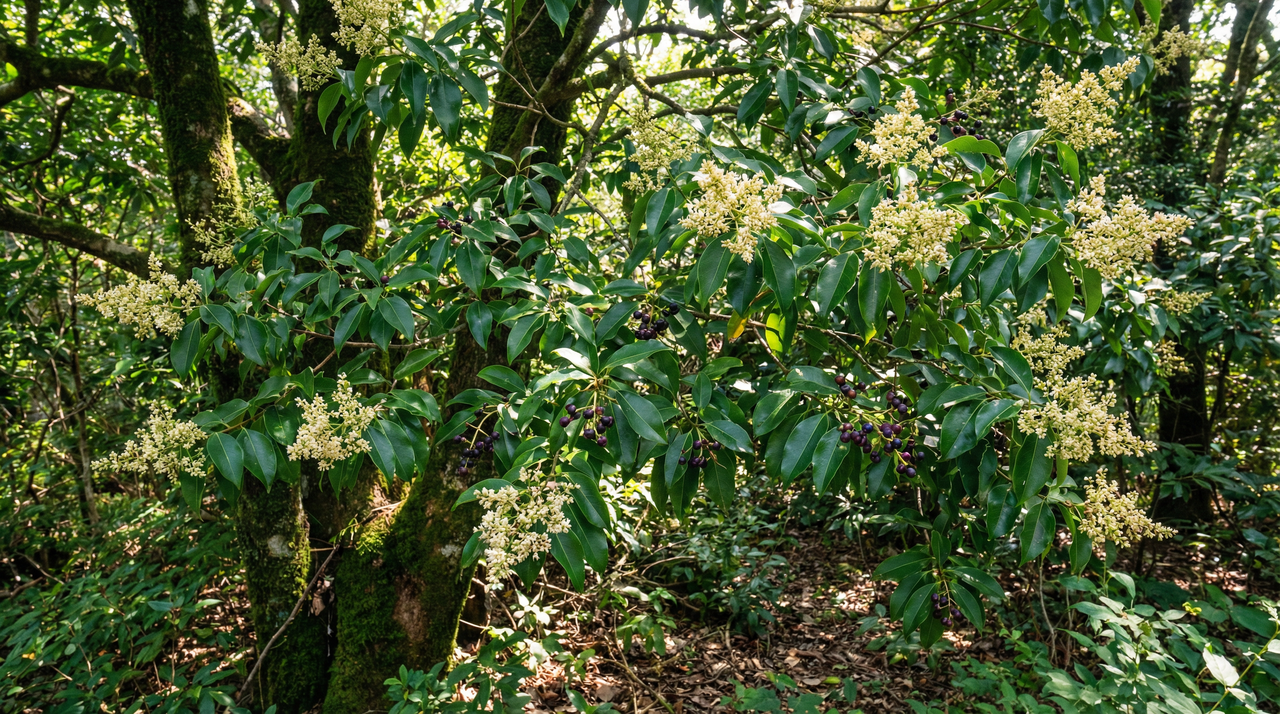
The common name says it all. Those leaves are genuinely lustrous: opposite, elliptical to ovate, dark green, 4 to 10 cm long, with a glossy upper surface that catches light in a way the duller foliage of European privet (Ligustrum vulgare) simply doesn't.[8][9][10] That visual difference is actually one of the quickest ways I distinguish the two at a nursery or in the field. Full sun pushes the glossiness further and produces a denser, more rounded canopy,[8] while mature stems develop grayish-brown, longitudinally fissured bark and a fibrous root system that spreads horizontally near the soil surface.[8] In late spring to early summer, the whole canopy erupts in large terminal panicles, 8 to 15 cm long, of small fragrant white tubular flowers.[8][7] Those flowers give way to bluish-black drupes, 6 to 8 mm, that persist through winter and travel widely via birds.[8][7] The cultivar 'Elegantissimum' offers creamy-margined variegated leaves on a more compact 2 to 4 meter form for gardeners wanting the foliage effect in a smaller package.[8]
Traditional and Cultural Uses
Long before any Western botanist catalogued this plant, Chinese herbalists were documenting it carefully. The dried ripe fruits, known as Nu Zhen Zi (Fructus Ligustri Lucidi), appear in Chinese materia medica stretching back to the Shennong Bencao Jing in the 1st to 2nd century AD, through Tang Dynasty use from 618 to 907 AD, and into Li Shizhen's authoritative Bencao Gangmu of 1596.[11][12][13] Its traditional applications are remarkably consistent over the centuries as a foundational tonic. I'm not a practicing herbalist, but that consistency across nearly two millennia of documented use is something I find genuinely compelling. Broader applications extend to anti-inflammatory, antipyretic, and diuretic effects using the fruits, leaves, and roots,[3][14] while Chinese gardens have long relied on its dense, glossy foliage for topiary, hedges, and ornamental screening. The same traits revered in an imperial garden eventually made it irresistible to Victorian-era horticulturists looking for a tough, fast hedge for the American landscape.
Interesting Facts About Privet
Those same qualities that made privet so attractive to landscapers have produced some humbling ecological consequences. Under good conditions it can put on 60 to 90 cm of growth annually,[8] and champion specimens have been measured with trunk diameters approaching one meter at breast height.[15] That's a far cry from the tidy hedge most gardeners picture. Ligustrum lucidum is now officially listed as invasive or a noxious weed across much of the southeastern United States (Florida, Georgia, Texas), parts of Missouri, California, Australia, New Zealand, and more than 20 other countries,[6][16][17] with birds dispersing the persistent berries across wide distances. I'll admit I once considered it for a windbreak project early in my career before a colleague pointed out its noxious-weed status in that region. That was an uncomfortable but important lesson: rapid growth and dense habit are assets only when the plant stays where you put it. Privet is a sharp reminder that in permaculture design, we have to think beyond the nursery tag and ask what happens when a plant succeeds beyond our plans.
Privet Varieties and Where to Source Them
Notable Cultivars of Ligustrum lucidum
Nurseries offer a genuinely appealing range of cultivated forms, and a few deserve a closer look. 'Excelsa' is the one that turns heads in commercial landscapes, a vigorous upright form capable of reaching 40 feet, which is more fast-growing street tree than tidy garden shrub.[18][19] For ornamental foliage interest, 'Variegatum' offers creamy-white leaf margins, a selection with 19th-century European nursery roots,[20] while 'Aureomarginatum' and 'Tricolor' bring warmer golden or multi-toned variegation that makes hedges feel less monotonous.[19] I've installed 'Variegatum' in mixed borders for contrast, and one thing I've noticed is that the creamy margins hold their brightness better in dappled shade than in full-blasting sun, where they tend to bleach out a bit. The compact cultivars, 'Nana' and 'Compactum', have obvious appeal for lower, denser hedging, and they're tidier in smaller gardens.[18][21]
Every single one of these cultivars carries the same invasive potential as the straight species.[6][22] A variegated leaf doesn't stop a bird from eating a berry and depositing a seedling three lots over. Even 'Nana', with its tighter habit, will still seed into neighboring properties if you're not vigilant. I've compared the growth rate of 'Excelsa' to yaupon holly for clients who want height fast, and privet wins on speed but loses badly on ecological fit in most southeastern gardens.
Sourcing Privet Plants Responsibly
Before you even look at a price tag, check your state's regulations. California, Florida, and South Carolina restrict or prohibit sales and distribution of Ligustrum lucidum outright.[22][23] I've had the frustrating experience of falling for a beautiful variegated form in a catalog only to find it's prohibited where I work. Texas monitors the spread but doesn't restrict sales, and Washington hasn't listed it as a noxious weed at the state level, though local rules may differ.[24][6] Where it is legal, plants are widely available in USDA zones 7-10, typically sold in 1-gallon to 7-gallon containers ranging from around $20 to $150 depending on size.[25][26][27] Online nurseries ship reliably and customer ratings trend positive for hardiness, but I'd always recommend buying from a local grower who actually understands regional invasiveness concerns over a national online retailer who may not. Regulations change, so verify current rules with your state's extension service or department of agriculture before purchasing.[23][22]
Privet Propagation and Planting (Ligustrum lucidum)
Always check your local regulations before you plant privet. I spent years designing hedges with Ligustrum lucidum before I fully reckoned with how invasive it is in much of the southeastern US, California, and parts of Australia. Now that conversation happens first with every client. The biology behind its invasiveness is the same biology that makes it so easy to propagate: the plant reproduces through apomixis, producing seeds that are clonal copies of the mother plant, often with multiple asexual embryos packed into a single seed.[28][29] Birds eat the fruits, fly off, and deposit those clonal seeds in disturbed ground miles away.[7][30] Understanding this mechanism explains both why planting privet requires real caution and why, where it is permitted, getting it established is almost effortless.
Propagation Methods for Privet
There are several viable pathways: seeds, semi-hardwood cuttings, air layering, grafting, and tissue culture.[31][32] For home gardeners, semi-hardwood cuttings are the most reliable route. Take 4-6 inch cuttings from non-flowering shoots in late spring to early summer, treat with IBA rooting hormone, and root them in a well-draining perlite/peat mix with 70-80% humidity and gentle bottom heat around 21-24°C. Done right, you can expect 60-90% rooting success.[33][34] I've found that IBA at around 2000 ppm gives the most consistent results in my Central Florida conditions without risking stem burn at the higher end of that range.
Seeds work too, but they need some coaxing. Cold stratification at 3-5°C for 60-90 days is necessary to break physiological dormancy; skip that step and germination rarely climbs above 20%. With proper treatment and germination temperatures of 20-25°C under light conditions, you can expect 50-80% success.[7][35][36] If you're storing seed, the good news is that privet follows orthodox storage behavior: keep seeds dry (5-10% moisture), cool, and sealed and viability holds well for several years.[37][38] Air layering in summer is another strong option, with success rates of 80-95%, while grafting onto compatible rootstocks in late winter achieves 70-90%; tissue culture exists mainly in research contexts.[31][39][40]
Soil, Site Selection, and Light Requirements
The single fastest way to kill a newly planted privet is to put it somewhere water pools. This plant is highly intolerant of waterlogging; I've watched supposedly vigorous hedges yellow, wilt, and collapse within a single wet season when planted in low spots with heavy clay, a slow progression from chlorosis to root rot that's both frustrating and entirely avoidable.[8][7] Fertile, moist, well-draining loam is the ideal, but the pH window is genuinely broad: optimal performance sits between 6.0 and 7.5, with tolerance stretching from about 5.5 to 8.0.[6] Push beyond 7.5 and you'll see iron chlorosis; drop below 6.0 and manganese availability becomes a concern. Compare that to blueberries, which need a tight 4.5-5.5 range, and you understand immediately why privet establishes so effortlessly in such a variety of landscapes. Once the roots are down, it handles drought and poor soils with ease, though giving it 45-90 cm of workable soil depth at planting gives those deep roots somewhere to go.[41][42]
For light, full sun is the preference: a minimum of 4-6 hours of direct light, with 6 or more producing the densest, most vigorous growth.[43][44] Partial shade is tolerated; full shade produces the leggy, sparse growth you'd expect from a plant that evolved on forest margins in central and southern China, where it competed for light at the edges of thickets.[8]
Spacing, Planting Technique, and Establishment
For a hedge or privacy screen, the sweet spot for spacing ligustrum is 4-6 feet center-to-center.[45][46] Given that privet grows 2-3 feet per year once established, tighter spacing fills gaps quickly but can reduce airflow and invite fungal issues later.[8][7] If you want a quick screen and plan to prune aggressively from the start, 3-4 feet works. For specimen trees, where you're allowing the plant to reach anything near its unpruned potential of 20-40 feet, give it 15-20 feet of clearance. That's a number people routinely underestimate.
Plant in spring or fall, setting the root ball at grade, never below it. Deep initial watering matters: soak to 12-18 inches every 7-10 days through the first establishment season to encourage roots to chase moisture downward rather than staying shallow.[8] And keep that invasiveness caution at the front of every decision: its vigor at establishment is the same trait that lets it escape garden boundaries and overwhelm native plant communities. Where you can plant it responsibly, it establishes with minimal fuss; where regulations restrict it, that's the right call.
Glossy Privet Care Guide
Every trait that makes Glossy Privet so easy to grow is exactly what makes it ecologically dangerous. It tolerates drought, poor soils, heat, neglect, and hard pruning. That toughness is the same engine driving its invasive spread across the southeastern US, California, and beyond. Check your local regulations before planting, and only site it where fruiting can be controlled. With that said, if you're growing it responsibly in a contained setting, here's what you need to know.
Watering Needs
Established plants are genuinely low-maintenance on water. Once the root system is settled in, Glossy Privet can handle dry stretches of two to four weeks before showing any stress, and even then the symptoms are modest: some leaf wilting, a little yellowing, maybe marginal browning.[8][47] I rarely irrigate mature specimens beyond a deep soak every week or two during Central Florida's dry season, watering to six to twelve inches to encourage roots to chase moisture downward rather than stay shallow.[8][48]
Young plants are a different story. Newly transplanted privet needs consistent moisture while it establishes, and sandy soils will dry out much faster than you expect, so check the top inch or two regularly those first two seasons.[8] Root rot from chronically wet soil is one of the few real ways to lose this plant, so good drainage always matters more than irrigation frequency.
Sunlight Requirements
Full sun is where Glossy Privet performs best: foliage is denser, flowering is more prolific, and the overall structure stays tighter and more attractive.[8][44] It will grow in part shade, but I've seen shaded specimens get leggy and produce far fewer flower panicles. If you're using it as a screen or hedge, inadequate light will also cause chlorosis and reduced vigor over time. Site it in full sun and you'll spend far less time managing it.
Fertilizing and Soil Nutrition
Glossy Privet is a light feeder that thrives in poor, dry, sandy, and clay soils with almost no nutrition input.[8][44][49] That's part of why it's so invasive. In cultivation, a balanced slow-release fertilizer like 10-10-10 applied in early spring at one to two pounds per 100 square feet is plenty, with an optional light midsummer application if growth looks sluggish; stop feeding after August entirely or you'll push tender growth into cold weather.[48][47]
Over-fertilizing causes leaf scorch, wilting, and the kind of lush soft growth that invites pest pressure.[50][48] Always water thoroughly after any application, and run a soil test if you can. On the deficiency side, the ones I see most often in Florida's alkaline soils are iron chlorosis (interveinal yellowing on young leaves) and nitrogen deficiency (pale older leaves, slow growth).[51][52] A sulfur amendment to lower soil pH fixed iron chlorosis faster in my experience than chelated iron products. Other deficiencies to watch: zinc shows up as small distorted leaves, phosphorus as purplish older foliage with poor flowering, and potassium as marginal necrosis on older leaves.[51][52]
Frost Tolerance and Winter Protection
Glossy Privet is reliably hardy in USDA zones 7 through 10, with roots surviving down to around 0°F in protected sites.[8][44][53] Even after hard freezes below -10°F that kill stems back to the ground, the plant typically rebounds through basal sprouting. After watching a surprise freeze hit my zone 9B garden a few winters back and damage the new growth on an unprotected young plant, I now mulch every privet in the landscape through winter regardless of what the hardiness maps say. Young plants, new growth flushes, and flower buds are the most frost-vulnerable parts.
Frost damage on the glossy leaves looks like browning, water-soaking, and wilting; late-spring frosts can kill flower buds outright and reduce the berry crop that follows.[54][47] In zone 7 or exposed sites, apply three to four inches of organic mulch (kept back from the trunk), water deeply before the ground freezes, and use burlap wraps or windbreaks to prevent winter desiccation.[55]
Heat Tolerance and Summer Care
This is where Glossy Privet earns its keep in humid subtropical gardens. It handles AHS Heat Zones 7 through 10 comfortably, shrugging off summer temperatures above 100°F as long as soil moisture is adequate, with optimal growth between roughly 68 and 86°F and short-term tolerance up to about 104°F.[8][44] I've compared it side by side with boxwood in client landscapes through Florida summers, and while boxwood struggles with leaf scorch and fungal issues, established privet barely flinches. That said, heat stress does show up when drought stacks on top of it: marginal browning, leaf curl, wilting, and premature leaf drop are the symptoms to watch.[56][57] This is where the low-water advice gets tested: deep early-morning irrigation, two to four inches of organic mulch, and wind protection during extreme heat events keep heat stress from escalating into real damage.
Pruning, Maintenance, and Seasonal Rhythm
The seasonal rhythm of Glossy Privet gives you a clear calendar to work from. Active growth runs spring through fall; flowers appear in May and June in white panicles; berries ripen to black from September through November and persist into winter; in zones 8 through 10 the plant stays evergreen year-round, while zone 7 plants may drop leaves in hard winters.[8][9]
For pruning privet hedges or shaping the canopy, late winter before new growth breaks is the ideal window; a light cleanup after flowering in late spring is also fine.[8][47] I learned the hard way that ligustrum pruning done in late summer pushes a flush of soft new growth that gets damaged by early cold fronts, so I keep any significant shearing to late winter and let the plant harden off on its own schedule. It handles hard renovation pruning well and can be trained into a multi-trunk small tree by selecting leaders and gradually removing lower limbs. In regions where berries are a dispersal concern, I prefer late-winter pruning for shape precisely because it avoids stimulating a heavy berry crop; any fruit that does set should be removed before birds distribute it.
Monitoring for pests and diseases fits naturally into your pruning routine. Aphids, scale, mealybugs, and leafminers are the main insects to watch; leaf spot, powdery mildew, and root rot from poor drainage are the disease concerns.[58][59] Good siting, proper drainage, and consistent but not excessive watering prevent most of them before they start.
Harvesting Privet (Ligustrum lucidum)
Glossy privet occupies a curious position in the harvest conversation: it produces fruit relatively early, but "ready to harvest" and "mature tree" are two very different things here. Technically, a young privet may begin setting those small bluish-black drupes within just two to four years after planting, yet the tree won't reach its full rounded canopy of 30 to 40 feet for another fifteen to twenty years.[60][44] A few scattered clusters on a spindly, open-form tree don't mean much. I've worked with enough Central Florida privacy screens to know that the difference between a young privet and a mature one is unmistakable once you've seen both side by side.
When and How to Harvest Privet Fruits: Timing and Visual Cues
Read the tree's form, not the calendar. A mature, fruit-worthy specimen shows a genuinely dense, rounded canopy, thick glossy foliage, and heavy clusters of drupes that persist well into winter.[61][44] Immature trees stay open and airy with sparse fruit, which tells you the plant is still putting energy into structural development. Site conditions shape how quickly a tree reaches that stage: full sun and well-drained soil push privet along faster, while shade, compacted ground, or drought can delay maturity noticeably.[60][44] I've watched trees on sunny, well-drained sites fruit earlier and more heavily than those crammed into shaded hedgerows. If you're wondering when to cut privet hedge growth back versus when to let it run, that seasonal check is also your cue to assess fruit load for the year.
Yield, Flavor Profile, and Important Safety Considerations
The fruit itself is a small drupe, six to ten millimeters across, with firm flesh, a thin skin, and a dry, mealy pulp surrounding a single seed. There's very little juice.[61][44] Don't expect anything like elder or beautyberry. Raw privet fruit is intensely bitter and astringent from its high polyphenol load, and not in a "takes some getting used to" way.[8][62] In my experience, even a small taste is powerfully unpleasant enough to remind you immediately why these are handled as medicine rather than food. Any traditional use in Chinese herbal practice requires specific processing, and that's covered in the preparation section. For most Western gardeners, these fruits have no culinary application whatsoever, and given the plant's well-documented invasive spread through bird-dispersed seeds, casual harvesting still carries ecological responsibility worth keeping in mind.
Privet Preparation and Uses
Is Privet Edible? Toxicity and Culinary Safety
No part of glossy privet belongs in your kitchen, your smoothie, or your herbal tea without serious qualification. The berries, leaves, flowers, seeds, and roots are all considered unsafe for casual human consumption, with no established culinary use anywhere in the world.[44][6] The toxicity comes primarily from iridoid and secoiridoid glycosides, including ligustroside and oleuropein, along with triterpenoid saponins that cause nausea, vomiting, diarrhea, and abdominal cramping. The berries are the most hazardous, especially for children and pets.[63][64] The ripe black drupes look deceptively like small olives or elderberries, which is exactly why I always make a point to educate clients about identification. That attractive cluster of dark fruit is not an invitation. The flavor reinforces the message: raw berries are intensely bitter and astringent, think unripe persimmons crossed with very strong black tea, with symptoms that can appear within hours and in severe cases progress to drowsiness or heart irregularities.[65]
Yes, the fruits do contain flavonoids like luteolin and apigenin, triterpenoids, and trace amounts of vitamins C and E, potassium, and magnesium, supporting some antioxidant activity.[66][67] That chemistry is the basis for medicinal interest, not culinary use. Occasional folk reports mention brewing privet leaves into a calming tea, but safety for regular consumption has not been established, and overconsumption can trigger the same gastrointestinal response as the berries.[68] Oval-leaved privet shares the same inedibility profile with equally limited documentation for medicinal application.[69]
Traditional Chinese Medicine: Nu Zhen Zi Preparations
The TCM tradition around this plant is a different story entirely, and a genuinely fascinating one. The dried ripe fruits, known as Nu Zhen Zi, are harvested in autumn and used to tonify liver and kidney yin, clear deficient heat, improve vision, and address dizziness, tinnitus, and premature graying.[65][70] The key word there is processed. Raw fruit is never used. Traditional preparation involves drying, steaming, boiling, or stir-frying to reduce both bitterness and toxicity while activating the fruit's therapeutic properties; drying alone transforms the pulpy drupe into a hard, brittle, seed-like form.[62] I've studied enough traditional herbal processing to know that stir-frying is non-negotiable here, not an optional step. It stands in stark contrast to the raw consumption scenarios that show up in poison-control reports.
The standard dosage is 6 to 15 grams of dried fruit per day, prepared as decoctions, teas, tinctures, powders, or pills; fermented medicinal wines are also historically documented.[71][72] Contraindications are real: the fruit is not appropriate for use during pregnancy, and it carries interaction risks for people on certain medications or with digestive sensitivities.[68] I grow and design with many medicinal plants, but Ligustrum preparations are squarely in the territory where I refer clients to a licensed practitioner rather than offer guidance myself.
Non-Food Uses in Landscaping and Beyond
Historically, the non-food uses that defined this plant's spread were almost entirely ornamental. Historically favoured for hedging, it became a go-to for privacy screens, windbreaks, topiary, shade trees, and erosion control because of its rapid growth, pruning tolerance, and attractive persistent berries.[73] The high biomass it produces also has practical applications in mulching, fuel, and minor woodcraft, though it has no commercial timber significance.[73] Those are real utilities, but they come with real costs. I've removed mature glossy privet hedges from multiple Central Florida properties, and every time I'm reminded of how bird-dispersed seeds spread the plant far beyond its original planting, quietly displacing native understory species in the process. For most North American landscapes, the honest recommendation is to skip it entirely and choose a noninvasive native alternative that does the same structural job without the ecological footprint.
Privet Health Benefits and Medicinal Uses
Most gardeners know privet as a hedge plant and little else. But Ligustrum lucidum, native to southern China,[74] carries a medicinal history that runs far deeper than its ornamental reputation. The dried fruit, known in Traditional Chinese Medicine as Nu Zhen Zi, has been documented as a therapeutic herb since the Shennong Bencao Jing, making it one of the longer-running case studies in plant medicine we have. The health story here is genuinely interesting, and genuinely complicated, because the same plant that warrants serious toxicity warnings also produces compounds with compelling pharmacological activity.
Key Phytochemicals in Privet (Ligustrum lucidum)
The chemistry driving this plant's effects is impressively layered. L. lucidum contains flavonoids including luteolin, quercetin, kaempferol, and apigenin; phenolic compounds like oleuropein, chlorogenic acid, and verbascoside; triterpenoids such as oleanolic acid, ursolic acid, and betulinic acid; secoiridoids and iridoids including ligustroside and salidroside; lignans, coumarins, and essential oils.[75][76][77] The fruits tend to be richer in secoiridoids, with oleuropein reaching up to 2-5% dry weight and oleanolic acid up to 1.2%, while leaves carry higher concentrations of certain flavonoids and phenolics. Mature tissues outperform young shoots in nearly all compound classes.[78]
That oleuropein content is worth pausing on. It's the same compound that defines olive's antioxidant and anti-inflammatory reputation, which makes sense given that privet and olive share the Oleaceae family. I've watched olive trees in warm-zone clients' gardens produce noticeably more pungent, phenolic-dense oil when grown in high-light, moderately stressed conditions, and the research on privet mirrors that pattern: peak flavonoid and phenolic levels occur in late spring to early summer, and plants experiencing higher UV exposure or biotic stress accumulate more secondary metabolites overall.[79][80] Collectively, these compounds underpin antioxidant, anti-inflammatory, hepatoprotective, immunomodulatory, antimicrobial, and potential anti-cancer activities.[81][82]
Traditional and Modern Medicinal Research
TCM texts describe Nu Zhen Zi as a yin tonic for the liver and kidneys, used for over two millennia to address dizziness, tinnitus, premature graying, and blurred vision, often combined with other herbs in formulas like Qi Ju Di Huang Wan.[83][72] Modern pharmacology has found solid preclinical backing for several of those traditional uses. Antioxidant activity from the flavonoid and phenolic fraction is well-documented, with DPPH IC50 values comparable to vitamin C and Nrf2-pathway upregulation of SOD. Hepatoprotective effects, including reductions in ALT and AST in animal models, showed up in a clinical trial of 60 chronic hepatitis B patients as well.[84][85]
Anti-inflammatory activity operates through inhibition of TNF-α, IL-6, COX-2, and NF-κB pathways, reducing paw edema in rat models by 40-60%.[86][87] The immunomodulatory picture is interesting too: rather than simple stimulation, the research shows increased macrophage phagocytosis and NK cell activity without overstimulation,[88] which aligns neatly with the TCM yin-tonic framing. Additional preclinical work points to antimicrobial effects against Staphylococcus aureus and Candida albicans, adaptogenic properties, and anti-cancer potential via apoptosis induction and cell cycle arrest in several cancer cell lines.[86][89] Related species like L. ovalifolium show parallel antioxidant, anti-inflammatory, hepatoprotective, and anti-diabetic activities in animal models, though without human trials to date.[90]
When examining human trials, I always pump the brakes a little. Small trials have shown improved immune markers in elderly patients and positive adjunctive results for chemotherapy-induced myelosuppression, chronic hepatitis, and osteoporosis, with therapeutic doses up to 12 g/day of dried fruit showing reasonable tolerability.[83][91] But quality issues persist in the meta-analyses, and the trials are small. The lab evidence and the traditional record are compelling. The human clinical picture is still thin, and that's where working with a qualified practitioner matters rather than self-prescribing.
Nutritional Profile
Nutritionally, L. lucidum is primarily a medicinal herb rather than a food plant, and there's no USDA FoodData Central entry for it.[92][93] Limited analyses suggest the fruit has low caloric density (roughly 50-100 kcal/100g fresh weight) with approximately 50-60% water content, 20-30% carbohydrates mainly as polysaccharides, trace proteins, and minimal fats. Mineral values are notable relative to common berries: approximately 150-200 mg/100g calcium, 800-1000 mg/100g potassium, and 5-10 mg/100g iron, though all figures vary meaningfully by source, soil, and processing method.[94][95] The seed oil is rich in oleic and linoleic acids; leaves carry high polyphenol density but are not eaten.[96] None of that mineral profile matters much in practice because the fruit is not a dietary food, and the TCM tradition pairs it with goji berries for yin nourishment rather than eating it raw.[83] The real nutritional story is the bioactive compound load, which circles back to the phytochemical profile above.
Safety Profile and Contraindications
Here's where I have to be direct with anyone designing gardens for families. All parts of L. lucidum, and especially the dark purple-black berries, are toxic if ingested raw in quantity. The primary culprits are iridoid glycosides including ligustroside and oleuropein, and symptoms range from nausea and vomiting to abdominal pain and diarrhea in humans.[97][98] For dogs and cats, the effects can be more severe. I've seen enough reported pet poisonings linked to fruiting privet that I now actively advise clients with animals to avoid fruiting cultivars entirely, full stop. Toxicity is considered moderate overall: a few berries typically cause only mild symptoms, larger amounts warrant medical attention, and there's no specific antidote.[99] Chronic high doses may also produce mild hepatotoxicity, which adds irony given the liver-protective reputation of the prepared fruit.
Pollen is another real concern I discuss when a client has hay fever. L. lucidum produces abundant pollen with moderate allergenic potential, including profilins and lipid transfer proteins, with peak release in late spring to early summer. It may cross-react with olive pollen, so anyone already sensitive to olive should be cautious.[100]
For prepared medicinal use of the dried fruit, the safety picture improves considerably. Clinical studies using up to 12 g/day report mainly mild digestive side effects.[101][102] That said, it's contraindicated in pregnancy, lactation, autoimmune conditions, and TCM spleen deficiency with dampness. The immunomodulatory activity also creates a theoretical interaction with immunosuppressant medications, so anyone on those drugs needs to talk to their healthcare provider before using it medicinally.[102][98] The line between valuable medicinal herb and garden hazard runs right through this plant, and respecting both sides of it is non-negotiable.
Privet Pests and Diseases
After years designing hedges in humid subtropical climates, my honest assessment is that glossy privet is not a plant that keeps me up at night worrying about pest outbreaks. That said, it does have a real list of potential visitors, and knowing who they are helps you catch problems before they compound.
Common Insect Pests of Ligustrum lucidum
The usual suspects include aphids (specifically Paraphalaropex humilis and Aphis ligustri), scale insects like privet scale (Lepidosaphes beckii) and Lecanium hesperidum, leaf miners, caterpillars, and lace bugs.[103][104] In Central Florida's humidity, lace bugs (Corythucha cydoniae) and scale are the ones I encounter most frequently, showing up as stippled, yellowed, or bronzed foliage on plants with poor air circulation.[103] Leafminers leave serpentine tunnels that reduce photosynthesis and make leaves look tatty, while caterpillars like the privet hawk moth can chew foliage down to skeleton if a population builds unchecked.[103][105] Leafminers are far less common in my Florida experience than they appear to be in Pacific Northwest extension literature.
Natural Defenses Against Herbivores
What makes glossy privet genuinely resilient is its layered defense system. The plant produces volatile compounds, flavonoids, tannins, iridoids, and saponins that make it chemically unappealing to many insects, and its thick, waxy cuticle creates a physical barrier that interferes with feeding and attachment.[106][107] Then there's the indirect defense I find genuinely fascinating: extrafloral nectaries that recruit ants, particularly Crematogaster species, which patrol the plant and physically remove herbivores in exchange for nectar.[108] I've seen the same dynamic on elderberry and peony, and once you start watching for it on privet, you'll notice the ant trails on stems that look clean and pest-free. It's a mutualism worth appreciating. Root exudates and leaf leachates may also reduce nearby insect habitat by suppressing surrounding vegetation through allelopathy, though that same trait is part of what makes this plant ecologically problematic outside its range.[109] Cultivar choice matters here too: I've watched the 'Variegatum' form attract heavier aphid loads in my early designs, leading to honeydew buildup and sooty mold that were entirely avoidable. 'Aureum' performs better where aphid pressure is a concern.[110][8]
Integrated Pest Management and Secondary Issues
Aphid and scale honeydew feeds sooty mold, which blocks light and compounds the photosynthesis problem. Left unaddressed, pest-weakened plants become more susceptible to ligustrum leaf spot, canker, and other fungal issues that thrive in poor air circulation and high humidity.[111][112] Those secondary ligustrum diseases are nearly always downstream of a pest problem that wasn't caught early, which is why I frame IPM as prevention first. A strong spray of horticultural oil in early spring keeps scale and aphids manageable without harming the ladybugs and parasitic wasps doing most of the real work.[111] Insecticidal soap handles soft-bodied insects like aphids on contact. Beyond that, the best thing you can do for a privet hedge is prune it to open up airflow, site it where it gets good light, and let the plant's own defenses do their job.
Privet in Permaculture Design
Glossy privet presents a clear paradox that makes permaculture designers pause. On paper, it checks a lot of boxes: evergreen, fast-establishing, tolerant of neglect, useful as a screen or windbreak, and genuinely attractive to pollinators. In practice, it's one of the clearer examples I've encountered of a plant whose resilience becomes its most dangerous quality outside its native range. I've used it in client landscapes and watched it perform beautifully, and I've also spent entire afternoons pulling seedlings from places I never intended it to go. Both of those experiences matter when you're deciding whether this plant belongs in your design.
Climate Adaptability and Hardiness Zones
Ligustrum lucidum is hardy across USDA zones 7a through 10b, handling minimum temperatures down to around 14°F (-10°C).[8][6][113] On the hot end, it can push through temperatures near 100°F (38°C), though extended periods above 95°F without irrigation will show up as stress.[8][114] In my zone 9B work in Central Florida, that heat tolerance is genuinely impressive. Heavy summer rains, high humidity, intense sun, a light frost in January, and the plant just keeps going.
Once established after two to three years, it becomes surprisingly drought tolerant, surviving on as little as 400 to 500 mm of annual rainfall, even though optimal growth happens with 1,000 to 2,000 mm.[32][115][44] It prefers well-drained, fertile soil with moderate humidity and does well in full sun to partial shade,[116][8][44] though its adaptability to suboptimal conditions is frankly what gets it into trouble. The RHS awarded it the Award of Garden Merit, and then in the same breath recommended caution over its invasiveness.[117] That tension sums up the plant entirely.
Ecosystem Functions and Guild Potential
The flowers are genuinely worth knowing about. Small, white, and bell-shaped, borne in large panicles, they're strongly fragrant, especially in the evenings,[118][119] and they reliably attract honeybees, native solitary bees, hoverflies, and moths from late spring through summer.[120][121] The plant is self-compatible but cross-pollination by insects increases fruit set substantially.[122][123] I've grown sunshine ligustrum and its larger relatives near buttonbush and elderberry, and the insect activity is comparable across all three. The meaningful difference is what happens next.
Those insect visits produce an abundance of seeds inside black berries that birds, particularly cedar waxwings and mockingbirds in my region, devour throughout late winter. I've watched whole flocks work through a fruiting privet in an afternoon, then scatter seeds into hedgerows, fence lines, and neighboring natural areas. The birds get fed, but the overall habitat quality it delivers is poor compared to native fruiting shrubs.[124][7] In a native guild, I'd give those same birds a beautifully productive plant without the ecological cost.
In invaded landscapes, privet forms dense thickets that outcompete native vegetation, and there's real evidence of allelopathic effects suppressing native germination around it.[124][7][125] Its leaf litter decomposes quickly and raises soil nitrogen,[126][125] which sounds useful until you realize in practice that nitrogen spike tends to favor the privet itself and weedy competitors rather than the companion plants you actually want. Privet doesn't fix nitrogen,[73][127] so there's no symbiotic soil benefit to offset these dynamics. Its invasiveness in more than 13 US states, including Florida, Georgia, Texas, and California, is driven by the same generalist pollinators that make its flower season look so appealing.[124][125]
Forest Layer and Invasive Considerations
In a native forest environment, glossy privet occupies the shrub, understory, and sub-canopy layers in forest stratification, typically reaching 20 to 40 feet, occasionally pushing to 50 feet in ideal conditions, with a dense, rounded canopy and multi-stemmed form.[128][6][129] It's a natural fit for forest edges and secondary growth,[130][131] which is precisely the layer where permaculture food forests do most of their productive work. That density is what makes it such an effective living screen in the first two or three years of a design. I've recommended it for visual privacy around client properties and watched it fill a gap beautifully. The problem is what happens around year four, when seed production ramps up and nearby natural areas start showing seedlings.
This plant has naturalized aggressively across the southeastern and midwestern US, California, and Australia,[132][127][133] forming the kind of monocultures that squeeze out native biodiversity at the shrub and understory layers. Rapid growth, shade tolerance, prolific seed production, allelopathic chemistry, and bird-vectored dispersal make it a formidable invader once it escapes cultivation.[120][133][134] It will grow in forests, stream banks, disturbed ground, and urban margins without much complaint,[135][6] which is exactly the habitat diversity that lets it move from a garden into a watershed.
Before any of that becomes a practical concern, the toxicity issue deserves a direct word. All parts of the plant, especially the berries and leaves, are toxic to humans, dogs, cats, and livestock, with potential for gastrointestinal damage and liver harm on significant ingestion.[98] I advise clients with young children or pets in zone 9B to keep this plant out of accessible areas entirely. For most residential permaculture situations, a native evergreen like wax myrtle or a native holly fills the same structural niche without the safety concern or the invasion risk. Always check local and state regulations before planting privet in any form; in many parts of the southeastern US, it's already restricted or on watch lists for good reason.
The Plant I Keep Removing From Other People's Gardens
I've pulled more privet than I care to admit, from client yards where it seeded in quietly and then just took over, and every time I bag up those glossy-leafed cuttings I think about how something so genuinely useful in the right hands became such a problem in everyone else's. That tension doesn't resolve neatly. It just makes me a more careful designer.
Sources 135
- Ligustrum lucidum: A review of its ethnopharmacology, phytochemistry and pharmacology ↩
- Flora of China: Ligustrum lucidum ↩
- Plants of the World Online ↩
- Hortus Kewensis ↩
- Ligustrum lucidum ↩
- Ligustrum lucidum - USDA Plant Profile ↩
- Phenology of Ligustrum lucidum ↩
- Ligustrum lucidum ↩
- Ligustrum lucidum ↩
- Ligustrum lucidum ↩
- Traditional Uses of Ligustrum lucidum in Chinese Medicine ↩
- Nu Zhen Zi (Fructus Ligustri Lucidi) in Chinese Medicine ↩
- Ligustrum lucidum Ait. fruit: a review of its phytochemistry and pharmacological activities ↩
- Ligustrum Species Ethnopharmacology: Traditional Uses to Modern Applications ↩
- National Champion Trees ↩
- Chinese Privet - Invasive Species Profile ↩
- Invasive Plant Atlas: Ligustrum lucidum ↩
- Ligustrum lucidum ↩
- Ligustrum lucidum ↩
- Ligustrum lucidum ↩
- Ligustrum lucidum ↩
- Ligustrum lucidum Profile ↩
- Florida Invasive Plant List ↩
- Washington State Noxious Weed List ↩
- Chinese Privet (Ligustrum lucidum) ↩
- Glossy Privet - Ligustrum lucidum ↩
- Nursery Stock Sizes and Specifications ↩
- Apomixis and Alien Plant Invasion in the Oleaceae ↩
- Polyembryony and Apomixis in Privet (Ligustrum spp.) ↩
- Reproductive Ecology of Chinese Privet ↩
- Propagation of Woody Ornamentals ↩
- Ligustrum lucidum: Glossy Privet ↩
- Propagating Privet ↩
- Propagation of Ornamental Shrubs ↩
- Seed Biology of Invasive Ligustrum lucidum ↩
- Ligustrum lucidum: Chinese Privet ↩
- Kew Seed Information Database ↩
- Seed Storage of Woody Plants - USDA Forest Service ↩
- Grafting and Budding Nursery Crop Plants ↩
- Micropropagation of Ligustrum Species ↩
- Ligustrum lucidum: Chinese Privet ↩
- Ligustrum lucidum ↩
- Ligustrum lucidum ↩
- Ligustrum lucidum - Glossy Privet ↩
- Missouri Botanical Garden Plant Finder: Ligustrum lucidum ↩
- Ligustrum lucidum ↩
- Royal Horticultural Society - Ligustrum lucidum ↩
- University of Florida IFAS Extension - Privet ↩
- USDA PLANTS Database - Ligustrum lucidum ↩
- Clemson University HGIC - Nutrient Disorders in Woody Ornamentals ↩
- University of Minnesota Extension - Nutrient Deficiencies in Trees and Shrubs ↩
- Penn State Extension - Diagnosing Nutrient Deficiencies in Woody Ornamentals ↩
- Royal Horticultural Society - Ligustrum lucidum ↩
- University of Georgia Extension - Cold Damage to Landscape Plants ↩
- University of California Agriculture and Natural Resources - Overwintering Trees and Shrubs ↩
- University of Florida IFAS - Glossy Privet ↩
- Texas A&M AgriLife Extension - Heat and Drought Stress in Woody Ornamentals ↩
- Missouri Botanical Garden - Ligustrum lucidum Care and Problems ↩
- UC IPM - Ligustrum species ↩
- University of Florida IFAS Extension - Ligustrum lucidum ↩
- Missouri Botanical Garden - Ligustrum lucidum ↩
- Nu Zhen Zi (Ligustrum lucidum Fruit) ↩
- Chinese Privet Toxicity - ASPCA ↩
- Plant Toxicity Database - Poison Control ↩
- Ligustrum lucidum - Wikipedia ↩
- Chemical Composition and Antioxidant Activity of Ligustrum lucidum Ait. Fruit ↩
- Phytochemical and Pharmacological Profile of Ligustrum lucidum ↩
- Medicinal Use of Ligustrum in Traditional Chinese Medicine ↩
- Privet (Ligustrum spp.) in Traditional Chinese Medicine ↩
- Nu Zhen Zi (Ligustrum lucidum Fruit) in Chinese Medicine ↩
- Chinese Pharmacopoeia (English Edition) ↩
- Ligustrum lucidum Ait. Fruit: Phytochemicals, Pharmacology, and Its Clinical Use as an Anti-Aging Agent ↩
- Ligustrum lucidum Plant Profile ↩
- Plant Finder - LIGUSTRUM LUCIDUM ↩
- Phytochemical and Pharmacological Review of Ligustrum lucidum ↩
- Ligustrum lucidum Ait. Fruit: Phytochemicals, Pharmacology, and Clinical Application ↩
- Chemical Constituents of the Fruits of Ligustrum lucidum Aiton and Their Antioxidant Activities ↩
- Phytochemical profiling of leaves, stems and roots of Ligustrum lucidum ↩
- Seasonal changes of flavonoid and phenolic content in selected Chinese medicinal plants ↩
- Impact of soil properties on secondary metabolite accumulation in medicinal plants ↩
- Phytochemical and Pharmacological Review of Ligustrum lucidum ↩
- Antioxidant and Immunomodulatory Activities of Ligustrum lucidum ↩
- Ligustrum lucidum Ait. (Fructus Ligustri Lucidi): A Review of Its Traditional Uses, Phytochemistry, Pharmacology, and Toxicology ↩
- Antioxidant and Hepatoprotective Activities of Ligustrum lucidum ↩
- Hepatoprotective Effects of Ligustrum lucidum in Clinical Trial ↩
- Pharmacological Review of Ligustrum lucidum ↩
- Anti-Inflammatory Effects of Oleanolic Acid from Ligustrum lucidum ↩
- Immunomodulatory Flavonoids from Ligustrum lucidum ↩
- Anti-Cancer Mechanisms of Ligustrum lucidum Extracts ↩
- Hepatoprotective Effects of L. ovalifolium in Animal Models ↩
- Clinical Study of Ligustrum lucidum Fruit Extract on Chemotherapy-Induced Myelosuppression ↩
- Ligustrum lucidum - an overview ↩
- USDA FoodData Central Search ↩
- Nutritional and Phytochemical Composition of Ligustrum lucidum Fruits ↩
- Chemical Composition and Antioxidant Activity of Ligustrum lucidum Ait. Fruit ↩
- Ligustrum lucidum Ait. Fruits: Phytochemical Composition and Pharmacological Activities ↩
- Chinese Privet Toxicity ↩
- Privet (Ligustrum spp.) ↩
- Toxicity and Safety Evaluation of Ligustrum lucidum ↩
- Pollen Allergens of Ligustrum lucidum (Chinese Privet) ↩
- Ligustrum lucidum: A Review on Phytochemistry, Pharmacology, and Phytotherapy ↩
- Chinese Privet ↩
- Insect Pests of Privet ↩
- Privet (Ligustrum spp.)-Pests ↩
- Pests of Landscape Trees and Shrubs: Privet ↩
- Chemical Defense Mechanisms in Ligustrum lucidum Against Insect Herbivores ↩
- Secondary Metabolites of Ligustrum Species: Insecticidal Properties ↩
- Extrafloral Nectaries and Ant-Plant Interactions in Glossy Privet ↩
- Allelopathy and Invasion Success of Ligustrum lucidum ↩
- Ligustrum lucidum Profile ↩
- Pest Management for Privets ↩
- Plant Finder - Ligustrum lucidum ↩
- Ligustrum lucidum ↩
- Heat Tolerance in Woody Ornamentals ↩
- Glossy Privet (Ligustrum lucidum) ↩
- Ligustrum lucidum Hardiness and Cultivation ↩
- Ligustrum lucidum Growing Advice ↩
- Missouri Botanical Garden Plant Finder: Ligustrum lucidum ↩
- Royal Horticultural Society: Wildlife Factsheet for Ligustrum lucidum ↩
- Pollination Biology of Chinese Privet (Ligustrum lucidum) ↩
- Insect Visitation to Ligustrum lucidum Flowers ↩
- Missouri Botanical Garden Plant Finder: Ligustrum lucidum ↩
- Ligustrum lucidum ↩
- Invasive Plant Atlas: Ligustrum lucidum ↩
- Ecological Impacts of Chinese Privet Invasion ↩
- Nutrient Cycling in Invaded Ecosystems ↩
- Invasive Plant Atlas: Ligustrum lucidum ↩
- Ligustrum lucidum - Kew Science ↩
- Chinese Privet - Missouri Botanical Garden ↩
- Missouri Botanical Garden Plant Finder ↩
- USDA PLANTS Database ↩
- Ligustrum lucidum Fact Sheet - Kew Gardens ↩
- Ecological Impacts of Chinese Privet in Forests ↩
- Seed Dispersal by Birds and Invasion Success of Ligustrum lucidum ↩
- Ligustrum lucidum - Royal Horticultural Society ↩