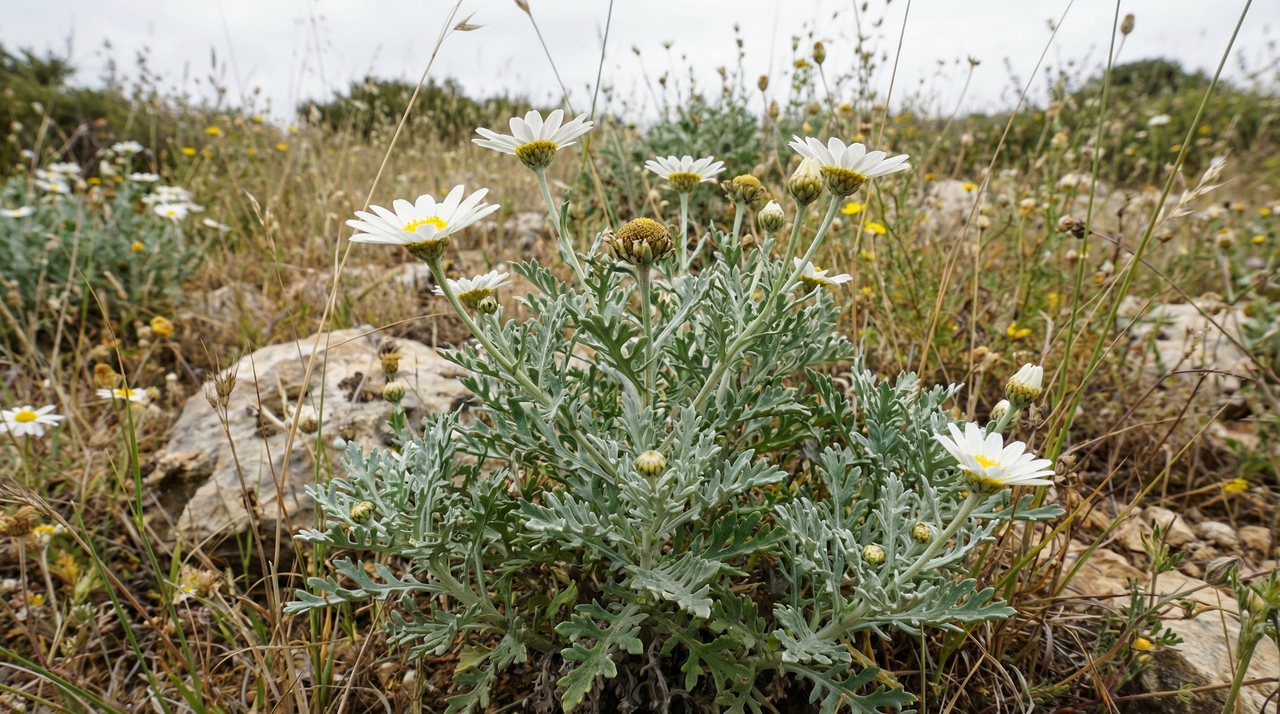
There's a plant sitting quietly in a lot of organic gardens that can kill an insect on contact, breaks down harmlessly in sunlight within a day or two, and looks, for all the world, like an ordinary white daisy. That combination sounds too good to be true, and honestly, the first time I really understood what pyrethrum daisy was doing in my garden, I stood there a little stunned. I'd grown it for years as a companion plant, loosely aware of its reputation, but I hadn't grasped the mechanism: the dried flower heads contain pyrethrins, compounds that attack the nervous systems of insects yet carry remarkably low toxicity for mammals.[1] The same flowers you'd pick for a bouquet are, chemically speaking, a natural insecticide factory.
What gets me is how thoroughly this plant has been misread by casual gardeners. Most people treat it as a pretty border flower that "maybe" deters a few bugs. That undersells it badly. The history of pyrethrum runs from Dalmatian fishing villages to Kenyan export farms to the foundational chemistry behind nearly every "natural" bug spray on the market today. Growing it well, harvesting it at the right moment, and actually using what it produces, that's where the real story starts.
Pyrethrum Daisy Origin and History
Having worked with a lot of daisy-family plants across regenerative garden designs over the years, I keep coming back to pyrethrum with a kind of quiet admiration. Most flowering plants earn their place in a permaculture system for one or two reasons. This one earned its place across centuries of human history for reasons that still hold up today.
Native Habitat and Traditional Discovery
Chrysanthemum cinerariifolium is native to the rocky, sun-blasted hillsides of the Dalmatian coast, the stretch of the eastern Adriatic that runs through present-day Croatia and into Albania. If you've ever worked with artemisias in a xeriscape design, you'll recognize that same silvery, drought-adapted foliage and no-fuss attitude toward poor soil. The plant evolved on limestone outcrops with sharp drainage and intense summer sun, which tells you a lot about what it wants from a garden. White daisy-like blooms sit atop wiry stems, looking almost delicate compared to the tough conditions they're built for. That contrast between appearance and resilience is something I find genuinely useful when explaining the plant to new clients.
From Folk Remedy to Global Industry
The people of Dalmatia figured out centuries ago that dried pyrethrum flower heads, ground into powder, would kill or repel insects. This wasn't some laboratory discovery; it was practical observation passed through generations, the kind of embedded ecological knowledge that permaculture design keeps trying to recover. By the early 19th century, that knowledge had traveled west into European trade networks, and "Dalmatian insect powder" became a recognized commercial product. Later, as colonial agricultural expansion took hold, pyrethrum cultivation moved to East Africa and Australia, where growing conditions suited large-scale flower production. Kenya in particular became a major producer, a role it still holds today.
The mid-20th century brought a complicated turn. After World War II, synthetic pesticides flooded the market and natural pyrethrum was largely sidelined by industry. I think about that shift a lot when clients ask why we're growing something that "already comes in a spray can." The answer is that what comes in that can is often a synthetic pyrethroid, engineered to mimic the plant's chemistry but without its rapid environmental breakdown. Returning to the actual botanical source is, for me, a deliberate choice about what kind of system I'm building.
Fun Botanical Tidbits and Modern Legacy
The active compounds, pyrethrins, work by disrupting the nervous systems of insects on contact. They're potent enough to knock down a wide range of pest species yet break down quickly in sunlight and soil, leaving no meaningful residue. For mammals, at normal exposure levels, they're considered essentially non-toxic. That combination is almost unreasonably good for an organic gardener. You'll also occasionally see the closely related chrysanthemum coccineum grouped into pyrethrum conversations; it shares the common name and some ornamental overlap, though cinerariifolium is the primary commercial source of insecticidal compounds.
What I find most remarkable about this plant's legacy is how little the core story has changed. The Dalmatian farmers who dried these flowers and sold them in cloth bags weren't wrong about anything. They just didn't have the chemistry to explain why it worked. We do now, and that knowledge only deepens the case for growing it yourself.
Pyrethrum Daisy Varieties and Sourcing
If you're expecting a long list of named cultivars here, I'll be honest with you: there really isn't one. Unlike the florist chrysanthemums in its extended family, which have been selectively bred into hundreds of forms chasing flower color, petal count, and vase life, Chrysanthemum cinerariifolium has been selected almost entirely for what's happening chemically inside the flower head. Commercial breeding programs have focused on pyrethrin yield, drought tolerance, and uniformity at harvest scale rather than on anything you'd see in a garden catalog. That's actually a distinction I find useful when helping clients choose plants for functional guilds: this isn't a plant that was ever really meant to be decorative first.
In the trade, you'll typically find it sold simply as "pyrethrum daisy" or under its botanical synonym Tanacetum cinerariifolium, sometimes with descriptors like "painted daisy pyrethrum" or listed in a chrysanthemum coccineum robinson's mix or chrysanthemum coccineum super duplex blend that leans more ornamental than insecticidal. That's where things get tricky. I've seen too many disappointed gardeners who purchased pyrethrum daisy seeds marketed as a mixed color blend, grew out beautiful plants, and ended up with flowers that were showy but essentially chemically inert. The broader painted daisy group can look nearly identical to the real thing while containing a fraction of the active compounds. Always verify the scientific name on the label, and if you're buying from a commercial supplier, don't hesitate to ask whether the strain was selected for pyrethrin production.
For home gardens and permaculture systems, I'd steer you toward specialty herb nurseries, botanical seed houses, or permaculture-oriented suppliers who list the full species name and can speak to the plant's intended use. Getting the genetics right from the start means your pest management guild actually performs the way you designed it to.
How to Propagate and Plant Pyrethrum Daisy
Starting Pyrethrum Daisy from Seed
Pyrethrum daisy can be propagated two ways: from seed or by dividing established clumps.[2] Commercial growers almost always go with division for consistency, but home gardeners and permaculture designers can raise strong plants from Chrysanthemum cinerariifolium seeds without much trouble. I've started batches both ways and I'd argue seed is often the smarter choice when you're filling out an insectary guild or a long border edge, because you can get a lot of plants cheaply and quickly.
The main thing most people get wrong is burying the seed. These need light to germinate, so surface-sow and press them gently against the soil without covering them at all.[3] Keep temperatures between 15 and 18°C (59 to 64°F) and expect seedlings in 10 to 21 days.[4] One thing I'd warn you about: those first seedlings appear as thread-like cotyledons that are genuinely easy to mistake for grass seedlings or random weed sprouts. I've accidentally weeded out more than a few before I trained myself to look closer.
You can direct sow after your last frost, but starting indoors six to eight weeks earlier produces noticeably sturdier transplants and gives you a real head start.[4] If you already have an established clump, dividing it in early spring or autumn is the faster path and gives you genetically identical plants with strong root systems right out of the gate.[5] Either way, the seedlings that do establish tend to be tough. Germination is sometimes uneven, but the survivors don't need coddling.
Soil, Site Selection, and Planting Technique
Pyrethrum daisy wants full sun, at least six hours daily, and well-drained, fertile soil in the 6.0 to 7.0 pH range.[5] Get those conditions right and the plant will largely look after itself. Get the drainage wrong and you'll learn a frustrating lesson. I lost a full row once to a low spot in the garden where water pooled after heavy rain; the roots rotted before the plants ever had a chance to establish. Heavy clay soils need amendment before you plant, whether that's sharp sand, perlite, or a generous layer of compost worked in deep.[6]
Once past the seedling stage, established pyrethrum becomes quite drought-tolerant, but young transplants need consistent moisture without sitting wet.[6] The soil prep decisions you make on planting day are what determine whether this plant becomes a reliable, low-maintenance guild member or a constant source of frustration. Spend time on this step.
Spacing, Timeline, and Early Care
Space plants 30 to 45 centimeters apart (roughly 12 to 18 inches), similar to how you'd space feverfew or compact garden mums.[3] That gap lets the mounded foliage develop properly and keeps air moving through the planting, which matters more than it might seem for a plant susceptible to fungal issues in humid conditions.
Set your expectations on timeline before you get attached to seeing flowers. Seedlings emerge in 10 to 21 days, reach transplant size in another 8 to 12 weeks, and in many cases won't flower until their second year.[2] I now interplant young pyrethrum daisy starts with fast annual insectaries like phacelia or sweet alyssum so the guild is doing its job from season one while the daisies quietly build root mass. The second-year plants that finally flower are noticeably stronger for having taken their time, and that extra establishment period seems to pay off in both vigor and pyrethrin potency. Harden off transplants gradually over a week or so, mulch lightly around the base, and keep irrigation steady until you see new growth pushing.
Pyrethrum Daisy Care Guide: Growing Requirements and Seasonal Maintenance
Pyrethrum daisy is not a fussy plant, but it does have strong opinions about where it lives. Understanding its Mediterranean origins goes a long way toward reading what it needs: bright sun, decent drainage, and a soil that never sits wet. Get those three things right and this perennial largely takes care of itself. Get them wrong and you'll spend a season wondering why your plants are rotting from the crown out.
Sunlight, Water, and Soil Needs for Healthy Pyrethrum
Full sun is where pyrethrum daisy performs best. I've grown it in partial shade and gotten reasonable foliage, but the flower count drops noticeably once you dip below around six hours of direct light per day.[7] Fewer flowers means less pyrethrin content to harvest, which defeats the whole purpose. Give it the sunniest spot you've got.
Watering is a matter of reading the season. During the first year, I water consistently to help roots establish, but once the plant is settled in, it handles dry spells reasonably well.[8] What it absolutely cannot handle is waterlogged soil, especially in winter. I always say this plant has a Mediterranean heart: it would rather be a little thirsty than sit in a puddle. Poor drainage is the fastest way to lose a pyrethrum plant to root rot, and the problem usually announces itself too late to save the crown.[3] Raised beds, rocky slopes, or any site with sharply draining soil will serve it well. Soil pH between 6.0 and 7.5 covers most garden situations without any amendment fuss.
Feeding, Pruning, and Seasonal Rhythm
Pyrethrum daisy is a perennial in USDA zones 5 through 9, handling light frosts without much drama.[9] I mark my plants carefully in fall because their early spring foliage can look startlingly like chamomile, and I've nearly weeded them out more than once. In climates with prolonged hard freezes, a light mulch over the crown buys some insurance. On the heat end, flowering tends to slow when temperatures push above 85°F for extended stretches.[10] In warmer months I handle this the same way I would with garden mums: a bit of afternoon shade to soften the heat load and keep the blooms coming.
Come early spring, I apply a balanced organic fertilizer and leave it at that.[11] High-nitrogen feeds are something I've learned to avoid entirely with this plant. I've watched them push out beautiful, glossy leaves at the direct expense of flower production, and since the flowers are where the pyrethrins live, that's a trade I'm not willing to make.
Deadheading is the single most impactful maintenance task. Pyrethrum daisy flowers primarily in late spring through early summer,[12] and I've noticed that letting spent heads go to seed noticeably reduces the potency of subsequent blooms. Removing them promptly keeps the plant flowering longer and concentrates the plant's energy into the fresh flower heads that matter most for harvest.[13] A hard cutback in late fall or early spring tidies the clump and encourages vigorous new growth. The plant slows considerably in winter, which is normal; in cooler zones it may disappear entirely above ground before returning reliably in spring.
Harvesting Pyrethrum Daisy for Maximum Potency
Pyrethrum is one of those plants where the harvest window isn't just a suggestion; it's the whole game. The pyrethrins that make this flower worth growing are most concentrated right at the moment the flower head is fully open, petals extended and flat, center disk bright and fresh. Let that window pass and you're not just picking late, you're picking weaker material. I learned this the hard way during my second season with pyrethrum, when a stretch of rainy weather pushed my harvest back and I ended up with flowers whose petals had already started to curl inward at the edges. The dried material looked fine, but the spray I made from it was noticeably less effective than the previous year's batch. That was the lesson that stuck.
When and How to Harvest Pyrethrum Flowers
Think of it the way you'd approach chamomile or feverfew: harvest at "just fully open," not a few days past. With pyrethrum, I also rely on a couple of sensory cues. At peak, the flowers have a faintly bitter, medicinal smell when you hold one close, and the stems feel slightly tacky near the base of the head. Both signals fade as the flowers age. I pick in the late morning, after the dew dries but before the afternoon heat, pinching each stem cleanly just below the flower head. Gloves are optional but worth wearing if you have sensitive skin, since the resinous compounds can cause mild irritation for some people.
Drying, Processing, and Expected Yields
From there, the process is simple. Spread the freshly picked heads in a single layer on mesh screens or clean window screen frames in a dark, well-ventilated spot. Darkness matters here; pyrethrin compounds degrade with light exposure, so avoid any drying area with direct sun hitting the flowers. They typically need one to two weeks to dry completely, depending on ambient humidity. You want them crisp all the way through, not just dry at the petals. Once they're done, store them in an airtight jar away from light and heat until you're ready to process them into powder or spray. A healthy, established plant in a decent growing season can yield somewhere in the range of 30 to 50 harvestable flower heads. That sounds modest, but in a backyard patch of even six to eight plants, you'll have enough dried material to make multiple small batches of homemade insecticidal spray, which goes a surprisingly long way when you're spot-treating a guild rather than blanketing an acre.
Preparing and Using Pyrethrum Daisy
Let me be direct about something before we get into technique: I've never used pyrethrum in the kitchen and wouldn't recommend it. It's strictly a tool for the toolbox, not the spice rack. Unlike some of its chrysanthemum cousins that show up in teas and traditional cooking, this plant carries enough toxicity potential that culinary or medicinal use has essentially no place in modern practice.[3] What it does offer, and spectacularly, is a homegrown source of one of the most effective natural contact insecticides available to a permaculture gardener.
Making and Applying Natural Pyrethrum Insecticide
The flower heads are where everything worth having lives. The pyrethrins concentrated inside those petals hit insect nervous systems fast, causing rapid paralysis and death across a broad range of pests including aphids, caterpillars, and beetles.[14] What I appreciate most from a design standpoint is what happens after application: pyrethrins break down quickly in sunlight and oxygen, leaving no long-term residue in the soil or on foliage.[15] That rapid breakdown is exactly what makes this plant responsible to use in diverse polycultures, where you need quick knockdown without harming predatory beetles or parasitic wasps days later. It's similar to how I think about evening applications of neem oil: timing matters, and avoiding direct contact with foraging bees during the day matters even more, because pyrethrins are toxic to both fish and bees on contact.[15]
Making a homemade spray is roughly as simple as brewing a very strong herbal tea, except you need to use it immediately and treat it with more respect. Soak dried flower heads in water or alcohol with a small amount of liquid soap as an emulsifier, strain thoroughly, and apply as a foliar spray right away.[16] I wear gloves. Every time. Commercial pyrethrum formulations offer standardized pyrethrin concentrations for greater consistency, which matters if you need predictable results across a larger property, but for most home-scale gardens the dried flower approach is satisfying in a close-the-loop kind of way.
Storage is where most people go wrong. I learned through ruined batches that even brief exposure to light degrades the active compounds noticeably. Now I dry my flowers on mesh screens in a dark shed and store everything in airtight, light-proof containers.[17] In my zone 9B climate, humidity is a real enemy too; I tuck a desiccant packet into each storage jar to keep the powder from clumping into a useless mass. Growing your own pest control, then processing and storing it correctly, is one of those permaculture practices that genuinely closes a loop: the plants you tend become the tools that protect everything growing beside them.
Pyrethrum Daisy Health Benefits and Medicinal Uses
I want to be straightforward with you here: Pyrethrum Daisy is not a medicinal herb in the way we talk about echinacea or elderberry. You won't find it in a tea blend or a tincture formula, and there's very little clinical research exploring direct therapeutic uses for humans. What this plant offers is something more ecological in nature, a form of health benefit that works through the garden rather than through the body. Reducing your dependence on synthetic chemical pesticides, protecting food crops without toxic residues, and lowering your home environment's overall chemical load? That's a meaningful contribution to human wellness, even if it doesn't show up in a randomized controlled trial.
Pyrethrins and Phytochemical Profile
The active compounds concentrated in pyrethrum's flower heads are called pyrethrins, a group of naturally occurring esters that disrupt sodium channel function in insect nervous systems. To a moth, an aphid, or a whitefly, they're devastatingly effective. To a mammal, bird, or most beneficial insects at appropriate concentrations, they're largely benign, partly because mammals metabolize them quickly and partly because they break down rapidly in ultraviolet light.
That UV breakdown is something I learned to work with rather than against. In my Central Florida landscape designs, I'd apply pyrethrum-based sprays in the early morning or at dusk precisely because the intense subtropical sun would degrade them within hours. Frustrating at first, but actually reassuring once I understood it: any spray that reaches a honeybee visiting flowers two hours later has already lost most of its punch. One mistake I see new growers make is harvesting the flowers before they've fully opened, thinking earlier is better. I did this myself during my first season of testing homemade preparations, and the resulting spray was noticeably weaker. Pyrethrin concentration peaks right at full bloom, and harvesting too early genuinely costs you potency.
Compared to synthetic pyrethroids engineered to persist in the environment, the natural pyrethrins from the daisy degrade cleanly. In regenerative systems where you're working hard to build soil biology and support pollinators, that distinction matters. A spray that's gone by afternoon is not the same ecological risk as one that lingers for days.
Safety and Human Health Considerations
Because pyrethrum products sit in the "natural" category, people sometimes assume they're unconditionally safe to handle, and that's worth addressing directly. The plant itself is not used internally, and I'd strongly discourage treating it like a food or supplement plant. Inhalation of pyrethrum dust or spray concentrate can irritate respiratory passages, and direct eye contact should obviously be avoided. People with known allergies to plants in the Asteraceae family, which includes chrysanthemums and ragweed, should be cautious around pyrethrum and may react to even casual skin contact.
Pregnant individuals in particular should avoid handling pyrethrum preparations until more research clarifies any developmental concerns. I treat it as a garden-only tool and make that clear to every client who asks me about it.
That said, in over a decade of using pyrethrum-based controls in client gardens, I've never seen a problem with pets, chickens, or beneficial insects when dilution guidelines are followed and applications are timed thoughtfully. The indirect health benefit is real: fewer mosquitoes, fewer aphid-vectored plant viruses spreading through the food garden, less reason to reach for something harsher. That's the honest framing for this plant's place in a health-conscious permaculture system.
Pests and Diseases of Pyrethrum Daisy
There's something deeply satisfying about growing a plant that essentially handles its own security detail. Pyrethrum daisy is generally resistant to most pest pressure precisely because of the pyrethrins concentrated in its tissues, the same compounds that make it a broad-spectrum insecticide.[14] After years of designing insectary borders, I've watched this plant sit unbothered while neighboring species got hammered by the usual suspects. It doesn't just repel pests from other plants; it largely escapes them itself.
Common Pests
Aphids, thrips, and spider mites can occasionally show up, but almost always on plants that are already stressed or crowded.[18] In my experience, a strong blast of water handles the rare aphid cluster without any intervention beyond that. Deer and rabbits tend to leave it alone entirely, put off by the bitter pyrethrin content.[19] I've actually tucked it along the edges of deer-prone gardens as a quiet first line of defense, and it holds its ground reliably. Commercial growers confirm this general picture: integrated pest management in pyrethrum fields focuses far more on managing environmental stress than on controlling insect pressure.[20] At the garden scale, that translates to good cultural care being your most powerful pest tool. Beneficial insects like ladybugs aren't harmed by the plant's chemistry at natural concentrations,[21] which is something I genuinely appreciate given how carefully I try to avoid disrupting predatory insect populations in any system I design.
Common Diseases
The vulnerabilities that do exist are almost entirely fungal: powdery mildew, leaf spot, and root rot can all appear when conditions stay humid or drainage is poor.[22] I learned this the hard way with some early plantings that sat in low spots with sluggish airflow. Moving them to beds with strong morning sun and good circulation made an immediate difference; dew dries fast, and fungal problems mostly disappear. Avoiding overhead watering and keeping plants properly spaced goes a long way toward preventing these issues before they start.[23] The plant's chemical profile also provides some inherent resistance to soil-borne pathogens,[24] so once you've got the siting right, you're mostly working with a plant that wants to thrive. Site it well, give it room to breathe, and pyrethrum daisy rewards you with a resilience that most ornamentals simply don't have built in.
Pyrethrum Daisy in Permaculture Design
Most plants earn their place in a permaculture system by feeding something, fixing something, or building soil. Pyrethrum daisy earns its place by guarding. The pyrethrins concentrated in those cheerful white flowers make it one of the few plants I actually position with defensive intent, thinking about what neighbors it's protecting as much as what it needs for itself. That shifts the design conversation considerably.
Ecosystem Functions and Pest Management
The core principle here is that a living pyrethrum plant is already doing pest management work before you ever harvest a single flower head. The volatile compounds it releases are enough to deter aphids, beetles, and certain soil-dwelling pests in the immediate vicinity, creating a kind of low-grade protective field around nearby plants. I've watched aphid pressure on citrus drop noticeably in beds where I'd established pyrethrum as a border, without any spraying at all. Whether that's the pyrethrin volatiles or simply confused pest behavior, the practical outcome is the same.
What I appreciate from an integrated pest management standpoint is that the plant doesn't operate like a broad-spectrum nuke. During bloom, those daisy flowers are genuinely attractive to hoverflies, small native bees, and parasitic wasps, all of which you want in a productive polyculture. The repellent and the beneficial-insect magnet exist in the same plant, which is about as elegant as permaculture plant selection gets.
Forest Garden Layer and Companion Guilds
In forest garden terms, pyrethrum daisy sits in the herbaceous layer, typically as a border plant or gap-filler between larger perennials. Its compact rosette habit means it doesn't compete aggressively for light or root space, which makes it easy to tuck into an existing guild without rearranging everything. I think of it a bit like gaillardia or coreopsis in terms of scale and footprint, plants Central Florida gardeners will recognize as manageable, sun-loving perennials that hold their shape without constant intervention.
For companions, I've had good results pairing it with brassicas, which tend to attract exactly the beetles and aphids that pyrethrum deters. Basil is another natural neighbor. Positioning pyrethrum at the perimeter of a brassica bed, rather than scattered through it, concentrates the protective effect where pest pressure typically enters. If you're also planning to harvest flowers for homemade pyrethrum insecticide sprays, keep that perimeter accessible. A plant you have to step over or reach through gets harvested less consistently, and consistent harvest is how you keep the flowers from going to seed before you've captured peak potency.
Climate Adaptation and Growing Zones
Pyrethrum daisy performs well across a fairly wide range, roughly USDA zones 4 through 9, but the experience in zone 9B where I garden in Central Florida requires some honest adjustment of expectations. This is a plant that evolved in the dry, well-drained hillsides of the Balkans. It did not evolve for subtropical summer downpours and the kind of humidity that settles in like a houseguest who won't leave.
What's worked for me is treating drainage as non-negotiable. I've lost plants in flat beds that held moisture after heavy rains, and I've had the same variety thrive on a slight slope or in a raised mound where water moves through quickly. It's the kind of lesson you learn the hard way once and then build into every subsequent design. In hotter climates, some afternoon shade can extend the plant's productive season, though it will flower less prolifically than in full sun. I treat it as a short-lived perennial down here, plan for occasional replanting, and factor that into where I site it so access isn't a problem when the time comes.
The Plant That Made Me Stop Reaching for the Spray Bottle
I remember the first time I dried a tray of pyrethrum flowers in my shed and realized I'd grown my own pest control from scratch. Something shifted in me that afternoon. It's a small thing, maybe, but after years of telling clients that a garden could largely take care of itself, here was the proof sitting in front of me, smelling faintly of chrysanthemum and possibility. This plant didn't just earn its spot; it reframed what I thought a flower could do.
Sources 24
- Pyrethrins and Pyrethroids | US EPA ↩
- Pyrethrum (Chrysanthemum cinerariifolium) - Gardenia.net ↩
- Chrysanthemum cinerariifolium - Plants for a Future ↩
- Growing Pyrethrum: A Guide to Cultivating and Harvesting Pyrethrum Daisies ↩
- Chrysanthemum cinerariifolium - Missouri Botanical Garden ↩
- Pyrethrum Growing Guide - Dalrymple Farm ↩
- Missouri Botanical Garden - Chrysanthemum cinerariifolium ↩
- Royal Horticultural Society - Tanacetum cinerariifolium ↩
- USDA Plants Database - Chrysanthemum cinerariifolium ↩
- North Carolina Extension - Pyrethrum ↩
- Oregon State University Extension - Growing Pyrethrum ↩
- Kew Science - Chrysanthemum cinerariifolium ↩
- Journal of Medicinal Plants Research - Cultivation of Chrysanthemum cinerariifolium ↩
- Pyrethrum - an overview | ScienceDirect Topics ↩
- Pyrethrins General Fact Sheet ↩
- How to Make Pyrethrum Insecticide ↩
- Pyrethrum: The Natural Insecticide ↩
- Chrysanthemum pests and diseases | RHS Gardening ↩
- Chrysanthemum cinerariifolium - Plant Finder ↩
- Pyrethrum production and pest management ↩
- Pyrethrins and beneficial insects | Journal of Economic Entomology ↩
- Diseases of pyrethrum | SpringerLink ↩
- Pyrethrum Daisy Growing Guide ↩
- Bioactive compounds in Chrysanthemum cinerariifolium ↩