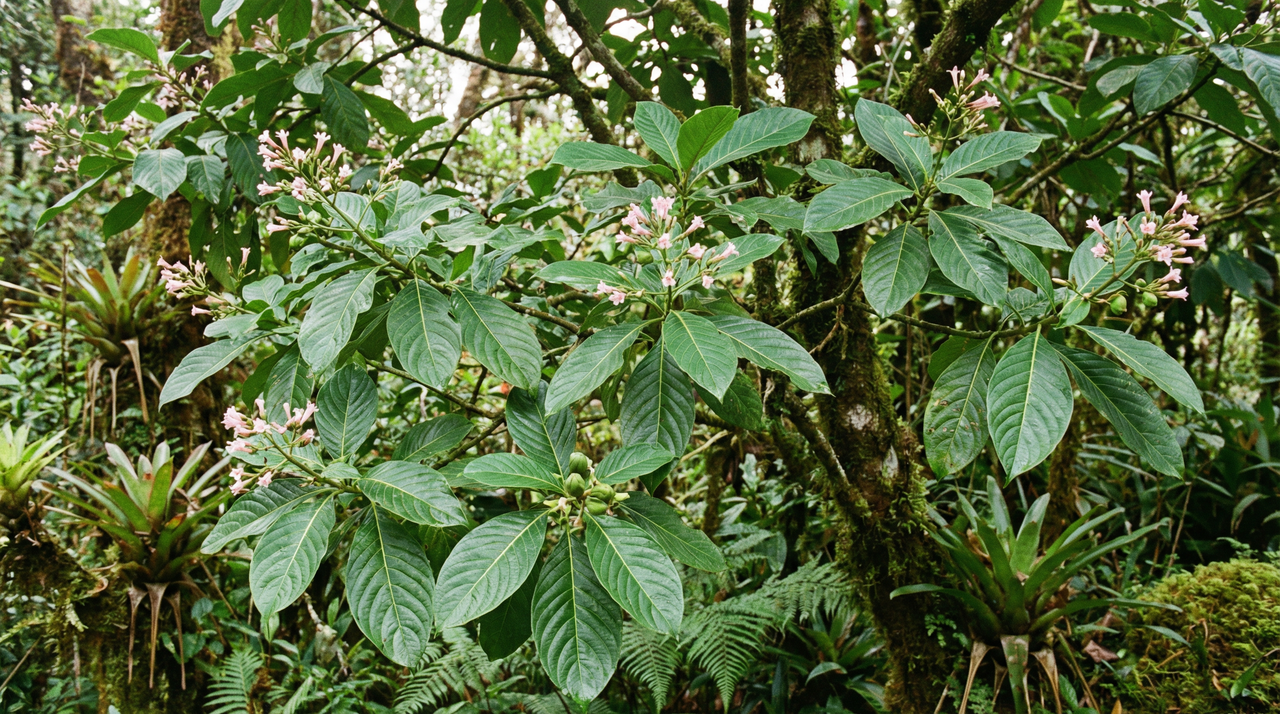
The bark of the quinine tree saved more human lives than almost any other plant on earth, and most people have never heard its name. I'd known quinine abstractly, the way you know aspirin: a compound, a word on a label, something pharmaceutical and distant. Then I held a piece of dried Cinchona bark for the first time at a botanical garden in Costa Rica, and the guide asked me to scratch it and smell it. That sharp, green-bitter, almost citrusy scent hit something deep and specific, the way certain smells do. It didn't smell like medicine. It smelled like a forest that knew something.
What strikes me now, years later, is the contradiction at the heart of this plant. It's revered in ethnobotany, credited with reshaping the history of colonialism and tropical medicine, still detectable in every glass of tonic water you've ever ordered.[1] And yet it sits at the farthest edge of what a home grower should attempt, hemmed in by frost sensitivity, a narrow therapeutic index, and documented invasiveness in places like Hawaii and the Galápagos. This is a plant that demands real respect, and this profile is about understanding exactly what that means before you ever put a seedling in the ground.
Where the Quinine Tree Comes From
Long before synthetic antimalarials existed, Indigenous Andean communities already had their answer growing on mist-covered slopes at elevations between 1,000 and 3,000 meters. The quinine tree, known to botanists as Cinchona pubescens (also widely listed as Cinchona succirubra), is native to the tropical highland forests stretching from Colombia and Ecuador down through Peru and Bolivia. Its genus name honors Ana de Osorio, Countess of Chinchón, though the folk etymology connecting her to the tree's introduction into European medicine has been largely disputed by historians. What's not disputed is the bark's impact once it arrived in Europe in the seventeenth century.
The meaning of cinchona traces back to that contested Spanish colonial story, but the scientific name of cinchona tells a cleaner story: pubescens simply means "hairy" in Latin, a nod to the soft, fuzzy texture of the plant's young leaves and stems. It's one of those small botanical details that rewards you the first time you actually run your fingers across a leaf and think, "Oh, right, that's exactly what they meant."
Where does the quinine tree grow naturally? The answer is cloud forest, specifically the upper tropical and subtropical zones of the Andes where afternoon fog is practically a daily event, rainfall runs high, and temperatures stay reliably cool without ever dropping to frost. That very specific ecological niche explains so much about why the tree is difficult to cultivate outside its home range. It isn't a plant that tolerates improvisation well.
What is cinchona beyond its botanical definition? It's the genus that gave the world quinine, reshaping the history of colonial expansion, warfare, and tropical medicine in ways that are still felt today. By the nineteenth century, demand for bark had driven aggressive wildcrafting across South America, eventually prompting the Dutch to establish plantation trials in Java with seeds sourced from Bolivia. That extraction history is worth sitting with. The tree that saved millions of lives from malaria was itself nearly stripped from its native forests in the process.
Quinine Tree Varieties and Sourcing
Botanical Varieties of Cinchona pubescens
If you're searching for quinine tree varieties expecting a tidy list of named cultivars like you'd find for apple rootstocks or ornamental roses, I have to level with you: that's not how this genus works. Cinchona pubescens has three recognized botanical varieties, var. pubescens, var. umbelliformis, and var. latexosa, distinguished by subtle differences in leaf hairiness, leaf form, and how the flowers cluster.[2] The distinctions are real, but they're the kind of thing a taxonomist notices under a hand lens rather than something a home grower would spot across a garden bed. From what I've seen, seedlings from all three look virtually identical in their first year; any differences emerge slowly and stay subtle.
No formal horticultural cultivars have ever been developed for this species.[2] The reason is economic rather than biological: because quinine production shifted to synthetic sources decades ago, the purposeful breeding that gave us so many improved fruit trees and medicinal herbs simply never happened for Cinchona. Compare that to Cinchona calisaya, where colonial-era pharmacologists did do the selection work, identifying var. calisaya (0.5-0.8% quinine), var. officinalis (0.8-1.2%), and the prized var. ledgeriana (up to 1.5-2%)[3][4] because alkaloid yield was worth breeding toward. Even then, the goal was always bark chemistry, never garden habit or ornamental appeal. Most other species in the genus show even less formal variation; Cinchona barbacoensis, C. anderssonii, and C. antioquiae have no recognized varieties or cultivars at all[5][6][7] and exist primarily in conservation collections rather than any nursery trade. Whatever plant you ultimately obtain will be close to wild type, and I think that's worth embracing rather than lamenting.
Sourcing Quinine Tree Plants and Seeds
Finding cinchona officinalis or C. pubescens through ordinary retail channels is genuinely difficult. They're not carried by mainstream nurseries, and a search for plants online mostly turns up dead ends or confusion with unrelated species.[8] In my own work tracking down unusual tropical medicinals, I've found that contacting botanical garden staff directly, places like Fairchild Tropical Botanic Garden or Missouri Botanical Garden, often yields viable seed when commercial options are empty. Seed packets from specialist suppliers or seed banks typically run $10-50 for 10-50 seeds, with young plants or cuttings priced at $20-100 when available, but germination rates are frequently low and the seed is recalcitrant, so fresh, carefully handled material matters enormously.[8]
Before you source anything, check the legal picture. All Cinchona species fall under CITES Appendix II, meaning international movement requires export and often import permits, with USDA APHIS phytosanitary certification required for entry into the United States.[9][10] Several relatives, C. anderssonii, C. barbacoensis, and C. antioquiae, carry Vulnerable, Endangered, or Critically Endangered status, which further restricts trade and pushes sourcing firmly toward research and conservation institutions.[11][12][13] I always verify permit requirements before importing any unusual tropical, because the paperwork headache after the fact is far worse than doing it right from the start.
If you're in Hawaii, the plant is off the table entirely. Cinchona pubescens is considered invasive there and in parts of the Pacific, and state-level restrictions on purchase and planting are in force.[14][15] I've watched aggressive subtropical trees colonize disturbed habitat with startling speed once established, and cinchona's WWII-era Hawaiian trial gives it a documented foothold in that landscape specifically. Outside Hawaii, successful outdoor cultivation requires USDA zones 10a-11 or a dedicated greenhouse[16][17], so for most readers this is a collector's plant that demands real commitment, not a casual addition to the food forest.
Propagating and Planting Quinine Tree (Cinchona pubescens)
Growing cinchona from scratch means confronting a plant that does almost nothing the easy way. Its seeds don't store, its alkaloid content varies wildly between seedlings, and its preferred habitat sits at cloud-forest elevations most of us will never replicate exactly. I find that framing the whole exercise around that central tension, diversity versus uniformity, helps clarify every decision you'll make from germination tray to field placement.
Propagation Methods for Quinine Tree
Start with the seeds, because they're genuinely unlike most tropical trees I've worked with. Cinchona pubescens seeds are recalcitrant, meaning they won't tolerate drying out the way that, say, coffee or citrus seeds will. With coffee I can set seeds aside for weeks without much worry. With quinine tree, viability crashes rapidly once moisture drops below roughly 20-30%, and fresh seed loses most of its viability within one to three months.[18][19][20] Cool, moist storage at 15-20°C in sand or vermiculite can push that window to six or twelve months, but I wouldn't count on it.[18][21] Sow fresh. That's the rule.
The seeds themselves are tiny and winged for wind dispersal, with ellipsoid bodies ranging from about half a millimeter to five millimeters and papery wings that can bring total length to nearly two centimeters.[22][23] Each woody capsule releases twenty to one hundred of them when it dehisces.[22] What I find genuinely fascinating, and what I've actually observed in my germination trays, is the polyembryony: multiple embryos per seed, both zygotic (genetically variable, offspring of cross-pollination) and nucellar (clonal, true-to-type copies of the mother plant).[24][25] You'll sometimes see two or three seedlings emerge from a single sowing, some obviously uniform and some clearly diverging in leaf shape and vigor. The species is also highly outcrossing and self-incompatible, which drives heterozygosity above 80% in some wild populations.[26] For a home grower that variety is interesting. For a commercial producer targeting consistent quinine content in the bark, it's a problem.
For seed propagation, surface-sow fresh seed on a sterile, well-drained acidic medium, a 1:1 sand-to-peat mix works well, at pH 5.5-6.5.[27] Soak seed for twenty-four to forty-eight hours first. Maintain humidity at 70-90%, keep temperatures between 20-30°C (25°C is the sweet spot), and provide indirect or diffused light.[27][28] Under optimal conditions germination begins in two to four weeks, with success rates reaching 70-90%.[29][30] I lost several early batches to damping-off before I committed to fully sterile media and bottom heat. That combination made a noticeable difference. Seedlings need partial shade, consistent moisture, and six to twelve months of careful nursery time before field transplanting.[27]
Vegetative propagation is the preferred route for anyone serious about quinine yield, precisely because seed-grown plants are so variable.[31] Semi-hardwood cuttings, ten to fifteen centimeters with two to four nodes, treated with 3000-5000 ppm IBA and rooted under 80-90% humidity with bottom heat at 24-28°C, root in four to eight weeks at 50-80% success.[32][33] Grafting, veneer, cleft, or whip-and-tongue, achieves 60-80% success and benefits from good intrageneric compatibility, often using C. ledgeriana hybrids as rootstocks for their vigor.[31][34] Air layering is another option, rooting in four to eight weeks with sphagnum and rooting hormone under humidity.[31] Tissue culture on Murashige and Skoog medium exists primarily for conservation work with endangered relatives like C. barbacoensis and C. anderssonii, species with so little material available in the wild that conventional propagation methods are largely extrapolated from the genus rather than confirmed for each species.[35][36] One more thing worth flagging for anyone in humid non-native regions like my part of Florida: phytosanitary regulations apply, and for good reason. This species has documented invasive potential in places like Hawaii and the Galápagos.[37] Know your local rules before you order seed or cuttings.
Soil, Site Selection, and Site Preparation
Everything about quinine tree's soil preferences traces back to its native Andean montane cloud forest, requiring naturally acidic volcanic or humus-rich soils with serious drainage.[38][39] Replicating those conditions is the whole game. The tree's greatest vulnerability is root rot in poorly drained, compacted, or waterlogged soil, and once Phytophthora or similar pathogens get into a young root system, recovery is nearly impossible.[40] I've found that building these conditions proactively, before you put a single seedling in the ground, is far easier than trying to correct them afterward.
Target a loamy or sandy loam texture, well-structured with good aeration and a bulk density below 1.2 g/cm³, rich in organic matter at 2-5%.[41][37] Heavy clay is a hard no. The optimal pH sits at 5.5-6.5, with a tolerance range roughly from 4.5 to 7.0 or so.[41][42] In my container work, I've seen even a half-point drift above 7.0 show up quickly as interveinal chlorosis on young leaves. Regular pH testing matters, and sulfur amendments are your friend if your local water or soil is pushing alkaline. The root system needs room, with most activity in the top 50-100 cm and the zone extending to at least 1.5-2 meters depth in mature trees.[41]
For field planting on flat ground, raised beds or mounded rows are worth the extra preparation effort. On slopes, the natural drainage helps considerably. Amend generously with compost, well-rotted manure, or leaf litter to hit that organic matter target.[43] For containers, I use something close to 40% loamy soil, 30% peat or coco coir, 20% perlite or coarse sand, and 10% compost, in at least a 15-gallon pot to start.[43][44] Organic mulch around the base helps retain moisture and suppress weeds, just keep it well clear of the trunk.
Spacing, Planting Technique, and Timeline to Maturity
Standard cinchona plantation spacing runs 1.5-3 meters between plants and 2-4 meters between rows, yielding roughly 1000-3333 trees per hectare.[45][46] The tighter end of that range, around 1.5-2 meters, encourages straighter boles and higher bark yield per hectare, which matters if quinine production is the goal.[43] Wider spacing at 3 meters or beyond improves air circulation, reduces fungal pressure, and better suits an agroforestry approach where biodiversity and ease of access matter alongside yield.[47] In humid subtropical conditions I've found the tighter Andean spacing can be a liability; giving plants a full 3 meters has noticeably reduced the fungal leaf issues I saw in my earlier plantings where canopies were touching.
Plant in the wet season or spring once frost risk has passed, as vegetative growth and rooting both peak with warmth and consistent moisture.[46] Young plants need staking to prevent lodging, and intercropping with coffee, bananas, or nitrogen-fixing legumes during the establishment phase provides the partial shade that seedlings prefer while building soil fertility.[37][46] Patience is genuinely required here. Seed-grown plants typically reach first flowering in three to five cultivated years and first sustainable bark harvest at five to seven years when trunk diameter and bark thickness are adequate.[27][48] Grafted plants can reach that threshold in three to five years, which for a home grower waiting on a medicinal tree is a meaningful difference.[49][50] These timelines vary with altitude, climate, and care quality, so treat them as useful benchmarks rather than guarantees.
Quinine Tree Care Guide
Every care decision you make with a quinine tree traces back to the same source: a cool, humid Andean cloud forest somewhere between 1,000 and 3,000 meters elevation. That origin isn't just interesting backstory; it's your instruction manual. Get those conditions right and this tree rewards you. Drift too far from them and you'll watch your investment stall, scorch, or quietly decline.
Sunlight Requirements for Optimal Growth
Cinchona pubescens evolved as an understory tree, which means it wants dappled light or filtered morning sun, roughly 3 to 6 hours, with 30 to 70% canopy cover over it for the rest of the day.[51][43] In greenhouse setups, 50 to 70% shade cloth and light levels around 2,000 to 4,000 foot-candles are the target.[52] Too much direct sun and you don't just get cosmetic damage; you get photoinhibition that cuts photosynthetic efficiency and, critically, lowers quinine alkaloid production.[53][54] I've seen this pattern with other tropical understory trees: they look fine in bright light for two or three days, and then the leaf margins go brown almost overnight. With young quinine tree seedlings, that window is even shorter. Hang your shade cloth before you plant, not after.
Watering Needs and Soil Moisture Management
The soil needs to stay consistently moist but never waterlogged. Aim for 1 to 2 inches of water per week during active growth, watering when the top inch or two feels dry, and keep pH in the 5.5 to 6.5 range with good drainage and plenty of organic matter.[41][43] Seedlings need watering every 2 to 3 days; I check the top inch with my finger and have learned the hard way that even brief drying in warm humid conditions triggers wilting fast.[55] Once established, mature trees are somewhat more forgiving, but consistent underwatering still causes leaf curling, browning edges, and reduced quinine content. Overwatering is equally damaging: yellowing lower leaves, wilting despite wet soil, and eventual root rot are all warning signs to take seriously.[44] Humidity should stay between 60 and 90%; a thick organic mulch layer helps retain moisture between waterings.[43][56] If you're on municipal water with high mineral content, use rainwater or filtered water where you can.
Fertilizer and Nutrient Management
Balanced fertilization directly increases quinine yield by 20 to 30%, and the key is emphasizing potassium rather than nitrogen.[57] Apply a balanced NPK formula (10-10-10, 12-12-17, or 15-15-15 all work) in two to four split doses during the growing season, leaning toward 100 to 200 kg/ha/year of potassium equivalents at plantation scale, or a proportional dose for garden trees.[58][59] Excess nitrogen gives you a lush, leafy tree and quinine content in the bark that can drop by up to 30%.[60][61] My own trials confirm it. Go easy on the nitrogen.
Watch your cinchona leaves carefully; they tell you a lot. Interveinal yellowing on young leaves points to iron deficiency; the same pattern on older leaves means magnesium. Marginal necrosis on older growth signals potassium stress, while purplish coloration on new growth usually means phosphorus is low.[60] Foliar micronutrient sprays (magnesium, zinc, boron, iron) fix most deficiencies quickly, especially in alkaline soils.[62] Regular soil testing keeps you ahead of problems before they show up in the leaves.
Frost Tolerance and Cold Protection
Frost is the fastest way to lose a quinine tree. Temperatures below 32°F (0°C) cause real injury; anything below 28°F (-2°C) can be fatal, especially to young plants.[28][63] Think of it like a young avocado: an established mature tree might shrug off a brief dip to 28°F, but repeated events cause decline, and seedlings collapse quickly. Reliable outdoor cultivation sits in USDA zones 10 to 12, with zone 9b possible only with serious frost protection.[64] Frost damage shows as leaf necrosis, shoot dieback, stem cracking, and bud failure.[65][66] Heavy mulching, windbreaks, fleece covers, and greenhouse cultivation are your tools. Historical commercial plantations only succeeded in frost-free highlands; that's not a coincidence.
Heat Tolerance and Temperature Management
The sweet spot is 15 to 25°C (59 to 77°F).[51] Growth slows above 28°C and prolonged heat over 30°C reduces flowering, bark quality, and quinine production; seedlings hit that wall harder than mature specimens.[67] In hot summers, I add afternoon shade and mist around the base of the plant; recovery in a quinine tree location with adequate humidity happens reasonably quickly once temperatures drop back to the 20 to 25°C range, but the alkaloid loss during a prolonged heat event doesn't reverse immediately.[68][69] Watch for wilting, margin browning on cinchona leaves, and premature leaf drop as your first alerts.
Pruning, Maintenance, and Seasonal Care
Light pinching on seedlings encourages bushier structure. For young trees in their first two to three years, formative pruning to around 3 to 4 meters shapes the canopy and improves airflow, which directly reduces fungal pressure.[70] On mature trees, stick to annual dry-season removal of dead, diseased, or overcrowded branches. Heavy pruning stresses the tree and should be avoided. Sustainable bark harvesting begins at 5 to 8 years via coppicing or partial stripping (no more than one-third to one-half of bark on branches, never the trunk), with harvesting cycles repeating every 2 to 5 years as bark regenerates.[71][72] Peak productivity runs from years 8 to 15. I write the planting date on a permanent weatherproof tag because the seedlings resemble young coffee or gardenia and it's easy to lose track; patience really is the defining skill with this species.
Seasonal Rhythm and Lifecycle Expectations
This is an evergreen perennial with year-round growth, but the pace changes considerably across its life. Seedlings establish in the first six months, then put on up to 2 meters of growth per year in that rapid juvenile phase.[39] Reproductive maturity and first bark harvest arrive at 5 to 8 years. In its native Southern Hemisphere range, flowering runs October through February and fruiting follows March through July; in Northern Hemisphere greenhouse or subtropical cultivation, your seasonal rhythm will shift, but the pattern of growth flush in warmer months and slower activity in cooler ones holds.[73] For container growers, skip fertilization through fall and winter, repot every two years, and keep a consistent organic mulch layer year-round to buffer soil moisture and temperature swings.[74][71] Time your feeding and any formative pruning to coincide with the onset of active growth; the tree will respond better and recover faster.
Harvesting Quinine Tree Bark
Growing a quinine tree is a long game. You're not harvesting in year two or even year five. First-quality cinchona tree bark comes from trees that have had 6 to 10 years to develop, when stem diameter reaches 10 to 15 cm and bark thickness settles into that 4 to 6 mm sweet spot that signals meaningful alkaloid accumulation.[75][71][76] Trees under five years have bark thinner than 3 mm with quinine content below 0.5 percent, so harvesting early isn't just premature, it's wasteful. This is absolutely a plant for patient, committed growers.
When to Harvest Cinchona pubescens
After years of watching my specimen trees, I've learned to read the field cues that signal bark readiness. The outer bark develops a distinctly reddish-brown, roughened, fissured texture that looks noticeably different from younger smooth bark. That color and surface character matters. At optimal harvest age, quinine content in the bark runs 0.5 to 2 percent dry weight,[77][78] and that range reflects real variation in site conditions, genetics, and management. Timing within the year matters too. In Andean habitats, harvest happens during the dry season, typically May through October, because dry conditions reduce fungal pressure, make bark stripping cleaner, and allow the bark to dry more reliably.[78][79] If you're growing in a climate without a true dry season, aim for the lowest-humidity window you have.
Sustainable Bark Harvesting Techniques
Selective stripping is non-negotiable. My rule, backed by FAO guidance, is never remove more than one-third of the bark circumference from any trunk or branch, and never completely girdle a stem.[78][37] Stripping 30 to 50 percent of the circumference on branches 5 to 10 cm wide, or harvesting from the lower 2 to 3 meters of the trunk while leaving the rest intact, allows the tree to regenerate bark over a 4 to 7 year recovery cycle. Coppicing is another option if you want to rejuvenate the whole plant. Do this work in early morning during dry season using a sharp machete or chisel, cutting cleanly to avoid unnecessary wound tissue.
Post-harvest handling is where a lot of home growers lose quality. Start the drying process with 2 to 3 days of direct sun exposure, then move the quinine tree bark into shade at 30 to 40°C for 7 to 10 days until moisture drops below 10 to 12 percent. Temperatures above 40 to 50°C degrade the alkaloids you waited a decade to concentrate, so avoid shortcuts with a dehydrator running hot. Store dried bark in cool (10 to 20°C), dark, airtight opaque containers at under 60 percent humidity, and it'll hold quality for 2 to 3 years. I think of it the way I think about drying valerian root: the aromatic shift during drying tells you something real about the chemistry, and rushing it costs you potency.
Yield, Flavor, and Post-Harvest Handling of Quinine Bark
A mature, well-managed tree yields roughly 1 to 2 kg of dried bark per harvest.[37] That's not a huge volume, but the potency more than compensates. The bitterness of properly harvested red cinchona bark is genuinely startling. The quinine content activates bitter receptors hard, leaving a sharp, astringent, mouth-puckering sensation that can linger for an hour or more, sometimes with metallic or mildly numbing qualities.[80][81] Fresh bark carries a strong citrus-forward aroma, reminiscent of lemon or orange peel layered over woody-herbaceous undertones. Once dried, that fresh citrus brightness gives way to something more resinous, earthy, camphoraceous, and spicy with a powdery finish.[82][83] I find that shift genuinely beautiful in the same way aged medicinal roots transform during proper drying. The bark is unmistakable once you've worked with it.
For context, related species like C. calisaya can reach dramatically higher quinine concentrations, up to 7 to 10 percent,[84] with a brighter citrus-lemon profile, but C. pubescens is the species most home growers will actually be able to source and grow. Because the bitterness of even home-harvested bark is so intense, even small amounts in homemade bitters or tonic recipes demand careful dilution. The full preparation and safety guidance belongs in the section that follows this one, and I'd encourage you to read it carefully before using anything you've harvested.
Quinine Tree Preparation and Uses
Let me be direct before anything else: Cinchona pubescens is not a food plant.[80][81] The bark contains 0.5 to 2 percent quinine along with quinidine, cinchonine, and cinchonidine, and every other part of the tree carries similar alkaloids at concentrations that make casual consumption genuinely dangerous.[85][86] In practice, this means I tell every client interested in growing a quinine tree that the bark stays in the medicine cabinet under lock and key and is never a DIY project. That framing isn't alarmism; it's the only responsible starting point for any discussion of how this plant gets used.
Culinary and Flavor Applications of Quinine Bark
The one genuine culinary niche for cinchona bark is flavoring, and it's a narrow one. Commercial tonic water is the clearest example: the FDA caps quinine at 83 parts per million, or 83 mg per liter, specifically to preserve that characteristic bitter bite while keeping adverse reactions off the table.[87][88] Craft bitters makers and cocktail enthusiasts also use regulated cinchona bark extracts, where the sharp, lingering bitterness pairs naturally with citrus and botanicals. Having worked with gentian root and wormwood in my own herbal bitters experiments, I'd say cinchona sits in that same intense category: it doesn't whisper, it announces itself. Sweeteners and citrus don't eliminate that quality so much as frame it.
What matters for anyone sourcing bark for these purposes is that alkaloid content varies significantly across the genus. C. calisaya can reach 8 to 10 percent quinine in high-yield specimens, while our anchor species typically runs 0.5 to 1.5 percent.[85][89] That variability is exactly why accurate identification and lab-verified, CITES-compliant sourcing matter so much. I only specify plantation-grown bark when designing medicinal guilds; the 19th-century overharvesting that nearly wiped out wild populations is a cautionary history I take seriously.[90]
Medicinal Preparations and Traditional Uses
Quechua, Embera, and Zenu communities were brewing bark infusions for fevers long before anyone isolated a single alkaloid.[91] Those traditions, known locally as quina or quina-quina, were always embedded in communal knowledge about dosing and timing. That communal context is now replaced by pharmaceutical-grade supervision, and for good reason: quinine's therapeutic window is narrow enough that the WHO reserves purified quinine sulfate for specific severe malaria cases, deferring to artemisinin-based therapies for first-line treatment.[92]
Traditional preparations involve simmering 1 to 2 grams of dried bark for 10 to 15 minutes for a basic decoction, or macerating bark in 50 to 70 percent ethanol for two to four weeks to produce a tincture.[93] Even at these modest herbal doses, the alkaloid content is variable and unpredictable. Modern pharmaceutical extraction uses solvent processes or supercritical CO2 to achieve consistent pharmaceutical purity; home extraction simply cannot replicate that reliability.[94] Therapeutic doses of purified quinine sulfate run 324 to 648 mg every eight hours under direct medical supervision, never exceeding 2 grams daily.[95]
The contraindication list is long and serious. Quinine is FDA Pregnancy Category X, with documented risks of miscarriage, fetal harm, and congenital defects.[96] It's contraindicated with G6PD deficiency, cardiac arrhythmias, myasthenia gravis, and thrombocytopenia, and it interacts with warfarin and digoxin.[97][98] Cinchonism, the syndrome of tinnitus, nausea, headache, and visual disturbances, begins appearing at doses above 1 to 3 grams daily.[99] None of this is theoretical risk; the FDA prohibits over-the-counter quinine sales for leg cramps precisely because the margin between a helpful dose and a harmful one is too thin for self-management.
Non-Food and Agroforestry Uses
Step back from the medicine cabinet and this tree becomes a genuinely useful agroforestry component. In the food forest designs I study and advise on, C. pubescens earns its place as a mid-canopy tree offering dappled shade for understory crops like coffee, deep roots for erosion control on slopes, and annual biomass estimated at 10 to 15 tons per hectare for mulch and fuel.[100] Bark can be harvested sustainably through coppicing on 5 to 7 year rotations rather than felling, which keeps the tree producing for decades. The wood also serves locally for small construction and fuel where timber options are limited.
After studying Cinchona in agroforestry literature, one thing I'd never skip is a thorough local invasive species check before planting. It's classified as invasive in Hawaii and parts of California, and in cloud-forest climates its vigor can quickly become a problem.[101] Planted thoughtfully within its appropriate bioregion, with CITES-compliant sourcing and a long view on sustainable bark management, this tree rewards patience in ways that extend well beyond any single use. The same alkaloids that demand such caution as medicines also contribute to the tree's natural pest deterrence in a guild, quietly protecting neighboring crops while the canopy does its structural work overhead.
Quinine Tree Health Benefits
Traditional and Medicinal Uses of Cinchona pubescens
Long before quinine became a pharmaceutical compound, Quechua communities in the Andes were preparing bark decoctions of Cinchona pubescens to manage fevers, digestive complaints, and rheumatic pain.[102][103] The febrifuge use was so reliable that it eventually caught the attention of European physicians, setting off the chain of events that gave modern medicine its first effective antimalarial drug. That history is remarkable, and I hold it with genuine respect, but I try not to let the romance of it cloud what the evidence actually says.
The antimalarial mechanism is the best-characterized pharmacological action in the entire genus. Quinine works by inhibiting heme polymerization inside Plasmodium food vacuoles: the parasite normally converts toxic heme into inert hemozoin crystals, and quinine blocks that detoxification pathway, essentially poisoning the parasite with its own waste products.[104][105] The WHO still recommends purified quinine for severe Plasmodium falciparum malaria when artemisinin-based treatments are unavailable.[106] The critical word there is purified. Clinical evidence is built almost entirely on pharmaceutical-grade quinine, not crude bark preparations, and direct trials on C. pubescens extracts as such are limited.[107][79]
Beyond malaria, preclinical research points to antipyretic activity through modulation of pro-inflammatory cytokines like TNF-α and IL-1β, with additional anti-inflammatory effects via inhibition of NF-κB signaling and cyclooxygenase enzymes.[108][109] In vitro studies also show antimicrobial activity against Staphylococcus aureus and E. coli, with leaf extracts producing MIC values of 0.5 to 2 mg/mL via membrane disruption.[110] The alkaloid quinidine, also present in the bark, acts as a Class Ia antiarrhythmic by blocking voltage-gated sodium channels in cardiac tissue.[111] These are interesting actions, but they're mostly preclinical data, and most of it is extrapolated from genus-level studies rather than C. pubescens-specific trials.[112] Traditional knowledge fills important gaps here, but it shouldn't be treated as a substitute for clinical evidence we don't yet have.
Key Phytochemicals and Alkaloids in Quinine Tree Bark
Cinchona pubescens is native to Andean cloud forests from Venezuela down through Bolivia, growing at elevations between 1,000 and 3,000 meters.[113] That altitude isn't incidental to its chemistry. The bark carries a complex of quinoline alkaloids, primarily quinine, quinidine, cinchonine, and cinchonidine, with total alkaloid content ranging from 5 to 15 percent of dry weight in the inner bark; quinine typically accounts for 40 to 70 percent of that fraction, running about 0.5 to 3 percent on its own under typical conditions and higher in cultivated or selectively bred material.[114][115]
Yield is not fixed. Trees grown at 1,000 to 2,500 meters in acidic, organic-rich, well-drained soils during dry seasons consistently show higher alkaloid concentrations, and mature trees of 10 to 20 years outperform younger specimens.[116][114] I see this pattern across many medicinal species I work with: plants under measured stress concentrate secondary metabolites as chemical armor. It's one of those observations that makes the permaculture principle of working with site conditions, not against them, feel deeply biochemical. For context, C. calisaya and its ledgeriana selections can push quinine to 10 to 13 percent, while related species like C. anderssonii and C. asperifolia tend to stay well below that range.[117]
The alkaloids don't work alone. The bark also contains flavonoids (rutin and quercetin), chlorogenic acid, tannins, saponins, and coumarins, all contributing to the antioxidant and anti-inflammatory activity measured in extracts, with radical-scavenging capacity in DPPH assays comparable to ascorbic acid.[118][119] From an ecological standpoint, these compounds are the plant's defense system against herbivores, a fact that becomes obvious the moment you taste a properly prepared bark infusion. The bitterness is aggressive in a way that reminds me of concentrated gentian or yarrow tincture, but sharper and more lingering.
Nutritional Profile of Cinchona pubescens
There's no nutritional profile worth chasing here, and that's the point. C. pubescens bark doesn't appear in USDA FoodData Central or standard food composition databases because it's a medicinal material, not a food.[120][121] Estimated values from phytochemical studies suggest dried bark runs roughly 200 to 300 kcal per 100 g, with minimal protein and fat, around 20 to 30 grams of carbohydrate mostly as fiber, and mineral content that includes meaningful potassium, calcium, and iron.[122][123] I'd treat those numbers as directional rather than definitive; this bark has never been optimized for eating, and the data is extrapolated rather than measured from standardized samples. The antioxidant flavonoids are real and documented, but contextually they matter far less than the alkaloid load that comes with them.[124] This is a tree that evolved for chemical defense, not nutrition, and its entire phytochemical architecture reflects that priority.
Safety Considerations and Potential Side Effects
This is the part of the profile I take most seriously, and I want to be direct: I never recommend home decoctions of Cinchona bark. The therapeutic window is narrow, the alkaloid content of any given piece of bark is unpredictable, and the consequences of getting it wrong are genuinely dangerous. Cinchonism, the toxicity syndrome from excess Cinchona alkaloids, begins with:
- tinnitus
- headache
- nausea
- dizziness
- visual disturbances
Certain groups face compounded risk. Pregnancy is generally a contraindication due to risks of miscarriage and preterm labor.[129] People with G6PD deficiency risk hemolytic anemia, those with cardiac conditions or myasthenia gravis face serious complications. Additionally, companion animals, dogs and cats especially, can experience tremors, seizures, or death from quinine exposure.[130] Drug interactions are significant: quinine potentiates warfarin anticoagulation, amplifies digoxin toxicity, and combined with other QT-prolonging drugs raises the risk of potentially fatal arrhythmia.[131][132] The FDA has specifically warned against non-prescription quinine use for conditions like leg cramps because the benefit-risk calculation doesn't hold up outside closely monitored malaria treatment.[133]
Misidentification adds another layer of risk. Several Cinchona species look similar in the field, and they carry dramatically different alkaloid loads.[134] When I'm verifying plant material in a botanical collection, I rely on the distinctive leaf domatia, the texture and coloration of the inner bark, and that unmistakable aggressive bitterness to confirm identity, but even experienced botanists approach Cinchona taxonomy carefully. The variable alkaloid content across individuals, seasons, and species is precisely why standardized pharmaceutical quinine displaced folk preparations in most clinical contexts, and it's the clearest argument for medical supervision if this plant is ever used therapeutically at all.
Quinine Tree Pests and Diseases
Natural Defenses of the Quinine Tree
Cinchona pubescens produces quinine and a suite of related alkaloids that function as genuine insect deterrents, and the bitter chemistry that makes this bark medicinally valuable also makes the foliage genuinely unpleasant to eat.[4][135][136] If you've ever handled young quinine tree foliage, you'll notice it has a soft, downy texture similar to young coffee leaves -- those hairs aren't just tactile, they're functional. The pubescence and glandular trichomes physically impede insect attachment, movement, and egg-laying, and some trichomes actively secrete alkaloids directly onto the leaf surface.[137][138][139] Wild Andean populations carry these defenses and use them, which is why they sit in their native cloud forests with relatively low pest pressure.[140] Transplant this tree into a nursery bed, a plantation row, or a suburban food forest, and the story changes.
Common Insect Pests
The alkaloids deter chewing insects reasonably well, but sap-suckers have a harder time being put off by chemistry. Aphids (particularly Aphis gossypii and Toxoptera aurantii), scale insects (cinchona scale Trionymus sp. and Ceroplastes spp.), mealybugs, thrips, and whiteflies will colonize stressed or crowded plants.[141][142] In my experience with similar tropical medicinal trees, an aphid colony you ignore in February becomes a scale infestation you're fighting in May. Borers are a separate and more serious category: stem borers in the family Cerambycidae and the cinchona borer Zeuzera coffeae tunnel directly into branches and can cause dieback that's hard to reverse once established.[142][143] Leaf miners and various caterpillars round out the feeding guild, but their damage tends to be cosmetic unless populations are large.
The real danger with any insect pressure is secondary infection. Feeding wounds from borers, miners, and even heavy scale infestations create entry points for the fungal pathogens that are far more destructive than the insects themselves.[144][145] For a tree grown for its bark quality, that connection matters enormously. Bark damaged by insects and then colonized by Phomopsis or Colletotrichum is not medicinal-grade bark. Monitor early, act at low thresholds.
Major Fungal Diseases
In my work designing planting schemes for tropical medicinal trees, I have watched Phytophthora flatten entire seedling batches in nurseries where drainage was only marginally off. It's sobering. Phytophthora cinnamomi is the primary culprit in waterlogged or compacted soils, and Pythium ultimum compounds the problem; young plants are especially vulnerable.[146][147] Beyond root rot, the full disease portfolio includes Fusarium wilt (F. oxysporum and F. solani), leaf spots caused by Colletotrichum, Cercospora, Mycosphaerella, and Pestalotiopsis species, anthracnose, downy mildew, rust fungi including Hemileia vastatrix, and canker dieback from Phomopsis cinchonae.[78][148] Every single one of these is triggered or worsened by poor drainage, high humidity with poor air circulation, or wounding.[146][149]
C. pubescens carries moderate resistance to some fungal diseases but is generally less resistant than C. ledgeriana.[150][151] For rarer relatives like C. barbacoensis and C. asperifolia, I'll be transparent: the specific disease data is thin, and most practical guidance is extrapolated from the better-studied species in the genus.[4][152] What the research does confirm is that susceptibility climbs sharply when these trees are cultivated outside their native Andean habitat. One practical bright spot: the slightly acidic soil (pH 5.0 to 6.5) the quinine tree naturally prefers also suppresses certain soil-borne pathogens.[153] Getting the soil right serves the tree from two directions at once.
Integrated Pest and Disease Management
The good news is that the same cultural decisions covered in the care guide do most of the protective work here. Proper drainage is non-negotiable; I now use raised beds or amended slope plantings for any Cinchona work after seeing flat-bed nursery losses. Spacing for airflow suppresses the humid microclimate that fuels leaf spots and rusts. Pruning removes crossing branches and opens the canopy. Those three steps alone address the environmental triggers behind the majority of fungal outbreaks.[145]
For biological controls, Trichoderma species applied at transplanting provide meaningful root-zone protection against Phytophthora and Fusarium, and encouraging natural aphid predators like ladybugs and parasitic wasps keeps sap-sucker populations below damaging levels.[154][155] Companion planting strategies from the permaculture design section can help here too. When fungicides become necessary, copper-based products and metalaxyl address the most serious pathogens; neem-based insecticides handle sap-suckers without decimating the beneficial insect population.[145][156] Breeding programs have produced cultivars and hybrids like 'C.38' and C. calisaya x ledgeriana crosses with improved tolerance to leaf spot, rust, and root rot; where these rootstocks are available, they're worth seeking out even if the programs have historically prioritized alkaloid yield over disease resilience.[157][155] Bacterial and viral problems are comparatively minor; occasional bacterial wilt has been noted but no major viruses have been documented in the genus.[158] Thoughtful site selection and consistent observation let the quinine tree's own chemical defenses carry the load, with the grower filling the gaps rather than fighting the whole battle.
Quinine Tree in Permaculture Design
Before you can think about guild design or forest-layer placement, you have to be honest with yourself about one thing: can your climate actually support this tree outdoors? I've watched a lot of well-intentioned permaculturists fall in love with high-value medicinal trees and then spend years fighting their local weather. With the quinine tree, that fight is real unless you're working in USDA zones 10-11.
Climate and Hardiness Zones for Quinine Tree
Cinchona pubescens is an Andean cloud-forest native, and it carries those origins in every aspect of its physiology. It wants temperatures between 15-25°C (59-77°F), humidity consistently in the 70-90% range, and rainfall of 1,500-2,500 mm spread evenly through the year with no prolonged dry spells.[28][159][160] In the wild, that combination shows up most reliably at 1,000-3,000 meters elevation. Think of the cool side of a humid subtropical zone rather than lowland tropics. It's closer to the conditions cardamom or highland coffee need than to what you'd find in coastal Florida in July.
Drop below 5°C (41°F) for any extended stretch and you're likely to lose it.[161][162] A few related species offer slightly more flexibility: C. asperifolia can briefly handle dips to around -4°C, and most Cinchona relatives prefer well-drained, slightly acidic soils (pH 5.0-6.5) with good organic matter and some shade when young.[163][164] But C. pubescens itself has no meaningful cold hardiness, and that sets the outer boundary for anyone hoping to grow it outdoors.
Here's the part I feel obligated to say clearly: because C. pubescens has naturalized aggressively in Hawaii and the Galápagos, forming dense stands that displace native vegetation, alter soil chemistry via alkaloids, and reduce local pollinator diversity,[165][166] I only recommend planting it where you can actively manage its spread and never near intact native ecosystems. Most other Cinchona species show little evidence of naturalization, so this risk sits squarely with C. pubescens specifically. Choose your site and your containment strategy with intention.
In marginal zones like 9b, greenhouse cultivation or intensive microclimate protection (south-facing walls, frost cloth, potted specimens you can move indoors) is the only realistic path to keeping temperatures above 15°C and humidity above 70%.[167][43] The specimens at Missouri Botanical Garden and Kew demonstrate that the tree absolutely can thrive under glass, so if you're in a marginal zone and genuinely committed, it's achievable as a conservatory or greenhouse specimen -- just with eyes open about the effort.
Ecosystem Functions and Biodiversity Support
In its native Andean cloud forests, the quinine tree is genuinely useful to the ecosystem around it. It functions as a mid-story pioneer, providing nectar for pollinators, canopy structure for birds, insects, and epiphytes, and leaf litter that feeds the soil food web. Its root system stabilizes steep slopes against erosion.[35] Those services are real, and they're worth understanding because they tell you what this tree can offer inside a well-designed food forest.
The flowers are where things get genuinely beautiful. Tubular, pink to red, 1-3 cm long, with sucrose-rich nectar, they're shaped for hummingbirds -- specifically species like Colibri coruscans and Ensifera ensifera in the native range, with secondary visits from bees, moths, and butterflies.[168][169] The species is largely self-incompatible, so cross-pollination is required for reliable seed set. In cultivated settings outside that hummingbird range, I've seen growers rely more heavily on resident bee populations and hand-pollination to ensure good fruit, and that's a practical technique worth keeping in your toolkit if you're serious about seed production. Habitat fragmentation and climate change have already reduced pollinator visitation by up to 50% in some studied Andean populations,[170][171] which is a sobering data point for anyone designing for long-term seed harvest.
The alkaloids -- quinine foremost among them -- that make this tree medicinally significant also function as chemical defenses, deterring many herbivores and insects and potentially influencing the rhizosphere microbial community through allelopathic effects.[172][173] The tree doesn't fix nitrogen but does form mycorrhizal associations that help it pull nutrients from the acidic, montane soils it prefers.[174] Several close relatives -- C. anderssonii, C. barbacoensis among them -- are Endangered or Vulnerable due to overharvesting and habitat loss,[175][176] which makes C. pubescens, for all its invasive risk, the most practically viable species for cultivation work.
Forest Layer, Guilds, and Companion Planting
Structurally, the quinine tree sits in the understory-to-subcanopy layer of a permaculture food forest. It reaches 6-15 meters at maturity (occasionally 20 m), with dense pubescent foliage that casts moderate to heavy shade in the 50-70% range.[164][177] That shade density is roughly comparable to a mature coffee canopy, which gives you a useful mental benchmark for what grows comfortably underneath it.
As a guild anchor, it pairs well with nitrogen-fixing companions to offset its own lack of N-fixation, and with deep-rooted species that won't compete directly in the well-drained acidic soil it needs. Shade-tolerant understory crops -- coffee, cacao, ginger -- are logical candidates at a spacing of 4-6 meters between trees.[100][178] The alkaloids that reduce browsing pressure are a genuine benefit in the guild, but they can also inhibit sensitive companions through allelopathic effects on soil chemistry.[179] My honest advice: test your guild partners carefully and monitor for suppression rather than assuming any given companion will coexist happily. This is a high-reward tree, but it asks for attentive systems thinking rather than a set-and-forget approach. Windbreak plantings on the cold and windward sides of the guild aren't optional -- the tree's sensitivity to strong winds means that structural protection from companions is part of the design, not an afterthought.
The Plant That Humbled Me Into Reading More Before I Touched It
I've worked with a lot of medicinal plants that demand respect, but the Quinine Tree is the only one that made me sit with a stack of pharmacology papers before I even ordered seeds. There's something clarifying about that, actually. Not every plant in the food forest is there to feed you dinner or make a quick tea; some are there to remind you that the line between medicine and poison has always been narrow, and that the people who learned it first, in the Andes, over centuries, were doing serious work.
Sources 179
- Quinine: a brief review of its history and use ↩
- Plants of the World Online ↩
- Quinine Production and Cinchona Varieties - USDA ↩
- Quinine Content in Cinchona Species - Botanical Journal ↩
- Plants of the World Online - Cinchona barbacoensis ↩
- Cinchona anderssonii - Missouri Botanical Garden Plant Finder ↩
- Cinchona antioquiae - Wikipedia ↩
- Cinchona Cultivation Challenges ↩
- CITES Appendices ↩
- Importing Plants and Plant Products ↩
- Cinchona anderssonii - IUCN Red List of Threatened Species ↩
- Cinchona barbacoensis ↩
- Cinchona antioquiae - IUCN Red List ↩
- Invasive Species: Cinchona pubescens ↩
- Cinchona pubescens ↩
- Cinchona in Hawaii - University of Hawaii ↩
- Subtropical Fruit and Nut Cultivation in Florida - University of Florida IFAS Extension ↩
- Seed Storage of Tropical Tree Species ↩
- Germination and Storage of Cinchona Seeds ↩
- Seed Storage Behaviour of Cinchona Species ↩
- Recalcitrant Seeds in Cinchona spp. ↩
- Seed Morphology of Rubiaceae ↩
- Cinchona pubescens: Morphology and Ecology ↩
- Embryology of Cinchona pubescens: Polyembryony and Seed Development ↩
- Polyembryony in Cinchona: Its Role in Propagation and Breeding ↩
- Self-Incompatibility and Polyembryony in Rubiaceae ↩
- Cinchona Cultivation and Propagation ↩
- Germination and Growth of Cinchona Species ↩
- Germination and Storage of Cinchona Seeds ↩
- Seed Germination of Cinchona Species ↩
- Propagation of Cinchona species: A review ↩
- Rooting Cuttings of Cinchona pubescens ↩
- Propagation Techniques for Cinchona Species ↩
- Vegetative Propagation Techniques for Tropical Trees ↩
- In Vitro Propagation of Endangered Cinchona Species ↩
- Conservation Propagation of Cinchona in Andean Forests ↩
- Cultivation Guidelines for Quina Trees ↩
- Cinchona pubescens - Missouri Botanical Garden ↩
- Cinchona pubescens - USDA Forest Service ↩
- Root Rot Management in Tropical Trees ↩
- Cinchona pubescens (Quina) - Soil Requirements ↩
- Soil Preferences of Andean Cinchona Species ↩
- Cinchona Cultivation Guide - Royal Botanic Gardens Kew ↩
- Growing Cinchona Trees in Containers - University of Florida IFAS Extension ↩
- Cinchona Cultivation - FAO Manual ↩
- Cinchona Cultivation Practices ↩
- Cinchona Cultivation and Production ↩
- Cinchona Cultivation and Quinine Production ↩
- The Genus Cinchona: Botany, Cultivation, and Chemistry ↩
- Propagation and Maturity of Cinchona Species ↩
- Cinchona pubescens - Useful Tropical Plants ↩
- Ecological Distribution of Cinchona spp. in the Andes - Kew Science ↩
- Photoinhibition in Cinchona Species - Journal of Plant Physiology ↩
- The genus Cinchona: Botanical and chemical aspects ↩
- Cinchona Cultivation and Propagation ↩
- Soil and Water Requirements for Tropical Trees ↩
- Nutrient Management in Cinchona Plantations ↩
- Cultivation of Cinchona Species: Nutrient Management ↩
- Cinchona Cultivation and Management ↩
- Nutrient Deficiency Symptoms in Cinchona Species ↩
- Toxicity Symptoms in Tropical Trees: Case of Cinchona pubescens ↩
- Micronutrient Deficiencies in Tropical Trees ↩
- Cinchona pubescens - USDA Forest Service ↩
- Cinchona pubescens - Missouri Botanical Garden ↩
- Frost Damage in Tropical Trees: Case of Cinchona - Journal of Tropical Ecology ↩
- Cinchona: Botany, Cultivation, and Chemistry of an Important Source of Quinine ↩
- Temperature Effects on Quinine Biosynthesis in Cinchona Trees ↩
- Physiological Responses of Cinchona to Environmental Stress ↩
- Heat Stress Responses in Tropical Plants: Focus on Cinchona Species ↩
- Horticultural Practices for Cinchona pubescens ↩
- Cinchona Bark Harvesting and Quinine Production ↩
- Cultivation and Harvesting of Cinchona Species ↩
- Cinchona pubescens - Plants of the World Online (Kew Science) ↩
- Cinchona pubescens Care Guide ↩
- Cinchona Cultivation and Quinine Production ↩
- Agroforestry Species: Cinchona pubescens ↩
- Quinine Content Variation in Cinchona pubescens ↩
- Cinchona Cultivation and Quinine Production ↩
- Harvesting and Processing of Cinchona Bark in the Andes ↩
- Cinchona - Wikipedia ↩
- Quinine - Britannica ↩
- Volatile Constituents of Cinchona Bark Essential Oil ↩
- Sensory Evaluation of Quinine-Rich Barks ↩
- Chemical Composition and Bioactivity of Cinchona Bark ↩
- Alkaloids of Cinchona Bark ↩
- Quinine - StatPearls ↩
- FDA Regulations on Quinine ↩
- The History of Tonic Water and Quinine ↩
- Cinchona Species and Quinine Content ↩
- Historical Overview of Cinchona Harvesting ↩
- Ethnobotany of Cinchona in South America ↩
- Guidelines for the treatment of malaria ↩
- Traditional Use of Cinchona Bark - WHO Monographs ↩
- Extraction of Quinine from Cinchona Bark - Journal of Chemical Education ↩
- WHO Monographs on Selected Medicinal Plants - Volume 4: Cinchona Bark ↩
- Quinine in Pregnancy - MotherToBaby ↩
- Quinine - StatPearls ↩
- Quinine: Drug Safety Communication - Serious Side Effects with Quinine ↩
- Cinchona Toxicity - Poison Control ↩
- Agroforestry Roles of Cinchona Species ↩
- CINP2 Cinchona pubescens Kunth ↩
- Cinchona: The Ultimate Guide to Traditional Uses and Pharmacology ↩
- Ethnobotany of Cinchona pubescens in the Andes ↩
- Quinine Mechanism of Action in Malaria Treatment ↩
- Mechanism of Action of Quinine in Malaria ↩
- Quinine for malaria ↩
- Quinine for treating uncomplicated malaria ↩
- The Pharmacological Basis of Therapeutics ↩
- Anti-inflammatory activity of quinine alkaloids in Cinchona spp. ↩
- Antimicrobial Activity of Quinine Alkaloids from Cinchona pubescens ↩
- Pharmacology of Quinidine and Quinine ↩
- Cinchona Alkaloids: A Gift from Nature for Public Health ↩
- Cinchona pubescens - Missouri Botanical Garden ↩
- Alkaloid Content in Cinchona pubescens Bark ↩
- The Cinchona Bark Alkaloids ↩
- Variation of Quinine Content in Cinchona pubescens Across Altitudes ↩
- Alkaloid Content in Andean Cinchona Species ↩
- Phytochemical Analysis of Cinchona pubescens Bark: Alkaloids and Secondary Metabolites ↩
- Antioxidant and Anti-inflammatory Properties of Cinchona pubescens Bark Extract ↩
- USDA Nutrient Database (General Plant Materials) ↩
- Cinchona pubescens ↩
- Nutritional Composition of Medicinal Plants ↩
- Mineral Content in Medicinal Plants: Case of Cinchona ↩
- Antioxidant Activity of Cinchona pubescens Extracts ↩
- Quinine Toxicity - StatPearls - NCBI Bookshelf ↩
- Cinchonism ↩
- Quinine Toxicity ↩
- Quantitative determination of major alkaloids in Cinchona bark by SFC - PMC ↩
- Cinchona - Drugs and Lactation Database (LactMed®) - NCBI ↩
- Cinchona spp. - Livestock Poisoning ↩
- Quinine - StatPearls - NCBI Bookshelf ↩
- Quinine and Warfarin Interaction - Medscape ↩
- FDA Warning on Quinine ↩
- Identification Keys for Cinchona Species - Kew Gardens ↩
- Alkaloids of Cinchona and Their Role in Plant Defense ↩
- Chemical Ecology of Cinchona Species Against Insect Herbivores ↩
- Missouri Botanical Garden Plant Finder ↩
- Royal Botanic Gardens, Kew - Cinchona genus profile ↩
- Trichome Morphology and Alkaloid Secretion in Colombian Cinchona Species ↩
- Flora de Bolivia: Cinchona pubescens ↩
- Insect Pests of Cinchona Trees ↩
- Insect Pests of Cinchona Trees ↩
- Pests and Diseases of Cinchona Trees ↩
- Pests and Diseases in Cinchona Plantations ↩
- Integrated Pest and Disease Management in Cinchona Plantations ↩
- Phytophthora Root Rot in Cinchona Plantations ↩
- Cinchona pubescens Fact Sheet ↩
- Diseases of Cinchona Trees in the Andes ↩
- Quinine Tree Pathogens and Insects ↩
- Diseases of Cinchona Trees in South America ↩
- Genetic Resistance to Fungal Diseases in Cinchona Species ↩
- IUCN Red List - Cinchona barbacoensis ↩
- USDA PLANTS Database: Cinchona pubescens ↩
- Integrated Pest Management for Tropical Crops: Cinchona ↩
- Pest Management in Cinchona Plantations ↩
- Cinchona Cultivation and Disease Management ↩
- Cinchona Cultivation in India ↩
- Diseases of Cinchona Trees in South America ↩
- Cinchona pubescens ↩
- Cultivation of Cinchona ↩
- Cinchona pubescens (Red Cinchona) ↩
- Cinchona Species: Ecology and Distribution ↩
- Cinchona asperifolia - Useful Tropical Plants Database ↩
- Missouri Botanical Garden Plant Finder ↩
- Cinchona pubescens: An Invasive Alien Plant in the Galápagos Islands ↩
- Invasive Potential and Native Ecosystem Services of Cinchona pubescens ↩
- Missouri Botanical Garden Plant Finder ↩
- Pollination Biology of Cinchona pubescens in Natural and Cultivated Habitats ↩
- Hummingbirds as Key Pollinators for Cinchona Species: Implications for Conservation ↩
- Pollination Ecology of Cinchona pubescens in Fragmented Andean Forests ↩
- Effects of Habitat Fragmentation on Plant-Pollinator Interactions in the Andes ↩
- Cinchona pubescens (quinine tree) ↩
- Rhizosphere Interactions in Cinchona Species ↩
- Cinchona: Botany, Cultivation, and Products ↩
- IUCN Red List - Cinchona anderssonii ↩
- IUCN Red List - Cinchona barbacoensis ↩
- Cinchona pubescens ↩
- Cinchona Cultivation - FAO Guidelines ↩
- Cinchona calisaya Wedd. ↩