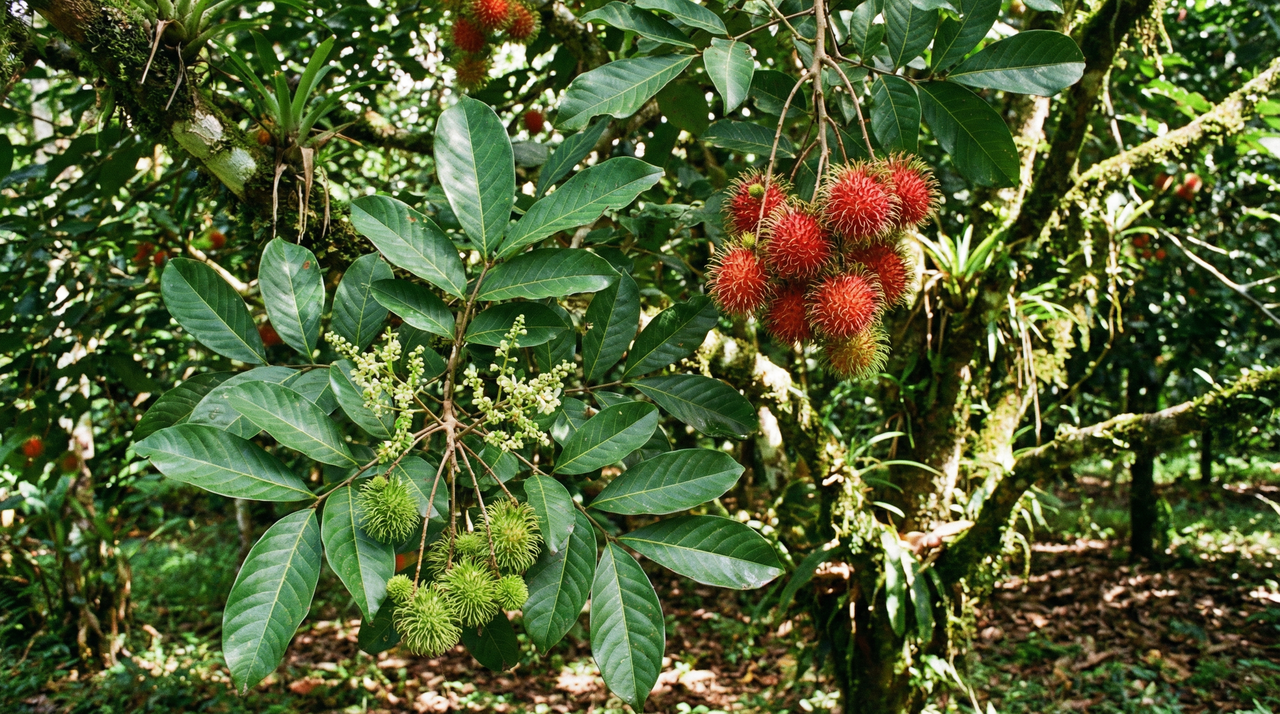
The first time I cracked open a rambutan at a farmers' market in Homestead, Florida, I honestly thought I was holding some kind of alien creature. That spiny red shell, those soft, hair-like appendages bristling in every direction, the whole fruit looking more like something dredged from a tide pool than grown on a tree. But here's the thing nobody mentions about rambutan: beneath that theatrical exterior is one of the most quietly delicious fruits you'll ever eat, and the contrast is so absurd that I've watched total strangers at market stalls do a full double-take the moment the aril hits their tongue. The outside promises something dangerous. The inside delivers something closer to a chilled lychee on the best possible day.
What keeps drawing me back to this tree, though, isn't the fruit. It's the stubborn impracticality of growing it outside the tropics, and the fact that people do it anyway. Rambutan is genuinely intolerant of cold, thin-soiled sites, drought, and impatience. It will punish you for all of those things. Yet here in Central Florida, and in pockets of Hawaii, growers are coaxing fruit from trees that have no business thriving this far from the humid lowland rainforests of Malaysia and Indonesia where the species evolved.[1] That tension between the tree's origins and its slow global spread is exactly what makes it worth understanding properly.
Rambutan Origin, History, and Cultural Significance
Botanical Background and Native Habitat
If you want to understand rambutan, you first have to picture the humid lowland rainforests of the Malesian ecoregion: the Malay Peninsula, Sumatra, Borneo, the Philippines, Thailand, parts of Vietnam, Myanmar, and southern China.[2][3][4] That's where Nephelium lappaceum evolved, and those origins explain almost everything about how it wants to be grown. Scientifically, rambutan belongs to the Sapindaceae family alongside its close relatives lychee (Litchi chinensis) and longan (Dimocarpus longan).[5][6] I've learned to label my propagation pots very carefully, because young rambutan seedlings are easy to mix up with lychee starts when they're coming out of germination trays.
In the wild, rambutan is a long-lived polycarpic evergreen, capable of fruiting repeatedly over a lifespan of 20 to well over 100 years in consistently humid lowland conditions below about 600 m elevation.[7][8] Commercial orchards rarely let trees reach that potential, replacing them around 15 to 20 years when yields begin to decline.[9] From seed, a rambutan tree typically takes 5 to 7 years to fruit; grafted trees get there considerably faster.[9][7] I've watched grafted rambutans in subtropical trials begin showing fruit noticeably sooner than their seedling counterparts, which tracks with what the literature consistently reports. From what I've seen with related Sapindaceae, consistent humidity and good drainage tend to be the real drivers of long-term health and longevity.
Visual Characteristics of the Rambutan Tree and Fruit
In a food forest, rambutan earns its place as a genuine canopy tree. It grows 15 to 25 meters tall with a spread up to 15 meters, developing a straight trunk up to 90 cm in diameter with rough, dark brownish-gray bark.[10][11] The leaves are alternate, pinnately compound, and leathery, with glossy dark green leaflets that are paler underneath; young growth often flushes a warm reddish tone that's quite striking.[12][10] Flowers arrive in large panicles up to 30 cm long, small and greenish-white to yellowish, and the species is functionally dioecious, meaning most trees are either male or female, though some hermaphroditic flowers do occur.[10][13]
The fruit is what stops people in their tracks. Each drupe is an oval, 3 to 6 cm long, wrapped in a bright red (sometimes yellow) leathery rind covered in soft, flexible spine-like trichomes.[12][7] The name itself comes from the Malay word rambut, meaning hair, and once you hold one you understand it immediately. Those spines feel surprisingly plush, almost like a tiny sea urchin, nothing like the sharp armoring on a cactus fruit. Inside: a translucent white aril, juicy and fragrant, surrounding a single large brown seed.[13][14] The root system starts as a taproot but matures into a shallow, wide-spreading fibrous network extending up to 9 meters laterally, so it's quite sensitive to soil compaction and disturbance around the base.[13]
Traditional Medicinal and Cultural Uses in Southeast Asia
Rambutan has been woven into Southeast Asian life for centuries in ways that go far beyond fresh eating. In traditional medicine systems across Malaysia, Indonesia, and neighboring countries, leaves are prepared as poultices or infusions for fever, headaches, and diarrhea; bark and root decoctions serve as wound astringents and treatments for gastrointestinal disorders; seeds are used in poultices for sprains and rheumatism; and peel preparations have long been valued for their perceived anti-inflammatory properties.[15][16] Reading those ethnobotanical papers genuinely fascinates me, partly because the medicinal applications mirror how other Sapindaceae relatives are used across the tropics, suggesting a shared biochemical thread across the whole family. The culinary tradition is equally deep; rambutan is eaten fresh, processed into jams, juices, candied snacks, and preserves, the sweet juicy aril carrying lychee-like flavor with notes of grape and pear.[15][17] Culturally, the fruit symbolizes abundance, hospitality, and community in Malay and Javanese traditions, appearing in festivals and offered as tokens of goodwill, even used in rituals for protection.[18]
Global Spread, Modern Cultivation, and Sustainability
Portuguese and Spanish trade routes during the 16th through 18th centuries carried rambutan well beyond its native range, eventually reaching the Caribbean, Central and South America, Africa, Hawaii by the 19th century, and the southern edges of Florida.[4][19] Today, Thailand, Indonesia, and Malaysia dominate global production at roughly 500,000 to 600,000 tons annually.[20] That commercial scale comes with a cost. Wild rambutan populations face real pressure from overharvesting and habitat loss, and intensive monoculture plantations have contributed to deforestation in the very regions where the species evolved.[21] As a tropical gardener, I love finding this fruit at the market, but it reminds me to seek out farms practicing intercropping and agroforestry rather than clearing primary rainforest to plant another row. Loving this fruit genuinely means caring about where it comes from.
Rambutan Varieties and Where to Buy Them
Southeast Asia has spent centuries refining rambutan into dozens of named cultivars, each selected for something specific: deeper sweetness, more aromatic flesh, earlier harvest timing, better shelf life. Names like Rongrien, R156, R167, Jit Lee, Binjai, and Lebak Bulus represent generations of selection work across Thailand, Malaysia, and Indonesia.[22][23][24] That's a genuinely exciting palette to shop from. The practical reality for American growers, though, is that the palette shrinks fast once you cross the Pacific.
Notable Rambutan Cultivars for Flavor, Color, and Climate Adaptation
In Florida, Rongrien is the cultivar you'll see most often recommended, and for good reason. It's Thailand's most popular commercial variety, and after specifying and installing several dozen tropical fruit trees in Central Florida landscapes, I've watched grafted Rongrien trees consistently outperform seedlings in both the speed at which they come into bearing and the flavor consistency they deliver under our humid subtropical conditions. Hawaii growers tend to favor R15 instead, finding it better suited to the particular microclimate pressures of the islands.[25][19] Most cultivar performance data still comes from native-range trials, and U.S. experience is genuinely still building, so treat any variety recommendation here as a starting point rather than a verdict.
Color is the easiest shortcut for flavor expectations. Red-fruited cultivars like Rongrien rate higher in perceived sweetness and aroma than yellow types like Sitapho in sensory evaluations.[26] I think of it the same way I explain the difference between red and white-fleshed guavas to clients: the red version tends to be richer, more perfumed, more memorable. If you have access to both and you're planting for flavor, lean red. Rambutan at a commercial scale in the U.S. remains a niche pursuit rather than a mainstream industry,[27] which is part of why variety selection in this country stays so narrow. Home growers in zones 10b and 11 are essentially the frontier here.
Sourcing Rambutan Trees and Seeds in the United States
Grafted stock gives you a known cultivar, true-to-type fruit, and a realistic path to harvest in three to five years rather than the longer wait a seedling demands. When I've toured South Florida nurseries in spring, I've seen young grafted rambutans priced in the $50 to $150 range at specialists like Top Tropicals in Fort Myers and W.P. Watson Inc. in Homestead, and they move quickly.[25][28] It's a real investment, and patience is required, but there's no grocery-store substitute for a ripe Rongrien off your own tree.
Seeds are available from vendors like Trade Winds Fruit and Rare Exotic Seeds if you want to experiment, but rambutan seeds lose viability almost immediately after harvest, so prompt planting is non-negotiable. The details on germination belong in the propagation section, but the short version is: don't order seeds unless you're ready to plant within days of receiving them. If you're hoping to import plants or propagating material from overseas, be aware that USDA APHIS regulates all of it, typically requiring phytosanitary certificates, import permits, and treatments like irradiation or cold treatment.[29][30] I've helped clients navigate similar permit processes for other tropicals; the paperwork is genuinely tedious, but it's manageable and it protects local ecosystems from pests that would love a new home in Florida. For local sourcing support and real-world growing knowledge, UF/IFAS Extension has been working with rambutan in South Florida since the 1980s, and the Tropical Fruit Growers of South Florida is worth contacting for both plant leads and hard-won advice.[25][28]
Rambutan Propagation and Planting Guide
The single most important thing I can tell you before you plant a rambutan is this: skip the grocery-store seeds and buy a grafted tree. I've started rambutan both ways, and the seed route is a long, humbling exercise in delayed gratification that usually ends in disappointment. Seed-grown trees take 5-8 years to fruit, and when they finally do, you have no guarantee the fruit will be anything like what you ate.[31][4][32] A grafted tree fruits in 3-5 years, and it fruits true.[31][4] That contrast is the foundation of every propagation decision you'll make with this tree.
Seed Propagation: Recalcitrant Seeds and Rootstock Production
Rambutan seeds are recalcitrant, which means they can't be dried, packaged, and stored the way you'd treat tomato or squash seed. Once extracted from the fruit, viability drops off within days; they must go into soil almost immediately.[31][33][34] The seeds themselves are oval to elliptic, about 2-3 cm long, encased in a hard, woody brown testa with a rough, reticulate surface.[35][36] The white kernel inside is large, bitter, and not worth eating.
Because rambutan seeds are monoembryonic, the offspring are genetically variable and won't come true-to-type from the parent fruit.[31][37] This is exactly why commercial and serious home growers use seeds for one purpose only: raising rootstock. Under warm, humid conditions, seedling rootstocks reach graftable size in 1-2 years,[31][38] at which point the real work begins.
Vegetative Propagation: Grafting, Air Layering, and Cuttings
Grafting is the standard method for a reason. Veneer side grafting and cleft grafting onto rambutan seedling rootstocks both achieve 80-90% success rates under optimal conditions,[31][39] and in my experience that's achievable at home scale too. I consistently hit 80-85% take using veneer grafting in a shaded greenhouse with a simple humidity tent over the union. The key is keeping temperatures at 25-30 °C and humidity above 70% throughout the healing period; let either slip and the graft fails fast. Rambutan rootstocks are the most reliable choice, though lychee has been used as an interspecific option with variable compatibility results.[39][40]
Air layering is the next-best option for home growers who want to propagate from an existing tree. Wound the branch, wrap it in moist medium, keep humidity high, and you can expect roots in 2-3 months with 50-80% success.[25] Semi-hardwood cuttings are possible but unreliable; success rates fall to just 20-40% even with IBA rooting hormone at 2000-3000 ppm, bottom heat at 27-29 °C, and humidity above 85%.[41][42] I'd only bother with cuttings if grafted material is genuinely unavailable.
Germination Timeline and Success Rates
If you are raising rootstock from seed, fresh seeds planted immediately into a warm, moist medium will germinate in 10-25 days at 25-30 °C; laboratory success rates reach 70-90%, with field rates of 60-80% when sowing is immediate.[43][31] I've found that seeds extracted from perfectly ripe fruit during the warmest summer months germinate faster and more uniformly than seeds from early or late-season fruit. A humidity dome and consistent bottom heat tighten that window considerably. One practical note: I label every seedling row carefully, because first-year rambutan foliage looks remarkably similar to several other Sapindaceae relatives, and mixing up rootstock batches is an easy mistake.
Soil, Site Selection, and Planting Technique
Drainage is non-negotiable. Rambutan needs deep, well-draining soil (at least 1 m depth) with a pH between 4.5 and 6.5, sandy loam to loam texture, and 2-5% organic matter.[31][25][44] I have lost young trees to Phytophthora root rot when drainage was even slightly inadequate; in high-rainfall areas, raised beds or heavily amended planting sites are not optional extras. For young seedlings and recently transplanted grafted trees, 30-50% shade for the first year or two prevents leaf scorch while the root system establishes; mature trees then want full sun, at least 6-8 hours daily, to produce fruit reliably.[45][46]
For gardeners in zone 9b who won't give up on this tree, containers are a legitimate path. A minimum 90 L pot with a well-draining mix (something like 40% coir, 30% perlite, 20% bark, and 10% compost works well) lets you move the tree under cover when temperatures threaten to drop below 10 °C.[47][48] My containerized rambutan goes into a bright sunroom when nights drop below 50 °F and always responds with a flush of new growth once it's back outside in spring warmth.
Spacing, Training, and Early Care
Left unpruned, rambutan reaches 25-40 ft (7.5-12 m) tall with a canopy spread of 20-30 ft,[49][50] so plan your site with that eventual canopy in mind even if you intend to keep the tree pruned to a more manageable 6-12 ft for harvest access. Standard orchard spacing runs 8-10 m between trees, supporting roughly 100-150 trees per hectare; in tighter plantings with rows at 6-8 m, regular pruning is essential to maintain airflow and light penetration.[25][51] For a home garden food forest, I'd treat this as a tall canopy specimen and give it at least 8 m of clearance from neighboring trees. The early growth rate is moderate to fast once established, so staking during the first two years in any location with consistent wind is worth the trouble.
Rambutan Care Guide: Watering, Feeding, Sunlight, and Seasonal Management
If you want a low-maintenance tropical fruit tree, rambutan is not your plant. I say that with full affection for this tree, having grown enough finicky tropicals in my humid subtropical Florida garden to know the difference between a plant that's "slightly demanding" and one that genuinely punishes inattention. Rambutan falls firmly in the latter category. Get the regime right, though, and it rewards you with clusters of those wildly beautiful spiny fruits that taste like the best lychee you've ever eaten.
Water Requirements and Irrigation for Rambutan Trees
Consistent moisture is non-negotiable, and mature trees do best on a deep watering every 5-7 days, delivering enough water to wet the root zone to at least 12 inches, ideally 20 inches.[52][53] Young trees need water every 3-5 days until established, and mature specimens can stretch to a 7-10-day interval once their root systems are well developed.[54] During dry spells, target 20-50mm of water per week.[55] In my experience, rambutan behaves a lot like citrus in this regard: both want thorough, infrequent soakings rather than shallow daily sprinkles, and both punish you for inconsistency.
Drought tolerance is low. Mature trees can handle about 6-8 weeks without irrigation under good conditions, but push past 10 weeks and you'll see leaf drop, poor fruit set, and increased susceptibility to pests.[56] Overwatering is equally punishing: chlorosis, premature leaf drop, and root rot from Phytophthora or Pythium are all signs you've gone too far in the other direction.[57] Drip irrigation, well-drained soil with a pH of 5.5-6.5, and 2-3 inches of organic mulch around the root zone give you the best chance of staying in that sweet spot.[58] Reduce watering frequency through winter.
Sunlight Needs and Heat Tolerance
Mature rambutan trees want full sun, at least 6-8 hours of direct light daily.[59] Young trees are a different story. I use 50-70% shade cloth during the nursery stage and gradually pull it back after year two or three as the trees acclimate to more exposure. Push a young tree into full sun too soon and you'll get leaf scorch and necrosis; keep a mature tree too shaded and fruit production suffers noticeably.[14]
Rambutan belongs in USDA Hardiness Zones 10a-11, thriving in the 68-90°F (20-32°C) range with optimal vegetative growth between 77-82°F.[60] Growth stalls above 95°F, and sustained heat above that threshold causes leaf scorch, wilting, canopy thinning, and fruit drop that can cut yields by 20-50%.[61] During peak summer heat in Central Florida, I've found that keeping 3 inches of organic mulch over the root zone makes a real difference, visibly reducing fruit drop compared to unmulched trees. Pair that with 30-50% shade cloth during the worst heat waves, consistent drip irrigation, and 10-15 foot windbreaks on the exposed sides, and you can successfully grow this tree in zones that aren't quite true tropics.[62]
Fertilization and Nutrient Management
The fertilization program for rambutan shifts dramatically as the tree ages, and getting that shift right is where a lot of home growers go wrong. Nitrogen drives vegetative growth in young trees, but pouring on high-N fertilizer once the tree reaches bearing age pushes lush leafy growth at the expense of fruit.[63] For years one through three, apply a high-nitrogen formula like 16-4-8 at 100-200g per tree monthly. Once trees begin fruiting, switch to a phosphorus and potassium-heavy blend like 8-12-16 or 10-20-20, applying 1-2 kg per tree annually in three or four split applications.[53] Time those applications for spring through early fall and avoid winter feeding entirely.
Soil testing every one to two years is genuinely non-negotiable here. The tree wants a pH of 5.5-6.5 and requires micronutrients including iron, zinc, boron, copper, and manganese, with deficiencies most common in alkaline or sandy soils.[46] My sandy south Florida soils need iron and zinc foliar sprays more frequently than general extension recommendations suggest; the general guidelines assume better baseline soil than many Florida growers are actually working with. Incorporate generous organic matter at establishment, FAO soil management guidelines suggest 5-10 tons per hectare, to build the water-holding capacity and microbial community this tree depends on.[64]
Frost Sensitivity and Cold Protection
This is where rambutan draws its hardest line. Any exposure below 32°F (0°C) causes severe damage or outright death in young trees, with symptoms that move fast: wilting, leaf chlorosis and necrosis, bark splitting, dieback.[65][66] Buds and flowers are especially vulnerable, meaning even a single cold night at the wrong moment can wipe out an entire season's fruit set.[66] I've seen young trees recover from a 34°F night with immediate overhead sprinkling, but anything below freezing usually means serious damage or loss. This is not a plant for gambling with winter protection.
In my Central Florida garden I treat rambutan as a container candidate that comes under cover any time the forecast dips below 40°F. For in-ground trees, site selection matters enormously: choose locations above frost pockets, use frost blankets proactively, and keep mulch thick around the root zone.[46] If you're outside zone 10a, a protected microclimate or a greenhouse is essentially required for reliable production.
Pruning, Maintenance, and Seasonal Rhythm
Annual pruning after harvest is the standard recommendation, and the timing really does matter. Early on, I made the mistake of pruning too aggressively before the harvest window closed and effectively reset the tree's clock, delaying the next season's fruiting by months. Post-harvest pruning to open the canopy, remove crossing or dead branches, and improve airflow is the right approach, and poor pruning practices, along with management missteps like improper grafting, can reduce productive lifespan by 30-50%.[25]
Seasonally, rambutan follows a rhythm tied closely to climate. Flowering is typically triggered by a cooler, drier period, with fruit maturing 2-3 months later during the rainy season; some cultivars are capable of fruiting year-round.[67] Understanding that rhythm helps you time fertilization, pruning, and irrigation adjustments rather than managing the tree on a fixed calendar. Pests and disease pressures, which are covered separately, also track this seasonal cycle closely.
Rambutan Harvesting Guide: Timing, Technique, and Flavor
When to Harvest Rambutan: From Flowering to Ripe Fruit
Patience is the whole game with rambutan. Grafted trees will start producing in 5-7 years, which is far more encouraging than the 5-10 year wait from seed.[68][69] Once your tree finally sets a crop, fruit development moves relatively quickly: from flower to harvest-ready fruit is 90-120 days, with the color flip to bright red and a noticeable softening of the spines signaling that the finish line is close.[68][70] In Thailand and Southeast Asia, the main season runs June through October, with near-equatorial growers sometimes getting two flushes a year.[71] Here in Central Florida, my trees track the late-summer-to-fall window pretty faithfully, which makes rambutan one of the more welcome harvests when the citrus is still months out.
How to Harvest and Handle Rambutan for Best Quality
Harvest by hand when the skin is fully colored and the spines feel pliant rather than stiff. You can clip whole clusters with pruning shears or twist individual fruits free with a firm, gentle pull.[68] I learned the hard way that even a day past peak, the spines stiffen back up and the aril loses its characteristic snap, so I check the tree every morning once color sets. Post-harvest handling matters enormously. Ripe fruit keeps 2-3 weeks at 5-10°C with 85-90% relative humidity, and I hit that sweet spot by tucking fruit in my crisper drawer with a damp paper towel.[68] Drop the temperature carelessly below that window and chilling injury sets in, producing off-flavors that no amount of sugar will fix.[72] Peeled arils freeze well for up to six months, though the fresh aromatic profile fades with processing.[68][72]
Rambutan Yield, Flavor Profile, and Sensory Qualities
The edible portion is a 1-2 cm translucent white aril wrapped around a single seed, and when it's perfectly ripe, the texture lands somewhere between a lychee and a firm, juicy grape: gelatinous but with real bite.[22][73] Brix readings on ripe fruit fall between 15-25°, with mild acidity around 0.5-2%, and the aroma is driven by floral and citrus volatiles including linalool and ethyl 2-methylbutanoate.[74][75] Most people describe it as lychee crossed with grape and pear, with a clean, faintly wine-like finish. Unripe fruit is tart, astringent, and fibrous; nobody eats it fresh twice.[74] Cultivar and origin shift the sensory picture considerably: Rongrien tends sweeter and more floral (my personal pick for fresh eating, and the subtle aftertaste the research describes is absolutely real),[76] while Malaysian types lean tangier with higher polyphenols that add a slight edge of bitterness, and Vietnamese varieties split the difference.[77] A mature tree producing 20-50 kg per season[78][69] makes that years-long wait feel entirely justified once you're eating fresh rambutan off your own tree.
Rambutan Preparation, Culinary Uses, and Non-Food Applications
How to Prepare and Eat Rambutan Safely
The first time I peeled a rambutan without gloves, those soft spines snagged my fingertips just enough to be annoying. Now I keep a pair of thin latex gloves nearby, because the spiny red rind is entirely inedible and contains tannins that are astringent and irritating if you accidentally mouth them.[79] Score around the equator with a small knife, twist the halves apart, and you'll find the real prize: that glossy, translucent white aril clinging to the seed, sweet, juicy, and deeply fragrant. That edible flesh makes up 40 to 50 percent of the total fruit weight.[79][80]
People who've eaten lychee immediately recognize the resemblance, and rightly so. Both belong to Sapindaceae, and the aril texture is similar, but rambutan has a slightly more floral, aromatic sweetness where lychee reads cleaner and sharper.[25][81] I use them interchangeably in fruit salads with zero complaints. The seed inside is not a casual snack: roasting at 150°C for 10 to 15 minutes or boiling can reduce its natural compounds enough to make it palatable, but seeds remain uncommon as food even when cooked.[79] Honestly, the flesh is so good that I've never found the seeds worth the bother.
Traditional and Modern Culinary Applications
Fresh, straight from the peel, is where rambutan earns its reputation. Beyond that, the aril blends beautifully into juices (peel, seed out, blend, strain) and processes into jams, canned fruit, and dried snacks that preserve its flavor through the off-season.[25][82] Southeast Asian cuisines put it everywhere: Indonesian rujak spice salads, Malaysian asam pedas, Thai curries, Filipino sinigang.[83] I've made a simple rujak-inspired salad with fruit from my own trees, and that sweet-sour-spicy combination with fresh rambutan is something genuinely hard to replicate with anything else.[84]
Medicinal and Non-Food Uses
Traditional Southeast Asian medicine draws on nearly every part of this tree: root and bark decoctions for fever and hypertension, leaf preparations for anti-inflammatory and antidiarrheal applications.[85][86] That's a long, serious tradition worth respecting. The caution I always share with people is that no standardized human dosages exist, and the extract concentrations used in animal studies (200 to 500 mg/kg body weight) don't translate directly to a cup of leaf tea.[87] The research is genuinely promising but still preclinical, so I recommend talking to a qualified practitioner before using any rambutan parts therapeutically.
Beyond food and medicine, the tree offers lighter timber used in local construction, bark tannins for natural dyes, and fiber for rope.[38][85] Seeing a mature rambutan tree in a tropical landscape, knowing that the fruit, bark, leaves, and wood each carry practical purpose, is exactly the kind of whole-system thinking that drew me to permaculture in the first place.
Rambutan Health Benefits and Medicinal Uses
The fruit you're most likely to encounter, that sweet translucent aril, is only part of the nutritional story with rambutan. What's happening in the peel and seed is a whole different conversation, and understanding that distinction shapes how you think about this fruit's genuine health value.
Nutritional Profile and Phytochemicals
At around 68 calories per 100 grams, rambutan is a light, hydrating fruit (roughly 82% water) with modest fiber and a small mineral contribution including potassium, calcium, and manganese.[88][89] Vitamin C is the headline mineral nutrient, though the range is striking: anywhere from 4.9 mg to 65 mg per 100 grams depending on the cultivar, which translates to roughly 5 to 72 percent of your daily value.[88][90] When I'm sourcing rambutan varieties for edible landscapes, I pay attention to peel color depth as a rough visual proxy for phytochemical load; deeper, more saturated red skins tend to signal higher anthocyanin and phenolic content, a practical heuristic that connects what the research shows to what I can actually see at a nursery or market stall. The edible aril itself is clean eating and highly pleasant to enjoy fresh straight from the shell.[89] The peel and seed are reserved for a different conversation entirely.
Key Phytochemicals in Rambutan
The rambutan peel is where things get genuinely impressive. Total phenolic content can reach up to 200 mg GAE per gram in concentrated extracts, with ellagic acid, geraniin, corilagin, gallic acid, and ferulic acid identified as the primary drivers of its antioxidant and anti-inflammatory activity.[91][92] That profile puts it in the same league as pomegranate rind or concentrated berry polyphenol extracts. Spread across the rest of the plant you'll find flavonoids like quercetin, catechin, and rutin, terpenoids including α-amyrin and β-amyrin, tannins, alkaloids, and saponins, each distributed differently between pulp, peel, seed, leaves, and bark.[93][94] These compounds evolved as the tree's own defense chemistry, and concentrations shift significantly with season, growing location, and how extracts are prepared.[95][96] That variability is worth keeping in mind when you read study results, because the rambutan extract used in a Malaysian lab and the fruit on your counter are related but not identical.
Traditional Medicinal Uses
Across Malay, Indonesian, Thai, Filipino, and Ayurvedic traditions, almost no part of this tree went to waste medicinally. Leaves were prepared as decoctions and poultices for fever, diarrhea, wounds, burns, inflammation, and pain. Peel was used for its astringent anti-diarrheal properties. Roots and bark addressed stomach complaints, toothache, and fever. Seed oil was applied topically for skin ailments and to encourage hair growth. The fruit pulp and seeds themselves were used to manage diarrhea, dysentery, and blood sugar.[97][98][99] That breadth of traditional application, developed across multiple independent cultures over centuries, is exactly the kind of signal that motivates modern researchers to look more closely.
Modern Research on Health Benefits
Preclinical studies have found real and specific mechanisms behind many of those traditional uses. Peel, seed, and leaf extracts show strong free-radical scavenging activity, inhibit α-glucosidase and α-amylase enzymes by 50 to 70 percent at 100 to 200 micrograms per milliliter in diabetic rat models, suppress pro-inflammatory cytokines like TNF-α and IL-6 via NF-κB pathways, and exhibit antimicrobial activity against Staphylococcus aureus and E. coli with MIC values between 0.5 and 2 mg/mL.[100][101][91] Analgesic and anticancer activities against MCF-7 and HT-29 cell lines have also been reported.[102][93] Rambutan seed oil adds another layer, containing oleic and palmitic acids alongside cyclopropenoid fatty acids that may contribute anti-inflammatory properties.[103] The lab results are genuinely exciting and they line up with what traditional healers have observed for generations, but there are no large randomized controlled human trials yet, and ClinicalTrials.gov has essentially nothing on Nephelium lappaceum.[104][105] Rambutan remains a delicious fruit first and a researched supplement second until we have stronger human evidence.
Safety Considerations
Eating the aril fresh is straightforwardly safe for most people. The pulp has no significant toxicity reports in humans, low anti-nutritional factors, and a clean safety profile at normal dietary amounts.[106][89] The large seed inside is for planting or for controlled medicinal preparations, not casual snacking, and the research backs that up directly. Raw seeds contain saponins at 5 to 15 mg per gram, tannins at 20 to 30 mg per gram, cyanogenic glycosides including amygdalin, and cyclopropenoid fatty acids; in quantity these can cause nausea, vomiting, abdominal pain, and diarrhea, with animal studies linking significant oral doses to liver and kidney damage.[15][107][108] The peel shares similar problematic compounds and is best left to standardized extracts rather than home preparations, even though it's the richest source of those therapeutic phenolics.[109]
A few specific populations should exercise extra caution. Because rambutan belongs to the Sapindaceae family alongside lychee and longan, anyone with known sensitivities to those fruits should start small; cross-reactivity via profilins and potential overlap with latex-fruit syndrome is a real concern.[110][111] People on anticoagulants, antidiabetic medications, or those with renal impairment (the moderate potassium content matters when kidneys struggle to regulate it) should check with their healthcare provider before going beyond ordinary fruit consumption, and the same applies during pregnancy and lactation.[112][113] As for pets, the seed and peel carry similar digestive risks to related fruits like lychee, so keep those parts out of reach of dogs and cats.[114] The fruit itself is genuinely worth enjoying; the key is knowing exactly which part you're eating.
Rambutan Pests and Diseases
Growing rambutan in Florida has taught me that the same steamy, humid conditions that make the tree thrive are an open invitation for every fungal pathogen and fruit pest in the neighborhood. It's not a reason to avoid the plant, but it is a reason to go in with your eyes open and a solid prevention plan in place.
Major Diseases of Rambutan
Anthracnose, caused by Colletotrichum gloeosporioides, is the disease you're most likely to encounter. The symptoms are hard to miss once you've seen them: dark, sunken lesions spreading across ripe fruit and young leaves that, if left unchecked, can rot out up to 50% of a crop in wet tropical conditions.[115][116] On rambutan, the lesions tend to be more dramatically sunken than what I've seen on mango anthracnose, which helps with field diagnosis. Humidity above 80% and annual rainfall over 2,000 mm basically roll out the red carpet for it.[25][117]
Phytophthora is the second major threat, showing up as both root rot and fruit rot depending on the species involved. It loves waterlogged soil in the 25-30°C range, which is essentially a Florida summer description.[25][118] Bacterial wilt (Ralstonia solanacearum), fungal dieback from Fusarium spp., and occasional powdery mildew round out the disease pressure, though none of these come close to anthracnose and Phytophthora in terms of how often they actually derail a harvest.[116][119] Choosing a more tolerant cultivar helps; 'Rongrien', 'R157', and 'R134' all show improved anthracnose tolerance compared to seedlings, and I've genuinely noticed fewer spray interventions on my 'Rongrien' trees.[120][121] That said, I've trialed several resistant lines and still practice strict sanitation. There is no silver bullet, only smart management.
Common Pests of Rambutan
Fruit flies, particularly Bactrocera dorsalis, are the pest that keeps commercial growers up at night. Losses of 20-50% in unmanaged orchards are well documented, and infested fruit creates serious quarantine headaches for anyone hoping to sell across state or national lines.[122][123] I lost a substantial portion of my first real crop to them before I started setting methyl eugenol traps and pulling fallen fruit off the ground within 24 hours. Both practices together made an immediate, visible difference the following season.
Fruit borers (Helicoverpa armigera and Conopomorpha spp.) can inflict similar damage percentages and, unlike fruit flies, they open wounds that invite secondary fungal infections.[122][124] Mealybugs, leafhoppers, scale insects, leaf miners, and fruit-piercing moths are also in the mix, with mealybug pressure spiking particularly in greenhouse-grown trees.[125] Rambutan isn't entirely passive against all this. The spiny peel deters casual herbivory, secondary metabolites like tannins and flavonoids in the peel and leaves have documented insecticidal activity, and the tree's extrafloral nectaries actively recruit predatory ants.[126][127] After a pruning session last summer, I watched ant activity around the cut surfaces surge noticeably within a couple of days. It's a reminder that the tree is doing its part if you let it.
Integrated Pest and Disease Management
Cultural practices are the foundation everything else builds on. Good airflow from proper spacing, drip or ground-level irrigation instead of overhead watering, consistent removal of infected branches and dropped fruit, and keeping soil pH in the 5.0-6.5 range all reduce disease and pest pressure before you've reached for a single product.[46][128] From there, prioritize biological controls: parasitic Trichogrammatid wasps for fruit borers, Anagyrus lopezi for mealybugs, entomopathogenic fungi for mite outbreaks, and conserving those ant populations the tree is already working to attract.[129] Monitoring with methyl eugenol traps for fruit flies and regular visual scouting lets you make threshold-based decisions rather than calendar spraying.[124][130] When monitoring shows it's genuinely necessary, copper or mancozeb fungicides address anthracnose and Phytophthora, and neem-based products cover a broad range of insect pests, all without the resistance-development risks of heavier chemistry.[46][115] Pest pressure also shifts with your site: humid lowland orchards battle fungal disease and fruit flies hardest during the rainy season, while greenhouse or container growers tend to see more mealybug issues.[130][125] Adjust your scouting and response accordingly, and productive rambutan in high-pressure climates is entirely achievable.
Rambutan in Permaculture Design
Spend any time in the humid lowland rainforests of Malaysia or Indonesia and you'll understand immediately why rambutan belongs in a food forest rather than a monoculture orchard. This is a tree that evolved surrounded by epiphytes, pollinators, and frugivores. Hornbills, bats, monkeys, and squirrels eat the fruit and scatter the seeds; honeybees and stingless bees work the fragrant flower panicles; leaf litter and decomposing fruit slowly feed the soil below.[22][7] That ecological biography shapes every design decision I make when I'm placing one of these trees.
Climate Requirements and Hardiness Zones
Rambutan is comfortably at home in USDA zones 10a through 11, and zone 9b is technically possible but only with consistent protection.[11][131] The tree wants annual rainfall in the range of 2,000 to 3,000 mm distributed reasonably evenly across the year, humidity between 70 and 90 percent, and temperatures that stay within 24 to 30°C (75 to 86°F) without dramatic seasonal swings.[32][71] Gentle slopes from sea level up to around 600 meters work best, as they drain away excess moisture and prevent the waterlogging that rambutan's roots won't tolerate.[132]
Outside of Southeast Asia, commercial production is largely limited to South Florida and Hawaii, and even there the margin for error is thin.[68][19] The tree's cold sensitivity is the hard constraint: even a brief dip to 4 or 5°C (39 to 41°F) can cause serious damage,[133][134] so growers at the subtropical edge need a real plan before planting. Based on extension trials I've followed in Central Florida, overhead micro-sprinklers provide solid protection for young trees during cold events; frost blankets work in a pinch but they're harder to deploy on a fast-growing tropical specimen, and a dedicated greenhouse is the safest bet if you're regularly flirting with zone 9b. The cold is the wall. Everything else is negotiable.
Ecosystem Functions and Forest Layer Role
What I appreciate about rambutan from a design perspective is how much ecological work it does beyond producing fruit. The extensive root system stabilizes sloped ground and cycles minerals back through leaf litter and fruit decomposition. That said, it does not fix nitrogen,[135][136] which is important to flag early because it changes how you build the guild around it.
The flowering biology also shapes design choices in ways that catch people off guard. The small pale yellow-green flowers are primarily worked by honeybees, stingless bees, and flies, and while some cultivars show partial self-fertility, cross-pollination between compatible trees reliably improves yields.[137][138] Bloom timing matters too: flowering responds to dry-season triggers and pollination performs best at 25 to 35°C with 70 to 85 percent humidity and full sun.[139] Heavy rainfall during flowering washes pollen and keeps pollinators grounded, so microclimate selection matters. I find myself thinking about this the same way I think about lychee and longan (both close relatives I've observed in Florida landscapes): the flower is small, the pollinator window is narrow, and a week of rain at the wrong moment can hollow out a season's harvest.
Guild Design and Companion Planting
At maturity, rambutan fills the canopy or sub-canopy layer, reaching 15 to 20 meters with a dense crown of glossy pinnate leaves that deliver meaningful shade and wind protection.[140][135] Young trees tolerate some shade, but once they hit their stride they need full sun for strong yields, so placement in an open position matters from day one. Its shallow lateral roots spread through the top 30 to 60 cm of soil and the dense canopy casts deep shade, which means understory choices require thought; plants that can't handle competition for light and surface moisture will struggle.[141][25] In every tropical guild I design I deliberately interplant legumes with rambutan because the tree cycles minerals through its litter but cannot build its own nitrogen supply. Pigeon pea is my first choice: it fixes nitrogen, tolerates heat and drought, and its soft biomass chops down easily as a mulch around the rambutan's root zone.
The five-to-seven-year establishment window before first full production[142][141] is actually an asset in food-forest design: you can run shorter-lived tropicals, herbs, and annuals through that space while the canopy closes. Once the crown starts to dominate, shift the understory toward shade-tolerant species and keep flowering companions near the drip line to support the bees. I space similarly sized canopy trees at 6 to 9 meters apart based on my experience with other large tropical fruiting trees; it prevents root crowding and keeps enough light reaching the mid-layers to maintain diversity below. Rambutan prefers well-drained, slightly acidic soils in the pH 4.5 to 6.5 range that mirror its rainforest origins,[38][25] and the FAO has recognized its potential for sustainable tropical agroforestry systems precisely because it fits so naturally into layered, diverse plantings when climate conditions are met.
The Fruit That Made Me Rethink What "Commitment" Means in the Garden
I still remember cracking open my first homegrown rambutan on a sticky August afternoon in Central Florida, years after planting a grafted tree I'd half-convinced myself would never fruit. The aril was cool, almost floral, nothing like the imported ones I'd been eating in the meantime. It hit me then that rambutan doesn't reward impatience or ambivalence; it rewards the kind of stubborn, quiet faith that most gardeners only develop after a few hard seasons.
Sources 142
- Rambutan - Purdue University Center for New Crops ↩
- Nephelium lappaceum ↩
- Distribution and Habitat of Nephelium lappaceum ↩
- The Rambutan: Origin and Distribution ↩
- Nephelium lappaceum ↩
- Sapindaceae ↩
- Nephelium lappaceum - Rambutan ↩
- Missouri Botanical Garden Plant Finder ↩
- University of Florida IFAS Extension: Rambutan (EDIS HS163) ↩
- Nephelium lappaceum - Useful Tropical Plants ↩
- Rambutan - Nephelium lappaceum ↩
- Nephelium lappaceum (Rambutan) ↩
- Nephelium lappaceum L. - World Agroforestry Centre ↩
- Rambutan Production in Florida ↩
- Ethnobotany of Rambutan (Nephelium lappaceum) in Southeast Asia ↩
- Phytochemical and Pharmacological Profile of Nephelium lappaceum ↩
- Correlation between Ethnomedicinal and Nutraceutical Research of Rambutan (Nephelium lappaceum) ↩
- Cultural Significance of Rambutan in Indonesia ↩
- Introduction of Rambutan to Hawaii ↩
- Rambutan Production and Trade ↩
- Rambutan: Botany, Production and Uses ↩
- Rambutan ↩
- Rambutan Cultivars and Their Characteristics ↩
- Varieties of Rambutan ↩
- Rambutan Production in Florida ↩
- Fruit quality and chemical composition of rambutan cultivars ↩
- Nephelium lappaceum - Rambutan ↩
- Rambutan Growing in the Florida Home Landscape ↩
- Importation of Fruits and Vegetables Regulations ↩
- Permits for Importing Plants and Plant Products ↩
- Rambutan Growing in the Florida Home Landscape ↩
- Rambutan Production in Hawaii ↩
- Propagation and Nursery Production of Rambutan ↩
- Seed Germination and Storage of Tropical Fruits ↩
- Nephelium lappaceum ↩
- Rambutan Seed Morphology ↩
- Seed Morphology and Anatomy of Rambutan (Nephelium lappaceum L.) ↩
- Rambutan Cultivation and Propagation ↩
- Propagation of Rambutan by Grafting Techniques ↩
- Graft Compatibility in Sapindaceae Fruits: Rambutan and Lychee ↩
- Propagation of Tropical Fruit Trees: Rambutan ↩
- Vegetative Propagation of Rambutan (Nephelium lappaceum) ↩
- Propagation of Rambutan (Nephelium lappaceum L.) ↩
- Rambutan Production Guide ↩
- Rambutan Production Guide ↩
- Rambutan Growing Guide ↩
- Managing Tropical Fruit Trees in Cool Climates ↩
- Growing Rambutan in Containers ↩
- Rambutan (Nephelium lappaceum) ↩
- Rambutan Cultivation Guide ↩
- Rambutan Production Guide ↩
- Rambutan (Nephelium lappaceum) - Missouri Botanical Garden ↩
- Tropical Fruit Production: Rambutan - University of Florida IFAS Extension ↩
- Rambutan Production Guide - University of Florida IFAS Extension ↩
- Cultivation of Rambutan - FAO Tropical Fruits Manual ↩
- Rambutan (Nephelium lappaceum) - Missouri Botanical Garden ↩
- Rambutan Production Guide - Hawaii Department of Agriculture ↩
- Rambutan Growing in the Florida Home Landscape ↩
- Nephelium lappaceum ↩
- Rambutan: A Tropical Tree Fruit for Southern Florida and the Caribbean ↩
- Heat Stress in Tropical Fruit Trees: Rambutan Case Study ↩
- Rambutan - Plant Details ↩
- FAO Guidelines on Rambutan Production ↩
- Nutrient Requirements of Rambutan ↩
- Rambutan Growing Guide ↩
- Rambutan Growing in the Florida Home Landscape ↩
- Rambutan Production in Florida ↩
- Rambutan Growing in the Florida Home Landscape ↩
- Rambutan Production Guide ↩
- Nephelium lappaceum Cultivation ↩
- Rambutan Production in Southeast Asia ↩
- Postharvest handling of rambutan: Effects on flavor and quality ↩
- Fruits of Warm Climates: Rambutan ↩
- Physicochemical and Sensory Properties of Rambutan (Nephelium lappaceum L.) Fruit ↩
- Flavor Profile of Rambutan Fruit: A Review ↩
- Sensory Evaluation of Rambutan (Nephelium lappaceum L.) Cultivars ↩
- Sensory evaluation of rambutan (Nephelium lappaceum L.) at different ripeness stages ↩
- Nephelium lappaceum ↩
- Rambutan Growing in the Florida Home Landscape ↩
- Rambutan ↩
- Identification of Tropical Fruits: Sapindaceae Family ↩
- Tropical Fruit Processing Research ↩
- Culinary Uses of Tropical Fruits in Southeast Asia ↩
- Rambutan: Culinary and Medicinal Applications ↩
- Nephelium lappaceum - Useful Tropical Plants ↩
- Medicinal Uses of Rambutan - PubMed ↩
- Pharmacological Activities of Rambutan (Nephelium lappaceum L.) ↩
- Rambutan, raw ↩
- Nutritional Composition of Rambutan (Nephelium lappaceum L.) Fruit ↩
- Nutritional Composition of Rambutan ↩
- Antioxidant and Anti-Inflammatory Activities of Rambutan (Nephelium lappaceum) Peel Extract ↩
- Phytochemicals and Biological Activities of Rambutan (Nephelium lappaceum L.) ↩
- Phytochemicals and Biological Activities of Nephelium lappaceum L.: A Review ↩
- Flavonoids and Terpenoids in Rambutan: A Review of Their Occurrence and Health Benefits ↩
- Seasonal Variation of Phenolic Compounds in Rambutan (Nephelium lappaceum) Fruit ↩
- Phytochemical Analysis of Rambutan Peel and Seed: Influence of Cultivation Practices ↩
- Ethnobotanical Uses of Tropical Fruits in Terengganu, Malaysia ↩
- Ethnobotanical Survey of Rambutan (Nephelium lappaceum L.) in Traditional Medicine of the Philippines ↩
- Traditional Medicinal Uses of Plants in Malaysia: Rambutan ↩
- Antidiabetic Potential of Rambutan in Animal Models ↩
- Antioxidant and Antidiabetic Activities of Rambutan (Nephelium lappaceum) Peel Extract ↩
- Anticancer and Antidiabetic Potential of Rambutan: A Review ↩
- Chemical composition of rambutan seed oil ↩
- ClinicalTrials.gov Search: Nephelium lappaceum ↩
- Health Benefits of Rambutan: Systematic Review of Bioactive Compounds ↩
- Safety Assessment of Rambutan Fruit ↩
- Toxicity and Nutritional Composition of Rambutan (Nephelium lappaceum L.) Seed ↩
- Phytochemical Screening and Toxicity Evaluation of Rambutan (Nephelium lappaceum L.) Seed Extract ↩
- Antioxidant and Toxicological Properties of Nephelium lappaceum Peel and Seed ↩
- Fruit Allergies: Cross-Reactivity in Sapindaceae Family ↩
- Latex-Fruit Syndrome: A Review ↩
- Potential Interactions of Tropical Fruits with Anticoagulants ↩
- Potassium Content in Tropical Fruits and Renal Health ↩
- Exotic Fruits and Pet Safety ↩
- Anthracnose of Tropical Fruit Crops ↩
- Diseases of Rambutan (Nephelium lappaceum) in Hawaii ↩
- Environmental Factors Affecting Rambutan Diseases ↩
- Management of Phytophthora Root Rot in Tropical Fruits ↩
- Diseases of Rambutan ↩
- Evaluation of Rambutan Cultivars for Resistance to Anthracnose in Malaysia ↩
- Breeding Rambutan for Disease Resistance: Progress and Challenges ↩
- Insect Pests of Rambutan in Southeast Asia ↩
- Rambutan Insect Pests and Their Management ↩
- Integrated Pest Management for Rambutan ↩
- Mealybug Infestations in Greenhouse Rambutan Cultivation ↩
- Chemical Composition and Insecticidal Activity of Rambutan (Nephelium lappaceum) Peel Extract ↩
- Extrafloral Nectaries and Ant-Plant Interactions in Tropical Fruits ↩
- Integrated Pest Management for Tropical Fruits ↩
- Pest Management in Rambutan Orchards ↩
- Management of Fruit Flies in Rambutan Orchards in Malaysia ↩
- Nephelium lappaceum - Rambutan ↩
- Nephelium lappaceum L. ↩
- Rambutan Production in Hawaii ↩
- Rambutan Growing in the Florida Home Landscape ↩
- Permaculture Plants: Rambutan ↩
- Soil Management in Tropical Orchards ↩
- The Rambutan: Botany, Uses and Production ↩
- Pollination Biology of Rambutan (Nephelium lappaceum) ↩
- Environmental Factors Affecting Rambutan Flowering and Fruit Set ↩
- Nephelium lappaceum - Rambutan ↩
- Permaculture Companion Plants for Rambutan ↩
- Rambutan Production Guide ↩