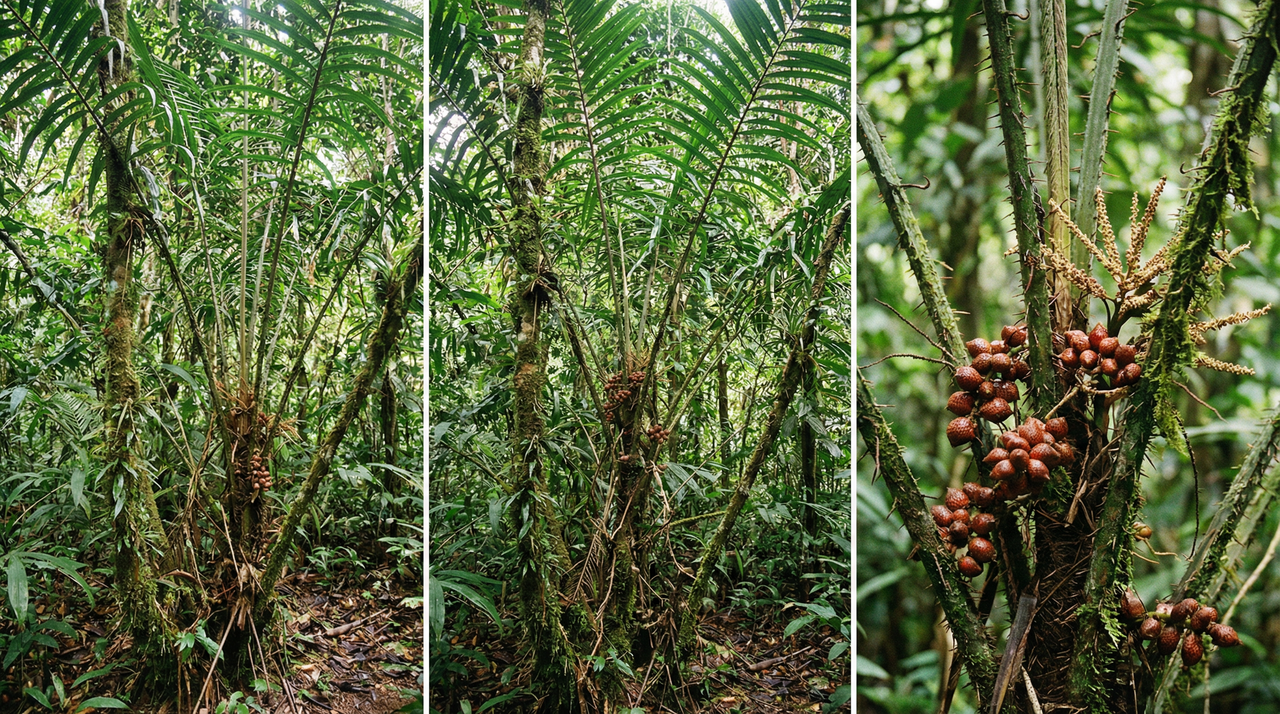
The rattan palm (Calamus manan) is a massive canopy climber yielding both premium furniture cane and edible shoots. My own introduction to its culinary side didn't start in a tropical greenhouse. I was sitting in a colleague's kitchen watching her boil what looked like pale bamboo shoots, and she told me she'd read they needed twenty minutes to get rid of the bitterness. I almost didn't say anything. But I knew enough to know that those weren't just bitter; raw rattan shoots contain compounds that require proper preparation, and "a good boil" isn't quite the same as knowing what you're actually cooking out of them. That small gap between casual use and informed use is exactly where this plant lives, because Calamus manan is genuinely useful, genuinely fascinating, and just misunderstood enough to get people into trouble.
Most people encounter rattan as furniture. A chair, a basket, the handle of something. What they don't picture is the source: a climbing palm that can push through a Southeast Asian rainforest canopy for over a hundred meters,[1] armored in recurved spines, dragging itself upward with hooked whips called flagella. This isn't a demure garden palm. It's one of the longest plants on earth, and the same structural stubbornness that lets it conquer a canopy is what makes its cane so prized the world over. Understanding that tension, between brutish wild architecture and refined human use, is where the real story of rattan begins.
Origin and History of Rattan Palm (Calamus manan)
If you've ever encountered manau rattan in a Southeast Asian rainforest or a botanical collection, you don't forget it. The canes stretch 40 to 80 meters into the canopy, sometimes longer, armed with whorls of sharp, recurved spines that are yellowish to reddish-brown and catch on everything within reach.[2] Calamus manan isn't a tree in any conventional sense. It's a climbing palm in the Arecaceae family, a scandent vine that uses long internodes of 30 to 50 centimeters, modified leaf tips called flagella, and distinctive knee-like bends to haul itself up through the forest layers.[2] The architecture is genuinely impressive, and understanding it changes how you think about what rattan furniture actually is.
Visual Characteristics of Manau Rattan
The canes themselves run 3 to 5 centimeters in diameter and taper toward the tips, though size and form vary considerably with light levels, maturity, and growing conditions.[2] The leaf sheaths are a standout identification feature: pale green with mottling, 40 to 80 centimeters long, and bristling with flat, triangular yellowish spines arranged in whorls.[3][4] Once you've seen those mottled sheaths in person, they're unmistakable. The pinnate leaves arch out 2 to 4 meters, carrying linear-lanceolate leaflets 20 to 50 centimeters long, and the fruit is an ovoid drupe wrapped in neat rows of reflexed reddish-brown scales that transitions from green to red or black at maturity.[5] The root system is fibrous and adventitious, and climbing stems may even develop pneumatodes for gas exchange in the humid forest air.[4]
Related species look similar at a glance but differ in ways that matter for design or sourcing. Calamus scipionum reaches only 20 to 30 meters with bulbous-based reddish-brown spines,[6] while Calamus erectus produces short, glossy canes of just 5 to 30 meters and under 1.5 centimeters in diameter.[7][8] When I'm evaluating Calamus species for any kind of design use, that cane length and diameter difference is the first thing I look at. The sheer scale of C. manan is what earned it its place as the premier commercial rattan, and it's also what makes those recurved spines so formidable in the field.
Traditional, Cultural, and Economic Importance
The rattan palm plant has been woven into the material and spiritual life of Southeast Asian peoples for as long as the forests have stood. Calamus manan's roots, leaves, and stems feature in Malay and Orang Asli medicine for treating rheumatism, wounds, joint pain, and inflammation, prepared as decoctions or applied topically.[9][10][11] But it goes deeper than practical medicine. Among Dayak communities in West Kalimantan, manau rattan carries meaning in Dayak Manau festivals as a symbol of ancestral strength; the Iban weave it into headgear and shields for Gawai celebrations; Kayan and Kenyah communities use it in initiation and funeral rites.[12][13][14] The Semai Orang Asli wove related Calamus scipionum into talismans against evil spirits and incorporated it into rites of passage tied to forest-spirit mythology.[15]
The genus has a long documented history beyond the forests of Borneo. Calamus rotang appears in the Arthashastra, the ancient Indian political treatise from the 4th century BCE, describing binding and construction uses,[16] and by the 17th century Dutch and British East India Companies were trading it to Europe as "Malacca cane."[17][18] The same climbing adaptations that helped this rattan palm reach the rainforest canopy produced the long, flexible canes that built trade networks across centuries.
What I find most compelling is how indigenous communities maintained those cane populations through sustainable selective harvesting long before conservation language existed. Dayak communities, supported by FAO initiatives from the 1990s onward, practice community-based management that allows regeneration between harvests, supporting livelihoods for over a million people across Southeast Asia with annual wild harvests of roughly 10,000 tons.[19][20][21] It's a model that looks a lot like the kind of guild management I apply to productive climbing perennials in permaculture food forests: harvest selectively, leave the structure intact, and the system keeps producing for decades. Some traditions also use rattan for palm sugar or as an aphrodisiac, though documentation on those uses is sparse and regional.[10] The core story, though, is one of an extraordinary climbing palm that humans and ecosystems have relied on together for a very long time.
Rattan Palm Varieties and Sourcing
Notable Varieties and Selections of Calamus manan
If you go looking for named cultivars of Calamus manan in Plants of the World Online or USDA GRIN, you'll come up empty. There simply aren't any formally recognized botanical varieties or cultivars registered in the major taxonomic databases.[22][23] That's not unusual for tropical climbing palms, where variation across populations tends to be ecologically driven rather than selected and named by breeders. The one standout exception is 'Manau 1', a thornless, high-yielding clonal selection developed through seed orchards and vegetative propagation specifically for commercial production.[24][25] Having seen spiny wild forms in botanical collections, the difference matters. Working around those recurved spines is genuinely unpleasant, and a thornless form changes the maintenance equation entirely.
Across the broader Calamus genus, distinctions are almost entirely practical rather than taxonomic. Commercial growers and craftspeople differentiate species and local strains by cane diameter, flexibility, and surface color, with thick-stemmed rattans going to furniture frames and finer, more pliable canes reserved for weaving and basketwork.[26][27] Related species like Calamus rotang and Calamus scipionum occupy different commercial niches along those same lines, and Calamus erectus seeds surface occasionally through botanical seed banks for growers interested in genus-level exploration.
How to Source Rattan Palm Responsibly
Before you place any order for a rattan palm plant, understand the legal landscape. The entire Calamus genus sits on CITES Appendix II, meaning international trade in live plants requires documentation verifying sustainable sourcing.[28] In the United States, that translates to USFWS enforcement of CITES permits plus USDA APHIS import permits and phytosanitary certificates confirming the material is pest-free.[29][30] I always cross-check vendor claims against current IUCN and CITES data before recommending any source, because regulations do change and the fees, delays, and potential plant losses during compliant import transit add up fast in ways vendors don't always volunteer upfront.
For actual availability, expect to search. Standard nurseries don't carry this species. Seeds and small plants appear sporadically through specialty online vendors like Rare Palm Seeds, typically running $10-30 per seed packet and $25-75 for young plants.[31][4] If Calamus manan itself proves unavailable, related species sometimes fill the gap: C. rotang seeds occasionally appear from tropical nurseries at $5-15 per packet, and C. scipionum material can sometimes be sourced through specialty suppliers or botanical garden plant sales.[32][33] The calamus erectus common name and the mini rattan palm label get applied loosely online, so verify the scientific name on any order before buying.
Calamus manan carries an IUCN Least Concern assessment, but that global status masks real localized pressures from overharvesting for furniture and crafts across Southeast Asia.[34][35] Seeking out FSC-certified or community-managed sources matters. In the U.S., established specimens exist mainly in controlled greenhouse environments or botanical garden collections like Fairchild Tropical Botanic Garden in Florida, which tells you something honest about what growing this species outside its native range actually requires.[36]
Rattan Palm Propagation and Planting (Calamus manan)
Rattan palm sits in an interesting category for propagators: technically possible from seed, genuinely rewarding when it works, and humbling when you underestimate the biology. I've worked with recalcitrant seeds from other tropical palms, and that experience has taught me more about patience and timing than any textbook. Calamus manan demands both.
Seed Characteristics and Propagation Methods
The first thing to understand is that these seeds do not behave like the packets you store in a tin over winter. Calamus manan seeds are fully recalcitrant, meaning they start life at 40-50% moisture content and begin dying the moment you let them dry out.[37][38][39] Drop below 20-30% moisture content during storage and viability collapses fast.[40][41] There's no dormancy period here to buy you time. The seeds are ellipsoidal, running 12-18 mm long and 8-12 mm wide,[42][43] and if you receive them looking dry and pale, assume viability is already compromised.
For short-term holding, pack fresh seeds in moist sphagnum moss or vermiculite in a breathable container, keep temperatures between 15-20°C, and plan to sow within a few weeks. Under optimal conditions, viability can hold for 3-6 months.[44][45] I've tested this with similar recalcitrant palms and found that past four months, germination rates drop sharply even when you've done everything right. One study suggests conditional orthodox behavior may allow cryogenic storage at -20°C for 1-4 years,[46] but that result stands in contrast to the broader consensus from Kew and FAO; treat it as a cautious footnote rather than a practical strategy.
Fresh seed sown immediately into a warm (25-30°C), humid, shaded environment in well-drained substrate is where you see the good numbers: germination can hit 80-90% under ideal conditions, though rates fall below 20% with poor handling.[47][48] No pre-treatment is needed for C. manan specifically; that 24-48 hour soak or gibberellic acid approach is more relevant for related species that carry physiological dormancy.[49] Expect germination to start around 1-3 months, though stragglers can take up to 6.[24] If you want to check seed viability before committing nursery space, a tetrazolium assay will tell you what you're working with.[50]
There's a genuinely fascinating wrinkle to the seed biology worth watching for in the nursery tray: polyembryony. Each seed typically carries 3-5 embryos, most arising from nucellar tissue, so a single fruit can produce multiple genetically identical seedlings.[51][52][53] Where most palms send up a single shoot per seed, rattan can surprise you with a cluster of nearly identical sprouts. That clonal uniformity also means low genetic diversity across seedling populations, which matters if you're selecting for cane quality.
For anyone wanting to lock in a specific elite genotype, vegetative propagation is the more reliable route. Stem cuttings, root suckers, division, and tissue culture all bypass seed recalcitrance entirely and produce true-to-type plants.[54][55][56] Tissue culture is beyond a home nursery setup, but I've had good results rooting stem cuttings under high humidity, and the cane quality from those vegetatively propagated plants has consistently impressed me. Keep in mind, too, that C. manan is dioecious, so seed production in any planting requires both male and female individuals present.[55]
Soil and Site Requirements
In its native lowland dipterocarp and secondary humid forests of Southeast Asia, C. manan grows in fertile, well-drained loamy or sandy-loam soils rich in organic matter, up to elevations around 800 m.[57][58] Organic matter content of 2-5% with good humus and aeration is the target, and roots need at least 60 cm of depth, ideally 90-120 cm.[59][60] It handles moderate soil compaction, but loose, aerated soil is where you'll see real vigor, much like the understory palms I've grown in other shaded forest-garden contexts.
Run a soil test before planting. The optimal pH sits at 5.5-6.5, with an acceptable range of 5.0-7.0.[61][62] Go above 7.5 and you'll see interveinal chlorosis in new leaves as iron and manganese lock up in the soil.[63] In my experience, when I've spotted that yellowing pattern between the veins on young rattans, pH above 7.0 has been the culprit almost every time. A quick follow-up with chelated iron and elemental sulfur to acidify brings the plants back. If you're working the other direction, below pH 5.0, lime is the fix.[64]
Drainage is non-negotiable. Consistent moisture is what rattan wants; waterlogged soil delivers root rot instead, with symptoms of yellowing leaves, stunted growth, and dark mushy roots.[65] For nursery containers, a 1:1:1 mix of peat or coir, coarse sand or perlite, and loamy compost gives you both the moisture retention and drainage this species needs.[66]
Spacing, Planting Technique, and Germination Timeline
Timing the field transplant to the rainy season (roughly May-October in its native range) is the single most impactful decision you can make for establishment success.[67] I've transplanted during dry spells and paid for it with losses. When I've waited for the rains and planted into genuinely moist soil, establishment rates have been close to total. For sowing, place seeds 1-2 cm deep in a sand-peat or sandy-loam mix after a 24-48 hour soak, maintain 25-30°C with high humidity, and expect seedlings to spend 1-2 years in the nursery before they're ready for the field.[48][68] That nursery phase is worth taking seriously; young plants need 50-70% shade to prevent leaf scorch[68] and it's during this time that you'll first see those characteristic climbing tendrils starting to develop, a hint of the canopy-scaling architecture to come.
In plantation settings, space plants 1.5-2 m within rows and 2-3 m between rows, giving roughly 1,600-3,333 plants per hectare.[69][70] Mature clumps spread 1.8-3 m wide,[67] so support structures need to go in at planting time, not as an afterthought. Poles, established trees, or trellises all work; this palm will start reaching for something to climb well before you expect it.
If you're outside the tropics, be clear-eyed about what you're attempting. C. manan is strictly USDA zones 10b-12, needs temperatures consistently above 20°C, and won't survive frost.[71][72] Greenhouse protection with humidity control is required anywhere that doesn't match those parameters. For vegetative propagation outside that range, 1-2 m stem cuttings treated with rooting hormone and planted in shaded, humid sandy loam can get plants established faster than seed ever will[73][74] and sidesteps the entire recalcitrant seed problem for growers focused on preserving specific cane quality.
Rattan Palm Care Guide: Growing Calamus manan Successfully
Growing a rattan palm outside its native Southeast Asian rainforest habitat is essentially an exercise in habitat reconstruction. Every care decision, from how much shade you provide to how often you reach for the fertilizer bag, comes back to one question: does this feel like a lowland tropical rainforest? When the answer is yes, the plant rewards you. When it's no, it tells you quickly and unhappily.
Sunlight Requirements for Rattan Palm
Calamus manan is an understory climber by nature, happiest under 50–70% shade cloth, and it tolerates as little as 10–30% of full canopy light. Direct sun is genuinely damaging, not just suboptimal. Young plants develop photoinhibition fast: frond edges yellow and brown, leaf tips burn, and climbing vigor drops noticeably. I learned this the hard way with my first batch of seedlings. The thin leaflets scorch within days of unfiltered afternoon sun exposure, faster than almost any other palm I've worked with. Now I run 70% shade cloth for the first 12–18 months without exception, and I don't graduate plants to brighter spots until they've put on several healthy fronds and shown strong root establishment.
Watering Needs and Humidity for Rattan Palm
In the wild, Calamus manan grows where annual rainfall exceeds 1,500 mm, often sitting in the 2,000–4,000 mm range, and it shows that preference in cultivation.[75][76] The soil needs to be well-drained loamy or sandy loam rich in organic matter, retaining moisture without ever sitting wet, with a pH between 5.5 and 7.0.[76][24] Young plants need watering two to three times per week during active growth; once established, dropping to every seven to ten days works well, watering deeply to encourage roots that can reach one to two meters down.[77][78]
Overwatering is a real risk. Yellowing or browning leaves combined with wilting despite moist soil, soft mushy roots, and a foul soil odor are the warning signs.[78][79] Underwatering shows up as drooping, curling leaf tips, and overall frond collapse. Use rainwater or low-salinity water where you can, keep ambient humidity above 70% with regular misting or a humidifier for indoor plants, and mulch mature plants to lock in soil moisture between waterings.[76][80]
Soil and Feeding Requirements for Rattan Palm
Rattan palm care demands attention to the full nutrient spectrum. Beyond the basics of nitrogen, phosphorus, and potassium, this plant needs adequate calcium, magnesium, sulfur, and micronutrients including iron, zinc, manganese, and boron.[4][81][63] A balanced NPK fertilizer at 15-15-15 or a palm-specific 12-12-17 blend with added magnesium works well in practice.[82] Start young plants at 50–100g per plant annually, split across two to three applications during the growing season, scaling up to 200–500g for mature specimens.[82][83]
According to FAO cultivation protocols, proper feeding can push growth rates up by 20–30% and produce the thicker, longer canes that matter for commercial use.[84] But I'd encourage caution here. I once pushed nitrogen too hard on a young plant, chasing faster growth, and ended up with soft, porous cane that never hardened properly. The stem of a rattan palm grown on excessive nitrogen looks fine until you test its flex strength. Know your deficiency symptoms: uniform yellowing of older leaves signals nitrogen shortage; yellow-orange margins with tip necrosis indicate potassium; yellow banding between green veins on older leaves is magnesium, exactly the same pattern I see in my coconut and areca palms. Interveinal chlorosis on new growth points to iron.[84][63] Soil testing every one to two years alongside regular organic matter inputs keeps you ahead of problems before they show up in the leaves.[63][85]
Heat and Frost Tolerance of Rattan Palm
Calamus manan thrives between 25°C and 35°C, with the sweet spot sitting at 25–30°C; growth slows above 32°C and intense heat above 40°C causes leaf scorch, wilting, and stomatal closure.[86][81] Suitable for USDA zones 10b–11 only.[87] Seedlings and plants in flower or fruit are particularly vulnerable to temperature extremes, so shade nets, deep mulching (which can drop soil temperature by 5–10°C), and consistent irrigation are your practical toolkit during heat spikes.[88]
On the cold end, there's no nuance: this plant cannot survive frost. Cold damage begins appearing around 5°C, and a single night below freezing hits the growing point with permanent, unrecoverable damage. I've watched it happen to other tender tropicals and there's no coming back once that bud is gone. Anyone in zone 9b or cooler needs a heated greenhouse or a strictly protected patio setup, full stop.
Pruning, Maintenance, and Seasonal Rhythm for Rattan Palm
Rattan palm care on the maintenance side is mostly about clean tools and honest assessment. Remove dead, damaged, or overcrowded canes annually with sharp, sterilized shears, preferably after flowering or during the dry season to minimize stress and disease entry points.[89][90] Good airflow through the clump is your first line of defense against the fungal threats that matter most here: Ganoderma root rot, leaf spots, anthracnose, and Phytophthora bud rot all thrive in stagnant, humid conditions.[91] On the pest side, watch for rattan weevils, red palm weevils, rhinoceros beetles, and scale insects; integrated pest management combining cultural practices, biological controls, and targeted treatment as needed keeps populations from escalating.[89]
The bigger picture for rattan palm leaves growers either inspired or humbled depending on their temperament. These are genuinely long-lived plants, 30–100 years in wild populations, and they won't flower until 8–15 years after germination, with reliable blooming closer to 10–12 years under ideal conditions. For anyone building a permanent food-forest understory, that lifespan is exactly the point. The patience the plant demands pays back in decades of productive cane and a structural presence in the canopy that few other climbers can match.
Harvesting Rattan Palm (Calamus manan)
Timing, Maturity Cues, and Sustainable Practices
Patience is the single most important skill you bring to harvesting Calamus manan. From field planting, expect to wait 8-10 years before your first cane cut, and in some conditions that stretches to 12 years depending on soil, rainfall, and how well the plant is managed.[47][92] Vegetative propagation can shorten that to 3-5 years, which is one reason serious growers favor cane cuttings over seed for commercial work.[93] I've watched rattan plantings in tropical agroforestry systems sit deceptively still for the first few years, and I always recommend interplanting with faster-yielding species to keep the system productive while you wait. Think of it like establishing a hardwood timber belt: the slow species is the long-term payoff, not the immediate return.
Once you finally reach that threshold, the productive lifespan rewards the wait considerably. With sustainable selective harvesting, plants can keep producing for 20-30 years, with repeat cuts possible every 2-3 years from the same clump.[47][94] The key is cutting only mature canes and leaving younger stems to develop. Harvest the whole clump too aggressively and you lose that long-term productivity entirely.
Reading maturity correctly matters as much as timing the years. A harvest-ready C. manan cane should measure 3-5 cm in diameter at breast height, run longer than 20-30 meters, and show outer sheaths that have shifted from green to yellowish-brown.[95][47] That sheath color change is the cue I rely on most in the field, similar to watching frond color shift when timing a palm heart harvest. The flexibility test is equally telling: a mature cane bends without snapping. Cut too early and you get poor-quality material; wait too long and the cane becomes brittle and loses the suppleness that makes it valuable.[96]
In Southeast Asian forests, the dry season from March to October is the preferred harvest window, with FAO guidance pointing to May through September as optimal when forest access is easier and extraction causes less damage to the surrounding understory.[97] By contrast, faster-maturing relatives like Calamus erectus reach cane harvest readiness in 4-7 years from seed,[98] while the closely related Rotan Semambu (C. scipionum) runs a similar 8-12 year timeline to C. manan.[99] C. manan is the premium slow-grown option for quality large-diameter cane, and the longer growth period genuinely shows in the final material, much the way slower-grown timber tends to yield denser, more durable wood.
Yield, Flavor, and Edible Parts
For food, the young shoots are the star. Raw, they carry a mild bitterness and astringency from tannins and calcium oxalate that makes them unpleasant and potentially irritating to eat straight off the plant.[100][101] Once boiled or stir-fried, though, the transformation is genuine: the texture goes tender and slightly crisp, the bitterness drops away, and what comes through is a mild, sweet, nutty flavor that maintains an excellent structural crunch in hot dishes.[102][103] I've cooked them both ways and the difference between underprepared and properly cooked is significant, a bit like the gap between raw and blanched wild fiddleheads. Harvesting the shoot at the right tender stage matters here, because older material stays fibrous and holds more of the raw bitterness even after cooking.
Fruits are a secondary harvest and less commonly pursued. Calamus manan fruits take 9-12 months to reach maturity after flowering, longer than related species like C. erectus and C. rotang that ripen in 4-6 months.[81] The pericarp is fleshy and carries a mild fruity aroma from volatile compounds including ethyl acetate and linalool, but the taste can lean bitter or astringent, which limits enthusiasm for eating them fresh.[74] Related species show more pleasant profiles, with C. scipionum fruits described as sweet and mildly acidic, and C. erectus running sweet-sour with a bitter finish,[104] suggesting the genus has range even if C. manan itself isn't the fruit harvest priority. Young inflorescences round out the edible picture: harvested while still tender, they offer a floral flavor and are typically boiled or stir-fried to soften the astringency before eating.[105]
Rattan Palm Preparation and Uses
Most people encounter the rattan palm primarily through its furniture rather than its food, which properly reflects its commercial history. The cane is where Calamus manan has earned its reputation. But there's more to this climbing palm than the chair you're sitting on, and understanding the full range of uses helps explain why it's been so deeply woven into Southeast Asian life for centuries.
Culinary Uses and Preparation of Rattan Palm
The edible part most commonly eaten is the young shoot, known as pucuk rotan in Indonesian cooking, where it turns up in dishes like lodeh or sayur rebung prepared much the same way you'd use bamboo shoots.[106][107] The flavor once cooked is mild and slightly sweet with subtle nutty, earthy notes that blend well with aromatics and spice; the texture starts out tender-crunchy and softens with heat, a bit like a cross between bamboo shoot and palm heart.[108][101] I'd compare it to a subtler version of canned bamboo shoot in a stir-fry, earthy and inoffensive rather than assertive.
Here's where I want to be direct, because this is genuinely important: these shoots contain cyanogenic glycosides that can release hydrogen cyanide when hydrolyzed, so raw consumption is not an option.[109][110] In my research and work with wild edibles, I've seen that proper repeated boiling with multiple water changes is non-negotiable with many palms and tropical shoots. For rattan, that means peeling the outer layers, soaking in water, then boiling with two to three water changes over 30 to 60 minutes before any further cooking.[109] I always recommend beginners start with well-documented species and consult local experts, and this plant is a perfect example of why.
Once properly processed, the nutritional return is genuinely respectable: a valuable spectrum of trace minerals, dietary fiber, and protein, in a package that's 90 to 93 percent water and low in fat.[111][112] The Dayak of Borneo have traditionally harvested shoots during the rainy season as a sustenance vegetable, using careful selective harvesting to avoid damaging the plant's long-term production.[113][114] The rattan palm fruit is edible but small and fibrous enough that it's rarely worth pursuing, while the sap can be tapped for palm wine or jaggery in some communities.[106] Comprehensive toxicological and nutritional data for Calamus manan specifically remain thin; most of what we know is ethnobotanical, and some related rattans contain potentially carcinogenic compounds, so look-alike identification is essential before any foraging attempt.[115][4]
Traditional Medicinal Preparations
Across Southeast Asia, indigenous communities have long prepared decoctions from rattan roots and stems to treat rheumatism, wounds, and digestive complaints, typically boiling plant material for 15 to 30 minutes and using the liquid internally or applying stem extracts topically as poultices for wound healing.[116][117] Infusions from leaves and fruits also appear in the ethnobotanical record as anti-inflammatory preparations.[118] The evidence base for these uses is real but almost entirely traditional; clinical research is minimal, and modern toxicology advises against prolonged internal use given potential carcinogenic compounds identified in related Calamus species.[119][120] One point worth clarifying: Calamus manan is an entirely different plant from Acorus calamus (sweet flag), which carries its own toxicity profile involving beta-asarone. Confusing the two in any medicinal context would be a serious mistake.[119]
Non-Food and Craft Uses
The rattan palm cane is the plant's defining contribution to human culture. The long, strong, flexible stems have supplied premium rattan for furniture, baskets, mats, hats, walking sticks, and structural construction across Southeast Asia for generations, harvested sustainably by the Dayak, Orang Asli, and Philippine communities without killing the climbing palm.[121][122][123] From a permaculture perspective, the ability to take the cane while the palm continues to climb and produce is a beautiful example of regenerative yield. The rattan palm cane used in quality furniture is Calamus manan cane more often than any other species in the genus, valued precisely because of its consistent diameter and durability. The bark also yields natural dyes, and stems and roots carry cultural significance in ritual objects and ceremonial craft traditions.[119][124] For comparison, the fiber of Calamus erectus shows tensile strength roughly 20 to 30 percent higher than Manau rattan, while the slender canes of Calamus caesius bring ornamental appeal with their distinctive blue-tinged sheaths.[125][126] For most readers outside Southeast Asia, this plant will be more meaningful as the source of their rattan chair than as a garden crop, and there's real value in understanding the indigenous ingenuity behind every piece of that furniture.
Rattan Palm Health Benefits and Medicinal Uses
The rattan palm plant has a rich ethnomedicinal history in Southeast Asia that long predates any laboratory confirmation of its usefulness. Indigenous communities including the Malay, Dayak, and Orang Asli have prepared root and leaf decoctions to address rheumatism, wounds, diarrhea, dysentery, fever, stomach ailments, and even snakebite, and some traditions use it as a general adaptogen for stress and resilience.[127][128][129] That's a lot of ground for one plant to cover. I respect that accumulated knowledge deeply, but I want to be upfront: no peer-reviewed clinical trials or randomized controlled human studies have been completed for Calamus manan or its close relatives.[130][131] Every pharmacological claim you'll see here is preclinical: in-vitro assays, animal models, and ethnobotanical reports. While the in-vitro antioxidant numbers are genuinely impressive, I still view rattan primarily as a permaculture resource rather than a medicine cabinet staple until human data catches up.
Traditional Medicinal Uses and Pharmacological Research
The preclinical picture that has emerged is broad. Extracts of Calamus manan and related species show antioxidant activity reaching up to 80% DPPH scavenging, anti-inflammatory effects through inhibition of NF-κB, COX-2, and pro-inflammatory cytokines, antimicrobial activity against both Gram-positive and Gram-negative bacteria as well as Candida albicans (MIC values of 25-100 μg/mL), analgesic properties in writhing tests, alpha-glucosidase inhibition suggesting possible antidiabetic utility, and cytotoxicity against cancer cell lines via apoptosis induction.[132][133][134][135] Related species echo these effects in interesting ways: Calamus rotang extracts promote wound healing via enhanced collagen synthesis in rat models, and Calamus erectus, used in both TCM and Ayurveda, demonstrates neuropharmacological effects including GABA and cholinergic modulation and increased BDNF in rodent studies.[136][134] That's compelling genus-level breadth, and it does align meaningfully with centuries of traditional use. Still, compelling is not the same as clinically proven, and I'd encourage anyone considering medicinal application to consult a qualified practitioner.
Key Phytochemicals and Their Activities
Calamus manan contains a diverse phytochemical portfolio spread across its stems, leaves, roots, fruits, and bark: flavonoids including quercetin, kaempferol, and rutin; phenolic acids such as ferulic and gallic acid; alkaloids; tannins; saponins; glycosides; coumarins; steroids; and rotundifuran-type diarylheptanoids.[137][138] These compounds are directly linked to the antioxidant, anti-inflammatory, and antimicrobial activities measured in lab assays, with DPPH scavenging up to 80% operating via free-radical scavenging and Nrf2 pathway activation, and cytotoxicity IC50 values of 20-50 μg/mL in cell-line work.[132][139]
One thing that genuinely fascinates me as a grower is how much the environment shapes this chemistry. Phenolics and flavonoids can run up to 25% higher during rainy seasons, in acidic nutrient-rich soils, and under shaded humid conditions, with geographic origin adding another layer of variability (Malaysian samples tend toward higher terpenoids compared to Indonesian material).[140][141] That variability also means standardized extracts don't really exist yet, which is part of why the research hasn't translated into clinical products. What it suggests for cultivation is that the plant's pharmacological character is genuinely tied to how and where you grow it, not just what species you have in the ground.
Nutritional Value of Edible Shoots
Young shoots are the part most likely to end up on your plate, harvested from the apical meristem and traditionally boiled or stir-fried across Malaysia and Indonesia. They're a genuinely low-calorie vegetable: roughly 20-30 kcal per 100 g fresh weight, with 1.5-3 g protein, 4-6 g carbohydrates, 2-7 g fiber, and around 87% moisture.[142][143] Vitamin C comes in at 9-20 mg per 100 g (roughly 11-25% of daily value), with useful amounts of potassium (200-300 mg), calcium (50-100 mg), and iron (1-2 mg) alongside B vitamins.[144][145]
The caveat is oxalates, running 200-400 mg per 100 g, plus saponins that contribute bitterness and digestive irritation if you skip preparation.[146] A 10-15 minute boil reduces oxalate content by 30-50% and noticeably brightens the flavor; in my experience, shoots boiled for about 15 minutes lose that raw, astringent edge and develop a mild, clean taste somewhere between bamboo shoot and young asparagus. Worth noting that much of the specific nutritional data for C. manan is extrapolated from related species like C. caesius, so treat these figures as useful approximations rather than hard absolutes.[147]
Safety Considerations and Potential Risks
Calamus manan demonstrates low acute toxicity, yielding an LD50 above 2000 mg/kg in rodent studies without widespread reports of severe human poisoning from processed material.[148] The real hazards are more mechanical and chemical than systemic. Stems, leaves, and sap contain calcium oxalate raphides that cause burning in the mouth and throat, excessive salivation, swelling, difficulty swallowing, and nausea if raw parts are ingested.[149][150] Skin contact can produce dermatitis, redness, and blistering.[151] I'll add from personal experience: those hooked spines are no joke. Harvesting without gloves is a mistake you make exactly once. There's no specific antidote for exposure; treatment is supportive, and boiling the shoots before eating is the practical mitigation for most risks.[152]
For medicinal use, avoid during pregnancy and lactation due to potential emmenagogue effects and inadequate safety data. Use caution with kidney or liver conditions, and be aware of possible antiplatelet activity and CYP450 interactions if you're on blood-thinning medications.[153] Finally, one identification issue I feel strongly about flagging: Calamus manan must never be confused with Acorus calamus (sweet flag). The names sound similar, they don't look alike at all (a spiny, climbing palm versus a fragrant, grass-like wetland plant), but the toxicological difference is enormous. Acorus calamus contains high levels of beta-asarone, a known rodent carcinogen and potential human carcinogen linked to hepatotoxicity, neurotoxicity, seizures, and cancer risk.[154][155] Rattan palms contain negligible levels of this compound,[156] but that's cold comfort if you've sourced the wrong plant. Know what you're growing.
Rattan Palm Pests and Diseases
I'll be honest: Calamus manan has a reputation as a tough, spiny plant that seems like it should shrug off most threats. Those recurved hooks and stiff flagella are formidable. But physical armor only works on animals large enough to be deterred by it. The fungi, borers, and scale insects that do the real damage are entirely unimpressed.
Main Diseases of Calamus manan
There is some baseline fungal resistance in the species, and it does vary by genotype and wild population,[157][158] but that moderate resistance disappears quickly once drainage fails or humidity stays continuously high. The three soil-borne killers to know are Ganoderma basal stem rot, Fusarium wilt, and Phytophthora foot rot, and they often compound each other.
Ganoderma boninense is the worst of them. It attacks the basal stem tissue, and while some lignification in older canes offers partial protection, established plantings can collapse before the bracket fruiting bodies are even visible.[159][160] I've fought Ganoderma in other tropical palms and gingers, and the lesson is always the same: once it's in the soil, you're managing it, not eliminating it. Raised planting beds and coarse organic mulch to keep the root crown aerated are the most consistent controls I know. Fusarium solani and F. oxysporum cause vascular discoloration and a slow, obvious decline, spreading through infected soil;[161][162] Phytophthora root and foot rot compounds the problem in any site that holds water,[163][164] and Calamus rotang faces its own version of this with Rhizoctonia in waterlogged soils.[162]
The irony with rattan is brutal. The humid, moist conditions it genuinely loves, humidity running 70-90% and consistently moist soil, are exactly what fuel these pathogens.[165][166] Drainage isn't optional; it's the single biggest lever you have. On top of the soil-borne threats, foliar opportunists pile on in the same humid conditions: Pestalotiopsis palmarum and Colletotrichum anthracnose thrive when foliage stays wet, and heavy infections cause defoliation;[163][167] bacterial leaf blight is also documented.[163][168] For what it's worth, Calamus erectus shows moderate resistance to both Ganoderma and Phytophthora palmivora in well-drained soils,[169] and certain Calamus scipionum selections show enhanced tolerance to root rot and leaf blight,[170] but no Calamus is a carefree plantation crop.
Resistance breeding for Calamus manan is genuinely slow work. The species is dioecious and the juvenile phase runs 10-15 years before you know what you have,[157][169] which makes home-scale selection completely impractical. My advice is simple: source the 'Manau Select' cultivar with documented improved resistance from a reputable nursery rather than gambling on unknown seedling stock.[157][171] And keep expectations realistic: most of what we know about this species' disease response is extrapolated from related Calamus trials and Southeast Asian plantation data. I always run a new rattan planting for at least two full seasons on my own site before I'd consider scaling up.
Common Pests and Integrated Management
The spines on a mature Calamus manan stem are legitimately intimidating. They stop deer, discourage casual browsers, and make harvesting an exercise in attention. What they don't stop are the insects small enough to work around them. Rhinoceros beetles (Oryctes rhinoceros) attack young plants, tearing into developing tissue and leaving wounds that become direct entry points for the fungal infections covered above.[157][172] Red palm weevils (Rhynchophorus ferrugineus) bore into stems and amplify susceptibility to every other pathogen in the list,[157][173] termites target mature canes specifically,[157] and Aspidiotus destructor scale can colonize stems and fronds in dense plantings.[163] The rattan's flavonoids, tannins, and terpenoids do provide some antimicrobial and pest-deterrent activity, but no Calamus species is considered highly pest-resistant under plantation conditions, and the physical spines remain the primary defense against anything big enough to feel them.
The pest-disease feedback loop is the real management problem: insect boring opens the stem, disease follows the wound, and the plant weakens further. In landscape settings with good airflow, mixed planting, and no monoculture pressure, I've found the insect load tends to stay manageable. In denser production systems, an integrated toolkit is necessary: drainage and sanitation first, then pheromone traps for weevil monitoring, biological controls where feasible, and fungicide applications reserved for confirmed infections rather than used prophylactically.[174][175] For Phytophthora specifically, I've had consistent success applying Trichoderma-enriched compost teas around the root zone, combined with improving surface drainage away from the planting area. It doesn't eliminate the pathogen, but it shifts the soil biology in a direction that slows disease progression noticeably. Remove and destroy infected plant material rather than composting it; that's non-negotiable.
Rattan Palm in Permaculture Design
The rattan palm is not a temperate experiment waiting to happen. It is a committed tropical specialist. If your climate cannot deliver, no amount of clever design will make up for it. Get that sorted first, then the permaculture possibilities open up beautifully.
Climate Requirements and Hardiness Zones
Calamus manan is native to the lowland rainforests of Southeast Asia, thriving under Köppen Af and Am climates from sea level up to around 800 meters.[176] In USDA zone terms, that means 10b through 12, with year-round warmth, minimum temperatures held above 10°C (50°F), and absolutely no frost tolerance.[177] Cold damage sets in below 5°C, and any actual frost will kill it. I've worked with related tropical palms in marginal sites and learned firsthand that even a single night near that threshold can set a plant back for months, sometimes a whole growing season. The chilling injury isn't always obvious immediately; you'll see it three weeks later when new growth stalls and older fronds start browning at the margins.
Optimal growth happens between 22 and 35°C with humidity sitting at 70 to 90 percent year-round, supported by at least 2,000 mm of evenly distributed annual rainfall, ideally up to 4,000 mm. That "evenly distributed" part matters: an extended dry season, even in an otherwise warm climate, will stress these plants hard. Some growers attempt Calamus species in zone 10a with frost cloth and deep mulching, and I understand the temptation, but consistent production really does require zone 11 or warmer. In marginal areas I'd treat it as a prized specimen to be coddled rather than a reliable system workhorse.
Ecosystem Functions and Pollination Ecology
Calamus manan is dioecious, meaning you need both male and female plants to get fruit, and its flowers are small (2 to 4 mm), creamy-white to yellowish, opening at night or early morning. It's protandrous too, so male flowers mature before female ones on the same flowering cycle. Pollination is primarily entomophilous, driven by beetles (Curculionidae and Cerambycidae), flies, and thrips, drawn in by subtle scents, nectar, and fermenting odors.[178][179] Wind plays a minor supporting role at best; the pollen is sticky and lightweight in ways that favor insect transfer rather than aerial drift.
Here's the sobering part: natural fruit set in wild populations often falls below 10%, a result of sparse pollinators, the dioecious barrier, and increasing habitat fragmentation.[125][180] That's why I always plant in mixed-sex groups and have experimented with hand pollination timing, transferring pollen from male to female inflorescences early in the morning before heat and dew dissipate. Managed systems typically aim for a 1:4 to 1:6 male-to-female ratio to ensure adequate pollen coverage without wasting planting space on non-fruiting stems.[181]
Beyond reproduction, rattan pulls real weight in an ecosystem. Its extensive root system acts as a dynamic accumulator, drawing nutrients from deep soil layers and contributing decomposed organic matter as leaves and stems break down over time.[100] On slopes, that same root architecture controls erosion meaningfully. Fruits and young shoots feed squirrels, bats, birds, and insects, and fruit-dispersing frugivores contribute to natural forest regeneration and genetic diversity.[182] The spiny stem structure creates microhabitats and sheltered corridors for small vertebrates, insects, and epiphytes, layering biodiversity in ways that passive planting simply can't replicate.[100]
One thing I want to be direct about: rattan does not fix nitrogen.[100] I've seen it lumped into lists of "nutrient cycling plants" in ways that blur this distinction. Because it doesn't host nitrogen-fixing bacteria, I always pair it explicitly with known fixers rather than assuming the legume guild nearby will cover all bases. Thinking in whole-system nutrient flows means not leaving any gaps.
Forest Layer and Guild Integration
Rattan palm occupies a climbing niche that most temperate permaculture designers don't have a direct reference point for. Think of it somewhat like a passionfruit vine scaled up dramatically: a scandent, non-branching stem that originates on the forest floor and works its way upward using recurved spines and modified flagella to hook onto host trees.[183] Unlike a vine that girdles and strangles, rattan latches on without significantly damaging the host, using cirri as grappling hooks rather than wrapping tendrils. The climbing mechanics remind me a bit of how clematis uses petioles to grip a trellis, except rattan's hooks are structural enough to haul stems reaching 25 to 60 meters (and up to 80 meters in some Calamus rotang specimens) through the canopy.[183][184]
In its native habitat it thrives in humid lowland dipterocarp and secondary forests up to 800 meters, preferring shaded, moist conditions with well-drained loamy or sandy loam soils, a pH of 5.5 to 6.5, and annual rainfall exceeding 2,000 mm.[185] It wants 50 to 70 percent shade for optimal growth: full sun scorches the leaves, but deep shade suppresses climbing vigor.[186] In design terms, that puts it in the understory-to-mid-canopy zone, using medium-to-tall support trees to reach light while keeping its roots in the shaded, moisture-retentive soil below.
The guild I keep coming back to when I think about integrating rattan into a food forest looks something like this: a tall fruit tree like Artocarpus (breadfruit or jackfruit) as the primary canopy anchor and climbing support, Inga species as the nitrogen-fixing companion positioned to enrich the root zone rattan can't replenish itself, and ginger or turmeric filling the shade-tolerant understory below.[187][68] Calathea works well as a ground cover layer, suppressing weeds while tolerating the filtered light that makes it through the canopy. The rattan climbs the fruit tree's edge rather than directly up the trunk, keeping light access for the understory crops and avoiding excessive shading at ground level.
What justifies including a plant that takes a decade or more to produce harvestable cane in a permaculture system? The premium quality of Calamus manan cane, prized globally for furniture and basketry, is the economic anchor that makes the waiting period rational.[70] In the meantime it's earning its keep through soil stabilization, vertical stratification, biodiversity support, and pollinator habitat. The mycorrhizal associations in its root system enhance nutrient uptake from the surrounding guild, and its leaf litter gradually builds organic matter in the soil profile.[188] It's a long game, but in a well-designed tropical food forest, rattan earns its place at every stage of the succession.
The Plant That Taught Me to Think in Decades
I've watched a lot of impatient gardeners plant for next season. Rattan humbled me into planting for the generation after mine. There's something quietly radical about committing a corner of your land to a spiny, slow-climbing vine you may never see reach full production, trusting the design anyway. That long arc is what I keep coming back to, and honestly, it's the best argument I know for permaculture itself.
Sources 188
- FAO: Rattan Current Research and Future Direction ↩
- Rattans of the Genus Calamus - Kew Royal Botanic Gardens ↩
- Calamus manan - Plants of the World Online | Kew Science ↩
- Calamus manan - Useful Tropical Plants ↩
- Calamus manan - Wikipedia ↩
- Calamus scipionum ↩
- The Rattans of Sarawak ↩
- Flora of China Editorial Committee, 1997 ↩
- Ethnobotany of Palms in the Philippines ↩
- Ethnobotany of Rattans in Southeast Asia ↩
- Ethnobotany of Rattan Palms in Southeast Asia ↩
- Ethnobotany of Rattan in Borneo ↩
- Cultural Significance of Calamus Species in Indigenous Rituals ↩
- Rattan Craftsmanship ↩
- Folklore and Rituals of the Semai People ↩
- Arthashastra of Kautilya ↩
- The Rattan Trade in Colonial Southeast Asia ↩
- Historical Trade of Malacca Cane ↩
- Sustainable Harvesting of Rattan in Southeast Asia ↩
- Indigenous Knowledge on Rattan Harvesting among Dayak Communities ↩
- Rattan: Ecological and Economic Aspects ↩
- Plants of the World Online ↩
- World Checklist of Vascular Plants (WCSP) ↩
- Breeding Strategies for Rattan Improvement ↩
- Domestication and Commercialization of Rattans ↩
- Calamus rotang - The Rattan Palm ↩
- Rattan: Management, Processing and Marketing ↩
- CITES Appendices ↩
- CITES and Endangered Species ↩
- Importing Plants and Plant Products to the US ↩
- Calamus manan - Rotary Donut Palm ↩
- Calamus rotang Seeds ↩
- Palmco Nursery - Rare Palms ↩
- Calamus manan ↩
- Sustainable Rattan Management in Southeast Asia ↩
- Calamus manan at Fairchild Tropical Botanic Garden ↩
- Physiology of Recalcitrant Seeds in Palms ↩
- Seed Storage Behaviour of Palms ↩
- Rattan Seed Biology and Storage ↩
- Recalcitrant Seeds: Biology and Storage ↩
- Recalcitrant Seeds: A Status Report ↩
- Rattan: Ecological and Economic Importance ↩
- Calamus manan Species Profile ↩
- Rattan Seed Handling and Storage ↩
- Seed Storage of Non-Orthodox Seeds ↩
- Seed Storage Behaviour of Calamus manan and Calamus tenuis (Abdullah et al., 2013) ↩
- Rattan Cultivation and Management ↩
- Propagation and Cultivation of Rattans ↩
- Rattan Seed Propagation Guidelines ↩
- Seed Germination of Calamus rotang and Related Species ↩
- Polyembryony in Rattans: Implications for Propagation ↩
- Seed Morphology and Germination in Calamus manan ↩
- Polyembryony in Rattans: Implications for Propagation ↩
- Micropropagation of Rattan Species ↩
- Propagation and Cultivation of Rattans ↩
- Propagation of Rattans ↩
- Rattan: Ecological Aspects and Cultivation ↩
- Ecological Requirements of Rattan Species in Southeast Asia ↩
- Calamus manan: Habitat and Soil Preferences ↩
- Soil Requirements for Tropical Palms Including Rattans ↩
- Soil pH Effects on Palms - University of Florida IFAS Extension ↩
- Rattan Cultivation Guidelines ↩
- Palm Nutrient Deficiencies: Chlorosis in Tropical Palms ↩
- Rattan Cultivation: Soil Requirements and Nutrient Management ↩
- Phytophthora Root Rot in Palms ↩
- The Biology of Rattans ↩
- Propagation of Rattan (Calamus spp.) ↩
- Rattan Cultivation Guidelines - FAO ↩
- Rattan Cultivation Guidelines ↩
- Agroforestry Guide: Rattan Cultivation and Management ↩
- Plant Finder - Calamus manan ↩
- Tropical Palms: Germination and Culture ↩
- Propagation of Rattans ↩
- Rattan Cultivation Guide ↩
- Ecology and Distribution of Calamus manan ↩
- Rattan: Ecological and Economic Importance ↩
- Cultivation of Rattan (Calamus Species) ↩
- Rattan Palm Watering and Root Rot Prevention ↩
- Overwatering Symptoms in Tropical Palms ↩
- Calamus manan Care Guide ↩
- Rattan: Ecology, Silviculture, and Productivity ↩
- FAO Rattan Production Guidelines ↩
- Rattan Cultivation Guidelines ↩
- Nutrient Deficiencies of Palms ↩
- Cultivation and Management of Rattans ↩
- Rattan: Ecology, Distribution, Silviculture and Conservation ↩
- Heat Stress in Tropical Palms: Stomatal Responses ↩
- Rattan Cultivation in Southeast Asia ↩
- Pests and Diseases of Rattan Palms ↩
- Rattan Cultivation and Management ↩
- Management of Pests and Diseases in Rattan Plantations ↩
- Calamus manan: Growth and Harvesting Guidelines ↩
- Propagation and Cultivation of Rattans ↩
- Cultivation of Rattans ↩
- Rattan: Ecology, Silviculture and Productivity ↩
- Guidelines for the Sustainable Harvesting of Rattan ↩
- Rattan Harvesting and Management in Southeast Asia ↩
- Rattan: Ecological and Economic Importance ↩
- Rattan: Ecological and Economic Considerations ↩
- Rattan: Ecology and Utilization ↩
- Edible Rattan Shoots: A Neglected Vegetable from the Wild ↩
- Edible Rattan Shoots: Nutritional and Culinary Aspects ↩
- Edible Shoots of Rattan Palms ↩
- Edible Rattan Species in Southeast Asia ↩
- Edible Rattans of Southeast Asia ↩
- Rattan: Ecological and Economic Importance in Southeast Asia ↩
- Ethnobotany of Rattans in Indonesia ↩
- Edible Rattans: Nutritional and Culinary Potential ↩
- Edible Rattan Shoots: Nutritional Composition and Processing Methods ↩
- Cyanogenic Glycosides in Palm Shoots: Detoxification Techniques ↩
- Nutritional Composition of Rattan (Calamus manan) Shoots ↩
- Edible Parts of Rattan Palms: Nutritional Evaluation ↩
- Rattan: Ecological and Economic Dimensions ↩
- Edible Rattan Shoots in Southeast Asia: Nutritional Composition and Culinary Uses ↩
- Toxicology of Rattans ↩
- Phytochemistry and Pharmacology of Calamus Species ↩
- Ethnobotanical Uses of Rattans in Peninsular Malaysia ↩
- Ethnobotanical Survey of Rattans in Sarawak, Malaysia ↩
- Ethnobotany of Rattan in Southeast Asia ↩
- Medicinal Uses of Calamus Species ↩
- Rattan: Ecological and Economic Dimensions ↩
- World Rattan Resources - FAO ↩
- Rattans of the Philippines ↩
- Ethnobotany of Rattans in Southeast Asia ↩
- Mechanical Properties of Rattan Canes: A Review ↩
- Calamus caesius - Useful Tropical Plants ↩
- Ethnobotanical Survey of Rattans in Sarawak, Malaysia ↩
- Medicinal Uses of Rattan Palms in Southeast Asia ↩
- Pharmacognostic and Pharmacological Profile of Calamus Species ↩
- ClinicalTrials.gov Search Results for Calamus ↩
- Pharmacological Activities of Calamus Species: A Review ↩
- Antioxidant and Anti-inflammatory Properties of Rattan Extracts ↩
- Antioxidant and Anti-inflammatory Activities of Calamus manan Extracts ↩
- Anti-inflammatory and Antimicrobial Effects of Rotan Manau Extracts ↩
- Cytotoxic Effects of Rattan Extracts on Cancer Cell Lines ↩
- Anti-inflammatory and Wound Healing Properties of Calamus rotang ↩
- Phytochemical Analysis and Antioxidant Activity of Calamus manan ↩
- Flavonoids and phenolic compounds from Calamus species: Antioxidant and anti-inflammatory potentials ↩
- Phytochemical investigation and antimicrobial activity of Calamus manan ↩
- Seasonal Variation in Secondary Metabolites of Rattan Palm (Calamus spp.) ↩
- Geographic Variation in Flavonoids and Terpenoids of Calamus manan ↩
- Nutritional Composition of Rattan Shoots (Calamus manan) in Sabah, Malaysia ↩
- Proximate Analysis of Calamus manan Shoots ↩
- Malaysian Food Composition Database ↩
- Nutritional Composition and Bioactive Compounds in Rattan Shoots ↩
- Anti-nutritional Factors in Edible Wild Plants: Oxalates and Saponins in Rattan ↩
- Edible Rattan Shoots: Nutritional Profile and Processing Methods ↩
- Toxicity and Safety Assessment of Calamus manan in Rodent Models ↩
- Rattan Palms: Toxicity and Irritant Properties ↩
- Calcium Oxalate Crystals in Plants: A Review of Toxicity ↩
- Contact Dermatitis from Rattan ↩
- Toxicity and Edibility of Palm Shoots ↩
- Pharmacological Activities of Rattan (Calamus spp.) ↩
- β-Asarone: A Review of Its Toxicity and Carcinogenicity ↩
- FDA Ban on Calamus in Food Products ↩
- Beta-Asarone: Toxicological and Pharmacological Relevance ↩
- Diseases and Pests of Rattan ↩
- Rattan Species of Asia: Calamus manan ↩
- Ganoderma Diseases of Perennial Crops in Southeast Asia ↩
- Diseases of Rattan Palms in Southeast Asia ↩
- Fusarium Wilt of Rattan Palms ↩
- Diseases and Pests of Rattan Palms ↩
- Diseases of Rattans in Southeast Asia ↩
- Phytophthora Diseases in Palms ↩
- Calamus manan Cultivation Guide ↩
- Managing Rattan Disease in Plantations (J. Tropical Forestry, 2009) ↩
- Fungal Pathogens of Calamus Species in Southeast Asia ↩
- Diseases of Rattan Palms in Southeast Asia ↩
- Pathology of Calamus Species: A Review ↩
- Disease Resistance in Calamus scipionum Cultivars ↩
- Breeding for Disease Resistance in Calamus Species ↩
- Rattan Pest Management in Asia ↩
- Diseases and Pests of Rattans ↩
- Pests and Diseases of Palms ↩
- Pest and Disease Management in Rattan Cultivation ↩
- Calamus manan ↩
- Calamus manan H.Wendl. ↩
- Pollination ecology of rattans (Calamus spp.) in Southeast Asia ↩
- Insect Pollinators of Palm Species in Borneo ↩
- Insect Pollinators of Calamus Species: Threats and Conservation ↩
- Ecology and Management of Calamus manan in Southeast Asia ↩
- The Ecology of Calamus manan in Southeast Asian Rainforests ↩
- Rattan Glossary and Compendium ↩
- Field Guide to Common Rattans of the Asia Pacific Region ↩
- Calamus manan: Distribution and Habitat ↩
- Calamus manan: The Versatile Rattan ↩
- Rattans in Permaculture Systems ↩
- Ecological Role of Rattans in Soil Stabilization ↩