Crack open a dried roseroot and the intense cut-flower fragrance immediately signals that you are dealing with a uniquely potent botanical. That smell, clean and distinctly rose-like, rising out of what looks for all the world like a gnarled, unremarkable brown root, is one of those moments that resets your assumptions about a plant before you've even started. Rhodiola rosea gets its name from that fragrance, not from any flower it produces, and somehow that small fact tells you everything about how this plant operates: quietly, efficiently, storing its most remarkable qualities somewhere you wouldn't think to look.
What I keep coming back to is the contradiction at the center of this plant. It evolved on some of the most punishing terrain on earth, scree slopes and tundra ledges above 4,000 meters, where thin soils freeze solid, UV radiation is brutal, and the growing season is laughably short. And yet the same stress chemistry that let it survive those conditions turns out to be precisely what makes it valuable to us, exhausted, overstimulated, flatlanders that we are. The harshness didn't just produce a tough plant. It produced a pharmacologically sophisticated one.
That tension between severity and subtlety is what makes roseroot worth understanding deeply, whether you're a medicinal grower, a cold-climate designer looking for species that actually belong in a zone 3 site, or just someone who picked up a supplement bottle and got curious about what's inside it.
Roseroot Origin, History, and Botanical Background
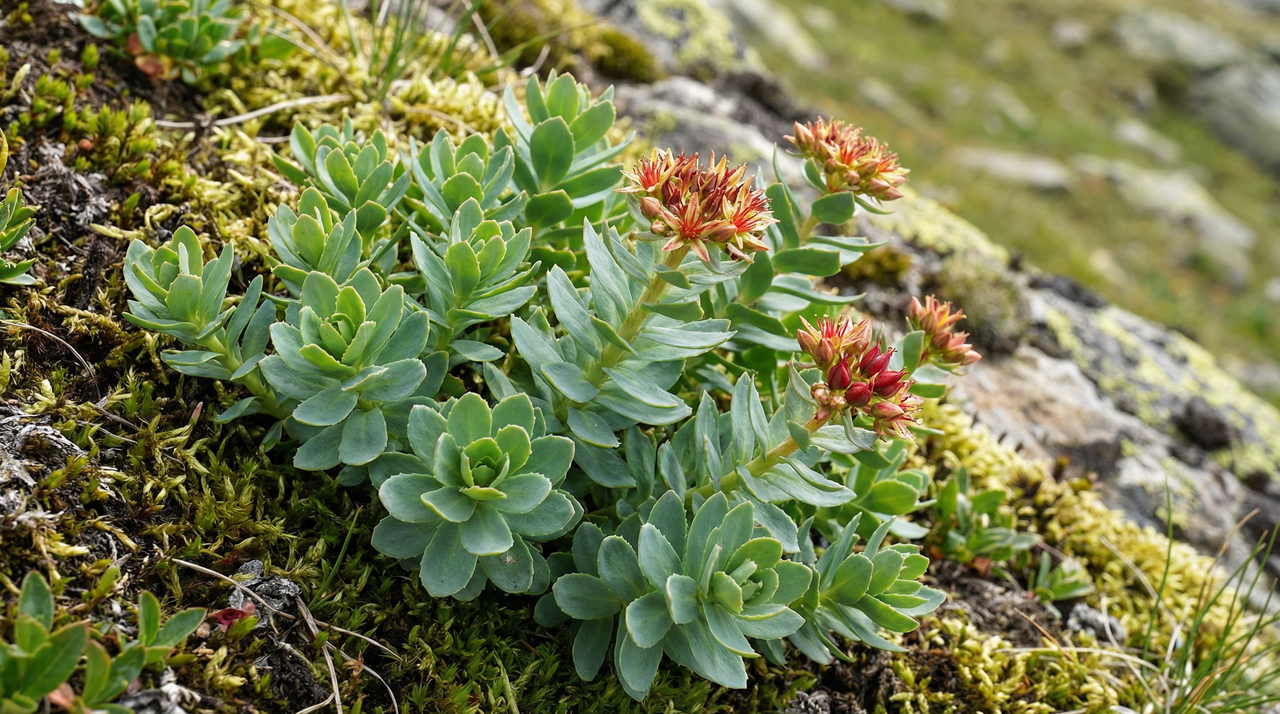
There's a particular kind of plant that makes you stop and reconsider what "thriving" actually means. Roseroot (Rhodiola rosea) is one of them. A perennial herbaceous succulent in the Crassulaceae family, it calls home the circumpolar arctic, subarctic, and alpine zones of Europe, Asia, and North America, from the European Alps to the Himalayas to Alaska, growing wild wherever most cultivated plants would simply give up.[1][2][3]
Botanical Characteristics and Native Habitat
Rocky screes, tundra slopes, cliff ledges at elevations up to 4,300 meters. That's where rhodiola rosea is genuinely at home, in nutrient-poor, well-drained soils at a pH of 5.5-7.5, under the cold, dry conditions of a subarctic Dfc climate.[2][4] It's frost-hardy to -40°C, drought-tolerant, and capable of spreading vegetatively through creeping rhizomes even when conditions rule out seed set.[4] Every one of those traits is a direct answer to the environment it evolved in.
What really impresses me as a designer is the longevity. Roseroot is polycarpic, flowering and seeding repeatedly over a lifespan that can stretch 30-50 years in wild alpine populations, though it doesn't even reach reproductive maturity until 4-6 years from seed.[1][4] That slow, patient growth strategy is part of what makes it such a compelling addition to rocky edges in cool-climate permaculture designs; it's not here for a quick season. It's here to stay.
Visual Features: Succulent Leaves and Rose-Scented Roots
In the garden, roseroot forms compact clumps typically 15-30 cm tall and 20-30 cm wide, though I've seen established plants stretch considerably taller in sheltered spots with just a bit more moisture.[5] The stems are erect, often flushed reddish, and arise from thick, scaly rhizomes. The leaves are fleshy, bluish-green to grey-green, and packed close together in a way that immediately reads "Crassulaceae" to anyone who grows sedums.[6][7] Flowers are small, yellowish-green to pinkish or purplish, clustered in dense terminal heads.[8] Compact, tough, architectural in a quiet way.
Then there's the rhizome. The cut root emits a signature fragrance that immediately explains why this plant is called roseroot. It's unmistakable: pungent, rosy, almost medicinal in a good way. That fragrance comes from the same phenolic compounds that made the roots so prized across cultures for millennia, and it's as reliable an identification trait as anything visual.[6]
Ancient Traditional Uses Across Cultures
What strikes me about rhodiola's human history is how independently different cultures arrived at the same conclusions. The earliest written records appear in Chinese texts including the Shen Nong Ben Cao Jing from the 1st-2nd century AD, where it's called 'hóng jīng tiān' and used to boost qi, combat fatigue, and support respiration at altitude.[9] Tibetan medicine, recorded in the 8th-century Four Tantras, prescribed it for similar reasons in the Himalayas. Siberian and Mongolian folk healers used it to build physical endurance and mental stamina over more than 1,700 years. The Sami people of Scandinavia knew it too, for much the same purposes.[10][11]
When you understand where this plant lives, those traditional uses make a kind of ecological sense. High altitude, cold stress, short seasons, scarce resources: the pressures rhodiola endures in the wild are the same pressures the humans who used it were trying to cope with. They recognized something real, long before the clinical literature caught up. Roseroot was wild-harvested from remote mountain regions for most of its documented history, and overharvesting eventually forced a shift toward deliberate cultivation beginning in the 1960s and 70s in Russia and Scandinavia.[12][13]
Roseroot Fun Facts and Ecological Role
Slow growth of roughly 5-10 cm per year means medicinal roots aren't ready for harvest until the plant is at least 4-6 years old.[4] I learned this the hard way growing it from seed in a cool microclimate; year three looked promising, and year five was when it finally felt substantial enough to do anything with. Division from established clumps is the practical answer for most gardeners.
In its native alpine habitat, roseroot does genuine ecological work: its fibrous roots bind loose rocky soils and reduce erosion, and its flowers feed pollinators during the short northern season.[14] Across its wide range, the plant shows significant regional variation in the concentration of its key bioactive compounds, though no formally recognized subspecies exist.[15] Globally it's listed as Least Concern by the IUCN, but I've followed reports of local population declines from wild harvesting pressure, particularly in more accessible alpine zones.[16] That's why I only ever source nursery-grown stock and would encourage anyone interested in growing it to do the same. The best way to protect what's left in the wild is to cultivate it ourselves.
Roseroot Varieties and Where to Buy Rhodiola rosea
Notable Strains and Ecotypes of Rhodiola rosea
If you go looking for roseroot at a garden center, you won't find a rack of colorful cultivar tags. Rhodiola rosea is still predominantly a wild-harvested plant, and most commercial material consists of regional ecotypes selected from wild sources in Siberia, the Altai Mountains, and the circumpolar Arctic rather than purpose-bred garden varieties.[17][18] Where the plant comes from matters because geography directly shapes its rosavin and salidroside profile, those same compounds that drive the adaptogenic benefits covered in the health section of this article.
Breeding programs in Canada, Scandinavia, and Alaska have produced selections from European and Asian wild stocks, chosen for higher rosavin content, disease resistance, and high-altitude adaptation.[17] The SHR-5 strain, a Siberian selection, is the one most frequently cited in clinical research on arctic root rhodiola. You'll also encounter trade names like "Altai Rose," and occasional selections labeled "Compacta" from pharmaceutical breeding lines, but there's no standardized international cultivar registry, so naming is loose and inconsistent.[17] In my own trial beds I've noticed real differences in vigor between Alaskan-origin stock and Siberian seed lots, which tells me ecotype selection is worth paying attention to even at the home-garden scale.
Overharvesting in native ranges is a genuine conservation concern, and cultivated strains are an important buffer against that pressure.[17] I strongly recommend sourcing from specialized nurseries to ensure genetic consistency.
Sourcing Roseroot Seeds and Plants
Think of sourcing roseroot the way you'd think about sourcing ginseng or goldenseal: you're looking at a small network of specialized medicinal herb nurseries rather than anything at a big-box store. There are no large-scale commercial nurseries dedicated exclusively to this plant, and availability reflects that niche reality.[19][20] The three suppliers I've ordered from for North American growers are Strictly Medicinal Seeds in Oregon, Horizon Herbs also in Oregon, and Richters Herbs in Canada, which ships to the US.[19][20][21]
Seed dominates the market for a practical reason: because roseroot stonecrop takes three to five years to reach harvestable size, mature plants are expensive to produce and rarely available.[19] Seed packets typically run three to ten dollars depending on the supplier and whether the seed is organically certified. I've ordered from both Strictly Medicinal and Horizon Herbs multiple times, and my honest advice is to start more trays than you think you need; germination can be erratic even with fresh seed, and that extra insurance saves a lot of frustration. The propagation section of this article covers stratification and germination in detail.
Spring is when stock is highest and when you want to be planting anyway, so check supplier inventories in late winter and verify current availability directly. Offerings change frequently, and some years a supplier will be sold out by March. Supporting these cultivated sources isn't just a convenience choice; it's the responsible one, given the pressure wild western roseroot and arctic roseroot populations are already facing from supplement demand.
Propagating and Planting Roseroot (Rhodiola rosea)
Roseroot doesn't make propagation easy. It rewards patience, respects careful hands, and punishes impatience in ways I've learned the hard way. If you're approaching this plant for the first time, knowing which method fits your goals before you start will save you a lot of frustration.
Seed Morphology and Orthodox Storage
Roseroot seeds are genuinely tiny, somewhere between 0.5 and 2.0 mm long, light brown, oblong or ovoid, with no wings or papery appendages to aid dispersal.[22][23] Each seed produces a single embryo, which is standard for the Crassulaceae family.[24] They're monoembryonic, so you get one shot per seed.
Roseroot has what seed conservationists call orthodox storage behavior. Dry seeds down to 3-5% moisture, seal them hermetically, and store at 3-5°C for medium-term use or at -18°C for long-term banking, and viable seed can last a decade or more.[25][26] I've kept properly dried roseroot seeds in sealed foil packets in my refrigerator across several seasons and found them still viable. That said, I always test a small batch first because even well-stored seed from a reputable source can be fickle. Germination remains erratic, something I've accepted after repeated cycles.
Part of that unreliability comes down to genetics. Roseroot is dioecious and outcrossing, which means seeds carry high heterozygosity and offspring may not resemble the parent plant in form or medicinal compound profile.[27][28] For growers who care about consistent rosavin and salidroside levels, that variability matters.
Propagation Methods: Division, Cuttings, Seeds, and Tissue Culture
For most home gardeners, rhizome division provides the most reliable timeline. Done in early spring or fall, with each piece carrying 2-3 buds, success rates sit around 90%.[29][30] I've divided established clumps this way for years. The key lesson I absorbed after losing an entire batch early on: roseroot is extremely sensitive to root disturbance, and even brief drying of the cut surfaces causes mortality.[31][32] Now I work quickly, keep divisions wrapped in damp cloth, and drop them straight into gritty mix without fussing. That shift alone transformed my results. Division also maintains genetic uniformity, so the medicinal quality of the parent plant carries through.[33]
Stem and root cuttings are viable if you don't have established plants to divide. Semi-hardwood stem cuttings taken in midsummer (10-15 cm, non-flowering, partially lignified) treated with IBA rooting hormone at 1000-3000 ppm achieve 60-80% success when rooted in a well-drained mix under 70-80% humidity at 15-20°C over 4-8 weeks.[34][35] Root cuttings from plants at least three years old work similarly with the same hormone treatment. At commercial scale, tissue culture using shoot-tip explants on Murashige and Skoog medium with BAP and NAA pushes success above 95% for mass clonal propagation,[36] but that's a greenhouse laboratory operation, not something most of us will run at home.
Seed remains the most common commercial route, but it demands respect. Cold stratification is non-negotiable: 4-8 weeks of moist chilling at 1-5°C before sowing at 15-20°C (ideal around 18°C), with germination taking another 2-4 weeks in light. Even with precise conditions, expect germination rates of 20-70% and erratic results.[37][38] I sow more than I need and consider any germination above 50% a good season.
Soil, Site Selection, and Planting Technique
Roseroot evolved on arctic scree slopes and rocky alpine outcrops, and it wants you to remember that. Gritty, sandy, or gravelly soil with low organic matter (around 2-4%) is the target.[30][39] Drainage isn't a preference; it's survival. I've learned this contrast sharply comparing roseroot to other Crassulaceae like sedums, which forgive a soggy afternoon without complaint. Roseroot does not. In my zone 9B trials I raise containers on feet and amend beds heavily with coarse gravel specifically to replicate that alpine lean.
Soil pH should sit between 5.5 and 7.5, with the sweet spot at 6.0-7.0.[6][40] I test to 6.5 and then deliberately hold back on compost, watching instead for compact rosettes and the reddish stem coloring that tells me the plant is concentrating its chemistry rather than wasting energy on lush vegetative growth. Rich organic amendments push soft, watery tissue that rots readily and likely dilutes the adaptogenic compounds the roots are prized for. Lean soil is not neglect here; it's strategy.
Germination Timeline, Spacing, and Maturity
This is where the long game begins. From seed, roseroot takes 3-5 years to develop a rhizome worth harvesting, and in slower conditions it can stretch to seven.[41][10] Vegetative starts shave meaningful time off that wait, which is why I now prioritize division over seed in my own beds. After several cycles, I also share divisions with local growers rather than anyone reaching for increasingly pressured wild populations to supply their gardens.
Transplant seedlings or divisions in spring after the last frost date, once the soil has reached at least 10°C and plants carry 2-4 true leaves.[42] Space plants 30-45 cm apart within rows and 40-60 cm between rows, targeting around 30,000-50,000 plants per hectare at field scale.[42][43] In the propagation stage, keep conditions controlled: 15-20°C, 70-80% humidity, and a mix of roughly equal parts perlite and peat or peat, coarse sand, and loam.[34] Skip the fertilizer entirely. Label your divisions clearly and check new plantings weekly in the first season for any crown softness that signals rot before it spreads.
Roseroot Care Guide: Growing Rhodiola rosea
The most important thing I've learned about growing roseroot is that your instinct to nurture will work against you. This plant evolved on rocky, wind-blasted slopes at altitude, where soils are thin, nutrients are scarce, and the growing season is brutal. Every time I've seen someone lose a plant, it wasn't from neglect. It was from too much love: too much water, too much fertilizer, too much organic mulch. Get that mindset right first, and the rest follows naturally.
Sunlight Requirements
Roseroot is a full-sun plant at heart, happiest in the high light levels it experiences in its native alpine habitat.[44][45] In cooler zones, give it as much direct sun as you can. In warmer parts of its range, some afternoon shade will prevent leaf scorch and, crucially, help maintain the cooler root zone temperatures where those adaptogenic compounds concentrate. Think of shade in warmer gardens not as a compromise but as part of replicating mountain summer conditions.
Water Needs and Drought Tolerance
Drainage is the non-negotiable. I've grown roseroot from seed, and those seedlings looked almost embarrassingly fragile in their first weeks, but the moment the rhizomes developed, the plants became nearly indestructible. What surprised me early on was how quickly a wet patch could undo all of that toughness. This alpine succulent needs gritty, well-drained soil, and the top inch should dry out between waterings during the growing season.[6][46][47] Once established, it handles drought impressively through reduced transpiration and internal osmoprotectant accumulation.[48]
Overwatering is how most gardeners lose this plant. Yellow leaves, wilting despite wet soil, and a mushy crown are all warning signs that Fusarium or Pythium have moved in.[48][6] Frequency shifts with the plant's stage: seedlings need moisture every two to three days, established vegetative plants every five to seven, and flowering plants every seven to ten.[49][46] Soil pH should stay between 5.5 and 7.0; above 7.5 or in waterlogged conditions, the plant simply declines.[49] In winter, stop watering almost entirely and let the dormant rhizomes stay dry.
Feeding and Soil Fertility
Roseroot is adapted to nutrient-poor, rocky alpine soils, and it genuinely prefers them.[6][50] Sandy loam with 2 to 5 percent organic matter is the target, and if your soil is richer than that, the plant will grow leafier but the roots you're waiting years to harvest will be less potent. I've harvested roots from lean soils and from beds that were a little too generously amended, and the difference in that distinctive rose-rose scent is noticeable. The leaner roots just smell more alive.
The research confirms what your nose might tell you: excess nitrogen drives down salidroside and rosavin levels, causes leggy growth, and increases disease susceptibility.[51][52] Get a soil test before planting and aim for nitrogen below 50 ppm, phosphorus between 20 and 40 ppm, and potassium between 100 and 150 ppm.[51][52][53] If you do need to feed, a small application of balanced slow-release organic compost once in early spring is usually plenty. A second light application in late summer is only warranted if a soil test confirms a deficiency.[6][54] Restraint here directly protects the medicinal value you're growing for.
Frost Tolerance and Winter Care
Cold hardiness is where roseroot genuinely earns its reputation. Hardy to USDA zones 2 through 7 and rated RHS H7, it tolerates temperatures down to -40°F (-40°C).[55][56][57] The thickened rhizomes are the overwintering powerhouse here; even when new growth or flower buds get caught by a late frost and die back, those underground structures survive and push fresh growth the following spring.[58][55] My established plants have come through zone-edge cold snaps without any special intervention, and I credit good drainage and a light gravel mulch rather than anything I did actively. Skip the thick organic mulch; it holds moisture against the crown through winter and creates exactly the conditions that invite rot.[58] Sand, grit, or fine gravel around the crown is all the protection a well-sited plant needs.
Heat Tolerance and Climate Considerations
If frost is roseroot's superpower, heat is its kryptonite. Native to elevations between 1,000 and 3,000 meters in Arctic and mountainous regions, it wants daytime temperatures of 10 to 20°C and cool nights.[6][59] Rated for AHS Heat Zones 1 to 4, it begins showing stress above 25 to 30°C, with wilting, yellowing, and leaf scorch appearing before the more serious problem: declining salidroside and rosavin content in the roots.[6][60] Hot and humid summers are genuinely a dealbreaker, much like they are for other cool-season perennials I grow in rock garden settings.
In warmer gardens, 30 to 50 percent shade cloth during the hottest weeks, combined with consistent drip irrigation of around 20 to 30 mm weekly, can keep the plant functioning reasonably well.[60][61] Seedlings are most vulnerable above 28°C, so time your plantings accordingly.[60] If you're gardening in zone 7 or pushing the southern edge of its range, choose the coolest, most sheltered north-facing or east-facing microclimate you have. The plant essentially wants a mountain summer, and no amount of compensating can fully substitute for that if you're in the humid Southeast.
Pruning, Maintenance, and Seasonal Rhythm
Roseroot's seasonal pattern is straightforward and deeply satisfying for patient growers. Flowering runs from late May through August, peaking in June and July, followed by seed dispersal from July into September.[56][62] Deadhead spent flowers to encourage additional blooms, and beyond that, keep your hands mostly to yourself. Roseroot is a mat-forming, compact plant that doesn't want heavy pruning.[63][6] Dividing clumps every two to three years in early spring keeps plants vigorous and gives you propagation material to expand your planting ethically, which matters because wild populations are under serious pressure from overcollection.[63][6] Dividing your own cultivated clumps every few years is the most sustainable way to expand a planting.
The whole enterprise builds toward fall, when the leaves senesce and roots harvested after three to five years reach peak medicinal potency.[64][65] That timeline feels long, but growing rhodiola rosea is fundamentally a long game. The plants enter dormancy cleanly each autumn with aboveground parts dying back completely, nutrient demands drop to nearly nothing, and the rhizomes quietly build toward the harvest you've been waiting for. Resist the urge to intervene during dormancy. That patience, more than any other input, is what good care actually looks like with this plant.
Harvesting Roseroot (Rhodiola rosea)
When to Harvest Roseroot Roots for Maximum Potency
Roseroot runs on a reliable seasonal clock. It flowers somewhere between May and July depending on your climate, and from that point you're counting roughly 90 to 120 days before the roots hit peak potency.[66][67][68] That puts the harvest window in late summer to early fall, August through October, when the plant is pulling energy underground and the aerial parts begin to yellow and die back. Don't rush it. Harvesting too soon after flowering reduces both root biomass and the concentration of salidroside and rosavins you've been waiting years to accumulate.[66][69] I've learned this the hard way: even harvesting two or three weeks early produces noticeably smaller, less firm roots with a weaker characteristic bitterness. The full dormancy window is worth the patience.
Before you dig, look for the right maturity cues. You want foliage that's yellowing, no green tissue left in the crown, and at least three to five leaf pairs having completed their season.[70] When roots are ready they'll be firm and plump, ranging from 1 to 3 cm in diameter, with a yellowish interior when cut and that thin papery outer skin that peels away easily.[70] A soft or watery root is a sign you're either early or dealing with drainage issues. When it's right, you'll know. A firm, dense root that gives a clean snap or cut is exactly what you're after.
For sustainable home harvests, I never lift an entire clump. I take a portion of a mature division and replant the rest. It keeps the plant going, extends the productive life of your planting, and mirrors the responsible practice that wild populations desperately need given the pressure from supplement demand.
Root Characteristics, Flavor Profile, and Yield
The moment a mature roseroot comes out of the ground, you'll smell it before you see it clearly. There's this unmistakable rose-like fragrance that rises from the soil as you lift the root, driven by volatiles including geraniol, citronellol, and phenylethyl alcohol.[71][72] It's genuinely surprising the first time. The roots themselves are cylindrical, branched, sometimes twisted, with a rough brownish-gray exterior that gives way to a firm yellowish interior.[2][73] Individual roots from well-established plants typically weigh 5 to 20 grams each.[70]
The floral aroma is the easy part. The taste is something else entirely: intensely bitter and astringent, with a lingering spicy, acrid warmth that catches in the back of the throat.[1][74] If you've grown valerian or gentian root, you have a rough frame of reference, but roseroot's spicy, almost acrid finish is its own thing. That bitterness is the rosavins and salidroside doing their job, and it's why most people dry and tincture these roots rather than chewing on them raw.[75][76] Plant age, harvest timing, and how you dry them all shift those flavors: autumn-harvested roots peak in phenolics and astringency, while shade drying preserves the aromatic volatiles that heat processing tends to cook off.[77][69] For most home growers, thin slices dried in the shade, then tinctured or decocted, is the most practical path from root to remedy.
Roseroot (Rhodiola rosea) Preparation, Uses, and Safety
Culinary and Traditional Preparations
The roots and rhizomes are where almost all the action is, both as a medicinal and as a would-be culinary ingredient.[78][79] I say "would-be" because anyone who's snapped off a piece of fresh roseroot and chewed it quickly discovers why no one is throwing it in a salad. The flavor is intensely bitter and astringent, though with that genuinely lovely rose-like aroma underneath, a paradox that comes from the same salidroside and rosavin compounds responsible for its adaptogenic reputation.[80] Water extractions mellow the bitterness somewhat; a tincture amplifies it. I've found roots harvested from my drier, sunnier beds are noticeably more pungent than those grown with slightly more moisture, which makes sense given how stress concentrates secondary metabolites.
Traditional preparations lean into that bitterness rather than fighting it. A decoction, simmering one to two grams of dried root in water for ten to fifteen minutes, gives better extraction of active compounds than a simple infusion and produces a tea that's medicinal rather than pleasant.[81] Tinctures follow a 1:5 root-to-alcohol ratio at 40 to 60% ethanol, macerated for two to four weeks.[81] Because look-alike species exist, it is critical to note that true Rhodiola leaves release a distinctly rosy scent that Sedum species lack; Rhodiola's upright stems reaching up to 60 cm and its serrated leaf margins also distinguish it, since most Sedum species are lower-growing with smooth-edged leaves.[5][82]
On wild harvesting: I now use exclusively cultivated or responsibly sourced roseroot, and I'd encourage you to do the same. Alpine populations are genuinely under pressure from supplement demand, and guidelines limiting harvest to no more than 10 to 20% of any population, only from plants over five years old, only from abundant stands, don't mean much if commercial-scale collection is happening alongside casual foragers.[83][84] On US Forest Service land, digging roots in alpine zones without authorization is prohibited outright.[84][83] Grow your own. It's not a fast path, but it's the right one.
Safety is non-negotiable here. Rhodiola is well-tolerated for most adults at appropriate doses for up to twelve weeks, with mild side effects like dizziness or dry mouth occasionally reported.[85][86] If you take SSRIs, MAOIs, or blood pressure medications, or if you have bipolar disorder, an autoimmune condition, or certain heart conditions, Rhodiola is not for you. The research on serotonergic interactions and CYP3A4 activity is clear enough that I won't soften that.[85][87] Pregnancy and breastfeeding are also firm contraindications.[85]
Medicinal Dosages and Formulations
The rhodiola root supplement market offers standardized extracts as the most bioavailable option, typically 200 to 600 mg per day in one or two doses, standardized to 3% rosavins and 1% salidroside.[88][89] A home rhodiola extract via tincture runs 2 to 5 ml once or twice daily; decoctions using one to two grams of dried root deliver lower bioavailability but remain a time-honored option.[88] Systematic reviews support doses up to 680 mg daily for short-term use without major toxicity concerns.[86] My personal rule with any adaptogen is to start at the low end of the range and give it two to three weeks before drawing conclusions. Consulting a healthcare provider before starting is genuinely practical advice, not legal boilerplate, especially given the interactions covered above.
Non-Food and Ornamental Uses
Beyond medicine, roseroot earns its place in a garden on looks alone. Those blue-green succulent rosettes and clusters of golden-yellow star-shaped flowers blooming May through July have earned it an RHS Award of Garden Merit, and for good reason: it's drought-tolerant once established, asks for zero fertilizer or pesticides, and reliably attracts pollinators without any fuss from the gardener.[90][91] In a rock garden or scree-style permaculture edge it's genuinely one of the lowest-input plants I grow.
The young spring shoots are also edible, raw or cooked, with a crisp texture and mild sourness reminiscent of rhubarb.[92] I think of them like a less-tart wood sorrel: a small seasonal treat, pleasant in a spring salad, not something you'd build a meal around. Harvest them early before the stems harden, and you'll have one more reason to appreciate a plant that's already doing a lot of ecological and medicinal work in a very compact footprint.
Roseroot Health Benefits and Medicinal Uses
What I find compelling about roseroot isn't just that it has a long folk reputation in Siberia and Scandinavia for beating fatigue and sharpening the mind under pressure. It's that the research has actually caught up with the tradition in meaningful ways. Multiple systematic reviews and meta-analyses now support Rhodiola rosea as a genuine adaptogen, with its strongest documented effects on reducing fatigue and improving cognitive performance specifically under stressful conditions.[93][94][95] The caveat is real: many of those studies are small, and the methodological quality varies. Larger, better-controlled trials are still needed. I tell people that upfront, because the evidence is genuinely promising without being a slam dunk.
Adaptogenic Benefits: Reducing Fatigue and Enhancing Performance Under Stress
The mechanism behind roseroot's adaptogenic effects is more specific than "it's a tonic herb." It works in part by inhibiting monoamine oxidase, which keeps levels of serotonin, dopamine, and norepinephrine elevated, and it also upregulates brain-derived neurotrophic factor (BDNF), supporting neuroprotection.[96][97] The anti-inflammatory activity runs through NF-κB pathway suppression, while antioxidant effects involve Nrf2 activation.[98][96] Preclinical data also hint at cardioprotective and even anti-cancer potential,[99] but those findings are largely in cell and animal models. I'd compare it to how early ashwagandha research looked before the human trials caught up: intriguing, not definitive.
Standardized extracts are typically formulated to 3% rosavins and 1% salidroside, with clinical trials commonly using 200-600 mg daily in one or two doses.[100][95][101] Both the WHO and the European Medicines Agency recognize its traditional use for mental and physical fatigue, with the EMA going further to approve it for temporary stress symptom relief.[102][100][103] That's not nothing. When a regulatory body puts its name on a traditional use claim, it signals a meaningful threshold of evidence and safety review. Short-term use at recommended doses is generally well-tolerated, with only occasional mild side effects like dizziness or dry mouth.[101]
Key Phytochemicals in Roseroot: Rosavins, Salidroside, and More
The root and rhizome are where all the action is, chemically speaking. Rhodiola rosea contains over 140 identified compounds,[10][104] but the ones that matter most for standardization are the rosavins (rosavin, rosarin, rosin) at around 3% and salidroside at roughly 1%.[105] Rosavins are unique to this species, which is exactly why they're used as the quality marker that distinguishes genuine Rhodiola rosea from related species. Salidroside, meanwhile, drives much of the antioxidant and neuroprotective activity, and also inhibits MAO.[96][106] The flavonoids, including luteolin and quercetin, contribute anti-inflammatory effects through NF-κB suppression.[106]
The concentration of these compounds isn't fixed. Plants from higher altitudes, typically between 1,500 and 2,500 meters, and those subjected to cold stress produce measurably higher levels of rosavins and salidroside.[96][107][60] I've noticed a similar pattern with other medicinals I grow: calendula producing richer resins in lean soil, elderberries concentrating more anthocyanins after a cold snap. Stress pushes chemistry. When you bruise a root from a high-elevation source and that rose scent hits you, you're smelling a plant that has been working hard to protect itself. Harvest timing matters too, with peak compound levels in July and August.[107]
Nutritional Profile of Roseroot Root
The root is primarily consumed as tea or extract rather than as a food ingredient, which reflects both its traditional Arctic use and its intensely bitter taste.[108][10] Dried root runs roughly 250-300 kcal per 100g with a respectable 8-12g of protein and 15-25g of fiber,[108] but nobody is eating roseroot by the hundred grams. The mineral numbers per 100g of dried root are striking:
- Potassium: 14,200 mg
- Iron: 86.5 mg
- Calcium: 3,995 mg
- Magnesium: 1,350 mg
Safety Profile and Potential Side Effects
Roseroot has low toxicity, with animal studies showing an LD50 above 3,000 mg/kg, and no documented cases of severe poisoning at normal doses.[110][85] Short-term use up to 12 weeks at 200-600 mg daily of a standardized extract is generally considered safe for healthy adults.[10] Mild side effects like dizziness, dry mouth, headache, or insomnia appear in fewer than 10% of users and tend to cluster at doses above 600 mg.[111]
The physical contraindications require strict adherence. Roseroot is contraindicated in pregnancy, breastfeeding, and anyone under 18, and it should not be used in bipolar disorder because its stimulant-like effects carry a real mania risk.[112][111] The drug interaction list deserves direct attention: there is a documented case of serotonin syndrome when roseroot was combined with paroxetine, and the theoretical risk extends to all SSRIs, SNRIs, and MAOIs.[85][113] If you're on any antidepressant medication, do not combine roseroot without your doctor's direct input. I treat that as non-negotiable rather than boilerplate caution. Beyond antidepressants, it inhibits CYP2C9 and CYP3A4 enzymes, which means interactions are possible with warfarin, statins, thyroid hormones, and blood pressure medications.[113][85] Rare allergic reactions and contact dermatitis have also been reported, particularly in people sensitive to other Crassulaceae plants.[114] In my own cautious practice, I always recommend starting at the low end of 200 mg and paying attention to how your body responds before going higher. No toxic look-alikes are commonly reported, and other Rhodiola and Sedum species are generally non-toxic, but the rose-scented root is your best sensory confirmation you've got the right plant.[5]
Roseroot Pests and Diseases
Natural Defenses That Protect Roseroot
Roseroot is genuinely easier to grow clean than most medicinal perennials I've worked with, and the reason comes down to chemistry. Those rosavins and salidroside that make the roots medicinally valuable also function as feeding deterrents with documented insecticidal properties against herbivores.[115] When you brush against roseroot in the garden, that faint sharp-rose scent that rises from the foliage is one of those defenses at work, and I've noticed it correlates with noticeably lower aphid pressure than I'd expect in the same bed. Beyond the chemistry, the plant backs it up physically: glandular trichomes secrete sticky, toxic resins that trap small insects, and a thick waxy cuticle reduces palatability and makes it hard for pests to get a foothold.[116][117] Mycorrhizal partnerships add another layer, priming systemic defenses and triggering jasmonic acid signaling pathways that ramp up volatile emissions when damage occurs.[118] Compared with Echinacea or ginseng, which I've had to babysit through aphid seasons and fungal flare-ups, roseroot holds its own remarkably well.[119]
That said, these defenses are calibrated for arctic and alpine conditions where insect pressure is inherently low.[120][17] Move the plant into a warmer, humid garden and you can expect the following to eventually find it:
- Aphids
- Spider mites
- Root-feeding weevils
- Leaf beetles
- Thrips
- Slugs
- Root maggots
Common Pests and Diseases in Cultivation
Root rot is the real threat, full stop. The same succulent tissues that concentrate adaptogenic compounds become a liability the moment drainage fails; Phytophthora, Fusarium, Pythium, and Rhizoctonia will move in fast under waterlogged conditions and take a plant down to wilted collapse with little warning.[120][17][123] I think of it the way I think about lavender or rosemary in heavy clay: the plant isn't weak, the drainage is wrong. Get that right and the disease picture changes completely. In well-drained sandy soil I've grown roseroot for years without a single rot problem.
Foliar diseases are secondary concerns. Powdery mildew, leaf spot from Alternaria or Septoria, gray mold, and Verticillium wilt can appear in humid conditions or dense plantings, while rust diseases tend to bother it very little, especially in plants sourced from wild northern populations.[120][17][124][121] Bacterial issues are uncommon and mostly show up on already-damaged or stressed roots; no major viral diseases have been widely reported.[120]
Prevention and Integrated Management Strategies
Most of the management here is cultural rather than interventionist. Sharp drainage (raised beds or sandy loam), adequate spacing to keep air moving, crop rotation, and a light mulch cover handle the bulk of what could go wrong.[120][47][17] For actual pest pressure, I lean on predatory insects and nematodes first, then neem oil or insecticidal soap if something like aphids escalates.[125] I avoid broad-spectrum sprays on any plant I intend to use medicinally; neem at the first sign of trouble has always been sufficient and keeps the rosavins intact. Applying a systemic pesticide to a root you plan to tincture defeats the whole point of growing your own.
Rhodiola rosea in Permaculture Design
Most of the permaculture plants I work with have some flexibility built in. They'll tolerate a bit of shade, adapt to heavier soils, forgive you for a wet spring. Roseroot is not that plant. Its entire existence is a negotiation with extremes, and the moment you forget that, it lets you know. Getting it right in a designed system starts with a single honest question: does your climate actually resemble a rocky Arctic slope?
Climate Suitability and Growing Zones
Rhodiola rosea is rated for USDA zones 2-7, and it will survive across that range, but thriving is another matter. The sweet spot is zones 2-5, where cool summers and hard winters mirror the subarctic and alpine conditions where this plant evolved its dense complement of rosavins and salidroside.[2][126][30] It handles winter temperatures down to -40°F without blinking, but high humidity and persistent summer heat are a different story entirely. I learned this firsthand when I trialed it in a zone 8 bed a few years back, thinking good drainage would compensate. It rotted. The plants were sulky long before that, sitting flat and pale all summer before finally giving up. Now I won't even consider placing it without asking whether the site gets genuine cool nights and dry air.
Optimal vegetative growth happens at daytime temperatures of 10-20°C with nights dropping to 5-10°C, in full sun with sharply drained rocky or gravelly soils.[127][126] In zones 6-7, the workaround is elevated, well-ventilated raised beds built with a gritty substrate and some summer shade cloth during the hottest weeks. It's doable, but it's managing against the plant's instincts rather than working with them. If you're in the northern Rockies, Alaska, or the Pacific Northwest at elevation, on the other hand, roseroot will behave as if it owns the place.
Ecosystem Functions and Guild Roles
In its native range, roseroot functions as a pioneer species on ground that most plants won't even attempt. Its dense fibrous root system locks into rocky slopes and stabilizes soil against erosion while contributing to carbon sequestration and broader ecosystem resilience.[128][129] That's a genuinely useful function in cold-climate permaculture, particularly on exposed banks or rocky embankments where you'd otherwise be fighting erosion with infrastructure instead of roots.
It handles nutrient-poor soils not by demanding fertility but by partnering with arbuscular mycorrhizal fungi, particularly Glomeromycota, that pull phosphorus and other minerals from substrate that would starve most garden plants.[2][130] It also accumulates zinc and iron, influencing soil chemistry and cycling minerals back through the system.[131] Its secondary metabolites, including the same rosavins and salidroside that make it medicinally valuable, double as chemical defenses against herbivores and insect pressure.[132]
The pollinator contribution is real but different from what you'd see on mints or yarrows. When I sit and watch roseroot in flower, it's flies and hoverflies doing most of the work, not bees. That tracks with the research: in alpine environments, Diptera are the primary visitors to its small star-shaped yellow-green to reddish flowers, with bumblebees and occasional butterflies rounding things out.[133][134] In a cold-climate polyculture where dipteran pollinators are often overlooked, that's a meaningful niche to fill. Its low mat-forming habit also creates cover and microhabitat for small insects and ground-dwelling organisms, while suppressing weed establishment across the season.[135][136]
Forest Layer and Companion Planting
Roseroot belongs in the herbaceous or groundcover layer. Full stop. It's a compact succulent perennial in the Crassulaceae family, typically 15-30 cm tall with fleshy rhizomatous roots and a low clumping habit,[6] and it has zero interest in performing under a canopy. Its native habitat is open rocky slopes, screes, alpine meadows, and coastal cliffs at elevations up to 2,500 meters across the Northern Hemisphere.[137][6] I tried it on a lightly shaded woodland edge once, reasoning the canopy was open enough. The plants just sat there, barely growing, looking thoroughly unimpressed. The lesson was simple: if the site doesn't feel like a windy mountain scree, it probably won't thrive.
In a permaculture design, think rock gardens, alpine troughs, the sunny outer edges of guilds, or steep south-facing banks where you want both medicinal value and erosion control without irrigation.[6][138] Good companions share its requirements: think yarrow, thyme, sedum relatives, hyssop, or cold-hardy saxifrages. Plants that need rich, moist, humus-heavy soil will compete poorly anyway in the gritty, lean mix that roseroot demands, so the planting naturally self-selects for appropriate community members. Rhizome division in early spring is my preferred way to establish new plants; germination from seed is notoriously unreliable, and dividing from known-quality stock also means you're propagating plants with a proven phytochemical profile rather than gambling on seedling variation.[6][85] Give it what it was built for, and it'll look after itself for decades.
The Root That Smells Like a Promise
The first time I split a roseroot crown and caught that unexpected rose scent rising up from the soil, I laughed out loud. Nothing about this plant looks soft or sweet; it looks like something that survived a glacier. That smell felt like a secret it was finally willing to share. I've since given divisions to gardeners in northern Ontario and Vermont who'd given up on medicinals for their sites, and every single one of them has sent me the same message: it's doing fine. Better than fine, actually.
Sources 138
- Rhodiola rosea - Wikipedia ↩
- Rhodiola rosea in the USDA PLANTS Database ↩
- Kew Science - Plants of the World Online - Rhodiola rosea ↩
- Ecological Adaptations of Rhodiola rosea in Alpine Environments - Journal of Ecology ↩
- Plant Profile: Rhodiola rosea ↩
- Rhodiola rosea ↩
- Rhodiola rosea ↩
- Rhodiola rosea ↩
- Rhodiola rosea L.: an Herb with Anti-Stress, Anti-Aging, and Immunostimulating Properties for Cancer Chemoprevention ↩
- Rhodiola rosea L.: an herb with anti-stress, anti-aging, and immunostimulating properties for cancer chemoprevention ↩
- Ethnobotany of the Sami People: Rhodiola rosea in Arctic Traditions ↩
- Rhodiola: Adaptogen for Vitality and Stress Resistance ↩
- Historical and Pharmacological Aspects of the Use of Rhodiola rosea and Rhodiola crenulata ↩
- Ecological Roles of Alpine Plants ↩
- Chemical and genetic diversity of traditional medicinal plant Rhodiola rosea ↩
- The IUCN Red List of Threatened Species: Rhodiola rosea ↩
- Cultivation of Rhodiola rosea: A Review ↩
- Commercial Strains of Rhodiola rosea ↩
- Rhodiola Rosea Seeds ↩
- Rhodiola rosea ↩
- Rhodiola rosea ↩
- Seed Morphology and Germination of Rhodiola rosea ↩
- Rhodiola rosea: Botanical and Agronomic Characteristics ↩
- Seed Structure and Development in Crassulaceae ↩
- Seed Storage of Medicinal Plants ↩
- Kew Seed Information Database - Rhodiola rosea ↩
- Reproductive Biology of Rhodiola rosea ↩
- Genetic Variation and Population Structure in Rhodiola rosea ↩
- Propagation of Rhodiola rosea: A Review ↩
- Rhodiola rosea Cultivation Guide ↩
- Plant Finder - Missouri Botanical Garden ↩
- Rhodiola rosea Propagation - Alpine Garden Society ↩
- Propagation and Cultivation of Rhodiola rosea ↩
- Propagation Techniques for Rhodiola rosea ↩
- Rooting of Golden Root (Rhodiola rosea) Cuttings with IBA ↩
- Micropropagation Techniques for Rhodiola rosea ↩
- Seed Germination of Rhodiola rosea: Effects of Stratification and Temperature ↩
- Propagation of Rhodiola rosea: Seed Dormancy and Storage ↩
- Rhodiola rosea - Missouri Botanical Garden ↩
- Rhodiola rosea Cultivation Guide - Royal Horticultural Society ↩
- Rhodiola rosea Cultivation Guide ↩
- Cultivation of Rhodiola rosea in the Pacific Northwest ↩
- Rhodiola rosea: A Phytomedicinal Overview ↩
- Rhodiola rosea ↩
- Rhodiola rosea ↩
- Cultivating Rhodiola rosea - University of Maryland Extension ↩
- Horticultural Guide to Growing Rhodiola rosea - University of Minnesota Extension ↩
- Drought Stress Responses in Rhodiola rosea ↩
- Soil Requirements for Rhodiola rosea ↩
- How to Grow Rhodiola rosea ↩
- Rhodiola rosea Cultivation Guide ↩
- Cultivation of Rhodiola rosea: Soil and Nutrient Management ↩
- Fertilization Effects on Rhodiola rosea Growth and Quality ↩
- Cultivation of Rhodiola rosea in Poland ↩
- Rhodiola rosea Plant Profile ↩
- Rhodiola rosea ↩
- Rhodiola rosea ↩
- Rhodiola rosea: Cultivation and Frost Tolerance ↩
- Heat Stress Responses in Rhodiola rosea ↩
- Physiological Responses of Rhodiola rosea to Environmental Stresses ↩
- Effects of Shading and Mulching on Rhodiola rosea Under Heat Stress ↩
- Flora of North America - Rhodiola rosea ↩
- Rhodiola rosea Plant Care Guide ↩
- Rhodiola rosea: Cultivation and Harvesting Guidelines ↩
- Wild Harvesting Practices for Adaptogenic Herbs ↩
- Optimal Harvest Time for Rhodiola rosea Roots ↩
- Rhodiola rosea: From Wild Harvest to Controlled Cultivation ↩
- Cultivation Guidelines for Rhodiola rosea ↩
- Seasonal Variations in Bioactive Compounds of Rhodiola rosea ↩
- Phenology and Harvest Maturity of Rhodiola rosea ↩
- Volatile Constituents of the Rhizomes of Rhodiola rosea (L.) ↩
- Chemical Composition and Antioxidant Activity of Essential Oil from Rhodiola rosea ↩
- Rhodiola rosea L. ↩
- The Sensory Profile of Rhodiola rosea ↩
- Explore Plants at Missouri Botanical Garden ↩
- Flora of North America Editorial Committee ↩
- Rhodiola rosea L.: An Herb with a Hopeful Future in the Phytotherapy ↩
- Traditional Uses of Rhodiola rosea ↩
- Rhodiola rosea: A Versatile Adaptogen ↩
- Rhodiola rosea Plant Profile ↩
- Rhodiola rosea L. - Assessment of Traditional and Current Uses in the Nordic and Baltic Countries ↩
- Toxicity of Sedum Species ↩
- Foraging Guidelines for Wild Plants ↩
- Personal Use Harvesting on BLM-Managed Lands ↩
- Rhodiola ↩
- Rhodiola rosea for physical and mental fatigue: a systematic review ↩
- Rhodiola rosea L.: an herb with anti-stress, anti-aging, and immunostimulating properties for cancer chemoprevention ↩
- ESCOP Monograph on Rhodiolae extractum ↩
- Rhodiola rosea Monograph - American Botanical Council ↩
- Rhodiola rosea L. ↩
- Rhodiola rosea ↩
- Edible Wild Plants: Rhodiola rosea ↩
- Rhodiola rosea for physical and mental fatigue: a systematic review ↩
- Rhodiola rosea for physical and mental fatigue: a systematic review ↩
- A systematic review and meta-analysis of Rhodiola rosea for fatigue ↩
- Rhodiola rosea L.: an herb with anti-stress, anti-aging, and immunostimulating properties for cancer chemoprevention ↩
- Rhodiola rosea L. Improves Learning and Memory Function: Preclinical Evidence and Possible Mechanisms ↩
- Rhodiola rosea Suppresses Thymus and Spleen Cell Proliferation Mediated by NF-κB Pathway in Dextran Sulphate Sodium-Induced Colitis Mice ↩
- Pharmacological Effects of Rhodioloside and Its Derivatives on Cardiovascular Diseases ↩
- Rhodiola rosea L. ↩
- Safety and efficacy of Rhodiola rosea extract in clinical trials ↩
- Ethnobotany of Rhodiola rosea in Siberia and the Russian Far East ↩
- Rhodiola rosea ↩
- EMA Assessment Report on Rhodiola rosea L., rhizoma ↩
- Rhodiola rosea Monograph - American Botanical Council ↩
- Pharmacological Effects of Rhodioloside and Other Bioactive Constituents of Rhodiola rosea ↩
- Environmental Factors Affecting Rhodiola rosea Chemistry ↩
- USDA FoodData Central ↩
- Rhodiola Rosea Dosage and Uses - Examine.com ↩
- Rhodiola rosea for physical and mental fatigue: a systematic review ↩
- Rhodiola Rosea - StatPearls - NCBI Bookshelf ↩
- Rhodiola - Drugs and Lactation Database (LactMed) ↩
- Pharmacokinetics and drug interactions of Rhodiola rosea ↩
- Contact dermatitis from Rhodiola rosea ↩
- Secondary Metabolites of Rhodiola rosea and Their Biological Activity ↩
- Trichomes and Plant Resistance to Herbivores ↩
- Cuticular Waxes in Plant-Insect Interactions ↩
- Role of Arbuscular Mycorrhiza in Plant Defense Against Insects ↩
- Comparative Pest Resistance in Herbal Plants ↩
- Cultivation and Diseases of Rhodiola rosea ↩
- Rhodiola rosea: An elite high-altitude medicinal crop of the Himalaya ↩
- Breeding for Disease Resistance in Adaptogenic Plants ↩
- Fungal Pathogens of Rhodiola rosea ↩
- Diseases and Pests of Rhodiola rosea in Cultivation ↩
- Biological Control Methods for Medicinal Plants ↩
- Missouri Botanical Garden - Plant Finder: Rhodiola rosea ↩
- Rhodiola rosea Cultivation Guide - Temperature Requirements ↩
- Functional Ecology of Rhodiola rosea in High-Altitude Ecosystems ↩
- Soil Stabilization by Alpine Cushion Plants: The Case of Rhodiola rosea ↩
- Missouri Botanical Garden - Rhodiola rosea ↩
- Mineral Accumulation in Rhodiola rosea and Implications for Soil Chemistry ↩
- Secondary Metabolites of Rhodiola rosea as Insect Repellents ↩
- Pollination Ecology of Rhodiola rosea in the Arctic ↩
- Insect Pollinators of High-Altitude Plants ↩
- Habitat Role of Rhodiola rosea in Alpine Wildlife Support ↩
- Rhodiola rosea as Ground Cover in Alpine Meadows ↩
- Plants of the World Online (Kew Science) - Rhodiola rosea ↩
- Ecological Role of Rhodiola rosea in Alpine Ecosystems ↩