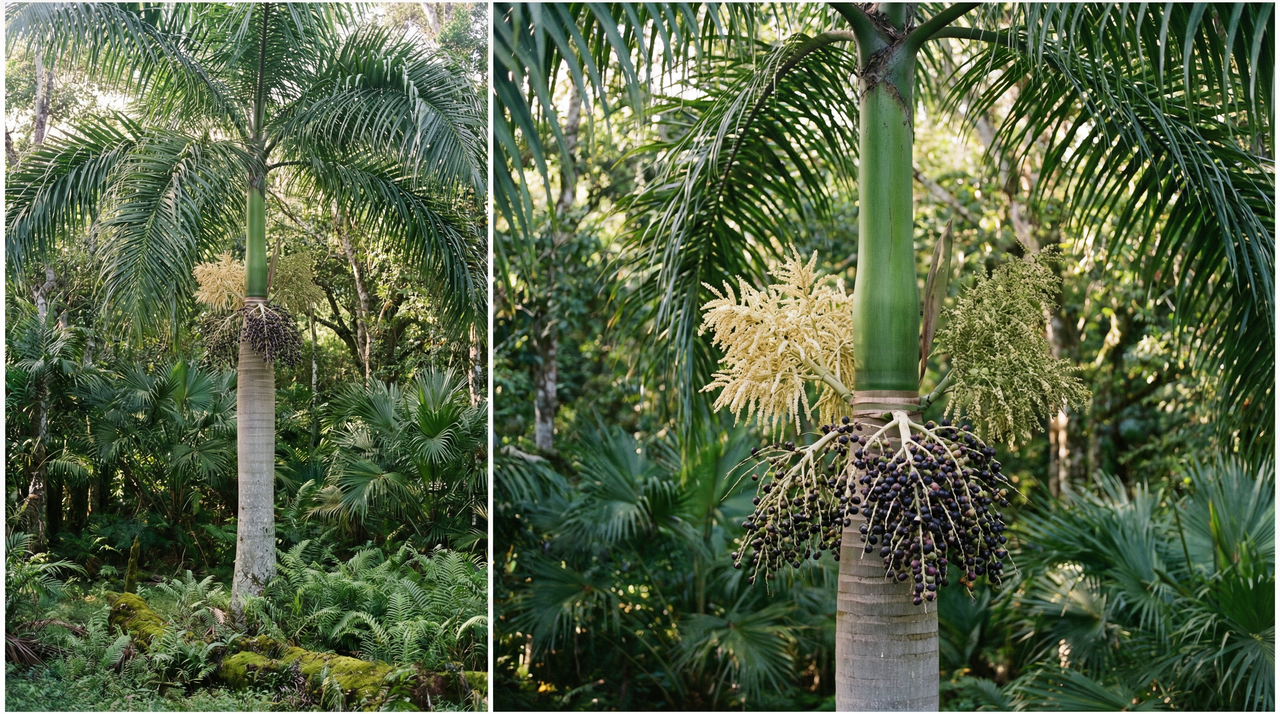
Nobody warns you that planting a Royal Palm is closer to commissioning a monument than putting in a tree. I've stood under mature specimens in Miami and felt genuinely humbled, not in the polite way you feel at a botanical garden, but the way you feel looking up at something that was already old before you were born and will outlast every house on the block. What strikes me every time is the trunk: that improbable column of smooth concrete-gray bark, tapering almost imperceptibly, rising 60 feet before erupting into a brilliant green crownshaft that catches light differently than almost anything else in a tropical landscape. It looks designed. Architectural in the truest sense.
Roystonea regia carries a weight that goes well beyond aesthetics. It's Cuba's national tree,[1] woven into the country's coat of arms, its folklore, its sense of self. When Cuban immigrants planted Royal Palms in South Florida, they weren't just landscaping. That history lives in the tree, and once you know it, you can't quite look at a boulevard of Royal Palms the same way again. I know I can't.
Origin and History of the Royal Palm (Roystonea regia)
Botanical Background and Native Range
There's a reason the royal palm tree stops people in their tracks the first time they see one. This is a genuinely ancient, long-lived plant rooted in the Caribbean basin, native to Cuba, the Bahamas, southern Florida, and scattered coastal lowlands across the wider Caribbean region.[2][3] Unlike monocarpic plants that flower once and die, Roystonea regia is polycarpic, flowering and setting fruit repeatedly across its lifespan without any suicidal finale.[4][5] That lifespan typically stretches 50 to over 100 years, with exceptional specimens recorded past 150 years under favorable conditions.[6] In my design work across Central Florida, I've noticed that site moisture makes a dramatic difference in how that potential plays out: palms in consistently moist, fertile soils grow faster and appear to sustain crown density much longer than specimens planted in drier, sandier spots where they technically survive but never quite thrive.
Reproductive maturity arrives slowly, typically between 15 and 20 years of age, though conditions can push that window anywhere from 10 to 25 years.[7] Flowering occurs April through August, with fruits ripening four to six months afterward. The palm requires USDA zones 10 through 11, full sun, well-drained fertile soils, and consistent moisture, though established specimens develop reasonable drought tolerance over time.[8][9] While the Roystonea regia scientific name applies to a globally widespread ornamental, its genus cousins face much grimmer odds: Roystonea princeps, native to Cuban lowlands and Jamaican montane forests, is critically endangered due to habitat destruction,[10] a sobering contrast to the star of the show.
Visual Characteristics
At maturity, the royal palm plant reaches 15 to 25 meters tall, occasionally pushing to 30 meters, with a solitary straight trunk 30 to 60 centimeters in diameter that swells noticeably at the base and is marked all the way up by smooth, circular ring scars left by fallen leaf bases.[2][11] This smooth texture shifts completely when you reach the crownshaft, that vivid green or bluish-green column of tightly packed leaf bases stretching two to three meters below the crown. It almost looks painted on.
That crown carries 10 to 15 arching pinnate fronds, each three to four and a half meters long with 100 to 150 glossy dark-green leaflets arranged along the rachis.[11][12] The crown spread can reach six to nine meters across in open, full-sun plantings. I've also noticed what the research describes as phenotypic plasticity at work in the field: specimens growing in wetter, partly shaded sites tend to develop taller, slimmer trunks and proportionally larger leaves compared to the broader, more compact crowns I see in open-sun coastal installations.[13] Flowers emerge from branched panicles up to 1.2 meters long as small, creamy-white, fragrant blooms, eventually giving way to purple-black drupes.[14]
Traditional and Cultural Uses
The first European to formally describe this palm was Charles Plumier in 1693, working from Cuban specimens and naming it Areca regia. John Lindley transferred it to the genus Roystonea in 1830, giving us the Roystonea regia common name and scientific framework still in use today.[15][14] But the Taíno people of the Caribbean had been using this palm for centuries before any European arrived: trunks for huts and canoes, leaves for thatching and basket weaving, and sap from the inflorescences fermented into palm wine for social and ritual occasions. Later traditional medicinal applications evolved from that foundation, including leaf infusions for digestive complaints, bark poultices for wounds, and fruit preparations for gastrointestinal issues, though scientific validation of these uses remains limited.[16][17]
Cuba formalized what its people already knew in 1981 by adopting the royal palm as its national tree. It appears on the Cuban coat of arms, features in folklore, literature, and music, and holds an active place in Santería practice, where leaves are used in protection and fertility rites drawing on Yoruba tradition.[18][19] I've had conversations with Cuban-American clients in South Florida who chose this palm for their landscapes with deep intentionality, and those conversations changed how I think about specifying it. There's a layered meaning here that goes well beyond ornamental value. Today, global cultivation is overwhelmingly ornamental, spreading from 18th-century European botanical gardens to Florida, Hawaii, Southeast Asia, and South Africa, though growers in Hawaii should be aware that it can self-seed and naturalize and is monitored for invasive potential in that context.[20]
Fun Facts and Ecological Insights
Under optimal conditions, this palm grows 60 to 90 centimeters per year,[3] which is one reason it delivers the dramatic vertical accent clients want faster than almost any other palm at this scale. That speed doesn't come at the expense of ecological value. In its native Cuban habitats, it provides critical nesting sites for birds including the Cuban trogon, and its purple-black fruits are primarily dispersed by birds, making it a keystone species in the landscapes it inhabits.[21] Its protandrous flowering strategy, where male flowers open first to encourage cross-pollination, draws primarily honey bees and other bees to those fragrant panicles.[14][22]
The palm's physical adaptations to Caribbean storm conditions are genuinely clever: spongy trunk tissue stores water, the crownshaft geometry reduces wind resistance, and fronds flex and shed in high winds rather than acting as rigid sails.[23] That said, it's not without vulnerabilities. Red palm weevil, Ganoderma butt rot, and Fusarium wilt are all legitimate threats,[6] and I learned that lesson the hard way in one early landscape installation where an undetected weevil infestation moved through a small grove before I caught it, ultimately requiring full replacement. Vigilance from installation onward matters enormously with this palm. Climate change adds uncertainty to the long-term picture, potentially enabling range expansion through warming while increased storm intensity and disease pressure could offset those gains;[24] for now, the specimens I've watched in established South Florida landscapes look remarkably resilient, which is consistent with a tree that has been shaping tropical ecosystems for millennia.
Royal Palm Varieties and Sourcing
Notable Varieties and Selections of Roystonea regia
Here's the honest truth about royal palm varieties: there basically aren't any. Roystonea regia has no formally named cultivars in the botanical literature and is propagated almost exclusively from seed,[14][6][25] which means what you'll find labeled as "varieties" in a nursery are really superior seedling strains, trade names, or informal selections. That said, those distinctions do matter in practice.
'Gulfstream' is a trade name applied to narrower, more compact specimens suited to tight urban sites,[26] not a true botanical variety. I've specified it for clients where buildings crowd the planting zone and a full 15-25 foot crown spread[27][25] simply won't work. What I call "Florida Royal Palm" selections are strains that Florida nurseries have propagated for straighter trunks and denser crowns,[13][28] and those are the ones I reach for when a client wants the iconic ringed gray trunk and bluish-green crown arching 50-80 feet overhead.[27][25]
Rare variegated forms ('Variegata') and dwarf selections like 'Endo Dwarf' do exist, but they're genuinely hard to source and the variegated types carry a vigor penalty, showing white-striped leaves alongside noticeably slower growth.[29] After working with hundreds of these palms, I've come to believe that natural seed variation produces just as impressive specimens as any named selection. A vigorous, well-grown seedling reaching 2-3 feet per year[30][25] from a reputable Florida grower is almost always the better investment. The naming gets murkier at the genus level too, where taxonomic overlap between Roystonea regia and Roystonea oleracea creates inconsistency across nursery catalogs,[29] so don't be surprised if you encounter the same tree under different labels.
Where to Buy Royal Palm Trees and Seeds
The good news: Roystonea regia is widely available, especially through Florida-based operations. Nurseries like Palmco in Bokeelia and Homestead, Eureka Farms, Top Tropicals, and Florida Palm Tree all carry containerized stock regularly,[31][32][33] and seed can be found through Seedland in Bradenton.[34] Pricing scales predictably with size: seedlings under 5 feet run roughly $50-80, 10-foot trees land around $250-450, and 20-foot specimens can reach $800-1,500.[35][36] Seed packets of 10-25 seeds typically run $10-30.[37]
Regulatory barriers are low: the species isn't listed on any CITES appendices, isn't classified as invasive in Florida, and can be imported with a phytosanitary certificate and standard USDA APHIS compliance.[38][39][40] I still prefer buying from certified nurseries practicing ethical propagation rather than chasing a cheaper import.[41] Container-grown stock from established Florida growers establishes reliably; bargain shipments sometimes arrive carrying scale, spider mites, or signs of red palm weevil,[42][43] and I always inspect new arrivals carefully before anything goes in the ground. Asking a vendor directly about their seed sources takes thirty seconds and tells you a lot about who you're buying from.
Royal Palm Propagation and Planting (Roystonea regia)
If there's one thing that separates royal palm from most of the plants I grow, it's this: the seeds don't wait. You can't order a packet in March and sow in April. Every batch of Roystonea regia seed is perishable tropical treasure, and the sooner you treat it that way, the better your germination results will be.
Seed Morphology and Biology
The seeds themselves are handsome little things, ellipsoidal to ovoid, roughly 1 to 1.5 cm long with a hard fibrous endocarp surrounding dense, homogeneous endosperm and a small basal embryo.[44][45][46] Each seed is monoembryonic, meaning one embryo, one seedling, no clonal shortcuts. Because the species is dioecious, with male and female flowers on separate trees, cross-pollination is guaranteed, and every seedling you raise will be genetically unique.[14][47] That variability is worth keeping in mind if you're selecting for a formal avenue planting; you may want to grow a few extra and choose the most uniform individuals.
Propagation Methods
Seed is essentially your only option at the home or small-nursery scale. Royal palm rarely produces basal suckers, and vegetative methods like cuttings, layering, or grafting don't work because palms are monocots with no vascular cambium to regenerate from.[48][49][50] The real challenge is that royal palm seeds are recalcitrant: they can't tolerate drying below 20 to 30 percent moisture and lose viability within one to three months even under moist, cool storage at high relative humidity.[51][52][53] I've watched viability drop within six weeks even when I kept seeds moist and shaded, which is why I now collect and sow in the same week whenever I can.
Collect seed from ripe purplish-black fruit, soak the mass in water for two to three days to loosen pulp, then clean thoroughly and plant immediately.[48][54][55] Before sowing, soak the cleaned seeds in warm water for 24 to 48 hours, changing the water daily; some growers also lightly scarify the seed coat or use gibberellic acid. Under optimal conditions, germination rates typically reach 50 to 80 percent.[48][56][57] You may encounter conflicting advice online about cold versus warm storage for unsown seeds; I'd disregard most of it and treat any seed older than a month with skepticism. Tissue culture via somatic embryogenesis can achieve up to 90 percent success and produces disease-free plants, but it's expensive, technically demanding, and firmly in the domain of research institutions and commercial propagators. I've never had reason to go that route in a home or small-nursery setting.
Germination Timeline and Conditions
Germination is hypogeal and genuinely slow. At 25 to 30 °C (77 to 86 °F) with relative humidity around 70 to 80 percent and indirect light, expect to wait anywhere from one to three months, sometimes six.[6][58][59] There's no true dormancy involved; the embryo just develops slowly, which means impatience is your enemy. Bottom heat speeds things up noticeably. The first emergence looks nothing like a mature frond: royal palm seedlings push up a single strap-like leaf that looks deceptively like a broad-leaved grass for the first several months, very different from the graceful pinnate fronds I expect when I label my nursery rows. Don't be fooled into thinking something went wrong.
The most common failure I've seen at this stage is damping-off, usually from Fusarium or Pythium moving through overwatered, non-sterile media. I lost an entire flat of seedlings to damping-off one spring in a humid Florida greenhouse before I started insisting on sterile, well-draining mix and consistent bottom heat. Sterile media, excellent drainage, and careful watering aren't optional extras; they're the difference between a viable batch and a composting exercise. The establishment phase that follows germination spans one to two years of root development, during which seedlings need consistent moisture without waterlogging, partial shade to start, and a gradual transition to full sun within the first year to avoid weak, etiolated growth.
Soil, Site, and Planting Technique
Royal palm naturally grows on limestone-derived, well-drained soils across the Caribbean, and that preference carries straight into cultivation. Sandy loam or loamy sand with a pH of 6.0 to 7.5 is the sweet spot, though the palm tolerates a wider range of 5.5 to 8.0 and handles moderate salinity well.[8][44][13] It tolerates periodic flooding but not prolonged waterlogging or compaction. Before I plant any palm, I dig a test hole, fill it with water, and watch how fast it drains. If standing water remains after an hour, I solve the drainage problem before I plant, not after.
Mature trees demand full sun, a minimum of six to eight hours of direct light daily for strong growth, flowering, and fruiting.[60][6] For container culture during the nursery phase, a mix of 50 percent potting soil, 30 percent coarse sand or grit, and 20 percent perlite drains well without drying too fast.[61][8] When planting in the ground, the fibrous root system can spread 10 to 20 feet from the trunk, so soil depth of at least 24 to 36 inches matters for long-term stability and nutrient access.
Spacing and Aftercare During Establishment
I always plan on 25-foot centers in Florida landscapes because I've seen 60-foot specimens crowd neighboring trees when planted at 15 feet. The formal guidance puts spacing between 15 and 25 feet for most settings, with urban street plantings at 20 to 25 feet; avenue plantings at 10 to 15 feet will eventually fight for light.[8]
Plant in spring or early summer once frost risk has passed. Dig a hole two to three times wider than the root ball but no deeper than the nursery container so the palm sits at its original soil line, backfill with amended native soil, and lay down three to four inches of organic mulch kept well clear of the trunk.[61][62] In windy locations, stake the young palm for one to two years during establishment.[13][8] Cold is the other variable to manage during this window: royal palm is not reliably hardy below 28 to 30 °F, performing best in USDA zones 10a through 11. If your winters regularly dip near that threshold, I keep mine in containers the first two years so I can move them under cover. Better safe than replacing a two-hundred-dollar palm.
Royal Palm Care Guide: Sunlight, Water, Fertilizer, and Seasonal Maintenance
After installing Royal Palms across Central Florida for more than a decade, I've come to think of their care needs as simple but unforgiving. Get the fundamentals right and you're rewarded with one of the most dramatic, genuinely low-effort landscape trees you can plant in the subtropics. Get them wrong and the palm will tell you, loudly, through discolored fronds, stalled growth, or worse. The good news is that ninety percent of the problems I see on jobsites trace back to a handful of avoidable site and soil decisions made before the tree ever goes in the ground.
Sunlight Requirements for Healthy Growth
Roystonea regia needs full sun, at minimum six to eight hours of direct light daily, and that requirement is genuinely non-negotiable.[63][64] I always warn clients against tucking these palms into shaded courtyards or south-facing atriums with limited sky exposure. Without adequate light, the palm etiolates: petioles elongate, leaves shrink, the whole canopy goes chlorotic, and growth slows to a crawl.[65][66] The trunk becomes structurally compromised, prone to toppling in a summer storm long before it ever reaches its potential. The most perfectly proportioned specimens I've seen grow in open coastal sites where nothing interrupts the light from dawn to dusk. That's what this species evolved for.
Watering Needs from Establishment to Maturity
Once a Royal Palm is established, the irrigation strategy shifts to deep and infrequent: every one to two weeks during the growing season, delivering moisture down three to six feet into the root zone.[67][8] This pattern mirrors how the species evolved in Cuba's seasonal lowlands, where rainfall comes hard and then stops. Mature palms are moderately drought-tolerant, but they'll show the stress during prolonged dry spells if you abandon irrigation entirely.
Young and newly installed trees follow a different story entirely. For the first year or two, I water twice weekly, sometimes every two to three days in peak summer heat, letting the top two to three inches dry between applications but never letting the root ball go bone dry.[67][6] This is when most losses happen. Before I turn on any irrigation system, I tell clients to grab a trowel and dig eight to ten inches down. If the soil is still moist, wait. Overwatering shows up as yellowing fronds, wilting despite wet soil, and a soft trunk base; underwatering produces brown, dry leaf tips and curling leaflets.[68][69] A two-to-four-inch layer of organic mulch kept back from the trunk helps regulate moisture and temperature without creating the rot conditions you get when mulch piles against the base.[13][70]
Fertilizing Royal Palms: Preventing Common Deficiencies
In Florida's sandy soils, Royal Palms are moderate to heavy feeders and the fertilizer you choose matters enormously. Reach for a palm-specific slow-release formula with an NPK ratio around 8-2-12 or 12-4-12, one that includes magnesium and micronutrients like manganese and iron.[71][8] Apply it three to four times per year from March through October, broadcast evenly out to the drip line and watered in well.[71][72] Run a soil test first; you're targeting potassium at 50-100 ppm and phosphorus at 15-30 ppm.
I can usually diagnose potassium deficiency from twenty feet away. If the older, lower fronds show orange-brown spotting and frizzled tips while new growth looks fine, that's almost certainly potassium shortage rather than a pest or a watering issue.[73][74] After installing palms on former citrus-grove properties in Central Florida, I learned that lesson fast: those soils are chronically potassium-depleted from years of fruit production, and a corrective top-dressing before planting prevents years of frizzled foliage down the road. Magnesium deficiency shows as interveinal yellowing on older leaves; iron deficiency hits new growth, typically in soils where pH has crept too high. Over-fertilizing causes its own problems, including root burn and salt buildup that can mimic the deficiency patterns you were trying to fix.[71][75]
Heat and Frost Tolerance in Subtropical Landscapes
Roystonea regia is rated for USDA zones 10a through 11 and can tolerate brief dips to 28-30°F, but prolonged freezing will damage or kill it.[76][6] Young trees are significantly more vulnerable; a freeze that a mature specimen survives with singed fronds can kill a first-year tree through apical meristem damage.[77][78] I tell clients to think of it like a coconut palm: if a hard freeze knocks your coconut back to the trunk, it'll do the same to a Royal. Both start dropping fronds at roughly the same temperature. That reference point tends to click for Florida gardeners who already know what a bad January does to their coconut trees.
On the other end of the thermometer, Royal Palm handles serious heat well, rated for AHS Heat Zones 10-12 and capable of tolerating days above 100°F given adequate moisture.[79][80] Seedlings are the exception: their limited root systems can't keep up with transpiration demand during dry heat spells. A 30-50% shade cloth, deep mulch, and consistent irrigation during the first summer have turned what looked like scorched failures into thriving specimens on my Central Florida projects.[81][61]
Pruning, Maintenance, and Seasonal Rhythm
Royal Palm pruning is simple because there is almost nothing to do. Remove only dead, damaged, or diseased fronds during the active growing season, and never touch green leaves.[61][8] Early in my career I over-pruned a client's specimen thinking I could keep it tidier and perhaps slow it down. The palm responded with stunted growth and increased susceptibility to disease, and I learned quickly to respect the tree's architecture. Pruning cannot control a sixty-to-eighty-foot palm; correct placement before it goes in the ground is the only real control you have.
Drainage is worth a mention here because poor drainage produces the same symptoms as several diseases: yellowing lower leaves, stunted growth, wilting, and ultimately root rot that sets the stage for lethal yellowing and bud rot.[82][83] The seasonal rhythm follows Florida's wet-dry cycle: growth accelerates through the rainy season, fertilization runs March through October, irrigation frequency backs off in winter, and frost protection goes up whenever forecasts threaten to drop below 30°F.[84][85] The best royal palm care, in my experience, is choosing the right site. After that, this palm largely takes care of itself.
Harvesting Royal Palm (Roystonea regia)
Maturation Timeline and When to Harvest
Plant a royal palm from seed and you're committing to a decade-plus wait before any fruit appears. Roystonea regia typically takes 8-15 years from germination to first fruiting, with seed-grown specimens usually landing toward the longer end of that range.[6][86] The palm needs to reach roughly 20-30 feet tall before it has enough stature to flower.[6] I've watched specimens in Central Florida hit that first flush of flower clusters around the 25-foot mark, and seeing it feels like a genuine milestone after years of just watching the trunk climb. Once a palm matures, the annual rhythm becomes reliable: inflorescences push out in spring, and the developing fruits take six to twelve months to ripen,[87][88] with Florida's peak window running roughly August through November.[89][90] Climate, soil quality, and sun exposure all influence exactly when fruits mature in any given year.[6][86] I treat the long lead time as a design truth: a royal palm is a permanent canopy element whose real ongoing yield is shade, structure, and bird habitat, not a fruit crop you schedule around.
Yield, Flavor, and Harvesting Technique
The most coveted edible from this tree is the heart of palm: crisp, tender, with a mild artichoke-like character that some describe as nutty and slightly sweet.[91][92] Fresh heart of palm from a royal palm compares favorably to anything you'd find in a grocery-store can. The problem is non-negotiable: harvesting the heart kills the tree outright. In practice, I've never cut the heart from a landscape royal palm because the tree is far more valuable standing. The ethical and practical answer is to source palm hearts from commercially cultivated species grown specifically for that purpose.
The fruits are worth knowing, even if they're not a serious human food source. Ripe drupes shift from green to deep purple-black and soften noticeably under gentle pressure, a cue I think of as similar to watching small plums come into season.[93][94] The flavor is mildly sweet but can run astringent depending on ripeness.[14] Related species like R. borinquena and R. oleracea produce similar small drupes with the same green-to-purple-black ripening pattern, showing only modest size variation across the genus.[84][95] The seeds inside are not edible. In most landscape settings, the fruit drop feeds birds and wildlife far more efficiently than it feeds people, which is exactly how I think it should be used.
Royal Palm Preparation, Uses, and Traditional Applications
Culinary Uses of Royal Palm Heart of Palm and Fruit
The most prized edible from Roystonea regia is the heart of palm, harvested from the apical meristem deep inside the trunk. Its tender, artichoke-like profile makes it highly versatile.[96][97] In Cuban and Caribbean kitchens it shows up in salads, soups, stews, and ceviche-style preparations, or pickled for longer shelf life.[98][91] Cooking actually improves it, softening any lingering bitterness and helping it absorb surrounding flavors beautifully.[99] The problem is the cost: harvesting the heart kills the tree, full stop.[98][92] I would never harvest one of these trees in my own designs, and I'd discourage anyone else from doing it when ethically grown alternatives from faster-cycling species like Euterpe edulis are easy to find at any decent grocery store.[98]
The fruits are technically edible, but barely worth mentioning as a human food. They're small, tough, often bitter, and exist primarily to feed birds and wildlife.[100][101] Young fruits occasionally carry a sweet, jelly-like pulp that people in Cuba and the Caribbean once ate raw or used in drinks, though it was never a staple.[17] The seeds are a non-starter: hard, fibrous, and indigestible.[97]
One safety note I give every client in Central Florida: Royal Palm is non-toxic, but it's often growing right next to Sago Palm (Cycas revoluta) in the same neighborhood, and that plant is lethally poisonous. Knowing the difference matters. Always refer back to the trunk and crownshaft distinctions detailed earlier to ensure correct identification. If those two details are fuzzy in your memory, don't forage anything.
Traditional Medicinal Preparations from Royal Palm
Cuban folk medicine drew on nearly every part of this tree. Young leaf infusions and decoctions were prepared for colds, coughs, asthma, and fever, used both as expectorants and diuretics.[17][102] Fruit pulp served as a mild laxative for digestive complaints.[17] Bark, sap, and crushed leaves went onto wounds, burns, and inflamed skin as topical poultices; bark was also taken internally for diarrhea.[103][102] The seed oil is genuinely interesting from a botanical-chemistry standpoint: it's dominated by lauric acid (40-50%) and myristic acid (15-20%), giving it a fatty-acid profile that mirrors coconut oil closely.[104] I've worked with small batches of tropical seed oils before, and that lauric-acid dominance does give it a similar feel in skin preparations to coconut, which explains its traditional anti-inflammatory cosmetic use.
These Cuban folk uses are part of a rich ethnobotanical heritage, and I think they deserve genuine respect. But clinical validation is still thin, and none of these preparations have advanced through human trials or received regulatory approval. I always advise anyone curious about palm-based remedies to consult a qualified practitioner first rather than working from historical records alone.
Non-Food and Cultural Uses of Royal Palm
Beyond the table and the medicine chest, this palm was a workhorse. Leaves and leaf bases were woven into mats, hats, baskets, and brooms, and layered as thatch on rural roofs across the Caribbean.[105] The trunk was used for construction and fencing, though its porosity limits long-term durability in structural applications.[105] I've seen beautifully woven palm-frond pieces in Caribbean-influenced Florida gardens that reflect exactly this tradition, and there's something grounding about recognizing that a tree planted for shade today was once someone's entire building material.
Today, though, the honest reality is that Roystonea regia earns its place in the landscape through presence and ecology rather than pantry or craft. Its primary gift is the sixty feet of architectural drama it brings to a warm-climate garden, the wildlife it sustains, and the canopy it anchors. That's more than enough.
Royal Palm Health Benefits
Royal palm isn't the kind of plant you'd stock a medicine cabinet with, and I want to be honest about that upfront. What Roystonea regia actually offers in terms of human health value is more grounded and more interesting than vague promises: a genuine phytochemical complexity, some intriguing preliminary pharmacological research, and one concrete, delicious nutritional contribution in the form of its edible heart. Let's work through each of those honestly.
Phytochemical Profile and Antioxidant Activity
The chemical profile of this palm varies meaningfully by plant part. Leaves are richest in flavonoids including quercetin, kaempferol, and rutin, alongside phenolics like gallic acid and ferulic acid.[102] Fruits tell a fattier story, with oleic acid making up 45–55% of the fruit oil and palmitic acid another 20–30%, plus steroids and polysaccharides alongside the flavonoids.[106] Bark and seeds round things out with tannins, saponins, and alkaloids from the bark, and phenolics concentrated again in the seeds.[107][108] That measured antioxidant capacity comes through in DPPH radical scavenging studies, where leaf and fruit extracts clock IC50 values around 20–50 µg/mL, driven primarily by those high phenolic concentrations.[109][110]
Why does a palm produce this chemical arsenal at all? Ecological defense, mostly. These compounds shield the plant against herbivores and pathogens, and help it cope with salt spray, heat, and high UV exposure.[111][112] Plants in full, intense sun consistently show higher phenolic and flavonoid content than shaded specimens, which tracks with what I observe in other tropical plants in my Florida work: the basil and rosemary that bake in full sun all summer are always more pungent, more concentrated, than their shaded counterparts. Royal palm is no different in that fundamental biological logic. Essential oil yields from the leaves are low, only 0.1–0.5%, dominated by monoterpenes like α-pinene and β-pinene.[113] This is not an aromatherapy plant; the oils are a minor footnote in an otherwise interesting phytochemical picture.
Medicinal Research and Traditional Uses of Roystonea regia
In Cuban and broader Caribbean ethnobotany, royal palm has a documented role in traditional medicine, particularly for respiratory and digestive complaints.[103][17] That cultural knowledge base is real and worth respecting. Modern laboratory research has followed some of those leads with genuinely interesting results: extracts inhibit pro-inflammatory enzymes including COX-2 and LOX,[114][115] show antidiabetic potential through alpha-amylase and alpha-glucosidase inhibition, suggest neuroprotective activity through cholinesterase inhibition, and demonstrate antimicrobial action against Staphylococcus aureus and E. coli as well as some fungi.[116][117]
Every one of those findings comes from in-vitro or animal studies. There are no documented human clinical trials, no FDA recognition, and no regulatory approval for any therapeutic use.[118] The anti-inflammatory data is genuinely interesting to me as a horticulturist who has watched this research develop, but my experience growing and specifying these palms in zone 9B tells me their real everyday value is their beauty, their shade, and the occasional edible heart. They are not medicine cabinet plants, and anyone exploring them for health purposes should be talking to a qualified healthcare provider, not a garden website.
Nutritional Value of Heart of Palm
The heart of palm is where the rubber meets the road for real-world nutritional benefit. It's the apical meristem, tender and mild, and it's been a staple of Cuban cuisine for generations.[97][119] Nutritionally, it's a lean vegetable: roughly 23–30 calories per 100g, about 90% water, with 2–4g of protein, 4–6g of carbohydrates, 3–4g of dietary fiber, and less than 1g of fat.[120] The standard serving runs about 85 grams (four or five spears, canned and drained).[121]
It earns its place through a strong micronutrient profile—yielding 31 percent of daily vitamin C alongside B vitamins, folate, and vitamin A.[120][122] Potassium runs 180–300mg per 100g, with meaningful amounts of magnesium (50–60mg) and phosphorus alongside it.[120] I've tasted fresh palm heart during nursery visits in South Florida, and the difference from canned is striking: crisper, slightly sweet, genuinely artichoke-adjacent in a way that makes you understand why it's been prized in Caribbean kitchens. Canned is more accessible and still nutritionally solid, but fresh is a different experience entirely. One important caveat: the fruits are not worth foraging. They're bitter, potentially laxative in quantity, and the hard seeds aren't edible.[14] The heart is where the culinary value lives.
Royal Palm Safety and Potential Side Effects
Roystonea regia is generally considered non-toxic to humans, pets, and livestock, with no documented cases of serious poisoning from any part of the plant.[119][123] Subchronic toxicology studies on the fruit's lipid extract found no observed adverse effects at 2000 mg/kg/day in rodents, which reinforces the low overall toxicity picture.[124] In my years specifying royal palms around Florida homes, I've never seen a toxicity incident involving pets or children, and I've done a lot of these installations.
That said, mild risks exist. Saponins in the fruits and seeds can cause gastrointestinal upset, and calcium oxalate crystals in the leaves and stems may irritate sensitive skin or mucous membranes.[119][125] The fruits, edible in small amounts by some traditional accounts, will act as a laxative if consumed in quantity. Wind-dispersed pollen can provoke allergic reactions in sensitive individuals during bloom, though in my experience the royal palm pollen season is nowhere near as punishing as the oak and pine seasons that Florida gardeners dread every spring.[126] Contact dermatitis from sap or plant fibers is possible in very sensitive people.[127]
The one safety point I hammer home with every client: do not confuse royal palm with sago palm (Cycas revoluta). They can look superficially similar to an untrained eye, and sago palm is genuinely, severely toxic to pets and humans.[128] Royal palm has that smooth gray trunk and dramatic green crownshaft; sago palm is low-growing with stiff, feather-like fronds from a rough, pineapple-textured base. Learn the difference. It matters. Individual sensitivities always vary, and common sense applies to any plant you're working with or eating for the first time.
Royal Palm Pests and Diseases
Roystonea regia holds up reasonably well compared to many palm species, sitting around a 6 out of 10 on overall disease resistance.[129] That's a middling score, and I think it's an honest one. In my years of working subtropical plantings across Central Florida, I've seen royal palms thrive for decades with nothing more than good drainage and attentive nutrition -- and I've seen specimen trees decline rapidly when two specific threats entered the picture. Knowing which problems are manageable and which ones are genuinely serious changes how you plant, site, and monitor this species.
Disease Resistance and Major Threats
Lethal yellowing is the primary disease keeping Florida growers awake at night, as royal palms represent a highly susceptible host.[130][131][132] The phytoplasma, spread by planthopper insects, causes premature nut drop, progressive yellowing of lower fronds, crown discoloration, and eventual death -- and there is no cure. After watching lethal yellowing claim multiple palms in landscapes I'd helped design, I became almost compulsive about drainage and planthopper monitoring. I've since learned to watch for the lower frond yellowing as the first alarm, because by the time the crown blackens, the tree is gone. The 'Florida Royal,' 'Monroe,' and 'Miami' selections show improved performance under local conditions, but none carry true resistance to this disease.[133]
Ganoderma butt rot, caused by Ganoderma zonatum, is the other heavy hitter. It produces basal stem decay and those distinctive shelf-like conks near the trunk base, and once a conk appears the structural integrity of the tree is already in question.[134][135] Phytophthora bud rot from Phytophthora palmivora is a concern especially after storms or in poorly drained sites; royal palm shows moderate resistance relative to some palms, but wet conditions reliably lower the threshold.[136][137] Fusarium wilt can produce one-sided frond collapse and spreads through contaminated tools and water, which is a good reminder to sterilize pruning equipment between trees.[138] Less frequent problems include bacterial leaf spots, heart rot from Thielaviopsis paradoxa, and various fungal leaf spots.[68]
Common Pests and Natural Defenses
Red palm weevil (Rhynchophorus ferrugineus) is the pest I take most seriously. It bores into the trunk and crown, and royal palm shows high susceptibility; untreated infestations frequently kill the tree.[139][140][141] I learned the urgency of early detection through a painful experience with a client's specimen that I thought was just stressed -- by the time bore holes and wilting fronds made the diagnosis obvious, the weevil population inside the trunk was already massive. More common but less catastrophic are scale insects like Aspidiotus destructor and mealybug species including Nipaecoccus nipae, which cause sap loss, yellowing, and sooty mold across foliage and stems.[142][143]
What I find genuinely fascinating about royal palm is how it fights back. The species produces phenolic compounds and terpenoids that function as insect toxins and repellents, carries a thick waxy leaf cuticle that deters penetration and egg-laying, and maintains extrafloral nectaries that recruit ants as biological bodyguards.[144][145][146] I've noticed ants swarming the nectaries on healthy trees in my plantings and realized that the mutualism was actively reducing minor pest pressure -- the plant had recruited its own pest management team. These defenses are most effective on unstressed trees, which is exactly why stress avoidance is so central to management. No named cultivars offer meaningful pest resistance, and most seed-grown material is genetically variable rather than selected for resilience,[61] so the tree's own chemical arsenal on a healthy, well-sited specimen is genuinely the best starting point you have.
Integrated Pest and Disease Management
The framework I use in every royal palm design is IPM, prioritizing cultural practices and early detection long before reaching for any chemical control.[142][68][43] Good drainage, balanced nutrition, and avoiding trunk wounds remove the three most common entry points for disease and borer damage. For lethal yellowing in high-risk areas, annual oxytetracycline trunk injections can suppress the phytoplasma in symptomatic trees and protect nearby healthy ones; infected palms should be removed and destroyed promptly to reduce the planthopper reservoir.[147][82][61] For weevils, pheromone traps, entomopathogenic nematodes, and parasitic wasps are all useful tools before systemic insecticides become necessary. Regional pressure varies considerably: Florida and Caribbean plantings carry higher exposure to lethal yellowing, Ganoderma, and red palm weevil, while scale and mealybug issues tend to be more prominent in Texas.[148][149] I always point my clients toward their local cooperative extension office for current quarantine information and updated treatment protocols -- it's the single most useful resource I've found for staying ahead of new pest introductions in a landscape that changes every season.
Royal Palm in Permaculture Design
Before you plant a Royal Palm anywhere, you need to be honest about your climate. This isn't a "push the zone" kind of tree. Roystonea regia is reliably hardy in USDA zones 10b through 11, with a cold threshold somewhere around 28°F.[150][151][152] A mature specimen might shrug off a brief dip to that temperature, but I've watched young Royals lose their entire crown after an unexpected overnight drop to 26°F, and that experience changed how I spec these palms permanently. I now insist on south-facing walls or protected courtyard microclimates for anything going in at the cooler edge of zone 10.
The Florida-versus-coastal-Texas comparison is worth making explicit. In South Florida and Miami-Dade, Royal Palms perform with a consistency that lets you design around them confidently. In zones 9b-10a along the Texas Gulf Coast, unpredictable cold snaps raise the failure risk enough that I'd consider it an experimental planting without serious frost protection in place.[153][44] Below zone 9, you're essentially talking about a greenhouse specimen. That's not a criticism of the plant; it just means it has a clear home range, and honest site selection is the first design decision. The related Puerto Rican Royal Palm (R. borinquena) shares the same zone range and similar cold-damage threshold, with an even stronger preference for high humidity, so it doesn't meaningfully expand your options if you're already at the margin.[154][155]
Climate Suitability and Hardiness Zones
The climate envelope for Royal Palm is tighter than people assume. It wants 40 to 80 inches of annual rainfall, high humidity, and temperatures that regularly sit in the 70 to 90°F sweet spot.[94][156][157] Coastal microclimates are genuinely helpful here; this palm tolerates salt spray and benefits from the thermal buffering that proximity to large water bodies provides. Prolonged standing water is a different matter entirely and will cause rapid decline, so drainage remains non-negotiable even within its preferred tropical range. Get those fundamentals right and the climate picture becomes straightforward. Get them wrong and no amount of babying will save the planting.
Ecosystem Functions and Pollination Ecology
Once you've confirmed the climate fits, the case for Royal Palm in a permaculture design gets genuinely exciting. The core services are structural and ecological: it functions as a tall windbreak, its fibrous root system stabilizes soil on slopes and shorelines, and the constant leaf-litter fall feeds the soil food web beneath it.[158] Those functions show up in almost every coastal guild I've designed with this tree. I regularly include Royal Palm in windbreak plantings paired with sea grape and cocoplum because that combination handles salt spray beautifully while creating a layered edge habitat that nothing else quite replicates in South Florida.
The dynamic pollination ecology is where this specific palm surprised me most. The flowers are protandrous, meaning the pollen-shedding phase precedes the receptive phase within each flower cluster, which pushes the plant toward cross-pollination rather than selfing.[157] Those large pendulous panicles, sometimes reaching a meter long, emerge from below the crownshaft and fill with insect activity during the spring-through-fall flowering window. The visitor list reads like a tropical entomology field guide: scarab beetles, nitidulid beetles, weevils, flies, native bees, thrips, with wind acting as a reliable secondary mechanism for pollen dispersal.[159][160] Optimal pollination happens between 68 and 86°F with humidity above 70%, which is just describing a normal Florida summer. Standing near a mature Royal Palm in full flower and watching the beetle traffic is genuinely different from observing the quieter, wind-dominated pollination of a nearby coconut. The biodiversity signal is immediate and tangible.
Fruit and seed production extends those benefits further down the food chain, supporting bats and birds that serve as seed dispersers, while the palm's rapid growth contributes meaningfully to carbon sequestration and biomass accumulation over its long lifespan.[161] Research on fragmented R. borinquena populations shows reduced genetic diversity and inbreeding depression when pollinators can't move freely between plants, which underscores a point that matters in design: supporting diverse pollinator habitat around these palms isn't incidental, it's part of keeping the system functional.[162][163]
Forest Layer Placement and Guild Design
Royal Palm occupies the emergent layer without apology. Mature trees reach 50 to 82 feet, occasionally taller under ideal conditions, forming solitary unbranched columns that push above the surrounding canopy and redefine the vertical scale of any landscape they inhabit.[14][164][8] That height means deep shade beneath the crown and meaningful competition from the fibrous root system for surface water and nutrients, though the roots are less aggressive than many large trees at equivalent scale.[165] Understanding both the shade and the roots is what separates a successful guild from one that quietly fails over the first few years.
In practice, I space these palms generously to allow pockets of filtered light between them, then underplant with species that coexist comfortably with a shallow-rooted neighbor. Sweet potato and native ferns have both worked well in my designs once the palm is established; the ground cover fills in quickly, suppresses weeds, and doesn't fight the palm for deep moisture. Within a few seasons, epiphytic orchids and bromeliads begin colonizing the leaf bases on their own. I've seen a single mature Royal Palm become a vertical habitat layer in three to five years without any intervention beyond the initial planting.
For food-forest designers, R. oleracea (Cabbage Palm of the Caribbean) adds a useful reference point: it shows juvenile shade tolerance and forms mycorrhizal associations that improve phosphorus uptake in the nutrient-limited tropical soils where many food forests are established.[166][167] R. borinquena brings notably non-invasive roots that make it well-suited to mixed plantings where you need the height and structure without aggressive competition at the soil surface.[168] The emergent-layer role remains consistent across the genus; what changes is how each species negotiates space with its neighbors, and that's worth knowing before you commit to a species for a specific guild slot.
The Palm That Taught Me to Design Around Permanence
I planted my first Royal Palm on a client's property in Osceola County about fifteen years ago, and I still drive past it sometimes. It's taller than the house now, crownshaft gleaming like something carved. I didn't plant it for what I could take from it. I planted it for what it would become, which is maybe the most honest thing I can say about why I keep specifying this tree: some plants ask you to think in decades, and that shift in perspective is quietly good for you.
Sources 168
- Cuba National Symbols – Library of Congress ↩
- Roystonea regia ↩
- The Royal Palm (Roystonea regia) in Cuba ↩
- Roystonea regia - USDA Forest Service ↩
- Roystonea regia - Kew Royal Botanic Gardens ↩
- Royal Palm Care and Longevity - University of Florida IFAS Extension ↩
- Royal Palm Care Guide - University of Florida IFAS Extension ↩
- Royal Palm (Roystonea regia) - University of Florida IFAS Extension ↩
- Roystonea regia - Palm and Cycad Societies of Australia ↩
- IUCN Red List - Roystonea princeps ↩
- Roystonea regia Plant Profile ↩
- Royal Horticultural Society ↩
- Roystonea regia: Cuban Royal Palm ↩
- Roystonea regia - Wikipedia ↩
- Nova Plantarum Americanarum Genera by Charles Plumier ↩
- Traditional Uses of Caribbean Palms: An Ethnobotanical Review ↩
- Ethnobotany of the Caribbean: Traditional Uses of Roystonea regia ↩
- The Royal Palm: Symbol of Cuban Identity ↩
- The Royal Palm: Cuba's National Tree ↩
- Non-Native and Invasive Palms in Hawaii ↩
- Ecological Roles of Palms in Neotropical Forests ↩
- Roystonea regia - National Parks Singapore ↩
- Adaptations of Tropical Trees to Hurricane Winds ↩
- Climate change, plant pathogens and plant disease ↩
- Royal Palms: Roystonea species - University of Florida IFAS Extension ↩
- Roystonea regia 'Gulfstream' - Narrow Royal Palm ↩
- USDA PLANTS Database: Roystonea regia ↩
- Hardy Royal Palm Varieties in Florida ↩
- Roystonea regia - Cuban Royal Palm ↩
- Growth and Care of Roystonea regia ↩
- Roystonea regia - Cuban Royal Palm ↩
- Cuban Royal Palm for Sale ↩
- Roystonea regia Seeds ↩
- Royal Palm Seeds ↩
- Royal Palm Trees for Sale ↩
- Roystonea Regia Palm Trees for Sale ↩
- Cuban Royal Palm Seeds ↩
- CITES Appendices ↩
- Florida's Most Invasive Plants ↩
- Importing Plants and Plant Products into the United States ↩
- Sustainable Palm Cultivation Guidelines ↩
- Pests and Diseases of Palms ↩
- Red Palm Weevil Quarantine ↩
- Missouri Botanical Garden - Roystonea regia ↩
- Palms of the World ↩
- Seed Morphology of Arecaceae ↩
- Propagation of Palms ↩
- Propagation of Palms ↩
- Roystonea regia (Cuban Royal Palm) ↩
- Vegetative Propagation of Palms ↩
- Seed Storage Behaviour of Palms ↩
- Desiccation Sensitivity in Tropical Palms ↩
- Recalcitrant Seeds: Biology and Storage ↩
- Propagation of Royal Palm (Roystonea regia) from Seed ↩
- Propagation of Royal Palm (Roystonea regia) ↩
- Seed Germination of Ornamental Palms ↩
- Germination of Roystonea borinquena Seeds ↩
- Propagation of Palms ↩
- Germination of Tropical Palms: Roystonea regia ↩
- Royal Palm - Roystonea regia ↩
- Growing Palms in Florida ↩
- Mulching Trees and Shrubs ↩
- Roystonea regia ↩
- Roystonea regia - Cuban Royal Palm ↩
- Roystonea regia Plant Profile ↩
- Roystonea regia (Cuban Royal Palm) ↩
- Royal Palm (Roystonea regia) Care Guide ↩
- Overwatering Palms: Signs and Solutions ↩
- Palm Diseases and Nutritional Problems ↩
- Palm Salinity Tolerance ↩
- Fertilization of Florida Palms ↩
- Soil Sampling and Testing for Florida Palms ↩
- Nutrient Deficiencies of Landscape Palms ↩
- Diagnosing and Managing Nutrient Deficiencies in Palms ↩
- Nutrient Deficiencies and Toxicities in Palms ↩
- Roystonea regia - Cuban Royal Palm ↩
- Frost Damage in Palms ↩
- Cold Damage to Palms ↩
- Roystonea regia - Cuban Royal Palm ↩
- Palms and Cycads: Heat Stress in Florida Landscapes ↩
- Florida Palm Trees: Care and Maintenance ↩
- Phytophthora Root Rot in Palms ↩
- Lethal Yellowing of Palms ↩
- Roystonea borinquena ↩
- Cold Hardiness of Palms ↩
- Roystonea regia - Cuban Royal Palm ↩
- Plants of the World Online: Roystonea regia ↩
- Explore Plants: Roystonea regia ↩
- Royal Palm -- Roystonea regia ↩
- Roystonea regia (Cuban royal palm) ↩
- Royal Palm (Roystonea regia) - Eat The Weeds ↩
- Edible Palms and Their Uses ↩
- Roystonea regia - Cuban Royal Palm ↩
- Royal Palm (Roystonea regia) Fruit and Seed Production ↩
- Kew Gardens: Roystonea oleracea ↩
- Heart of Palm: Edible Palms of the World ↩
- Roystonea regia - Useful Tropical Plants ↩
- Heart of Palm: Edible Uses and Harvesting ↩
- Heart of Palm Safety and Preparation - Extension Services ↩
- Roystonea regia - Cuban Royal Palm ↩
- Roystonea regia (Cuban Royal Palm) ↩
- Ethnobotanical uses and phytochemical profile of Roystonea regia in Cuba ↩
- Ethnobotany of Cuba: Plants Used in Traditional Medicine ↩
- Chemical composition and biological activities of Royal Palm (Roystonea regia) seed oil ↩
- UF/IFAS Extension: Roystonea regia - Cuban Royal Palm ↩
- Secondary Metabolites from Royal Palm (Roystonea regia) Fruits ↩
- Secondary Metabolites from the Bark of Roystonea regia ↩
- Phenolic Compounds in Seeds of Roystonea regia and Their Antioxidant Potential ↩
- Antioxidant Phenolic Compounds in Roystonea regia ↩
- Antioxidant and Antimicrobial Properties of Royal Palm Extracts ↩
- Secondary Metabolites in Tropical Palms: Environmental Influences ↩
- Phenolic Compounds in Palms Under Stress Conditions ↩
- Essential Oils from Roystonea regia: Composition and Bioactivity ↩
- Anti-inflammatory Effects of Roystonea regia Leaf Extract ↩
- Phytochemical and Pharmacological Screening of Roystonea regia ↩
- Enzymatic Inhibition by Roystonea regia Extracts ↩
- Antimicrobial Activity of Roystonea regia Leaf Extract ↩
- USDA PLANTS Database - Roystonea regia Profile ↩
- The Royal Palm (Roystonea regia) - Fact Sheet ↩
- Hearts of palm, raw ↩
- Hearts of palm, cooked, boiled, drained, without salt ↩
- Heart of Palm: Nutritional Profile and Health Benefits ↩
- ASPCA Toxic and Non-Toxic Plants - Palms ↩
- Oral subchronic toxicity of D-004, a lipid extract from Roystonea regia fruits, in mice - PubMed ↩
- Palms: Ornamental and Toxicological Considerations ↩
- Allergenic Potential of Palm Pollen ↩
- Missouri Botanical Garden Plant Finder - Roystonea regia ↩
- Palm Tree Toxicity - Poison Control ↩
- Disease Resistance in Landscape Palms ↩
- Lethal Yellowing of Palms ↩
- Lethal Yellowing of Palms ↩
- Diseases of Palms in Florida ↩
- Royal Palm in Florida ↩
- Ganoderma Butt Rot of Palms ↩
- Ganoderma Butt Rot of Palms ↩
- Phytophthora Bud Rot of Palm ↩
- Phytophthora Bud Rot of Palms ↩
- Fusarium Wilt of Palms ↩
- Pests of Palms and Cycads ↩
- Red Palm Weevil, Rhynchophorus ferrugineus ↩
- Red Palm Weevil Management ↩
- Pests of Landscape Palms ↩
- Pests of Landscape Palms ↩
- Chemical Ecology of Insect-Plant Interactions in Tropical Palms ↩
- Extrafloral Nectaries and Ant-Plant Mutualism in Arecaceae ↩
- Defenses of Roystonea regia Against Rhynchophorus ferrugineus ↩
- Lethal Yellowing of Palms ↩
- Palm Pests of Florida ↩
- Managing Pests in Florida Palms ↩
- Roystonea regia - Cuban Royal Palm ↩
- Royal Palm - Roystonea regia ↩
- Roystonea regia - USDA PLANTS Database ↩
- Royal Palm - University of Florida IFAS Extension ↩
- Puerto Rican Royal Palm - University of Florida IFAS Extension ↩
- Roystonea borinquena - USDA PLANTS Database ↩
- Royal Palm (Roystonea regia) ↩
- Roystonea regia ↩
- Royal Palm in Permaculture Systems ↩
- Insect Visitors to Roystonea Flowers ↩
- Pollination in Palms (Arecaceae): A Review ↩
- Ecological Role of Palms in Tropical Forests - USDA Forest Service ↩
- Impacts of Habitat Fragmentation on Palm Pollination ↩
- Habitat Fragmentation Effects on Puerto Rican Palms ↩
- Royal Palm (Roystonea regia) ↩
- Plants of the World Online: Roystonea regia ↩
- Agroforestry Systems with Palms ↩
- Mycorrhizal Associations in Tropical Palms - Journal of Ecology ↩
- Puerto Rican Royal Palm - University of Puerto Rico ↩