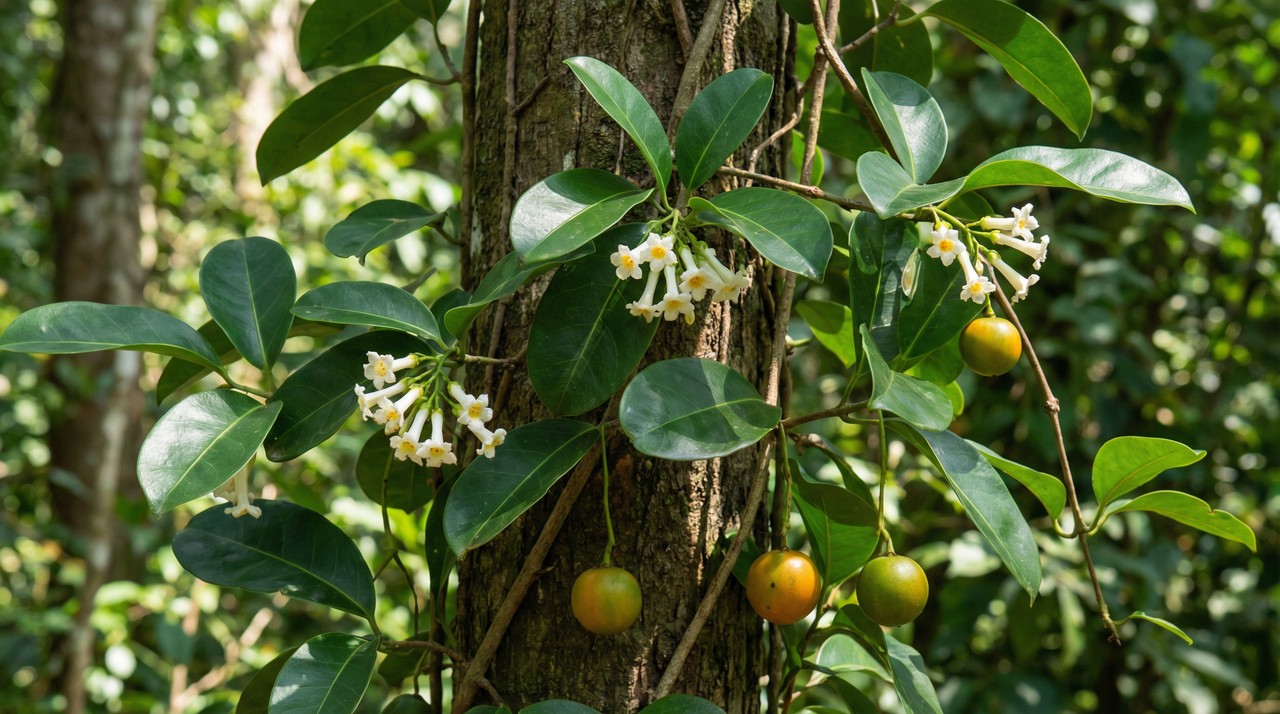
Nobody talks about Rubber Vine without eventually talking about rubber, which is fair enough, but it means the plant almost always gets introduced as a historical footnote: the African wild latex that lost out to Hevea brasiliensis and got written off by European commodity traders sometime around 1900. What that story buries is that Landolphia owariensis had been quietly doing extraordinary things in West and Central African forests long before any colonial botanist showed up with a collection jar. It is a woody liana that climbs to 100 meters, feeds elephants, bats, and monkeys with its orange-yellow fruits, patches wounds with its milky sap, and stitches the forest canopy together as it goes.[1] That's not a footnote. That's a whole ecological biography compressed into one vine.
The first time I really sat with the Apocynaceae family, I started noticing how often "toxic" and "medicinal" and "edible" occupy the same plant at the same time, sometimes the same tissue. Rubber Vine is a perfect study in that tension. The cardiac glycosides in its latex that deter herbivores are structurally related to compounds researchers are now examining for therapeutic activity.[2] The fruit is sweet and genuinely enjoyable straight off the vine, while the seeds inside demand real caution. It's a plant that rewards careful attention and punishes shortcuts, which, honestly, makes it one of the more interesting things I've encountered in twenty years of working with tropical lianas.
Origin and History of Rubber Vine (Landolphia owariensis)
Botanical Background and Native Range
Rubber Vine, known botanically as Landolphia owariensis, is a woody climbing liana in the Apocynaceae family native to the tropical rainforests of West and Central Africa, ranging from Senegal and Ghana east through Nigeria, Cameroon, and Côte d'Ivoire into the Democratic Republic of Congo, Sudan, and Angola.[3][4][5] It grows primarily in lowland humid forest below 500 meters elevation, though it tolerates conditions up to around 1,000 meters, thriving in the shaded understory and the brighter, tangled gaps where light breaks through.[5] In its element, this vine is genuinely enormous: stems can reach 20 centimeters thick and, with enough support from host trees, the vine itself can extend up to 100 meters in length.[6] Its estimated natural lifespan of 20 to 50 years is something the sources flag as approximate rather than firmly measured, and I think that kind of honest uncertainty deserves to travel with the number.
Close relatives like Landolphia ugandensis and Landolphia buchananii share the same climbing habit, latex production, and broad habitat tolerance across tropical Africa from Senegal to South Africa, with some populations reaching considerably higher elevations.[7][8] The genus as a whole is impressively adaptable, colonizing riverine forests, gallery forests, savanna woodland edges, and the deep shade of lowland rainforest with equal confidence. Globally, L. owariensis holds a Least Concern rating from the IUCN,[9] and so do its close relatives.[10] That designation is accurate at a population scale, but in practice, deforestation is chipping away at local stands in ways that aggregate statistics don't always capture. I think about that tension whenever I see a globally "secure" plant vanishing from the specific forests where communities have depended on it for generations.
Visual Characteristics
In the field, Rubber Vine announces itself through its bark and its sap before you've even looked closely at a leaf. The stems are thick, grayish-brown, and fissured, and when you nick one, milky latex wells up immediately.[4][11] Having worked with other latex-producing Apocynaceae in regenerative designs, I find that instant beading of white sap on a broken stem one of the most reliable sensory identifiers the family offers. The leaves are opposite, elliptical to ovate, 5 to 12 centimeters long, leathery, and glossy, with entire margins and an acuminate tip.[12] They're built for low-light photosynthesis, which makes sense for a plant that spends much of its early life climbing through a shaded understory toward the canopy.
The flowers are pendulous, tubular, and cream to greenish-white, roughly 4 to 6 centimeters long with reflexed corolla lobes that give them a trumpet-like silhouette in the axillary cymes.[13] Fruit is where the plant becomes genuinely striking: globose orange to yellowish berries, 2 to 6 centimeters across, with sweet edible white pulp surrounding hard seeds.[3] Some relatives in the genus produce fruit in reddish tones or display other structural variations, but that warm orange-yellow berry against glossy dark foliage makes L. owariensis unmistakable once you know it.[14]
Traditional and Cultural Uses
French botanist Ambroise Marie François Joseph Palisot de Beauvois formally described this species in 1814 from West African collections,[15] but human relationships with the vine stretch back far longer than any herbarium record. Across West and Central Africa, communities used the latex, bark, roots, and leaves to treat wounds, dysentery, malaria, fever, skin infections, rheumatism, and snakebite.[16][17] The fruit was eaten both for nutrition and as a remedy for gastrointestinal illness. Fibers from the vine served for cordage and baskets; latex functioned as an adhesive, a waterproofing agent, even a chewing gum. Among various Acholi, Baganda, Banyole, and Ibibio communities, the plant also carried ceremonial and ritual weight, appearing in initiation rites and used as a symbol of endurance.[18]
Then came the colonial rubber boom, and that careful, cumulative knowledge got steamrolled. European commercial interests recognized the latex and tapped the vines aggressively, extracting only 1 to 2 kilograms per vine annually through methods that destroyed the plant rather than sustained it.[19] Population crashes followed, and by the early twentieth century, the genus had been eclipsed commercially by the more productive and plantation-amenable Hevea brasiliensis from South America. The contrast between those two approaches, the indigenous communities managing the vine within forest systems over centuries versus the boom-era extraction that burned through populations in decades, has always struck me as one of the clearest illustrations of why traditional ecological knowledge deserves genuine respect rather than tokenism.
Fun Facts and Ecological Role
The milky latex that built and then bankrupted a commercial industry is actually the vine's own defense system. It contains cardiac glycosides and alkaloids that deter most herbivores and cause skin irritation and gastrointestinal distress when ingested raw,[20] a classic Apocynaceae strategy. The same chemistry that made colonial rubber men rich is the plant's way of saying: leave me alone.
As a structural component of African rainforests, Rubber Vine does a lot more than produce latex. Its twining stems, which range from 10 to 100 meters depending on available support,[21] create dense tangles of living architecture that provide cover, connectivity, and food-web support throughout the canopy layers.[22] In my own landscape design practice, I've noticed how large vigorous climbers create exactly this kind of scaffolding that lets understory diversity flourish beneath it, and seeing that principle operating at rainforest scale gives it a whole different dimension. The cream-colored tubular flowers attract bees, moths, and hawkmoths for pollination,[23] and the sweet orange fruit is dispersed by an impressive cast of forest animals: fruit bats, hornbills, monkeys, duikers, and, for some relatives in the genus, African forest elephants.[24][25] A vine that feeds elephants and bats simultaneously is doing serious ecological work, and that's worth holding onto as context when we talk about what it means to source or cultivate this plant responsibly.
Rubber Vine Varieties and Sourcing
If you come to rubber vine hoping to choose between named cultivars the way you might with a fig or a mulberry, the short answer is: there aren't any. Kew's Plants of the World Online, Missouri Botanical Garden, and the RHS all treat Landolphia owariensis as a single, undivided species with no recognized botanical varieties, subspecies, or horticultural cultivars.[26][27][28][29] This is a plant that has largely resisted domestication, and in my experience that's both a challenge and a reminder to look at the broader genus for the kind of diversity that plant breeders haven't gotten around to formalize yet.
Notable Landolphia Species and Forms
The main species is a genuinely impressive liana. In favorable forest conditions, L. owariensis can climb 20 to 30 meters, with some accounts placing it closer to 150 meters in optimal tropical forest;[30] stems can reach 15 cm in diameter, which gives you a sense of the structural commitment involved. The evergreen foliage is dark, glossy, and leathery, the flowers are small, fragrant, and white to cream, and the ovoid berries (3 to 5 cm) ripen with a grape-like sweetness typically during the rainy season between June and September in native ranges.[4] When I'm evaluating wild-type material for a guild, those are the traits I'm watching across multiple seasons before I recommend a particular plant to anyone.
Two close relatives offer meaningful breadth. Landolphia ugandensis is dioecious, meaning you'll need both male and female plants to get seed set in cultivation, and it has earned invasive-species status in Florida and some Caribbean islands.[31] Florida growers especially should cross-reference the FLEPPC watch list before acquiring any Landolphia material. That said, selected clones of L. ugandensis have shown real performance gains through selective breeding: latex yields of 2 to 3 kg per vine per year, maturity in 3 to 5 years, and improved resistance to Phytophthora.[32] Landolphia watsoniana presents something similar at the regional level: a coastal form with heavier lignotuber development and thicker stems, and a highland form with larger leaves and better tolerance for cooler elevations.[33] These aren't formal varieties in the taxonomic sense, just grower-observed performance patterns, but they're the kind of thing experienced tropical gardeners learn to select for over time.
Finding and Acquiring Rubber Vine Plants
Sourcing is where the reality check lands hard. Landolphia owariensis is not a nursery staple in the United States by any stretch.[34] None of the Landolphia species are CITES-listed, so there's no federal import ban, but all plant material entering the US is subject to USDA APHIS inspection and may require phytosanitary certificates from the country of origin.[35][36] Check state-level invasiveness designations too, particularly if you're in Florida or Hawaii.[37][38]
My best sourcing leads for this genus have always come through institutions rather than marketplaces. Missouri Botanical Garden, the Millennium Seed Bank at Kew, and the USDA's National Plant Germplasm System all hold Landolphia material, primarily for research purposes but sometimes accessible to serious growers willing to ask directly.[39][40][41] Verneuil Nursery has offered L. ugandensis for agroforestry use.[42] Seeds and cuttings do appear occasionally on Etsy and eBay, with seed prices typically running $10 to $25 and cuttings $15 to $40, but I've been burned enough times by recalcitrant seeds from online vendors with low viability that I now treat institutional sources as the default, not the fallback.[43]
L. owariensis itself is assessed as Least Concern by the IUCN,[44] which is good news for the species but doesn't mean wild-harvested seed from undocumented sources is the responsible choice. Supporting verified agroforestry nurseries or seed bank programs aligns with the regenerative ethic that makes this plant worth growing in the first place. The hunt takes patience, but that's true of most under-cultivated tropical vines worth knowing.
Rubber Vine Propagation and Planting (Landolphia owariensis)
Propagating rubber vine means working with a plant that has its own agenda. The seeds are small and deceptively tidy, the vine roots readily under the right conditions, but success comes down to understanding a few biological realities upfront rather than discovering them after a failed batch.
Seed Characteristics and Germination Requirements
The seeds of Landolphia owariensis are ovoid to ellipsoid, only 5-8 mm long with a smooth, glossy brown coat and a straight embryo embedded in a ruminated, horny endosperm typical of the Apocynaceae family.[45][46] Each seed also carries a coma of silky hairs, which aids wind dispersal in the wild but tells you nothing useful about germination. What matters is that these seeds are recalcitrant. They cannot be dried, frozen, or stored the way you'd store tomato or squash seeds; viability drops sharply within weeks to a few months under ambient conditions, and they're damaged by moisture content falling below 20-30% or temperatures below 10-15 °C.[47][48]
Because of this, I sow every fresh batch immediately or hold seeds moist at around 10 °C for no more than a few months. The difference in germination between truly fresh seed and seed that sat on a shelf for six months is dramatic enough that I'd rather plant too soon than wait. That hard, glossy coat also needs help: a nick with a file or a 24-48 hour warm-water soak before sowing breaks the physical dormancy reliably, pushing germination rates to 70-90% at 24-30 °C under high humidity within two to four weeks.[49][50] Skip the scarification and you're gambling on patchy results. Related species like Landolphia buchananii are similarly demanding and want immediate sowing for their 80-90% germination window,[51] which confirms this isn't a quirk of one species but a genus-wide trait worth taking seriously.
Vegetative Propagation Methods
For anyone who wants a head start and true-to-type plants, air layering is the method I'd recommend first. Because rubber vine outcrosses readily, seedlings show real variability in vigor, fruit quality, and latex production. Air layering sidesteps all of that. A wounded stem wrapped in moist sphagnum moss and treated with rooting hormone roots at 70-80% success in six to eight weeks,[50][52] and the resulting plant hits climbing size noticeably faster than a seedling. In my own propagation trials, air-layered rubber vines were climbing vigorously at around half the time it took seedlings to reach the same stage. That's not a trivial difference when you're already looking at a 3-5 year window to first fruit.
Semi-hardwood cuttings are the more accessible alternative, though less certain. Cut 10-15 cm sections with 2-4 nodes, treat with IBA at 1000-2000 ppm, and root under mist; success runs 40-70% depending on how well you control humidity and bottom heat.[53][54] Expect to lose some and plan accordingly. Grafting onto related Apocynaceae rootstocks is technically possible and can shorten the wait to fruiting by one to two years, but success rates hover between 0-10% and it's rarely used outside specialist research contexts.[55][56] File that one under "worth knowing, not worth depending on."
Soil, Site, and Light Preferences
Rubber vine comes from West African rainforest understories, and that origin shapes everything about what it wants from a planting site. Well-drained, fertile loamy or sandy-loam soil with 2-5% organic matter and a pH between 5.5 and 7.0 (ideally 6.0-6.5) is the target.[1][57] Waterlogging is a genuine problem; heavy clay that holds moisture around the roots will cause rot quickly. In heavier soils I always build a raised bed or amend aggressively, and in containers I lean on a mix of roughly 40% coir, 30% perlite, 20% bark, and 10% compost, maintaining pH near 6.0.[58][59] If you see interveinal yellowing on new leaves, test your pH; below 5.0 or above 7.5 locks up iron or manganese, and I've seen this exact chlorosis pattern in several client installations where the soil hadn't been tested before planting.
Young plants prefer partial to dappled shade, consistent with their understory origins, and 50-70% shade cloth is a sensible precaution in brighter climates to prevent leaf scorch or bleaching.[4][60] Established vines handle more sun, but getting them to that point is easier when you ease them in. A consistent layer of organic mulch around the root zone helps mimic the humid forest floor and keeps the soil from swinging between wet and bone dry.
Planting Spacing, Support, and Technique
This is not a polite little climber. Mature rubber vines reach 10-30 m in cultivation, and in the wild they can extend to 100 m, twining as they go.[61][62] Plan for that from day one. I learned this particular lesson by planting two vines about two meters apart; within three years they had tangled into a thicket that was genuinely difficult to harvest and almost impossible to train retrospectively. I now work with a minimum of 4 m between plants, and the 3-5 m spacing commonly cited for smaller plantings (roughly 400-600 plants per hectare at scale) reflects that same need for breathing room.[61]
Like many vigorous twining vines, rubber vine needs its support installed at planting. I've watched people skip this step and then wrestle a three-meter whip that had nowhere to go. Living trees, robust trellises, or sturdy poles all work; what matters is that the structure is in place before the stems need it. Start training early with soft ties while the stems are still pliable, and maintain high humidity (above 70%) and temperatures of 24-30 °C for the fastest establishment.[63][64] Proper spacing and solid support pay real dividends later in light penetration, airflow, and disease resistance once the canopy fills in.
Germination and Maturity Timeline
Under optimal warm, moist conditions, scarified seeds germinate in two to four weeks. That part is relatively quick. What follows requires patience: from seed, rubber vine typically takes three to five years to reach flowering and fruiting maturity under humid tropical conditions.[45][32][65] Across the genus, that range extends to 3-8 years depending on species and conditions. Vegetatively propagated plants, whether from cuttings or air layers, can fruit one to two years earlier, which is another argument for layering if you have access to a mature mother plant.
My air-layered plants did reach reproductive stage noticeably sooner than my seedlings, and seeing those first orange-yellow fruits on a well-supported vine felt genuinely satisfying after years of patient maintenance. The timeline is long by most kitchen garden standards, but this is a forest vine, and you're planting for a system that will outlast most annual crops by decades. Getting the propagation right and the site properly prepared up front is where that long payoff begins.
Rubber Vine Care Guide
Everything about caring for rubber vine makes more sense once you stop thinking of it as a garden plant and start thinking of it as a displaced rainforest liana. Landolphia owariensis evolved in the humid, shaded understory of West and Central African forests, and what it wants from you is a reasonable approximation of that: consistent warmth, reliable moisture, some shelter from scorching midday sun, and soil that feeds without drowning. Get those fundamentals right, and this vine rewards you with vigorous growth and those beautiful small flowers. Neglect them, and it tells you quickly.
Watering and Humidity Needs
The soil sweet spot for rubber vine is fertile, loamy, and consistently moist but never saturated, with a pH somewhere between 5.5 and 7.0.[1][66] During active growth I aim for roughly one to two inches of water per week, dropping back to once every ten to fourteen days when temperatures cool or growth slows.[1] My rule of thumb is to let the top inch or two dry slightly before watering again, which is a small but important hedge against the root rot that takes down so many Apocynaceae when growers are a little too attentive with the hose.
Humidity matters as much as irrigation here. Rubber vine naturally grows where ambient humidity exceeds 70 to 80 percent, and in cultivation it performs best between 50 and 80 percent.[67][68] As a rubber vine house plant, regular misting helps, though a pebble tray with water or a small humidifier near the container is more reliable than misting alone. Watch for yellowing leaves and soft stems as signs of overwatering, and dry, crispy leaf margins as the signal you've let it go too long between drinks.[69] One more note: this vine has low salinity tolerance, so avoid fertilizer buildup in container soil and never use softened tap water if you can help it.[70]
Sunlight and Light Requirements
Rubber vine prefers partial shade to bright indirect light, the kind of dappled situation it gets climbing through a forest understory rather than sitting in an open field.[71] Morning sun is generally fine; prolonged midday exposure is where I've seen new growth scorch fast, especially on younger vines that haven't yet built up much leaf mass to buffer temperature swings. If you're growing it indoors as a houseplant, an east- or west-facing window giving four to six hours of indirect light is the target, and supplemental grow lighting is worth considering during short winter days in northern climates.[67] A vine getting too little light tends to reach and stretch, producing long internodes and sparse foliage. Too much direct sun shows up as bleached or brown patches on the leaves within a few days.
Feeding and Nutrient Management
Rubber vine is a moderate feeder. A balanced NPK formula like 10-10-10 or 15-15-15, applied at 50 to 100 grams per mature plant diluted in water, twice during the growing season or every three to four months, keeps things ticking along.[1] Incorporating organic compost or aged manure into the soil is something I do regardless of synthetic inputs because it buffers pH, supports microbial life, and provides slow background nutrition. Nitrogen drives vegetative growth and latex production, phosphorus supports root development and rubber vine flower production, and potassium boosts stress tolerance and latex biosynthesis, so deficiencies in any of those three show up as distinct symptoms worth knowing.[72][73] If you see chlorosis that doesn't respond to standard feeding, foliar chelated micronutrients (iron, manganese, zinc) are worth trying, particularly in slightly alkaline soils.[74]
I now test soil pH and nutrients annually after watching an over-fertilized vine shift into lush, extravagant foliage at the expense of latex and fruit. Young plants get half-strength fertilizer to avoid root burn, and feeding stops or scales back sharply during winter dormancy.[75][76] More is rarely better here.
Frost Tolerance and Cold Protection
There is no softening this: rubber vine has essentially zero frost tolerance. Temperatures below 10 to 15 °C cause damage, and anything below 5 °C sustained for any length of time is lethal.[77][78] Think of it like mandevilla or tender bougainvillea: one cold night without protection and the young growth collapses and blackens by morning. I had a container specimen defoliate after a single night hovering around 8 °C, and that was in what I considered a sheltered spot. The vine is rated for USDA zones 10 to 12, and the RHS effectively treats related species as requiring frost-free or actively heated conditions.[39]
For anyone outside those zones, growing in containers that can move into a greenhouse or conservatory before temperatures drop is the practical approach. When frost threatens, heavy root mulching, frost cloth, and positioning against a south-facing wall all help, but these are last-resort measures rather than a substitute for bringing the plant indoors.[79][80]
Heat Tolerance and Summer Management
The vine thrives between 25 and 35 °C, and can handle brief spikes to around 40 °C without lasting damage.[81] Prolonged temperatures above 35 °C are where problems begin: leaf scorch, wilting, reduced photosynthesis, and a measurable drop in latex yield. Seedlings and plants coming into flower are particularly vulnerable above 32 to 35 °C.[82] The critical thing to understand is that the plant's tolerance of heat in its native habitat comes with the buffering of a humid forest canopy and moist soil; dry heat is a completely different problem.
In my hot, humid summers I run 40 percent shade cloth over young vines and keep a consistent layer of organic mulch over the root zone, which genuinely changed how the plants looked through the worst weeks. Companion planting with taller species to create dappled shade, consistent drip irrigation, and understory placement all replicate what the forest does naturally.[83]
Pruning, Training, and Maintenance
I learned the hard way that timing matters with pruning on this vine. Early on I made some fairly aggressive cuts during a wet period and ended up with fungal issues at the wound sites that set the plant back significantly. Now I prune only during the dry season or late winter, removing dead, diseased, or overcrowded stems and cutting lateral shoots back to two or three nodes with sanitized shears at a 45-degree angle above a bud.[84][85] Light pruning after flowering improves airflow and branching without touching more than 25 to 30 percent of old wood, which is where fruit forms.
A word on the latex: wear gloves and eye protection every single time you prune. The milky sap is a genuine skin and eye irritant that I've experienced firsthand, and it demands respect regardless of how quick the job looks. Rubber vine can climb 5 to 10 meters per year once established in good conditions, so sturdy support structures are non-negotiable, and guiding young stems horizontally encourages branching rather than a single vertical race to the top.[86] In cultivation, keeping plants at 5 to 10 meters is realistic and manageable; sustainable pruning also supports the vine's regenerative capacity, which matters given that most Landolphia are still primarily wild-harvested with limited formal cultivation data behind them.[87]
Seasonal Rhythm and Overwintering
Flowering peaks during the wet season, roughly May through October, with the small white-to-yellowish rubber vine flowers appearing in axillary clusters; fruit follows four to six months later, ripening most abundantly in the dry season from November through April.[88] I've noticed that giving the vine slightly more light during the drier months, when the natural canopy would thin somewhat, seems to encourage better fruit set, which aligns with the research showing that increased sun exposure in the dry season can stimulate reproductive growth.[89] These patterns vary by region and microclimate, so treat them as rough guides rather than a fixed calendar.
For growers in marginal or temperate climates, overwintering means moving containers into a greenhouse or conservatory, keeping temperatures above 15 °C, reducing watering substantially, and cutting fertilizer to nothing until spring growth resumes.[68] Protect from cold drafts, which cause damage almost as fast as actual frost. Plan for the long game with this plant: vegetative growth dominates the early years, with reproductive maturity typically arriving somewhere between three and eight years depending on species and growing conditions.[90] Patience is part of the care guide.
Rubber Vine Harvesting: Timing, Technique, Yield, and Flavor
When to Harvest Rubber Vine Fruits and Latex
The phenological rhythm of Landolphia owariensis is what I'd want any grower to internalize before anything else. Flowering happens during the rainy season, typically May through July in West Africa, and the fruit that follows takes 4 to 6 months to fully ripen, putting peak harvest in the October-to-December dry season window.[91][92] Across the genus, related species follow similar patterns: Landolphia ugandensis peaks July through October and Landolphia buchananii June through September, each tethered to the transition between wet and dry periods.[93][94] I've found it useful to mark flowering on a calendar when working with tropical climbers like this, because by the time the vine is actively fruiting the visual cues matter more than any date. In humid conditions especially, the shift from green to yellow-orange is only part of the story; the first gentle softening of the skin is the cue I trust most. A fruit that yields slightly to thumb pressure and separates without tugging is ready. One that resists is still building sugars, and harvesting early will give you tart, unsatisfying pulp.
How to Tap Latex and Pick Fruits from Rubber Vine
Rubber vine gives two distinct harvests from the same plant, and how you approach each one determines whether the vine stays productive for years. For latex, you're waiting on maturity: stems need to be at least 15 cm in diameter, which generally means vines 3 to 5 years old. Spiral, herringbone, or V-shaped incisions into the bark every 2 to 4 days during the rainy season allow the white sap to flow and coagulate without exhausting the vine.[95][96] I always wear gloves when tapping because the milky rubber vine sap can irritate skin and eyes; that's not folklore, the chemistry is real and worth respecting. And from working with other vigorous tropical lianas, I've noticed that the bark is deceptively thin despite how robust the stems look. A sharp, sterilized blade makes clean cuts that heal well for the next tapping cycle. A torn or ragged incision invites disease and sets back the vine's recovery.
Fruit picking is more straightforward but physically demanding. These vines climb 10 to 30 meters or more, so reaching a productive canopy layer takes either training the vine to a lower structure or being comfortable working at height.[97] Hand-picking ripe fruits gently prevents bruising; a well-managed vine can yield 5 to 10 kg of fruit per year, and selective pruning that encourages branching pushes yields toward that upper range for both fruit and latex.[98] After latex collection, coagulate it quickly using formic acid or alum, then press into sheets and dry at 40 to 50°C under 40 to 60% humidity to prevent mold. I learned the hard way with a related climber that cutting corners on post-harvest humidity control turns a good latex harvest into a moldy mess. Coagulated latex stores best at 4 to 10°C.[99][100]
Expected Yields, Flavor Profile, and Post-Harvest Handling
The ripe fruits are oval to round fleshy berries, typically 2 to 5 cm long, with juicy, moderately fibrous pulp that's sweet-tangy with a mild citrus edge and a faint astringent finish.[4][101] My best comparison for readers unfamiliar with the fruit is somewhere between a ripe passionfruit and a tart citrus; sweet enough to enjoy raw, with enough acidity to keep it interesting. Related species pull in different directions: Landolphia ugandensis adds floral, muguet-like aromatic notes from its esters and terpenes, while Landolphia buchananii produces berries that ripen to deep purple-black with a gelatinous, mildly chewy pulp.[102][103] Most of what we know about flavor across the genus comes from ethnobotanical observation rather than controlled sensory studies, so treat specific descriptions as directional guides rather than precise profiles.[104]
Once picked, handle the rubber vine fruit gently and store at 10 to 15°C with 85 to 90% relative humidity; kept that way, they'll hold for 2 to 3 weeks.[100] Keep them away from ethylene-producing fruits like bananas and apples, which accelerate ripening and shorten that window. The pulp separates easily from the seeds and skin when ripe, but the latex that runs through the rest of the plant is still present in damaged tissue, so handle bruised fruit with care and wash your hands after. That separation between the edible pulp and the irritating sap is the line every harvester needs to respect.
Rubber Vine (Landolphia owariensis) Preparation and Uses
Edible Parts and Culinary Applications
The safest and most rewarding way to engage with rubber vine is through its fully ripe fruit pulp, and honestly, it's the part I'd point any curious grower toward first. The tough outer skin of the berry gives way to a soft, white pulp that deepens to yellowish-orange at peak ripeness.[3][105] The flavor lands somewhere between pineapple and mild citrus with refreshing sweetness and almost no acidity. If you know Surinam cherry or passionfruit from a Central Florida garden, think of those flavors but gentler, rounder, less assertive. Across West and Central Africa, communities have eaten this pulp fresh for generations, and the related Landolphia ugandensis and Landolphia buchananii offer very similar yellow-orange fruits with that same mildly tangy, pineapple-like sweetness throughout East and Central Africa.[106][107]
Nutritionally, the pulp delivers around 50 to 100 mg of vitamin C per 100 g alongside carbohydrates, fiber, potassium, magnesium, antioxidants, and modest protein.[108][109] Traditional preparation is refreshingly simple: crack the fruit open, scoop the pulp, and eat it raw or press it into juice. Jams, porridges, desserts, and fermented beverages all draw on the same base.[110][111] I mark the expected harvest window on my calendar the same way I do for figs or papaya, because peak ripeness isn't just about flavor here; it's your primary safeguard against residual latex compounds in less-developed fruit.
Beyond the pulp, young leaves, seeds, and roots have traditionally been consumed, but each requires thorough preparation. Young leaves may be cooked in soups or stews after boiling for 10 to 15 minutes to neutralize latex residues; seeds are occasionally roasted or boiled; roots have served as famine food after extended boiling or roasting.[112][113] The data supporting these uses is thinner than for the fruit, and I'd treat them as traditionally documented rather than freely replicable without local guidance.
Any time I work with a plant that produces milky latex, I extend it the same caution I give oleander or milkweed. The cardiac glycosides, alkaloids, and irritants present across the Apocynaceae are real; unripe parts, excessive latex contact, or ingestion of improperly prepared material can cause nausea, vomiting, diarrhea, or cardiac effects.[114][115] I label every Landolphia seedling I grow precisely because look-alike risks are genuine; some Ficus, Raphionacme, and other Landolphia relatives can be confused with this species in the field.[116][117] Confirm opposite leaves, milky latex when cut, and the characteristic tubular flowers before harvesting anything. When foraging in unfamiliar territory, consult a local botanist or experienced community member.
Traditional Medicinal Preparations
Traditional practice across West and Central Africa has used decoctions prepared from bark, roots, and other plant parts in documented dosage ranges of 10 to 20 ml per adult, administered one to three times daily, while diluted latex preparations tend toward 1 to 2 ml doses.[118][119] A typical bark decoction involves boiling 20 to 50 g of chopped bark in one liter of water for 20 to 30 minutes.[120] These figures feel consistent with preparation approaches I've encountered across other West African medicinal barks, where starting low and observing response is the universal principle. The boiling step echoes the same processing logic used for edible leaves and roots: heat degrades the compounds that cause harm when raw. That said, these preparations operate within a tradition that accounts for local plant populations, seasonal variation, and individual context in ways a written dosage range cannot fully capture. Treat them as a window into an established system of knowledge, not as a protocol to replicate without professional medical guidance.
Non-Food and Industrial Uses
The vine's common name is no accident. Landolphia owariensis was commercially tapped for natural rubber across colonial West Africa, with the latex coagulated using acids like acetic or formic acid, then milled and air-dried into sheets.[112][95] Landolphia latex carries higher resin content than Hevea brasiliensis, requiring extra washing steps during processing, which partly explains why Hevea eventually displaced it at commercial scale.[121] Related species including Landolphia ugandensis and Landolphia buchananii were similarly harvested across East and Central Africa, and in some cultural contexts the latex served as an arrow poison or a chewing gum substitute.[122] I haven't tapped latex myself, but the processing steps described in the ethnobotanical literature parallel techniques I've seen with other latex-producing plants closely enough that the chemistry feels familiar. The fibrous stems have parallel utility across the genus: ropes, baskets, fishing nets, and cordage are all documented uses that continue to support rural livelihoods in the vine's native range.[123][110] That combination of practical material yield and cultural continuity is exactly the kind of layered functionality that makes a structurally demanding vine worth understanding deeply.
Rubber Vine Health Benefits and Medicinal Uses
Rubber Vine sits in that fascinating and slightly uncomfortable territory where traditional wisdom, promising lab data, and genuine toxicological caution all collide. As a liana with deep roots in West and Central African medicinal practice, Landolphia owariensis has accumulated a substantial body of ethnobotanical use over centuries. What modern phytochemistry has revealed about why it works is compelling. What it hasn't yet revealed, through rigorous human clinical trials, is whether any of those effects translate safely into therapeutic applications for people outside traditional contexts. That gap matters enormously, and I'll come back to it.
Key Phytochemicals in Rubber Vine: Alkaloids, Triterpenoids, and Cardiac Glycosides
The chemistry of Rubber Vine is genuinely complex. Phytochemical analysis of Landolphia owariensis reveals alkaloids (including voacangine, ibogamine, coronaridine, and landolphine), flavonoids, tannins, saponins, steroids, and triterpenoids, with indole alkaloids being the dominant bioactive compounds.[124][125] Specific alkaloids such as voacangine and coronaridine show documented cytotoxic and antitumor activity in preclinical settings.[126] The triterpenoid fraction adds lupeol, β-amyrin, ursolic acid, and oleanolic acid, all of which carry anti-inflammatory, hepatoprotective, and antimicrobial properties in their own right.[127] Flavonoids including quercetin, kaempferol, and rutin round out the antioxidant contribution.[128]
The latex itself contains 30-40% caoutchouc (natural rubber) alongside alkaloids, resins, and cardiac glycosides.[124] Alkaloid concentrations aren't fixed. Populations under dry-season stress appear to produce higher levels of alkaloids and saponins, essentially ramping up chemical defenses when resources are tight,[129] and Ugandan populations of related Landolphia ugandensis have shown alkaloid levels 20-30% higher than Kenyan populations.[130] That kind of geographic and seasonal variability goes a long way toward explaining why traditional dosages and effects can differ so dramatically from one region to the next.
Traditional Medicinal Uses and Modern Research
Across West Africa, Rubber Vine has a long history as a medicinal plant. Stem bark and root decoctions have been used to treat inflammation, pain, wounds, malaria, diarrhea, rheumatism, and fever.[131] Preclinical research has actually done a decent job of explaining the mechanisms behind several of these uses. Leaf and bark extracts inhibit pro-inflammatory cytokines (TNF-α and IL-6) and COX-2 enzyme activity, with effects in animal models reducing paw edema by 40-60%, comparable to diclofenac.[125][132] Analgesic activity has been demonstrated in animal models as well, with alkaloids like voacangine contributing through opioid receptor modulation.[132]
The antimalarial data is particularly intriguing. Leaf and stem extracts show in vitro activity against both chloroquine-sensitive and resistant strains of Plasmodium falciparum, with IC50 values of 5-15 μg/mL, apparently interfering with parasite heme detoxification.[133] Broad-spectrum antimicrobial activity against Staphylococcus aureus and E. coli has been confirmed in vitro,[134] and wound healing studies in rat models show enhanced collagen synthesis and reduced inflammation, which aligns with traditional latex application to wounds.[135]
My landscape-design background has taught me to treat promising preclinical results with genuine respect and real skepticism in equal measure. No standardized extraction protocols, no pharmacokinetic studies, no drug-interaction studies, and essentially no controlled clinical trials in humans exist for this species.[136] The lab results are genuinely interesting. But interesting is not the same as proven safe and effective for human therapeutic use, and I would never recommend medicinal use without that clinical backing. If you're drawn to this plant's medicinal history, work with a qualified practitioner who understands both the traditional knowledge and its evidential limits.
Nutritional Profile of Rubber Vine Fruit
The ripe fruit pulp presents a much simpler safety profile than the rest of the plant. The yellowish to orange berries are traditionally consumed fresh across parts of West and Central Africa,[137] and I'd describe the fruit's primary gift as hydration and enjoyment rather than exceptional nutrient density. At roughly 80-85% water with 10-15% simple carbohydrates, 1-2% protein, and 2-3% dietary fiber per 100g,[138] this is the kind of wild snack you reach for on a hot afternoon in a food forest, not a superfood to build a supplement around. The mineral profile is modest but real: potassium leads at approximately 250-300 mg/100g, with calcium, magnesium, and iron also present.[139] Vitamin data for this specific species is essentially absent from major databases, though related species like Landolphia ugandensis show modest vitamin C levels of 20-50 mg/100g.[140] The pulp does contain flavonoids, tannins, and phenolic compounds that contribute antioxidant activity,[141] so there's more going on than sugar and water. In my edible food forest designs, I've recommended similar high-moisture tropical fruits specifically for the role they play in dietary variety and seasonal foraging rather than their macronutrient numbers, and Rubber Vine fruit fits that same niche comfortably.
Safety Considerations and Precautions
The fruit pulp being edible does not mean the whole plant is safe, and this distinction is non-negotiable. The latex of Landolphia owariensis contains cardenolides (cardiac glycosides), alkaloids including voacangine, and cyanogenic glycosides that can release cyanide when metabolized.[142][143] Skin and eye contact with the latex can cause contact dermatitis and irritation, with potential for allergic reactions including cross-reactivity with other latex-producing plants.[144] I've worked with enough Apocynaceae vines in tropical landscapes to treat this seriously. Gloves and eye protection are not optional when pruning or tapping.
Ingestion of non-fruit plant parts can cause nausea, vomiting, abdominal pain, and diarrhea,[145] and in severe cases the cardenolide content carries real potential for cardiac arrhythmias.[146] Animal studies show a relatively high acute LD50 (greater than 2000 mg/kg in rodents), so the plant isn't acutely lethal in the way some Apocynaceae members are,[147] but human toxicity data remains sparse and largely extrapolated from the broader family. Possible interactions with anticoagulants, antihypertensives, and cardiac medications exist due to additive effects.[148]
Because of the cardiac glycoside content and the complete absence of safety data in human pregnancy, I strongly advise against any medicinal or supplemental use of Rubber Vine if you are pregnant, breastfeeding, or managing a heart condition. Children, people with latex allergies, and anyone with compromised liver or kidney function should also exercise particular caution.[149] If latex contact occurs, irrigate immediately with water. For any ingestion beyond ripe fruit pulp, seek medical attention.[150] Traditional knowledge around this plant is real and valuable, but it developed within specific cultural contexts, under local expert guidance, and with preparation methods that modern growers may not have access to.
Rubber Vine Pests and Diseases
Natural Pest Resistance in Rubber Vine
The first thing you notice when you prune a rubber vine is the latex. Within seconds of a clean cut, that milky sap starts welling up and coagulating at the wound, and any caterpillar or ant that wanders into it quickly retreats. That's not coincidental. The latex of Landolphia owariensis is loaded with alkaloids, cardenolides, and terpenoids that function as both a physical barrier and a chemical deterrent against herbivorous insects.[151][152][153] I've worked with other Apocynaceae that share this chemistry, and rubber vine stands out even in that company.
That said, the defense isn't absolute. Aphids, scale insects, mealybugs, stem borers, spider mites, and leaf beetles all find their way in, and in unmanaged plants these sucking and chewing pests can slash latex yield by 30 to 50 percent.[154][155] Some also vector viral diseases. Across the Landolphia genus, pest pressure is measurably lower in native forest habitats than in cleared or monoculture settings,[156][157] which tells you something useful: a stressed or isolated vine is a more vulnerable vine. Waterlogged roots, drought, nutrient deficiencies, and harvest wounds all erode the plant's defenses and invite the organisms that a healthy, well-sited specimen would mostly shrug off.[158][159]
Common Diseases and Management Approaches
Fungal diseases are where rubber vine is genuinely vulnerable. Root rot from Fusarium and Phytophthora spp., leaf spot from Cercospora or Colletotrichum, and anthracnose all show up regularly, especially in humid conditions with poor drainage.[160][161] Symptoms run from yellowing and leaf curl to twig dieback and basal stem cankers. I'll admit I've had to learn through soil testing on my own vines how to distinguish true fungal infection from iron chlorosis in alkaline pockets -- they look remarkably similar before you dig into the root zone. Humidity above 80 percent and temperatures outside the 22 to 30°C sweet spot push susceptibility higher across the genus,[162][163] though L. ugandensis shows notably better tolerance to root rot than most of its relatives.
Viral diseases are less well-documented for this species specifically; most of what we infer comes from broader Apocynaceae family patterns, and data on close relatives like L. watsoniana is particularly sparse.[164][165] There are no bred disease-resistant cultivars for any Landolphia species, so when I select planting stock I look for individuals from wild-type germplasm that show strong vigor and clear, unblemished foliage under observation. It's not breeding in any formal sense, but it's the best tool available right now.
Prevention is everything here. Good drainage, spacing plants 3 to 5 meters apart with rows 4 to 6 meters wide, and pruning during the dry season to open airflow and remove diseased material will do more than any spray schedule.[166][159] I pair my vines with understory companions chosen to encourage predatory insects and break up monoculture pressure. When fungal spots do appear, copper-based fungicide applied judiciously handles most outbreaks; neem oil covers the sucking insects without torching the beneficial fauna.[167][168] The cultural practices aren't just sustainable ideology; they're what actually keeps this plant productive and its latex quality intact.
Rubber Vine in Permaculture Design
Before designing guilds or assigning ecosystem functions, confirm you can actually grow this plant. For rubber vine, that question has a narrow answer. Landolphia owariensis is suited to USDA zones 10a through 12, with a minimum temperature tolerance around 30°F (-1°C) and an optimal range of 75-86°F.[169][122] It needs 1,500-2,500 mm of annual rainfall spread across 8-10 months, relative humidity in the 80-100% range, and no more than a few months of dry season.[170] That's a profile that slots cleanly into tropical rainforest and monsoon climates; savanna margins push some congeners, but owariensis itself is emphatically not a dry-climate plant.
Climate Requirements and Hardiness Zones
In practical North American terms, you're looking at southern Florida, Hawaii, and a few sheltered spots in Puerto Rico. Even in Central Florida I've found that one unexpected cold snap can set a tender tropical climber back months. Rubber vine's sensitivity to cold drafts makes it a risky proposition anywhere that isn't reliably frost-free year-round. Related species like Landolphia ugandensis and Landolphia buchananii share the same broadly tropical demands, with only minor variation in temperature minima.[171] The pattern is consistent across the genus: these are rainforest plants that haven't made evolutionary peace with cold.
The Florida cultivation record also comes with a serious flag. Rubber vine has naturalized in Florida and is regarded as potentially invasive there.[172][34] I've watched other fast-growing lianas escape into subtropical landscapes faster than anyone anticipated, and that experience makes me take these invasiveness designations seriously. If you're in a zone where this vine can thrive, the site-selection question isn't just "will it grow" but "what happens if it spreads beyond my intended area." That framing should sit at the center of every design decision you make with it.
Forest Layer, Guild Placement, and Ecosystem Functions
Within a food forest, rubber vine belongs in the climber layer, and it occupies that layer with ambition. As a woody twining liana in the Apocynaceae, it moves from the understory up into the forest canopy, typically reaching 20-50 meters and occasionally pushing toward 100 meters when it has tall trees to climb.[173][1] In its native West and Central African rainforests it physically connects canopy trees, creating corridors for wildlife and contributing to the three-dimensional complexity that makes a forest a forest rather than a plantation.[174]
That connectivity function has real permaculture value. The vine provides habitat and foraging resources for birds, mammals, insects, and primates, contributes to seed dispersal, and helps stabilize soil on slopes through its root system.[175] It doesn't fix nitrogen, but it builds soil steadily through rapid leaf turnover and significant leaf litter biomass that can be mulched back into the system.[176] The yields themselves are surprisingly diverse: edible sweet fruit, latex historically used for natural rubber, stem fiber for cordage and basketry, and plant parts with well-documented traditional medicinal applications across West and Central Africa.[177][178]
One of the more remarkable ecological gifts this vine brings is its bat-pollination syndrome. The flowers open nocturnally, emit a strong musky scent, offer abundant nectar, and present white tubular corollas that are classic chiropterophily adaptations; bat-exclusion experiments confirm bats as the primary pollinators, with self-incompatibility and protandry further promoting genetic diversity through outcrossing.[179][180] In regions where fruit bats are present and active, the vine sets fruit reliably. In bat-scarce areas, I've found that manual pollination with a soft brush at night, working the flowers while they're freshly open, can meaningfully improve fruit set. It's a bit unusual as a garden task, but it works, and it's the kind of hands-on intervention that distinguishes a managed food forest from a wild planting.
Integrating rubber vine into a designed system requires thinking carefully about structure from day one. It needs robust, permanent vertical support to climb; without strong trellises or established host trees, the plant becomes a tangled sprawl that's both difficult to manage and nearly impossible to harvest from cleanly.[181][182] Careful siting matters too. In its native habitat this vine competes aggressively with host trees for light and nutrients, which means in a food forest it can suppress understory crops if left unchecked. I'd pair it with shade-tolerant species beneath its canopy, plants that actually benefit from filtered light and elevated humidity, rather than trying to grow sun-hungry fruiting shrubs in its shadow.
The safety considerations are non-negotiable. The milky latex can cause skin irritation and serious eye damage, so gloves and eye protection are essential any time you're pruning or working with cut stems.[1] I think of it similarly to working with frangipani or other Apocynaceae: the family has a reputation for a reason, and a little preparation prevents a lot of discomfort. And given what Florida's invasiveness record shows, any grower outside this vine's native range should treat it as a closely monitored specimen rather than a set-and-forget element. Monitor for seedlings, manage spread proactively, and know your local regulations before planting.
The Vine That Reminded Me Colonialism Leaves Marks on Plants Too
I keep coming back to the fact that this liana fed and healed people for centuries before anyone with a ledger showed up and decided it was a commodity. The fruit is still sweet. The medicine still works. And somewhere in a West African forest right now, a bat is doing its quiet, essential job among those cream-colored flowers, completely indifferent to the whole human story. That matters to me, in ways I find hard to articulate but impossible to ignore.
Sources 182
- Kew - Landolphia owariensis ↩
- Journal of Ethnobiology and Ethnomedicine - Landolphia medicinal uses ↩
- Landolphia owariensis ↩
- Landolphia owariensis - Useful Tropical Plants Database ↩
- Plants of the World Online - Landolphia owariensis ↩
- Kew Science - Plants of the World Online: Landolphia owariensis ↩
- Plants of the World Online: Landolphia buchananii (Hallier f.) Stapf ↩
- Landolphia ugandensis in the World Checklist of Selected Plant Families ↩
- Landolphia owariensis P. Beauv. ↩
- Landolphia buchananii ↩
- PROTA - Plant Resources of Tropical Africa ↩
- African Plants Database ↩
- Flora of Tropical East Africa, Volume 4 ↩
- Landolphia buchananii - Wikipedia ↩
- Landolphia: a source of African rubber ↩
- Ethnobotanical Uses of Landolphia owariensis in West Africa ↩
- Medicinal Plants of Nigeria: Traditional Uses and Pharmacology ↩
- Wild Rubber Plants in Africa: Historical Overexploitation and Sustainability ↩
- History of Landolphia Rubber ↩
- Alkaloids from Landolphia buchananii ↩
- Lianas of African Rainforests ↩
- Ecological Roles of Lianas in Tropical Forests ↩
- Pollination Ecology in Tropical Apocynaceae ↩
- Seed Dispersal by Bats in African Forests ↩
- Fruit Dispersal by Elephants in Congo Basin Rainforests ↩
- Kew Science: Plants of the World Online ↩
- Missouri Botanical Garden Plant Finder ↩
- Royal Horticultural Society Plant Finder ↩
- USDA Germplasm Resources Information Network (GRIN) ↩
- Plants of the World Online - Kew Science ↩
- CABI Invasive Species Compendium: Landolphia ugandensis ↩
- Domestication Potential of Landolphia ugandensis for Rubber Production ↩
- Landolphia: Its Varieties and Their Yields - M.A. BINO ↩
- USDA Plants Database - Landolphia owariensis ↩
- Importing Plants and Plant Products into the United States ↩
- CITES Appendices ↩
- Florida Exotic Pest Plant Council's 2023 List of Invasive Plant Species ↩
- Hawaii Invasive Species Council - Noxious Weed List ↩
- Missouri Botanical Garden Plant Finder ↩
- Millennium Seed Bank Search ↩
- Landolphia ugandensis in GRIN ↩
- Landolphia ugandensis ↩
- Landolphia owariensis Seeds ↩
- Landolphia owariensis - IUCN Red List ↩
- Flora of Tropical East Africa - Apocynaceae ↩
- Seed Morphology of African Apocynaceae ↩
- Seed Storage of Landolphia owariensis P. Beauv. ↩
- Recalcitrant Seeds: Biology and Storage ↩
- Seed Germination and Seedling Emergence of Landolphia owariensis P. Beauv. ↩
- Propagation of Tropical Vines: Landolphia Species ↩
- Landolphia buchananii ↩
- Horticultural Practices for African Rubber Plants ↩
- Vegetative Propagation Techniques for Tropical Lianas: Case Study of Landolphia Species ↩
- Propagation of Tropical Fruit Trees and Vines ↩
- Grafting Techniques for Apocynaceae Species in Tropical Regions ↩
- Graft Compatibility in Apocynaceae Family Plants ↩
- Soil Requirements for Tropical Vines in Africa ↩
- Growing Tropical Vines in Containers ↩
- Cultivation of Tropical Lianas: Apocynaceae Species ↩
- Light Requirements and Stress Responses in Understory Vines ↩
- Landolphia owariensis: A Review of Its Botany, Ecology, and Utilization ↩
- Cultivation of Non-Timber Forest Products in Tropical Africa ↩
- Cultivation of Landolphia ugandensis in East Africa ↩
- Support Systems for Perennial Vines ↩
- Phenology and Reproduction of Landolphia Species in Tropical Forests ↩
- Plants of the World Online - Kew Science ↩
- RHS – Growing tropical climbers: lianas care guide ↩
- Landolphia ugandensis Care Guide ↩
- RHS – How to prevent and treat overwatering ↩
- Tropical Plant Care - IFAS Publication 333 ↩
- Kew – Cultivation guide for Landolphia ↩
- Nutrient Requirements in Rubber Tree (Hevea brasiliensis) Latex Production ↩
- Macronutrient Functions in Plant Growth ↩
- Micronutrient Deficiencies in Rubber-Producing Plants ↩
- Growing Climbers and Vines ↩
- Cultivation of Tropical Lianas: Landolphia Species ↩
- Landolphia owariensis ↩
- Frost Damage in Tropical Plants: Symptoms and Management ↩
- Frost Protection for Tropical Perennials ↩
- Frost Tolerance in Tropical Plants - Kew Royal Botanic Gardens ↩
- Stress Responses in Tropical Vines ↩
- Tropical Lianas: Physiology and Heat Tolerance ↩
- Heat Stress Management in East African Flora ↩
- Pruning Techniques for Tropical Vines ↩
- Pruning and Training Techniques for Tropical Vines ↩
- Cultivation of Landolphia owariensis ↩
- Sustainable Harvesting of Non-Timber Forest Products: Landolphia ↩
- Flora of West Tropical Africa ↩
- Lianas and Climate Change in Tropical Forests ↩
- African Rubber Plants: Hardiness and Overwintering ↩
- Phenology and Fruiting Patterns of Landolphia owariensis in West African Forests ↩
- Landolphia owariensis P. Beauv. ↩
- Flora of Tropical East Africa: Apocynaceae ↩
- Plant Resources of Tropical Africa: Fruits ↩
- Landolphia owariensis: Extraction and Processing of Latex ↩
- Tapping and Processing of Natural Rubber from Landolphia spp. ↩
- Fruit Production Timelines for Tropical Vines: Case of Owari Rubber Vine ↩
- Propagation and Cultivation of Indigenous Fruit Trees in Tropical Africa ↩
- Post-Harvest Management of Natural Rubber Latex ↩
- Storage Conditions for Tropical Latex-Producing Plants ↩
- Fruits of Tropical Africa ↩
- Volatile Compounds in Tropical Fruits of Apocynaceae Family ↩
- Plants of the World Online - Landolphia buchananii ↩
- Sensory and Chemical Profile of African Rubber Vines ↩
- Edible Fruits of Tropical Africa ↩
- Useful Plants of Tropical Africa - Landolphia ugandensis ↩
- Landolphia ugandensis - Wikipedia ↩
- Nutritional and Phytochemical Evaluation of Landolphia owariensis P. Beauv. (Apocynaceae) Fruits ↩
- Vitamin C Content in Tropical Fruits: Focus on Underutilized Species like Landolphia spp. ↩
- Ethnobotanical Survey of Landolphia species in Nigeria ↩
- Wild Edible Fruits of West Africa: Potential for Food Security ↩
- Ethnobotanical Uses of Landolphia owariensis in West Africa ↩
- Traditional Uses of Apocynaceae Plants in Nigeria ↩
- Toxicity of Landolphia owariensis Latex in Traditional Medicine ↩
- Poisonous Plants of Africa: Apocynaceae Family ↩
- Landolphia owariensis entry ↩
- Apocynaceae of Africa: Toxicity and Traditional Uses ↩
- Medicinal Plants of Tropical West Africa ↩
- Ethnobotanical uses of Landolphia owariensis and Landolphia ugandensis in West and Central Africa ↩
- Traditional Uses of Apocynaceae Species in Uganda ↩
- Rubber Production from Non-Hevea Species ↩
- Landolphia ugandensis - Useful Tropical Plants Database ↩
- Traditional Uses of Apocynaceae in Tropical Africa ↩
- Alkaloids from Landolphia owariensis and their biological activities ↩
- Phytochemical and pharmacological studies on Landolphia owariensis ↩
- Phytochemical and Pharmacological Review of Landolphia owariensis ↩
- Isolation of Triterpenoids from Landolphia owariensis Stem Bark ↩
- Phytochemical and Pharmacological Review of Landolphia owariensis ↩
- Seasonal Variation in Secondary Metabolites of Tropical Vines ↩
- Environmental Influences on Phytochemistry in Apocynaceae ↩
- Ethnopharmacological Survey of Landolphia Species in West Africa ↩
- Anti-inflammatory and analgesic activities of Landolphia owariensis leaf extract ↩
- Antimalarial and Anti-inflammatory Activities of Landolphia owariensis Leaf Extract ↩
- Antioxidant and Antimicrobial Properties of Landolphia owariensis Bark Extracts ↩
- Wound healing potential of Landolphia owariensis leaf extract in rats ↩
- UCT Methodology Paper: Phytochemical Research Gaps ↩
- Landolphia owariensis: A Review of Its Botany and Uses ↩
- Nutritional Potential of Some Wild Fruits in Sierra Leone ↩
- Nutritional Composition of Landolphia owariensis Fruit ↩
- Nutritional Composition of Selected Wild Fruits in Uganda ↩
- Phytochemical Screening and Antioxidant Activity of Landolphia owariensis P. Beauv. ↩
- Latex of Landolphia owariensis: A Traditional Source of Rubber ↩
- Toxins in Apocynaceae: Cardenolides and Irritants ↩
- Latex Irritants in Tropical Plants ↩
- Apocynaceae Family Toxicity ↩
- Toxicity of Apocynaceae Plants ↩
- Evaluation of the Acute Toxicity of Liana Bark of Landolphia owariensis P. Beauv. (Apocynaceae) ↩
- Phytochemical and Pharmacological Studies on Landolphia owariensis ↩
- Plant Toxins in the Apocynaceae Family ↩
- Latex Allergy in the Apocynaceae Family ↩
- Latex Defense Mechanisms in Landolphia Species ↩
- Latex Defense in Tropical Vines ↩
- Latex as a Plant Defense Against Herbivores in Apocynaceae ↩
- Pests and Diseases of Tropical Crops ↩
- Insect Pests of Rubber-Producing Plants in West Africa ↩
- Landolphia: A Potential Source of Natural Rubber ↩
- Insect Herbivory on Tropical Lianas: The Role of Latex ↩
- Diseases of Rubber Trees and Allied Plants ↩
- Pest Management for Rubber Plants in Sub-Saharan Africa ↩
- Landolphia owariensis: A Review of Its Botanic, Ecological and Ethnopharmacological Properties ↩
- Diseases of Landolphia Species ↩
- Phytophthora Diseases in Perennial Crops ↩
- Diseases of Rubber-Producing Plants in Africa ↩
- Genetic Diversity and Conservation of Landolphia owariensis ↩
- Diseases of Rubber Plants in Tropical Regions ↩
- Pest and Disease Management in Non-Hevea Rubber Species ↩
- Management of Fungal Diseases in Perennial Crops ↩
- Horticultural Management of Apocynaceae Vines ↩
- Landolphia owariensis ↩
- Ecological Requirements of Tropical Lianas ↩
- Landolphia buchananii - Tropical Plant Database ↩
- Landolphia owariensis in Florida - Florida Invasive Species Partnership ↩
- Landolphia owariensis P. Beauv. ↩
- The Ecology of Lianas in Tropical Forests ↩
- Ecological Roles of Lianas in Tropical Forests ↩
- Ecological Roles of Lianes in Tropical Forests ↩
- The Rubber Vine (Landolphia spp.) in West Africa ↩
- Ethnobotanical Uses of Landolphia Species in Uganda ↩
- Pollination Ecology of Landolphia owariensis in West African Forests ↩
- Chiropterophily in African Apocynaceae: The Case of Landolphia ↩
- Agroforestry Species - Landolphia owariensis ↩
- Liana-Host Tree Interactions in Rainforests ↩