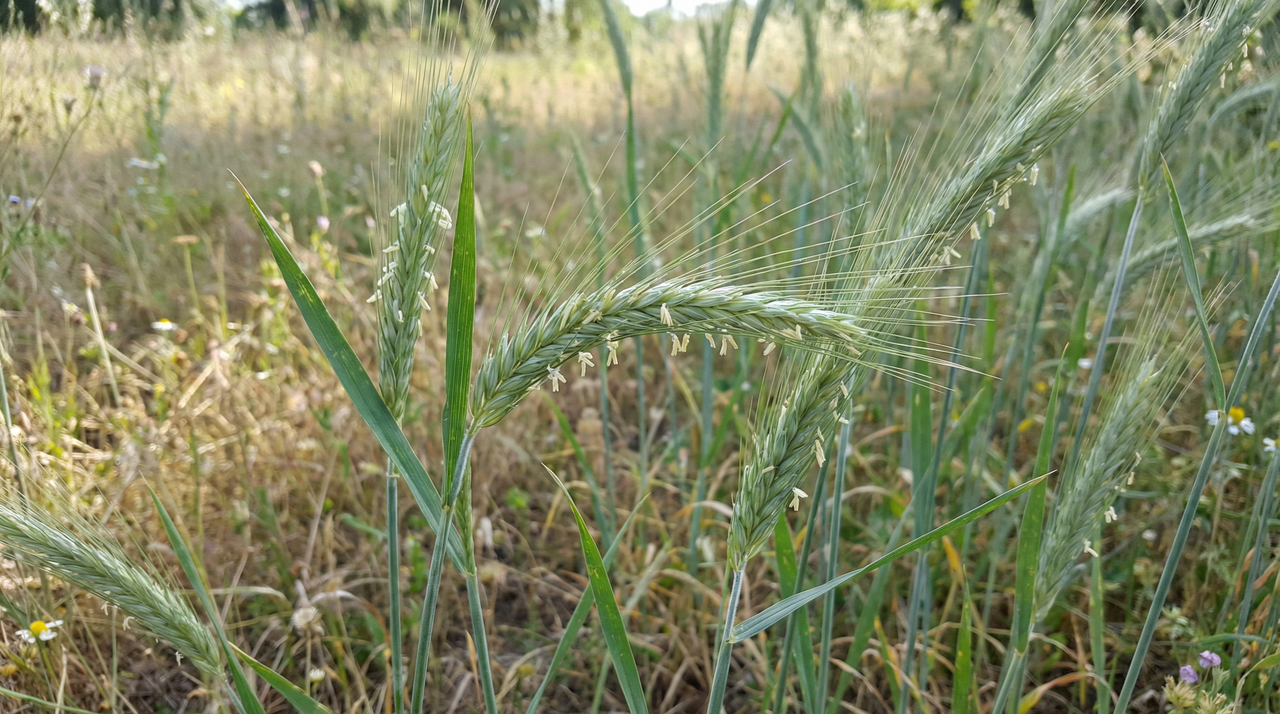
Rye became a crop because farmers couldn't kill it. Every other cereal they were trying to grow in the thin, acidic soils of early northern Europe kept failing, and rye just kept coming back, thriving in the margins, seeding itself into the gaps. What started as a weed contaminating emmer and einkorn fields somewhere in Anatolia eventually followed human agriculture northward until it outlasted its hosts entirely, becoming the grain that fed peasants through centuries of cold, crop-failed winters across Scandinavia, Poland, and Russia.[1] There's something almost defiant about that origin story. This plant wasn't bred into existence; it elbowed its way in.
I think about that history every time I'm seeding a cover crop into a beat-up, compacted bed in late October, the kind of bed where nothing else would bother to germinate. Rye doesn't care. It'll root into pH 4.5 soil, shrug off temperatures that would kill most annuals, and still produce more biomass than you know what to do with by spring. The thing is, that same tenacity that made rye a peasant staple and a permaculture workhorse also makes it genuinely misunderstood by modern growers who treat it as just a throwaway cover crop, not a food, not a medicine, not a soil-building tool with real ecological intelligence behind it.
Rye Origin, History, and Botanical Background
Native Range and Botanical Characteristics of Secale cereale
The botanical name for cereal rye is Secale cereale, and its wild origins trace back to southeastern Europe, southwestern Asia, and the broader Fertile Crescent, with the Caucasus, Anatolia, Turkey, and Iran at the center of its native range.[2][3] From there it spread, first as a weed hitchhiking through wheat and barley fields, then as a deliberately cultivated crop in its own right. It's an annual monocarpic grass, meaning it flowers once and dies, completing its entire life cycle in a single growing season.[4][5] The two types most growers encounter are winter rye and spring rye. Winter types require a cold period to trigger flowering, follow a 270-300 day cycle from fall planting to harvest, and tend to produce far more biomass; spring types skip that cold requirement and mature in 60-120 days.[6][7] For clients in northern or high-elevation climates, I almost always steer them toward winter types when they want maximum soil coverage and biomass going into spring.
Visually, rye is hard to miss once you know what you're looking for. Plants reach 0.6-2 meters tall with hollow stems, swollen nodes that often show a purple tinge, and a distinctive glaucous coating that gives the blue-green leaves an almost waxy, frosted appearance.[8][3] I've found those purple nodes and that blue-green color genuinely useful when I interplant rye with legumes or brassicas in a cover-crop mix; stand assessment at a glance becomes much easier. The inflorescence is a dense terminal spike, 5-15 cm long, carrying 50-100 florets, and the seeds are small, elongated, light brown caryopses.[9][10] Winter cultivars are notably taller and more heavily tillered than their spring counterparts, which explains a lot about why they're the go-to for soil-building work.
Historical Spread, Traditional Uses, and Cultural Significance of Rye
Rye's domestication began roughly 10,500-9,500 years ago in what is now Turkey and Syria, with clear cultivation records appearing in Hungary around 1800 BCE.[11][12] By the Bronze Age it was moving across Europe, and European colonists carried it to the Americas in the 16th and 17th centuries.[11] Theophrastus described it around 300 BCE as a hardy grain comparable to barley, and Pliny the Elder noted its role in northern province breadmaking a few centuries later.[13][14] The reason it took hold in northern and eastern Europe so firmly is the same reason it's still relevant to regenerative designers today: it thrived on poor, acidic soils where wheat simply gave up.[1]
That resilience translated directly into cultural identity. Slavic black breads, Scandinavian knäckebröd, Ashkenazi pumpernickel, and early American rye whiskey (including, famously, George Washington's distillery) all trace back to a grain that succeeded precisely where conditions were difficult.[15][16] Harvest and wedding rituals across northern Europe used rye as a symbol of fertility and prosperity. Folk medicine traditions put it to work as a digestive aid, diuretic, and wound poultice. And then there's ergot, the dark thread running through rye's history: the fungus caused devastating medieval epidemics known as St. Anthony's Fire, producing hallucinations and gangrene in communities that depended on contaminated grain.[17][18] Those same ergot alkaloids were eventually recognized for their medicinal value in midwifery and migraine treatment. I take grain cleaning and ergot monitoring seriously in any harvest I'm involved with; the history makes a compelling case for why that rigor matters. Today, rye production sits at roughly 13 million tonnes annually, led by Russia, Poland, and Germany.[19]
Rye Fun Facts: Soil Builder, Hardy Survivor, and Cultural Mainstay
Where does rye grow best? Rye tolerates soils with pH as low as 4.5, handles aluminum toxicity better than wheat or barley, shrugs off moderate drought, and produces meaningful biomass on low-fertility ground that would stall most other cereals.[20][21] I've put rye on sandy, acidic sites that turned away barley without hesitation, and watched it build visible soil structure within a single season through its dense fibrous root system. Those roots don't just hold the ground; they scavenge nutrients and release allelopathic compounds that suppress weeds, which is one of the reasons rye earns a prominent place in so many regenerative cover-crop programs.[20] Winter types push that resilience further still, surviving well below freezing once established and generating the kind of biomass that protects and feeds soil biology through the coldest months.[22] A grain that conquered marginal European farmland for thousands of years because it simply refused to fail is, I'd argue, exactly the kind of plant a regenerative designer should know well.
Rye Varieties and Sourcing
Winter vs. Spring Rye Types
The first decision every rye grower makes, consciously or not, is whether they're working with a winter or spring type. Winter rye (Secale cereale) is sown in autumn, overwinters in the field, and is harvested in early summer; spring rye goes in the ground after last frost and comes off in late summer.[4] That difference in vernalization requirement shapes everything: your planting calendar, your cover-crop termination window, your cold-hardiness expectations, even your market options.
I've grown both in zone-5 equivalent conditions, and the winter types consistently impressed me. They shrugged off cold snaps that would stop most wheat varieties in their tracks, and the spring types earned their place mainly where I needed a fast turnaround in a double-crop sequence. Rye is noticeably tougher than most wheats I've managed, but even within rye, winter types are where the real cold hardiness lives.
Notable Cultivars for Grain, Forage, and Cover Crops
In U.S. seed catalogs and extension recommendations, you'll most often encounter 'Hazlet,' 'Rymin,' 'ND Grano,' 'Elbon,' and 'Mattern' as the winter workhorses, selected primarily for grain yield, winter hardiness, and cover-crop performance.[23] Beyond that standard shortlist, a few specialized cultivars are worth knowing by name. 'Halo' has been developed for enhanced salinity tolerance, useful on degraded or coastal-influenced soils.[21] 'Thousand Dollars' carries stem rust resistance.[24] 'Aroostook' performs well on acidic soils and doubles as a forage type, while 'Domino' is favored for raw biomass and winter hardiness in forage systems.[25][26]
The practical split between cultivars is purpose-driven. Grain types like 'Mattern' are bred for yield; forage and cover-crop types like 'Aroostook' emphasize biomass and hardiness over kernel output.[25][4] Plant height varies considerably with soil fertility and site conditions, generally running one to two meters, so any specific number I give you depends heavily on local management.[27] When I'm planting on a site with known disease history, I'll reach for 'Mattern' or 'Aroostook' specifically because public breeding programs at Minnesota, Cornell, and USDA-ARS have pushed moderate resistance to Fusarium head blight and some aphid pressure into these lines.[28][4] That resistance isn't a guarantee, but it does shift the odds. The USDA National Plant Germplasm System maintains the broader genetic library behind all of this, which means the breeding toolkit keeps improving as researchers work through it.[28]
Where to Buy Rye Seed and Market Considerations
Cereal rye is the dominant cover crop across the northern states, with the bulk of U.S. production concentrated in North Dakota, South Dakota, Minnesota, and Nebraska.[29][30] The plant has naturalized across 48 states and thrives in cool climates with poor soils,[3] which makes sourcing fairly straightforward almost anywhere in the country. For most growers, the calendar anchor is simple: seed goes in the ground September through October and comes off in June or July.[31]
On price, U.S. rye ran roughly $5.50 to $7.00 per bushel in 2023, with organic seed commanding a 20 to 50 percent premium and winter types fetching about 5 to 10 percent more than spring.[32][33][6] I buy organic cereal rye in bulk every fall for both cover cropping and bread baking, and I've found the organic premium pays for itself; the flavor difference is real and the soil-building performance in my system justifies the cost. For home-scale and bulk orders alike, Albert Lea Seed, Johnny's Selected Seeds, Hudson Valley Seed Company, Fedco Seeds, and High Mowing Organic Seeds all carry cereal rye with organic options available.[34][35][36][37][38] Named organic cultivar availability does shift from season to season, so I'd always check current catalogs rather than assuming a specific variety will be in stock.
Rye Propagation and Planting Guide
Rye is one of those plants where the propagation question has a very short answer: direct seed it. That's it for the vast majority of growers. The nuance isn't in the method; it's in the timing, the soil conditions, and the decisions you make before you even pick up a handful of seed. Getting those details right is what separates a thick, well-established stand from a thin, weedy mess that barely made it through winter.
Winter vs Spring Rye: Choosing Your Type and Timeline
The first decision shapes everything else. Winter rye is planted in fall, goes dormant through the cold months, and completes its cycle the following summer, taking roughly 270-300 days from sowing to harvest.[4][39] Spring rye skips the fall planting entirely and matures in a single season, typically 100-110 days from seed to harvest.[40] For most permaculture growers in temperate climates, winter rye is the more useful type: it establishes in fall, holds soil through winter, and produces biomass or grain the following summer. Spring rye is worth knowing about if you missed your fall window or if you're in a region where winters are simply too brutal for reliable overwintering.
Once winter rye flowers, grain fill runs about 45-60 days, or somewhere in the range of 800-1000 growing degree days (base 0°C).[41][42] Heat speeds that up, but grain quality tends to suffer above 25°C during filling.[43] I've watched rye "bolt" only after the long days of spring arrive, which is a good reminder that this plant is waiting for a specific photoperiod cue after it's been properly vernalized; you can't rush it by wishing for warm weather in March.
For timing your fall planting, rye germinates across a surprisingly wide temperature range of 1-35°C (34-95°F), with optimal germination between 10-25°C (50-77°F).[44][45] The practical rule is to sow 60-90 days before your first expected frost, aiming for air temperatures between 4-15°C (40-59°F) at planting.[46][45] In zone 5, that usually means mid-August through mid-October. I've planted as late as the first week of November and gotten marginal results; the seeds germinate but the plants don't have time to tiller before hard frost, and spring regrowth is weak. Learn from my impatience and get it in early. If you're using rye as a cover crop, plan to terminate it in early spring, 2-3 weeks before your next cash crop goes in, to allow nitrogen release and prevent volunteers.[47]
Seed Viability, Storage, and Testing
Rye is almost exclusively propagated by direct seeding, and there's good reason for that: it's reliable, fast, and scalable from a backyard bed to a field.[48] Seed viability holds up well under cool, dry storage: kept at 10-15°C with relative humidity below 60%, rye seed maintains over 80% germination for 3-5 years.[49][50] I keep small quantities in sealed glass jars in my basement with a couple of desiccant packets, targeting that 3-7% moisture range.[51] Every spring before planting I test a small handful between damp paper towels to check germination rate; it takes a few days and saves the frustration of a failed stand.
Formal viability testing follows ISTA protocols and can include tetrazolium staining (viable embryos turn red) or X-ray radiography for non-destructive evaluation.[52][53] Those methods belong in a seed lab, but the paper-towel test gets you close enough for garden-scale decisions.
If you've encountered references to tissue culture or somatic embryogenesis for rye, those are real techniques used by plant breeders, involving MS medium with cytokinins and auxins, with success rates from 20-90% depending on genotype.[54] Grafting between wheat and rye exists as an experimental tool for interspecific disease resistance research.[55] Neither belongs in your garden. Stick with seeds.
Soil and Site Selection for Rye
One of rye's genuine superpowers is its soil flexibility. It thrives across a pH range of 4.5-8.3, with optimal performance between 5.5-7.0.[56][57] I've grown rye on a plot that sat around pH 5.2 where nearby wheat was visibly stunted; the rye shrugged it off and produced a respectable stand. That said, below pH 5.5 you'll start seeing aluminum and manganese toxicity in the form of stunted roots and reddish-purple leaf discoloration, while very alkaline soils above pH 7.5 cause interveinal chlorosis from iron and zinc deficiencies.[58][59] Always test before you amend.
Rye prefers well-drained loamy or sandy-loam soil but will grow in compacted, poor, or heavy clay ground where other cereals give up.[3][60] It even tolerates temporary waterlogging through aerenchyma tissue in its roots that keeps oxygen moving through saturated soil.[61] Full sun is non-negotiable for good grain production; rye needs 6-8+ hours of direct light daily and, as a long-day plant, requires 14-16 hour photoperiods after vernalization to properly head and flower.[62] Once it gets going, that deep fibrous root system (reaching 24-72 inches in good conditions) improves soil structure from below, scavenges residual nutrients, and holds slopes up to 15% against erosion.[63][64] Minimal or no-till establishment preserves that soil structure when rye is used as a cover crop.[65]
Planting Techniques, Spacing, and Establishment
Rye reaches 3-4 feet at maturity (occasionally taller under ideal conditions) with individual plants spreading 6-12 inches wide.[66] Prepare a firm, weed-free seedbed and plant seeds 1-2 inches deep for reliable soil contact and emergence.[60][67] No-till drilling is often preferred, especially in cover-crop rotations where you want to protect existing soil biology.
Seeding rate depends entirely on purpose. For cover crops and grain, the standard range is 50-120 lbs per acre; if you're pushing for maximum weed suppression, rates up to 120-180 lbs per acre are justified.[68][60] For grain production, aim for 1-2 million plants per acre with 6-8 inch row spacing; narrower rows close the canopy faster and improve light interception, though they can increase disease pressure in humid climates.[69] I plant much denser for cover-crop biomass than when I'm growing for grain heads, and making that decision before you broadcast seed matters more than people realize.
For small-scale fall planting in zone 5, sow from late August through mid-October, targeting that 2-4 week buffer before first frost.[6][70] The goal is 30-50% ground cover by the time hard frost arrives; that coverage means your rye is established enough to overwinter reliably and come back strong in spring.[71] One small thing I learned the hard way: label your rows. Young rye seedlings look a lot like weedy annual grasses, and if you don't mark where you planted, you'll spend ten minutes crouching and second-guessing yourself in October.
Rye Care Guide: Sunlight, Water, Fertility, Temperature, and Seasonal Management
Rye is one of those crops that rewards you for understanding its personality. It's a cool-season specialist built for adversity, yet push it past its limits and it'll tell you about it quickly. Once I understood the basic envelope it wants to live inside, managing it became intuitive rather than effortful.
Sunlight Requirements for Optimal Growth
Rye needs full sun, and I mean that seriously. Six to eight hours of direct light daily is the baseline, and anything below that starts costing you.[72][73] Under 30-50% reduced light, tillering drops, maturity delays, and biomass and grain yield can fall 20-30%.[72] The first sign I watch for in a partially shaded spot is internodes stretching toward the light, with pale foliage and weak, spindly stems.[74] I've learned to reposition companions or thin the canopy before tiller counts start dropping, because recovering a lodged stand is a much bigger problem than preventing one. Seedlings do have a bit more tolerance for brief partial shade than mature plants,[72] so an open south-facing site or an alley-cropping strip with shorter companions gives rye the room it needs to do its ecological work.
Water Needs and Irrigation Strategies
Rye wants 300-600 mm (roughly 12-24 inches) across the growing season,[75][6] which mirrors the cool-temperate, drier-summer climate it evolved in. Its roots go down to two meters and it can tolerate four to six weeks of dry conditions with less than an inch of rain per month,[76] but don't let that lull you into neglect during tillering and jointing. Those stages need consistent moisture, and skimping causes leaf rolling, chlorosis, and yield reductions of 20-50%.[77] On loam I aim to irrigate every 7-10 days; clay stretches that to 10-14 days, applying 25-50 mm per event and keeping soil moisture in the 50-70% available range at 30-60 cm depth.[6][78] Peak daily evapotranspiration runs 4-7 mm during grain fill, up from just 2-3 mm at seedling stage.[79] The warning signs run both ways: yellowing from the lower leaves upward with wilting despite wet soil points to overwatering and potential Fusarium or Pythium problems.[80] Once dormancy sets in during winter, water demand drops sharply, so scale back accordingly.
Soil Fertility and Feeding Program
I always soil-test before planting rye for grain, because I once over-applied nitrogen on a cover-crop mix and watched the whole stand lodge badly the following spring. Lesson learned. Testing every 3-4 years is standard practice,[81] with phosphorus and potassium applications based on actual soil results (typically 40-60 lbs/acre P₂O₅ and 40-100 lbs/acre K₂O for deficient soils).[82] For grain, nitrogen ranges from 60-120 lbs/acre; for cover-crop use, 30-60 lbs/acre is usually plenty.[82][60] Split applications matter: put 20-40% down at planting and the remainder at tillering or stem elongation. Fall nitrogen on winter rye should stay at 20-40 lbs/acre maximum, because excess vegetative growth going into winter is a reliable recipe for winterkill.[81] Keep pH in the 6.0-7.0 range (rye tolerates 5.5-7.5, but the sweet spot is narrower).[83] If you see yellowing starting at leaf tips on older foliage, that's nitrogen deficiency; purple-tinged leaves suggest phosphorus is short; white leaf streaks point toward zinc.[84]
Frost Tolerance and Winter Protection
Few things in the grain world match winter rye's cold hardiness. Well-acclimated plants under snow can survive -30°C to -35°C, and it's genuinely suited to USDA zones 3 through 8.[85][86] That said, the vegetative crown is far more resilient than the reproductive structures: flower spikes are damaged at just -2°C to -5°C, and buds at the double-ridge stage suffer injury at -8°C to -12°C, with potential yield losses of 10-50% from a poorly timed spring frost.[87] I've grown winter rye in zone 8B-equivalent conditions where snow cover is unreliable, and a 3-inch straw mulch applied after the ground freezes has consistently prevented crown heaving through those erratic winters.[88] Planting 4-6 weeks before first hard frost gives roots time to anchor before dormancy, and floating row covers can add 4-8°F of buffer if a late freeze threatens an already-headed stand.[89] Good drainage and fertile (but not excessively lush) sites reduce winterkill risk significantly.
Heat Tolerance and Warm-Season Management
Rye's comfort zone tops out around 25°C. Heat stress kicks in at 28-30°C and becomes severe above 35°C, with pollen sterility and reduced fertility knocking 10-50% off yield when high temperatures hit during anthesis and grain fill.[90] Nighttime temperatures above 20°C compound the damage by preventing recovery.[91] I've noticed it handles a short spike to 32°C better than wheat does, particularly when nights drop back into the low teens and the deeper root system can keep pulling moisture.[92] Some modern cultivars are bred to tolerate brief high-temperature events, but sustained heat above 30°C during heading is the problem no variety fully solves. In warmer climates, cooler microclimates, north-facing slopes, or high-elevation sites are worth seeking out. AHS heat zones 4-9 cover most workable rye territory, but performance declines noticeably at the warmer end of that range.[93]
Pruning, Maintenance, and Seasonal Rhythm
Winter rye's year is a compelling story of patience and timing. Sown in fall, it builds a vegetative rosette, then enters dormancy and waits. Vernalization, roughly 4-8 weeks of soil temperatures at 4-10°C (or about 900-1400 hours below 10°C), is what unlocks flowering.[94] I mark my calendar for six weeks of consistent 40°F soil temperatures because I've seen spring-planted winter rye fail to head at all without that cold trigger. Once soil warms to 4°C in spring, growth resumes fast, moving through tillering (4-8 weeks), stem elongation, heading, and grain fill in a progression you can track on the Feekes or Zadoks scale.[95] Germination itself happens above 0°C with an optimum around 10-24°C,[60] and the whole winter cycle runs 270-300 days, compared to 60-120 days for spring types that skip the vernalization requirement.[6] If you're growing rye as turf or forage rather than grain, mowing at 2-3 inches encourages tillering and stand density; that's when top-dressing with the balance of your nitrogen makes the most sense. Scout at tillering and again at jointing, adjusting moisture and watching for the early nutritional deficiency signals covered above. The smell of green spring growth pushing through after months of dormancy never gets old.
How to Harvest Rye: Timing, Technique, and Yield
When to Harvest Rye: Maturity Signs, Moisture Levels, and Regional Timing
Walk a rye field at harvest time and the grain tells you exactly where it stands. The kernels should be hard and firm when you bite them, tan to brown all the way through, and the straw below turns that crisp, golden brittleness you can hear when you snap it.[96][97] The rye grass seed heads shift from green to straw-yellow, and if you shell a few kernels and they resist any denting, you're in the window. What the eye can't always tell you is moisture, which is where things get serious. Rye comes off the field at physiological maturity around 30-40% moisture[98] but the actual harvest target is 13-15%. Anything above 18% and you're gambling with mold and heating in the bin.[99] I learned this the hard way with a small winter rye patch in the Southeast: I pushed the combine into a field that felt dry enough but wasn't, and by week three in storage that grain smelled like a compost pile. A $20 moisture meter is genuinely non-negotiable.
On the calendar, winter rye in the U.S. comes off anywhere from late June through August depending on latitude, with most Midwest crops landing in July.[100] Spring rye matures earlier, often mid-May to July in northern states, and wraps up its whole lifecycle weeks ahead of a fall-sown winter type.[101] If you want a planning tool beyond the calendar, accumulated growing degree days of 1800-2200 (base 32°F) give a reasonable signal,[102] though nothing replaces watching your specific field during that final dry-down stretch. Local weather matters enormously here.
Best Practices for Combining Rye and Minimizing Losses
Rye shatters more readily than wheat or oats, so you have a narrower daily window than you might expect. Wait for the morning dew to clear, usually late morning, and aim to finish before wind picks up above 10-15 mph.[103] Direct combining is the right call for grain; swathing increases shattering losses and belongs only in cover-crop termination scenarios, not grain production.[104] Once the grain is in the hopper, move fast on post-harvest handling. Clean it to remove chaff and weed seed, dry to below 14% if it came in above that, and keep drying air temperatures under 40-43°C to protect grain quality.[105] Store in a cool (10-15°C), low-humidity environment with relative humidity under 60%.[106] Rushed drying at high temperatures degrades the flavor compounds that bakers and distillers actually want.
Rye Grain Yield Expectations and Flavor Profile
For most U.S. growers, winter rye delivers 40-70 bushels per acre under solid management, with well-maintained Midwest fields pushing toward 100 bushels.[101] Spring rye runs lower, typically 20-40 bushels.[107] Record irrigated yields have exceeded 185 bushels per acre, but that's a research station number, not a planning number. For a home-scale or permaculture plot, I'd aim for the reliable mid-range and invest energy in soil health rather than chasing the ceiling.
The flavor payoff is real. Freshly harvested rye has an earthy, nutty, slightly spicy baseline with mild sweetness and subtle bitterness from phenolic compounds like ferulic acid and pentosans.[108][109] Walking into a ripe rye field on a dry morning, you catch a grassy, almost malty sweetness that becomes deeper and more caramelized after toasting, and fermentation (sourdough, whiskey mash) pulls out peppery, fruity, and vanilla tones.[110] In my own harvests, the grain with the most intense flavor came from seasons with cool, slow grain-fill and a sharp, dry finish, which tracks with the research showing that cultivar, growing environment, milling, and post-harvest treatments like sprouting all shift the final aroma and flavor significantly.[111][112] Handle the grain well from field to bin, and that character survives intact into the kitchen.
Rye Preparation, Culinary Uses, and Non-Food Applications
Culinary Uses and Flavor Profile of Rye
The rye grain is what this whole crop is about culinarily. From that small caryopsis comes flour for bread, cereals, and baked goods, plus the raw material for rye whiskey and beer.[4][7] Before any of that happens, though, the grain needs proper handling. After threshing and winnowing small batches by hand on a tarp across multiple seasons, I can tell you: walking your patch weekly in late spring to rogue out any darkened, hardened ergot sclerotia is the single most important safety step before you even think about baking. Milling, soaking, fermenting, or parching all help reduce antinutrients and alkaloids, but they're no substitute for clean grain.[113][114]
Once you've got clean, well-processed grain, the classic preparations open up: sourdough rye bread, pumpernickel, crispbreads, porridge, malted beer, and fermented drinks like kvass.[114][115] That signature tangy, earthy flavor isn't magic; it comes from lactic and acetic acids produced during long sourdough fermentation. Meanwhile, volatile aldehydes like 2-phenylacetaldehyde, guaiacol, benzaldehyde, and nonanal layer in the nutty, malty, slightly bitter complexity underneath.[4][116][117] Rye sourdough bread does require more patience than wheat; the dough needs longer proofing times and handles differently at higher hydration ratios, so if you're used to wheat-based baking, expect an adjustment period. Because rye flour is lower in gluten than wheat, most bakers blend the two for workable texture, and fermenting or sprouting the grain first meaningfully improves digestibility. Young rye sprouts can be used raw in salads or as microgreens, though they develop bitterness fast and aren't really the point of growing the crop. Pair finished rye bread with sharp cheeses, cured meats, pickled vegetables, or dark chocolate, and you've got a board that justifies the whole growing season.
Traditional Medicinal Preparations from Rye
European folk traditions have long used grain and husk infusions from rye as digestive aids, fever reducers, and diuretics, with modern herbal preparations including tinctures (around 1-2 ml up to three times daily) and simple decoctions using 1-2 teaspoons of dried material per cup of water, steeped 10-15 minutes.[118][119] These are historically interesting but, in my own practice, they're more of a cultural footnote than a frontline recommendation. The health benefits section covers the phytochemical research in depth; for preparation purposes, know the tradition exists and consult a qualified practitioner before using grain-based preparations medicinally.
Non-Food Uses of Rye Straw and Biomass
What I love about rye from a permaculture standpoint is that the crop doesn't end at the grain. The straw has a long history in
- thatching roofs
- livestock bedding
- basket weaving
- mat making
- textile fiber production
Rye Health Benefits and Medicinal Uses
Rye earns its reputation as a nutritional workhorse through sheer density. After years of recommending whole-grain rye to clients in my garden-to-table design work, I've watched the pattern repeat: people who swap even half their refined wheat bread for whole rye bread consistently report steadier energy through the morning and less digestive sluggishness. The research actually backs that up, and it starts with what's in the grain itself.
Nutritional Profile of Rye Grain
Whole rye grain delivers around 338 kcal per 100g with 10.3g of protein, 75.9g of carbohydrate, and just 1.6g of fat.[123] What sets it apart from most cereals is the fiber: 15.1 to 15.5g per 100g, including meaningful amounts of beta-glucan and arabinoxylans, the soluble fractions that slow gastric emptying, blunt post-meal glucose spikes, and feed the microbiome.[124] Sugar content is negligible at under 1g per 100g, which matters when you're comparing it to more processed grain options.
The mineral profile is genuinely impressive. Manganese comes in at 112% of the daily value per 100g, phosphorus at 47%, copper at 41%, and magnesium at 26%, with solid contributions of zinc, iron, and selenium rounding things out.[125][124] B vitamins follow a similar pattern: thiamin at 26% DV, niacin at 27% DV, plus riboflavin, B6, and folate all contributing meaningfully to daily needs.[125]
One caveat worth knowing upfront: the protein content varies from 9% to 14% depending on cultivar, soil, and climate,[126] and rye contains phytic acid (1 to 1.5%) that can reduce mineral absorption.[127] Soaking, fermentation, and cooking all reduce phytic acid significantly, which is one of several reasons traditional sourdough rye bread remains nutritionally superior to quick-baked alternatives.
Key Phytochemicals in Rye
Whole rye grain contains a remarkable diversity of bioactive compounds: phenolic acids, flavonoids, lignans, alkylresorcinols, benzoxazinoids, and native alkaloids like gramine and hordenine.[128] Distribution across the plant matters here. Phenolic acids dominate in the grain, with ferulic, sinapic, p-coumaric, and vanillic acids most abundant,[129] while flavonoids like rutin and quercetin glycosides concentrate in the leaves.[129] Lignans, including secoisolariciresinol, concentrate in the bran, and alkylresorcinols (50 to 100 mg per 100g) are reliable enough in whole-grain rye that researchers use them as biomarkers for whole-grain intake in population studies.[130]
Genotype accounts for 60 to 80% of the variation in phenolic content, but growing conditions push the numbers around too.[131] Drought stress can increase phenolics by 15 to 50%, while high soil nitrogen decreases them 20 to 40%.[132] I've noticed this in my own region: rye grown through a dry, hot season tends to have a noticeably more pungent, earthy bite to it, which now makes complete sense as a phenolic-intensity signal. These same stress-induced compounds are part of what the plant uses for pest defense via benzoxazinoids like DIMBOA,[133] and they overlap substantially with the compounds responsible for human health benefits.
One distinction worth being clear about: none of this applies to ergot alkaloids like ergotamine or ergocristine, which are produced exclusively by the fungus Claviceps purpurea when it infects rye. Those are contaminants, not constituents of the grain itself.[134]
Medicinal Research and Health Effects
The strongest evidence for rye's health effects runs through cardiovascular and metabolic outcomes. At the cellular level, rye phenolics scavenge free radicals, inhibit lipid peroxidation, activate the Nrf2 antioxidant pathway, and downregulate NF-κB inflammatory signaling.[135][136] Rye bran and whole grain extracts reduce TNF-α and IL-6 and inhibit COX-2 in animal and in vitro models,[137] with alkylresorcinols contributing additional anti-inflammatory and gut-health support.[138]
A 2018 BMJ meta-analysis and several randomized controlled trials show that regular whole-grain rye or rye bran consumption lowers systolic blood pressure in hypertensives, reduces LDL and total cholesterol, and is associated with decreased cardiovascular disease risk factors[139][140][141] -- this is where I feel comfortable telling clients that the evidence genuinely supports eating more rye as an everyday food choice for heart health. On the metabolic side, rye extracts show alpha-glucosidase inhibition comparable to the diabetes drug acarbose, and bioactive peptides from rye protein hydrolysates inhibit ACE, contributing to blood pressure reduction through a separate mechanism.[142][143]
More preliminary findings include antimicrobial activity against E. coli and S. aureus, neuroprotective hints from flavonoid modulation of serotonin and dopamine pathways, analgesic effects in rodent models, and traditional European folk uses for digestive complaints, as a diuretic, and as topical rye sprout poultices for wounds.[144][145] These are worth knowing but rest on preclinical or historical data. The one exception that surprises most people: rye pollen extract (sold as Cernilton) has genuine clinical backing for benign prostatic hyperplasia at dosages of 126 to 129 mg taken two to three times daily.[146][147] That's a specific, standardized preparation with regulatory recognition -- a very different situation from eating rye bread and expecting a therapeutic outcome.[148]
Safety Considerations for Rye Consumption
Properly grown and processed rye is not inherently toxic.[149] The historical danger was always contamination from the fungus Claviceps purpurea, whose sclerotia produce ergot alkaloids at concentrations of 0.01 to 1% that can cause ergotism.[150][151] Ergotism presents in two forms: convulsive (hallucinations, seizures) and gangrenous (severe vasoconstriction, burning pain, tissue death).[152] Livestock are also highly susceptible. Modern crop rotation, resistant varieties, seed cleaning, and strict grading have effectively eliminated the large outbreaks that once devastated medieval populations, and current regulations back that up: the EU limits ergot alkaloids to 500 µg/kg in milled rye products and sclerotia to 0.5 g/kg in unprocessed grain (dropping to 0.2 g/kg by July 2025), while the FDA considers grain with 0.3% or more sclerotia unsafe.[153][154] If you're sourcing grain from a reputable supplier or growing your own with clean seed stock, the risk is genuinely minimal.
The celiac situation is non-negotiable. Rye contains secalin proteins (9 to 14% gluten) that trigger the same immune response as wheat gliadin in people with celiac disease.[155] I've worked with enough clients navigating autoimmune conditions to know that even trace cross-contamination matters here -- if you have celiac disease, rye is strictly off the table. People with grass pollen sensitivity also carry a somewhat elevated risk of rye grain allergy.[156] The lignan content may influence hormone-sensitive conditions, and the modest vitamin K (~5.6 mcg/100g) is worth flagging for anyone on warfarin therapy.[157] Finally, if you're ever foraging or identifying rye in the field, the primary look-alike to know is bearded darnel (Lolium temulentum), which carries neurotoxic alkaloids; rye is distinguished by its longer awns, bluish-green leaves, and distinctly hairy leaf sheaths.[158]
Pests and Diseases of Rye
Pest Resistance and Management in Rye
Rye holds a genuine edge over wheat and most other temperate cereals for pest resistance, and that resilience isn't accidental.[159][160] It's built on several overlapping layers: alkaloids like gramine and hordenine that deter feeding insects, phenolic acids like ferulic acid, epicuticular waxes and a tough pericarp that slow physical access, symbiotic endophytes, and induced benzoxazinoid production when tissues are damaged.[161][162][163] I've noticed those waxy leaves in my own cover-crop plantings seem to keep aphids at bay during drier stretches, though once humidity rises and populations build, that physical deterrence only goes so far.
Aphids (especially Sitobion avenae and Rhopalosiphum padi) remain the most economically significant insect pest, partly because they vector barley yellow dwarf virus.[160][164] Standard thresholds hover around 300 aphids per tiller before tillering, or 10-20 per sweep during heading and milk stage, which gives you a clear monitoring target before pulling out any intervention.[165] Rye shows moderate deterrence against cereal leaf beetle through antibiosis and antixenosis, but I'd encourage anyone growing rye in the Midwest to scout more carefully right now: 2022-2023 data shows rising pressure from both cereal leaf beetle and wheat curl mite, with documented 2023 outbreaks contributing to further virus spread.[160][166] Wheat curl mite is also a concern in the Great Plains as a vector of wheat streak mosaic virus.[167]
On the stronger side, rye carries natural Hessian fly resistance, and cultivars like 'Elbon' and 'Mattern' were specifically bred to enhance it.[168] In cover-crop guilds, rye suppresses corn rootworm populations through allelopathy and population trapping, which is one of the reasons I reach for it over wheat when designing polycultures preceding corn.[169] That same allelopathic chemistry that suppresses weedy rye grass competition and manages problematic rye grass weeds in neighboring beds also reduces off-farm input needs in a well-designed grain guild.[170]
The real vulnerabilities are wireworms, armyworms, European corn borers, and stem borers in the Crambidae family; none of rye's defense mechanisms offers meaningful protection against these.[160][159] A sound IPM approach leans on crop rotation with non-host species, resistant variety selection, encouraging natural predator communities, and treating chemical or biological interventions as last resorts once monitoring thresholds are actually exceeded.[165][171]
Disease Resistance and Management in Rye
Rye's disease resistance profile is variable in ways that matter practically. It performs well against take-all (Gaeumannomyces graminis) and shows strong resistance to stripe and stem rust in many varieties via genetic diversity on chromosomes 1R and 5R.[172] Powdery mildew is a weaker point, peaking at around 20°C under high humidity, and it's one area where variety selection genuinely changes outcomes.[173]
Ergot (Claviceps purpurea) is the disease I take most seriously, because its toxic alkaloids aren't a theoretical risk. How does ergot grow on rye? The fungus infects open florets during flowering, replacing kernels with dark sclerotia that concentrate those alkaloids. Because the sclerotia are visible, I always hand-remove any I spot before using rye for seed or feed, and I'm especially vigilant during humid seasons in the Northeast and Midwest where incidence is highest.[174][175] Cultivars like 'Karls Funke' and 'Halo' show moderate to high resistance, keeping sclerotia below 0.5% of seed weight, which is a meaningful improvement over unselected lines.[175]
Fusarium head blight is the other high-stakes disease, triggered by temperatures above 25°C combined with rainfall at anthesis; the mycotoxin risk it carries means humid-region growers should treat it as a planning constraint, not an afterthought.[176] Crown and leaf rust (Puccinia coronata and P. recondita) thrive in cool, moist conditions (10-20°C, leaf wetness over six hours), showing up as orange or yellow-orange pustules and posing the greatest risk across the eastern US, Great Plains, and Upper Midwest.[177][172] I've had reliable results with European-derived lines like 'Dankowskie Zlote' and 'Hellala' in rust-prone areas, and the 'Petkus' derivatives carrying PM1 and PM2 genes offer meaningful powdery mildew protection.[178]
Soil conditions tie directly into disease pressure in ways that give growers real leverage. Keeping pH between 6.0 and 7.0 matters; drop below 5.5 and take-all risk climbs.[3] Balanced nitrogen and adequate silicon strengthen cell walls against rusts and mildews, while excess nitrogen or potassium deficiency increases vulnerability to Fusarium and other necrotrophs.[172] Rotate with legumes or corn, choose varieties matched to your regional pressure, time planting to avoid moist flowering windows when possible, and reserve fungicides for situations where thresholds are genuinely exceeded.[175][172] That combination of cultural prevention and monitored intervention is what keeps rye resilient across most temperate conditions without leaning heavily on off-farm chemistry.
Rye in Permaculture Design
Few annual plants pull as much ecological weight in a temperate permaculture system as cereal rye. It's not flashy the way a fruiting tree or an edible perennial herb might be, but what it does to a piece of land over a single season is genuinely remarkable. I keep coming back to it in my designs because it addresses three problems at once: poor soil structure, residual nitrogen loss, and weed pressure. That kind of multifunctionality is exactly what regenerative systems are built on.
Ecosystem Functions and Soil Benefits
Cereal rye is about as effective a cover crop as you'll find for building soil health without adding a legume to the mix.[179][180] The root system is what gets me most excited: those fibrous roots push down up to two meters, cracking through compacted subsoil layers that most annuals simply can't reach, improving aggregation and water infiltration along the way, and reducing erosion by as much as 90%.[179][180][3] I've run test plots on heavy clay soils where I compared rye directly against annual ryegrass and the difference in compaction relief by spring was striking. The cereal rye had clearly been doing excavation work the ryegrass couldn't match.
Because it's a non-legume, rye won't fix nitrogen, but it's a ferocious nitrogen scavenger, capturing 100-200 lbs per acre of residual soil nitrogen that would otherwise leach out over winter.[179] That nitrogen gets recycled back into the system when the biomass breaks down. Speaking of biomass: rye can produce up to 10-20 tons per acre in a single season, which, when incorporated or used as surface mulch, can raise soil organic matter by 0.5-1% annually.[179][181] In the food-forest systems I design, that kind of organic matter accumulation builds habitat for soil life while locking away carbon.[182]
Rye's allelopathic chemistry serves as both its superpower and its most important management consideration. The benzoxazinoids and related compounds it releases can suppress weed germination and growth by up to 90%.[170][183] I've learned the hard way that waiting too long to terminate rye in a guild can leave a window where the next crop struggles to germinate. Now I chop at milk stage and let it lie as a surface mulch, and the vegetables transplanted into that mulch thrive rather than stall. If you're saving seed or selecting for traits within a guild, worth knowing that rye is wind-pollinated, with feathery stigmas that catch airborne pollen best when temperatures sit around 15-25°C and humidity stays below 80%.[184][3] I space seed-production rows 8-10 inches apart to encourage air circulation and minimize pollen clumping during humid spring mornings.[185]
One honest caveat: rye can establish feral populations and compete with native grasses in some regions.[3] I avoid letting it go to seed anywhere near remnant prairie remnants on client sites, and in sensitive areas I'll reach for a sterile variety rather than risk escape. Permaculture ethics demand that we account for what a plant does beyond our fence line.
Forest Layer and Guild Roles
As an annual herbaceous grass, cereal rye occupies the herbaceous or groundcover layer in a permaculture stack.[186][3] It grows 0.6-1.8 meters tall with 10-20 tillers per plant, creating a dense, weed-smothering canopy at ground level while those deep roots restructure the soil below.[187] That combination of height and root depth means it can be deployed usefully as living mulch in orchard understories, in alley-cropping systems between young tree rows, and in silvopasture where you want winter ground cover that grazing animals can work through.[188][187] When managed well, it doesn't interfere meaningfully with tree canopies; it's working in a different vertical zone entirely.
The key phrase there is "when managed well." Termination timing is everything. Terminate too late and the allelopathic residues that do such good weed-suppression work will also inhibit the germination of whatever you're seeding next.[189][68] In a guild setting, I treat rye like a seasonal tenant: I want all the soil-building and weed-fighting it offers, and I want it cleared out before it starts competing with the perennials I care about. Terminate it at the right moment and the mulch it leaves behind continues doing useful work for weeks.
Climate Adaptability and Hardiness Zones
Rye's cold tolerance is genuinely impressive. Once established under snow cover, it survives temperatures down to -30°F to -40°F.[190][191][192] That's the trait that makes it such a reliable overwinter cover crop across zones 3-9, with the sweet spot for performance sitting in zones 3-7.[193][88] Winter rye also requires vernalization: 6-8 weeks of temperatures between 34-45°F to trigger flowering, which is precisely why it thrives through brutal northern winters while other cereals fail to make it to spring.[193][88]
Optimal growth happens between 59-68°F, and rye will germinate across a surprisingly wide range from just above freezing up to 90°F, though it prefers cooler conditions for establishment.[194][195] Growth slows noticeably above 77°F and heat stress begins around 86°F, so summer production makes little sense in most temperate regions. On water, rye is genuinely drought-tolerant once established, managing with as little as 12-15 inches of annual rainfall, though it performs best with 20-30 inches.[196][197][66]
While its cold tolerance is legendary, the southern-zone picture is more complicated. Rye tolerates pH as low as 4.5 and grows in sandy, poor, or acidic soils that would sideline other cereals,[198][199] but in zones 8-10 the challenges pile up: premature bolting, excessive biomass that becomes difficult to manage, and real disease pressure when humidity spikes. I've grown it in zone 9 humid southeast conditions and it can absolutely work for short winter windows, but you have to be honest about the fungal risks that come with warm, wet springs. In those climates, I treat cover crop rye as a cool-season tool with a tight window rather than a long-season system anchor, and I plan termination dates before the humidity climbs rather than after.
The Grain That Made Me Stop Dismissing Annuals
I came up in permaculture circles where annuals were almost apologized for, something you tolerated while waiting for the perennials to fill in. Then I spent a winter watching rye hold bare slope soil together through freeze-thaw cycles that would have sent half my garden downhill, and something shifted. It's not romantic the way an old apple tree is romantic. It just works, quietly and completely, in conditions where almost nothing else will.
Sources 199
- Rye | Britannica ↩
- Native Range of Secale cereale - Kew Science ↩
- USDA Plants Database - Secale cereale ↩
- Rye - Wikipedia ↩
- Secale cereale L. rye ↩
- University of Minnesota Extension - Rye Production Guide ↩
- Rye | Agricultural Marketing Resource Center ↩
- Missouri Botanical Garden Plant Finder - Secale cereale ↩
- Secale cereale - Missouri Botanical Garden ↩
- Rye - Kew Royal Botanic Gardens ↩
- The Domestication of Rye (Secale cereale L.): An Evolutionary Perspective ↩
- Domestication of Plants in the Old World ↩
- Enquiry into Plants and Minor Works on Odours and Weather Signs ↩
- Natural History ↩
- Rye: Genetics, Breeding and Cultivation ↩
- Ethnobotany of Cereals in Northern Europe ↩
- Ergot and Ergotism in Medieval Europe ↩
- Ergot of Rye - Historical Impact ↩
- FAO Statistics: Rye Production ↩
- Winter Rye Management Guide ↩
- Rye Adaptation to Saline and Acidic Soils ↩
- Cereal Rye | USDA Natural Resources Conservation Service ↩
- University of Minnesota Extension - Rye Varieties ↩
- Stem Rust Resistance in Secale cereale ↩
- Winter Rye Production Guide ↩
- Spring Forage Rye Management ↩
- Kew Science - Plants of the World Online - Secale cereale ↩
- USDA ARS - Cereal Rye Breeding ↩
- Cover Crop Guide: Cereal Rye ↩
- Rye: Area Planted, Harvested, Yield, and Production ↩
- Growing Rye as a Cover Crop ↩
- Crop Production Annual Summary ↩
- Rye: Background ↩
- Winter Rye Seed ↩
- Cereal Rye Seed ↩
- Cereal Rye ↩
- Rye Grain Seed ↩
- Cereal Rye ↩
- Small Grains: Rye ↩
- Rye Grain Production ↩
- Cereal Rye Production ↩
- Rye Growth Stages and Development ↩
- Rye Production Guide ↩
- Purdue Extension - Rye as a Cover Crop ↩
- Rye Cover Crop Guide - USDA NRCS ↩
- Rye Cover Crop Guide ↩
- Fall Cover Crop Seeding Guidelines ↩
- Rye Production Guide ↩
- Seed Storage of Orthodox and Recalcitrant Species ↩
- FAO Seed Storage Guidelines for Cereals ↩
- USDA Seed Viability and Storage ↩
- International Seed Testing Association (ISTA) Rules 2023 ↩
- X-ray Analysis of Seed Viability in Cereals ↩
- Micropropagation of Rye (Secale cereale L.) ↩
- Interspecific Grafting Between Wheat and Rye for Disease Resistance ↩
- Rye Production - Soil Requirements ↩
- USDA Plant Guide: Cereal Rye (Secale cereale) ↩
- Soil pH for Small Grains ↩
- Rye Production Guide - Purdue University Extension ↩
- Cereal Rye Cover Crop Management ↩
- Root Aerenchyma in Cereal Rye under Waterlogging ↩
- Photoperiodism in Cereals ↩
- Root Systems of Cover Crops ↩
- Managing Cover Crops Profitably - Rye ↩
- Rye Root System and Soil Interactions ↩
- Rye Morphology and Growth Habits ↩
- Winter Rye Production - Penn State Extension ↩
- Planting and Managing Rye as a Cover Crop ↩
- Small Grains in Ohio: Planting and Management ↩
- USDA NRCS - Rye Cover Crop Profile ↩
- Rye as a Cover Crop - Penn State Extension ↩
- ResearchGate - Rye Responses to Light and Nutrient Availability ↩
- Small Grains in Georgia: Rye ↩
- Light Quality and Quantity Effects on Rye Growth ↩
- Secale cereale - Kew Science Plants of the World Online ↩
- Drought Tolerance of Cereal Rye ↩
- Physiological Responses of Rye to Drought Stress ↩
- FAO - Crop Water Requirements for Cereals ↩
- FAO Irrigation and Drainage Paper 56: Crop Yield Response to Water ↩
- Overwatering Symptoms in Ryegrass and Cereals ↩
- Nutrient Management for Small Grains ↩
- University of Minnesota Extension: Fertilizing Rye ↩
- University of Illinois Extension: Rye Cover Crop Management ↩
- Nutrient Deficiencies and Plant Symptoms ↩
- Winter Rye for Cover Crops ↩
- Cold Hardiness of Winter Cereals ↩
- Frost Injury in Small Grains ↩
- Winter Rye Cover Crop Management ↩
- Frost and Freeze Protection for Vegetable Growers ↩
- Heat Stress in Cool-Season Crops: Rye (Secale cereale L.) ↩
- Heat Stress Effects on Grain Yield and Quality in Rye ↩
- Cultivar Differences in Rye Heat Tolerance ↩
- Rye: Production, Chemistry, and Technology ↩
- Vernalization in Winter Cereals - Physiological Basis ↩
- Rye Growth Stages and Management - Penn State Extension ↩
- Rye Production Guide ↩
- Rye: Harvest and Storage ↩
- Small Grains Harvesting and Storage ↩
- Rye Production Guide ↩
- Rye Production ↩
- Small Grains Production Handbook ↩
- Growing Degree Days for Small Grains ↩
- Forages - Rye: Harvest and Storage Guidelines ↩
- Rye Production in North Dakota ↩
- Small Grains Storage Recommendations ↩
- Post-Harvest Handling of Cereals ↩
- Rye Grain Production ↩
- Sensory Profile of Rye Bread ↩
- Flavor Compounds in Rye Grain ↩
- Journal of Agricultural and Food Chemistry: Phenolic Compounds in Rye (2021) ↩
- Volatile Compounds in Rye Grain: Influence of Variety and Environment ↩
- Effect of Milling and Sprouting on Rye Flavor Profiles ↩
- USDA PLANTS Database - Secale cereale ↩
- Missouri Botanical Garden Plant Finder - Secale cereale ↩
- Kew Royal Botanic Gardens - Fact Sheet on Secale cereale ↩
- Flavor and Volatile Compounds of Rye Bread ↩
- Phytochemicals in Rye and Their Sensory Impact ↩
- Herbal Medicine: Biomolecular and Clinical Aspects - Secale cereale ↩
- Ethnobotany of Secale cereale ↩
- Rye Production and Uses - FAO ↩
- Rye Straw Utilization - USDA ↩
- Flora of North America - Secale cereale ↩
- USDA FoodData Central - Rye grain ↩
- USDA FoodData Central - Rye flour, whole-grain ↩
- USDA FoodData Central - Rye grain ↩
- Nutritional Profile of Secale cereale: Review ↩
- Phytic Acid in Cereals: Rye Processing ↩
- Secondary Metabolites of Secale cereale L.: A Review ↩
- Flavonoids and Phenolic Acids in Rye (Secale cereale L.) and Their Content as Affected by Agronomic and Environmental Factors ↩
- Alkylresorcinols as biomarkers of whole-grain rye intake and their biological effects ↩
- Genotype Influence on Rye Phenolic Profiles ↩
- Environmental Stress and Phenolic Accumulation in Rye ↩
- Benzoxazinoids in Plants: From Biosynthesis to Ecophysiology ↩
- Ergot Alkaloids in Cereal Grains ↩
- Antioxidant Activity of Rye Grain Phenolics In Vitro ↩
- Pharmacology of Secale cereale polyphenols ↩
- Anti-inflammatory effects of Secale cereale extracts ↩
- Health Effects of Alkylresorcinols in Rye ↩
- Whole Grain Rye and Blood Pressure: Clinical Trial ↩
- Rye Bran Effects on Cholesterol: RCT ↩
- Meta-Analysis: Rye Consumption and Cardiovascular Risk ↩
- Alpha-Glucosidase Inhibitory Activity of Secale cereale ↩
- ACE-Inhibitory Peptides from Rye Protein Hydrolysates ↩
- Antimicrobial Properties of Rye Phenolic Compounds ↩
- Ethnobotany of Rye ↩
- Rye Pollen Extract for Benign Prostatic Hyperplasia ↩
- European Medicines Agency - Herbal Monograph on Secale cereale Pollen ↩
- Pharmacological Activities of Secale cereale: A Review ↩
- USDA PLANTS Database - Secale cereale ↩
- Ergotism - StatPearls - NCBI Bookshelf ↩
- Ergot Alkaloids: Chemistry, Pharmacology, and Toxicology ↩
- CDC - Ergotism ↩
- European Commission Regulation (EU) 2023/915 on contaminants in food ↩
- FDA Guidance on Ergot in Grain ↩
- Secalins and gluten in rye ↩
- Rye Allergy: Symptoms, Causes, and Treatment ↩
- Vitamin K Content of Foods ↩
- Lolium temulentum - Wikipedia ↩
- Rye Crop Profile - Northeastern IPM Center ↩
- Insect Resistance in Rye (Secale cereale L.): A Review ↩
- Chemical Defenses in Rye Against Insects ↩
- Physical Barriers and Insect Resistance in Cereals ↩
- Endophytes in Secale cereale and Pest Defense ↩
- Insect Pests of Small Grains in the North Central Region ↩
- Integrated Pest Management for Small Grains ↩
- Insect Pests of Cereal Rye Cover Crops 2023 ↩
- Wheat Curl Mite and Rye as a Host ↩
- Hessian Fly Resistance in Rye ↩
- Cover Crops for Pest Management: Rye and Diabrotica Suppression ↩
- Allelopathy in Rye Cover Crops ↩
- Purdue Extension - Rye Cover Crop Insect Considerations ↩
- Diseases of Rye and Their Management ↩
- Resistance to Powdery Mildew in Rye ↩
- Ergot of Cereals and Grasses - Penn State Extension ↩
- Rye Diseases - University of Minnesota Extension ↩
- Fusarium Head Blight in Small Grains - Cornell Cooperative Extension ↩
- Environmental Factors Affecting Cereal Rusts - APS Journals ↩
- USDA Germplasm Resources Information Network (GRIN) - Rye Cultivars ↩
- Cereal Rye as a Cover Crop ↩
- Rye Cover Crop Benefits ↩
- USDA NRCS Rye Cover Crop Guidelines ↩
- Cover Crop Benefits for Biodiversity ↩
- Journal of Chemical Ecology - Allelopathy of Secale cereale ↩
- Pollination in Rye (Secale cereale L.) ↩
- University of Minnesota Extension: Rye Production Guide ↩
- Secale cereale ↩
- Cereal Rye Cover Crops in Agroforestry ↩
- Agroforestry Systems and Cover Crops: Rye in Multilayer Designs ↩
- Winter Rye as a Cover Crop ↩
- Cold Hardiness of Winter Cereals ↩
- Cold Tolerance of Winter Rye ↩
- Winter Hardiness of Cereal Rye ↩
- Rye Cover Crop Profile ↩
- Rye - Secale cereale L. ↩
- Temperature Requirements for Cereal Crops ↩
- Rye Production - USDA National Agricultural Statistics Service ↩
- FAO - Rye: Agronomy and Crop Management ↩
- Secale cereale ↩
- Rye Cover Crop in the South ↩