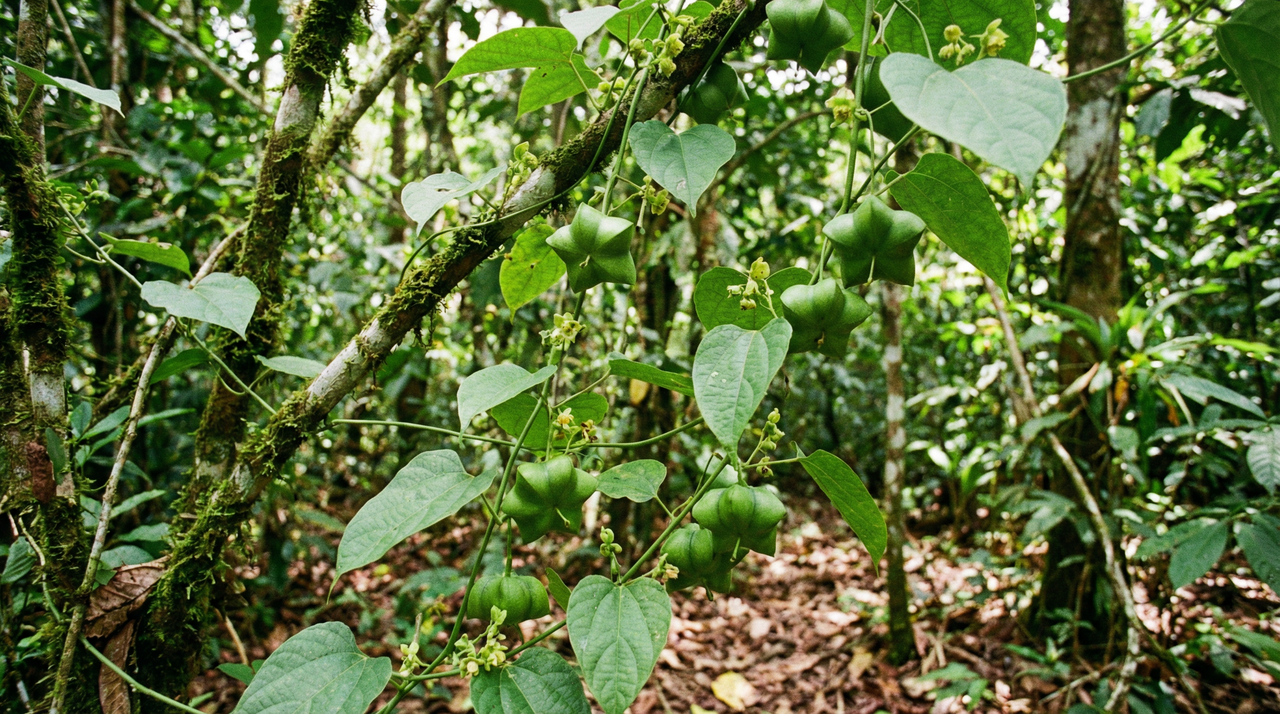
Nobody warned me about the smell. I was processing my first batch of sacha inchi seeds, freshly dried from a research planting I'd been helping to establish in a humid coastal zone, and I cracked open one of those satisfying star-shaped capsules expecting something neutral, maybe faintly grassy. What I got was sharp, almost fishy, unmistakably omega-3. It stopped me cold. Here was a tropical vine producing seeds with a fatty acid profile closer to wild-caught salmon than to the nuts and seeds I'd spent my career growing, sitting quietly on a trellis in a food forest understory like it wasn't doing anything remarkable at all.[1]
What really gets me about this plant is the gap between how long humans have known about it and how recently the rest of the world caught on. Indigenous communities across the Peruvian Amazon have been cultivating sacha inchi for somewhere between 2,000 and 3,000 years.[2] Two to three thousand years of nutritional knowledge, quietly embedded in agroforestry systems that modern permaculture designers are only now beginning to understand. The "superfood" label it's wearing right now is new. The plant is not.
Sacha Inchi Origin, History, and Botanical Background
Sacha inchi is one of those plants that stops you in your tracks the first time you really look at it. It's not just the star-shaped seed capsules or the vigorous way it scrambles up whatever you've given it to climb. It's the sense that this vine has been doing exactly this for a very long time, in exactly the kind of layered, humid, biodiverse systems that permaculture designers spend careers trying to recreate.
Botanical Description and Native Habitat of Plukenetia volubilis
Plukenetia volubilis, the inca peanut of the Euphorbiaceae family, is native to the tropical Amazon basin and Andean foothills of Peru, Ecuador, Colombia, Bolivia, and Brazil, occurring from sea level up to about 1,500 meters in lowland and foothill rainforests.[3][4][5] In that native range it grows as a perennial climbing vine with a woody base and slender twining stems reaching three to five meters, sometimes six when well-supported.[6][7] Under good management it can live ten to fifteen years and remains polycarpic throughout, flowering and fruiting repeatedly rather than exhausting itself in a single reproductive effort.[8] That said, productive lifespan tends to run five to seven years before yields noticeably decline.
The lifecycle moves quickly by perennial-crop standards. Seeds germinate in two to four weeks in warm, moist conditions, vegetative growth carries on for four to six months. Flowering typically begins around six to nine months after germination, with the first real fruit harvest arriving somewhere between nine months and two years from seed.[9] Having grown a lot of nut trees and slower perennial crops over the years, I find that timeline genuinely exciting. You're not waiting a decade to see whether you planted it correctly. Outside the tropics, where frost makes perennial cultivation impractical, it's usually grown as an annual and performs reasonably well on that schedule. Though Linnaeus described the species in the eighteenth century, serious research and commercial cultivation didn't gather momentum until the 1980s and 1990s, driven largely by Peruvian researchers who recognized what indigenous communities had known for millennia.[10]
Visual Characteristics: Identifying Sacha Inchi in the Garden
The first time I grew sacha inchi from seed, I kept careful labels on those nursery trays because the seedlings look remarkably generic before the tendrils emerge and the vine starts climbing anything within reach. Once the plant gets going, though, identification becomes easy. The stems are lightly pubescent with a distinct woody base, and the vine climbs using simple axillary tendrils that arise opposite each leaf, anchoring into a trellis or support tree with surprising grip.[11][12] The root system runs deep, with a taproot exceeding one meter, which matters enormously for drought resilience and explains why established plants bounce back from stress that would kill shallower-rooted crops.
Leaves are ovate to elliptic, seven to fourteen centimeters long, with serrated margins and clean pinnate venation. One thing worth knowing as a designer: leaf size shows real phenotypic plasticity, enlarging noticeably in humid, shadier positions.[12] The flowers are small and greenish-white, monoecious, with male and female blooms on the same plant arranged in axillary racemes, males positioned above females.[13][14] Nothing about them is showy, but they appear reliably in tropical climates. The fruit is where the plant becomes unmistakable: a three-to-five lobed, star-shaped capsule two to five centimeters across, green when young and turning brown as it ripens, then dehiscing explosively to scatter its seeds.[15][10] Watching those capsules shift from green to brown and then pop open is genuinely one of my favorite moments in the garden, the kind of event that makes you forgive the long wait from planting to harvest. The seeds themselves are round to oval, dark brown to nearly black, about one and a half to two centimeters across, each enclosed in a thin papery wing-like aril that helps with dispersal and encases the oil-rich kernel inside.[15][10]
Traditional and Cultural Uses by Indigenous Amazonian Peoples
Archaeological and ethnobotanical evidence places cultivation of sacha inchi between two thousand and three thousand years ago in Peru and surrounding regions.[4][16] Peoples including the Shipibo-Conibo, Awajún, Asháninka, Yagua, Achuar, and Shuar integrated the seeds into their diets and medicine, using them for nutrition, oil extraction, and treatment of inflammation, skin conditions, and digestive complaints, while regarding the plant as a symbol of abundance and fertility.[17][18] Spending time with ethnobotanical literature on this plant deepened my own commitment to sourcing seeds from suppliers actively supporting those communities and agroforestry-based production, rather than extractive models that strip the knowledge from its origin.
Modern commercialization has complicated the picture. Concerns about protecting indigenous intellectual property under the Nagoya Protocol are legitimate, as is the pressure that overharvesting of wild populations has created.[19][20] Domesticated populations tend to show faster growth, larger seeds, and better yields than wild plants, but that selective pressure comes with a reduction in genetic diversity that long-term breeders and conservation-minded growers should take seriously.[21]
Fun Facts: Yields, Ecology, and Modern Cultivation of Sacha Inchi
The numbers behind what is sometimes called sacha inchi oil production are striking. A single hectare of mature vines typically produces five hundred to fifteen hundred kilograms of seed, translating to roughly two hundred to nine hundred liters of oil depending on extraction efficiency and crop management.[22][23] A mature vine between three and five years old can yield one to four kilograms of seed annually.[22] Those figures have attracted cosmetic, nutraceutical, and even biofuel industries in addition to the food sector.[22]
Ecologically, the vine functions as a pioneer species at forest edges, contributing biodiversity and ground cover in agroforestry systems where it's increasingly integrated to support organic farming and avoid the deforestation that monoculture pressure can drive.[24][25] That pioneer trait is genuinely useful in food forest design: the vine can fill a vertical niche quickly while longer-lived canopy layers establish. The main cautions for growers outside the tropics are real though. Frost sensitivity is non-negotiable; in my experience, even tender new growth takes damage at the first hint of cold, so I treat it as a tender annual in any marginal climate and don't kid myself otherwise.[25] Germination rates hover around fifty percent even under good conditions, so start more seed than you think you need.[25] Conservation status is currently listed as least concern, though habitat loss from agricultural expansion remains an active pressure worth keeping in mind when you consider where your planting material comes from.[26]
Sacha Inchi Varieties and Sourcing
Notable Varieties and Breeding Improvements
If you've come to sacha inchi expecting a seed catalog full of distinct named cultivars, you'll find the selection thin. Commercial production of Plukenetia volubilis still relies heavily on landraces or broadly improved material rather than a tidy lineup of differentiated varieties, and that's actually typical of crops that haven't been under formal domestication pressure for very long.[27][28] It reminds me of early chia sourcing before improved lines became widely available: you were buying unselected seed and hoping for the best. Peruvian breeding programs have been at it since the 1980s, targeting disease resistance, faster maturity, higher seed yield, and elevated omega-3 oil content.[29][30] The selections that have emerged from that work include 'Pepe', 'Marron', and types marketed as 'High Oil' and 'Standard Amazonian,' though these aren't differentiated the way apple varieties are.[27][31]
The wild-versus-cultivated numbers tell the real story. Wild Plukenetia volubilis plants yield roughly 0.2–0.5 kg of seed per year with 30–40% oil content and need 12–18 months to first harvest. Improved material produces 1–2 kg per plant annually at 45–55% oil, reaching maturity in 6–12 months.[29][32] I've started wild-type and improved Peruvian lines side by side, and the difference in capsule size and first-season vine vigor is immediately obvious. Those yield and oil gains matter far more to most growers than any nuance in seed color or shape. Improved lines have also proven adaptable well beyond the Amazon, now grown commercially across tropical and subtropical Asia, Africa, and beyond.[32]
Where to Buy Sacha Inchi Seeds and Plants
Seeds and live plants are available from international suppliers, tropical nurseries, and online retailers based in Peru, Thailand, and the U.S., with bulk orders typically requiring direct contact with exporters in producing countries.[33] Retail packets usually run $5–$15 for 5–20 seeds; 100+ seeds cost roughly $40–$100, and live plants range from $25–$60 before shipping. USDA GRIN holds germplasm accessions for research purposes but doesn't sell seed to home growers.[34]
Anyone importing live plants or seed for planting needs a USDA APHIS PPQ Form 525 permit under 7 CFR Part 319, and shipments must meet phytosanitary requirements.[35][36] I always secure that permit before placing an order; skipping it risks having your shipment destroyed at the port. If you're importing the seeds or oil as food rather than planting material, FDA rules under FSMA apply instead, including labeling, safety compliance, and facility registration.[37]
One more thing worth knowing before you order: sacha inchi seeds have a hard seed coat and natural dormancy that keeps germination rates at 20–50% without pretreatment.[38] Light scarification with sandpaper followed by an overnight soak has pushed my success rates from around 30% to 70–80%. Order more seed than you think you need, and prioritize fresh stock from suppliers who can tell you when their seed was harvested.
Sacha Inchi Propagation and Planting (Plukenetia volubilis)
Starting sacha inchi from scratch teaches you something quickly: this vine plays by different rules than most garden seeds. Getting those rules right from the beginning saves a lot of frustration later.
Seed Characteristics and Storage
Sacha inchi seeds are polyembryonic and recalcitrant, which is a fancy way of saying they contain multiple embryos per seed and absolutely cannot be allowed to dry out.[39][40] Let moisture content drop below 20-30% and viability craters fast. Freezing them is equally fatal. I keep mine in moist vermiculite in the refrigerator and have maintained germination rates above 70% for up to nine months that way, which honestly beats most of the packets in my seed drawer.
The seeds themselves are easy to recognize: ellipsoid, dark brown to black with irregular white mottling, running about 13 mm long by 10 mm wide.[41][42] Their oil content runs as high as 50%, which is both their commercial value and their storage liability.[43] Improperly stored seeds go rancid before they ever lose their ability to germinate, so source fresh and store smart.
For home gardeners interested in propagating elite material, semi-hardwood cuttings (10-15 cm, treated with IBA at 1000-3000 ppm) and air layering (roots in 4-6 weeks) both work.[44] Tissue culture exists for mass clonal production of high-performing selections, though that's well beyond what most of us are doing at home. For the vast majority of growers, fresh seed is where the story starts.
Germination and Propagation Methods
Fresh sacha inchi seeds germinate at 25-30°C, sown 1-2 cm deep in a consistently moist but well-draining medium.[45] Germination rates hit 70-90% with fresh seed and typically show up in 15-20 days, though the window stretches to 30 days.[46] The seedlings look enough like young cucurbits that I learned to label my rows religiously the first season, because mix-ups happen.
The taproot is the critical issue with transplanting. These plants develop a prominent taproot early and respond to root disturbance with serious shock; I lost several seedlings in my first attempts at transplanting before switching to direct sowing or deep root trainers.[47][48] Direct seeding into the final spot is the commercial standard for exactly this reason, and it's become mine too.
The timeline from that first germination to harvest is long but predictable. Flowering begins 2-4 months after planting, with seeds maturing 45-150 days after pollination; a first modest harvest usually arrives 8-12 months post-planting, while full commercial yields build through years two and three.[49][50] If the timeline is the sticking point, grafting offers a shortcut: cleft or whip-and-tongue grafts onto seedling rootstock can bring first fruiting down to 6-12 months and compress early commercial harvests to 18-24 months.[51] It's similar in technique to grafting temperate fruit trees, though the tropical growth rate means you see results noticeably faster.
Soil, Site Selection, and Planting Technique
If there's one thing that will end a sacha inchi planting before it starts, it's poor drainage. This vine demands loamy or sandy loam soil with good aeration and 3-6% organic matter; heavy clay or any situation where water pools even briefly invites root rot that kills fast.[52][53] In my experience, even one heavy rain on questionable ground can trigger rot within days. I mound beds or grow in raised containers whenever drainage isn't perfect.
Optimal pH sits between 5.5 and 6.5, with a broader tolerance range of roughly 4.5-7.5 before yields fall off noticeably.[46][8] I always test before planting and adjust with lime to raise pH or sulfur to lower it; getting this right before you plant is far easier than correcting it around an established vine. For containers, a mix of 50% potting soil, 30% perlite or coarse sand, and 20% organic matter drains well enough to keep roots happy.[54] Incorporating 10-20 t/ha of organic matter at field preparation gives the taproot something to work with from day one.[55]
Spacing, Support, and Establishment
Don't underestimate how big this vine gets. Left to its own devices, sacha inchi will climb 8-12 meters, so the support structure needs to be sturdy and at least 2 meters tall from the start.[56] In a small garden I give each vine 3-4 meters of trellis run; on a larger plot, plant spacing of 2-4 meters within rows and 3-5 meter row spacing produces commercial densities of 800-1,200 plants per hectare, with support posts every 4-6 meters to hold the wire or cordage.[57][46]
Train new growth upward immediately after establishment rather than letting it sprawl. Vines that climb get better light penetration, dry out faster after rain, and are far easier to harvest. Adequate airflow around the canopy also pays dividends down the road, something you'll appreciate once the vine is fully loaded with star-shaped pods and you're trying to work your way through it.
Sacha Inchi Care Guide: Growing Plukenetia volubilis Successfully
Sacha inchi is not a difficult plant to grow, but it is an unforgiving one. Get the fundamentals wrong and it tells you immediately, either through yellowing leaves, a stalled vine, or a handful of seeds where you expected a full harvest. Get them right and you'll have a vigorous climber that rewards you for years. Three things determine almost everything: light, moisture, and cold. Everything else is refinement.
Sunlight Requirements
Mature sacha inchi plants need full sun, at least six to eight hours of direct light daily, to produce meaningful seed yields.[46][58] Young seedlings are a different story. In my experience with tropical vines generally, blasting new transplants with midday sun produces pale, stressed growth rather than the vigorous establishment you're after. Give seedlings partial shade for the first few weeks and transition them gradually. Once the vine is climbing and putting on real leaf mass, full sun is non-negotiable for strong flowering and oil-rich seed set.
Water Needs
The single most important sentence in this whole guide is this: sacha inchi wants consistently moist soil, never soggy soil. I learned this the hard way after losing a beautiful container-grown vine to root rot in my first season. Now I wait until the top two inches of soil are clearly dry before I water again, and I haven't lost one since.
During the first one to two months after planting, keep the soil evenly moist, roughly one to two inches of water per week.[59][56] Once established, shift to deep, infrequent irrigation every seven to ten days during dry stretches, letting that top layer dry between sessions. During flowering and seed development, pull frequency back up; this is when consistent moisture most directly affects yield.[59][60] Overwatering shows first as yellowing at the base of the plant, eventually progressing to dark mushy roots and a sour smell.[61][62] Underwatering looks like leaf curl and browning at the tips, followed by reduced seed set. Both are fixable if you catch them early.
The sacha inchi plant thrives in mildly acidic soil with a pH between 5.5 and 6.5; growth declines noticeably below 5.0 or above 7.5.[63][64] It has moderate salinity tolerance up to about 4 dS/m, but seed yield drops significantly once you exceed 6 dS/m, so if you're irrigating with hard water, it's worth testing periodically.[63]
Feeding and Soil Fertility
Start with your soil, not with a fertilizer bag. I always run a soil test before establishing a new bed because the NPK recommendations from Peruvian field trials rarely translate cleanly to my raised beds or containers, and guessing usually costs more than the test does. Aim for 5 to 8 percent organic matter and a pH in that 5.5 to 7.0 range before you plant anything.[25][65]
During the vegetative phase, nitrogen drives vine growth, with field-scale recommendations running 80 to 200 kg/ha annually.[25][66] Think roughly 2:1:1 N:P:K while the plant is ramping up. Once flowering begins, back off the nitrogen and shift toward a balanced or potassium-forward ratio like 1:1:1 or 1:2:2, because potassium is what supports oil production and seed quality.[25][67] I pushed nitrogen too hard in my second year and got a spectacular vine with a frustratingly thin seed set. Getting the stage-specific ratios right can boost yields 20 to 30 percent compared to a single generic program.[25][67] Split applications into two or three doses timed around peak uptake at flowering and fruiting rather than one large dose.[68][46]
Watch the leaves, because they'll tell you what's missing before a deficiency becomes a crisis. I look first for interveinal chlorosis on new growth, which usually signals iron or zinc deficiency. Even after amending with good compost I've seen this show up, and chelated micronutrients cleared it when compost alone didn't.[69][70] Older leaves going yellow suggests nitrogen; a purplish cast points to phosphorus; scorched leaf margins indicate potassium stress.
Heat Tolerance and Heat Stress Management
Sacha inchi performs best between 20 and 30°C (68 to 86°F), with peak productivity around 25°C.[71][72] Think of it like basil: once temperatures push past 32°C, both plants start dropping flowers, and what should become seeds simply doesn't. As a C3 plant, sacha inchi is inherently less heat-efficient than C4 species, and photosynthesis can drop 20 to 30 percent after just four hours above 35°C.[73][72] You'll see it in scorched leaves, wilting during the day, and blossom drop that cuts your seed yield hard.
The fix is the same toolkit I'd use for any heat-stressed tropical vine: 30 to 50 percent shade cloth (which drops canopy temperature 3 to 5°C), consistent drip irrigation, 5 to 10 cm of organic mulch at the base, and a trellis positioned to catch prevailing breezes.[74][75] Heat-tolerant Peruvian and Thai cultivars handle the upper range a little better if you're in a consistently hot climate.
Frost Tolerance and Overwintering
There's no softening this: sacha inchi is a tropical Amazon vine with essentially zero frost tolerance.[46][76] It starts showing damage below 10°C (50°F) and suffers serious injury at or below freezing, with leaf necrosis, defoliation, and stem dieback that can kill the plant outright.[77][78] Reliable outdoor growing is limited to USDA zones 10 and 11.[46]
My rule is simple: every potted vine comes indoors 10 to 14 days before the first forecast low of 50°F. Since I adopted that schedule, I haven't lost a single plant to cold. Inside, keep temperatures between 18 and 29°C (65 to 85°F), maintain high humidity, and reduce watering to barely-moist so roots don't rot in the reduced-light environment.[46][79] For in-ground plants in marginal zones, frost cloth and deep mulch offer some protection, but a cold frame or greenhouse is more reliable.[46]
Pruning and Maintenance
Sacha inchi is a vigorous climber and it needs a sturdy trellis from the start; a flimsy support won't survive a mature vine under a heavy seed load.[80][57] After harvest, prune out dead and diseased wood, remove crossing branches that create shading in the interior, and thin crowded stems to improve airflow. That post-harvest pruning is also the moment to head back lateral shoots, directing energy into the fruiting wood you want next season rather than into an increasingly tangled canopy. I also tip the leading stems early in the growing season to encourage a bushier habit, which makes harvesting easier and gets better light into the lower fruiting nodes.
Keep 5 to 10 cm of organic mulch around the base year-round.[56][81] It conserves moisture, moderates soil temperature, suppresses weeds, and reduces the splash-up of soil-borne pathogens onto lower leaves. Combined with good pruning, mulch is the cheapest disease-prevention tool you have.
Seasonal Rhythm
In its native Amazon habitat, sacha inchi flowers and fruits essentially year-round, with peak flowering from September through December and peak fruiting from December into April.[82] Most growers outside the tropics won't see anything like that rhythm. In cooler months the vine slows substantially, and in anything below zone 10 you're either managing dormancy indoors or treating it as an annual.
For indoor overwintering, stop fertilizing entirely, reduce watering to keep the soil barely moist (around 15 to 20 percent field capacity), and give the plant as much bright light as you can manage.[46][83] Come spring, acclimate gradually over two to three weeks rather than setting the vine directly into outdoor conditions, and wait until apical buds are visibly swelling and nights reliably stay above 13°C (55°F) before resuming dilute balanced fertilizer. A vine that clears that transition well can remain productive for five to ten years, which is the real payoff for anyone willing to give it the winter attention it needs.
Sacha Inchi Harvesting Guide: Timing, Technique, and Flavor
When to Harvest Sacha Inchi Seeds
The general rule is 8-10 months after planting, with harvest concentrated when 70-80% of pods show maturity signs, typically through the June-September dry season in its Peruvian homeland and peaking in July and August.[84][85] From bloom to ripe seed runs 90-150 days depending on conditions, though 100-130 days is what you'll see under a well-managed tropical setup.[86][49] What you're watching for is pods shifting from green to yellowish-brown, turning dry and papery to the touch, and beginning to crack open along their seams. After managing several seasons of these vines, I've found that the papery feel and that faint splitting sound are more reliable harvest signals than any calendar date.
Timing matters enormously here. Seeds harvested too early have lower oil content, while pods left past dehiscence shatter and scatter those hard little black seeds before you can collect them.[49][81] Miss that window and you'll lose your harvest to the ground. The window per cycle is narrow, maybe two to four weeks, so once the vine starts ripening pods you need to be checking it regularly.
How to Harvest and Process Sacha Inchi
Harvesting is hands-on and simple: you pick the star-shaped capsules directly from the vine by hand.[49] Vigorous vines climb well beyond arm's reach, so keep a pole or long-handled tool nearby for the upper sections. Once picked, clean the seeds to remove any capsule debris, then spread them out to sun-dry for 3-5 days until moisture content drops to 8-10%.[87][49] I've found that fully committing to those 3-5 days makes the difference between seeds that stay fresh for a year or two and seeds that develop off-flavors within months. Given how high these seeds are in polyunsaturated fats, skimping on drying is where most first-time growers lose quality. Store properly dried seeds cool (below 20°C), in low humidity, and in airtight containers for a shelf life of 1-2 years.[87]
Sacha Inchi Yield and Flavor Profile
Realistic yields start in year two at 1-2 kg of seeds per plant annually, with well-trellised, consistently watered vines tending toward the higher end of that range as they settle in.[56][46] Given the vine's 15-20 year productive lifespan, the patience of the first season pays back many times over. Roasted sacha inchi nuts are crisp and crunchy with a mild, buttery nuttiness that sits somewhere between pine nuts and sesame, with a slight sweetness and none of the bitterness raw seeds can carry.[88][89] Raw seeds are edible but softer and can have earthy, slightly astringent notes; roasting is what brings out the best in them and reduces the saponins responsible for that edge. I keep a bowl of roasted ones on the counter during harvest season. They disappear fast.
Sacha Inchi Preparation, Uses, and Benefits
There's a moment during roasting that I find genuinely satisfying every time. Raw sacha inchi seeds have a slightly soft, sometimes bitter quality that doesn't hint at what's coming. Give them heat, and within minutes the kitchen fills with a warm, toasty aroma and the seeds firm up into something crunchy and deeply nutty. That transformation isn't just sensory. It's chemical necessity. Raw seeds harbor saponins, cyanogenic glycosides, and phytic acid that make them genuinely problematic to eat before processing.[90][91] Roasting, boiling, fermentation, or cold-pressing breaks down those compounds and unlocks the nutrition underneath.
Culinary Uses and Flavor Profile of Roasted Seeds and Oil
The Shipibo-Conibo and Asháninka peoples have known this for thousands of years, roasting the seeds as a nutritional staple long before the global superfood market took notice.[92] Properly roasted sacha inchi seeds land somewhere between toasted sesame and sunflower seeds, with a firm crunch and subtle grassy undertones.[93] The payoff is real: roughly 48% of the fat content is ALA omega-3, alongside 17.8g of protein per 100g and meaningful amounts of vitamin E, magnesium, potassium, and iron.[94][95]
Beyond roasted sacha inchi snacks, the seeds can be ground into flour for baking or cold-pressed into oil for salads, dressings, smoothies, and low-heat cooking.[96] Cold pressed sacha inchi oil has a light, grassy character that I think works beautifully drizzled over quinoa or blended into a morning smoothie. Just don't cook with it at high heat. Those delicate polyunsaturated fats degrade quickly, and the oil's nutritional value goes with them. I've also learned through disappointing experience that refrigeration isn't optional; even a small bottle left on the counter loses its bright, fresh top notes within a couple of weeks. Store it cold, in an airtight container, and use it within six months.
Both EFSA and FAO have reviewed processed forms and found them safe for consumption,[97][98] though rare allergic reactions are possible, and anyone on blood thinners should check with their provider given the significant omega-3 content. Sacha inchi grows in the same family as castor bean and physic nut, both seriously toxic plants. The triangular black seeds and climbing vine habit help distinguish it, but if you're foraging or sourcing from unfamiliar suppliers, confirm your identification carefully before processing anything.[99]
Medicinal and Topical Preparations
Traditional Amazonian practice extends beyond the kitchen. Leaves and seeds have long been applied as poultices for wounds and skin conditions,[100] and the standard starting point for sacha inchi oil as a supplement is one to two tablespoons daily, adjusted based on individual health needs.[100] The modern evidence base is strongest around the omega-3 and antioxidant profile already detailed elsewhere in this profile. The topical tradition is compelling, and I've experimented with infusing the oil for use in salves, but I'd frame that as following a rich ethnobotanical lead rather than settled clinical guidance.
Non-Food Uses from Seeds to Fibers
What I appreciate about sacha inchi from a permaculture standpoint is how little of the plant goes to waste. After oil extraction, the protein-rich seed cake can go straight into animal feed or back into the garden as fertilizer,[101] which in my own systems feels like a genuinely closed loop. The stems yield bast fibers used traditionally for rope, nets, and baskets,[101] and some plant parts contribute natural dyes to traditional crafts. The high oil content has even positioned the vine as a candidate for biodiesel production, with commercial cultivation expanding across Peru, Ecuador, and Vietnam.[102] Processing also supports local economies, particularly for indigenous women involved in seed collection and production.[103] That combination of household utility, community economics, and regenerative potential is exactly what draws me to plants like this one.
Sacha Inchi Health Benefits and Medicinal Uses
Traditional and Indigenous Medicinal Uses
Long before sacha inchi became a superfood marketing term, Amazonian peoples were using Plukenetia volubilis as medicine. Shipibo-Conibo communities and their neighbors have relied on the seeds and leaves for generations to address rheumatism, cardiovascular concerns, and general fatigue.[21][104][105][106] That ethnobotanical record is what first pointed researchers toward the plant, and modern pharmacology has been filling in the mechanisms ever since.
Sacha inchi extracts show significant antioxidant activity and anti-inflammatory effects via COX-2 and NF-κB inhibition with measurable reductions in TNF-α and IL-6,[107][108] plus antimicrobial activity against pathogens including Staphylococcus aureus and Candida albicans, analgesic properties, and early signs of adaptogenic and antispasmodic effects.[109][110][111][112] I find those anti-inflammatory mechanisms particularly credible given how dense the seeds are in omega-3s and phenolics -- these aren't random associations. That said, most of this data comes from preclinical and in-vitro work, with ethnopharmacological studies providing the broader context.[113] The adaptogenic and neuroprotective hints are genuinely exciting, but I treat them as promising leads rather than established fact.
Nutritional Profile and Bioactive Compounds
The seed is the main event. Per 100 g of raw seeds, you're looking at 553 kcal, 17.4 g of protein, 47.8 g of fat, 8.2 g of fiber, and a striking mineral load that includes 1,375 mg potassium and 576 mg phosphorus.[114][115] The fat is the real story: seeds run 35-60% oil by weight, and that oil is somewhere between 82-93% polyunsaturated fatty acids, with alpha-linolenic acid (ALA, omega-3) comprising 48-53% of the total.[116][117][118] The omega-3 to omega-6 ratio lands around 1.4:1, which is far more favorable than flax, chia, or most seed oils. For my clients who struggle with the taste of fish oil, sacha inchi is genuinely easier to incorporate daily.
Rounding out the profile: 200-300 mg of tocopherols per 100 g of oil (primarily γ-tocopherol), all essential amino acids with a PDCAAS around 0.8, and a solid supply of phenolics including chlorogenic acid, gallic acid, and caffeic acid derivatives.[119][116][120] Those natural tocopherols also give sacha inchi oil noticeably better oxidative stability than flax oil; I've had properly stored cold-pressed sacha inchi hold quality for 12-18 months, where flax would have gone rancid in three.[121][122]
Raw seeds do contain anti-nutritional factors: phytic acid at 1-2% dry weight, saponins, tannins, and trypsin inhibitors.[123][124] Roasting at 120-150°C brings protein digestibility up from 70-80% to 85-90% while degrading ALA by less than 5%.[121][125] In my kitchen tests, 140°C for about 12 minutes is the sweet spot: the seeds turn golden and develop that buttery, nutty character without sacrificing the fatty-acid profile. Allergenicity is low overall, but cross-reactivity within the Euphorbiaceae family or with other nut and seed allergies is possible, so people with relevant sensitivities should approach with caution.[126][127]
Phytochemical Diversity and Antioxidant Power
The seed gets most of the attention, but sacha inchi's phytochemical picture spans the whole plant. Seeds and oil carry high levels of gamma-tocopherol (up to 90% of total tocopherols at 300-500 mg/kg), flavonoids like quercetin and kaempferol, phenolic acids, saponins, and proanthocyanidins. Leaves concentrate quercetin and kaempferol glycosides along with chlorogenic acid. Bark holds tannins and saponins. Even the fruit pulp supplies carotenoids and additional polyphenols.[128][129][130][131]
That synergy of phenolics, flavonoids, and tocopherols produces an ORAC value above 1,000 µmol TE/100 g and underpins the anti-inflammatory, antimicrobial, and antioxidant activities the research keeps turning up.[132][133] From a grower's perspective, phytochemical potency isn't fixed. Phenolic concentrations run higher during the dry season, and growing conditions -- altitude, soil fertility, nitrogen levels, harvest timing -- all influence the final compound profile.[134][135][136] That's a compelling argument for careful cultivation practices rather than just buying bulk commodity seed oil from unknown sources.
Research-Backed Health Benefits
The best-supported benefits of sacha inchi track directly to that omega-3 and antioxidant foundation. Human clinical trials, though still limited in scale, show improved lipid profiles with lowered LDL cholesterol and triglycerides from regular oil supplementation.[137] Studies in diabetic rats point to anti-diabetic effects through improved insulin sensitivity and reduced fasting blood glucose, and preclinical work suggests neuroprotective potential tied to the high ALA content.[138][139] There's also cytotoxic activity against certain cancer cell lines in early in-vitro work.[140] I find the cardiovascular data the most credible and practically actionable right now; the anti-cancer and neuroprotective findings are fascinating but genuinely preliminary.
Safety, Side Effects, and Practical Guidance
Properly processed sacha inchi seeds and oil are well-tolerated at typical dietary amounts, with toxicological assessments confirming low acute toxicity and good general tolerability.[124][141][142] Cyanogenic glycosides are absent, which removes one common concern. The real risks with raw seeds are digestive: nausea, bloating, and diarrhea from fiber and residual anti-nutrients when eaten in quantity.[143][127] My personal rule is simple: I always recommend roasted seeds or cold-pressed oil and steer people away from raw seed consumption or leaf teas without professional guidance.
A few other cautions deserve direct mention. The high omega-3 content can potentiate anticoagulant and antiplatelet medications, so anyone on blood thinners should check with their doctor before adding significant amounts of sacha inchi oil to their routine.[144] Leaves and non-seed plant parts may contain alkaloids and should not be consumed in quantity.[145] Misidentification is a genuine risk -- Plukenetia volubilis can be confused with toxic relatives like Jatropha curcas, so accurate botanical identification matters enormously if you're sourcing plants or seeds yourself.[146] Safety in pregnancy hasn't been adequately studied, so I'd err on the side of caution there,[147] and heavy-metal accumulation, while generally low in well-managed cultivation, remains soil-dependent.[148] For practical dosing, the research clusters around 1-2 tablespoons (15-30 mL) of oil or 20-30 g of roasted seeds daily for adults.[149][142] Start there, see how you respond, and build from a foundation of properly processed material.
Sacha Inchi Pests and Diseases
Natural Defenses and Disease Susceptibility
Sacha Inchi has moderate-to-low natural disease resistance overall, and fungal pathogens are the main culprits in humid tropical conditions.[150][151] The big three are Phytophthora and Fusarium root rots (especially brutal in waterlogged soils), Cercospora leaf spot (which chips away at photosynthesis and drags down yield), and Colletotrichum anthracnose on leaves and fruit.[151][152] I lost two young vines to Phytophthora in my first season before I realized a low corner of my bed was holding water after every rain. Now I plant on raised mounds with dense groundcover around the base to improve drainage and airflow, and I haven't had a root rot problem since. Less common but worth knowing: Xanthomonas leaf blight and cucumber mosaic virus have both been reported, with CMV transmitted by the same aphid vectors you're already managing on the insect side.[151] In unmanaged tropical plantings, disease incidence can hit 20-30%, and young plants are especially vulnerable.[153]
The practical path forward is cultural first: excellent drainage, 2-3 meter spacing, trellising for airflow, and no overhead irrigation.[46] Copper-based fungicides can help preventively when conditions are especially humid, and Peru's INIA program has released INIA-Sacha 101 and INIA-Sacha 102 with modest Fusarium resistance while maintaining high oil yields.[154][151] I'd watch for those lines as availability expands, but for now, proactive soil and airflow management is still doing more work than genetics.
Common Insect Pests and Management
The insect pressure on sacha inchi is genuinely broad. Aphids, whiteflies, spider mites, caterpillars from the Noctuidae family, leafhoppers, flea beetles, weevils, and leaf-cutting ants have all been documented on this vine.[150] Without management, yield losses can reach 30%, and seedlings are the most exposed.[8] That number sounds alarming, but context matters: pressure is considerably lower in diverse agroforestry systems than in monoculture plantings, because balanced predator-prey dynamics do a lot of the work for you.[155]
The plant does have some built-in deterrence. Its phenolic compounds, flavonoids, tannins, and glandular trichomes act as physical and chemical barriers to feeding insects.[156][157] I've noticed caterpillar damage is noticeably lighter on vines grown in full sun versus partial shade, which tracks with what we know about secondary metabolite production ramping up under high light. These are also the same compounds that make the seeds so nutritionally dense, so healthy, well-sited vines are protecting their own value. No cultivars have been bred primarily for pest resistance; breeding programs have prioritized yield and oil content, with resistance as a secondary consideration.[158]
In my systems, the backbone of management is diverse understory planting to attract parasitic wasps, predatory mites, and spiders. The reduction in aphid and whitefly pressure from that approach alone has been dramatic enough that I rarely reach for anything else. When I do intervene, neem oil is my first choice, specifically because I want to keep the seed chemistry clean.[159] Entomopathogenic fungi and ladybugs round out the biological toolkit for heavier infestations. One thing people often overlook: store harvested seeds carefully, because the oil-rich seeds can attract Indian meal moths in storage.[46] Good airtight containers in a cool, dry space solve that entirely.
Sacha Inchi in Permaculture Design
Sacha inchi is not a plant you slot casually into a temperate food forest and forget about. It's a true tropical liana, native to the Amazon basin and Andean foothills, evolved for the kind of heat, humidity, and rainfall that most of us can only dream about. Getting the design right starts with respecting that identity rather than wishfully overextending it.
Climate and Growing Zones for Sacha Inchi
In its native range, sacha inchi grows from sea level up to about 1,500 m, in conditions that read like a tropical greenhouse spec sheet: daytime temperatures between 20 and 30°C, nights reliably above 15°C, humidity sitting between 70 and 90%, and annual rainfall of 1,500 to 3,000 mm spread fairly evenly across the year.[5][8] It is genuinely sensitive to frost, drought, and waterlogged roots, so the soil needs to drain freely. That combination of requirements translates squarely into USDA zones 10 to 11, with zone 10a as a practical minimum for reliable outdoor cultivation.[46][160]
I garden in zone 9B, and I'll be straight with you: sacha inchi here is a project, not a given. University trials in Florida and California have shown some commercial promise in the warmest pockets of zones 9B to 11, but zone 9 is firmly experimental territory.[161] I've grown it in containers that I move under cover once nighttime temperatures start dipping, and I've watched even brief brushes with 10°C visibly stall the plant's growth for days afterward. If you're in a marginal zone, factor in a serious microclimate strategy or a greenhouse, because this vine won't quietly shrug off a cold snap the way a passionflower might.
Ecosystem Functions and Pollination Ecology
Where the climate cooperates, sacha inchi is a genuinely functional piece of the food forest. Its pollination biology alone is worth understanding in detail. The plant is monoecious and protogynous, meaning female flowers mature before male flowers on the same inflorescence, a structure that pushes the vine toward outcrossing and makes insect pollinators essential rather than optional.[162][163] Native stingless bees from the genera Melipona and Trigona have been shown to outperform honeybees in pollination efficiency, and the research backs up what I've seen anecdotally in my own gardens: when I started actively supporting stingless bee habitat near my tropical beds, fruit set improved noticeably compared to years when I was relying on managed Apis colonies alone.[164] In areas where bee activity is genuinely low, hand pollination can push fruit set up by 20 to 30%, so it's worth knowing the technique.[165]
Beyond pollination, the plant earns its keep through soil building. Its taproot can reach 2 m deep, pulling up potassium, phosphorus, and other subsoil minerals that shallower-rooted companions can't access.[166] The fast-growing vines produce abundant leaf litter and pruning material that breaks down into soil organic matter quickly. I've been impressed by how fast the prunings from vigorous tropical vines like this turn into usable mulch in a warm, humid compost system; sacha inchi is no exception, and running those cuttings back through the beds closes the nutrient loop efficiently.[167] The vines also stabilize slopes, suppress weeds under their canopy, and function as genuine pioneer plants, which means they're well suited to colonizing disturbed canopy gaps while the food forest matures around them. There are anecdotal reports of possible allelopathic pest deterrence, but the evidence is thin; I wouldn't design around it. What I would count on is the habitat value: the structure and seeds attract birds and small mammals that are worth having in any layered system. And yes, the seeds themselves are extraordinary for oil and protein content, but that story is covered in depth in the health benefits and preparation sections.
Forest Layer, Guilds, and Companion Planting
In a mature tropical food forest, sacha inchi naturally occupies the climbing layer, twining into the mid-to-upper canopy and reaching 5 to 10 m without much encouragement. Reportedly, it can reach up to 20 m when it finds its way into a wild canopy.[168] For most managed systems, though, you're keeping it at 2 to 3 m on a trellis or living support so harvesting stays practical. Seedlings tolerate partial shade at establishment, but once the plant is trying to flower and fruit, it wants full sun.[169] I always prefer growing vigorous tropical climbers up living tree supports rather than wooden structures; the tree adds canopy, root competition that keeps the vine from going completely rogue, and additional ecosystem services while the vine does its work. Inga species, banana, coffee, and cacao all appear in traditional Amazonian agroforestry systems alongside sacha inchi and make intuitive guild partners for the same reason.[170]
The guild design matters more here than with many vines because sacha inchi is not a nitrogen fixer.[166] It belongs to the Euphorbiaceae family, not the legumes, and it may associate with arbuscular mycorrhizal fungi for nutrient access, but it won't be rebuilding your soil nitrogen on its own. Every design I've done with this plant includes Inga or another fast-growing leguminous tree as the primary support and fertility source; without that pairing, you'll be chasing deficiencies as the vine pulls hard from the soil through a long growing season. Marigolds tucked at the base add some pest management value as part of an integrated approach.[4] The preferred soil is a well-drained fertile sandy loam or alluvial soil, pH anywhere from 5.5 to 7.5, though it will tolerate a wider range.[86] Get those guild relationships right, and the star-shaped fruits dangling through the canopy will look as good as they taste.
The Vine That Made Me Rethink What a Food Forest Could Feed
I'll be honest: I grew Sacha Inchi the first time mostly out of curiosity, skeptical of anything with the word "superfood" attached to it. But watching those star-shaped pods fill out on the trellis, knowing that 3,000 years of Amazonian knowledge stood behind every harvest, changed something in how I think about what belongs in a food forest. Some plants earn their place through reliability. This one earns it through depth.
Sources 170
- Sacha Inchi (Plukenetia volubilis): Nutritional Composition and Biological Activity ↩
- Sacha Inchi: A review of its composition, culinary, industrial and medicinal uses ↩
- Plukenetia volubilis ↩
- Sacha Inchi (Plukenetia volubilis L.) ↩
- Plukenetia volubilis L. (Inca peanut) – A Promising New Crop for the Subtropics ↩
- Plukenetia volubilis L. ↩
- Plukenetia volubilis ↩
- Sacha Inchi (Plukenetia volubilis L.)—An Underutilized Oil Crop: Current Status and Future Prospects ↩
- Sacha Inchi (Plukenetia volubilis L.) Production Manual ↩
- History and Cultivation of Plukenetia volubilis ↩
- Plukenetia volubilis L. ↩
- Plukenetia volubilis ↩
- Plukenetia volubilis Linneo ↩
- Plukenetia volubilis ↩
- Plukenetia volubilis L. (Euphorbiaceae): A Review of Its Phytochemistry and Pharmacology ↩
- Ethnobotany of Plukenetia volubilis in the Amazon Basin ↩
- Sacha Inchi: Cultural and Nutritional Heritage of the Amazon ↩
- Traditional Uses of Sacha Inchi by Indigenous Peoples of the Amazon ↩
- Sacha Inchi (Plukenetia volubilis L.)- An Ancient Andean Crop with Potential for New Applications ↩
- Nagoya Protocol and Indigenous Knowledge: Case Study on Amazonian Plants ↩
- Ecology and Cultivation of Plukenetia volubilis L. ↩
- Sacha Inchi (Plukenetia volubilis L.) ↩
- Nutrient Composition of Sacha Inchi (Plukenetia volubilis) Seeds and Oil ↩
- Plukenetia volubilis L. - Kew Science ↩
- Cultivation of Sacha Inchi (Plukenetia volubilis L.) ↩
- Plukenetia volubilis ↩
- Sacha Inchi (Plukenetia volubilis L.) ↩
- Cultivation of Sacha Inchi ↩
- Sacha Inchi (Plukenetia volubilis L.) ↩
- Breeding History of Sacha Inchi - Journal of Crop Improvement ↩
- Breeding Programs for Plukenetia volubilis ↩
- Cultivation of Sacha Inchi in Asia ↩
- Commercial Cultivation of Sacha Inchi ↩
- Plukenetia volubilis L. ↩
- Importing Plants and Plant Products into the United States ↩
- Seeds for Planting Manual ↩
- Importing Food Products into the United States ↩
- Propagation of Sacha Inchi (Plukenetia volubilis L.): Challenges and Solutions ↩
- Seed germination and storage behavior of Sacha Inchi (Plukenetia volubilis L.) ↩
- Seed Storage Behaviour of Plukenetia volubilis L. ↩
- Plukenetia volubilis L. ↩
- Morphological Characterization of Sacha Inchi (Plukenetia volubilis L.) Germplasm ↩
- Plukenetia volubilis ↩
- Propagation of Sacha Inchi (Plukenetia volubilis L.) by Stem Cuttings ↩
- Sacha Inchi (Plukenetia volubilis L.) Cultivation Guide ↩
- Sacha Inchi (Plukenetia volubilis) Production Guide ↩
- Plukenetia volubilis Plant Guide ↩
- Plukenetia volubilis ↩
- Sacha Inchi (Plukenetia volubilis L.) ↩
- Environmental Influences on Sacha Inchi Growth Cycle ↩
- Propagation and Cultivation of Sacha Inchi (Plukenetia volubilis L.) ↩
- Sacha Inchi (Plukenetia volubilis L.) - An Ancient Andean Crop with Potential ↩
- Sacha Inchi (Plukenetia volubilis L.) an Underutilized Oil Crop: Development and Production Issues ↩
- Sacha Inchi (Plukenetia volubilis L.) Cultivation and Uses ↩
- Sacha Inchi (Plukenetia volubilis L.) Cultivation Guide ↩
- Sacha Inchi Cultivation Guide ↩
- Sacha Inchi Production Manual ↩
- Horticultural Practices for Plukenetia volubilis ↩
- Sacha Inchi Cultivation Practices ↩
- Inca Peanut (Sacha Inchi) Growing Guide - Purdue University ↩
- USDA Plant Fact Sheet: Plukenetia volubilis ↩
- Water Stress Effects on Plukenetia volubilis: Symptoms and Management ↩
- Effects of pH and Electrical Conductivity on Growth and Yield of Sacha Inchi ↩
- Effect of Salinity on Sacha Inchi Plant Growth ↩
- Plukenetia volubilis ↩
- Fertilizer Management for Plukenetia volubilis ↩
- Fertilization Practices for Sacha Inchi Cultivation ↩
- Nutrient Management for Sacha Inchi in the Peruvian Amazon ↩
- Nutrient Management for Sacha Inchi in the Andes ↩
- Nutrient Deficiencies in Sacha Inchi (Plukenetia volubilis L.) ↩
- Sacha Inchi (Plukenetia volubilis L.) Cultivation and Uses ↩
- Physiological Responses of Sacha Inchi to Heat Stress ↩
- Physiological Responses of Sacha Inchi to Abiotic Stresses ↩
- Sacha Inchi (Plukenetia volubilis L.) Cultivation Guide ↩
- Irrigation and Mulching Strategies for Sacha Inchi Production ↩
- USDA Plant Hardiness Zone Map ↩
- Frost Damage in Tropical Crops ↩
- Sacha Inchi Cultivation Guide ↩
- Inca Nut (Sacha Inchi) - Winter Care for Tropical Vines ↩
- Missouri Botanical Garden - PlantFinder Entry for Plukenetia volubilis ↩
- Agronomic Practices for Sacha Inchi Production ↩
- Cultivation and Harvesting Seasons for Inca Nuts ↩
- Utah State University Extension – Container-Garden Overwintering Techniques ↩
- Sacha Inchi (Plukenetia volubilis L.) Production and Uses ↩
- Cultivation and Harvesting of Sacha Inchi in Peru ↩
- Phenology and Harvesting of Plukenetia volubilis ↩
- Post-Harvest Handling of Sacha Inchi Seeds ↩
- Flavor Profile of Inca Peanut (Sacha Inchi) ↩
- Sacha Inchi: Nutritional Composition and Health Benefits ↩
- Plants Profile: Plukenetia volubilis ↩
- Sacha inchi (Plukenetia volubilis L.): a new oilseed crop ↩
- Ethnobotany of Plukenetia volubilis in the Peruvian Amazon ↩
- Plant Encyclopedia - Plukenetia volubilis ↩
- Seeds, sacha inchi, raw ↩
- Sacha Inchi (Plukenetia volubilis L.)- An Underutilized Oil Crop: Current Status and Future Prospects ↩
- FAO: Sacha Inchi - A Source of Oil from the Amazon ↩
- Safety Assessment of Sacha Inchi Oil ↩
- Sacha Inchi (Plukenetia volubilis L.) - An Underutilized Food Source with Nutritional and Health Promoting Attributes ↩
- Plukenetia volubilis L. (Inca peanut): A seed with potential ↩
- Ethnobotanical Survey of Plukenetia volubilis in the Peruvian Amazon ↩
- Non-Timber Forest Products: Uses of Plukenetia volubilis in Amazonia ↩
- Industrial Applications of Sacha Inchi Oil ↩
- Sacha Inchi (Plukenetia volubilis L.) - An Ancient Andean Crop with Nutritional and Health Promoting Properties ↩
- Indigenous Knowledge and Uses of Plukenetia volubilis in Ecuadorian Amazonia ↩
- Medicinal Plants of the Amazon: Traditional Uses of Sacha Inchi ↩
- Traditional Uses of Plukenetia volubilis in Peruvian Amazonian Medicine ↩
- Antioxidant and Anti-inflammatory Activities of Plukenetia volubilis Seed Oil ↩
- Anti-inflammatory effects of Plukenetia volubilis seed extract via NF-κB inhibition ↩
- Antimicrobial Activity of Plukenetia volubilis Extracts ↩
- Analgesic Effects of Sacha Inchi in Experimental Models ↩
- Adaptogenic Potential of Sacha Inchi: Molecular Insights ↩
- Pharmacological Activities of Sacha Inchi (Plukenetia volubilis L.) ↩
- Clinical Trial on Nutritional Supplementation with Sacha Inchi Oil ↩
- Seeds, sacha inchi, raw ↩
- Nutritional Composition of Sacha Inchi (Plukenetia volubilis L.) Seeds from the Peruvian Amazon ↩
- Nutritional Composition and Health Benefits of Sacha Inchi Oil ↩
- Fatty Acid Profile of Sacha Inchi Oil ↩
- Fatty Acid Composition of Sacha Inchi (Plukenetia volubilis L.) Oil ↩
- Chemical Composition and Antioxidant Properties of Sacha Inchi (Plukenetia volubilis) Seed Oil ↩
- Phenolic Compounds and Antioxidant Activity in Plukenetia volubilis Seeds ↩
- Effect of Roasting on Fatty Acid Profile and Tocopherol Content in Sacha Inchi ↩
- FAO Guidelines for Storage of Oilseeds ↩
- Nutritional Composition and Anti-Nutritional Factors of Sacha Inchi (Plukenetia volubilis L.) Seeds ↩
- Nutritional and Toxicological Evaluation of Sacha Inchi (Plukenetia volubilis L.) Seeds ↩
- Protein and Antinutrient Content in Sacha Inchi Kernels ↩
- Allergenicity and Protein Digestibility of Plukenetia volubilis ↩
- Allergic Reactions to Sacha Inchi (Plukenetia volubilis) Seeds ↩
- Phytochemical Composition and Antioxidant Activity of Sacha Inchi (Plukenetia volubilis L.) Seeds ↩
- Phenolic Compounds in Plukenetia volubilis Leaves and Their Bioactivity ↩
- Tannins and Saponins in Bark Extracts of Plukenetia volubilis ↩
- Bioactive Compounds in Fruit Pulp of Sacha Inchi ↩
- Antioxidant, anti-inflammatory and antimicrobial activities of Plukenetia volubilis seed extracts ↩
- Phenolic compounds and antioxidant capacity of Plukenetia volubilis seeds ↩
- Seasonal Variation of Secondary Metabolites in Plukenetia volubilis L. ↩
- Environmental Influences on Sacha Inchi Oil Composition ↩
- Nitrogen Fertilization Effects on Secondary Metabolites of Sacha Inchi ↩
- Cardiovascular effects of Sacha Inchi oil supplementation: A randomized clinical trial ↩
- Hypoglycemic and hypolipidemic effects of Sacha Inchi oil in diabetic rats ↩
- Neuroprotective potential of omega-3 rich Sacha Inchi oil ↩
- Cytotoxic effects of Plukenetia volubilis extracts on cancer cell lines ↩
- Safety Assessment of Sacha Inchi Oil ↩
- Safety Assessment of Sacha Inchi Oil and Seeds for Human Consumption ↩
- Safety and Toxicity of Sacha Inchi (Plukenetia volubilis L.) Seed Oil ↩
- Omega-3 Fatty Acids: Interactions with Medications ↩
- Toxic Plants of North America ↩
- Identification of Sacha Inchi and Similar Species ↩
- Safety Assessment of Sacha Inchi Seeds and Oil ↩
- Heavy Metal Content in Plukenetia volubilis from Peruvian Cultivation ↩
- Clinical Trial on Sacha Inchi Oil Supplementation ↩
- Pests and Diseases of Sacha Inchi (Plukenetia volubilis L.) ↩
- Diseases and Pests of Sacha Inchi (Plukenetia volubilis) ↩
- Diseases of Sacha Inchi (Plukenetia volubilis) in Peru ↩
- Pathogen Incidence in Plukenetia volubilis Plantations ↩
- Breeding for Disease Resistance in Sacha Inchi ↩
- Pests and Diseases of Sacha Inchi in Peru ↩
- Phytochemical Composition and Antioxidant Activity of Sacha Inchi (Plukenetia volubilis L.) ↩
- Trichome Morphology and Chemical Defense in Plukenetia volubilis ↩
- Genetic diversity and pest resistance in Plukenetia volubilis germplasm ↩
- Integrated Pest Management for Sacha Inchi ↩
- Sacha Inchi (Plukenetia volubilis) - Growing Guide ↩
- Horticultural Evaluation of Plukenetia volubilis in California ↩
- Bee Pollination Services for Sacha Inchi Production in Colombia ↩
- Pollination Ecology of Plukenetia volubilis L. in Peruvian Amazon ↩
- Insect Pollinators of Plukenetia volubilis: Efficiency and Implications for Cultivation ↩
- Agronomic Practices for Sacha Inchi Production ↩
- Sacha Inchi (Plukenetia volubilis L.): A Potential New Crop for the Amazon ↩
- Ecology and Cultivation of Plukenetia volubilis L. ↩
- Agroforestry Systems with Sacha Inchi ↩
- Agroforestry Systems for Sacha Inchi in the Peruvian Amazon ↩
- Sacha Inchi (Plukenetia volubilis L.) Crop Production and Management ↩