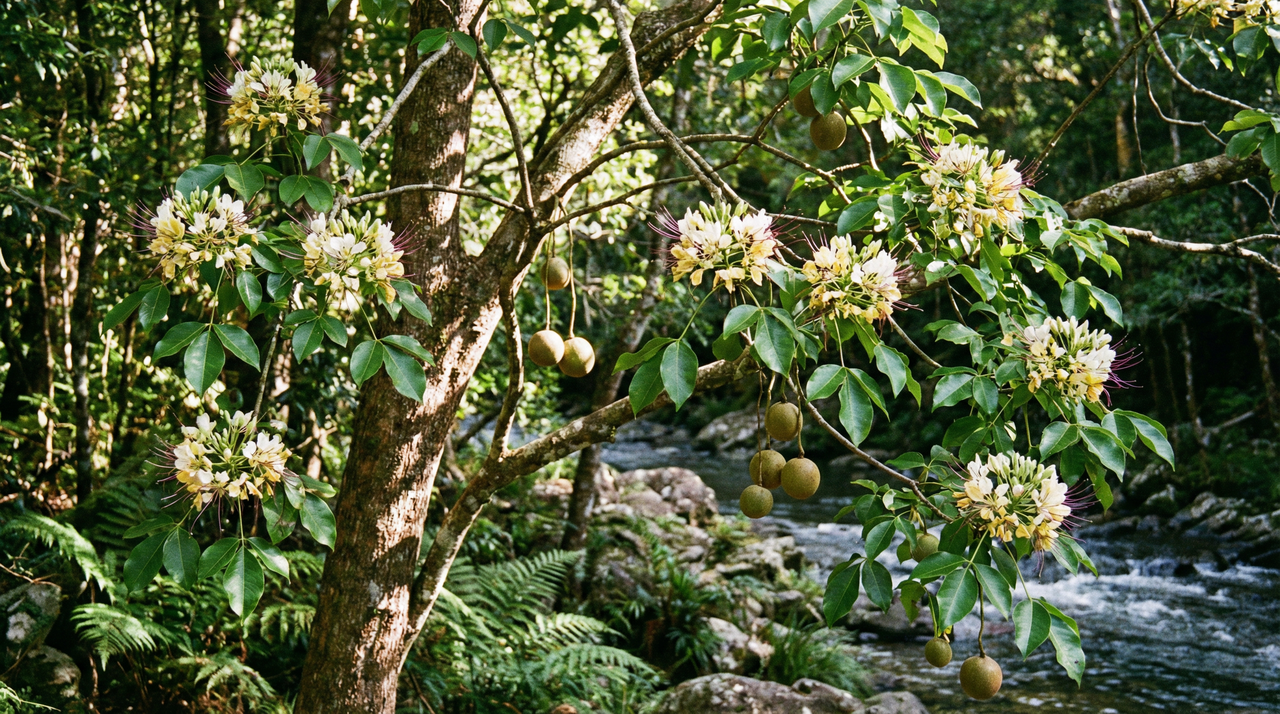
The first time I caught a whiff of Sacred Garlic Pear in full leaf on a sweltering afternoon in South Florida, I stopped walking and looked around for someone grilling. That's the thing about Crateva religiosa that nobody mentions upfront: this is a temple tree, a plant that Hindus and Buddhists have planted beside sacred spaces across South and Southeast Asia for millennia, a tree literally named after religious devotion, and it smells aggressively, unmistakably, of garlic. Hold a freshly bruised leaf close and you're not thinking about divinity. You're thinking about pasta.
That contradiction is actually the key to understanding the whole plant. The same glucosinolate chemistry that produces that pungent, almost aggressive scent is also what drives its most compelling medicinal reputation, a 3,000-year-old Ayurvedic tradition of using the bark and leaves to dissolve kidney stones that, against most people's expectations, has generated a real body of preclinical research worth paying attention to.[1] A fragrant, fast-growing tropical tree with documented anti-urolithiatic activity, wildlife value, edible young leaves, and centuries of cultural weight behind it. Once you understand why it smells the way it does, everything else about this plant starts making sense.
Origin and History of Sacred Garlic Pear (Crateva religiosa)
Botanical Background and Native Range
Sacred garlic pear is a polycarpic, long-lived deciduous tree in the Capparaceae family (some taxonomists place it in Brassicaceae, reflecting its glucosinolate chemistry) that typically grows 6 to 15 meters tall with a trunk 30 to 60 centimeters across and a lifespan stretching anywhere from 20 to well over 100 years depending on conditions.[2][3][4] That kind of permanence matters in a permaculture system. A tree you plant today could be feeding pollinators and anchoring a riverbank a century from now.
Its native range is broad: tropical and subtropical Asia from India and Bangladesh through Myanmar, Thailand, and southern China, with additional populations across parts of Africa, northern Australia, and Pacific islands.[2][5][6] In the wild it gravitates toward riverbanks, floodplains, and lowland tropical forests, rooting into alluvial or well-drained sandy soils up to about 1,000 to 1,500 meters elevation.[7] That riverine preference tells you a lot about what the tree wants from a planting site.
Taxonomy gets a little complicated here. Crateva unilocularis and Crateva urbaniana appear frequently in the literature as close relatives, but most current sources treat them as synonyms or minor variants of Crateva religiosa, based on overlapping fruit morphology and range.[8][9] I mention this early because you will encounter all three names in seed catalogs, ethnobotanical papers, and nursery listings, and it pays to know they are likely referring to the same tree. Growth expectations are consistent across sources: germination in one to two weeks, seedlings reaching a foot or two in the first three to six months, branching out through years one to three, and reproductive maturity arriving around year five, with full canopy development and meaningful productivity taking five to ten years under good conditions.[3] I label every planting because first-year seedlings can look deceptively like some weedy legumes, and more than once I have nearly lost track of a young specimen in a busy nursery bed. Globally the species sits at Least Concern on the IUCN Red List, though the Madagascar-associated Crateva urbaniana, sometimes treated separately, is Critically Endangered from habitat loss and overharvesting.[10][11]
Traditional and Cultural Significance
The cultural story of sacred garlic pear is, in my view, as compelling as any of its pharmacological properties. Known as Varuna in Sanskrit, the tree has been revered in Hinduism and Buddhism since at least the Vedic era, roughly 1500 to 500 BCE, and planted near temples across India and Southeast Asia for millennia.[12][13] Its trifoliate leaves, three leaflets on each stem, became a living symbol of the divine trinity of Brahma, Vishnu, and Shiva, and the tree earned particular associations with Shiva, Vishnu, and Goddess Kali. Branches and leaves appear in pujas, weddings, purification rituals, and festivals, and the tree is traditionally believed to ward off evil spirits while embodying purity, prosperity, and fertility.[14] When I first saw those three-part leaves in a Florida botanical garden, I immediately understood why the symbolism stuck.
Its medicinal reputation is just as ancient. The tree appears in the Atharvaveda and in foundational Ayurvedic texts including the Charaka Samhita and Sushruta Samhita, where bark, roots, and leaves were prescribed for urinary disorders, kidney stones, inflammation, and rheumatism.[15][16] Regional traditions extended that use across the whole of its native range: Thai practitioners used it for joint pain and digestion, Sri Lankans for UTIs and as a laxative, Filipino folk healers for wound healing and snakebite, Indonesian herbalists for poultices on boils and rheumatism, and African communities for digestive complaints, malaria, and parasites.[17][18] That kind of convergent medicinal use across unconnected cultures is always worth paying attention to. The tension between sacred protection in temple groves and the heavy demand for bark and roots in traditional medicine is real, and sustainable harvesting practices, selective pruning, no root digging, and cultivation in temple and agroforestry gardens, remain the recommended path forward.[19][20]
Physical Characteristics and Ecology
The first thing most people notice about Crateva religiosa is the smell. Crush a leaf, a piece of bark, or a ripe fruit, and a distinctive garlic-like odor rises immediately, courtesy of sulfur-containing glucosinolates that saturate every part of the plant.[2][21] That scent is the origin of both the common name and the family-level chemistry it shares with mustards and capers. The leaves themselves are trifoliolate, three elliptic to ovate leaflets per stem, each 5 to 18 centimeters long, glossy, leathery, and arranged on petioles 4 to 10 centimeters long.[22]
The overall form is a medium to large deciduous tree, semi-evergreen in reliably moist tropical climates, with smooth pale-gray bark that roughens and becomes corky with age, and young branches that occasionally carry short spines.[23][3] The flowers are where the drama lives. White to cream or pale yellow, each one measuring 1 to 3 centimeters across with 20 to 30 long stamens radiating outward in a burst that reminds me of a fluffier, more theatrical version of hibiscus. They appear in terminal clusters up to 15 centimeters long, typically from late winter into early summer, often opening before or alongside the new leaf flush.[3][24] Fruit follows as round to ovoid berries, green ripening to yellow-orange, 1 to 4 centimeters across, carrying that same garlic scent and containing up to 30 hard kidney-shaped seeds. Bees handle most pollination, birds and water disperse the seeds.[2][21]
Below ground, a deep taproot with lateral fibrous roots makes the tree genuinely useful for riverbank stabilization and gives it real drought resilience once established, reinforced by thick cuticles, sunken stomata, and its seasonal leaf-drop during dry periods.[25]
Fun Facts and Conservation Notes
Beyond medicine and ritual, the tree has a quietly useful culinary history. Young leaves and shoots are eaten as a vegetable across parts of its native range, and the fruits turn up in pickles or, in some traditional communities, roasted as a coffee substitute.[3][26] I've noticed in my own plants grown in full sun with drier intervals between waterings that the garlic scent intensifies noticeably, suggesting the plant ramps up glucosinolate production under mild stress, which lines up with what we know about that compound class in other Brassicaceae relatives.
Its Least Concern IUCN status is reassuring, but I wouldn't take it as a reason to be complacent. Overharvesting of bark and roots for traditional medicine, combined with habitat conversion from slash-and-burn agriculture, is putting real pressure on wild populations in parts of its range even as the global listing stays stable.[19][27] The tree's sacred status in temple groves has provided de facto conservation for centuries, an elegant example of cultural values doing the work that regulatory protection often struggles to do. For permaculture growers, that history is both an inspiration and a practical argument: plant extra trees, rely on cultivated stock rather than wild harvest, and let the tree's deep cultural and ecological story inform how you treat it in your own landscape.
Sacred Garlic Pear Varieties and Sourcing
Botanical Varieties of Crateva religiosa
If you came here expecting a list of named cultivars the way you'd find with figs or citrus, I have to manage expectations upfront: sacred garlic pear doesn't have them. [3][2] The species is grown as the straight species from seed or cuttings, full stop. There are six recognized botanical varieties (var. gregaria, var. frutescens, var. alba, var. grandifolia, var. microphylla, and var. stenosepala), each distinguished by modest differences in leaf size, growth habit, and flower form rather than anything a home gardener would deliberately shop for. [28] In my experience growing seed batches from specialty suppliers, the variation between seedlings is subtle enough that I wouldn't lose sleep over which botanical variety I had. The flowers and the fruit are the draw; the leaf size barely registers once the canopy fills in. Occasionally you'll see references to variegated forms with creamy or yellow leaf margins in the broader Crateva genus, but these remain uncommon for this species specifically and aren't something to count on finding in trade. For full growing-from-seed specifics, the propagation section covers what you need.
Where to Buy Sacred Garlic Pear Plants and Seeds
Finding sacred garlic pear is a bit like hunting down jaboticaba or biriba a decade ago: possible, but only if you know the right search terms. The single most useful thing I can tell you is to search under every synonym. Crateva urbaniana and Crateva unilocularis are both accepted synonyms in major databases, [29][30][31] and sellers sometimes list under common names like Garlic Pear Tree or Spider Tree. Running all of them through your search bar saves weeks of dead ends.
The vendors who actually carry it are a short list: Top Tropicals, Trade Winds Fruit, Logee's, Buddha's Hand Nursery, SumiTropics, Sheffield's Seed Company, and occasional Etsy or eBay listings from small tropical growers. [32][33][34][35][36] Seeds are far more reliably available than live plants and considerably cheaper, typically $5 to $30 per packet versus $15 to $200 for seedlings, with mature specimens occasionally reaching $1,000 or more from rare-plant specialists. Fresh seed matters here because viability drops quickly, and some pretreatment is usually required before sowing. [37] The propagation section covers that process in detail.
Container plants, when you can find them, are typically shipped in 3 to 5 gallon pots at roughly 1 to 1.5 meters tall. Many warm-climate suppliers restrict shipping to summer months to protect plants traveling to colder regions, so check that window before you order. The tree is suited to USDA zones 9 through 11 and genuinely thrives only in frost-free zones 10 and 11, making it a practical landscape choice mainly for Florida, Hawaii, and the warmest pockets of California. [38][39] If you're in zone 8 or colder, seeds started indoors are honestly your best bet rather than gambling on a live plant through a cold snap.
On the regulatory side, the news is mostly reassuring: Crateva religiosa carries no federal invasive listing, no noxious weed status, and no CITES restrictions. [38][40][41] Hawaii is the exception worth flagging: the state's biosecurity rules are the strictest in the country, and imported plant material may require phytosanitary certificates or USDA APHIS permits before it crosses the border. [42][43] Before placing any order, verify current stock, shipping availability, and any applicable state rules directly with the supplier. Availability shifts seasonally and small specialty nurseries sell out without much warning.
How to Propagate and Plant Sacred Garlic Pear (Crateva religiosa)
Sacred Garlic Pear is not a difficult tree to propagate once you understand what its seeds actually need. And what they need, first and foremost, is a way through that hard woody coat. Skipping scarification isn't just suboptimal, it's the difference between a flat failure and a tray of vigorous seedlings.
Propagation Methods for Sacred Garlic Pear
The seeds of Crateva religiosa are orthodox, meaning they tolerate drying and cool storage reasonably well.[44][45] Stored at 5-10°C with moisture around 5%, viability can technically persist for up to a decade, but in practice germination rates drop noticeably after one to two years at room temperature.[46] I've tested this firsthand with batches of orthodox tropical tree seeds I kept in my refrigerator, and the two-year mark is real. If you can get fresh seed from ripe fruit and sow it promptly, do that.
The seeds exhibit physical dormancy from a hard, impermeable testa, and untreated germination rates typically sit below 20%.[47][48] Scarify mechanically with sandpaper or carefully nick the coat, or try a 30-minute soak in dilute sulfuric acid, followed by a 24-48 hour warm water soak before sowing about 1 cm deep. At 25-30°C with consistent moisture and 12-16 hours of light, that same tray can hit 60-90% germination.[49][50][51] Every time I've done this with Crateva-type seeds, the scarified tray looks like a completely different experiment compared to the control. It's not subtle.
Worth knowing: these seeds are monoembryonic and the tree is primarily outcrossing and insect-pollinated, so seedlings don't come true to type.[52][3] That genetic diversity is fine for a shade tree or food forest specimen, but if you've found a particularly productive or compact individual, you'll want to clone it. Semi-hardwood cuttings of 10-15 cm taken during the growing season, treated with IBA at 1000-3000 ppm and placed under mist with bottom heat at 25-30°C in a sand-peat mix, root in 4-8 weeks with success rates of 60-80%.[53][54] Air layering during the rainy season also works well with IBA applied to the wound.[55] Grafting onto compatible Capparaceae rootstocks and tissue culture from nodal explants are documented for serious nursery production, but most home growers won't need to go there.[56][49]
Soil, Site Selection, and Planting Technique
Drainage first. I can't say it more plainly than that. More young tropical trees die from waterlogged roots than from any pest or pathogen I've encountered, and sacred garlic pear is particularly unforgiving on this point. Waterlogging causes rapid root rot, and by the time you see yellowing, wilting, or stunted growth above ground, the roots are often already mushy and foul-smelling below.[57][58] I learned this lesson the hard way in Florida summers, losing several young tropical specimens to root rot before I started mounding every planting site on heavy or low-lying ground. Now it's automatic.
The tree prefers fertile loamy or sandy-loam soil with a pH of 6.0-7.5, and will tolerate a broader range of 5.5-8.0 in a pinch.[3][23] On heavy clay or poorly drained sites, incorporate generous amounts of coarse sand and organic matter, or build a raised mound. Once established, the tree shows solid drought tolerance and handles the dry spells common in monsoon climates without much fuss.[59] It naturally colonizes riverine and alluvial edges across tropical Asia, Africa, and northern Australia, so it's accustomed to seasonal extremes, just not to sitting in still water.[60] Full sun, at least 6-8 hours of direct light daily, is what it wants. Light afternoon shade is tolerable in extreme heat, but you'll get slower growth and delayed flowering in anything less.
For container growing in cooler climates, a mix of roughly 50% potting soil, 30% coarse sand or perlite, and 20% compost gives the drainage these roots demand while still holding some fertility.[61]
Spacing, Timeline, and First-Year Establishment
This is a substantial tree. Mature specimens reach 6-15 m tall with canopies spreading 8-12 m, and occasionally push to 20 m in ideal conditions.[62] For a backyard specimen where you're not planning regular pruning, give it at least 6-8 m (20-25 feet) of clearance. In an agroforestry system where you want understory crops beneath and alongside it, you can tighten spacing to 5-6 m, but the extensive lateral root system will eventually compete for water and nutrients from nearby plants.[63][64] I planted two specimens about 4.5 m apart in an early food forest project and watched them compete themselves into smaller canopies and delayed fruiting. Now I give every specimen a minimum of 6 m and the difference in vigor is obvious.
Transplant seedlings during the rainy season when they're 20-30 cm tall, typically 6-8 months after germination.[49] Dig the planting pit at least twice the width of the root ball, amend with organic matter, and mulch 5-10 cm deep while keeping the mulch 10-15 cm away from the trunk. Minimal root disturbance at transplant makes a real difference with this genus. Mycorrhizal inoculants applied at planting speed establishment noticeably, particularly on sites with degraded or low-fungal soils.[65]
Germination Timeline and Seedling Care
Scarified fresh Crateva religiosa seeds germinate in 10-30 days at 25-30°C, with most emerging in the second to fourth week.[49][66] From there, growth is genuinely fast. Under full sun and good conditions, seedlings reach 1-2 m in the first year and 2-3 m within two years.[3] Flowering from seed typically begins somewhere between years two and five, while cuttings and grafted trees often flower one to two years earlier.[67]
Label your seedling pots carefully. Young sacred garlic pear seedlings look like a lot of other tropical trees in those first weeks, and mixing them up in a busy nursery is easier than you'd think. During the first 6-8 weeks, keep seedlings in partial shade, water every 2-3 days, and watch for aphids and scale, which gravitate toward the tender new growth.[65] Neem oil handles both pests without drama. Once the tree is established in its permanent spot and the roots have found their depth, you'll find it needs far less intervention than it demanded as a seedling.
Crateva religiosa Care Guide: Sunlight, Watering, Fertilizing & Seasonal Care
Sacred garlic pear rewards growers who work with its native monsoon rhythm rather than against it. Every decision, from where you site it to when you prune, gets easier once you understand that this tree evolved along tropical riverbanks where flood seasons and dry seasons are hard and predictable. Get the basics right and it grows fast. Push too hard with water or fertilizer and you'll undo a lot of that progress.
Sunlight Requirements for Sacred Garlic Pear
Full sun is non-negotiable. Crateva religiosa needs at least 6 hours of direct sun daily to flower and fruit properly,[68][3] and a shaded specimen will tell you about it quickly. Too little light produces elongated, weak stems and pale crateva religiosa leaves that never develop the full, deep green you want,[69] while flowering drops off significantly. I've seen young plants in partial afternoon shade look deceptively healthy for a season before the stunted flowering made the problem obvious.
The flip side in a Central Florida summer is that very young plants in full afternoon sun can look stressed until their roots establish. Leaf scorch, wilting, and chlorosis are all real risks when intense heat and drought combine,[70][71] so I give seedlings a little afternoon shade cloth during their first summer, then pull it once the roots have had a chance to find water on their own.
Water Needs and Drought Tolerance
The watering strategy shifts dramatically between the establishment phase and a mature tree. For the first one to two years, water every two to three days in hot weather or every seven to ten days during drier stretches, keeping the soil consistently moist but never saturated.[61][72] Once established, the tree becomes genuinely drought-tolerant and only needs deep, infrequent watering every one to two weeks during dry periods, with extra irrigation during flowering and fruiting to support fruit size and quality.[3][73]
Drainage is the detail that kills more young trees than anything else. Overwatering causes root rot, yellowing, and fungal infections; underwatering shows up as wilting, browning leaf edges, and eventual leaf drop.[61][74] I've personally watched root rot take out a well-sited young specimen after back-to-back summer thunderstorms in a low spot that I thought drained adequately. It didn't. The tree prefers well-drained loamy or sandy loam with a pH of 6.0 to 7.5, and a two-to-three centimeter layer of organic mulch over the root zone helps retain moisture without keeping roots wet.[68][75] Perfect drainage first, everything else second.
Fertilizing and Nutrient Management
Sacred garlic pear is a moderate feeder and genuinely does not want to be pushed. A balanced slow-release fertilizer, something like a 10-10-10 or 8-3-9, applied sparingly in early spring and again in early summer is all a mature tree typically needs, around 200 to 500 grams annually.[76][77] Stop fertilizing after midsummer; late feeding pushes tender new growth that's wide open to cold damage.
I monitor older leaves closely because in my sandy Florida soil, nitrogen deficiency shows up first as yellowing of the lower canopy, and catching it early means a light balanced feed corrects it before it slows growth.[78][79] Phosphorus deficiency shows as purplish leaf discoloration; potassium shows as browning margins; interveinal chlorosis in alkaline soils usually signals iron deficiency. Over-fertilizing is its own problem, causing root burn, excessive vegetative growth at the expense of the crateva religiosa flower, and nutrient imbalances.[80] I test soil pH and nutrient levels every year or two and rely heavily on well-rotted manure, around one to two kilograms per tree annually, as a gentler baseline amendment.[3]
Frost Tolerance and Cold Protection
Here's the hard truth for zone 9B growers: this tree is highly frost-sensitive. Leaves, buds, and stems sustain damage below 5 to 10°C (41 to 50°F), and while a brief dip to -2°C (28°F) may be survivable, anything prolonged below -7°C (20°F) risks killing the plant outright.[81][82] It's most reliably happy in USDA zones 10 to 11, though it can be grown in zone 9B with consistent protection.[75]
For those rare Central Florida nights that threaten a freeze, I move container specimens to a bright porch or enclosed lanai and that has reliably gotten young trees through without damage. For in-ground plants, three to four inches of heavy mulch over the root zone, a deep watering the day before the freeze, and frost cloth over the canopy are your best tools.[83] Recovery from frost damage is possible but sometimes takes multiple growing seasons, and repeated cold events cause cumulative decline that's hard to reverse.[84][85]
Heat Tolerance and Summer Care
The good news is that this tree genuinely loves heat. It tolerates temperatures up to 40 to 45°C (104 to 113°F) and thrives in AHS Heat Zones 9 to 12, with optimal growth and flowering between 20 and 35°C.[3] Think of it as performing somewhere between a mango and a fig once it's settled in: heat-loving, forgiving of dry spells once the roots are deep, but still showing leaf scorch and wilting when drought and heat stack on top of each other.[86]
Seedlings are especially vulnerable above 40°C. For those, 40 to 70 percent shade cloth during peak summer heat, combined with organic mulch and deep watering every three to seven days, keeps stress symptoms from escalating.[87] Spacing trees six to eight meters apart also helps with airflow, which reduces both heat stress and fungal pressure during humid months.
Pruning, Maintenance, and Seasonal Rhythm
Train young trees to a central leader with well-spaced scaffold branches, then prune lightly in the dry season after harvest to remove dead, crossing, or water-sprout growth.[88] I learned the hard way that heavy cuts during the wet season invite fungal infections that spread fast in the humidity. A saw wound that would heal cleanly in February becomes a problem in August. Light, well-timed cuts in the dry season improve air circulation and fruit quality without creating entry points for disease.[84]
Seasonal Growth Cycle of Sacred Garlic Pear
Understanding the annual cycle makes every care decision click into place. Sacred garlic pear is deciduous, shedding leaves during the dry season, then flowering in the hot dry period from roughly February through May before setting fruit into the early monsoon months.[89][2] A new leaf flush follows the onset of rain, and vegetative growth peaks post-monsoon. In consistently warm, humid climates the flowering can be semi-continuous, which is a treat.
I time everything to match this rhythm rather than a generic calendar: fertilize as the new flush emerges in early spring, prune after the fruit is off in the dry season, and bump up irrigation when the buds are swelling. Once you internalize the cycle, the tree practically tells you what it needs next.
How to Harvest Sacred Garlic Pear
Patience is the first skill this tree teaches you. Whether you're growing sacred garlic pear from a grafted start or a fresh-scarified seed, you will wait before you harvest anything. I've come to prefer buying grafted plants or starting my own grafted stock for exactly this reason: grafted trees typically begin bearing within 2-4 years, while seed-grown specimens may take 5-7 years to produce fruit.[90][91][92] In an edible food forest, that's a meaningful difference.
When to Harvest Sacred Garlic Pear: Timing and Ripeness Cues
Once your tree matures, its annual rhythm becomes surprisingly readable. Flowering kicks off mainly from March to May, triggered by the onset of the hot dry season,[93][94] and fruit development runs roughly 60-90 days from there, though wetter or cooler conditions can stretch that window to four or six months.[95] In India and Southeast Asia that puts peak harvest somewhere between May and August; in consistently warm, humid climates fruiting can stretch toward year-round.[2][89]
Ripeness cues are what you actually watch for at harvest time. The fruits are small, only about 1-2 cm across, so size alone tells you almost nothing.[96][97] What you want is color shift, green giving way to yellowish-orange, deep orange, or red, combined with a slight softening when you press gently.[96][98] Think of it the way you'd read a ripe guava or papaya: color first, give second. After a few seasons observing Crateva and similar tropical trees, I've learned to check daily once color starts turning. Waiting even three or four days past peak softens the fruits enough that they bruise during any kind of handling and you lose a good portion of the harvest.
Harvesting Techniques and Post-Harvest Handling
For fruit, pick in the late afternoon after peak heat has passed, using clean pruning shears or a gentle hand pull, and avoid harvest during rainy or extremely humid weather to reduce pathogen pressure.[99][100] Don't strip a single branch bare; spreading the harvest keeps the tree vigorous year after year.[101] For medicinal leaves and bark, I harvest in spring or summer during active growth, early morning once the dew has dried, always with sterilized tools.[100] I learned that lesson the hard way early on when non-sterilized shears left an entry point for infection on a bark-harvested branch. One ruined branch was enough to make disinfecting between cuts a permanent habit.
Ripe fruits bruise easily, so handle them in a single layer. Unripe fruits can be held at 10-15°C with 85-90% humidity for two to three weeks and then ripened at room temperature over three to five days.[102] For medicinal use, shade-dry leaves below 40°C to preserve the bioactive compounds.[103] Roots are washed, sliced, and sun-dried over three to five days; for longer storage, oven-drying at 40-50°C brings moisture down to 10-12%.[102]
Expected Yields and Flavor Notes at Harvest
A mature Crateva religiosa can produce 50-100 kg of fruit in a season, with a well-established ten-year-old tree averaging around 75 kg.[89] That sounds generous until you picture several hundred tiny 1-2 cm fruits piling up.[96] In my experience, trees pushed toward the higher end of that range are the ones getting consistent moisture through fruit development and a post-harvest prune to open the canopy. Harvesting at peak ripeness also matters for preserving the distinctive pungent character the fruit is valued for; what to actually do with that flavor once you've gathered a harvest is a whole other conversation.
Sacred Garlic Pear Preparation and Uses
There's something I find genuinely moving about a tree that has fed, healed, and sheltered people spiritually for thousands of years. Sacred Garlic Pear has been planted near Hindu and Buddhist temples across Asia precisely because its leaves and flowers serve as ritual offerings, and it represents peace and enlightenment in ways that predate any botanical survey.[2][104] That sacred role and its practical food and medicine uses have always been intertwined, which is exactly the kind of whole-system thinking permaculture tries to recover.
Culinary Uses and Flavor Profile of Sacred Garlic Pear
The tree's edible parts include young leaves, flower buds, and fruits, all consumed across traditional cuisines of India and Southeast Asia.[2][62] Young fruits are sour and can be eaten raw or used in pickles, chutneys, and curries, while young leaves and flower buds go into salads, stir-fries, or are cooked as potherbs.[3] The flavor is genuinely distinctive: a pungent, garlic-like bite with pear-like undertones, slightly bitter and astringent, driven by isothiocyanates rather than actual allium compounds.[2][105]
I'd compare the crushed leaves to a bold mustard green with a garlic edge, somewhere between watercress and arugula but more assertive. A quick blanch softens that bitterness considerably, much like it does with other pungent brassica-family greens I've grown. Traditional preparation methods lean heavily on cooking or fermenting rather than eating raw in large quantities, with boiling leaves or fruits multiple times being a time-tested way to reduce potential irritants.[62][106] Related species like Crateva unilocularis show how young unripe fruits can even be pickled caper-style, which I find a delightful use for an underappreciated genus.[107]
On the nutrition side, the fruits deliver around 50-100 mg of vitamin C per 100g fresh weight along with meaningful potassium, calcium, and iron, while leaves contribute solid protein and calcium on a dry-weight basis.[108][109] Traditional use as a famine food tells its own story about reliable nutrition when data is thin. One firm caution: the seeds contain toxic alkaloids and glucosinolates and should not be eaten.[110] I've never used them culinarily and strongly advise against it. Proper processing for medicinal purposes is best left to experienced practitioners. Before foraging, also confirm identification carefully, as Cratoxylum arboreum shares the "Temple Tree" common name and is not the same plant.[111]
Medicinal Preparations from Sacred Garlic Pear
Known in Ayurveda and Siddha systems as Varuna, this tree has been a cornerstone treatment for urinary disorders, kidney stones, inflammation, and rheumatism since Vedic times.[112][113] The bark addresses urinary and inflammatory conditions, leaves serve as a diuretic and wound healer, fruits support digestion, and roots have been used for fever and rheumatism. For a home practitioner working within traditional frameworks, bark decoctions are prepared by boiling 5-10g of bark powder in two cups of water for 10-15 minutes, with a standard dose of 50-100 ml taken once or twice daily. Leaf powder is typically used at 3-6 grams per day, and standardized extracts run 200-400 mg twice daily.[114][17] I find the aromatic steam during boiling unmistakable, a warm pungent signal I've come to associate with the plant's character when working with medicinal guilds.
Leaf extracts show low acute toxicity in animal models (LD50 above 2000 mg/kg), and short-term use appears well-tolerated, though excessive consumption of unripe fruits or bark can cause gastrointestinal upset.[73] Given the emmenagogue potential and limited reproductive studies, I recommend avoiding medicinal preparations during pregnancy. This is one area where traditional wisdom and modern caution genuinely align, and I wouldn't hedge that guidance.
Non-Food Uses of Sacred Garlic Pear
The wood is used for crafting tools, furniture, and religious icons, and it's specifically preferred for Hindu yajna rituals because of its aromatic and spiritual properties.[115][116] Root bark fibers have been twisted into rope and twine, and the wood serves as fuel as well. It's a full-circle permaculture tree: food from the canopy, medicine from the bark, fiber from the roots, and sacred ceremony from the wood itself, all from a single planting that may stand for generations.
Sacred Garlic Pear Health Benefits and Medicinal Uses
Few trees carry as much medicinal weight as this one does in the living pharmacopoeia of Ayurveda. Known as Varuna in the classical texts, sacred garlic pear has been prescribed for urinary disorders, kidney stones, rheumatism, wound healing, and the balancing of Vata and Kapha doshas for well over two thousand years.[112][117] That's not incidental. When a plant earns a permanent place in three separate traditional medical systems (Ayurveda, Unani, and Siddha) and dozens of African and Asian folk traditions, all converging on the same indication, it's worth paying close attention.[118][119]
Traditional Ayurvedic and Folk Medicine Applications
Bark decoctions are the workhorse preparation across every tradition that uses this tree medicinally, typically targeting the urinary tract, cystitis, and stone formation. Leaves get applied as poultices for wounds, skin ulcers, and swollen joints. Fruits and seeds have historically served as laxatives and digestive aids.[112][118] What strikes me every time I read the historical texts is how consistent the urinary-stone application is across cultures that had zero contact with each other. That kind of convergent traditional knowledge doesn't mean the science is settled, but it does tell you the plant is doing something real.
The human trial data for Crateva religiosa medicinal uses is limited but genuinely encouraging. Clinical studies using varuna bark extract showed significant reductions in stone burden and symptomatic relief for both urolithiasis and benign prostatic hyperplasia after three months of treatment.[120][121] Large-scale randomized trials are still scarce, so I wouldn't position this tree as a kidney-stone cure. But centuries of Ayurvedic practice pointing to the same therapeutic window, now supported by positive preliminary human results, is a signal worth taking seriously.
Key Phytochemicals: Lupeol, Flavonoids, Glucosinolates, and Alkaloids
The chemistry here is genuinely interesting. Lupeol, a pentacyclic triterpenoid concentrated in the bark, appears to be the compound most responsible for anti-urolithiatic, anti-inflammatory, and apoptotic activity.[122][123] The leaves, by contrast, are richest in flavonoids like quercetin, kaempferol, rutin, and apigenin, which drive most of the antioxidant activity you see in leaf extracts.[124] Then there are the glucosinolates, gluconapin and glucocapparin, which hydrolyze into antimicrobial isothiocyanates and produce the unmistakable garlic scent that gives this tree its common name.[125] Crush a leaf and hold it close: it really does smell like you've just bruised a garlic clove. That's the organosulfur chemistry making itself known.
One practical thing I've observed growing this tree in Central Florida is that plants under stress, particularly during the dry season or after heat events, seem to produce more pungent foliage. That tracks with the research: alkaloid concentrations peak under environmental stress, and glucosinolate levels shift with season, soil conditions, and growth stage.[126][127] A stressed tree isn't necessarily more medicinal; it may simply be more bitter and harder on the digestive system. Part-specific chemistry matters too: roots and bark carry more alkaloids and triterpenoids, fruits are higher in phenolics and ascorbic acid, seeds concentrate fatty oils rather than the compounds most useful medicinally.[17]
Scientific Research on Anti-inflammatory, Antioxidant, Antimicrobial, and Urinary Benefits
The preclinical research portfolio for Crateva religiosa benefits is surprisingly broad. In animal models, the plant demonstrates anti-urolithiatic and diuretic activity comparable to furosemide, with lupeol confirmed as a primary driver of stone prevention and increased urine output.[128][129] Anti-inflammatory action comes through multiple pathways: inhibition of COX-1, COX-2, and LOX enzymes, suppression of TNF-α, IL-6, NF-κB, and MAPK signaling, with 60-80% inhibition in writhing assays and performance comparable to indomethacin in some models.[130][131] Analgesic effects have been confirmed separately in hot-plate and tail-flick tests.[131]
Antioxidant capacity is robust, with extracts activating SOD, catalase, glutathione peroxidase, and Nrf2 pathways, and performing comparably to ascorbic acid in DPPH and ABTS assays.[132][133] Antimicrobial activity against E. coli, S. aureus, and fungi (MIC 0.5-200 µg/mL) follows directly from the glucosinolate-derived isothiocyanates.[133] Hepatoprotective effects against CCl4-induced liver injury have also been documented.[134] More preliminary findings suggest antidiabetic potential through α-glucosidase and α-amylase inhibition, and lupeol has demonstrated apoptotic activity against MCF-7 breast and HCT-116 colon cancer cell lines via Bcl-2, caspase, and NF-κB pathways, though all of this remains at the in vitro or animal-model stage.[134][135]
Nutrition Profile of Edible Leaves, Fruits, and Flowers
The edible parts of this tree are genuinely nutritious, not just medicinally interesting. Ripe fruits offer a tangy, garlic-like flavor suited to raw eating, pickling, chutneys, and curries, providing about 45-55 kcal per 100 g fresh weight, 1.2-1.8 g protein, 9-13 g carbohydrates, vitamin C in the range of 15-60 mg, plus meaningful amounts of potassium (200-400 mg), calcium (50-100 mg), and iron (2-5 mg).[136][2] Young leaves are where the protein concentration gets serious, around 20-25% on a dry-weight basis, with high beta-carotene, vitamin E, and iron levels that rival better-known leafy vegetables.[137] Flowers are also edible, used raw or lightly cooked as a garnish.
One thing worth knowing: both leaves and fruits contain oxalic acid at roughly 0.5-1%, which can bind calcium and reduce mineral bioavailability if you're eating them raw in quantity.[138] I learned to harvest young leaves after the first good rain of the season, when they're tender and noticeably less pungent than leaves from drought-stressed plants. Cooking them solves most of the oxalic acid concern and mellows the bite considerably. Plants growing in alkaline soils like mine in Central Florida seem to produce leaves with a sharper edge, which I suspect reflects the stress-induced compound shifts mentioned in the phytochemistry research.
Safety Profile, Toxicity Concerns, and Contraindications
At traditional Ayurvedic dosages of 3-6 g powdered bark daily, Crateva religiosa is generally considered safe. Acute toxicity studies put the LD50 above 2000 mg/kg in animal models, and the most commonly reported side effects at therapeutic doses are mild, self-limiting gastrointestinal upset.[139][17] That's a reasonable safety margin for a medicinal tree, but it comes with important caveats about which parts you use and how you use them.
Seeds, roots, and high doses of bark are a different story. The glucosinolates that yield antimicrobial isothiocyanates also act as irritants in quantity, and saponins and alkaloids in these parts can cause nausea, vomiting, diarrhea, and mucosal irritation. There are documented pediatric poisoning cases involving seed ingestion leading to significant gastrointestinal symptoms.[140] I never use the seeds or root bark medicinally and I'd strongly encourage readers to do the same. The research on their irritant potential is clear enough that caution isn't overcaution here. I also label plants carefully in my food forest because the garlic scent of young leaves can attract curious children and pets.
Pregnancy is a firm contraindication due to potential uterotonic and emmenagogue effects, and the complete absence of safety data for that population.[141] Use alongside diuretics, antihypertensives, hypoglycemics, anticoagulants, or lithium warrants caution because of additive effects, electrolyte imbalance risk, and potential alterations in drug metabolism.[142] Environmental stress can elevate glucosinolate levels throughout the plant, so a tree coming out of a dry season may carry more irritant potential than usual.[143] Proper preparation, including boiling bark preparations and cooking leaves rather than eating large quantities raw, goes a long way toward making this a safe and genuinely valuable medicinal ally.
Sacred Garlic Pear Pests and Diseases
Natural Defenses and Disease Resistance
The same phytochemicals covered in the health benefits section do double duty as the tree's immune system. Sacred Garlic Pear carries a broad arsenal of allicin-like compounds, glucosinolates, phenolics, flavonoids, tannins, and alkaloids that give it a genuine antimicrobial edge, earning it a "moderately resistant" reputation among tropical fruit trees.[144][145] That edge is real, but it's not unconditional.
Fungal diseases are the biggest real-world concern. Leaf spot (Cercospora spp.), anthracnose (Colletotrichum spp.), powdery mildew, and root rot (Phytophthora spp.) all show up, especially when drainage is poor or humidity stays above 80-90% for extended periods.[146][147] Bacterial wilt and leaf blight from Xanthomonas campestris round out the disease list, though I've found solid data on bacterial and viral pathology to be frustratingly thin; most of what we know comes from regional tropical-Asian studies.[148] Controlled inoculation trials on the closely related Crateva urbaniana confirm moderate resistance to anthracnose and powdery mildew, while Crateva excelsa skews more susceptible, which gives us a useful genus-level picture even where anchor-species data is incomplete.[147]
Young plants need the most protection. Susceptibility across the genus drops noticeably as trees mature, and the variegated cultivar I've grown seems to shrug off minor leaf-spot pressure better than straight-species seedlings from the same seed batch, though no cultivar has been formally bred for disease resistance.[148][149] The prevention toolkit that serves young trees best isn't complicated: good spacing, pruning for airflow, removing infected debris, skipping overhead irrigation, and keeping roots in well-drained soil in full sun.[150] Fungicides should be a last resort, not a calendar item.
Common Insect Pests and Management
What I find genuinely fascinating about this tree is how many defense layers it stacks. The glucosinolates release isothiocyanates when leaf tissue is damaged, phenolic compounds discourage feeding, trichomes on leaf surfaces deter oviposition, and extrafloral nectaries recruit predatory ants and beneficial insects as standing security.[151][152] Leaf extracts have demonstrated insecticidal activity against spider mites and certain Lepidoptera in lab settings.[153] In my subtropical garden I've watched ants swarm the nectaries within weeks of canopy opening, and improved airflow alone has kept populations manageable most seasons.
Pests still find their way in, so it's worth knowing what to look for. Defoliators like leaf beetles and Spodoptera litura caterpillars can strip foliage during flush periods. Sap-suckers, including Aphis craccivora aphids, coconut scale (Aspidiotus destructor), and mealybugs, tend to cluster on new growth. Fruit flies (Bactrocera spp.) and fruit borers target developing fruits, and stem borers occasionally establish in stressed specimens.[154][155] Stress and waterlogged soil amplify nearly every category. The 'Garlick Pear' and 'Jamunapari' selections show moderately better resistance to aphids and fruit borers, likely tied to their elevated glucosinolate content, and related species like Crateva urbaniana and Crateva unilocularis carry similar defensive chemistry with comparable pest profiles.[156][157]
My IPM approach here leans hard on the tree's own biology. Sanitation, monitoring, and keeping the canopy open do most of the work. When I do intervene, neem oil or insecticidal soap handles the sap-suckers without torching the beneficial insect community the nectaries have built.[155] I also harvest a few leaves for homemade pest sprays on other plants, but only after checking local regulations; the same compounds that protect this tree are genuinely potent, and "natural" doesn't mean harmless.[158] Synthetic insecticides stay on the shelf unless an outbreak is severe and nothing else is working.[159]
Sacred Garlic Pear in Permaculture Design
Before you fall in love with this tree, know where it can actually live. Sacred Garlic Pear (Crateva religiosa) is a tropical and subtropical native, at home across riverine habitats of Asia, Africa, and northern Australia, and it wants warmth: ideally 20–35°C (68–95°F), full sun, and elevations comfortably below 1,000 m.[3][160] Think of it as sitting in the same climate conversation as avocado or citrus: technically possible in the warmer pockets of zone 9b, but always working at the edge of its comfort zone there.
Climate and Growing Zones
The sweet spot for sacred garlic pear is USDA zones 10–11, with zone 9b possible only in sheltered microclimates or containers that can be moved when a freeze threatens.[161][74][7] I've overwintered young specimens in Central Florida by tucking them against a south-facing masonry wall and covering them during that one January cold snap, but I wouldn't call it relaxed gardening. Brief dips to around 20°F (-7°C) with protection are survivable; a sustained freeze is not. Once established, the tree handles drought and seasonal monsoon cycles reasonably well, preferring 500–2,000 mm of annual rainfall while being sensitive to prolonged waterlogging or temperatures climbing past 40°C.[3][162] Related species like Crateva adansonii show the same broad tropical and subtropical preferences, which tells you this is a genus-level characteristic rather than a quirk of one species.[163][164]
Ecosystem Functions and Guild Roles
What I find genuinely exciting about placing this tree in a food forest is how much it gives back ecologically. The fragrant white flowers, which open in the late afternoon and into the night, are magnets for honeybees, wild bees, and butterflies, with moths, flies, and beetles rounding out the visitor list.[165][166] The flowers are hermaphroditic but self-incompatible, meaning cross-pollination produces the best fruit set; in areas with low pollinator pressure, a soft brush does the job.[167][168] Beyond pollinators, the fruit draws birds and mammals that disperse seeds while the tree itself provides nesting structure in deciduous and riparian settings.[169][170]
Underground, a deep taproot reaching 5–10 m anchors slopes and riparian banks against erosion while mining subsoil nutrients the roots above can't reach.[171][172] The leaf litter, though the tree doesn't fix atmospheric nitrogen, decomposes into a surprisingly rich mulch contributing up to 100–150 kg N/ha/year through nutrient cycling.[171][172] I still plant it alongside leguminous nitrogen-fixers because the combined leaf mulch seems to feed soil biology in a way I can see in my food-forest beds, year after year. The garlic-like odor from sulfur compounds in the leaves and bark is something you notice immediately when you brush against the foliage or when rain hits it; that same chemistry appears to deter some pest species and pathogens, adding a quiet layer of protection to neighboring plants.[173][3] Its dense spreading canopy also earns it a place as a windbreak in exposed agroforestry sites.
One caution I want to put squarely in front of Florida-based growers: this tree is a genuine pioneer, and in disturbed wetlands it can spread faster than you'd like. It's considered potentially invasive in parts of the state, so monitoring and thoughtful site selection aren't optional if you're near sensitive ecosystems.[74][174]
Forest Layer and Companion Planting
In canopy terms, sacred garlic pear sits in the sub-canopy or lower-to-middle layer, typically reaching 6–15 m with a broad, rounded crown, occasionally taller in ideal conditions.[3][175] That spreading crown casts dappled shade that suits understory crops like coffee, cocoa, cassava, and shade-tolerant legumes well. It's not going to outcompete your upper-canopy trees, but it needs room; I've seen people underestimate the crown spread and then have to make hard choices about neighboring plantings five years later.
Soil preferences here inform guild design more than they change cultivation details (those live in the care guide): it grows in loamy, sandy, or alluvial soils with pH 6.0–8.0, tolerates seasonal flooding and mild salinity, and is naturally at home in disturbed or riparian sites.[176][3] The deep taproot keeps competition with shallow-rooted companions minimal, and mycorrhizal associations further its nutrient access,[177][178] but its root exudates and leaf leachates do show mild allelopathic effects that can slow some ground covers.[177] I learned that the hard way trying to establish a vigorous lemongrass ring underneath one. Now I choose companions like comfrey or sweet potato that genuinely tolerate the dappled shade and a bit of root chemistry.
Close relatives like Crateva urbaniana and C. unilocularis contribute high-biomass litter that functions as dynamic mulch and acts as a dynamic accumulator of phosphorus and potassium, reinforcing the case for using this genus as soil-building structure in agroforestry guilds.[179][180] Pair sacred garlic pear with nitrogen-fixing companions and shade-tolerant ground covers that can actually use the fertility and shelter it generates, and you've got a mid-layer tree that earns its square footage many times over.[181][173]
The Tree That Made Me Rethink What "Useful" Really Means
I planted my first Sacred Garlic Pear the same year I started questioning whether every tree in my food forest needed to pull its weight immediately. It didn't fruit for years. But every summer it drew sphinx moths I'd never seen before, its leaf litter broke down into something dark and crumbly, and visitors always stopped to ask about that strange garlic smell hanging in the evening air. It taught me that presence is a kind of productivity, too.
Sources 181
- Pharmacological and phytochemical profile of Crateva religiosa ↩
- Crateva religiosa - Wikipedia ↩
- Crateva religiosa - Useful Tropical Plants Database ↩
- Plants of the World Online (Kew Science) ↩
- Plants of the World Online ↩
- Flora of China: Crateva ↩
- Missouri Botanical Garden Plant Finder ↩
- Plants of the World Online - Crateva religiosa ↩
- Flora of China - Crateva unilocularis ↩
- Crateva urbaniana ↩
- Plants of the World Online (Kew Science) ↩
- Sacred Trees of India ↩
- The Sacred Trees of India: Crateva religiosa ↩
- The Role of Plants in Hindu Rituals and Symbolism ↩
- Medicinal Plants in the Atharvaveda ↩
- Varuna (Crateva nurvala): An Ayurvedic Perspective ↩
- Crateva religiosa: A Review on Phytochemistry and Pharmacology ↩
- Ethnobotanical Uses of Crateva religiosa in Southeast Asia ↩
- Conservation Concerns for Sacred Groves and Temple Trees ↩
- Sustainable Harvesting of Medicinal Plants: Case Study on Crateva spp. ↩
- Crateva religiosa - The Sacred Garlic Pear ↩
- Flora of China - Crateva religiosa ↩
- Crateva religiosa - Missouri Botanical Garden ↩
- Missouri Botanical Garden Plant Finder ↩
- Morphological and Physiological Adaptations of Crateva religiosa to Water Stress ↩
- Cultural Significance of Sacred Trees in India ↩
- IUCN Red List: Crateva religiosa ↩
- Crateva religiosa: A Review on Phytochemical and Pharmacological Aspects ↩
- Plants of the World Online ↩
- Plants of the World Online ↩
- Crateva urbaniana - Useful Tropical Plants Database ↩
- Crateva religiosa - Sacred Garlic Pear ↩
- Crateva religiosa Seeds ↩
- Sacred Garlic Pear Tree (Crateva religiosa) ↩
- Buddha's Hand Nursery Crateva religiosa Listing ↩
- SumiTropics Crateva religiosa Availability ↩
- University of Florida IFAS Extension - Weed the Future: Crateva religiosa ↩
- USDA PLANTS Database: Crateva religiosa ↩
- Fairchild Tropical Botanic Garden - Observation Deck ↩
- Federal Noxious Weeds List ↩
- CITES Appendices ↩
- Importing Plants for Planting: Regulations and Requirements ↩
- Phytosanitary Certificates ↩
- Kew Seed Information Database - Crateva religiosa ↩
- Tropical Tree Seed Manual: Crateva religiosa ↩
- Seed Storage Behaviour of Crateva religiosa ↩
- Propagation of Crateva religiosa: A Review ↩
- Breaking Seed Dormancy in Capparaceae Family ↩
- Propagation of Crateva religiosa: A Review ↩
- Germination Studies on Crateva religiosa Seeds ↩
- Seed Dormancy and Germination in Crateva religiosa ↩
- Seed Morphology of Crateva Species ↩
- Propagation Techniques for Crateva religiosa: Seeds and Cuttings ↩
- Propagation of Crateva religiosa by Cuttings ↩
- Vegetative Propagation of Temple Tree (Crateva religiosa) ↩
- Micropropagation Techniques for Medicinal Plants: Crateva religiosa ↩
- Soil and Root Health in Tropical Trees - FAO Publication ↩
- Root Rot in Woody Plants - University of California IPM ↩
- Soil Requirements for Crateva religiosa - ResearchGate ↩
- Crateva religiosa - Plants of the World Online ↩
- Container Growing Tips for Crateva religiosa ↩
- Crateva religiosa - Useful Tropical Plants Database ↩
- Agroforestry Management of Crateva religiosa ↩
- Tropical Fruit Trees Spacing Recommendations ↩
- Nursery Manual for Fruit Trees Including Crateva religiosa ↩
- Seed Dormancy and Germination of Crateva religiosa ↩
- Missouri Botanical Garden Plant Finder ↩
- Missouri Botanical Garden - Crateva religiosa ↩
- Light Requirements for Tropical Trees ↩
- Plant Stress and Photoinhibition in Tropical Trees ↩
- Sunscald and Leaf Scorch in Woody Plants ↩
- Crateva religiosa: Propagation and Cultivation Guide ↩
- Drought Tolerance of Crateva religiosa ↩
- Drought Stress in Tropical Trees - University of Florida IFAS Extension ↩
- USDA Plants Database - Crateva religiosa ↩
- University of Hawaii Guide to Common Street Trees ↩
- Fertilizing Trees - University of Florida IFAS Extension ↩
- Nutrient Deficiency Symptoms in Tropical Fruit Trees ↩
- Plant Nutrient Deficiencies and Toxicities - University of Florida IFAS ↩
- Growing Tropical Fruit Trees in Florida ↩
- Crateva religiosa (Sacred Garlic Pear) ↩
- Tropical Fruit Trees: Cold Tolerance ↩
- Frost Protection for Tropical Plants ↩
- Frost Damage in Tropical Plants - University of Florida IFAS Extension ↩
- Frost Tolerance of Tropical Trees - University of Florida IFAS Extension ↩
- Heat Stress Effects on Tropical Fruit Trees ↩
- Drought Tolerance in Capparaceae Family Plants ↩
- Pruning Techniques for Fruit Trees in Tropical Climates ↩
- Phenology of Crateva religiosa in India ↩
- Propagation and Cultivation of Crateva religiosa ↩
- Grafting Techniques for Temple Tree (Crateva religiosa) ↩
- Fruiting Timeline for Grafted Crateva religiosa ↩
- Crateva religiosa: Botany and Uses ↩
- Phenology of Tropical Trees: Crateva religiosa ↩
- Fruit Development in Capparaceae Family ↩
- Crateva religiosa Plant Profile ↩
- Garlic Pear (Crateva religiosa) Guide ↩
- Fruit Maturity Indices for Tropical Trees ↩
- University of Florida IFAS Extension: Tropical Fruit Harvesting ↩
- Kerala Agricultural University: Botanical Crop Management ↩
- Flora of China ↩
- Post-Harvest Management of Tropical Fruits ↩
- Crateva religiosa: A Review on Phytochemistry and Pharmacology ↩
- Traditional Uses of Temple Plant in Ayurveda ↩
- Volatile Compounds in Crateva religiosa Fruits ↩
- Edible and Medicinal Plants of the Tropics ↩
- Crateva unilocularis - Useful Tropical Plants Database ↩
- Nutritional Composition and Antioxidant Activity of Crateva religiosa Fruits ↩
- Phytochemical Analysis and Mineral Content of Crateva religiosa Leaves ↩
- Toxicity and Uses of Temple Tree Seeds ↩
- Missouri Botanical Garden Plant Finder: Crateva religiosa ↩
- Ethnobotanical Uses of Crateva religiosa in Traditional Medicine ↩
- Crateva religiosa: A Review on Phytochemistry and Pharmacology ↩
- Varuna (Crateva religiosa) - Uses, Dose, Medicines, Side Effects ↩
- Kerala Agricultural University Ethnobotanical Database ↩
- Medicinal Plants of South Asia ↩
- Ayurvedic Uses of Varuna (Crateva religiosa) ↩
- Traditional Medicinal Uses of Crateva Species ↩
- Traditional Medicinal Uses of Crateva religiosa in Africa and Asia ↩
- Clinical Trial on Varuna in Urolithiasis ↩
- Effect of Varuna (Crataeva nurvala) on benign prostatic hyperplasia ↩
- Crateva religiosa: A Comprehensive Review on Phytochemistry and Pharmacological Applications ↩
- Lupeol, a bioactive triterpene from Crateva religiosa in urolithiasis ↩
- Flavonoids from Crateva religiosa and Their Biological Activities ↩
- Glucosinolates in Brassicaceae: Crateva religiosa as a Source of Bioactive Compounds ↩
- Phytochemical and pharmacological review of Crateva genus ↩
- Crataevelline alkaloids of Crateva religiosa ↩
- In Vivo Anti-urolithiatic Activity of Crateva religiosa in Rats ↩
- Crateva religiosa in the Treatment of Urinary Disorders: A Systematic Review ↩
- Anti-inflammatory Activity of Crateva religiosa via COX Inhibition ↩
- Anti-inflammatory and Analgesic Activities of Crateva religiosa ↩
- Antioxidant and Anti-inflammatory Activities of Crateva religiosa ↩
- Antioxidant and Antimicrobial Properties of Crateva religiosa Extracts ↩
- Hepatoprotective and Antidiabetic Effects of Crateva religiosa ↩
- Lupeol from Crateva religiosa Induces Apoptosis in Cancer Cells ↩
- Proximate Analysis and Phytochemical Screening of Garlic Pear (Crateva religiosa) ↩
- Nutritional Evaluation of Crateva religiosa Leaves ↩
- Anti-nutritional Factors in Tropical Fruits and Leaves ↩
- Crateva nurvala (Varuna) in urinary disorders: A systematic review ↩
- Singapore Paediatric Case Report (2015) ↩
- Ayurvedic Uses and Safety of Varuna (Crateva religiosa) ↩
- Drug Interactions with Herbal Medicines ↩
- Glucosinolates in Capparaceae family plants including Crateva species ↩
- Diseases of Tropical Fruit Trees ↩
- Phytopathology of Sacred Garlic Pear ↩
- Crateva religiosa - Diseases and Pests ↩
- Evaluation of fungal diseases and resistant potential of Crateva urbaniana Roxb. ex DC. ↩
- Diseases of Crateva religiosa - Plant Pathology Reports ↩
- Horticultural Aspects of Sacred Fig and Temple Tree ↩
- Integrated Pest Management for Crateva spp. ↩
- Phytochemical Analysis of Crateva religiosa and Its Insecticidal Potential ↩
- Extrafloral Nectaries in Tropical Trees: Defense Against Herbivores ↩
- Insecticidal Activity of Crateva religiosa Leaves ↩
- Pests and Diseases of Tropical Fruit Trees ↩
- Insect Pests of Crateva religiosa in India ↩
- Glucosinolates in the Capparaceae Family ↩
- Chemical Defenses of Crateva religiosa Against Herbivores ↩
- Crateva religiosa: Pest and Disease Management ↩
- Integrated Pest Management for Ornamental Trees ↩
- Royal Botanic Gardens, Kew - Plants of the World Online ↩
- USDA Plant Hardiness Zone Map ↩
- University of Florida IFAS Extension ↩
- North Carolina Extension Gardener Plant Toolbox - Crateva adansonii ↩
- Plants of the World Online - Crateva spp. ↩
- Pollination Biology of Crateva religiosa ↩
- Floral Biology and Pollination in Capparaceae ↩
- Pollination Ecology of Crateva religiosa ↩
- Missouri Botanical Garden Plant Finder ↩
- Ecological Role of Crateva religiosa in Indian Forests ↩
- Wildlife Interactions with Sacred Garlic Pear ↩
- Agroforestry application (Indian Council of Agricultural Research) ↩
- Nutrient Cycling in Tropical Riparian Ecosystems ↩
- Crateva religiosa in Permaculture - Permaculture Research Institute ↩
- Florida Native Plant Society - Tropical Trees ↩
- World Agroforestry Centre - Crateva religiosa ↩
- Flora of China - Crateva religiosa ↩
- Allelopathic Effects of Crateva religiosa ↩
- Forest Interactions and Symbiosis in Capparaceae ↩
- Dynamic Accumulators List - Permaculture Plants ↩
- Crateva unilocularis - Useful Tropical Plants ↩
- Crateva religiosa in Agroforestry Systems ↩