Nobody talks about safflower and saffron in the same breath anymore, but for centuries they were practically the same thing, at least to the merchants and dyers who needed cheap, brilliant color in a hurry. The dried petals of Carthamus tinctorius could produce a red so close to true saffron's yellow that traders across the ancient Mediterranean sold it under the name "bastard saffron" without a hint of apology.[1] What gets me about that history is how thoroughly we've forgotten it. Ask most gardeners today what safflower is for and they'll say birdseed, maybe cooking oil. They're not wrong, but they're looking at a four-thousand-year-old plant through a very narrow keyhole.
I grew safflower for the first time in a dryland food forest project in high desert New Mexico, mostly because I wanted something tough that could pull double duty as a beneficial insect attractor and a dye crop. What I didn't expect was how confident the plant looked out there in cracked, pale soil where everything else was sulking. It didn't just survive; it stood up straight and flowered like it had something to prove. That planted a question in me that I've been chasing ever since: what else is this plant quietly capable of that we've stopped paying attention to?
Safflower Origin, History, and Botanical Background
Safflower is one of those plants that rewards curiosity. The more you learn about it, the more you realize how thoroughly it has woven itself into human civilization, and yet most gardeners walk right past seed packets for it without a second glance. Known botanically as Carthamus tinctorius, it's an annual in the Asteraceae family, completing its full lifecycle from seed to seed in a single season.[2][3] Its homeland spans the arid and semi-arid stretches of the eastern Mediterranean, the Fertile Crescent (Turkey, Syria, Iran, Iraq, Egypt), and across into western and Central Asia and North Africa.[4] That geography matters, because it explains everything about how this plant behaves.
Botanical Description and Native Range
The deep taproot is really the defining feature of safflower's biology. It reaches two to three meters or more into the soil,[5] tapping groundwater reserves that shallower-rooted plants can't access. I've grown safflower in Central Florida's notoriously sandy soil, and the first time I dug up a mature plant, the root went so deep I gave up before I hit the end of it. That moment made the drought-tolerance data feel real in a way that reading it never quite does. The plant needs only 300 to 500 mm of water across an entire season,[6] which is why ancient farmers in marginal, dry landscapes could rely on it when other crops failed. In the United States it's an introduced species, concentrated now in western and central regions,[2] with commercial oilseed varieties maturing in 100 to 150 days.[7]
Visual Characteristics of Safflower
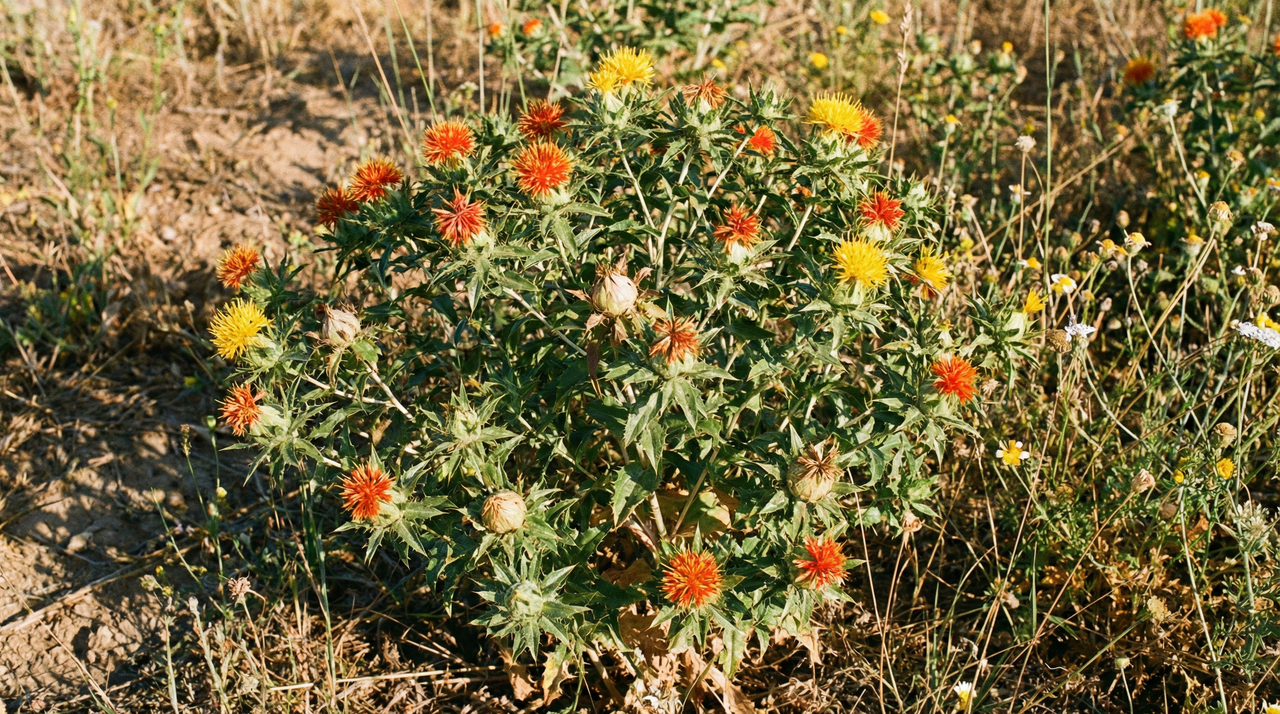
Safflower grows erect and branching, anywhere from about 30 cm to 1.2 m tall, with a form that reads unmistakably thistle-like at first glance.[8][2] The leaves are lanceolate, leathery, and spiny-toothed, running five to fifteen centimeters long along pubescent stems.[9] One practical lesson I learned the hard way: label your rows. Young safflower seedlings look remarkably similar to other Asteraceae until those characteristic prickles start developing, and I've spent more than one afternoon trying to figure out what I'd actually planted. The flowers, though, are worth every thorn. Solitary or loosely clustered heads, two and a half to five centimeters across, burst into brilliant yellow, orange, or red florets ringed by spiny bracts.[10][11] The seeds are oblong achenes, four to six millimeters long, pale and smooth.[12] For genus context, the perennial bush safflower (Carthamus fruticosus) grows as a woody shrub reaching nearly two meters, with dense hairy stems and a thicket habit suited to rocky Mediterranean slopes,[13][14] and seeing both in botanical collections helped me understand why it was the annual form that captured breeders' attention for oil production: the lifecycle fits the harvest window.
Traditional and Cultural Uses Through the Ages
Safflower has been cultivated for more than four thousand years, with evidence of use in ancient Egypt and Mesopotamia stretching back to at least 3000 BCE.[15] It traveled via Greek and Roman trade networks, then along the Silk Road, and eventually reached the Americas through Spanish colonial routes in the sixteenth century.[2] Its entire early history is tied to color. The flowers yield two distinct pigments, red and yellow, both extractable through boiling, and those carthamin pigments were used for dyeing textiles, creating cosmetics, wrapping Egyptian mummies in cloth associated with the goddess Isis, and producing the rich hues of Tibetan thangka paintings.[16][17] A common question I hear from visitors to my garden is whether saffron and safflower are the same thing. They're not. Saffron comes from Crocus sativus stigmas, while safflower is Carthamus tinctorius, a completely different plant. But the confusion makes sense historically, because safflower petals were widely used as a cheaper saffron substitute for coloring food, threading the spice trade's economics with a practical botanical alternative.
The medicinal legacy runs just as deep. In Traditional Chinese Medicine, safflower is known as Hong Hua and has been used since the Han Dynasty to support blood circulation, ease menstrual pain, and treat physical trauma.[18] Ayurvedic practitioners knew it as Kusumba and called on it for skin disorders, inflammation, and blood purification.[19] The seeds, meanwhile, provided a neutral-flavored oil with a high smoke point that served Middle Eastern and Indian kitchens for daily cooking and, historically, for illumination.[20] Today the traditional dye applications have shrunk to a niche as synthetic colorants dominate, but the medicinal and culinary threads remain very much alive, with modern commercial oil production centered in the USA, India, and China.[21] UNESCO has recognized related traditional knowledge as intangible cultural heritage,[22] and while the species is rated Least Concern overall, wild populations in Central Asia face localized pressure from overharvesting.[23] I make a point of sourcing seed only from reputable agricultural suppliers for exactly that reason.
Fascinating Facts About Safflower
What strikes me most, stepping back across four millennia of this plant's history, is how well its biology explains its success. Safflower's drought adaptations go well beyond a deep taproot. Its pubescent, reduced leaf surfaces reflect sunlight and cut transpiration; its stomata regulate efficiently; it produces heat-shock proteins and adjusts osmotically under stress, all while operating as a C3 plant.[24][25] Ancient farmers in marginal lands weren't making a calculated ecological choice; they were growing what survived. That same taproot that digs toward groundwater also loosens compacted subsoil, adds organic matter as it decomposes, and creates channels that benefit whatever grows in rotation after it.[26] The flowers pull in bees and butterflies with generous nectar and pollen,[27] and companion planting research shows it can suppress aphid pressure in mixed plantings with wheat or legumes.[28] Modern breeding has pushed the seed oil content to between 25 and 45 percent depending on cultivar and conditions, with high-oleic types like 'S-317' and 'S-208' dominating the kitchen-oil market and ornamental selections like 'Star Gold' offering the flower without any commercial-scale expectations.[29][30] A plant shaped by necessity in the ancient arid world has, without losing any of its essential character, become genuinely useful across a remarkable range of modern growing contexts.
Safflower Varieties and Sourcing
Every safflower plant shares the same basic blueprint: an upright, branching annual growing 2 to 4 feet tall, with spiny gray-green leaves and thistle-like flower heads an inch or two across in shades of yellow, orange, and red.[8][31] But underneath that shared silhouette, breeders have pulled Carthamus tinctorius in three very different directions: oilseed production, ornamental display, and traditional dye use.[2][32] I've grown oilseed types and double-flowered ornamentals side by side in demonstration borders, and the shared spiny architecture is both a gift and a nuisance depending on your goals. Deer won't touch them, which I appreciate, but placing a thorny, stiffly branching annual next to soft herbs requires a bit of spatial diplomacy.
Notable Safflower Cultivars: Oilseed, Ornamental, and Dye Types
Oilseed varieties dominate the breeding literature and they split into two camps with meaningfully different kitchen and industrial roles. High-linoleic types carry 70 to 80 percent linoleic acid and are largely bound for paints, varnishes, and industrial drying oils. High-oleic types flip that ratio, delivering 70 to 80 percent oleic acid with only 10 to 15 percent linoleic, which translates to better shelf stability, a higher smoke point, and a much more neutral flavor in the pan.[33][34] Varieties like 'Laureate' came out of breeding programs in the 1990s targeting exactly that profile, with total oil content running 30 to 45 percent and oleic acid exceeding 70 percent in top-performing lines.[35]
For dry and low-water regions, the cultivar choice matters a lot. 'Gila', 'S-208', and 'Pacific-1' were selected specifically for arid conditions and can maintain meaningful yields on less than 10 inches of seasonal rainfall, relying on that characteristically deep taproot to pull moisture from subsoil layers most annuals never reach.[36][37] 'TAM-1' matures in just 90 to 100 days and yields 1,000 to 1,500 pounds per acre in Southwestern conditions; 'Montana' and 'LaSalle' run 110 to 120 and 105 to 115 days respectively; 'Finney' can push toward 2,000 pounds per acre under good management but takes the full 150-day window to get there.[38][37] 'Finch' and 'Finney' were also bred for larger seed size suited to birdseed and direct consumption rather than maximum oil extraction.[39]
On the ornamental side, selections like 'Gold of Persia', 'Star Gold', 'Zeluchii Orange', and 'Red Lion' have been developed for double-flowered heads, strong branching for cut-flower production, and vivid color across the yellow-to-orange spectrum.[12] I find these far more at home in a mixed border than the commercial oilseed types, which were bred for uniform architecture and mechanical harvest rather than visual friendliness.[33] Traditional dye landraces selected for high carthamin content in their florets round out the third category, though they're thin in the commercial seed trade outside of Asian and Middle Eastern specialty suppliers.
Where to Buy Safflower Seeds and Plants
Don't bother looking for safflower transplants at a local garden center. Because the crop's commercial life is almost entirely as a large-scale oilseed annual, live plants almost never appear outside of botanical collections.[40][41] Seed is a different story. Bulk agricultural and birdseed lots run as low as five to twenty cents per pound, while small ornamental packets from specialty catalogs retail for two to ten dollars for a few hundred seeds. The gap in pricing reflects a gap in quality assurance, and certified seed should meet at least 80 percent germination with high purity and low contamination.[42][43] In my experience, certified agricultural seed from a reputable supplier often outperforms cheap bulk lots in both germination rate and true-to-type performance, even when you're only planting a small home-garden bed.
The most important question before you order is what you actually want from the plant. If the goal is edible seed or pressing your own high oleic safflower oil, look for named oilseed cultivars from an agricultural or specialty seed catalog with clear oil-type labeling. For floral color in a pollinator guild or cut-flower production, any named double-flowered ornamental packet is a reasonable starting point. Safflower is not listed as noxious in its primary growing states and can be safely trialed across USDA zones 3 to 9 with full sun and well-drained soil,[44][45] which makes it a low-risk annual to experiment with before committing to a particular cultivar type for the long haul.
How to Propagate and Plant Safflower
Safflower is a direct-seeding crop, full stop. That deep taproot system that makes it so drought-hardy later in the season is exactly what makes vegetative propagation impractical: cuttings root poorly, grafting success rarely clears 60 % even in research settings, and tissue culture is expensive enough that nobody outside a lab bothers with it.[46][47] I once tried rooting cuttings out of sheer curiosity and landed at exactly the dismal success rate the literature predicts. Seed it is, and honestly, that simplifies everything.
Seed Propagation and Germination Timeline
The seeds themselves are small, oblong achenes, off-white to pale cream with a hard, smooth coat.[2] Inside, the embryo carries two folded cotyledons, and if you're lucky enough to source a polyembryonic cultivar, a single seed can throw two to five seedlings at once -- a quiet bonus for anyone stretching a small seed packet.[48]
Germination kicks off reliably between 20 and 30 °C (68-86 °F), with seedlings typically emerging in 7 to 14 days when seeds are sown 1.3 to 5 cm deep.[49][50] The seed has a mild physiological dormancy, and a 12 to 24 hour presoak or light scarification knocks it back enough to push germination rates toward 70 to 90 %.[51][50] I've found that a full 24-hour soak cuts my emergence time by two or three days -- not a massive deal, but in a long subtropical season I'll take every head start I can get.
Safflower seed stores remarkably well. It's orthodox and desiccation-tolerant, holding viable at room temperature for five to ten years and significantly longer under cool, dry conditions.[52][53] The high oil content does accelerate oxidative breakdown, so dry seed to 5 to 8 % moisture and keep it airtight below 10 °C.[54] My method is airtight glass jars in the refrigerator, and I routinely see 85 % or better germination in year three or four from the same packet. If you're buying or pulling from older saved stock, a quick germination test at 20-30 °C over 7 to 14 days, or tetrazolium staining, will tell you what you're working with before you commit a whole bed.[55]
Soil, Site Selection, and Planting Technique
Before any seed goes in the ground, get a soil test. I skipped that step once on a bed I knew was slightly acidic, and within a few weeks I had a crop of chlorotic, struggling seedlings. A lime application before sowing the following season, and the difference was immediately obvious. Safflower wants a well-drained loamy or sandy-loam soil with pH between 6.0 and 7.5, and it performs best closer to 6.5 to 7.5.[56][57] If your soil is below 6.0, lime corrects it; above 7.5, elemental sulfur brings it down. On low-organic-matter soils, working in compost before planting improves structure meaningfully.[49]
What safflower will not forgive is waterlogging. That taproot needs to move straight down through loose, well-aerated soil, ideally 60 to 90 cm deep or more.[57][32] Once it gets there, the plant handles dry spells the way sunflowers do in my garden: I water both on the same spare schedule after establishment, and both shrug off the gaps. Full sun is non-negotiable, a minimum of six to eight hours daily for strong growth, flowering, and good seed quality.[58]
For gardeners working with containers or raised beds, a mix of one-third potting soil, one-third coarse sand or perlite, and one-third compost replicates the drainage conditions the plant prefers.[59] Keep the container deep enough for that taproot to develop, at least 30 cm, ideally more.
Spacing, Density, and Thinning
Sow after your last spring frost date, placing seeds 1 to 5 cm deep in rows spaced 30 to 60 cm apart.[49][60] Target plant density runs from 15,000 to 40,000 plants per acre depending on whether you're irrigating or relying on rainfall, so sow a bit thick and plan to thin. Once seedlings hit 10 to 15 cm tall, thin to 15 to 30 cm apart within rows.[58] That wider spacing isn't just a yield calculation -- better airflow between plants measurably reduces fungal pressure, and the open canopy gives pollinators easier access to the blooms. I've seen noticeably cleaner stands in well-spaced plantings, and the bees clearly prefer them too. Get the spacing right at establishment and you set up almost everything that follows.
Safflower Care Guide: Growing Carthamus tinctorius Successfully
Safflower is one of those plants that rewards restraint more than attention. I've grown it alongside sunflowers, gomphrena, and other heat-lovers in my Central Florida beds, and the biggest lesson it taught me is this: give it sun, give it drainage, and then mostly leave it alone. The plant was shaped by millennia in arid, punishing climates, and it shows. Once you understand that, safflower plant care becomes less about inputs and more about not getting in the way.
Sunlight, Water Needs, and Soil Requirements
Safflower needs full sun without compromise, at least six to eight hours of direct light daily for strong flowering and good seed production.[61] It performs best between 70 and 85°F but handles sustained heat up to 100°F without flinching.[2][62] In really intense heat with very bright reflected light, leaf margins can scorch or yellow from photoinhibition,[63] but I've rarely seen this as a serious problem in garden settings with normal airflow.
The drought tolerance story starts underground. That taproot can push two to three meters deep,[64][65] scavenging moisture from layers your raised-bed annuals can't reach. The narrow gray-green leaves are coated in reflective trichomes that cut transpiration, too.[66] Total seasonal water need sits around 12 to 24 inches,[64][67] but the amount that actually matters varies by stage. Seedlings want light, frequent moisture, roughly half an inch to an inch per week;[49][68] once plants hit flowering and seed fill, bump that to 1.5 to 2 inches weekly.[49][68] Overwatering is the more common mistake in humid climates: yellowing lower leaves, soft stems, and root rot are the giveaways.[69][70] Deep, infrequent irrigation mimics its native rainfall pattern and almost always outperforms frequent shallow watering.[65]
For soil, well-drained sandy loam or loam is ideal, with a pH between 6.5 and 7.5 (tolerating 6.0 to 8.5 in a pinch).[2][71] Heavy clay that stays wet is the one condition it genuinely cannot tolerate.
Frost and Heat Tolerance
The frost picture is straightforward once you know the key distinction: seedlings die at or below 28°F, while mature rosettes can take a brief dip to around 19 to 23°F with only moderate damage.[72][73] Growth essentially stops below 39 to 41°F, so there's no point rushing to plant.[72] I harden off transplants on my patio for seven to ten days before putting them in the ground, gradually increasing outdoor exposure each morning; the extra step consistently gives me stronger plants than direct sowing in borderline springs. Frost damage shows as leaf discoloration moving from yellow to brown to black, wilting, and bud drop in severe cases.[74] Safflower is broadly suited to USDA zones 3 through 9.[75][2]
On the heat end, its arid Mediterranean and Central Asian origins explain why it tolerates sustained temperatures to 100°F and short spikes to 115°F in vegetative stages.[32][76][77] Flowering is a different story. Above 104°F, pollen viability drops and seed set suffers; persistent heat post-anthesis can cut seed weight and oil content by 15 to 25%.[78][79] I've noticed it behaves a lot like sunflowers during our worst July heat: both will drop buds above 100°F, but safflower's deeper roots let it bounce back faster once I give it a single deep morning soak. In extreme summers, shade cloth at 30 to 50% over the flowering heads and heat-tolerant cultivar selection can reduce those impacts by 20 to 40%.[80][81]
Fertilizing and Nutrient Management
Safflower is a moderate feeder that actually performs well on lower-fertility soils, but that's not an excuse to skip the soil test.[82][83] I learned this the hard way: the year I eyeballed a generous nitrogen application without testing, my plants grew tall and lush, then folded over in the first summer thunderstorm. Lodging from excess nitrogen is a real problem, and it costs you your entire seed yield.[69] General extension guidance puts nitrogen at roughly 40 to 80 pounds per acre (adjusted by test), with phosphorus and potassium applied pre-plant and nitrogen side-dressed during the vegetative stage to match peak uptake and improve efficiency by 15 to 25%.[62][38]
Deficiency symptoms are fairly readable once you know what to look for. Nitrogen deficiency yellows the older leaves; phosphorus shows as purplish discoloration; potassium causes marginal necrosis on older tissue; and iron produces interveinal chlorosis on young leaves.[84][85] That last one comes up in my alkaline Florida soils; a foliar chelated iron spray applied before flowering can stop it from affecting the heads. The deep taproot also earns its keep here, scavenging phosphorus and trace minerals from subsoil layers that shallower crops miss entirely.[86][87]
Seasonal Rhythm and Maintenance
The full lifecycle runs 100 to 180 days depending on cultivar and climate: about a week to ten days for germination, 30 to 45 days of vegetative rosette growth, then budding and flowering from around day 60 through 90, with seed maturity arriving between day 100 and 150.[88] In my experience the first four to six weeks are the make-or-break window. Safflower seedlings are not aggressive competitors; weed pressure in that first month can seriously stunt them. Shallow cultivation every week or two, or a layer of organic mulch, keeps the bed clear without disturbing that developing taproot.[88][62] After about 40 days, the plants shade the ground themselves and weeding becomes much less urgent.
Pruning is minimal. Removing dead or diseased leaves as you spot them is good hygiene, and light topping at the six-to-eight leaf stage can encourage branching and push yield up by 10 to 20%.[88][62] Staking is rarely necessary, though a windy site combined with heavy rain is the scenario where you'd regret skipping it. Throughout the season, keep an eye on foliage for deficiency symptoms, and scout for aphids, wireworms, and grasshoppers; disease pressure from rust, Alternaria, or root rot rises fast with poor drainage or overhead irrigation.[89] Resistant varieties, crop rotation, and avoiding wet foliage at night go a long way toward keeping those problems manageable.
Safflower Harvesting: Timing, Technique, and Post-Harvest Handling
What I appreciate about harvesting safflower is that the plant is unusually honest about what it wants from you. It tells you clearly when it's ready, but only if you know the signals, and the window it gives you is not generous. Every decision at harvest time flows from a single question you need to answer first: are you growing this for petals or for seed?
When to Harvest Safflower Flowers and Seeds
Safflower takes 90 to 150 days from sowing to seed harvest, with most varieties hitting full maturity somewhere in the 100 to 120 day range under good conditions.[38][90] Once a head finishes flowering, you've got a 30 to 45 day window before the seeds reach physiological maturity.[91] That sounds roomy until you realize the actual harvest window, once seeds are ready, is only 7 to 10 days before shattering becomes a real risk.[92][93]
I start my morning walks through the patch the moment the first heads finish blooming, marking the date so I'm not caught off guard three weeks later. For seed harvest, you're watching for 70 to 80 percent of heads to shift from yellow to straw-brown, with bracts that have dried and curled inward.[92] The tactile cue I trust most is the bract feel: perfectly ripe bracts are papery and crisp, almost like dried statice, while heads that need another few days still have a slight give. Once seeds are hard and won't dent under a thumbnail, you're at the 10 to 15 percent moisture level that signals it's time.[93][94] Home gardeners won't have a moisture meter handy, so rely on these visual and tactile signs over precise percentages.
The timing shifts depending on your end goal. For dye production and dried safflower arrangements, you actually want to harvest earlier, at peak red color intensity around 45 to 60 days after flowering, before the petals fade and the bracts go fully straw.[49][95] For oil, target a seed moisture closer to 10 to 12 percent.[49] In California, harvest typically runs July through September with a peak in August; in North Dakota and Kansas, late July through mid-September; eastern regions push slightly later into September.[96][38][97]
How to Harvest and Process Safflower
If you're after petals for dye, dried carthamus arrangements, or safflower bouquets, pick the florets by hand when heads are fully open. It's a lot like harvesting calendula: grab the colored petals, pull gently, repeat. For seed production, leave those heads completely alone and don't deadhead, because any head you remove is a seed head you lose.[58][8]
At small-scale, sharp scissors or pruning shears cut through the stems cleanly; a sickle works well for swathing whole plants at once.[62] Commercial growers run combines at 500 to 700 RPM cylinder speed with a half-inch to two-inch concave clearance, harvesting in late morning after dew lifts.[98] That's useful context, but at garden scale you're using your hands and a bucket. One thing I learned the hard way: once those heads get truly dry, they shatter surprisingly fast. Don't wait for a perfect dry day that never comes. Cut promptly.
After cutting, thresh the seeds free from the heads immediately and winnow to remove chaff.[98][99] I use old window screens for small batches: spread the threshed seed thinly in a shaded, well-ventilated spot and let it dry for two to five days, turning occasionally. If you're using a forced-air dryer, keep the temperature between 35 and 45°C.[100][101] The first time I tried rushing the process with a warmer setting I ended up with oil that had a faint off-flavor, slightly musty and flat, that no amount of finishing could hide. Never exceed 50°C, full stop.[100][102] Target 8 to 10 percent final moisture content.
For storage, cool and dry is everything. Keep cleaned seeds between 4 and 10°C with relative humidity below 60 percent, in breathable containers like burlap bags rather than sealed plastic.[103][49] Seeds stored this way stay viable up to two years. Check periodically for mold, off-odors, discoloration, or insect activity, any of those signals means quality is already compromised.[51]
Expected Safflower Yields and Flavor Considerations
Dryland safflower in commercial settings yields roughly 800 to 2,000 pounds of seed per acre, with irrigation pushing that number higher in western arid regions like California's Central Valley.[38][88] At garden scale, temper those expectations. A well-managed 100-square-foot bed in a dry summer climate can yield enough seed oil for a household's seasonal cooking needs, but a humid southeastern garden pushing through heat stress and fungal pressure will produce noticeably less, and drought stress at seed-fill sharply cuts both quantity and oil quality. My experience in Central Florida is that the lower end of those yield ranges, or below, is more honest than the high-irrigation ceiling numbers. The upside is that even modest yields from a backyard plot produce genuinely flavorful, fresh oil that no grocery shelf product matches.
Safflower Preparation and Uses
Culinary Uses of Safflower Seeds, Oil, and Petals
What I love about growing safflower is that almost every part of the plant earns its place in the kitchen. The seeds are edible raw, roasted, or even popped like sunflower seeds, packing roughly 15-20% protein and 20-30% fiber alongside that distinctive high oil content of 35-45% by seed weight.[104][105] Raw seeds can taste noticeably bitter due to alkaloids like carthamine plus anti-nutritional tannins and saponins, but roasting transforms them.[106] I roast mine in small batches in a dry skillet until they're golden, and the bitterness mostly disappears into something toasty and nutty, genuinely close to roasted sunflower seeds.
The pressed oil is the big kitchen story. Refined or cold-pressed safflower oil has a neutral, mildly nutty flavor and a smoke point around 510°F (265°C), which beats most everyday cooking oils for high-heat frying and sautéing while staying pleasant enough for salad dressings.[107][108] Think of it as a more stable version of sunflower oil: similar behavior in the pan, but with superior heat resistance. High-linoleic varieties run 70-80% linoleic acid (omega-6) and carry a solid 30-60 mg of vitamin E per 100g, primarily as alpha-tocopherol.[109][110] Clinical evidence supports what traditional cooks seem to have intuited: regular consumption is associated with improved lipid profiles, including reductions in LDL cholesterol and triglycerides.[111]
Then there are the petals. Dried yellow-orange florets have colored and flavored food since ancient Egypt and Persia, used wherever saffron was too expensive to justify.[10] The flavor is earthy, slightly bitter, mildly floral. I harvest mine just as the heads fully open, because that's when the color is most vibrant, and I dry them on a screen in the shade. They're lovely steeped into rice, stirred into bread dough, or brewed as a petal tea. In Indian cooking, dried petals go into curries and sweet rice dishes; across Mediterranean cuisines they color cheeses, soups, and stews.[10] Young leaves and flower buds are also edible, tender enough for salads or quick cooking when harvested early.[104]
Traditional Medicinal Preparations
The most common home preparation is a simple petal infusion: steep 3-9g of dried flowers in 250ml of hot water for a safflower tea with a mild, slightly bitter flavor and that characteristic golden hue.[112] For a stronger preparation used in Traditional Chinese Medicine for blood-moving applications, a decoction simmers 3-9g in 500ml of water to concentrate the active constituents. Tinctures follow a 1:5 ratio in alcohol for longer shelf life and easy dosing.[112] These are time-tested formats, but the safety context in the next subsection applies before you start brewing regularly.
Non-Food Uses and Safety Considerations
Before safflower was a kitchen staple it was a dye plant, used across ancient Egypt, the Middle East, and Asia to color textiles, cosmetics, and medicinal preparations with its distinctive red-orange carthamin pigment.[1][113] For the dye gardener, the petals yield soft yellow to warm coral tones depending on mordant and concentration. The seeds also serve as a popular birdseed that squirrels tend to avoid, which makes it genuinely useful in the wildlife garden.
On safety: if you have sensitivities to other Asteraceae plants like chamomile or ragweed, treat safflower cautiously. I've watched gardeners with mild Asteraceae reactions develop skin irritation just from handling the fresh heads, so patch-test before committing to daily petal teas. Pregnancy is a clear contraindication given safflower's documented emmenagogue effects, and anyone on anticoagulant medication should consult a healthcare provider before using concentrated preparations, since the same blood-moving properties that make it therapeutically interesting can amplify bleeding risk. Used thoughtfully, with good species identification and attention to your own health context, safflower is a remarkably generous plant from spiny tip to pressed seed.
Safflower Health Benefits and Medicinal Uses
Traditional Uses and Historical Context
I grow safflower every year, partly for the striking orange blooms and partly for the oil I press for salad dressings, but what keeps drawing me back is the sense that this plant has been doing serious work for a very long time. In Traditional Chinese Medicine, the dried flowers (Hong Hua) are classified as blood-activating herbs, prescribed to invigorate circulation, dispel stasis, and treat menstrual disorders, traumatic injuries, and cardiovascular complaints.[114][115] Ayurvedic medicine knows it as Kusumbha and reaches for it in cases of blood disorders and inflammation.[116][117] Iranian folk medicine adds diuretic and respiratory uses for the leaves, with the flowers specifically called on for amenorrhea and postpartum abdominal pain.[118][119] Three independent healing traditions across Asia and the Middle East converging on the same "blood-moving" application is hard to dismiss as coincidence.
Key Phytochemicals in Safflower
The compound that explains a lot of this is hydroxysafflor yellow A, or HSYA, the signature quinochalcone pigment extracted from the florets alongside the red pigment carthamin. HSYA demonstrates vasodilation, anti-apoptotic, anti-inflammatory, and neuroprotective properties in lab settings, and it's the most-studied bioactive in the flower.[120] Surrounding it in the petal is a dense flavonoid suite: quercetin, kaempferol, luteolin, apigenin, plus phenolic acids and eye-supportive carotenoids like lutein and zeaxanthin.[121][122][123] The distribution matters: flowers and leaves carry the richest flavonoid and quinochalcone load, seeds are where the polyunsaturated fats and tocopherols live, and roots concentrate coumarins and triterpenoids.[124][125] I've noticed that petals from my beds heavily amended with compost and balanced nitrogen tend to run deeper in color and flavor than those from unfertilized patches, and the research actually supports that observation: nitrogen-rich soils boost flavonoid accumulation, and Mediterranean-origin germplasm often shows higher antioxidant capacity than material from arid-zone populations.[126][127] These secondary metabolites aren't just incidental chemistry; they evolved to deter herbivores and pathogens and buffer the plant against UV and oxidative stress,[128] which is precisely why they translate into documented antioxidant and antimicrobial activity in humans.
Evidence-Based Health Benefits
The anti-inflammatory evidence is the strongest piece of the puzzle. Safflower extracts suppress the NF-κB pathway, reduce pro-inflammatory cytokines TNF-α and IL-6, modulate TLR4/NF-κB signaling, activate PPARγ, and inhibit COX-2.[129][130][131] The antioxidant side works through Nrf2/Keap1 pathway activation and upregulation of the protective enzymes HO-1 and NQO1, with radical-scavenging capacity in some assays comparable to ascorbic acid.[132][133] A wide range of additional actions appear in preclinical models: cardioprotection via PI3K/Akt and eNOS pathways, neuroprotection with preserved blood-brain barrier integrity, wound healing through enhanced collagen deposition, improved insulin sensitivity via AMPK and PPARγ, antimicrobial activity against both Gram-positive and Gram-negative bacteria, and phytoestrogenic binding to estrogen receptors.[134][135][136] That's an impressive preclinical resume, but I want to be honest about the gap between cell cultures and clinical reality.
Human evidence is more targeted. Safflower seed oil at around 10 g per day for 8 to 12 weeks has been shown in clinical trials to reduce LDL cholesterol and triglycerides in hyperlipidemic patients.[137][138] Meta-analyses of randomized controlled trials support safflower injection as an adjunct therapy improving outcomes in acute ischemic stroke, and small trials have found dysmenorrhea symptom relief comparable to NSAIDs.[139][140] Blood pressure and endothelial function show modest benefits; effects on fasting glucose in type 2 diabetes are limited and inconsistent. Most of the broader pharmacological evidence still comes from in-vitro and animal studies, often from small or regionally concentrated Asian populations, and it needs more rigorous human validation before anyone should lean on safflower as a primary therapeutic.[134] What we can say confidently is that the plant earns its historical reputation; what we can't say yet is exactly how far the clinical applications extend.
Nutritional Profile
Set aside the medicinal framing for a moment and safflower still holds up as a solid food. The seeds run 465 to 530 kcal per 100 g with about 38% oil content,[141][142] and that fat is predominantly linoleic acid at around 74% of total fatty acids, with the remainder split between oleic and saturated fats.[143][141] I use the oil in salad dressings the way some cooks reach for sunflower oil, though safflower's higher smoke point makes it more versatile for higher-heat cooking. Protein comes in at 16 g per 100 g of seeds, fiber at 18 g, and the mineral profile is genuinely impressive: 332 mg magnesium, 660 mg phosphorus, 689 mg potassium, meaningful zinc and iron, plus a solid B-vitamin spread including thiamin, niacin, B6, and folate.[143][141] Vitamin E (α-tocopherol) and phytosterols add to the antioxidant and cholesterol-modulating picture,[141][144] which connects neatly back to the cardiovascular clinical findings. The petals are edible too, useful as a saffron substitute or steeped into teas where they contribute flavonoids and carotenoids alongside their orange color; the young leaves are edible but bitter enough that blanching or stewing is really non-optional.[145] None of this is miracle-food territory, but as a nutrient-dense seed crop grown in your own backyard, it earns its space.
Safety Considerations
Cultivated safflower has a long history of safe food use across multiple cultures, the oil carries FDA GRAS status, and major botanical databases list it as non-toxic to humans, pets, and livestock at normal intake levels.[146][147][2] The everyday hazards are mostly mechanical: those spines will draw blood if you're not careful at harvest, and I always wear gloves because the contact dermatitis risk is real, particularly for anyone with Asteraceae family sensitivities or ragweed cross-reactivity.[148][149] Excessive seed or oil consumption can cause gastrointestinal upset from saponins and mild laxative effects, so moderation matters if you're using seeds as a regular food ingredient.
The two warnings I give every client without softening them: do not use medicinal safflower flower preparations during pregnancy. The flowers have documented emmenagogue activity and possible abortifacient effects in traditional use, and while animal reproduction studies at high doses haven't confirmed the worst-case scenario, the risk is not worth taking.[150][151][152] And if you or someone you care for is on anticoagulants, please loop in your doctor before using any medicinal safflower preparation; the rat and in-vitro data on platelet aggregation and warfarin potentiation are clear enough that caution is warranted. Potential interactions with antihypertensives and antidiabetic drugs also exist. The culinary oil is a different matter and generally fine, but concentrated flower extracts and supplements operate in a different dosage range entirely.
One identification note that matters in certain regions: bush safflower (Carthamus fruticosus), the wild perennial relative, shares a similar flavonoid and phenolic-acid profile and shows comparable in-vitro anti-inflammatory activity, but it also contains sesquiterpene lactones and saponins that can cause gastrointestinal distress in animals and contact dermatitis in sensitive humans.[153][154] Know what you're growing. Young safflower seedlings look remarkably like lettuce or spinach, and I now label my rows early in the season precisely because mixing them up is an easy mistake that could lead someone to eat a much larger quantity of leaf than intended.
Safflower Pests and Diseases: Management and Natural Resistance
Safflower isn't a fragile crop, but it's not invincible either. The honest picture is this: it carries low to moderate susceptibility to most pathogens, though resistance levels shift considerably depending on which variety you're growing and where you're growing it.[58][155] Choosing the right cultivar up front is the single most powerful tool in your pest and disease management toolkit, and I'll come back to that repeatedly.
Common Diseases and Environmental Triggers
The disease roster includes Fusarium and Verticillium wilts, rust (Puccinia carthami), powdery mildew, downy mildew, Alternaria and Cercospora leaf spots, bacterial blight, and cucumber mosaic virus.[156][157] In the northern U.S., rust and wilts tend to dominate; in India and humid subtropical regions, Alternaria is the bigger headache.[158] Powdery mildew and Botrytis show up under sustained high humidity, while Phytophthora root rot appears wherever soils stay too wet.[159][160]
Environmental triggers explain a lot. Sclerotinia thrives between 15-20°C with humidity above 80%; Fusarium wilt worsens in neutral soils at 25-30°C; rust favors moderate moisture around 20-25°C; downy mildew prefers cooler, wet conditions from 10-20°C.[156][161][162] Early in my gardening, I planted too densely one rainy summer and watched Alternaria move through the planting fast. Correcting spacing the following season made a visible difference. If you match variety to your local pressure profile, you're already ahead: 'S-317' and 'S-208' hold up well against downy mildew and rust; 'Finch' and 'S-333' show stronger Sclerotinia tolerance; 'KS-33' and 'M-1' perform best where Alternaria is the recurring problem.[163][164]
Major Insect Pests of Safflower
On the insect side, the cast is broad: aphids (particularly Aphis gossypii), thrips, safflower weevil, leaf beetles, lygus bugs, grasshoppers, tobacco budworm, leafminers, spider mites, and regionally significant species like the red sunflower seed weevil in the U.S. and Helicoverpa armigera in parts of India.[165][166] Aphids and weevils draw the most attention from most growers, but the good news is that safflower's own biology gives it a meaningful head start against many of them.
Safflower's Natural Defenses and Resistant Varieties
This is the part of the story I find genuinely fascinating. Safflower layers physical and chemical defenses in a way few oilseed crops match. The spines on stems and leaves deter chewing insects and browsing animals outright. Glandular trichomes trap and poison smaller insects on contact. A thick cuticular wax reduces feeding and egg-laying opportunities.[167] Beneath that physical armor, sesquiterpene lactones, flavonoids, and alkaloids make the plant biochemically bitter and toxic to a range of pest species.[168][169] Those same sesquiterpene lactones, incidentally, are part of what gives the plant its long medicinal history, so the chemistry that protects the crop also explains why traditional healers valued it. The plant also emits volatile compounds including α-pinene and β-caryophyllene that repel herbivores while simultaneously attracting parasitoid wasps like Trichogramma, essentially calling in backup.[170]
I've grown safflower alongside sunflowers and consistently noticed far fewer aphid colonies on the safflower, even in seasons when the sunflowers were heavily hit. That tracks with research showing safflower can be less attractive to aphids and flea beetles than many oilseed neighbors under good growing conditions.[171] Its deep taproot also confers relative tolerance to wireworms, which tend to be less of a problem than in shallower-rooted crops.[51] For targeted pest problems, bred resistance matters: 'A-1', 'N-410', and 'S-144' offer aphid resistance through antibiosis and antixenosis mechanisms; 'Montola 2191' is the standout for red sunflower seed weevil pressure.[172][173]
Integrated Pest and Disease Management Strategies
My approach on safflower is prevention-first, spray-last. Start with resistant varieties matched to your specific regional pressures, then rotate with non-hosts every three to four years, give plants wide enough spacing for genuine air circulation, and skip overhead irrigation whenever possible.[89][174] Scout regularly so you know what's actually happening rather than treating on a calendar. I rarely need insecticides when I've planted a resistant line and encouraged lady beetles; the key is catching aphid populations before they build. When fungicides are genuinely warranted, triazoles handle rust effectively; Trichogramma releases can take pressure off caterpillar pests without broad-spectrum collateral damage.[89] Check with your local extension office for current cultivar recommendations and economic thresholds specific to your region. The plant will do most of the heavy lifting if you set it up with the right variety and reasonable airflow.
Safflower in Permaculture Design
Safflower doesn't fit the permaculture archetype of a multi-layered ecological workhorse. It won't fix nitrogen, it isn't a dynamic accumulator in the classic sense, and it certainly won't establish itself and disappear into a self-maintaining guild. What it does offer is more focused: a tough, drought-adapted annual with deep roots, useful outputs, and a specific climate niche where it genuinely earns its place. I think of it as a working annual rather than an ecological powerhouse, and understanding that distinction is the key to using it well.
Climate and Growing Zones for Safflower
Safflower spans a remarkable USDA zone range of 3-10, though it performs best as an annual in zones 5-9 where average annual temperatures stay between 50 and 85°F.[38][2][175] Established plants can handle short dips to around 20°F, though seedlings are considerably more vulnerable to cold, and on the heat side it pushes comfortably through conditions up to 100-110°F that would stress most garden crops.[38][96] Germination won't happen reliably below 45°F soil temperature, with 50°F as the practical minimum to aim for, and the plant needs somewhere between 2,000 and 2,500 growing degree days to reach full maturity.[38][96]
The precipitation story is where safflower's arid origins really show. It prefers 10-20 inches of annual rainfall and can survive on as little as 6-8 inches in lean years, but high humidity is where things go sideways.[67][2][159] I garden in zone 9b in Central Florida, and rainy summers have given me enough fungal pressure on safflower to teach me a lesson I won't forget: this plant wants to be in your driest, most ventilated microclimate. I now treat it as a spring crop, getting it in the ground early to mature before the summer rains intensify, and that timing shift has made a genuine difference. Its physiological adaptations tell you exactly why the humidity intolerance exists: pubescent leaves that reduce transpiration, and a deep taproot that reaches 1-2 meters into the soil profile to access subsoil moisture and nutrients without depending on surface rainfall.[176][159] It also tolerates moderate soil salinity up to 8-10 dS/m and a wide pH range of 6.0-8.5, which opens the door for growers dealing with alkaline or somewhat saline dryland soils.[176][177] U.S. commercial production concentrates in California, North Dakota, Kansas, and Colorado for good reason; globally, India leads production in similarly arid Mediterranean-type climates.[2][178] Those production zones are the clearest guide to where safflower belongs in your design.
Ecosystem Functions and Interactions
Picture a thistle that decided to become useful. Safflower grows upright on branching stems, reaching anywhere from 30 to 150 cm depending on variety and conditions, with spiny gray-green foliage and composite flower heads 2.5-5 cm across that bloom from yellow to deep orange or red through the summer.[179][180][181] That spiny architecture isn't just aesthetic; it signals a plant that evolved to protect itself.
The pollination system is worth understanding before you decide how much attention to give it. Safflower flowers are protandrous, meaning pollen matures before the stigma is receptive, and they have a tripping mechanism that requires a bee to physically force the flower open to access the pollen.[182][183] Despite that complexity, the plant is highly self-pollinating, with over 90% of seed set happening without any insect intervention. Bee visitation, primarily from honeybees, bumblebees, and solitary bees, can improve that seed set by an additional 10-30%.[88][58][183][184] I've stopped worrying about managed hive proximity because the self-fertility makes it unnecessary, but I do leave flowering patches completely unsprayed so the wild solitary bees and honeybees that show up keep building habitat value and incidentally boost yields.
Underground, safflower forms associations with arbuscular mycorrhizal fungi that improve nutrient uptake, and aboveground it releases allelopathic compounds that suppress competing weed germination.[185] I've watched it quietly thin certain summer weeds around it, much the way a good sorghum planting does, which is a useful incidental benefit in a garden where hand-weeding time is always limited. The plant also contains flavonoids, coumarins, and essential oils with documented insecticidal and repellent activity against stored-product pests like grain weevils and flour beetles, and against aphids too.[186][187][188] Its primary value, though, remains agricultural: seed oil, the brilliant red carthamin dye historically used for textiles and as a saffron substitute, and traditional medicinal applications.[189][190] For wildlife habitat, erosion control, or windbreak functions, it offers little, and it's better to be upfront about that than to oversell it.
Forest Layer Placement and Guild Roles
In a food forest design, safflower occupies the herbaceous layer. Its erect, thistle-like stems reach 30-150 cm and it shows moderate shade tolerance, though it clearly prefers open, full-sun positions.[8][191] I've grown it successfully in the dappled edges of young fruit tree guilds where it gets morning sun and some afternoon shade, though seed production drops noticeably compared to open beds.
That deep taproot, reaching 1-2 meters into the soil profile, does real structural work.[192][193] In some of my Central Florida demonstration beds with compacted clay subsoil, the improvement in drainage and tilth by end of season is visible to anyone paying attention. Safflower doesn't fix nitrogen itself, but I've consistently found that pairing it with nearby legumes, cowpeas or pigeon pea, gives me more vigorous plants and better soil test results the following year. The legumes charge the soil and safflower's taproot channels those nutrients deeper, a simple stacking function that rewards thoughtful guild design.
The allelopathic weed suppression continues to pull its weight in the herbaceous layer, and the blooming heads draw in pollinators, butterflies, ladybugs, and parasitic wasps that benefit the whole guild rather than just the safflower itself.[194][195][196] The one constraint every permaculture designer needs to factor in is the annual lifecycle: safflower completes its full cycle in a single season and must be resown each year.[197] That's not necessarily a disadvantage if you save seed and integrate the annual sowing rhythm into your spring rotation, but it does mean safflower will never anchor a guild the way a perennial can. Design around that honestly and it earns its space; expect it to be something it isn't, and you'll be disappointed.
The Plant That Made Me Rethink What "Useful" Looks Like
I grew safflower the first time mostly for the dye, expecting to be underwhelmed by everything else. Then I watched a honey bee work a spent head for twenty minutes in August heat, on a day when almost nothing else in the garden was blooming. That was years ago, and I still think about it whenever I'm tempted to skip the plants that don't photograph well or fit neatly into a guild diagram. Some plants just show up and do the work quietly.
Sources 197
- Safflower | Britannica ↩
- USDA PLANTS Database - Carthamus tinctorius ↩
- Plants of the World Online - Carthamus tinctorius ↩
- Safflower: Botany, Agronomy, and Uses ↩
- Safflower Production and Management ↩
- Safflower Production Guide - University of California Agriculture ↩
- Safflower Crop Production Guide ↩
- Missouri Botanical Garden - Safflower (Carthamus tinctorius) ↩
- Plants of the World Online - Carthamus tinctorius ↩
- Safflower - Wikipedia ↩
- Flora of North America - Carthamus tinctorius ↩
- Royal Horticultural Society - Growing Safflower ↩
- Missouri Botanical Garden Plant Finder - Carthamus fruticosus ↩
- Plants of the World Online - Carthamus fruticosus ↩
- Historical Use of Safflower as a Dye in Ancient Civilizations ↩
- Historical Dyes from Safflower ↩
- Safflower: A Versatile Plant with Historical and Cultural Significance ↩
- Ethnobotanical Uses of Safflower (Carthamus tinctorius L.) in Folk Medicine: A Review ↩
- Safflower: A Review of Its Traditional Uses, Phytochemistry and Pharmacology ↩
- Ethnobotany of Safflower in Asia ↩
- Safflower: A Historical Overview ↩
- Traditional Knowledge and Safflower in Indigenous Communities ↩
- Conservation Status of Carthamus tinctorius Wild Populations ↩
- Carthamus tinctorius - Plant Details ↩
- Plants of the World Online - Carthamus tinctorius ↩
- Cover Crops: Safflower Benefits and Management ↩
- Pollinator-Friendly Plants: Safflower ↩
- Companion Planting with Oilseed Crops ↩
- Safflower Oil Content Variation in Cultivars ↩
- Safflower Production and Management ↩
- Carthamus tinctorius - USDA PLANTS Database ↩
- FAO - Safflower Production and Improvement ↩
- Breeding Safflower for Improved Oil Quality ↩
- USDA ARS Safflower Breeding Program ↩
- Safflower Oil Composition and High-Oleic Varieties ↩
- Drought Tolerance in Safflower Cultivars ↩
- Texas A&M AgriLife Safflower Research ↩
- North Dakota State University Safflower Production Guide ↩
- Safflower for Confectionary and Industrial Uses ↩
- USDA PLANTS Database: Carthamus tinctorius ↩
- Morton Arboretum - Carthamus tinctorius ↩
- Safflower Production and Management ↩
- Seed Certification Standards for Oilseeds ↩
- Noxious Weed List ↩
- Missouri Botanical Garden - Carthamus tinctorius ↩
- Propagation of Safflower (Carthamus tinctorius L.) ↩
- Vegetative Propagation Techniques for Annual Crops ↩
- Polyembryony in Safflower (Carthamus tinctorius L.) ↩
- Safflower Production and Management ↩
- Germination and Dormancy of Safflower Seeds ↩
- Safflower Seed Germination ↩
- Seed Storage of Horticultural Crops ↩
- FAO Seed Storage Guidelines ↩
- FAO - Seed Storage Handbook ↩
- ISTA International Rules for Seed Testing ↩
- Safflower Production ↩
- Safflower | NDSU Agriculture ↩
- Safflower Production and Management ↩
- Safflower Production - USDA ARS ↩
- Safflower Production Guide - Montana State University Extension ↩
- Missouri Botanical Garden - Carthamus tinctorius ↩
- Safflower Production Guide ↩
- Light Stress and Photoinhibition in Crops ↩
- Safflower Production - USDA Natural Resources Conservation Service ↩
- Safflower Irrigation Management - University of California Agriculture and Natural Resources ↩
- Carthamus tinctorius - Missouri Botanical Garden Plant Finder ↩
- Safflower Production Guide ↩
- Safflower Water Use and Irrigation - North Dakota State University Extension ↩
- Safflower Production and Management ↩
- USDA Plant Guide: Safflower ↩
- Salinity Tolerance of Crops ↩
- Safflower Production Guide - University of California Agriculture and Natural Resources ↩
- Frost Tolerance of Oilseed Crops - North Dakota State University Extension ↩
- Cold Injury in Oilseed Crops Including Safflower ↩
- RHS Plant Finder: Carthamus tinctorius ↩
- Safflower Production and Management ↩
- Heat Tolerance in Safflower (Carthamus tinctorius L.) ↩
- Response of Safflower to High Temperature Stress During Reproductive Stages ↩
- Safflower Response to Drought and Heat Stress: A Review ↩
- Heat Stress Effects on Safflower (Carthamus tinctorius L.) Physiology and Yield ↩
- Mitigating Heat Stress in Oilseed Crops: Focus on Safflower ↩
- Fertilizer Recommendations for Safflower - USDA NRCS ↩
- Safflower Production Guide - Montana State University Extension ↩
- Safflower Nutrient Deficiency Symptoms ↩
- Visual Guide to Nutrient Deficiencies in Oilseed Crops ↩
- Safflower as a Cover Crop in Arid Regions ↩
- Crop Production with Saline Water - FAO ↩
- Safflower Production and Management ↩
- Pests and Diseases of Safflower ↩
- Safflower Production and Management ↩
- Agronomy of Safflower (Carthamus tinctorius L.) ↩
- Safflower Production Guide ↩
- Safflower: Harvesting and Storage ↩
- Maturity Indices for Oilseed Crops ↩
- Safflower: Botany, Cultivation, and Utilization ↩
- Safflower Production in California ↩
- Kansas Safflower Production Guide ↩
- Safflower Production and Management ↩
- Safflower Seed Drying and Storage ↩
- Post-Harvest Handling of Oilseeds ↩
- Drying and Storage of Safflower Seeds: Effects on Shelf Life ↩
- Safflower Seed Quality and Storage ↩
- Oilseed Storage and Handling Guidelines ↩
- Missouri Botanical Garden Plant Finder - Carthamus tinctorius ↩
- USDA FoodData Central - Safflower seed ↩
- Safflower (Carthamus spp.) - Flavor and Uses ↩
- Safflower Seed Oil: Health Benefits and Uses ↩
- Safflower Oil - Generally Recognized as Safe (GRAS) ↩
- Fatty Acid Composition of Safflower Oil ↩
- Vitamin E Content in Vegetable Oils ↩
- Safflower for Cardiovascular Health: A Meta-Analysis ↩
- Carthamus tinctorius - Herbal Monograph ↩
- Ethnobotany of Safflower (Carthamus tinctorius L.) ↩
- Hong Hua (Carthamus tinctorius) in Traditional Chinese Medicine ↩
- Traditional Chinese Medicine: Safflower (Hong Hua) ↩
- Safflower (Carthamus tinctorius L.) – A Potential Source of Drugs ↩
- Traditional uses and pharmacological properties of Carthamus tinctorius L.: a review ↩
- Ethnopharmacological Uses of Carthamus tinctorius L. in Iranian Traditional Medicine ↩
- Safflower (Carthamus tinctorius L.): A Potential Source of Drugs for Various Health Conditions ↩
- Pharmacological Actions of Hydroxysafflor Yellow A: A Review ↩
- Phytochemicals of Carthamus tinctorius L. - Review ↩
- Phytochemical and Pharmacological Studies on Carthamus tinctorius ↩
- Secondary Metabolites from Carthamus tinctorius L.: A Review ↩
- Phytochemical Profile of Carthamus tinctorius L.: A Review ↩
- Phenolic Compounds in Safflower Seed Oil ↩
- Environmental Influences on Phytochemical Composition of Carthamus tinctorius L. ↩
- Impact of Soil and Climate on Safflower Oil Quality and Bioactives ↩
- Phytochemical and Pharmacological Review of Carthamus tinctorius L. ↩
- Antioxidant and Anti-inflammatory Activities of Safflower Extract ↩
- Hydroxysafflor yellow A attenuates inflammation via NF-κB inhibition ↩
- Safflower Extract Anti-Inflammatory Mechanism via NF-κB ↩
- Carthamus tinctorius activates Nrf2 for antioxidant effects ↩
- Antioxidant Activity of Phenolic Compounds in Safflower ↩
- Pharmacological Activities of Carthamus tinctorius L.: A Review ↩
- Protective effects of Carthamus tinctorius L. on cardiovascular diseases ↩
- Neuroprotective mechanisms of safflower yellow ↩
- Clinical Trial on Safflower Oil for Hyperlipidemia ↩
- Safflower Seed Oil in Hyperlipidemia: A Meta-Analysis of RCTs ↩
- Efficacy of safflower injection for ischemic stroke: A meta-analysis ↩
- Carthamus tinctorius L. for cardiovascular disorders: A systematic review ↩
- USDA FoodData Central - Seeds, safflower seed kernels ↩
- USDA FoodData Central - Oil, safflower, salad or cooking ↩
- USDA FoodData Central - Seeds, safflower seed kernels, raw ↩
- Phytosterols in Safflower Seeds ↩
- Ethnobotanical Uses of Carthamus Species ↩
- FDA GRAS Status for Safflower Oil ↩
- Missouri Botanical Garden - Plant Finder: Carthamus tinctorius ↩
- Clinical Allergy Reports - Occupational safflower dermatitis ↩
- Allergens in Asteraceae Family Plants ↩
- Safflower - Drugs and Lactation Database (LactMed) ↩
- Carthamus tinctorius L. (Safflower): Phytochemistry, Pharmacology, Traditional Uses and Recent Update ↩
- Safflower: Overview, Uses, Side Effects, Precautions, Interactions, Dosing and Reviews ↩
- Phytochemical and Pharmacological Review of Genus Carthamus ↩
- UCANR Invasive Plant Field Guide: Perennial Safflower ↩
- Breeding for Disease Resistance in Safflower ↩
- Safflower Diseases and Their Management ↩
- Rust Diseases of Safflower ↩
- Safflower Production Guide - Diseases ↩
- Missouri Botanical Garden Plant Finder ↩
- Safflower Production in Texas ↩
- Environmental Factors Affecting Sclerotinia in Oilseed Crops ↩
- Rust and Downy Mildew in Safflower: Epidemiology ↩
- Safflower Disease Resistance Review ↩
- Breeding Safflower for Disease Tolerance ↩
- Safflower Pest Management Guidelines ↩
- Insect Pests of Safflower ↩
- Trichomes and Insect Resistance in Safflower (Carthamus tinctorius L.) ↩
- Sesquiterpene Lactones of Safflower and Their Insecticidal Activities ↩
- Secondary Metabolites from Carthamus tinctorius and Their Insecticidal Activities ↩
- Volatile Organic Compounds in Safflower Defense Against Herbivores ↩
- Carthamus tinctorius Pest Resistance Overview - Montana State University Extension ↩
- Breeding Strategies for Insect Resistance in Safflower ↩
- Pest Management in Safflower: Cultivar Resistance ↩
- Safflower Diseases and Their Management (Kansas State University) ↩
- Missouri Botanical Garden - Safflower ↩
- Safflower Production and Management ↩
- Salinity Tolerance of Safflower ↩
- FAO - Safflower Production Statistics ↩
- Missouri Botanical Garden Plant Finder ↩
- Royal Horticultural Society - Carthamus tinctorius ↩
- USDA Plants Database - Carthamus tinctorius L. ↩
- Missouri Botanical Garden Plant Finder - Safflower ↩
- Pollination Biology of Safflower (Carthamus tinctorius L.) ↩
- Insect Pollinators of Safflower and Their Impact on Yield ↩
- Mediterranean Plant Ecology Journal - Safflower Interactions ↩
- Insecticidal activity of Carthamus tinctorius L. (Asteraceae) extracts against Sitophilus oryzae and Tribolium castaneum ↩
- Chemical composition and insecticidal properties of safflower (Carthamus tinctorius L.) essential oil against stored-product pests ↩
- Evaluation of the repellent effect of Carthamus tinctorius L. extracts against Aphis gossypii Glover ↩
- Kew Royal Botanic Gardens - Plants of the World Online ↩
- Purdue University Center for New Crops and Plant Products - Safflower ↩
- Permaculture Applications of Safflower: Shade Tolerance and Biodiversity ↩
- Root Depth and Soil Improvement Benefits of Safflower - Journal of Soil Science ↩
- Soil Requirements and Drought Tolerance of Carthamus tinctorius - USDA ARS ↩
- Allelopathic Potential of Carthamus tinctorius on Weed Suppression ↩
- Pest Management Benefits of Safflower in Diversified Cropping ↩
- Safflower as Pollinator Plant - Pollinator Partnership ↩
- Carthamus tinctorius - Missouri Botanical Garden Plant Finder ↩