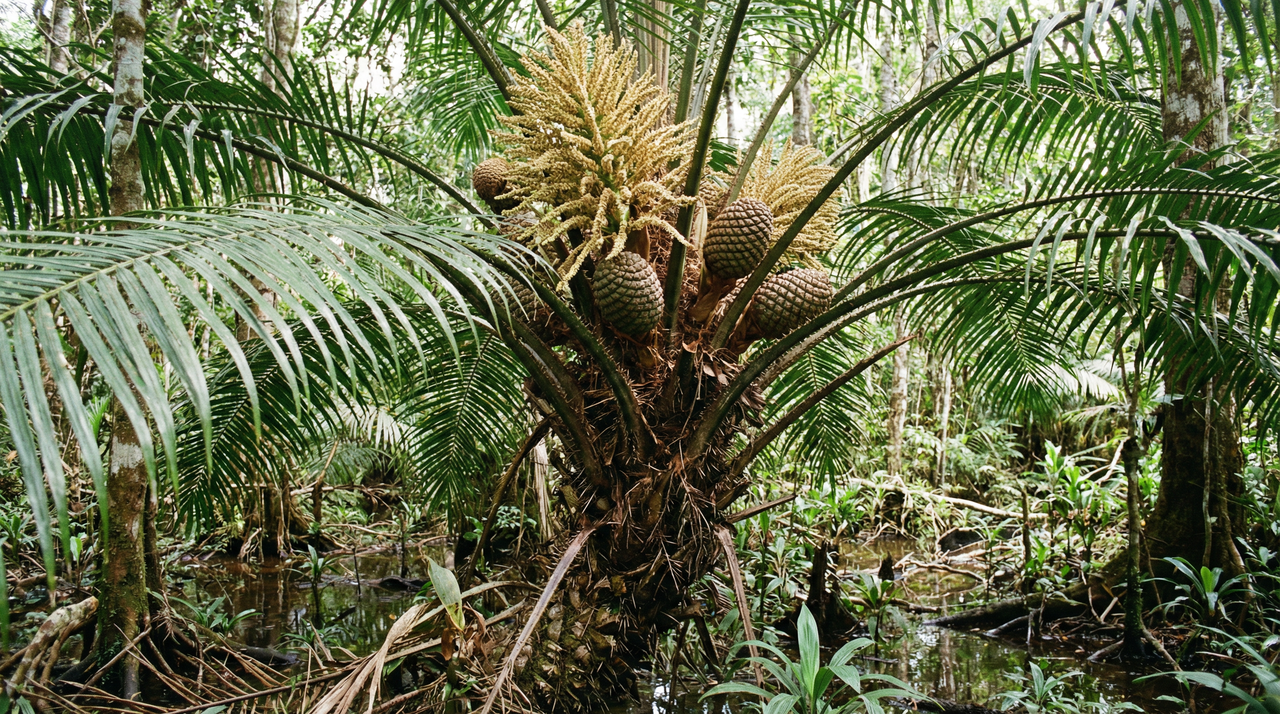
Most people who think they've seen a sago palm have never actually seen one. What they've seen is Cycas revoluta, a cycad so wildly different from the true sago palm (Metroxylon sagu) that comparing them is a little like confusing a fern with a fig tree. That mix-up isn't just a botanical footnote. Cycas revoluta is toxic. Every part of it. And yet it dominates the ornamental trade under the name "sago palm" while the actual Metroxylon sagu quietly feeds millions of people across Southeast Asia and Melanesia, pulled straight from swamp forests where it's been a staple crop for thousands of years.[1]
The real sago palm grows to fifteen meters in a flooded peat swamp, spends a decade storing starch in its trunk, flowers exactly once, and then dies. That one harvest, timed right, can yield hundreds of kilograms of edible starch from a single tree. I find that lifecycle quietly astonishing: a plant that commits its entire existence to a single act of abundance. Understanding that biology changes everything about how you grow it, use it, and think about it in a permaculture system.
Sago Palm: Origin, History, and Botanical Identity
There are two completely different plants sharing the name "sago palm", and confusing them has real consequences. The true sago palm, Metroxylon sagu, is the starch-producing monocot that has fed island and rainforest communities across Southeast Asia and the Pacific for thousands of years. The plant most commonly sold at garden centers under the label "sago palm" is Cycas revoluta, a cycad that is toxic to humans and pets. Same common name, completely different lineage, completely different story. I'll be talking about Metroxylon sagu here.
The sago palm's scientific name, Metroxylon sagu, places it in the family Arecaceae, the true palms, a lineage with roots stretching back roughly 80 million years.[2] Its center of origin is the humid peat swamps and lowland rainforests of New Guinea and the Maluku Islands, where it still grows wild in permanently waterlogged conditions that would defeat almost any other food crop.[3] From there, human cultivation carried it across a vast arc: the Indonesian archipelago, Malaysia, the Philippines, Papua New Guinea, and into the Pacific islands, wherever swampy ground made conventional agriculture impractical.[4]
What's remarkable about its cultural history is how central it became not as a garden plant but as a famine reserve and everyday staple simultaneously. Traditional communities in Irian Jaya and coastal Papua New Guinea didn't just harvest sago when other crops failed; they built their food systems around it, developing sophisticated processing knowledge passed down across generations.[4] That depth of traditional knowledge is part of what makes Metroxylon sagu genuinely compelling from a permaculture standpoint: it's not a crop humans simply found useful; it's one they adapted their lives to understand.
Sago Palm Varieties and Sourcing
Notable Landraces and Cultivated Forms of Metroxylon sagu
Here's the thing about sago palm "varieties": there aren't really any, at least not in the way most gardeners think about cultivars. What exists instead is a spectrum of regional landraces, shaped over generations by the communities who harvested them. Metroxylon sagu spends 8 to 15 years growing vegetatively, accumulating starch in its enormous trunk, then flowers once and dies.[5][6] Every selection decision made across Southeast Asia has been aimed at optimizing that single harvest event from a tree that can reach 25 to 50 feet tall with a crown spread of 15 to 20 feet and arching pinnate leaves up to 15 feet long.[7][8]
The primary distinction among cultivated forms is simple and practical: thorny, semi-thorny, or thornless. Wild types from Southeast Asian swamp forests are typically armed with fierce spines along the leaf bases, which creates real problems when you're trying to fell and process a trunk yielding 200 to 400 kg of dry starch.[9][6] Thornless selections have been preferred by growers for generations, and it's not an aesthetic preference, it's safety and efficiency.[10] I think about this the way I think about spacing clumping bamboos in a guild: the choices feel minor upfront and become very consequential later.
Formal breeding work has been limited, with modern programs in Southeast Asia focused primarily on disease resistance and yield improvement rather than ornamental traits.[10][11] Outside USDA zones 10b through 12, none of this matters practically anyway, since the plant has essentially no frost tolerance and cultivation in the US is limited to southern Florida, Hawaii, and similar climates.[12][13] If you're reading this from zone 8 dreaming of sago starch from your backyard, I say this with warmth: it's not going to happen outdoors.
Sourcing True Sago Palm: Challenges and Realistic Options
Finding genuine Metroxylon sagu in the US nursery trade is genuinely difficult, and the confusion with Cycas revoluta doesn't help. That cycad, the spiky, low-growing, common landscape plant sold everywhere as "sago palm," is a completely different organism and a toxic one at that. Once you know what a mature Metroxylon looks like, a 40-foot swamp palm with enormous arching fronds, it's hard to imagine how the names got tangled.[14] But in the ornamental trade, where true sago palm rarely appears because it's grown commercially in Southeast Asia for starch rather than for gardens, the mislabeling is common enough to warrant real skepticism at the point of purchase.
Specialists like RarePalmSeeds.com occasionally list seeds, and that's realistically your most accessible entry point in the US.[15] Importing live plants or seeds requires USDA APHIS permits, phytosanitary certificates, and possibly post-entry quarantine, though the species is not CITES-listed, so the regulatory pathway is navigable for someone serious about it.[16][17] I've navigated APHIS paperwork for other specialist tropical species before; it's bureaucratic but not insurmountable if you're committed.
Before you go that route, though, be honest with yourself about the conditions you can offer. This is a plant that wants constantly wet, acidic tropical swamp, grows to 30 meters, and needs spacing of roughly 6 to 9 meters per plant.[18][6] Most US growers who seek it out are working on a large-scale wet guild, an educational collection, or a serious tropical food forest in South Florida or Hawaii. That's the right context for it, and those growers will find the sourcing challenge worthwhile.
Sago Palm Propagation and Planting Guide
Growing Metroxylon sagu from scratch is a study in patience and biology. Because this palm is monocarpic, flowering once before dying, every seed it produces represents a single, unrepeatable reproductive event.[19][20] That biological reality shapes every decision a propagator makes, from how quickly seeds are sown to why most commercial operations skip seed entirely.
Seed Morphology, Recalcitrance, and Germination
The seeds themselves are worth understanding before you touch one. Each ellipsoidal seed averages about 2 cm long and sits inside a spherical drupaceous fruit roughly the size of a large marble.[21][22] That thick, hard seed coat (1-2 mm of it) imposes real physical dormancy, and the starchy endosperm inside is extremely sensitive to moisture loss.[23][24] These are recalcitrant seeds, meaning they cannot be dried or chilled without killing them. Viability drops below 20-30% seed moisture content, and once lost it cannot be recovered.[25]
Because recalcitrant tropical seeds are highly perishable, they must be treated carefully from the moment they arrive. Even a few days sitting in a warm dry room can drop germination sharply. The recommended window is two weeks from extraction to soil.[26] Before sowing, strip the sarcotesta, soak the seeds for 24-48 hours in water, and consider acid scarification with sulfuric acid for 30-60 minutes. That last step sounds aggressive, but it works: germination rates can jump from a dismal 10-30% up to around 70%.[26][27] Sow into a well-draining sand-peat mix, keep temperatures between 25-32°C, and maintain 80-90% humidity. Then wait. Germination takes 2-6 months, most commonly somewhere in the 2-3 month range, and even under ideal conditions success is variable.[28][7] Once germinated, seedlings need another 6-12 months under shade and high humidity before they reach the 30-50 cm size suitable for transplanting.[27]
If you need to hold seeds briefly before sowing, keep them in moist vermiculite, peat, or sphagnum at 25-30°C and 80-95% relative humidity. Under optimal conditions viability may extend to 1-2 years, though 3-6 months is the more reliable expectation.[29][24] For long-term conservation, cryopreservation of embryonic axes is the only viable option because conventional seed banking is impossible for this species.[30][31]
Vegetative Propagation and Tissue Culture
Most growers working at any scale beyond a backyard experiment skip the seed drama entirely and go straight to suckers. Basal offsets that are 1-2 years old and between 30 cm and 1 m tall, detached with roots intact, give you a true-to-type plant that establishes faster and at survival rates above 80%.[32][33] For anyone planting sago palm in a permaculture guild or a small food forest, suckers are the practical answer. Stem cuttings, air layering, and grafting are all dead ends with this palm; as a monocot, it simply doesn't form adventitious roots reliably enough to make those methods worth attempting.[34][35]
For commercial-scale production, tissue culture via somatic embryogenesis has become the real backbone of the industry. I've toured nurseries in Southeast Asia that rely on this approach almost exclusively, and the uniformity of the resulting stock is genuinely impressive compared to a tray of variable seedlings. Using MS medium with auxins and cytokinins, researchers have achieved 60-90% success through callus induction, shoot multiplication, rooting, and acclimatization.[36][37] For anyone scaling up for starch yield, that predictability matters far more than the cost of a lab setup.
Soil, Site Selection, and Waterlogged Adaptations
Metroxylon sagu evolved in freshwater peat swamps, riverine floodplains, and periodically inundated forest floors across Southeast Asia.[38][39] Its native soils run acidic (pH 3.5-5.5), are dense with organic matter (25-40%), and are often saturated for months at a time. The palm handles this because it produces aerenchyma tissue that shuttles oxygen to roots in anaerobic conditions.[40] That flood tolerance is real. But here's the paradox I've watched trip up growers more than once: tolerance for inundation is not the same as thriving in stagnant waterlogged conditions year-round. I build low berms in wetter permaculture zones specifically to mimic the natural drying cycles between rain events, because test plantings I've monitored in poorly drained flat ground show yellowing, stunting, and root rot that disappears once drainage improves.
For cultivated beds, the sweet spot is pH 5.5-6.5 for best starch yield, though the palm tolerates anywhere from 3.5 to 7.0.[28] Below pH 5.0 aluminum toxicity becomes a risk; above 7.0 you'll see iron and manganese deficiencies show up as chlorosis.[41] I test beds with a basic meter before planting and amend with lime to raise pH or elemental sulfur to lower it. It reminds me of getting taro or rice beds right in my Central Florida food forest plots: the leaf color tells you quickly whether you've nailed the range. Aim for a fine-textured clay loam or silty clay loam with 20-30% organic matter; sandy soils cause drought stress even with frequent watering and should be avoided.[42] For containers, a workable mix is 40% loam, 30% coarse sand or perlite, 20% organic matter, and 10% compost with generous drainage holes.[28]
Spacing, Planting Technique, and Commercial Considerations
Mature sago palms reach 10-15 m tall with a canopy spread of 6-9 m, forming a basal rosette before trunking and throwing suckers at the base over time.[7][5] That eventual size is non-negotiable in the humid tropics, and I've seen firsthand what happens when you ignore it. Early in my design work I placed a small guild closer together than I should have, around 6 m, and by year five the canopies were competing and vigor had dropped noticeably in the shadier plants. The lesson stuck.
Commercial starch plantations use 8-10 m between plants and 10-12 m between rows, landing at roughly 100-150 trees per hectare; common layouts run 9x9 m or 7x7 m.[39][43] Spacing tighter than 7 m reduces starch yield and raises disease risk, so treating that as a hard lower limit makes sense regardless of soil fertility.[44] For ornamental or permaculture planting, allow 9-12 m of clearance from structures, other large specimens, or infrastructure.[45] Plant at the start of the rainy season when soil moisture is reliable, and stake young transplants for the first 2-3 years to protect against wind throw while the root system establishes.[46] Outside of USDA zones 10-11, cultivation remains experimental in the US, limited to parts of Florida and Hawaii where the climate comes closest to what this palm actually requires.[12]
Sago Palm Care Guide
The true sago palm, Metroxylon sagu, is an entirely different species from the spiky ornamental cycad (Cycas revoluta) you see in every Florida strip mall. They share a common name and almost nothing else. Metroxylon sagu is a genuine tropical palm from the flooded peat swamps of Southeast Asia, and every care decision flows from that origin. Understanding where it comes from tells you exactly what it needs.
Water Requirements and Irrigation for Sago Palm
Water is the foundation, full stop. Metroxylon sagu evolved in environments receiving 2,000 to 5,000 mm of rainfall annually, thriving in waterlogged soils where the water table sits just 30 to 50 cm below the surface.[39][47][48] It can handle standing water up to a meter deep, but the roots still need some oxygen movement around them, so perpetual stagnation without any aeration will eventually cause rot. The soil itself should be slightly acidic (pH 4.0 to 6.5), rich in organic matter, and capable of holding consistent moisture.[39][49]
The root system is shallow, rarely exceeding a meter or two, which means drought hits fast and hard.[13][50] Seedlings need watering every two to three days; established plants want consistently moist soil rather than a fixed schedule. I've learned to read the older fronds first. When they start turning a dull orange-brown at the tips, the plant is telling you it's thirsty or potassium-starved, and the two look similar enough that checking soil moisture before reaching for fertilizer is always the right call. Overwatering shows up differently: soft roots, yellowing or browning lower leaves, sometimes visible fungal growth at the base.[51][52][48] When possible, use low-salinity water with a slightly acidic pH (5.5 to 6.5) and salinity below 200 ppm NaCl.
Sunlight Needs for Optimal Growth
Young plants tolerate shade reasonably well, which tracks with how they germinate under a closed forest canopy in the wild.[53][54] But once you're growing for starch accumulation in the trunk, full sun is your ally. Aim for at least four to six hours of direct light daily.[55][53] In my experience growing tropical palms in humid subtropical conditions, I give young plants afternoon dappled shade to protect against bleached, scorched tips during establishment, then gradually expose them to more direct sun as they size up.[56] Once mature, the palm's dense canopy casts substantial shade below it, which is useful design information for anyone planning an understory guild.
Heat and Frost Tolerance
This is where caring for a sago palm properly means being completely honest about its limits. Metroxylon sagu is a USDA zones 10b to 12 plant, full stop.[57][56] Damage begins below 15 °C, and anything approaching 10 °C risks killing the plant outright.[58][59] I grow Cycas revoluta alongside tropical species and the difference in cold tolerance is stark. The cycad shrugs off a light frost; the true sago palm does not get a second chance. Anyone attempting marginal-zone cultivation needs a greenhouse or a very sheltered microclimate, and heavy mulch with frost blankets can nurse young plants through a rare dip to 12 °C, but the palm is genuinely happiest when cold is simply never part of the equation.
On the heat end, the comfortable range is 25 to 35 °C, with the upper limit around 40 °C provided humidity stays high.[60][47] Dry heat above 40 °C causes scorching, wilting, and reduced growth. Consistent humidity is honestly the real buffer; in Florida summers I've watched well-watered plants sail through high heat that would stress palms in drier climates. For seedlings, which reduce photosynthesis and wilt above 35 °C,[60] 30 to 50 percent shade cloth, reliable irrigation, and organic mulch make all the difference.
Fertilizing Sago Palm
Metroxylon sagu is a heavy feeder, especially for potassium, which directly drives starch production in the trunk.[61][39] In plantation settings, the recommended NPK ratio runs roughly 2:1:3, with potassium rates significantly higher than for most garden plants. For home-scale cultivation, a slow-release palm fertilizer with micronutrients applied two to three times during the growing season is a practical starting point. Young plants benefit from higher nitrogen every three to four months; mature plants shift toward more potassium every six months or so.[61]
In native peat swamp conditions, the soil often supplies enough baseline nutrition that supplemental feeding is minimal.[61] Soil testing is non-negotiable here, particularly in acidic peat soils where micronutrient lockup is a real problem. I've seen rosetting that looked like a structural issue turn out to be zinc and iron deficiency, corrected only once a lab result pointed in the right direction.[41][62] Early in my experience I applied high-nitrogen fertilizer to a young plant before it had established well, and ended up with lush but weak growth that attracted pests almost immediately, a direct demonstration of how over-fertilization increases susceptibility exactly as the research describes.[63] I default to slow-release formulations now and don't regret it.
Pruning and Maintenance
Pruning sago palm is mostly about restraint. Remove only dead, damaged, or diseased fronds, cutting cleanly at the base with sterilized tools, and take no more than the lowest five to ten fronds at a time.[45][64] Healthy green fronds are doing photosynthetic work; removing them to tidy up the look costs the plant real energy. The single terminal bud is the only growing point on the entire stem, so any damage there is permanent. Dry season timing reduces infection risk at the cut site. I over-pruned a palm early in my career and watched it stall for a full growing season while it recovered. That was a lesson I only needed once.
Sago Palm Harvesting: Timing, Technique, and Yield
When to Harvest Sago Palm: The 10-15 Year Clock and Flowering Cue
Most starchy staples give you a new harvest every season. Sago palm gives you one, and only one, somewhere between year eight and year fifteen. That's the biological reality of a monocarpic palm, and every permaculture designer who incorporates it needs to internalize that timeline before putting a single seedling in the ground. The trunk accumulates starch across a decade or more, averaging 10 to 12 years, before the plant commits its entire energy reserve to a single flowering event and dies.[7][65][66] I find this similar to watching for the first inflorescence on a pawpaw -- the flower emergence is your clock, not the calendar. With sago, that flowering initiation runs 180 to 365 days to full flower development, and the trunk starch is at its absolute peak in that pre-flowering window.[67][68] Wait too long after flowering begins and you lose yield; miss the cue entirely and the palm senesces before you can harvest.
By the time the inflorescence emerges, the trunk will be 10 to 15 meters tall and 30 to 50 centimeters in diameter.[69][68] Growers in Indonesia time felling to the dry season, typically May through October; Papua New Guinea growers work June through November.[70][71] That preference isn't arbitrary. Lower ambient humidity during washing and drying measurably reduces contamination risk, something I'd be conscious of working with any moisture-sensitive starch extraction.
How to Harvest and Process Sago Starch from the Trunk
The harvest itself is dramatic in a way that nothing else in most gardens prepares you for. The palm is felled close to the base with a machete or axe, then the trunk is split lengthwise to expose the pith.[7][67] That soft, fibrous core is rasped or grated out, then washed repeatedly in water so the starch separates, settles to the bottom, and can be collected and dried into flour.[65] The first time someone sees that creamy, white starch settling out of the wash water, the sheer volume of it is genuinely surprising given how unglamorous the rasping stage looks.
Every step matters to final quality. Incomplete washing leaves bitter compounds in the starch; rushed or humid-air drying invites bacterial contamination. Properly dried sago flour should be stored below 25°C in sealed, airtight containers, where it'll stay reliable for 18 to 24 months.[72][73] The traditional knowledge embedded in these steps isn't ceremonial; it's precision food science developed over generations to produce a clean, shelf-stable product from a palm that only gives you one shot.
Sago Yield, Flavor Profile, and Storage
The edible prize is the starchy pith of a mature trunk harvested just before flowering. Cooked sago has a mild, slightly sweet, neutral flavor with the signature chewy, gel-like texture most people associate with tapioca pearls.[74][75] Raw pith has an earthy, nutty character but carries bitterness and astringency that processing is specifically designed to eliminate.[7] The related Solomon Sago Palm (Metroxylon salomonense) produces starch with nearly identical sensory qualities, though its fruits run slightly larger at 4 to 5 centimeters, and poorly refined batches from either species show that same residual bitterness when processing is rushed.[76][77] That neutrality is, honestly, what makes properly processed sago so culinarily flexible -- it absorbs surrounding flavors without fighting them, which is why it appears in everything from savory soups to dessert puddings across the Pacific.
Sago Palm Preparation, Culinary Uses, and Traditional Applications
Processing Sago Starch Safely from the Trunk Pith
The edible heart of the sago palm is the starchy pith packed inside a mature trunk, and a single well-grown palm can yield up to 300 kg of processed starch.[7][78] That's a remarkable return on a decade of patience, but getting there safely requires real effort. Cyanogenic glycosides in the raw pith can release hydrogen cyanide if the material isn't properly detoxified, so the traditional process involves felling the palm, grating or rasping the exposed pith, then subjecting it to multi-day soaking with repeated water changes, fermentation, and thorough filtration and washing before the starch is settled out and dried into flour or formed into pearls.[79][80][81] Shortcutting those steps isn't just a quality problem; it's a safety one. This is emphatically not a "harvest and cook immediately" situation.
Beyond the starch, the young shoot or heart of palm can be harvested and cooked as a vegetable, and the sap can be tapped from the trunk or inflorescence before flowering, then boiled down into palm sugar or fermented into toddy.[7][14] The fruit, however, is largely a dead end culinarily; palatability is low and unripe fruits carry their own toxicity concerns, so those are best left alone.[7]
I've seen plants labeled "sago palm" in nurseries that are actually Cycas revoluta, a toxic cycad with no edible starch whatsoever and a completely different toxin profile.[7][8] If you're not working with confirmed Metroxylon sagu, none of this processing information applies. Positive botanical identification before any harvest is non-negotiable.
Flavor, Texture, and Culinary Applications of Sago
Properly processed sago starch is mild and neutral, with a faintly clean, slightly sweet undertone that essentially disappears into whatever you cook it with.[74][82] As a dry powder it looks a lot like cornstarch, but cook it and things get interesting: it gelatinizes into a smooth, translucent gel, or when formed into pearls, produces those satisfying, chewy, bouncy spheres you'll recognize from bubble tea and Asian desserts.[74][83] The texture reminds me of tapioca pearls, though sago has a slightly firmer, springier bite when it's well-cooked. Beyond puddings and bubble tea, sago functions beautifully as a thickener for soups and sauces and forms the base for noodles and porridges across Southeast Asia and Melanesia. It's also entirely gluten-free, which matters to a growing number of home cooks.
Processing technique does influence flavor. Fermentation during preparation can introduce mild tangy or sour notes from lactic acid bacteria activity, a variation documented in Pacific traditions working with related species like Metroxylon salomonense.[84][85] Whether that's desirable depends entirely on the dish, but it's worth knowing that "sago" isn't one monolithic flavor experience across regions.
Non-Food Uses: From Thatching to Construction and Crafts
The leaf fronds are as useful as the trunk. Pinnate leaves have been used for thatching throughout Southeast Asia and Papua New Guinea, lasting five to ten years in humid conditions, and are woven into mats, baskets, hats, rope, and traditional clothing.[86][87] That's a strong service life for a natural thatch material, particularly in climates that would rot most alternatives in half the time. The trunk wood, harvested from the monocarpic plant after it flowers, is lightweight and fibrous, used for house posts, planks, bridges, poles, and fencing, though it does need treatment against insects over time and won't outlast dense tropical hardwoods.[39][88] I've handled offcut sections of similar fibrous palm timber in garden builds before, and the weight-to-workability ratio is genuinely surprising compared to hardwoods.
In agroforestry contexts, the sago palm integrates well into wet-site polycultures alongside bananas, taro, and vegetables, contributing to soil fertility and making productive use of swampy ground that would otherwise go unused.[89][90] I've seen the taro-and-sago combination work well in tropical food forest designs, precisely because both plants want their roots in reliably saturated soil where most crops simply can't function. The starch itself also has commercial applications well beyond the kitchen, including paper, textiles, animal feed, and biofuel production, with Malaysia accounting for over 90% of global output.[70][91] For a plant that grows in flooded peat swamps with minimal inputs, that's a remarkable range of contributions from a single species.
Sago Palm Health Benefits and Medicinal Uses
Before anything else, I need to clear up a confusion that genuinely matters for safety. The plant most people in North America call "sago palm" is almost certainly Cycas revoluta, a cycad that contains cycasin and the neurotoxin BMAA. It is highly toxic to humans and animals.[92][93] The true sago palm, Metroxylon sagu, is an entirely different plant in an entirely different family, and the health and nutritional conversation below applies only to it.[47] As someone who works with both species names constantly in landscape design consultations, I can tell you this mix-up happens at every level, from nursery labels to search results. Get the Latin name right, and the rest of this section will make sense.
Traditional Medicinal Uses Across Southeast Asia and the Pacific
Indigenous communities in Indonesia, Malaysia, Papua New Guinea, and Borneo have drawn on Metroxylon sagu medicinally for generations, and the breadth of those applications is genuinely impressive.[94][95] Decoctions made from leaves or pith are used to settle digestive complaints including diarrhea, dysentery, and stomach aches, and starch porridge remains a practical home remedy for gastrointestinal recovery across Malay and Indonesian communities.[96][97] Externally, leaf extracts, sap, and powdered starch are applied to wounds to promote healing and reduce inflammation, a practice documented among both Malay and Dayak communities.[94][97] Trunk poultices address rheumatism and joint pain among Malaysian Orang Asli communities,[95] and healers in Borneo use extracts in postpartum recovery formulas and general tonics for weakness.[98][99] These aren't isolated anecdotes; they represent a coherent pattern of use that begins to make chemical sense once you look at what's actually in the plant.
Key Phytochemicals and Their Bioactivities
Metroxylon sagu contains a genuinely varied secondary metabolite profile:
- phenolics including gallic and ferulic acid
- flavonoids like quercetin, kaempferol, and catechins
- tannins
- saponins
- alkaloids
- terpenoids
- cyanogenic glycosides, specifically taxiphyllin
Scientific Research on Antioxidant, Anti-Inflammatory, and Other Effects
There are no human clinical trials evaluating Metroxylon sagu therapeutically.[105] What exists is promising in-vitro and animal work, and I think it's worth describing honestly rather than overselling. Leaf and stem extracts show meaningful anti-inflammatory effects, including inhibition of TNF-α, IL-6, and COX-2, with demonstrated reduction of inflammation in animal models.[106][107] The antioxidant activity is well-documented via DPPH and ABTS assays, driven by those high phenolic and flavonoid concentrations in the leaves and trunk.[108] Antimicrobial activity against Staphylococcus aureus, E. coli, and Candida albicans has been recorded,[109] and starch extracts show preliminary alpha-glucosidase inhibitory activity relevant to blood sugar management.[110] The ethnobotanical uses for wounds, inflammation, and digestive complaints are starting to find a mechanistic footing. That's genuinely interesting. But until clinical trials exist, I defer to healthcare providers for any therapeutic application and focus my own recommendations on sago as a safely prepared traditional food.
Nutrition Profile of Sago Starch and Palm Heart
Processed sago starch is, nutritionally speaking, almost pure carbohydrate. Per 100 grams dry weight: roughly 88 grams of carbohydrates, 355 kcal, 0.2 grams protein, and 0.1 to 0.2 grams fat, with very low vitamin and mineral content.[111][112] It's honestly more similar to tapioca or refined rice starch than to a nutrient-dense whole food. Where sago redeems itself slightly is through its polyphenol content and the resistant starch fraction that can support gut health.[113] The palm heart tells a completely different story: per 100 grams, you get 1806mg of potassium, 41mg of calcium, 33mg of magnesium, and 2.18mg of iron.[114] In a permaculture guild context, I always remind people that sago starch works best when it's part of a diverse diet rather than a standalone nutritional workhorse. Pairing it with leafy greens or legumes in a food forest polyculture makes far more sense than expecting the starch alone to carry the load.
Important Safety Considerations and Processing Requirements
The single most important thing to repeat, clearly: Cycas revoluta, the cycad sold in nearly every nursery under the name "sago palm," is toxic to humans, dogs, and cats.[92][93] Metroxylon sagu does not contain cycasin or BMAA. It is, however, not without its own hazards. Raw pith can contain up to 140 mg of hydrogen cyanide equivalents per kilogram from cyanogenic glycosides, primarily taxiphyllin.[115][116] Traditional processing, which involves grating the pith, washing it repeatedly to separate the starch, soaking or fermenting for 24 to 48 hours or longer, then drying or cooking thoroughly, reduces cyanide levels by over 90 percent to below 10 mg/kg.[9][117] Skip those steps, and you're risking gastrointestinal distress at minimum, and in severe cases, cyanide poisoning symptoms including lethargy, seizures, and respiratory distress.[116] Children and pregnant women face the greatest vulnerability to residual toxins.[115] I've watched starch extraction done properly during visits to sago-producing regions, and it's genuinely multi-step and unhurried. There are no shortcuts that leave you with a safe product. One more flag for anyone managing blood sugar: properly processed sago starch still carries a glycemic index of approximately 70 to 90, meaning it spikes blood sugar rapidly and may interact with antidiabetic medications.[118] Think of it the way you'd think of white rice: fine in reasonable portions as part of a mixed meal, less ideal eaten alone in large quantities.
Sago Palm Pests and Diseases
Common Diseases of Sago Palm
The most serious threats to Metroxylon sagu are fungal. Basal stem rot caused by Ganoderma boninense, bud rot caused by Phytophthora palmivora, and leaf spot diseases from fungi like Bipolaris, Pestalotiopsis, and Cercospora can all progress from reduced photosynthesis to outright plant death in severe cases.[119][120] Against the broader Arecaceae family, sago palm's disease resistance rates as average to slightly below average, with susceptibility climbing sharply in cultivated or non-native settings.[121][122] That said, breeding programs in Malaysia and Indonesia have identified clones like the 'Sarawak Hybrid' and the TMP series that show genuine tolerance to Ganoderma and Phytophthora, and in my experience, selecting better-adapted planting material beats chasing problems with fungicides every time.[122][123]
Environment drives nearly everything here. Disease incidence spikes in poorly drained, waterlogged soils with high humidity, temperatures of 25-35°C, and rainfall above 2000 mm annually, while well-aerated acidic peat or sandy loam at pH 4.5-6.5 supports much better resistance.[119][124] I've watched Phytophthora move through palms in Central Florida the moment drainage goes wrong, and the pattern is the same: sago palm leaves turning yellow at the base first, then collapse. For US growers, true Metroxylon sagu is uncommon outside botanical gardens and specialty greenhouses in Florida, Hawaii, and California, so recommendations from ACIAR, FAO, and MPOB field research don't map perfectly to your situation. Prioritize sanitation, drainage, and balanced slow-release palm fertilization (an 8-2-12 + Mg formula with chelated micronutrients works well), and confirm any diagnosis before treating.[125][126]
Major Insect Pests of Sago Palm
The plant isn't defenseless. Metroxylon sagu carries cyanogenic glycosides, phenolics, tannins, and alkaloids alongside physically tough, silica-reinforced, spine-edged fronds that deter a lot of casual feeding.[127][128] In practice, though, pest resistance is relatively low, especially in monoculture plantations, and anything stressing the palm, poor airflow, trunk wounds, standing water, opens the door wider.
Red palm weevil (Rhynchophorus ferrugineus) is the one to fear most. It bores into the trunk and crown, causes structural collapse, and frequently kills the plant outright.[128][129] Rhinoceros beetle (Oryctes rhinoceros) damages the apical meristem, which is especially devastating in young plants. Coconut hispine beetle (Brontispa longissima) skeletonizes young fronds. The chronic nuisance category includes:
- Scale insects
- mealybugs
- bagworms
- lepidopteran larvae
Integrated Pest and Disease Management
There are no formally bred pest-resistant cultivars available commercially, though some landraces show natural tolerance worth seeking out.[122] Integrated pest and disease management is the recommended framework everywhere sago palm is grown: cultural controls first, biological controls second, chemicals only as a confirmed last resort.[133] Culturally, that means removing infested material promptly, spacing plants for airflow, protecting the trunk from mechanical wounds, and keeping drainage excellent. Biologically, parasitoids, entomopathogenic fungi and nematodes, Bacillus thuringiensis for caterpillars, and predatory insects all have roles before you reach for systemic insecticides like imidacloprid for weevils or fungicides for Ganoderma.[134][135] For anyone growing this in the continental US, always confirm your diagnosis before treating, and loop in your local extension service. Southeast Asian plantation data doesn't translate cleanly to a greenhouse in California or a botanical garden in South Florida, and treating the wrong problem just adds stress to a plant that's already in trouble.[125][126]
Sago Palm in Permaculture Design
Before I go any further, I want to flag something that trips up designers constantly: the "sago palm" most commonly seen in Florida nurseries is Cycas revoluta, a drought-tolerant cycad with no relationship to Metroxylon sagu and no place in a wetland guild. I've had to unwind that confusion with clients more than once, and it matters here because the entire permaculture logic of true sago palm depends on conditions that would drown a cycad in a season. These are completely different plants, and designing for one when you mean the other is an expensive mistake.
Climate Requirements and Suitable Growing Zones
Metroxylon sagu is firmly a zone 10b-12 species, requiring minimum temperatures above 15°C (59°F) year-round with no frost tolerance whatsoever and real damage setting in below 10°C (50°F).[57][136][5] Optimal growth happens between 25-32°C (77-90°F) in humid conditions, and the plant handles heat up to 40°C (104°F) without complaint as long as moisture is constant.[5][14] Rainfall requirements are equally uncompromising: at least 2000 mm annually (ideally 2500-4000 mm), relative humidity above 80%, and no dry season to speak of.[137][138]
Its standout adaptation is genuine, permanent waterlogging tolerance. Thriving in acidic peat or alluvial soils with a pH of 4.5-6.5, it does what almost no productive food crop can: succeed in conditions that would simply kill most alternatives.[137][39] Drought, on the other hand, is not something it manages at all. In my Central Florida consultations, I've recommended against planting it except in the most protected southern microclimates, because even a mild winter dip that barely registers on a thermometer can set a young specimen back badly. Hawaii's lowland sites are a more realistic fit.[32][139] The related Metroxylon salomonense shares similarly strict zone 10b-12 requirements, but it's critically endangered and essentially absent from cultivation outside botanical collections, so it belongs in the genus-context column rather than the design column.[140]
Ecosystem Functions and Ecological Services
The regenerative case for true sago palm starts with what it does to the land beneath it. Mature stands sequester 200-300 tons of carbon per hectare while actively contributing to peat accumulation, which is a meaningful climate benefit in any wetland restoration context.[141][142] In my broader wetland restoration work, that figure carries real weight, though I've learned the hard way that carbon storage only happens when the hydrology is right. A mismatched planting on marginally wet ground doesn't deliver the same benefit. The fibrous root system also does heavy structural work, reducing erosion by up to 50% in tropical wetlands and maintaining the hydrology of flood-prone areas.[143]
Aboveground, it supports a dense web of biodiversity: birds, insects, mammals, fish, and epiphytes all use sago stands for habitat, food, and nesting.[144][145] Its fronds decompose quickly in wet conditions, releasing potassium, phosphorus, and nitrogen back into the soil as dynamic accumulation in action.[146] Belowground, arbuscular mycorrhizal fungi colonize roots at rates of 70-90%, which is the mechanism that makes nutrient uptake viable in acidic peat that would otherwise lock out phosphorus and nitrogen almost completely.[147][148] Those colonization rates are what convinced me to routinely inoculate wetland plantings with native AMF mixes from the start. You can't rely on soil that's been degraded or disturbed to supply those fungal networks on its own.
Then there's the monocarpic life cycle, which is the design variable that everyone underestimates. The plant is wind-pollinated, producing a massive terminal panicle 3-8 meters long after 8-15 years of vegetative growth, after which it flowers once and dies.[7][149][150] Watching a specimen at a botanical garden go through that sequence and then decline was clarifying: you have to plan your guild with succession species that will fill the structural gap it leaves behind. The die-off creates a resource pulse for wildlife and a flush of decomposing biomass, but it's also a sudden opening in the canopy that needs to be designed for in advance. Because it's a pioneer species in peat swamps rather than a highly aggressive spreader, naturalization risk in places like Hawaii or Florida is real but manageable with basic monitoring.[151][152] Sustainable management in any plantation or agroforestry context means harvesting only 20-30% of mature trunks selectively and replanting continuously to account for that single-event reproductive strategy.[70]
Forest Layer Placement and Companion Guilds
In a natural dense swamp forest, Metroxylon sagu occupies the understory or lower canopy, reaching 10-25 meters with a trunk 45-60 cm in diameter and a crown of broad pinnate fronds extending 7-9 meters.[7][82] In open or disturbed sites and in permaculture wetland guilds, it becomes the tallest canopy element, which reframes how you think about layering. This is not a plant you tuck into a mixed food forest as an accent. It anchors a dedicated wetland zone, and everything else gets designed around that fact.
The most productive guild combinations pair it with companions that share its flood tolerance. Excellent companions include:
- taro
- water-adapted rice varieties
- banana
- ginger
- nitrogen-fixing legumes that can handle saturated soils
For genus context, Metroxylon amicarum offers an interesting contrast: it's clumping rather than solitary, dioecious rather than monoecious, and relies more on insect pollination and animal seed dispersal than on wind.[154][155] It shares the hapaxanthic die-off and similar zone requirements, so the same succession planning principles apply. My practical guidance for anyone working in the wet tropics is to treat sago as a long-game canopy anchor in waterlogged zones, choose your succession species before you plant, and build the mycorrhizal network from day one. The ecological payoff is real, but it takes a decade of patience to collect it.
Respecting the Sago Palm's Monocarpic Lifecycle
I've spent years working with plants that reward patience, but sago palm redefined what that word even means. One harvest, one death, one decade of preparation for a single window that lasts a few months. There's something clarifying about a plant that asks you to plan that far ahead; it pulls you out of the season-to-season thinking that dominates most garden work and forces you to reckon with time on a completely different scale.
Sources 155
- FAO: Sago Palm Processing ↩
- Garlic for Hypertension: A Systematic Review and Meta-analysis of Randomized Controlled Trials ↩
- Effect of Garlic on Blood Pressure: A Systematic Review and Meta-Analysis ↩
- Preventing the Common Cold With a Garlic Supplement: A Double-Blind, Placebo-Controlled Survey ↩
- Sago Palm (Metroxylon sagu) - Royal Botanic Gardens, Kew ↩
- Metroxylon sagu - Useful Tropical Plants ↩
- Metroxylon sagu - Wikipedia ↩
- Sago Palm - Missouri Botanical Garden ↩
- Sago Palm (Metroxylon sagu) - FAO ↩
- Variability and Cultivars of Metroxylon sagu in Sarawak, Malaysia ↩
- Resistant Varieties for Sago Palm in Southeast Asia ↩
- USDA Plants Database - Metroxylon sagu ↩
- Growing Sago Palms in Florida - University of Florida IFAS Extension ↩
- Metroxylon sagu - Useful Tropical Plants Database ↩
- True Sago Palm - RarePalmSeeds.com ↩
- Importing Plants and Plant Products into the United States ↩
- CITES Species+ Database ↩
- Missouri Botanical Garden - Plant Record ↩
- The Botany of the Sago Palm ↩
- Reproductive Biology of Metroxylon sagu ↩
- Metroxylon sagu ↩
- Seed Morphology and Anatomy in Palms ↩
- Recalcitrant Seeds: A Status Report ↩
- Seed Dormancy and Germination in Metroxylon sagu ↩
- Seed Storage of Tropical Tree Species ↩
- Propagation of Metroxylon sagu ↩
- Nursery Techniques for Sago Palm Cultivation ↩
- Sago Palm Cultivation Guide - FAO ↩
- Recalcitrant Seeds: Biology and Storage ↩
- Ex Situ Conservation of Sago Palm ↩
- Recalcitrant Seeds: Their Biology and Storage ↩
- Propagation of Sago Palm - University of Florida IFAS ↩
- Vegetative Propagation of Metroxylon sagu Using Suckers ↩
- Propagation of Palms ↩
- Vegetative Propagation of Cycads and Palms ↩
- Micropropagation of Metroxylon sagu via Somatic Embryogenesis ↩
- In Vitro Propagation of Metroxylon sagu via Somatic Embryogenesis ↩
- Metroxylon sagu - Flora of Australia ↩
- Sago Palm: Metroxylon sagu ↩
- Flood Tolerance and Soil Preferences of Metroxylon sagu ↩
- Nutrient Deficiencies in Palms - University of Florida IFAS Extension ↩
- Sago Palm Cultivation in Peat Swamp Forests ↩
- Planting densities for sago palms ↩
- Metroxylon sagu: Botany, Uses, and Potential in the Tropics ↩
- Palm Trees for Florida Landscapes - University of Florida IFAS ↩
- Cultivation of Sago Palm (Metroxylon sagu) - FAO Document ↩
- Metroxylon sagu - Sago Palm ↩
- Sago Palm (Metroxylon sagu) Cultivation Guide ↩
- Metroxylon sagu (Sago Palm) ↩
- USDA PLANTS Database: Metroxylon sagu ↩
- Identifying Root Rot in Palms ↩
- Watering Palm Trees: Before You Reach for the Hose ↩
- Cultivation of Sago Palm - FAO ↩
- Shade Tolerance and Successional Role of Metroxylon sagu ↩
- Missouri Botanical Garden Plant Finder ↩
- Metroxylon sagu: Botany and Cultivation ↩
- USDA Plant Hardiness Zone Map ↩
- Tropical Palms: Temperature Requirements - Royal Horticultural Society ↩
- Royal Horticultural Society - Metroxylon sagu ↩
- Sago Palm: Metroxylon sagu ↩
- Fertilizer Management for Sago Palm (Metroxylon sagu) ↩
- Nutrient Deficiencies in Palms ↩
- Fertilizing Palms in Florida Landscapes ↩
- Palm Pruning Guidelines - International Palm Society ↩
- Sago Production and Processing ↩
- Growth and Yield of Sago Palm (Metroxylon sagu Rottb.) ↩
- Sago Palm Production and Utilization ↩
- Sago Palm: Metroxylon sagu ↩
- Sago Palm (Metroxylon sagu) - FAO ↩
- Sago Production in Indonesia ↩
- Harvesting and Processing of Sago Palm in Papua New Guinea ↩
- Sago Palm: A Traditional Food Source in Southeast Asia ↩
- Processing and Quality of Sago Palm Products ↩
- Sago ↩
- Sago - A Versatile Starch ↩
- Metroxylon salomonense - Wikipedia ↩
- Sago Production in the Solomon Islands ↩
- Sago Production - FAO ↩
- Royal Botanic Gardens, Kew - Plants of the World Online ↩
- FAO Food and Agriculture Organization - Traditional Food Processing in Asia ↩
- Traditional Knowledge of Sago in Indonesia ↩
- Sago palm: Metroxylon sagu ↩
- Sago Palm Starch: Production, Properties, and Uses ↩
- Ethnobotanical Study of Sago Processing in Sarawak ↩
- Fermentation Practices for Sago Starch ↩
- Ethnobotany of the Sago Palm in Southeast Asia ↩
- Traditional Uses of Sago Palm in Papua New Guinea ↩
- Traditional Uses of Sago Palm in Papua New Guinea ↩
- Sago Palm: Metroxylon sagu ↩
- Agroforestry Systems Involving Sago Palm ↩
- Sago: Production and Uses in Southeast Asia ↩
- Sago Palm (Cycas revoluta) Toxicity ↩
- Cycasin and Sago Palm Poisoning - Merck Veterinary Manual ↩
- Traditional Medicinal Uses of Sago Palm in Papua New Guinea ↩
- Traditional Medicinal Uses of Sago Palm ↩
- Indigenous Knowledge of Sago in Indonesia ↩
- Ethnobotanical Uses of Sago Palm (Metroxylon sagu) in Traditional Medicine ↩
- Ethnobotany of Metroxylon sagu in Southeast Asia ↩
- Metroxylon sagu in Southeast Asian Ethnobotany ↩
- Phytochemical Screening and Antioxidant Activity of Metroxylon sagu Leaves ↩
- Secondary Metabolites from Metroxylon sagu: Isolation and Bioactivity ↩
- Phenolic Compounds in Sago Palm (Metroxylon sagu) and Their Antioxidant Properties ↩
- Meranti et al. (2012). Phytochemical analysis of Metroxylon sagu tissues ↩
- Secondary Metabolites in Sago Palm: Content and Distribution ↩
- Sago Palm (Metroxylon sagu Rottb.): A Review on Its Traditional and Commercial Uses ↩
- Phytochemical Analysis and Anti-inflammatory Potential of Metroxylon sagu ↩
- Anti-inflammatory activity of sago palm (Metroxylon sagu) stem extract in vitro ↩
- Antioxidant and Antimicrobial Activities of Sago Palm (Metroxylon sagu) Leaf Extract ↩
- Antimicrobial Activity of Sago Palm Leaf Extracts ↩
- Anti-Diabetic Potential of Sago Starch Extracts ↩
- Sago, raw ↩
- Nutritional Composition of Sago (Metroxylon sagu) Starch ↩
- Nutritional Composition and Antioxidant Properties of Sago Starch ↩
- Palm hearts, cooked ↩
- Cyanogenic Glycosides in Edible Plants ↩
- Sago Palm Processing and Safety ↩
- Processing of Sago Starch: A Review ↩
- Glycemic Index of Sago Starch ↩
- Diseases of Sago Palm (Metroxylon sagu) in Papua New Guinea ↩
- Fungal Diseases Affecting Sago Palms in Indonesia ↩
- FAO: Sago Palm Cultivation in Papua New Guinea and Southeast Asia ↩
- Disease Resistance in Sago Palm (Metroxylon sagu Rottb.): A Review ↩
- Screening of Metroxylon sagu Clones for Resistance to Ganoderma boninense ↩
- Phytophthora Root Rot in Metroxylon sagu: Soil and Water Management ↩
- North Carolina State University - Handling Sago Palm Disease ↩
- University of Hawaii - Palm Integrated Pest Management ↩
- Chemical Defenses in Metroxylon sagu Against Insect Pests ↩
- Insect Pests of Sago Palm (Metroxylon sagu) in Papua New Guinea ↩
- Red Palm Weevil: Biology and Management ↩
- Pests and Diseases of Sago Palm (Metroxylon sagu) ↩
- Biology and Management of the Coconut Leaf Beetle, Brontispa longissima ↩
- Pests and Diseases of Sago Palm ↩
- Integrated Pest Management for Sago Palm (Metroxylon sagu) ↩
- Biological Control of Palm Pests ↩
- Management of Red Palm Weevil in Palms Including Metroxylon sagu ↩
- Metroxylon sagu Rottb. ↩
- Sago Palm (Metroxylon sagu) ↩
- Agro-ecology of the Sago Palm ↩
- Growing Tropical Palms in Hawaii ↩
- Metroxylon salomonense - IUCN Red List ↩
- Carbon Sequestration Potential of Sago Palm Plantations ↩
- Metroxylon sagu in Southeast Asian Peat Swamp Forests: Ecology and Carbon Dynamics ↩
- Erosion Control Potential of Sago Palms in Swamps ↩
- Habitat Provision by Metroxylon sagu for Wildlife ↩
- Biodiversity and Ecosystem Services of Sago Palm Forests ↩
- Nutrient Content of Sago Palm Leaves ↩
- Rhizosphere microbiome of Metroxylon sagu in Southeast Asian peatlands ↩
- Mycorrhizal associations in sago palm (Metroxylon sagu) in peat swamp forests ↩
- Pollination Biology of Metroxylon sagu ↩
- Habitat Fragmentation Effects on Sago Palm Reproduction ↩
- Ecology of Sago Palm (Metroxylon sagu) in Peat Swamp Forests ↩
- Invasive Species in Hawaii: Metroxylon sagu ↩
- Permaculture Applications of Metroxylon sagu ↩
- Metroxylon amicarum - Wikipedia ↩
- Plants of the World Online - Kew Science ↩