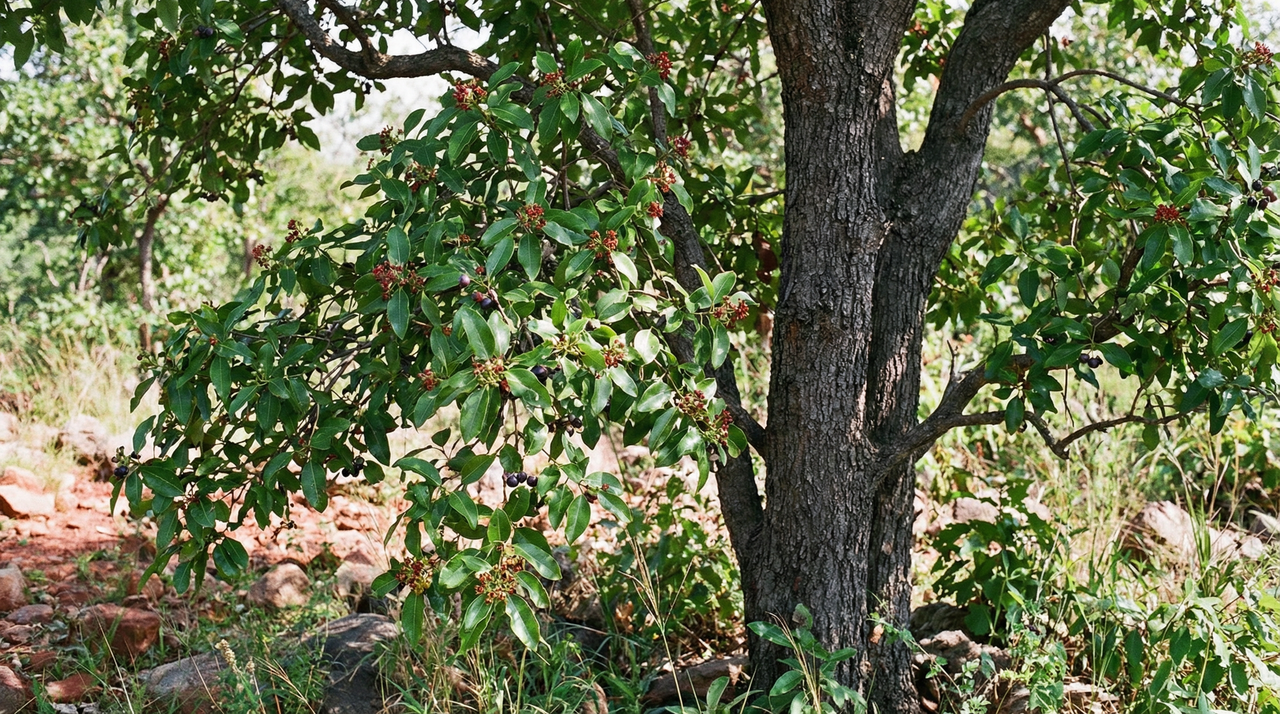
Sandalwood is one of the few plants I'd describe as genuinely dangerous to love. Not to you, to itself. The global demand for its fragrant heartwood has pushed Santalum album to vulnerable status on the IUCN Red List,[1] and the bitter irony is that the reverence surrounding this tree, centuries of temple rituals, Ayurvedic medicine, and luxury perfumery, is exactly what nearly wiped it out. I've spent time with a lot of plants whose cultural weight outpaces their actual cultivation, but sandalwood sits in a category of its own.
Here's what most people don't realize: sandalwood isn't just a tree you plant and wait for. It's a hemiparasite. It photosynthesizes just fine on its own, but without physically tapping into the roots of a living host plant, it will grow slowly, struggle, and often fail to produce the dense, oil-rich heartwood that makes it worth growing in the first place. That biological dependency, so strange for a tree this celebrated, is the whole story. It shapes how you propagate it, where you site it, what you plant beside it, and why it takes the better part of a human generation to harvest. Everything about sandalwood rewards patience and punishes shortcuts.
If you're reading this hoping to find a plant you can tuck into a corner and forget about, keep scrolling. But if you're drawn to the idea of designing around something genuinely complex, a slow-growing, root-tapping, deeply fragrant tree with one of the longest cultivation traditions on earth, then let's talk about what it actually takes to grow this one well.
Origin and History of Sandalwood (Santalum album)
Botanical Background and Native Range
The sandalwood tree's scientific name is Santalum album, and understanding that name is the first step toward understanding why it's so hard to grow and so easy to love. Native to the dry deciduous forests and semi-arid zones of southern India, Indonesia, and parts of Southeast Asia and northern Australia, S. album belongs to a genus that spans the Pacific, with Hawaiian sandalwood (S. paniculatum) growing in dry leeward forests from sea level up to roughly 1,200 meters depending on species.[2][3][4] What every species in this genus shares, from Australian quandong (S. acuminatum) to the Hawaiian ʻiliahi, is the defining trait that shapes everything about sandalwood cultivation: they're all root hemiparasites, forming haustorial connections to neighboring host plants in families including Poaceae, Asteraceae, and Fabaceae, while still running their own photosynthesis.[5][6] Anyone who's tried to grow sandalwood quickly learns that host selection isn't optional; it's the whole game.
Santalum album is classified as Vulnerable on the IUCN Red List, driven by overexploitation, habitat loss, and illegal logging, and it's been listed under CITES Appendix II since 1995 to regulate international trade.[7][8] The Hawaiian species face an even grimmer picture, with some populations of S. freycinetianum and S. paniculatum ranging from Vulnerable to Critically Endangered, a few with fewer than 50 mature individuals left in the wild.[9][10] Because S. album is Appendix II and Vulnerable, I only source seedlings from verified sustainable nurseries; the research is clear that illegal wild harvesting remains the primary threat. Conservation responses include reintroduction programs by the Botanical Survey of India, sustainable propagation work at Royal Botanic Gardens Kew, and ex-situ cultivation and seed banking through the National Tropical Botanical Garden for Hawaiian species.[11][12][13]
Visual Characteristics and Identification
Santalum album is a hemiparasitic tree growing typically 10 to 15 meters tall with a 6 to 10 meter spread, though the range runs 4 to 20 meters depending on site and host quality.[2][14] The bark is rough, grayish-brown to dark brown, longitudinally fissured in a way that makes mature specimens look almost weathered into the landscape. Opposite lanceolate leaves sit 5 to 10 cm long, dark green, leathery; the flowers are tiny, just 2 to 3 mm, fragrant, greenish-white to yellowish, clustered in axillary panicles. The fruit is a modest oval drupe, ripening from green to reddish-purple, barely half a centimeter across. Nothing about the outside of this tree announces its value. I've compared the flowers to a privet in passing glances; without the fragrance drifting over, most people walk right by. The real story is the heartwood: yellowish to dark brown, fine-grained, and carrying an aroma so specific and persistent it's almost impossible to mistake once you know it.[15]
Across the genus, scale shifts considerably. Quandong stays compact at 3 to 6 meters and produces larger, brighter orange-red drupes (1 to 2 cm) that are immediately more conspicuous than S. album's small purple ones. Hawaiian species like S. paniculatum and S. freycinetianum land somewhere in between at 2 to 10 meters, with reddish-brown fruit in the 1.5 to 2 cm range.[6][16] Leaf arrangement shifts too: opposite in S. album and S. paniculatum, alternate in quandong, a small detail that matters when you're trying to identify a young plant in a mixed guild. Beneath the soil, the haustorial root system drives visible growth patterns above ground; trees planted with poor host options stay noticeably stunted, and leaf size and thickness tend to shift with site aridity and host quality.[17][18]
Traditional, Cultural, and Historical Uses
Sandalwood has been woven into Ayurvedic medicine for more than 2,000 years, used as a cooling herb for skin conditions, anxiety, inflammation, and digestive complaints.[19] In Hindu ritual, the fragrant heartwood operates on a different register entirely: ground into paste called chandana for tilak markings, burned as incense (dhupa), offered in temples, used in purification rites, the wood itself becomes devotional material, symbolizing auspiciousness and spiritual focus.[20] That depth of reverence traveled with the trade routes. Sandalwood moved along the Silk Road and maritime spice networks from India and Indonesia to the Middle East, China, and Europe for centuries.
In Hawaii, the story runs along a parallel but distinct track. Hawaiian communities used ʻiliahi (S. paniculatum) for skin ailments, wounds, fever, ceremonial incense, leis, carvings, and burial rites long before any commercial trade existed.[21][22] Then, between 1790 and 1840, intensive commercial harvesting, monopolized by the aliʻi including Kamehameha I and aimed squarely at the Chinese export market, drove the species to near-extirpation in a matter of decades.[20] Seeing the same fragrant wood honoured in ancient Indian temples and Hawaiian sacred spaces is a reminder of something close to a universal spiritual language. It also stands as a vivid warning about what happens when colonial-scale economic extraction meets a slow-growing tree with no capacity to outpace demand.
Fun Facts and Conservation Status
I've never met a fast-growing sandalwood, and the data backs that up. Early growth rates for Hawaiian species run just 10 to 20 cm per year, and even the Indian species manages only 30 to 60 cm annually under good conditions.[23][24] The payoff, eventually, is longevity: some S. album specimens exceed 100 to 200 years. The tree is a marathon, not a sprint, and heartwood oil quality, high in α- and β-santalol with that signature sweet, woody, balsamic aroma with citrus-floral top notes, keeps developing with age and with the strength of the host relationship.[3] Hawaiian species yield a milder, less intense fragrance typically used in blends rather than as a solo ingredient.[25]
For growers in the United States, S. album is a non-native species with no established commercial cultivation infrastructure, and CITES permits may be required for trade or commercial harvest.[26][27] The regulatory and ethical weight is real. But from a permaculture design perspective, the hemiparasitic nature that once made sandalwood seem impossible to integrate is exactly what makes a successful planting so satisfying: once you've assembled the right guild, matched the right hosts, and watched the tree settle into its slow rhythm, it feels less like growing a plant and more like restoring a relationship that should have existed all along.
Sandalwood Varieties and Where to Buy Them
If you've ever tried to simply order a sandalwood tree online and call it a day, I'll save you the frustration: it almost never works that way. I've been down that road, clicking through nursery listings only to find mislabeled stock, legally dubious imports, or plants with zero documentation of origin. Understanding why starts with understanding how the genus is actually structured, and how much variation exists between species that share a name but solve very different problems.
Notable Cultivars and Selections of Santalum album
Indian sandalwood is where the serious selection work has happened. Traditional Mysore, Coorg, and Malabar ecotypes have long been prized because their heartwood oil content runs higher than stock from other regions, though these are regional ecotypes rather than formally named cultivars in the commercial sense.[28][29] Modern breeding programs have gone further. Kerala Forest Research Institute's KFRI-1 and KFRI-2 clones can hit 3 to 6 percent oil content, nearly double the wild average of 2 to 3 percent.[29][30] ICFRE, KFRI, and Australia's Tropical Tree Improvement Centre are all working on clonal propagation, marker-assisted breeding, and interspecific hybridization (including crosses with Santalum paniculatum) to push oil yield, disease resistance, and drought tolerance simultaneously.[31][32]
Quandong (Santalum acuminatum) tells a completely different story. Here the selection work targets edible fruit rather than oil. The two botanical varieties split along practicality lines: var. acuminatum is the Desert Quandong, hard-fruited and arid-tough; var. ternatum is the Sweet Quandong, larger-fruited with noticeably higher sugar content. Named selections include 'Station 13' for large disease-resistant fruit, 'Koonarra' for yield, 'Outback Red' as a compact dwarf, and 'Mallee.'[33][34] I've tasted both varieties, and the difference is striking: the desert type is pleasantly tart and almost medicinal, while Sweet Quandong fruit has a jammy depth that makes complete sense for a fruit-forward breeding program.
Hawaiian sandalwood (Santalum paniculatum) sits in its own category entirely. Conservation programs use hybridization and clonal propagation with this species, but the goal is ecosystem restoration, not commercial supply. These plants are not available to the general public.[35][36] Santalum album has been introduced in Hawaii and trialed in parts of Florida and other southern states with some documented success,[37] but sourcing legal planting material for those trials brings us straight to the next problem.
Sourcing Sandalwood Legally and Ethically
Santalum album is listed under CITES Appendix II, meaning any international trade requires permits to prevent overexploitation.[8] Inside India, the situation is even more constrained: cultivation and trade are heavily regulated by government authorities, and private cultivation often requires licenses or is outright prohibited depending on the state.[38] For anyone importing into the United States, USDA APHIS phytosanitary certificates are required, CITES permits apply where relevant, and the Lacey Act creates real legal exposure for anyone who handles sandalwood sourced through illegal channels.[39][40] I learned early on to request documentation before any purchase, not after. It's the kind of lesson that stings a little the first time you realize the bargain seedling you almost bought had no paper trail whatsoever.
The realistic sources for legitimate Mysore sandalwood or KFRI-clone material are government research institutes: KFRI and ICFRE remain the most reliable channels for seed or certified seedlings.[41][38] For Hawaiian sandalwood, the path runs through US Fish and Wildlife Service or Hawaii's Department of Land and Natural Resources, and even then access is strictly for conservation purposes under permit.[42][43] Add the hemiparasitic requirement on top of all of this and you understand why random nurseries don't carry sandalwood: even if they cleared the legal hurdles, they'd need to sell you the host plant too.
Sandalwood Propagation and Planting Guide
Most trees, you get the seed, you sow the seed, you grow the tree. Sandalwood is not most trees. Everything about propagating Santalum album requires you to slow down, think ahead, and respect biology that doesn't bend to shortcuts. I've propagated this species from both seed and grafted stock in zone 9B conditions, and the single lesson that sticks harder than any other is this: growing sandalwood is not a solo project. The tree won't let it be.
Understanding Sandalwood Seed Biology and Germination
Here's something genuinely fascinating about Santalum album that sets it apart from almost anything else you'll grow: its seeds are polyembryonic, meaning a single seed can contain both a sexually produced zygotic embryo and multiple clonal nucellar embryos.[44][45] The number of nucellar embryos varies by individual tree and growing conditions, so every seed is essentially packing its own insurance policy. It's a clever reproductive strategy for a species that can't afford to fail at establishment.
The seeds themselves are ellipsoid to ovoid, 8-15 mm long, with a thin reddish-brown testa, a hard woody endocarp, and a small straight embryo with two cotyledons.[46][47] That hard coat is part of what causes problems in propagation, because these seeds are recalcitrant and desiccation-sensitive, struggling to survive if moisture drops below 15-20%.[48][49] From my own nursery work, I now treat fresh seed as perishable: sow within six weeks of harvest if you can, because even careful cool-moist storage at 10-15°C and 20-30% moisture starts losing meaningful viability by the second month, and baseline germination rates without intervention only run 30-60%.[50][51]
Scarification is where you actually move the needle. Mechanical nicking or a concentrated sulfuric acid soak for 1-2 hours (followed by thorough rinsing) pushes germination rates from that 10-40% natural baseline up to 60-80%, with seeds sprouting in 15-40 days at 25-30°C in well-drained sandy loam under high humidity.[48][52] Gibberellic acid treatment is another option. The 60-80% target is realistic if your seed is fresh and your scarification is consistent. Hawaiian sandalwood (Santalum paniculatum) is a different situation entirely: its seeds are monoembryonic and orthodox, tolerating drying to 5-10% moisture and storing for years, with germination improved by smoke treatment or hot-water soaking rather than acid scarification.[53][54] Same genus, very different biology at the seed level.
Propagation Methods for Sandalwood
Before any propagation method makes sense, the hemiparasitic requirement has to be on the table. Santalum album cannot thrive without compatible host plants; it attaches to host roots via haustoria to acquire water and nutrients, and without that connection, seedling vigor collapses regardless of how good your germination numbers looked.[55][56] I never plant sandalwood without its host already established for at least a season; both the research on haustorial formation and the dead seedlings I've witnessed confirm that this step is not optional. Nitrogen-fixing legumes work best: pigeon pea (Cajanus cajan), Sesbania, and various Acacia species are proven companions, with Alternanthera also used in nursery settings.
For practical propagation, direct seeding of scarified fresh seed in nurseries during the rainy season (May-June, at 24-29°C and above 70% humidity) is the standard starting point.[57][58] Grafting onto 6-8 node seedling rootstocks during the same June-July humidity window achieves around 70% success in the literature; after several seasons refining the timing and rootstock selection, I consistently hit closer to 75-80%. Grafting matters for more than just convenience: it shortens time to heartwood maturity and ensures true-to-type material, which is why commercial operations favor it. Cuttings and layering are not reliable alternatives. Softwood cuttings even with IBA auxin at 5000-10000 ppm only achieve 15-20% success, and layering runs below 30%.[59] Tissue culture produces 80-90% axillary shoot induction but remains experimental at commercial scale.[60] Hawaiian sandalwood cuttings fare better with semi-hardwood material and IBA (50-70% rooting), and commercial growers there also favor grafting given the species' 80-95% outcrossing rates.[61]
One more thing worth weaving into every propagation decision: Santalum album is IUCN vulnerable and regulated under CITES Appendix II.[8][55] Source nursery stock from certified cultivated programs, not wild collections. The ethics and the regulations align here.
Soil, Site Selection, and pH Requirements for Sandalwood
Sandalwood wants well-drained sandy loam or loamy sand with a pH of 6.0-7.5, with optimal performance sitting in the 6.5-7.0 range.[23][62] I tell people: if your soil is somewhere that citrus or avocado would sulk and rot, sandalwood will do the same. Waterlogging and heavy clay soils trigger root rot from Phytophthora and Fusarium fast enough to take out young plantings before they've had a chance to establish haustorial connections.[63][64] Raised beds, mulching, and excellent aeration are not optional extras; they're preventive infrastructure.
Aim for at least 150-200 cm of soil depth to accommodate the taproot, and keep organic matter at 1-3%.[65] AMF inoculation with Glomus fasciculatum at planting is worth doing; it enhances early phosphorus uptake during the vulnerable establishment window before haustoria are fully functional.[66] On pH, the consequences of getting it wrong show up clearly: below 6.0 you risk aluminum toxicity and phosphorus lockout, presenting as chlorosis and stunting; above 7.5, iron, manganese, and zinc become unavailable, producing interveinal chlorosis and necrotic leaf tips.[67][68] Soil test before you plant, amend with lime to raise pH or elemental sulfur to lower it, and retest. It's unglamorous groundwork that saves a lot of grief later.
Planting Spacing, Technique, and Host Requirements
Standard field spacing for Santalum album is 4-5 m between trees, roughly 400-500 trees per hectare on a 5 m x 5 m grid, with wider 10 m x 10 m spacing used in some agroforestry systems.[57][69] The host plants need to go in first or simultaneously, at a denser spacing of around 2.5 m x 2.5 m, maintaining a ratio of one sandalwood to four to eight hosts. Think of spacing as a heartwood-quality decision, not just an efficiency calculation. Crowd the trees, compromise the root architecture and host access, compromise the oil.
Timing your planting to the rainy season (May-June in tropical climates, or spring under controlled conditions) gives transplants the moisture they need to push roots toward hosts quickly.[52][70] Intercropping with short-duration pulses or vegetables in the first three to four years makes productive use of the space while the canopy is still open, and the pulses serve double duty as early hosts. Young trees have an upright pyramidal habit; by years 10-15 they settle into a rounded canopy 3-6 m wide.
The timeline is long and that's the central reality of growing sandalwood. Grafted trees reach heartwood harvest maturity in 15-20 years, with optimal quality continuing to improve past 20-25 years; seed-grown trees are slower.[57][71] That polyembryonic seed biology I mentioned at the start doesn't speed up the clock. Grafting does, modestly, which is one more reason it's the preferred commercial route. Plant with clear eyes about the commitment, get the hosts right from day one, and the patience becomes the point.
Sandalwood Care Guide: Growing Santalum album Successfully
Everything about caring for sandalwood comes back to one fact: this is a slow-growing tropical hemiparasite with a 15–20 year journey to heartwood. Almost every decision you make, from how much water to give it to whether you fertilize at all, has to account for that parasitic identity and that timeline. Get comfortable with patience before you plant the first seed.
Sunlight Requirements for Sandalwood
Full sun is non-negotiable for mature sandalwood. Santalum album needs at least 6–8 hours of direct sun daily, and that exposure is directly tied to heartwood formation and oil production.[72][73] Skimp on sun and you get a tree with less of everything you planted it for. Adults want greater than 80% full sunlight to perform well.[74]
Seedlings are a different story. Young plants actually adapt well to 50–70% shade and benefit from protection against intense midday sun, particularly in hot climates where photoinhibition and leaf scorch can set them back badly.[53][74] I keep my seedlings under 30–50% shade cloth and watch for the moment the leaves deepen in color and the internodes start to shorten and firm up. That's when I know they're ready to transition toward full sun, gradually over several weeks rather than all at once. Worth noting too: your host plants need sun as much as the sandalwood does, so avoid dense-canopy companions that would compound the shading.[75]
Watering Needs and Drought Tolerance
Native habitats receive 600–1,600 mm of rain annually, with cultivated plantations targeting roughly 500–800 mm equivalent.[3][76] During the first two to three years, you're watering to keep the soil consistently moist, not wet, every two to three days while the tree is making those critical host connections.[77][73] In arid conditions, drip irrigation delivering 20–40 liters per plant per week supports establishment well.[76]
Once a tree passes the five-year mark, it becomes genuinely drought-tolerant and needs irrigation only during extended dry spells exceeding three months.[76] I learned the cost of overwatering the hard way: I lost two young trees in my second year to what I eventually identified as root rot after a rainy stretch where I kept supplementing anyway. The soil stayed saturated, the leaves yellowed, and by the time I saw wilting the Phytophthora had already done its damage.[78][76] Now I let the top few inches dry out before watering young trees during Florida's wet summers. Remember that irrigation also has to keep your host plants healthy; sandalwood draws water and minerals through those haustorial connections, so a stressed host means a stressed tree.[78]
Soil, Fertilizer, and Feeding for Hemiparasitic Sandalwood
Because Santalum album derives up to 40–50% of its nutrients through its haustorial connections to hosts, it genuinely doesn't need much from the soil.[79] Start with the basics: well-drained soil at pH 6.0–7.5, ideally with low salinity (electrical conductivity below 2 dS/m).[80] Once the soil conditions are right, fertilization should stay conservative throughout the tree's life.
For young plants, a 1:2:1 NPK ratio (something like 10-20-10) applied at just 40–50g per plant in year one, increasing to no more than 200–500g by year five, is the range most Indian research programs recommend.[52][81] Split those applications into two or three doses during the active growing season and always pair synthetic NPK with organic matter: farmyard manure at 10–20 kg per plant is the standard recommendation.[82] I never push nitrogen past year three. The difference between a conservatively fed tree and one I over-fertilized in early trials is obvious: the over-fed tree made lush, dark, fast growth, but the scent from a small branch cutting was noticeably thin compared to the tighter, slower-growing specimen beside it.
Two things to protect aggressively: mycorrhizal associations and your host plants' health. Santalum album forms arbuscular mycorrhizal associations that significantly boost phosphorus uptake, which means high-phosphorus fertilizers actively undermine the tree.[80][83] If you're using leguminous hosts like pigeon pea or Casuarina, those species are already fixing nitrogen into the system, which reduces how much fertilizer for sandalwood trees you actually need to apply.[80] Over-fertilizing causes leaf scorch, root burn, disrupted haustorial connections, and, critically, reduced heartwood quality; the tree is telling you when you've overdone it by producing flashy vegetative growth and weak fragrance.[82]
Heat and Drought Stress Management
Santalum album sits in AHS Heat Zones 9–12 and thrives at 20–35°C, tolerating brief spikes to 40–42°C when soil moisture is adequate.[72][84] Push it past that without protection and you'll see stomatal closure, leaf wilting, yellowing, and scorched margins; pair heat with drought and the oil quality suffers too.[85]
In Central Florida's brutal June heat, I grow young sandalwood under 30% shade cloth and see dramatically less scorch than unprotected seedlings. The research backs this up: juveniles do best at 50–70% shade during peak summer, with irrigation bumped to 20–30 liters per plant every 7–10 days.[86] A 5–10 cm mulch layer of dried leaves or straw around the base helps retain soil moisture, moderate root-zone temperature, and suppress weeds. For exposed sites, fast-growing windbreaks like Casuarina equisetifolia or bamboo planted 2–3 meters from the tree rows protect against desiccating winds that compound heat damage.[86] Healthy, well-watered hosts also buffer the sandalwood considerably, since the tree can draw on host root reserves during the worst heat.
Frost Tolerance and Cold Protection
Sandalwood is a tropical evergreen and cannot survive frost. Chilling injury begins around 10°C (50°F) and meaningful damage occurs below 5°C (41°C).[3][87] The tree is rated for USDA zones 10a–11, and even within that range, young plants are far more vulnerable than established specimens; symptoms of cold injury include leaf yellowing, browning, necrosis, wilting, and stem cracking.[88][89]
I treat young sandalwood exactly like my tender citrus: a 4–6 inch mulch ring kept clear of the stem base, old bedsheets or frost cloth thrown over the canopy when temperatures threaten to drop, and any potted specimens moved under cover well before a cold snap arrives.[90][91] Site selection matters enormously here: southern exposure in a well-drained location that catches reflected warmth from a wall or structure can push a marginally cold microclimate into viability. Long-term outdoor cultivation outside zone 10 isn't realistic; container overwintering is the only practical workaround for colder climates.
Pruning, Maintenance, and Seasonal Rhythm
Formative pruning in the first five to seven years is where you shape the tree's future. The goal is a straight central leader with lower branches gradually removed to establish a clear bole 2–3 meters high, which concentrates resources into the heartwood you're waiting decades for.[92][52] Never remove more than 20–30% of the canopy in a single session, and always prune during the dry season; I once pruned during a wet period and watched sap ooze from cuts and fungal spots appear within two weeks. The dry-season rule exists for a reason.[93]
After year seven, hold back. Heavy pruning stimulates excessive vegetative growth rather than the tight, oil-rich wood development that makes the tree valuable.[92] I wait until a seedling has made solid, verified host connections before I do any pruning at all; a tree that hasn't properly attached yet doesn't need the additional stress. As for seasonal rhythm, Santalum album is evergreen with year-round growth capacity but naturally slows during extreme dry or cool periods.[93] Flowering typically begins around years three to four, but the three growth stages (seedling dependence, juvenile host attachment, mature canopy) each demand different management attention, and the straight bole you shape in years one through five will still be visible in the heartwood cross-section when you finally harvest 15–20 years from now.[93][94]
Sandalwood Harvesting: Timing, Technique, and Yield
No other crop I grow asks for patience the way sandalwood does. Most harvests are seasonal. This one is generational.
When to Harvest Sandalwood: Maturity Indicators and Optimal Age
Heartwood formation in Santalum album begins around 10-15 years, but commercial viability doesn't arrive until at least 15-30 years of growth, and the finest oil quality keeps developing well past 30.[95][96][97] Calendar age alone tells you almost nothing useful. After watching multiple plantings mature over the years, I've learned to rely on a combination of diameter at breast height and a small test core to actually confirm readiness before anyone touches a chainsaw.
What you're looking for: a minimum DBH of 15-20 cm, heartwood occupying at least 50% of the trunk's cross-section, and that characteristic shift in color from pale yellow toward a deeper reddish-brown, accompanied by the unmistakable aroma.[95][98][99] If the core smells faint or looks watery-pale, the tree is telling you to wait. Essential oil content climbs from roughly 3% in younger heartwood toward 6% by weight as the tree matures, with santalol concentration rising alongside it.[99][95] Cutting early is a permanent mistake. For the Hawaiian relative (Santalum paniculatum), sustainable harvest typically waits until 20-30 years from seed, targeting a DBH of 10-15 cm or greater, with timing shifted to the dry season when drought stress naturally concentrates resins.[61]
How to Harvest and Process Sandalwood Heartwood
In India, traditional felling happens during the dry season, roughly March through June, when reduced moisture limits fungal infection in freshly cut wood.[100] After felling, bark removal within 2-5 days is non-negotiable; I've seen growers lose years of investment by letting bark sit too long and encouraging exactly the mold that ruins the wood before seasoning even begins. The stripped heartwood then gets stacked under open sheds for initial air circulation.[100]
Here's the part that surprises most people: the harvest isn't finished at felling. The heartwood requires slow air-drying for 10-15 years or longer to fully stabilize its fragrant sesquiterpene alcohols without cracking or succumbing to mold.[100][101] Watching wood transform in scent over years under my sheds taught me more about sesquiterpene chemistry than any textbook managed to. There's also a secondary annual harvest worth noting: seeds, collected when fruits turn dark purple-black roughly 6-9 months after flowering, with fruit thinning to 4-6 drupes per inflorescence practiced beforehand to encourage larger, more viable seed for propagation.[48][102]
Expected Yield and Flavor Profile of Sandalwood
Mature Santalum album heartwood yields 3-6% essential oil by weight, with santalol comprising 50% or more of that oil, producing the creamy, balsamic, woody aroma with its soft citrus top notes and lingering sweet base that perfumers prize above almost any other wood.[103][104] Oil quality is strongly shaped by tree age, genetics, and growing conditions, with older Indian trees producing the highest santalol content; Hawaiian relatives yield a more modest 1-3%.[105][106]
The culinary dimension is narrow and worth clarifying: trace amounts of heartwood powder, never the essential oil, appear in traditional Indian preparations like kheer or falooda. The flavor itself is surprisingly bitter and pungent, not the sweet creaminess the aroma suggests. I'd compare it to using tiny amounts of gentian or angelica root, where the aromatic impression and the actual taste pull in completely opposite directions. Responsible sourcing is the final word here. Both Santalum album and Santalum paniculatum are tightly regulated under CITES and national law. I always verify current rules before planting or purchasing; it's the only way to grow with a clear conscience and protect the future supply of this irreplaceable fragrance.
Sandalwood Preparation and Uses
Edible Parts and Culinary Applications
Sandalwood is not a food plant in any meaningful sense. The primary edible window for Santalum album is its small drupe, eaten sparingly for its sweet, juicy flavor that people compare to berries, apple, or grape with subtle aromatic undertones.[107][108][2] Leaves show up in traditional teas, offering flavonoids and phenolic compounds, but seeds are generally avoided due to bitterness and potential toxicity.[109] Nutritional data for the fruit remains sparse.[110]
The only real culinary tradition involving the heartwood itself appears in Ayurvedic Indian sweets: tiny pinches of heartwood powder stirred into kheer, falooda, or lassi alongside cardamom, saffron, and honey.[3][111] The flavor is bitter-pungent, softened by a creamy balsamic warmth and a cooling finish that comes directly from its high α-santalol and β-santalol content.[112] I once ground a small amount of certified heartwood powder into a cardamom lassi as an experiment, and that cooling aftertaste is exactly what classical Ayurvedic texts describe; quiet, lingering, and oddly grounding. What it also triggered was a deep awareness of how rare and irreplaceable the material is. Use the powder in trace amounts only, and never the essential oil: ingesting sandalwood oil risks gastrointestinal irritation and hepatotoxicity, and no modern food safety framework approves it for culinary use.[113][114]
Other species in the genus show a livelier edible tradition. Quandong (S. acuminatum) fruit is genuinely tart and startlingly rich in vitamin C at 700-1000 mg per 100g, somewhere between a surinam cherry and a cranberry when cooked, and its kernels can be processed into flour once soaked, fermented, or roasted to neutralize cyanogenic glycosides.[6][115][116] Hawaiian sandalwood (S. paniculatum) offers sweet, juicy drupe pulp, though overconsumption causes diarrhea; seeds and wood are not eaten.[117] Stems, roots, bark, flowers, and sap across the genus have no documented food use.[3]
Traditional Medicinal Preparations
Ayurvedic practice gives us the clearest framework for safe preparation. The Ayurvedic Pharmacopoeia describes heartwood powder (churna) at 1-3 g per day, heartwood decoctions prepared by boiling 5-10 g of chipped wood taken as 30-60 ml twice daily, and tinctures at 2-5 ml two to three times daily.[118][119] The essential oil belongs on the skin or in a diffuser only, diluted to 1-2%; I never use it internally, and the hepatotoxicity research on α-santalol makes that a firm line for me in any formulation.[113] Steam distillation is preferred over solvent extraction to keep the final oil clean.[104]
Oil quality varies enormously by tree age. Indian heartwood from trees aged 15-30 years yields 4-6.5% oil with total santalols reaching 60-70%, and that profile simply cannot be replicated in younger or poorly sourced material.[120][121] Hawaiian species share a similar sesquiterpenoid profile (α-santalol 30-50%, β-santalol 15-25%) and lean on comparable traditional preparations, infusions, decoctions, topical oils, though clinical data is far thinner than for the Indian species.[122] Internal oil use carries the same safety risks regardless of origin.
Non-Food Uses and Sustainability
Once harvested, heartwood is air-dried to 12-15% moisture, chipped, and stored cool and dry before distillation or carving.[122][105] The dominant applications are perfumery, incense, religious ritual, and traditional medicine; food is genuinely peripheral. Every single one of those uses now carries a conservation obligation, because all Santalum species are endangered or restricted due to centuries of overharvesting.[3] In my permaculture designs, I source fragrance and aromatic function from fast-growing native alternatives rather than adding any pressure to wild or illegally sourced sandalwood populations. If you're purchasing heartwood, powder, or oil, verify that it comes from certified, traceable cultivation programs. Anything less is participating in the problem.
Sandalwood Health Benefits and Medicinal Uses
What makes sandalwood medicinally remarkable isn't mystery or tradition alone. It's chemistry, specifically two sesquiterpene alcohols that do most of the heavy lifting. Understanding that has completely changed how I talk about this plant with clients and students.
Key Phytochemicals in Sandalwood: Santalols and Supporting Compounds
Santalum album heartwood essential oil is built around α-santalol and β-santalol, which together make up 70-90% of the oil, with α-santalol alone ranging from roughly 41-55% of composition and β-santalol contributing another 15-25%.[123][124] The oil itself typically yields 2-6% of dry heartwood weight, which is part of why mature, oil-rich heartwood is so valuable.[125] Beyond the santalols, the plant contains flavonoids (rutin, quercetin, vitexin), phenolic acids, glycosides, saponins, and tannins, though alkaloids and coumarins aren't well-documented in this species.[126]
Not every part of the tree delivers the same profile. Leaf oils have considerably lower santalol concentrations, typically around 20-40% α-santalol, with higher monoterpenes like α-pinene filling the gap. Root and bark oils fall somewhere in between.[124] Growing conditions matter enormously here. Santalol content increases with tree age, with 15-30 years considered optimal, and varies by soil, climate, and provenance, with Indian-sourced trees often outperforming Australian ones in santalol percentage.[127][128] In my experience working with aromatic plants in warm, well-drained soils, you really can smell the difference between a plant grown right and one that's been stressed or rushed. The seeds also contain a fixed oil rich in oleic acid (40-50%) and linoleic acid (30-40%), along with vitamin E at 20-50 mg per 100g of oil, but those leaf flavonoids are where a lot of the antioxidant activity from non-heartwood parts originates.[129][130]
Traditional Uses and Modern Medicinal Research
Ayurvedic physicians classified sandalwood as a cooling herb for balancing Pitta dosha, using it for:
- skin disorders
- urinary tract infections
- fever
- digestive complaints
- wounds
- anxiety and insomnia
The α- and β-santalols drive anti-inflammatory activity by inhibiting NF-κB signaling and reducing cytokines including TNF-α, IL-6, and COX-2. Antioxidant effects come through Nrf2 pathway activation, upregulating HO-1 and NQO1 enzymes alongside direct free radical scavenging. Antimicrobially, the santalols disrupt bacterial cell membranes and biofilm formation, with documented activity against Staphylococcus aureus and Candida albicans. Anticancer pathways are also under investigation, with evidence pointing to apoptosis induction via caspase activation, p53 upregulation, and Bcl-2 modulation.[133][134][135] Neuroprotective and anxiolytic effects round out the picture: santalols appear to support GABA-A receptor modulation, enhance BDNF, reduce neuroinflammation, and may inhibit amyloid-beta aggregation.[136][137]
That said, nearly all of this evidence comes from in vitro studies and animal models. A 2006 pilot trial demonstrated relaxation effects and reduced systolic blood pressure with aromatherapy use, but the larger randomized controlled trials needed to confirm clinical efficacy simply don't exist yet.[138][139] I approach sandalwood the way I approach most long-lived, slow-growing species in my food forest designs: with patience and respect. The preclinical research on NF-κB inhibition and Nrf2 pathways is genuinely compelling, but this is a plant that rewards careful, informed use rather than enthusiasm outpacing the evidence. Hawaiian sandalwood (Santalum paniculatum) shares broadly similar pharmacological properties through its own sesquiterpene chemistry, but it's endangered and data from human studies is even thinner, making conservation the more pressing conversation there.[140]
Nutritional Profile and Practical Considerations
Santalum album is not a food plant in any practical sense. Ayurvedic tradition uses heartwood powder at roughly 1-3 grams per day medicinally, and occasional culinary applications exist as a spice in small quantities, but this is a medicine cabinet species, not a pantry staple.[141] The seed kernels are nutritionally dense, providing approximately 550-600 kcal per 100g with 22-28g protein, 45-55g predominantly unsaturated fat, good mineral content (potassium 600-800mg, calcium 150-250mg, magnesium 100-150mg, iron 5-10mg), and that same vitamin E-rich seed oil,[142][143] but the seeds aren't something I'd encourage anyone to eat casually. Santalbic acid in the seeds can elevate hepatic cytochrome P450 enzymes, and the bitter taste alone is an effective deterrent for most people.[144]
The contrast with Quandong (Santalum acuminatum) is striking. The fruit pulp of Quandong is legitimately edible bush food, providing 46-73 kcal per 100g with impressive vitamin C (up to 120 mg fresh, higher than many citrus fruits), alongside flavonoids like quercetin and kaempferol, carotenoids, and useful minerals.[145][146] Indigenous Australians have eaten this fruit safely for a very long time. Its seed kernel is a different story: it contains cyanogenic glycosides that release hydrogen cyanide if consumed raw or in quantity, requiring traditional processing through roasting, grinding, and leaching before it's safe.[147][148] When I work with native or medicinal plants, one of the first things I teach is which parts of a plant are genuinely edible versus which are medicinal or potentially toxic. That distinction matters enormously within this genus, and conflating the fruit pulp of Quandong with the seed, or assuming the same rules apply to Santalum album, is exactly the kind of error that causes harm.
Safety and Precautions
Topically diluted sandalwood oil is well-tolerated for most people. The FDA has granted it GRAS status for food use in small quantities, and animal toxicity data shows a fairly wide safety margin, with an oral LD50 in rats of roughly 5.58 g/kg for the whole oil and 3.8 g/kg for α-santalol specifically.[149][150] In my practice with aromatic and medicinal plants, I always recommend a 1-2% dilution for topical applications and treat anything beyond that as requiring genuine justification.
The primary risks deserve clear-eyed attention. Allergic contact dermatitis is a real concern, mediated by the sesquiterpenes themselves, and can show up as irritation, redness, or eczema in sensitive individuals.[151] Oral use carries a different category of risk: potential gastrointestinal upset, hepatotoxicity with excessive intake, and enough uncertainty around pregnancy (the plant has documented emmenagogue properties) that I'd consider it off-limits without professional supervision for pregnant or breastfeeding individuals and children under six.[152][153] Rare photoallergic reactions have also been documented.[154] For Hawaiian sandalwood, safety data is mostly inferred from S. album, with low documented allergenic potential, though the same dilution guidelines apply and conservation status limits how much formal research exists.[155]
One practical caution I'd add for anyone foraging or sourcing from small suppliers: adulteration in the sandalwood trade is common, and misidentification within the genus or with related species like Osyris can expose you to plants with different safety profiles.[156] If you're working with Quandong, be aware that Solanum species with poisonous fruits can be mistaken for it in the field.[157] Source carefully, patch test always, and keep oral use of any sandalwood preparation under professional oversight.
Sandalwood Pests and Diseases
Sandalwood's vulnerability in cultivation is, in many ways, the flip side of what makes it so remarkable. A slow-growing hemiparasite investing its energy into producing some of the most complex aromatic chemistry in the plant kingdom simply cannot grow fast enough to outrun trouble the way a vigorous annual can. The consolation is that its own chemistry, particularly the santalol sesquiterpenes accumulating in the heartwood, does provide some natural deterrence, and a well-sited, well-managed tree in a diverse planting is a genuinely different organism from a stressed row in a monoculture plantation.
Major Diseases of Santalum album
Two diseases stand above all others in terms of severity, and every grower should know them before planting a single seed. Sandal spike disease, caused by a phytoplasma transmitted by leafhoppers and parasitic mistletoe, produces the classic witches' broom symptom: dense, stunted, broom-like growth clusters followed by progressive dieback.[158][159] There is no cure. Management means rogueing infected trees immediately, controlling leafhopper populations, removing mistletoe, and eliminating any alternative hosts in the planting's vicinity.[160] I follow Indian research programs closely precisely because spike disease is the reason I treat leafhopper populations as a priority scouting target from day one, not something to address after I see symptoms.
Phytophthora root rot, primarily from P. cinnamomi or P. palmivora, is the other existential threat, causing root decay, wilting, and rapid mortality in poorly drained or overwatered situations.[161][162] I avoid any site with even seasonal standing water, full stop. I've watched Phytophthora collapse related species in barely a season when drainage was marginal, and sandalwood's slow growth means it has no capacity to bounce back the way a faster tree might. Hawaiian sandalwood faces the same disease in its native dry forest remnants, where management now focuses on mimicking native dry conditions and preserving what genetic diversity remains.[163]
Beyond those two, fungal leaf spots from Colletotrichum, Cercospora, Alternaria, and several other genera can reach 30% incidence in plantations, reducing photosynthesis but rarely proving fatal on their own.[158][106] Bacterial wilt (Ralstonia solanacearum) and heart rot from Polyporus santali, which directly degrades the valuable heartwood, are additional concerns in humid or stressed conditions, along with Fusarium wilt and anthracnose.[160][164] Monoculture plantations consistently show higher incidence across most of these diseases than wild stands, which is exactly the argument for diverse polyculture design.[165]
Keeping temperatures between 20 and 35°C, maintaining well-drained soils in the pH 6.0 to 7.5 range, and avoiding both waterlogging and alkaline conditions above pH 8 significantly reduces susceptibility to Phytophthora, Fusarium, and most bacterial pathogens.[166] On the genetics front, wild populations do carry partial tolerance to wilt and other pathogens, and Indian breeding programs have identified tolerant families including a selection called 'Gurupur Improved,' though I'd characterize this as encouraging progress rather than a solved problem.[167] I choose seed sources with documented vigor and pay attention to provenance, because the data on resistance levels across accessions is still thin. Integrated management, leading with sanitation, rogueing, improved drainage, Trichoderma and Pseudomonas fluorescens applications, and reserving metalaxyl or copper-based compounds for Phytophthora situations where cultural methods aren't enough, is the right framework.[168][169]
Common Insect Pests and Management
The insect pressure on sandalwood is real but manageable when you know what to watch for. Scale insects, particularly Aspidiotus destructor and Icerya purchasi, are the most persistent economic threat, and stem borers including Aristobia testudo and Zeuzera coffeae can cause serious structural damage, especially in younger trees.[170][171] Leafhoppers matter far beyond their direct feeding damage because they're the primary vectors of spike disease. Mealybugs, shoot borers, and in some settings termites or whiteflies in greenhouse situations round out the picture.[172]
What I find genuinely useful to remember is that sandalwood isn't defenseless. The santalol and other sesquiterpenes in the wood provide real insecticidal and repellent activity, and there's evidence that mycorrhizal associations further support pest resistance.[173][174] In my experience, seedlings established with healthy host-plant associations are noticeably more vigorous and seem to shrug off early pest pressure better than isolated nursery stock sitting in a pot with no haustorial connections. The hemiparasitic lifestyle, so often framed as a complication, appears to confer genuine resilience when the system is set up right.
Monocultures and greenhouse conditions flip this equation. Young plants are most vulnerable precisely because they grow so slowly, giving pests time to build population pressure before the tree has any meaningful size or canopy.[175] Hawaiian sandalwood carries additional burdens specific to its island context, including the iliahi webworm, parasitic mistletoe (Korthalsella remuloides), root-knot nematodes, and introduced borers, with diseases and pests compounding historical overharvesting pressures on an already endangered population.[176][162]
Practical IPM for sandalwood is genuinely straightforward when started early: maintain sanitation, prune out damaged tissue, space trees 3 to 4 meters apart for air circulation, avoid overhead watering, and apply biological controls including predator insects, neem-based products, and Oryctes virus where borers are a concern.[177][178] Pheromone traps for monitoring and targeted intervention only when pest thresholds are actually exceeded keep the system from becoming dependent on chemical inputs.[179] I've rarely needed synthetic chemicals on sandalwood when sanitation, spacing, and Trichoderma applications are in place from the beginning, and I think that's a reasonable expectation for any grower willing to do the foundational work.
Sandalwood in Permaculture Design
Sandalwood rewards the patient designer, but it punishes the one who treats it like an ordinary tree. What makes it genuinely fascinating to work with is its hemiparasitic identity: those required haustorial root connections to neighboring plants fundamentally shift how you approach placement and guild design. That biological reality shapes every placement decision, from which climate you're gardening in to which plants you put in the ground beside it.
Climate and Hardiness Zones for Sandalwood
Santalum album is firmly a tropical to subtropical species, thriving in USDA zones 10-11 with temperatures between 20-35°C and a hard floor around 10°C before you start seeing stress.[72][2] Young plants are especially unforgiving about cold; once temperatures dip below 15°C, they need protection or they stall badly. I've watched subtropical seedlings that looked healthy through October become visibly sulky the moment a cool front pushed in, and it's a reminder that this genus does not negotiate with frost.
Rainfall preferences are 500-2000 mm annually, ideally in the 750-1200 mm range, but the detail most people overlook is the dry season.[180][2] Sandalwood evolved in seasonally dry deciduous forests under Köppen types Aw, As, and BSh, and that annual dry pulse matters both for triggering proper physiology and for keeping fungal pressure manageable. On well-drained sandy soils it can tolerate up to 3000 mm if drainage is excellent, but sitting in wet feet through a humid summer is a fast path to root rot problems I'd rather not deal with.
For growers in zone 9B or the warm edge of zone 10A, success is possible but requires microclimate management: frost cloth during cold snaps, sheltered southern exposures, container growing, or using a large mango or citrus as both a windbreak and an informal host companion.[181][90] That dual-purpose mango approach is something I'd genuinely recommend for south Florida and coastal California growers; it mimics the layered canopy protection sandalwood receives in its native habitat while keeping your host options on the table. Cultivation outside its native range in Australia, Hawaii, Kenya, and Brazil has confirmed that the species can adapt, but slower growth in cooler highland conditions is consistent across all of those introductions.[182][91]
Related species offer modest alternatives for marginal growers. Desert quandong (Santalum acuminatum) handles brief exposure down to around -5°C to -7°C and grows well across zones 9-11 on well-drained sandy or loamy soils.[147] Hawaiian sandalwoods (S. paniculatum and S. freycinetianum) sit firmly in zones 10-11, frost-sensitive and preferring volcanic or sandy soils with moderate humidity.[16] The takeaway is that while the genus shows some variation, every species is frost-sensitive in youth, and that constraint belongs at the front of every planting plan.
Ecosystem Functions and Guild Roles
Here's what I find genuinely exciting about sandalwood as a permaculture element: its hemiparasitism isn't just a quirk to work around, it's an active ecological service. By drawing water, minerals, and some nitrogen from host roots through haustoria while continuing its own photosynthesis, it moderates nutrient flow in the soil, creates nutrient hotspots, and opens light gaps in the canopy that increase understory plant diversity.[183][180] I tend to explain this to clients the way I'd describe mistletoe's role in temperate oak systems: what looks like parasitism at the individual plant level functions as biodiversity infrastructure at the community level. Sandalwood's spreading shallow root system also contributes meaningfully to soil stability on slopes and coastal sites, and its fragrant flowers support a range of pollinators while the whole tree provides habitat structure for birds and insects.[184]
Hawaiian sandalwood (S. paniculatum) takes this further, functioning as a keystone species in dry forest ecosystems, supporting endangered honeycreepers with fruit and nesting sites, cycling nutrients, and even contributing long-term carbon storage through its rot-resistant wood that persists in forest litter long after a tree falls.[185][186] That's the kind of multi-function stacking a permaculture designer dreams about.
Pollination adds another layer of complexity worth understanding before you plant. Santalum album uses a mixed insect-pollination system, with bees, flies, thrips, beetles, butterflies, and moths all contributing, and its flowers are protandrous, meaning pollen is released before the female parts are receptive.[187] That biology strongly favors outcrossing, which is good for genetic health but bad for isolated plantings. Optimal fruit set happens between 20-35°C and 50-80% relative humidity, and when pollinators are scarce due to habitat loss or fragmentation, fruit set can drop by up to 70%.[188][189] I've improved fruit set in small cultivated plantings by interplanting with nectar-rich perennials like basil and native vines to sustain generalist pollinator communities through the season, and I'd add hand-pollination to your toolkit for any planting with fewer than a handful of trees.
Host selection is where the permaculture designer's role really comes into focus. Santalum album is documented to connect with pigeon pea (Cajanus cajan), various Acacia species, Sesbania, Casuarina, Terminalia, mango, neem, and even grasses.[190][191] Nitrogen-fixing legumes sit at the top of my preference list for this role, partly because they cover sandalwood's nutrient needs more gracefully, and partly because they're pulling double duty in the system anyway.
Forest Layer and Guild Integration
In its native dry deciduous forests, sandalwood occupies the understory to subcanopy, and that's exactly where I position it in design work: underneath larger canopy trees or within a mid-height polyculture layer where it can make haustorial contact without having to compete for light from the very beginning.[192] Hawaiian species occupy a subcanopy role across elevations from 150-2100 m, giving a useful size reference for what understory integration looks like in practice.[16] Both Hawaiian species are listed as vulnerable or endangered due to overharvesting and habitat loss, which is a reminder to anyone sourcing sandalwood plants to seek out conservation nurseries and certified programs rather than unknown supply chains.[193][194]
In my own guild designs, I always establish a nitrogen-fixer like pigeon pea before introducing sandalwood seedlings. The legume gets a season of root development, and by the time the sandalwood goes in, there's already a living host network within reach. From there, adding mango, neem, or Terminalia in the canopy layer gives both height structure and additional host diversity, which appears to improve sandalwood resilience compared to single-host systems. Throughout the planting, I monitor host plants for vigor loss; sandalwood can reduce host vitality over time, and seeing it happen early lets you adjust spacing or rotate supplementary hosts before the system gets out of balance.[184][195]
Monocultures of sandalwood are a design failure waiting to happen. The tree's value in a polyculture comes precisely from its web of host relationships and the biodiversity those relationships sustain. Get the guild right, support your pollinators with flowering companions, and source responsibly, and sandalwood becomes one of the most compelling long-arc investments a food forest can hold.
The Tree That Taught Me to Think in Decades
I planted my first sandalwood seedling alongside a pigeon pea I wasn't sure would survive the summer, half-convinced the whole experiment would fail quietly and I'd never mention it. That seedling is still out there, still slow, still doing whatever it's doing underground where I can't see it. I think about it differently than any other plant in the food forest; not as a crop, but as a promise I made to a version of my garden that doesn't exist yet.
Sources 195
- Santalum album: IUCN Red List of Threatened Species ↩
- Santalum album - Useful Tropical Plants Database ↩
- Santalum album - Wikipedia ↩
- Flora of North America: Santalum paniculatum ↩
- Santalum paniculatum ↩
- Santalum acuminatum - Wikipedia ↩
- Santalum album - IUCN Red List ↩
- CITES Appendices ↩
- Santalum paniculatum - IUCN Red List ↩
- IUCN Red List: Santalum freycinetianum ↩
- Sandalwood Conservation Projects ↩
- Conservation Status of Santalum album in India ↩
- National Tropical Botanical Garden: Conservation of ʻIliahi ↩
- Indian Sandalwood (Santalum album L.): A Comprehensive Review ↩
- Santalum album - Kew Science ↩
- Santalum paniculatum - USDA Forest Service ↩
- Root Parasitism and Its Ecological Implications ↩
- Morphological Variation in Santalum album ↩
- Sandalwood in Ayurveda - National Center for Complementary and Integrative Health ↩
- Sandalwood: A Global Commodity - Historical Trade and Cultural Impact ↩
- Plants in Hawaiian Medicine ↩
- Ethnobotany of Hawaii ↩
- Santalum album - Indian Sandalwood ↩
- Population Structure and Dynamics of Santalum paniculatum ↩
- Kew Gardens - Plants of the World Online - Santalum paniculatum ↩
- Santalum album L. - USDA PLANTS Database ↩
- Cultivation Aspects of Santalum album ↩
- Santalum album - Cultivation and Varieties ↩
- Indian Sandalwood: Breeding and Selection ↩
- KFRI Sandalwood Clones for High Oil Yield ↩
- Santalum Breeding Programs ↩
- Interspecific Hybridization in Santalum ↩
- Kew's Plants of the World Online ↩
- Desert Quandong Cultivation Guide ↩
- Conservation and Restoration of Hawaiian Sandalwood (University of Hawaii Research) ↩
- Plant Extinction Prevention Program - Santalum paniculatum ↩
- USDA PLANTS Database: Santalum album ↩
- Indian Sandalwood Cultivation Guidelines ↩
- Importation of Plants and Plant Products into the United States ↩
- Lacey Act ↩
- Kerala Forest Research Institute - Sandalwood Research ↩
- Santalum paniculatum (Endangered Hawaiian Sandalwood) ↩
- Hawaiian Sandalwood Conservation ↩
- Seed Physiology of Santalum album L.: A commercially important semi-parasitic plant ↩
- Polyembryony and its significance in sandalwood (Santalum album L.) ↩
- Santalum album L.: An Endangered Ancient Heartwood ↩
- Morphology and Anatomy of Sandalwood (Santalum album Linn.) Seeds ↩
- Propagation of Sandalwood (Santalum album L.): A Review ↩
- Seed Storage of Indian Sandalwood (Santalum album L.): The Wealth of India ↩
- Guidelines for Sandalwood Seed Handling and Storage - ICAR ↩
- Recalcitrant Seeds: Sandalwood as a Case Study ↩
- Sandalwood Cultivation Practices ↩
- Seed Storage of Hawaiian Sandalwood (Santalum paniculatum) ↩
- Propagation and Cultivation of Native Hawaiian Plants ↩
- Propagation of Sandalwood: Challenges and Opportunities ↩
- Propagation of Sandalwood (Santalum album L.): A Review ↩
- Sandalwood Cultivation and Management ↩
- Kew.org Read and Watch: Sandalwood Propagation ↩
- Standardization of Vegetative Propagation Techniques for Sandalwood ↩
- Nayak et al. (2011) Organogenesis in Santalum album ↩
- Propagation of Hawaiian Sandalwood (Santalum paniculatum) ↩
- ICAR Guidelines for Sandalwood Cultivation ↩
- Hemiparasitism in Santalum album: Impact of Soil Moisture and Aeration ↩
- Sandalwood Cultivation Practices ↩
- Santalum album - Biophysical Traits ↩
- Mycorrhizal Inoculation in Sandalwood Nursery ↩
- Nutrient Management in Santalum album ↩
- Growing Quandong: Santalum acuminatum ↩
- A Review of Sandalwood (Santalum album L.) Propagation, Management ↩
- Fact Sheet: Santalum album (sandalwood) ↩
- Reproductive Biology of Hawaiian Sandalwood (Santalum paniculatum) ↩
- Santalum album - Missouri Botanical Garden ↩
- Sandalwood Cultivation - Kew Gardens ↩
- Agro-climatic Requirements for Sandalwood Cultivation ↩
- Light Requirements for Hemiparasitic Santalum album ↩
- Santalum album Cultivation Guide ↩
- Sandalwood Cultivation - Indian Council of Forestry Research and Education ↩
- Root Rot in Sandalwood Trees ↩
- Nutrient Relations in the Parasitic Tree Santalum album L. ↩
- Cultivation of Sandalwood (Santalum album) - ICAR Guidelines ↩
- Indian Council of Agricultural Research: Sandalwood Fertilizer Recommendations ↩
- Cultivation of Sandalwood (Santalum album) in India ↩
- Arbuscular Mycorrhizal Fungi (AMF) in Sandalwood (Santalum album) Agroforestry Systems ↩
- Santalum album - Cultivation and Management ↩
- Physiological Responses of Sandalwood (Santalum album L.) to Heat and Drought Stress ↩
- Santalum album Cultivation Manual ↩
- USDA PLANTS Database - Santalum album ↩
- Missouri Botanical Garden - Santalum album ↩
- Symptoms of Cold Injury in Tropical Trees: A Guide for Sandalwood Growers ↩
- Sandalwood Cultivation Guide - USDA Forest Service ↩
- Cultivation of Endemic Hawaiian Sandalwood (Santalum paniculatum) ↩
- Sandalwood Cultivation and Management ↩
- Cultivation and Harvesting of Sandalwood ↩
- Santalum paniculatum Plant Profile ↩
- Sandalwood: Silviculture and Management ↩
- Cultivation of Sandalwood (Santalum album L.) ↩
- Sandalwood Cultivation - FAO ↩
- Guidelines for Sustainable Sandalwood Harvesting ↩
- Heartwood Formation and Oil Content in Santalum album ↩
- Cinnamon and sandalwood: spice and scent of India ↩
- Flora of India (Botanical Survey of India) - Santalum album. ↩
- Harvesting and Management of Sandalwood in Australia ↩
- The Sandalwoods of Hawaii - USDA Forest Service ↩
- Influence of Soil and Extraction on Santalum album Oil Composition ↩
- Sandalwood: Silviculture and Technology ↩
- Maturity Indices for Santalum album Harvesting ↩
- Kew Science Plant Finder ↩
- Plants for a Future ↩
- Phytochemicals in Santalum album Leaves and Seeds ↩
- Nutritional and Phytochemical Composition of Sandalwood Fruit ↩
- Sandalwood in Ayurveda and Cuisine - NCBI ↩
- Phytochemistry Reviews - Santalum album essential oil composition ↩
- Essential Oil Safety: A Guide for Health Care Professionals ↩
- Essential Oils Safety: Sandalwood - Tisserand Institute ↩
- Nutritional Composition of Quandong (Santalum acuminatum) Fruit ↩
- Toxicity and Processing of Quandong Kernels ↩
- Ethnobotany of Hawaiian Sandalwood ↩
- Ayurvedic Pharmacopoeia of India - Santalum album ↩
- WHO Monographs on Selected Medicinal Plants - Volume 4 ↩
- Chemical Composition and Antibacterial Activity of Essential Oils of Santalum album ↩
- Comparative Analysis of Sandalwood Oils from India and Australia ↩
- Chemical Composition of the Essential Oil from Santalum paniculatum ↩
- Chemical Composition and Bioactivity of Santalum album Essential Oil ↩
- Essential Oils of Santalum album: Chemical Composition ↩
- Chemical Composition of Sandalwood Oil ↩
- Phytochemical and pharmacological review of Santalum album Linn ↩
- Chemical Composition and Variability of Sandalwood Oil from Santalum album ↩
- Geographical Variation in α-Santalol Content of Santalum album ↩
- Fatty Acid Composition of Sandalwood Seed Oil ↩
- Phytochemical Analysis of Santalum album Leaves ↩
- Pharmacological Properties of Sandalwood (Santalum album): A Review ↩
- Medicinal properties of Sandalwood: A review ↩
- Anti-inflammatory and Antioxidant Activities of Santalum album ↩
- Antimicrobial Activity of Sandalwood Essential Oil ↩
- Review of cytotoxic targets of sandalwood constituents in cancer ↩
- Neuroprotective Mechanisms of Santalum album ↩
- Anxiolytic activity of sandalwood oil via GABA_A receptors ↩
- Aromatherapy with sandalwood oil for relaxation ↩
- Anxiety clinical trial with Santalum album 2020 ↩
- Anti-inflammatory Properties of Santalum Species Essential Oils ↩
- Sandalwood - Uses, Benefits & Dosage ↩
- Chemical Composition and Nutritional Evaluation of Sandalwood (Santalum album L.) Seed ↩
- Mineral Content in Edible Parts of Santalum album ↩
- Santalbic acid from quandong kernels and oil fed to rats affects kidney and liver P450 ↩
- Australian Food Composition Database - Quandong, raw, flesh ↩
- Phytochemical and Antioxidant Properties of Quandong (Santalum acuminatum) Fruit ↩
- Quandong - Santalum acuminatum ↩
- Cyanogenesis in Santalum acuminatum ↩
- Essential Oils Toxicity Review - FDA GRAS List ↩
- Safety assessment of sandalwood oil (Santalum album L.) ↩
- Allergic Contact Dermatitis from Sandalwood Oil ↩
- Santalum album - Drugs and Lactation Database (LactMed) ↩
- Safety assessment of sandalwood oil ↩
- Photoallergy to sandalwood oil ↩
- Ethnobotany of Hawaiian Sandalwood: Traditional Uses and Conservation ↩
- Sandalwood Identification and Adulteration ↩
- Foraging Australia: Identifying Quandong Lookalikes ↩
- Diseases of Sandalwood - TNAU Agritech Portal ↩
- Sandalwood Spike Disease: Symptoms and Management ↩
- Diseases of Sandalwood (Santalum album L) ↩
- Phytophthora Root Rot in Santalum album ↩
- Diseases of Sandalwood in Hawaii ↩
- Conservation of Hawaiian Sandalwood ↩
- Peer-Reviewed Article: Screening of Santalum album L. for Resistance to Bacterial Leaf Wilt ↩
- UC Agriculture and Natural Resources: Disease Problems of Santalum album ↩
- Soil pH and Temperature Effects on Sandalwood Health ↩
- Disease Management in Santalum album ↩
- Integrated Pest Management for Sandalwood Plantations ↩
- Diseases of Sandalwood and Their Management ↩
- Insect Pests of Sandalwood (Santalum album L.) in India ↩
- Pests and Diseases of Sandalwood (Santalum album) ↩
- Insect Pests of Santalum album: A Review ↩
- Insecticidal Activity of Sandalwood Oil and Its Constituents ↩
- Mycorrhizal Symbiosis and Pest Resistance in Sandalwood ↩
- Integrated Pest Management for Sandalwood Plantations ↩
- U.S. Fish and Wildlife Service - Santalum paniculatum Recovery Plan ↩
- Integrated Pest Management for Sandalwood (Santalum album) ↩
- Pest and Disease Management in Sandalwood - Australian Government ↩
- Integrated Pest Management for Hawaiian Forests ↩
- Sandalwood: Silviculture and Management ↩
- Sandalwood Cultivation in Florida ↩
- Sandalwood Cultivation in Australia: An Overview ↩
- Sundar et al. (2020) - Hemiparasitism and plant diversity ↩
- FAO Agroforestry - Use of Sandalwood in Agroforestry Systems ↩
- ESA Listing Analysis for Santalum paniculatum ↩
- Ecology and Restoration of Dry Forests in Hawai'i ↩
- Pollination Biology of Sandalwood ↩
- Threats to Sandalwood Pollination from Climate Change ↩
- Biodiversity and Pollinators in Sandalwood Plantations ↩
- Host Plants for Santalum album ↩
- Sandalwood: Ecology and Cultivation - FAO ↩
- Hawaiian Native Plants: Sandalwood Ecology ↩
- IUCN Red List: Santalum paniculatum ↩
- Conservation of Iliahi (Hawaiian Sandalwood) ↩
- Agroforestry Potential of Santalum species ↩