Nobody warned me that savory would smell like thyme and oregano got into an argument. The first time I crushed a stem between my fingers in a friend's kitchen garden in Tuscany, I genuinely stopped walking. That sharp, resinous heat isn't delicate or background-friendly; it's the smell of a plant that knows exactly what it is. And yet somehow, savory has been quietly sidelined in most North American herb beds, treated as a specialty item when it's been a Mediterranean pantry staple for at least two thousand years.[1] Romans grew it before they grew rosemary. That's not a minor footnote.
Summer savory is an unpretentious, fast-growing annual, but it punches so far above its single-season weight in terms of what it does for a garden ecosystem that I've started calling it the undercover perennial of the herb world. It feeds the bees, discourages bean beetles, and builds soil texture with fibrous roots while producing leaves whose essential oil content rivals thyme for antimicrobial potency.[2] It accomplishes all of this beneficial work in about ninety days. I keep coming back to it precisely because it asks so little and delivers so much, and I suspect once you understand what's actually happening inside those glandular leaves, you will too.
Savory Origin, History, and Cultural Significance
Botanical Background and Native Range
Summer savory (Satureja hortensis) is a true annual in the Lamiaceae family, native to the sun-baked hillsides, rocky scrublands, and maquis shrublands of the Mediterranean basin, stretching from southern Europe across northern Africa and into western Asia.[3][4][5] If you've ever designed a Mediterranean-style herb guild or a dry-stack stone herb spiral, you can picture exactly where this plant evolved: fast-draining soil, long summer sun, and not much to compete with. It fits that niche almost too well. Its upright, bushy form and those small, aromatic glandular leaves make it a natural layering companion alongside other drought-adapted Lamiaceae herbs, and I've found it self-seeds quite readily in those well-drained spots without ever becoming the kind of pest you're pulling out of your pathways in regret.
The broader genus gives some useful context. Winter savory (Satureja montana) is a woody perennial from the same Mediterranean basin, and Mediterranean savory (Micromeria conferta) hails from the Levant and Canary Islands.[6][7] Having grown both summer and winter savory side by side, I can tell you that their shared origin is obvious in their preferences, but their habits are worlds apart. Summer savory is soft, bright green, and fleeting; winter savory is woodier, slower, and built to last. For this article, summer savory is the star.
Lifespan, Seasonal Cycle, and Environmental Influences
Summer savory completes its entire life cycle in a single season, typically reaching first harvest within 90 to 120 days and rarely surviving beyond 12 to 15 months even in frost-free zones.[8] It flowers, sets seed, and dies on a tight schedule, and in cooler climates it may occasionally stretch into a short-lived biennial, though that's the exception rather than the rule.[9] What I've learned growing it through Central Florida's long, punishing summers is that a single sowing is almost never enough. Heat above 35°C, waterlogging, and excess nitrogen can all cut the season short well before seed set, so I stagger sowings every three to four weeks to keep a continuous supply going and sidestep that inevitable mid-summer crash. The care guide section goes deeper on managing these variables; what matters here is understanding that this plant is built for a sprint, not a marathon, and respecting that tempo makes everything downstream easier.
Traditional and Cultural Uses
Summer savory's written history is long and credible. Dioscorides prescribed it for respiratory complaints, digestive trouble, and urinary disorders, while Hippocrates leaned on it for similar digestive and respiratory ailments.[10][11] Roman cooks and physicians were equally enthusiastic: Apicius and Pliny the Elder both documented its use with beans, meats, and sauces, and archaeobotanical evidence from Pompeii places it directly in Roman gardens and food remains.[12][13] That's two thousand years of kitchen and apothecary use before anyone called it a "superfood."
Its reputation as the bean herb earned across European and North American culinary traditions is both charming and practically grounded.[14][15] When I add a handful of fresh sprigs to a pot of dried beans, the effect on flatulence and cooking time is noticeably better than dried leaves achieve. Centuries of folk medicine pointed at this carminative quality long before anyone isolated the chemistry behind it.[16] Nicholas Culpeper was recommending it for flatulence and sore throats in the seventeenth century,[17] and Italian cooks were building it into bean dishes and sausages around the same era.[18] Meanwhile, zahter, the Turkish spice mix built around the related Micromeria conferta, shows how deeply the whole genus is woven into Eastern Mediterranean food culture.[19]
Visual Characteristics
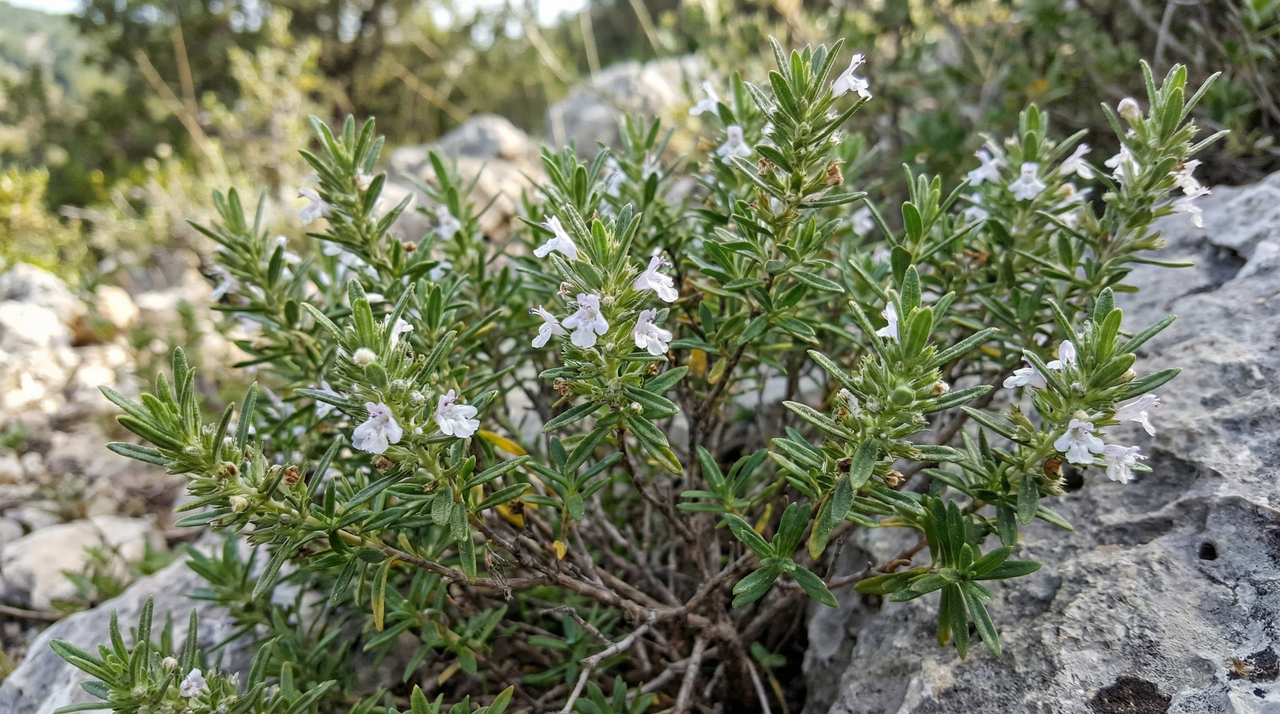
In the garden, summer savory is easy to recognize once you know what you're looking for. It grows as an upright, branching annual, typically 12 to 18 inches tall with a similar spread, on square stems that often flush reddish-purple near the base (a reliable Lamiaceae tell that I always point out to beginner gardeners learning to identify the mint family).[20][21] The leaves are opposite, narrow, and dotted with the aromatic glands that release that sharp, peppery scent when you brush against them. From June through August, small white-to-lilac tubular flowers appear in whorled clusters, which pollinators find irresistible.[22] Winter savory, by contrast, is a woody-based perennial with stiffer, gray-green leathery leaves that can redden in cold weather, a distinctly different texture and presence from the soft, bright annual.[23]
Fun Facts and Folklore
The genus name Satureja derives from the Greek word for satyr, linking the plant directly to themes of passion, fertility, and marital happiness in European folk tradition, where it appeared in wedding rites, strewing herbs, and love potions. There's something genuinely delightful about a plant whose entire botanical identity is tied to satyrs and romance, and it makes the "bean herb" nickname feel almost modest by comparison. My best guess is that the Romans didn't separate the digestive benefits from the romantic associations quite so neatly as we do. Archaeological findings confirm these early cultivation claims,[12] not just in texts. I've noticed in my own beds that the plant's spicy scent seems to discourage certain opportunistic insects, which suggests that the folklore around it as a protective garden herb wasn't entirely invented. Ancient gardeners were paying attention.
Savory Varieties and Sourcing
Summer Savory Cultivars
Most gardeners initially encounter the standard annual, Satureja hortensis. Seeds are widely available, the plant grows upright and bushy without much fuss, and the peppery, thyme-adjacent flavor is immediately useful in the kitchen. What surprises a lot of people is just how many named selections exist. Cultivars like 'Vigor', 'Saxon', 'Robusta', and 'Giant' lean toward high biomass and stronger essential oil presence, while 'Lemon' adds a citrus note that genuinely reads differently in the garden. I've grown 'Lemon' alongside standard 'Summer Savory' in the same bed, and the difference in aroma when you brush past them is striking enough that they've earned different spots in my design: 'Lemon' goes near the seating area, the standard type goes near the grill.[24][25][4][26] The named selections like 'Nero', 'Aromaticana', and 'Performer' are selected for pest resistance or concentrated flavor, though honestly, in a home kitchen garden the differences between most of them are subtle enough that you'd only care if you're growing at scale or optimizing for a specific use.
Winter Savory Cultivars and Subspecies
Satureja montana, the perennial winter savory, opens up an entirely different palette. Where the summer species gives you one season and a very similar look across cultivars, winter savory branches into forms that are genuinely distinct in both habit and ornamental value. 'Prostrata' and 'Repens' spread low and work well as ground cover in a sunny rock garden or herb spiral edge. 'Purpurea' carries purple-flushed foliage that holds its color through much of the season. 'Variegata' has cream-edged leaves that look best in part shade; I've noticed the variegation stays crisper there than in full afternoon sun, where the margins tend to scorch.[27][28][29] 'Mount Olympus' is the one I'd point to if you want compact habit and punchy, robust flavor over visual flair. Within the species there are also recognized subspecies: the standard subsp. montana, the taller subsp. illyrica, and subsp. variegata. These distinctions matter more for collectors and restoration designers than for most kitchen gardeners, but knowing they exist helps when you're reading catalog descriptions and wondering why two plants sold as "winter savory" seem to grow so differently.
Where to Buy Savory Plants and Seeds
Sourcing summer savory plants and seeds is incredibly straightforward. Seeds are stocked at major home-improvement stores, garden centers, and virtually every seed catalog; fresh bunches appear at farmers' markets from June through August; and dried savory is on grocery store shelves year-round.[30][31] Seed packets typically run $3 to $6, and transplant starts land somewhere between $4 and $10 depending on certification and source. In my experience, buying bulk seed packets from a trusted organic supplier gives you the best value by a wide margin when you're direct-sowing, which is almost always how I start this herb.
Winter savory is a different story. Don't expect to find 'Prostrata' or 'Variegata' at your local hardware store. Specialty herb nurseries and online organic seed companies are where these cultivars live, with physical availability being somewhat better in the Pacific Northwest and Northeast than in other regions.[32][33] I source my winter savory selections from a handful of online organic herb specialists each spring and have consistently found the named cultivars there when local garden centers come up empty. If you're growing summer savory for the first time, start with whatever seed you can find locally. If you're hunting a specific winter savory form, plan for mail-order.
Savory Propagation and Planting Guide
Summer savory is one of those rare herbs where the propagation story is almost entirely good news. Fresh seeds carry 80-95% initial viability and germinate at 70-85% under decent conditions,[34][35] and stored properly they'll stay viable for two to five years at home or over a decade in a seed bank.[36] I keep mine sealed in vacuum packets in the refrigerator at around 4°C, and I've pulled three-year-old seeds that still germinated above 70%. The research backs that up: short-term home storage wants 0-10°C in airtight, light-proof containers at 15-30% relative humidity and 4-7% seed moisture content.[37][38] A small silica gel packet and a labeled zip bag in the crisper drawer gets you most of the way there.
Propagation Methods and Germination Timeline for Summer Savory
Direct sow after your last frost once soil hits at least 15°C (59°F), or start indoors four to six weeks before that date and transplant out. Either route works; I've done both and the main advantage of starting indoors is getting a jump on that 60-75 day window to first harvest.[39][40]
The single thing most people get wrong at sowing is depth. The seeds need light to germinate, so they go in at just 1/8 to 1/4 inch deep, or surface-sown and pressed gently into the mix.[41][39] Bury them a full half-inch and you'll sit there wondering why nothing came up. I label my rows carefully because the first true seedlings look a bit like young carrot tops, and I've weeded out a whole row before catching my mistake. Keep soil temperature in the 15-21°C (59-70°F) range and expect germination in seven to fourteen days; cooler soils push that toward three weeks.[42] A 24-hour pre-soak can improve rates by 10-20%, which is a low-effort insurance policy worth taking.[42]
For indoor starts, I've grown summer savory under grow lights for years and the lesson I learned the hard way is that 14-16 hours of bright light daily is non-negotiable.[43] Anything less and you get tall, spindly seedlings that struggle after transplant. Aim for daytime temperatures of 21-24°C (70-75°F) and cooler nights around 15-18°C (60-65°F).[34] Transplant when seedlings show two to four true leaves, after hardening off for seven to ten days.[43] Summer savory germinates readily without cold stratification, though some seed lots respond to it.[44] Winter savory takes a bit more patience at 14-21 days to germinate, and Cilicia savory can need scarification or four to six weeks of cold stratification before it cooperates.[45] For most kitchen gardeners, the quick annual is the obvious starting point.
Soil and Site Requirements
Picture where summer savory comes from: dry, rocky, calcareous hillsides around the Mediterranean, baking in full sun with roots threading through fast-draining soil.[46] That image tells you almost everything you need to know about what it wants in your garden. Well-drained sandy loam or loamy soil, pH 6.0-7.5, a modest 2-5% organic matter, and a minimum six to twelve inches of rooting depth.[4][34] Think of it the same way you'd site thyme or oregano, with the difference that summer savory finishes its entire productive life in a single season.
pH matters more than most growers realize. Drift below 6.0 and you risk phosphorus and calcium deficiencies, aluminum toxicity, elevated root-rot pressure, and stunted plants.[47] Push above 7.5 and you start losing iron, manganese, and zinc availability, plus the essential-oil profile can shift away from the monoterpenes (carvacrol, thymol) that give the herb its character.[47][48] Get a soil test and adjust three to six months ahead of planting if needed: lime at roughly one to two tons per acre for acid soils, elemental sulfur at half to one ton per acre for alkaline ones.[49]
In containers, I use a mix of two parts quality potting soil, one part compost, and one part coarse perlite or sand.[43] I lost an entire flat in my first container season by using straight garden soil; within two weeks I had wilting, yellowing plants with mushy black roots from Pythium. The drainage requirement is genuine, not a suggestion. Winter savory shares the same basic needs but tolerates pH up to 8.0 and actually thrives in rocky raised beds or rock gardens where even better drainage comes naturally.[50][51]
Spacing, Transplanting, and Establishment Techniques
Space plants six to twelve inches apart, with rows twelve to eighteen inches apart for home gardens.[34][52] Commercial growers can push to four to six inches, but in a home setting that tighter spacing courts trouble. Summer savory reaches twelve to eighteen inches tall with an upright to mounding habit,[4] and crowded plants mean stagnant air around the foliage. In my humid Florida summers I always go with the wider ten to twelve inch spacing; tight planting is the fastest route to powdery mildew I've seen with this herb.
Whether you direct-sow or transplant, the soil temperature benchmark is the same: 15°C (59°F) minimum before plants go in the ground.[53] Direct-seeded rows need thinning as seedlings establish; don't skip that step even when it feels painful. If you're growing for seed production or tucking savory in as a bean companion, lean toward the twelve-inch spacing to give both plants room to perform.[53][54] From a properly hardened transplant set into warm, well-drained soil, you can expect your first foliage harvest around sixty to seventy-five days after direct seeding or transplanting.[39] Winter savory runs slower, with first cuts typically at ninety to one hundred twenty days from seed.[55] That timeline difference alone explains why most home growers reach for the annual first.
Savory Care and Growing Guide
Summer savory's entire care calendar is shaped by one unavoidable fact: it's a tender annual that frost kills, cleanly and completely. I've lost whole beds to an early cold snap I ignored, so now I treat frost dates like gospel. Plant after the last spring frost, harvest before the first fall frost, and everything else in the care routine falls neatly into place around those two dates.
Frost Tolerance and Cold Protection for Summer Savory
Summer savory cannot survive prolonged exposure below 0°C (32°F).[43][34] Think of it like basil: the moment ice crystals form inside the leaf tissue, cell membranes rupture, electrolytes leak out, and within a day or three those leaves go translucent, then dark and collapsed.[56] There's no recovery from that. It's suitable for USDA zones 5-9 during the frost-free growing season, but only as a seasonal annual, not a returning perennial.[57] If frost threatens while plants are still productive, a lightweight row cover or cloche buys you another week or two.[43]
Winter savory is a completely different story. Hardy down to -29°C (-20°F) in zones 5-8, established plants shrug off the kind of cold that murders summer savory overnight.[58][59] I grow both side by side every fall and always pull the summer plants at the first forecast of 0°C, but leave winter savory standing. The difference in spring is dramatic. If you're in a cold climate and want savory year after year without re-seeding, the perennial cousin earns its place. Summer savory earns its place through a fresher, gentler flavor.
Heat Tolerance and Temperature Management
Summer savory grows happiest between 15 and 25°C (59-77°F).[60][61] Push it above 30°C for any stretch of days and it starts showing stress: wilting, leaf curl, and premature bolting that cuts the leaf harvest short.[62][63] In my experience, a week above 32°C pushes summer savory into flower far faster than the same conditions do to winter savory. Heat also shifts the essential oil composition toward more carvacrol and less thymol, which means the flavor gets sharper and more pungent right when you want those tender, mild leaves most.[64] In hot climates, afternoon shade and consistent soil moisture are the practical levers you can pull. Winter savory tolerates temperatures up to 35-40°C without flinching,[65] which is worth remembering if you're gardening in a genuinely brutal summer climate.
Sunlight Requirements and Light Stress Prevention
Six to eight hours of direct sun daily is non-negotiable for compact, flavorful savory.[28][66] Less than that and the plant stretches, leaves pale to yellow, and the aroma goes flat. If stems start reaching and leaves lose their deep green, the plant is asking for more direct light, not more water. The nuance in hot climates is that intense afternoon sun combined with high temperatures can tip into leaf scorch and photoinhibition, showing up as bleached spots and wilting even in well-watered plants.[67] A little dappled afternoon relief solves that without sacrificing the morning sun that drives oil production. Winter savory handles full sun more robustly, rarely showing true scorch; when its leaf margins brown, the culprit is almost always overwatering, not light.[68]
Pruning, Maintenance, and Seasonal Rhythm
Start harvesting once plants reach 6-8 inches tall, cutting just above a leaf node to encourage bushy branching rather than a single leggy stem.[69] I've learned to watch for a sensory cue: the leaves lose their bright, tender feel as soon as the plant shifts its energy toward flowering. That's your prompt to cut more aggressively, not less. Consistent pinching keeps the essential oil concentrated in young leaf tissue and delays the bolt that effectively ends the leafy harvest.
The full seasonal arc runs from germination (5-10 days at 20-25°C) through the summer growing season, into flowering and seed set, and finally to autumn death when frost arrives.[70] That's somewhere between six and ten frost-free months, start to finish. Summer savory grows fast enough that successive sowings spaced a few weeks apart can extend the harvest of fresh, pre-flower leaves well into late summer. The brevity of this plant's life is also its pace of productivity, and once you internalize that rhythm, the care decisions almost make themselves.
Harvesting Savory: Timing, Technique, and Maximizing Flavor
When to Harvest Summer Savory for Peak Flavor and Essential Oils
Summer savory moves fast. Expect flowering around 50-60 days from sowing, and that's when the real harvesting decisions begin. For the highest concentration of carvacrol and thymol, the goal is cutting at full flower, somewhere in the 60-90 day window or about 2-4 weeks into bloom.[71][72][73] In my garden I've pinned this down to a specific few-day window: just as the first flowers open, the aroma hits a kind of peak intensity. Cut a couple of days too early and it's lighter than you want; leave it a week past full flower and the leaves start toughening. If you're growing for the pantry, that "just-opened flower" moment is your target.
For a July-August harvest in temperate zones, that timing usually lands right on schedule.[69][43] Always cut in the morning after the dew has dried. I test this every year by doing side-by-side batches and the morning-cut herbs are consistently more fragrant in the kitchen. The oils just haven't had a chance to volatilize in the heat. If you're growing for seed, the full cycle runs 90-110 days from sowing, and you can expect roughly 1-2 pounds of dried herb per plant with regular cutting.[74][75] Winter savory seeds, by contrast, are ready when the capsules turn brown and dry, about 30-60 days after flowering.[76][77]
How to Harvest and Dry Savory Stems and Leaves
For drying, cut entire stems just before full bloom, bundle them loosely, and hang upside down in a dark, well-ventilated space for 1-2 weeks.[69] The dark helps preserve color; the airflow prevents mold. I always cut just above a leaf pair so the plant rebounds and gives me a second flush rather than leaving a bare stub that stalls out.
Yield, Fresh vs. Dried Flavor, and Winter Savory Comparisons
Fresh summer savory delivers the brightest, most delicate peppery flavor,[69] and in my kitchen the fresh sprigs always win for bean dishes. Dried is still excellent, but some of that delicacy does mellow over time. Winter savory is a different story: its flavor is more pungent, more thyme-like, with stronger bitter notes,[23][78][79] and it holds its punch in the jar for months where summer savory gradually mellows. That's exactly why I grow both. Summer savory for fresh use and early-season drying; winter savory for the stash that gets me through February stews.
Savory Culinary Uses and Preparation
Culinary Applications and Flavor Profile of Summer Savory
Every part of summer savory is edible, leaves through seeds, and the FDA's GRAS designation confirms what cooks have known for centuries: this herb is safe and straightforward at the amounts you'd actually use in a kitchen.[4][80] The flavor is peppery, resinous, and faintly piney, with a whisper of mint underneath, all driven by carvacrol and thymol.[81] I always tell people it sits somewhere between thyme and oregano but with a sharper edge, and that edge is exactly why it shows up in herbes de Provence and why it remains a staple in traditional European legume dishes. It softens considerably once it hits heat, which makes it ideal for long braises, stews, and slow-cooked legumes. Fresh, I chop it sparingly into vinaigrettes or scatter it over roasted vegetables; for anything simmering on the stove, I add it early and let the cooking do the mellowing.
Those dried leaves also punch well above their weight nutritionally, delivering roughly 1,330 mg calcium and 29 mg iron per 100 g, along with antioxidant compounds including rosmarinic acid, thymol, and carvacrol.[82][83] I dry my own harvest rather than buying pre-ground product because the commercial stuff often tastes flat by comparison; those volatile oils fade fast in a warehouse, and home-dried savory crumbled straight from the stem into a pot of beans is a genuinely different experience. Related Mediterranean species like Micromeria conferta, known as Zahter or Za'atar in Turkish and Arabic traditions, carry a similar peppery-mint profile and appear in everything from seasoned yogurt to herbal teas.[84] I've brewed it as a tea and found it every bit as soothing as the summer species.
Traditional Medicinal Preparations
The same carvacrol and thymol chemistry that makes savory indispensable at the stove also explains its long traditional use as a carminative and antimicrobial herb.[85] For digestive complaints, particularly the kind that follow a heavy bean meal, a simple tea of one to two teaspoons of dried aerial parts steeped ten minutes works gently and feels right in a way that's consistent with centuries of use across the Mediterranean.[86] Tinctures are also traditional, typically prepared at a 1:5 herb-to-alcohol ratio, though I treat these preparations as folk medicine rather than standardized therapeutics; the human clinical data is thinner than the in-vitro and ethnobotanical record, and I say that as someone who genuinely values both.[87] Savory has also been used as an expectorant for respiratory discomfort, which makes sense given how close its chemistry sits to thyme, an herb with considerably more clinical attention. Think of it as a gentler cousin in that lineage.
Non-Food and Garden Uses
Once the harvest is done, I don't let the plant disappear without contribution. Summer savory produces a decent amount of fine-stemmed biomass that composts readily and breaks down fast, cycling nutrients back into the beds where it grew.[88] The spent stems and flowers make a useful light mulch around brassicas, and I've genuinely noticed fewer aphids in those spots, which tracks with savory's traditional reputation as an insect-deterrent companion. It's not comfrey; don't expect dramatic accumulator performance. But the plant earns its keep to the end of its season. Winter savory's essential oil goes further in this direction, appearing commercially in food preservation, aromatherapy, and pest repellent applications against mosquitoes and stored-product insects.[89] I never ingest the concentrated essential oil and dilute it heavily in any topical application; the GRAS safety status applies to the culinary herb, not the extract, and that distinction matters.
Savory Health Benefits and Medicinal Uses
If you've grown up cooking with savory, you probably recognize its immediate carminative effect on heavy legume dishes. That carminative reputation isn't folk mythology. Summer savory has a long, well-documented history of use for gastrointestinal complaints including indigestion, flatulence, and bloating, as well as respiratory conditions like coughs and bronchitis, and as a mild antiseptic for skin wounds and oral infections.[90][91][92] Cherokee peoples used it for stomachaches and brewed it as a tea to expel intestinal parasites; other cultures turned to it for menstrual discomfort and nervous system support.[93][94] That's a wide therapeutic footprint for a small annual herb, and modern pharmacology has started to explain why.
Traditional Uses and Pharmacological Properties of Summer Savory
Summer savory demonstrates anti-inflammatory, antioxidant, antimicrobial, and analgesic activity in laboratory studies, partly through inhibition of pro-inflammatory cytokines like TNF-α and IL-6, and enzyme pathways like COX-2 and lipoxygenase.[95][96] There's also antidiabetic potential: extracts inhibit α-glucosidase and α-amylase and improve insulin sensitivity in animal models,[97] and early human trials have looked at its role in type 2 diabetes and PCOS management.[98] I treat medicinal savory much like I treat oregano: wonderful in food, genuinely useful as a tea, but I reach for concentrated extracts only with care and, honestly, a fair amount of skepticism about the jump from rat models to human benefit. The preclinical data is genuinely interesting; the clinical evidence is still catching up.[95][99]
Key Phytochemicals in Savory: Carvacrol, Thymol, and Rosmarinic Acid
After years of growing savory, I rely on my nose just as much as formal laboratory testing. That sharp, almost medicinal bite you get when you brush a mid-summer leaf? That's carvacrol and thymol talking. The essential oil makes up roughly 2-3% of aerial parts, with carvacrol at 40-70% and thymol at 10-20%, rounded out by γ-terpinene and p-cymene.[100][101] Carvacrol disrupts bacterial cell membranes and inhibits DNA gyrase, giving it broad-spectrum activity against E. coli and S. aureus.[102][103] Thymol activates the Nrf2 pathway and upregulates antioxidant enzymes like superoxide dismutase while also inhibiting COX-2 and iNOS.[104] That pungency I notice in peak-summer harvests really does correlate with peak potency.
Alongside the volatile fraction, the plant is rich in rosmarinic acid (up to 45 mg/g in aerial parts) and flavonoids including apigenin, luteolin, and quercetin derivatives, all of which contribute to antioxidant activity through DPPH radical scavenging and lipid peroxidation inhibition, with rosmarinic acid additionally suppressing the NF-κB inflammatory pathway.[105][106] Essential oil yield and carvacrol concentration both increase as the season progresses toward summer,[107] which is something a home grower can actually work with. Winter savory (Satureja montana) runs similar chemistry but shows distinct chemotypes, with carvacrol reaching 70-80% in some populations and thymol concentrations increasing at higher elevations, along with additional minor constituents like coumarins and sesquiterpenes.[108]
Nutritional Profile of Summer Savory
Fresh summer savory leaves weigh in at roughly 51 kcal per 100g, with 3.6g protein, 5.4g dietary fiber, 213mg calcium, 5mg iron, and 393mg potassium, plus meaningful amounts of vitamin C (31mg) and magnesium (82mg).[109] Dried and ground, those numbers concentrate significantly: around 271 kcal, 27.7g fiber, and much higher mineral levels per 100g.[110] I reach for it as a genuinely nutrient-dense seasoning rather than a superfood, but for a culinary herb used in tablespoon quantities, that calcium and iron add up over a cooking season. One practical note I've carried over from my own post-harvest routine: shade-drying preserves noticeably more aroma and volatile compounds than sun drying, and cooking reduces heat-sensitive vitamin C by up to 50%.[111] The difference between home shade-dried savory and most commercial product is genuinely striking once you've made the comparison.
Safety Considerations and Contraindications
Summer savory is GRAS-listed by the FDA for culinary use, and there are no well-documented cases of toxicity from normal cooking amounts.[112] Both summer and winter savory are also listed as non-toxic to dogs, cats, and horses by the ASPCA, though large amounts may cause mild digestive upset.[113][114] The essential oil is a different story: undiluted, it can cause gastrointestinal irritation, skin irritation, and allergic reactions, with cross-reactivity possible among other Lamiaceae members like basil and mint.[115][116]
Pregnancy is the clearest contraindication. Related Satureja species show uterine stimulant properties, and high doses or concentrated extracts may act as an emmenagogue.[85][117] I advise pregnant readers to enjoy savory as a culinary seasoning only and consult their midwife before using any concentrated extract. People on anticoagulants should also use caution, since thymol carries mild anticoagulant properties,[85] and the essential oil components may inhibit cytochrome P450 enzymes (CYP3A4, CYP2D6), which affects how certain diabetes medications, anticoagulants, and antihypertensives are metabolized.[118] A traditional culinary dose of roughly 1-2 grams of dried leaves per day in teas or soups is considered safe for most adults; avoid essential oils in children under six.[119]
Savory Pests and Diseases
Here's something I find genuinely satisfying about growing savory: the same carvacrol and thymol that make it such a potent culinary and medicinal herb also function as a built-in defense system against many garden attackers. That doesn't mean it's bulletproof, but in most home gardens it's one of the less fussy herbs to keep healthy, and most problems come down to site conditions rather than the plant's inherent weakness.
Common Diseases of Summer Savory
The main fungal threats are powdery mildew (Erysiphe spp.), downy mildew (Peronospora spp.), Alternaria and Septoria leaf spots, and root rot driven by Pythium or Phytophthora in poorly drained or crowded conditions.[120][121][122] After several seasons with both summer and winter savory, I've learned to catch the first faint white dusting of powdery mildew on lower leaves right after a warm, humid stretch. Catching it that early, before it climbs the stem, is the whole game. The plant's essential oil chemistry does offer real protection: carvacrol and thymol inhibit fungal growth directly, which gives savory moderate to good natural resistance,[123] and cultivars like 'Truba' have been selected specifically for improved disease tolerance.[67] Bacterial infections and mosaic viruses (spread by aphids) are less common but can appear under high pest pressure, and seedlings are particularly vulnerable to damping-off in overly wet conditions.[120][124] Winter savory tends to handle downy mildew better than the summer species, largely because its oil profile is similarly rich in those antifungal compounds.[125] The Royal Horticultural Society considers disease pressure generally low when cultural conditions are right,[67] and in my experience that matches reality: full sun, well-drained soil, and enough spacing for airflow solve most problems before they start.[61]
Pests That Affect Savory
Savory's essential oil—typically 40-70% carvacrol and up to 20% thymol—acts as a repellent, antifeedant, and neurotoxin against many insects.[126][127] The glandular trichomes on its leaves add a physical deterrent on top of the chemical one. Still, a few pests break through. Aphids are the highest-risk attacker, causing leaf curling and opening the door to virus transmission.[128] Spider mites move in during hot, dry spells, producing that familiar salt-and-pepper stippling on leaf surfaces that I also see on my rosemary at the height of summer; check the undersides first and you'll catch them earlier. Flea beetles are an early-season issue, leaving shot-hole damage on young transplants. I used to lose seedlings to them until I started interplanting with onions and garlic around the seedling stage. That simple guild shift made a real difference. Whiteflies, thrips, and the occasional caterpillar round out the pest list but rarely become serious problems.[129]
What I find ecologically fascinating is that savory's volatile compounds don't just repel pests; they actively attract ladybugs and predatory wasps that knock back the insects that do make it through.[130] The plant also forms mycorrhizal partnerships that improve stress tolerance,[131] and its rhizosphere supports beneficial bacteria that contribute to natural biocontrol.[132] Research shows savory's essential oil can also trigger induced systemic resistance, reducing aphid numbers by 40-50% in some trials.[133] This is a plant that's actively working with the surrounding ecosystem, not just sitting there hoping for the best.
Prevention and Integrated Pest Management
If you want the most resilient plants from the start, cultivars like 'Trumba' and 'Provence' carry elevated thymol and carvacrol levels that translate to better overall resistance, though no variety is immune and site selection still matters most.[134][135] Beyond variety choice, the IPM toolkit for savory is mostly about prevention: rotating plantings every three to four years, keeping debris cleared, giving plants proper spacing for airflow, and growing in full sun.[136][137] Companion planting with alliums or marigolds adds another layer without any extra work. I monitor weekly during the growing season; when aphids start to curl new growth, that's my threshold for action. I treat any pesticide, even organic neem or insecticidal soap, as a genuine last resort, not a default response. The essential-oil profile that protects the plant can be disrupted by unnecessary chemical intervention, and savory rarely needs it. Grown in the right spot with reasonable attention, it's one of the more trouble-free herbs in the garden.
Savory in Permaculture Design
Summer savory is one of those plants that rewards you the moment you understand where it came from. Its native habitat tells you almost everything you need to know about how to site it: dry, rocky slopes and open scrublands across the Mediterranean basin, where soils drain fast, summers run hot and dry, and winters stay mild and wet.[138][139] Replicate those conditions in your food forest or kitchen garden, and the plant practically takes care of itself.
Climate Adaptation and Hardiness Zones
Summer savory grows across USDA zones 4-9, but calling it "hardy" is a stretch in the colder end of that range.[4][28] It cannot tolerate freezing temperatures or anything below about 5°C, so treat it as a reliable annual everywhere below zone 8 and save yourself the heartbreak of hoping it overwinters.[140][43] In zones 8-9 it can persist as a short-lived perennial, but even then I wouldn't count on it: plan for resowing each season and anything extra is a bonus.
The temperature sweet spot for summer savory sits between 15-25°C, with optimal growth around 15-21°C.[43][28][141] It'll push through heat up to 32-38°C with adequate moisture, but growth noticeably stalls below 10°C. Site it in full sun on well-drained sandy or loamy soil with a pH between 6.0 and 7.5.[142][140] Waterlogged conditions are fatal, and high humidity invites fungal trouble while simultaneously degrading essential oil quality.[143] In humid summers I've found raised beds essential to prevent root rot; I've also learned the hard way to keep the nitrogen down. Rich compost pushes leafy growth at the expense of the aromatic oils, which is the whole point of growing this herb in the first place.
Moisture needs shift across the plant's life: consistent water during germination and early establishment, then reduced irrigation once plants are up and running.[142][144] Established plants thrive on around 500-750 mm annual precipitation, which aligns well with many temperate kitchen gardens. It grows comfortably from sea level up to about 1,000-1,500 m, preferring coastal and lowland sunny microclimates.[28][145]
If you're designing for permanence, winter savory (Satureja montana) is worth knowing well. It handles cold down to -29°C and is reliably hardy through zones 5-9, making it the obvious choice where summer savory needs replacing every season.[28][78][146] Think of it the way you'd think of rosemary or thyme: it stays put through zone 7-8 winters when its annual cousin is long gone. It also manages on drier conditions, around 300-600 mm of rainfall, and tolerates more alkaline, calcareous soils.[6] The two species aren't interchangeable in a design, but knowing both gives you real flexibility across the genus.
Ecosystem Functions and Guild Roles
Summer savory's ecological contribution starts with its flowers. Small, white to pale purple, bilabiate blooms appear from mid-summer to early autumn, and while the plant is self-compatible and can set seed through autogamy, insect cross-pollination meaningfully improves seed set.[147][148][149] Honeybees and bumblebees are the primary visitors, with hoverflies and butterflies rounding out the picture; they're most active at 20-30°C with good light and moderate humidity.[150][151][139] Intercropping it near fruiting crops or beans means those pollinators spill over into neighboring plants as a free service.[152]
The companion planting case for savory is one I've validated in my own vegetable beds. Planted near beans, I've consistently seen healthier growth and far fewer beetle issues than in rows where savory was absent. The research backs this up: it repels aphids, cabbage moths, bean beetles, and flea beetles, and it has a long tradition as a paired companion with beans, brassicas, and onions.[153][154][88] This isn't just folklore; its essential oils do measurable work.
Below the soil surface, its fibrous roots (15-30 cm deep) stabilize soil structure and support microbial activity.[155] The carvacrol and thymol in those roots and leaf litter also carry mild allelopathic properties that inhibit some weed germination.[156][157] In my polycultures, I've found the suppression gentle enough not to harm companions but noticeable against amaranth, which in a busy mixed bed is genuinely useful. One more nuance worth knowing: related Mediterranean savory (Micromeria conferta) accumulates calcium and magnesium rather than fixing nitrogen, a reminder that this genus offers more mineral-dynamic diversity than most designers realize.[158]
Forest Layer Placement and Companion Planting
With its upright bushy habit topping out at 30-45 cm and shallow fibrous roots, summer savory slots cleanly into the herbaceous or groundcover layer of a food forest or agroforestry guild.[159][160][161] It fills gaps between taller shrubs and trees without competing for light, and where you let it go to seed it'll self-sow and return the following season, giving you recurring coverage with minimal intervention. Label those seedlings early, though: young savory foliage looks disconcertingly similar to carrot or parsley in the first few weeks, and in a diverse guild that mix-up costs you.
For year-round groundcover function in the same layer, winter savory is the perennial answer. Its semi-evergreen, mound-forming habit (15-60 cm) provides persistent structure through seasons when the annual has long since finished its cycle.[162][163] Running both species in the same guild provides reliable seasonal coverage, letting summer savory carry the bulk of the growing-season work while winter savory anchors the guild structure through colder months.
In guild terms, summer savory functions as a dynamic accumulator and soil health contributor, a pollinator attractor from June to August, a companion pest deterrent near legumes and brassicas, and a mild weed suppressor via its essential oil chemistry.[164][165][166] For a plant that asks only for full sun, good drainage, and a pH between 6.0 and 7.5,[167][4] that's an unusually high return on investment for a low-stature annual herb.
The Herb That Made Me Stop Apologizing for Growing Annuals
I used to feel a little defensive planting summer savory, like I needed to justify its single season against all my perennials. Then one August morning I rubbed a stem between my fingers before dropping a handful into a pot of shell beans, and the smell just settled it. Some plants don't need to come back. They just need to show up fully while they're here, and savory does that better than almost anything else I grow.
Sources 167
- Kew Plants of the World Online: Satureja hortensis ↩
- Biological activities of Satureja hortensis L. essential oil - NCBI ↩
- Satureja hortensis L. ↩
- Satureja hortensis L. summer savory ↩
- Flora Europaea: Satureja hortensis ↩
- Satureja montana - Plants of the World Online | Kew Science ↩
- Micromeria conferta - Distribution and Habitat ↩
- USDA‑ARS Crop Profile: Summer Savory (Satureja hortensis) ↩
- Kew Gardens - Ecological Notes on Savory ↩
- De Materia Medica ↩
- Savory in Ancient Medicine ↩
- Archaeobotany of the Roman World ↩
- Natural History ↩
- Summer Savory: Satureja hortensis ↩
- Satureja hortensis (Summer Savory) ↩
- Summer Savory: A Review of Its Traditional Uses ↩
- Culinary and Medicinal Uses of Winter Savory in the Mediterranean ↩
- Traditional Uses of Aromatic Plants in Italian Folk Medicine ↩
- Ethnobotanical Survey of Micromeria conferta in Turkey ↩
- Satureja hortensis L. ↩
- Satureja hortensis ↩
- Satureja hortensis ↩
- Satureja montana - Winter Savory ↩
- Summer Savory Cultivars Guide ↩
- Botanical Profiles: Savory Cultivars ↩
- Adaptation of Culinary Herbs in the US ↩
- Satureja montana ↩
- Satureja montana L. ↩
- Satureja montana (Winter Savory) ↩
- Growing Savory in the Home Garden ↩
- Herb Cultivation Guide: Summer Savory ↩
- Satureja montana - Missouri Botanical Garden PlantFinder ↩
- Herb Growing Guide - University of Illinois Extension ↩
- Summer Savory Production Guide ↩
- Germination Studies on Lamiaceae Seeds ↩
- Seed viability and germination of Satureja cilicica ↩
- Seed Information Database - Kew Gardens ↩
- Optimal Relative Humidity for Herb Seed Storage ↩
- Savory ↩
- Satureja hortensis Plant Profile ↩
- How to Grow Summer Savory ↩
- Seed Germination of Culinary Herbs ↩
- Summer Savory Growing Guide ↩
- Germination and Dormancy of Lamiaceae Species ↩
- Seed Dormancy and Storage Guidelines for Lamiaceae ↩
- Satureja hortensis L. ↩
- Effects of Soil pH on Growth and Essential Oil Composition of Summer Savory (Satureja hortensis L.) ↩
- Nutrient Management in Aromatic Plants ↩
- Soil pH for Herbs: Summer Savory Cultivation Guide ↩
- Satureja montana Cultivation ↩
- Missouri Botanical Garden - Satureja montana ↩
- Summer savory ↩
- Savory: Planting and Care ↩
- Plant Spacing Guidelines for Vegetables and Herbs ↩
- How to Grow Savory ↩
- Frost Damage in Plants ↩
- Satureja hortensis - Missouri Botanical Garden ↩
- Satureja montana - Winter Savory ↩
- Satureja montana (Winter Savory) ↩
- Response of Summer Savory to Heat Stress Under Controlled Conditions ↩
- Summer Savory Plant Profile ↩
- Response of Summer Savory (Satureja hortensis L.) to Heat Stress: Physiological and Biochemical Changes ↩
- Heat Stress-Induced Bolting and Wilting in Aromatic Herbs: A Case Study on Summer Savory ↩
- Effects of High Temperature on Essential Oil Yield and Composition in Satureja hortensis ↩
- Response of Savory (Satureja montana) to Drought and Heat Stress ↩
- Growing Savory Herbs - University of Minnesota Extension ↩
- Summer Savory: Cultivation and Care ↩
- Satureja montana - Winter Savory ↩
- Growing and Harvesting Summer Savory ↩
- USDA PLANTS Database ↩
- Essential Oil Yield and Composition of Summer Savory (Satureja hortensis L.) as Affected by Harvest Time ↩
- Phenological Stages and Essential Oil Content in Satureja hortensis ↩
- Harvesting and Post-Harvest Management of Aromatic Plants: Savory ↩
- Search Results for Satureja hortensis L. ↩
- Summer Savory - Wisconsin Horticulture ↩
- Satureja montana ↩
- Herb Harvesting Guide ↩
- Satureja montana L. winter savory ↩
- Satureja montana L. ↩
- GRAS Substances (SCOGS) Database ↩
- The Encyclopedia of Herbs and Spices ↩
- USDA FoodData Central - Spices, summer savory (Satureja hortensis), dried ↩
- Chemical Composition and Antioxidant Properties of Summer Savory (Satureja hortensis L) ↩
- Zahter: Turkey's Wild Thyme - Slow Food Foundation ↩
- Satureja hortensis L. (Summer Savory): A Review on Chemical Composition, Antioxidant, Antimicrobial and Anticancer Activities ↩
- Traditional Uses of Micromeria Species in Mediterranean Herbal Medicine ↩
- Summer Savory (Satureja hortensis L.): Botanical, Agronomical and Pharmacological Synopsis ↩
- Permaculture Companion Plants: Savory ↩
- European Commission - Satureja montana as a Source of Natural Preservatives, 2022 ↩
- Ethnopharmacological survey of plants used in the Turkish folk medicine ↩
- Traditional medicinal uses of Satureja hortensis in Iran ↩
- Medicinal Properties of Summer Savory (Satureja hortensis) ↩
- USDA PLANTS Database – Satureja hortensis ethnobotany section ↩
- Satureja montana L. subsp. montana: A Plant with Potential Phytotherapeutic Interest ↩
- Pharmacological Activities of Satureja hortensis L. - A Review ↩
- Anti-inflammatory Effects of Satureja hortensis Extracts ↩
- Antioxidant and Antidiabetic Activities of Satureja hortensis L. in Alloxan-induced Diabetic Rats ↩
- The effect of Satureja hortensis L. hydroalcoholic extract on the level of sex hormones and malondialdehyde in the blood serum of women with PCOS: a randomized controlled trial ↩
- Antioxidant and antimicrobial activities of Satureja hortensis L. ↩
- Chemical Composition and Bioactivities of the Essential Oil from Satureja hortensis L. ↩
- Chemical composition and antioxidant activity of the essential oil of Satureja hortensis ↩
- Antimicrobial Mechanism of Carvacrol: Membrane Disruption and Beyond ↩
- Carvacrol as a Bacterial DNA Gyrase Inhibitor ↩
- Thymol Activates Nrf2 Pathway for Antioxidant Defense ↩
- Phenolic Compounds and Antioxidant Activity of Satureja hortensis L. Extracts ↩
- Anti-inflammatory Effects of Rosmarinic Acid from Satureja Species ↩
- Seasonal Variation of Essential Oil Composition in Satureja hortensis ↩
- Chemotypes of Satureja montana in the Mediterranean Basin ↩
- USDA FoodData Central - Herbs, savory, fresh ↩
- USDA FoodData Central - Spices, savory, ground ↩
- Effect of drying methods on essential oil of summer savory ↩
- Code of Federal Regulations Title 21 - GRAS Substances ↩
- ASPCA: Savory (Summer) - Non-Toxic Plant ↩
- ASPCA: Savory (Winter) - Non-Toxic Plant ↩
- Safety Assessment of Summer Savory (Satureja hortensis L.) Essential Oil ↩
- Allergic Contact Dermatitis from Satureja hortensis Essential Oil ↩
- European Medicines Agency (EMA) Assessment Report on Satureja Species ↩
- Inhibition of cytochrome P450 enzymes by essential oils from culinary herbs including Satureja species ↩
- Royal Horticultural Society Plant Finder: Satureja hortensis ↩
- Diseases of Summer Savory ↩
- Fungal Pathogens of Aromatic Herbs in the Mediterranean ↩
- Diseases and Pests of Savory ↩
- Essential Oils of Satureja Species: Antimicrobial Properties ↩
- Summer Savory - RHS Gardening ↩
- Fungal Diseases in Lamiaceae ↩
- Chemical composition and antioxidant/antimicrobial activity of the essential oil of Satureja hortensis ↩
- Summer Savory: Cultivation and Pest Management ↩
- Insect Pests of Herbs ↩
- Pest Management Guidelines for Herbs ↩
- Volatile Compounds of Satureja hortensis and Their Insect Attractant Properties ↩
- Mycorrhizal Associations in Aromatic Herbs: The Case of Summer Savory ↩
- Rhizosphere Microbiome of Summer Savory and Biocontrol Potential ↩
- Induced Systemic Resistance by Essential Oils of Satureja Species ↩
- Breeding Strategies for Aromatic Plants: Focus on Satureja Species ↩
- Cultivar Evaluation of Summer Savory for Disease Resistance ↩
- Integrated Pest Management for Vegetable and Herb Gardens ↩
- Herb Cultivation Guide - Savory Diseases ↩
- Mediterranean Basin Flora: Satureja Species ↩
- The Pollination Ecology of Summer Savory (Satureja hortensis) ↩
- Summer Savory (Satureja hortensis) ↩
- Growing Summer Savory ↩
- Summer Savory (Satureja hortensis) ↩
- University of California Master Gardener Manual, Herb Cultivation ↩
- Growing Summer Savory ↩
- Cultivation Guide for Summer Savory ↩
- Satureja montana ↩
- Flora of North America: Satureja ↩
- Pollination Biology and Seed Production in Summer Savory (Satureja hortensis L.) ↩
- Reproductive Biology in the Lamiaceae: Self-Compatibility in Satureja Species ↩
- Pollination Ecology of Lamiaceae ↩
- Environmental Factors Affecting Bee Visitation in Culinary Herbs ↩
- Intercropping Herbs for Enhanced Pollination Services ↩
- Companion Planting: Savory with Beans ↩
- Ecological Roles of Culinary Herbs in Mediterranean Ecosystems ↩
- Ecological Roles of Lamiaceae in Mediterranean Ecosystems ↩
- Allelopathic Effects of Satureja hortensis Essential Oil ↩
- Allelopathic Effects of Satureja montana on Weed Species ↩
- Plant Functional Traits Database - TRY ↩
- USDA PLANTS Database ↩
- Missouri Botanical Garden Plant Finder ↩
- Permaculture Plants: Summer Savory ↩
- Satureja montana | Winter savory ↩
- Satureja montana L. ↩
- Herbs for Soil Health in Permaculture ↩
- Summer Savory as Pollinator Attractant ↩
- Beneficial Insects and Herbs ↩
- Satureja hortensis - Missouri Botanical Garden ↩