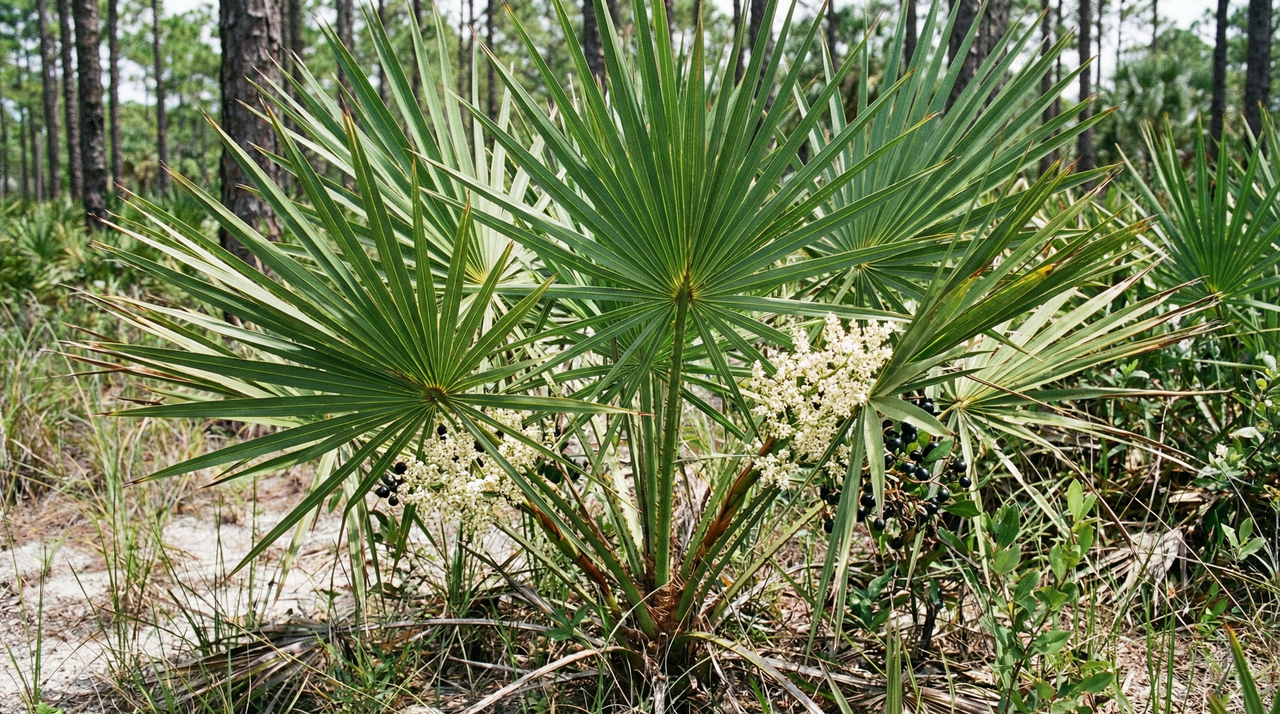
Every berry harvested from a wild saw palmetto colony in Florida has to be permitted, tracked, and reported to the state. That's not a conservation footnote; it's a signal that this scraggly, shin-slashing, largely overlooked understory palm has become so commercially valuable that regulators had to step in before the flatwoods were stripped bare. The supplement industry pulls tens of millions of dollars worth of berries out of the southeastern coastal plain every single year,[1] and most people driving past a saw palmetto thicket on I-75 have absolutely no idea they're looking at one of the highest-demand medicinal crops in North America.
I've worked with this plant in Florida scrub, longleaf pine restoration sites, and home food forests, and the contradiction never stops getting to me: something this tough, this ancient, this deeply woven into the ecology of an entire region is simultaneously under real harvest pressure because of a little capsule sold at every pharmacy checkout counter. Saw palmetto colonies can live for hundreds of years, surviving wildfire and drought through sheer biochemical stubbornness, but they can't grow berries faster than the market wants them. That tension, between the plant's extraordinary resilience and its unexpected vulnerability, is exactly what makes it worth understanding properly before you grow it, harvest it, or recommend it to anyone.
Saw Palmetto Origin, History, and Traditional Uses
Botanical Background and Native Habitat
Saw palmetto (Serenoa repens) is native to the southeastern coastal plain of the United States, ranging from South Carolina south through Florida and west into eastern Texas, with populations scattered across Georgia, Alabama, Mississippi, and Louisiana.[2][3] It's a perennial, dioecious understory palm, meaning you need both male and female plants to get fruit, and it settles into scrub, pine flatwoods, and coastal dunes as a foundational layer plant rather than a canopy aspirant. Juvenile plants spend their first few years putting roots down before shoots go up, eventually reaching 6-10 feet over a decade or two, with reproductive maturity arriving somewhere between 5 and 10 years.[4]
Saw palmetto blurs the line between individual and colony. I find this remarkable after years of walking Florida flatwoods. Saw palmetto reproduces both sexually through wind-pollinated flowers and asexually through rhizomatous clonal spread, and individual plants commonly live 50 to 100 years or more.[5][6] Growth-ring studies have documented select specimens exceeding 700 years, though that represents a ceiling, not the average.[7][8] The dense thickets I've walked through look virtually unchanged over decades, and that sense of deep-time permanence is real. Habitat fragmentation and destructive harvesting practices that sever the root system are now threatening those natural regeneration cycles, which matters enormously for the long-term picture.[9][10]
Visual Characteristics and Growth Habits
The defining structural feature of saw palmetto is its mostly subterranean trunk, a creeping caudex that stays largely underground and can stretch 1-2 meters horizontally, sending up fans rather than growing skyward like a typical palm.[11][12] That buried architecture is exactly why fire rolls through a stand and the plant shrugs it off, resprouting vigorously from undamaged rhizomes; I've watched bright green new fans push up from charred ground within weeks of a prescribed burn.[13] The plant clumps and spreads to 4-10 feet wide or more, forming the kind of impenetrable thickets that make excellent wildlife cover.
The foliage is evergreen and fan-shaped, with 10-30 stiff leaf segments that are glossy on top and carry a distinctive silvery-white waxy underside.[2][14] The petioles, up to a meter long, are lined with sharp recurved spines that give the plant its common name and, frankly, earn their reputation. I always wear heavy gloves when clearing around established clumps; those spines are nature's barbed wire. In spring, female plants produce branching panicles of small creamy-white flowers, followed by single-seeded drupes that ripen to black or dark purple by fall, providing a critical winter food source for birds, bears, deer, and other wildlife.[3][15] Plants in full sun stay compact; those in shadier conditions stretch taller with longer fronds, and some coastal Florida populations show a striking blue-tinged foliage I find particularly ornamental in dry gardens.[2]
Traditional and Cultural Significance
William Bartram offered one of the first detailed European accounts of saw palmetto in his 1791 Travels, but Indigenous peoples of the southeastern coastal plain had been using it for centuries before any botanist arrived to take notes.[16] The Seminole, Creek, Mikasuki, and related nations ate the berries raw and dried, brewed them into infusions, and turned to them medicinally for urinary complaints, reproductive support, digestive troubles, and as a general tonic.[17][18] Leaves were woven into baskets, hats, and thatching, meaning almost every part of the plant was put to work.[19]
Wild harvesting intensified through the 18th and 19th centuries, commercial collection picked up in the 1870s, and cultivation for medicinal extracts began around 1900 in Florida as demand grew.[20] That demand has never really slowed. Today, Florida law requires permits for wild harvest, prohibits collection from protected lands, and mandates hand-picking practices that leave the rhizomes intact.[21][22] Having seen the aftermath of destructive root harvests firsthand, I only source berries from farms that keep the rhizomes undisturbed. The Florida Native Plant Society and United Plant Savers have both flagged overharvesting as an ongoing concern, making cultivated sources a genuine conservation choice.[23][24]
Fun Facts and Conservation Notes
Saw palmetto is globally secure with a G5 ranking, meaning no federal endangered status,[25] which reflects how well it holds its own when left alone. It thrives in nutrient-poor sandy soils where most plants struggle, tolerates salt spray near dunes, and once established needs almost nothing from the gardener.[26][2] Those blue-tinged coastal forms I've admired in southern Florida populations are particularly striking in dry landscape settings where silvery foliage catches the light all year. The plant's journey into 19th-century American pharmacopeias for prostate and urinary health built directly on what Indigenous healers had known for generations,[20][27] and that thread of traditional knowledge running through to modern supplement use is worth honoring, especially as cultivated sources slowly provide an alternative to pressure on wild populations.
Saw Palmetto Varieties and Cultivars
If you walk into a Florida native plant nursery looking for a specific saw palmetto cultivar, you'll likely be greeted with a blank stare. Unlike most garden shrubs, Serenoa repens has no widely standardized named cultivars in the nursery trade; what you're typically buying is a seed-grown or wild-collected Florida ecotype rather than anything bred for a particular trait.[28][29][30] I've come to think of this as a feature rather than a limitation. In my experience matching plant stock to site, locally-sourced straight-species plants almost always outperform anything that's traveled far from its native gene pool.
Botanical Varieties of Serenoa repens
Taxonomically, the species breaks into two recognized botanical varieties that reflect distinct ecological niches. Serenoa repens var. repens, the coastal ecotype, carries more than 20 leaf segments per frond and thrives in dune and coastal scrub habitats. The inland form, var. oligocarpa, has just 9 to 15 leaf segments and is adapted to drier, sandier interior sites.[31] That distinction actually matters in garden design. A client of mine in Pinellas County learned it the hard way after planting inland-sourced stock in a wind-exposed coastal situation; the plants sulked for years before we replaced them with locally-propagated coastal material that settled in almost immediately. Matching ecotype to site is the single most reliable "variety selection" you can make with this plant.
Informal Nursery Selections and Cultivars
That said, a handful of informally selected forms have made their way through the nursery trade. 'Little Star' and 'Hancock' are compact selections I've used in small-space designs where the species' typical 6 to 10 feet would overwhelm the planting; both stay closer to 2 to 3 feet, which reads almost like a ground-hugging palmetto mound.[32][33] For foliage interest, 'Gold', 'Variegata', and 'Blue' offer golden, mottled, and blue-gray leaf tones respectively, and the silver form (sometimes labeled serenoa repens silver or saw palmetto silver) has become quietly popular in Florida landscapes for its striking pewter fronds. 'Hardy Dwarf', 'Hurricane', and 'Grey Ghost' round out the cold-tolerant and disease-resistant end of the spectrum.[32][30]
I'll admit I've become a quiet fan of 'Grey Ghost' and 'Hurricane' for humid zone 9b sites specifically because I've watched them shrug off the fungal leaf spots that show up on straight-species plants during wet summers.[30] Still, none of these selections come from formal breeding programs; they're nursery selections, not hybrids, and they retain the slow-growing, drought-tolerant, wildlife-supporting character that makes sabal serrulata (an older synonym still floating around in the trade) such a valuable permaculture anchor. My default recommendation remains locally-sourced var. repens stock for anyone planting in a native guild where pollinator and wildlife value matter most. The variegated forms are beautiful, but the bees and birds are voting for the straight species every time.
Saw Palmetto Propagation and Planting Guide
If you're coming to saw palmetto expecting a quick-turnaround project, I want to gently reset those expectations before you buy your first seed packet. This is a plant shaped by millennia of fire and drought on the southeastern coastal plain, and its biology reflects that. It does not hurry. What it does, eventually, is become nearly indestructible, and that payoff is absolutely worth the patience required to get there.
Understanding Saw Palmetto Seeds and Germination
Saw palmetto produces a small drupe fruit, just 1-2 cm long, containing a seed that turns from green to dark brown or black as it ripens.[4][34] That unassuming little seed has a hard, bony endocarp that contributes to physical dormancy lasting months to years, and the deep monocot embryo inside sits waiting, sometimes up to 18 months before sprouting under natural conditions.[4][35] That tough outer coating isn't just for show; it's the reason pretreatment is non-negotiable if you want reasonable germination results in a human timeframe.
In the wild, birds, raccoons, and deer do the work of dispersal, passing intact seeds through their digestive systems, and fire-prone habitats like Florida scrub provide additional germination triggers through heat scarification and the sudden nutrient flush that follows a burn.[4][36] We're essentially trying to replicate those conditions at home, which is why mechanical scarification or a 30-60 day moist cold stratification at 5-10°C is recommended before sowing.[32] Even then, expect germination rates anywhere from 10-50%, depending heavily on seed freshness and conditions.[32][2] Because the species is dioecious, seedlings will also be a genetic mix of male and female plants, which matters if you're growing specifically for berry production.[32]
One labeling lesson I learned the hard way: saw palmetto seedlings look remarkably like other young palms, and even a few grasses, in their first season. Label every flat. I once lost a whole tray to misidentification and didn't discover the mistake until the plants were well established.
Propagation Methods for Saw Palmetto
For home gardeners, the choice really comes down to seeds versus offset division, and I'll be direct: division is almost always the smarter route. Dividing offsets or suckers from mature clumps yields 70-90% success rates versus the 10-50% you're chasing with seeds, and it gets you to fruiting much faster.[37][32] You also know exactly what sex plant you're propagating, which matters in a dioecious species.
Seeds are still worth growing if you want genetic diversity for a restoration planting or simply enjoy the process. Sow pretreated seeds in warm (25-30°C), moist, well-drained sandy media and expect 1-3 months before you see any sign of life.[32][38] Semi-ripe stem cuttings are possible but marginal, rooting at only 20-50% after 3-6 months with IBA hormone treatment and bottom heat; I wouldn't recommend that route unless you have a specific reason.[9][39] Grafting and air layering aren't viable options for this monocot; grafting success in the Arecaceae family runs below 20%, and the fibrous rhizomatous root system makes layering impractical.[40][41] Tissue culture achieves over 90% success commercially but requires lab infrastructure that puts it firmly out of reach for backyard growers.[42]
Seed Storage and Viability
Saw palmetto seeds are recalcitrant, meaning they're sensitive to drying and will not survive conventional dry storage.[43][44] Let them drop below 20-30% moisture content, or expose them to freezing temperatures, and viability drops fast. If you must store them, keep seeds at 30-50% moisture in moist sphagnum, sand, or vermiculite in sealed containers at 4-10°C, where they can remain viable for 1-2 years.[43][4] In practice, I've found that sourcing fresh seed locally each fall and sowing it immediately produces dramatically better results than anything stored, even under good conditions. The research on desiccation sensitivity aligns exactly with what I've observed: these seeds want to germinate, not wait on a shelf.
Soil, Site Selection, and Planting Techniques
Everything about how to grow saw palmetto successfully comes back to one principle: mimic the scrub. This plant is native to well-drained, sandy or sandy-loam, acidic soils of pine flatwoods, coastal dunes, and fire-maintained ecosystems in the southeastern U.S.[2][30] Optimal soil pH is 5.0-6.5, though it tolerates a range of 4.5-7.5.[2] Push into alkaline territory above 7.5 and you'll see iron chlorosis, that familiar yellowing with green veins that I also recognize from growing blueberries in marginal soils -- a clear visual signal that the plant is locked out of nutrients it needs.[45]
Poor drainage is the fastest way to kill this plant. If your soil stays wet for more than a couple of days after rain, saw palmetto will decline fast. I've lost plants to Phytophthora in heavy clay, so I now do a simple percolation test before every new planting.[46] For clay-heavy sites, incorporate 30-50% coarse sand, gravel, or pine bark and consider a raised bed. Apply 2-3 inches of acidic mulch like pine straw to moderate moisture and suppress weeds, and if pH needs correcting, elemental sulfur at 0.5-2 lb per 100 square feet will bring it down gradually.[47] Fertilize sparingly with a low-nitrogen palm formula like 8-2-12 in early spring; over-feeding is counterproductive and increases rot risk.[47] Newly planted specimens need consistent moisture for the first year or two while the root system establishes, after which supplemental watering becomes largely unnecessary.
Saw Palmetto Spacing and Establishment Timeline
Mature plants reach 6-10 feet tall and wide with a rhizomatous, clumping habit that slowly spreads outward over time.[48] Give them room. I planted a group too close together early in my design career and within five years had an impenetrable thicket that required real effort to manage. Now I recommend 4-6 feet apart for mass plantings and groundcover uses, 2-4 feet for dense screens, and 8-15 feet for specimens or commercial harvest rows.[48][5] For restoration projects, 2-4 feet at densities of 1,000-2,000 plants per acre is standard practice.[48] Adequate spacing also promotes airflow, which matters in humid climates where fungal pressure is higher. Spring or early fall planting in USDA zones 8-11 gives roots the best window to settle in before temperature extremes hit.[29]
The timeline to first fruit is where patience becomes essential. From seed, expect 5-10 years before reliable berry production begins, with stems generally needing to reach over 3 feet in height before fruiting kicks in consistently.[17][49] Division from offsets shortens that wait to 2-4 years, which is a meaningful difference if your interest is in the medicinal harvest.[17] That gap between planting and fruiting is the single most useful factor to weigh when choosing your propagation method. For most home growers, offsets are the practical answer; seeds are for the long-game thinkers and restoration-scale projects.
Saw Palmetto Care Guide
If I had to pick one native plant that genuinely rewards neglect, saw palmetto would be near the top of my list. That's not laziness talking; it's ecology. This plant evolved in some of the most challenging soil in North America, and once you understand that, the care guide basically writes itself: full sun, fast drainage, almost no feeding, and a hands-off attitude that most gardeners have to consciously practice. The biggest mistakes I've seen are all forms of over-care.
Light and Sun Requirements
Saw palmetto wants full sun, and that's where it will produce the most vigorous growth and the heaviest berry crops. In my experience siting these plants across Central Florida landscapes, I prioritize open, south- or west-facing exposures for specimen plantings. Where I do compromise is in the hottest microclimates, particularly against reflective walls or on exposed sandy slopes in zone 9B, where morning sun with some afternoon shade prevents the leaf scorch and bleaching I've watched happen on over-exposed plants.[50][51] Too little light tells its own story: yellowing leaves, elongated stems reaching for the canopy, and a generally stunted look that no amount of fertilizer will fix. Get the light right first, and everything else gets easier.
Watering Needs and Drought Tolerance
Saw palmetto is native to the dry, sandy soils of the southeastern coastal plain, and mature plants manage on as little as 20 to 30 inches of annual rainfall, drawing on a taproot that can reach 10 to 16 feet deep along with a thick, waxy leaf surface that slows moisture loss.[52][4] The established colonies I've managed for years in native-style Florida gardens essentially stop needing any supplemental water once their roots are set, except during genuine multi-week droughts in summer. That said, getting to that point requires patience with young plants.
Water regularly for the first six to twelve months. Aim for roughly one inch per week to help new roots push deep.[53][54] Once established, shift to deep, infrequent irrigation every two to four weeks in summer only during dry spells, soaking down twelve to eighteen inches, and back off significantly in winter. The mistake I see most often is overwatering, which causes yellowing, wilting, and the root rot that follows.[55] Underwatering announces itself as tip burn and wilting, but it's far less common with established plants. A two- to three-inch organic mulch layer helps retain moisture without creating the soggy conditions that invite trouble.[52][2]
Feeding and Soil Fertility
Early in my career I over-fed a few saw palmetto specimens, trying to push faster establishment. What I got instead were lush, soft plants that were noticeably more prone to scale insects and showed signs of marginal leaf burn. That experience shaped my philosophy with native palms: test before you feed, and default to nothing if the plant looks healthy. Saw palmetto evolved in nutrient-poor scrub and flatwood soils and simply does not expect a generous soil.[56][57] Over-fertilization can cause tip burn, chlorosis, and excessive soft growth that reduces cold hardiness and increases pest susceptibility.[58][59]
When feeding is genuinely warranted, particularly for container plants or those grown intensively for berry harvest, a slow-release balanced palm formula like 8-2-12 applied at one to two pounds per plant in early spring is appropriate.[60] I'd rather reach for a fish emulsion or a light compost top-dressing than synthetic fertilizers for most home landscapes. Watch for interveinal chlorosis as a sign of iron or manganese deficiency, which is usually a soil pH issue rather than a missing nutrient.[61] For established, in-ground plants in a native planting, my honest approach is: I almost never fertilize them at all.
Frost Tolerance and Winter Protection
Saw palmetto is cold hardy in USDA zones 8 through 11, and mature plants can handle frost down to around 10 to 15°F without dying, though leaf damage becomes likely below 20 to 25°F.[29][58] I've watched it shrug off brief cold snaps that would kill tender tropicals I grow nearby. If the crown survives, the plant resprouts from the base in spring, so don't give up on a browned-out specimen too quickly.[62] For gardeners in zone 8 margins, drainage is non-negotiable; wet roots in freezing soil are far more dangerous than the cold air temperature alone, something I confirm on every new planting site. Cut back on water in fall, skip late-season fertilizer, and move potted plants to a sheltered spot before the first hard freeze.
Heat Tolerance and Summer Care
Saw palmetto successfully handles sustained temperatures up to 100°F and brief spikes to 110°F without collapsing. It is native to the hot, humid southeastern US.[63][64] Mature plants with deep root systems are remarkably resilient; I've seen them sit through brutal Florida summers without a hint of stress. Young plants are the vulnerable ones, partly because their shallow roots can't buffer temperature extremes the way a mature taproot can. For seedlings and recently transplanted specimens, 30 to 50 percent afternoon shade, organic mulch, and deep morning watering make a real difference.[65][29] Avoid midday irrigation and skip fertilizing in peak heat; both push soft growth at exactly the wrong time. Heat stress looks like leaf scorch, bronzing, and wilting, but combined heat and drought extremes above 105°F can cause real setbacks even in established plants, so some supplemental irrigation during the worst weeks is worthwhile.[32]
Pruning and Maintenance
My rule with saw palmetto pruning is simple. You should always do less than you think you need to. Remove only dead, damaged, or diseased fronds, cutting at the base in late winter or early spring, and never take more than 20 to 25 percent of the foliage at once.[66][67] I wait until brown fronds are completely desiccated and pull away easily, rather than cutting prematurely. Over-pruning in summer heat or before cold weather reduces cold hardiness and can cut into berry production, both things I've seen happen when clients ask for an overly tidy look.[32] On specimen plants, I leave the natural skirt of old fronds whenever possible; it protects the crown and provides nesting habitat that makes a native landscape worth having. I only remove suckers if a client specifically needs a cleaner edge, and even then only during dormancy.[68] Sharp, clean tools and gloves are non-negotiable; those leaf edges earned the plant its name.
Seasonal Rhythm
Once you know saw palmetto's annual rhythm, it becomes one of the most predictable plants in a warm-climate garden. Growth slows through winter dormancy from roughly November to February, then the plant pushes new fronds in spring and flowers between March and May.[69][70] The black drupes ripen from August through October, and I've watched this sequence play out reliably year after year in Central Florida gardens, exactly on schedule. Use that calendar to time your care: prune in late winter before the spring flush, hold fertilizer after late summer, ease off irrigation as the plant heads into dormancy. The plant's clonal, rhizomatous nature means established colonies spread slowly but persistently, with individual clumps living 50 to 100 years or more and colonies persisting for centuries in fire-adapted landscapes.[9][71] That longevity is the whole point. Plant it right, respect its rhythm, and a saw palmetto can outlast the garden around it by generations.
Saw Palmetto Harvesting Guide: Timing, Technique, and Yield
When to Harvest Saw Palmetto Berries
After the spring bloom fades in April or May, the berries need 4 to 6 months to fully develop, which puts the harvest window somewhere between late September and early winter depending on where you are in the plant's southeastern range.[72][73][9] In Central Florida, I typically see peak ripeness in September and October; growers at the northern edge of the range should expect to push that a few weeks later. What you're watching for is a color shift from green through yellow-green to a deep black or bluish-black, accompanied by a noticeable softening of the fruit. Commercial growers usually start harvesting once 50 to 70 percent of berries on a cluster have made that transition, which also corresponds to a Brix reading in the 12 to 14 degree range for good-quality fruit.[73] The propagation section covers the long 5 to 10 year wait from seed to first meaningful crop; once your plant is bearing, though, these visual and tactile cues become your reliable annual calendar.
Harvesting Techniques and Sustainability
Hand-picking is the only method I'd recommend, full stop. Florida regulates wild saw palmetto harvesting specifically because commercial demand for the supplement trade has put real pressure on native colonies, and permits may be required depending on where and how much you're harvesting.[30][74][75] After watching colonies in Central Florida landscapes for years, my personal rule is to leave at least half the fruit on every plant. Wildlife depends on these berries heavily, and the plant itself needs the energetic return from some seed production to stay vigorous. Never strip a colony. Pick selectively from multiple plants rather than cleaning out one. The serrated leaf stems earned this plant its name, so wear long sleeves and thick gloves; those edges are unforgiving.
Understanding Saw Palmetto Berry Flavor, Texture, and Yield
Fresh ripe berries are small ovoid drupes roughly 1 to 2 centimeters across. They have a soft, slightly oily pulp that dries down to something hard and shriveled.[2][76] The aroma is pungent and musky from the fatty acids and terpenes in the pulp; I'd describe it as somewhere between overripe figs and a fermented food that took a wrong turn. You can actually smell a ripe patch from several yards away once you know what you're looking for. The taste raw is intensely bitter and acrid, though fully ripe fruit carries a faint underlying sweetness.[9][77] Seminole and Creek peoples processed them as a staple food, using methods that reduced that bitterness and made use of the oil-rich pulp, but today's use is almost entirely in dietary supplements for prostate health rather than anything culinary.[31] I've made small personal tincture batches and the bitterness is genuinely intense even after traditional processing; I'd never suggest these as a food. The berries can cause gastrointestinal upset and may interact with certain medications, so please consult a health professional before using them medicinally. With commercial demand still climbing, sustainable hand-harvesting isn't just a nice-to-have; it's what keeps this keystone species viable for the wildlife and ecosystems that depend on it.
Saw Palmetto Preparation and Uses
Culinary Uses and Edibility of Saw Palmetto Berries
Saw palmetto berries are not a casual snack. Only the ripe, black fruit of Serenoa repens is edible at all,[2][78] and even then the flavor is aggressively soapy, bitter, and just barely sweet underneath.[31] Raw berries contain potential irritants and really should be processed rather than eaten straight off the plant.[79] The nutritional profile tells you a lot: dried berries run roughly 50 to 60 grams of fat per 100 grams, with 500 to 600 calories and a solid fiber contribution,[80][81] a profile built for medicine, not the dinner table.
The Seminole, Creek, and Mikasuki peoples made meaningful use of these berries anyway, processing them carefully to bypass this intense bitterness for foundational medicinal applications.[82][83] That's ethnobotanical context, not a recipe recommendation. Saw palmetto is generally safe for most adults at appropriate doses for up to three years, with mild gastrointestinal upset being the most common complaint,[84][85] but it's contraindicated during pregnancy, breastfeeding, and in anyone with hormone-sensitive conditions.[84] I tell clients plainly: if you're pregnant, nursing, or on hormone therapy, talk to your physician before considering any saw palmetto supplement.
If you're foraging, positive identification matters. The sharply saw-toothed petioles that give the plant its common name are distinct from the smoother stems of dwarf palmetto (Sabal minor), a comparison I walk clients through every time we're in the field together.[2][86] I've watched birds and small mammals work through a berry crop all winter, which is exactly why I advise collecting only fallen fruit and limiting any take to 10 to 20 percent of what's available in a given area.[87][88] The wildlife genuinely needs that fruit.
Traditional and Modern Medicinal Preparations
Traditional use by Southeastern tribes, including the Seminole and Creek, centered on raw berries and decoctions for frequent urination, gonorrhea, and prostate-related symptoms.[83] Modern herbalism and commercial supplement production follow that same basic logic but concentrate it. The primary form today is a liposterolic extract made from the dried fruit, delivered as capsules or tinctures.[89] The standard clinical dose for BPH symptom support is 160 mg of liposterolic extract twice daily (320 mg total); tinctures are typically taken at 1 to 2 ml two to three times a day. Teas exist but deliver far lower concentrations of the active lipophilic compounds and are considered significantly less effective.[90]
When clients ask me about preparing their own medicine from backyard berries, I steer them toward third-party-tested commercial extracts instead. Home tinctures can't reliably hit the fatty acid concentrations that standardized products guarantee, and the evidence base for saw palmetto, while real, is built on those specific extract formulations.
Post-Harvest Drying, Storage, and Sustainable Practices
Whether the destination is a home tincture or bulk sale to a supplement manufacturer, post-harvest handling determines potency. Dry fresh berries at 35 to 45°C (95 to 113°F) for three to seven days until moisture content drops below 10 percent.[91][92] That low-temperature window is deliberate; excessive heat degrades the lipophilic fatty acids responsible for the herb's therapeutic action. Store the dried fruit at 15 to 25°C (59 to 77°F) with humidity below 60 percent, and you're looking at a shelf life of one to two years.[91][92] Done right, a modest wild harvest turns into stable, potent medicine rather than a batch of bitter fruit that molds in a jar. The key, always, is that you went back to take only what the land could spare.
Saw Palmetto Health Benefits and Medicinal Uses
Long before saw palmetto became a fixture in supplement aisles, the Seminole, Creek, Choctaw, and Mikasuki peoples of the Southeast were already working with it intimately. They used the berries for urinary tract complaints, prostate enlargement, reproductive disorders, stomach pains, and as a general tonic and diuretic.[93][83][94] That traditional knowledge points to the same organ systems that modern researchers keep circling back to, which I find quietly remarkable for a plant most people know only as a palmetto thicket along the Florida highway.
Traditional and Modern Medicinal Research on Saw Palmetto
The research story centers on two primary mechanisms. First, saw palmetto inhibits both type I and type II 5-alpha-reductase enzymes, reducing the conversion of testosterone to dihydrotestosterone (DHT),[95][96] which is the same pathway targeted by pharmaceutical BPH drugs. Second, it suppresses inflammation by reducing pro-inflammatory cytokines across several pathways: COX-2, 5-lipoxygenase, NF-κB, and phospholipase A2.[97][98][99] On top of that, preclinical studies show antioxidant activity through free radical scavenging and modest antimicrobial effects against bacteria like E. coli and fungi like Candida albicans.[100][97] The mechanisms are genuinely compelling in the lab.
The clinical picture for benign prostatic hyperplasia is where things get more complicated. The medical consensus remains mixed. Meta-analyses and randomized trials show mixed results: some report modest improvements in urinary flow and nighttime frequency, while others find results no better than placebo, and no trials have demonstrated consistent prostate size reduction.[90][80][101] The American Urological Association does not include it as a first-line BPH treatment for exactly this reason.[102] I think about this the way I think about plant guilds in a food forest: just as I don't rely on a single species to perform every ecosystem function, saw palmetto works best as part of a broader health approach rather than a standalone pharmaceutical replacement. Clinical trials typically use 160 mg twice daily or 320 mg once daily of standardized liposterolic extract, and saw palmetto carries no FDA approval for any medical indication.[103][104] The preclinical mechanisms are robust; the human clinical evidence is still catching up.
Key Phytochemicals in Saw Palmetto Berries
What makes the berry medicinally interesting is almost entirely about its lipid fraction. The lipophilic extract runs 80 to 90 percent free fatty acids by weight, with lauric acid leading at up to 35 percent, oleic acid at 30 to 40 percent, myristic acid around 15 percent, and linoleic acid at 10 to 15 percent.[80][105] Sitting alongside those fatty acids are phytosterols, most prominently beta-sitosterol at 0.2 to 0.5 percent, plus stigmasterol and campesterol; these compounds mimic steroid structures and are believed to drive much of the hormonal modulation.[106][80] That concentration is exactly why standardized extracts feel more potent than fresh or dried berry: you're getting the bioactive lipid fraction without the fiber, water, and bitter compounds that dilute it in whole fruit.
The berry also contains flavonoids including rutin, quercetin, hesperidin, epicatechin, and kaempferol, which contribute free-radical scavenging activity,[107][80] along with unique serrulatane-type triterpenes specific to Serenoa repens that may enhance overall bioactivity. Minor constituents include coumarins, carotenoids, polysaccharides, and essential oils.[108][107] The berries carry the highest concentrations of all these compounds; leaves contain flavonoids and tannins but considerably lower sterol levels.[109] As someone who works with medicinal shrubs in Florida landscapes, I can confirm that harvest timing matters enormously here: late winter and spring harvests, from plants growing in the berry's native southeastern range, consistently yield the richest fatty-acid and phytosterol profiles, with geographic origin and nitrogen timing playing measurable roles in final potency.[110] All of these compounds, working together through COX-2 and 5-LOX inhibition and androgen receptor modulation, underpin the anti-inflammatory and hormonal effects that make the berry medicinally relevant.[80][106]
Nutritional Profile of Saw Palmetto
The berries have been eaten by Native Americans for centuries despite being intensely bitter. They functioned as both food and medicine in traditional practice.[69][83] As a conventional food, though, the nutritional profile is narrow. The standouts are the high lipid content, meaningful phytosterols, moderate fiber at roughly 20 to 25 grams per 100 grams dried, some minerals including potassium, magnesium, calcium, iron, and zinc, vitamin E as the primary vitamin, and antioxidant phenolics like ferulic acid and epicatechin.[80][111][112] Protein is minimal at under 1 gram per 100 grams dried. This isn't a broad-spectrum superfood; it's a concentrated functional berry whose value is almost entirely medicinal rather than nutritional.
Drying and lipophilic extraction concentrate the fatty acids and phytosterols significantly, though heat-sensitive phenolics can degrade in the process.[113] That tradeoff is precisely why most people encounter saw palmetto as a 160 to 320 mg standardized extract capsule rather than a handful of fresh berries,[84][114] and why the supplemental form is where the clinical research has focused.
Safety Considerations and Side Effects
One reassuring note for anyone gardening with pets: the ASPCA lists saw palmetto as non-toxic to dogs, cats, and horses, and the phytochemical profile confirms the absence of the alkaloids or cyanogenic glycosides associated with serious plant toxicity.[115][80] For humans, the general tolerability picture is also fairly good: most side effects are mild and gastrointestinal, including nausea, stomach upset, and occasional diarrhea, with some reports of headache, dizziness, or rare skin reactions.[84][116] No significant hepatotoxicity has appeared in clinical trials, and animal toxicology studies show low acute toxicity.[117]
The contraindications require real caution. This is particularly true for vulnerable populations. Saw palmetto is firmly contraindicated in pregnancy and breastfeeding; toxicology screenings in rodents demonstrate reproductive risks from its hormonal activity, and there's simply no safe threshold established for that population.[84][118] Anyone with hormone-sensitive conditions should approach it with caution given its 5-alpha-reductase activity, and pediatric use lacks sufficient data to recommend without medical supervision.[119] The bleeding-risk interaction with anticoagulants like warfarin and antiplatelet drugs like aspirin or clopidogrel is documented clearly enough that I'd tell anyone on blood thinners: talk to your doctor before taking medicinal doses, full stop.[84][120] There are also theoretical interactions with hormonal therapies and some CYP enzymes, though the clinical pharmacokinetic data there remains weak.[121] For most otherwise-healthy adult men using it for urinary or prostate support, the safety profile is genuinely reassuring; it's just not a supplement for everyone.
Saw Palmetto Pests and Diseases
Saw palmetto is one of those plants that makes pest management almost boring, and I mean that as the highest possible compliment. Its leathery, serrated fronds come loaded with physical defenses including surface trichomes, plus a chemical arsenal of phenolics and volatile compounds that most insects and browsers simply want no part of.[122][123] I've watched neighbors wage ongoing battles with scale on their queen palms and pygmy dates while the saw palmettos ten feet away look completely untouched. Even white-tailed deer tend to give it a wide pass.[124] That baseline toughness is the real story here.
Natural Pest Resistance and Common Insect Threats
The one pest I take seriously on saw palmetto is the palmetto weevil (Rhynchophorus cruentatus). It bores into the crown or trunk, causes structural damage that can spiral into plant decline, and creates entry points for secondary infection.[125][126] Severe infestations sometimes require removing the affected plant entirely to stop the spread. In my experience, catching it early through crown inspection during warm, humid Florida summers is what saves plants. I make a habit of checking any specimen that looks even slightly off-color in the growing season.
Scale insects including Aspidiotus destructor occasionally colonize fronds, causing yellowing and sooty mold; spider mites can cause stippling in dry spells.[127][125] Caterpillars, aphids, leaf miners, and palm leaf skeletonizers do show up occasionally but rarely amount to anything significant.[122] The blue-toned cultivars I've trialed seem to show slightly better overall pest tolerance, which aligns with some nursery-side observations.[128] Pest pressure is most documented in Florida and varies considerably by region.[122] An Integrated Pest Management approach, meaning regular monitoring, good spacing, sanitation, and biological controls before any chemical intervention, handles the vast majority of what comes up.[122][129]
Disease Resistance and Fungal Vulnerabilities
No major viral diseases have been documented on saw palmetto. Bacterial leaf scorch from Xanthomonas spp. is possible but genuinely rare.[130][131] The vulnerabilities that do exist are almost always traceable to environmental conditions that growers can prevent. Fungal leaf spots from Bipolaris, Exserohilum rostratum, and Cercospora spp. show up as dark brown spots with yellow halos, and they need high humidity above 80%, warm temperatures, and poor air circulation to take hold.[132] Proper spacing solves most of that. Phytophthora root rot and Ganoderma trunk rot are the more serious fungal threats, both almost exclusively tied to waterlogged soils or physical injury.[132][133] Weevil damage can worsen both by opening tissue to fungal entry. Soil pH outside the 4.5-6.5 range or temperature extremes below 20°F and above 95°F add stress that makes the plant more susceptible to opportunistic infection.[134]
Every saw palmetto I've planted in well-drained sandy soil with good airflow has stayed clean, which tells me that siting really is most of the battle. Avoid overhead irrigation, prune out infected fronds promptly, and keep soil pH in range. Fungicides like azoxystrobin or mefenoxam are there as a backstop, but in well-managed plantings I rarely see a reason to reach for them.[132][130]
Saw Palmetto in Permaculture Design
Few native plants earn their place in a warm-climate food forest as decisively as saw palmetto. It isn't a showstopper canopy tree, and it doesn't fix nitrogen. What it does is hold ground, feed wildlife, survive fire, and keep doing all of that for what can be centuries. In my work designing native landscapes and food forests across Central Florida, I keep coming back to this plant not because it's fashionable but because it solves problems that other plants can't.
Climate and Zones for Growing Saw Palmetto
Saw palmetto is reliably hardy in USDA zones 8a through 11, with established plants tolerating cold down to about 10°F (-12°C) and occasionally surviving brief dips to 5°F (-15°C) with only minor frond burn.[63][29][2] At the other extreme, it handles heat above 110°F (43°C) without complaint, thriving best in the 50-95°F (10-35°C) range that covers most of the subtropical and warm-temperate South.[63]
Its drought tolerance is genuinely impressive once plants are established. Survival is possible on as little as 20-30 inches of annual rainfall, though optimal fruit production happens closer to 40-60 inches with moderate to high humidity.[2][30][29] For site selection, full sun is non-negotiable: this plant evolved on open dunes and pine flatwoods, not forest understories. It insists on sandy, well-drained, acidic soils in the pH 4.5-6.5 range and handles salt spray without issue, which makes it one of the few shrub-layer options I'd recommend for coastal designs.[30][2][3] If you're pushing it into zone 7b or the cooler edge of 8a, plan for heavy mulching, a south-facing microclimate, or a windbreak to carry it through hard freezes.[63][135] The silvery fronds actually seem to reflect intense afternoon sun rather than absorb it, which I've always found gives exposed, open sites a functional elegance that most ground-cover shrubs can't match. For detailed irrigation and frost management, the care guide covers those protocols in full.
Ecosystem Functions and Forest Layer Placement
In its native range stretching from Florida through Georgia and Alabama up to North Carolina, saw palmetto forms dense, thorny thickets across fire-adapted scrub, pine flatwoods, hammocks, and coastal dunes.[9][30][3] Its underground stems and basal meristems allow it to resprout rapidly after low-intensity fires, and I've watched this firsthand during pine flatwood restoration work on a client's property outside Ocala. While the aboveground fronds were scorched flat, new growth was pushing up within weeks. That's the kind of resilience that makes a regenerative designer very happy.
Below ground, it develops an extensive fibrous, rhizomatous root system that binds sandy soils, suppresses weeds, and takes up phosphorus through arbuscular mycorrhizal associations.[9][5][136] I think of that root mat as a living erosion-control blanket. On sandy berms where I'd otherwise be installing jute netting and replanting annually, an established colony of saw palmetto holds slope integrity season after season with zero maintenance. Above ground, the thickets shelter deer, small mammals, reptiles, and ground-nesting birds, while the dark blue-black drupes persist into winter and feed quail, turkey, cardinals, mockingbirds, bears, and raccoons.[9][86][136] That late-season forage value is hard to overstate in a food forest context where supporting resident wildlife is part of the design brief.
Its conservation status is globally secure (G5) and it's non-invasive throughout its native range, which means I can recommend it for Florida and coastal plain projects with full confidence that it won't become an ecological liability.[137][138] The evergreen silvery-blue fronds also contribute biomass for composting and mulching while providing genuine windbreak function,[137] two services that annual ground covers simply can't deliver at scale.
Pollination and Guild Design with Saw Palmetto
Physically, saw palmetto occupies the shrub or ground-cover layer, typically reaching 4-10 feet tall and spreading 10-20 feet wide over time through its rhizomatous habit.[2][63][3] In open woodland food forests, it pairs naturally beneath longleaf pine or other open-canopied overstory species, coexisting in the filtered light without getting shaded out the way denser canopies would manage.[3] Where there's room for its rhizomes to spread, it becomes a weed-suppressing pioneer that creates cool, humid pockets at ground level in what would otherwise be brutally exposed sandy soil.
The pollination biology is the part that catches most people off guard. You must design for it intentionally. Saw palmetto is dioecious, meaning individual plants are either male or female, and fruit set requires both.[3][17] Wind does most of the pollination work during the creamy-white bloom that runs from March through July, peaking in April and May, though bees, beetles, and flies also contribute.[3][139][140] Maintaining insect diversity in your guild still matters even though wind is the dominant vector. In my managed plantings, I've settled on a rough 1:3 male-to-female ratio within each guild, and that reliably produces enough berries for a modest medicinal harvest while leaving plenty for the local wildlife that depends on those fruits through winter. For anyone with isolated female plants or a small installation, hand-pollinating with a soft brush during that April-May peak window genuinely improves fruit set. I've tested it on a few client properties and the difference is noticeable.
Guild companions should be chosen with saw palmetto's preference for lean, sandy, well-drained conditions in mind: avoid heavy-feeding or deep-rooting plants that compete aggressively for moisture at the fibrous root zone. Work with the plant's fire tolerance by designing for occasional managed burns where land regulations allow, since fire stimulates flowering and resprouting and helps keep the guild from accumulating excessive fuel load.[3] The berries become harvestable after roughly 5-7 years when pollination is consistent,[141][4] but I'd encourage every designer to think of that yield as shared rather than owned: the wildlife needs these berries too, and a plant this deeply native to the landscape has earned its right to feed more than just us.
The Plant That Taught Me to Stop Rushing the Scrub
I've watched saw palmetto resprout from what looked like absolute ruin, scorched black after a prescribed burn, pushing out silvery new growth weeks later like nothing happened. That image stays with me. It's a plant that operates on its own timeline, holds its ground in soils that defeat almost everything else, and asks almost nothing in return. I grow it because Florida needs it, and honestly, because gardening with something that stubborn keeps me humble.
Sources 141
- Saw Palmetto: Florida's Most Economically Important Native Plant – UF/IFAS ↩
- USDA PLANTS Database - Serenoa repens ↩
- Flora of North America - Serenoa repens ↩
- Saw Palmetto: Serenoa repens ↩
- Reproductive Biology of Saw Palmetto - Florida Native Plant Society ↩
- Biology and Ecology of Saw Palmetto ↩
- Age Structure and Dynamics of Saw Palmetto (Serenoa repens) in a Pine Flatwoods Community ↩
- Longevity of Saw Palmetto in Florida Scrub ↩
- Saw Palmetto - Serenoa repens ↩
- Applied Vegetation Science: Human Impact on Saw Palmetto Ecosystems ↩
- Serenoa repens ↩
- Saw Palmetto - Serenoa repens ↩
- Fire Ecology of Saw Palmetto ↩
- Serenoa repens - Kew Royal Botanic Gardens ↩
- Florida Natural Areas Inventory - Serenoa repens Profile ↩
- Travels Through North and South Carolina, Georgia, East and West Florida ↩
- Florida Ethnobotany: Saw Palmetto (Serenoa repens) ↩
- Ethnobotany of the Seminole Indians of Florida ↩
- Traditional Uses of Saw Palmetto by Native Americans ↩
- Historical Development of Saw Palmetto in Herbal Medicine ↩
- Saw Palmetto: Sustainable Harvesting Guidelines ↩
- FDACS: Florida Nutraceutical Industry - Salvage Harvesting Guidelines ↩
- Conservation of Saw Palmetto in Florida ↩
- Overharvesting Risks for Saw Palmetto ↩
- Serenoa repens ↩
- Serenoa repens ↩
- Journal of Ethnopharmacology - Medicinal Uses of Serenoa repens (2012) ↩
- Serenoa repens: Saw Palmetto - UF/IFAS Extension ↩
- Serenoa repens (Saw Palmetto) - NC State Extension Gardener Plant Toolbox ↩
- Saw Palmetto - Florida Native Plant Society ↩
- Serenoa repens - Wikipedia ↩
- Saw Palmetto Cultivars - University of Florida IFAS Extension ↩
- Serenoa repens - Missouri Botanical Garden ↩
- Serenoa repens - Florida Plants ↩
- Seed Dispersal and Dormancy in Serenoa repens ↩
- Ecological Role of Saw Palmetto in Florida Scrub Habitats ↩
- Propagation of Saw Palmetto (Serenoa repens) ↩
- Propagation of Palms ↩
- Rooting Cuttings of Palms and Cycads ↩
- Propagation of Palms ↩
- Propagation of Palms and Cycads ↩
- Micropropagation of Serenoa repens ↩
- Seed Storage of Serenoa repens ↩
- Recalcitrant Seeds of Palms ↩
- American Society for Horticultural Science - Nutrient Deficiencies in Palms ↩
- University of Florida IFAS Extension: Saw Palmetto ↩
- University of Florida IFAS Extension - Saw Palmetto Cultivation ↩
- University of Florida IFAS Extension: Saw Palmetto ↩
- Fruit Production Timeline for Native Palms ↩
- Saw Palmetto Care: Light Requirements ↩
- Saw Palmetto Growing and Care Tips ↩
- Saw Palmetto Production and Marketing ↩
- Saw Palmetto Care - University of Florida IFAS Extension ↩
- Irrigation Recommendations for Florida Native Plants ↩
- Phytophthora Root Rot in Palms ↩
- Saw Palmetto for the Landscape ↩
- Fertilization Guidelines for Florida Native Plants ↩
- Fertilizing Palms in the Landscape ↩
- Fertilization of Palms in Florida ↩
- Saw Palmetto Production Guide ↩
- Nutrient Deficiencies of Landscape Palms ↩
- Saw Palmetto - Serenoa repens ↩
- Serenoa repens ↩
- Saw Palmetto: Serenoa repens ↩
- Saw Palmetto: Serenoa repens ↩
- Saw Palmetto Care and Pruning Guide ↩
- Pruning Palms ↩
- Pruning Palms and Cycads ↩
- Serenoa repens - Wikipedia ↩
- Saw Palmetto - University of Florida IFAS Extension ↩
- Phenology of Serenoa repens ↩
- Reproductive Biology of Serenoa repens ↩
- Saw Palmetto Harvesting and Processing ↩
- Saw Palmetto Harvesting Regulations ↩
- Florida Saw Palmetto Harvest Guidelines ↩
- Volatile Compounds in Saw Palmetto Fruits ↩
- Chemical Composition and Sensory Properties of Saw Palmetto Fruit - Journal of Agricultural and Food Chemistry ↩
- USDA PLANTS Database - Serenoa repens ↩
- Toxicity of Saw Palmetto - Poison Control ↩
- Nutritional and Phytochemical Composition of Saw Palmetto Berries ↩
- Chemical Composition and Quality Traits of Fresh and Dried Saw Palmetto Berries ↩
- Ethnobotany of the Florida Seminole Indians ↩
- Native American Ethnobotany Database - Saw Palmetto ↩
- Saw Palmetto - NCCIH ↩
- Saw Palmetto - Mayo Clinic ↩
- Differentiating Southeastern Palms - Lady Bird Johnson Wildflower Center ↩
- Saw Palmetto Harvesting Guidelines - Florida Native Plant Society ↩
- Sustainable Management of Saw Palmetto - USDA NRCS ↩
- Missouri Botanical Garden Plant Finder ↩
- Serenoa repens for benign prostatic hyperplasia - Cochrane Review ↩
- Postharvest Handling of Saw Palmetto Berries ↩
- Storage and Shelf Life of Herbal Fruits: Saw Palmetto ↩
- Ethnobotany of the Florida Seminole ↩
- Saw Palmetto: A Review of Traditional and Modern Uses ↩
- Inhibition of 5α-reductase activity by Serenoa repens extract ↩
- Mechanism of action of hexanic extract of Serenoa repens ↩
- Antioxidant and Anti-Inflammatory Effects of Saw Palmetto ↩
- Anti-inflammatory effects of saw palmetto extract via NF-κB inhibition ↩
- Anti-inflammatory effects of Serenoa repens ↩
- Antioxidant activity of phenolic compounds in Serenoa repens ↩
- Meta-analysis of Serenoa repens for BPH: RCTs and urinary symptoms ↩
- Benign Prostatic Hyperplasia (BPH) Guideline - American Urological Association ↩
- Saw Palmetto Monograph - American Botanical Council ↩
- ESCOP Monograph on Serenoa repens ↩
- Phytochemical and pharmacological profile of saw palmetto (Serenoa repens): A review ↩
- Beta-Sitosterol and Other Phytosterols in Saw Palmetto: Anti-Inflammatory and Hormonal Effects ↩
- Secondary Metabolites of Saw Palmetto ↩
- EMA Herbal Monograph on Serenoa repens ↩
- Medicinal Chemistry Studies on Saw Palmetto Leaves ↩
- Influence of Cultivation Practices on Saw Palmetto Berry Composition ↩
- Nutritional and Phytochemical Composition of Saw Palmetto ↩
- Fatty Acid and Phytosterol Composition of Saw Palmetto Fruit ↩
- Effects of Drying on Serenoa repens Phytochemicals ↩
- Saw Palmetto Berry Extract Dosage Guidelines ↩
- Saw Palmetto | ASPCA ↩
- Saw Palmetto - Mayo Clinic ↩
- Serenoa repens (Saw Palmetto): A Review of its Toxicology ↩
- Safety of saw palmetto in special populations: A systematic review ↩
- Natural Medicines Database - Saw Palmetto ↩
- Potential Interaction Between Warfarin and Saw Palmetto ↩
- Interactions of Saw Palmetto Extract with Other Drugs: A Systematic Review ↩
- Saw Palmetto Insect Pests - University of Florida IFAS Extension ↩
- Leaf Trichomes and Defense in Palms: A Case Study on Serenoa repens ↩
- Missouri Botanical Garden: Serenoa repens Profile ↩
- Saw Palmetto Weevil - University of Florida IFAS Extension ↩
- Palmetto Weevil Management ↩
- Scale Insects on Ornamental Palms ↩
- Saw Palmetto Cultivars and Pest Resistance ↩
- Integrated Pest Management for Palms in Florida ↩
- Saw Palmetto - Gardening Solutions, University of Florida IFAS Extension ↩
- Diseases of Palms and Dates ↩
- Saw Palmetto Diseases - University of Florida IFAS Extension ↩
- Diseases of Palms and Cycads - University of Florida IFAS Extension Publication PP222 ↩
- Environmental Factors Affecting Saw Palmetto Health ↩
- Saw Palmetto Hardiness - University of Florida IFAS Extension ↩
- Kew Science: Serenoa repens Ecology ↩
- NatureServe Explorer - Serenoa repens ↩
- Royal Horticultural Society - Serenoa repens ↩
- Insect Pollinators of Saw Palmetto ↩
- Saw Palmetto Pollination and Flowering - University of Florida IFAS Extension ↩
- Saw Palmetto in Permaculture ↩