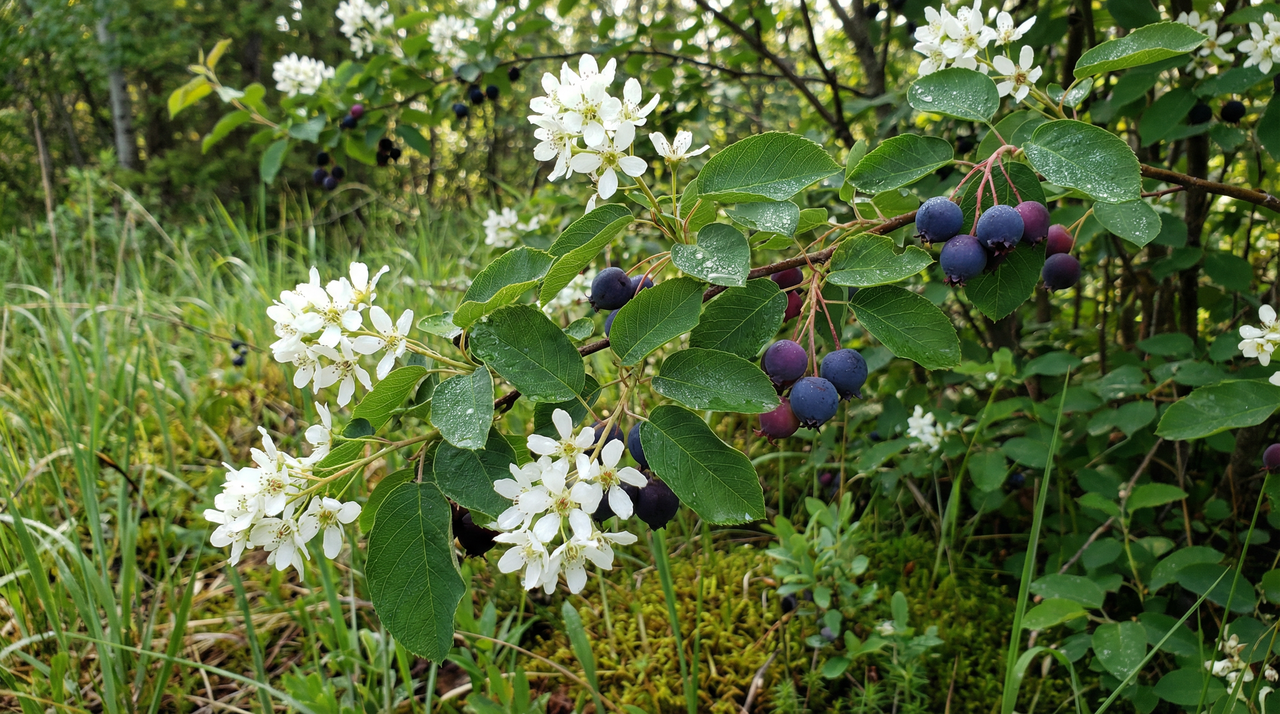
Here's something that still gets me every year: serviceberry ripens before almost anyone is paying attention. Most backyard fruit growers are out there anxiously monitoring their strawberries, maybe side-eyeing the apple blossoms, and the serviceberry has already fruited and given half its crop to the cedar waxwings without a single person noticing. That's the strange irony of a plant that Indigenous communities across North America considered a survival food, a medicine cabinet, and a ceremonial gift. It fed people through lean springs for centuries, and now it hangs heavy and ignored in suburban parking lots, landscaped as pure ornament, because we stopped knowing what we were looking at.
The berries taste like a blueberry that spent a summer daydreaming about almonds. I mean that sincerely. There's a warmth to a fully ripe Saskatoon that no blueberry has ever matched in my experience, and I've grown both in the same guild, side by side, close enough to compare on the same afternoon. What nobody tells you when they hand you a serviceberry for the first time is that the flavor depends almost entirely on waiting. Pick it red and you'll wonder what the fuss is about. Pick it purple-black and slightly soft, when the sugar content has peaked and those almond notes have developed, and you'll understand immediately why this plant has a 10,000-year relationship with the people who knew it best.
Origin and History of Serviceberry (Amelanchier alnifolia)
Botanical Background and Native Range
Serviceberry is one of those genus-level success stories that spans an entire continent. The Amelanchier genus is built for resilience: long-lived, polycarpic (meaning it flowers and fruits year after year rather than burning out after a single reproductive cycle), and morphologically plastic enough to thrive as a knee-high prairie thicket or a 30-foot riparian tree depending on where it puts its roots down.[1][2] Most specimens live 30 to 50 years, and in favorable conditions some push past 100.[3][4] In my experience growing both western and eastern forms, that habitat plasticity is the first thing you notice: the same genus that produces a compact 4-foot shrub on a dry Saskatchewan hillside will shoot to 20 feet in a moist Pacific Northwest draw.[5][6]
Saskatoon (Amelanchier alnifolia) anchors the western side of the continent, ranging from Alaska through western Canada and into the northwestern United States, from sea level up into montane terrain.[7] Eastern North America has its own serviceberry cohort: Downy serviceberry (A. arborea) stretches from Nova Scotia south to Florida and Texas,[8] Canadian serviceberry (A. canadensis) spans 36 U.S. states and 4 Canadian provinces primarily east of the Mississippi,[9] and Allegheny serviceberry (A. laevis) covers much of the same territory from Nova Scotia to Florida.[10] The genus, in other words, has been shaping North American landscapes across nearly every biome for a very long time.
Visual Characteristics and Identification
Across the genus, serviceberries are deciduous, multi-stemmed shrubs or small trees that typically reach 6 to 30 feet, often suckering into thickets over time.[5] The spring flower show is the first thing most people notice: small white five-petaled blossoms arranged in drooping clusters, appearing just as the leaves are emerging.[11] After pollination, the fruits progress from green to red to deep purple-black, each berry roughly the size of a blueberry and containing a handful of small hard seeds.[12] That color sequence is a useful ripeness cue I'll keep returning to throughout this guide. Leaves emerge with a reddish blush in spring, mature to dark green through summer, and then ignite in yellows, oranges, and reds come autumn.[5] I think the fall color rivals blueberries for sheer warmth, and since both are in the same family, they layer beautifully together in an edible landscape.
Species identification within Amelanchier is genuinely tricky because hybridization is common across the genus.[13][14] After mislabeling a few plants in my early nursery days, I now use leaf pubescence as my first field mark: Downy serviceberry (A. arborea) has soft greyish fuzz on leaf undersides and petioles,[15] while Allegheny serviceberry (A. laevis) is completely smooth and glossy at maturity.[16] I label every serviceberry in my collection with both species name and collection location now, because garden-center plants sold under incorrect names are far more common than they should be.
Traditional and Cultural Uses by Indigenous Peoples
Long before European contact, serviceberry was a staple. Indigenous peoples across western North America, including the Salish, Nez Perce, Blackfoot, and Cree, harvested Saskatoon berries as a core food, eating them fresh, drying them for winter, and mixing them with rendered fat and dried meat to make pemmican, one of the most calorie-dense portable foods ever developed on this continent.[17] Bark and root teas treated stomach ailments, diarrhea, colds, and eye infections.[18][19] The plant held ceremonial and spiritual roles as well, appearing in feasts, offerings, and oral traditions as a symbol of sustenance and resilience.[20] Similar patterns of food, medicine, and ceremonial use appear with eastern serviceberries across dozens of nations, showing how broadly and deeply the genus was woven into Indigenous life.[21]
The Lewis and Clark Expedition produced the earliest European-American written documentation of the plant as an edible berry in 1805 and 1806.[22] Commercial cultivation followed slowly: the University of Saskatchewan began developing Saskatoon cultivars around 1900, with the first named varieties released in the 1940s, and modern production has since expanded into British Columbia and Oregon's Willamette Valley.[23] I try to be clear with clients that while I grow and harvest this fruit, the ceremonial and medicinal knowledge belongs to the communities who developed it. The sustainable harvest guideline of taking no more than 20 to 30 percent of any patch isn't a suggestion.[24] For me, it's the minimum standard for ethical engagement with a plant that has sustained entire cultures.
Etymology, Ornamental History, and Fun Facts
The name "serviceberry" may trace to its resemblance to the European service tree, or to the frontier tradition of holding burial services when its spring blooms appeared after the frozen ground finally thawed. "Shadblow" and "shadbush" come from its flowering time coinciding with the annual shad fish migration up eastern rivers. "Juneberry" simply nods to when the fruit ripens.[25][26] Three names, one plant, each one a small window into how different cultures paid attention to the same seasonal rhythms.
European gardeners figured out what North American Indigenous peoples had always known: this plant earns its space in any landscape. Amelanchier lamarckii, a hybrid of eastern North American parentage, has been cultivated in Europe since the 18th century and holds an RHS Award of Garden Merit.[27] Serviceberries across the genus consistently earn ornamental ratings of 8 to 9 out of 10 for multi-season interest, covering spring flowers, summer fruit, fall foliage, and attractive winter bark.[28] A North American native that became a beloved European ornamental before it was widely appreciated back home feels like a very on-brand story for this continent's flora.
Serviceberry Varieties and Where to Buy Them
The genus Amelanchier is genuinely one of the more confusing groups of native plants to shop for, and I say that with affection. You'll see the same cultivar name listed under three different species, plants sold simply as "serviceberry" with no further identification, and nursery tags that seem to have been written by someone who gave up halfway through. Before you throw your hands up, know that this is a feature of the genus rather than a failure of the industry: serviceberries hybridize so readily that strict species attribution is often impossible, even for botanists.[29][30] What matters more than the species name on the label is understanding what a given cultivar actually does: its mature size, its fruit quality, its fall color, and its disease resistance relative to your climate.
Popular Saskatoon Serviceberry Cultivars
If you're growing primarily for fruit, Amelanchier alnifolia, the saskatoon berry plant, is where the serious breeding work has happened. The University of Saskatchewan has been selecting and releasing improved cultivars since the 1920s, and that program has now produced over twenty named selections bred specifically for prairie hardiness, high yields, better flavor, and disease resistance.[31][32] These aren't ornamental afterthoughts; they're the result of decades of selection pressure aimed at productive, reliable cropping in genuinely difficult conditions.
Among the cultivars I'd call workhorses, 'Northline' and 'Smoky' come up repeatedly. 'Northline' is cold-hardy, powdery mildew resistant, and can yield 10 to 15 kilograms per mature bush.[33] I've grown both 'Northline' and 'Smoky' side by side, and what I've noticed is that 'Smoky' tends to ripen more uniformly across the bush, which makes harvest a lot more satisfying, while 'Northline' seemed less rattled by the occasional late-spring humidity spike. 'Smoky' itself is drought-tolerant once established and regularly hits 15-plus kilograms per bush with large, flavorful berries.[34] 'Honeywood' pushes berry size to 18 millimeters and is vigorous enough to handle mechanical harvest on commercial scales.[33]
For smaller gardens, 'Regent' is the one I recommend most often: a compact shrub topping out around 1.5 meters, with high sugar content and enough ornamental appeal that it earns its spot even in a front border.[34] 'Nanaimo' ripens early with excellent flavor and is well-suited to the Pacific Northwest. 'Boreal' and 'Polar' push the hardiness envelope for the coldest prairie climates, though their berries run tarter than the sweeter selections.[33][35] I always cross-reference a cultivar's reported powdery mildew resistance against my local humidity patterns before committing; 'Pembina', for instance, produces gorgeous large berries but is notably susceptible to mildew in humid summers.[33]
Ornamental Selections from Related Serviceberry Species
Once you move past the saskatoon, the other serviceberry species lean more ornamental, though most still fruit quite well. 'Autumn Brilliance' is a good example of the naming chaos I mentioned: it appears under A. canadensis, A. arborea, A. laevis, and elsewhere, which initially drove me a little crazy until I accepted that it's simply a widely propagated selection with outstanding orange-red fall color regardless of which tag it's wearing.[29] Now when I shop, I focus on the nursery's description of disease resistance and fall color intensity rather than getting attached to the species attribution.
Among the Allegheny serviceberry selections (A. laevis), 'Ballerina' offers abundant flowers and good fruiting in an upright form, while 'Princess Diana' brings a vase shape and exceptional bloom display.[36] For a columnar option in a tight space, 'Obelisk' from A. arborea fits where a standard tree won't.[37] The juneberry A. lamarckii delivers particularly spectacular autumn interest; 'Atlantique' runs through yellow into deep maroon, which is one of the more dramatic fall sequences I've seen from a small tree.[38]
Sourcing Serviceberry Plants and Seeds
Amelanchier alnifolia is commercially cultivated in Washington and Oregon and widely available across USDA zones 2 through 7 from nurseries including One Green World, Nature Hills, Burnt Ridge Nursery, and Fall Creek Nursery; Sheffield's Seed Company carries seed if you want to start that route.[39][40] Seedlings typically run $5 to $15, potted plants $20 to $50, and larger specimens up to $300 depending on size and cultivar.[41] The related species like A. canadensis, A. laevis, and A. lamarckii are available through many of the same suppliers, though A. sanguinea is genuinely rare and I've only tracked it down through specialty native-plant societies; the hunt was worth it.[42][43]
My consistent advice is to prioritize locally adapted stock whenever possible. I've watched mail-order plants from distant suppliers underperform compared to regionally sourced ecotypes from local native-plant nurseries; the fruit set and drought tolerance are simply better when the genetics have already been tested in your climate.[5] None of the Amelanchier species are considered invasive, so you can plant with confidence that you're adding to ecological diversity rather than subtracting from it.[5] Buying named cultivars from a reputable source also guarantees you're getting the fruit size, ripening time, and disease resistance described here rather than a seedling lottery.
How to Propagate and Plant Serviceberry
Serviceberry sits in that rewarding category of plants that can be started multiple ways, but where your choice of method determines not just how long you wait for berries, but whether you get the plant you actually wanted. I've seen gardeners commit fully to growing from seed, which is a beautiful and ecologically meaningful path, and I've also watched them feel burned when the resulting plants fruited inconsistently or not at all for five years. Understanding the biology upfront saves a lot of disappointment.
Seed Characteristics and Propagation Methods
Serviceberry seeds are small, oblong to ovoid, and dark brown, each enclosed in a hard stony endocarp surrounding an underdeveloped embryo that germinates hypogeal, meaning the cotyledons stay underground while the shoot emerges.[6][44] The good news is that these are orthodox seeds: you can dry them down to 3-10% moisture and store them in airtight containers at cool to freezing temperatures, maintaining viability for five to twenty years.[45][46] That longevity is useful if you're banking seed from a particularly good wild plant. What you cannot shortcut is dormancy. Before germination will occur, seeds need 90-120 days of cold moist stratification at 1-5°C (34-41°F), after which they'll germinate at 15-25°C with rates anywhere from 20-70% depending on seed freshness and treatment.[29][47] Untreated seed typically falls below 20% germination, which explains why so many first attempts are discouraging. Fall sowing directly into the garden works beautifully as a natural stratification workaround if you're not in a hurry.
After starting dozens of batches of stratified serviceberry seed, I've found that fresh, locally sourced seed from thriving wild or cultivated plants consistently outperforms older commercial lots, both in germination percentage and in the vigor of the resulting seedlings once they go into the ground. Seed size actually varies clinally across the native range, with larger seeds coming from drier or more northern populations, which makes sense: those bigger seeds carry more endosperm to fuel establishment under stress.[48][49] If you're growing for restoration or wild plant diversity in a food forest, sourcing from a local ecotype matters enormously.
Here's the limitation that seed-growers need to sit with: Amelanchier species are primarily outcrossing and self-incompatible, which means seedlings are genetically variable and not true-to-type.[50][51] You'll get variation in fruit size, flavor, growth habit, and disease resistance across a batch of seedlings from the same parent. For a food forest where genetic diversity is a feature, that's fine. For a named cultivar like 'Thiessen' or 'Smoky', you need vegetative propagation.
Softwood cuttings taken in June or July from new growth, 4-6 inches long with 2-3 nodes, treated with IBA rooting hormone at 1000-3000 ppm, and stuck in a perlite-sand or peat-perlite mix under mist and bottom heat (65-75°F) achieve 50-90% rooting in three to eight weeks.[50][52] Semi-hardwood and hardwood cuttings are less predictable, and I rarely bother with them. For low-tech clonal propagation without a mist bench, layering (simple, tip, or mound) is reliable and achieves 40-90% success with roots forming in a single season.[29] I use layering regularly to expand a particularly productive multi-stem specimen without any of the equipment softwood cuttings require. The plant does its own work.
Grafting, typically cleft, whip-and-tongue, or budding in late winter or early spring onto compatible Amelanchier rootstocks, achieves 60-90% success and accelerates fruiting to two to five years.[53][54] Early on, I ruined a perfectly good season's work by grafting onto a Prunus understory rootstock out of convenience. Incompatibility is not a subtle problem; the graft fails or the union fails later. Stick strictly to Amelanchier alnifolia, A. laevis, A. canadensis, or A. arborea as understocks and source them from reputable native-plant nurseries. Commercial producers sometimes use tissue culture for mass clonal production, but that's lab territory and not relevant for the home gardener or small food-forest designer.
Soil, Site Selection, and Planting Technique
Drainage comes first, full stop. Serviceberry tolerates a surprisingly wide range of soil textures, from sandy to clay, and pH from 4.5 to 8.0, but it will not tolerate waterlogged roots.[29][55] Poor drainage leads to root rot, and once you've lost a plant that way, you remember it. The root system is shallow and fibrous, typically occupying the top 12-24 inches, and it's sensitive to compaction in a way that reminds me of young blueberry roots: both want loose, well-structured soil that lets them explore freely, and both sulk when compacted or waterlogged. For the best performance, target loamy or sandy loam with a pH of 6.0-7.5 and organic matter around 3-5%.[29] I do a soil test before planting and amend gradually rather than trying to overcorrect in one season.
Above pH 7.5, watch for interveinal yellowing on young leaves: that's iron deficiency chlorosis, and it will reduce vigor and fruit quality if left unchecked.[56][57] I've caught it early each spring by scanning the newest growth first. My immediate rescue is a foliar chelated-iron spray, which greens the leaves back up within a week while the soil sulfur I applied at the same time works more slowly toward a longer-term pH correction. Below pH 5.5, aluminum toxicity can damage roots.[56] Mycorrhizal inoculation at planting can buffer some of the nutrient-uptake challenges in difficult soils, particularly for phosphorus.
For sunlight, serviceberry wants a minimum of six hours of direct light for strong flowering and fruiting.[58] In hotter climates, some afternoon shade with consistent soil moisture prevents leaf scorch. Once established, the plants show real drought tolerance, but during their first two seasons, and especially during bloom and fruit set, consistent moisture matters.[59] On a practical note, gardeners working with heavy clay that doesn't drain well often have better luck starting serviceberry in a raised bed or large container while they improve the native soil over a few seasons.
Spacing, Timing, and Establishment
Saskatoon serviceberry reaches 6-20 feet tall with a 10-15 foot spread in its typical multi-stemmed form.[60] That mature bulk is easy to underestimate when you're looking at a two-gallon nursery pot. For ornamental or garden use, space plants 6-10 feet apart; for hedging, 4-8 feet; for a home orchard block, 10-12 feet in-row with 12-15 feet between rows; and for tree-form selections, plan for 15-20 feet.[60][29] In my food-forest guilds, I tend to plant multi-stemmed Saskatoon at around 8 feet, which gives enough air circulation to reduce mildew pressure while still creating a productive shrub-layer canopy. Larger-growing species like Allegheny or Canadian serviceberry will need the wider end of those ranges; if anything, err toward more space, not less.
Plant in early spring after the last frost, or in fall before the ground freezes.[61] Set the plant at the same depth it grew in the nursery container, with any graft union above the soil line. Tease out any circling roots before backfilling with amended native soil, water deeply and thoroughly, then mulch 2-4 inches deep while keeping mulch pulled back a few inches from the stem.[59] Bare-root stock follows the same approach. That first deep watering does more than you'd think: it settles air pockets and gets the roots in real contact with their new soil. I always inoculate with mycorrhizal fungi at this stage, working the powder directly onto the root ball before backfilling.
From Seed to First Fruit: Realistic Timelines
From seed, expect three to five years before you see a light first crop, and four to five years before full production.[62][63] Grafted or well-rooted nursery stock typically cuts that to two to three years.[59] The pattern holds across the genus, with Canadian serviceberry reaching reproductive maturity in two to four years, Downy and Allegheny more like three to five, and Juneberry sometimes blooming as early as year two but fruiting fully by years three to five.[64][65] Poor soil or suboptimal conditions can add a year or two to any of those estimates.
Once bloom begins (typically April to May), fruit develops over 40-90 days at optimal temperatures of 60-75°F, with Saskatoon running toward the longer end of that range at 60-90 days.[63][59] Cross-pollination improves both fruit set and berry size, so planting two or more individuals, or allowing a nearby wild population to do the work, is worth considering from the start.
Don't be discouraged if your seedlings look spindly in year two. I've watched mine explode in growth during year three once the root system has had time to explore the soil and connect into the mycorrhizal network I inoculated at planting. The above-ground growth you see in years one and two is often modest precisely because the plant is investing underground. If you want berries sooner rather than later, buying well-rooted two- or three-year nursery stock or grafted plants onto established rootstock is genuinely the fastest path, and for a permaculture designer working on an established timeline, there's no shame in that shortcut.
Serviceberry Care Guide: Growing and Maintaining Amelanchier alnifolia
Serviceberry is about as close to a set-it-and-forget-it food shrub as I've found in temperate growing, but that reputation hides a few specific pressure points that can cost you an entire fruit crop if you're not paying attention. The plant itself is remarkably tough. What trips up most growers is timing: knowing when to intervene and, more often, when to leave it alone.
Water Needs for Serviceberry Plants
The first two years are when I pay the most attention. I've started flagging every new serviceberry with a bright marker and writing a watering schedule right on the tag, because the difference in root establishment between consistently watered young plants and neglected ones is dramatic. Young plants want 1–2 inches per week, which usually means watering every two to three days until they're settled in.[66][29] Overwatering in poorly drained soil, though, opens the door to Phytophthora root rot, so drainage matters as much as frequency.
Once established, after about three years, serviceberry can shrug off four to eight weeks of dry soil and still look presentable.[67] That drought tolerance is real, but it doesn't extend to flowering and fruit set, where dry conditions visibly reduce yield. I aim for about an inch per week during those spring windows. A 2–4 inch layer of organic mulch around the root zone, kept back from the trunk, handles a surprising amount of this work on its own: it moderates soil temperature, holds moisture, and keeps the pH drift toward alkalinity in check.[58][29]
Sunlight Requirements
Six hours of direct sun is the practical minimum for decent fruiting.[58] In hotter gardens, I've learned to position serviceberries where they get morning light and some afternoon relief, because prolonged heat causes leaf scorch, bark sunscald, and premature leaf drop, especially on young plants still building their root systems.[58] Taller companions to the west work beautifully for this in zone 7 and south.
Feeding and Fertility Needs
Serviceberry is genuinely light-feeding compared to something like raspberries or blueberries. If a plant is putting on 12–18 inches of new growth annually, I don't fertilize at all.[67][59] The plant evolved in lean native soils, and it performs accordingly well with compost and well-rotted organic matter rather than synthetic inputs.[68]
The one thing I always do before planting is test the soil. Iron chlorosis, where young leaves turn yellow between the veins while older leaves stay green, is the most common problem I see on serviceberries planted in alkaline spots, and it's almost entirely preventable.[69][70] A simple pH test saves years of frustration. If soil tests do indicate a nutrient gap, a balanced slow-release fertilizer like 10-10-10 or 5-10-10 applied in early spring before bud break is the right move, with phosphorus and potassium being more relevant to fruit production than nitrogen.[69] High-nitrogen applications push lush vegetative growth at the expense of flowers, lower cold hardiness, and invite pest pressure.[69][71] Stop feeding by midsummer; late-season applications push tender growth that winter will punish.[72]
Frost Tolerance and Protection
Winter cold is rarely the threat. Saskatoon serviceberry handles -40 °F without complaint,[30] and even eastern species like Amelanchier canadensis push down to around -30 °F.[73] The real threat arrives in April, when a single night below 28 °F can wipe out swelling flower buds, and open blooms are gone by 25 °F.[74][75] I've lost entire crops this way. Now I plant on the highest micro-elevation available (cold air drains downhill), keep floating row covers folded and ready through late spring, and rely on mulch to buffer soil temperature from below.[76] Row covers raise canopy temperature by 2–5 °C on a clear night, which is often enough to protect bloom.
Heat Tolerance and Summer Stress Management
Saskatoon is rated for AHS Heat Zones 1–6, and it can endure summer highs around 100 °F without structural damage.[58] Prolonged temperatures above 86 °F during flowering and fruit development are a different problem: pollination suffers, fruit set drops, and yields decline noticeably.[77] The mitigation toolkit overlaps almost entirely with the water and sunlight advice already covered: deep weekly watering, organic mulch, afternoon shade from companion plantings, and choosing a heat-tolerant cultivar from the start.[78] 'Regent' shows consistently better performance in warmer spots and is worth considering in marginal zones.
Pruning, Maintenance, and Seasonal Rhythm
Serviceberry produces its best fruit on one-to-three-year-old wood, which means the pruning strategy is about renewal rather than shaping.[79] Every dormant season, in late winter before bud break, I remove the oldest 20–30% of canes at the base.[79][59] Once I started doing this religiously, my harvests roughly doubled. Old wood just doesn't produce the way young canes do, and I'd spent several seasons wondering why my plants looked healthy but yielded modestly.
On young plants, the goal is to train three to five strong stems and a clear structure.[79] On mature shrubs, I also remove dead, damaged, or crossing branches and cut back basal suckers unless I'm deliberately expanding a hedge or thicket. When fruit clusters form, thinning them to pea-sized berries increases individual berry size and prevents branch breakage under a heavy crop.[80] Sharp, sterilized tools are non-negotiable, especially given serviceberry's susceptibility to fire blight.
Seasonal Care Calendar for Serviceberries
Serviceberry's calendar runs from winter dormancy through bud break in March or April, flowering from April into June depending on latitude, fruit ripening from June through August, and then vibrant fall color before leaf drop.[81][82] Once I started reading the plant's own phenological cues rather than working off a fixed calendar, everything got easier: prune during dormancy, mulch before the ground freezes, skip overhead irrigation during the humid bloom window, and clean up fallen diseased material in autumn before it overwinters as spore load.[83][29] A properly sited serviceberry with good air flow, reasonable drainage, and annual cane renewal asks remarkably little in return for years of reliable fruit.
Harvesting Serviceberry: Timing, Technique, and Flavor
When to Harvest Serviceberries: Ripeness Cues and Seasonal Timing
The single most important thing I've learned about harvesting serviceberry is this: wait. Once those first berries start turning, it's tempting to pick immediately, but waiting another two or three days after that deep purple sets in makes a dramatic difference in sweetness and texture. Ripe fruit should be a uniform purple-black, sometimes with a slight whitish bloom, measuring roughly 6-12 mm across, and it should detach with the gentlest twist rather than any real tug.[84][85] Brix readings at peak sweetness hit 12-18 percent, with the best fruit landing above 15.[84] Anything red-tinted is still unripe, still astringent, and still capable of causing mild stomach upset.[86][87]
Timing varies more than most guides admit. Saskatoon (Amelanchier alnifolia) ripens roughly 60-90 days after bloom, generally late June through early August, while eastern species like Canadian serviceberry can finish as early as late May or June.[84][88] In my garden, that exact window shifts noticeably year to year depending on how the spring unfolded, so I've stopped trusting the calendar and started checking the bushes daily once color break begins.
How to Harvest and Handle Serviceberries
Morning picking is the way to go. Cool temperatures help the fruit hold its texture, and I approach it much like harvesting blueberries: a gentle rolling twist, drop into a shallow container, and move on. Serviceberries bruise easily, so deep buckets that let berries pile up on themselves are worth avoiding.[84][85] Young plants typically start producing in year two or three, with the full harvest window stretching two to four weeks per season.[80] For larger plantings, mechanical shakers exist, but for home growers hand-picking is almost always the better choice for fruit quality.
Post-harvest handling matters more than people expect. I refrigerate or freeze my harvest the same day to lock in peak flavor and nutrition. Research backs this up: cooling to 0-5°C within four to six hours, then storing at 0-1°C with high humidity in ventilated containers, extends shelf life to two to four weeks.[89][90] Sort out any crushed or damaged fruit right away; decay spreads fast through a container of small soft berries.
Flavor, Yield, and Safety Considerations
The ripe berries of Amelanchier alnifolia are the edible prize here, and they're safe in normal eating quantities.[5] The seeds inside do contain minor cyanogenic compounds, but at the amounts present in a handful of fruit eaten fresh, they're negligible.[91] What matters far more is proper identification. I always double-check that I'm picking true serviceberry with its multiple tiny seeds rather than chokecherry, because chokecherry has a single pit and carries real cyanide risk if misidentified and processed in volume.[92][93] Buckthorn, nightshade, and cotoneaster are also out there in similar habitats, so know what you're looking at before you eat it.
Flavor-wise, fully ripe saskatoon berry is something genuinely surprising the first time you taste it: sweet-tart, blueberry-adjacent, but with a distinct almond-like undertone from benzaldehyde compounds that lingers pleasantly.[94][95] I find that almond note is most pronounced in fruit harvested after a cool spell, and that tracks with research showing cooler northern climates generally produce sweeter, more aromatic berries.[87][96] Cultivar choice also shapes the experience: Honeywood tends toward sweetness while Northline runs more robust and tart. A mature bush yields anywhere from 2 to 15 pounds per season,[59] and those antioxidant-rich berries, loaded with anthocyanins, vitamin C, and dietary fiber,[97] are worth every day of patience you put into waiting for full ripeness before picking.
Serviceberry Preparation and Uses
Culinary Uses of Serviceberry Berries, Flowers, and Leaves
Ripe Saskatoon berries are genuinely one of the most versatile fruits I've worked with from a native shrub. They're edible straight off the branch, but they also hold up beautifully in pies, jams, wines, syrups, sauces, and baked goods.[5][98] The flavor is that curious blend of blueberry and apple with a quiet almond note underneath, which makes sense given they're in the rose family alongside cherries and apricots. That almond quality comes from the same cyanogenic chemistry you'd notice in apricot kernels, but in the ripe fruit it reads as depth rather than anything alarming. Paired with chocolate, vanilla, cinnamon, or toasted nuts in a pie or crumble, it's genuinely special.
One thing I learned quickly harvesting these with clients: they're fragile. Shelf life tops out at two to three days refrigerated,[59][99] so I always recommend processing the same day you pick. Freezing preserves flavor beautifully for up to a year, cooking mellows tartness and intensifies sweetness, and drying concentrates the sugars into something raisin-like, though some of the aromatic compounds do fade.[100] Nutritionally, they're comparable to blueberries, delivering around 3.7 grams of fiber, 13.4 mg of vitamin C, and roughly 440 mg of anthocyanins per 100 grams, plus potassium, calcium, iron, and vitamin A.[101][102]
The berries aren't the only edible part. The flowers of Saskatoon and related serviceberries like Canadian and Downy are mildly sweet with a nutty flavor and work nicely scattered in salads or as garnishes.[103][104] Young leaves are edible raw or cooked and can be brewed into an herbal tea.[103] The same culinary versatility extends across the genus: juneberries, Allegheny, Downy, and others all produce sweet-tart fruit used fresh, dried, in pies, jams, and wines with the same basic approach.[26][93] For Plains Indigenous peoples, Saskatoon berries were a critical staple, dried and worked into pemmican alongside meat and fat for sustaining travel and winter stores.[19][98] That's a recipe worth revisiting.
Traditional and Medicinal Preparations
Bark decoctions and leaf infusions from Saskatoon have a long ethnobotanical history as tonics for colds, sore throats, stomach complaints, and eye inflammations, among other uses.[105][19] Across the broader genus, bark, roots, and leaves of canadensis, arborea, sanguinea, and others were used in poultices and infusions for gastrointestinal ailments, fevers, skin inflammation, and as general astringent tonics.[106][107] Modern researchers have begun examining polyphenol-rich fruit and leaf extracts for antioxidant and anti-inflammatory properties,[108] but standardized dosages and large clinical trials don't exist yet. I take these uses seriously as a designer who has studied Indigenous ethnobotanical resources for edible landscape work, and I always recommend engaging with Native-led conservation organizations and treating these preparations with the respect they're owed rather than casual experimentation.
Non-Food and Material Uses
When I've pruned mature serviceberry specimens, the cut wood is noticeably dense and springy in a way that makes sense once you know it was prized for arrows, bows, tool handles, fishing traps, and small furniture.[109][106] Bark and stems provide fiber for basketry and cordage, and roots or bark of some species yield a red dye used ceremonially.[110] For permaculture designers, that material value is a quiet reminder that a well-placed serviceberry hedge isn't just food and wildlife habitat; it's a source of craft material that connects the garden to a much older relationship between people and this genus.
Serviceberry Health Benefits and Medicinal Uses
Most people who plant a serviceberry are thinking about birds or spring flowers. What they're less likely to know is that they're growing a plant with one of the deeper ethnobotanical records of any North American native shrub, one that Indigenous peoples across the continent have relied on for food, medicine, and ceremony for centuries. That history deserves to be the starting point for any honest conversation about what this plant can do for human health.
Traditional Medicinal Uses of Serviceberry by Indigenous Peoples
Saskatoon berry has long been a dietary cornerstone across the Pacific Northwest and Great Plains, eaten fresh, dried into cakes, and rendered into pemmican as a high-calorie winter staple.[19][111] But beyond the kitchen, the whole plant was a medicine cabinet. The Blackfoot and other Plains nations used bark decoctions to treat diarrhea and dysentery, and the fruits and roots for broader stomach complaints.[112][113] Leaf teas addressed coughs, colds, and sore throats, and bark preparations were used for respiratory issues more broadly.[5][114] Topically, bark washes were applied to cuts, burns, and sores, while leaves were prepared as poultices for eye infections and inflammation.[5][115] Among Pacific Northwest tribes, bark was also employed in childbirth-related applications, and the Cherokee used Amelanchier canadensis and Amelanchier arborea as gynecological aids.[114][116]
That's a broad therapeutic footprint, spanning digestion, respiration, wound care, and reproductive health, and it reflects generations of careful observation. Modern science hasn't validated every one of those uses, and I think it's important to hold that honestly rather than either dismissing the tradition or overstating what the research confirms.
Modern Research: Antioxidant, Anti-Inflammatory, and Antidiabetic Properties
The most consistent finding across the research literature is potent antioxidant activity, rooted in the berry's dense profile of anthocyanins, flavonoids, phenolic acids, and vitamin C.[117][118] The mechanism goes deeper than simple free radical scavenging. Extracts activate the Nrf2 pathway, which upregulates the body's own antioxidant enzymes including HO-1, NQO1, SOD, and catalase, essentially teaching cells to defend themselves more efficiently.[119][120]
On the anti-inflammatory side, both Amelanchier alnifolia and Amelanchier canadensis show inhibition of NF-κB signaling, reduced pro-inflammatory cytokines like TNF-α and IL-6, and suppression of COX-2 and iNOS expression.[121][122][123] The antidiabetic data is genuinely compelling: Saskatoon extracts inhibit alpha-glucosidase (slowing carbohydrate digestion and blunting blood glucose spikes) and suppress alpha-amylase activity by up to 70% at concentrations comparable to acarbose, with supportive results in animal models.[124][125] In vitro work also points to anticancer potential through apoptosis and cell cycle arrest mediated by quercetin and cyanidin.[126][127]
The honest caveat: no large-scale human clinical trials have confirmed therapeutic efficacy for any of these mechanisms.[128][129] All of this is in vitro or animal-model data. While modern clinical studies are still catching up, the long history of safe use by Indigenous peoples combined with the compelling preclinical data gives me confidence in including serviceberry as a regular part of a healthy, regenerative diet. Just don't treat a handful of berries as a substitute for medical care.
Nutritional Profile of Serviceberry Berries
A 100g serving of raw Saskatoon berries delivers 45 to 53 calories, 10 to 12.5g carbohydrates, up to 5g dietary fiber, and modest protein around 1g.[130] The micronutrient picture is more interesting: vitamin C ranges from 2.4 to nearly 26mg per 100g depending on cultivar and study, manganese hits 23% of the daily value, and potassium lands at 161mg per 100g.[130][131] The real star is the phenolic fraction: up to 500mg anthocyanins per 100g (primarily cyanidin glycosides), 10 to 50mg flavonols like quercetin, and 1.5 to 2.5g total phenolic compounds per 100g fresh weight, putting antioxidant capacity on par with blueberries.[132][133] That comparison isn't marketing; it holds up across ORAC, DPPH, FRAP, and ABTS testing.[134] I frequently recommend serviceberry as a native alternative to blueberry in regenerative edible landscapes specifically because of this, and because it's far more adaptable across climates.
For those preserving a harvest: drying concentrates calories to 150 to 200 per 100g but can reduce total antioxidant activity by 10 to 30% through oxidation.[135] Cooking above 80°C degrades anthocyanins more significantly, with 20 to 40% reductions in antioxidants and 50 to 70% vitamin C retention.[136] Fresh is best for nutrient density, but cooked or dried is still worth eating.
Key Phytochemicals and Their Roles
The phytochemical profile of Saskatoon reads like a who's-who of functional plant compounds: cyanidin-3-glucoside and malvidin-3-glucoside leading the anthocyanin fraction, quercetin glycosides and catechins among the flavonoids, chlorogenic acid and related phenolic acids, plus tannins throughout.[137][138] These polyphenols account for 60 to 80% of total antioxidant activity in the berry. Different plant parts show distinct profiles: fruits concentrate anthocyanins and phenolics; leaves run high in flavonoids and tannins; bark carries up to 15% tannins by dry weight; and the seed oil contains unsaturated fatty acids, tocopherols, and phytosterols.[136][139]
What growers often don't realize is how much growing conditions shift these concentrations. In my experience working with clients across varying sites, plants in well-drained, slightly acidic soils consistently produce more flavorful, antioxidant-rich berries. The research backs this up: soil pH around 5.5 to 6.5, drought stress, or high UV exposure can increase phenolic accumulation by up to 30%.[138][140] Early-season fruits from June through July also trend higher in phenolics, and cultivars like 'Martin' and 'Northline' consistently outperform in antioxidant assays.[138] Across the broader genus, Amelanchier lamarckii has shown notably high ORAC values, while Amelanchier canadensis typically runs 20 to 50% lower in phenolics and anthocyanins than Saskatoon.[141][142] These same secondary metabolites also serve ecological functions: defending against herbivores and pathogens, filtering UV, and drawing in pollinators.[143] The chemistry that benefits us is also what makes the plant work ecologically.
Safety Considerations and Potential Contraindications
Ripe serviceberries are safe to eat, confirmed edible across the genus, and non-toxic to dogs according to the ASPCA.[144][145] I've eaten serviceberries for years without issue, but I always tell clients that the seeds, leaves, and unripe fruit contain cyanogenic glycosides (primarily prunasin) that can release hydrogen cyanide if crushed and consumed in significant quantity.[146] Wilted foliage can also be hazardous to livestock, particularly cattle.[147] The practical guidance: enjoy the ripe pulp, cook when preserving, and leave the pits behind. Cooking and ripening both degrade these compounds substantially.
A few other notes worth knowing: people with Rosaceae family allergies (to apples or cherries, for instance) may experience cross-reactivity,[148] and the pollen itself can trigger reactions in sensitive individuals. Theoretical interactions with blood thinners are possible given the antioxidant activity, and some sources recommend caution during pregnancy due to limited safety data.[149][150] At normal dietary amounts, roughly half to one cup of ripe berries daily, no significant side effects have been reported. As with any wild or semi-wild harvest, proper identification matters: serviceberries can be confused with nightshade or baneberry, neither of which you want in your bowl. Wait for full ripeness, know your plant, and the rewards are well worth it.
Serviceberry Pests and Diseases
Serviceberry holds its own pretty well in the garden, especially when it's planted where it actually wants to be. In native habitats and well-maintained food forest settings, Amelanchier alnifolia shows genuine moderate pest resistance, though that resilience can erode quickly under stress, humidity, or in overly coddled cultivation.[151][29][152] Part of that baseline toughness comes from the plant's own chemistry: phenolic compounds, tannins, flavonoids, and cyanogenic glycosides all reduce palatability and digestibility for herbivores, while physical traits like thick leathery leaves, trichomes, and a tough cuticle make casual browsing less rewarding.[153][154] I've noticed deer will pass right over my serviceberries to hit softer-leaved shrubs nearby, which I attribute more to leaf texture and chemistry than to luck.
Common Insect Pests of Serviceberry
The insect pressure you're most likely to encounter falls into three loose categories. Foliage feeders are the most common: aphids curl leaves, produce honeydew, and invite sooty mold; Japanese beetles skeletonize; leafminers, sawfly larvae, and pear slugs chew and rasp the leaf surface; and fall webworms build silken tents in late summer. Fruit pests are a smaller but real concern, particularly spotted wing drosophila infesting ripening berries. Stem borers show up mostly in stressed or neglected plants, tunneling into weakened wood, while spider mites flare during hot dry stretches and cause the telltale stippling that looks like nutrient deficiency until you look closer.[155][156][152]
Environmental stress is what opens the door to most of these problems. Drought, excess nitrogen, alkaline soils, poor drainage, and persistently wet spring weather all increase vulnerability significantly.[63][29] A plant in its preferred USDA zones 4-7, in well-drained soil, with good air circulation, rarely needs intervention. My approach in guild plantings has always been to start with good spacing and airflow rather than reach for a spray bottle, and I've found it genuinely effective at keeping pest pressure manageable.
For the cases where problems do appear, IPM is the right framework. Encouraging ladybugs, lacewings, parasitoid wasps, birds, and ants handles aphids, sawflies, and caterpillars without any inputs at all.[157] Bacillus thuringiensis (Bt) works well against early-stage webworms and sawfly larvae when biological pressure isn't enough. Cultural practices, including pruning for airflow, avoiding overhead watering, and not over-fertilizing with nitrogen, remove most of the conditions that invite trouble in the first place.[155][158] Insecticidal soaps or horticultural oils are there as a last resort, not a first response. Cultivar selection matters too: 'Regent' shows good resistance to powdery mildew and fire blight with moderate aphid tolerance, and deer and rabbit browsing is mostly a concern for young plants rather than established specimens.[159][29]
Major Diseases Affecting Serviceberry
The disease picture for Saskatoon serviceberry is similarly moderate overall, with specific vulnerabilities that cluster around fungal and bacterial issues: rust (Gymnosporangium spp.), leaf spot (Entomosporium and Septoria), powdery mildew, anthracnose, fire blight, and Phytophthora root rot in soggy soils.[160][29] Rust deserves special mention if you have junipers or cedars nearby; Gymnosporangium rusts require an alternate host in the Juniperus family to complete their life cycle, so removing junipers within the vicinity is genuinely more effective than any spray program.[161] I've recommended that simple fix to clients more times than I can count, and it works.
Fire blight is the disease that commands the most respect. It hits blossoms, new shoots, and eventually roots, causing the characteristic shepherd's crook wilt and blackening that's unmistakable once you've seen it. If you spot it, prune immediately, cutting 12-18 inches below any visible damage, and sterilize your tools between every cut; I've watched growers save young trees by following that protocol rigorously and lose others by hesitating.[162][163] Species choice matters here: Allegheny serviceberry (A. laevis) has notably good fire blight resistance, while A. canadensis and A. lamarckii are highly susceptible.[30] For preventative management, full sun siting, well-drained soil, and restraint with nitrogen fertilizer do more than copper sprays, though copper applied at bloom can help in high-pressure situations.[164]
Among cultivars bred for disease resilience, 'Regent', 'Smoky', 'Honeywood', and 'Northline' all show improved resistance to rust and fire blight.[165] 'Autumn Brilliance' and 'Cumulus' are worth considering for ornamental plantings where disease resistance is a priority.[29] Viral diseases like mosaic virus can occasionally occur but are far less documented and less commonly encountered than fungal or bacterial problems.[166] The honest takeaway with amelanchier diseases is that thoughtful site selection and cultivar choice will outperform any spray program, every time.
Serviceberry in Permaculture Design
If there's one plant I come back to again and again when designing food forests in cold climates, it's Saskatoon serviceberry. Most edible shrubs ask you to compromise: a little hardiness for more yield, or more drought tolerance for less flavor. Saskatoon doesn't ask that. It's hardy to USDA zone 2, surviving temperatures down to -50°F, with solid fruit production across zones 3-6 and the ability to push through summer heat up to 100°F.[81][167] That's a cold hardiness profile that outpaces most of the fruit-bearing shrubs we talk about in temperate permaculture, and it's the number one reason I recommend it to designers working in the northern Great Plains, upper Midwest, or anywhere east of the Rockies where winters are punishing.
Climate Adaptation and Hardiness Zones
Saskatoon's native range tells you a lot about where it thrives. It grows from Alaska and the Yukon south through the Great Basin and east to the Great Lakes, comfortable in dry continental and subarctic climates that would stress most Rosaceae relatives.[5][168] It manages on as little as 10 inches of annual precipitation once established, though 12-24 inches is its sweet spot, and it tolerates a wide pH range of 5.5-7.5 across habitats from open prairie to riparian edges to mountain sites above 10,000 feet.[5][169] For practical site selection, I aim for full sun in zones 3-5 where summers are short and cool; in zone 6 and warmer margins, a bit of afternoon shade and reliable soil moisture can extend its performance window.
Eastern serviceberries offer a different range of options for those outside Saskatoon's territory. Canadian serviceberry and downy serviceberry are suited to zones 4-9 with higher annual precipitation needs of 30-60 inches and better adaptation to the humid woodlands of the eastern seaboard.[9][170] On the opposite end, Pacific Northwest shadbush requires 40-100 inches of rain and 800-1200 chill hours, reflecting its coastal origins.[171][172] The genus gives you something for nearly every temperate North American climate, but above zone 7, disease pressure and poor fruit set make all of them a harder sell, and I'd generally reach for something else in hot, humid subtropical conditions.
Ecological Functions and Wildlife Support
I've designed a lot of shrub-layer guilds over the years, and few plants pull their ecological weight as consistently as serviceberry in early spring. Those white flowers open before the leaves emerge, often weeks before most fruit trees are in bloom, and native bees arrive immediately.[58][173] I've watched bumblebees work a Saskatoon hedge on mornings when nothing else in the garden was open. That early-season nectar window isn't decorative; it's a genuine lifeline for pollinator populations coming out of winter.
By summer, the dark purple-black berries feed more than 40 bird species including cedar waxwings, robins, and grosbeaks, plus mammals from bears down to squirrels, while the dense branching structure provides nesting sites and cover.[5][109] As a pioneer species, it colonizes disturbed ground, stabilizes slopes and riparian banks with fibrous roots, and builds the soil through leaf litter and mycorrhizal associations that improve phosphorus and nitrogen uptake in the surrounding microbiome.[63][174] Serviceberry doesn't fix nitrogen; it's Rosaceae, not a legume. I've stopped pairing it with that expectation and instead focus on its genuine strengths in wildlife value, soil stabilization, and fruit production. Those are real and substantial.
On pollination: the flowers are self-fertile but cross-pollination with a second plant or compatible cultivar within 50-100 feet can increase fruit set by up to 50 percent.[59][175] I've learned that interplanting with early-blooming companions and providing patches of bare ground for ground-nesting bees has noticeably increased berry set compared to isolated plantings. Late frosts during the bloom window are the biggest risk, and there's not much you can do about a hard freeze except choose a sheltered site, but you can hedge against lean pollinator years by avoiding any pesticide use during bloom and keeping diverse early-flowering perennials like native phlox and goldenrod nearby.[176][177]
Forest Garden Layer and Guild Design
Saskatoon is primarily a shrub-layer plant, though its growth plasticity from 3 to 20 feet means it can edge toward the understory layer depending on cultivar, site, and pruning regime.[81][178] In a temperate food forest, I typically place it beneath the canopy of oaks or maples where it gets filtered light, though full sun gives you the best yields. Expect 5-15 pounds of berries per mature bush after 4-5 years. It's not the fastest producer, but it earns its spot in a guild long before it fruits, through pollinator support, wildlife habitat, and soil building.
For guild companions, I've had good results pairing serviceberry with currants, hazelnuts, wild strawberries, and alliums.[179][180] Comfrey and wild ginger work well as ground-layer companions, and the structural contrast with nitrogen-fixing shrubs like Siberian pea shrub in colder zones rounds out what serviceberry can't provide on its own. One thing I'll flag from experience: serviceberry's suckering habit means it will form a thicket if you let it, which is wonderful for wildlife hedgerows but can crowd out less vigorous companions like strawberries over time. Give it room, or use a root barrier on the guild edge.
What I appreciate most about this genus from a regenerative design perspective is its four-season multifunctionality: spring flowers for pollinators, summer fruit for people and wildlife, vivid fall color, and attractive bark structure through winter. Add fire resilience through basal sprouting and the ability to anchor disturbed or degraded sites,[5][6] and you have a shrub that earns its place even in years when the birds beat you to the harvest.
The Berry That Made Me Rethink What "Useful" Means
I planted my first Saskatoon mostly for the birds. Then June came, and I stood in my food forest eating handfuls of warm berries that tasted like blueberry pie had a quiet conversation with almonds, and I realized I'd been underselling this plant to myself for years. It's not a blueberry substitute. It's not a backup option. It's the one I should have centered the whole guild around from the start.
Sources 180
- Saskatoon Berry - Natural Resources Canada ↩
- USDA Plants Profile ↩
- Saskatoon Berry Production Manual ↩
- Serviceberry (Amelanchier spp.) ↩
- USDA PLANTS Database - Amelanchier alnifolia ↩
- Flora of North America - Amelanchier alnifolia ↩
- Amelanchier alnifolia USDA Plants Profile ↩
- Amelanchier arborea ↩
- Amelanchier canadensis L. ↩
- USDA Plants Database - Amelanchier laevis ↩
- Missouri Botanical Garden Plant Finder - Amelanchier alnifolia ↩
- USDA PLANTS Database ↩
- Serviceberry Species Identification and Hybrids ↩
- Hybridization in Amelanchier ↩
- Amelanchier arborea (Downy Serviceberry) ↩
- USDA PLANTS Database – Amelanchier laevis ↩
- Ethnobotany of Amelanchier alnifolia ↩
- Ethnobotany of the Blackfoot Indians ↩
- Native American Ethnobotany Database ↩
- Saskatoon Berries: Cultural and Nutritional Significance ↩
- Native American Ethnobotany Database ↩
- Lewis & Clark Herbarium Collection Database ↩
- Oregon State University Extension: Saskatoon Berry Production ↩
- Sustainable Harvesting of Wild Berries in Canada ↩
- Serviceberry ↩
- Amelanchier arborea (Downy Serviceberry) ↩
- Amelanchier lamarckii ↩
- Horticultural Evaluation of Amelanchier alnifolia Cultivars ↩
- Serviceberry Cultivars for the Home Landscape ↩
- Amelanchier Cultivars ↩
- Saskatoon Berry Breeding Program - University of Saskatchewan ↩
- Saskatoon Berry Cultivar Development and History ↩
- Saskatoon Berry Cultivars - University of Saskatchewan Fruit Program ↩
- Saskatoon Berry Cultivars - University of Saskatchewan ↩
- Amelanchier alnifolia Cultivar Descriptions - Agriculture and Agri-Food Canada ↩
- Amelanchier laevis - Missouri Botanical Garden Plant Finder ↩
- Amelanchier arborea (Downy Serviceberry) ↩
- Amelanchier lamarckii ↩
- Saskatoon Berry Production Guide ↩
- Saskatoon Serviceberry (Amelanchier alnifolia) ↩
- Amelanchier alnifolia Varieties and Costs ↩
- Amelanchier sanguinea - Red Twig Serviceberry ↩
- Amelanchier lamarckii - Juneberry ↩
- Flora of North America: Amelanchier arborea (Downy Serviceberry) ↩
- Seed Information Database - Royal Botanic Gardens, Kew ↩
- Seed Storage of Woody Plants - USDA Forest Service ↩
- USDA Plant Guide: Amelanchier alnifolia ↩
- Variation in seed traits of Amelanchier alnifolia across precipitation gradients ↩
- Genetic variation in seed germination of Amelanchier alnifolia ↩
- Propagation of Saskatoon Berries ↩
- Self-Incompatibility in Amelanchier ↩
- Propagation of Serviceberry (Amelanchier spp.) ↩
- Propagation of Saskatoon Berries by Grafting ↩
- Grafting and Budding Nursery Crop Plants ↩
- Saskatoon Berry Production Guide ↩
- Chlorosis in Woody Plants ↩
- Iron Chlorosis in Trees and Shrubs ↩
- Serviceberry (Amelanchier) ↩
- Growing Serviceberries ↩
- Saskatoon Berry Production Manual ↩
- Amelanchier alnifolia - Missouri Botanical Garden ↩
- Growing Saskatoon Berries from Seed ↩
- Amelanchier alnifolia: Saskatoon Serviceberry ↩
- Amelanchier lamarckii ↩
- Amelanchier arborea (Downy Serviceberry) ↩
- Phytophthora Root Rot in Woody Ornamentals - Oregon State University ↩
- Saskatoon Serviceberry Care Guide ↩
- Soil Management for Berry Crops - Saskatchewan Ministry of Agriculture ↩
- Saskatoon Berry Production Guide - University of Saskatchewan ↩
- Iron Chlorosis in Trees and Shrubs ↩
- Serviceberry (Amelanchier) Care ↩
- Saskatoon Berry Production Guide - University of Idaho Extension ↩
- Amelanchier canadensis - Missouri Botanical Garden ↩
- Saskatoon Berry Production Manual ↩
- Frost Protection for Fruit Crops ↩
- Saskatoon Berry Production Guide ↩
- Heat Stress Effects on Saskatoon Berry (Amelanchier alnifolia) Fruit Development ↩
- Heat Stress Management in Berry Crops ↩
- Pruning Saskatoon Berries ↩
- Saskatoon Serviceberry (Amelanchier alnifolia) Production Guide ↩
- USDA Plants Database - Amelanchier alnifolia ↩
- Saskatoon Berry Phenology - University of Saskatchewan ↩
- Integrated Pest Management for Saskatoon Berries - Alberta Agriculture ↩
- Saskatoon Berries: Production and Marketing ↩
- Harvesting Saskatoon Berries ↩
- Amelanchier alnifolia ↩
- Saskatoon Berry Production Guide ↩
- Saskatoon Berry Production Guide ↩
- Postharvest Handling of Saskatoon Berries ↩
- Storage and Shelf Life of Berries ↩
- Cyanogenic Glycosides in Rosaceous Fruits ↩
- Chokecherry Identification and Toxicity - University of Minnesota Extension ↩
- Amelanchier Identification Guide ↩
- Saskatoon Berry Flavor Profile ↩
- Volatile Compounds in Fruits of Amelanchier alnifolia and Amelanchier laevis ↩
- Geographic Variation in Amelanchier Fruit Traits ↩
- Nutritional Composition of Serviceberries ↩
- Saskatoon Berry Institute - Culinary Uses ↩
- Post-Harvest Processing of Juneberries ↩
- Processing Effects on Flavor Compounds in Serviceberry ↩
- USDA FoodData Central - Saskatoon Berries, Raw ↩
- Sutherland et al. (2009). Food Chemistry ↩
- Amelanchier alnifolia - Wikipedia ↩
- Serviceberry: Identification and Uses ↩
- Ethnobotany of Amelanchier alnifolia - USDA Plants Database ↩
- Native American Ethnobotany Database ↩
- Traditional Uses of Serviceberry by Indigenous Peoples ↩
- Amelanchier arborea (Downy Serviceberry) Medicinal Uses ↩
- Saskatoon Berry - Amelanchier alnifolia ↩
- Amelanchier sanguinea (Red Serviceberry) ↩
- Saskatoon Berry (Amelanchier alnifolia) - Traditional Uses by Indigenous Peoples ↩
- Ethnobotany of the Blackfoot Indians ↩
- Medicinal Plants of Native America ↩
- Amelanchier alnifolia in Traditional Use ↩
- Ethnobotany of the Okanagan-Colville Indians of British Columbia and Washington ↩
- Native American Ethnobotany Database ↩
- Antioxidant and Antiproliferative Activities of Saskatoon Berry ↩
- Phytochemical Composition and Health Benefits of Saskatoon Berries ↩
- Antioxidant and Nrf2 Activation by Amelanchier alnifolia Extracts ↩
- Bioactive Compounds and Biological Activity of Saskatoon Berry (Amelanchier alnifolia Nutt.) ↩
- Anti-Inflammatory Effects of Amelanchier alnifolia Extracts ↩
- Pharmacological Activities of Saskatoon Berry (Amelanchier alnifolia): A Review ↩
- Phytochemical and Pharmacological Studies on Amelanchier canadensis ↩
- Anti-Diabetic Effects of Saskatoon Berry Polyphenols via Alpha-Glucosidase Inhibition ↩
- Anti-Diabetic Effects of Amelanchier alnifolia in Streptozotocin-Induced Diabetic Rats ↩
- Anticancer Potential of Amelanchier alnifolia Flavonoids ↩
- Cytotoxic potential of Amelanchier species against cancer cell lines ↩
- Pharmacological Properties of Amelanchier Species: A Review ↩
- ClinicalTrials.gov Search for Amelanchier ↩
- USDA FoodData Central - Serviceberries, raw ↩
- Nutritional Composition of Saskatoon Berries (Amelanchier alnifolia) ↩
- Phytochemical Composition of Saskatoon Berries ↩
- Phenolic Compounds and Antioxidant Properties of Serviceberry (Amelanchier sp.) Fruits ↩
- Antioxidant Capacity of Native Fruits: Serviceberry and Others ↩
- Drying Methods and Nutrient Retention in Berries ↩
- Effects of Processing on Antioxidant Capacity in Saskatoon Berries ↩
- Phytochemical and Pharmacological Importance of Amelanchier alnifolia ↩
- Phenolic Compounds and Antioxidant Activity of Saskatoon Berry (Amelanchier alnifolia Nutt.) Genotypes ↩
- Tannins from Bark of Serviceberry (Amelanchier alnifolia): Extraction and Bioactivity ↩
- Influence of Soil and Environmental Stress on Phenolics in Saskatoon Berries ↩
- Phytochemical and Pharmacological Review of Amelanchier ↩
- Phenolic Composition and Antioxidant Capacity of Juneberries (Amelanchier spp.) ↩
- Anti-Inflammatory and Antimicrobial Properties of Amelanchier alnifolia Extracts ↩
- Saskatoon Berry (Amelanchier alnifolia): A Review of Its Phytochemistry and Health Benefits ↩
- ASPCA Toxic and Non-Toxic Plants ↩
- Cyanogenic Glycosides in Rosaceae Fruits ↩
- Toxicity of Saskatoon Serviceberry to Cattle ↩
- Cross-reactivity between pollen and food allergens in Rosaceae family ↩
- Antioxidant and Enzyme Inhibitory Effects of Amelanchier lamarckii Extract ↩
- Flavonoid Profile of Saskatoon Berries and Health Effects ↩
- USDA PLANTS Database: Amelanchier alnifolia ↩
- Serviceberry (Amelanchier) Insects and Diseases ↩
- Chemical Ecology of Insect Resistance in Saskatoon Berry (Amelanchier alnifolia) ↩
- Chemical and Structural Defenses in Amelanchier Species Against Insect Herbivores ↩
- Growing Saskatoon Juneberries ↩
- Insect Pests of Tree Fruits - Saskatoon ↩
- Biological Control of Serviceberry Pests ↩
- Integrated Pest Management for Ornamental Plants ↩
- Saskatoon Berry Production Guide ↩
- Saskatoon Serviceberry Production Guide ↩
- Cedar-Apple Rust and Related Rusts ↩
- Fire Blight Management in Saskatoon Berries ↩
- Penn State Extension - Fire Blight Management in Ornamentals ↩
- Oregon State University Extension - Common Diseases of Saskatoon Serviceberry ↩
- University of Saskatchewan Gardenline: Saskatoon Berries ↩
- Viral Diseases of Saskatoon Berry ↩
- Saskatoon Berry Production Guide - University of Saskatchewan ↩
- Flora of North America - Amelanchier alnifolia ↩
- Saskatoon Serviceberry Plant Guide - USDA NRCS ↩
- Missouri Botanical Garden - Amelanchier arborea ↩
- USDA PLANTS Database - Amelanchier amabilis ↩
- Serviceberry (Amelanchier spp.) Chilling Requirements ↩
- Pollinators of Native Plants - University of Washington Botanic Gardens ↩
- Erosion Control with Native Shrubs - Natural Resources Conservation Service ↩
- Pollination Ecology of Amelanchier alnifolia ↩
- Pollination Ecology of Saskatoon Berry (Amelanchier alnifolia) ↩
- Pollination of Serviceberry (Amelanchier spp.) ↩
- Amelanchier alnifolia in Agroforestry Systems ↩
- Serviceberry in Permaculture ↩
- Missouri Botanical Garden: Amelanchier canadensis ↩