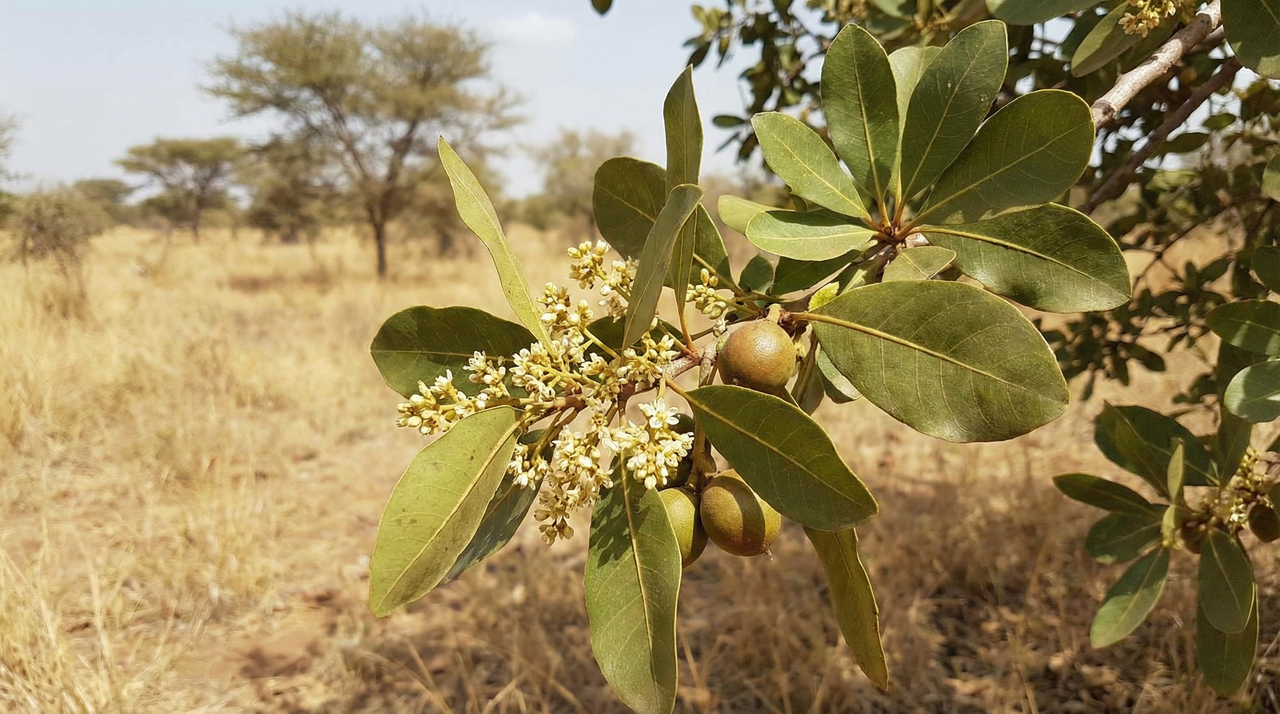
Every jar of shea butter you've ever bought started with a shea tree that took longer to produce its first nut than it takes most people to finish raising a child. Fifteen to twenty years of growth before a single harvest, sometimes longer. I find that fact genuinely humbling, and a little uncomfortable, because it forces you to reckon with how completely removed most of us are from the actual source. The women in West Africa who gather those nuts, process them by hand over open fires, and have kept this knowledge alive for at least 6,000 years[1] are working with a timeline that modern agriculture barely has the patience to acknowledge.
What gets me is the contradiction sitting right on the surface. Shea butter is everywhere: in high-end moisturizers, in chocolate, in pharmaceuticals, in your lip balm right now, probably. Yet the tree itself is almost entirely wild. You can't walk into a nursery and buy a named cultivar. There's no 'Improved High-Yield Shea' bred for backyard orchards. It's a keystone species of the African savanna that has resisted domestication for millennia, and it has its reasons. Understanding those reasons is, I'd argue, the whole point of getting to know this plant at all.
Shea Tree Origin, History, and Botanical Background
There's a particular kind of humility that comes from working with trees that were already old when your grandparents were born. The shea tree, known botanically as Vitellaria paradoxa, is exactly that kind of tree. Native to the dry savanna and Sudanian zones of sub-Saharan Africa, it stretches across an enormous belt from Senegal in the west all the way to Ethiopia and Uganda in the east, growing primarily between latitudes 7°N and 20°N at elevations from around 200 to 1,500 meters.[2][3][4] This is not a tree you plant and harvest on a human schedule. Individual specimens can live 200 to 300 years, with some potentially reaching 400, and they don't even hit peak production until they're 30 to 50 years old.[5][6] Working with long-lived tropical perennials taught me that the right response to a 15 to 20 year juvenile phase isn't impatience; it's interplanting shorter-term producers and thinking of yourself as someone who plants for the next generation as much as this one.
Botanical Characteristics and Adaptations
What makes the african shea tree so well-suited to its environment comes down to a handful of traits that work together under serious pressure. It develops a deep taproot that reaches groundwater during the long dry season, giving it access other trees simply don't have.[7][8] Young trees start below the canopy, but mature specimens often emerge above it entirely, eventually claiming an overstory position in the parkland through sheer persistence.[7][4] As a designer, I find this subcanopy-to-emergent trajectory fascinating because it means the tree is genuinely multi-layered across its own lifespan, filling different ecological roles as it ages.
Visual Characteristics and Identification
A mature shea butter tree is unmistakable. It reaches 10 to 20 meters tall, occasionally pushing to 25, with a broad rounded or umbrella-shaped crown 10 to 15 meters wide and a stout bole up to two meters in diameter at the base, often fluted with deeply fissured grayish-brown bark that reads as ancient even on younger specimens.[3][9] The leaves are leathery and oblong, 5 to 15 cm long with prominent parallel veins. This is actually the detail I find most useful for identification in a nursery context: the young leaves emerge a striking reddish-bronze before maturing to dark green above and pale green below.[10][2] That flush of copper against a dry-season landscape is a real visual moment. The tree drops its leaves during the dry season to conserve water, then blooms from November through March, producing small creamy-white to pale yellow flowers in dense clusters that are fragrant enough to notice from a distance.[11][2] The fruit that follows is a 3 to 5 cm drupe ripening from green to reddish or yellowish-brown, and its seed, the shea nut, contains 40 to 50% oil by weight; that oil-rich kernel is the economic engine this whole tree is built around.[2][12]
Traditional and Cultural Significance
People have been gathering shea nuts for a very long time. Carbonized remains from Burkina Faso and Mali place human use of this tree at over 6,000 years, back to roughly 4000 BCE, and for most of that span it was a wild-harvested resource, not a cultivated one.[13] The first written European account comes from Scottish explorer Mungo Park in 1796, though claims linking shea directly to ancient Egypt aren't well supported by the archaeological record.[14]
What has remained remarkably consistent across those millennia is the central role of women in processing the nuts into butter. Shea butter production has traditionally been women's knowledge and women's economy, passed down through generations and bound up in cultural identity, ritual, and financial independence.[15][16] The tree itself symbolizes fertility, resilience, and prosperity in many communities, used in cooking, skin care, wound healing, and ceremony.[17][18] Now that the global beauty industry has discovered shea butter, those traditions face real pressure. The modern supply chain raises serious questions about who benefits when demand scales up rapidly, and I think anyone sourcing shea products has a responsibility to seek out fair-trade cooperatives that keep economic value in the hands of the women harvesters who built this industry long before multinationals noticed it.[19][20]
Fun Facts and Conservation Status
The adaptations that let this tree survive for centuries in harsh savannas are genuinely impressive. Its thick bark resists fire by insulating the cambium, the deep taproot pulls moisture from well below the surface during drought, and leaf drop during the dry season reduces water loss exactly when the tree needs it most.[8][21] When those leaves fall, they decompose into fertility islands beneath the canopy, enriching the soil with nitrogen and phosphorus in landscapes where those nutrients are genuinely scarce.[22] The tree feeds primates, birds, bees, beetles, and flies, functioning as a true keystone species rather than just a useful crop plant.[23]
Despite all of that resilience, Vitellaria paradoxa is currently classified as Vulnerable on the IUCN Red List, with populations declining from habitat fragmentation, agricultural expansion, and climate change.[24] What complicates conservation is that populations across the range show significant genetic differentiation; you can't just move seeds from one region to another and expect the same adaptation or performance.[25] As someone who works with restoration plantings, this is the detail I find most sobering: provenance matters enormously with a species this genetically diverse, and the window for preserving that diversity is narrowing. UNESCO recognizes shea landscapes as global heritage for their biodiversity and livelihood value,[18] which feels like the appropriate scale of recognition for a tree that has quietly sustained whole civilizations for six millennia.
Shea Tree Varieties and Sourcing
If you go looking for named shea tree cultivars, you won't find them. Unlike an apple or a fig, where centuries of selection have produced dozens of named varieties with predictable traits, Vitellaria paradoxa is still essentially a wild tree.[26][27] What you're working with, botanically speaking, is a species in the early stages of domestication, shaped far more by geography and ecology than by deliberate breeding. That's not a limitation so much as a reality check.
Natural Subspecies and Selected Superior Trees
Two recognized subspecies divide the shea tree's range across the continent. V. paradoxa subsp. paradoxa covers West Africa, while subsp. nilotica (sometimes still called Butyrospermum parkii in older literature, which is where the vitellaria paradoxa vs butyrospermum parkii confusion comes from) occupies Central and East Africa.[2][28] The differences between them are practical, not just taxonomic. The West African subspecies produces larger nuts, typically 15-25 grams with oil content in the 40-50% range, while shea nilotica yields smaller nuts of 10-15 grams and 30-40% oil.[29] I've worked with both in skin-care formulations, and the difference is noticeable: West African butter tends to be firmer and richer, with that characteristic slightly smoky, nutty scent, while East African nilotica butter is softer and creamier at room temperature with a milder fragrance. Neither is better across the board; they suit different applications.
Breeding programs in West Africa are making progress on selection, identifying superior wild specimens for vegetative propagation based on kernel yield, fat content, and drought tolerance.[30][31] Standout selections offer a significant jump over the erratic production typical of unselected wild trees.[32] These aren't named cultivars yet, but the pipeline exists. For growers outside Africa, cultivation remains experimental, limited primarily to frost-free subtropical zones like southern Florida and parts of Hawaii.[33][34]
How to Source Shea Tree Seeds and Plants
Getting your hands on viable shea material outside Africa is genuinely difficult. Seeds are more available than live plants, but commercial stock is inconsistent and seasonal because shea seeds lose viability fast, within weeks to months under ambient storage conditions. Many African countries restrict export of seeds and seedlings to protect wild populations, and even where export is permitted, USDA regulations require phytosanitary certificates and may require inspection for any live propagule entering the United States.[35] The good news is that Vitellaria paradoxa is not listed on CITES, so you won't need international trade permits under that convention.[36][37] I always start by checking current USDA APHIS rules for the specific propagule type I'm importing rather than assuming a vendor has handled the paperwork; that extra step has saved me real headaches with other tropical tree projects.
Sheffield's Seed Company, Plant Delights Nursery, and Thompson & Morgan occasionally carry seeds,[38][39][40] and seedlings sometimes surface through specialized African-plant nurseries or through ICRAF (the World Agroforestry Centre).[41] Kew's Millennium Seed Bank holds shea for conservation purposes, but generally supplies research institutions rather than home growers.[42] Prices shift constantly, but expect roughly $5-15 for a seed packet and $10-30 or more for a seedling when you can find one. Because viability drops so quickly, I'd buy more seeds than you think you need and plan to sow them immediately. African-diaspora plant networks and botanical garden contacts can also be surprisingly productive channels when commercial listings go dry.
How to Propagate and Plant Shea Trees
If you're serious about growing shea, the single most important decision you'll make is whether to start from seed or source grafted stock. I only plant grafted shea. Waiting 15 to 25 years for a seedling to bear its first nut is simply not realistic for most growers, and grafted trees can produce in as little as 4 to 6 years.[2][43] That said, seed propagation remains the standard for large-scale planting in West Africa because it's cheap and logistically simple, and understanding how shea seeds behave is essential knowledge even if you end up buying grafted stock.
Propagation Methods: Seeds, Grafting, and Beyond
Shea seeds are recalcitrant, which means they behave a lot like mango or avocado seeds: they cannot tolerate drying out and lose viability fast. I've started shea from fresh seed a few times in zone 9B and learned the hard way that even a few days on a dry shelf can kill germination entirely. FAO forestry guidelines back this up; viability drops below 50% after just one to two months of storage, and untreated seeds in the ground germinate at only 10 to 30%.[44][45] That hard seed coat is the culprit.
Pretreatment makes a real difference. Hot-water soaking at 80 to 100°C for one to five minutes, followed by 24 hours of cooling, or mechanical scarification can push germination rates up to 50 to 80%.[45][44] Sow immediately after, 1 to 2 inches deep in well-draining sandy loam, and keep soil temperatures between 77 and 86°F. Seed propagation is the low-cost path; it just demands you work with absolutely fresh material. Anyone growing outside West Africa should source fresh seed or young grafted plants because the biology simply does not allow convenient storage.
Grafting onto one- to two-year-old seedling rootstocks using cleft or whip-and-tongue technique achieves 40 to 80% success when timed to the rainy season.[43] Cuttings, air layering, and tissue culture are possible in theory but come in under 50% success and aren't used commercially.[46] For most home growers, the choice comes down to fresh seed (if you can get it) or a grafted plant from a specialist nursery.
Germination and Seedling Timeline
Under good nursery conditions, shea seeds germinate in two to four weeks at 25 to 30°C and 70 to 80% humidity in shaded beds.[47] Transplant survival with proper acclimation runs around 50 to 60%,[47][48] which sounds modest but is actually reasonable for a recalcitrant tropical species. Seedling trees, though, won't reach peak production until 30 to 40 years.[2][49] Grafted trees at 4 to 6 years are the realistic choice for anyone who wants to see nuts in their lifetime, and active domestication programs are working toward selections that fruit in under 15 years.[43] Plant shea with the same mindset you'd bring to an orchard investment, not a vegetable bed.
Soil, Site Selection, and Planting Technique
Shea evolved on low-fertility West African savanna, and its soil preferences reflect that completely. It wants well-drained sandy loam to loamy soil, a pH between 5.5 and 7.5 (optimal around 6.0 to 7.0), and it tolerates the kind of lean, 0.2 to 2% organic matter conditions that would starve most orchard trees.[50][51] That said, it responds well when you improve things modestly; bumping organic matter to 3 to 5% and adding phosphorus at planting gives noticeably better establishment.[51] What it absolutely will not tolerate is heavy clay or waterlogging, both of which invite root rot.
For nursery starts, a mix of 50% sand, 30% red loam or laterite, and 20% organic matter at pH 6.0 to 7.5 gives young plants a good foundation.[52] Mycorrhizal inoculation at transplant is worth doing; shea relies heavily on these fungal partnerships in native soils, and inoculation can meaningfully improve early establishment. The trees develop a deep taproot that eventually reaches 10 to 20 meters at maturity,[53] so root pruning before transplant and gradual acclimation from partial shade to full sun protect that investment. Any site with compacted soil or poor drainage is a non-starter.
Spacing, Timing, and Establishment
Plant into the warm wet season, which in the Northern Hemisphere means late spring to early summer. Dig planting pits at least 50 to 60 cm deep and wide, enrich them with organic matter, and give each tree room to become what it's going to be.[54] In orchard or plantation systems, 10 to 12 meters between trees (roughly 100 trees per hectare) accommodates the mature canopy spread of 10 to 15 meters.[54][53] I space for the guild, not just the tree, treating shea as the overstory anchor with room below for leguminous shrubs, root crops, and shade-adapted groundcovers during the long juvenile years. In traditional parkland-style agroforestry, spacing opens to 10 to 15 meters to allow interplanting with cereals or millet beneath the canopy.[54][55]
Young trees need minimal formative pruning; traditional management specifically avoids heavy cultivation or soil compaction under the canopy, which makes sense given how sensitive that developing taproot system is to disturbance. Outside West Africa, viable cultivation is essentially limited to USDA zones 10 to 11, with zone 9 to 10 growers needing greenhouse protection and fresh or grafted material to have any realistic shot.[56] This is a multi-generational tree best understood as a slow, permanent addition to a food forest, not a seasonal project.
Shea Tree Care Guide
Every care decision you make with a shea tree should start from the same place: this is a savanna tree that spent millennia learning to thrive on very little. That's not an excuse to neglect it, but it is the frame through which all its needs make sense. Give it the conditions it's wired for and it will largely care for itself. Fight those conditions and you'll spend years compensating for a mismatch that didn't have to happen.
Sunlight Requirements for Shea Trees
Shea trees want full sun, no compromises. At least six to eight hours of direct light daily is the threshold for healthy growth and any meaningful fruiting.[3][57] Young seedlings tolerate partial shade during establishment, but push a mature shea into too much shade and you'll see it tell you clearly: etiolated growth, leaf chlorosis, and a sharp drop in nut production.[2] The flip side is that intense heat above 40°C can tip into leaf scorch and photoinhibition, even though the tree has real physiological tricks to cope, including stomatal closure and elevated antioxidant enzyme activity.[58][59] I watch young plants the same way I watch heat-stressed citrus: if you're seeing afternoon wilt and scorched leaf margins during a 95°F-plus stretch, some temporary afternoon shade buys recovery time without sacrificing the overall light budget.
Water Needs and Drought Tolerance
Once established, a mature shea tree is in a different category from most trees I've worked with. That taproot reaches 10 to 20 meters into the soil profile, pulling groundwater through six to eight months without rainfall with no help from you.[60][61] Having grown other deep-rooted tropical trees, I can say shea's drought resilience past the sapling stage surpasses most, including neem, once that root architecture is in place. Getting there, though, requires patience and attention. In the first two to three years, water regularly: roughly five to ten liters two or three times a week during dry spells, always letting the soil dry between sessions to prevent the root rot that waterlogging invites.[62][63] Even after establishment, supplemental watering of 20 to 40 liters weekly during flowering and fruiting can prevent up to a 20% drop in kernel butter content.[64] The tree prefers well-drained sandy to loamy soils in the pH range of 5.5 to 8.0, tolerates mildly saline conditions, and handles infertile lateritic ground that would frustrate most fruit trees.[65][66] Mimicking the savanna's distinct wet-dry cycle, rather than keeping the soil evenly moist year-round, is what keeps this tree healthy and prevents most problems before they start.
Feeding and Soil Fertility for Shea Trees
Shea is not a hungry tree. It evolved in some of the most nutrient-depleted soils on earth, and that history shapes everything about how you should feed it. For mature trees beyond ten years, I've found that maintaining organic matter through annual compost applications of five to ten kilograms per tree, combined with legume companions for nitrogen cycling and a consistent mulch layer, eliminates any need for synthetic inputs.[67][68] Young trees are the exception. In the first three to five years, targeted fertilization focused on phosphorus makes a real difference: phosphorus-deficient soils are common across West Africa's shea range, and correcting that deficit can boost yields by 20 to 50%.[69][70] Split applications of 50 to 100 grams of balanced NPK (15-15-15 or 10-10-10) during early rains support vegetative growth; shift toward a higher phosphorus-potassium blend (10-20-20) as flowering approaches, and watch for micronutrient gaps, especially boron for fruit set and zinc if you're seeing small, mottled, rosetted leaves.[47] Soil testing every two to three years keeps you honest, because over-applying nitrogen above 150 kg per hectare causes leaf burn and reduced growth, and pushing synthetic fertility into a tree adapted for lean soils can backfire on butter quality.[71][69] With shea, less really is more once the tree matures.
Frost and Heat Tolerance
Anyone asking whether a shea tree can grow in America, or whether it will survive in India, needs to start with this answer: it depends entirely on whether your climate can sustain USDA zones 10 to 12, with average annual temperatures of 24 to 30°C and frost-free winters.[72][62] Mature trees can tolerate brief dips to around 0°C, but sustained temperatures below 5 to 10°C cause bark cracking, dieback, and serious yield reduction, and young trees are significantly more vulnerable than that threshold suggests.[3][73] In marginal sites, heavy mulching over the root zone, frost cloth, south-facing slopes, and windbreaks are your tools; in truly frost-prone regions, greenhouse cultivation is the only realistic path.[74]
On the heat side, shea handles up to 42°C and is suited to AHS Heat Zones 9 to 11.[12] Sustained periods above 38 to 40°C are where trouble begins: leaf scorch, premature drop, and fruit production declines of 30 to 50% during those stretches.[75] Seedlings are especially sensitive above 35°C, and flowering can fail entirely above 40°C through pod abortion.[76] A five to ten centimeter organic mulch layer, shade cloth during peak heat events, and consistent irrigation during bloom are the practical mitigations.[77] If you're selecting planting stock, northern savanna types like 'Ngole' and 'Ibori' show better heat resilience than lower-latitude selections.[8]
Pruning and Maintenance
Shea responds to pruning more slowly than most fruit trees I work with, which means the instinct to cut aggressively and wait for a quick response will get you into trouble. I've made that mistake with other slow-growing woody perennials and learned patience the hard way. The formative years, roughly the first three to five, are about establishing a single central leader and an open canopy structure rather than maximizing size. After that, light annual pruning in the dry season to remove dead or diseased wood, open up light penetration, and manage height to around five to six meters for harvest access can increase fruit production by 20 to 30% while reducing fungal pressure from poor airflow.[78][79] Outside the native range, humidity and limited pollinator access add complications that pruning alone can't solve, so maintaining good airflow matters even more in humid subtropical settings.[80] Think of each cut as a decision for a tree that may well outlive you by a century and plan accordingly.
Seasonal Growth Rhythm
The shea tree runs on a savanna clock, and learning that rhythm is the key to timing every care intervention correctly. As the dry season sets in, the tree sheds its leaves to conserve water and enters a dormant phase, then pushes out flowers from November through March before the rains return.[81] Fruiting follows from March through July. This is the window where supplemental water pays its biggest dividends. Pruning belongs in that same dry-season dormancy period, before flowering begins. Expect an irregular, sometimes biennial bearing pattern before getting frustrated by an off year; I've seen the same pattern in other parkland tree species and the best response is consistent dry-season pruning and careful moisture management during bloom, which tends to smooth the variation rather than eliminate it entirely.[82][83] Outside West Africa, the seasonal rhythm can shift depending on when your wet and dry seasons fall, so observe the tree's own cues, leaf flush and bud break, rather than following a fixed calendar. A tree that's learning a new climate will tell you its schedule if you pay attention.
Harvesting Shea Tree Nuts and Fruit
Patience is the first skill shea demands, and it doesn't stop at the 15-20 year wait for first fruit. Even once the tree is bearing, the harvest itself requires careful timing. From flowering to ripe fruit takes 5-6 months, roughly 150-180 days, so understanding that window shapes everything that follows.[84][85][86]
When to Harvest Shea: Timing, Ripeness Cues, and Regional Seasons
Knowing when to pick is the difference between a full, oily kernel and one that won't press well. Ripe shea fruit shifts from green to a deep blue-black or bluish-purple as anthocyanins accumulate.[87][88] Think of a late-season plum or a ripe loquat: there's a color shift you can't miss, followed by that tell-tale give when you press gently. Mature shea fruit yields slightly under pressure while still holding its structure.[88] At this point, kernel oil content has climbed above 45-50% of fruit weight, which is exactly what you want.[89] Harvest too early and you leave oil on the tree; wait too long and the fruit falls and spoils before it reaches you.
Across West Africa, the main harvest window runs March through August, with peak collection concentrated in June and July.[2][90] Regional timing shifts a bit: Ghana's collectors are active March through August, Nigeria's peak runs May through August, and Mali and Burkina Faso tend to concentrate harvests April through July.[91][92] These cues matter whether you're working in the field or sourcing directly from producers: the color, the softness, the season, all three together.
How to Harvest and Handle Shea Nuts
Shea tree nuts are collected by hand-picking ripe fruits directly from branches or gathering naturally fallen fruit from the ground; shaking branches gently is also practiced, though hand-picking is preferred because rough handling damages spurs and reduces future yields.[93][94] I always tell growers that with long-lived perennials, the way you treat the tree at harvest is an investment in the next decade of yields, not just the current season.
Once collected, pulp comes off first, then the nuts get washed and spread in a thin layer, 2-5 cm deep, to dry in direct sunlight at 35-45°C (95-113°F), with regular turning until moisture drops from 40-50% down to 7-10%.[95][96] Temperatures above 45°C will degrade the fat quality, so shade cloth or timing your drying to cooler parts of the day matters in peak summer heat.[95][96] In humid climates where sun drying isn't reliable, controlled artificial drying at around 40°C is a solid alternative.[95][96]
After drying comes the step most people want to skip: a 1-3 month curing period where the nuts rest in piles or pits.[95][96] I rushed the drying phase on a small oilseed project once and the end product had an off-note I couldn't work around. The curing phase isn't filler; it develops flavor precursors and genuinely improves butter yield. The research backs this up, and so does the practical result.
Shea Tree Yields and Expected Returns
Young shea butter trees produce modestly, around 1-5 kg of nuts per season. Mature, fully productive specimens can yield 20-40 kg annually. When I think about other long-lived canopy trees I work with in subtropical food forest designs, those numbers are genuinely impressive for a species that asks so little in terms of irrigation or inputs. The catch, as always with shea, is time. But combined with careful post-harvest handling, a mature tree's output translates into a meaningful quantity of high-quality butter per season, making that patient stewardship worthwhile.
Shea Tree Preparation and Uses
The shea tree gives you two very different gifts, and they couldn't arrive more differently. The first is immediate: that sweet, fleshy pulp surrounding the nut, eaten fresh right off the tree or mashed with water and left to ferment for a day or two into a mildly alcoholic drink.[3][97][98] The second gift takes days of labor to unlock.
Culinary Uses: From Sweet Fruit Pulp to Traditional Shea Butter
Raw shea kernels are not something you simply crack open and press. They contain cyanogenic glycosides and other anti-nutritional compounds that require proper detoxification before the fat inside is safe to eat.[98][99] Traditional processing sequences the work carefully: boiling or soaking the kernels for 24 to 48 hours, roasting at 100 to 120°C for ten to twenty minutes, then sun drying before pressing.[98][99] I once tried to rush a similar soaking step with another oil-rich nut and paid for it. That 24-hour soak is not decorative. Done right, the process yields 35 to 50% butter from kernel weight,[100][101] which is extraordinary efficiency for a hand-processed wild tree.
The resulting vitellaria paradoxa butter has a mild, nutty, earthy character with a creamy texture; unrefined versions can carry subtle chocolate-like notes that shift with the region and how the kernels were roasted.[102][103] That range is exactly why traditionally made shea tree butter tastes so unlike the deodorized industrial version. West African cooks use it as the primary fat in soups, stews, and porridges, and as a chocolate substitute in regional dishes.[104][97] The women who have carried this processing knowledge across generations deserve far more credit than they typically receive in Western markets.
Traditional Medicinal Preparations
For internal complaints like stomach ailments or inflammation, traditional preparations use leaf or bark infusions: roughly 20 to 50 grams of dried material simmered in water, taken as one to two cups daily.[60][105] Exact dosages vary considerably by region and practitioner, and modern clinical validation is much stronger for topical applications than internal ones. The topical approach is simpler: unrefined shea butter applied directly to skin two to three times daily for conditions ranging from dryness to wounds to sore muscles.[60] I've worked unrefined vitellaria paradoxa oil into my own skincare routine for years, and the way it melts into dry skin without greasiness is something you genuinely have to experience.
Non-Food and Practical Applications
Almost nothing on this tree goes to waste. Bark and leaf fiber have long served communities for ropes, mats, thatching, and basket weaving, while the dense hardwood provides fuel and construction timber.[106][9] The leaves feed livestock as fodder and supply material for traditional medicine, though they're not eaten as a vegetable.[3] Any permaculture designer working with this species needs to treat sustainable harvest as non-negotiable: hand-picking fallen fruit during the June to August dry season, never felling the tree, and supporting the agroforestry systems that have kept these parkland giants standing for generations.[107][65] A tree that takes fifteen to twenty years to bear fruit cannot be treated as extractable. It's a relationship, not a resource.
Shea Tree Health Benefits and Medicinal Uses
What I find remarkable about Vitellaria paradoxa is how much of its medicinal value traces directly back to its survival strategy. This is a tree that endures punishing dry seasons, poor soils, and intense herbivore pressure in the West African savanna. Those stresses concentrate protective chemistry throughout the plant, and that chemistry is precisely what makes shea so useful to human health.
Phytochemical Profile of Vitellaria paradoxa
The shea tree's chemistry reads like a who's who of bioactive compounds. The leaves and bark are rich in phenolics, including catechins (3-8 mg/g in seeds) and epicatechins (0.5-2 mg/g), along with gallic acid derivatives.[108][109] Flavonoids like quercetin and kaempferol glycosides concentrate in the leaves, while the nuts and butter carry triterpenes (lupeol, β-amyrin, oleanolic acid) and phytosterols, particularly β-sitosterol.[108] The bark is especially tannin-dense, running 15-25% dry weight, alongside saponins found throughout the bark and nuts.[108][110]
I think of this the same way I think about rosemary or lavender becoming more aromatic under drought stress. Secondary metabolites ramp up when a plant is working hard. Shea leaves peak in phenolic content during the dry season,[111] and concentrations shift depending on geography, soil composition, tree age (younger trees run higher), and whether the tree is wild or managed.[112][113][114] That variability explains why shea butter quality differs so much between sources, and it's part of why I always prefer cold-pressed, unrefined butter for any skin preparation I'm making.
Medicinal Research and Traditional Uses
Those phytochemicals aren't just academically interesting. Polyphenols, tocopherols, and triterpenes work together to scavenge free radicals and inhibit lipid peroxidation, giving shea genuine antioxidant capacity.[115][116] The anti-inflammatory evidence is solid too: shea compounds reduce TNF-α and IL-6 and inhibit COX-2, with analgesic effects in animal models that compare favorably to standard reference drugs via both COX-2 and opioid pathways.[116][117][115] Extracts also show real antimicrobial punch against bacteria like Staphylococcus aureus and various fungi, with minimum inhibitory concentrations in a useful 0.5-2 mg/mL range.[118]
The wound-healing research particularly resonates with my hands-on experience. Shea promotes collagen synthesis and epithelialization, modulates VEGF, and reduces the inflammatory mediators that slow healing.[119][120] When I've put unrefined shea on dry, cracked hands after a long pruning session, the results align with exactly what those studies describe. Leaf and bark extracts add antispasmodic activity via triterpenoids and flavonoids, relaxing smooth muscle in gut models, while the high tannin content supports traditional uses for diarrhea and wound astringency.[121][122]
Communities across Ghana, Nigeria, and the broader West African region have used shea topically for eczema, burns, stretch marks, and joint pain, and internally (as bark or leaf decoctions) for stomach complaints, fevers, respiratory conditions, and gynecological support during childbirth for centuries.[123][104][124][125][126] Modern science is now confirming what they observed. Randomized controlled trials show shea butter outperforms placebo for eczema, dermatitis, and dry skin, improving barrier function and hydration measurably.[127][128][97] Potential hypocholesterolemic effects via β-sitosterol and anti-diabetic activity from leaf extracts show up in preclinical work,[129][17] but those findings need human trials before drawing strong conclusions.
Nutritional Value of Shea Tree Products
The shea tree gives you several nutritional products depending on how you interact with it. The ripe fruit pulp is 48% water, contains 7-14% sugars, and carries vitamins A, C, and E alongside useful minerals.[130] The raw kernels are genuinely nutrient-dense: roughly 45-50% fat, 4-10% protein, and 20-30% carbohydrates, with minerals per 100g dry weight that impress me in the context of savanna oilseeds generally (calcium 254-500 mg, potassium 478 mg, magnesium up to 200 mg, iron 5.4 mg, plus vitamins E and A).[131][132][93] Roasting reduces the anti-nutritional tannins that otherwise get in the way of that mineral uptake.[131]
Shea butter itself is a different story nutritionally. It's nearly pure fat, roughly 60% saturated and 40% unsaturated (mainly oleic acid at 40-60% and stearic at 30-50%), with a notable 3-17% unsaponifiable fraction carrying the phytosterols, triterpenes, and polyphenols that do the real work.[133][97][134] Vitamins A and E are present but in meaningful amounts only in unrefined, cold-pressed forms; heavy processing strips them out.[135] I've noticed this firsthand: unrefined shea has that faint nutty, slightly smoky scent and a denser, almost waxy texture, while refined butter is pale, odorless, and noticeably less effective in any skin preparation I've made. The bioactives really do go with the aroma.
Safety Profile and Considerations
In my experience working with natural oils and plant-based preparations, shea butter is one of the safer materials you can bring into a kitchen or clinic. Processed shea butter holds GRAS status from the FDA, and both EFSA and WHO recognize its safety for food and topical use. Acute toxicity studies put the LD50 above 5000 mg/kg, with no evidence of genotoxicity or hepatotoxicity in testing.[136][137][97][138] The fruit pulp is fully edible and non-toxic straight from the tree.
The important distinctions involve processing state. Raw, unprocessed kernels contain high levels of triterpenes and saponins that can cause genuine gastrointestinal irritation, nausea, and cramping. Traditional boiling, roasting, and fat extraction methods exist precisely to reduce those compounds to safe levels, and they work.[139][93] Bark and leaf decoctions carry similar risks from concentrated saponins and tannins when consumed in large quantities, and there's a theoretical increased bleeding risk with anticoagulant medications, though topical use carries no known concern there.[97] Regarding the common question of whether shea is a tree nut allergen: the shea butter tree nut allergy concern is real but rare. Processed butter is considered hypoallergenic, though anyone with significant nut or latex sensitivities should approach it with the same caution they'd bring to any new botanical. Always source from reputable producers whose processing you can verify, and you'll be working with one of the most well-documented safe plant oils in the world.
Shea Tree Pests and Diseases
Mature shea trees are genuinely tough. Over decades, they accumulate phenolic compounds and develop thick, corky bark that deters a wide range of herbivores, and healthy parkland specimens can shrug off pest pressure that would devastate a younger plant.[140][141] Young saplings and stressed individuals are a different story. That distinction shapes almost everything worth knowing about managing this tree's pests and diseases.
Major Insect Pests of the Shea Tree
The economic headline pest is the shea defoliator moth (Cirina butyrospermi and related species). Repeated defoliation can cut nut yields by up to 50%, and the damage can arrive fast.[142][143] I've watched lepidopteran outbreaks on fruit trees in my own garden strip a canopy in what feels like a week; the shea defoliator operates the same way, and growers who aren't scouting for early caterpillar activity can easily miss the window when intervention actually helps.
Borers are the slower, quieter threat. Analeptes trifasciata (longhorn beetle) and Melittosphinda vitellata (shea borer) tunnel into branches and trunks, causing dieback that can kill entire limbs or, in severe cases, the whole tree.[142][144] Exit holes and sawdust-like frass at the base of branches are the signs to look for. Secondary pests, including aphids (Toxoptera aurantii), scale insects, and leafhoppers, weaken trees through sap feeding and create the sticky honeydew that invites sooty mold.[145] Termites attack roots and the lower bole, accelerating decline in already-stressed trees.[146] Fruit flies and weevils target flowers and seeds, trimming yield without threatening the tree's life.[147] Wildlife browsing by elephants, porcupines, and rodents adds another layer of pressure on young trees in native savanna settings.[148]
Common Diseases and Environmental Stressors
Fungal diseases, primarily powdery mildew (Oidium spp.), anthracnose (Colletotrichum spp.), and root rot (Phytophthora spp.), are secondary concerns that show up mainly when site conditions are wrong: too much humidity, poor drainage, or overcrowding.[149] My experience managing other long-lived trees in humid subtropical conditions has reinforced how much drainage and spacing decisions made at planting ripple forward into disease vulnerability decades later. Pest and disease severity varies enormously across different parklands and microclimates, depending on soil, tree age, and overall plant health.[150] Get the site right, and most fungal issues never materialize.
Integrated Pest and Disease Management Strategies
There are no resistant cultivars to lean on here. Most shea trees remain wild or semi-domesticated, and breeding programs have historically prioritized butter quality and yield over pest resistance.[151] That puts the management burden squarely on the grower, which actually aligns well with permaculture thinking. The most successful smallholders I've studied through FAO and ICRAF literature treat shea as a guild member embedded in a diverse agroforestry system rather than a monoculture crop, and that structural choice alone reduces pest pressure considerably.[152]
Integrated pest management is the recommended framework: regular pruning to remove infested wood, good sanitation, appropriate spacing, and biodiversity as the first line of defense.[153][154] Biological controls, neem-based products, beneficial insects, and pheromone traps where available fill the gap between cultural practices and crisis response. Broad-spectrum synthetic insecticides are rarely justified, and in a shea parkland context they're actively counterproductive, disrupting the pollinators and beneficial insects the tree depends on for fruit set.[155] The fact that traditional shea landscapes have sustained these trees for centuries without chemical inputs is worth holding onto as a design principle.
Shea Tree in Permaculture Design
Before you fall in love with the shea tree as a design element, there's a hard climate conversation to have. This is not a plant you squeeze into zone 9 with a frost cloth and a prayer. It belongs to the tropical savanna and hot semi-arid zones of the Köppen-Geiger system, translating to USDA zones 10a through 11b.[2][156] In North America, that means South Florida and similar frost-free subtropical pockets. I've seen young shea trees in protected zone 10b microclimates take a real hit from a single night near freezing, even with established root systems, and that experience has made me cautious about pushing this one outside its comfort zone. The care guide covers frost and heat tolerance in more detail, but the short version for designers is: if you can't guarantee temperatures stay reliably above -1°C (30°F), start with a different canopy species.[157][3]
Climate and Growing Zones for Shea Trees
The shea tree thrives where annual averages sit between 24-30°C (75-86°F) and annual rainfall falls somewhere in the 500-1200mm range, a wide band that covers both semi-arid and sub-humid conditions.[158][93] The key to that drought tolerance is a taproot that drives down five meters into the soil profile, accessing moisture and nutrients that shallow-rooted plants simply can't reach.[159][160] It also means it absolutely cannot tolerate waterlogging. The savanna has a distinct wet-dry cycle, and the shea tree is wired for that rhythm. A site with seasonally poor drainage isn't a compromise; it's a dealbreaker.
Ecosystem Functions and Services of the Shea Tree
At full scale, the shea tree is a genuine keystone, growing 10-25 meters tall with a rounded canopy that can spread just as wide.[160][161] That scale is not incidental. The spreading crown reduces wind speed by 30-50%, and the deep taproot that makes it drought-tolerant does double duty stabilizing soil and reducing erosion without competing with shallower-rooted companions.[159][162] Where I think it really earns its place in a design, though, is in how it feeds the soil through sheer biomass rather than nitrogen fixation. The shea tree doesn't fix nitrogen, so I always make sure leguminous companions are carrying that role in any guild I'm building around it. What it does instead is deposit 2-5 tons of organic matter per hectare every year through leaf litter, and it does that work via mycorrhizal associations that pull phosphorus from soils most other trees would find impossibly poor.[160][163] I find that seasonal leaf drop in the dry season is one of the most underappreciated design features here; it lays down a thick, nutrient-dense mulch layer right when the understory needs protection most.
There's also a pollinator dimension that shouldn't be treated as a footnote. The shea tree blooms in the dry season with fragrant white flowers, and it relies on bees, flies, beetles, and ants for pollination. Without adequate insect visitation, fruit set drops sharply.[164][165] I've started designing flowering strips near canopy trees specifically to support generalist insect populations through dry-season gaps, and the shea tree makes that kind of planning non-negotiable.[166][163]
Shea Tree in Forest Layers and Permaculture Guilds
The shea tree occupies the upper canopy, and its spreading crown creates up to 40% shade for whatever you establish beneath it.[167][163] In traditional West African parkland systems, that canopy shelters cereals like millet, sorghum, and maize alongside groundnuts and cowpeas, with the leaf litter building the soil fertility that keeps those annual crops productive year after year in otherwise degraded land.[168][163] North American designers working in subtropical food forests can adapt that same structure using shade-tolerant annuals or low-growing perennials under the canopy, with the cowpea companion logic retained to supply the nitrogen the shea tree won't provide itself.
The planning reality that shapes every design decision here is the 15-20 year wait for first fruit.[160][169] I've planted oaks and chestnuts with long horizons in mind, but even those feel modest compared to the patience the shea tree demands. My approach in any long-arc food forest is to treat the canopy tree as the permanent structural investment and fill the early years with shorter-lived nitrogen-fixers, fast-fruiting shrubs, and annual polycultures that produce immediate returns while the canopy develops. The shea tree is an anchor for a multi-generational design, not a quick-yield crop. If you're planting it in zone 10-11 and building toward a savanna-inspired food forest structure, that long timeline isn't a limitation so much as a reason to design the whole system with more intention from the start.
The Tree That Taught Me to Think in Generations
I'll never grow a shea tree to full production in my lifetime, and I've made my peace with that. What stays with me is the image of women in the Sahel who have tended these trees for generations without ever planting a single one, reading ripeness, timing harvests, passing knowledge forward. There's a kind of design humility in that I'm still learning to practice.
Sources 169
- Shea Tree: History and Cultural Significance in Sub-Saharan Africa ↩
- Vitellaria paradoxa - Wikipedia ↩
- Shea Tree (Vitellaria paradoxa) - Useful Tropical Plants Database ↩
- Kew Science - Vitellaria paradoxa ↩
- Shea (Vitellaria paradoxa) Tree Management and Fruit Production in the Agroforestry Parklands of Central and Northern Burkina Faso ↩
- Vitellaria paradoxa: A Monograph ↩
- USDA PLANTS Database - Vitellaria paradoxa ↩
- Ecological Adaptations of the Shea Tree (Vitellaria paradoxa) to Savanna Conditions ↩
- Vitellaria paradoxa - Missouri Botanical Garden ↩
- Plants of the World Online (Kew Science) ↩
- Vitellaria paradoxa - Kew Science ↩
- Shea Tree Description - FAO ↩
- Archaeobotanical Evidence for Vitellaria paradoxa in Prehistoric Sahel ↩
- Mungo Park's Travels in the Interior of Africa ↩
- Cultural Significance of Shea Butter in West African Societies ↩
- The Cultural and Economic Significance of the Shea Tree in West Africa ↩
- Vitellaria paradoxa C.F.Gaertn. (Shea tree): A review on ethnobotany, phytochemistry and pharmacology ↩
- The Shea Tree: Ecological and Socio-economic Roles in Africa ↩
- Gender and Shea Value Chain in Africa: Challenges and Opportunities ↩
- Shea Nut Value Chain Analysis ↩
- Fire and Drought Tolerance in African Savanna Trees: Case of Vitellaria paradoxa ↩
- Leaf litter effects on soil properties underneath Shea (Vitellaria paradoxa) trees ↩
- A review of shea (Vitellaria paradoxa C. F. Gautier) as an agroforestry parkland tree within the Sudanian zone of Ghana. ↩
- IUCN Red List of Threatened Species - Vitellaria paradoxa ↩
- Genetic diversity and structure of African shea butter tree (Vitellaria paradoxa) populations ↩
- Genetic Diversity and Domestication of Vitellaria paradoxa ↩
- Landraces and Provenances of Vitellaria paradoxa ↩
- Vitellaria paradoxa C.F.Gaertn. subsp. nilotica (Kotschy) Faye & al. ↩
- The Shea Tree: Ecology, Importance and Domestication in West Africa ↩
- Shea Tree Improvement Programs in West Africa ↩
- Genetic Diversity and Domestication of Shea Tree ↩
- Shea Tree (Vitellaria paradoxa): A Monograph ↩
- UC Agriculture & Natural Resources - Vitellaria paradoxa profile (climatological suitability) ↩
- Flora of North America - Vitellaria paradoxa ↩
- Importing and Transporting Plants and Plant Products ↩
- CITES Appendices ↩
- Vitellaria paradoxa ↩
- Shea Tree (Vitellaria paradoxa) Seeds ↩
- Vitellaria paradoxa - Shea Butter Tree ↩
- Exotic Seeds: Vitellaria paradoxa ↩
- Vitellaria paradoxa (Shea Tree) - Propagation and Cultivation ↩
- Millennium Seed Bank Partnership - Kew ↩
- Vegetative Propagation of Shea Tree (Vitellaria paradoxa) by Grafting: A Review ↩
- Germination of Shea Tree Seeds - FAO Agroforestry Guide ↩
- Propagation and Nursery Technology of Shea Tree (Vitellaria paradoxa) ↩
- Vegetative Propagation of Shea Tree (Vitellaria paradoxa) Using Stem Cuttings ↩
- Propagation and Nursery Management of Shea Tree (Vitellaria paradoxa) ↩
- Shea Tree Cultivation Guide for West Africa ↩
- Shea Nut Production and Processing ↩
- Shea Tree (Vitellaria paradoxa) - USDA Forest Service ↩
- Soil Management for Shea Tree (Vitellaria paradoxa) in West Africa ↩
- Propagation and Nursery Management of Shea Tree (Vitellaria paradoxa) ↩
- Root System Architecture of Vitellaria paradoxa: A Study in West African Savannas ↩
- Shea Tree Cultivation Guide ↩
- Agroforestry Practices for Shea Trees in West Africa ↩
- Cultivation of Exotic Trees: Shea in Non-Native Regions ↩
- Shea Tree Cultivation Guide - FAO ↩
- Tolerance Mechanisms in Vitellaria paradoxa to Environmental Stressors ↩
- Physiological Responses of Vitellaria paradoxa to Drought and Heat Stress ↩
- Vitellaria paradoxa - Useful Tropical Plants ↩
- Drought Tolerance of Shea Tree (Vitellaria paradoxa C.F. Gaertn.) in Burkina Faso ↩
- Growing Shea Trees Outside Native Range ↩
- Agroforestry Species: Vitellaria paradoxa ↩
- FAO Shea Tree Water Use and Management ↩
- Vitellaria paradoxa - Kew Royal Botanic Gardens ↩
- Shea Tree Cultivation Guide - FAO ↩
- Shea Tree Cultivation - FAO Guidelines ↩
- Shea Tree Cultivation and Management ↩
- Nutrient Management for Shea Trees in West Africa ↩
- Response of Vitellaria paradoxa to Phosphorus Fertilization in Ghana ↩
- Nutrient Deficiencies in Tropical Trees: Shea (Vitellaria paradoxa) ↩
- USDA Hardiness Zones for Shea (Vitellaria paradoxa) ↩
- Shea Tree Cultivation - FAO Guidelines ↩
- Shea Tree Cultivation Guidelines ↩
- Climate Change Impacts on Vitellaria paradoxa: Heat and Drought Stress Responses ↩
- Vulnerability of Vitellaria paradoxa to High Temperatures During Reproduction ↩
- Shea Tree Cultivation and Management ↩
- Shea Tree Management Guidelines ↩
- Pruning Techniques for Vitellaria paradoxa ↩
- Shea (Vitellaria paradoxa) - Royal Botanic Gardens, Kew ↩
- Phenology of the Shea tree (Vitellaria paradoxa) in the Sudanian zone of West Africa ↩
- Factors affecting Shea (Vitellaria paradoxa) fruit production in the agroforestry parklands of Benin ↩
- Shea Tree Ecology - FAO Factsheet ↩
- Vitellaria paradoxa - The Shea Tree ↩
- Phenology of the shea tree in northern Ghana ↩
- Shea (Vitellaria paradoxa) | CABI Compendium ↩
- USDA PLANTS Database: Vitellaria paradoxa (Vipr3) ↩
- Kew Royal Botanic Gardens: Vitellaria paradoxa ↩
- Journal of Oilseeds Research: Oil Composition in Vitellaria paradoxa Kernels ↩
- Shea Tree (Vitellaria paradoxa) Production and Transformation in West Africa ↩
- Phenology and Fruiting Patterns of the Shea Tree in Northern Ghana ↩
- Shea Nut Harvesting in Burkina Faso: Seasonal Dynamics ↩
- Shea Tree (Vitellaria paradoxa) Production and Improvement ↩
- Agroforestry Species: Vitellaria paradoxa ↩
- Shea Nut and Butter Production in Uganda ↩
- Post-Harvest Handling of Shea Nuts: Guidelines ↩
- Shea Butter: A Review of Its Botanical, Chemical, and Medicinal Uses ↩
- Shea Nut Processing and Utilization ↩
- Cyanogenic Glycosides in Shea Nuts: Detoxification Methods ↩
- Processing of Shea Fruits for Food and Nutrition Security ↩
- Traditional Shea Butter Production in West Africa ↩
- Shea Butter Composition - ResearchGate ↩
- Sensory Evaluation of Shea Butter ↩
- Traditional Food and Medicinal Uses of Shea in Nigeria ↩
- Ethnopharmacological Survey of Vitellaria paradoxa in West Africa ↩
- PROTA - Vitellaria paradoxa ↩
- FAO: Shea Tree Sustainable Use ↩
- Phytochemical and Pharmacological Review of Vitellaria paradoxa ↩
- Secondary Metabolites from Vitellaria paradoxa ↩
- Olorunshola et al. (2007). Phytochemical screening of Vitellaria paradoxa various organs. ↩
- Seasonal Variation of Phenolic Compounds in Leaves of Vitellaria paradoxa ↩
- Geographic Variation in Phytochemical Composition of Shea Tree (Vitellaria paradoxa) Across Africa ↩
- Influence of Soil Composition on Flavonoids in Vitellaria paradoxa Bark ↩
- Age-Related Changes in Secondary Metabolites of Vitellaria paradoxa ↩
- Pharmacological Activities of Vitellaria paradoxa (Shea Butter Tree): A Review ↩
- Antioxidant and Anti-inflammatory Properties of Shea Butter ↩
- Analgesic and Anti-inflammatory Effects of Shea Tree Compounds ↩
- Antimicrobial Activity of Vitellaria paradoxa Extracts ↩
- Wound Healing Properties of Vitellaria paradoxa in Animal Models ↩
- Antimicrobial and Anti-inflammatory Properties of Vitellaria paradoxa (Shea Butter) in Wound Healing ↩
- Antispasmodic Activity of Vitellaria paradoxa Extracts ↩
- Astringent and Antioxidant Properties of Shea Tree Extracts ↩
- Ethnobotanical Uses of Vitellaria paradoxa in Ghana ↩
- Medicinal Plants Used for Women's Health Care During Childbirth by Fulani Pastoralists in Northern Ghana ↩
- Ethnobotanical study of medicinal plants used by local communities in the Mia Forest Reserve, Ghana ↩
- Medicinal Potential of Vitellaria paradoxa ↩
- Efficacy and Safety of Shea Butter Ointment for Hand Dermatitis: A Randomized Controlled Trial ↩
- Clinical Efficacy of Shea Butter for Eczema: A Randomized Trial ↩
- Phytosterols in Shea Butter: Health Benefits and Pharmacology ↩
- Nutritional Analysis of Shea Fruit Pulp - Journal of Food Science ↩
- Nutritional Composition of Shea Nut (Vitellaria paradoxa) Kernels ↩
- Mineral Content in African Oilseeds Including Shea ↩
- USDA FoodData Central - Oil, shea butter ↩
- Chemical Composition of Shea Butter ↩
- FAO - Shea Butter Production and Processing ↩
- Toxicological Evaluation of Vitellaria paradoxa Stem Bark Extract ↩
- WHO Monograph on Vitellaria paradoxa ↩
- EFSA - Safety of Shea Butter as a Food Ingredient ↩
- Triterpene alcohol and fatty acid composition of shea nuts from seven African countries ↩
- Chemical Ecology of Vitellaria paradoxa: Secondary Metabolites and Insect Resistance ↩
- Physical and Chemical Defenses in Shea Tree Against Herbivory ↩
- Management of Borers and Defoliators on Vitellaria paradoxa ↩
- Insect Pests of Vitellaria paradoxa in West Africa ↩
- Phytopathology Africa - Sheabutter (Vitellaria paradoxa) Bark Borer ↩
- Entomological Review: Pests and Diseases of Shea Butter Tree ↩
- Shea Tree Pests and Diseases ↩
- Integrated Pest Management for Shea Trees ↩
- Wildlife Interactions with Shea Trees in Sahel Region ↩
- Shea Tree Cultivation and Management - FAO Guide ↩
- FAO - Risks to Shea Tree (Ghana/Burkina Faso Focus) ↩
- Vitellaria paradoxa: A Monograph ↩
- Cultural Practices for Sustainable Shea Production and Pest Control ↩
- Pest Management in Shea Tree (Vitellaria paradoxa) Parklands of West Africa ↩
- Integrated Pest Management for Non-Timber Forest Products: Focus on Shea ↩
- Biological Control of Insect Pests in African Shea Trees ↩
- Distribution and habitat of Vitellaria paradoxa - FAO ↩
- Vitellaria paradoxa in USDA Plants Database ↩
- Vitellaria paradoxa: A Monograph ↩
- Root architecture of the Shea tree (Vitellaria paradoxa) and its ecological significance in the Sudanian zone ↩
- Vitellaria paradoxa - Kew Science ↩
- IUCN Red List: Vitellaria paradoxa ↩
- Agroforestry Practices with Shea Trees in West Africa ↩
- Shea Tree in Agroforestry - FAO ↩
- Pollination Ecology of the Shea Tree (Vitellaria paradoxa) in Burkina Faso ↩
- Insect Pollinators of Vitellaria paradoxa in the Sudanian Savanna ↩
- FAO: Shea Trees in Africa ↩
- FAO Silvics Manual: Vitellaria paradoxa ↩
- Shea Tree Agroforestry Systems ↩
- FAO - Shea Butter and Shea Nut: Production, Market and Regulations for Export ↩