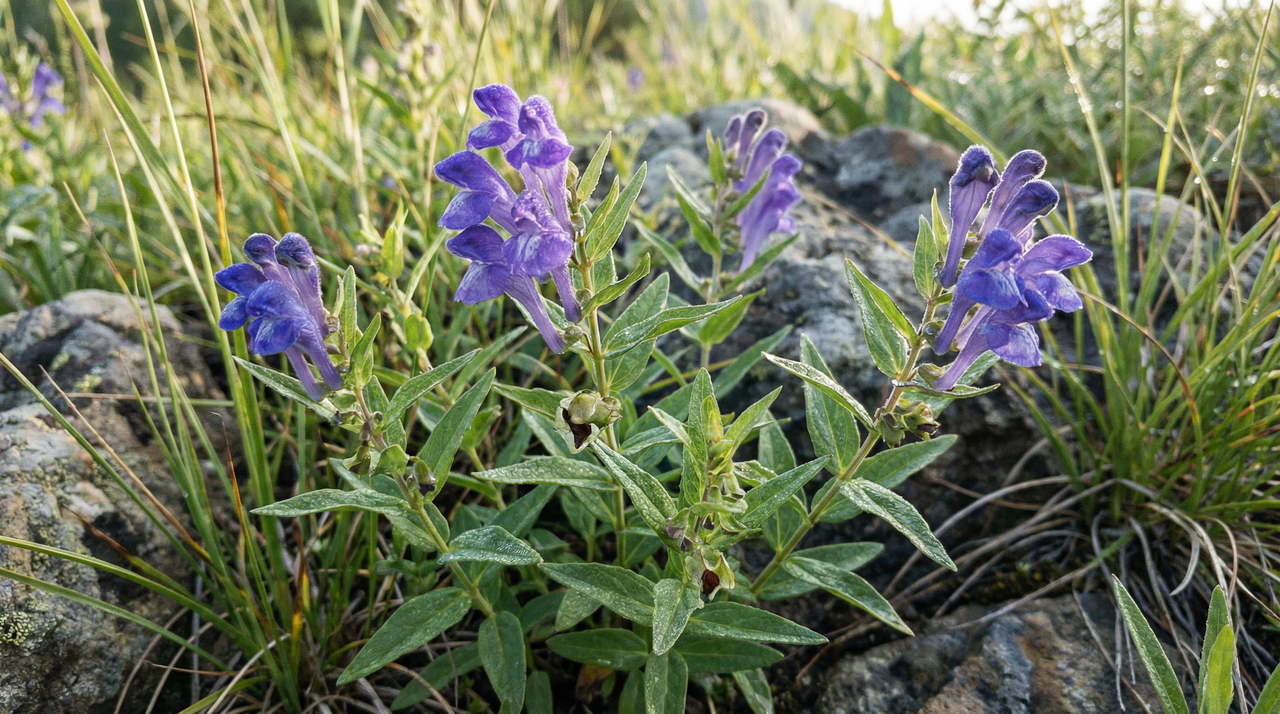
The first time I held a dried Baikal skullcap root, a TCM practitioner watching me said, "You're holding two thousand years of fever medicine." I thought that was poetic hyperbole. Then I looked it up. Scutellaria baicalensis, known in Traditional Chinese Medicine as Huang Qin, appears in texts dating back to roughly 200 CE, prescribed for clearing heat, calming inflammation, and treating respiratory infections long before anyone had words like "flavonoid" or "NF-κB inhibition."[1] What's strange is that most Western gardeners who grow it treat it almost entirely as an ornamental, admiring the neat clumping habit and those small blue-purple helmet-shaped flowers without ever knowing they're standing next to one of the most rigorously studied medicinal roots on the planet.
That gap between what this plant looks like and what it actually does is exactly what pulled me in. It's tidy, unassuming, cold-hardy down to serious minus temperatures, and perfectly happy in a well-drained border. Nothing about it announces itself. But dig those roots after two or three patient years, and you've got something practitioners have been arguing over, trading, and overharvesting across continents for centuries. That tension between quiet garden presence and profound medicinal history is, I'd argue, the whole story of this plant.
Origin and History of Skullcap (Scutellaria baicalensis)
Botanical Background and Native Habitat
Baikal skullcap is a rhizomatous perennial in the Lamiaceae family, native to a broad sweep of East Asia spanning China, Mongolia, Russia, Korea, and Japan.[2][3] In the wild it colonizes sunny grasslands, meadow margins, and scrubby forest edges anywhere from 100 to 2,300 meters in elevation, growing 30 to 60 centimeters tall on erect square stems.[4] That square-stem habit is immediately familiar to anyone who grows mint-family herbs, and I find it one of the most reliable early cues when I'm orienting new plantings. Carl Linnaeus first described the species in 1753, and it currently holds a Least Concern status on the IUCN Red List, though regional populations in China have declined noticeably from overharvesting.[5] In cultivation it's polycarpic, typically living three to five productive years and setting seed across multiple seasons before the clump exhausts itself.[6] It has been introduced to North America and Europe through the herbal trade and ornamental horticulture but hasn't naturalized aggressively in either region.[7]
Visual Characteristics and Identification
The plant forms tidy upright clumps 30 to 60 centimeters tall and 30 to 45 centimeters wide. The stems are slightly pubescent and often flushed purple, carrying opposite leaves that run from ovate to lanceolate with serrate margins. From June through September it produces dense terminal racemes of tubular, two-lipped flowers in blue to violet, typically 8 to 12 millimeters long.[2][4] I've watched those flower spikes in midsummer draw in bumblebees that hover briefly before diving headfirst into the tube, the flower shape clearly built for long-tongued visitors.
The common name "skullcap" comes directly from a small helmet-shaped appendage called the scutellum on the upper lip of the calyx, and the genus name Scutellaria mirrors this, derived from the Latin scutella meaning small dish or shield.[2][8] Once you've spotted that little cap on the calyx, you'll never misidentify this genus again. The fruit are small nutlets ripening from red to dark brown, and the part used medicinally is the short, stout rhizome with fibrous lateral roots rather than any aboveground portion.[2] The related Peking skullcap (Scutellaria pekinensis) looks similar in height and flower color but grows from a taproot rather than rhizomes, a key distinction if you're sourcing plants from a nursery label that's less than precise.[9]
Traditional and Cultural Uses
The documented medicinal history here is genuinely ancient. Baikal skullcap appears in the Shennong Bencao Jing, compiled around 200 to 250 AD, as one of the 50 fundamental herbs of Traditional Chinese Medicine, where it is known as Huang Qin.[10] The dried root is classified as bitter and cold, assigned to the Lung, Gallbladder, Spleen, and Large Intestine meridians, and prescribed to clear heat, dry dampness, and detoxify.[11] Classical formulas like Huang Lian Jie Du Tang built around it treated fevers, respiratory infections, dysentery, jaundice, and hypertension. Mongolian traditional medicine adopted it under the name Bakhar for similar inflammatory and infectious conditions, while records of use among indigenous communities around Lake Baikal itself are notably sparse and difficult to verify in primary sources.[12]
That 2,000-year continuous record is remarkable, but it has come at a cost. Wild populations have declined from overharvesting, and more than 80% of commercial supply now comes from cultivated plantings, primarily in Shandong province.[13] There are ongoing conversations about CITES regulation and the ethics of patenting baicalin derivatives without benefit-sharing arrangements that acknowledge traditional knowledge holders.[14] I now specifically seek out nurseries selling cultivated-stock plants rather than wild-harvested roots; once you understand the harvest pressure on Chinese wild populations, it's a straightforward decision.
Fun Facts and Modern Context
Beyond the medicine, Baikal skullcap carries some genuine folk charm. In East Asian tradition it has been associated with longevity and protection from evil spirits, appearing in herbal amulets and festival teas.[15] With over 2,000 years of documented use, it stands among the most enduring herbs in the Chinese pharmacopeia, also recognized historically as an adaptogen for balancing stress responses and regulating qi.[16][17]
For temperate gardeners, it's worth knowing the plant has found a comfortable second home in U.S. Midwest and Northeast gardens, performing better there than in hotter southern climates.[4] It can form symbiotic relationships with arbuscular mycorrhizal fungi and helps stabilize soil in the grassy, well-drained habitats it prefers.[3] A plant that spans ancient herbalism, pollinator gardens, and modern conservation debates is, at minimum, good company in a food forest.
Skullcap Varieties and Where to Buy Them
If you come to Baikal skullcap expecting a plant with dozens of named cultivars and a lengthy seed catalog section, you'll find the reality is much simpler. Scutellaria baicalensis is primarily grown as the standard wild type, with most commercially available plants and seeds being Scutellaria baicalensis var. baicalensis, the straight species.[18][19] That's not a limitation so much as a reflection of how the plant has historically been used: growers have cared far more about root chemistry than flower color.
Notable Cultivars of Scutellaria baicalensis
There are two selections worth knowing about. For ornamental use, 'Red Bud' offers red-tinged buds and flowers on a compact plant,[20] and I've found that compact form genuinely useful in rock garden designs where a taller perennial would feel out of scale. The unexpected warmth of those reddish flowers against grey stone is a small, satisfying surprise in a medicinal guild. For growers prioritizing chemistry over aesthetics, a selection known as 'Baikal' has been developed for higher baicalin content, with material originating from the Baikal region tending to show stronger medicinal yields. In my experience, though, plants labeled simply as Baikal skullcap from reputable specialty growers usually perform just as well for home use as any named medicinal selection.
The related Peking skullcap (Scutellaria pekinensis) contributes two recognized botanical varieties: var. pekinensis with narrower leaves and var. macrophylla with broader ones.[21] These are botanical distinctions rather than garden-ready cultivars, and you're unlikely to find them sold by name in Western nurseries. They're worth knowing as context, not as purchasing options. All of these are tough little perennials once established, reaching one to two feet in their first year and filling in fully by year two,[22] and they fit comfortably into borders, rock gardens, and containers alike.[22][23]
Sourcing Skullcap Plants, Seeds, and Roots
The good news for anyone wanting to grow blue skullcap or its Chinese relative is that sourcing is genuinely straightforward in the US. Live plants from specialty nurseries like Strictly Medicinal Seeds and Mountain Valley Growers typically run $8 to $20 depending on pot size, and seed packets containing 50 to 200 seeds usually land between $3 and $10.[24][25][26] For most home permaculture growers, seeds are the economical starting point and give you enough plants to establish a meaningful medicinal patch.
The broader commercial context is worth understanding. China supplies over 80% of global Scutellaria baicalensis production within a herbal medicine market that continues growing at 7 to 10 percent annually.[27][28] That supply dominance creates real quality variability in imported bulk root, and high-baicalin material commands a significant premium: quality extracts run $20 to $50 per kilogram compared to $5 to $15 for standard dried root, with seasonal swings adding another 10 to 30 percent volatility.[29] I prioritize buying from US growers who test for active constituents rather than defaulting to generic imports, and I always confirm organic certification status because the organic premium of 20 to 50 percent is meaningless if the underlying material came from fields treated with persistent herbicides.[29][30] Growing your own sidesteps all of that. Scutellaria lateriflora and S. baicalensis are both legal to cultivate for personal use in every US state, with no DEA scheduling to navigate.[7][31] This is one herb where growing your own is genuinely the path of least resistance.
Propagating and Planting Skullcap (Scutellaria baicalensis)
Before you sow a single seed or divide your first clump, understand this: growing skullcap for medicinal roots is a 2-3 year commitment. The plant forms a leafy rosette in year one, flowers in year two, and reaches genuine root harvest maturity in the second or third autumn. I learned this the hard way. I dug a root at the end of year one out of impatience and found something thin, pale, and barely fragrant. It was technically a skullcap root. It just wasn't worth much. Set that timeline as your mental anchor, and everything else about propagating and planting this herb makes more sense.
Propagation Methods for Skullcap
For home gardeners, seeds and root division are the two practical entry points.[32][33] Seeds are accessible and economical, but there's a real catch: seed propagation produces genetic variation, so seedlings can differ meaningfully in baicalin content and overall vigor.[34][35] If medicinal potency matters more than convenience, dividing a verified, healthy two-year plant will give you far more reliable results. I only propagate from reputable suppliers or my own confirmed stock for exactly this reason.
The seeds themselves are tiny, 1-2 mm, dark brown, oval, and orthodox in their storage behavior.[36] Dried to 5-8% moisture they'll hold viability for 2-5 years at room temperature and considerably longer under cool, dry storage.[37] What they won't do without help is germinate reliably. These seeds carry physiological dormancy, and cold stratification at 4°C for 4-8 weeks is the key that unlocks it.[38][39] Skip that step and germination rates drop sharply. Stratify properly with fresh seed, and you can expect 70-90% germination on a moist, well-drained medium like vermiculite at 15-25°C.[22]
One thing I wish someone had told me early on: label your seed trays obsessively. Young skullcap seedlings look strikingly similar to other Lamiaceae herbs, especially in the first couple of weeks. I lost track of a tray one season and ended up with an unidentified mint-family mystery plant taking up prime garden real estate. Now every flat gets a tag the moment seeds go in.
For vegetative propagation, root division is the most straightforward approach. Dig established plants in early spring or fall, separate the rhizomes, and replant immediately.[40] Stem cuttings are another option: 3-4 inch semi-ripe shoots taken in late spring or early summer, treated with IBA rooting hormone and set in a well-draining medium.[22] Commercial growers sometimes use tissue culture for rapid clonal production,[41] but grafting isn't a documented or practical technique for this species and isn't worth pursuing at the home scale.[42]
Soil, Site Selection, and Spacing for Skullcap
In its native East Asian grasslands, hillsides, and mountain meadows, skullcap grows in open, sunny spots with well-drained, moderately fertile soils.[22] Replicate those conditions and the plant will reward you. Fail on drainage, and you'll lose roots to rot before they ever develop real potency.[43]
A good target soil is loamy or sandy loam with moderate organic matter, something in the range of 50% loam, 30% sand, and 20% compost.[22][44] In heavy clay soils like the ones I work with in Central Florida, I always mix in extra perlite or coarse sand before planting. Think of it the same way you'd prep a bed for rosemary: that same waterlogged-feet intolerance applies here, and a well-aerated root zone is non-negotiable. The taproot needs at least 12-18 inches of uncompacted depth to develop properly.[45]
Soil pH sits in the 6.0-7.5 range, with 6.5-7.0 being the sweet spot for both plant vigor and baicalin production.[22][46] I soil-test every bed before planting, and I've noticed noticeably more vibrant foliage and stronger herbal scent in beds sitting at 6.5 compared to those drifting toward 7.5. Deviations outside the preferred range show up as chlorosis, slow growth, or purplish leaf margins.[47] Adjust with lime to raise pH or sulfur to lower it before you plant, not after.
For sun, full sun is ideal with at least six hours of direct light.[48] In hotter climates, afternoon shade helps prevent leaf scorch without sacrificing medicinal compound production.[49] Space plants 12-18 inches apart to allow air circulation and give those clumps room to develop; mature plants reach 12-24 inches tall with a similar spread.[22] Commercial row production typically uses 30-50 cm between rows and 15-20 cm within rows,[50] but for garden-scale plantings, that 12-18 inch spacing gives you a practical, maintainable result.
Germination Timeline and Establishment
Start seeds indoors 6-8 weeks before your last frost date after completing the cold stratification period.[22] With stratification done properly, germination typically takes 14-30 days at 65-75°F.[32] I start mine under grow lights in late winter, and when I've been strict about the cold treatment I consistently see 70-85% germination within three weeks. When I've rushed it, the trays sit there stubbornly half-empty.
Wait until seedlings have developed 4-6 true leaves before transplanting out.[22] Direct sowing after last frost is also possible, though it gives you less control over germination conditions. Either way, plant into your prepared, well-drained bed and give the seedlings time. Year one produces a compact basal rosette and establishes the root system. Year two brings flowering.[51] Root harvest maturity, when baicalin content and root diameter are actually worth something, arrives in the second or third autumn.[32] That's the calendar you're signing up for when you plant skullcap, and knowing it upfront makes the whole project feel deliberate rather than frustratingly slow.
Skullcap Care Guide: Growing Scutellaria baicalensis
Caring for Scutellaria baicalensis comes down to one guiding principle: moderation. This is not a plant that rewards aggressive inputs or coddling. What it wants is consistent, balanced conditions, and when you give it that, it largely takes care of itself. I've grown it alongside other medicinal Lamiaceae herbs for years, and it's one of the least fussy plants in my garden once it's established, as long as I respect its preferences from the start.
Sunlight Requirements for Optimal Growth and Medicinal Quality
Give skullcap at least six hours of direct sun daily.[22][43] Full sun is where this plant thrives, and it's not just about vigorous growth or flower density. Higher light levels directly support baicalin concentration in the roots, which is the whole point if you're growing skullcap as a medicinal herb. In my experience, plants in full sun produce noticeably denser flower spikes and deeper green foliage compared to those tucked into shadier spots.
That said, if you're gardening somewhere summers regularly spike past 86°F, some afternoon shade (30 to 50%) prevents leaf scorch and keeps temperatures in a range the plant can handle.[52][53] Too little light in any climate is a different problem entirely: etiolated stems, pale leaves, poor flowering, and weak root development. If your plant looks leggy and wan, more sun is almost always the answer.
Water Needs and Drought Tolerance
Skullcap wants consistently moist, well-drained soil, roughly one inch of water per week through the growing season.[22][54] It has moderate drought tolerance once established, but don't push it too far: in a hot summer, two to three weeks without water will cause visible stress.[55] The bigger risk for most gardeners, though, is overwatering. Soggy soil invites Fusarium and Pythium root rots, and those are harder to recover from than a dry spell. I use a simple rule I learned the hard way in my first season: wait until the top inch or two of soil is dry before watering again.
Keeping soil pH between 6.0 and 7.5 helps with water uptake and root development, and two to four inches of organic mulch does real work here, conserving moisture, moderating soil temperature, and cutting down on how often you need to water.[22][56]
Feeding and Fertility Management
Skullcap is a light to moderate feeder, and the single most important thing I can tell you about fertilizing it is this: I always soil-test before applying anything, because excess nitrogen doesn't just make the plant leggy and pest-prone, it actively lowers the baicalin content we're growing this plant for.[57][58] One half-strength application of balanced fertilizer in early spring, or a dressing of compost, is genuinely all it needs.[22] Plants I've given only that single spring feeding have consistently produced roots with stronger aroma and deeper color than heavily fed ones.
Phosphorus supports root development and potassium builds disease resistance, while micronutrients like iron, manganese, and zinc matter for flavonoid production and become less available as pH climbs above 6.5.[59][54] If you see yellowing in older leaves, suspect nitrogen; brown leaf margins point to potassium; interveinal yellowing on new growth suggests magnesium. Address deficiencies through soil correction rather than by piling on more fertilizer.
Frost Tolerance and Winter Protection
Baikal skullcap is genuinely cold-hardy, rated for USDA zones 4 through 8, with established plants capable of surviving down to -30°F as the top growth dies back and the roots overwinter in dormancy.[18][60][61] If you've grown echinacea or monarda through hard winters, you already understand this habit. The crown goes underground, and new shoots emerge from it in spring. It's reliable in a way that always surprises first-time growers who expect a more delicate medicinal herb.
Young plants and early spring shoots are more vulnerable, so a little insurance goes a long way. After the first hard frost, apply two to four inches of straw, bark, or leaf mulch; in zones 3 to 4, push that to four to six inches.[62][63] Floating row covers protect early spring shoots from late frosts. Well-drained soil through winter is non-negotiable; cold and wet combined is far more damaging than cold alone.
Heat Tolerance and Hot-Climate Strategies
Skullcap's sweet spot is 60 to 75°F.[64] It's native to sunny slopes and meadows in East Asia at elevations up to 2,900 meters, so it's adapted to warm summers with cool nights, not prolonged subtropical heat.[52] Once temperatures push past 86 to 95°F, you'll see leaf scorch, wilting, and upward leaf curl, and baicalin content starts to drop.[65][66] The plant can recover when nights cool back down to 60 to 68°F, but the medicinal quality loss during a prolonged heat event is real.
In summers where daytime temperatures regularly exceed 90°F, I've had good results using 40% shade cloth and shifting all irrigation to early morning. That combination kept my plants flowering rather than going into early dormancy or dropping leaves.[67] Keeping mulch at five to ten centimeters deep cools the root zone considerably, and spacing plants far enough apart for good airflow (20 to 30 centimeters) reduces foliar heat stress as well.
Pruning, Maintenance, and Seasonal Rhythm
The seasonal calendar for skullcap is straightforward once you've been through it once. In late winter or early spring, cut dead stems back to ground level or a few inches above it, and pinch young shoots as they emerge to encourage bushier growth and more flower stems.[68][22] How tall does skullcap grow? Generally one to two feet, so staking is rarely necessary except in very exposed sites. Through summer, deadhead spent blooms to extend flowering and prevent unwanted self-seeding. The plant is rated for AHS Heat Zones 1 through 8, so summer care is mainly about managing water and light rather than fighting the season.
Every three to four years, divide the clumps in spring or autumn to rejuvenate them and manage their rhizomatous spread.[69] I've divided mature plants every three years and watched the divisions rebound vigorously the following spring; it's genuinely one of the most satisfying things about growing this herb long-term. Keep pest and disease pressure low through the whole season with good drainage, adequate spacing, and that restrained fertility approach. Autumn is when root development peaks and the plant sets fruit before dying back.[70] The roots you're working toward won't reach their highest baicalin levels until the plant has had two to three full growing seasons, so good annual care is not just about keeping a plant alive; it's directly building the medicine you'll eventually harvest.
Harvesting Skullcap Roots for Medicinal Use
Every season I get some version of the same question from gardeners who planted skullcap two years ago: "Can I dig it yet?" My honest answer is almost always "give it one more year." Patience is the most important harvesting tool you have with this plant, and the research backs that up completely.
When to Harvest Skullcap: Timing, Maturity Indicators, and Peak Flavonoid Content
Roots intended for medicinal use need a minimum of two to three full growing seasons, and the fourth autumn is often where the real quality lives.[71][72] The window opens in late September and runs through early winter, when the foliage yellows and the aerial parts collapse back. That visible dieback is your phenological cue that the plant has finished moving energy downward. Roots worth harvesting have reached roughly 0.5 to 2 centimeters in diameter, feel firm rather than spongy, show a yellowish-brown skin, and have that characteristic wrinkled surface.[73][74]
The biochemical reason to wait is baicalin. Autumn root concentrations run between 4 and 8 percent of dry weight under typical cultivation conditions, with some northern Chinese and Baikal-region varieties pushing higher.[75][76] Those levels peak roughly 90 to 120 days after the June-to-August flowering window closes.[77] I've dug second-year roots out of curiosity and compared them side by side with third-year roots from the same bed. The difference in bitterness and that resinous quality when you snap the root open is not subtle. Waiting matters.
How to Harvest and Process Skullcap Roots
Hand-digging is the right method here. I made the mistake early on of trying to lift roots by hand from compacted soil and ended up with a pile of snapped fragments. A garden fork inserted from the side, angled under the crown, lifts the root system intact with far less breakage. Once you've got them out, a gentle wash to remove soil is fine, but don't soak them.[78][73] Sort out anything damaged or diseased, slice thicker roots for even drying, and get them into low-temperature airflow promptly. Prolonged moisture on the surface invites bacterial contamination and degrades the flavonoids you spent three years accumulating.[79]
Skullcap Root Flavor, Aroma, Texture, and Yield Quality
Breaking a fresh root open is one of those moments that confirms you've grown something genuinely medicinal. The interior is a bright, almost luminous yellow. The taste hits immediately: bitter, slightly pungent, astringent, with a cooling finish that lingers.[80][81] The aroma is earthy-herbal with a faint piney edge from volatiles including β-pinene, α-pinene, and camphene.[82] Dried and powdered, a quality root is fine, light yellowish-brown, and disperses easily.[83]
That bitterness isn't just a sensory experience; it's an authentication marker. The Chinese Pharmacopoeia uses bitter intensity as a quality standard, and for good reason: roots from northern Shandong provenance tend to be more assertively bitter than those from Sichuan, and wild-harvested roots typically outperform cultivated ones on bioactive concentration.[84][85] I've also noticed that plants grown in leaner, sharply drained beds produce roots with noticeably more punch than those in richer soil, which makes sense given that the plant synthesizes these flavonoids partly as chemical defense. When I taste a skullcap dried herb sample that barely registers as bitter, I set it aside. This is medicine, not food, and the flavor tells you whether it's any good.
Skullcap Preparation, Uses, and Safety
Edible Parts and Flavor Profile
Let me be direct: Baikal skullcap is not a kitchen herb. The root is the primary medicinal portion,[86][87] prepared as a tea, decoction, or extract. Leaves can technically be steeped, but their flavonoid concentrations are far lower than the root's,[86] so I treat them as background rather than the main event. You won't find this plant showing up in a salad or stir-fry.
The root's flavor is unmistakably bitter and acrid, with earthy, astringent undertones that come directly from its dense flavonoid load, up to 10-15% by dry weight with baicalin alone accounting for 4-8%.[88][89] I usually compare it to gentian root: that sharp, almost aggressive bitterness that signals genuine therapeutic concentration. Traditional TCM practice pairs it deliberately with honey, ginger, licorice, or chrysanthemum to make it drinkable,[90][91] and that pairing philosophy is well-earned. Wine-frying, a classic processing technique, measurably reduces bitterness by 20-30% while adding mild sweetness and lifting the aroma.[92] I've prepared wine-fried batches side by side with raw-dried root, and the difference in palatability is real and noticeable.
Medicinal Preparations and Dosages
The traditional standard is a decoction of 6-15 grams of dried root per day, simmered 30-40 minutes and divided into doses,[73][78] with lighter infusions at 3-15g used for simple teas.[93] For standardized extracts, clinical dosing typically falls between 100-500 mg per day standardized to 30% baicalin, though these supplements aren't FDA-regulated as drugs.[94]
Proper drying makes a significant difference in both potency and safety. Shade-dry roots at 25-35°C, or use controlled heat up to 50°C, for 3-7 days until moisture drops to around 10-12%. Keep temperatures below 60°C or you'll start degrading baicalin and baicalein.[78] I store finished roots in glass jars, kept cool and away from direct light, sealed tight and checked every season for any sign of moisture intrusion.[95] It's a small habit that protects months of growing work.
Safety and Non-Food Uses
At recommended doses of 400-2700 mg per day, Baikal skullcap is generally considered safe for short-term adult use, but it does modulate CYP3A4 and P-glycoprotein pathways, which raises real interaction risks with anticoagulants and antiplatelet medications.[96] Hepatotoxicity cases have been reported at high doses, though many trace back to adulteration or misidentification rather than properly sourced root. It's contraindicated during pregnancy.[96]
The misidentification issue deserves plain talk. Baikal skullcap and American skullcap (Scutellaria lateriflora) are genuinely different plants with different chemistry, distinguished by flower color among other traits, yet they've been historically confused in trade.[97] After years working with both species, I won't use material I can't verify to the Latin name and source. That standard isn't overcaution; it's just basic practice when you're working with a root whose safety profile depends on it being the right root.
Beyond medicine, the plant has modest ornamental value in the garden, and I do enjoy those blue-purple flowers as a secondary perk of growing it.[18][98] There are no documented uses in dyes, fibers, or crafts. This plant has one primary job, and it does it well.
Skullcap Health Benefits and Medicinal Uses
The deeper you dig into skullcap's medicinal story, the more you realize how much of what modern pharmacology is confirming was already mapped out centuries ago. Baikal skullcap, known in Traditional Chinese Medicine as Huang Qin, has a documented therapeutic history stretching back over 2,000 years, and the research is increasingly showing that the classical framework wasn't guesswork.
Traditional Chinese Medicine Uses of Skullcap
In TCM, Huang Qin is primarily used to clear heat, dry dampness, detoxify, and calm the fetus, appearing as a cornerstone herb in formulas like Huang Lian Jie Du Tang for fever, inflammation, and respiratory conditions.[99][100][91] Only the roots are used medicinally; aerial parts accumulate so little of the active flavonoids that they simply aren't worth harvesting for therapeutic purposes.[101] When I prepare a traditional Huang Qin decoction, that intensely bitter, cooling quality hits immediately, which is exactly what you'd expect from an herb classical texts describe as entering the lung, gallbladder, stomach, and large intestine channels to clear pathogenic heat. It tastes like medicine in the best possible sense.
Modern pharmacology has started unpacking why. The anti-inflammatory action operates primarily through NF-κB pathway inhibition and reduction of pro-inflammatory cytokines like TNF-α and IL-6, with baicalein specifically inhibiting COX-2 and baicalin targeting 5-lipoxygenase.[102][103] Antioxidant activity comes through Nrf2 pathway activation, promoting protective enzymes like HO-1 and NQO1 with downstream cardioprotective effects.[104] Neuroprotective actions include GABA-A receptor modulation, BDNF upregulation, and inhibition of amyloid-beta aggregation, producing anxiolytic and mild sedative effects with a more favorable side-effect profile than benzodiazepines.[105][106] Anticancer mechanisms are being studied too, involving caspase-3/9 activation, p53 upregulation, and STAT3 inhibition by wogonin.[107][108] Baicalin and baicalein also show broad antimicrobial activity against bacteria including S. aureus and against respiratory viruses, which tracks closely with skullcap's long classical use for lung conditions.[109]
Clinical evidence supports its potential as adjunct therapy for hepatitis B, acute upper respiratory infections, and certain inflammatory conditions, though many positive studies involve multi-herb formulas and rigorous single-herb RCT data remains limited.[88][110] That's an honest read of the literature: the preclinical mechanisms are compelling, the traditional record is substantial, and the clinical picture is promising but still maturing. Peking skullcap (S. pekinensis) shares much of this flavonoid core while offering a broader phenolic profile that includes chlorogenic acid and iridoids like catalpol, with early evidence suggesting additional benefit for rheumatoid arthritis symptoms.[111]
Key Phytochemicals and Their Activities in Skullcap
Skullcap's medicinal reputation rests almost entirely on its flavonoid profile. Baicalin alone makes up 10-15% of root dry weight, accompanied by baicalein, wogonin, oroxylin A, wogonoside, and scutellarin, collectively responsible for the anti-inflammatory, antioxidant, antimicrobial, neuroprotective, and anticancer activities the research documents.[112][113] Those concentrations run 10-20 times higher in the roots than in leaves, stems, or flowers, which is why the aerial parts simply aren't used therapeutically.[114] From a grower's perspective, this matters: plants from northern Chinese populations, drier sites, and phosphorus-moderate sandy loam soils tend to produce higher flavonoid levels, and mild water stress actually enhances accumulation.[48][115] The plant synthesizes these compounds for its own ecological reasons, including herbivore defense, UV protection, and allelopathic suppression of competing plants,[116] but we get to benefit from that chemistry when we source roots carefully and harvest at the right time. I always check that the roots I'm working with come from third-year or older plants grown in appropriately lean soil.
Skullcap Nutrition Profile
Skullcap isn't a food plant, and its nutritional profile should be understood in that context. The dried root is roughly 70-80% carbohydrates (primarily fiber and polysaccharides), 2-5% protein, and under 1% fat, with notable mineral content including potassium (1,200-1,500 mg/100g), calcium (500-700 mg/100g), and iron (10-15 mg/100g).[117][118] No comprehensive vitamin data exists because nobody is eating this as a vegetable, and that gap in the literature is perfectly appropriate. The standard preparation is a decoction of 3-9 g of dried root per day, and how you dry those roots matters: shade drying or low-temperature processing preserves baicalin levels significantly better than sun drying or heat above 100°C.[119][120] The "nutrition" here is really the phytochemical payload, and that payload is only as good as the handling that preserves it.
Skullcap Safety, Dosage, and Precautions
Used at traditional therapeutic doses (3-9 g dried root per day as decoction), Baikal skullcap has a favorable acute toxicity profile. Baicalin's LD50 exceeds 4,000 mg/kg in rodents, the polysaccharide fraction exceeds 5,000 mg/kg, and importantly, it contains no pyrrolizidine alkaloids, which are the hepatotoxic culprits in a number of other medicinal herbs.[121][122] That's a reassuring baseline, but it doesn't mean casual supplementation is without risk.
Rare but serious hepatotoxicity cases have been reported, and the context matters: most are associated with high-dose or prolonged supplement use, complex multi-herb formulas, or adulteration with germander (Teucrium species) rather than the herb itself.[123][124] Quality standards require ≥9% baicalin content, and I consider that a minimum bar for any product I'd recommend.[125] When I'm sourcing skullcap for my own use or recommending it, I go directly to verified botanical suppliers with pharmacopoeia-grade documentation, not generic "skullcap" products from bulk bins where species identity is murky.
Drug interactions deserve direct attention. Baicalin inhibits CYP3A4 and CYP2D6, meaning it can affect metabolism of statins, antidepressants, and immunosuppressants; its antiplatelet activity may also potentiate anticoagulants like warfarin, and additive sedation is possible with CNS depressants or alcohol.[126][127] If you're on any of those medications, this conversation belongs with your prescriber before you add skullcap to your routine. Use is contraindicated in pregnancy due to possible uterotonic effects and inadequate safety data, and pediatric use requires medical supervision.[128][129] Milder side effects (gastrointestinal upset, dizziness, drowsiness, occasional contact dermatitis) are transient and uncommon at standard doses, but adulteration with American skullcap (S. lateriflora) or germander remains a real supply-chain concern worth taking seriously.[130][131] Following the traditional dose range from quality-controlled root material is where centuries of use and modern safety data converge. Deviations from both are where problems tend to start.
Skullcap Pests and Diseases
Natural Defenses from Flavonoids and Trichomes
The same baicalin and baicalein I talked about in the health benefits section don't just matter to us as medicine; they matter to the plant as armor. Skullcap produces a suite of bioactive flavonoids including baicalin, baicalein, wogonin, and wogonoside that exhibit genuine insecticidal and repellent activity.[132][133][134] Glandular trichomes on the leaf surface secrete these compounds directly, and the plant can ramp up phytoalexin production when insects start feeding.[135] When I bruise a leaf, the aromatic hit is unmistakable, and I've consistently noticed fewer incidental pest problems on my skullcap compared to neighboring mint-family herbs that lack the same concentration of these compounds. In my experience, these defenses mean I rarely see heavy infestations unless something else has gone wrong first.
Common Insect Pests and Their Management
That built-in chemistry doesn't make skullcap invulnerable. Aphids show moderate susceptibility in cultivated settings, and spider mites (Tetranychus urticae) can move in quickly during dry spells.[136][137] Thrips, leaf miners, flea beetles, and cutworms on young seedlings round out the pest list, and root-knot nematodes (Meloidogyne spp.) can infect roots, though the plant's own flavonoids appear to inhibit nematode reproduction to some degree.[138] Pest pressure also weakens plants and opens the door to disease, so staying on top of insects is part of disease prevention too.[139] If you can source from a reputable supplier carrying the 'Jinxiu No. 1' or 'Jinxiu No. 2' lines, those cultivars show tolerance to both aphids and root rot.[140] There's also promising research showing skullcap extracts deter pesticide-resistant pests, which gives the plant a potential future as a natural biopesticide ingredient.[132]
Major Diseases and Environmental Triggers
Root rot is the threat I monitor most closely. Fusarium, Phytophthora, Pythium, and Rhizoctonia solani all thrive in poorly drained or consistently wet soil, and field incidence without intervention runs 20-40%, with potential yield losses up to 50%.[141][142] I monitor my soil drainage obsessively because even one overly wet spell can invite these pathogens before you see any visible symptom aboveground. On the foliar side, leaf spot from Alternaria, Septoria, and Cercospora species shows up as necrotic spots with yellow halos, while powdery mildew forms that characteristic white coating that cuts photosynthesis; downy mildew and Botrytis gray mold round out the list.[141][143] Skullcap's powdery mildew sensitivity actually reminds me of how monarda behaves in still air; both plants benefit enormously from wide spacing and morning sun. Bacterial wilt (Ralstonia solanacearum) can damage the vascular system, and potyviruses can arrive via aphid vectors.[144] Cultivated plants tend to be more vulnerable than wild ones because of reduced genetic diversity.[145]
Environmental conditions drive most of this. Soil pH below 6.0 increases fungal risk (the optimal window is 6.0-7.5), and humidity above 80% combined with temperatures outside 15-25°C, especially heat above 30°C, exacerbates powdery mildew, leaf spot, and bacterial wilt.[146][145] Good drainage alone can reduce root rot incidence by up to 70%.[147] The plant's own baicalin and baicalein do provide antifungal and antibacterial activity that offers some intrinsic protection, but it's not a substitute for getting the site conditions right.[148]
Integrated Prevention and Treatment Strategies
Cultural practices are your first and most effective line of defense. Well-drained soil, proper plant spacing for airflow, crop rotation, avoiding overhead watering, mulching to reduce fungal splash, and pruning dead foliage in late winter all reduce disease pressure significantly.[149][150] Because I'm growing skullcap specifically to harvest the roots for tinctures, I avoid synthetic fungicides entirely. Copper-based products, azoxystrobin, mancozeb, and chlorothalonil exist as options, and sulfur handles powdery mildew, but chemical pesticides risk degrading medicinal root quality.[143][151] I only ever reach for neem oil or biological controls once I've maximized cultural steps. An integrated approach that combines regular monitoring, biological controls, resistant cultivars where available, and prevention-first site management is both the most effective and the most aligned with what this plant is actually for.[151][152]
Skullcap in Permaculture Design
I treat skullcap first as a living system component and only second as medicine, which means before I think about harvest timing or extraction methods, I'm thinking about where this plant actually comes from and what conditions make it genuinely thrive. Baikal skullcap is native to the grasslands, meadows, and forest edges of northeastern Asia, growing across China, Korea, Japan, Russia, and Mongolia at elevations up to 2,900 meters in cool temperate continental climates with distinct seasons.[153][154] That native context tells you almost everything you need to know about designing with it.
Climate Adaptation and Hardiness Zones
Skullcap is reliably hardy in USDA zones 4 through 8, tolerating winter lows down to -30°C when fully dormant, and the RHS rates it H6 (hardy to -20°C to -15°C).[155][156][157] It also requires a chilling period below 10°C to cycle properly, so gardeners in zone 9 and above should know the plant may behave more like an annual without special accommodation, typically extra shade and supplemental irrigation.[158]
Optimal growth happens between 15 and 25°C, with peak root development and baicalin production at soil temperatures of 18 to 24°C.[43][159] This is where the design implication gets direct: prolonged exposure above 30 to 35°C reduces growth and can lower medicinal compound levels.[46] I grow skullcap in Central Florida, and I've learned the hard way to site it where it catches afternoon shade once summer temperatures climb. That single siting choice protects both plant vigor and the baicalin content readers are ultimately growing for.
On moisture, skullcap is more drought-tolerant once established than many people expect, but it will not forgive waterlogging. Think of it like lemon balm in that it appreciates consistent moisture through establishment, but unlike lemon balm it has real limits in heavy, wet soils. Its native precipitation range of 300 to 900 mm (with 500 to 700 mm optimal) and preference for well-drained, slightly acidic to neutral soils at pH 6.0 to 7.5 confirm this.[154][43] In zones 4 and 5, mulching young plants through the first winter is worth doing; mature plants in those zones generally pull through on their own.[158] Detailed watering and frost management tactics are in the care section; here the point is that these tolerances translate directly into guild siting: place this plant where drainage is reliable, summer heat is buffered, and winters are cold enough to give it the dormancy it expects.
Ecosystem Functions and Services
Picture a clumping, rhizomatous perennial growing 30 to 60 centimeters tall, throwing up waves of blue-purple tubular flowers from June through September. That's what bees, bumblebees, butterflies, and hoverflies see too, and they show up reliably.[160][161] I've noticed that when I group skullcap with other mint-family herbs, the pollinator activity is noticeably amplified compared to any single species alone. The flowers are protandrous and built for bee pollination, with a lower landing platform and a nectar reward that makes them worth returning to.[162][163]
Beyond pollinator support, the fibrous root system stabilizes soil, suppresses weeds, and contributes 200 to 500 kg/ha of biomass suitable for mulch or compost.[164] Skullcap is not a nitrogen fixer and doesn't accumulate minerals in any dramatic way, though its close relative Peking skullcap shows some potential for zinc and iron accumulation and limited phytoremediation, worth watching as that research matures.[165][166] What Baikal skullcap does offer is allelopathic weed suppression via root flavonoids, a rhizosphere populated by beneficial microbes including Bacillus, Pseudomonas, and Actinobacteria, and positive plant-soil feedback that improves conspecific seedling survival over time.[167][168] In my medicinal beds intercropped with legumes and Astragalus, I've seen yield increases consistent with the 20 to 30% boost documented in intercropping research, which I attribute to niche complementarity between the deep-rooted medicinals and the nitrogen-fixing understory.[169]
Climate projections are worth taking seriously here. Models suggest suitable skullcap habitat could contract 15 to 30% by 2050, and heat above 32°C can abort flowers and reduce nectar production, eroding pollination success.[170][171] My response to those projections is to prioritize diverse pollinator strips now rather than waiting; a guild that's resilient today will carry forward better than one optimized for conditions that are already shifting.
Forest Layer Placement and Guild Design
At 30 to 60 centimeters tall, skullcap slots cleanly into the herbaceous understory or ground-cover layer of a food forest or forest garden.[22] Its native associations with Artemisia and Lespedeza along forest edges give you a design cue: it belongs at the dappled margin, not the deep shade of a canopy interior and not fully baked in open sun.[172] That edge placement also positions it perfectly to serve as a pollinator bridge between canopy species and ground-level herbs.
Its rhizomatous spread is worth mentioning because it fills gaps without becoming aggressive. I've watched it knit together bare patches in medicinal herb beds over two to three seasons without ever threatening to take over, which is exactly the behavior you want from a ground-cover layer plant. It's not listed as invasive in North America, which tracks with my experience.[173] The allelopathy and microbial benefits described above carry directly into guild design: place it where you want weed pressure reduced and beneficial rhizosphere activity encouraged, particularly around other long-rotation medicinals that benefit from stable, biologically active soil. Biomass trimmings go straight into the mulch layer or compost.[40]
The plant has essentially no food role beyond herbal tea, so its value in a temperate food forest is purely systemic: pollinator support, weed suppression, soil biology, and medicine. That's a solid return from a compact perennial that asks for little more than good drainage, adequate chill hours, and a thoughtful spot out of peak afternoon heat.
The Plant That Taught Me to Stop Rushing the Roots
I've dug skullcap roots too early exactly once. The color was pale, the smell was faint, and I knew before I even washed them that I'd let impatience talk me out of patience. That third autumn, though, when the foliage finally yellowed and I got it right, I understood why this plant has anchored medicine chests for two thousand years. Some things just need time, and skullcap is one of them.
Sources 173
- Huang Qin (Radix Scutellariae): From Ethnopharmacology to Pharmacology ↩
- Flora of China: Scutellaria baicalensis Georgi ↩
- Plants of the World Online ↩
- Scutellaria baicalensis (Chinese Skullcap) ↩
- IUCN Red List: Scutellaria baicalensis Georgi ↩
- Scutellaria baicalensis - A Review of Its Traditional Uses, Botany, Phytochemistry, Pharmacology and Toxicology ↩
- USDA PLANTS Database ↩
- Scutellaria baicalensis in Traditional Chinese Medicine ↩
- Flora of China - Scutellaria pekinensis ↩
- Scutellaria baicalensis, the Golden Herb from the Garden of Chinese Medicine ↩
- Scutellaria baicalensis Georgi: A Review... ↩
- Scutellaria baicalensis: Traditional Uses, Phytochemistry and Pharmacology ↩
- Sustainable Cultivation of Scutellaria baicalensis in China ↩
- Conservation Status of Medicinal Plants in China ↩
- Folklore and Medicinal Plants of Siberia ↩
- Baicalin and Other Constituents of Scutellaria baicalensis in Traditional Chinese Medicine ↩
- Scutellaria baicalensis as an Adaptogen in Traditional Chinese Medicine ↩
- Scutellaria baicalensis - Wikipedia ↩
- Scutellaria baicalensis Georgi ↩
- Cultivars and Varieties of Scutellaria baicalensis ↩
- Flora of China - Scutellaria pekinensis ↩
- Chinese Skullcap (Scutellaria baicalensis) ↩
- Scutellaria baicalensis ↩
- Scutellaria baicalensis (Baikal Skullcap) ↩
- Baikal Skullcap Plant for Sale ↩
- Scutellaria baicalensis Seeds ↩
- Chinese Skullcap Pricing Factors in TCM Supply Chain ↩
- Global Herbal Medicine Market Report 2023 ↩
- Scutellaria baicalensis: Cultivation and Economic Analysis ↩
- Organic Herb Market Trends and Pricing ↩
- Importing Botanical Products ↩
- Scutellaria baicalensis Georgi: An Overview of Harvesting and Cultivation ↩
- Growing Chinese Skullcap (Scutellaria baicalensis) ↩
- Genetic Diversity and Population Structure of Scutellaria baicalensis ↩
- Propagation Methods for Chinese Skullcap: Seeds vs. Vegetative ↩
- Flora of China - Scutellaria baicalensis ↩
- Seed Information Database - Scutellaria baicalensis ↩
- Germination Biology of Chinese Skullcap (Scutellaria baicalensis) ↩
- Seed Morphology and Dormancy in Scutellaria baicalensis ↩
- Scutellaria baicalensis ↩
- Tissue Culture Techniques for Baical Skullcap ↩
- Grafting Techniques in Herbaceous Perennials ↩
- Scutellaria baicalensis - North Carolina Extension Gardener Plant Toolbox ↩
- Cultivation of Medicinal Plants: Scutellaria baicalensis ↩
- Scutellaria baicalensis - Cultivation ↩
- Chinese Skullcap: Growing and Care ↩
- pH Preferences for Medicinal Plants ↩
- Ecological Requirements of Scutellaria baicalensis in Native Habitats ↩
- Growing Scutellaria baicalensis ↩
- Medicinal Plant Cultivation Guide: Huang Qin ↩
- Biennial Cycle and Root Maturity in Scutellaria baicalensis ↩
- Cultivation of Scutellaria baicalensis in Subtropical Conditions ↩
- Light Requirements for Medicinal Herbs: Scutellaria baicalensis ↩
- Growing Chinese Skullcap (Scutellaria baicalensis) ↩
- Missouri Botanical Garden Plant Finder - Scutellaria baicalensis ↩
- Plants For A Future - Scutellaria baicalensis ↩
- Cultivation Techniques of Scutellaria baicalensis Georgi ↩
- Nutrient Requirements for Cultivation of Scutellaria baicalensis Georgi ↩
- Macronutrient Uptake and Growth Response in Scutellaria baicalensis ↩
- Baikal Skullcap Plant Profile - Missouri Botanical Garden ↩
- Royal Horticultural Society Plant Database ↩
- Frost Damage in Herbaceous Perennials ↩
- Perennial Overwintering Guide - University of Minnesota Extension ↩
- Temperature Tolerance and Heat Stress Response in Scutellaria baicalensis ↩
- Effects of Heat Stress on Growth and Physiological Responses of Scutellaria baicalensis Seedlings ↩
- Response of Scutellaria baicalensis to Heat Stress: Physiological and Molecular Mechanisms ↩
- Scutellaria baicalensis Plant Profile ↩
- Scutellaria baicalensis (Baikal Skullcap) Plant Profile ↩
- Flora of China: Scutellaria baicalensis ↩
- Scutellaria baicalensis Cultivation and Harvesting ↩
- Cultivation and Harvesting of Scutellaria baicalensis ↩
- Scutellaria baicalensis Georgi - Cultivation and Harvesting ↩
- Chinese Pharmacopoeia (2020 Edition) - Monograph on Radix Scutellariae ↩
- Root Morphology and maturity Indicators for Scutellaria Harvest ↩
- Baicalin Content in Scutellaria baicalensis Roots: Seasonal Variations ↩
- Variation in Flavonoid Content Among Scutellaria baicalensis Accessions ↩
- Cultivation and Harvesting of Scutellaria baicalensis ↩
- Processing of Chinese Materia Medica ↩
- Post-Harvest Technology of Horticultural Crops ↩
- Scutellaria baicalensis Georgi. – a source of multi-functional compounds: recent research advances ↩
- Traditional Chinese Medicine: Huang Qin (Scutellaria baicalensis) ↩
- Volatile Constituents of the Root of Scutellaria baicalensis ↩
- Huang Qin (Scutellaria baicalensis) ↩
- Chinese Pharmacopoeia - Scutellariae Radix ↩
- Scutellaria baicalensis Georgi. – a review of its ethnopharmacology, phytochemistry and pharmacology ↩
- Flora of China ↩
- Pharmacological Review of Scutellaria baicalensis ↩
- Flavonoids from Scutellaria baicalensis and Their Biological Activities ↩
- Baicalin and Other Flavonoids from Scutellaria baicalensis ↩
- Scutellaria baicalensis in Traditional Chinese Medicine ↩
- Scutellaria baicalensis Georgi. – A Review on Traditional Uses, Molecular Structure, Phytochemical Profile, Pharmacological Activities, and Current Evidence on its Anticancer Potential ↩
- Processing Methods of Huangqin (Scutellaria baicalensis) and Their Effects on Bioactive Components ↩
- Medicinal Teas with Scutellaria baicalensis ↩
- Scutellaria baicalensis Georgi: A Review of Its Traditional Uses, Pharmacology, and Clinical Applications ↩
- Baikal Skullcap: Cultivation and Post-Harvest Handling ↩
- Scutellaria baicalensis Georgi (Chinese Skullcap): A Comprehensive Review on Pharmacology, Safety, and Clinical Applications ↩
- Skullcap Herb Safety ↩
- Ethnobotany of Scutellaria Species ↩
- Chinese Pharmacopoeia (2020 Edition) ↩
- A Materia Medica for Chinese Medicine ↩
- Phytochemistry and pharmacological activity of Scutellaria baicalensis ↩
- Anti-inflammatory effects of Scutellaria baicalensis and its active compounds ↩
- Baicalin Inhibits NF-κB Signaling in Scutellaria baicalensis Extracts ↩
- Baicalin activates Nrf2 signaling pathway in oxidative stress models ↩
- Neuroprotective effects of Scutellaria baicalensis in neurodegenerative diseases ↩
- Sedative and Anxiolytic Effects of Scutellaria baicalensis: Evidence from Studies ↩
- Induction of apoptosis by baicalein in human cancer cells via caspase activation ↩
- Wogonin: A Bioactive Flavonoid with Anticancer Potential ↩
- Antimicrobial Activity of Baicalin and Baicalein: A Systematic Review ↩
- Randomized controlled trial of Scutellaria baicalensis in acute upper respiratory tract infections ↩
- Phytochemical Analysis of Scutellaria pekinensis and Comparison with Scutellaria baicalensis ↩
- Phytochemical and Pharmacological Profile of Scutellaria baicalensis ↩
- A Comprehensive Review on the Phytochemical Constituents and Pharmacological Activities of Scutellaria baicalensis Georgi ↩
- Distribution of Baicalin and Other Flavonoids in Scutellaria baicalensis Georgi ↩
- Influence of Environmental Factors on Secondary Metabolites of Scutellaria baicalensis ↩
- Flavonoids from Scutellaria baicalensis and their ecological functions ↩
- Nutritional Composition of Traditional Chinese Medicinal Plants ↩
- Mineral Composition of Traditional Chinese Medicinal Herbs ↩
- Scutellaria baicalensis Georgi. (Chinese Skullcap): A Comprehensive Review on Pharmacology, Quality Control, and Application in Functional Beverages ↩
- Effect of Drying Methods on the Bioactive Components of Scutellaria baicalensis ↩
- Pharmacological Effects and Safety of Scutellaria baicalensis Georgi ↩
- Scutellaria baicalensis, the European Medicines Agency Assessment Report ↩
- Hepatotoxicity Associated with Dietary Supplements Containing Chinese Skullcap ↩
- Liver Injury from Herbal and Dietary Supplements ↩
- Pharmacopoeia of the People's Republic of China ↩
- Drug Interactions of Scutellaria baicalensis with Cytochrome P450 Enzymes ↩
- Drug Interactions with Chinese Skullcap ↩
- Safety of Scutellaria baicalensis in Pregnancy ↩
- Scutellaria - Memorial Sloan Kettering Cancer Center ↩
- Skullcap Botanical Adulterants Bulletin ↩
- Adulteration of Skullcap with Germander ↩
- Insecticidal Activity of Scutellaria baicalensis Extracts ↩
- Flavonoids from Scutellaria baicalensis and their insecticidal activity ↩
- Bioactive Compounds in Scutellaria baicalensis and Their Role in Plant Defense ↩
- Chemical defenses in Scutellaria species: Focus on trichomes and phytoalexins ↩
- Survey of insect pests and pathogens of Scutellaria baicalensis in cultivation sites ↩
- Baikal Skullcap (Scutellaria baicalensis) Cultivation Profile ↩
- Nematode Resistance in Plants Treated with Scutellaria baicalensis ↩
- Diseases and Pests of Medicinal Plants: Scutellaria baicalensis ↩
- Missouri Botanical Garden Plant Finder - Scutellaria baicalensis ↩
- Fungal Diseases of Medicinal Plants: Focus on Scutellaria baicalensis ↩
- Root Rot Pathogens in Chinese Skullcap (Scutellaria baicalensis) ↩
- Powdery Mildew and Leaf Spot Management in Huang Qin Cultivation ↩
- Pathogen Susceptibility in Chinese Skullcap Cultivation ↩
- Diseases of Scutellaria baicalensis and Related Species ↩
- Soil and Environmental Factors Affecting Root Rot in Herbal Crops ↩
- Scutellaria baicalensis Georgi: A Review of Its Traditional Uses, Phytochemistry and Pharmacology ↩
- Antifungal Activity of Baicalin from Scutellaria baicalensis ↩
- Diseases and Pests of Scutellaria baicalensis and Their Management ↩
- Growing Scutellaria: Tips for the Garden ↩
- Integrated Pest Management for Scutellaria Cultivation ↩
- Integrated Pest Management for Herbal Crops ↩
- Flora of China ↩
- Kew Science - Plants of the World Online (POWO) ↩
- Scutellaria baicalensis Cultivation Guide ↩
- USDA Plant Hardiness Zone Map ↩
- Scutellaria baicalensis ↩
- Scutellaria baicalensis (Baikal Skullcap) ↩
- Temperature Requirements for Chinese Skullcap - Herbal Medicine Journal ↩
- Scutellaria baicalensis Georgi ↩
- Baikal Skullcap ↩
- Flora of China: Scutellaria baicalensis ↩
- Pollination Biology of Scutellaria (Lamiaceae) ↩
- Ecological Roles of Scutellaria Species in Asian Grasslands ↩
- Permaculture Plants: Chinese Skullcap ↩
- Phytoremediation Potential of Scutellaria Species ↩
- Allelopathic Potential of Scutellaria baicalensis on Weed Suppression ↩
- Rhizosphere Microbial Communities Associated with Scutellaria baicalensis ↩
- Intercropping Effects in Scutellaria baicalensis Agroforestry Systems ↩
- Impacts of Climate Change on Native Pollinators in Asia ↩
- Pollination Biology of Scutellaria baicalensis ↩
- Community Composition at Forest Edges in Scutellaria Habitats ↩
- Invasive Plant Atlas of the United States ↩
About the Author
As an herbalist, Rhianna's mission is to bridge the healing capacities of nature to her community through her writing and crafted formulas, offering ancient pathways to health.