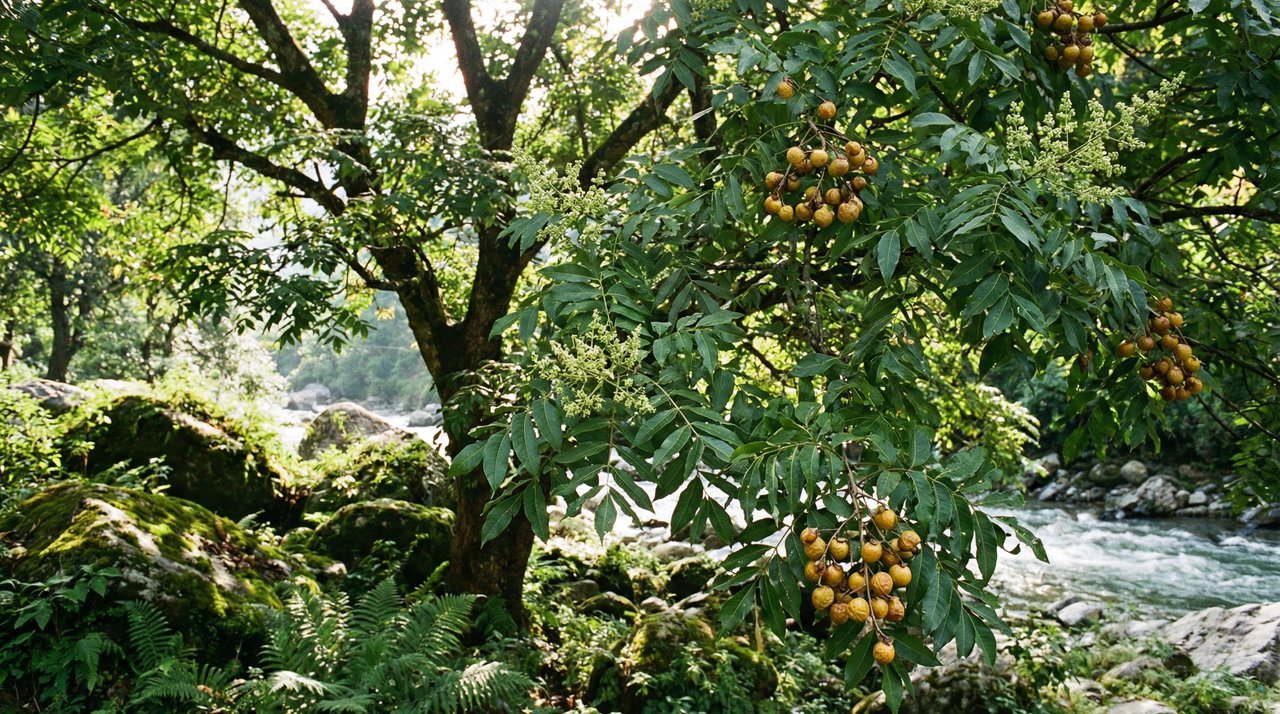
Most people encounter soapberry for the first time the same way I did: holding a small, translucent amber fruit that looks almost exactly like a grape, with zero idea that a single one of those fruits, dropped into warm water and squeezed, will produce a lather capable of washing your hair, your laundry, and your dishes. No processing. No added ingredients. Just water, friction, and a chemistry the tree evolved entirely for its own reasons, which had nothing to do with your kitchen sink. That gap between how ordinary it looks and what it can actually do is what keeps pulling me back to this plant after years of working with it across multiple climate zones.
The foamy compound responsible for all of it, saponin, is also the reason this fruit can make you genuinely sick if you eat it raw. It's a cleaner and a toxin simultaneously, depending entirely on how you use it. That's not a footnote; it's the whole character of the plant. Understanding that contradiction is what separates someone who grows a soapberry tree and gets real, lasting value from it from someone who plants one, waits a decade for fruit, and then doesn't quite know what they're holding.[1]
Soapberry Origin, History, and Botanical Background
Few trees I've encountered carry as much cultural weight packed into such an unassuming fruit. Soapberry has been cleaning hair, purifying ritual spaces, and treating illness across two continents for centuries, and the chemistry responsible for all of that is right there in the translucent, sticky pericarp of a drupe barely bigger than a marble. Understanding where this tree comes from, what it looks like, and why people across vastly different cultures reached for the same fruit independently makes growing one feel like participating in something much larger than a garden project.
Botanical Background and Native Range of Sapindus mukorossi
Indian soapberry, Sapindus mukorossi, belongs to the Sapindaceae family and is native to the subtropical Himalayan foothills spanning India, Nepal, and China.[2][3] In the wild it grows in mixed deciduous forests, on slopes, along riverbanks, and in scrublands at elevations between 500 and 2000 meters.[4] It's a deciduous, polycarpic perennial that takes its time: trees started from seed typically begin fruiting around 5 to 8 years in, though cuttings in ideal conditions can shave that down to 4 to 6 years.[5] Once established, expect a moderate growth rate of roughly 1 to 2 feet per year, and expect the tree to stick around: cultivated specimens commonly reach 50 to 70 years, while wild trees may exceed a century.[6][7] As a landscape designer, I've found this maturation timeline matters enormously to clients: a soapberry is a generational planting, and trees given well-drained, sunny sites seem to hit that fruiting window far more reliably than those stuck in compacted or waterlogged ground.
The genus Sapindus spans far beyond the Himalayas. Wingleaf soapberry, Sapindus saponaria, ranges from the southern United States through Central America and the Caribbean into northern South America, thriving in USDA zones 8b through 11.[8] Sapindus rarak sweeps across Southeast Asia and the eastern Himalayas in lowland rainforests up to about 1000 meters, while Sapindus trifoliatus and the closely related Sapindus marginatus occupy tropical and subtropical dry deciduous forests and riverbanks across South and Southeast Asia up to 1200 meters.[9][10] Different continents, similar chemistry, and a shared history of human use: that pattern is exactly what makes this genus so compelling. In native habitats, birds like bulbuls and mynas do the distribution work, consuming the fleshy drupes and spreading seeds across the landscape.[11]
Visual Characteristics and Identification of Soapberry Trees
Sapindus mukorossi is a small to medium tree, typically reaching 10 to 25 meters tall with a spreading canopy 6 to 9 meters wide, an upright trunk with grayish-brown bark that darkens and furrows with age, and a vase-shaped, somewhat irregular branching habit.[2][7] The leaves are alternate and pinnately compound, 15 to 40 centimeters long with 7 to 17 lanceolate to elliptic leaflets that have smooth margins and prominent veining.[3] Flowers are small, greenish-white to yellowish, and clustered in large terminal panicles 15 to 30 centimeters long, blooming June through August. The fruits are what most people come for: globose drupes, 1 to 2 centimeters across, green when young and turning translucent yellowish-brown at maturity, each surrounding a single glossy black seed.[12]
Below ground, the tree is equally distinctive. A strong taproot extends 3 to 5 meters or more, with lateral roots spreading 10 to 15 meters horizontally, roughly 1.5 to 2 times the canopy diameter.[13] Early in my career I tried transplanting a two-year seedling that had been in a standard nursery pot. It sulked for two seasons. Now I grow young soapberries in deep root trainers specifically to protect that taproot architecture before they go in the ground. The pericarp of the ripe fruit contains up to 36% saponins, the foaming compound that gives the tree its common name and its utility.[14] Rub a wet fruit between your palms and the lather tells you immediately what you're dealing with.
Contrast with the rest of the genus helps with identification. Sapindus trifoliatus has distinctly trifoliate leaves with ovate leaflets 5 to 15 centimeters long, a striking departure from the multi-leaflet pinnate form of the anchor species.[15] Sapindus emarginatus carries 5 to 11 pairs of leaflets with notched or emarginate tips and fruits that mature to black rather than golden-brown.[16] Sapindus delavayi displays bright green leaves that turn yellow in autumn, with 7 to 13 leaflets and yellowish-brown drupes.[17] Sapindus saponaria and Sapindus marginatus closely mirror the pinnate leaf form of S. mukorossi, produce similar white-cream panicles and 1 to 2 centimeter yellowish drupes, but can lean semi-evergreen in frost-free zones and typically stay shorter, in the 9 to 15 meter range.[18]
Traditional and Cultural Uses Across Continents
In India, soapberry has been known as Ritha or Rita for centuries, and its role in Ayurvedic and Unani traditions goes well beyond casual folk use. The fruits were prescribed for balancing Kapha and Vata doshas, used as an eco-friendly soap and shampoo substitute, applied to hair to address dandruff and lice, incorporated into wedding and purification rituals, and exported historically for soap production.[19][20] The chemistry underlying those ritual and cleansing uses is the same triterpenoid saponin chemistry that makes the fruit foam: tradition and phytochemistry arrived at the same conclusion from different directions.
Medicinally, the genus reads like a broad-spectrum formulary. Fruit pericarp for cleansing skin and hair, seeds applied for eye disorders, bark used for gastrointestinal and wound healing, and leaves employed as an anthelmintic: each plant part had its application.[21] Sapindus trifoliatus extended that range further into treatments for epilepsy, cholera, cardiac conditions, and rheumatism, while Sapindus saponaria served parallel roles for skin conditions, parasites, and inflammatory ailments across the Americas.[22][23] I've used diluted soapberry solution on my own hair and found it noticeably gentler than most commercial shampoos; it cleans without that stripped, squeaky feeling some detergents leave behind. That gentleness is what traditional practitioners understood intuitively long before anyone identified a saponin molecule. It's also, as I'll note in a moment, exactly what's now driving demand that threatens wild populations.
Conservation Status and Sustainability of Soapberry
Sapindus mukorossi is listed as Least Concern by the IUCN owing to its broad distribution, but that global status masks real local pressure.[24] Overharvesting for soap production and traditional medicine has caused meaningful habitat degradation in parts of the Indian Himalayas, and Sapindus marginatus tells a more sobering story: it's listed as Vulnerable due to population decline from overexploitation.[25] Both the IUCN and FAO have recommended sustainable harvesting practices and intentional cultivation as the most effective tools for preventing these local threats from becoming range-wide crises.[26][27]
Here's what makes the cultivation argument particularly compelling: trees grown under good conditions actually outperform wild-harvested specimens in saponin content, with quality closely tied to growing conditions and geographic location.[26] I've noticed this in my own harvests; fruits from trees given attentive care in well-drained, warm sites produce noticeably stronger lather than anything I've sourced from stressed or shaded wild trees. Having seen stressed soapberry populations in native foothill habitats, I think cultivated plantings, whether in home food forests, agroforestry systems, or urban gardens, are genuinely the right response. You get superior fruit, you take pressure off wild stands, and you plant something that may outlive you by several decades. That's a bargain worth taking seriously.
Soapberry Varieties and Sourcing
Notable Landraces and Species in the Sapindus Genus
One thing that surprises most people when they start researching soapberry is that there are no named cultivars to shop for. Sapindus mukorossi has never been subjected to formal horticultural breeding programs, so you won't find a 'High-Lather Select' or 'Zone 9 Gold' at your local nursery.[28][29] What actually exists are regional landraces, trees selected over generations by farmers and foresters for predictable performance in specific climates. I've grown seed batches labeled from several Indian regions, and the ones traced to Himachal Pradesh sources have consistently leafed out earlier and shown noticeably better drought tolerance through their first two summers than generic commercial seed. Provenance matters more than any marketing label here.
Among Indian selections, landraces from Uttar Pradesh, Himachal Pradesh, and the Western Ghats stand out for saponin content that typically runs 10 to 18% in the dried pericarp, along with fruit yield and pest resistance suited to commercial orchards. 'Ritha Local' is the selection name you'll encounter most often in agroforestry contexts.[29][30] I've done side-by-side lather tests with 'Ritha'-type fruits versus generic S. mukorossi stock, and the difference in foam volume and slipperiness is real enough that I'd always pay extra for traced provenance if you're growing primarily for soap production.
For growers in cooler climates, the genus offers a genuinely useful alternative. Wingleaf soapberry, Sapindus saponaria var. drummondii, the western soapberry tree, pushes cold hardiness all the way to USDA zones 6 through 9 and can survive protected sites in zone 5.[31][32] Its saponin levels can reach 10 to 30% in the fruits, which is competitive with the sapindus mukorossi plant on good sites, though fruit size runs smaller.[33] The anchor species is hardy in zones 9 through 11 and can shrug off brief dips to around 20°F, but young trees are considerably more vulnerable than established specimens.[34][35] I learned that the hard way sheltering a two-year-old sapindus mukorossi through an unexpected cold snap; the mature trees nearby were unbothered. If you're in zone 8 and determined to grow the Indian species, a south-facing wall, deep mulch over the root zone, and a windbreak on the north side can genuinely tip the odds in your favor.[34][36] Florida soapberry (Sapindus marginatus) and threeleaf soapberry (Sapindus trifoliatus) share the zone 9 through 11 preference of S. mukorossi but produce smaller fruits with somewhat lower saponin content, around 8 to 12% for S. marginatus, making them worth knowing but rarely the first choice for soap production.[7][37]
How to Source Soapberry Plants and Seeds
Within the US, finding soapberry is straightforward enough. Seed packets of 10 to 20 seeds typically run $5 to $15, and young plants from specialty nurseries land in the $20 to $50 range.[7] Scarified seeds germinate at 70 to 90% when given a hot-water soak, usually sprouting within two to four weeks under warm conditions.[38] Interstate sourcing is uncomplicated, but importing propagative material from India or Nepal requires USDA APHIS permits and phytosanitary certificates; dried fruits for personal use are generally exempt but still subject to inspection at the border.[39][40]
On the conservation side, Sapindus mukorossi is listed as Least Concern on the IUCN Red List, but wild populations in India and Nepal are under real harvesting pressure.[41][42] I only buy from nurseries that can trace their stock to certified agroforestry or FSC-certified growers. It's a small ask that makes a real difference, and any reputable supplier should be able to answer that question without hesitation.
Soapberry Propagation and Planting
Seed Characteristics and Dormancy
Pick up a soapberry seed. You will understand the physical challenge immediately. The seeds of Sapindus mukorossi are round to ovoid, roughly 10-16 mm long, and coated in a hard, glossy black shell that looks almost lacquered.[12][43] Inside that impenetrable testa sits a large white kernel loaded with saponins, surrounded by a thin endosperm layer.[44] The shell is the whole problem. That physical dormancy means the seed simply won't absorb water until you break it down deliberately. The good news is that once properly stored, these seeds are patient; dried to 5-10% moisture and kept at 4-10°C in a sealed container, they'll stay viable for up to a decade.[45][46] Most related species like S. trifoliatus aren't so forgiving and can't be dried below 15-30% moisture without losing viability, so the Indian soapberry's orthodox storage behavior is genuinely a grower's advantage.[47]
Propagation Methods
Seed is the primary route for most growers, and fresh seed performs dramatically better than stored seed. Collect from fully ripe fruit during the dry season, depulp, wash thoroughly, and either sow immediately or begin pretreatment right away because viability drops quickly if seeds are allowed to completely dry out before scarification.[48][49]
For scarification you have three options. Mechanical nicking with a file or knife works reliably if you're doing small batches. Hot-water soaking (pour 80-100°C water over the seeds, then let them soak in warm water for 24-48 hours) is my go-to for a tray of fifty or fewer seeds; it's simple and safe. Concentrated sulfuric acid (30 minutes to 2 hours) gives consistent results at scale but demands full protective gear, a ventilated space, and careful neutralization before disposal, so I won't pretend it's beginner-friendly. After any method, follow with a 24-48 hour warm-water soak, then sow. Fresh scarified seeds germinate in 2-4 weeks at 24-30°C with germination rates hitting 70-90%.[50][48]
I learned this the hard way in my first attempt, when I sowed untreated seeds in full sun and lost the entire batch to damping-off within three weeks. Since then I sow 1-2 cm deep in a 1:1:1 sand-perlite-peat mix, keep humidity around 70-80%, and run the flats under 50% shade for the first month.[48][12] I also label every flat immediately because young soapberry seedlings have a deceptively legume-like look and they're easy to mix up at the cotyledon stage. Seedlings can reach 30-50 cm in 6-12 months and are ready to transplant once they're holding that size comfortably.
If you want to guarantee fruit production in a small garden, though, seed alone won't cut it. Soapberry is dioecious, and seedlings are genetically variable with a roughly even male-to-female split.[51] I've learned the hard way that grafting known female scions onto seedling rootstock is now my go-to for guaranteeing fruit. Cleft, whip-and-tongue, or veneer grafts on compatible Sapindus rootstocks during active growth give 40-60% success, and grafted trees fruit in 2-4 years rather than the 5-8 years typical from seed.[52] Air layering during the monsoon season is another option, with 30-70% success rates in 4-8 weeks, though it's more labor-intensive.[53]
Soil and Site Requirements
Think about where this tree evolved: rocky, well-drained Himalayan foothills with steep slopes and no standing water. That context makes its non-negotiable requirement for drainage feel less like a preference and more like a survival condition. Waterlogging kills soapberry through root rot faster than almost any other stressor; no amount of fertility or sun will compensate.[54][38] Given good drainage, the tree is surprisingly flexible; loamy or sandy-loam soils in the pH 6.0-7.5 range are ideal, though it tolerates 5.5-8.0 and can manage nutrient-poor rocky or lateritic soils once established.[55]
The deep taproot, which can reach 2-5 m at maturity, is both an asset and a planting consideration. It's why established trees develop real drought resilience, but it also means the tree needs room to go down from day one; plan for a planting pit at least 60-90 cm deep.[56][57] Organic matter in the 2-4% range supports the best nutrient uptake, and I always do a soil test before planting to calibrate lime or sulfur corrections rather than guessing. In my experience working with heavier subtropical clay, amending with coarse sand and pine bark before backfilling makes the difference between a chlorotic, struggling tree and one that puts on visible growth by year two.
Planting Timing, Spacing, and Technique
Soapberry grows at a moderate pace, roughly 0.5-1 m per year in good conditions, and will eventually reach 15-25 m in maturity, so the spacing decisions you make at planting will shape the system for decades. Standard orchard recommendations sit at 8-10 m within rows and 10-12 m between rows, which works out to roughly 100-150 trees per hectare.[56][58] Closer spacing of 5-8 m will boost early yield density but demands consistent pruning and sacrifices the airflow that keeps fungal problems in check. For a permaculture system where intercropping and canopy management matter, the wider end of that range gives you the most flexibility.
Plant in spring after the last frost when soil temperatures are consistently above 10°C, or in early fall in frost-free zones. Set container-grown or bare-root seedlings into 60×60×60 cm pits enriched with organic manure, mulch the root zone generously, and commit to deep, regular watering for the first 1-2 years while that taproot establishes itself.[59][60] Don't be discouraged if your young trees seem slow for the first two or three years; once that taproot is properly anchored, growth accelerates noticeably. Also plan for the dioecious reality from the start: if you're growing from seed, plant several trees or incorporate at least one grafted female to ensure you're not waiting seven years to discover you've grown an all-male stand.
Soapberry Tree Care and Growing Guide
Growing soapberry well isn't complicated, but it does follow a clear arc: high support early, then a gradual handoff to a tree that largely takes care of itself. The fundamentals are a well-drained loamy soil with a pH between 6.0 and 7.5,[61][62] enough sun to drive serious fruiting, and the patience to match your inputs to the tree's stage rather than treating it the same way at year one as you do at year ten.
Sunlight Requirements for Soapberry Trees
Soapberry needs at least 6 to 8 hours of direct sun daily for strong growth and reliable fruiting.[63][7] It can tolerate partial shade, but I've seen shaded trees produce weak, elongated stems, pale leaves, and a fraction of the fruit set you'd get in full exposure.[7] In cooler parts of zone 9, a south-facing placement makes a real difference. In hot, dry summers, watch for leaf scorch on the edges of soapberry leaves if soil moisture drops while the sun is intense; the tree handles heat well, but not heat plus drought simultaneously.[64]
Water Needs and Drought Tolerance
The watering approach changes dramatically between a seedling and an established tree. Young trees in their first two to three years need consistent moisture, typically a deep soak once a week delivering water down 12 to 18 inches, with the top two to three inches of soil allowed to dry between sessions.[65] Newly germinated seedlings are thirstier than that; I was watering mine every couple of days through their first summer.
Once the roots are established, the picture shifts completely. Mature trees are genuinely drought-tolerant, needing supplemental water only every two to four weeks during dry stretches and often none at all where annual rainfall sits between 1,000 and 2,000 mm.[5][66] Florida soapberry (Sapindus marginatus) takes this even further, tolerating four to eight weeks without significant damage once it's well rooted.[67] A thick mulch circle around the base helps retain moisture, moderate soil temperature, and ease that transition to low-input management for any soapberry tree.[61]
Know your distress signals. Underwatering shows up as wilting, leaf curling, and brown or yellow leaf edges. Overwatering is sneakier: lower leaves yellow while the soil is still wet, the roots go soft and black, and growth stalls.[68] If you're seeing that yellowing pattern on a moist soil, stop watering immediately and check drainage. In my experience, root rot is the fastest way to lose a young soapberry tree, and by the time the top shows symptoms, the damage is already significant.
Feeding and Soil Fertility for Soapberry
This is a tree that thrives on relatively low fertility, and overfeeding it causes more problems than underfeeding.[69] My starting point is always a soil test, and I retest every two to three years rather than guessing.[69] Well-composted farmyard manure is the backbone of any soapberry fertility program; mature trees can use 20 to 30 kg annually, with organic matter doing the slow, sustained work that synthetic feeds don't.[70]
For young soapberry plants in years one through three, the emphasis is on phosphorus to support root establishment, with roughly half the mature NPK rate applied monthly at half strength through spring and summer.[69][71] Mature trees benefit from potassium more than nitrogen; it drives fruit size, disease resistance, and, critically, saponin content in the berries.[69] I've noticed that fruits from trees grown with balanced potassium and restrained nitrogen lather more richly, which tracks with the research showing excess nitrogen reduces saponin levels across the genus.[72][73] Lush growth with disappointing fruit set is often a nitrogen story. Micronutrients like chelated iron are only worth adding if a soil test confirms a deficiency.[74]
Frost Tolerance and Cold Protection
Indian soapberry sits comfortably in USDA zones 9 to 11, and mature trees can handle brief dips to around 20 to 25°F (-6 to -4°C).[7][63] Young trees are considerably more vulnerable and start showing damage near 28 to 30°F (-2 to -1°C).[75] I think of them the way I think about young citrus or avocado in zone 9B: the first couple of winters are the critical window, and a single hard freeze without protection can set the tree back badly.
After a cold snap, look for leaf scorch, blackened foliage, twig dieback, and bud drop.[76] Protection is straightforward: heavy mulch over the root zone, a sheltered south-facing wall for young soapberry plants, frost cloth on forecast freeze nights, and container growing for anyone in a genuinely marginal climate.[77] Well-drained soil also improves cold tolerance; wet roots and freezing temperatures are a punishing combination.[76]
Heat Tolerance and Summer Stress Management
Heat is rarely the limiting factor for this tree. Native to subtropical South and East Asia, soapberry handles temperatures up to around 40 to 45°C (104 to 113°F) under normal conditions,[7][78] and mature trees have deep enough roots and physiological reserves to manage serious summer heat with minimal intervention.[79] Where heat stress does bite, it's almost always a combination of extreme temperature and drought together. Prolonged exposure above 50°C, especially on dry soil, triggers leaf scorch, wilting, and reduced fruit production.[80]
Germination and flowering are the most heat-sensitive stages, so seedlings and newly flowering trees deserve extra attention during intense heat waves.[79] For established trees, the management is simple: keep mulch thick, water deeply before a prolonged hot spell rather than during it, and ensure drainage is solid so roots stay healthy under pressure.
Pruning, Maintenance, and Seasonal Rhythm
For the first two to three years, the goal is building structure: a strong central leader with three to five scaffold branches spaced at 45 to 60 degree angles.[65] After that, a soapberry tree doesn't ask for much. I prune mine lightly in late winter or just after harvest, removing dead, diseased, or crossing branches and thinning the canopy for light and airflow without ever taking more than 25% at once.[81][82] Keeping the canopy open has noticeably reduced fungal pressure through the humid summers where I garden. Heavy pruning will cost you fruit set, so restraint is the right instinct here.
Sterilize your tools between trees, remove any infected debris from the ground, and maintain proper spacing (10 to 12 meters between trees) to keep airflow generous.[83] On the seasonal calendar in subtropical climates, expect active vegetative growth through the monsoon months (May to September), flowering from April through June, fruit development from July into December, and dormancy through the winter.[84][63] Watering should follow that rhythm: steady during vegetative flush and fruit development, pulled back to almost nothing during dormancy. Indian soapberry's pattern is more tightly tied to monsoon cycles than the related Florida species I've grown, which responds more to rainfall distribution than a fixed seasonal clock. Knowing which pattern your tree follows makes the whole care calendar easier to read.
Harvesting Soapberry (Sapindus mukorossi)
Patience is probably the most important tool you'll bring to a soapberry harvest. Planted from seed, Sapindus mukorossi typically takes 3-5 years to begin fruiting at all, reaches meaningful production around years 5-7, and doesn't hit full bearing stride until somewhere between 10 and 15 years of age.[85][86] Once a tree hits maturity, though, it fruits reliably every single year for decades, which is why I think of it as one of the great long-game permaculture investments.
Timing and Ripeness Cues for Soapberry Harvest
Flowering happens from March through May in most Indian growing regions, or stretching into June at higher Himalayan elevations.[87] From there, fruit development takes another 6-8 months, putting the harvest window squarely between October and December, with November typically being peak season.[88][87] The ripeness cues are unmistakable once you've seen them: the skin shifts from green to yellowish-brown or translucent, the husk turns papery and dry, and the hard brown seed inside starts to rattle when you shake the fruit.[88][89] That rattle is the cue I wait for most. After several seasons of harvest, I've learned to trust it more than color alone.
Ripening is uneven across the canopy, so plan for multiple passes over 4-6 weeks and harvest branches only when 70-80% of their fruit shows those ripeness indicators.[65][88] Saponin levels peak at full ripeness, so rushing doesn't pay off.[65] If you're growing Florida soapberry (Sapindus marginatus) in a zone 8 or 9b climate like mine, the cues are similar but the calendar shifts earlier: flowering runs February through April, fruit development takes only 120-180 days, and you'll likely be harvesting by August-October in the southwestern US.[90]
Harvest Techniques and Post-Harvest Handling
Pick in the morning after dew dries, using a combination of hand-picking with shears and gentle branch-shaking over padded containers.[88][89] Work on dry days to minimize the chance of fruit damage and mold during the drying phase. One thing I had to learn the hard way: leave 30-40% of ripe soapberry fruit on the tree every season. My first few harvests were too aggressive, and over time it hurt both the stand's natural regeneration and the wildlife activity I'd been counting on for seed dispersal. Once I pulled back and treated it as a sustainability practice rather than a yield-maximization exercise, the whole system felt healthier.
After harvest, sort out debris and damaged fruit, rinse if needed, then spread everything in a shaded, well-ventilated spot for 3-7 days until seeds rattle freely in a dry husk and moisture drops below 10%.[91][88] Shade drying is non-negotiable; direct sun degrades the saponins you've waited years to harvest. Expect the fruit to lose 30-40% of its fresh weight through this process.[91] Dried soapberry nuts store well for 6-12 months in perforated or jute bags at around 10-15°C with 50-60% relative humidity.[91]
Expected Yields from Soapberry Trees
A mature tree between 10 and 20 years old can yield anywhere from 20 to 100 kg of fresh soapberry fruit per season, with well-managed plantings producing 1-3 tons of dried fruit per hectare.[88][92] After waiting 5-7 years for a real first harvest, I find that lower end of the range deeply satisfying for homemade soap production, though I always leave a generous share for birds and reseeding. The tree's productive lifespan makes those early years worthwhile; related species like S. marginatus typically fruit for 40-60 years, with peak yields between years 15 and 25.[93][33]
A note I want to be clear about: I never use soapberry fruit in any food preparation. The spherical drupes are bitter, soapy, and mildly toxic due to their saponin content, which can be harmful to some vertebrates if ingested.[85][12] Everything I harvest goes directly to cleaning products. The preparation and safety sections ahead cover exactly how to use these fruits responsibly.
Soapberry Preparation and Uses
Safety and Culinary Limitations
I've fielded more than one concerned call from clients whose children sampled the attractive orange fruits off my demonstration trees. Many wrongly assume the plant produces edible harvests. The fruit pericarp contains 20-36% hemolytic saponins that cause nausea, vomiting, diarrhea, and gastrointestinal irritation when ingested, and the seeds and leaves carry the same risk.[94][95] Related species including Sapindus marginatus and Sapindus saponaria share this toxicity profile throughout the genus.[96] The taste tells you everything: the pulp opens with a fleeting sweetness before turning bitter, astringent, and unmistakably soapy.[19] No one eats more than a nibble on purpose.
Prolonged boiling, fermentation, or repeated washing can reduce saponin content by 50-80%, which is why limited traditional Ayurvedic preparations and pickles exist, and why Sapindus rarak arils occasionally appear in processed Southeast Asian dishes.[97][98] I mention this not as an invitation to experiment at home, but as context. Even processed fruits retain meaningful toxicity, and these are specialized traditional preparations with specific knowledge behind them. The dried pericarp does contain potassium, calcium, iron, and modest fiber,[99] but nutritional value means little when the delivery mechanism is hemolytic. Clients who grow up with lychee (a Sapindaceae relative with genuinely edible arils) sometimes assume the family connection implies similar edibility. It doesn't. Before working with any soapberry fruit, confirm your identification carefully: horse chestnut and Koelreuteria paniculata are toxic look-alikes that pose their own serious risks to children and pets.[100][101]
Traditional Medicinal Preparations and Dosages
Ayurvedic and Chinese folk traditions have long worked with this tree's bitter, cooling properties, primarily for external applications: skin ailments, dandruff, scalp conditions, rheumatism, and as an expectorant.[19][102] Preparations include decoctions of boiled fruit or bark, infusions steeped for hair rinses, alcohol tinctures for topical use, and dried fruit powder formed into poultices.[103] Where supervised internal use occurs in traditional practice, typical adult dosages run 1-3 grams of dried fruit powder daily or 2-5 ml of decoction, always under qualified guidance.[104]
My recommendation as a horticulturist is consistent: the external applications for dandruff and skin conditions are where this plant earns its medicinal reputation, and internal use belongs strictly with qualified Ayurvedic or herbal practitioners. Excessive use in either direction can irritate mucous membranes.[105] I also tell clients to source fruits from well-grown, properly dried cultivated trees rather than wild-harvested material of variable quality. Saponin levels shift with maturity and handling, and consistency matters when you're preparing anything medicinal.
Non-Food and Practical Applications
Here's where soapberry truly earns its place in a permaculture system. Those same saponins that make the fruit inedible create a natural surfactant that substitutes effectively for soap, shampoo, laundry detergent, and dishwashing liquid.[106][107] I've compared the lather from a simple soapnut shampoo (a handful of dried deseeded shells simmered in water, strained, and cooled) to commercial sulfate-free products, and the gentleness on hair is genuinely comparable, without the ingredient list. Several clients on my projects have switched their household laundry routine entirely after I showed them the basic preparation.
Proper drying locks in that potency. Shade-drying fruits in thin 2-5 cm layers for 3-7 days, or mechanical drying at 40-50°C for 24-48 hours, preserves over 95% of active saponins.[108] In humid climates, I always push clients toward shade-drying in good airflow rather than full sun, a lesson from early batches that developed surface mold before they dried through. The fruits also function as a biopesticide, and their use produces significantly less water pollution than synthetic detergent equivalents.[109] Beyond the fruit, the hard durable wood serves for tool handles and furniture, while Sapindus trifoliatus bark yields natural textile dyes and the seeds are carved into beads.[110] This is a tree you grow for the long game, and almost every part of it has a role to play.
Soapberry Health Benefits and Medicinal Uses
There's a useful paradox at the heart of soapberry's chemistry: the same compounds that make it foam in your laundry water also give it genuine antimicrobial, anti-inflammatory, and antioxidant properties that healers across South Asia have relied on for centuries. Understanding that paradox is what separates a grower who uses this tree well from one who either ignores its medicinal potential or, worse, underestimates its risks.
Phytochemicals: Saponins, Flavonoids, and Phenolics
The defining chemistry of Sapindus mukorossi is its triterpenoid saponins, particularly sapindoside A and B, along with mukorossides and hederagenin and oleanolic acid-based glycosides. Researchers have identified over 20 distinct saponins in the plant, and the fruit pericarp carries the highest concentration at 8 to 20 percent by dry weight (commonly around 10 to 15 percent), while seeds can reach 30 to 40 percent, and leaves and bark range from 2 to 15 percent.[111][112][113] Saponins don't work alone, though. The leaves carry flavonoids including quercetin, rutin (up to 2.5 percent dry weight), and kaempferol, alongside phenolic acids like gallic, ellagic, and ferulic acid, plus tannins, alkaloids, and terpenoids including lupeol and β-sitosterol, all of which contribute to antioxidant and anti-inflammatory activity across the plant.[111][114]
What I've noticed in my own landscape work is that stressed trees often produce noticeably more pungent fruit, and the research backs that up: saponin content peaks in mature autumn fruits, runs higher during dry seasons, and varies meaningfully with geography and soil type, with northern Indian ecotypes tending toward higher triterpenoid concentrations and well-drained loamy soils at pH 6.0 to 7.5 supporting optimal yields.[115][116][117] What you grow it in genuinely changes what you get. From a permaculture standpoint, the saponins also serve an ecological function: they deter herbivores like cotton bollworm larvae and confer broad antimicrobial and antifungal protection, which helps explain the tree's resilience in a diverse food forest guild.[118][119]
Traditional and Modern Medicinal Research
In Ayurvedic traditions, the fruit has been prescribed for centuries to address skin disorders including eczema, psoriasis, acne, and dandruff, as well as for hair cleansing and growth promotion, respiratory conditions as an expectorant, headaches, and general inflammation.[120][121] That long track record of external application, particularly for skin and hair care, is where my own respect for this plant sits firmest. I'm happy to use a well-diluted ritha rinse on my hair; I leave internal applications to qualified practitioners who understand Ayurvedic dosage protocols.
Modern preclinical research gives the traditional uses a reasonable biochemical foundation. Saponin extracts show strong antimicrobial activity against both gram-positive bacteria like S. aureus and gram-negative strains like E. coli, as well as the fungus C. albicans, primarily by disrupting cell membranes, with minimum inhibitory concentrations of 0.5 to 2 mg/mL.[122][123] The anti-inflammatory picture is also solid: extracts inhibit pro-inflammatory cytokines TNF-α and IL-6, suppress the NF-κB pathway, and reduce COX-2, while the phenolic and flavonoid fraction demonstrates free-radical scavenging activity comparable to ascorbic acid in DPPH and ABTS assays.[124][125][126] Earlier-stage research points toward antidiabetic effects via α-amylase and α-glucosidase inhibition, neuroprotective activity including acetylcholinesterase inhibition, accelerated wound healing with enhanced collagen deposition, and selective cytotoxicity against cancer cell lines including HeLa and MCF-7, though all of this remains in vitro or animal-model territory.[127][128][129]
Related species add breadth to the picture: S. marginatus shows analgesic and antioxidant activity; S. saponaria demonstrates antiviral effects against HSV-1 as well as sedative and diuretic properties; S. trifoliatus contributes astringent tannins useful in wound healing and diarrhea management.[130][131][132] Human clinical trials across the genus remain limited to pilot studies, mostly focused on skin disorders and cosmetic safety assessments, so the research is promising but far from conclusive.[133][134]
Nutritional Profile and Considerations
Let me cover nutrition directly. Soapberry is not a food plant. The fruit pericarp contains 5 to 15 percent saponins that cause gastrointestinal irritation and potential hemolysis if consumed raw or in quantity.[135][136] Yes, the dried pericarp does contain modest vitamin C (15 to 50 mg per 100g), calcium, iron, magnesium, potassium, and fiber, and the macronutrient profile runs roughly 60 to 70 percent carbohydrates with around 300 to 350 kcal per 100g,[135][137] but none of that matters as a dietary argument when the saponin load is sitting right alongside it. Some South Asian and Nepalese culinary traditions do use heavily processed fruit, with boiling, fermentation, or roasting capable of reducing saponin content by 40 to 90 percent, but these are minority practices, highly processed, and not something to attempt casually.[138][139] Treat the nutritional data as a botanical curiosity, not a reason to bring soapberries into the kitchen.
Safety and Responsible Use
The saponins that give soapberry its medicinal and cleansing properties interact with cholesterol in cell membranes, which is exactly what makes them effective antimicrobials and also what makes them potentially problematic internally. Raw or large-dose ingestion can cause nausea, vomiting, abdominal pain, and diarrhea; at high doses, hemolytic anemia becomes a real risk because the pericarp and seeds contain 10 to 40 percent saponins.[94][19][140] To put that in perspective: the acute oral LD50 for the saponins in rats is 7,940 to 9,260 mg/kg, which classifies them as practically non-toxic in acute exposure terms, and most human incidents are self-limiting GI upsets rather than serious emergencies.[141][142] Think of it the way you'd think about oxalic acid in rhubarb leaves: the risk is real, dose-dependent, and avoidable with common sense.
For external use, diluted extracts are generally safe for skin and hair care, but contact dermatitis is possible in sensitive individuals, so a patch test before any new preparation is just good practice.[143] Internal use should not happen without professional supervision, and the plant is contraindicated during pregnancy due to potential uterotonic effects, for breastfeeding women, young children, and anyone with gastrointestinal disorders.[124] Keep dried pericarp in a clearly labeled container out of reach of children and pets; it's toxic to dogs and cats and can cause hemolytic effects in livestock.[144] I keep mine stored the same way I store concentrated neem oil: labeled, sealed, high shelf. Finally, make sure you're working with properly identified material, since horse chestnut (Aesculus hippocastanum) is a look-alike that carries its own distinct toxicity profile and should never be substituted.[145]
Soapberry Pests and Diseases
Natural Pest Resistance from Saponins
Anyone who has crushed a soapberry fruit and smelled that sharp, soapy bitterness immediately understands why most insects give this tree a wide berth. Those same triterpenoid saponins that make the fruit useful as a detergent act as a natural insecticide, antifeedant, and repellent against a broad range of arthropods.[146][147][148] This defense holds up reasonably well across the genus; Sapindus rarak shows similar moderate-to-high pest resistance for the same chemical reasons,[149] and the defense appears strongest in drier climates where saponin concentrations stay high.[33]
Common Insect Pests and Symptoms
That said, a stressed or poorly sited soapberry is a different story. Scale insects (Aspidiotus spp.), aphids, leaf miners (Phyllocnistis spp.), and fruit borers (Conogethes punctiferalis) are the pests that cause the most visible damage, showing up as leaf distortion, yellowing, serpentine mines through leaf tissue, and deformed or prematurely dropped fruit.[150][151] In unmanaged orchards, fruit borers alone can drive yield losses of 30 to 50 percent.[152] In well-structured guild plantings with healthy predator populations, I've watched the same pest complex cause almost no measurable loss. The difference isn't luck; it's diversity and canopy health.
Fungal Diseases and Environmental Triggers
The disease list is fairly predictable for a subtropical tree: powdery mildew (Oidium/Erysiphe spp.), anthracnose (Colletotrichum spp.), leaf spot (Cercospora/Alternaria spp.), and root rot (Phytophthora/Fusarium spp.) are the main fungal threats.[153][154] Environmental stress is the real trigger. Warm, humid conditions between 25 and 30°C accelerate leaf spot and anthracnose, while poor air circulation invites powdery mildew and the sooty mold that follows aphid infestations.[155][156] I've learned to treat that first white dusting of powdery mildew as a diagnostic signal, not just a cosmetic problem: it almost always tells me that spacing was too tight or a pruning pass is overdue. Bacterial and viral issues are relatively rare and low-severity; Ganoderma butt rot is worth knowing about for older S. rarak specimens but isn't a common concern for young cultivated trees.[157]
Integrated Pest and Disease Management
The IPM framework here is the same one I use across most of my tropical fruit and nut tree designs: cultural practices first, biological controls second, neem-based biopesticides third, and synthetic inputs essentially never. Pruning for airflow, maintaining proper drainage and spacing, and removing infected material before pathogens can sporulate handle the majority of problems before they become problems.[158][159] Ladybugs and parasitic wasps keep aphid and scale populations honest once diversity is present in the system. In twenty years of regenerative landscape work, I've never reached for a synthetic fungicide on a properly sited soapberry; the research on IPM aligns entirely with what I see in practice.[160] For growers selecting planting stock, Indian selections like Ritha-1 show improved tolerance to leaf spot, a sign that breeding programs are starting to codify what good farmers have known through selection for generations.[161]
Soapberry in Permaculture Design
A soapberry tree asks you to think long. You're planting something that lives 50 to 100 years, shapes the microclimate around it, feeds pollinators, and subtly discourages certain neighbors through its own chemistry. Getting the placement right from the start matters far more with this tree than with most things I put in the ground.
Climate and Hardiness Zones for Soapberry
Indian soapberry (Sapindus mukorossi) is squarely a subtropical-to-warm-temperate tree. It grows best between 20°C and 35°C (68°F to 95°F) with relative humidity in the 50–80% range, though it tolerates a wider swing from brief dips to around -5°C (23°F) on the cold end up to roughly 48°C on the scorching end.[2][12][162][163] In USDA hardiness terms, that settles it firmly into zones 9–11, with a native elevation sweet spot between 600 and 1,200 meters.[12][163][164] For most of my zone 9B designs in the American South, that means it's workable with careful siting, especially with a south-facing wall or a sheltered microclimate to buffer the occasional hard freeze.
Precipitation needs fall between 1,000 and 2,500 mm annually for best performance.[162][163] The drought tolerance people often cite is real, but it belongs to mature, established trees. Young soapberries and trees you're pushing toward heavy fruiting still want reliable moisture, which isn't unlike pomegranate in that way: both handle dry spells once settled, but you'll pay for neglect in poor fruit set. Well-drained soil is non-negotiable regardless; these trees will not tolerate waterlogged roots even in otherwise perfect conditions.[165] If you're in Florida working with the native Sapindus marginatus, bear in mind it's somewhat less cold-hardy, most reliably placed in zones 10–11 and at real risk below 25°F (-4°C).[166][167]
Ecosystem Functions and Services
The physical tree itself tells you a lot about its guild value. At 10–25 meters tall with a 9–12 meter spread, soapberry throws a meaningful canopy.[28][12] From April through June, it pushes out large panicles of small greenish-white flowers that draw bees, flies, butterflies, and beetles in real numbers.[34] The most effective pollinators are honeybees, particularly Apis cerana and Apis dorsata, and the tree is protogynous, meaning receptive female flowers open before pollen is shed, which strongly favors cross-pollination.[168] I remember one spring when I'd let the flowering plants around my soapberry thin out considerably, and fruit set that year was noticeably poor. Maintaining diverse pollinator habitat right at the base of the tree is not optional advice; it's functional design.
After pollination, the yellow-orange fruits ripen and persist into winter, providing food for birds and mammals that disperse the seeds.[169][59] Since the tree is polygamo-dioecious, planting multiple specimens improves fruit set considerably. The toxicity warning deserves plain language here: the fruits cause gastrointestinal distress in humans and pets if eaten in quantity, and I've seen dogs get sick after chewing fallen fruit.[169] Keep soapberry out of high-traffic pet areas or site it in a windbreak row where access is naturally limited. The same saponin chemistry that creates the toxicity risk is what gives the tree its value as a traditional soap source, pest deterrent, and medicinal resource, and those uses are covered elsewhere in this profile.
Below ground, soapberry earns its keep in ways that are easy to overlook. Its deep root system stabilizes slopes and prevents erosion, and leaf litter decomposition steadily builds soil organic matter and nutrient content.[170][171] In agroforestry systems across South Asia, it shows up as a windbreak, shade tree over companion crops, and erosion-control element on degraded slopes.[171][172] It also functions as a secondary successional species on disturbed sites and forest edges, which means it can anchor restoration plantings where you're building canopy from scratch.[171]
Forest Layer and Guild Design
In its native subtropical and tropical dry deciduous forests, soapberry occupies the canopy or subcanopy layer. Young plants tolerate partial shade reasonably well, but mature trees want full sun and will push toward it.[12][173] In a designed food forest, I position it as the dominant canopy element when I want something productive and long-lived, or as a tall subcanopy anchor in larger systems where it's sharing vertical space with fruit trees below a taller overstory.
The guild design question gets interesting once you factor in the allelopathic tendencies. Saponins from the fruits and bark can suppress some understory plants, so I don't just drop standard guild recipes under a soapberry and call it done.[174] My practice is to keep sensitive herbs, especially small-statured ones with fine root systems, away from young trees where fallen fruit and fresh root exudates are most concentrated. Once the canopy is high enough that light, litter distribution, and root depth have spread the chemistry more diffusely, I find the understory handles it much better. The tree also doesn't fix nitrogen, so building the guild around nitrogen-fixing companions is genuinely important rather than just aspirational; legumes like pigeon pea have worked well for me in zone 9B plantings, and I've noticed clearer understory vigor once a mycorrhizal network gets established under a mature tree, which is consistent with its known associations with Glomus species.[175][174]
Its deep taproot makes it a reliable choice for slope work and erosion-prone edges, roles it fills naturally in native forests alongside Shorea robusta, Terminalia species, and teak.[173][176] Related species like the western soapberry tree of Texas (Sapindus saponaria) and the Florida soapberry tree (Sapindus marginatus) occupy similar canopy and subcanopy roles across their ranges and share the same successional-edge behavior, though species and region shift the exact layer placement.[177][93] The spreading crown will need pruning attention as the system matures, and the saponin chemistry means guild design here rewards careful observation over time rather than set-and-forget planting.
The Tree That Made Me Rethink What "Useful" Really Means
I spent years reaching for store-bought soap before I really understood what was growing in my own food forest. The first time I soaked a handful of dried soapberries and watched the water cloud into actual lather, something shifted. It wasn't novelty. It was the quiet realization that this tree had been doing this long before I arrived, long before any of us thought to bottle it.
Sources 177
- Sapindus mukorossi: A review on phytochemistry and pharmacological activities ↩
- Flora of China - Sapindus mukorossi ↩
- Plants of the World Online - Sapindus mukorossi ↩
- Flora of India, Volume 3 ↩
- Sapindus mukorossi: Cultivation and Propagation ↩
- Growth and Longevity of Soapberry Trees ↩
- Sapindus mukorossi Gaertn. ↩
- Sapindus saponaria ↩
- Kew Science - Plants of the World Online: Sapindus rarak ↩
- Plants of the World Online - Sapindus marginatus ↩
- Sapindus mukorossi - Ecology and Distribution ↩
- Sapindus mukorossi - Useful Tropical Plants ↩
- Root System Architecture of Soapnut (Sapindus mukorossi) in Arid Regions ↩
- Ritha Tree Cultivation Guide ↩
- Flora of India - Sapindus trifoliatus ↩
- Sapindus emarginatus - Useful Tropical Plants ↩
- Flora of China - Sapindus delavayi ↩
- Sapindus saponaria ↩
- Ethnobotanical Uses of Sapindus mukorossi in India ↩
- Ayurvedic Uses of Ritha (Sapindus mukorossi) ↩
- Ethnobotanical Survey of Soapnut in Traditional Practices ↩
- Pharmacological Review of Sapindus emarginatus ↩
- Traditional Uses of Soapberry Trees in Southeast Asia ↩
- IUCN Red List: Sapindus mukorossi ↩
- IUCN Red List: Sapindus marginatus ↩
- Sustainability of Sapindus Mukorossi - FAO Report ↩
- Sustainable Harvesting Guidelines for Soapberry Fruits ↩
- Sapindus mukorossi - An Overview ↩
- Germplasm Collection and Evaluation of Soapnut (Sapindus mukorossi) in India ↩
- Sapindus mukorossi: A Review on Taxonomy, Phytochemistry and Pharmacological Activities ↩
- Sapindus saponaria Varieties - Lady Bird Johnson Wildflower Center ↩
- Western Soapberry - USDA Forest Service ↩
- Soapberry Tree (Sapindus saponaria) ↩
- Sapindus mukorossi - Soapberry ↩
- USDA Plants Database: Sapindus mukorossi ↩
- Royal Horticultural Society - Sapindus Growing Guide ↩
- Sapindus trifoliatus - Missouri Botanical Garden ↩
- Propagation of Soapnut (Sapindus mukorossi) ↩
- Importing Plants and Plant Products into the United States ↩
- Federal Noxious Weeds List ↩
- IUCN Red List: Sapindus mukorossi ↩
- Sustainable Harvesting of Soapnuts ↩
- Seed Morphology and Germination of Sapindus mukorossi ↩
- Embryology of Sapindaceae ↩
- Seed Storage of Soapnut (Sapindus mukorossi) for Ex-Situ Conservation ↩
- Seed Storage Behaviour of Sapindus mukorossi ↩
- Seed Storage Behaviour of Sapindus trifoliatus ↩
- Propagation of Soapnut (Sapindus mukorossi) ↩
- Sapindus mukorossi at Missouri Botanical Garden ↩
- Seed Germination of Sapindus mukorossi ↩
- Reproductive Biology and Genetic Diversity in Sapindus Species ↩
- Grafting Techniques for Sapindus Species ↩
- Propagation of Sapindus mukorossi by Air Layering ↩
- Sapindus mukorossi - Flora of China ↩
- Cultivation of Soapnut (Sapindus mukorossi) ↩
- Sapindus mukorossi Cultivation Guide - ICAR ↩
- Root System of Sapindus Species ↩
- Planting Density and Spacing for Soapberry Trees ↩
- Soapnut Tree (Sapindus mukorossi) Growing Guide ↩
- Cultivation and Pest Management of Sapindus Species ↩
- Cultivation of Soapnut (Sapindus mukorossi) ↩
- Sapindus mukorossi – CABI Compendium ↩
- Sapindus mukorossi - North Carolina Extension Gardener Plant Toolbox ↩
- Light Requirements for Tropical Fruit Trees ↩
- Cultivation of Soapnut (Sapindus mukorossi) ↩
- Drought Tolerance of Sapindus Species ↩
- Growing Soapnut Trees: Sapindus marginatus Care Guide ↩
- Sapindus mukorossi (Soapnut) - Cultivation and Care ↩
- Package of Practices for Cultivation of Soapnut ↩
- Cultivation of Soapnut (Sapindus mukorossi) ↩
- Fertilizer Management in Fruit Crops ↩
- Sapindus rarak - Useful Tropical Plants Database ↩
- Nutrient Management in Soapnut (Sapindus mukorossi) Cultivation ↩
- Symptoms of Nutrient Deficiencies in Fruit Trees: Sapindus mukorossi ↩
- Cold Hardiness of Sapindus mukorossi ↩
- Cold Hardiness of Tropical Fruit Trees ↩
- Frost Protection Techniques for Subtropical Plants ↩
- Drought and Heat Tolerance in Sapindus mukorossi ↩
- Physiological Responses of Sapindus mukorossi to Heat and Drought Stress ↩
- Response of Sapindus mukorossi Seedlings to Heat Stress ↩
- Horticultural Practices for Ritha (Sapindus mukorossi) ↩
- Improving Yield in Soapberry through Pruning Techniques ↩
- Disease Management in Sapindus mukorossi ↩
- Phenology of Sapindus mukorossi in Subtropical Regions ↩
- Sapindus mukorossi - Soapnut Tree Cultivation ↩
- Sapindus mukorossi: Propagation and Cultivation ↩
- Sapindus mukorossi: Phenology and Cultivation ↩
- Ritha (Sapindus mukorossi Gaertn.) Fruit Production Guide ↩
- Plant Guide: Soapberry (Sapindus mukorossi) ↩
- Harvesting Soapberries (Sapindus spp.) ↩
- Post-Harvest Management of Soapnut (Sapindus mukorossi) ↩
- Saponin Content and Yield in Sapindus mukorossi Fruits ↩
- Sapindus marginatus: Cultivation and Uses ↩
- Sapindus mukorossi - Toxicity and Uses ↩
- Saponins in Soapnuts: Toxicity and Processing Methods - Journal of Ethnopharmacology ↩
- Kew Science - Plants of the World Online (POWO) ↩
- Detoxification of Saponins from Sapindus Fruits for Edible Use - Food Chemistry ↩
- Edible Uses of Sapindus rarak in Traditional Indonesian Food ↩
- Nutritional Composition and Antioxidant Activity of Soapnut (Sapindus mukorossi) Fruit ↩
- USDA Plants Database - Aesculus hippocastanum ↩
- North Carolina Extension Gardener - Koelreuteria paniculata ↩
- Traditional Uses of Sapindus delavayi in Chinese Folk Medicine ↩
- Ethnobotanical Uses of Sapindus mukorossi in Traditional Medicine ↩
- Ayurvedic Formulary of India - Dosage Guidelines for Herbal Drugs ↩
- Soapnut (Sapindus mukorossi): A Potential Phytomedicine ↩
- Soapnuts as Natural Detergents: Chemical Composition and Applications ↩
- Efficacy of Soapnut as Natural Detergent ↩
- Effect of Drying Methods on Saponin Stability in Sapindus mukorossi ↩
- Sapindus mukorossi: A Review on Phytochemistry and Pharmacological Properties ↩
- Sapindus trifoliatus - Useful Tropical Plants Database ↩
- Phytochemical and Biological Activities of Sapindus mukorossi: A Review ↩
- Saponin contents and antioxidant activity of Sapindus mukorossi Gaertn. fruits ↩
- Triterpenoid Saponins of Sapindus mukorossi and Their Pharmacological Properties ↩
- Flavonoid and saponin content in different parts of Sapindus mukorossi ↩
- Seasonal Variation in Saponin Content of Sapindus mukorossi ↩
- Geographical Variation in Secondary Metabolites of Sapindus spp. ↩
- Effect of Soil Types on Saponin Yield in Sapindus mukorossi ↩
- Ecological Role of Saponins in Sapindus mukorossi Defense Against Herbivory ↩
- Ecological Roles of Saponins in Soapberry (Sapindus saponaria) ↩
- Ayurvedic Uses of Ritha (Sapindus mukorossi) ↩
- Medicinal Properties of Soapnut (Sapindus spp.) in Ayurveda ↩
- Antimicrobial and Anti-inflammatory Properties of Soapnut (Sapindus mukorossi) Saponins ↩
- Antimicrobial Properties of Saponins from Sapindus mukorossi ↩
- Anti-Inflammatory Effects of Sapindus mukorossi in Experimental Models ↩
- Bioactive Saponins from Sapindus mukorossi with Anti-inflammatory and Antioxidant Activities ↩
- Antioxidant Activity of Sapindus mukorossi Extracts ↩
- Anti-diabetic and Neuroprotective Effects of Sapindus mukorossi in Experimental Models ↩
- Wound Healing Potential of Sapindus mukorossi Fruit Extract ↩
- Antimicrobial and Cytotoxic Properties of Sapindus mukorossi Extracts ↩
- Anti-inflammatory and analgesic activities of Sapindus marginatus bark extract in rats ↩
- Antiviral Effects of Plant Saponins Including Sapindus saponaria ↩
- Pharmacological Activities of Sapindus trifoliatus: A Review ↩
- Clinical evaluation of Sapindus mukorossi in skin disorders: A pilot study ↩
- Safety assessment of herbal extracts including Ritha for cosmetic use ↩
- Chemical Composition and Nutritional Evaluation of Soapnut (Sapindus mukorossi) ↩
- Saponins in Soapnuts: Toxicity and Processing for Edibility ↩
- Nutritional and Phytochemical Composition of Sapindus mukorossi ↩
- Nutritional and Phytochemical Composition of Sapindus mukorossi Fruits ↩
- Traditional Uses of Ritha (Sapindus mukorossi) in Indian Cuisine ↩
- Saponin Toxicity in Soapberry Fruits ↩
- Toxicity Profile of Saponins from Soapnut (Sapindus mukorossi) ↩
- Toxicological Test of Saponins from Sapindus mukorossi Gaerth ↩
- Allergic Contact Dermatitis from Soapnut ↩
- Plant Toxicity Database - Sapindus Species ↩
- Poisonous Plants: Soapberry (Sapindus spp.) ↩
- Insecticidal Properties of Saponins from Soapnut (Sapindus mukorossi) ↩
- Saponins from Sapindus mukorossi as Natural Insect Repellents ↩
- Saponins from Sapindus Species as Insect Deterrents ↩
- Antimicrobial and insecticidal activities of Sapindus rarak and S. mukorossi ↩
- Insect Pests of Soapnut (Sapindus mukorossi) and Their Management ↩
- Pests and Diseases of Ritha Tree in India ↩
- Pest Management in Soapnut Orchards ↩
- University of Florida IFAS Extension - Tropical Fruit Trees Diseases ↩
- Diseases of Soapberry Trees (Sapindus spp.) - University of California Agriculture and Natural Resources ↩
- Sapindus saponaria: Diseases and Pests ↩
- Diseases of Trees and Shrubs ↩
- Sabariah et al. (2021) - Fungal Pathogens of Sapindus rarak ↩
- Integrated Pest Management for Fruit Trees in India ↩
- Integrated Pest Management for Tropical Fruit Trees - University of Florida IFAS Extension ↩
- Integrated Pest Management Guidelines for Sapindus mukorossi ↩
- Germplasm and Varietal Improvement of Ritha ↩
- Cultural Practices for Soapnut (Sapindus mukorossi) ↩
- Soapnut Tree (Sapindus mukorossi) - Plant Profile ↩
- Sapindus mukorossi Gaertn. ↩
- Missouri Botanical Garden Plant Finder ↩
- USDA PLANTS Database - Sapindus marginatus ↩
- Soapberry Trees: Sapindus Species ↩
- Floral Biology and Pollination in Soapnut (Sapindus mukorossii) ↩
- Sapindus mukorossi Plant Profile ↩
- Ecological Role of Soapnut Tree in Indian Forests ↩
- Sapindus mukorossi: A Multipurpose Tree for Agroforestry ↩
- Permaculture Research Institute - Soapberry in Agroforestry ↩
- Ecological Distribution of Sapindus mukorossi in India ↩
- Allelopathic Effects of Saponins from Sapindus mukorossi ↩
- Mycorrhizal Associations in Sapindus spp. and Their Role in Ecosystem Dynamics ↩
- Ecological Role of Sapindus mukorossi in Himalayan Forests ↩
- Sapindus saponaria L. ↩