Most people who dismiss sorghum have never actually tasted it, and most people who grow it for the first time are shocked by how little they had to do. I planted my first stand in a brutally dry summer in central Texas, half-expecting to nurse it along the way I'd babied the corn the year before. I didn't. It just grew, stoic and tall, through a stretch of weeks where I watched my squash shrivel and my bean leaves curl under at the edges. That resilience isn't stubbornness or luck; it's ancient engineering. Sorghum has been solving the problem of heat and drought for human communities for somewhere around five thousand years.[1]
Here's the thing that stops most permaculture gardeners cold: sorghum is not a backup plan for bad soil and worse rain. It's a considered choice. The same plant that fed empires across the African Sahel, traveled the globe through trade routes and, grimly, through the transatlantic slave trade, now quietly anchors some of the most ecologically thoughtful small farms in the American South and Southwest. Calling it a "survival crop" undersells it badly, the way you'd undersell a master chef by saying she can feed people in a pinch.
Sorghum Origin, History, and Cultural Significance
If you've ever grown sorghum and watched it shrug off a dry spell that sent everything else in the garden into distress, you've witnessed something deeply ancient. That toughness isn't an accident of modern breeding; it's written into the plant's DNA from millions of years spent colonizing the disturbed grasslands and savannas of sub-Saharan Africa.
Botanical Background and Visual Characteristics
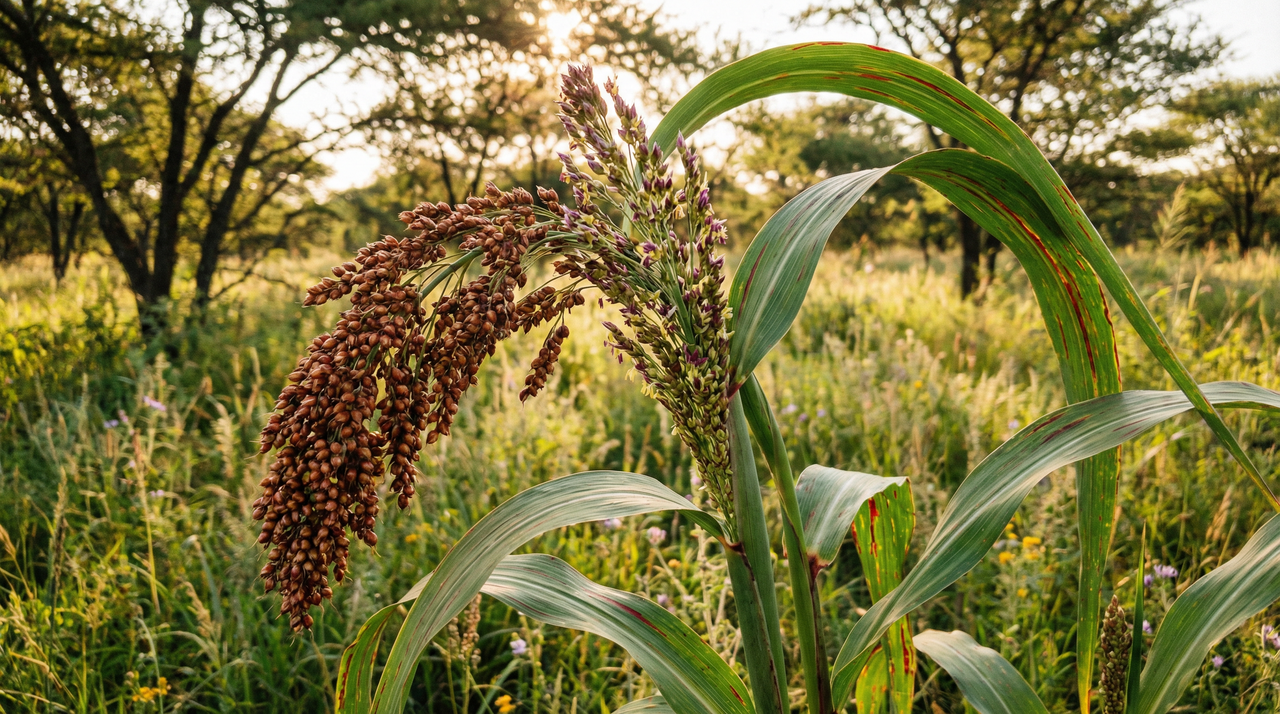
Sorghum bicolor is a warm-season C4 annual bunchgrass, and once you know what to look for, it's unmistakable in a garden or field. Grain types typically reach 1-2 m tall, while forage and sweet varieties can push 4-6 m, all with a spread of roughly 0.3-1 m from dense basal tillers.[2][3] The stem is solid and cylindrical, 1-3 cm across, with swollen nodes that often show a purple tinge I find genuinely beautiful in late summer light. Leaves run 30-100 cm long with hairy sheaths and a prominent midrib, and the whole plant sits atop a fibrous root system that pushes 2-3 m into the soil.[2][4] That root depth is no small detail; I'll come back to it often.
Come late summer, the plant produces a 20-60 cm panicle packed with paired spikelets, one fertile and one sterile, blooming into a seed head that can be white, red, brown, or nearly black depending on the cultivar.[5][6] In my Central Florida garden, I've grown ornamental types like 'Ruby Red' specifically for those dramatic burgundy heads in landscape guilds. The entire life cycle from planting to mature grain runs 90-150 days, with physiological maturity signaled by a black layer forming at the base of 50-75% of the kernels.[7][8] Native to the tropical and subtropical savannas of Africa, particularly the Sahel region around present-day Sudan, it's classified as Least Concern by the IUCN because its cultivation has spread it across every warm continent on earth.[9][10]
Domestication, Migration, and Traditional Uses
Humans first domesticated sorghum from wild progenitors like Sorghum arundinaceum in the Sahel roughly 5,000-3,000 years ago, around 3000 BCE.[11][12] That's younger than wheat and barley by a couple thousand years, and I think it explains something important: sorghum's wild-savanna genetics are still very close to the surface. It hasn't been tamed into fragility the way some older domesticates have. From the Sahel, it traveled ancient trade routes into India and China by around 2000 BCE, appeared in Egyptian contexts, and then crossed the Atlantic in the 17th and 18th centuries, carried by enslaved Africans whose agricultural knowledge arrived with them whether colonial powers acknowledged it or not.[13][14][15]
Wherever sorghum landed, people found ways to make it central. In Africa it became porridge, flatbread, and fermented pito and umqombothi beer; in India it fed festival celebrations during Makar Sankranti as jowar roti; in China sweet-stemmed varieties were distilled into baijiu; in the American South, juice from sweet types was boiled into the thick, amber sorghum syrup that still shows up in good barbecue rubs and old-fashioned biscuit spreads. Meanwhile, the fibrous panicles of broomcorn varieties became the literal household broom.[16][17][18] When I learned that traditional sorghum beer fermentation follows a process not entirely unlike making a wild-culture kombucha, it made the whole global fermentation lineage feel suddenly approachable rather than exotic. Across many African societies, the grain also carries ritual weight, symbolizing fertility, prosperity, and communal bonds, and its leaves, grains, and roots have long been used medicinally for conditions ranging from anemia and inflammation to digestive complaints and malaria.[19][20] Five thousand years of that relationship is not something you can dismiss as anecdote.
Fun Facts and Ecological Role
I grow several sorghum varieties in zone 9B, and what still impresses me every summer is watching those deep roots carry the plants through multi-week dry spells that reduce my corn to sad, curled leaves. That's C4 photosynthesis doing real work: sorghum can be up to twice as water-efficient as C3 cereals like wheat, and its deep root network taps into moisture that other annuals can't reach.[21][22] Add in thick leaf cuticles, efficient stomatal control, and the ability to enter dormancy during extreme drought, and you have a plant whose ancient savanna heritage translates directly into low-input, climate-resilient performance.
Beyond grain, it stabilizes soil, suppresses weeds through allelopathy, provides seasonal wildlife forage, and sequesters carbon through its massive fibrous root network and above-ground biomass.[23][24] In the U.S. Great Plains, that productivity translates into record-breaking grain yields, with top contest results hitting 181.2 bushels per acre and typical high-producing fields averaging 80-100 bushels.[25][26] While cultivated varieties behave themselves, weedy shattercane forms of Sorghum bicolor carry moderate invasive potential in the Midwest and Southeast.[27] If you're gardening in those regions, I'd recommend choosing non-shattering hybrids and keeping an eye on volunteers. The same resilience that made sorghum a global traveler means it needs a bit of conscious management when grown outside its native range.
Sorghum Varieties and How to Source Them
One of the first things I tell people who are excited about growing sorghum is: which sorghum? Because what you're planting for grain chickens will eat through winter looks almost nothing like what you're planting for syrup, and both look nothing like what you're planting to make actual brooms. The four-type framework is the quickest shortcut to making sense of this crop's incredible range.
Four Main Types of Sorghum: Grain, Forage, Sweet, and Broomcorn
Sorghum bicolor is classified into four primary agricultural types: grain sorghum for food and feed, forage sorghum for silage and hay, sweet sorghum for syrup and biofuel, and broomcorn for broom making and ornamental use.[28][29][30] Think of the height difference the way you'd think about 'Mammoth' sunflowers versus dwarf patio types: grain sorghum typically tops out at one to three meters and fits neatly into smaller plots, while sweet sorghum can push five meters and feels genuinely sugarcane-like looming over a summer garden bed.[31][32] Seed color adds another layer of visual distinction: kernels can run white, yellow, red, bronze, or near-black depending on variety, which I've found genuinely useful when sorting saved or shared seed from multiple types.[31][33]
Popular Commercial Cultivars and Their Uses
Sweet sorghum carries stalk sugar content ranging from 10 to 20 percent sucrose (Brix 12 to 25), which is what makes sweet sorghum syrup production viable at small-farm scale.[34][35] The cultivars most homesteaders reach for are 'Sugar Drip', 'M81E', 'Dale', and 'Wray', with 'Rox Orange' occasionally showing up in heritage seed circles. Forage types like 'Sugar Graze II' are bred for biomass, yielding 15 to 25 tons per acre and serving primarily as livestock feed.[36] Broomcorn is its own oddity: its panicle fibers stretch one to two feet and stiffen noticeably when plants get consistent moisture early in the season, something I noticed growing it for a craft project years ago.[37] For grain sorghum, commercial hybrids like Pioneer 84G62 and DeKalb DK-28E average 50 to 80 bushels per acre under good management, with US averages sitting around 64.5 bushels in 2022.[38] Modern breeding through programs at Texas A&M, Pioneer, and DeKalb has layered drought tolerance and disease resistance onto those yields, building on early USDA lines like 'Kafir' and 'Stuttgart' that established the genetic foundation.[39][40] I've learned that selecting a hybrid labeled for anthracnose resistance saves real headache in humid summers, even if you never plan to grow at commercial scale.
Where to Buy Sorghum Seed and What to Look For
Seed is easy to find. Retailers like Johnny's Selected Seeds, Territorial Seed Company, and High Mowing Seeds carry small packets alongside the bigger ag suppliers (Corteva, Pioneer) who sell bulk certified hybrids.[41][26] Small packets run about four to five dollars for roughly 100 seeds; bulk wholesale starts around twenty to fifty dollars per pound depending on variety and order size.[42] I always buy from suppliers who guarantee above 85 percent germination because the difference in stand uniformity is immediately visible at planting, and certified seed should also carry moisture content below 13 percent.[43][44] If you're sourcing internationally or importing unusual cultivars, USDA APHIS requires an import permit and phytosanitary certificate, and all seed must comply with Federal Seed Act labeling standards.[45][46][47] For most gardeners and small farmers, sticking with domestic certified sources through established extension-recommended suppliers is both simpler and more reliable.
Sorghum Propagation and Planting Guide
Sorghum is, at its core, a direct-seed crop. No trays, no transplants, no complicated propagation setup. You buy or save seed, wait for warm soil, and put it in the ground. That straightforwardness is part of what makes it such an appealing crop for low-input systems, and I've grown it from saved seed many times without any trouble.
Seed Propagation and Germination for Sorghum bicolor
Seed is the primary, most reliable, and commercially standard method for propagating Sorghum bicolor.[48][5][49] The seeds themselves are small caryopses with the pericarp fused to the seed coat, averaging 25-35 grams per thousand seeds, and they come in a range of colors from white to yellow, red, brown, and near-black depending on the cultivar.[50][51]
One trait I especially appreciate from a permaculture seed-stewardship standpoint is that sorghum is primarily self-pollinating, with a natural outcrossing rate of only 1-5% under field conditions.[52][53] That's a meaningful contrast to corn, which needs serious isolation distances to keep varieties true. With sorghum, you can save seed from your own patch with minimal fuss and expect genetically consistent results the following season. The seeds are also orthodox, meaning they tolerate drying down without damage. Stored properly at low temperature and low humidity, they can remain viable for 20-50 years; under typical cool room storage, 5-10 years is realistic, and for practical farm use, 3-5 years is the working standard.[54][5][55]
Vegetative propagation through stem cuttings, tiller division, or tissue culture does exist in research and breeding contexts, but it's not practical for most growers.[56][57] If you're not running a breeding program, seeds are your method, full stop. One early-season note worth flagging: seedlings are vulnerable to chinch bugs, aphids, wireworms, cutworms, and fungal issues like Fusarium damping-off, so starting with certified seed that meets federal standards gives you a cleaner foundation.[58][59]
Soil, Site Selection, and Planting Technique
Sorghum wants full sun, and I mean proper full sun: 8-10 hours of direct light daily is ideal, with 6-8 as a workable minimum.[60][61] It has almost no shade tolerance, so don't tuck it under a tree canopy or behind a tall structure and expect good results. Pick your most open, sunward-facing spot.
For soil, well-drained loamy to sandy loam with moderate organic matter (1-3%) is the sweet spot.[2][62] Sorghum will not tolerate waterlogged conditions, so if your site holds water after rain, address that before planting. The optimal pH range is 6.0-7.5, and it can tolerate down to 5.0 and up to 8.5, but outside the preferred window you'll start seeing problems: aluminum toxicity and phosphorus lock-out below 5.5, micronutrient deficiencies above 7.5.[63][64] I always recommend a soil test before liming; pushing pH above 7.5 on my alkaline-leaning beds shows up quickly as iron chlorosis on young leaves, and it's an avoidable headache.
What allows sorghum to outperform a lot of other warm-season crops on marginal ground is its root system, which reaches 1.5-2.5 meters deep.[65] In my experience, sorghum planted in low-organic-matter soil still performs surprisingly well because those roots find subsoil moisture that corn simply can't access. It also shows moderate salinity tolerance, managing up to around 6-8 dS/m before yields suffer significantly.[66]
For container growers without field space, sorghum is doable in large pots, 5-10 gallons minimum, using a mix of roughly 50% potting soil or loam, 30% compost, and 20% perlite or coarse sand to keep drainage adequate while maintaining pH 6.0-7.5.[67] I've had sturdy, 6-8 foot plants grow in 7-gallon fabric pots placed in full sun without needing staking, as long as the drainage mix was right.
Spacing, Timing, and Establishment Tips
Sorghum is direct-seeded at 1 to 1.5 inches deep, no deeper than 2 inches, once soil temperature at that depth reaches at least 60°F (15°C).[58][68] In USDA zones 6-10, that typically means late April through mid-June. I learned the hard way that jumping the gun on a cool spring invites damping-off and patchy, disappointing emergence; I now wait until my soil thermometer reads consistently above 65°F at 2 inches before I sow a single seed.
Row and plant spacing depends on what you're growing it for. Grain types are generally planted in 30-40 inch rows with 6-12 inches between plants, targeting roughly 60,000-150,000 plants per acre.[69][58][70] Forage and Sudan-type blends get pushed much denser, 8-12 plants per square foot, to maximize biomass. Seeding rates run 4-10 pounds per acre, adjusted for seed size and germination percentage. Higher densities do increase disease pressure, so it's worth planting at a moderate rate, then thinning early to your target stand rather than overcrowding and hoping for the best.[71][72] Sorghum tillers enough to compensate if you thin a little aggressively, which is forgiving behavior you won't get from more temperamental crops.
Sorghum Growth Timeline and Maturity
Germination is fastest at soil temperatures between 25-35°C, with peak speed around 30°C; below 15°C things slow dramatically, and below 10°C germination essentially fails.[73] Once established, most Sorghum bicolor varieties reach maturity in 90-120 days from planting in the U.S., with early maturity groups running 80-100 days and late groups stretching to 110-140 days.[74][75]
The growth cycle breaks into three phases: a vegetative phase of 30-45 days where the plant builds structure and root depth, a reproductive phase of another 30-45 days, and a ripening phase of 20-30 days from anthesis to physiological maturity.[76][74] Understanding that rhythm helps you plan around your frost dates and choose a maturity group that fits your season, rather than discovering in September that your late-season variety needed two more weeks of warmth you don't have. Exact days shift with region, planting date, and any heat or drought stress along the way, so treat the range as a planning guide rather than a guarantee.
Sorghum Care Guide: Growing Sorghum bicolor Successfully
Sorghum rewards growers who understand its origins. This is a plant shaped by open African grasslands, intense sun, and seasonal drought, and the care system that works best for it honors those conditions rather than fights them. Get the fundamentals right and it's a remarkably forgiving crop. Miss one of the hard limits, and a 90-120 day investment can disappear fast.
Sunlight Requirements for Sorghum
Full sun is non-negotiable. Sorghum's C4 photosynthetic pathway lets it handle up to 14 hours of direct sunlight daily without significant stress,[77][78] but shade the plant and it quickly shows you: etiolated stems, yellowing leaves, reduced tillering, and stunted growth.[79] I've seen gardeners tuck sorghum into a spot that gets shade from a tree by mid-afternoon and wonder why their plants look weak all season. Site selection matters from day one. Photoperiod matters too; sorghum is a short-day plant that initiates flowering when days shorten to around 12 hours or less, so excess long days can delay maturity and reduce yields.[80] The one caveat on sun: if full light coincides with drought stress or poor fertility, you can see photoinhibition symptoms like leaf scorch and tip burn.[79] That's usually a signal to address water or nutrients first, not to add shade.
Water Needs and Irrigation for Sorghum
Over a full growing season, sorghum typically needs 15-30 inches of water total.[81][82] Its root system can penetrate 3-6 feet deep,[81] which is what gives it standout drought tolerance compared to most summer annuals. During vegetative stages, it can handle 20-40 days of water deficit with minimal yield penalty.[49][83] Flowering and grain fill are a different story entirely. Miss irrigation during those two stages by even 10-15 days and you can lose up to half the yield.[84] Think of it like sweet corn: the plant will forgive you a lot before tassel, but not after. Early drought symptoms start with leaf rolling on young leaves, progressing to wilting and scorching if stress continues.[84][85] On the other end, overwatering shows up as interveinal yellowing, brown crispy margins, and wilting despite wet soil, signs that root rot may already be establishing.[86] Sorghum also tolerates a fairly wide soil pH range of 6.0-7.5, and handles moderate salinity up to 4-6 dS/m,[60] which makes it a reasonable choice for marginal irrigated sites where other grains struggle.
Feeding and Fertilizer Needs
After years of designing edible landscapes, the first thing I do for any new client wanting to grow sorghum is pull a soil test. The $20 investment prevents the lodging and nutrient imbalances I've seen when people guess at nitrogen rates. Nitrogen drives yield more than anything else; figure on roughly 0.8-1.2 lbs of N per expected bushel of grain, which translates to 60-120 lbs N per acre for most production goals.[87][88] Don't apply that all at once. The standard approach from university extension research is to apply phosphorus and potassium preplant, then split the nitrogen: about one-third at planting and the remainder sidedressed before boot stage.[89][90] For phosphorus and potassium, soil test results guide the rates; low-testing soils typically need 40-60 lbs P2O5 and 20-60 lbs K2O per acre.[87][91] Best growth happens between pH 6.0-7.0.[92] Over-fertilize with nitrogen and you get dark, succulent growth that lodges easily and risks leaf tip burn; push phosphorus too hard and you can induce iron and zinc deficiencies, both frustratingly visible as interveinal chlorosis.[93][87]
Frost Tolerance of Sorghum
Sorghum is a frost-tender tropical grass, full stop. It requires soil temperatures above 60°F to germinate,[94] and even a brief dip to 28-32°F is enough to damage leaves, while temperatures below 23°F kill the plant outright.[94][95] Young seedlings and emerging growing points are the most vulnerable; frost damages them through cell membrane rupture and ice crystal formation, causing wilting, discoloration, and necrosis that can look deceptively minor at first.[96] I've lost entire early plantings to a surprise late frost even when air temperatures only dipped to 30°F for a few hours, which is why I now wait until soil is consistently above 60°F and keep row covers handy for the first 30 days. If you're in a region with unpredictable late springs, avoid low-lying frost pockets, use row covers proactively, and never rush the planting date.[97] A plant that takes a light frost hit may recover; seedlings that take a hard freeze almost always require replanting.[98]
Heat Tolerance and Management
Sorghum is happiest in AHS Heat Zones 8-11, performing strongly at daytime temperatures of 77-95°F.[99][100] Its C4 pathway gives it a real advantage in intense heat, but even sorghum has a ceiling: once temperatures push above 95°F during flowering and early grain fill, yield losses of 20-50% become possible through wilting, scorching, and impaired panicle development.[101][102] In my hot, humid summers I've seen the difference that 30% shade cloth makes during that critical two-week pollination window, noticeably fewer blank florets compared to fully exposed plants in the same bed. Beyond shade cloth, a 5-10 cm layer of organic mulch, targeted deficit irrigation every 7-10 days during peak heat, and wider row spacing around 75-90 cm all help maintain airflow and soil moisture simultaneously.[103] In humid subtropical conditions specifically, that spacing becomes even more important because poor airflow compounds heat stress with disease pressure. Heat-tolerant varieties like IS 10881 and ICSV 93046 carry stay-green traits and stress-response mechanisms that can give you a buffer when conditions turn brutal.[103][104]
Pruning, Maintenance, and Seasonal Rhythm
Sorghum needs very little hands-on intervention once established. If a plant is throwing excessive tillers and starting to crowd itself, selective removal redirects resources to the main stems, but avoid stripping leaves, since that photosynthetic surface is what you're depending on.[49] In my experience, the biggest maintenance task is staying ahead of weeds in the first 30 days while seedlings are small and slow to close the canopy. After that, sorghum largely takes care of itself, though keeping an eye out for water stress during prolonged dry spells remains worthwhile throughout the season.[35]
The seasonal rhythm in temperate U.S. regions is straightforward: plant in late May or June once soil is reliably above 60°F and frost risk has passed, then plan for harvest in September or October after 90-120 days.[2][7] The plant thrives at 70-95°F with 20-30 inches of seasonal rainfall,[105] and its short-day flowering trigger means that as summer days shorten toward mid-August, you'll start to see panicles emerge, much the same way okra and southern peas respond to that same shift in photoperiod. Once you internalize sorghum's warm-season annual rhythm, the whole care picture clicks into place: warm soil to start, full sun all season, careful water through flowering, and a hard deadline at first frost.
Harvesting Sorghum: Timing, Technique, Yield, and Flavor
After 90 to 120 days of watching a sorghum planting push skyward through summer heat, the temptation to cut early is real. Don't. The single most important skill in harvesting sorghum is learning to read the plant before you reach for any tool.
When to Harvest Sorghum: Physiological Maturity and Visual Cues
Grain sorghum is ready when the seed head has turned dry and tan or gray, and 75 to 85% of kernels show black-layer formation at the base of the grain.[106][107] That black layer is physiological maturity made visible; press a kernel between your thumbnail and fingernail, and if it doesn't compress easily, you're close. I lost a small patch years ago to an early-October rain when I harvested by the calendar instead of by the plant. Since then I walk the rows first, checking for that layer and targeting the 14 to 18% moisture window for combining, or 12 to 15% if I'm going straight to storage without additional drying.[106][68]
Weather complicates that calendar significantly. Drought stress can pull maturity forward by 10 to 20 days, while a cool, wet season can push it back just as far.[68] The practical habit I've developed is monitoring growth stages through that final 7 to 10 day post-maturity window, because once the grain is physiologically mature, every rain event is a weathering risk.[68]
Different end uses mean completely different harvest points. Forage types don't wait for grain fill at all; they're cut at the soft-dough stage, roughly 60 to 80 days after planting.[108][109] Sweet sorghum grown for syrup is pressed at the dough stage, somewhere between 70 and 100 days, while broomcorn waits until seeds just begin to shatter, usually 100 to 130 days out.[110][111] Same species, four completely different clocks.
How to Harvest and Handle Sorghum Grain, Forage, and Sweet Stalks
Harvest during dry weather whenever you can manage it, and if you have flexibility, mornings tend to have lower humidity and keep dust down.[108] For grain, a combine works well at 18 to 25% moisture if you have access to a dryer afterward; at small-farm or garden scale, a sickle at full physiological maturity is perfectly effective.[112] Either way, the grain needs to come down to 12 to 14% moisture immediately after threshing, with aeration for two to four weeks before final storage.[108][113]
Forage sorghum for silage is cut at 60 to 70% whole-plant moisture at the soft-dough stage and needs to be properly sealed immediately.[109] Sweet sorghum stalks for syrup go to the press at the dough stage before much of the sugar converts.[114] These aren't minor variations in timing; cutting forage too late or pressing sweet stalks past dough stage means real losses in quality.
Expected Yields, Flavor Profiles, and Post-Harvest Storage
Peak grain harvest across major U.S. production areas falls in September and October, and proper timing is what actually determines both yield and flavor.[115] The grain itself is mild and subtly sweet with strong nutty and earthy aromatics, occasionally showing a slight tannic bitterness in the finish depending on variety.[116][117] Grain harvested at the right moisture and dried carefully holds those malty, grassy aromatics beautifully; grain that weathers in the field before cutting loses them. Sweet sorghum syrup is a different register entirely, with rich caramel and molasses notes that reward getting the harvest stage right.[118]
For storage, I keep mine in food-grade buckets with desiccants, and 12 to 13% moisture is the non-negotiable target.[114][119] In humid climates especially, anything above that number invites mold and insects fast. Hit 13% and store in cool, dry conditions, and I've never had a loss. That step, more than anything else after harvest day, is what protects everything you spent four months growing.
Sorghum Preparation and Uses
Culinary Applications and Flavor Profile
The grain is where sorghum's culinary life centers.[120][121] Young leaves are eaten as a cooked green in parts of Africa, with a texture closer to spinach than anything tough or fibrous,[122] and sweet sorghum stems pressed for their juice yield a syrup with real caramel depth, richer and less harsh than blackstrap molasses.[123][124] The first time I drizzled homemade sorghum syrup over cornbread next to a jar of store-bought molasses, the difference was obvious: warmer, more rounded, none of that bitter edge.
The grain itself has a mildly sweet, nutty, earthy baseline that absorbs spices beautifully, behaving more like a canvas than a flavor statement.[125] Fermentation changes everything, introducing the sour, yeasty complexity you get in African sorghum beers, while malting pulls out toasty, malt-forward notes that pair well with bitter or earthy companions.[126] I learned this lesson the hard way with my early batches of sorghum porridge: unfermented and barely soaked, they had a tannic bitterness that put people off. Soaking overnight, then fermenting for a day before cooking, made a noticeably smoother, more digestible result. Traditional processing -- soaking, fermenting, germinating, sometimes roasting -- reduces the antinutrients that cause that harshness, and combining methods works better than any one approach alone.[127][128]
That processed grain shows up across the globe in distinct forms. West African tog and ugali, Ethiopian injera, Indian jowar roti and bhakri, American sorghum syrup stirred into barbecue sauce or gluten-free baking, Oaxacan atole: the same grain, radically different expressions.[129][130][131] In my gluten-free baking, properly fermented sorghum flour behaves closer to wheat in terms of digestibility and structure than any other grain flour I've worked with.
Medicinal Preparations
Sorghum's medicinal role is mostly an extension of its identity as food. Traditional preparations use whole grain decoctions or dried powder for digestive complaints, drawing on Ayurvedic and African herbalist traditions, though there are no standardized dosages and the research behind these applications lacks rigorous clinical validation. The same processing methods that improve the grain's flavor and nutrition -- fermentation, soaking, germination -- also underpin traditional wellness preparations. I treat sorghum as a nourishing staple in my own kitchen rather than a measured remedy, and because properly matured, well-processed grain is the safest form, I always make sure it's had adequate preparation before using it in larger quantities, especially when teaching workshops on traditional grains.
Non-Food and Traditional Uses
Beyond the kitchen, sorghum has always been a whole-plant resource.[132] The stalks go into thatching, baskets, and fuel; the panicle fibers of broomcorn, introduced to the U.S. in the 19th century, quite literally built the broom industry.[133][134] I've used dried sorghum stalks as garden stakes and chopped them into mulch after harvest, and the fibrous material breaks down well. That's the permaculture logic of this plant: very little of it goes to waste if you're paying attention.
Sorghum Health Benefits and Medicinal Uses
Sorghum occupies an unusual position in the world of food plants: it's simultaneously a workhorse staple grain eaten by hundreds of millions of people and a well-documented ethnomedicinal plant with centuries of use across Africa and Asia. These two identities aren't in tension. They're complementary, and the phytochemistry that gives sorghum its protective qualities in the field turns out to also be exactly what traditional healers have been harvesting for generations.
Traditional Medicinal Uses of Sorghum
Across sub-Saharan Africa, sorghum has been central to home medicine in a way that goes well beyond nutrition. In Ethiopia, Nigeria, and Sudan, decoctions made from the plant have been used to treat diarrhea, dysentery, wounds, and chronic inflammation. Hypertension remedies, anti-malarial preparations, and treatments for urinary disorders have also been documented.[135][136] In Asia, particularly within the Chinese traditional medical system where sorghum is known as gaoliang, the grain and plant preparations have long been applied to managing diabetes, liver ailments, respiratory complaints, and digestive issues, often as porridges or infusions.[137] Native American use is documented but younger, post-Columbian in origin, with some Southwestern tribes incorporating it for stomach complaints and as a nutritive tonic after contact with African and European traditions.[138]
What's striking is that when you look at the range of conditions these traditions targeted—digestive function, inflammation, blood sugar, infection—you start to see a coherent picture that modern laboratory research is gradually filling in. I always tell people this when I'm recommending sorghum for functional food designs: traditional healers across Africa and Asia have relied on this plant for generations, and the strongest lab evidence we now have still comes from cell and animal studies. That's an honest place to work from, not a reason to dismiss the heritage.
Key Bioactive Compounds and Phytochemicals in Sorghum
The bioactive profile of sorghum is genuinely complex. The major compound classes include phenolic acids like ferulic and p-coumaric acid, flavonoids such as apigenin and luteolin, condensed tannins (proanthocyanidins), anthocyanins in pigmented varieties, the distinctive 3-deoxyanthocyanidins found in few other food plants, the cyanogenic glycoside dhurrin, and sorgoleone, a root exudate with powerful allelopathic and antimicrobial properties.[139][140] The plant produces most of these as defense compounds, protection against herbivores, pathogens, and competing plants. That same defensive chemistry is what makes the grain nutritionally interesting.
Where these compounds concentrate varies considerably by plant part and variety. Seeds carry the heaviest load, with condensed tannins accounting for 60 to 80 percent of total phenolics in seed coats of tannin-rich types. Leaves accumulate flavonoids, stems hold saponins and alkaloids, roots release sorgoleone into the surrounding soil, and flowers contain flavonoids for UV protection.[141][142] Growing conditions shift these concentrations noticeably: drought stress ramps up phenolic and flavonoid production, pest pressure induces defensive phytoalexins, and soil composition affects tannin and anthocyanin levels.[143] I've noticed this firsthand with the red and black sorghum types I grow for edible landscaping. The deeper-colored grains I harvest at the end of a dry season have a noticeably more astringent, complex flavor compared to grain from well-irrigated plants, which tracks with what the research shows about stress increasing pigment synthesis.
Antioxidant, Anti-Inflammatory, and Other Pharmacological Properties
Sorghum's antioxidant activity operates through several mechanisms simultaneously: free radical scavenging, metal chelation, upregulation of endogenous antioxidant enzymes like superoxide dismutase and catalase, and activation of the Nrf2 pathway, which triggers protective genes including HO-1 and NQO1.[144][145] Anti-inflammatory effects come primarily through inhibition of the NF-kB signaling pathway and suppression of pro-inflammatory cytokines including TNF-alpha and IL-6, with additional modulation of COX-2 and iNOS expression. The benzoxazinoid DIMBOA adds another layer of NF-kB inhibition.[146][147]
The antidiabetic evidence is among the more compelling areas. Sorghum extracts inhibit alpha-glucosidase and alpha-amylase, the enzymes responsible for breaking down dietary carbohydrates into absorbable sugars, with IC50 values ranging from 20 to 100 micrograms per milliliter, alongside inhibition of DPP-4, a target shared by several pharmaceutical diabetes drugs.[148][149] Anticancer mechanisms have been identified in cell lines, including caspase-pathway apoptosis induction and G2/M cell cycle arrest, but these remain in-vitro findings without conclusive human data behind them.[150] Antimicrobial activity against Staphylococcus aureus, E. coli, and Candida albicans has been documented, with the 3-deoxyanthocyanidins and sorgoleone contributing meaningfully to these effects.[151][152]
The honest summary here is that the strongest evidence base comes from in-vitro and animal studies, and robust human clinical trials are still largely absent.[153][154] That doesn't make the traditional uses invalid; it means we should be proportionate about what we claim and deliberate about how we prepare and use the plant.
Nutritional Profile of Sorghum Grain
The primary edible part of Sorghum bicolor is the grain, used as flour, whole-grain porridge, and fermented beverages, and it's naturally gluten-free, which matters increasingly for people managing celiac disease or wheat sensitivity.[155] Per 100 grams raw, the grain delivers 329 to 348 calories, about 10.6 grams of protein, 72.9 grams of carbohydrates, and 6.3 to 6.7 grams of dietary fiber, alongside a solid micronutrient package including zinc (4.4 mg), magnesium, phosphorus, potassium, and B vitamins including thiamin, niacin, B6, and folate.[156] The antioxidant picture from the phytochemical data is equally meaningful: total phenolic content runs 100 to 500 mg GAE per 100 grams, bound ferulic acid contributes 200 to 400 mg per 100 grams, and pigmented varieties add 10 to 150 mg of anthocyanins per 100 grams, with ORAC values reaching 5,000 to 15,000 micromol TE per 100 grams in high-pigment types.[157]
There's a catch, and it's worth understanding. Sorghum grain contains phytic acid (0.5 to 1.2 percent) and tannins (up to 3 percent in certain varieties) that reduce mineral bioavailability.[158] Milling removes 20 to 50 percent of phytates; fermentation does far more, reducing phytates by 30 to 70 percent and tannins by 40 to 90 percent.[159][160] I've tasted this difference myself when making fermented sorghum porridge compared to a straight whole-grain cook; the texture is softer, the digestibility noticeable, and the mineral uptake in the longer term genuinely better. Traditional African processing methods weren't just cultural convention. They were smart food science.
Safety Considerations and Potential Risks of Sorghum
The cyanide question comes up every time I introduce sorghum to someone new, and it deserves a straight answer rather than a vague warning. Sorghum contains dhurrin, a cyanogenic glycoside that releases hydrogen cyanide when plant cells are damaged. The concentration is highest in leaves and stems, particularly in seedlings, young plants, and any regrowth that follows cutting, drought stress, or frost damage. Mature grain contains minimal dhurrin and is safe for human consumption when properly processed.[161][162] This is essentially the same situation as cassava or certain lima bean varieties: genuine risk in the raw or young plant, minimal risk in the mature processed grain. Knowing that distinction is what separates confident use from unnecessary fear.
Livestock are the primary risk group. Ruminants grazing young, drought-stressed, or frost-damaged sorghum can develop prussic acid poisoning, with symptoms including respiratory distress, ataxia, muscle tremors, and in severe cases death from anoxia.[163] When I'm designing forage guilds that include sorghum or close relatives, I'm always explicit with clients about waiting periods: don't graze after frost or drought stress until the plant has recovered and matured. Human cyanide poisoning from sorghum is rare, occurring mainly with unprocessed young plants or sprouts.[164] Cooking, boiling, fermentation, and ensiling all effectively volatilize HCN or break down dhurrin, reducing levels below Codex Alimentarius safety thresholds of 10 to 40 mg/kg depending on the product form.[165]
Secondary concerns include nitrate accumulation under stress conditions (a livestock methemoglobinemia risk), photosensitization in grazing animals, and mycotoxin contamination from fumonisins in improperly stored grain.[166] Tannins and phytic acid reduce mineral bioavailability but are substantially mitigated by processing, as covered above. Rare IgE-mediated allergies occur more commonly to sorghum pollen than to the grain itself. In populations with chronic iodine deficiency, long-term cyanogenic exposure may contribute to goitrogenic effects.[167]
For human consumers working with commercial grain, the reassuring context is that sorghum holds GRAS status in the United States based on its pre-1958 history of safe consumption, and most commercial American varieties have been bred to carry low dhurrin and tannin levels.[168] One identification caution worth keeping: Johnsongrass (Sorghum halepense) contains equivalent cyanogenic compounds and poses the same toxicity risks as stressed cultivated sorghum, so look-alike awareness matters if you're harvesting from mixed stands.[169] Pregnant individuals should avoid raw or unprocessed forms of the whole plant due to cyanide risk; well-processed grain is a different matter and lacks specific documented contraindications.
Sorghum Pests and Diseases
Among the warm-season grains I grow, sorghum is the one I worry least about from a pest standpoint. That's not luck; it's biology. Compared to maize, wheat, and rice, sorghum carries a genuinely impressive stack of built-in defenses, and in integrated pest management systems it typically needs 20-30% fewer pesticide applications than maize.[170][171] That statistic matters when you're designing a low-input system.
Sorghum's Natural Pest Resistance and Major Insect Pests
The defense mechanisms are layered and genuinely fascinating. On the chemical side, sorghum produces dhurrin, phenolic compounds including flavonoids and tannins, alkaloids like hordenine, and sorgoleone from root exudates.[172][173][174] I've actually tasted young sorghum leaves and felt the mild bitterness from those cyanogenic compounds; older leaves taste noticeably milder, and that shift tracks almost exactly with when certain insects lose interest in the plant. Physical defenses add another layer: waxy cuticles, dense trichomes, and silica deposits make it genuinely hard for small insects to get a foothold.[175] Endophytic fungi and bacteria associated with sorghum roots and shoots further amplify resistance by producing antimicrobial compounds and triggering systemic defenses.[167]
Even so, four insects deserve real attention: sorghum shoot fly (Atherigona soccata), spotted stem borer (Chilo partellus), sugarcane aphid (Melanaphis sacchari), and fall armyworm (Spodoptera frugiperda).[176][177] Varieties like IS 2123 and ICSV 700 show strong shoot fly resistance through seedling vigor and oviposition deterrence, while spotted stem borer can cause up to 80% yield loss in susceptible lines, though hybrids like CSH 1 and CSH 5 carry moderate resistance.[176][178][179] For sugarcane aphid, I've learned to scout for honeydew droplets on lower leaves as the first reliable sign, typically two weeks before populations explode. This gives me time to let ladybeetles and parasitoids do their work before I consider anything else. Trichome-dense lines like TAM 2566 hold up noticeably better than glossy-leaf types, which often need at least one well-timed spray at threshold.[35][180] Fall armyworm resistance remains low to moderate across most current varieties, with active breeding underway to reduce larval survival.[181] ICRISAT and USDA programs are the primary sources of improved resistance germplasm, with SM series lines bred specifically for sorghum midge and IS 5469 for leafhoppers.[30][182]
Common Diseases and Environmental Influences
Sorghum's disease resistance is moderate overall, but "moderate" can swing badly depending on what you plant where. Susceptibility varies sharply between cultivars, so variety selection really is the foundation, not just a footnote.[183][184] The diseases that matter most are anthracnose (Colletotrichum sublineola), head smut (Sporisorium reilianum), and charcoal rot (Macrophomina phaseolina).[185][186] I watched anthracnose tear through an older susceptible hybrid in a humid Florida summer, moving from a few leaf spots to full stalk collapse in under three weeks. A modern multi-resistant line planted alongside it stayed green through the same weather. The difference was entirely genetics. Charcoal rot behaves almost opposite: it flares under drought and heat stress rather than humidity, which means the same field can face completely different disease pressure year to year.[187]
Downy mildew (Peronosclerospora sorghi) peaks at 90-100% relative humidity, while cool wet springs favor most other fungal infections.[188][189] Temperatures between 25-35°C can actually reduce anthracnose susceptibility, and drought stress, while worsening charcoal rot, may paradoxically induce some physiological resistance to rust.[190] Soil pH below 5.5 compounds Fusarium stalk rot risk.[191] Maize Streak Virus remains the most devastating viral threat across Africa, vectored by leafhoppers with low inherent resistance in most cultivars.[192] For anthracnose, resistant lines SC108, ICSV 700, and IS 18555 are well-documented; RTx430 and ATx631 perform reliably against head smut.[73][193] Many of these resistances are pathotype-specific, so local extension advice on which races are prevalent in your region is worth seeking before you commit to a variety.
Integrated Management Strategies for Pests and Diseases
The IPM playbook for sorghum isn't complicated, but it requires actually following through on each layer. Resistant varieties and cultural practices do the heavy lifting: rotate with non-host crops for at least three years, use treated seed, optimize plant spacing for airflow, manage irrigation to avoid prolonged leaf wetness, and time planting to avoid peak pest pressure windows.[194][195] For insects, economic thresholds guide chemical intervention rather than calendar sprays; treat aphids only above 50-100 per leaf, and rotate insecticide modes of action per IRAC guidelines because resistance to shoot fly and aphid chemistries is already emerging.[177][196] For stored grain and saved seed, keep moisture below 13-14% and storage temperature below 15°C; I've seen what happens at 15% moisture in a warm bin and it's not a lesson you need firsthand.[197][198] Healthy soil biology and diverse guild plantings, the kind the permaculture design section covers, naturally support the endophyte communities that amplify sorghum's own defenses. No single tactic controls everything, but layering them means you're rarely reaching for a sprayer.
Sorghum in Permaculture Design
Most people encounter sorghum as a grain crop and stop there. In permaculture, that's leaving most of the plant's value on the table. What I love about working with Sorghum bicolor in regenerative systems is how many ecological jobs it holds at once, especially on hot, dry sites where other annuals struggle to justify their place in the design.
Ecological Functions and Ecosystem Services
Sorghum earns its spot in a permaculture design before you even harvest a single head. Its extensive fibrous root system stabilizes soil and controls erosion,[199] and those same roots pump carbon into the soil through biomass and exudates, contributing meaningfully to soil organic matter over a season.[200] Think of it the way you'd think about comfrey or sunflowers working as dynamic accumulators: sorghum draws up potassium, phosphorus, calcium, and magnesium from deep soil layers and cycles them back to the surface when it's cut or tilled in, feeding subsequent crops without any added inputs.[201] The difference is that forage-type sorghum can hit four meters tall, which puts it in a different league as a temporary windbreak and microclimate modifier for more vulnerable plantings nearby.
Aboveground, dense sorghum stands suppress weeds through sheer canopy speed and, in some varieties, allelopathic compounds that inhibit competitors beneath them. The biomass this generates is staggering; figures of 20-30 tons per hectare of dry matter are cited in agroforestry literature, which translates to serious mulch and compost feedstock for the rest of your system. Seed heads and spent stalks also provide habitat for birds, beneficial insects, and small mammals, giving even a single-season planting genuine biodiversity value.[202]
Sorghum does not fix nitrogen. It has no symbiotic relationship with nitrogen-fixing bacteria, so if fertility is what you need, you'll need to bring in a legume partner. Fortunately, that pairing is one of the most productive combos in dryland permaculture, and I'll get to it shortly.
Pollination Biology and Management
Sorghum is primarily wind-pollinated, and it behaves more like a self-fertilizer than you might expect: inbred lines self-pollinate at rates of 70-95%, while open-pollinated varieties allow 5-30% cross-pollination depending on conditions.[203][204] The flowers are protogynous, meaning the stigmas become receptive before the anthers release pollen, which creates a short window for limited outcrossing before self-pollination takes over.[205][206] Anthesis happens in the morning, and pollen viability is brief. Temperatures above 35°C or drought stress at flowering can cut seed set by up to 50%, so timing your planting to avoid peak summer heat during the reproductive stage matters.[204][207]
Don't expect bees or other insects to help here. Sorghum produces no nectar and carries no attractive scent; insect visitation to the flowers is essentially negligible.[203] For seed saving from open-pollinated varieties, I've found that block planting rather than long single rows does two things: it improves wind dispersal across more plants, and it helps maintain varietal integrity by keeping your planting dense enough to reduce contamination from neighboring types. Planting in blocks or strips that allow good airflow through the canopy is the standard management advice for both seed purity and pollination efficiency.[123][208] Optimal conditions sit around 25-30°C with 50-70% humidity and light wind; those parameters are worth keeping in mind when choosing your planting window.[204][207]
Forest Layer Placement and Guilds
Sorghum is an annual herbaceous grass, placing it squarely in the herbaceous layer of any food forest or agroforestry design. Grain types top out around 0.9-1.5 m, while forage types can reach 4 m,[5][209] which changes how you place it relative to perennials. Its best role is early succession: moving into a site before canopy trees close in, building organic matter, suppressing weeds, and handing off a much-improved soil profile to whatever comes after.
The most productive guild pairings put sorghum alongside nitrogen-fixing legumes. Cowpeas, beans, and peanuts work well at the annual scale; at the agroforestry scale, alley-cropping with Gliricidia sepium or Faidherbia albida at 4-6 m row spacing has shown yield increases of 20-30% through combined nitrogen inputs and moderated microclimates.[210][211][212] Short-term pairings with moringa or pigeon pea before canopy closure can also work, and mycorrhizal associations under tree cover genuinely improve phosphorus uptake.[213]
Early in my design career I made the mistake of interplanting sorghum too close to young fruit trees, thinking the windbreak effect would be a net positive. What I got instead was resource competition that set the trees back by a season. Research bears this out: shading from tree canopies can reduce sorghum yields by 20-50% in dense systems,[214] and the inverse pressure on young trees is real too. Give sorghum full sun or expect clear trade-offs. Outside its native range, it can also push into a weedy role if not managed, so keep an eye on self-seeding volunteers if you're in a humid climate where seeds carry well.[215]
Climate Adaptation and Suitable Zones
Sorghum's origins in the Sahel and savanna regions of tropical Africa[216][217] tell you almost everything you need to know about where it belongs in your site: full sun, heat, and imperfect soil are not problems. They're the conditions it was built for. Its C4 photosynthetic pathway delivers genuine efficiency advantages in hot, bright conditions that most temperate crops simply can't match.
It grows across USDA zones 5-11, treated as an annual in cooler zones and potentially a short-lived perennial only in frost-free zones 9-11.[218][219][2] Zones 7-10 are where it consistently performs best. Optimal growth happens between 25-35°C, growth slows noticeably below 10°C, and frost kills it; anything below -2°C causes damage and below -6.7°C is lethal.[220][73] In zones 5-6, it's a legitimate warm-season annual with a 90-120 day maturity window, but you're selecting on season length and working with early-maturing varieties to get ahead of autumn cold.
On the water side, established sorghum is impressively resilient, but it needs consistent moisture during germination and establishment, and good yields require 380-760 mm of annual rainfall or supplemental irrigation.[221][217] Humid climates above 80% humidity create real disease pressure from anthracnose, downy mildew, and grain mold, and I've seen this firsthand with grasses in subtropical conditions: proper spacing and resistant variety selection make the difference between a healthy stand and a frustrating one. In those wetter zones, treat your plant spacing as a disease management decision, not just an agronomic one. For designers in hot, dry climates from the Great Plains to the American Southwest, sorghum is one of the most practical, low-input annuals you can run through a food system.[222]
The Grain That Taught Me to Stop Reaching for the Hose
I planted my first sorghum stand during a summer that turned brutal fast, and I kept waiting for it to collapse the way everything else was. It didn't. It just stood there, patient and indifferent to my worry, pulling something from deep in the soil I couldn't see. I've grown a lot of plants that tolerate hardship, but sorghum is one of the few that seems genuinely unbothered by it, and that confidence is something a food forest designer doesn't forget.
Sources 222
- Origin, diversity and domestication of sorghum - Genetic Resources and Crop Evolution ↩
- USDA PLANTS Database - Sorghum bicolor ↩
- Sorghum bicolor - Missouri Botanical Garden ↩
- Sorghum bicolor - Missouri Botanical Garden ↩
- USDA Plants Database: Sorghum bicolor ↩
- Flora of North America - Sorghum bicolor ↩
- Sorghum Growth and Development - Kansas State University Extension ↩
- Sorghum: Origin, History, Technology, and Production ↩
- IUCN Red List: Sorghum bicolor ↩
- Sorghum bicolor - Plants of the World Online | Kew Science ↩
- The Domestication of Sorghum and Pearl Millet in Africa ↩
- Archaeobotanical Evidence for Sorghum Domestication in Sudan ↩
- Global Dissemination of Sorghum ↩
- The Origin and Early Dispersal of Sorghum bicolor ↩
- African Contributions to American Agriculture: Sorghum ↩
- Sorghum and millets in human nutrition ↩
- Traditional Uses of Sorghum in Asia ↩
- Historic Use of Sorghum Syrup in America - Southern Foodways Alliance ↩
- Sorghum in Africa: Cultural and Ritual Uses ↩
- Medicinal Properties of Sorghum ↩
- Sorghum Drought Tolerance and Water Use Efficiency ↩
- Sorghum bicolor - Missouri Botanical Garden ↩
- Sorghum bicolor Profile - Missouri Botanical Garden ↩
- Sorghum (Sorghum bicolor) Integrated Pest Management Guidelines ↩
- National Sorghum Yield Contest Results ↩
- USDA NASS Crop Production Annual Summary ↩
- Invasive Plant Atlas of the United States ↩
- Sorghum - FAO ↩
- USDA Sorghum Types ↩
- ICRISAT Sorghum Classification ↩
- Missouri Botanical Garden - Sorghum bicolor ↩
- USDA - Sorghum bicolor Plant Height and Growth ↩
- Kew Gardens - Sorghum bicolor ↩
- USDA ARS - Sweet Sorghum for Bioenergy ↩
- Sweet Sorghum for Biofuel Breeding in US ↩
- Sorghum Checkoff Program - Types of Sorghum ↩
- Broomcorn Production - Oklahoma State University Extension ↩
- USDA National Agricultural Statistics Service - Sorghum Reports ↩
- Sorghum bicolor - Missouri Botanical Garden Plant Finder ↩
- Sweet Sorghum for Syrup Production - University of Kentucky Extension ↩
- Sorghum Seeds ↩
- Sorghum Seeds - Sugar Drip ↩
- Certified Seed Requirements for Sorghum - Nebraska-Lincoln Extension ↩
- Sorghum Seed Selection Guide ↩
- Importing Plants and Plant Products into the United States ↩
- Seeds for Planting Manual ↩
- Federal Seed Act Regulations ↩
- Sorghum Production Handbook ↩
- Sorghum Production Guide ↩
- Sorghum bicolor (L.) Moench ↩
- Sorghum: Origin, History, Technology, and Production ↩
- Sorghum Production Handbook ↩
- Embryology of the Grasses ↩
- Seed Longevity Database - Royal Botanic Gardens, Kew ↩
- FAO Seed Storage Guidelines ↩
- Seed vs. Vegetative Propagation in Sorghum: A Review ↩
- Micropropagation of Sorghum bicolor: Protocols and Applications ↩
- Sorghum Production Handbook ↩
- Federal Seed Act Regulations ↩
- Sorghum Production Handbook ↩
- USDA Plant Guide: Sorghum ↩
- Sorghum Production Guide - Soil Requirements ↩
- Sorghum Production Handbook ↩
- Sorghum: Soil Management ↩
- Sorghum Root Depth in Field Experiments ↩
- Salinity Tolerance of Sorghum ↩
- Growing Sorghum in Containers ↩
- Grain Sorghum Production Handbook ↩
- Grain Sorghum Production ↩
- Grain Sorghum Production Guide ↩
- Sorghum Plant Population and Yield ↩
- Sorghum Production Guide ↩
- Germination and Establishment of Sorghum ↩
- Sorghum Production Handbook ↩
- Sorghum Maturity and Harvest Management ↩
- Grain Sorghum Growth and Development ↩
- Missouri Botanical Garden Plant Finder ↩
- USDA PLANTS Database ↩
- Shade Avoidance Responses in Sorghum bicolor ↩
- Photoperiodism in Sorghum - Agronomy Journal ↩
- Sorghum Water Use and Irrigation Management ↩
- Crop Water Requirements - FAO Sorghum ↩
- Drought Stress in Sorghum: Effects on Yield ↩
- Water Stress Effects on Sorghum ↩
- Identifying Water Stress in Grain Sorghum ↩
- Missouri Botanical Garden Plant Finder ↩
- Grain Sorghum Production - Texas A&M AgriLife Extension ↩
- Fertilizing Grain Sorghum - University of Missouri Extension ↩
- Grain Sorghum Production Handbook ↩
- Texas A&M AgriLife Extension: Sorghum Fertilization ↩
- Sorghum Fertilization Guidelines - Oklahoma State University Extension ↩
- University of Missouri Extension: Fertilizer Recommendations for Row Crops (FS-695) ↩
- Fertilization of Grain Sorghum ↩
- Sorghum bicolor (Sorghum) | North Carolina Extension Gardener Plant Toolbox ↩
- Missouri Botanical Garden ↩
- Frost Injury to Sorghum ↩
- Frost Protection for Crops - USDA ARS ↩
- Managing Frost Damage in Grain Sorghum - Oklahoma State University Extension ↩
- AHS Heat Zones for Perennials and Annuals ↩
- Temperature Requirements for Sorghum ↩
- Heat Stress Effects on Sorghum Physiology and Yield ↩
- Symptoms of Abiotic Stress in Sorghum bicolor ↩
- Heat Stress in Sorghum: Management Strategies ↩
- Breeding for Heat Tolerance in Sorghum ↩
- Sorghum Production Guide - University of Georgia Extension ↩
- Grain Sorghum Production - Harvest Guide ↩
- Grain Sorghum Production Handbook ↩
- Grain Sorghum Production Guide ↩
- Forage Sorghum for Silage and Hay ↩
- Sorghum Growth and Development ↩
- Broomcorn Production ↩
- Managing Grain Sorghum Harvest ↩
- Sorghum Harvesting and Storage ↩
- Sorghum Production Handbook ↩
- Grain Sorghum Harvest and Storage | University of Nebraska-Lincoln Extension ↩
- Characterization of sorghum flavor profiles ↩
- Sensory Characteristics of Sorghum Foods ↩
- Flavor Chemistry of Sorghum ↩
- Sorghum Post-Harvest Handling and Storage ↩
- Missouri Botanical Garden Plant Finder ↩
- USDA PLANTS Database ↩
- Edible Uses of Sorghum in Traditional African Diets ↩
- Sweet Sorghum for Bioenergy and Food ↩
- Sorghum Syrup Description - Southern Foodways Alliance ↩
- Sorghum Grain: Nutrition and Uses - Whole Grains Council ↩
- Fermentation of Sorghum for Traditional Beverages ↩
- Processing Methods to Reduce Tannins in Sorghum ↩
- FAO Guidelines on Sorghum Preparation and Nutritional Improvement ↩
- Sorghum in African Diets ↩
- Traditional Uses of Sorghum in India ↩
- Sorghum in Mexican Cuisine - Oaxaca Traditions ↩
- Sorghum bicolor ↩
- American Sorghum Festivals and Heritage ↩
- Symbolic Uses of Broomcorn in Traditional Societies ↩
- Traditional Medicinal Uses of Sorghum in Africa and Asia: A Review ↩
- Ethnomedicinal Uses of Sorghum bicolor in Africa ↩
- Sorghum in Traditional Chinese Medicine ↩
- Indigenous Uses of Sorghum by Native American Tribes ↩
- Secondary Metabolites in Sorghum: Biosynthesis and Ecological Functions ↩
- Dhurrin: Cyanogenic Glycoside in Sorghum and Its Biological Role ↩
- Cultivar Variation in Flavonoids and Tannins of Sorghum ↩
- Bioactive Compounds in Sorghum: Health Benefits and Applications ↩
- Drought Stress Effects on Phenolics in Sorghum bicolor ↩
- Bioactive Compounds and Antioxidant Activity of Sorghum Grains and Their Products ↩
- Nrf2 Activation by Sorghum Phenolics: Antioxidant Response ↩
- Anti-Inflammatory Effects of Sorghum Proanthocyanidins via NF-κB Inhibition ↩
- Benzoxazinoids from Sorghum: Biological Activities and NF-κB Inhibition ↩
- Inhibitory Effects of Sorghum Extracts on α-Glucosidase and Postprandial Hyperglycemia ↩
- Inhibitory Effects of Sorghum Extracts on α-Glucosidase and DPP-4 ↩
- Anticancer Activity of Sorghum Polyphenols: Apoptosis and Cell Cycle Arrest ↩
- Phytochemical Composition and Antimicrobial Activity of Sorghum ↩
- 3-Deoxyanthocyanidins of Sorghum as Antimicrobial Agents ↩
- Phenolic compounds in sorghum: Implications on health and metabolism ↩
- Antidiabetic potential of sorghum: an overview ↩
- USDA FoodData Central - Sorghum grain, raw ↩
- USDA FoodData Central - Sorghum grain, raw ↩
- Phenolic Compounds and Antioxidant Activities of Different Sorghum Grains ↩
- Sorghum and millets in human nutrition - FAO ↩
- Effect of processing on antinutritional factors in sorghum ↩
- Fermentation reduces phytate in sorghum ↩
- Cyanogenic Glycosides in Sorghum bicolor ↩
- Dhurrin Content in Sorghum Tissues ↩
- Prussic Acid Poisoning in Livestock from Sorghum ↩
- Human Cyanide Poisoning from Plants ↩
- Processing Methods to Reduce Antinutritional Factors in Sorghum ↩
- Fumonisin mycotoxins in feed and food chains ↩
- Anti-Nutritional Factors in Sorghum Grains ↩
- USDA PLANTS Database ↩
- Johnsongrass (Sorghum halepense) Toxicity ↩
- Pest Resistance in Sorghum: A Review ↩
- Comparative Pest Management in Cereals ↩
- Cyanogenic Glucosides in Sorghum bicolor ↩
- Phenolic Compounds and Insect Resistance in Sorghum ↩
- Sorgoleone: A Natural Product from Sorghum Roots ↩
- Physical Defenses: Trichomes and Waxes in Cereal Crops ↩
- Host Plant Resistance to Insects in Sorghum ↩
- Insect Management for Sorghum - Texas A&M AgriLife Extension ↩
- Resistance to Chilo partellus in Sorghum ↩
- CABI Datasheet: Chilo partellus ↩
- Aphid Resistance in Sorghum Germplasm ↩
- Fall Armyworm on Sorghum: Resistance Studies ↩
- Breeding for Stem Borer Resistance in Sorghum ↩
- USDA PLANTS Database ↩
- Sorghum Diseases - Texas A&M AgriLife Extension ↩
- CABI datasheet on Colletotrichum sublineola ↩
- Sorghum Disease Management - Texas A&M AgriLife Extension ↩
- CABI Invasive Species Compendium - Sorghum bicolor ↩
- Peronosclerospora sorghi on Sorghum - APS Journals ↩
- Downy Mildew of Sorghum - University of Nebraska-Lincoln Extension ↩
- Sorghum Diseases and Environmental Factors - ICRISAT ↩
- Management of Sorghum Diseases - APS Press ↩
- UC IPM - Sorghum, Sudangrass ↩
- ICRISAT Sorghum Improvement for Disease Resistance ↩
- Managing Sorghum Diseases - Oklahoma State University Extension ↩
- Texas A&M AgriLife Extension - Managing Diseases in Sorghum ↩
- Insecticide Resistance in Sorghum Pests ↩
- Stored Grain Management ↩
- Guidelines for the Storage of Cereals ↩
- Sorghum as a Multifunctional Cover Crop ↩
- Carbon Sequestration Potential of Sorghum Biomass ↩
- Dynamic Accumulators in Permaculture Design ↩
- Biodiversity Benefits of Sorghum in Agroecosystems ↩
- Sorghum Pollination Biology ↩
- Environmental Effects on Sorghum Reproduction ↩
- Floral Biology of Sorghum bicolor ↩
- Sorghum Production Handbook - Pollination ↩
- Sorghum Production Handbook - Pollination Section ↩
- Genetic Factors in Sorghum Male Sterility ↩
- Sorghum bicolor - Missouri Botanical Garden ↩
- Permaculture Companion Plants for Sorghum ↩
- Agroforestry Systems for Sorghum Production ↩
- FAO Guidelines on Intercropping in Drylands ↩
- Mycorrhizal Symbiosis in Agroforestry ↩
- Shading Effects on C4 Crops ↩
- Ecological Requirements of Sorghum - Kew Gardens ↩
- Sorghum bicolor Fact Sheet - Kew Royal Botanic Gardens ↩
- Sorghum - FAO ↩
- Sorghum Production Guide - USDA ↩
- Sorghum Production Handbook - University of Georgia Extension ↩
- Growing Sorghum: Temperature Tolerance - University of Georgia Extension ↩
- Growing Sorghum in Humid Climates - Extension.org ↩
- USDA NASS Crop Production Annual Summary 2023 ↩