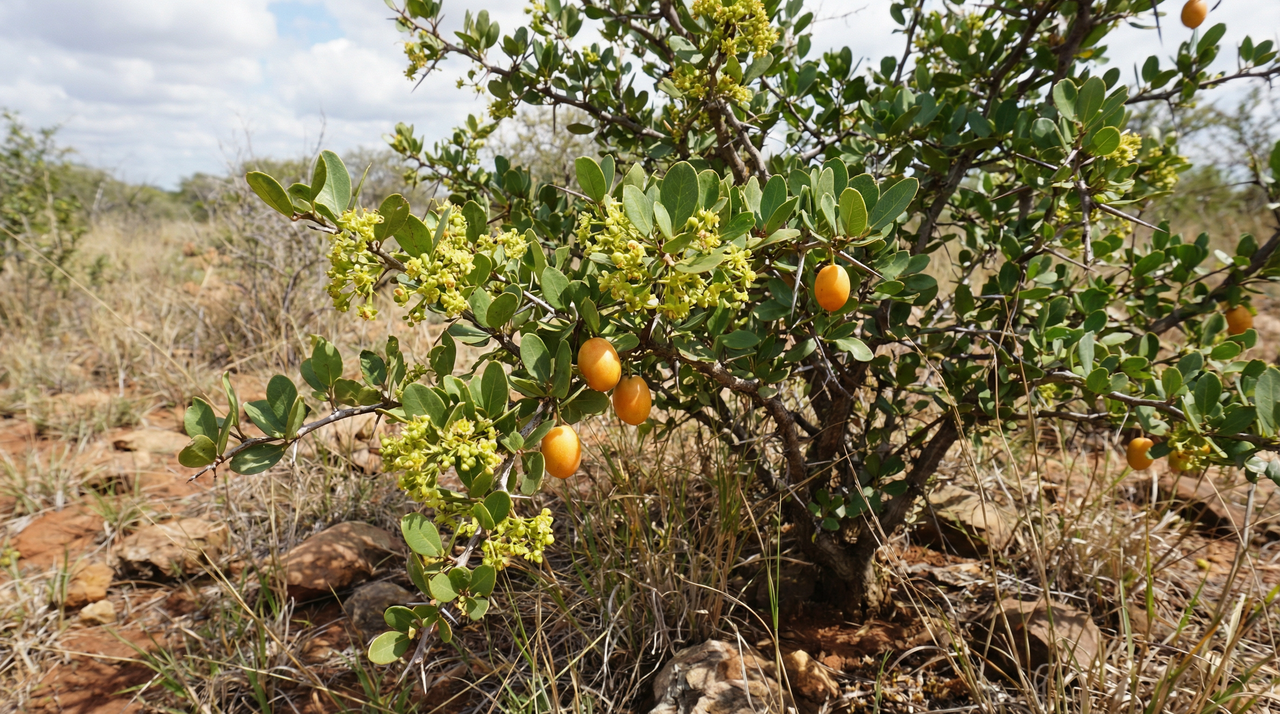
Nobody warned me that the first time you bite into a sourplum, you'll look genuinely confused. It starts sweet, almost syrupy, and then a wave of tartness hits you that's somewhere between a green mango and a very ripe tamarind, with this peculiar gelatinous texture clinging to the seed that you weren't expecting at all. I stood under a small scraggly tree at a restoration site in KwaZulu-Natal, fruit juice running down my wrist, trying to decide if I liked it or not. By the third one, I'd decided I did. That ambiguity, that refusal to be simply sweet or simply sour, is exactly what makes Ximenia caffra so hard to categorize and so worth knowing.
What most Western gardeners don't realize is that this tree has been feeding people, healing people, and feeding wildlife across southern and eastern Africa for millennia, all while doing something genuinely strange underground. It's partially parasitic, quietly tapping the roots of neighboring plants for supplemental water and nutrients, and yet it's one of the toughest, most drought-tolerant fruiting trees you can put into a hot, dry food forest. That contradiction, a plant that borrows from its neighbors but gives back so extravagantly in fruit, oil, and shade, is the whole story of sourplum in miniature.
Sourplum Origin, History, and Botanical Background
If you've never encountered the name ximenia before, you're not alone. Pronounced zih-MEE-nee-ah, it's a genus that doesn't get nearly the attention it deserves outside of Africa, despite representing one of the continent's most tenacious and useful wild plants. Ximenia caffra, the sourplum, is a hemiparasitic shrub or small tree in the Olacaceae family, native to an astonishing 37 countries spanning South Africa north through Sudan and Somalia, with populations extending to Madagascar, parts of the Arabian Peninsula, and India. It's also been introduced to the Caribbean and Florida.[1][2][3]
Botanical Background and Native Range of Ximenia caffra
The ximenia plant makes its home in savannas, bushveld, rocky outcrops, and coastal dunes from sea level up to about 1800 meters, almost always in well-drained sandy or rocky soils.[2][3] It's a long-lived species, persisting 20 to 50 years, flowering and fruiting repeatedly throughout its life, and in some populations it's dioecious, meaning you'll need both male and female plants for fruit set.[2][4] The tree's hemiparasitism is an elegant design feature: it attaches via haustoria to nearby host roots to supplement its water and mineral uptake, while still photosynthesizing on its own terms.[1] Pair that with a deep taproot that can chase groundwater several meters down in dry conditions, and you have a plant that has essentially engineered its own insurance policy against drought. I've watched other root-parasites like sandalwood pull off similar tricks in hot, resource-poor soils, and it always strikes me as one of nature's more sophisticated survival strategies.
Visual Characteristics and Identification of Sourplum
In the field, the glossy, leathery leaves clustered at branch tips are a reliable first clue, but the real giveaway is the midrib: it forks distinctly near the leaf apex, which I've found makes field identification surprisingly reliable even for beginners.[3][2] The flowers are small, tubular, and pale yellow, appearing on short axillary spikes from roughly September to December in southern Africa.[5] Modest as they look, they carry a honey-like fragrance that punches well above their size. Then come the fruits: oval drupes ripening from green to a red-orange blush, with thick, translucent, gelatinous pulp surrounding a large woody seed.[6][7] The texture is genuinely surprising the first time you bite into one: almost jelly-like, with a sweet-tart brightness that reads as refreshing rather than sharp. The overall form is a sparse, spreading multi-stemmed shrub or small tree reaching 2 to 6 meters, with rough fissured bark on older growth and semi-deciduous behavior in hard dry spells.[2] From a design standpoint, that combination of ornamental flowers, colorful fruit, and open crown reminds me of the loose elegance you get from well-placed subtropical olives or certain Combretum species. No named cultivars exist; any variation you see in leaf size or fruit sweetness is the plant responding to its site conditions.[1]
Traditional and Cultural Uses of Sourplum
The ximenia tree has been woven into the daily and ceremonial lives of African communities for generations. Fruits are eaten fresh or dried, the seed oil goes into cooking, skin care, and treatment of rheumatism, bark infusions address stomach ailments and diarrhea, and the dense wood gets carved into handles and tools.[2][8] Seeds also yield a tallow used for soap and candles, and the bark contributes to leather tanning and natural dyes. Among San communities, the african ximenia carries symbolic weight, representing resilience in harsh arid landscapes and featuring in rituals connected to hunting and good fortune.[9] That resonates with me as a regenerative practitioner: a plant that sustains people practically and spiritually in some of the most challenging environments on earth is worth paying attention to. Beyond Africa, it has naturalized in Cuba, Jamaica, and parts of Florida, where it's occasionally grown as a fruiting ornamental or informal hedge in well-drained tropical and subtropical soils.[10]
Fun Facts and Ecology of Ximenia caffra
What makes the sourplum ecologically remarkable is the cast of characters it feeds. Hornbills, bulbuls, monkeys, antelopes, bushbabies, and even elephants eat the fruits and disperse the seeds, making this tree a genuine hub of savanna biodiversity.[2][11] In its native range it stays well-behaved, though it can become opportunistic in disturbed soils elsewhere. Wild populations face real pressure from overharvesting and habitat loss, and in my work with regenerative systems, community-based harvesting frameworks that benefit both people and the broader ecosystem are the only sustainable path forward for high-demand species like this one.[8] Growing it in agroforestry and home food forest contexts is part of that answer: every plant established in cultivation reduces pressure on wild stands, and this one rewards the patient grower with fruit, oil, wildlife activity, and a direct connection to one of Africa's most storied useful trees.
Sourplum Varieties and Sourcing
Recognized Subspecies of Ximenia caffra
If you're coming to sourplum from the world of cultivated fruit trees, the variety situation will feel refreshingly simple, or slightly disorienting, depending on your perspective. There are no named commercial cultivars, no 'Red Chief' or 'Improved Selection' tags to navigate. What you're growing is essentially the wild species.[12][13] The only meaningful botanical distinction is between two subspecies: subsp. caffra, which has larger leaves and fruits, and subsp. microphylla, which carries smaller, more densely arranged leaves.[12] For most growers, subsp. caffra is the one worth seeking out, since the bigger fruit is the whole point. The absence of formal breeding programs also means each seedling carries some natural variation in fruit size and flavor intensity, which I've actually come to appreciate. Every plant is a small surprise.
Where to Buy Sourplum in the United States
Don't expect to find this one at your local nursery.[14] If you're in Florida or another southern state, you might have seen Ximenia americana growing in landscape settings; it's the genus member with a foothold in the US and shows up in the USDA PLANTS database accordingly.[15] But Ximenia caffra with its larger, more resinous fruit is a different pursuit. Seeds from specialist vendors like Trade Winds Fruit or Sheffield's are the realistic entry point, typically running $5 to $15 for a packet of 5 to 10 seeds, with young plants occasionally available for $20 to $50 when stock exists.[16][17] I usually order two or three packets at a time, partly because germination isn't perfectly uniform, and partly because sourplum is slow to reach fruiting size, so starting extras is just good long-term planning.
The regulatory side is straightforward. Seeds come in under standard USDA APHIS phytosanitary certification, there's no CITES listing involved, and it carries no invasive designation in the US.[18][19][20] I've imported several African fruit species without issue when the paperwork is complete and the vendor is reputable. Stick with established exotic seed houses and you'll avoid the frustrations of mislabeled or low-viability seed that plague more obscure offerings.
Sourplum Propagation and Planting (Ximenia caffra)
Sourplum rewards patience and a little botanical curiosity. Getting this ximenia from seed to established plant involves working around some genuinely unusual seed biology, and understanding that biology upfront saves a lot of frustration. I've grown it both from scarified seed and from semi-hardwood cuttings, and each method has its own logic depending on what you're trying to achieve.
Seed Characteristics and Germination
The seeds themselves are worth examining. Each one is ellipsoid to ovoid, roughly 1.2 to 1.8 cm long, enclosed in a hard, dark-brown to black woody coat inside that fleshy drupe you've already eaten off it.[21][2] What you can't see is that each seed may contain 2 to 5 embryos, a condition called polyembryony, arising from both zygotic and nucellar tissue.[22][23] In practice this means better seedling vigor and survival, which is a genuine advantage. The complication is recalcitrance: sourplum seeds lose viability fast if dried below about 20 to 30 percent moisture content, can't be frozen or stored below 10°C, and under the best moist, cool conditions remain viable for only six months to two years.[24][25] I now sow or share seed the same season I collect it, because I've watched viability drop badly when I tried to hold it even a few months past that window.
Before sowing, the woody coat needs help. Scarification or a hot-water soak is non-negotiable; without pretreatment, germination rates frequently stay below 50 percent.[26][27] With fresh seed, good pretreatment, and a well-drained sandy mix held at 25 to 30°C, you can expect germination in two to four weeks at rates between 50 and 90 percent.[28][14] Germination is hypogeal, meaning the cotyledons stay underground and the shoot emerges alone, so don't mistake a slow start for failure. Label your rows from day one. The first-season seedlings look deceptively similar to other savanna shrubs, and I've lost track of rows more than once.
One other thing worth knowing: because of that polyembryonic, genetically variable nature, seed-grown plants are not always true-to-type.[29] If you want consistency, you'll need vegetative methods. Ximenia americana, the tropical relative common to parts of the American South, handles storage more forgivingly, holding viability for two to five years under controlled conditions,[30][31] but that's a different species with different expectations.
Vegetative Propagation Methods
For true-to-type plants and a shorter road to fruit, semi-hardwood cuttings are the most accessible option for home growers. Taken during active growth, treated with IBA rooting hormone, and inserted into a 1:1 sand-peat mix under mist with bottom heat at 25 to 30°C, cuttings root at 50 to 70 percent success.[32][33] That's not spectacular, but it's workable, especially if you take more cuttings than you think you need.
Grafting onto compatible rootstocks like Berchemia discolor, done in spring to early summer, improves uniformity further and can meaningfully shorten the time to first fruiting.[27][34] I've seen grafted plants begin light cropping in their second or third year in the ground, which feels like a revelation after the patience seed growing demands. Micropropagation using nodal explants on cytokinin-supplemented MS medium is feasible for large-scale clonal production,[35] though that's squarely in nursery territory rather than home garden practice.
Soil, Site Selection, and Planting Technique
Sourplum wants full sun: a minimum of six to eight hours of direct light daily.[2][14] Shade the plant and you'll get etiolated, chlorotic growth and poor fruit set. Pick your sunniest, most open spot.
Drainage is the other hard requirement. Sourplum does well in sandy or loamy soils with a pH between 5.5 and 7.5, and it tolerates extremes from 5.0 to 8.5, but it will not forgive waterlogged roots.[2][36] The deep taproot needs at least 1 to 2 meters (3 to 6.5 feet) of well-drained soil depth to establish properly, so container growing is a poor long-term plan. Where I'm working with heavier clay garden soils, I build up a raised sandy bed before planting to keep roots out of the anaerobic zone that invites Phytophthora. Once established, the tree thrives on 300 to 1500 mm of annual rainfall and handles infertile or rocky ground without complaint,[14][2] which is part of what makes it so interesting for low-input systems in USDA zones 9 through 11. Bear in mind its semi-parasitic root biology when planning your guild; what grows underneath and around it matters more than with most fruit trees.
Spacing, Timeline to Fruit, and Establishment
Mature sourplum reaches 2 to 9 meters (6.5 to 30 feet) in height with a typical canopy spread of 3 to 5 meters (10 to 16 feet).[27][2] For orchard-style planting, space trees 6 to 8 meters (20 to 26 feet) apart with 8 to 10 meters (26 to 33 feet) between rows; in a denser agroforestry layout, 4 to 6 meters (13 to 20 feet) between trees works.[27]
Timing your planting matters. Put seedlings in the ground at the onset of the rainy season or in spring, when they're roughly 15 to 30 cm (6 to 12 inches) tall, and protect them from frost during that first establishment period.[37] Seed-grown plants typically begin flowering at two to three years and fruit in earnest at three to five years.[38][39] That's a real ask for most gardeners, which is exactly why the grafted route, with its noticeably earlier bearing, is worth the extra effort or expense upfront. Set realistic expectations on early growth too; the first year after germination is slow while the taproot pushes down, and the plant's energy is underground before it's ever visible above it.
Sourplum Care Guide
Most of what you need to know about caring for ximenia can be summed up in two words: trust it. This is a plant forged over millennia in the baked savannas and rocky outcrops of southern Africa, and once it's settled in, it genuinely prefers a certain degree of neglect. That said, the first couple of years are a different story, and getting that establishment phase right is what separates a thriving specimen from a slow, sulky one.
Water Requirements and Drought Tolerance
Ximenia caffra is native to savannas, woodlands, and coastal dunes across tropical and subtropical Africa and Madagascar, where annual rainfall can be as low as 200-500 mm and dry seasons stretch six to twelve months without interruption.[2][40] The plant survives this through a genuinely impressive toolkit: a taproot that can reach ten to fifteen meters deep, waxy leaves with sunken stomata that slow water loss, and its signature hemiparasitic root associations.[40][2] Understanding that biology is what makes every other care decision click into place.
During the first one to two years, water moderately: roughly twenty to thirty liters per plant every one to two weeks during dry spells, letting the topsoil dry completely between irrigations.[41][2] Once established, mature plants need supplemental water only during prolonged dry periods, every two to four weeks at most, and can go months without any irrigation at all.[41][42] In my Central Florida summers, I water deeply and infrequently, mimicking those savanna pulse rains rather than keeping the soil consistently moist. I've seen noticeably less leaf drop and better fruit set on plants I mulch heavily with pine bark, which buffers soil temperature and slows moisture loss without creating the waterlogged conditions this plant cannot abide. Overwatering causes root rot and leaf yellowing; underwatering shows as wilting, inward leaf curl, and premature drop.[43][2] Both conditions are avoidable if you prioritize drainage above everything else.
Sunlight and Climate Needs: Heat and Frost Tolerance
Sourplum wants full sun, full stop. It thrives between 20-35°C and tolerates sustained heat up to 40°C with brief spikes to 45°C.[2][27] At extreme temperatures, watch for leaf edge scorching, wilting, or fruit drop; the plant counters these through stomatal regulation and its deep root system drawing on moisture far below the surface.[44] Seedlings are more vulnerable and benefit from thirty to fifty percent shade cloth and consistent moisture during their first season or two, along with a five to ten centimeter mulch layer.[45][42]
On the cold end, mature plants can handle brief dips to around -5°C, but young plants need protection as soon as temperatures approach freezing.[2][46] Prolonged exposure below -2°C causes leaf scorch, wilting, and dieback of young shoots.[14] The RHS rates it H2, requiring protection from severe frost.[47] I treat young sourplum seedlings roughly like young key limes in zone 9B: frost cloth over microclimate-positioned plants, good drainage to prevent cold soil injury, and a sheltered wall or windbreak nearby. That approach has brought my seedlings through light freezes with minimal damage. USDA zones 9-11 is the practical window.[2][14]
Soil, Feeding, and Fertility Needs
This plant evolved in poor, sandy, rocky soils and has no expectation of luxury. It prefers well-drained conditions across a soil pH of 5.5-7.5 and genuinely thrives where most fruit trees would struggle.[14][2] If you're feeding at all, keep it light: fifty to one hundred grams of balanced low-nitrogen fertilizer, or five to ten kilograms of compost or well-rotted manure per plant, applied at planting or once in early spring.[48] I've watched neighbors push nitrogen on similar native fruit trees and seen fruit production drop while aphid pressure exploded. The research backs up what I've observed: excess nitrogen drives leafy growth at the expense of fruiting and reduces both drought and frost hardiness.[49][50] With sourplum, less is genuinely more. Organic mulching and amendments are preferable to synthetic fertilizers; they slowly release nutrients while mimicking the natural leaf litter of woodland floors.[51]
Pruning, Maintenance, and Seasonal Rhythm
After the first two years, ximenia largely looks after itself. Growth is moderate at roughly half a meter to one meter per year,[50][52] and the main pruning task is keeping it shapely and airy. Annual dry-season pruning (late winter to early spring) removes dead, diseased, or crossing branches and trains young plants toward three to five main stems in an open center configuration. Done consistently, light pruning can increase fruit yield by twenty to thirty percent by improving light penetration and airflow.[53][54]
Understanding its seasonal rhythm helps you read the plant correctly. Sourplum is semi-deciduous, dropping leaves during dry periods to conserve water before flushing with new growth when rains return.[2] In my experience, it tends to shed some leaves during the drier spring months just before flowering, and new growers sometimes panic thinking something is wrong. It isn't. Flowering happens in spring to early summer (September to November in southern Africa), with fruits ripening December through April.[2][38] Once you know this cycle, you stop fighting the plant and start working with it.
Sourplum Harvesting Guide and Yield
When to Harvest Sourplum: Timeline, Season, and Ripeness Cues
Patience is not optional when growing a sourplum tree. Seed-grown plants typically take 3 to 5 years to bear fruit under good conditions, and in tougher, drier environments that can stretch to 7 years.[55][56] Grafted trees fruit substantially faster, typically within 2 to 4 years.[55][57] I've grown both, and that two-to-three-year difference is real and meaningful. If you want fruit in your lifetime rather than as a gift to future occupants, track down grafted stock.
Once flowering begins, fruit matures in roughly 90 to 120 days, with the harvest window in southern Africa running October through January, though regional rainfall patterns can shift this to May through September.[27][2] Those timings come from African field data; in other climates, you'll need to observe your own tree's rhythm. Ripeness shows clearly: the fruit shifts from green to yellow, orange, or occasionally red, softens noticeably under gentle pressure, and develops that characteristic sweet-sour tang you can almost smell before you pick it.[14][2] I look for a deep amber-orange and a slight give, similar to judging a ripe apricot. Yield improves meaningfully after the fourth year of production as the tree matures.[14]
How to Harvest and Handle Sourplum Fruit
Pick individually by hand, gently. Bruising sets off fermentation almost immediately, so sort out damaged or unripe fruit right there at the tree and get the good fruit into processing promptly.[58][59] Sourplum in warm, humid conditions turns faster than mulberries or very ripe figs, which is saying something. I harvest early in the morning while the fruit is still firm and cool, and I never leave a full basket sitting in the sun. If you can't process everything immediately, shade-drying for 3 to 7 days extends usability.[58] Traditionally, some collection happens from fruit that has dropped naturally, but hand-picking before drop reduces losses to birds and ground pests considerably.[58]
Expected Yields and Flavor Profile of Sourplum
A mature tree in good conditions yields somewhere between 5 and 20 kg of fruit annually, with cultivated specimens generally outperforming their wild counterparts once well established.[58][60] That's a modest harvest by orchard standards, but the flavor makes it worthwhile. The edible part is the thin, juicy pulp surrounding a single large seed: intensely sour and tangy, with acidity sitting around pH 3 to 4, but with a fruity lift that comes from volatile esters and terpenes including ethyl acetate, hexyl acetate, limonene, and 1-hexanol, which push it toward citrus and pineapple territory.[61][62] On a hot afternoon, it's genuinely refreshing, somewhere between a very tart sour cherry and a tart plum, with that unexpected tropical edge.
On safety: the seed kernel contains cyanogenic compounds and must never be eaten raw.[3][14] I remove and discard the kernels immediately after picking, keep them away from livestock, and don't put them in the compost untreated. Only the ripe surrounding pulp is for eating. That's not a minor footnote; treat it as a hard rule every time you harvest.
Sourplum Preparation and Uses
If you've ever steeped dried hibiscus for agua fresca or squeezed fresh lime, you already have a mental template for sourplum's culinary personality. The ripe fruit pulp is bold, acidic, and deeply tangy, somewhere between a sour plum and a tart citrus fruit, with a juicy, slightly fibrous texture that shifts from intensely sour to pleasantly sweet-sour as it ripens fully.[63] That sourness is the whole point. It's what makes ximenia fruit so useful in the kitchen.
Culinary Uses of Sourplum Fruit
Eaten raw off the branch, ripe sourplum is a snack that makes you pucker before you smile. Most traditional preparations lean into that acidity rather than fighting it: the pulp gets stirred into ugali or sadza to add brightness, blended into chutneys and relishes, paired with meats, or cooked down with sugar into jams and jellies where the high acid content practically guarantees a good set.[64][65] Fermentation is another traditional route: communities across southern Africa brew the pulp into beer and wine, a process that also helpfully breaks down oxalates and softens the flavor.[66] Modern kitchens have added sweetened infused drinks, baked goods, and fruit spreads to the repertoire.[3]
The one hard rule: only eat fully ripe fruit. Unripe sourplum carries a heavy tannin load that causes real gastrointestinal grief, and I always tell people to treat unripe ximenia fruit the same way they'd treat an unripe persimmon.[14] Look for deep red-orange color and slight softness to the touch, then trust your first small taste before eating freely.
Safe Seed Processing and Oil Extraction
The seeds are where the story gets more serious. Raw ximenia seeds contain saponins and cyanogenic glycosides that are genuinely toxic, so they require deliberate detoxification before any culinary use.[67][68] Traditional methods involve boiling for at least 30 minutes, thorough drying followed by roasting, or fermentation. I've handled similar seeds from other wild fruits and the transformation after proper roasting is genuinely striking: the bitter, astringent edge disappears and what's left has a mild, almost nutty character. Properly processed seeds can be pounded into flour or cold-pressed for oil.
That ximenia seed oil is worth the effort. Cold-pressing washed and lightly roasted seeds yields an oil rich in oleic, linoleic, and the distinctive ximenynic acid, with a 40-50% oil yield and meaningful vitamin E content.[69][70] Beyond cooking, ximenia oil has a long history of use in skin and hair care across African communities, valued for its emollient properties, though anyone curious about comedogenicity or specific ximenia oil uses for skin should research current cosmetic assessments for their skin type before committing.
Traditional Medicinal Preparations
Traditional communities across southern Africa have used nearly every part of this tree medicinally: bark decoctions for skin infections and inflammation, leaf infusions for fever and digestive complaints, roots as anti-diarrheals.[71] A common traditional preparation uses roughly 30-50 grams of dried plant material simmered per liter of water for 15-20 minutes, taken in doses of 50-100 ml up to three times daily.[72] I share those details because they're part of the ethnobotanical record, not because I'm suggesting you follow them at home. Bark, root, and leaf preparations contain potent compounds, and I personally don't use them internally and wouldn't recommend it without guidance from a qualified practitioner. The pregnancy contraindication is particularly firm: these preparations should be avoided entirely during pregnancy.[73] Respect for these traditions means respecting the expertise that sits behind them.
Sourplum Health Benefits and Medicinal Uses
Sourplum has sustained people across southern and eastern Africa for generations, not just as a food but as a genuinely serious medicine tree. Understanding its health story means starting with that traditional foundation before the lab data, because the two tell the same story from different angles.
Traditional Medicinal Uses of Sourplum in African Ethnomedicine
Across South Africa, Zimbabwe, and neighboring countries, indigenous communities have long turned to Ximenia caffra as a botanical pharmacy, and the specificity of those uses is striking.[74][75] Different plant parts have distinct roles: leaves are applied to wounds and skin infections; bark decoctions are taken for diarrhea, stomach ailments, and malaria; roots address snakebites, venereal diseases, and rheumatism; fruit helps with digestion; and the seed oil is used topically for skin conditions and inflammation.[76][74] What I find so compelling about this pattern is how thoroughly it maps onto the plant's actual chemistry. Traditional healers weren't working from published pharmacology; they were working from accumulated observation, and the science keeps catching up to them.
Scientific Research on Antioxidant, Antimicrobial, and Anti-Inflammatory Properties
Lab research on ximenia extracts has confirmed what African traditional medicine has long practiced. The plant shows high antioxidant activity driven by polyphenols and flavonoids, with DPPH IC50 values of 20-50 μg/mL for leaf extracts and up to 50 mg GAE/g of polyphenols measured in fruit.[77][78] For context, that free-radical scavenging capacity is comparable to some of the better-studied medicinal plants like turmeric, which is exactly the kind of comparison I find useful when explaining sourplum's potential to clients unfamiliar with African botanicals.
The antimicrobial findings are equally solid. Ximenia extracts inhibit both Staphylococcus aureus and Escherichia coli at MIC values as low as 0.5 mg/mL, with the activity attributed primarily to flavonoids and alkaloids.[77][79] The anti-inflammatory picture is particularly interesting: extracts inhibit COX-2, reduce cytokine production, and downregulate NF-κB signaling, with animal studies showing paw edema reduction of up to 60% at doses of 100-200 mg/kg.[80][81] Beyond those headline activities, in vitro models point to potential antidiabetic, analgesic, and cytotoxic properties as well.[78] Most of this work is preclinical, so I wouldn't overstate what's proven in humans, but the consistency across multiple studies on multiple fronts is genuinely compelling for a plant with such deep traditional use.
Key Phytochemicals in Sourplum: Flavonoids, Tannins, Ximenynic Acid, and Vitamin C
Fresh fruit delivers 50-100 mg of vitamin C per 100g, putting it squarely in citrus territory.[82][83] I've noticed this firsthand: the sharp, bright tang of a ripe sourplum is that classic vitamin-C punch, the same quality you get from a fresh squeeze of lemon. The fruit also packs phenolics like gallic acid, catechin, and epicatechin at 20-50 mg GAE/g, along with flavonoids including quercetin and kaempferol, and organic acids that drive that characteristic sourness.[82][84]
Across the whole plant, the phytochemical profile expands considerably. Leaves, bark, and roots contribute tannins, quercetin derivatives, alkaloids including ximenine, terpenoids, saponins, and cyanogenic glycosides.[85][86] The tannins explain the astringency that makes leaf and bark preparations effective for wound healing and diarrhea; the flavonoids underpin the anti-inflammatory and antimicrobial actions; and ximenynic acid, a distinctive fatty acid found in the seed oil, carries its own anti-inflammatory properties.[78][87] The seed oil's fatty acid profile is rich in oleic acid (40-60%), linoleic acid (30-40%), stearic acid (20-30%), and arachidic acid (10-20%), which explains both its ximenia oil skin benefits and hair benefits that have attracted cosmetic industry attention.[88] These aren't abstract numbers; they're the chemistry behind generations of practical use in skin care and wound treatment.
Nutritional Profile of Sourplum Fruits and Seeds
The sourplum fruit is a surprisingly substantial food source. Per 100g of fresh pulp, you're looking at roughly 60-70% water, 10-15% carbohydrates as glucose and fructose, modest protein and fat, 2-4% fiber, and about 50-60 kcal.[82][89] The vitamin C content (50-100 mg per 100g) is the standout, with documented traditional use specifically for scurvy prevention.[82] One thing I've learned the hard way from drying and cooking with wild-harvested fruits: processing degrades that vitamin C fast. Drying causes 20-30% losses; boiling takes it down 45-60%.[82][83] Fresh or lightly processed preparations get the most out of it.
The mineral content deserves real attention, particularly from a food-forest design perspective. Per 100g of pulp, sourplum delivers approximately 4 mg iron (22% DV), 0.4 mg copper (44% DV), 0.8 mg manganese (35% DV), 70 mg magnesium (17% DV), and 380 mg potassium (8% DV), along with meaningful calcium, zinc, and phosphorus.[27][90] That copper and manganese profile is genuinely unusual for a wild fruit, and it's part of why I think sourplum belongs in nutrient-dense food forest designs for appropriate climates. The seed oil also contains vitamins A and E, adding fat-soluble nutrition to a kernel that requires thorough roasting or boiling before eating.[82][91] All nutritional values vary by ripeness, region, and testing method, so treat these figures as useful approximations rather than fixed constants.
Safety Considerations and Potential Toxicity
Ripe fruit pulp is generally safe for consumption in moderation, and it has a long documented history of being eaten fresh, cooked into porridges, and made into jams and beverages across southern Africa.[92][93] The seeds are a different matter. Raw or large quantities of seeds contain cyanogenic glycosides capable of releasing hydrogen cyanide, with potential symptoms including nausea, vomiting, dizziness, rapid breathing, and in serious cases convulsions.[94][95] Thorough roasting, boiling, or soaking before eating seed kernels neutralizes this risk, which is exactly how traditional communities have always handled them. Unripe fruits should also be avoided, as they carry higher concentrations of tannins and other toxic compounds.[96]
For medicinal preparations using leaves, bark, or roots, the picture requires more caution. These plant parts may cause gastrointestinal distress or other adverse effects in excess, and while animal studies show low acute toxicity for leaf extracts (LD50 above 2000 mg/kg), unstandardized herbal preparations carry real risks and should not be self-prescribed.[97][73] I'm direct with clients about this: while some traditions use sourplum postpartum, the documented emmenagogue properties and absence of robust human safety data mean I recommend avoiding medicinal amounts during pregnancy and breastfeeding entirely.[98] Anyone on antidiabetic medication should also consult a healthcare professional before using it medicinally, given documented hypoglycemic properties that could amplify drug effects.[99] Livestock poisoning cases have been reported with seed, bark, and foliage ingestion, showing cyanide-like symptoms including weakness and diarrhea, sometimes fatally in cattle.[100][101] Know your plant, know your processing, and when in doubt about medicinal use, work with a qualified practitioner who knows this species.
Sourplum Pests and Diseases
Sourplum comes from a tough neighborhood. In its native arid and semi-arid savannas of southern Africa, it has spent millennia contending with heat, poor soils, and browsing pressure, and that hardship has built a plant that handles most pest and disease pressure without much help from the gardener. My experience with drought-tolerant indigenous species from similar climates is that their built-in chemical defenses do real work. For ximenia, those defenses include cyclopropenoid fatty acids in the seed oil that show genuine insecticidal activity against termites and grain pests, a natural resistance that reduces management needs considerably in dry climates.[102][2] There are no commercially bred resistant cultivars to lean on,[103][104] so your best tool is the plant's own chemistry and your site selection.
Common Pests of Sourplum
The full pest roster includes: (1) aphids, (2) scale insects, (3) leaf miners, (4) lepidopteran borers, (5) beetles, and (6) termites. Some of these can vector viral issues. But fruit flies, specifically Bactrocera dorsalis and Ceratitis cosyra, are the headline threat. In unmanaged stands across sub-Saharan Africa, these two species alone can cause 50-80% fruit losses through larval damage and early fruit drop.[105][106][107] With similar stone-fruit analogs in my own food forests, I've found that getting monitoring traps out early in the ripening window makes the difference between a usable harvest and a composting exercise. Don't wait until you see damaged fruit.
Diseases Affecting Sourplum
In its native habitat, sourplum shows solid disease resistance, but move it into wetter conditions or waterlogged soil and that resistance erodes fast.[108][2] Moisture is the real villain here. Leaf spot (Cercospora and Alternaria spp.) appears during wet seasons as brown spots with yellow halos and can push a stressed plant toward defoliation; anthracnose (Colletotrichum spp.) hits fruits and young shoots with sunken lesions; powdery mildew shows up under high humidity; and root rot from Phytophthora, Fusarium, or Pythium will kill a plant in poorly drained soil with depressing efficiency.[27][109] Early in my career I lost young plants to overzealous irrigation in heavy clay soils. I now plant on slight mounds and solarize beds beforehand, and I haven't lost one to root rot since. Bacterial wilt (Xanthomonas campestris) can also affect stressed trees, and damping-off is a real nursery problem for seedlings.[110][27] Viral issues are documented but poorly understood; some natural tolerance is suggested, though I wouldn't count on it.
Prevention and Integrated Management
Because root rot and fungal disease love moisture and stagnant air, the first line of defense is site selection: well-drained sandy or loamy soil, full sun, good spacing at 3-5 meters for airflow, and no overwatering.[41][111] In my food forest designs, that spacing also happens to make ximenia a better guild member alongside nitrogen-fixing companions and understory herbs, so it's a win on multiple levels. From there, work through the IPM hierarchy: cultural practices first (sanitation, pruning, disease-free planting stock, soil solarization for problem beds), then biological controls like parasitic wasps and fruit fly trapping, and only then targeted interventions like copper-based fungicides for persistent leaf spot or spinosad for insect pressure.[112][113] Most of the research behind these recommendations comes from Southern African contexts, so connecting with your local extension office for region-specific pest monitoring tools is genuinely worthwhile. Get the site right and the plant right-sized in your system, and sourplum rewards you with very little ongoing drama.
Sourplum in Permaculture Design
Africa's arid savannas are brutal teachers, and ximenia has learned every lesson. What makes Ximenia caffra interesting from a permaculture standpoint isn't any single trait but the way its adaptations stack on top of each other, each one making the plant more useful in a designed system. Before getting into guild dynamics and forest layering, though, you need to know whether it will survive your climate at all.
Climate Preferences and Hardiness Zones
Sourplum is at home across an enormous rainfall gradient, from the near-desert edge at 250 mm per year all the way into woodland systems receiving 1,200 mm annually.[114][55] That range tells you something important: this is a plant built for dry-side performance, and overwatering it is going to be a bigger problem than underwatering once it's established. Deep roots are doing the heavy lifting here. It handles temperatures between 15 and 35°C with a sweet spot around 20-30°C, and it can take brief frosts down to -5°C, placing it comfortably in USDA zones 9-11.[14][2] "Brief" is doing real work in that sentence. I protect young plants in zone 9b with shade cloth during cold snaps because prolonged exposure below 0°C will damage them regardless of what the charts say about mature specimens. Southern Florida and South Texas are genuinely good fits; Mediterranean climates with hot dry summers can also work well if drainage is excellent.[55][14] The related tallow wood (Ximenia americana) stretches slightly further into zones 10-12 and tolerates coastal saline soils, which gives you a sense of where the genus as a whole can go.[115]
Ecosystem Functions and Biodiversity Support
One thing I love about this plant is how much ecological work it does without being asked. On poor, disturbed, or sandy soils where most fruiting species sulk, sourplum acts as a true pioneer, sending deep roots into the profile to anchor and stabilize while leaf litter slowly builds organic matter and cycles minerals back through the system.[116][2] It may support some nitrogen cycling through associated soil microbes, though I'd frame that as a bonus rather than a headline function the way you would with a true legume.[116]
Above ground, those thorny branches create instant habitat and defense. Birds, mammals, insects, and reptiles all use sourplum for shelter and food, and the fragrant cream-to-yellow flowers pull in pollinators that then move through the rest of your polyculture.[116] I've found that a sourplum at the edge of a food forest bed functions as a kind of anchor for insect activity, similar to how a thorny native shrub draws in the whole food web. The spines also make it a natural living fence candidate, effective enough that I've seen it used as a boundary planting for that purpose.[14]
One nuance that genuinely affects guild design: sourplum is hemiparasitic, meaning its roots can attach to neighboring plants to draw supplemental water and nutrients. I deliberately establish it near existing trees rather than in open ground for this reason. Done thoughtfully, it's not a problem; ignore it and you could stress a small companion unnecessarily. Ximenia americana shares this trait and also hosts mycorrhizal fungi, providing another pathway for soil improvement and succession support.[117] Acacia species and drought-tolerant plants like Aloe make sensible guild companions; they're robust enough to host the parasitic connection and benefit from the organic matter and wildlife traffic sourplum brings in return.[14]
Pollination Ecology
Sourplum's flowers are hermaphroditic and mildly fragrant, borne in axillary clusters, and they bloom in spring through early summer across southern Africa.[2] Sunbirds are the primary pollinators, drawn to tubular floral structures and abundant nectar, and I've watched hummingbirds work the same floral architecture in my own landscape with obvious enthusiasm.[27][118] Bees and flies fill in as meaningful secondary pollinators, especially in cultivated settings where sunbirds or their equivalents aren't consistently present.[119]
Here's the practical catch: sourplum is self-incompatible and protandrous, meaning pollen is shed before the female parts of the same flower are receptive, and the plant can't fertilize itself even if it wanted to.[27][120] An isolated specimen will flower and fail to set fruit reliably. Plant at least two individuals, and consider companion plantings like salvia or lantana that keep pollinators cycling through the area during peak bloom; hand-pollination is a worthwhile backup in cultivation if you see poor fruit set.[121]
Forest Layer Placement and Guild Design
At 2-7 m tall with a spreading canopy, sourplum sits in that versatile mid-story zone that food forest designers sometimes struggle to fill well.[122] It's not a canopy dominant, but it's taller than most shrubs, so it works naturally in canopy gaps or at understory edges, contributing dappled shade that benefits low-growing herbs while still receiving the full sun it needs to flower and fruit.[2] I think of it the way I think about loquat in a subtropical food forest: a mid-layer species that earns its space through several simultaneous functions rather than sheer productivity.
Mature trees yield roughly 20-50 kg of fruit under good conditions, which isn't enormous but is meaningful when you factor in the wildlife value, the erosion control, and the windbreak function running in parallel.[123] Growth form shifts considerably depending on rainfall, soil quality, fire history, and pruning, which gives you real flexibility in shaping how this plant occupies its layer over time.[122] For subtropical permaculture systems on the dry end of zones 9-11, that kind of adaptability in a single multi-functional species is genuinely worth building around.
The Year I Finally Tasted What the Wait Was For
My first sourplum fruited seven years after I planted it, and I almost missed the window because I didn't trust the color. That first bite, tart and jammy and nothing like anything else in the garden, made me feel like the tree had been holding out on me deliberately. I keep it partly for the food forest guild, partly for the birds, but honestly, mostly because it taught me that some plants don't owe you speed.
Sources 123
- Ximenia caffra Sond. ↩
- Ximenia caffra (Sourplum) ↩
- Ximenia caffra ↩
- Ximenia caffra Sond. ↩
- Ximenia caffra Sond. ↩
- Ximenia caffra ↩
- Ximenia caffra ↩
- Ximenia caffra: Traditional uses and potential in cosmetics ↩
- Indigenous Knowledge of Ximenia caffra among the San People ↩
- Ximenia caffra (Saldapenna) Thunb. ↩
- Fruit-eating by birds and mammals in the Trompiller Nature Reserve ↩
- The genus Ximenia in southern Africa ↩
- Fruits for the Future: Ximenia caffra ↩
- Ximenia caffra - Useful Tropical Plants Database ↩
- USDA PLANTS Database - Ximenia ↩
- Ximenia caffra Seeds ↩
- Ximenia caffra Seeds for Sale ↩
- Importation of Plants and Plant Products ↩
- CITES Species Database ↩
- Florida Exotic Pest Plant Council Invasive Species List ↩
- Ximenia caffra - Morphology and Distribution ↩
- Seed Morphology and Polyembryony in Ximenia Species ↩
- Embryological Studies in Olacaceae: Focus on Ximenia caffra ↩
- Seed Storage of Southern African Indigenous Trees ↩
- Seed storage behaviour of Ximenia caffra ↩
- Germination and Seedling Growth of Ximenia caffra ↩
- Propagation Techniques for Indigenous Fruit Trees in Southern Africa ↩
- Germination and early growth of Ximenia caffra ↩
- Propagation of Indigenous Fruit Trees in Southern Africa ↩
- FAO: Seed Characteristics of Ximenia americana ↩
- Kew Science: Ximenia americana Factsheet ↩
- Vegetative Propagation Techniques for Ximenia caffra ↩
- Vegetative Propagation of Sour Plum (Ximenia caffra) ↩
- Grafting Techniques for Ximenia spp. ↩
- Micropropagation of Ximenia caffra ↩
- Ximenia caffra: A multipurpose plant for arid and semi-arid areas ↩
- Propagation of Indigenous Fruit Trees in Southern Africa ↩
- Phenology of Ximenia caffra in Southern Africa - Kew Science ↩
- SANBI Red List of South African Plants: Ximenia caffra ↩
- Ecological Distribution and Water Use of Ximenia spp. in African Savannas ↩
- Agroforestry Species: Ximenia caffra ↩
- Drought-Tolerant Fruit Trees in Southern Africa ↩
- Water Stress Symptoms in Woody Plants - University of Florida IFAS Extension ↩
- Physiological Responses of Ximenia caffra to Drought and Heat Stress in Arid Environments ↩
- Ximenia caffra: Propagation and Cultivation ↩
- Ximenia caffra - Missouri Botanical Garden ↩
- Ximenia caffra - RHS Gardening ↩
- Indigenous Fruit Trees in South Africa - Fertilization Guidelines ↩
- Nutrient Toxicity in Plants - University of Florida IFAS Extension ↩
- South African Journal of Botany - Cultivation of Indigenous Fruit Trees ↩
- Agroforestry Species: Ximenia caffra ↩
- Agroforestry species: Ximenia caffra - World Agroforestry Centre ↩
- Pruning Guidelines for Indigenous Trees and Shrubs ↩
- Cultivation and Propagation of Indigenous Fruit Trees in Southern Africa ↩
- Ximenia caffra (Sour Plum) ↩
- Cultivation of Indigenous Fruits in Southern Africa ↩
- Ximenia caffra: A Review of Its Potential as a Commercial Crop ↩
- Indigenous Fruit Trees of Southern Africa ↩
- Harvesting and Post-Harvest Handling of Indigenous Fruits in Southern Africa ↩
- The Sourplum Tree: Ximenia caffra ↩
- Ximenia caffra: A Review of Its Phytochemical and Pharmacological Properties ↩
- Volatile Composition of the Fruit of Ximenia caffra ↩
- Nutritional and Phytochemical Composition of Ximenia caffra Fruits ↩
- Traditional Uses of Ximenia caffra in Southern Africa ↩
- African Indigenous Fruits: Culinary and Nutritional Potential ↩
- Ximenia caffra Sond.: Its Botany Use and Potential in Southern Africa ↩
- Royal Horticultural Society - Ximenia caffra profile ↩
- Journal of Ethnopharmacology Study on Ximenia americana Toxins ↩
- University of Pretoria - Oil extraction from Ximenia caffra seeds ↩
- Nutritional Composition of Ximenia americana L. Fruit and Seed Oil ↩
- Ximenia americana: A Review of Traditional Uses, Phytochemistry, and Pharmacology ↩
- Ximenia caffra Uses and Properties ↩
- Phytochemical and Pharmacological Review of Ximenia caffra ↩
- Ximenia caffra Sond.: Its Medicinal Uses and Pharmacological Activities ↩
- Ethnomedicinal Survey of Plants Used by Traditional Healers in South Africa ↩
- Traditional medicinal uses and pharmacological validation of Ximenia caffra ↩
- Antioxidant and antimicrobial activity of Ximenia caffra Sond. extracts ↩
- Pharmacological Potential of Ximenia caffra: A Review ↩
- Antimicrobial Properties of Ximenia caffra Fruit Extracts ↩
- Anti-inflammatory and analgesic activities of Ximenia caffra leaf extract ↩
- Anti-inflammatory and Analgesic Activities of Ximenia caffra Sond. (Olacaceae) Leaf Extracts in Rodents ↩
- Nutritional and Phytochemical Composition of Ximenia caffra Sond. Fruit from Three Regions of Namibia ↩
- Vitamin C Content in Indigenous Southern African Fruits ↩
- Phytochemical Composition and Antioxidant Activity of Ximenia caffra Fruit ↩
- Phytochemical Constituents and Ethnopharmacological Properties of Ximenia caffra ↩
- Ximenia caffra: A Review of Its Phytochemistry and Pharmacology ↩
- Chemical Composition of Ximenia caffra Seed Oil and Its Bioactive Compounds ↩
- Fatty Acid Profile of Ximenia caffra Seed Oil ↩
- Nutritional and Phytochemical Evaluation of Ximenia caffra Fruits ↩
- Mineral Content of Ximenia caffra Fruit ↩
- Nutritional Composition of Ximenia caffra Fruits ↩
- Ximenia caffra Sond. (Ximaaceae): A Review of Its Botany, Ethnomedicinal Uses, Phytochemistry and Pharmacology ↩
- Nutritional Composition and Bioactivity of Ximenia americana Fruits and Seeds ↩
- Toxicity of Ximenia caffra Seeds: Cyanogenic Glycosides Content ↩
- Cyanogenic Glycosides in Ximenia Species: Toxicity and Traditional Processing ↩
- Nutritional and Toxicological Aspects of Ximenia caffra Fruits ↩
- Phytochemical and Pharmacological Profile of Ximenia caffra - A Review ↩
- Ethnobotanical Uses and Pharmacological Activities of Ximenia caffra ↩
- Hepatoprotective and hypoglycemic effects of a tannin rich extract from Ximenia americana var. caffra root ↩
- Poisonous Plants of South Africa: Ximenia caffra ↩
- Toxicity of some indigenous plants to livestock in South Africa ↩
- Potential of Ximenia caffra Seed Oil as a Natural Pesticide ↩
- Ximenia caffra: A Review of Its Phytochemistry and Pharmacology ↩
- Insect pests of indigenous fruit trees in southern Africa ↩
- Insect Pests of Indigenous Fruits in Southern Africa ↩
- Fruit Fly Management in African Orchards ↩
- Pests and Diseases of Indigenous Fruit Trees in Southern Africa ↩
- Ximenia caffra: A Review of Its Phytochemistry and Pharmacology ↩
- Horticultural Challenges in Cultivating Ximenia Species ↩
- Bacterial Diseases of Woody Plants ↩
- Sour Plum (Ximenia caffra) Cultivation and Health ↩
- Disease Management in Indigenous Fruit Trees: Focus on Ximenia spp. ↩
- Ximenia caffra: Pest Management Guidelines ↩
- Ximenia caffra ↩
- Ximenia americana - Useful Tropical Plants ↩
- Ecological Role of Ximenia spp. in Savanna Ecosystems - Research Article ↩
- Soil Microbial Interactions and Plant-Soil Feedbacks in Ximenia spp. ↩
- Flower Visitors and Pollinators of Ximenia caffra Sond. ↩
- Limiting Factors in Plant-Pollinator Interactions in Savanna Ecosystems ↩
- Reproductive Ecology and Pollination in Ximenia Species ↩
- FAO Report on Ximenia Species Cultivation ↩
- Ximenia caffra ↩
- Ximenia caffra - Sourplum ↩