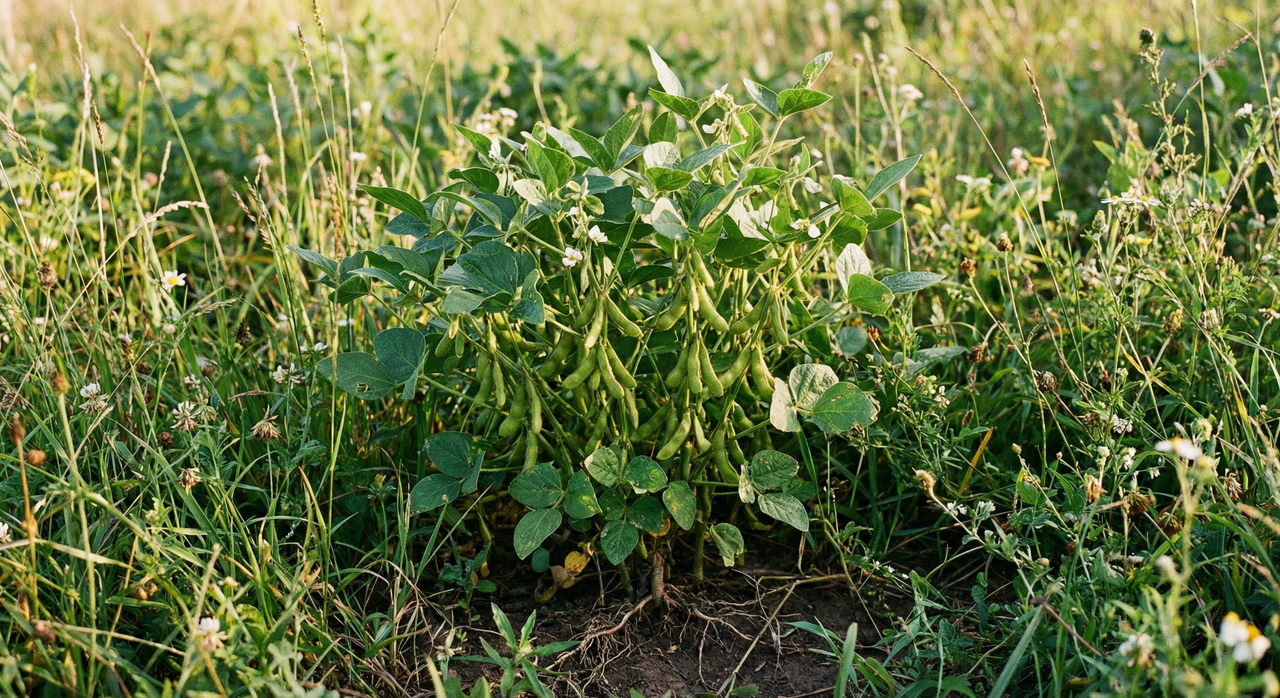
Most people who grow soybeans for the first time are shocked to discover that every single bean they harvested is, technically, inedible. Not "rinse and eat" inedible. Genuinely, biologically defended against digestion. Raw soybeans contain trypsin inhibitors so potent they can block your body from absorbing the protein the seed is famously celebrated for delivering.[1] For a crop that feeds more of the planet than almost anything else we grow, that's a strange place to start. And yet there it is. The most widely cultivated legume in human history requires transformation before it becomes food.
I've stood in soybean fields in three different states, and the plant never stops striking me as quietly radical. It fixes nitrogen, builds soil, and feeds billions, all while carrying a chemical defense system sophisticated enough to have kept researchers busy for decades. What nobody tells you when you first tuck those tan seeds into warm spring soil is that you're planting something with five thousand years of human collaboration behind it, a wild scrambling vine that ancient Chinese farmers gradually coaxed into this tidy, upright, extraordinarily useful annual. The gap between what a soybean is straight off the plant and what it becomes with the right preparation is basically the whole story.
Soybean Origin, History, and Botanical Background
Few crops carry as much human history as the soybean. Glycine max, the soybean plant scientific name most of us recognize from field guides and seed catalogs, didn't spring fully formed from a laboratory. It was coaxed into existence over thousands of years by farmers working the river valleys of ancient China, selecting the most useful plants from a scrambling, tangled wild relative and nudging it toward something more dependable.
Botanical Background and Visual Characteristics
The story starts with Glycine soja, a wiry annual that still scrambles along forest edges and disturbed ground across northeastern China, Korea, Japan, and far-eastern Russia.[2][3] Farmers in the Yellow River basin began selecting from it somewhere between 9,000 and 11,000 years ago,[4][5] gradually building toward the upright, large-seeded Glycine max with a center of domestication spanning both the Yellow River and Yangtze River valleys.[4][6] That wild progenitor can still hybridize with its domesticated descendant, which is part of why protecting its regional populations matters so much even though the IUCN currently lists it as Least Concern.[7][8]
What we grow today is a strictly annual plant with no overwintering requirements, completing its entire life cycle from germination to seed set in anywhere from 70 to 180 days depending on variety and latitude.[9][10] Visually, once you've grown a few legumes it's instantly familiar: alternate trifoliate leaves with oval to elliptical leaflets, pubescent stems that range from erect to ascending, and small papilionaceous flowers in white to pale purple.[11][12] Plants can stand anywhere from 30 to 200 cm tall depending on growth type and conditions, with pods running 5 to 10 cm long and seeds that are distinctly oval to kidney-shaped with a visible hilum.[11][13] I've found those fuzzy stems and distinctive trifoliate shape are genuinely useful in early spring when mystery seedlings appear in beds I used as rotation plots the year before; a quick brush of the stem tells you what you're looking at before the true leaves fully open. Below ground, a taproot transitions into a fibrous system capable of hosting nitrogen-fixing nodules[9] which, for a regenerative designer, is where things get really interesting.
Modern industrial cultivation has dramatically narrowed the genetic base of Glycine max relative to what ancient farmers worked with, leaving the crop vulnerable to diseases, pests, and climate shifts in ways that its wild relative is not.[14] Preserving Glycine soja populations isn't just conservation sentiment; it's practical crop insurance for a food system that depends on this plant.
Traditional and Cultural Uses of Soybeans
The archaeological record puts early soybean domestication in China's Yellow River region around 3500 to 3000 BCE, with textual references appearing in the Shijing (Book of Songs) between 1000 and 600 BCE.[15][16] By the Zhou and Han Dynasties it had been elevated to one of the Five Grains, the wu gu, a foundational staple alongside rice, wheat, millet, and hemp.[15] That's thousands of years of farmers selecting, saving, and adapting seed to specific valleys, climates, and kitchens. I think about those unnamed seed savers every time I shell dried beans from a heritage variety.
From China the soybean spread to Korea and Japan in the first millennium BCE and became woven into the food cultures of the entire region: tofu, miso, soy sauce, natto, doenjang, all of them rooted in this single legume.[17] Black soybeans in particular hold a prominent place in Traditional Chinese Medicine, used to tonify the kidney, aid digestion, balance yin-yang, and address edema and menopausal symptoms.[17] I've grown black soybeans in my Central Florida food forest specifically because of that heritage value; they're strikingly beautiful at harvest and they make an exceptional miso. In Japan, black soybeans appear at autumn festivals and in Shinto ceremonies representing fertility and prosperity, while in Korea fermented preparations figure in ancestral rituals that are still practiced today.[18][19]
The soybean reached Europe in the 16th to 18th centuries and North America in the 18th and 19th centuries, but its transformation into a global commodity came in the 20th century, especially after World War II, driven by demand for vegetable oil, protein meal, and livestock feed.[20] Today production tops 360 million tons annually, concentrated heavily in the Americas.[20] That industrialization has come at serious environmental costs, deforestation across South America most visibly among them, and the genetic narrowing that comes with breeding for commodity performance rather than regional diversity.[21] The ancient farmers who built this crop from a weedy vine deserve better than a monoculture legacy.
Notable Facts About Soybeans
The biological fact I keep coming back to is the nitrogen fixation story. Through a symbiotic partnership with Bradyrhizobium japonicum bacteria, soybeans can fix 50 to 200 kg of nitrogen per hectare in a single season,[22][23] which is why I rarely need to feed neighboring plants in the guilds where I rotate soybeans. The roots do the work. Beyond soil fertility, where does soybeans grow well it also tends to support pollinators, beneficial insects, and broader soil biodiversity in ways that monoculture scale obscures but polyculture gardens make obvious.[24]
On the agronomic side, the numbers are remarkable. Seed composition runs 35 to 45 percent protein and 18 to 25 percent oil on a dry-weight basis,[25] and in 2023 an Iowa farmer set a U.S. yield record of 204.9 bushels per acre.[26] Despite that productivity, soybeans have surprisingly moderate water requirements, needing roughly 20 to 25 inches across the season with peak demand concentrated in the reproductive stages.[27] A crop that can feed, fuel, and fertilize while drawing relatively modestly on water resources owes much of that potential to those early East Asian farmers, and to the genetic reservoir still held in its wild relative scrambling along riverbanks in northeastern China.
Soybean Varieties and Cultivars
Maturity Groups, Growth Habits, and Regional Adaptation
The single most important number on a soybean seed packet isn't the protein content or the yield estimate. It's the maturity group. The USDA classifies soybeans into groups 000 through X based on photoperiod sensitivity and season length, with decimal subdivisions like 2.5 for finer tuning.[28] Midwest gardeners generally work with MG 2.0 to 3.9, while growers in the South look to MG 4 and 5.[28] Pick the wrong group for your latitude and the plant will either rush to flower before it's filled out, or stall into fall and get clipped by frost. Early varieties come in around 80 to 100 days; late varieties push 120 to 150, and you'll need a minimum 100 frost-free days regardless of which end you're working from.
Growth habit matters too, especially in small beds. Most modern commercial varieties are indeterminate, continuing vegetative growth after flowering begins and extending the reproductive window, which generally translates to higher yield potential in longer seasons.[29] Determinate types set their pods in a tighter, more synchronized flush and finish earlier, which can be genuinely useful when you're trying to beat disease pressure or clear a bed for a fall planting. I've grown both side by side in humid conditions and found the indeterminate varieties kept flowering longer into summer while the determinate lines wrapped up more cleanly before things got ugly with fungal pressure. Plants reach roughly 2 to 3 feet tall regardless of type, starting bright green and upright before pods shift from green to yellow-brown at harvest.[28]
Edamame vs Grain Soybeans: Flavor, Texture, and Nutrition
People ask me constantly whether edamame is just a soybean or something different entirely. The short answer: edamame is a soybean harvested young and green, but edamame cultivars are specifically bred for that moment. They carry higher sugar content, lower concentrations of the compounds responsible for beany off-flavors, and a tender, sweet, faintly grassy flavor that grain-type soybeans just don't have.[30][31] My field test is simple: I pick when the pods are still plump and bright green. Wait even a few extra days and the sweetness drops off fast, the texture toughens, and that stronger beany character moves in.
The nutrition numbers tell the same two-stage story. Shelled edamame at peak harvest delivers about 11.9 g of protein and 5.2 g of fat per 100 g, but that's at 70 to 80 percent moisture.[32] Mature dry soybeans concentrate to roughly 36.5 g protein and 20 g fat per 100 g once the water is gone.[33] For a home grower, running both an edamame variety and a grain-type variety in the same bed is entirely practical, and I'd encourage it. The harvests happen at different times and the kitchen uses diverge completely.
Disease Resistance and High-Yielding Cultivars
Commercial breeding has stacked a lot onto modern soybean genetics. Most elite lines now carry resistance to soybean cyst nematode (sourced from PI 88788 or Peking germplasm), sudden death syndrome, Phytophthora root rot, soybean rust, aphids, and bean leaf beetle.[34][35] I check the resistance source on every seed tag because I once watched a plot fail after a race shift rendered PI 88788-based resistance ineffective. I now deliberately select varieties from different resistance sources rather than relying on a single genetic package.
Well-adapted Midwest varieties include lines like Asgrow AG2933 and Pioneer P29T18R; southern growers lean on MG 4-5 options such as Asgrow AG4733.[36][37][38] Trial averages run 50 to 60 bushels per acre, with top lines exceeding 70.[39] Home garden results will be more variable, but university variety trial data from your land-grant extension is the most reliable shortcut to finding what actually performs in your county.
Sourcing Quality Soybean Seed
Certified seed with greater than 90 percent germination is the floor, not a bonus.[40] I've made the mistake of ordering from big-box retailers and opened bags to find poor germination and weak seedling vigor, especially in warm, humid conditions where marginal seed fails fast. For non-GMO and certified organic options, suppliers like Johnny's Selected Seeds and Seed Savers Exchange actually serve home and small-scale growers rather than commodity operations, and their edamame selections in particular are worth exploring.[41] Organic production requires strict seed segregation and prohibition of genetic engineering under federal standards,[42] so if that matters to you, verify certification before you buy rather than relying on label language that may not carry legal weight.
How to Propagate and Plant Soybean (Glycine max)
Soybean propagation is about as straightforward as it gets in the legume world: you start from seed, every time. That's not a limitation; it's a feature. Because soybean is predominantly self-pollinating, with cross-pollination rates below 1%, seed-grown offspring are genetically uniform and true-to-type.[43][44] What you plant this year is what you'll harvest, and what you save is what you'll plant next year. For a home gardener choosing a specific edamame type or a flavor-forward heirloom, that stability is genuinely valuable. I've never needed anything beyond high-quality seed from a reputable supplier to get exactly the plant I expected.
Seed Morphology and Germination Requirements
Soybean seeds develop from a single embryo following the typical dicot pattern of zygote division through heart, torpedo, and cotyledon stages.[45][46] The mature seed is oval to kidney-shaped, roughly a quarter inch long, with a thin glossy seed coat tightly wrapped around two large cotyledons and a small hilum scar on the ventral side.[9] Yellow is the predominant commercial color, but green, brown, black, and mottled types exist and are worth seeking out if you're growing for kitchen variety rather than field yield. Modern cultivars have been selected for substantially larger seeds than their wild ancestor Glycine soja; commercial varieties run 1,500 to 3,500 seeds per pound, compared with wild types that can pack far more into the same weight.[47] That size difference translates directly to more robust seedling emergence and easier hand-planting in a garden bed.
Germination has a hard floor: soil temperature must reach at least 50°F before the seed will respond, and rates improve steadily above 59°F, with the fastest germination occurring between 70 and 90°F.[48][49] My first season I jumped the gun by about two weeks, seeding into soil that was hovering in the low 60s. The seeds sat there looking bored for nearly three weeks before they finally pushed up, and the stand was patchy and uneven. Now I wait until my soil thermometer consistently reads 65°F, and emergence is uniform within five to seven days. That single habit change made a bigger difference than any other adjustment I've made.
Soybeans have orthodox seed storage behavior, meaning they can be dried down and kept without much fuss.[50] Under ambient farm conditions, viability holds for three to five years; at controlled low temperature and humidity (around 5–10% moisture, 50–59°F), seed stays viable for five to ten years.[51][52] I keep leftover seed in a sealed jar with a desiccant pack in the refrigerator and routinely see 80 to 90% germination the following season. Before planting stored seed, a quick germination test on a damp paper towel gives you real numbers; the formal lab method is tetrazolium staining, which is ISTA-endorsed for assessing viability without destroying the whole lot.[53][54]
For the curious: somatic embryogenesis, cotyledonary node micropropagation, and grafting onto Glycine soja rootstocks do exist as techniques, primarily used in research contexts for disease-resistance breeding or trait transfer.[55][56][57] Success rates range from 20 to 80% depending on genotype and protocol, and none are practical outside a well-equipped lab.[58] For garden and small-farm purposes, ignore them entirely.
Soybean Maturity Groups and Timeline to Harvest
The maturity group system is the single most useful piece of information for anyone trying to figure out how long soybeans will take in their specific garden. Groups run from 000 in the far north to X in the deep tropics, classified by photoperiod sensitivity and latitude adaptation. Group 000 varieties finish in roughly 70 to 90 days; Group I runs 100 to 120 days; Group V stretches to 140 to 160 days; Group X can exceed 190 days.[59][60] I've grown Group II and Group IV varieties side-by-side, and in my conditions the Group IV finished a full three weeks later. That's three weeks of garden real estate, three more weeks of irrigation, and three more weeks of potential late-season disease pressure. Choosing the right group for your latitude isn't a minor detail; it determines whether your crop finishes before first frost or doesn't.
Underneath the calendar-day estimates, accumulated heat is what's really driving development. Across maturity groups, soybeans need roughly 2,200 to 3,000 growing degree days (base 50°F) to reach physiological maturity, with the bloom-to-maturity window spanning 30 to 60 days depending on the group and conditions.[61][62] A cooler-than-average summer will push harvest back; a hot one will pull it forward. I use the GDD framework mostly as a sanity check when a crop seems behind schedule, and it's usually confirmed what my eyes were already telling me about the pods.
Soil, Site, and Light Requirements
Three things are non-negotiable for a productive soybean planting: well-drained soil, a pH between 6.0 and 7.0, and full sun. Everything else can be worked around to some degree, but get any of those three wrong and the season will disappoint. Well-drained loam or silt-loam is the ideal soil texture; soybean roots do not tolerate waterlogging, and saturated soils invite Phytophthora root rot while cutting nitrogen fixation by 20 to 50%.[63][64] A rooting depth of at least 30 to 40 inches is required, with deeper profiles (60 inches or more) genuinely preferred.[63] If your site has a clay hardpan or stays soggy after rain, address drainage before you plant.
On pH, the optimal range for nodulation and nutrient uptake is 6.2 to 6.8, though the plant tolerates 5.5 to 8.0.[65][66] I test every new bed, and on a plot where pH was sitting at 5.5, the improvement after liming to 6.5 was visible: better nodule formation, greener leaves, no iron-deficiency chlorosis the following season. The investment in a soil test pays back immediately. Gentle slopes of zero to five percent help with drainage while minimizing erosion,[67] and the rainfall sweet spot is 20 to 40 inches distributed across the growing season.
Full sun means at least six to eight hours of direct sunlight daily, and for reproductive stages the plant genuinely needs it.[68] Soybean is a short-day plant, meaning it flowers when night length exceeds the critical threshold for its maturity group, typically when daylength drops below 12 to 14 hours.[69] Site it away from buildings or tall trees that cast afternoon shade. Its wild relative Glycine soja can persist under 30 to 50% canopy shade in its native habitats,[70] but cultivated varieties have been selected hard for yield in open conditions and don't carry that same flexibility.
Spacing, Planting Depth, and Population Management
Standard commercial row spacing is 30 inches, with target final populations of 100,000 to 160,000 plants per acre; growers typically plant 140,000 to 180,000 seeds to account for germination losses.[71][72] For home garden rows, I find it easier to think in terms of spacing within the row: at those populations and 30-inch row spacing, seeds go in roughly two inches apart. Narrower rows (15 to 20 inches) speed canopy closure, suppress weeds, and can bump yield 5 to 10% by improving light interception; rows wider than 36 inches commonly reduce yield by 5 to 15% as the canopy takes longer to close and weeds get a foothold.[73]
Growth habit matters for spacing decisions. Determinate bush types (24 to 36 inches tall) do well in 20 to 30-inch rows and hold their shape reasonably well without crowding.[74] Indeterminate varieties, which can push 48 inches or more, need tighter spacing (7.5 to 15 inches) to manage vegetative growth and reduce lodging risk. I learned that one the hard way: an indeterminate variety in 30-inch rows during a wet summer flopped over badly by pod fill, and I lost a portion of the lower pods to moisture and mold. The following season I tightened to 15-inch rows, and the plants stayed upright. A dense canopy does reduce weed pressure, though it can restrict airflow if pushed too far, so it's worth keeping that trade-off in mind as you decide on spacing.
Planting depth is 1 to 1.5 inches in most conditions.[49] Go slightly shallower in cool, wet soils where emergence needs to happen quickly; go toward the deeper end in loose, dry soils where seed needs to contact moisture. In drought-prone sites, higher plant populations (120,000 to 140,000 per acre) improve water-use efficiency, while lower densities (80,000 to 120,000) reduce lodging risk in high-rainfall or irrigated settings.[75] Label your rows carefully when planting: in the first week or two, soybean seedlings look remarkably similar to other legumes coming up in adjacent beds, and a misread garden map can cause real confusion at thinning time.
Soybean Care Guide
Soybean is a warm-season tender annual that adapts across USDA Zones 2–11 and AHS Heat Zones 1–11, but that range can be misleading. What soybeans actually need is a reliable 100–130 frost-free days with consistently warm soil and air temperatures. Get those conditions right, and the soybean plant rewards you. Miss them, even briefly, at the wrong growth stage, and yield losses happen fast.
Sunlight Requirements for Soybeans
Soybeans want full sun, at least 6 hours of direct light daily for healthy vegetative development, and more is generally better.[76] Light drives biomass accumulation through the vegetative stages, so a shaded spot will show up quickly as leggy, underperforming plants that never develop a dense canopy. That weakness follows through into pod fill, when continued high light intensity is what drives seed development and maximum yield.[76] In my Central Florida summers, soybeans thrive in intense sun but can benefit from afternoon shade during the hottest weeks purely to reduce transpiration stress, something I'll come back to in the heat section.
Water Needs and Irrigation for Soybeans
The total seasonal water requirement for soybeans runs 15–25 inches, and roughly half of that falls in the reproductive window from flowering through pod fill.[77][78] During vegetative growth, you're aiming for around 0.8–1.0 inch per week.[79] Once flowering starts (R1–R2), that climbs to 1.5–2 inches per week, and during R3–R5 pod fill you can need up to 2.5 inches per week.[80] On a hot day near 95°F, daily water use can exceed 0.3 inches on its own.[77]
I dig down 18–24 inches weekly during pod fill to check actual soil moisture, and in my sandy soils I often shift from 5-day to 3-day irrigation intervals to keep up. The consequences of falling behind are real: water stress at 50% field capacity for just 7–14 days during reproductive stages can cause around a 20% yield loss.[81] Visual signals include wilting, pod shriveling, stunted nodes, and premature leaf drop.[82] Overwatering is its own problem, producing chlorosis, root rot, and stem lodging.[83] If you're irrigating with municipal or well water, keep pH between 6.0–7.5 and electrical conductivity below 0.75 dS/m when possible.[84]
Fertility and Nutrient Management for Soybeans
Soybeans fix their own nitrogen through a symbiosis with Bradyrhizobium japonicum in root nodules, but that fixation only works well when soil pH sits between 6.0–7.0, moisture is adequate, and phosphorus is available.[85] A soil test is the first thing I do every season, non-negotiable. Phosphorus and potassium still need to come from somewhere: commercial benchmarks run 40–60 lbs/acre of phosphorus and 30–50 lbs/acre of potassium applied before planting, and soybeans require roughly 5 lbs of nitrogen per bushel of grain produced.[86]
Macronutrient deficiencies each have a visual signature. Nitrogen deficiency shows as yellowing starting on older leaves, though it's uncommon in well-nodulated plants.[87] Phosphorus deficiency appears as dark green or purple discoloration on older leaves, most often early in cool, wet seasons.[87] Potassium deficiency causes marginal yellowing and browning on older leaves, and in severe cases produces what's called golden soybean syndrome, where leaves turn bright yellow with green veins still visible.[87] I've seen that in high-pH Florida soils and I correct it quickly with foliar potassium and manganese sprays. On micronutrients: manganese deficiency causes interveinal chlorosis on new leaves and is most common above pH 6.5 in sandy soils, correctable with foliar manganese sulfate.[88] Iron deficiency chlorosis produces bright yellow new leaves with green veins and is worst in calcareous, high-pH soils; tolerant varieties and in-furrow iron chelates are the longer-term fix.[88] Foliar sprays buy time, but soil correction is always the more durable answer.
Frost Tolerance and Cold Protection
Soybean germination requires a minimum soil temperature of 50°F, with optimal germination above 60°F.[89] I learned this the hard way after losing an early planting to a late frost one year. Now I wait until soil temperatures hold consistently at 60°F and keep floating row covers on hand for any surprise dips. Seedlings can survive brief exposure down to 28°F, but growth stops below 50°F and prolonged temperatures below 41°F risk real damage.[90]
The reproductive window is where frost becomes genuinely dangerous. Temperatures below 50°F during flowering can cause flower abortion,[91] and frost below 32°F during reproductive stages can reduce yields by 50–100% through pod abortion and flower drop.[92] Row covers raise air temperature 2–5°F and provide meaningful protection against light frost events, and overhead irrigation during a frost releases latent heat as water freezes, protecting plants down to 28°F.[93]
Heat Tolerance and High-Temperature Management
The soybean plant's sweet spot is 68–86°F, with 80–86°F daytime temperatures ideal for growth and yield.[94] Above 90–95°F during flowering and pod fill, yield losses begin. Sustained temperatures of 100–104°F push many cultivars into pollen sterility and pod abortion.[95] I've watched this happen during a week of 98°F days with high humidity: flowers dropped, young pods aborted, and the plants looked visibly stressed with leaf rolling and scorching.[96] Evening irrigation helped the plants recover overnight, and 30% shade cloth reduced canopy temperature by enough to limit further damage.
Practical mitigation options include consistent soil moisture during peak heat, shade cloth (which reduces canopy temperature by 2–5°C), mulch to hold soil temperature down by 3–4°C, and selecting heat-tolerant cultivars from the start.[96] In hot climates, high nighttime temperatures above 75°F compound daytime stress, so anything that improves overnight recovery matters.
Seasonal Growth Rhythm and Lifecycle
Soybeans are short-day plants, meaning flowering is triggered when day length drops below 12–14 hours, though photoperiod-insensitive varieties do exist.[9] Days to first flower (R1 stage) typically run 45–70 days from germination depending on maturity group, with early groups (MG 0–2) hitting R1 around 45–55 days and later groups (MG 3–5) at 55–70 days. Pod set follows 10–20 days after flowering begins, and full maturity (R8) arrives somewhere between 90–150 days from planting.[97] Short-season varieties hit R8 at 90–110 days; longer-season types need 130–150 days.
Matching maturity group to your local frost dates is the single most important seasonal decision you make, and it's exactly why I always check my average first-fall-frost date before selecting seed. Soybean growing is, in this sense, a calendar exercise as much as a soil one.
Pruning, Maintenance, and Growing Tips
Soybeans require no pruning or training. Height and structure are managed through variety selection and planting density, not scissors.[98] I never prune mine. For shorter garden rows, I select determinate varieties because they stay compact, stop growing when they flower, and ripen more uniformly without sprawling into neighboring beds. Indeterminate types work better in larger plots where their continued vertical growth can be an advantage.
The cultural levers that actually move yield are spacing, airflow, and attentive scouting. Rows at 15–30 inches with good airflow reduce disease pressure more reliably than any reactive spray. Scout regularly for aphid colonies and early signs of Phytophthora root rot, though the dedicated pest section covers those in detail. Keep records of what you planted, when you irrigated, and what deficiency symptoms appeared; soybean growth stages move quickly, and the difference between catching a potassium deficiency at V3 versus R2 can be the difference between a correction that costs a foliar spray and one that costs you bushels.
When and How to Harvest Soybeans
The seed is what you're after, and getting it at the right moment makes the difference between a crop worth eating and one you're scrambling to salvage. Miss the window by a few days in the wrong direction and you're looking at shattered pods, mold risk, or beans that never quite lose that aggressive raw bitterness. The good news is the plant tells you clearly when it's ready, if you know what to look for.
Timing and Maturity Indicators for Soybeans
The target is R8, the stage when seeds have reached their maximum dry weight and at least 95% of them are fully mature.[59][99] Visually, pods shift from green to yellow starting at the base of the plant and working upward, and you'll see 90% or more of the leaves drop.[100][101] Seed moisture, which sits around 40–55% at R8, needs to drop to 13–15% before harvest is safe for storage.[100][101] That drying-down process typically takes 25–30 days after physiological maturity, landing in October for most Midwest growers.[39][102] Weather can push that calendar by 10 days or more in either direction depending on temperature, photoperiod, and rainfall.[103][104] For small-plot growers, I use a simple bite test: a seed that dents firmly without shattering is close to that 13–15% sweet spot. One season I harvested after two rainy days and paid for it with mold in storage. Now I plan for morning harvests when humidity is lower to keep pod shatter risk down.[105]
Harvesting Techniques: From Garden to Field Scale
At garden scale, hand-picking pods is perfectly practical; at field scale, combines fitted with defoliators or desiccants handle the volume.[105] Either way, cleaning immediately after harvest matters as much as the harvest itself. You want foreign material below 1%, which a simple screen and a box fan can handle in a home garden; commercial operations rely on air-screen cleaners and gravity tables.[106] That 13–15% moisture target isn't just a storage number, it also protects the flavor chemistry that will define your beans through cooking or fermentation, so if you're not there yet, spread them in a single layer somewhere with good airflow rather than boxing them up damp.[107][108][109]
Soybean Flavor Profile, Texture, and Expected Yields
The seed is the prize here, whether you're pulling young green pods for edamame or drying the full crop for tempeh and tofu.[110][111] Fresh beans carry green, grassy aromas from lipoxygenase-derived C6 volatiles; roasting or cooking shifts that toward nutty, toasty pyrazines and furans.[112][113] The underlying taste is deeply umami from glutamates and free amino acids, balanced against bitterness from saponins and isoflavones, with that familiar "beany" aftertaste that heat, blanching, or fermentation gradually tames.[114][115] I've grown both standard and low-lipoxygenase varieties side by side, and the difference is real: even boiled as edamame, the low-LOX types have a noticeably milder, cleaner flavor that makes a skeptic a convert. Edamame harvested at R6 has a sweet snap and higher sugar content; mature beans become firmer tofu, chewy tempeh from Rhizopus fermentation, or pungent sticky natto via Bacillus.[116][117] Fermentation, in particular, breaks proteins and lipids down into savory umami compounds that define miso and tempeh and essentially eliminate the raw bitterness entirely.[118][119] Under solid management, commercial fields hit 40–60 bushels per acre;[120] in my intensive garden beds, I've hit the equivalent of that upper range when spacing, fertility, and timing all come together.
Soybean Preparation and Uses
Every edible part of the soybean plant, including the immature pods, dried seeds, sprouts, and leaves, needs proper handling before you eat it.[9] Raw soybeans contain trypsin inhibitors that block protein digestion and cause real gastrointestinal discomfort if you skip this step. I grow a small patch of edamame-type soybeans every season specifically for fresh eating, and the difference 5-7 minutes of boiling makes is remarkable. What comes off the vine tasting grassy and bitter comes out of the pot sweet, nutty, and genuinely delicious. The transformation isn't subtle.
Culinary Uses and Flavor Transformation
Heat is just the beginning. Fermentation does something more profound: it breaks down soy proteins into free amino acids, generating the deep umami character that makes miso, tempeh, and soy sauce so satisfying.[121] Traditional Asian kitchens have mapped this territory thoroughly, from salted boiled edamame eaten as a snack in Japan to tofu simmered with ginger and garlic in stir-fries to fermented soybean paste stirred into broths and marinades.[122] At home I've made soy milk for use in both savory soups and simple desserts; it's one of the more forgiving processes once you get the soaking time dialed in. Whether you're making tofu or a soybean burger, that prior cooking step is non-negotiable for both safety and flavor.
Medicinal and Therapeutic Preparations
Fermentation does more than create flavor. It converts isoflavone glycosides into aglycone forms that the body absorbs far more readily, which is why tempeh and miso deliver stronger bioactive effects than unfermented tofu.[123] For supplemental use, standardized isoflavone extracts for menopausal support typically fall in the 40-120 mg per day range, with the FASEB safety assessment suggesting isoflavones stay under 100 mg daily and NCCIH noting supplements are generally well-tolerated up to 150 mg.[124][125] I stay under that 100 mg ceiling myself when I use soy supplements. Clinical trials supporting cholesterol management typically use 25 grams of soy protein daily.[126] Traditional Chinese medicine has long used soybean decoctions at 10-30 grams of dried beans prepared as tea or broth for digestive support.[127] Individual responses vary enough that these ranges are starting points, not universal prescriptions.
Non-Food and Industrial Applications
Beyond the kitchen, soybean byproducts flow into cosmetics, lubricants, biodegradable plastics, soy wax, and paints, while soybean oil feeds biodiesel production as a renewable fuel source.[128][129] Hulls end up as dietary fiber in breakfast cereals and baked goods, and processed meal is one of the dominant protein sources in commercial animal feed. What I find most compelling as a permaculture designer, though, is the regenerative end of this pipeline. Soybeans used as green manure or post-harvest cover crops fix atmospheric nitrogen, improve soil structure, and suppress weeds, closing a loop that makes the next crop's job easier.[130] I've used soybean hull mulch in my Florida vegetable beds and watched soil tilth improve noticeably the following season. That's the part of the soybean story I keep coming back to: a plant that feeds you, feeds the soil, and asks for very little in return if you put it in the right rotation.
Soybean Health Benefits and Medicinal Uses
Long before modern nutrition science had a word for isoflavones, East Asian healers had already figured out that soybeans were doing something special in the body. The health story here runs deep.
Traditional Medicinal Uses in TCM and Korean Hanbang
In Traditional Chinese Medicine, soybeans have been used for centuries to tonify the spleen, promote urination, and clear dampness from the body, with fermented black soybeans appearing specifically in preparations targeting liver health and longevity.[131] Korean Hanbang similarly features soy in detoxification and circulation remedies, most famously in the fermented paste doenjang.[132] What strikes me about these traditions is how consistently fermented preparations appear. Healers weren't just using the raw bean; they were instinctively working with transformed versions. Modern research keeps validating that instinct, particularly around gut health and bioavailability.
Key Phytochemicals and Their Mechanisms
The phytochemical story in Glycine max centers on isoflavones, primarily genistein and daidzein, synthesized through the phenylpropanoid pathway as part of the plant's own defense toolkit.[133][134] As a designer who has watched drought-stressed soybean plants produce noticeably more pungent, intense seeds, I find it fascinating that the same stress signals that boost isoflavone concentrations in the field translate into more potent bioactives on the plate.[135] Dry mature beans contain 103 to 164 mg of total isoflavones per 100 g, with genistein contributing roughly 72 to 82 mg of that.[136] Saponins round out the profile: triterpenoid glycosides with cholesterol-lowering and immunomodulatory properties, though they're also responsible for the bitterness in underprocessed soy products.[137] In human physiology, genistein and daidzein function as phytoestrogens that bind preferentially to estrogen receptor beta, inhibit the NF-κB inflammatory pathway, activate Nrf2-mediated antioxidant signaling, and suppress mTOR and tyrosine kinase activity.[138][139] Bioavailability sits at a modest 20 to 25%, though gut microbiota that convert daidzein to equol can significantly amplify the estrogenic response, which partly explains why individual results vary so much.[140]
Nutritional Profile and Bioactive Compounds
Cooked soybeans deliver 18.2 g of complete protein per 100 g alongside 6 g of fiber, 515 mg of potassium, 5.1 mg of iron, and meaningful amounts of magnesium, calcium, zinc, and folate.[141] Compared to garden beans and peas I've grown side by side, no other common legume comes close to that mineral density alongside a genuinely complete amino acid profile. The fat content is worth noting too: the omega-6 linoleic acid (8.9 g per 100 g raw) and omega-3 alpha-linolenic acid (1.3 g) profile is what makes soybean oil such a common ingredient, though soybean oil is refined well past any isoflavone content. Raw beans do carry 1 to 2.2% phytic acid by dry weight, which binds minerals and reduces their absorption, but boiling cuts those levels by 20 to 50%, and fermentation takes them down dramatically further: up to 95% reduction in soy sauce and 77% in tempeh.[142] Home-fermented products genuinely do improve digestibility; I've noticed the difference firsthand.
Evidence-Based Health Benefits
The strongest clinical territory is menopausal symptom relief. Multiple meta-analyses and a Cochrane review support soy isoflavones reducing the frequency and severity of hot flashes, making it one of the better-evidenced botanical interventions in that space.[143][144] Cardiovascular benefits come next: soy protein and isoflavones modestly lower LDL cholesterol, improve endothelial function, and in some trials reduce systolic blood pressure in people with hypertension, though not every meta-analysis shows significant blood-pressure reduction across the board.[145][146][147] Postmenopausal bone mineral density shows modest improvements with regular soy isoflavone intake.[148] Cancer prevention claims are where I'd urge the most caution: the evidence is genuinely mixed, with isoflavones showing both anti-estrogenic and estrogenic effects depending on context, dose, and the individual's hormonal environment, and current evidence doesn't support broad therapeutic claims.[149][150] Anyone with a hormone-sensitive condition should have that conversation with their oncologist before significantly increasing intake. Fermented products like miso add gut-health and anti-inflammatory benefits on top of all of this.[151]
Safety Considerations and Side Effects
Raw soybeans are genuinely not safe to eat in quantity. Trypsin inhibitors (20 to 40 mg/g) impair protein digestion and with regular exposure can cause pancreatic stress, and soybean lectins (4,000 to 20,000 HU/g) cause gastrointestinal irritation and malabsorption.[152][153] I learned this the hard way years ago when I fed a batch of undercooked soybeans to my garden chickens and spent a week dealing with very unhappy birds. Twenty minutes at a rolling boil, or proper fermentation, inactivates more than 90% of those factors and makes the beans safe.[154] On allergies: soy affects roughly 0.4% of the U.S. population and is one of the FDA's eight major allergens requiring mandatory labeling, with symptoms ranging from hives to anaphylaxis.[155][156] I always check labels carefully when sourcing for clients whose households include anyone with soy sensitivity. For thyroid health, isoflavones may inhibit thyroid peroxidase in iodine-deficient individuals, so anyone on levothyroxine should separate their dose from soy by at least four hours.[157] Drug interactions with tamoxifen remain a matter of mixed evidence, and warfarin users may need INR monitoring. EFSA considers up to 50 mg of isoflavones per day safe for most adults.[158] Moderate dietary soy, properly prepared, has a strong safety record; it's the raw bean, the allergy risk, and the high-dose supplement that deserve real caution.
Soybean Pests and Diseases
Buying soybean seed without checking the disease resistance ratings is a bit like buying a used car without looking under the hood. The rating systems take some getting used to, but they're genuinely useful once you speak the language. University of Illinois uses a 1-9 scale where scores of 1-3 mean highly resistant, 4-6 moderately resistant, and 7-9 susceptible; other programs use Immune, Highly Resistant (HR), Moderately Resistant (MR), and Susceptible (S) categories.[159][160] That framework is the reason a cultivar that performs beautifully in Iowa can struggle in a Virginia field with different soil biology, different nematode races, different everything.
Disease Resistance Ratings and Major Soybean Pathogens
Soybean Cyst Nematode is the crop's single most economically destructive pathogen across most of North America. Resistance comes primarily from the Rhg1 and Rhg4 genes; PI 88788 sources are rated Immune to Resistant and Peking-type lines carry High/HR ratings, though moderate and susceptible categories exist within the spectrum.[160][161] Phytophthora root rot follows close behind in wet-prone soils, where race-specific Rps genes (rated R1 through R14) determine whether a seedling survives; infection risk climbs sharply when soil temperatures hover between 55-70°F at planting, with the pathogen peaking near 60°F.[162][163] I learned that one the hard way after losing an early planting to damping-off; I now wait for soils to push past 60°F before the seed goes in, full stop.
Sudden Death Syndrome (Fusarium virguliforme) is rated on a disease severity index from Resistant to Susceptible, and complete immunity is rare enough that integrated management isn't optional, it's the whole strategy.[164][159] Frogeye leaf spot, caused by Cercospora sojina, responds well to Rcs genes; cultivars like Williams 82, Jack, and Elsie carry solid resistance.[165] Soybean rust (Phakopsora pachyrhizi) is the wild card, since most varieties without Rpp1-Rpp4 genes are highly susceptible, and the pathogen spreads rapidly when relative humidity climbs above 85%.[166] Anthracnose and charcoal rot round out the threat list, with tolerance limited to only a handful of lines like L97-9006 and DT2008.[167][168] The stakes are real: under heavy disease pressure, susceptible varieties commonly lose 20-50% of yield, while resistant lines typically hold losses below 10%.[169] Check your regional extension trial data, because soybean plant diseases express themselves differently depending on soil, climate, and which pathogen races are actually present in your county.
Insect Pests and Genetic Resistance Options
The soybean aphid deserves its reputation. Aphis glycines feeds on plant sap, deposits honeydew that fosters sooty mold, and vectors viruses; populations left unchecked can slice yields by 20-50%.[170][171][172] I've grown Rag1/Rag2-carrying lines like IA3023 and SD2001 side-by-side with standard susceptible varieties under the same aphid pressure, and the difference is startling: the susceptible rows were sticky with honeydew and blackening with mold while the resistant rows looked almost untouched. Commercial cultivars with these genes can reduce aphid populations by 20-50% through antibiosis and antixenosis.[173][174][175]
The picture gets murkier with stink bugs, soybean looper, bean leaf beetle, and corn earworm. Most commercial lines show low resistance to all of them, so conventional breeding hasn't delivered the same kind of clean solution the Rag genes gave us for aphids.[176] Transgenic Bt lines expressing Cry1Ac or Cry1F do provide strong lepidopteran protection against loopers and velvetbean caterpillar, though that's obviously not an option in organic or non-GMO systems.[177] What's working in the background even in susceptible lines is the plant's own layered biology: trichomes create physical barriers, while isoflavonoids, flavonoids, and protease inhibitors function as chemical deterrents that underpin whatever antibiosis and antixenosis the breeders have selected for.[178][179] Think of it as armor that exists whether or not the genetics on the seed tag mention it. Resistance still varies significantly by maturity group, region, planting date, and drought stress, so no single cultivar is a universal answer.
Integrated Pest and Disease Management for Soybeans
Genetic resistance only stays durable when cultural practices back it up. Rotating with non-host crops like corn or wheat for two to three seasons is the most powerful tool against soil-borne soybean plant diseases like SCN; narrow row spacing (15-20 inches) accelerates canopy closure and suppresses the wet-soil conditions that favor Phytophthora.[180][181] Seed treatments with fungicides like captan, fludioxonil, or azoxystrobin give seedlings a meaningful advantage against early-season pathogens before the plant's own defenses kick in.[182]
My honest experience is that I rarely reach for foliar sprays when I've selected varieties with solid SCN and Phytophthora packages and kept rotation on schedule. A genuine IPM approach, regular scouting, clear economic thresholds, biological controls where they're available, and targeted intervention only when those thresholds are crossed, keeps chemical inputs minimal without sacrificing yield.[183][184] In a regenerative or permaculture context, that's not just a preference, it's the whole point. No single tactic holds indefinitely; the system only stays healthy when genetics, rotation, scouting, and soil biology work together.
Soybean in Permaculture Design
Soybean's role in a regenerative system starts with a simple question: does your climate give it enough summer? The answer shapes everything else. This is fundamentally an annual nitrogen-fixer that rewards the right placement with genuine soil-building returns, but only if the season is long enough to let it do its work.
Climate Adaptation and USDA Hardiness Zones for Soybean
Soybeans want warm soil, warm air, and plenty of it. Optimal growth happens between 68-86 °F, with peak performance pushing into the 80-90 °F range.[48][185] Below 59 °F growth slows noticeably, and any frost after emergence can damage or kill young plants outright, so timing your planting around the last frost date isn't optional.[48][186] Most varieties need 120-140 frost-free days to reach full maturity, which puts the sweet spot squarely in USDA zones 5-7 across the Midwest, where Illinois, Iowa, and Minnesota growers have refined soybean production into a science.[187][188]
The maturity-group system is what makes this crop genuinely adaptable despite those requirements. Groups 000 through II are bred for short northern seasons; groups III through V cover the Corn Belt; groups VI through X are built for southern heat.[189] I've grown several maturity groups back-to-back in the same beds specifically to find which ones finish before first frost in my zone, and the difference between getting it right and wrong is the difference between a full harvest and a lot of green pods that never filled out. The growing-degree-day requirement for full-season varieties runs 2,400 to 3,000 (base 50 °F), so if you know your local heat accumulation, you can plan backward from your average frost date with real precision.[190]
Southern and subtropical growers face the opposite problem. Above 95-104 °F, especially during flowering and pod fill, heat stress impairs pollination and pod set; in USDA Zone 9 without heat-tolerant varieties or irrigation, that can translate to 20-50% yield loss.[191] High humidity above 85% also raises fungal disease risk.[192] For site selection, full sun, well-drained loamy soil, and a pH between 6.0 and 6.8 are the baseline conditions that allow the nitrogen-fixing symbiosis to operate effectively.[186][185]
Ecosystem Functions and Soil-Building Benefits of Soybean
The real reason to include soybean in a permaculture design is what it does underground. Through symbiosis with Bradyrhizobium japonicum, it fixes 50-200 kg of nitrogen per hectare per season, with commercial fields typically landing in the 100-150 kg range.[188][193] That translates to a 20-50% reduction in synthetic fertilizer needs for whatever follows in the rotation.[194] I've seen this firsthand: beds where I've incorporated soybean as green manure at flowering produce noticeably better corn the following year, with richer tilth and less need for supplemental feeding. The deep taproot, which can reach 1-2 meters, also reduces erosion and breaks up compaction layers that shallower-rooted annuals can't touch.[195]
As a dynamic accumulator and green manure crop, soybean supports soil organisms and contributes to mycorrhizal networks, adding biodiversity value beyond the nitrogen alone.[196] It slots naturally into a Three Sisters-style guild with corn, and in soybean-corn intercropping systems, the resource efficiency gains can reduce pest pressure while improving overall system yields.[197] The flowers are small, self-pollinating, and only open for a few hours around mid-morning, which means direct pollinator support is modest compared to something like clover or baptisia growing nearby.[198] Cross-pollination rates are typically below 2%, which I actually appreciate for seed-saving purposes in a small garden where I don't want to manage isolation distances.[9] That said, managed bees nearby can still bump yields 5-15%, so if you're running hives close to the bed, they earn their keep.[199]
A few cautions belong here. GMO varieties carry real gene-flow risks to wild relatives, and I personally avoid them in my own designs for that reason. Allelopathic effects have been noted in intensive systems, and the plant's water and nutrient demands are higher than many annual legumes when pushed for maximum yield.[11] Go in with clear eyes about what you're asking it to do.
Soybean in Forest Gardens, Guilds, and Agroforestry Systems
Soybean lives strictly in the herbaceous layer as an annual, typically reaching 1-5 feet tall depending on variety and conditions.[200] That placement matters for design: it belongs in the open annual beds and guild interiors where it gets full sun, not tucked under established canopy. Compatible companions include corn, sunflowers, and marigolds, as well as nitrogen-hungry perennials that can draw on improved fertility in subsequent seasons.[201]
One thing I'd stress to anyone planting soybean into a new bed: inoculate the seed. Without the right Bradyrhizobium strains already present in the soil, nitrogen fixation simply won't happen at meaningful levels.[202] I always inoculate the first year in any bed; after that the bacteria typically persist, but that first inoculation is non-negotiable if you want the soil-building payoff. In agroforestry intercropping with shrubs or trees, expect soybean yields to drop 10-30% from shading and competition, though the overall system, counting biomass, fertility, and biodiversity, often comes out ahead.[202] The practical approach I've found works best is to use soybean as a nitrogen pump in annual beds that are eventually destined to become guild sites, rotating it through before the perennials close the canopy overhead. You capture the fertility benefit, build soil life, and then move on to the next open section. Monoculture yields will always be higher on paper, but the soil you build in a polyculture context is the real long-term asset.
The Year I Finally Stopped Treating Soybeans Like a Commodity Crop
It took me an embarrassingly long time to grow soybeans for myself rather than study them as a system input. The season I finally did, I pulled a handful of pods at the edamame stage, boiled them with salt in my garden kitchen, and stood there eating them straight off the stem. Five thousand years of careful human selection, and there I was, the last step in the chain. That moment reframed every nitrogen calculation I'd ever done.
Sources 202
- Trypsin inhibitors in soybeans: effects on protein digestibility ↩
- Glycine soja - USDA Plants Database ↩
- Glycine soja - Kew Science Plants of the World Online ↩
- The domestication history of soybean (Glycine max) ↩
- The Domestication History of Soybean (Glycine max) ↩
- Glycine max - Plants of the World Online ↩
- IUCN Red List of Threatened Species: Glycine soja ↩
- Wild Soybean (Glycine soja): A Review ↩
- Glycine max - USDA PLANTS Database ↩
- Soybean - Wikipedia ↩
- Glycine max - Missouri Botanical Garden Plant Finder ↩
- Soybean Growth Habit: Determinate vs. Indeterminate ↩
- Glycine max - Kew Science ↩
- FAO Report on Soybean and Environmental Footprint ↩
- Archaeological Evidence for the Domestication of Soybeans in Ancient China ↩
- The Origins and Early Dispersal of Soybean Domestication ↩
- Soybean in Traditional Chinese Medicine ↩
- The Soybean Plant in Traditional Chinese Medicine ↩
- Korean traditional meju and ancestral rituals ↩
- FAO Report on Soybean Production and Uses ↩
- Soybean: Environmental Sustainability Challenges ↩
- Symbiotic Nitrogen Fixation in Soybean ↩
- Ecological Benefits of Legume Crops like Soybean ↩
- Biodiversity in Soybean Agroecosystems ↩
- Assessing Variation in US Soybean Seed Composition (Protein and Oil) ↩
- Iowa farmer breaks national soybean yield record ↩
- Water Use and Drought Tolerance in Soybeans ↩
- Soybean Maturity Groups ↩
- Indeterminate and Determinate Soybean Cultivars ↩
- University of Illinois - Soybean Quality for Edamame ↩
- Journal Article: Flavor Compounds in Soybeans and Edamame ↩
- USDA FoodData Central - Edamame ↩
- USDA FoodData Central - Soybeans, mature seeds, raw ↩
- Purdue Extension Soybean Variety Selection ↩
- North Central Soybean Research Program ↩
- Illinois Soybean Variety Trials ↩
- Iowa State University Soybean Variety Performance ↩
- University of Georgia Soybean Recommendations ↩
- USDA Soybean Yield Data ↩
- High-Quality Seed Best Practices ↩
- Soybean Seeds ↩
- USDA Organic: Non-GMO Crops and Varieties ↩
- Soybean Growth and Management Quick Guide ↩
- Pollination in Soybean ↩
- Embryology of Soybean (Glycine max (L.) Merr.): A Review ↩
- Seed Development in Soybean: Monoembryony and Beyond ↩
- Domestication of Soybean ↩
- Soybean Growth Stages and Associated Management ↩
- Soybean Planting Guide ↩
- Seed storage behaviour of Glycine max ↩
- USDA ARS Seed Storage Handbook ↩
- Soybean Seed Storage and Viability ↩
- ISTA Handbook for Seed Testing ↩
- North Dakota State University Extension - Soybean Seed Viability and Testing ↩
- Somatic Embryogenesis in Soybean: Recent Advances and Future Perspectives ↩
- Micropropagation of Soybean Through Cotyledonary Node Culture ↩
- Rootstock Selection in Soybean Grafting: A Review ↩
- Whip-and-Tongue Grafting Success in Legumes Including Glycine max ↩
- Soybean Growth and Development ↩
- Soybean Maturity Groups and Days to Maturity ↩
- Growing Degree Days for Soybean ↩
- Maturity Groups for Soybeans ↩
- Soybean Waterlogging and Root Health ↩
- Agronomic Recommendations for Soybean Soil Profiles ↩
- USDA Soybean Production Handbook ↩
- Soybean Production Guide - Purdue University Extension ↩
- FAO Soybean Environmental Requirements ↩
- Soybean Production Handbook ↩
- Photoperiod Sensitivity in Soybean ↩
- Shade Tolerance of Wild Soybean (Glycine soja) ↩
- Soybean Planting Guide - University of Illinois Extension ↩
- Soybean Seeding Rate and Population - Iowa State University Extension ↩
- University of Minnesota Extension - Soybean Seeding Rate, Plant Population, and Row Spacing ↩
- Determinate vs. Indeterminate Soybean Growth Habits - University of Missouri Extension ↩
- Soybean Planting Guide - USDA ARS ↩
- Soybean Growth and Management ↩
- Soybean Irrigation Management in Illinois ↩
- Water Use and Requirements for Soybeans ↩
- Soybean Irrigation Management ↩
- Soybean Irrigation Management - USDA ARS ↩
- Drought Stress Effects on Soybean Yield ↩
- Soybean Water Stress and Management ↩
- Soybean Root Rot and Overwatering ↩
- Irrigation Water Quality for Agriculture ↩
- Soybean Nutrient Requirements ↩
- Nutrient Management for Soybeans ↩
- Soybean Deficiency Symptoms ↩
- Soybean Micronutrient Management ↩
- Soybean Growth and Development ↩
- Frost Tolerance in Soybeans - Iowa State University Extension ↩
- Soybean Growth Stages and Sensitivity to Abiotic Stress ↩
- Frost and Soybean Production ↩
- Frost Protection in Field Crops ↩
- Soybean Growth and Development ↩
- Temperature Tolerance in Soybean ↩
- Soybean Heat Stress: Impacts and Management ↩
- Iowa State University Soybean Stages ↩
- Missouri Botanical Garden Plant Finder - Soybean (Glycine max) ↩
- Soybean Growth Stages ↩
- Soybean Growth and Management Quick Guide ↩
- Soybean Harvesting ↩
- Midwest Soybean Harvest Timing ↩
- Physiological Maturity in Soybeans ↩
- Influence of Temperature and Photoperiod on Soybean Development ↩
- Soybean Harvesting Guidelines ↩
- Post-Harvest Handling of Soybeans ↩
- University of Illinois Soybean Production Guide ↩
- Harvesting and Storing Soybeans ↩
- Soybean Harvest Management ↩
- USDA PLANTS Database - Glycine max ↩
- Missouri Botanical Garden Plant Finder - Glycine max ↩
- Volatile Compounds in Soybean ↩
- Aroma Profile of Fresh Soybeans ↩
- Soybean Flavor Compounds and Umami Taste ↩
- Flavor Chemistry of Soybean and Soy Products ↩
- Journal of Texture Studies Vol. 21 No. 2 (1990) - Soy Protein and Texturization Processes ↩
- Proceedings of the 7th International Tempeh Symposium ↩
- Flavor Chemistry of Soybean Products ↩
- Beany Flavor in Soy Products ↩
- USDA NASS - Soybean Statistics ↩
- Journal of Food Science - Soybean Fermentation and Flavor Development ↩
- Traditional Soybean Uses in Asian Cuisine ↩
- ResearchGate Publication on Soy Isoflavone Metabolism & Fermentation ↩
- Soy - NCCIH ↩
- FASEB Soy Protein and Isoflavone Safety Assessment ↩
- Soy Protein and Isoflavones: Benefits, Risks, and Best Practices ↩
- Traditional Uses of Soybean in Chinese Medicine ↩
- Missouri Botanical Garden Plant Finder - Soybean ↩
- USDA PLANTS Database: Glycine max ↩
- USDA Soybean Production Guidelines ↩
- Soybean in Traditional Chinese Medicine ↩
- Korean Traditional Medicine and Soy Products ↩
- Soybean secondary metabolites and their biological functions ↩
- Soybean Isoflavones: Role in Nodulation and Health Benefits ↩
- USDA Database for the Isoflavone Content of Selected Foods ↩
- USDA Database for the Isoflavone Content of Selected Foods ↩
- Chemistry, Analysis, and Biological Significance of Soy Saponins ↩
- Pharmacological Activities of Soybean (Glycine max): A Review ↩
- Daidzein Activates Nrf2-Mediated Antioxidant Signaling ↩
- Phytoestrogens and Their Health Effect ↩
- USDA FoodData Central - Soybeans, mature seeds, cooked, boiled, without salt ↩
- Phytic Acid Reduction in Soybeans - Review ↩
- Soy isoflavones for menopausal symptoms: a Cochrane review ↩
- Effects of Soy Isoflavones on Menopausal Symptoms: A Systematic Review and Meta-Analysis ↩
- Soy Protein and Lipid-Lowering: Clinical Trials ↩
- Meta-Analysis: Soy Isoflavones and Cardiovascular Disease ↩
- Soy foods and cardiovascular risk factors: a systematic review and meta-analysis ↩
- Soy Isoflavones and Bone Health in Postmenopausal Women: A Systematic Review and Meta-Analysis ↩
- Genistein: A Review on Its Anti-Tumor Activities ↩
- Soy Isoflavones and Health Outcomes ↩
- Health Benefits of Miso: A Review ↩
- Toxicity of Raw Soybeans Toward Livestock and Poultry ↩
- Lectins in Soybeans: Toxicity and Processing ↩
- Advancements in Inactivation of Soybean Trypsin Inhibitors - PMC ↩
- Soy Allergy | FARE ↩
- FDA Allergen Labeling Requirements ↩
- Soy Intake and Thyroid Function ↩
- EFSA Opinion on Soy Isoflavones ↩
- Soybean Variety Selection Guide - University of Illinois ↩
- Management of Soybean Cyst Nematode ↩
- Purdue Extension - Soybean Cyst Nematode ↩
- Phytophthora Root Rot of Soybean ↩
- Phytophthora Root and Stem Rot of Soybean ↩
- Sudden Death Syndrome of Soybean ↩
- Plant Disease - Frogeye Leaf Spot Resistance in Soybean ↩
- Soybean Rust ↩
- Anthracnose of Soybean ↩
- Crop Science - Charcoal Rot Resistance in Soybean ↩
- USDA Soybean Disease Resources ↩
- Soybean Insect Pests - University of Illinois Extension ↩
- University of Minnesota Extension - Soybean Aphids ↩
- Insect Management for Soybeans - USDA ARS ↩
- Journal of Economic Entomology - Soybean Aphid Resistance Genes ↩
- Soybean Aphid Resistance in Commercial Cultivars - Crop Science Journal ↩
- University of Minnesota Extension: Soybean Aphid Resistance in Soybean ↩
- Stink Bug Management in Soybean - NC State Extension ↩
- USDA ARS: Bt Soybean Insect Resistance Management ↩
- Plant Defense Mechanisms Against Herbivores ↩
- Glycine max Resistance to Insects ↩
- Iowa State University Extension - Soybean Disease Management ↩
- Row Spacing Effects on Soybean Diseases ↩
- University of Illinois Extension - Soybean Production Guide ↩
- USDA Soybean Insect Management Guidelines ↩
- Iowa State University Extension: Soybean IPM ↩
- FAO - Soybean Environmental Requirements ↩
- Missouri Botanical Garden Plant Finder - Glycine max ↩
- USDA NASS Crop Production 2023 Summary ↩
- Soybean Production Handbook - University of Missouri Extension ↩
- Soybean Maturity Groups - North Central Soybean Research Program ↩
- Soybean Growth and Development ↩
- Managing Soybean Heat Stress ↩
- Humidity Effects on Soybean Growth - Journal of Agronomy ↩
- Nitrogen Fixation in Soybeans: A Review ↩
- Soybean Crop Rotation Benefits for Soil Health ↩
- Kew Science Plants of the World Online - Glycine max ↩
- Role of Legumes in Agroecosystems Biodiversity ↩
- Nitrogen Fixation in Soybean-Corn Intercropping ↩
- Soybean Flower Structure and Pollination ↩
- Soybean Pollination and Yield Enhancement ↩
- Agroforestry Systems with Legumes ↩
- Companion Planting with Soybeans - Permaculture Research Institute ↩
- Agroforestry Systems: Intercropping Soybeans with Shrubs ↩