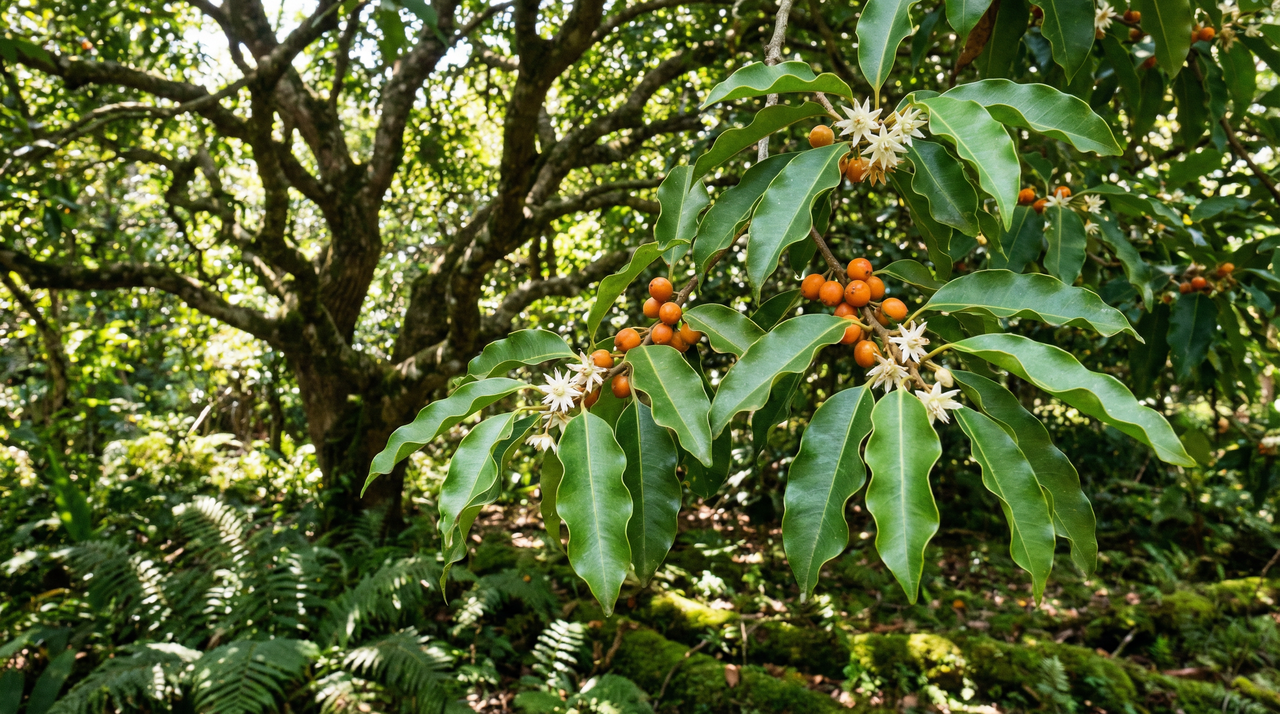
Nobody warned me that Spanish cherry trees bloom mostly at night. I planted one in a client's courtyard garden in coastal South Florida, chose a spot near the sitting area, thought nothing more of it until she called me a few weeks into the first flowering cycle completely bewildered: "I can smell this extraordinary perfume every evening but I can never figure out where it's coming from." That's the tree. It produces small, creamy-white flowers that open in low light, release a jasmine-adjacent fragrance so intense it carries across an entire yard, and then close again before most gardeners have finished their morning coffee. You spend years waiting for this slow-growing tree to bloom, and then it blooms like a secret.
What gets me about Mimusops elengi is the gap between how little it's known in Western horticulture and how deeply it's woven into the cultures where it actually grows. In India, this tree has been cultivated in temple gardens for over two thousand years.[1] Its flowers are offered to Krishna, Shiva, Kali. Its bark appears in Ayurvedic texts that predate most European botanical traditions by centuries. It carries the kind of layered human relationship that takes generations to accumulate, and most American gardeners have never heard of it.
Origin and History of Spanish Cherry (Mimusops elengi)
Botanical Background and Native Range
Spanish cherry, known botanically as Mimusops elengi, is a member of the Sapotaceae family and one of the more quietly remarkable trees native to tropical Asia. Its native range spans a wide arc from India and Sri Lanka through Myanmar, Thailand, Malaysia, Indonesia, and the Philippines, extending into parts of northern Australia, with particularly strong representation in India's coastal and deciduous forests of the Western Ghats, Eastern Ghats, and Andaman Islands.[2][3][4] Carl Linnaeus formally described it in 1753 in Species Plantarum, working from Indian specimens, at the same time he established the genus Mimusops itself.[5]
The tree is a slow-growing, long-lived perennial evergreen, typically reaching 10 to 20 meters at maturity with a dense rounded canopy, and capable of living 50 to 100 years in cultivation, potentially exceeding 150 years in undisturbed forest.[6][7] It's polycarpic, meaning it flowers and fruits repeatedly across its life once it reaches sexual maturity at 5 to 8 years from seed.[8] In my work with similar long-lived Sapotaceae relatives, that slow pace can feel frustrating early on, but the ecological payoff over decades is substantial. Ecologically, it occupies mid-canopy to sub-canopy positions in tropical lowland forests, tolerates up to 50% shade as a seedling, regenerates readily through coppicing, and carries fire-resistant bark that supports its role in secondary succession.[9][10] The IUCN currently lists it as Least Concern, though habitat loss, urbanization, and timber harvesting are real pressures across its range.[10]
The African Red Milkwood (Mimusops laurifolia), native to coastal forests and woodlands from West and Central Africa through East and southern Africa to Madagascar, shows how widely this genus has spread.[11] It shares the genus hallmarks, polycarpic reproduction, long lifespan, and Least Concern status, but occupies a completely different continental forest type, coastal dunes and riverine woodlands rather than Asian tropical lowlands.[12] Knowing that difference matters when you're selecting plants for a coastal stabilization project versus a humid subtropical food forest.
Visual Characteristics
Standing beneath a mature Spanish cherry, the first thing you notice is the canopy density. The tree develops a straight trunk with bark that starts smooth and greenish-grey when young, then becomes rough, fissured, and dark grey with age, with young stems distinctly quadrangular in cross-section.[8][13] The canopy spreads 10 to 15 meters wide, making it a genuine structural specimen in any landscape I'd design around it.[14] The leaves are simple, alternate, elliptic to obovate-lanceolate, 5 to 16 centimeters long, leathery, and glossy dark green above with paler undersides, the kind of leaf surface that sheds rain cleanly and holds its color through dry spells.[8][7]
The flowers are what most people encounter first in the literature, and they genuinely live up to their reputation. Small, creamy white, and bell-shaped with eight petals in two whorls, they're borne in axillary clusters and carry a scent I can only compare to jasmine crossed with orange blossom, persistent enough to perfume a garden at considerable distance.[2][7] The fruits are ovoid to spherical drupes, 2.5 to 4 centimeters long, ripening from green to yellowish-brown, orange, or reddish, each containing one or two seeds.[2] By comparison, Mimusops laurifolia runs smaller overall, with leaves ranging 3 to 10 centimeters and fruits topping out around 2 to 3 centimeters, turning orange-red at maturity, and its bark exudes the milky latex characteristic of the whole family when cut.[11][15]
Traditional and Cultural Uses
The cultural history of this slow-growing evergreen runs deep. References to Bakula, its Sanskrit name, appear in the Rigveda around 1500 BCE and in Ayurvedic texts like the Charaka Samhita, placing it among the oldest documented medicinal trees in human history.[16][17] In Hinduism, the fragrant white flowers symbolize purity, love, and devotion; they're offered to Krishna, Shiva, and Kali, woven into garlands, and used at festivals like Janmashtami and in wedding ceremonies, with trees traditionally planted at temple grounds.[16] I've recommended fragrant-flowered evergreens like this for meditation and contemplative garden designs for exactly this reason. The scent carries a quality similar to jasmine or frangipani, plants I've woven into ritual plantings for clients who want a sensory anchor in sacred spaces.
Across Ayurvedic, Unani, and Siddha traditions, virtually every part of the tree has a recorded use. Flowers address headaches and eye ailments and serve as a cardiac tonic; bark has long been the go-to for dental conditions including pyorrhea and gingivitis, used as tooth powder and in gargles; leaves treat boils, ulcers, and inflammation; fruits address digestive complaints and function as a gentle laxative.[18][19] Indigenous groups in the Philippines use it against fever and respiratory inflammation, Sri Lankan traditions emphasize digestive and cardiac tonic applications, and Nepalese Terai ethnic groups treat coughs, asthma, and urinary disorders with it.[20][21][22] The flowers also feed traditional perfumery and cosmetics, while the hard timber has served furniture makers, builders, and craftspeople of ritual objects for centuries, with cultivation documented in ancient Indian gardens and later in Mauryan and Mughal garden traditions.[23][24]
The African Red Milkwood follows a parallel pattern on a different continent. Zulu, Xhosa, and Tsonga communities use its bark and leaves for gastrointestinal complaints, wounds, skin infections, eye conditions, and respiratory ailments, with the wood crafted into ritual objects and tools and the tree itself associated with protection, strength, and ancestral veneration.[25][11] Different continent, different forest, but the same human instinct to build deep relationships with these long-lived, useful trees.
Fun Facts About Spanish Cherry
The tree's drought tolerance is more sophisticated than it looks. A waxy leaf cuticle, tight stomatal regulation, deep roots, osmotic adjustment, and antioxidant activity all work together, and those sclerophyllous leaves can reduce water loss by up to 50% compared to mesophytic species.[26] Birds and mammals that eat the ripe fruits also disperse the seeds, making the tree a genuine participant in forest regeneration rather than just a beneficiary of it.[14]
On common names: "Spanish cherry," "Bakula," and "bullet wood" are all legitimate, each capturing a different facet of the plant. The bullet wood moniker comes directly from the timber's extreme density and hardness, something woodworkers who've tried to cut it discover quickly. "Spicewood" is a misnomer that sometimes attaches to this tree but properly belongs to unrelated plants like Calycanthus. The genus pattern across Mimusops is consistent whether you're looking at Asian or African species: leathery leaves, milky latex, edible drupes, and timber and bark valued for medicine and craft, but the habitat differences between Asian tropical forests and African coastal dunes and woodlands mean each species has followed its own ecological path within that shared template.[27] From my reading of the ethnobotanical literature and my experience with related fruiting Sapotaceae, the ripe fruit pulp is genuinely enjoyed by both people and wildlife, though the seeds are a different matter and deserve careful handling, which is a story for later in this profile.
Spanish Cherry Varieties and Sourcing
No Named Cultivars in Mimusops elengi or Close Relatives
After years of tracking down obscure tropicals, I've learned to set my expectations before I even start searching. With Spanish cherry, there are no named cultivars to compare, no branded selections promising bigger fruit or heavier flowering, no "improved" clones from a university breeding program. Mimusops elengi simply doesn't exist that way in the horticultural trade; you get seed-grown plants and locally selected seedlings, full stop.[28] The close relatives follow the same pattern. Red Milkwood (Mimusops laurifolia) and Bush red-milkwood (Mimusops obovata) are likewise propagated from seed or occasional grafts onto locally available stock, not from selected named clones.[29][30][31][32] For a patient grower, that's fine. Starting from seed is often the only realistic path anyway.
Where to Buy Spanish Cherry: Seeds, Plants, Permits, and Practical Tips
Spanish cherry remains genuinely uncommon in the US, constrained by its need for USDA zones 10 through 12 and the limited number of specialty tropical nurseries willing to stock a slow-growing tree with a modest domestic customer base.[8][33] In Florida, Fairchild Tropical Botanic Garden and Florida Hill Nursery are reasonable starting points.[34][35] On the West Coast, San Marcos Growers and the Huntington Botanical Gardens are worth checking.[36] Online, Logee's, Just Fruits and Exotics, and Rare Exotic Seeds all carry or have carried the species; Etsy and eBay turn up seeds with some regularity too.[37][38][39]
Seeds are both the practical and economical choice, running roughly $5 to $15 per packet versus $20 to $60 for a small seedling or containerized plant.[39] Germination rates from nursery-propagated material run 70 to 80 percent,[40] which makes seeds a genuinely low-risk starting point. One thing I'd flag from personal experience: I've encountered Mimusops elengi mislabeled as "spicewood" on online marketplaces more than once. Always cross-reference the botanical name before purchasing.
If you're importing live material, you'll need to navigate USDA APHIS phytosanitary requirements, and Florida and California growers face additional scrutiny because M. elengi can host citrus rust mite.[41][42][43] The paperwork is real, but it's also just part of responsible growing when you're bringing in tropical trees. For live shipments, spring and summer are the safest windows; insulated boxes with humidity control are standard practice.[41]
One ethical consideration worth sitting with: Mimusops laurifolia is listed as Critically Endangered on the IUCN Red List due to habitat loss in its native range.[44] I make a point of sticking to nursery-grown stock across the genus and avoiding anything that might be wild-collected, because the conservation picture for some Mimusops relatives is fragile. For M. elengi itself, the supply chain is thin but legitimate sources do exist. If you're willing to start from seed and do the paperwork, this tree is absolutely acquirable.
Spanish Cherry Propagation and Planting (Mimusops elengi)
Spanish cherry rewards patient propagators, but it has a few firm opinions about how it wants to be handled from the very beginning. Get the seed biology wrong and you'll be staring at an empty tray for months. Get the site prep wrong and you'll be nursing a sulking transplant that never quite recovers. Neither has to happen if you understand what this tree is actually asking for.
Seed Morphology, Viability, and Germination
The seeds themselves are distinctive: oval to elliptical, roughly 1-2 cm long by 0.5-1 cm wide, hard, woody, and brown, encased in a tough endocarp with a smooth surface and a visible hilum.[40][45] They look more like small amber pebbles than typical fruit seeds. What you can't see from the outside is that they're often polyembryonic, carrying multiple nucellar embryos per seed.[46][47] I've grown Spanish cherry from fresh seed several times, and watching two, three, sometimes four vigorous shoots emerge from a single seed never stops being satisfying. Thin to the strongest one early; letting them compete only weakens the whole lot.
The harder lesson is storage. Mimusops elengi seeds are recalcitrant to intermediate in their storage behavior, sensitive to desiccation, and must be kept at 30-50% moisture content; letting them dry below 20-25% or exposing them to temperatures below 10°C kills viability fast.[48][49][50] Even under careful cool storage conditions, viability typically holds for only one to two years at most.[51] I never trust stored seed beyond six months and always try to source fresh fruit each season. If you're buying mimusops elengi seed online, ask directly when it was harvested; anything vague is a red flag.
Because the endocarp is water-impermeable, seeds also carry physical dormancy that needs breaking before germination proceeds reliably. Soaking in warm water at 50-60°C for 24-48 hours, or mechanical scarification, lifts germination rates to 60-90% for fresh, pretreated seed.[52][53] Sow into well-drained sandy loam at 25-30°C and expect germination in two to four weeks; the pattern is hypogeal, meaning the cotyledons stay underground while the shoot pushes up.[54][55] Seed-grown trees also carry high genetic variability from outcrossing, so if you're after a consistent fruiting or flowering specimen, the vegetative route is more reliable.[56]
Vegetative Propagation Techniques
For clonal uniformity, semi-hardwood cuttings are the accessible starting point. Take sections of 10-15 cm, treat the cut end with IBA at 1000-5000 ppm, and expect rooting in four to eight weeks with success rates ranging from 30-80% depending on conditions.[57][58] Air-layering is another viable option, with roots forming in two to three months, and is particularly useful when you have access to a mature tree worth cloning but no cutting propagation setup.[57]
Grafting is where commercial growers consistently see the best results. Veneer or cleft grafting onto Mimusops longifolia or Manilkara zapota rootstocks during active growth yields 70-90% success, with veneer generally preferred because the bark thickness on this species makes whip-and-tongue awkward.[59][52] My best grafting runs, consistently above 80%, happen when I work during the early monsoon flush on rootstock that's actively pushing new growth. The research cites a 70-90% range; timing is what pushes you toward the top of it. Tissue culture using nodal explants on MS medium with cytokinins and auxins is also being explored for large-scale multiplication, but it's still experimental rather than standard practice.[60]
Soil, Site, and Planting Requirements
Spanish cherry wants well-drained, fertile loamy or sandy-loam soil with good organic matter content (around 2-5%) and a pH of 6.0-7.5, though it will tolerate a range of 5.5-8.0 in a pinch.[7][61] I test every new bed before planting Sapotaceae because even a 0.5-point rise above 7.5 shows up quickly as yellowing new leaves; sulfur amendment before that happens is far easier than nursing a chlorotic tree back to health once flowering is at stake. Poor drainage is the real dealbreaker: root rot moves fast in waterlogged soil, and I've seen young trees in the Sapotaceae fail after a single prolonged wet spell in their first two years.
Full sun, at least six hours of direct light daily, produces the best flowering and densest form.[40] Partial shade is tolerated in very hot climates but tends to reduce bloom and encourage leggy growth over time.[8] Elevated or sloped sites naturally improve drainage and air circulation; organic amendments worked into the planting hole help on heavier soils. For container culture, a mix of 40% loam, 30% sand or perlite, 20% compost or coco peat, and 10% vermiculite gives the aeration and moisture balance this tree needs, with a mulch layer on top to stabilize both moisture and pH.[62]
The species develops a deep taproot reaching one to two meters that delivers impressive drought tolerance once the tree is established, but that same root architecture is exactly why moving an older specimen is such a gamble.[63] I learned this the hard way when a two-year-old seedling sulked for an entire growing season after root disturbance during a bed redesign. Get the site right from the start; this is not a tree you want to relocate.
Spacing, Timing, and Establishment
Mature trees in the tropics reach 15-20 meters with canopy spreads of 6-12 meters, though garden specimens often settle in at 10-15 meters, growing at a moderate pace of 30-60 cm per year.[2][7] That moderate rate means spacing decisions feel abstract at planting time but matter enormously at maturity. For orchard or fruit production plantings, space at 10-12 meters; for landscape or ornamental use, 6-10 meters works well; avenue or street plantings typically call for 8-10 meters to allow full canopy development while keeping root and fungal pressure between trees manageable.[64][65]
Transplant seedlings or grafted plants once they've reached 30-50 cm, typically six to twelve months after germination or grafting, and time the move to coincide with the rainy season when soil moisture is consistent and transplant stress is lowest.[51][64] One practical note: label your young plants carefully. Early-stage Spanish cherry foliage is convincingly similar to several other tropical evergreens, and unlabeled seedlings have a way of getting mixed up in busy nursery areas before anyone notices.
Spanish Cherry Care Guide: Growing Mimusops elengi Successfully
Caring for a Spanish cherry tree is less about pushing it toward maximum growth and more about matching what it already wants. This is a tree shaped by tropical Asian monsoon rhythms: warm, reliably moist during establishment, well-drained, and patient. Get those fundamentals right and the tree will reward you for decades. Miss them, and you'll be nursing a sulky, slow-recovering specimen in a climate that already pushes its limits.
Sunlight Requirements for Spanish Cherry
Full sun is where Mimusops elengi earns its keep. Six or more hours of direct light daily drives the best flowering and canopy density, and in my experience the difference between a tree in full sun versus one in moderate shade is dramatic over time.[66] That said, newly planted specimens in zone 9B often need a season of dappled afternoon protection while they acclimate; unacclimated trees in full summer sun can develop photoinhibition, browning leaf edges, and scorch damage that sets them back considerably.[67] Once established, most trees adapt to bright, exposed positions without complaint. Think of the shade protection as a temporary kindness, not a permanent condition.
Water Needs and Drought Tolerance
This is the care variable that trips most people up, and I've watched it happen: a newly planted Spanish cherry gets surface-level watering every couple of days, looks fine for a few months, then either struggles through its first dry spell or topples in a summer storm because its roots never went deep. Young trees in their first one to two years need consistent moisture, roughly an inch or two per week, applied deeply enough to saturate the soil to a foot or two.[64][68] During the growing season that usually means watering every five to seven days once the top two to three inches go dry, pulling back to every ten to fourteen days in winter.[68]
The payoff for that careful establishment period is real drought tolerance. A mature Spanish cherry can go four to six weeks without irrigation in sandy loam, which I find comparable to a well-rooted mature citrus or sapodilla in similar conditions.[64] Overhead irrigation is worth avoiding throughout the tree's life since it promotes fungal problems, and waterlogging at any stage risks root rot.[66] Overwatering shows as yellowing leaves and mushy roots; underwatering as wilting, brittle foliage, and leaf drop.[30] Drip irrigation aimed at the root zone is my preferred approach for anything young and newly planted.
Fertilizing Spanish Cherry Trees
Spanish cherry is a moderate feeder, and the temptation to push a slow-growing tree with heavy nitrogen is one worth resisting. Excess nitrogen reduces flowering and increases pest susceptibility, which is exactly the opposite of what you want.[66] For young trees in their first three years, a balanced 10-10-10 at 100 to 200 grams per tree every two to three months through spring and summer is a reasonable baseline.[66] Mature trees respond well to five to ten kilograms of organic compost or aged manure applied once in early spring, shifting toward a higher phosphorus and potassium ratio during flowering and fruiting to support reproductive development.[69]
Micronutrients are where I've learned to pay close attention. In my own projects on alkaline Florida soils, iron and zinc deficiencies show up regularly as chlorosis long before any other symptoms appear.[70] Because species-specific deficiency symptoms aren't well documented for Mimusops elengi, I don't try to diagnose from leaf color alone. A soil test is the honest answer. I rely on chelated micronutrients and generous compost rather than guessing, which also aligns with how the genus relatives like Red Milkwood and Moepel perform best: organic matter, minimal synthetic inputs, and patience.[71]
Frost Tolerance and Cold Protection
Get this threshold wrong and no amount of good care recovers the season. Mimusops elengi is hardy in USDA zones 10a through 12, occasionally 9b in sheltered microclimates, with a practical minimum temperature around 10°C (50°F).[72][73] Below 5°C (41°F) damage becomes real; below -2°C (28°F) the injury can be severe and permanent in young growth, buds, and fruit.[74] I've grown tender evergreens through zone 9B winters long enough to know the difference between superficial leaf tip burn and the kind of repeated freeze exposure that causes irreversible branch dieback. With Spanish cherry, that distinction matters because recovery is slow.
When frost threatens, layer your defenses:
- a sheltered south-facing position
- five to ten centimeters of organic mulch over the root zone
- frost cloth over the canopy
- a deep watering two days before the event
Heat Tolerance and Summer Care
Spanish cherry thrives in the 20 to 38°C range and tolerates short pushes to around 40°C once established, fitting neatly into USDA zones 10a through 12b.[76] In Central Florida's humid summers, I've found the tree handles consistent heat well as long as soil moisture stays adequate. The vulnerability window is flowering time. When I see the first flower buds forming, that's when I start watching the forecast and positioning shade cloth, because heat stress during pollination leads to flower drop and poor fruit set before you notice anything else is wrong.[77]
Leaf scorch, wilting, and curling are the visible heat stress signals, but by the time you see those, the flowers may already be compromised.[78] A 30 to 50 percent shade cloth during peak afternoon heat, kept in place through the hottest weeks, combined with deep early-morning irrigation and a refreshed mulch layer, handles most summer pressure without any other intervention.[77]
Pruning, Maintenance, and Seasonal Rhythm
Understanding when the tree moves through its annual cycle makes every other care decision easier. In native tropical Asia, Spanish cherry flowers from April through July and fruits from late summer into December.[23] In subtropical Florida the season shifts somewhat but follows the same logic: flowering first, fruit development trailing behind by several months. That flowering window is your pruning boundary. Prune during the dry season after flowering completes, and you avoid cutting off the season's reproductive effort.
I never remove more than 15% of the canopy at once on these slow-growing trees because recovery is measured in seasons, not weeks.[30][79] The mimusops elengi growth rate sits around half a meter to one meter per year, and with a potential lifespan exceeding a hundred years, this is genuinely a long-game plant.[7] Focus pruning cuts on dead wood, crossing or diseased branches, and watersprouts; in young trees, work toward establishing a central leader. Always disinfect tools with 70% isopropyl alcohol between trees.[79] Keep five to ten centimeters of organic mulch over the root zone year-round, pulled back from the trunk, and beyond that, mature trees need very little fussing. The reward for patient, observant stewardship is a tree that outlives most gardens and nearly everything else you'll plant alongside it.
Harvesting Spanish Cherry (Mimusops elengi)
Patience is the defining skill for any Spanish cherry grower. Seed-grown trees typically take 4-6 years to bear under good conditions, and 8-10 years isn't unusual; grafted stock can shorten that wait to 3-5 years, which is exactly why I always recommend starting with a grafted specimen if you can find one.[7][80] Once the tree finally commits to fruiting, the fruits themselves need 180-230 days from full bloom to maturity.[81][82] That is a long development window for a small drupe.
When to Harvest Spanish Cherry: Maturity Timelines, Ripeness Cues, and Seasonal Patterns
In tropical India and Southeast Asia, Mimusops elengi typically flowers April through July with peak bloom in June and July, and the resulting fruits ripen anywhere from August through February depending on region.[83][84] African relatives like Mimusops laurifolia follow a shifted calendar, peaking December through January, while Mimusops obovata ripens February through April.[11] The genus covers a broad seasonal range, so your local climate will ultimately dictate your harvest window more than any published calendar.
What I've learned after watching subtropical Sapotaceae for years is that the fragrance peak is the most reliable signal. As fruits shift from green to yellowish-orange or reddish-brown, soften just slightly, and begin detaching on their own, there's a moment when the aroma becomes genuinely unmistakable -- sweet, floral, almost perfumed.[23][85] That's your moment. Don't wait for color alone; color can lag behind actual ripeness. And monitor closely once fruits start softening, because fruit flies and stem borers will find them before you do if you're not paying attention.
How to Harvest and Handle Spanish Cherry Fruit
Hand-pick individual ripe fruits in the early morning before the day heats up.[83][86] These are small, delicate drupes that bruise readily, so a gentle hand matters. Avoid harvesting after rain; wet fruit carries higher fungal risk and doesn't store as well.[86][87] The same principle applies across the genus; post-harvest best practice for related Mimusops species includes immediate cooling, sorting, and ventilated storage to extend shelf life.[88] Good orchard hygiene throughout the season, the kind you're already doing to manage pests and airflow, pays dividends at harvest time too.
Expected Yields and Flavor at Harvest
Once a tree matures, yields of 50-100 kg of mimusops elengi fruit per season are achievable under good conditions, with 40-80 kg being a realistic expectation for most well-managed trees; thinning crowded fruits during development improves both size and quality.[7][89] In my experience, once trees reach that productive stage the harvest comes in waves rather than all at once, which is actually ideal for a home food forest.
The fruit itself is a small ovoid drupe, 1-4 cm long, containing one or two seeds.[2] Harvest them at peak ripeness and the flesh is creamy, mildly tangy, and aromatic in a way that reads like a cross between a ripe apricot and a young custard apple.[23][8] Pick even a day early and you get something bland and astringent. Timing really is everything with this spanish cherry fruit. Related species like Mimusops laurifolia produce bright red 1-inch fruits with sweet aromatic pulp, while Mimusops obovata yields smaller reddish-brown berries with a hint of milky latex; both are edible but less developed as food crops than M. elengi.[30][31] The wait for a full spanish cherry season harvest is long, but that first basket of properly ripe fruit makes the years of patience feel entirely reasonable.
Spanish Cherry Preparation and Uses
Culinary Uses of Spanish Cherry Fruit
The first thing to get straight with spanish cherry is where the edible line falls. The ripe fruit pulp is what you eat; the seeds are not. They contain saponins and should be discarded every time, no exceptions.[7][90] Once you know to pit it, the fruit is genuinely pleasant. Ripe pulp is sweet with a thread of acidity and a mild astringency that disappears almost completely when the fruit is truly ready.[2][7] I've tasted it at several stages and the difference between almost-ripe and fully ripe is stark; catch it too early and that astringency lingers in a way that puts people off the whole tree.
What you do with that pulp is surprisingly flexible. South and Southeast Asian traditions stretch from eating it raw as a snack to cooking it into murabba, barfi, chutneys, jams, jellies, pickles, and curries, or fermenting it into tangy beverages.[7][91] Dried, it concentrates into something chewy and apricot-adjacent that stores well. Nutritionally, fresh pulp runs roughly 20-25g of carbohydrates per 100g, with useful amounts of vitamin C, vitamin A, potassium, and calcium alongside flavonoids and polyphenols that give it solid antioxidant activity.[92][93] These are approximations from a plant that hasn't been nutritionally standardized the way commercial crops have, so treat them as ballpark figures.
One thing I flag for anyone gardening in Florida or elsewhere in the Sapotaceae family's range: mimusops elengi uses are well-documented, but its relatives are a different story. The milky latex of species like Mimusops laurifolia is toxic and can cause skin irritation or serious harm if ingested, so visual ID before you forage anything in this genus matters.[94][95] Wash everything thoroughly before cooking, especially wild-harvested or commercially grown fruit where pesticide contact is possible.[17]
Medicinal Preparations from Spanish Cherry
The spanish cherry flower, bark, and leaves all have established roles in Ayurvedic and traditional medicine, but they're not food in any everyday sense. Traditional dosages run to 20-50 ml of bark or flower decoction taken once or twice daily, and around 3-6g of leaf powder mixed with honey or water.[17][96] Spanish cherry flower powder in particular has a long history of use in oral care preparations. That said, I always recommend starting at the lowest traditional amount and consulting a qualified practitioner before using any part of this tree medicinally. The ethnobotanical record is rich; the clinical trials are not.
Non-Food Uses of Spanish Cherry
Beyond the kitchen and the medicine cabinet, this tree earns its place through sheer material utility. The flowers are central to Hindu religious ceremonies and traditional perfumery, the bark has been used for tanning leather and twisted into rope and coarse fiber, and the wood itself is exceptionally dense at 700-800 kg/m³, reddish-brown, termite-resistant, and durable enough for furniture, tool handles, boat building, and high-quality charcoal.[7][97] The bark and leaves also carry insect-repellent compounds from their tannin and alkaloid content, which is something I find genuinely satisfying from a permaculture standpoint: a tree that feeds wildlife, feeds people moderately, and deters pests just by being there.[98] Related species like Red Milkwood and Bush red-milkwood extend that timber and agroforestry value into coastal and drier settings, including applications in carving, construction, and soil stabilization.[99]
Spanish Cherry Health Benefits and Medicinal Uses
Few trees in the tropical Asian pharmacopoeia have as coherent a whole-plant medicinal story as Spanish cherry. Every part earns its place: the bark, leaves, flowers, fruit, and roots each address specific conditions, and the system of use goes back millennia rather than decades.
Traditional Medicinal Uses in Ayurveda and Unani Systems
In Ayurveda, Mimusops elengi goes by the name Bakula. The tree's medicinal uses are part-specific and precise. The flowers, prized for their astringent quality, treat oral disorders including pyorrhea and gingivitis and double as a breath freshener. The bark addresses wound healing, skin diseases, diarrhea, and urinary disorders. Ripe fruits were historically used to relieve excessive thirst and internal burning sensations, while leaves applied topically acted as an antiseptic for wounds and dental ailments.[2][17][100] In Unani medicine, the tree is known as Maulsari and was used as a cardiac tonic and treatment for fevers and inflammation.[101] What strikes me about this record is how consistent the applications are across unrelated healing traditions: oral health, wound care, digestive relief, and inflammation keep appearing regardless of geography or medical framework.
Modern Pharmacological Research and Bioactivities
Preclinical research has validated a lot of what traditional practitioners were doing intuitively. Leaf and bark extracts demonstrate significant anti-inflammatory activity through inhibition of the NF-κB pathway, COX-2 enzymes, nitric oxide production, and pro-inflammatory cytokines, with leaf extracts measurably reducing edema in animal models.[102][103] That COX-2 inhibition, in particular, maps directly onto the bark's traditional use for wounds and diarrhea. Antioxidant activity comes through Nrf2 pathway activation and strong free radical scavenging in DPPH and ABTS assays.[104]
The antimicrobial picture is similarly strong. Extracts work against both Gram-positive and Gram-negative bacteria, including Staphylococcus aureus and Escherichia coli, through membrane disruption and biofilm inhibition, with antifungal activity also documented.[105] In vivo rat models show that the astringent, antimicrobial, and anti-inflammatory actions work together to promote collagen synthesis, fibroblast stimulation, and tissue regeneration.[106] Beyond these, researchers have found antidiabetic potential through α-glucosidase and α-amylase inhibition with IC50 values around 50-100 μg/mL, comparable to the drug acarbose, along with analgesic effects and preliminary acetylcholinesterase inhibition suggesting neuroprotective potential.[107][108] Early-stage cell line studies have even shown apoptosis induction in breast and colon cancer cells via caspase activation, though that research is very preliminary.[109] Related species like M. laurifolia and M. balata show comparable activity patterns across these same categories, which tells me this pharmacological consistency runs genus-deep rather than being a lucky accident in one species.[110]
The honest caveat: as of 2023, no large-scale randomized controlled trials exist for any Mimusops species.[111][112] Decades of Ayurvedic use combined with solid preclinical data give me confidence in moderated traditional preparations, but I always direct clients seeking therapeutic doses to consult a qualified herbalist or physician. The science validates the tradition without yet replacing the need for professional guidance.
Key Phytochemical Compounds
The phytochemical profile of Mimusops elengi reads like a greatest-hits list for bioactive plant compounds: flavonoids including quercetin, kaempferol, and rutin; triterpenoids including lupeol, β-amyrin, betulinic acid, oleanolic acid, and ursolic acid; phenolic acids like gallic and ellagic acid; condensed and hydrolyzable tannins; saponins; steroids including β-sitosterol and stigmasterol; plus glycosides, coumarins, and minor alkaloids.[113][114] These compounds aren't evenly distributed: leaves run high in flavonoids and saponins, bark concentrates tannins and phenolics, flowers yield sesquiterpene-rich essential oils, and seeds are dense in lipids and the compounds responsible for their toxicity.[115]
These compounds are what make the mechanisms make sense. The flavonoids and phenolics drive the antioxidant and anti-inflammatory activity; tannins and saponins explain the antimicrobial and wound-healing properties; triterpenoids underpin the antidiabetic enzyme inhibition.[116] Total phenolic content in fruit extracts ranges from about 50-100 mg GAE/g with flavonoid levels up to 15-20 mg/g, though concentrations shift seasonally, peaking in monsoon and winter periods, and vary with soil quality and plant age.[117] I've noticed that Spanish cherry trees growing in richer, well-drained soils tend to produce noticeably more aromatic flowers, and the research on phenolic variability under favorable conditions makes that observation feel less anecdotal.
Nutritional Profile of the Fruit
The ripe fruit pulp is sweet and pleasantly astringent, eaten fresh across India and Southeast Asia and used in jams, desserts, and juices. Per 100 g, it provides roughly 60-80 kcal, 15-20 g carbohydrates, 2-3 g fiber, and modest amounts of protein and fat.[118] Vitamin C runs 10-30 mg per 100 g alongside beta-carotene providing modest vitamin A activity, and minerals include potassium (180-300 mg), calcium (around 28 mg), phosphorus (around 22 mg), and iron (around 1.2 mg).[119][98] These numbers come from regional studies rather than standardized databases, so treat them as approximate. The fruit's quercetin, rutin, gallic acid, and ellagic acid content adds an antioxidant dimension that the raw macronutrient profile doesn't capture.[113] The leaves are nutritionally dense, running around 15-20% protein on a dry matter basis, but they're not typically eaten as food.[120] This is a fruit that earns its place as a pleasant, nutritious tropical snack rather than a superfood, and that's fine.
Safety Considerations and Potential Side Effects
The overall safety profile is reassuring for a plant used medicinally for thousands of years. Acute toxicity studies in rodents show an LD50 above 2000 mg/kg, and subchronic studies at therapeutic doses have found no significant adverse effects.[17] Ripe fruit is non-toxic and widely eaten without issue. The seeds are an entirely different matter. Their high concentrations of saponins, tannins, and triterpenoids can cause severe gastrointestinal distress, drowsiness, convulsions, or coma if consumed raw in quantity, and there are documented pediatric fatalities in South Asia from large unprocessed seed ingestion.[121] I keep Spanish cherry in client gardens without issue, but I always advise parents of young children to site it thoughtfully so the hard, attractive seeds stay out of reach. The seeds are visually appealing in a way that invites handling, and I've seen that curiosity up close.
The milky latex can cause contact dermatitis and skin irritation; I've learned this firsthand working with sapodilla and other Sapotaceae relatives, so I wear gloves whenever I'm pruning anything in this family.[122] Pollen is a documented allergen that can trigger rhinitis or asthma and may cross-react with latex allergies through shared Sapotaceae proteins.[123] For pregnant women, avoidance is recommended: animal studies indicate possible uterotonic or emmenagogue effects, and safety data for pregnancy simply doesn't exist.[124] The flavonoids also carry mild anticoagulant activity that could interact with blood thinners like warfarin, and anyone on antidiabetic or antihypertensive medications should be aware of potential additive effects.[123] Moderated, properly prepared use in the traditional sense appears genuinely safe for most adults; therapeutic doses are a different question and warrant professional consultation.
Spanish Cherry Pests and Diseases
Spanish cherry sits in an interesting middle ground as far as pest and disease pressure goes. It's not bulletproof, but it's far from a fussy tree that demands constant intervention. In my experience, most of the problems I've seen on Mimusops elengi trace back to poor site conditions or stressed young plants, not some fundamental vulnerability in the species itself. Get the drainage right, give it room to breathe, and you'll spend very little time spraying anything.
Common Pests of Spanish Cherry
The usual suspects in humid subtropical gardens include whiteflies, aphids, mealybugs, scale insects, shoot borers, and fruit borers like Conogethes punctiferalis, along with the occasional cerambycid wood borer working through stressed branches.[125] Scale insects show the highest susceptibility, especially on young or drought-stressed trees, which is a pattern I recognize from my citrus beds. The same horticultural oil schedule I use on my oranges in late winter works well here too.
What keeps this manageable is the tree's own chemistry. The same flavonoids, tannins, saponins, and milky latex you read about in the health benefits discussion do real work in the garden as antifeedants, repellents, and larvicidal compounds.[93][126] Leaf and seed extracts have even shown efficacy against mosquitoes and stored-product insects in research settings.[127] In practice, I've found I need fewer sprays on my Spanish cherry than on almost any other fruiting tree in the same guild. That latex is also worth mentioning for a different reason: it will stain your clothes and leave a sticky residue on your hands during pruning, so wear gloves and don't wear anything you care about.
Overall pest pressure sits notably lower than sapodilla and most Sapotaceae relatives, though stressed plants close the gap fast.[128][129] No cultivars bred specifically for pest resistance exist,[128] so cultural practices carry the full weight of prevention. Regular monitoring, pruning for airflow, and encouraging natural predators like ladybugs are your first line. When you do need to intervene, neem-based biopesticides and insecticidal soaps handle most soft-bodied pest flare-ups without disrupting the broader garden ecosystem.[130]
Disease Susceptibility and Management
Spanish cherry carries moderate overall disease resistance and is considered genuinely low-maintenance in most cultivation evaluations.[23][131] Minor infections tend to resolve on their own once conditions improve. That said, humid subtropical climates do create real pressure from fungal pathogens, and it pays to know what you're looking at.
Leaf spots caused by Cercospora and Alternaria species are the most common early symptom, followed by powdery mildew and anthracnose in particularly wet seasons.[132][133] Canker and dieback from Fusarium solani and Botryodiplodia theobromae show up on weakened branches, usually after mechanical damage or drought stress.[132] Bacterial leaf blight can occur, and the curious "Bay Bay disease" documented on young Red Milkwood in coastal South Africa suggests the genus shares some vulnerability to blight in humid coastal conditions, though documentation is thin.[134]
Root rot is the one I worry about most in Florida. Phytophthora and Fusarium both move fast in waterlogged soil, and young trees especially struggle to recover.[135][8] I always plant mine on a slight mound in amended, gritty soil rather than into a flat, heavy clay site. That one decision eliminates most root disease risk before it starts. No disease-resistant cultivars exist to fall back on,[131][30] so proper spacing for airflow, avoiding overhead irrigation, and full sun exposure are the real prevention strategy.[133] Get those three things right and this tree will largely take care of itself.
Spanish Cherry in Permaculture Design
Before you fall in love with Spanish cherry the way I did, you need to be honest with yourself about where you garden. Mimusops elengi is native to South and Southeast Asia[14][136] and has no business being in a garden that sees hard freezes. Getting that sorted up front saves a lot of heartache.
Climate Preferences and Hardiness Zones
Spanish cherry settles comfortably into USDA zones 10a through 11b, with some sources stretching that to zone 12.[8][137] That puts its sweet spot squarely in South Florida, coastal Southern California, and the more sheltered pockets of the Texas Gulf Coast.[138] Frost is the hard limit. A brief dip to around 28-30°F causes real damage,[40] and anything sustained below that can kill an unprotected tree outright.
I garden in zone 9B Central Florida, which puts Spanish cherry squarely in marginal territory for me. I've kept one alive in a large container for several winters, rolling it into an unheated greenhouse when temperatures threaten to drop, and it's performed beautifully. If you're in a similarly borderline situation, frost cloth, deep mulching at the root zone, and a south-facing wall microclimate can tip the odds in your favor, but I'd call that a project for an enthusiast, not a design cornerstone.[139]
Where it genuinely thrives, optimal temperatures run between 20 and 35°C, with the tree happiest in that 20-30°C window.[23] Annual rainfall of 1,000 to 2,000 mm suits it well, and it has a particular affinity for monsoon climates with a distinct wet and dry rhythm.[51] In nature it occupies tropical rainforest, monsoon forest, and savanna woodland classifications (Köppen Af, Am, and Aw), typically from sea level up to around 500 meters.[140] The related Red Milkwood (Mimusops laurifolia) extends slightly further into drier conditions, tolerating as little as 500-1,200 mm of annual rainfall and surviving in some protected zone 9-11 sites,[141] which is useful to know if you're designing for a coastal site on the drier edge of the genus's range.
Ecological Functions and Forest Layer Role
Spanish cherry earns its place in a food forest through its fragrant white flowers, its glossy orange-brown fruit, and the steady accumulation of ecological services it provides over decades.[8] One thing I tell clients immediately: this is not a nitrogen fixer. Sapotaceae as a family lacks symbiotic nitrogen-fixing bacteria, so you need to design your fertility system around it rather than expecting it to pull its own weight on that front. I almost always pair heavy-canopy trees like this with pigeon pea or a fast-growing nitrogen-fixing shrub in the mid-story to compensate.
What Spanish cherry does deliver is a deep taproot that actively stabilizes slopes and reduces erosion, meaningful leaf litter that builds soil organic matter over time, and dense evergreen foliage that makes a serious windbreak once the tree reaches any size.[142][143] In South Asian traditional agroforestry, it has long functioned as a secondary forest species that anchors canopy structure, supports wildlife habitat, and draws in pollinators while providing medicinal bark, edible fruit, and eventually hard timber.[144] That layered yield profile is exactly what permaculture design is looking for in a canopy tree. Fruit is dispersed by birds and mammals, which means wildlife integration happens almost automatically once the tree begins producing.[145]
Red Milkwood performs a similar suite of functions in coastal African forests, where its particular value lies in tolerance of sandy soils and salt spray. I've noticed that related Sapotaceae in Florida coastal plantings show this same pattern of deep root stabilization on shifting dunes, which gives me confidence in placing the genus near shorelines or in sites with erosion pressure.[146] For Mimusops elengi specifically, the windbreak capability from its dense canopy is an underappreciated asset in humid subtropical designs where tender gingers, heliconias, and other understory tropicals need shelter from seasonal storms.
Pollination Support and Guild Design
In terms of placement, Spanish cherry works as a canopy or sub-canopy species reaching 20 to 40 feet in cultivation.[7] It performs best with full sun but adapts reasonably well to partial shade, which means you can tuck shade-tolerant understory companions beneath it without the tree sulking.[147] I think of it similarly to loquat in subtropical guild design: a mid-sized, dense-canopied evergreen that creates a productive micro-environment beneath it while contributing its own yields at the canopy level. Ginger, heliconia, and low-growing medicinals all respond well to the filtered light and the steady layer of leaf litter mulch that builds underneath over years. The tree also forms mycorrhizal associations that help it access phosphorus in nutrient-poor soils, which ultimately benefits everything sharing that root zone.[148]
The pollination picture is genuinely exciting for anyone trying to build a biodiverse garden. The flowers are small, white to cream-colored, and hermaphroditic, opening with a fragrance that intensifies noticeably after dusk.[149] I've stood next to a flowering specimen in the evening and watched hawk moth activity pick up in a way that doesn't happen with most garden trees. The research confirms what my nose already told me: the tree draws both diurnal visitors like bees, flies, butterflies, and beetles, and nocturnal pollinators including moths and hawk moths.[150] That dual-shift pollination service ripples through the whole guild, keeping beneficial insect populations active around the clock.
Spanish cherry is self-compatible but its floral biology nudges toward outcrossing, so keeping at least two trees in proximity improves fruit set.[151] Flowering typically runs March through July depending on your region.[152] Optimal conditions for pollination are temperatures of 25-35°C with 60-80% relative humidity and at least six hours of daily sun; heat extremes or drought stress can cause flower drop and cut fruit set significantly.[153] In fragmented urban landscapes or gardens where pesticide drift is a concern, pollinator populations can decline enough to reduce yields, so I recommend managing the understory with diverse flowering companions and keeping synthetic sprays out of the picture entirely.[154] If natural pollinator pressure is genuinely low, hand-transferring pollen between flowers is straightforward and does meaningfully improve fruit set in cultivation.[152]
The Tree I planted for My Grandchildren's Grandchildren
I put my first Spanish cherry in the ground knowing I'd never eat a full harvest from it, and somehow that felt right. There's something clarifying about a tree that operates on a longer timeline than your ambitions. It asked me to slow down, trust the soil, and stop treating the garden like a project with a deadline. I'm still learning that lesson, honestly, and the tree is still teaching it.
Sources 154
- Mimusops elengi: A Review on Ethnobotany, Phytochemistry and Pharmacology ↩
- Mimusops elengi - Wikipedia ↩
- Mimusops elengi - Kew Science Plants of the World Online ↩
- Distribution and Habitat of Mimusops elengi in India - Botanical Survey of India ↩
- Species Plantarum ↩
- Mimusops elengi - University of Florida IFAS Extension ↩
- Mimusops elengi - Useful Tropical Plants ↩
- Mimusops elengi - Missouri Botanical Garden Plant Finder ↩
- Ecological Characteristics of Mimusops elengi - ResearchGate ↩
- Mimusops elengi ↩
- Mimusops laurifolia (African Red Milkwood) ↩
- IUCN Red List: Mimusops laurifolia ↩
- Mimusops elengi - Royal Horticultural Society ↩
- Mimusops elengi - USDA PLANTS Database ↩
- Mimusops laurifolia - Missouri Botanical Garden Plant Finder ↩
- Sacred Trees in Hinduism ↩
- Medicinal Properties of Mimusops elengi ↩
- Mimusops elengi L. (Bakula): A Review on its Ethnomedicinal, Phytochemical and Pharmacological Profile ↩
- Ethnobotanical Survey of Mimusops elengi in Indian Tribes ↩
- Medicinal Plants of the Philippines ↩
- Sri Lankan Traditional Medicine: Ethnobotany of Bakula ↩
- Nepalese Indigenous Uses of Mimusops elengi ↩
- Mimusops elengi - Useful Tropical Plants Database ↩
- Traditional Uses of Mimusops elengi in Ayurveda ↩
- Ethnobotanical Survey of Medicinal Plants in Southern Africa ↩
- Mimusops elengi L. ↩
- Mimusops laurifolia ↩
- Plants of the World Online | Kew Science ↩
- Plants of the World Online - Mimusops laurifolia ↩
- Mimusops laurifolia (African Red Milkwood) ↩
- Mimusops obovata - PlantZAfrica ↩
- Plants of the World Online - Kew Science ↩
- Mimusops elengi ↩
- Mimusops elengi - Spanish Cherry ↩
- Mimusops elengi - Spanish Cherry ↩
- Exotic Plants Nursery ↩
- Bakul Tree (Mimusops elengi) ↩
- Exotic Fruit Trees Including Mimusops elengi ↩
- Mimusops elengi Seeds ↩
- Mimusops elengi: Cultivation and Propagation ↩
- Importing Plants and Plant Products into the United States ↩
- California Department of Food and Agriculture ↩
- Florida Dept. of Agriculture ↩
- IUCN Red List: Mimusops laurifolia ↩
- Morphological Characterization of Bakul (Mimusops elengi L.) Germplasm ↩
- Polyembryony in Sapotaceae: A Review ↩
- Seed Germination and Polyembryony in Mimusops elengi ↩
- Kew Seed Information Database - Mimusops elengi ↩
- Recalcitrant Seeds in the Sapotaceae Family ↩
- Tropical Tree Seed Manual ↩
- Seed Storage of Tropical Tree Species ↩
- Propagation of Mimusops elengi ↩
- Seed Germination Protocols for Sapotaceae Family ↩
- Mimusops elengi - Spanish Cherry ↩
- Seed Dormancy and Germination in Sapotaceae ↩
- Genetic Diversity and Mating System Analysis of Mimusops elengi Populations in Eastern Ghats ↩
- Vegetative Propagation Techniques for Tropical Trees ↩
- Vegetative Propagation of Mimusops Species ↩
- Tropical Plant Grafting Techniques ↩
- Propagation of Mimusops elengi: A Review ↩
- Mimusops elengi - Missouri Botanical Garden ↩
- Mimusops elengi Cultivation Guide ↩
- Mimusops elengi - Cultivation and Propagation ↩
- Mimusops elengi: The Spanish Cherry Tree ↩
- Mimusops elengi ↩
- Missouri Botanical Garden - Mimusops elengi Plant Profile ↩
- Bakul Tree Growing Guide ↩
- Royal Horticultural Society: Mimusops elengi Growing Guide ↩
- Nutrient Management in Tropical Fruit Trees ↩
- Micronutrient Deficiencies in Woody Plants of the Sapotaceae Family ↩
- Mimusops zeyheri: A Review of Its Ecology and Uses ↩
- Mimusops elengi - Plant Finder ↩
- Mimusops elengi ↩
- Tropical Trees and Cold Tolerance ↩
- RHS Advice on Protecting Plants from Frost ↩
- Mimusops elengi Plant Profile ↩
- Abiotic Stress in Tropical Trees ↩
- Heat and Drought Tolerance in South African Indigenous Trees ↩
- Pruning Tropical Fruit Trees ↩
- Fruit Trees: Propagation and Management ↩
- Horticultural Practices for Fruit Trees in South India ↩
- Phenological Responses of Mimusops elengi to Regional Climates ↩
- Mimusops elengi: Cultivation and Utilization ↩
- Tropical Fruit Trees: Mimusops elengi ↩
- Fruit Ripening and Harvesting in Sapotaceae Family ↩
- Horticulture of Fruit Crops: Bakul (Mimusops elengi) ↩
- Post-Harvest Management of Tropical Fruits ↩
- Harvesting and Post-Harvest Management of Indigenous Fruits in South Africa ↩
- Mimusops elengi ↩
- PubMed - Phytochemical and Pharmacological Profile of Mimusops elengi ↩
- Medicinal and Food Uses of Mimusops elengi - ResearchGate ↩
- Nutritional and Phytochemical Analysis of Mimusops elengi Fruits ↩
- Antioxidant Properties of Mimusops elengi ↩
- Mimusops laurifolia - Wikipedia ↩
- Toxicity of Sapotaceae Species - Phytochemistry Reviews ↩
- Ayurvedic Pharmacopoeia of India - Mimusops elengi ↩
- Traditional Uses of Mimusops elengi in India ↩
- Medicinal and Ecological Properties of Bakul Tree ↩
- Mimusops laurifolia - Useful Tropical Plants ↩
- Traditional Uses of Mimusops elengi in Ayurveda ↩
- Ethnobotanical Survey of Mimusops elengi in India ↩
- Antioxidant and Anti-inflammatory Properties of Mimusops elengi Extracts ↩
- Anti-inflammatory and Wound Healing Properties of Mimusops elengi Leaf Extract ↩
- Anti-inflammatory and antioxidant properties of Mimusops elengi ↩
- Antimicrobial Activity of Mimusops elengi Bark Extract ↩
- Wound Healing Potential of Mimusops elengi in Rats ↩
- Antidiabetic Activity of Mimusops elengi Bark Extract ↩
- Enzyme inhibitory activities of Mimusops elengi extracts ↩
- Anticancer potential of Mimusops elengi via apoptosis ↩
- Antioxidant and Anti-inflammatory Properties of Balata Tree Extracts ↩
- ClinicalTrials.gov Search Results for Mimusops ↩
- Phytochemical and pharmacological review of Mimusops species ↩
- Phytochemical and pharmacological importance of Mimusops elengi ↩
- Phytochemical and pharmacological review of Mimusops elengi ↩
- Bioactive Compounds and Pharmacological Activities of Mimusops elengi: A Review ↩
- Phytochemical Constituents and Antioxidant Activity of Mimusops elengi Fruits ↩
- Phenolic Content Variation in Leaf Extracts of Mimusops elengi ↩
- Nutritional Composition of Spanish Plum (Mimusops elengi Linn.) Fruit ↩
- Bakula (Mimusops elengi) - Nutritional and Medicinal Value ↩
- Biochemical Evaluation of Bullet Wood (Mimusops elengi) Seeds and Leaves ↩
- Acute poisoning due to Mimusops elengi seeds in children: a case series from India ↩
- Contact Dermatitis from Tropical Trees ↩
- Allergenic Pollen from Mimusops elengi ↩
- Pharmacological review of Mimusops elengi: Safety and efficacy ↩
- Pest and Disease Management of Spicewood (Mimusops elengi) in Andhra Pradesh ↩
- Botanical Pesticides from Mimusops elengi: A Review on Pest Management ↩
- Antifeedant Compounds from Mimusops elengi Seeds Against Spodoptera litura ↩
- Missouri Botanical Garden Plant Finder: Mimusops elengi ↩
- Secondary Metabolites in Sapotaceae: Defense Against Herbivores ↩
- Pests and Diseases of Bakula (Mimusops elengi) ↩
- Mimusops elengi - Royal Horticultural Society (RHS) ↩
- Diseases of Mimusops elengi in India ↩
- Fungal Diseases of Ornamental Trees - University of Florida IFAS Extension ↩
- Diseases of Indigenous South African Trees ↩
- Phytophthora Diseases in Tropical Trees ↩
- Mimusops elengi - Kew Science Plants of the World Online ↩
- Mimusops elengi - Royal Horticultural Society ↩
- Growing Tropical Trees in Florida - UF/IFAS Extension ↩
- Frost Tolerance of Exotic Trees in Texas ↩
- Missouri Botanical Garden Plant Finder ↩
- Mimusops laurifolia - Useful Tropical Plants Database ↩
- Trees for Erosion Control in Sub-Saharan Africa ↩
- Ecological Roles of Sapotaceae in African Forests ↩
- Agroforestry Systems in South Asia: Role of Indigenous Species ↩
- Ecological Role of Mimusops elengi in Tropical Forests ↩
- Biodiversity and Pollinators in Mimusops Species ↩
- Mimusops elengi in Agroforestry - World Agroforestry Centre ↩
- Ecological Role of Mimusops elengi in Tropical Forests ↩
- Pollination Biology of Mimusops elengi ↩
- Floral Biology and Pollination in Sapotaceae ↩
- Pollination Ecology of Mimusops elengi ↩
- Mimusops elengi - Flower Biology and Pollination ↩
- Tropical Fruit Trees: Pollination and Climate Factors ↩
- Insect Pollinators of Tropical Trees ↩