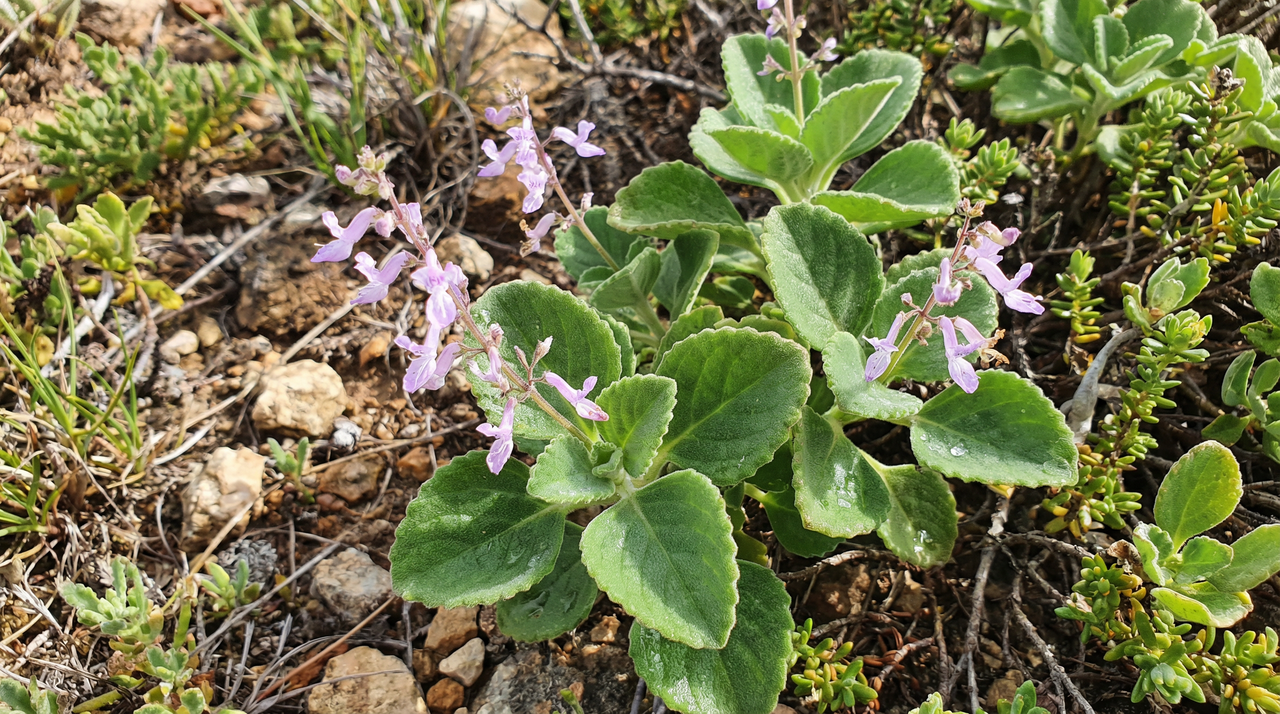
Nobody warned me that the first time I crushed a leaf of spur flower between my fingers, I'd spend a solid minute convinced I was holding something I'd grown a dozen times before. It smells exactly like oregano. Not oregano-adjacent, not oregano-inspired, but the real thing, the kind that makes your nose think pizza dough and summer. Except it's not oregano at all. It's a succulent-leaved African native that somehow ended up in Caribbean folk medicine, Indian kitchens, and my own Central Florida garden under at least four different names, none of which most people agree on.
That identity problem is actually the most interesting thing about this plant, and I say that as someone who's untangled a lot of botanical confusion in her career. Plectranthus viridis, spur flower, Cuban oregano, Indian borage: same plant, different passports, and the mix-up isn't just a naming quirk. It shapes what you'll find when you go looking for it at a nursery, what the research actually says about its health properties, and why most gardeners are growing it without knowing they're growing it. If you've ever had a sprawling, furry-leaved herb take over a corner of a warm-climate garden and wondered what on earth it was, there's a reasonable chance you already know this plant. You just haven't been formally introduced.
Spur Flower Origin, History, and Botanical Background
If you've ever tried to look up spur flower and ended up more confused than when you started, you're in good company. The plant sold, grown, and written about under the name Plectranthus viridis is largely synonymous with, or treated as a variant of, Plectranthus amboinicus, the plectranthus plant more widely known as Cuban oregano or Indian borage.[1][2] Major botanical institutions continue to use varying classifications, and horticultural markets frequently conflate the two, which means the label on any given nursery pot might say any one of three different scientific names for what is effectively the same plant.[3][4] I've seen it three times in a single season at different Florida nurseries, labeled differently each time.
Botanical Background and Native Habitat of Spur Flower
Taxonomy aside, the plant's origins are firmly African. Its native range spans southern and eastern Africa, including South Africa, Mozambique, and Tanzania, extending into Madagascar and surrounding Indian Ocean islands, before becoming naturalized across the Caribbean, India, and Southeast Asia.[5][6] In the wild, it favors coastal rocky slopes, scrublands, and disturbed lowlands from sea level up to around 1,500 meters, always seeking warm, humid pockets with well-drained soils.[7] That's a meaningful contrast to related species like Plectranthus pulchellus, which is endemic to a much narrower slice of South Africa's Eastern Cape, restricted to fynbos and succulent karoo biomes.[8][9] Spur flower's wide naturalization tells you something important about its adaptability.
Taxonomically it sits in the Lamiaceae family as a succulent perennial herb, first recorded by Linnaeus in 1753 under Ocimum amboinicum in Species Plantarum.[10] Plants grow with a sprawling to upright habit reaching up to one meter tall, flower repeatedly without dying, and root easily from stem cuttings in two to four weeks.[11] That last trait is one I lean on regularly in polyculture design: a plant that propagates itself this readily is genuinely useful as a quick-establishment herb in a food forest edge guild.
Traditional and Cultural Uses of Spur Flower
Spanish and Portuguese trade routes carried this African native into the Caribbean during the 16th and 17th centuries,[12] and from there it wove itself into folk medicine traditions across multiple continents. In Caribbean practice it became known as orégano brujo, brewed into teas for respiratory relief and used as a seasoning in soups, stews, and meat dishes.[13] In Ayurveda, it's called pashambhed and applied to kapha disorders, while across African and Southeast Asian traditions it has long served as a poultice for wounds, insect bites, and skin conditions.[14][15] I use the fresh leaves in my own kitchen fairly often, and there's a real pleasure in cooking with something that carries this much cultural weight. Respect for those traditions, though, means being honest: most of this well-documented ethnobotanical record belongs to P. amboinicus specifically, with P. viridis itself carrying less documented ceremonial or medicinal significance.[16] As a regenerative designer, I also think it's worth saying plainly: source your plants from ethical nurseries rather than wild populations. The plant is primarily cultivated worldwide, but that doesn't mean wild harvesting pressure is consequence-free.
Visual Characteristics of Spur Flower
The leaves are ovate to heart-shaped, four to eight centimeters long, with scalloped margins and a dense velvety pubescence that releases an immediate burst of oregano, thyme, and curry when bruised.[17][18] The plant itself is bushy and spreading, typically reaching 30 to 90 centimeters tall with square, succulent stems that are completely characteristic of the mint family.[19] Flowers appear as small pale blue to lavender tubular blooms in terminal spikes, though the foliage is unquestionably the main event here; the roots stay shallow and fibrous.[7]
For context on just how diverse the Plectranthus genus actually is, consider that coleus (Plectranthus scutellarioides) sits in the same family and can reach 150 centimeters tall across more than 100 cultivars with wildly variable foliage in reds, purples, and greens that shift intensity depending on light exposure.[20][21] In my client gardens I'll often deploy a flashy coleus relative purely for ornamental punch in a shady bed, while the spur flower earns its place nearby through aroma and pollinator value. Same genus, very different job.
Spur Flower Varieties and Where to Buy
Understanding the Naming Confusion: Plectranthus viridis vs. Plectranthus amboinicus
Before you can find this plant, you have to know what to search for, and that's genuinely tricky. The accepted scientific name is Plectranthus viridis, but POWO lists Plectranthus amboinicus as a synonym,[22] and most nurseries never use either name in their catalogs. Search for "Cuban oregano" or "Indian borage" and you'll find it. Search for the Latin and you'll likely come up empty. I've specified this plant for client projects more than once and learned early that calling it Coleus amboinicus at the register gets you much further than any botanical authority.[23] Once you know the synonyms, the plant becomes much easier to track down.
Notable Cultivars and Ornamental Selections
Honest answer: there aren't many. Most of what you'll encounter is the standard green-leaved upright form, and frankly, that's what I reach for first anyway.[24] Those velvety, intensely aromatic leaves do real work in an edible understory layer, and the straight species is consistently vigorous. A few named selections show up in the literature -- 'Cambridge Green' (compact habit), 'Blue Max' (blue-tinted foliage), and 'Giant Lemon' (lemon-scented, large-leafed) -- but their commercial presence is thin and I haven't seen them verified in major nursery databases with any regularity.[25] I've grown several unnamed variegated and purple-leaf selections over the years, and their vigor and flavor were nearly identical to the green type. For permaculture guilds, that consistency matters more than novelty.
Sourcing Spur Flower Plants
When you're ready to buy, expect to find it listed as Cuban oregano or Coleus amboinicus, shipped from warm-climate nurseries concentrated in Florida, California, and the Southeast. Four-inch starter pots typically run $5 to $15, and one-gallon sizes land between $10 and $25. Seeds appear occasionally for $3 to $20, but I'd skip them. Germination is genuinely unreliable, and after a few disappointing flats I switched to ordering cuttings exclusively, which root easily and give you plants true to the parent. Missouri Botanical Garden and the RHS both maintain solid cultivar profiles and growing information online,[23][26] but neither sells plants, so use them for research and then verify stock with your actual supplier. There are no legal restrictions on owning or trading this species in the US, though I'd stick to reputable domestic nurseries to avoid any confusion with invasive Plectranthus relatives that occasionally circulate through informal plant swaps.
Spur Flower Propagation and Planting Guide
If there's one thing I've learned after years of growing aromatic herbs in warm, humid climates, it's that some plants practically beg you to propagate them. Spur flower is one of those plants. Stem cuttings root with an almost absurd reliability, with success rates running 80-95% under reasonable conditions.[27][28] That's not marketing copy; that's what actually happens when you stick a healthy cutting in moist perlite and walk away.
Propagation Methods for Spur Flower
Take cuttings in spring or summer, selecting 4-6 inch stems that aren't flowering, and strip the lower leaves to expose a node or two.[27][29] Softwood tips root faster but are more delicate; semi-hardwood is slightly slower but handles the process with less drama. Either works. Drop them in a glass of water on a bright windowsill, or tuck them into a mix of perlite, vermiculite, or moist potting medium. Roots appear within 7-14 days at 70-75°F, and keeping humidity around 70-80% makes a real difference.[27][28] I use a simple humidity dome or even a clear plastic bag tented over the tray, and my success rate on my porch has been consistently excellent. Rooting hormone at 0.1-0.3% IBA is optional but does speed things along if you want to give cuttings an extra nudge.[30]
Seeds are technically possible, but I stopped bothering with them after my early trials. Germination runs 7-21 days at 70-80°F, viability is only 20-60%, and seeds lose that viability within 6-12 months of harvest.[27][28] The seeds themselves are tiny, 0.5-1.0 mm, with a hard, wrinkled coat and low dormancy.[31] The real problem, though, is what comes up. Because this plant has complex hybrid genetics, seedlings from the same packet can range from compact and intensely aromatic to leggy and nearly scentless. I've seen it firsthand, and the inconsistency is genuinely frustrating when you're trying to grow something for kitchen use. Vegetative propagation gives you a true copy of the mother plant, fragrance and all.[30][32]
Division of established clumps works beautifully in spring, with roughly 90% success if you're gentle with the roots.[28] Leaf cuttings are possible but hovering around 50% success and requiring elevated humidity and hormone support, so I'd call that an experiment rather than a standard method.[33] The main pitfall across all vegetative methods is moisture management: too little humidity and cuttings desiccate before they root; too much water in the medium and you're inviting damping-off or root rot before a single root forms.[30] Moist but not soggy is the phrase I'd tattoo on every propagation tray.
Soil, Site Selection, and Planting Technique
In the wild, spur flower grows in the rocky, sandy understory soils of southern and eastern Africa, from South Africa up through Tanzania and Kenya.[34] That context tells you almost everything about what it wants from you as a gardener: well-draining sandy loam or loamy soil, pH between 6.0-7.5, moderate organic matter, and enough loose structure that roots can travel comfortably to 30-45 cm.[17][35] Heavy clay is the enemy. I treat this plant a bit like rosemary: if you wouldn't trust the drainage for rosemary, don't plant spur flower there either. Amend with perlite, coarse sand, or compost, and in really problematic soils, a raised bed is far less trouble than fighting root rot later.[36]
For light, partial shade is genuinely fine, and in hot climates it's often preferable. Four to six hours of direct sun daily with afternoon protection keeps leaves from scorching.[17][37] The succulent leaves store moisture and give the plant reasonable drought tolerance, but waterlogging is a fast track to rot, so let the top inch of soil dry between waterings.[36] For containers, I use a mix of two parts potting soil to one part each of sand, peat moss, and perlite; it drains fast enough to forgive occasional overwatering.[23] As a perennial, this plant is reliably hardy in USDA zones 9-11, thriving best in zones 10-11 where it doesn't face frost threats at all.[23]
Spacing, Timeline, and Early Care
Cuttings rooted and ready to plant put you just 4-8 weeks from your first leaf harvest, compared to 8-12 weeks starting from seed.[28][38] Plant out in spring after the last frost date, once soil temperature is above 60°F; in zone 9, that's typically mid-March through early May.[38] Space plants 12-18 inches apart as a standard guideline, keeping in mind that this species matures to 12-24 inches tall and spreads 24-36 inches wide with a rambling, runner-producing habit.[39][40] Crowd them and you'll pay for it with poor air circulation and fungal pressure, which is exactly the kind of avoidable problem I've watched happen too many times with mint-family herbs planted too close together.
In my garden, 18 inches gives each plant room to bush out properly, and I immediately pinch the growing tips on newly transplanted cuttings to encourage branching from the base. That one habit makes a surprising difference in how full and productive a plant becomes over the season. Mulch lightly to improve drainage and moisture retention in humid conditions, provide some afternoon shade in the first few weeks, and resist the urge to overwater while roots establish.[38] The plants will settle in and start spreading before you expect them to.
Spur Flower Care Guide
Spur flower (Plectranthus viridis, sold widely as Cuban oregano or Indian borage) is one of those plants that rewards you quickly when conditions are right and tells you immediately when something's off. Its thick, hairy, succulent leaves aren't decorative accident; they're the result of millennia adapting to warm, humid tropical habitats across southern and eastern Africa. Get the basics dialed in and this plant practically grows itself. Push it into conditions it doesn't like, especially cold or wet feet, and the decline is fast. Understanding that tension is the whole game with plectranthus care.
Sunlight Requirements for Healthy Spur Flower Growth
Bright indirect light to partial shade is the sweet spot for spur flower, roughly four to six hours of sun with protection from the harshest afternoon rays. Too much direct sun and you'll see exactly what the research describes: brown, crispy leaf margins, bleached foliage, and that defeated droop that tells you the plant is coping rather than thriving.[30] Too little, and the stems stretch toward the light in that leggy, washed-out way that makes the plant look half-starved. I've seen both extremes in Central Florida, where the summer sun is genuinely brutal. My established plants do their best work on an east-facing exposure or under the canopy edge of taller shrubs where they catch morning sun and get dappled shade by two in the afternoon.
Watering Needs and Drought Tolerance
Wait until the top one to two inches of soil feel dry, then water deeply enough to saturate the entire root zone.[41][42] Once established, spur flower can handle roughly twelve to fourteen days of dry soil before showing real stress, which puts it closer to a drought-tolerant herb than a thirsty basil. The genus has roots, literally, in rocky outcrops and well-drained sandy soils of the Eastern Cape of South Africa,[43][17] so that drought resilience is baked into its DNA.
What actually kills these plants is overwatering, not drought. Yellowing leaves, stems that feel soft rather than firm, and wilting despite damp soil are the classic overwatering signals, and by the time you see black mushy roots the damage is usually done.[37][17] I've troubleshot root rot in client gardens more times than I'd like to admit, almost always traced back to either heavy soil or irrigation schedules set for thirstier companions. Seedlings need more frequent attention, every two to three days with lighter applications, while mature plants in summer typically want water every seven to ten days, backing off further as temperatures cool or flowering begins.[36][30] Always water at the root zone; overhead irrigation sitting on those fuzzy leaves in humid conditions is an invitation for fungal problems. Soil pH between 6.0 and 7.5 keeps nutrient uptake efficient, and while tap water is tolerable, collected rainwater is genuinely better if you have it.[44][45]
Feeding and Soil Fertility for Spur Flower
Spur flower is a moderate feeder, fast-growing and high-biomass but not greedy.[46][47] A balanced water-soluble fertilizer, something in the 10-10-10 or 20-20-20 range, diluted to half strength and applied every four to six weeks from spring through fall covers its needs without the risks that come with overfeeding.[48] I learned early that full-strength applications on these fast growers produce exactly the weak, leggy stems the research warns about, so I always go half-strength and flush containers periodically to clear accumulated salts.[25][48] Skip fertilizer entirely through winter. If you see interveinal chlorosis on young leaves, that yellowing between the veins while the veins stay green, suspect iron deficiency, especially if your soil is trending alkaline. Chelated iron corrects it reliably.[49][50] Well-draining loamy soil with good organic matter content is the foundation that makes all of this work; the fertility targets matter far less if the drainage isn't there.
Heat and Frost Tolerance
This is a genuinely tropical plant, native to warm, humid climates across southern and eastern Africa, and its temperature thresholds aren't suggestions.[51] The sweet zone is 65 to 85°F. It handles sustained heat up to 100°F and brief spikes near 110°F thanks to those thick, pubescent leaves and some physiological tricks like leaf rolling and antioxidant production, but above 95°F you'll start seeing scorching, wilting, and leaf drop that signals real stress.[52][30] Mature plants recover faster than seedlings; in my subtropical summers, deep watering combined with two to three inches of organic mulch and a 30 to 50 percent shade cloth over the hottest weeks has consistently brought stressed plants back within a few days rather than weeks.[30][53]
On the cold end, damage begins below 50°F and prolonged exposure at those temperatures can kill the plant outright.[51][54] Hardy in USDA zones 9 through 11 (reliably perennial in zones 10 and 11, with protection needed in zone 9B),[55][56] it's grown as an annual or brought indoors in cooler climates. In my zone 9B winters I've learned that even a brief 35°F night is worth covering with frost cloth; the mushy, blackened leaves from unprotected exposure aren't worth gambling on, but plants that get covered usually rebound from the roots even after minor damage.[57] Avoid overwatering in cold conditions, wet cold soil accelerates damage significantly.[58]
Pruning, Maintenance, and Seasonal Care
In frost-free climates spur flower grows year-round with no true dormancy, flowering from late spring through fall on upright spikes with lavender to white blooms typically appearing six to twelve months after propagation.[1][59] Once plants are established, pinching the growing tips regularly keeps them dense and bushy rather than the rangy, open habit I saw in my early grows before I understood this.[56] Terracotta containers are genuinely useful here because they breathe and dry out faster than plastic, which aligns naturally with this plant's preference for dry periods between waterings and reduces root rot risk.
As temperatures drop toward 50°F, the plant shifts into reduced activity regardless of what zone you're in.[56][11] When I bring plants indoors above 60°F for winter, they keep producing leaves at a slower pace, which is genuinely useful for the kitchen through the cold months. I reduce watering cadence significantly and stop fertilizing until I see active new growth again in spring. That winter rest period, whether imposed by cold or managed indoors, is actually when I do my most aggressive pruning to shape the plant before the spring flush. The whole seasonal rhythm, vigorous growth from spring through fall, then protection or indoor rest through winter, becomes intuitive once you've grown through a full cycle with one of these plants.
Harvesting Spur Flower Leaves
The leaves are the whole point here. Everything from placement to pruning leads up to the moment you pinch a fat, fuzzy leaf and get that immediate hit of oregano-mint-camphor. I've harvested this plant many times growing in the subtropical Southeast, and the single biggest lesson from repeated garden trials is patience: leaves picked before they reach about 2 inches long are noticeably weaker in flavor, almost grassy. Wait until they hit that 2-to-4-inch sweet spot and the difference is immediate on your fingertips before you've even made it back to the kitchen.[60][30]
When and How to Harvest for Best Flavor
First harvest typically comes around 6 to 8 weeks after planting, once plants are 6 to 12 inches tall.[60][30] From there, a pinch-every-2-to-4-weeks rhythm keeps growth bushy and productive; cutting the top third of stems rather than stripping individual leaves gives the plant a clear signal to branch out below.[38] In my beds, consistent picking through warm weather keeps the plants looking tighter and tasting stronger than plants I've left to sprawl unchecked.
The post-flowering window is worth marking on your calendar. I learned this the hard way: cut too soon after bloom, and the new leaves carry a faint bitterness that survives even slow cooking. The research backs a 30-to-45-day wait before harvesting new growth after flowering, with the full cycle from bloom to optimal leaf running 40 to 60 days in warm climates.[29][61] In zones 10 to 11 you can harvest year-round, while in zones 7 to 9 the productive window runs roughly May through September with growth peaking between 60 and 85°F.[62][63] Think of it like basil: once temperatures drop, the harvest window closes fast.
I always pick just after the dew dries, never at midday. The science confirms it: essential oil content (primarily carvacrol and thymol) peaks in fully expanded mature leaves, reaching 2 to 3 percent yield versus under 1 percent in immature leaves, and volatile retention is best in the cool morning hours before heat starts driving those compounds off.[60][64] I can tell the difference: morning leaves leave that unmistakable herb scent on my hands for a good hour.
Yield, Flavor Profile, and Texture
What you're harvesting is genuinely distinctive. The flavor is pungent and oregano-forward, but a mint-camphor edge and a slight thyme quality push it somewhere no true oregano quite reaches.[65][66][67] Fresh leaves are thick and succulent between your fingers, almost waxy; that texture is the plant's water-retention strategy made tangible. The same carvacrol and thymol compounds responsible for the pungency also carry natural antimicrobial properties that have made the leaves useful as a preservative in traditional cooking across multiple cultures.[66] One healthy plant, harvested on a consistent schedule, can supply a kitchen with fresh leaves all season long. Regular pinching is the only trick you need.
Spur Flower Preparation and Uses
Culinary Uses and Flavor Profile of Spur Flower Leaves
Before you cook with this plant, identification matters more than almost anything else. Because of persistent naming conflation, nearly all the culinary and nutritional data you'll find online actually describes the relative.[68][67] I've learned the hard way that not every plant sold under the same common name is the same species, so I always verify before recommending one to clients for an edible landscape. With that caveat clearly on the table, the leaves of both are edible in moderate culinary amounts, with documented traditional use across Indian, Caribbean, African, and Southeast Asian kitchens.[69]
The flavor is genuinely bold: pungent and oregano-forward with earthy, herbaceous depth and quieter undertones of mint, onion, and garlic all at once. In hot, humid conditions like my Central Florida garden, the aroma practically jumps off the leaves when you brush past them. That volatility is exactly why I add them at the very end of cooking; heat drives off the essential oils fast, and a late handful in a soup or stir-fry preserves far more of that character than cooking them from the start.[70][71] They also work beautifully raw in chutneys and salads, dried into seasoning powders, or steeped as herbal infusions, and they pair naturally with tomatoes, beans, garlic, citrus, and chili.[72]
Nutritionally, the fresh leaves offer modest but real value: roughly 20-30 kcal per 100g with decent calcium, iron, potassium, and vitamins A and C (figures drawn from Coleus amboinicus studies, since species-specific data for P. viridis remains thin).[73] Rosmarinic acid and flavonoids give the leaves notable antioxidant and anti-inflammatory activity, though how much survives cooking depends heavily on heat exposure and preparation method.[74] Used as a seasoning, the plant is broadly regarded as safe,[75] but excess intake can irritate the gut, concentrated essential oils should never be taken undiluted internally, and pregnant individuals should avoid therapeutic doses given possible uterine stimulant effects.[76][77] Because some ornamental Plectranthus relatives are mildly toxic, I never recommend using any plant in this genus unless you are completely certain of the identification.[78]
Medicinal Preparations and Traditional Dosages
The leaves are the working part of this plant medicinally, just as they are in the kitchen. Traditional preparations run the full range of low-tech options: infusions (a simple leaf tea), decoctions from boiled leaves, alcohol-based tinctures, fresh poultices applied topically, and steam-distilled essential oil.[79][80][81] For the efficacy behind those preparations, the health benefits section covers the pharmacology in depth; what matters here is how to actually make and dose them responsibly.
Traditional ranges from closely related species suggest 1-2 cups of infusion or decoction daily using 5-10g of dried leaves, 1-2ml of a 1:5 tincture two to three times daily, and essential oil diluted to 1-2% for topical applications only.[82][83] None of these are standardized pharmacopeia dosages; they're traditional and anecdotal, and no species-specific data exists for P. viridis. While I do use these leaves in my own kitchen teas, I stay within the conservative end of those traditional ranges and always tell anyone seeking therapeutic use to consult a qualified practitioner first.
Non-Food Applications in Permaculture and Beyond
One of the things I appreciate most about fast-growing, aromatic plants is that they earn their keep beyond the kitchen. Spur flower's vigorous biomass production means you can cut it back repeatedly through the season without stressing it, and those trimmings go straight back into the garden bed as mulch or green manure.[84] In my experience, regular chopping seems to discourage certain insects from settling into neighboring plants, which makes sense given the research: the essential oil demonstrates genuine mosquito-repellent activity against Aedes aegypti, with field performance comparable to some synthetic repellents, driven by the same volatile compounds responsible for that signature oregano scent.[85][86] For topical repellent use, the same 1-2% dilution guideline applies as with any concentrated oil. It's a plant that rewards regular harvesting on every front, and those trimmings cycling back into your guild are a straightforward return on the space it occupies.
Spur Flower Health Benefits and Medicinal Uses
Before we talk about what this plant can do for your health, it helps to get the naming straight. The spur flower grown in most warm-climate herb gardens, sold under the names Cuban oregano or Indian borage, is Plectranthus amboinicus (also recorded as Coleus amboinicus), and Plectranthus viridis is widely treated as synonymous or a regional variant of the same plant.[76][87] That matters because almost all the research uses those names. When you see studies on Cuban oregano or Indian borage, you're reading about your plant.
Traditional Medicinal Uses Across Cultures
Healers on multiple continents figured out the medicinal value of this plant long before anyone ran a lab assay. Across the Caribbean, India, Africa, and Southeast Asia, it has been used traditionally for respiratory ailments, digestive complaints, skin conditions, fever, and wound care.[76][88] Caribbean herbalists brew the leaves into teas for coughs. Indian practitioners have applied them as poultices for wounds and inflamed skin. African traditional medicine has leaned on them for fever management. That breadth of use across completely separate medical traditions is usually a signal worth paying attention to.
Key Phytochemicals and Bioactive Compounds
The heavy hitters here are carvacrol and thymol, the same phenolic compounds that make commercial oregano oil so potent. In spur flower, carvacrol can make up 20-70% of the essential oil, with thymol contributing another 5-50% depending on where and how the plant was grown.[89][90] Supporting the essential oil fraction, the leaves also contain flavonoids like quercetin, rutin, and luteolin derivatives, plus rosmarinic acid, ursolic acid, and a solid total phenolic content ranging from 4-12% of dry weight.[91][92]
Growing conditions shape those numbers considerably. Plants under periodic drought stress can produce two to three times higher phenolic concentrations, and UV-B exposure can push carvacrol up by around 40%.[93][94] I've noticed this firsthand: plants I've grown in leaner soils with full afternoon sun have a noticeably sharper, more pungent scent than the same species coddled with extra fertilizer in part shade. The plant's chemistry is essentially its defense system, evolved to deter herbivores and pathogens, and that ecological role translates directly into bioactivity.[95] Harvest at 4-6 months or around flowering for peak potency, and always take from the leaves rather than stems or roots, since that's where the highest concentration of volatiles and phenolics accumulates.[60]
Supported Health Benefits and Pharmacological Effects
The antimicrobial data is among the strongest in the literature. Essential oil compounds disrupt bacterial cell membranes and inhibit biofilm formation, with MIC values of 0.5-2 mg/mL against pathogens like Staphylococcus aureus and E. coli, as well as several fungal species.[96][97] Anti-inflammatory activity has been demonstrated in rodent models through inhibition of TNF-α, IL-6, NF-κB, and COX-2 pathways, with effects comparable to indomethacin in paw edema tests.[98][99] Antioxidant capacity is meaningful too, with DPPH radical scavenging IC50 values as low as 25 μg/mL in some assays.[100]
The broader pharmacological picture includes analgesic effects (ED50 around 100 mg/kg in writhing tests, comparable to aspirin), preclinical wound-healing data showing approximately 30% faster epithelialization, and bronchodilatory properties that explain why so many traditional cough remedies center on this plant.[101][102] There are also promising hints from preclinical work on α-glucosidase inhibition (relevant for blood sugar management) and acetylcholinesterase inhibition (a neurodegeneration angle), though both need far more research.[103] One small clinical trial reported 15-20% reductions in blood glucose and HbA1c in type 2 diabetes patients, which is genuinely interesting but not a reason to adjust any medication without medical supervision.[104] Large-scale RCTs are still lacking for most claims.[105] I think about it the way I think about culinary oregano: real bioactivity, centuries of traditional use, promising lab data, and still early days for clinical confirmation.
Nutritional Profile of Spur Flower Leaves
Per 100 grams of fresh leaves, you're looking at roughly 20-45 kcal, 2-3 g protein, meaningful calcium (100-150 mg, with some analyses reporting considerably higher), 2-4 mg iron, 724 mg potassium, and useful amounts of vitamin A and vitamin C (20-50 mg).[106][107] These aren't standardized USDA values, so treat them as approximations that vary by cultivar, soil, and climate.[108] What's more consistent is the antioxidant activity, which comes in at 45-85% DPPH inhibition at culinary-relevant concentrations.[109] The essential oils are stable to around 100°C, so using the leaves in soups, stews, and infusions still delivers the bioactive compounds, though drying does reduce vitamin C by 20-30% while concentrating minerals.[110] As kitchen herbs go, it earns its place on flavor alone, and the nutritional and antioxidant contribution is a quiet bonus.
Safety Considerations and Potential Side Effects
Culinary use of spur flower is well-tolerated. Acute toxicity studies show an LD50 above 2000-5000 mg/kg in animal models, and traditional use at 1-5 g of leaves daily sits well within a safe range for most healthy adults.[111] Where things get more complicated is with concentrated essential oils or high-dose medicinal use, which can cause gastrointestinal upset, contact dermatitis, or allergic reactions, particularly in people who are sensitive to other Lamiaceae herbs like oregano or basil.[112]
Pregnancy is a genuine caution: traditional sources flag potential emmenagogue or uterine-stimulant effects at medicinal doses, and though the clinical evidence is mostly anecdotal, it's not a risk worth taking.[113] If you're on antidiabetic medications, anticoagulants, sedatives, or drugs metabolized by CYP450 enzymes, thymol and related compounds may potentiate their effects, so a conversation with your healthcare provider is the right move before using this medicinally.[114]
The pet situation deserves a clear, direct statement: the ASPCA lists Indian borage as toxic to both dogs and cats, with reported symptoms including vomiting, bloody diarrhea, depression, body tremors, anorexia, and mucous membrane irritation.[115][116] Cats are especially sensitive to essential-oil-rich plants as a category. I keep all my aromatic Lamiaceae off the ground in areas where household pets roam freely, and I'd give the same advice to anyone growing this one. It's a fragrant, attractive plant that curious animals will investigate, so don't assume they'll self-regulate.
Spur Flower Pests and Diseases
Natural Disease Resistance and Common Problems
Most of the published disease and pest research uses the name Plectranthus amboinicus rather than Plectranthus viridis, since the two are widely treated as synonymous.[117] So when I cite Cuban oregano data here, I'm talking about the same plant you're growing.
The good news is that spur flower comes chemically armed. Its essential oils, rich in thymol and carvacrol, actively fight off many fungal pathogens,[118][119] and it shows strong field resistance to powdery mildew, downy mildew, and bacterial wilt under normal growing conditions.[118][28] Where it does struggle is with root rot from Pythium, Phytophthora, or Fusarium, and with fungal leaf spots like Cercospora and Alternaria when humidity climbs and air circulation suffers.[120][77] I've seen root rot exactly once in my own beds, and honestly, I'd ignored my own drainage rule for about three weeks too long. Once you establish sharp drainage, good airflow, base watering rather than overhead, and spacing of 30 to 45 cm between plants, the disease picture gets pretty quiet.[28][77] This plant is far more vulnerable to too much water than too little.[28] When problems do appear, prompt removal of infected material combined with copper-based fungicides, neem oil, or a baking-soda spray for mildew will usually sort things out, alongside whatever cultural correction triggered the outbreak in the first place.[17][121]
Pest Pressures and Integrated Management
The usual suspects show up occasionally: aphids, spider mites, whiteflies, and mealybugs.[28] In practice, infestations tend to stay minor because the same carvacrol, thymol, and eugenol that deter pathogens also discourage many insects, and the dense leaf trichomes add another physical barrier.[122][110] Crush a leaf and that sharp, pungent hit you smell is essentially what lab studies show delivering up to 90% mosquito-repellent activity in extracts.[123][124] It's a potent chemistry, and the insects generally know it. Chewing insects and caterpillars are also kept at bay by diterpenoids in the foliage, though slugs and snails in wet southern gardens can still cause surface damage that opens the door to secondary fungal infection.[125][126]
Pest pressure reliably rises when cultural conditions slip. Spider mites spike in hot, dry stress; aphids and whiteflies multiply in humid, stagnant air.[126] There are no named cultivars with documented superior pest resistance, so variety selection doesn't move the needle here.[127] I pick for flavor and vigor, then manage the occasional aphid flare with the same good airflow and companion plantings I'd already set up for other reasons. My approach is always to fix the cultural stressor first. If that doesn't resolve things, I reach for neem oil or insecticidal soap, and I encourage beneficial insects like ladybugs and predatory mites to do the ongoing work.[128][126] Regular scouting keeps any problem from quietly compounding between visits.[129] Grow it well and it largely looks after itself.
Spur Flower in Permaculture Design
Before you can design with this plant, you need to know which plant you're actually designing with. Spur flower (Plectranthus viridis) is so frequently listed as synonymous with Plectranthus amboinicus, Cuban oregano, and Indian borage that the names appear interchangeably across nursery tags, extension publications, and seed catalogs.[130] That's worth knowing upfront because most of the permaculture-relevant research and grower experience behind this plant lives under those synonyms. Once you accept the name soup, the design picture gets a lot clearer.
Climate and Hardiness Zones for Spur Flower
The single biggest constraint shaping how you use spur flower in a design is frost sensitivity. It performs as a true perennial in USDA zones 9 through 11; outside that range, you're either growing it as an annual or dragging it inside each winter.[130][37][55] It wants daytime temperatures between 70 and 85°F, can push through heat up to 100°F with enough moisture, but starts showing cold damage below 40°F and takes severe injury around 30°F.[131][36]
I've managed to overwinter tender Plectranthus relatives in my zone 9B garden by tucking them against a south-facing masonry wall that holds daytime heat well into the evening. It's not a guarantee, but that microclimate buffer can make the difference between losing a plant and carrying it through to spring. If you're on the edge of zone 9, drainage is equally non-negotiable. This is a xerophytic plant from dry subtropical shrublands, and its tolerance for drought (surviving on as little as 250-500 mm of annual rainfall in native conditions) means it will rot in soggy soil long before it dies from heat.[132][133] Always site it high and dry, never in a basin or under a drip line.
The related Indian borage (Plectranthus pulchellus) broadens the picture a bit. It's adapted to Mediterranean climates with mild wet winters and hot dry summers, still hardy in zones 9b-11, but its RHS H1c rating signals it needs winter protection too.[8][9] The genus has range, in other words. The climate profile isn't monolithic, which means there's likely a Plectranthus suited to your warm-climate site even if this particular species pushes the edge.
Ecosystem Functions and Guild Roles
Where spur flower really earns its place in a regenerative design is through stacked ecosystem services that go well beyond its culinary value. As a spreading groundcover, it suppresses weeds, stabilizes slopes against erosion, and creates microhabitat for beneficial insects in the herbaceous layer.[84][134] That alone would justify its inclusion in a food forest guild, but the aromatic chemistry in its essential oils adds another layer: it actively deters aphids, spider mites, and mosquitoes while drawing in beneficial insects at the same time.[79][135]
I've watched this firsthand with Lamiaceae companions in my Central Florida plantings. During the worst of the humid summer months, when aphid pressure on nearby tomatoes would otherwise spike, the aromatic foliage nearby seems to genuinely blunt the problem. It's the kind of thing that reads like anecdote until you see it season after season and it becomes just how you design.
On the accumulator side, spur flower is reported to pull potassium, phosphorus, and trace minerals, which become available to neighboring plants through chop-and-drop mulching.[135][136] I think of it like a lower-key version of comfrey in that respect: not a nitrogen-fixer, but useful for cycling minerals back into the surface layers of soil. The flowers contribute to all of this by pulling in bees, hoverflies, and butterflies. The tubular, bilabiate blooms arranged on terminal spikes are shaped for bee access specifically, and the nectar rewards make this a reliable late-season pollinator plant.[137] Pairing it with marigolds, zinnias, or salvia nearby can amplify that effect considerably.[138]
Forest Layer Placement and Companion Planting
Spur flower sits in the herbaceous groundcover layer of a food forest, typically reaching 30 to 90 cm tall with a low, mounding to spreading subshrub habit.[139][140] Its moderate shade tolerance means it can tuck under taller canopy plants and still perform, which is exactly the kind of gap-filling behavior you want from a groundcover in a maturing guild. In its native tropical dry forest edge habitat, it naturally occupies those transitional woodland margins and rocky slopes where light is dappled rather than full.[139]
For companion planting, tomatoes and peppers are the classic pairings. The pest-repellent chemistry helps push aphids and whiteflies off those crops, and the sensory overlap with oregano makes it a natural kitchen-garden neighbor.[141] That said, I'd be doing you a disservice if I didn't flag the real design caveat here: spur flower is a heavy feeder that competes for nutrients, and it can form dense mats in shadier spots over time.[142][143] In my experience, these vigorous Lamiaceae spreaders need guild companions that are equally robust or you'll see a quiet nutrient tug-of-war playing out in the soil. Match it with strong feeders, give it defined edges if you're working in a smaller space, and lean into its spreading habit on slopes where you want coverage rather than in tight polycultures where it might crowd out less assertive plants. Site it right and it does a remarkable amount of work with very little input from you.
The Plant That Keeps Giving
I keep a pot of it right outside my back door, not because I planned it that way, but because a friend snapped off a stem during a garden tour and handed it to me like it was nothing. That cutting sat in a jar of water on my windowsill for two weeks before I even found a pot for it, and it rooted anyway. That's the thing about spur flower; it doesn't need you to have your act together. It just needs a chance.
Sources 143
- Plectranthus amboinicus - Plants of the World Online | Kew Science ↩
- Plectranthus amboinicus (Cuban Oregano) ↩
- Plectranthus amboinicus (L.) Spreng. ↩
- Plectranthus amboinicus (L.) Spreng. ↩
- Plectranthus amboinicus - Kew Science Plants of the World Online ↩
- Coleus amboinicus (Indian Borage) ↩
- Plectranthus amboinicus - Wikipedia ↩
- Plectranthus pulchellus - Wikipedia ↩
- Distribution and Habitat of Plectranthus Species - SANBI ↩
- Species Plantarum ↩
- Cuban Oregano - EDIS University of Florida IFAS ↩
- Joyfull Newes out of the Newe Founde Worlde ↩
- Historical Uses of Herbs in Cuban Folk Medicine ↩
- Traditional Uses of Coleus amboinicus in Indian Medicine ↩
- Culinary and Medicinal Uses of Coleus amboinicus in Caribbean Folklore ↩
- Ethnobotany of the genus Plectranthus in Africa ↩
- Plectranthus amboinicus ↩
- RHS Plant Selector ↩
- Plectranthus amboinicus (Coleus amboinicus) ↩
- Plectranthus scutellarioides - Plant Finder ↩
- Coleus Varieties and Leaf Color - University of Florida IFAS Extension ↩
- POWO: Plectranthus viridis ↩
- Coleus amboinicus - Plant Finder ↩
- Plectranthus Species - Missouri Botanical Garden ↩
- Cultivars of Aromatic Plectranthus - Horticulture Resources ↩
- Coleus amboinicus - Cuban Oregano ↩
- How to Propagate Cuban Oregano ↩
- Propagation of Plectranthus amboinicus ↩
- Cuban Oregano: Propagation Guide ↩
- Propagation of Plectranthus amboinicus (Cuban Oregano) ↩
- Seed Morphology of Lamiaceae Species ↩
- Propagation of Plectranthus Species ↩
- Propagation Techniques for Plectranthus Species ↩
- Plectranthus viridis Distribution - Plants of the World Online ↩
- University of Florida IFAS Extension: Plectranthus amboinicus ↩
- Cuban Oregano (Plectranthus amboinicus) ↩
- Growing Plectranthus Species ↩
- Propagation and Harvesting of Cuban Oregano (Plectranthus amboinicus) ↩
- Plectranthus amboinicus (Indian Borage) - Growing Guide ↩
- How to Grow Cuban Oregano ↩
- Plectranthus amboinicus Species Profile ↩
- Coleus amboinicus Plant Profile ↩
- Plectranthus pulchellus - Plants of the World Online ↩
- Effects of Chlorinated Water on Ornamental Plants ↩
- Salinity Tolerance of Herbs Including Cuban Oregano ↩
- Kew Science ↩
- Missouri Botanical Garden Plant Finder ↩
- University of Florida IFAS Extension: Fertilizing Herbs ↩
- Iron Deficiency in Plants ↩
- Nutrient Deficiencies in Herbaceous Plants ↩
- Plectranthus amboinicus - Plants of the World Online (Kew Science) ↩
- Plectranthus amboinicus ↩
- Plectranthus amboinicus (Cuban Oregano) ↩
- Plectranthus amboinicus - University of Florida IFAS Extension ↩
- USDA Plant Hardiness Zone Map ↩
- Plectranthus amboinicus - Cuban Oregano ↩
- Frost Injury to Plants ↩
- Frost Protection for Tropical Plants ↩
- Coleus amboinicus - RHS Gardening ↩
- Essential Oil Composition of Plectranthus amboinicus Leaves at Different Developmental Stages ↩
- Phenology and Harvest Timing in Aromatic Plectranthus Species ↩
- Cuban Oregano: A Versatile Herb for the Home Garden ↩
- Growing Herbs in the Home Garden ↩
- Harvesting and Post-Harvest Handling of Aromatic Plants ↩
- Plectranthus amboinicus (Cuban Oregano) ↩
- Chemical Composition and Antioxidant Activity of Essential Oil of Plectranthus amboinicus ↩
- Coleus amboinicus ↩
- Plectranthus - The Plant List ↩
- Edible Plectranthus Species in Traditional Diets ↩
- Culinary Uses of Cuban Oregano ↩
- Edible and Medicinal Plants of the West Indies ↩
- Plectranthus amboinicus - Missouri Botanical Garden ↩
- Nutritional and Phytochemical Analysis of Coleus amboinicus Leaves ↩
- Antioxidant Activity and Nutritional Composition of Plectranthus amboinicus ↩
- Safety Assessment of Plectranthus amboinicus ↩
- Toxicity of Plectranthus Species Essential Oils ↩
- Edible and Toxic Herbs in the Lamiaceae Family ↩
- Coleus (Plectranthus scutellarioides) Toxicity ↩
- Plectranthus: A review of ethnobotanical uses ↩
- Traditional uses and pharmacology of Plectranthus amboinicus ↩
- Ethnobotanical Survey of Medicinal Plants Used by the People of Nkonkobe Municipality, Eastern Cape, South Africa ↩
- Medicinal properties of Coleus amboinicus ↩
- Herbal Medicine: Biomolecular and Clinical Aspects - Coleus Species ↩
- Permaculture Plants: Plectranthus Species ↩
- Repellent Activity of the Essential Oil from Coleus amboinicus ↩
- Chemical Composition and Mosquito Repellency of Plectranthus amboinicus ↩
- Coleus amboinicus (Lour.) Merr.: Traditional Uses, Phytochemistry, and Pharmacological Activities ↩
- Traditional uses of Plectranthus species in Caribbean folk medicine ↩
- Chemical Composition and Antimicrobial Activity of the Essential Oil of Plectranthus amboinicus ↩
- Secondary Metabolites from Coleus amboinicus: A Review ↩
- Secondary Metabolites in Plectranthus amboinicus: Distribution in Plant Organs ↩
- Phenolic Compounds from Leaves of Indian Borage (Coleus amboinicus) ↩
- Essential Oil Variation in Coleus amboinicus Exposed to UV-B Radiation ↩
- Secondary Metabolites in Medicinal Plants and Abiotic Stress ↩
- Volatile Compounds in Lamiaceae: Defense Mechanisms ↩
- Antimicrobial Activity of Essential Oil from Coleus amboinicus ↩
- Chemical Composition and Antimicrobial Activity of the Essential Oil of Plectranthus amboinicus ↩
- Anti-inflammatory Effects of Indian Borage via NF-κB Inhibition ↩
- Anti-Inflammatory Effects of Coleus amboinicus in Rat Models ↩
- Antioxidant and Anti-inflammatory Properties of Coleus amboinicus ↩
- Analgesic and Hepatoprotective Activities of Coleus amboinicus ↩
- Wound Healing and Analgesic Potential of Coleus amboinicus ↩
- α-Glucosidase Inhibitory Activity of Plectranthus Species ↩
- Clinical Trial on Antidiabetic Effects of Coleus amboinicus Leaf Extract ↩
- Wound healing activity of Coleus amboinicus in normal and diabetic rats ↩
- Nutritional Composition of Plectranthus amboinicus ↩
- Nutritional and Medicinal Properties of Coleus amboinicus ↩
- USDA FoodData Central Search Results ↩
- Phytochemical screening and antioxidant activity of Plectranthus amboinicus leaf extracts ↩
- Essential Oil Stability in Plectranthus Species Under Heat ↩
- Coleus amboinicus: A Review on Traditional Uses, Phytochemistry, and Pharmacological Activities ↩
- Contact Dermatitis from Plants in the Lamiaceae Family ↩
- Coleus amboinicus: A Review on Traditional Uses and Pharmacology ↩
- Herbal Contraindications and Drug Interactions ↩
- Toxic and Non-toxic Plants: Indian Borage | ASPCA ↩
- Indian Borage Poisoning in Dogs - Symptoms, Causes, Treatment ↩
- Plectranthus amboinicus ↩
- Plectranthus amboinicus: A Review of Its Phytochemistry and Pharmacology ↩
- Disease Management in Aromatic Plants ↩
- Diseases of Plectranthus amboinicus ↩
- Managing Fungal Diseases in Herbs ↩
- Essential Oils from Plectranthus spp.: Extraction, Analysis and Biorefinery ↩
- Repellent Activity of Plectranthus amboinicus Essential Oil Against Aedes aegypti ↩
- Chemical Composition and Insecticidal Activity of Coleus amboinicus Leaf Extracts ↩
- Pest Resistance in Medicinal Plants of Lamiaceae Family ↩
- Coleus (Plectranthus amboinicus) Pest Management - UF/IFAS ↩
- Missouri Botanical Garden Plant Finder ↩
- Pest Management for Herbs: Cuban Oregano ↩
- Integrated Pest Management for Ornamental Plants ↩
- USDA PLANTS Database - Plectranthus amboinicus ↩
- Coleus amboinicus - North Carolina Extension Gardener Plant Toolbox ↩
- Plectranthus amboinicus - Useful Tropical Plants ↩
- Plectranthus amboinicus (Kew Gardens) ↩
- Plectranthus pulchellus | PlantZAfrica ↩
- Permaculture Plants: Mint Family (Lamiaceae) ↩
- Companion Planting Guide - Blue Spur Flower ↩
- Floral Biology and Pollination in Plectranthus (Labiatae) ↩
- Companion Planting for Pollinators - Xerces Society ↩
- Plectranthus viridis ↩
- PLANTS Database: Plectranthus viridis ↩
- Permaculture Companion Plants: Cuban Oregano ↩
- Plectranthus: A Review of Ethnopharmacological Uses ↩
- Shade Tolerance in Tropical Understory Plants ↩