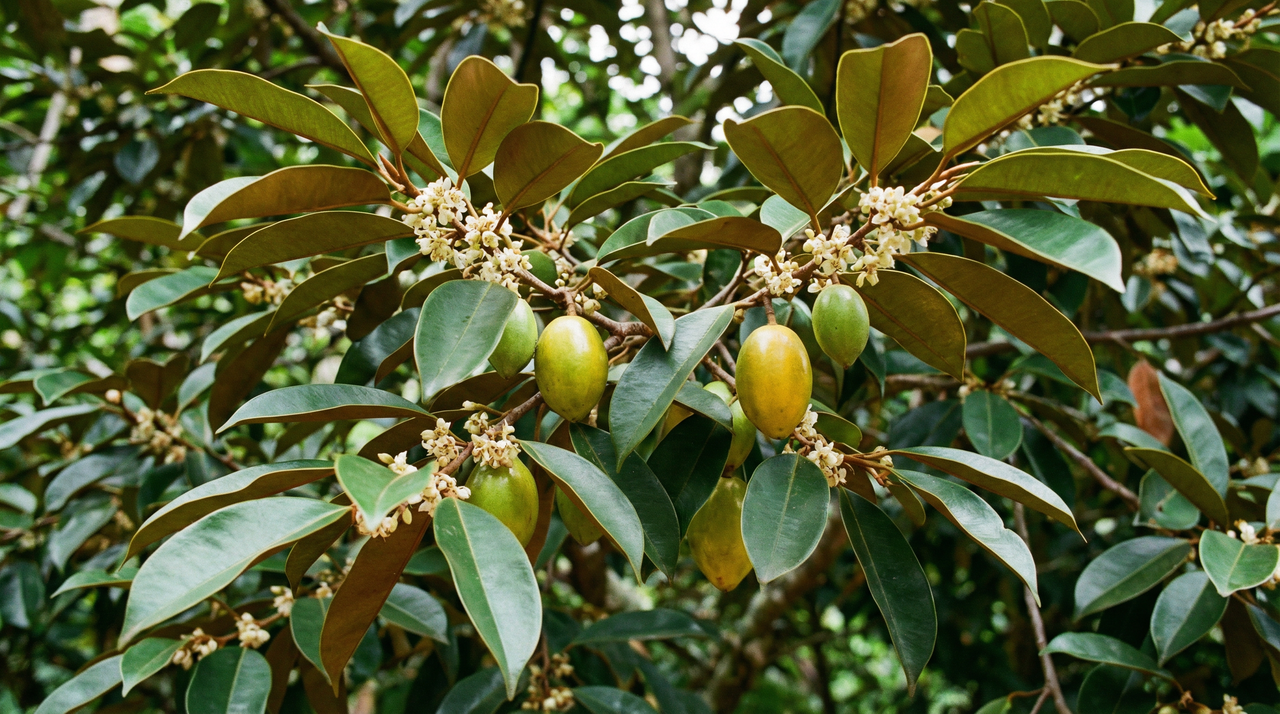
Cut a star apple in half crosswise and you'll understand immediately why people in the Caribbean have been growing this tree for centuries. The translucent, jelly-like pulp arranges itself around the seeds in a perfect star, like something a pastry chef staged for a photograph. But here's the thing nobody mentions until you're standing in the orchard, fruit in hand: you have to wait. From the moment those tiny, inconspicuous flowers open, it can take anywhere from 90 to 210 days before that fruit is actually ready to eat.[1] Pick it even a week too early and the milky latex inside coats your mouth in a way that's genuinely unpleasant, and no amount of rinsing fixes it fast.
I think that gap between visual beauty and actual readiness is the most honest thing I can tell you about Chrysophyllum cainito before you plant one. It's a tree that asks you to slow down, to learn its rhythms rather than impose yours. Once you do, what you get back is decades of that star-patterned fruit, a canopy that earns its place in any food forest, and a plant with a history stretching from Taíno kitchens to contemporary ethnobotanical research labs. There's a lot to understand here, and most of it runs deeper than the obvious beauty.
Star Apple Origin, History, and Botanical Background
Every plant tells you something about itself through its origins, and star apple is no exception. Chrysophyllum cainito is a tree shaped by centuries of humid, lowland tropics, and once you understand that, almost every quirk of its growth habit starts to make sense.
Native Range and Habitat of Star Apple
The scientific name of star apple, Chrysophyllum cainito, anchors it squarely in tropical America. Its native range stretches from the Yucatán Peninsula of southern Mexico down through Belize, Guatemala, Honduras, El Salvador, Nicaragua, Costa Rica, and Panama, extending into the island chains of Cuba, Hispaniola, Jamaica, Puerto Rico, and the Bahamas.[2][3] In the wild, it favors moist forests, riverbanks, forest edges, and secondary growth at elevations mostly from sea level to around 500 meters, though it climbs higher in certain mountain conditions.[2][4][2] Think tropical rainforest, tropical monsoon, and tropical savanna climates, the kind of humid warmth that keeps the root zone consistently moist and the canopy dripping after afternoon rains.
The broader Chrysophyllum genus adds useful context here. The closely related ovate star-apple (Chrysophyllum ovale) extends the family's footprint into coastal hammocks, dry tropical forests, and limestone soils across southern Florida, the Bahamas, Cuba, Jamaica, southern Mexico, Central America, and as far south as Ecuador and Peru.[5][6] I find it useful to think of C. ovale as the genus's adaptation to drier, stonier edges, a contrast that helps me appreciate just how much C. cainito was shaped by richer, wetter ground.
What made C. cainito worth cultivating and eventually spreading well beyond its native forests? Partly its resilience as a polycarpic evergreen with a lifespan of 20 to 50 years in cultivation, and potentially 100 years or more under optimal conditions.[7][8] A tree that flowers and fruits repeatedly over decades without replanting is enormously valuable in any subsistence or agroforestry system. The catch is patience: seed-grown trees take 5 to 10 years to reach fruiting age, while grafted trees can produce in as little as 2 to 4 years.[7][8] I've learned with tropical trees generally that grafted stock is almost always the smarter call for anyone who wants fruit in a reasonable timeframe rather than a decade from now.
Visual Characteristics of the Star Apple Tree
In the landscape, star apple commands attention. Mature trees reach 20 to 40 feet in cultivation, occasionally taller in the wild, with a dense, rounded canopy spreading 15 to 25 feet.[7][9] The bark starts smooth and grayish-brown when young, developing shallow fissures with age, and the inner tissue weeps white latex when cut, a trait that runs through the whole Sapotaceae family.
The leaves are what I'd call the tree's secret ornamental weapon. They're leathery, glossy dark green on top, but flip one over and you get a shimmering golden-brown underside covered in fine, dense hairs.[10][11] On a breezy day, the canopy flickers between deep green and warm gold in a way that makes the tree unmistakable from across a yard. Those hairs aren't just pretty; they reduce water loss, a small but real adaptation to seasonal dry spells in the native range. The flowers are modest by comparison, small greenish-white to purplish bells clustered along the stems,[12] but the fruit is anything but.
The berries grow 5 to 10 centimeters across with a waxy, tough skin that shifts from green to deep purple as they ripen, enclosing translucent, sweet white pulp around 4 to 10 flat brown seeds.[10][13] Slice one across its equator and those seeds are arranged in a perfect star, which is where the common name comes from. It's one of those moments in the garden that still catches me off guard, even knowing it's coming. The root system below all this extends as a deep taproot with wide-spreading lateral roots,[14] which matters a lot when you're thinking about guild planting and spacing. The related C. ovale grows taller in favorable conditions (up to 50 feet, sometimes more) but bears much smaller fruits, only 2 to 4 centimeters, with tougher skin and considerably less sweetness.[15][16]
Traditional and Cultural Uses of Star Apple
Long before this tree showed up in any Western botanical record, Taíno, Maya, and other indigenous peoples of Central America and the Caribbean had woven it into daily life. Leaves were brewed into teas for managing fever, colds, hypertension, and diabetes. Bark preparations treated diarrhea, dysentery, and wounds. The latex found use as a topical remedy for skin conditions. The fruit appeared in ceremonial offerings, carrying symbolic weight around prosperity, fertility, and abundance.[17][14]
I always find myself humbled by this depth of accumulated knowledge. When I work with plants that carry a long ethnobotanical record, I try to present those traditional uses with the respect they deserve rather than reducing them to a modern phytochemical shortlist. The medicinal specifics are better examined against current research, but the cultural history tells us something just as important: this was a tree people chose to keep close, to plant for shade, to bring into their stories. That relationship is part of why Chrysophyllum cainito traveled as far as it did.[18]
Star Apple Varieties and Where to Buy Them
Notable Star Apple Cultivars
If you walk into a Caribbean market and see a star apple, odds are it's a purple-skinned type. That's the most common form of Chrysophyllum cainito, and it's the one most growers in Florida and Hawaii have encountered. Beyond the standard purple, you'll find a 'Golden Star Apple' with warm yellow skin and a slightly different flavor profile, and a 'Black Star' selection that leans toward deeper purple skin with a more compact tree habit.[12][19][20] The variation between types is primarily about skin color and intensity of sweetness rather than dramatically different growing requirements, which keeps the selection decision refreshingly simple. I've done informal taste comparisons at tropical fruit festivals, and the golden type has a slightly milder, more honeyed quality that I personally find worth seeking out.
Sourcing Star Apple Trees, Seeds, and Fruit
The challenge with star apple isn't really about choosing a cultivar. It's finding one in the first place. Commercial production in the United States is minimal, so this fruit almost never shows up in mainstream grocery stores.[21][22][8] The tree thrives in USDA zones 10-11, which confines domestic fruiting mainly to southern Florida and Hawaii, with fresh fruit appearing seasonally from June through August.[23][24][25] I've grown mine in a warm microclimate at the zone 9b/10 edge, and getting it to fruit took both patience and a very sheltered south-facing spot. When you find the fruit elsewhere, it's usually in Caribbean or Southeast Asian specialty markets, or ordered directly from vendors like Miami Fruit, where fresh star apples run around $10-20 per pound with shipping available across most of the country.[26]
For growing your own, several reputable US nurseries carry seeds and young trees, including Top Tropicals, Logee's Plants, Just Fruits and Exotics, Florida Hill Nursery, and Rare Exotic Seeds.[27][28][29] Seedlings in the 6-12 inch range typically run $25-50, while 1-3 foot trees are more commonly priced between $50 and $150. Seeds sell for roughly $5-20 per packet. The golden variety often carries a 10-20% premium because supply is tighter.[29][30][20] I've paid that premium for the golden type before, and I don't regret it.
If you're sourcing from outside the US, the regulatory picture gets serious fast. Importing Chrysophyllum cainito plants, seeds, or fresh fruit requires USDA APHIS permits and phytosanitary certificates. Fresh fruit from most foreign countries is generally prohibited due to fruit fly risk, though dried or processed forms face fewer restrictions.[31][32][33] I learned early on, after a nerve-wracking delay on a tropical tree shipment, to always ask suppliers upfront whether they include phytosanitary documentation. Reputable nurseries typically do and often back their plants with health guarantees.[34][35] If you're in Florida and finding the search frustrating, the related Chrysophyllum ovale (ovate star-apple) tends to show up more readily at Florida nurseries and makes a useful entry point into the genus while you track down the real thing.[24]
Propagating and Planting Star Apple (Chrysophyllum cainito)
Star apple rewards the patient propagator, but it does not reward the unprepared one. The whole propagation story for this tree starts with understanding its seeds, because those seeds dictate nearly every decision you'll make from fruit bowl to nursery flat.
Seed Morphology, Storage, and Germination
Pick up a star apple seed and you'll notice immediately that it doesn't feel like a typical tropical fruit seed. It's woody, oval to ellipsoid, roughly 1.5-2.5 cm long and only a few millimeters thick, dark brown with a pale, prominent hilum on one side.[9][36] That hardness is misleading. Inside, the seed is recalcitrant, meaning it cannot tolerate drying below 20-30% moisture and loses viability fast.[24][37][38] I learned this the hard way. After trying to store seeds for just two weeks in a humid Florida summer, I had near-total germination failure. Now I collect and sow immediately after eating a ripe fruit. That's the only reliable protocol.
Sow fresh seeds in a 1:1 perlite-peat mix, keep temperatures at 25-30°C, maintain humidity around 80-90%, and expect germination in 2-6 weeks with rates somewhere between 50-80%.[8][24] Emergence is hypogeal, so the cotyledons stay underground while a shoot pushes up, which throws some people off the first time. Young seedlings look a bit like rangy citrus sprouts in the early weeks. I label every flat obsessively in my mixed tropical nursery because at six weeks old, star apple shares enough superficial resemblance with other Sapotaceae seedlings to cause real confusion.
Here's the genuinely fascinating part: star apple seeds are frequently polyembryonic, generating multiple seedlings from a single seed through nucellar tissue alongside the true zygotic embryo.[39] I've routinely potted up three healthy seedlings from a single seed and watched them develop at slightly different rates. Separate them early, as soon as they're large enough to handle, and give each its own container. The nucellar seedlings are genetically identical to the mother plant; the zygotic one is the wildcard.
Grafting and Vegetative Propagation Techniques
That genetic wildcard is exactly why seed propagation alone doesn't satisfy a grower who wants predictable fruit. Star apple is an outcrossing species, so seedlings are not true-to-type and fruit quality varies significantly.[8] Grafting onto seedling rootstocks solves this. Veneer or cleft grafts performed during the active growing season on 6-12 month old rootstocks yield true-to-type trees with success rates of 60-80% when your scions are healthy and your rootstock is compatible, either the same species or a related Sapotaceae like Chrysophyllum oliviforme.[8][40] I've found that veneer grafts perform noticeably better when you collect scions during the dry season and do the actual grafting once the wet season begins and the rootstock pushes new growth. That timing shift lifted my success rates considerably over my early attempts.
Semi-hardwood cuttings are an option, though a humbling one. Untreated cuttings root at 20-60%. Treat them with IBA at 1000-3000 ppm, set them in a 1:1 perlite-peat medium at 25-30°C under mist, and you can push that up to 40-60% or better.[8][41] Air layering is worth knowing as a backup method. For most home growers, sourcing a pre-grafted tree from a reputable nursery is simply the more practical path.
Soil, Site Selection, and Nursery Practices
Whatever propagation method you choose, the medium matters from day one. Star apple wants well-drained, fertile loamy or sandy-loam soil with a pH between 5.5 and 7.0, with the sweet spot sitting around 6.0-6.5.[24][42] Push above pH 7.5 and you'll see interveinal yellowing on new growth, a classic iron and manganese chlorosis that I've corrected repeatedly in Florida's alkaline soils with sulfur amendments and chelated iron. Go below pH 5.5 and aluminum toxicity becomes a real risk.[24]
Drainage is non-negotiable. The taproot system needs a minimum of 90 cm of workable soil, ideally 120-150 cm, and it has no tolerance for waterlogged conditions.[9][24] In clay-heavy sites, raised beds or mounded planting positions prevent the root rot that kills young trees before they have a chance. Use sterile propagation media to reduce fungal pressure in the nursery stage, keep seedlings in partial shade to prevent scorch, and prioritize airflow around flats.[8] For container propagation, a mix of roughly 40% potting soil, 30% peat or coir, 20% perlite, and 10% sand drains well enough to get seedlings through their first months without damping off.[8]
Spacing, Planting Technique, and Time to First Fruit
Mature star apple trees reach 20-30 feet tall with a canopy to match, so plan accordingly. In an orchard setting, space trees 25-30 feet apart to allow full canopy development, good light penetration, and the air circulation that keeps disease pressure down.[43][44] The same spacing applies in residential or food forest plantings if you want the tree to fully express itself. In USDA zones 10-11, plant in spring or early summer, set the root ball at or just slightly above grade, water thoroughly at planting, and plan for light canopy pruning after fruit harvest each season to remove dead or crossing wood.[45][46]
Then comes the honest conversation about time. Seed-grown trees take 5-10 years to bear fruit under optimal tropical conditions. Grafted trees begin producing in 2-4 years, sometimes stretching to 3-5 depending on cultivar, rootstock, and care.[24][8][47] That gap is why most permaculture designers I know, myself included, budget for a grafted tree rather than growing from seed unless they're running a nursery or have deep patience and abundant growing space. Star apple is a long-game plant, and knowing that upfront shapes every decision about how to propagate and site it.
Star Apple Care Guide
Growing a star apple tree well means understanding what it was before anyone cultivated it: a canopy resident of humid lowland rainforests, shaped by consistent warmth, reliable rainfall, and rich decomposing soil underfoot. Every care decision you make should circle back to that origin. The closer you can get to those conditions, the more generous the tree will be.
Sunlight Requirements for Healthy Growth and Fruiting
Star apple wants full sun, ideally six to eight hours of direct light daily for reliable flowering and fruit set.[8][12] That said, young transplants are a different story. I've moved seedlings from a shaded nursery bench into full Florida sun and watched them stall out, leaves going pale and slightly cupped, almost like they're flinching. Gradual acclimation over two to three weeks makes a real difference. Once established, insufficient light shows up fast: etiolated stems, reduced leaf size, poor flower set, and that unmistakable chlorotic yellowing that tells you the tree is running on fumes.[23][48] On the other end, extreme sun combined with water or nutrient stress can scorch leaf margins. A little afternoon shade during the worst summer heat won't hurt fruit production and can prevent that crispy-edged look you'll otherwise spend the season trying to diagnose.
Watering Needs and Drought Management
This tree comes from rainforest environments receiving 1,500 to 3,000 mm of rain annually at 70 to 90 percent humidity, so it has no evolutionary tolerance for dry, cracked soil.[49] Young trees in their first two to three years need consistent deep watering, roughly one to two inches per week, keeping the root zone moist but never soggy.[50][51] I check the top two to three inches with my finger before watering; if it's still cool and damp, I wait. I learned this the hard way with my first planting, where I watered on a schedule instead of reading the soil, and within a month the leaves were drooping and yellowing from roots sitting in saturated ground. Once I let the top layer dry slightly between waterings, the tree bounced back within two weeks. Mature trees develop moderate drought tolerance but still need supplemental deep irrigation every one to two weeks during dry stretches longer than a month to sustain fruiting.[52]
Underwatering shows up as crispy brown leaf tips and stunted growth; overwatering causes yellowing and the kind of soft root rot that's very hard to come back from.[53][8] Three to five inches of organic mulch around the base, kept clear of the trunk, does a lot of the work for you: it moderates soil temperature, retains moisture between rains, and cuts irrigation frequency noticeably. The tree also prefers a soil pH of 5.5 to 7.5 and low-salinity water; if your municipal supply is heavily treated, collected rainwater or dechlorinated water is a better choice.[50][54]
Fertilizing and Micronutrient Management
Star apple responds well to a balanced fertilizer like 10-10-10 or 8-3-9, applied three to four times per year. Young trees need roughly 0.5 to 2 lbs annually; mature trees step up to 2 to 5 kg. Lean toward nitrogen in spring to push vegetative growth, then shift toward potassium in summer and fall to support fruit quality and ripening.[41][55] Always water in after application to protect roots. Aged compost or manure works well as a supplement or partial replacement for synthetic options, and the soil biology benefits are real in a long-lived perennial planting.
Micronutrients matter more than most growers expect. Iron, zinc, manganese, boron, and copper all affect growth and productivity, and deficiencies have distinct symptoms: interveinal chlorosis signals iron or manganese problems; small, distorted leaves point to zinc; brittle new growth and shoot dieback are classic boron deficiency. I now do a soil test every February after losing a young tree to what I eventually identified as boron deficiency, watching the new shoots go crispy and die back before I understood what I was looking at. Iron chlorosis is especially common in alkaline soils and responds well to chelated iron as a foliar spray. Annual testing takes the guesswork out of it entirely.
Frost Tolerance and Cold Protection
Star apple is comfortable in USDA zones 10 to 11, where temperatures rarely dip below 60°F.[8][25] A mature specimen can survive a brief dip to 28 to 30°F, but prolonged exposure below freezing causes serious damage or death, and young trees are especially vulnerable.[56] Frost damage looks like wilting, blackened or browning foliage, necrotic tissue, and shoot dieback; tender new growth goes first.[52] If your forecast reads 30°F or lower, I move any potted star apples onto a covered porch and throw a frost blanket over them. The research and my own lost branches tell me that protection is not optional in zone 9b. Frost blankets can raise ambient temperature by four to eight degrees, which sometimes makes the difference.[57] Mature specimens of ovate star apple have survived brief 28°F events in protected subtropical botanic gardens, but that's a narrow margin worth taking seriously.[58][59]
Heat Tolerance and Stress Mitigation
Optimal growth happens between 70 and 95°F, with flowering peaking at 75 to 82°F.[8][60] Prolonged heat above 95°F triggers reduced photosynthesis, stomatal closure, and chlorophyll degradation, showing up in the garden as leaf scorch, wilting, fruit sunscald, and blossom drop. I've seen the same pattern in my citrus; both species start curling leaves and dropping fruit when we string together too many days above that threshold. For young trees through their first two summers, 30 to 50 percent shade cloth gives meaningful protection.[8] Deep watering, two to four inches weekly during hot spells, combined with that three to five inches of organic mulch I mentioned earlier, has cut my irrigation labor in half on the worst summer stretches. Windbreaks help too, especially when hot dry air compounds the heat load. Mature trees handle it better; the thick, glossy leaves with their distinctive golden-brown undersides actually aid in heat dissipation.[61]
Pruning, Maintenance, and Seasonal Rhythm
Prune during the dry season or in late winter to early spring, after the main fruiting flush has wound down. I mark my calendar for late February cuts because I learned that pruning in the rainy season practically invites fungal problems into fresh wounds. Use clean, sharp, sterilized tools every single time; with a tree you're hoping to harvest from for decades, that habit pays for itself. On young trees, the goal is a strong central leader with three to four well-spaced scaffold branches; that open architecture supports airflow and structural integrity. On mature trees, pruning shifts to lighter maintenance: removing dead or crossing wood, thinning the canopy for light penetration, and encouraging productive new wood without cutting so hard you set back fruiting.
Seasonal Growth and Fruiting Patterns
Unlike temperate fruit trees, star apple has no true dormancy. In tropical and subtropical gardens it stays evergreen and grows whenever heat and moisture are adequate, with flowering stretching from roughly April through December and fruiting running from late spring into autumn.[7][62] Growth slows during extended drought but resumes quickly with rain. What I notice in my subtropical plantings is a visible flush of new growth after summer rains, and that fruit set is noticeably heavier in years when I've kept up with potassium applications through late summer. The tree has a rhythm even without a dormant season, and once you learn to read it, care becomes a lot more intuitive.
Harvesting Star Apple: Timing, Technique, and Yield
When to Harvest Star Apple: Maturity Indicators and Seasonal Peaks
Star apple asks a lot of you in the patience department. From bloom to ripe fruit takes anywhere from 90 to 210 days depending on your climate and cultivar, and in my zone 9B subtropical garden the shorter Florida timeline holds true, typically 3 to 4 months after flowering.[63][41] Malaysian and other tropical studies record closer to 180 to 210 days on the tree,[64] so your harvest window really does depend on where you are. For most Florida growers, August and September are peak months; Caribbean growers often see fruit from June through November.[52][65]
I learned the hard way that the harvest window is narrower than it looks. Once the fruit reaches full size and starts showing a color break from green toward purple or yellow,[8] I do a daily thumb-press test. A ripe star apple yields very slightly to gentle pressure, a bit like a plum that's just barely softened, or an avocado right at the edge of readiness.[66] Wait two days past that point and the fruit turns mushy; harvest too early and you get rubbery flesh flooded with milky latex. If you're harvesting for transport rather than same-day eating, pulling the fruit mature-green and letting it ripen off the tree is actually the better call.[67] Peak ripeness lands around 15 to 20° Brix for sweetness,[68] though I'm reaching for texture and aroma on harvest day, not a refractometer.
Star Apple Yield, Fruit Characteristics, and Flavor Profile
What you're bringing home are round berries, 5 to 10 cm across, with a tough skin that has shifted from hard green to a deep purple or warm yellow depending on variety.[69][43] Mature trees under good care are heavy bearers, and after a long growing season that's a genuinely satisfying reward. The real reveal comes when you cut the fruit crosswise: the seeds arrange themselves into a clean, unmistakable star pattern surrounded by translucent, jelly-like pulp.[70][71] I always cut mine that way when I'm sharing the fruit with someone new. The look on their face when they see it is half the reason I grow this tree.
The pulp itself is white or purple depending on the cultivar, sweet and mild with a slightly milky quality that's hard to compare to anything else in the temperate fruit world.[69][43] Get the timing right and the wait is absolutely worth it.
Star Apple Preparation, Culinary Uses, and Non-Food Applications
Culinary Uses and Safe Preparation of the Pulp
The edible reward of star apple is entirely in the pulp, that sweet, translucent flesh surrounding the seeds that tastes like a cross between custard and a mild tropical fruit.[72][73] Fresh eating is the simplest approach, and clients of mine never forget the first time they slice one crosswise and see the star pattern emerge in the pulp. It genuinely stops people mid-conversation. Beyond fresh eating, that same pulp blends beautifully into smoothies and homemade ice creams, the custard-like texture doing most of the work without any thickeners needed.[74][75] Jams, desserts, and even a fermented tepache-style drink using natural yeasts round out the traditional range of preparations across the Caribbean and Southeast Asia.
Now, the seeds. The seeds contain cyanogenic glycosides and saponins that can cause real gastrointestinal distress if eaten raw.[76][77] Traditional communities in Central America and Southeast Asia do use boiling, roasting, or fermentation to neutralize these compounds, but my advice to home gardeners is straightforward: discard the seeds. Having worked with other Sapotaceae fruits over the years, I've seen too many variables in seed processing outcomes to recommend experimenting unless you have specific ethnobotanical training. The pulp, which is where all the flavor lives anyway, is perfectly safe and delivers real nutritional value, including decent fiber, vitamin C, and potassium.[78][79] The detailed nutrition profile is covered in the health benefits section, but it's worth keeping in mind when you're recommending this fruit to someone wanting more home-grown tropical flavor in their diet.
Traditional Medicinal Preparations
Beyond the fruit, traditional practitioners across the Philippines and Caribbean have long prepared leaf decoctions using roughly 10 to 30 grams of dried leaves per one to two liters of water, consumed as one or two cups daily.[80][81] Dosages vary considerably by region, and none of these preparations have been validated by clinical trials. I appreciate the ethnobotanical heritage here, but my approach is always to consult a qualified practitioner before using any part of the tree medicinally and to cross-reference with the research detailed in the health benefits section rather than rely on folk dosage estimates.
Non-Food and Practical Uses of Star Apple
The tree gives generously beyond the kitchen. The wood is durable, reddish-brown, and genuinely resistant to decay, which makes it a practical choice for furniture, cabinetry, tool handles, and construction in humid climates.[82][18] I've specified this wood for shaded patio furniture in tropical landscape projects, and there's something satisfying about a client sitting under the living tree on furniture made from the same species. The bark yields a purple dye used in traditional textile coloring, branches and leaves serve as biomass fuel in rural communities, and the tree provides fiber for rope-making.[74]
As an ornamental shade tree in USDA zones 10 to 11, it earns its place in any tropical homestead or agroforestry planting on landscape merit alone.[83][84] Bark decoctions have traditional folk uses as a laxative and for hypertension management, and the latex has been applied topically for skin ailments in Caribbean folk medicine. These uses sit outside the culinary story, but they illustrate why this tree has held such a central place in tropical homesteads for centuries. A single tree offers fruit, timber, dye, fiber, medicine, and shade. That's the kind of plant a permaculture designer puts at the center of a design, not the edge of it.
Star Apple Health Benefits and Medicinal Uses
Most people encounter star apple as a fresh tropical treat, and that's the right place to start. The ripe pulp is the part you eat, and it earns its place in the diet on straightforward nutritional merit before you even get into the deeper phytochemistry.
Nutritional Profile of Star Apple Fruit
A typical 100g serving of fresh star apple pulp delivers roughly 67 to 90 calories, 14 to 21g of carbohydrates, and 2 to 5g of dietary fiber, with minimal fat and modest protein.[85][86] It's a light fruit energetically, which makes it easy to eat in quantity, and the fiber content is genuinely useful for digestive health. Vitamin C ranges widely, from around 15 to 120 mg per 100g depending on cultivar, ripeness, and growing conditions, with typical reported values around 24 mg per serving,[87][88] so eat it raw whenever you can since boiling destroys 30 to 50 percent of that vitamin C content.[85] Vitamin A as beta-carotene comes in at about 30 µg RAE per 100g, with purple-fleshed cultivars trending higher,[87][88] and potassium sits at a respectable 252 mg per 100g in USDA data, alongside calcium, magnesium, and iron in smaller amounts.[85]
In my experience, the purple-skinned cultivars consistently taste sweeter and seem more vibrant overall, and the anthocyanin data backs that observation up. Phenolic antioxidants range from 27 to 500 mg gallic acid equivalents per 100g fresh weight, with flavonoids at 5 to 150 mg quercetin equivalents, and purple varieties along with dry-season fruit show up to 20 percent higher antioxidant activity.[89][90] The related ovate star-apple (Chrysophyllum ovale) often reports even higher phenolic levels, 200 to 500 mg GAE per 100g,[91] which suggests the genus as a whole is worth paying attention to from an antioxidant standpoint.
Key Phytochemicals in Star Apple
The fruit's antioxidant value comes from a well-documented cast of compounds. Core flavonoids include quercetin, kaempferol, and rutin, alongside phenolic acids like gallic, chlorogenic, and caffeic acids, found across the leaves, fruit, and bark. Leaf concentrations are especially striking, often exceeding 200 mg GAE per gram of dry weight.[92][93] That's comparable to what you'd see in some of the more celebrated medicinal herbs, which gives you a sense of why traditional healers were drawn to the leaves specifically.
Purple varieties add anthocyanins, primarily cyanidin-3-sophoroside and cyanidin-3-glucoside, concentrated in the peel and contributing meaningfully to antioxidant capacity.[94] Bark, leaves, and seeds contain terpenoids including lupeol, betulinic acid, and beta-sitosterol, while the seeds themselves carry cyanogenic glycosides like lucumin alongside oleic and linoleic fatty acids.[95] Tannins, saponins, and trace alkaloids round out the picture, particularly in the leaves and bark, with content peaking at full ripeness and varying with season, soil pH, and geography.[96] I've noticed in my own tropical plantings that fruit from well-drained, slightly acidic soil during the dry season is noticeably more aromatic, which aligns with what the phytochemical variability data would predict. Quercetin and gallic acid in particular show synergistic antioxidant and antimicrobial action,[97] meaning the compounds work better together than in isolation. Ovate star-apple adds steroids and coumarins to the mix, though its root and bark chemistry remains less studied than the leaves and fruit.[98]
Traditional Uses and Pharmacological Research
Across the Caribbean, Central America, and Southeast Asia, star apple has long been used medicinally in ways that are quite specific to plant part. Leaf teas are the go-to for diabetes, hypertension, and fever; bark and roots address diarrhea and dysentery; poultices of leaves treat wounds and skin infections; and the ripe pulp itself is used for digestive complaints and coughs.[99][100][101] The pattern of use across such geographically diverse cultures suggests these aren't random associations.
The preclinical research gives those traditions some biochemical grounding. Anti-inflammatory studies show inhibition of TNF-α, IL-6, and COX-2, along with NF-κB pathway modulation, with effects in animal paw edema tests described as comparable to diclofenac.[102][103] Antidiabetic studies show alpha-glucosidase inhibition and blood glucose lowering in diabetic rat models, with some results described as comparable to glibenclamide,[104][105] which maps neatly onto why Caribbean communities have been making leaf tea for diabetic relatives for generations. Antimicrobial activity against Staphylococcus aureus, E. coli, and Candida albicans has been documented at MIC values of 0.5 to 2 mg/mL, attributed to saponins and alkaloids working on cell membranes.[106] Preliminary investigations also point toward anticancer cytotoxicity, hepatoprotection, neuroprotection via acetylcholinesterase inhibition, cardiovascular lipid effects, and anti-obesity activity via lipase inhibition, all attributed to the flavonoids, triterpenoids, and phenolics we just mapped in the phytochemistry.[107][108][109] The ovate star-apple adds its own data point here: leaf extracts show dose-dependent analgesic effects of up to 60 percent pain reduction in animal models, and its fruit scores higher than its leaves on DPPH and FRAP antioxidant assays.[110]
As a landscape designer rather than a clinician, my take is this: the animal and in-vitro data is compelling enough that traditional uses make intuitive sense, but there are no large-scale human clinical trials yet, and all therapeutic claims remain preliminary and unstandardized.[111][112] The fruit's everyday nutrition is the reliable win; the medicinal leaf work is one to watch.
Safety Considerations for Star Apple
The ripe fruit pulp is genuinely safe. Traditional consumption across tropical regions shows no well-documented cases of severe poisoning from the pulp, and the fruit is nutritionally valuable eaten as intended.[113][66] After years working with tropical fruit trees, I've never seen a problem from ripe pulp. The seeds are a different story entirely. They contain the cyanogenic glycoside lucumin, which can release hydrogen cyanide if chewed or eaten in quantity, and unripe fruit carries higher tannins, saponins, and latex that can cause nausea, vomiting, and oral irritation.[114][115] My standard advice: eat the pulp, discard the seeds without chewing them, and wait for full ripeness.
Leaf and bark extracts show low acute toxicity in rodent studies (LD50 above 2000 mg/kg), but high doses of saponins can irritate the gastrointestinal tract, and traditional leaf tea dosing of roughly 5 to 10g dried leaves once or twice daily is unstandardized.[116][117] Anyone taking antidiabetic medications like metformin or insulin, or antihypertensives, should talk to their doctor before using leaf preparations regularly, since the hypoglycemic and hypotensive effects documented in preclinical studies create genuine interaction potential.[118][112] Pregnancy and lactation warrant caution as well, given the limited safety data for leaf preparations in those contexts.[119] Rare allergic reactions, including oral itching and hives consistent with latex-fruit syndrome, have been reported, and the latex in unripe fruit or sap can cause contact dermatitis in sensitive individuals.[120] For households with pets, ripe pulp appears low-risk for dogs and cats in small amounts, but seeds, leaves, and unripe fruit may cause vomiting or diarrhea, so keep those out of reach.[121]
Star Apple Pests and Diseases
Star apple has decent natural defenses for a tropical fruit tree. Its milky latex and secondary metabolites, including saponins and tannins, deter casual herbivores in ways I find similar to sapodilla, a close relative I've grown alongside it.[122][123] That latex is noticeably sticky on young shoots, which tells you something about what the tree is doing chemically. But "moderate resistance" only gets you so far, and in humid subtropical conditions, both disease and pest pressure are real enough to warrant attention from the start.
Common Diseases of Star Apple
Anthracnose, caused by Colletotrichum gloeosporioides and related species, is the disease I see first and most often on star apple. It shows up as leaf spots, flower blight, and fruit rot, and it spreads aggressively when temperatures hover between 20 and 30°C with humidity above 80%.[124][125] In Central Florida, after three or four weeks of summer rains, I've watched anthracnose move fast through a poorly spaced canopy. The lesson I took from that: airflow is not optional. Space your trees, prune for open canopy structure, and you dramatically cut your exposure.
The more dangerous threat, at least long-term, is Phytophthora root rot. Caused by Phytophthora spp., it thrives in waterlogged soils above 25°C and produces exactly the kind of slow, insidious decline that's easy to misread as nutrient deficiency until the tree is already in serious trouble.[124][126] I never plant star apple in a low spot that holds water after rain. Full stop. Well-drained, slightly acidic soil in the pH 5.5 to 6.5 range, combined with deep but infrequent irrigation, is the single most effective disease prevention strategy available to us.[24]
Beyond those two primary threats, bacterial leaf spot can produce necrotic lesions on foliage and responds to copper-based bactericides when caught early.[127] Powdery mildew (Oidium spp.) appears as white powdery growth on leaves during drier spells and is manageable with horticultural oil or neem.[128] Cercospora leaf spots appear as circular brown lesions during humid weather.[129] Viral diseases like star-apple mosaic virus are documented but remain rare and poorly understood. None of the commercially available cultivars have been bred specifically for disease resistance; selection has focused almost entirely on fruit quality, which means cultural prevention is our primary tool, not genetics.[8][130]
Major Pests of Star Apple
Fruit flies, particularly Anastrepha and Bactrocera species, are the most economically damaging pests star apple faces anywhere it's grown for fruit, from Florida to the Caribbean to the Philippines.[50][131] They cause internal larval feeding, premature fruit drop, and serious post-harvest losses. In my experience, bagging developing fruit and using perimeter traps has proven more consistently reliable than sprays alone, and it keeps the harvest usable.
Sap-sucking insects are the next concern: scale species like Aspidiotus destructor and mealybugs like Planococcus citri cause leaf yellowing and sooty mold, but they respond well to horticultural oils and biological controls.[132][41] Leaf miners (Phyllocnistis spp.) leave characteristic serpentine trails that reduce photosynthetic area, though damage is usually moderate.[133] Wood-boring beetles from the Cerambycidae family are the most structurally serious, tunneling into trunks and branches and causing dieback in severe infestations.[134] Thrips scar young leaves, flowers, and fruit, producing silvering and distortion.[134] Aphids and caterpillars round out the list but are generally low-impact and easily handled with biological agents.[52]
Prevention and Integrated Management
Rather than reaching for a spray at the first sign of trouble, I focus on building a resilient system before problems arrive. Good drainage, proper spacing, and pruning for canopy airflow address the two biggest disease threats simultaneously.[135][136] I also choose guild partners that don't crowd the trunk or hold humidity at ground level; low-growing, open-structured companions help keep air moving where the tree most needs it. Regular removal of fallen fruit, infected debris, and any mummified material on the tree cuts pest and pathogen cycles significantly. When intervention is warranted, copper fungicides handle bacterial and fungal issues, horticultural oils manage sap-suckers and mildew, and neem fits neatly into either category.[137][138] Without resistant cultivars to rely on, site selection and garden hygiene are doing the heavy lifting, and in my experience that's exactly where the effort belongs.
Star Apple in Permaculture Design
Star apple is a genuinely rewarding food forest tree, but it has one hard requirement that filters out most of the country before we even get to guild design: warmth. If your garden sits comfortably in USDA zones 10 or 11, read on. If you're further north, the conversation gets complicated fast.
Climate and Hardiness Zones for Growing Star Apple
Chrysophyllum cainito is solidly a zones 10a–11b plant, with serious cultivation concentrated in Miami-Dade County, Hawaii, and Puerto Rico.[8][139] A few growers in protected zone 9b microclimates and frost-free coastal pockets in Southern California have made it work, but those are the exceptions.[140] The tree thrives in that 68–90°F sweet spot, tolerates humidity between 70–90%, and wants somewhere between 40 and 100 inches of rain annually.[23] Once established, it handles brief dry spells, but consistent moisture is what drives good fruiting.
Frost is the real limiting factor. Damage starts at 32°F, and anything below 28–30°F can mean significant branch dieback on even a mature tree.[8][66] In my Central Florida designs, I always steer clients toward south-facing walls or the protected interior of a dense planting for young trees. For the first couple of winters, I've kept small specimens in large containers that can roll into a greenhouse or garage when a hard cold snap is forecast. It's extra work, but it beats losing a three-year-old tree to one bad night. Thick organic mulch at the root zone and frost cloth go a long way for established plants in marginal spots. Star apple also handles the other extreme reasonably well, tolerating temperatures up to 100°F when humidity and soil moisture are adequate.[8] Its native range stretches from the West Indies through Central America into northern South America, so humid heat is genuinely its home.[4] Soils should be well-drained and fertile, with a broad pH tolerance from 5.5 to 7.5.[12]
Ecosystem Functions and Biodiversity Support
Once you've got the climate right, star apple pulls its weight in a food forest system in several ways. Start with the flowers: small, greenish-white blooms that open in the mornings, producing nectar and pollen that attract honeybees, stingless bees, and flies, with beetles playing a minor supporting role.[8][141] Pollination and fruit set are best when temperatures hold between 75–86°F with relative humidity above 70%; cool, dry conditions push fruit set down noticeably.[8] The tree is self-compatible but benefits from cross-pollination for heavier, better-quality crops, so in isolated plantings or areas with low pollinator activity, hand-pollination is worth considering.[142]
I always plant lantana or other open-structured nectar plants in and around my star apple guilds. I've watched bee activity climb noticeably in those systems, and the fruit set reflects it. Avoiding broad-spectrum pesticides during flowering is non-negotiable if you want the pollinators to show up and do their job.[142]
The ripe fruit draws tanagers, parrots, thrushes, and bats, all of which carry seeds out into the broader landscape and support forest regeneration.[143] The canopy itself provides nesting sites and shelter for birds and insects, reduces wind speeds, and the root system helps stabilize soil.[144] On the soil fertility side, the leaf litter builds humus steadily and supports mycorrhizal associations, though unlike legumes it doesn't fix nitrogen.[71] Its cousin C. ovale goes further, with leaf litter containing higher concentrations of nitrogen, phosphorus, potassium, calcium, and micronutrients like zinc and manganese, and producing up to 10–15 tons of biomass per hectare annually.[144] In my own designs I compensate for cainito's more modest nutrient contribution by pairing it with vigorous dynamic accumulators like comfrey or moringa in the understory. You're building a system, not relying on any one tree to do everything.
Forest Layer, Guilds, and Companion Planting
Star apple occupies the mid-to-upper canopy. In cultivation it typically reaches 20–30 feet, though in the wild it can push 40–65 feet or more.[10][145] That broad, rounded crown provides real shade, up to 70% reduction in light reaching the ground, which makes it genuinely useful as a canopy element over shade-tolerant crops and as a windbreak.[146] Young trees handle dappled light, but once they're producing, they need 6–8 hours of full sun for the flowering and fruit set that pollinators depend on.[147]
The fibrous root system is something to plan around from the start. It competes hard for phosphorus, nitrogen, and moisture in mixed plantings.[148] I'd compare it to designing around a mango or avocado, trees that Central Florida growers know well; you can absolutely run a productive guild underneath, but you have to be intentional about what goes in and how you feed the system. The mycorrhizal associations the roots form are a genuine asset, particularly in sandy or poor soils where they improve both drought resistance and nutrient uptake.[149]
The companions that hold up well under and alongside star apple in multi-strata designs are cacao, coffee, banana, and nitrogen-fixing shrubs like pigeon pea.[150][151] I've installed star apple over cacao in a demonstration food forest and found the pairing works beautifully: cacao appreciates the filtered light and the humidity the canopy traps, while the star apple benefits from the polyculture's insect diversity, which feeds back into the pollination dynamics we discussed earlier. Keep the pigeon pea cycling through as a chop-and-drop nitrogen source and you can offset the root competition substantially. Get the guild right, and this is a tree that will reward you for decades.
The Tree That Taught Me to Wait
I planted my first star apple on a whim, honestly, drawn in by a fruit I'd tasted once at a roadside stand in South Florida and couldn't stop thinking about. It took years before it gave me anything back. But the first time I cut one open in my own garden and saw that star, clean and quiet in the center of the flesh, I understood why people have been growing this tree for centuries. Some plants earn your patience. This one did.
Sources 151
- Star Apple Growing in the Florida Home Landscape, UF/IFAS ↩
- Chrysophyllum cainito L. ↩
- Chrysophyllum cainito ↩
- Chrysophyllum cainito ↩
- Chrysophyllum ovale - Wikipedia ↩
- Satinleaf - Chrysophyllum ovale - USDA Forest Service ↩
- Chrysophyllum cainito ↩
- Star Apple (Chrysophyllum cainito) ↩
- Chrysophyllum cainito - Star Apple ↩
- Chrysophyllum cainito ↩
- Chrysophyllum cainito ↩
- Chrysophyllum cainito ↩
- Star Apple - Fruits of Warm Climates ↩
- Star Apple (Chrysophyllum cainito) - Fruit & Nut Resources ↩
- Chrysophyllum ovale - Satinleaf ↩
- Chrysophyllum ovale (Satinleaf) ↩
- Traditional Uses of Star Apple in Caribbean Medicine ↩
- Ethnobotany of Chrysophyllum cainito in the Philippines ↩
- Chrysophyllum cainito ↩
- Golden Star Apple (Chrysophyllum cainito 'Golden') ↩
- Chrysophyllum cainito - Plants of the World Online ↩
- Chrysophyllum cainito: The Star Apple ↩
- Star-apple - Chrysophyllum cainito ↩
- Growing Star Apple in Florida ↩
- Plant Hardiness Zone Map ↩
- Star Apple (Chrysophyllum cainito) ↩
- Star Apple Tree - Chrysophyllum cainito ↩
- Star Apple Tree - Chrysophyllum cainito ↩
- Star Apple Tree - Chrysophyllum cainito ↩
- Chrysophyllum cainito Seeds ↩
- Importing Plants and Plant Products ↩
- Fruits and Vegetables Import Requirements (FAVIR) ↩
- Phytosanitary Certificates for Seed Imports ↩
- USDA PLANTS Database: Chrysophyllum cainito ↩
- Phytosanitary Certificates for Plants ↩
- Chrysophyllum ovale (Satinleaf) ↩
- Recalcitrant Seeds: Biology and Storage ↩
- Seed Storage of Tropical Tree Species ↩
- Seed Morphology and Polyembryony in Chrysophyllum cainito ↩
- Grafting Techniques for Tropical Fruits ↩
- Propagation of Tropical Fruit Trees ↩
- Chrysophyllum cainito (star-apple) ↩
- Star Apple (Chrysophyllum cainito) Production Guide ↩
- Tropical Fruit Trees: Planting and Spacing Recommendations ↩
- University of Florida IFAS Extension ↩
- Pruning Techniques for Tropical Fruit Trees ↩
- Tropical Fruit Trees: Star Apple ↩
- Photoinhibition in Tropical Trees ↩
- Chrysophyllum ovale - Kew Science Plants of the World Online ↩
- Starapple – Chrysophyllum cainito ↩
- Chrysophyllum cainito (Star-apple) - UF/IFAS Extension ↩
- Tropical Fruit Trees: Watering and Irrigation Guidelines ↩
- Chrysophyllum ovale - Missouri Botanical Garden ↩
- Chrysophyllum ovale Cultivation Notes ↩
- Soil Management for Chrysophyllum cainito ↩
- Chrysophyllum cainito (Star-apple) ↩
- Protecting Tropical Fruits from Frost ↩
- Frost Tolerance of Tropical Trees ↩
- Chrysophyllum ovale ↩
- Chrysophyllum cainito (star apple) ↩
- Thermal Tolerance in Chrysophyllum Species: Implications for Climate Adaptation ↩
- Missouri Botanical Garden - Chrysophyllum cainito ↩
- Chrysophyllum cainito: Plant of the Month, September 2015 ↩
- Fruit Development and Ripening of Star Apple (Chrysophyllum cainito L.) ↩
- Tropical Fruit Trees: Star Apple ↩
- Harvesting and Postharvest Handling of Star Apple (Chrysophyllum cainito and Related Species) ↩
- Chrysophyllum cainito: Star Apple ↩
- Maturity Indices for Tropical Fruits: Focus on Sapotaceae Family ↩
- Star-apple (Chrysophyllum cainito) ↩
- Chrysophyllum cainito - Star-apple ↩
- Chrysophyllum cainito L. - Useful Tropical Plants Database ↩
- Star apple ↩
- Chrysophyllum ovatum: Star Apple ↩
- International Centre for Tropical Agriculture (CIAT) – Fruits of the Tropics – Star Apple ↩
- Caribbean Food Composition Table – Culinary Uses of Star Apple ↩
- Journal of Ethnopharmacology – Phytochemical analysis of Chrysophyllum cainito seeds ↩
- PubMed Central – Toxicity of Sapotaceae Seeds – Review ↩
- Nutritional Composition of Tropical Fruits: Chrysophyllum Species ↩
- Star Apple (Chrysophyllum cainito) and Related Species: Nutritional Profile ↩
- Medicinal Plants of the Philippines ↩
- Ethnobotanical Survey of Chrysophyllum cainito ↩
- Wood Properties of Chrysophyllum cainito ↩
- Star Apple Tree for Landscape Use - University of Florida IFAS ↩
- Chrysophyllum cainito - Missouri Botanical Garden ↩
- United States Department of Agriculture, FoodData Central – Chrysophyllum cainito, raw ↩
- Star apple, raw (Chrysophyllum cainito) ↩
- Philippine Food Composition Tables 2000 ↩
- Nutritional composition of star apple (Chrysophyllum cainito) by Ramos et al. 2012 ↩
- Journal of Food Composition and Analysis (2014) - Phytochemical composition and antioxidant activity of commonly consumed fruits from the Caribbean ↩
- Nutritional Composition and Antioxidant Properties of Chrysophyllum albidum and Chrysophyllum cainito ↩
- Phytochemical and Nutritional Composition of Chrysophyllum Species ↩
- Phytochemical and Pharmacological Review of Chrysophyllum cainito ↩
- Phytochemical Screening and Antioxidant Activity of Chrysophyllum cainito Leaves ↩
- Anthocyanin Profile and Antioxidant Capacity of Star Apple Fruit ↩
- Phytochemical and Pharmacological Review of Chrysophyllum cainito ↩
- Phytochemical Composition and Antioxidant Activity of Star Apple (Chrysophyllum cainito L.) Fruits at Different Maturity Stages ↩
- Phytochemical Composition and Antioxidant Synergy in Chrysophyllum cainito ↩
- Phytochemical Screening and Antioxidant Activity of Chrysophyllum ovale ↩
- Ethnobotanical Uses of Medicinal Plants in Jamaica ↩
- Medicinal Properties of Chrysophyllum cainito L. (Star Apple): A Review ↩
- Traditional Uses of Star Apple in Caribbean Folk Medicine ↩
- Phytochemical and Pharmacological Evaluation of Chrysophyllum cainito ↩
- Anti-Inflammatory Effects of Chrysophyllum cainito via NF-κB Pathway Modulation ↩
- Anti-Diabetic Potential of Star Apple (Chrysophyllum cainito) through Enzyme Inhibition ↩
- Antioxidant and Antidiabetic Activities of Chrysophyllum cainito Leaves ↩
- Anti-Inflammatory and Antimicrobial Properties of Chrysophyllum ovale Extracts ↩
- Anticancer effects of Chrysophyllum cainito fruit on breast cancer cells ↩
- Hepatoprotective activity of star apple against CCl4 toxicity ↩
- Neuroprotective effects of Chrysophyllum cainito in Alzheimer's model ↩
- Anti-inflammatory and Analgesic Activities of Chrysophyllum ovale Leaf Extract ↩
- Phytochemical and pharmacological studies on Chrysophyllum cainito: A review ↩
- Chrysophyllum cainito L. (Star Apple): A Review on Its Phytochemistry and Pharmacological Activities ↩
- Missouri Botanical Garden Plant Finder – Chrysophyllum cainito ↩
- Cyanogenic Glycosides in Edible Fruits and Their Toxicity ↩
- Phytochemical and Toxicological Evaluation of Chrysophyllum cainito ↩
- Toxicity Evaluation of Chrysophyllum cainito Leaf Extract ↩
- Medicinal Uses of Star Apple in Traditional Medicine ↩
- Chrysophyllum cainito: A Comprehensive Review ↩
- Traditional Uses and Safety of Tropical Fruits in Pregnancy ↩
- Latex-Fruit Syndrome: Cross-Reactivity in Sapotaceae Family ↩
- Plants Poisonous to Dogs and Cats - Star Apple ↩
- Secondary Metabolites of the Sapotaceae Family and Their Insecticidal Properties ↩
- Saponins in Sapotaceae Plants ↩
- Diseases of Star Apple (Chrysophyllum cainito) ↩
- Anthracnose of Tropical Fruit Trees ↩
- Phytophthora Root Rot in Fruit Trees ↩
- Bacterial Leaf Spot in Sapotaceae ↩
- Powdery Mildew on Chrysophyllum cainito ↩
- Fungal Diseases of Chrysophyllum spp. ↩
- Breeding Tropical Fruit Crops for Disease Resistance ↩
- Insect Pests of Chrysophyllum cainito in the Philippines ↩
- Scale Insects on Tropical Fruits ↩
- Management of Fruit Borer and Leaf Miner in Chrysophyllum cainito ↩
- Star Apple (Chrysophyllum cainito) - Pest Management ↩
- Pests and Diseases of Tropical Fruit Trees ↩
- Integrated Pest Management for Tropical Fruits ↩
- Star Apple Production Guide: Disease and Pest Management ↩
- Integrated Pest Management for Star Apple ↩
- Tropical Fruit Trees in Hawaii ↩
- Growing Tropical Fruit Trees in California ↩
- Pollination Requirements of Tropical Fruit Trees ↩
- Reproductive Ecology of Star Apple (Chrysophyllum cainito) ↩
- Ecological Role of Chrysophyllum cainito in Tropical Forests ↩
- USDA Forest Service - Ecology of Chrysophyllum ovale ↩
- Plants of the World Online: Chrysophyllum cainito ↩
- Agroforestry Species: Star Apple ↩
- Royal Horticultural Society - Star Apple Cultivation ↩
- Multi-Strata Agroforestry Systems in the Tropics ↩
- Mycorrhizal Associations in Tropical Trees ↩
- Companion Planting with Star Apple - Permaculture Research Institute ↩
- Ecological Roles of Sapotaceae in Tropical Forests ↩