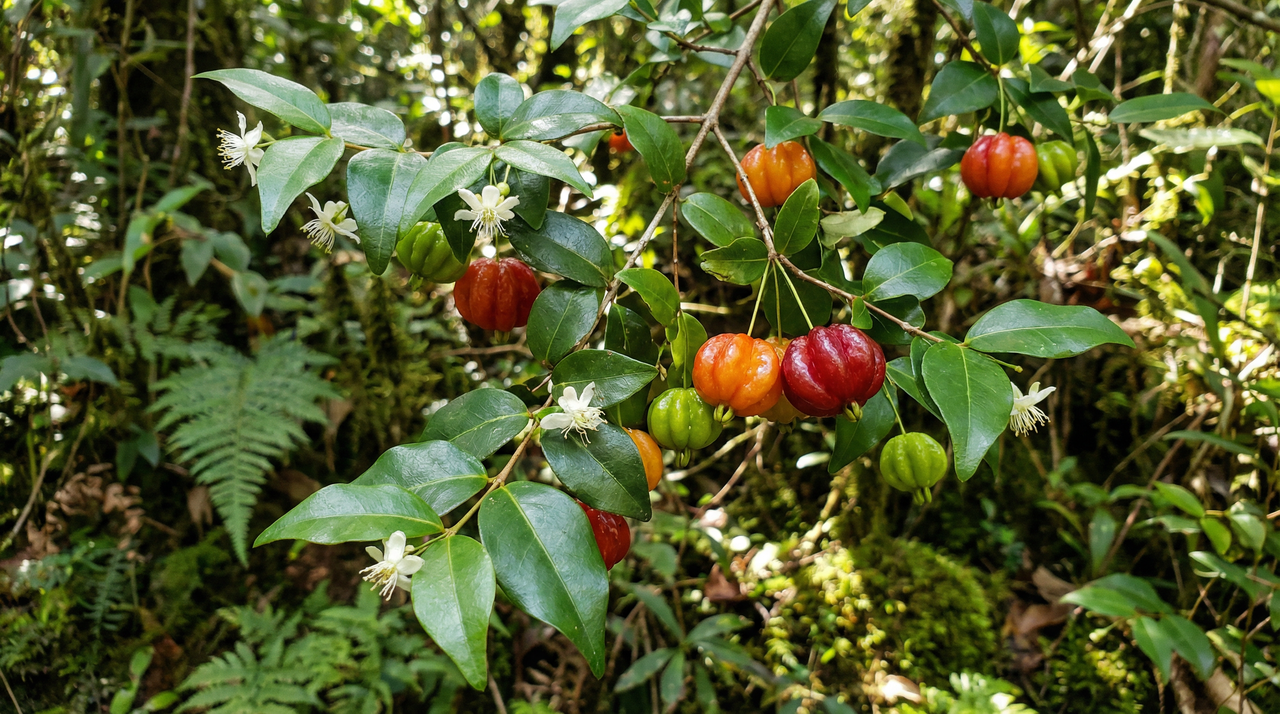
The first time I handed someone a Surinam cherry straight off the bush, they popped it in their mouth expecting something sweet and simple, and their face did this slow, confused scrunch. Not bad. Not good. Just... unexpected. That's the thing about Eugenia uniflora that nobody quite prepares you for: it smells faintly of turpentine when you crush the leaves, the unripe fruit tastes like a resinous mistake, and yet given another week on the branch, that same little ribbed globe transforms into something genuinely addictive, all cherry and pineapple and a warm aromatic finish you can't quite name. The gap between a fruit that's almost ripe and one that actually is might be the widest flavor chasm I've encountered in twenty years of growing edibles.
Most gardeners in Florida know this plant as a hedge. A tidy, glossy-leaved, fast-growing hedge that their neighbors have too, clipped into submission along a fence line, fruiting quietly and mostly ignored. What they don't always know is that they're sitting on one of South America's oldest cultivated fruits, a plant with deep roots in indigenous food traditions, a documented pharmacological profile researchers are only beginning to take seriously, and a spreading habit that's landed it on Florida's invasive species watch list. That combination of beauty, utility, and ecological complexity is exactly why it keeps showing up in my design conversations, and why it deserves a much closer look than it usually gets.
Surinam Cherry Origin, History, and Botanical Background
Surinam cherry (Eugenia uniflora) is a child of the Atlantic Forest, native to the coastal and interior edges of eastern South America spanning Brazil, Paraguay, Uruguay, and northern Argentina.[1][2] In the wild it turns up everywhere from coastal dune scrub and restinga thickets to forest understory and disturbed secondary growth, thriving wherever mean annual temperatures stay above 18°C and rainfall lands in that 1,000 to 2,000 mm sweet spot.[3] It's a plant genuinely comfortable at the edges of things, which, as I've come to appreciate, tells you a lot about how it'll behave in your garden.
Botanically, Eugenia uniflora is a polycarpic evergreen shrub or small tree with grayish-brown bark that starts smooth and gradually fissures and peels with age; young stems flush that distinctive reddish-purple before settling to gray.[1][4] In cultivation most plants live 20 to 50 years, though wild specimens in ideal native conditions can push 80 to 100 years.[2][5] In my experience, a plant kept as a pruned hedge seems to reach its limits sooner than one allowed to grow into full tree stature; the hedge form works harder and fruits heavily but does seem to age faster, which is worth factoring into long-term design decisions.
The leaves are the first thing that catch my eye during site assessments: opposite, glossy dark green, 3 to 7 cm long, with that unmistakable reticulate venation raised above the surface like a net pressed into leather.[4][6] Once you know that texture, you're unlikely to mix it up with strawberry guava or acerola, though several Myrtaceae relatives, including grumichama and brush cherry, require close expert inspection to separate with certainty.[1][7] The fruits are equally distinctive, ripening through a whole crayon box of colors from green to yellow-orange to bright red to deep purple depending on form, with that recognizable musky-sweet aroma and the signature eight-ribbed silhouette.[8] The plant has a fibrous root system without a pronounced taproot and shows notable phenotypic plasticity, growing taller and more vigorous in wet tropical climates and staying compact with smaller leaves in drier or cooler zones.[5][9]
Traditional and Cultural Uses of Surinam Cherry
Carl Linnaeus formally described Eugenia uniflora in 1763 from specimens collected in Surinam, giving the plant its scientific name and its common one in a single stroke.[10] By then, Dutch and Portuguese traders had already been moving the plant around for well over a century, carrying it into European botanical gardens and eventually to Florida around 1886 and Hawaii sometime in the 1800s, initially for its ornamental appeal and edible fruit.[11]
Long before European interest, indigenous peoples across South America, including the Guarani and Tupi, had worked Surinam cherry deeply into their medicine systems. These cultures developed highly specialized preparations from the leaves, bark, and fruit to treat a range of ailments that modern pharmacology is now systematically investigating.[12][13] I've dried the leaves myself during hot Florida summers and can confirm the essential oils are intense, especially when the air is humid; it makes the cultural logic of a strong medicinal tea feel entirely intuitive. Ripe fruits carried their own cultural weight too, turning up in jams, wines, and syrups, and often featured in Brazilian folklore around health, fertility, and purification ceremonies, sometimes even as a source of dye for textiles and body painting.[14] Modern pharmacological research has since confirmed what those traditions pointed toward: flavonoids and other bioactive compounds backing up the antioxidant, antimicrobial, and anti-inflammatory applications in the ethnobotanical record.[14]
Fun Facts About Surinam Cherry
Back in its native range, Surinam cherry functions as a genuine pioneer species, colonizing coastal dunes and restinga margins with help from its thick, salt-tolerant leaves and an adaptable root system that handles drought without drama.[4][15] That ecological toughness is exactly what made it such an appealing ornamental export. It's also exactly what makes it a problem in Hawaii and parts of Florida today, where prolific fruit production and enthusiastic bird dispersal have allowed it to spread into sensitive native ecosystems and suppress local plant diversity.[2][5] I've pulled seedlings from client landscapes in Central Florida that seeded themselves a surprising distance from the mother plant; the mockingbirds and cardinals are efficient distributors. It's a reminder that the same traits that made this plant a beloved backyard fruit across the subtropical world also demand real mindfulness from anyone planting it today.
Surinam Cherry Varieties and Where to Buy
Notable Cultivars of Eugenia uniflora
Part of what makes Surinam cherry so appealing as a landscape plant is how much variation breeders and collectors have managed to coax out of it. The fruit alone can ripen anywhere from cherry red to deep purple-black to pale yellow or even pink, and the size and shape ranges from round to slightly pear-like depending on which cultivar you're growing.[16][17] That's a genuinely wide palette for a single species, and it means growers can select cultivars based on exactly what they need from the plant.[5]
For fruit production, the named cultivars offer real advantages over the common seedling type, which tends to produce smaller, more acidic fruit. 'Sweet' gives you larger, sweeter berries, 'Select' is a compact producer that fits smaller spaces, and 'Red Ripe' is worth seeking out specifically for its deeper color and improved disease resistance. If maximum sweetness is the goal, the black surinam cherry types like 'Black Cherry' and 'Black Diamond' are standouts: deeply pigmented, larger, and noticeably sweeter than the red standard.[5][18] I've seen the dark-fruited selections referred to in the trade as Zill dark surinam cherry and Zills black surinam cherry, reflecting their origin from the late Gary Zill's legendary South Florida collection. That lineage matters: these aren't just marketing names, they represent real selection work toward superior flavor.
A brief word on botanical varieties: var. foetida is the one to be aware of if you're growing from unverified seed, since it produces fruit with a notably skunky aroma that most people find off-putting. I've run into the occasional foetida-type seedling in propagation batches, which is exactly why I now insist on named cultivars for any client planting where aroma and flavor matter.[17]
On the ornamental side, 'Variegata' is my go-to recommendation for clients who want a low-maintenance evergreen hedge with year-round visual interest. The cream and green foliage is genuinely attractive, and because fruit drop isn't the priority, it sidesteps some of the management considerations that come with heavy-producing types. For patio gardeners or anyone working in tight quarters, 'Fructicosa' is a dwarf fruiting form bred specifically for containers, and I've found it reliably productive in large pots even when root space is limited. 'Pink Diamond' rounds out the ornamentals with pinkish fruit and distinctive foliage, though it's considerably harder to source.[5]
Sourcing Surinam Cherry Plants and Seeds
Before you order anything, geography matters here. Surinam cherry is a Category I invasive species in Florida and is also listed as invasive in Hawaii, meaning it actively displaces native vegetation in those ecosystems.[19][20] I only recommend it to clients outside its invasive range, or in genuinely contained situations where fruit and seed dispersal can be actively managed. As a Myrtaceae family member, it also falls under USDA APHIS import restrictions tied to the risk of Myrtaceae rust (Austropuccinia psidii), so bringing in plant material from overseas isn't straightforward.[21]
Within the US, the plant is well-suited to USDA zones 9-11 and commercially available from a solid handful of specialty tropical nurseries: Logee's Greenhouses, Florida Hill Nursery, Moon Valley Nurseries, San Marcos Growers, Plant Delights, High Country Gardens, and Jackson and Perkins all carry it at various times.[8][22][23][24][25][26] It is not currently listed as a restricted plant in California, so growers in that state have straightforward access.[27] Seeds are available through Trade Winds Fruit, Rare Exotic Seeds, and Logee's, typically running $5-15 for a packet of five to ten seeds.[28][29]
Whenever I'm buying plants for a client installation, I look for vigorous foliage with good color, a well-developed root system that isn't circling or pot-bound, and zero signs of pest or disease pressure before anything leaves the nursery.[30] In tropical climates you'll find nursery stock year-round, but if you're in a cooler part of zone 9, spring purchases give you the full growing season to get the plant established before any winter chill arrives.
Surinam Cherry Propagation and Planting Guide
Getting a surinam cherry established starts with a decision: are you growing from seed for the sheer joy of it, or do you want reliable fruit from a known cultivar as soon as possible? Both paths work, but they're genuinely different experiences, and understanding the biology of Eugenia uniflora seeds makes that choice much easier.
Seed Characteristics, Viability, and Germination
The seeds themselves are little architectural oddities: obovoid to ellipsoidal, roughly 8-12 mm long with a hard woody endocarp and a horseshoe-shaped embryo inside.[31] They're designed by evolution to pass through birds and mammals, which partly explains the tough coat. What the coat doesn't protect against is drying out. These are recalcitrant seeds, meaning they don't tolerate desiccation the way a bean or tomato seed does, and viability crashes fast once they lose moisture.[32] Unlike the tomatoes I save and store through winter, surinam cherry seeds give you roughly one shot. I've learned to sow them the same day I clean the fruit, and I haven't looked back.
Sow fresh into warm, humid conditions (25-30°C, 80-90% humidity) and you can expect 70-90% germination in 2-4 weeks.[5][11] If you absolutely must hold seeds, moist storage at 15-20°C can preserve about 80% viability for up to nine months, but decline accelerates sharply after twelve months and is essentially negligible past two years.[32] A 24-48 hour warm-water soak can improve rates on any seed that's been sitting.[11]
Here's the part that consistently surprises new growers: each seed is polyembryonic, producing 2-5 seedlings from a single pit.[5][33] I routinely get 3-4 plants from a single pit, which is a delightful problem to have but makes labeling trays essential if you're tracking selections. One of those embryos is zygotic (genetically unique from cross-pollination), while the others are clones of the mother plant. That zygotic seedling is why seed-grown plants are unpredictable in fruit size, flavor, and production; they're simply not true-to-type.[5] For rootstock production or exploring new genetics, seeds are perfect. For replicating a specific sweet, dark cultivar? You need vegetative propagation.
Vegetative Propagation Methods
Semi-hardwood cuttings are the most accessible option for home growers. Take 10-15 cm sections in late spring or summer, treat with IBA rooting hormone at 1000-3000 ppm, and stick them into a sterile perlite/peat or sand/vermiculite mix. Maintain temperatures around 21-24°C with 80-90% humidity and you'll see roots in 4-8 weeks at 50-80% success.[34][35] Air layering works in a similar timeframe (4-6 weeks, 60-80% success), and grafting via whip-and-tongue, cleft, or veneer methods achieves 50-80% success in warm spring conditions using E. uniflora rootstock.[5][36] The practical payoff is significant: vegetatively propagated plants fruit in 1-4 years, while seedlings typically need 3-5 years to produce their first crop.[5][37]
Soil, Site Selection, and Planting Requirements
In its native Atlantic Forest, surinam cherry grows in nutrient-poor, acidic sandy loams, which tells you a lot about what it actually needs. Well-drained, slightly acidic to neutral soil in the pH 5.5-7.0 range is the sweet spot, though it tolerates as low as 5.0 and as high as 7.5 without immediate collapse.[5][6] Above pH 7.5, iron chlorosis sets in fast; I always amend with sulfur or pine bark if a soil test comes back alkaline, because I've watched young plants yellow within weeks in Florida's limestone-influenced soils and recover dramatically once corrected.[5][38] Drop below pH 5.0 and you risk aluminum toxicity going the other direction.
Drainage is non-negotiable. Waterlogged roots invite Phytophthora and similar pathogens quickly, showing up as yellowing leaves, wilting, and dark mushy roots before you even realize there's a problem.[5] In heavy clay, I dig wide, amend generously with organic matter (5-10 kg per planting hole), and plant on a slight mound.[5] Mycorrhizal inoculants are worth adding at planting; they significantly improve phosphorus uptake in the low-fertility soils where this plant naturally thrives.[5] For light, full sun (6+ hours direct) is the goal; partial shade is tolerated but produces leggier growth and noticeably lower yields.[5]
Spacing, Timing, and Transplanting Techniques
Mature plants reach 10-20 feet tall and wide, growing at a moderate 1-2 feet per year with a dense, multi-stemmed canopy and a shallow root system that can spread 15-20 feet laterally.[5][8] For individual garden specimens, 10-15 feet of spacing works; for hedging, 8-10 feet is sufficient.[5] In my own guild plantings, I go to the wider end of that range. The canopy fills in faster than most people expect, and those shallow roots compete aggressively for surface nutrients with companion herbs. Closer planting early on was a mistake I made once; the fruiting on the affected plants was noticeably weaker until I thinned them out.
Plant in spring after any frost risk has passed, starting seeds indoors 6-8 weeks early at 70-80°F or transplanting rooted cuttings once they've reached 6-12 inches.[8] In humid climates, triangular orchard spacing improves airflow around the dense canopy and reduces fungal pressure. Before you plant, check your county's invasive species list; surinam cherry is restricted in parts of California, and responsible permaculture design means making sure your plants can't escape into local ecosystems.[39] These first few weeks of establishment are genuinely the make-or-break window; get the soil, drainage, and spacing right here and you're setting up a plant that can produce for decades.
Surinam Cherry Care Guide: Sunlight, Water, Feeding, and Seasonal Maintenance
Surinam cherry is a tropical evergreen at its core, and once you understand that, most of the care decisions make intuitive sense. It wants warmth, consistent moisture, and good light. Push too far outside those parameters in any direction and it tells you immediately, which I actually appreciate in a fruiting shrub. The leaves are an honest diagnostic tool, and after several seasons growing this plant as a productive hedge in my Central Florida landscape, I've learned to read them well.
Sunlight Requirements for Optimal Growth and Fruiting
Full sun is where this plant earns its keep. At least 6 hours of direct light daily is the baseline, and full sun all day is genuinely optimal for heavy fruit production.[40][41] In hotter regions, some afternoon shade protects against scorch, and the plant does come from Atlantic Forest edges where filtered light is common.[42] In Florida summers, though, I've seen young plants bleach fast if they're moved from shade to full sun without hardening off first. Too little light shows up as etiolated, stretched growth with smaller leaves and poor fruit set; too much on an unprepared plant causes the kind of leaf scorch that stalls a young tree for weeks.[43]
Watering Needs and Drought Tolerance
Consistent moisture without waterlogging is the rule. During the growing season, water every 2-3 days when the top inch or two of soil is dry; established plants do well with about an inch to two inches of water per week, or deep watering every 7-14 days.[44][45] Mulch is my number-one water-saving tool in subtropical summers where you swing from afternoon downpours to two-week dry stretches; a good mulch layer smooths out both extremes. Young plants and container-grown specimens need more attention than established ones, and during flowering and fruiting above 80°F, steady soil moisture directly affects yield.[46] I learned that the hard way my first dry spring: I trusted the moderate drought tolerance a bit too early and got significant fruit drop. Come winter, scale back to every 2-4 weeks, and don't let soggy soil linger, because overwatering is one of the fastest routes to Phytophthora root rot.[8]
Feeding, Soil pH, and Nutrient Management
This is a moderate feeder, though it shifts toward heavy when it's carrying a full fruit load. A balanced fertilizer in the 8-3-9 or 6-6-6 range applied 3-4 times per year through spring and fall is the standard approach; young trees do better with lighter, more frequent applications every 4-6 weeks to avoid pushing lush vegetative growth at the expense of fruiting.[5][18] Always run a soil test first, because pH drives everything here. The target range is 6.0-6.5, and outside that window the plant struggles to access iron and zinc regardless of how much fertilizer you apply.[18] The interveinal yellowing on young leaves that signals iron deficiency looks almost identical to what I see on my gardenias in high-pH spots. A chelated iron drench paired with a pH correction brings both back quickly, and it's a good reminder that soil chemistry is always the first diagnosis, not more fertilizer.[47] Organic compost and slow-release formulations are my preference in high-rainfall areas where leaching is a constant concern.[48]
Frost Tolerance and Winter Protection
The thin, glossy leaves give away its tropical origins: there's almost no insulating mass there, so when temperatures drop below about 28-30°F, damage happens fast.[5][49] Mature plants recover from brief cold snaps better than young ones, but tip dieback and leaf drop are the predictable results of any hard freeze. My winter routine in zone 9B is simple but not casual: heavy mulch around the base, old bedsheets ready to go, and I act at the first forecast below 32°F.[5] One year I waited on a 28°F forecast and lost a season of tip growth. The plant came back by spring, but I haven't delayed since. For growers in marginal climates, container culture with a move indoors above 50°F is the reliable solution, and site selection on a sheltered south-facing wall with good air drainage is the first line of defense for in-ground plants.[18]
Heat Tolerance and Stress Management
Surinam cherry is genuinely comfortable in the heat, performing well in AHS Heat Zones 10-12 and tolerating brief spikes above 95°F when humidity and moisture are adequate.[18][50] The trouble comes when prolonged heat above 90°F combines with dry soil, which causes blossom drop and cuts yield noticeably. In my July garden I've found that a bit of shade cloth on young plants during the most intense afternoon sun prevents exactly that pattern, keeping early summer fruiting on track.[18] Mature, acclimated plants handle the heat far better than seedlings or recently transplanted shrubs, whose shallow roots can't buffer soil temperature swings the same way.[8]
Pruning, Maintenance, and Seasonal Rhythm
I keep my surinam cherry bushes at 6-10 feet through annual tip-pruning, and I'd recommend that approach to anyone growing them in a mixed guild or food forest hedge. At that size harvesting is easy, airflow stays good, and the plant integrates naturally alongside taller canopy without crowding its neighbors.[5] For young trees, pinch the main leader early at 3-4 feet to encourage branching. On established plants, light annual pruning in late winter or right after the fruiting flush in late summer handles dead wood, crossing branches, and tip growth; avoid heavy cuts, which suppress flowering the following season.[51] Prune in dry weather to reduce disease entry through fresh cuts. As an evergreen, the plant doesn't go dormant, but in subtropical climates it does slow significantly in winter, and that's the right cue to dial back fertilizer and water until the spring flush kicks off again.[5] Working with that seasonal rhythm rather than against it keeps the plant productive without requiring heavy inputs.
How to Harvest Surinam Cherry
When to Harvest Surinam Cherry: Timing, Ripeness Cues, and Seasonal Patterns
In subtropical Florida, Surinam cherry runs from May through November with the heavy production clustering in June, July, and August.[18] In Brazil and other true tropical climates, it fruits year-round but peaks during the rainy season, roughly November through March.[52] What I love about this plant is the flush behavior: you don't get one long harvest, you get two or three distinct waves per year in subtropical settings, which means your kitchen gets batches of fruit rather than one overwhelming avalanche.[18]
Reading ripeness is genuinely intuitive once you've done it a season or two. Fruit moves from green and firm through glossy bright red (solidly edible) to deep purple-black (fully ripe and at its aromatic peak).[7][18] You'll also notice the fruit softens slightly and practically lets go of the stem on its own. Sources cite various timelines from flower to ripe fruit, ranging from 20-30 days to as long as 90-120 days with additional ripening time after color change.[18][7] Those figures aren't contradictions; they describe different developmental stages. In my experience, tracking color change is the most reliable practical cue. When that ribbed globe goes glossy and releases with the lightest tug, it's ready.
How to Harvest and Handle Surinam Cherry Fruit for Best Flavor and Storage
Pick every two to three days during peak season.[18] Think of it like harvesting strawberries: skip a few days and you'll find fruit on the ground, fruit flies circling, and birds ahead of you. A gentle pull is usually all it takes; if a stem resists, a quick snip with small shears avoids tearing at the branch. I've learned to check my trees daily in the height of summer rather than trust every-other-day rounds.
Refrigerate fruit the same day you pick it. At room temperature shelf life runs only three to seven days; refrigerated at around 8-12°C (46-54°F) with 85-90% humidity, you can get one to two weeks of good eating.[18][53][54] Store them in perforated bags to prevent mold, and if you're overrun, freeze them. Waiting even 24 hours at room temperature noticeably shortens usability. Prompt cooling is non-negotiable with this fruit.
Surinam Cherry Yield and Flavor Profile
The reward for all that attentive picking is real. Ripe Surinam cherry has thin, crisp skin and juicy aromatic flesh around one central seed, with a sweet-tart profile that people commonly describe as cherry, pineapple, strawberry, and grenadine all at once, sometimes with a mildly spicy or resinous edge.[5][55] That resinous note is real and varies considerably; I find it almost disappears in warm summers when the fruit ripens fully on a warm tree, and becomes more prominent on fruit picked even slightly early or grown in cooler conditions.[56][18] The green fruit, by contrast, is astringent and aggressively acidic. Full tree-ripening is what separates the fruit people love from the fruit that puts them off.
Mature trees between five and ten years old can yield 10-50 kg of fruit per season.[18][17] A healthy eight-year-old tree in good soil has easily filled a five-gallon bucket for me in a single flush. Whether you're eating them fresh, making jam, or processing juice, that volume adds up fast and makes prompt harvesting and a plan for the fruit both genuinely important.[5]
Surinam Cherry Preparation and Uses
Culinary Uses of the Sweet-Tart Fruit
The surinam cherry fruit is edible straight off the shrub with nothing more than a rinse, and in my yard that's exactly how most of them get eaten.[1][18] After several seasons growing these in Central Florida, the single lesson that changed everything for me was learning to wait. I used to pick at the bright orange-red stage and wonder why some people loved them; once I started waiting for the fruit to turn deep burgundy and yield slightly to pressure, that faintly resinous note practically vanished, leaving behind the sweet-tart burst of pineapple, strawberry, and apple that makes this fruit genuinely addictive.[17] The whole fruit is edible -- juicy pulp, thin skin and all -- though the skin carries a hint of bitterness and the single hard seed in the center gets spit out like an olive pit; it's not toxic, but the texture makes it a choking hazard around small children, so I always core the fruit when cooking for families.
Beyond fresh snacking, surinam cherry recipes run the full range. The high vitamin C and anthocyanin content hold up beautifully through cooking, so surinam cherry jam and surinam cherry jelly are the most popular ways to preserve the harvest.[17] I've also made syrups for cocktails, a tangy juice that's fantastic over ice, and a rough country wine that turned out far better than it had any right to. If a glut hits and you can't process it all, sliced fruit dries down into something remarkably raisin-like, with concentrated flavor that holds well in granola or baked goods.
Traditional Medicinal Preparations and Non-Food Uses
The leaves have their own story entirely. As highlighted in the medicinal profile, Eugenia uniflora leaf preparations have a robust history of providing soothing relief for common ailments.[57][13] I dry a small batch of leaves each season and steep them as a mild herbal tea, particularly during winter colds. The flavor is slightly earthy and aromatic, nothing harsh. I wouldn't overclaim what it does, but it's pleasant, and that tradition of antimicrobial and anti-inflammatory support has real ethnobotanical depth behind it.[58][59]
As a landscape element, surinam cherry earns its keep even when it's not fruiting. The glossy evergreen foliage, fragrant white flowers, and colorful fruit make it one of my favorite dual-purpose ornamentals for zone 9B clients.[8][60] I'll often recommend it over viburnum for hedges where someone wants more from their landscape than just a green wall. The flowers themselves aren't used in food or medicine, but they're cheerful, fragrant, and reliably visited by pollinators before giving way to the next flush of fruit.
Surinam Cherry Health Benefits
When I first started growing Eugenia uniflora in my Central Florida garden, I thought of it mainly as an ornamental hedge with a bonus crop. The more I dug into the research, the more I started treating it as a genuinely nutritious food plant with a fascinating pharmacological story behind it. That said, it's a story still being written, and I think it's worth separating what the science actually confirms from what it merely suggests.
Traditional Medicinal Uses in South America
Brazilian and other South American communities have used Surinam cherry for centuries in ways that go well beyond eating the fruit fresh. Leaf decoctions were brewed as teas for diarrhea, dysentery, and respiratory complaints like coughs and colds, while the fruit was eaten to reduce fever and inflammation. Wounds were treated with preparations using various plant parts as a topical antiseptic.[61][62][63] The breadth of that traditional use list reads like a folk pharmacy, and what's compelling is that modern science has started to find plausible mechanisms behind many of these applications -- though it hasn't confirmed them in clinical trials yet.
Key Phytochemicals and Their Roles
The chemical complexity of this plant is genuinely impressive. Fruits and leaves contain flavonoids including quercetin, kaempferol, myricetin, and rutin; phenolic acids like gallic, ellagic, and chlorogenic acids; anthocyanins including cyanidin-3-glucoside; tannins; carotenoids; and high levels of vitamin C. Leaf extracts run even higher in total phenolics, ranging from 50 to 100 mg gallic acid equivalents per gram dry weight.[64][65] The essential oils in the leaves are dominated by sesquiterpenes, with β-caryophyllene, α-pinene, limonene, and linalool making up much of the composition, though the exact profile shifts depending on where the plant was grown.[66][67] Environmental stress, soil nutrients, and climate also affect secondary metabolite concentrations, with antioxidant activity peaking at full fruit maturity and flavonoid levels sometimes rising under drier conditions.[68] I've noticed that fruit from my plants during the hotter, drier parts of the year seems to carry a sharper, more pungent character, which lines up with what the research says about stress-elevated bioactives.
Studied Pharmacological Properties
The preclinical science here covers a lot of ground. Antioxidant activity is probably the most thoroughly documented area, with leaf and fruit extracts shown to scavenge free radicals, inhibit lipid peroxidation, and boost endogenous antioxidant enzymes like superoxide dismutase and catalase.[69][70] Anti-inflammatory effects have been demonstrated through suppression of the NF-κB signaling pathway and reductions in pro-inflammatory cytokines including TNF-α, IL-6, and COX-2 expression.[62][71] Extracts also show antimicrobial activity against Staphylococcus aureus and Candida albicans, with essential oils particularly effective against Gram-positive bacteria.[72] Antidiabetic potential via α-glucosidase inhibition, with IC50 values comparable to acarbose, has been shown in vitro and in diabetic rat models.[73][74] Preliminary analgesic effects comparable to aspirin and early-stage anticancer activity in breast and prostate cell lines round out the picture.[75][76] There's even neuroprotective potential through acetylcholinesterase inhibition.[77] I find all of this genuinely exciting, but I've watched too many promising herbs over the years fail to deliver the same results in humans that they showed in lab cultures or rodent models. Human clinical trials for Eugenia uniflora remain sparse.[78] My working approach is to treat this as a nutritious food first and a medicinal candidate second.
Nutritional Profile of the Fruit
As a food, the ripe fruit is straightforwardly worthwhile. Per 100 grams, it delivers roughly 50 calories, 80 to 85 percent water, 10 to 15 grams of carbohydrates with up to 4.5 grams of fiber, and a modest hit of potassium, calcium, iron, and magnesium.[79][80] Vitamin C ranges from 20 to 50 mg per 100g, though ripe fruit from certain Brazilian cultivars can push well past 100 mg.[81] That variability is real -- fruit from my plants in a hot, humid summer tastes brighter and more tart than what I've harvested in cooler months, and chemical analyses directly show that ripeness, cultivar, and growing conditions all significantly affect nutrient content.[82] Cooking causes 20 to 50 percent vitamin C loss, so fresh-picked, fully ripe fruit is the gold standard if you want maximum nutritional return.[83] The anthocyanins that give dark-ripened fruit its deep color and the quercetin derivatives and ellagic acid scattered throughout contribute meaningfully to the overall antioxidant load -- the same reason I started harvesting mine more intentionally rather than just snacking when I happened to walk by the hedge.
Safety Considerations and Potential Risks
The ripe fruit pulp is safe to eat; it's been a staple food in tropical regions for generations with no documented toxicity at normal consumption levels.[49][18] The seeds are a different matter. They contain cyanogenic compounds and should not be eaten; wash the fruit thoroughly and extract the pulp without crushing the seed.[84][85] Leaves, unripe fruit, and bark contain tannins, saponins, and essential oils that can cause nausea, vomiting, diarrhea, or drowsiness in quantity; toxicity is dose-dependent, and serious human cases are uncommon with proper handling.[86] In my work with edible landscape clients, I always say the same thing: the fruit is a delight, but the seeds stay out of mouths and out of the compost.
For anyone managing diabetes or blood pressure with medication, the antidiabetic and hypotensive activity documented in preclinical studies becomes a legitimate caution -- there's real potential for additive effects with antidiabetic or antihypertensive drugs.[87][88] The plant is contraindicated during pregnancy and breastfeeding due to insufficient safety data and possible uterine stimulant effects. Sensitive individuals may experience dermatitis from sap contact, and those prone to kidney stones should note the oxalate content. People with Myrtaceae family sensitivities may also react to the plant's compounds.[89] I personally stick to ripe fruit and skip the leaf teas unless I'm working with a practitioner who knows the full medication picture -- and I strongly recommend clients do the same.[18] Children and livestock face higher risk from any non-fruit parts, so placement in family gardens deserves a moment of thought.
Pests and Diseases of Surinam Cherry (Eugenia uniflora)
Common Insect Pests and Natural Resistance
The pest that keeps most surinam cherry growers up at night is fruit flies, specifically Anastrepha spp., which lay eggs in ripening fruit and cause larval infestation and premature drop before you even get to taste anything.[5][90] In my zone 9B garden, pressure peaks through the humid Florida summers, and I've learned the hard way that trying to spray an entire canopy is mostly theater. What actually works is bagging clusters of developing fruit on young trees and walking the garden every morning during fruit set, looking for the tiny puncture marks that tell me flies have arrived before the damage spreads.
Beyond fruit flies, the usual sap-feeding suspects show up: aphids, mealybugs, scale, and leaf miners that leave behind honeydew, sooty mold, and those telltale serpentine trails across the foliage.[5][18] What I find reassuring is that surinam cherry handles these pressures considerably better than guava does, thanks to a real chemical arsenal: phenolics, flavonoids, ellagitannins, essential oils including α-pinene and limonene, and tannins distributed through leaves, fruits, and trichomes.[91][92][93] When I crush a leaf while pruning, that sharp, spicy-tart aroma is a direct sensory reminder that the plant is actively protecting itself. The glandular trichomes even feel slightly tacky to the touch, and that stickiness is functional: they trap and repel small herbivores through defensive exudates.[94]
For IPM, cultural steps do most of the work: prune for airflow, remove fallen fruit promptly, and avoid overhead watering.[95] Ladybugs handle aphid colonies, and parasitic wasps help suppress fruit fly populations biologically.[96] I reach for spinosad or horticultural oil only when monitoring confirms a genuine threshold breach, never as a preventive spray. Cultivar selection helps too: 'Select,' 'Falombe,' and 'Black Beauty' show noticeably improved tolerance to fruit flies and scale compared to wild types, though no selection is completely immune.[18][97] Eugenia psyllids can occasionally cause leaf galls that reduce photosynthesis, but I see this far less frequently than the fruit fly and scale issues.[98]
Fungal and Bacterial Diseases
Surinam cherry has moderate overall disease resistance, but two problems genuinely matter in humid subtropical gardens: Phytophthora root rot and anthracnose.[18][99] If I see wilting on a newly planted surinam cherry, the first thing I check is drainage. I've lost more plants to overwatering than to any pest, full stop. Phytophthora thrives in waterlogged, cool, wet soils and moves fast once established.[100] Anthracnose (Colletotrichum spp.) is the other headliner, showing up as leaf lesions and fruit rot that can trigger defoliation when humidity stays high and air moves poorly.[101]
Rounding out the disease list are Cercospora leaf spots, rust (Puccinia eugeniae), powdery mildew, Botryosphaeria canker, and occasional bacterial leaf scorch.[18][102] Nearly every disease complaint I've fielded traces back to the same three cultural mistakes: waterlogged soil, stagnant air, or overhead irrigation left running into the evening.[18][100] Compared to guava, surinam cherry shares the anthracnose and Phytophthora vulnerabilities but is less prone to wilt diseases, which is one reason I keep recommending it to clients who've struggled with guava in wet spots.[103] For clients whose gardens stay persistently damp after summer rains, I steer them toward 'Rita' or 'Black Beauty'; I've watched both show noticeably less leaf spotting season after season compared to unnamed seedlings.[97]
When cultural prevention isn't enough, copper-based fungicides address leaf spots, phosphonates treat Phytophthora, and Bacillus subtilis biofungicides cover a broad fungal range with a light environmental footprint.[18][104][105] Good drainage, sanitation, and a thoughtful cultivar choice will get you most of the way there without ever opening a sprayer. Sited well and monitored consistently, this plant is genuinely resilient.
Surinam Cherry in Permaculture Design
Every plant has a personality, and Surinam cherry's is complicated in the best and worst ways. It's productive, beautiful, ecologically generous, and in the wrong place, genuinely problematic. Getting the most out of it as a permaculture element starts with being honest about whether it belongs on your site at all.
Climate Adaptation and Hardiness Zones
Surinam cherry is reliably hardy in USDA zones 9-11, with zone 9B being roughly the northern edge of comfortable outdoor cultivation.[8][60] In my zone 9B garden, established plants shrug off brief dips into the mid-20s °F with maybe some leaf scorch and a set-back flush, but young plants are a different story. I blanket anything under two years old when temps threaten to drop below 28°F. That gap between seedling fragility and mature resilience is real, and worth planning around. The plant tolerates brief temperature dips to 20-25°F (-7 to -4°C) but prolonged frost is genuinely damaging.[106] Zone 8 growers can push it with microclimate placement or containers, but they're working against the plant's nature.
Its Atlantic Forest origins tell the climate story clearly: it wants 40-80 inches of annual rainfall, consistent warmth between 65-85°F, and humidity in the 50-80% range.[8][5] It handles short dry spells once established, but fruit production drops noticeably without consistent moisture. Florida, Hawaii, coastal Australia, and South Africa all offer suitable conditions, which is exactly why it's been so widely cultivated in those regions and exactly why it's caused problems there too.[60][107] In Hawaii it's a recognized serious invasive that alters soil chemistry through allelopathy and displaces native vegetation.[108] That's not a footnote; it's a dealbreaker for growers in those ecosystems.
Ecosystem Functions and Guild Roles
In its native Atlantic Forest, Surinam cherry behaves as a classic pioneer: it colonizes disturbed ground, forms dense thickets via prolific root suckers, and pulls an ecosystem back toward structure and complexity.[109][110] That colonizing energy is a genuine asset in a designed food forest, right up until it isn't. The same traits that make it a resilient pioneer also make it a management task in sensititve landscapes.
On the pollinator side, it earns its keep. The small white flowers attract a broad range of visitors, with bees doing the heavy lifting and butterflies, flies, and beetles rounding out the crew.[111][112] That mid-morning bee rush on a blooming surinam cherry hedge is one of the most reliable sights in my spring garden. The plant is self-compatible, but cross-pollination meaningfully improves fruit set and quality,[113] which is why I've planted borage and salvias nearby to extend the pollinator season and keep visitation high through the bloom window. Birds then disperse the ripe fruit, which drives regeneration in native habitats and, in Florida and Hawaii, fuels exactly the kind of rapid spread that earned it a FLEPPC Category 1 listing.[114][115] The bird dispersal and the invasiveness aren't separate issues; they're the same mechanism viewed from different distances. Leaf litter decomposes quickly and releases nitrogen and potassium back into the soil,[116] and I've watched soil tilth improve noticeably around established specimens over several seasons. That nutrient cycling is a real guild contribution, not a theoretical one.
Forest Layer Placement and Companion Planting
Structurally, Surinam cherry belongs in the shrub-to-understory layer. It grows 6.5-26 feet tall depending on how it's managed, tolerates up to 50% light reduction, and fits naturally beneath taller canopy trees in multi-story systems.[117][118] Think of it like a slightly more aggressive native beautyberry in terms of light flexibility, but with edible fruit and a stronger suckering habit. Pairing it with nitrogen-fixing canopy trees is the classic food-forest move here, and it works well. The roots go 1-2 meters deep, so spacing matters; crowding it against shallow-rooted companions causes competition that neither plant wins.[99]
Its guild contributions are genuinely stacked: edible fruit high in vitamin C and anthocyanins, pollinator habitat, wildlife food, pioneer stabilization, and soil improvement.[99][119] The glossy foliage and jewel-bright fruit also do genuine ornamental work; I've used it in client gardens where the eugenia uniflora hedge needed to look good from the street and also feed the family out back. That dual function is real, not a compromise. But in my part of Florida, I keep it well away from natural areas, monitor suckers consistently, and treat it as a high-reward, high-responsibility guild member rather than something I can plant and forget.[120] The plant rewards that attention. It also punishes the lack of it.
The Fruit That Taught Me to Stop and Actually Taste Something
I still remember the first time I bit into a truly ripe one, not the pale orange fruit I'd grabbed too early from a client's hedge, but a deep burgundy globe that came off the branch without any resistance at all. It stopped me mid-walkthrough. There's something about a plant that demands your full attention at exactly the right moment, and Surinam cherry has never let me forget that lesson.
Sources 120
- Eugenia uniflora ↩
- Eugenia uniflora (Surinam Cherry) ↩
- Eugenia uniflora ↩
- Eugenia uniflora ↩
- Surinam Cherry - Eugenia uniflora ↩
- Eugenia uniflora ↩
- Eugenia uniflora - Surinam Cherry ↩
- Eugenia uniflora ↩
- Eugenia uniflora - Useful Tropical Plants ↩
- Species Plantarum ↩
- History of Tropical Fruit Introduction in Florida ↩
- Eugenia uniflora: A Review of Traditional Uses and Pharmacological Activities ↩
- Traditional uses and medicinal potential of Eugenia uniflora: An overview ↩
- Eugenia uniflora L. (Myrtaceae): Chemistry, Traditional and Medicinal Uses, and an Updated Review on Its Pharmacological Activities ↩
- Eugenia uniflora (L.) (Surinam Cherry, Pitanga) ↩
- Pitanga (Eugenia uniflora) ↩
- Eugenia uniflora L. ↩
- Cultivar Evaluation of Pitanga (Eugenia uniflora) in Florida ↩
- 2023 List of Invasive Plant Species - Florida Exotic Pest Plant Council ↩
- Eugenia uniflora - Hawaii Invasive Species Council ↩
- Importation of Fruits and Vegetables Regulations - Myrtaceae ↩
- Surinam Cherry - Eugenia uniflora ↩
- Surinam Cherry Availability California ↩
- Surinam Cherry Trees for Sale ↩
- Pitanga - Eugenia uniflora ↩
- Eugenia uniflora - Cherry of Surinam ↩
- California Noxious and Invasive Weed Lists ↩
- Eugenia uniflora - Surinam Cherry Seeds ↩
- Pitanga Cherry - Eugenia uniflora - 5 seeds ↩
- University of Florida IFAS Extension: Horticultural Guidelines for Fruit Trees ↩
- Eugenia uniflora - Surinam Cherry ↩
- Seed Storage Behaviour of Eugenia uniflora ↩
- Polyembryony in Some Species of Eugenia (Myrtaceae) ↩
- Propagation of Surinam Cherry (Eugenia uniflora) ↩
- Rooting Cuttings of Eugenia Species ↩
- Grafting Surinam Cherry (Eugenia uniflora): Methods and Success Rates ↩
- Propagation and Culture of Surinam Cherry ↩
- Soil pH and Nutrient Management for Fruit Trees ↩
- Eugenia uniflora ↩
- Surinam Cherry - Eugenia uniflora ↩
- Eugenia uniflora Care - University of Florida IFAS Extension ↩
- Surinam Cherry - RHS Gardening ↩
- Missouri Botanical Garden - Plant Finder (Eugenia uniflora) ↩
- Eugenia uniflora: Propagation and Care Guide ↩
- Growing Surinam Cherry in the Home Landscape ↩
- Eugenia uniflora (Surinam Cherry) ↩
- Nutrient Deficiencies in Tropical Fruit Trees ↩
- Growing Tropical Fruit Trees in Florida ↩
- Eugenia uniflora (Surinam Cherry) ↩
- American Horticultural Society Heat Zone Map ↩
- Eugenia uniflora: Botany, Horticulture, and Potential ↩
- Pitanga (Eugenia uniflora L.) em Sistemas Agroflorestais ↩
- Harvesting and Postharvest Handling of Tropical Fruits ↩
- Postharvest Handling of Surinam Cherry (Eugenia uniflora L.) ↩
- Pitanga (Eugenia uniflora L.): Chemical Composition and Antioxidant Activity ↩
- Physicochemical Changes in Surinam Cherry during Ripening ↩
- Medicinal Uses of Pitanga (Eugenia uniflora) ↩
- Medicinal Properties of Eugenia uniflora ↩
- Uses of Pitanga in Traditional Medicine ↩
- Ornamental Horticulture of Eugenia uniflora ↩
- Eugenia uniflora: A Review of its Traditional Uses, Phytochemistry and Pharmacology ↩
- Pharmacological Activities of Eugenia uniflora: An Overview ↩
- Ethnobotany of Eugenia uniflora in South America ↩
- Phytochemical composition and antioxidant activity of Eugenia uniflora ↩
- Comparative Analysis of Proanthocyanidins in Leaves, Fruits, and Seeds of Eugenia uniflora Using HPLC-DAD-ESI-MS/MS ↩
- Essential oil composition of Eugenia uniflora ↩
- Geographical Variation in Essential Oils of Eugenia uniflora Leaves ↩
- Influence of Soil and Climate on Phenolic Compounds in Surinam Cherry ↩
- Antioxidant and Anti-inflammatory Properties of Pitanga Fruit ↩
- Pharmacological Activities of Eugenia uniflora: An Updated Review ↩
- Anti-inflammatory Activity of Eugenia uniflora Leaf Extract ↩
- Antimicrobial Activity of Eugenia uniflora Extracts ↩
- α-Glucosidase Inhibitory Effects of Eugenia uniflora Fruit Extract ↩
- Antidiabetic, hypolipidemic and antioxidant activities of Surinam cherry (Eugenia uniflora) in streptozotocin-induced diabetic rats ↩
- Analgesic Effects of Eugenia uniflora in Rodent Models ↩
- Induction of Apoptosis by Eugenia uniflora in Cancer Cells ↩
- Pharmacological Properties of Eugenia uniflora Linn. (Myrtaceae): A Review ↩
- ClinicalTrials.gov Search Results for Eugenia uniflora ↩
- Surinam-cherry, raw ↩
- Nutritional Composition of Eugenia uniflora L. Fruits ↩
- Vitamin C and Carotenoid Content in Tropical Fruits Including Eugenia uniflora ↩
- Effects of Ripeness and Storage on Nutrients in Eugenia uniflora ↩
- Bioactive Compounds and Health Benefits of Eugenia uniflora: A Review ↩
- Cyanogenic Glycosides in Eugenia uniflora ↩
- Surinam Cherry Toxicity - Poison Control ↩
- Toxicological Evaluation of the Leaves of Eugenia uniflora ↩
- Medicinal Uses and Safety of Pitanga - WebMD ↩
- Pharmacological Properties of Eugenia uniflora - NCBI ↩
- Pitanga (Eugenia uniflora) - Missouri Botanical Garden ↩
- Fruit Fly Management in Tropical Fruits Including Eugenia spp. ↩
- Pests and Diseases of Tropical Fruit Trees ↩
- Chemical Composition and Antioxidant Activity of Eugenia uniflora Leaves ↩
- Essential Oils from Leaves of Eugenia uniflora: Chemical Composition and Bioactivity ↩
- Leaf Trichomes and Secondary Metabolites in Myrtaceae Species Defense ↩
- Surinam Cherry Growing in the Florida Home Landscape ↩
- Integrated Pest Management for Fruit Crops ↩
- Pitanga: Botany, Production and Uses ↩
- Leaf Galls on Myrtaceae: Psyllid Interactions with Eugenia uniflora ↩
- Diseases of Tropical Fruit Trees: Eugenia uniflora ↩
- Phytophthora Root Rot of Woody Ornamentals ↩
- Anthracnose on Tropical Fruit Trees ↩
- Botryosphaeriaceae on Myrtaceae: A Review ↩
- Diseases of Myrtaceae Ornamentals ↩
- Phytophthora Root Rot in Ornamentals ↩
- Integrated Pest Management for Tropical Fruits ↩
- Eugenia uniflora L. ↩
- Surinam Cherry (Eugenia uniflora) - Hawaii Invasive Species Council ↩
- Eugenia uniflora - Invasive Species Compendium ↩
- Fruit dispersal in Brazilian restingas ↩
- Eugenia uniflora - Florida Plant Atlas ↩
- Neotropical Biology and Conservation (2020): Pollinator efficiency in E. uniflora ↩
- Pollination Biology of Eugenia uniflora in Brazil ↩
- Fruit Set and Pollinators in Surinam Cherry (Eugenia uniflora L.) ↩
- Florida Exotic Pest Plant Council 2023 Competitive Ranking List ↩
- Eugenia uniflora - Hawaii Invasive Species Council ↩
- Eugenia uniflora ↩
- Eugenia uniflora ↩
- Agroforestry Systems with Tropical Fruits: Case Studies from Brazil ↩
- Nutritional Composition of Surinam Cherry Fruits ↩
- Invasive Plant Species in Florida: Eugenia uniflora ↩