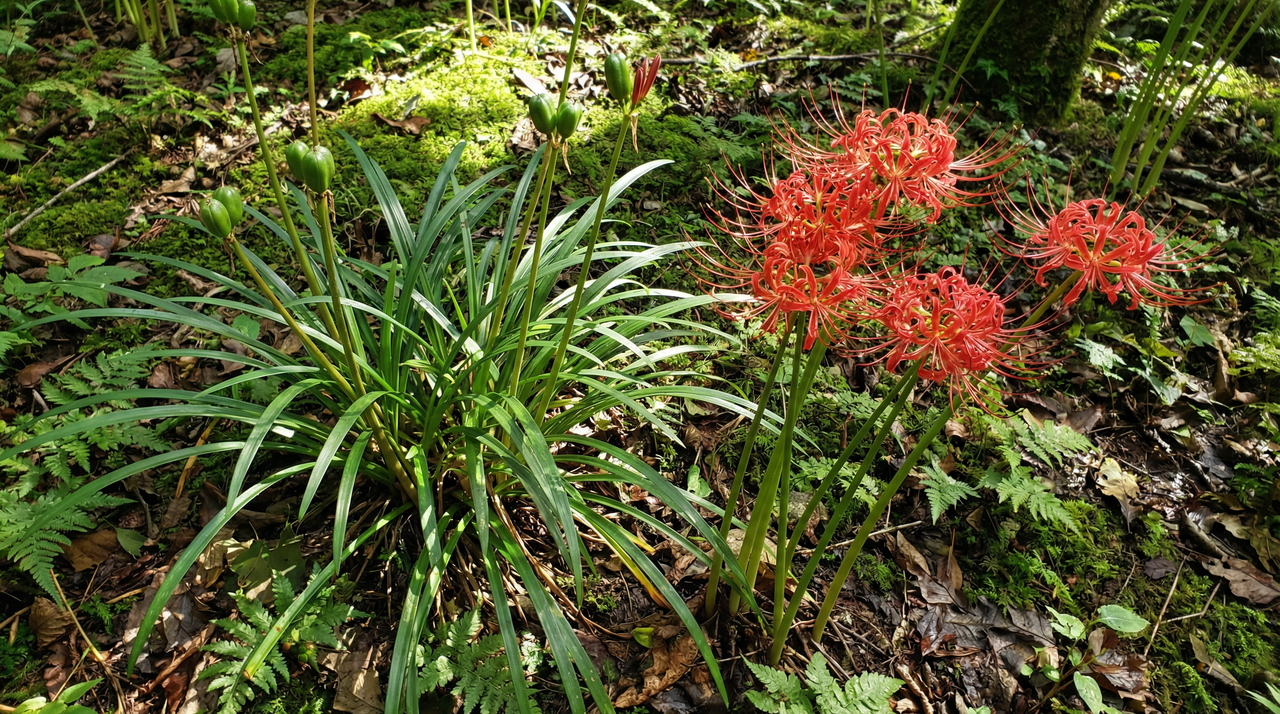
Every September, without a single leaf to warn you, bright crimson flowers explode out of bare ground like something went wrong. No foliage, no stem buildup, no gradual emergence. Just soil, then suddenly this: a cluster of spidery scarlet blooms on a naked stalk, appearing almost overnight after the first soaking rain. I've watched it happen dozens of times and it still stops me cold. Most flowering bulbs follow a tidy, predictable sequence that makes botanical sense. Surprise Lily ignores all of it, and that's not a quirk; it's the whole point of this plant.
What gets me is how many gardeners assume the bare stem means something went wrong, that the bulb is stressed, the foliage was accidentally mowed, the plant is dying. It's none of those things. The foliage already came and went in spring, quietly fueling the bulb while you were distracted by everything else in the garden. By the time those flowers arrive in late summer, the plant has been underground for months, biding its time, waiting for exactly the right rain.[1] That sequence is ancient, deliberate, and tied to a cultural history far deeper than most American gardeners realize when they first spot it naturalized along a Southern roadside.
Surprise Lily Origin, History, and Cultural Significance
Botanical Background and Native Range of Lycoris radiata
The surprise lily is native to a broad sweep of humid East Asia, from eastern and southeastern China through Japan's Shikoku and Kyushu islands, Korea, Taiwan, and into parts of southern Russia, where it colonizes deciduous forest edges, grassy riverbanks, open meadows, and disturbed slopes anywhere from sea level up to about 1,200 meters.[2][3][4] Its native climate sits squarely in the humid subtropical and hot-summer humid continental zones, with annual rainfall averaging 1,200 to 1,500 mm and seasonal moisture swings that shaped the plant's famously dramatic behavior.[5] Linnaeus formally described it in 1753 as Amaryllis radiata in Species Plantarum, already noting its Chinese origin.[6] By around the 1850s it had arrived in American gardens as an ornamental, and it has since naturalized across Georgia, South Carolina, Texas, Florida, and Louisiana without causing any ecological alarm.[7] That low-invasive, slow-spreading character matters a lot to me as a designer. In central Florida's zone 9b, I've watched established clumps persist for decades with virtually no intervention, which fits perfectly with the plant's documented lifespan of 15 to 30 years per bulb and well-maintained clumps potentially pushing past 50 years.[8][9] The IUCN lists it as Least Concern globally, though local populations face pressure from habitat loss and horticultural overharvesting, so sourcing responsibly matters.[10]
Visual Characteristics and Identification Features
The plant's defining trait is its hysteranthous phenology, meaning the leaves and flowers never appear at the same time. Strap-shaped dark green leaves emerge as a basal rosette in spring, grow 30 to 60 cm long, then quietly die back by early summer, leaving no trace of what's coming.[11][12] That absence is exactly where the "surprise" comes from. In late summer, naked scapes shoot up 30 to 70 cm from bare ground, each topped with an umbel of four to seven brilliant red flowers whose six tepals curl sharply backward in that unmistakable spider shape, with long exserted stamens arching outward another 5 to 7 cm.[12][13] The first time I saw a mature clump erupt like that against bare soil in a client's garden, I actually stopped and laughed. It looks exactly like someone buried a bouquet and forgot about it. The large tunicate bulb driving that performance can reach 5 cm across at maturity, and its seeds, when they form, are fleshy black globes with arils adapted for ant dispersal.[12][14] The whole plant is toxic due to lycorine alkaloids, a fact that threads through its entire cultural story.[15]
Traditional Cultural Uses in East Asia
The paper trail for this plant runs deep. Japan's Man'yōshū anthology, compiled around 759 CE, references it as higanbana, the equinox flower, making it one of the earliest botanically documented ornamentals in East Asian literature.[16] Li Shizhen catalogued it in the Bencao Gangmu in 1596 as 石蒜 (shí suàn), stone garlic, describing its medicinal applications with the careful attention that Chinese herbalists gave to toxic-but-useful plants.[17]
In Japan, lycoris symbolism runs toward mortality and impermanence. The flower's association with death, the afterlife, and lost love made it the traditional choice for Buddhist cemeteries and temple grounds during Obon and Higan memorial observances.[18] Chinese lycoris flower meaning tilts slightly differently, carrying connotations of reincarnation, longing, and final farewells, linked to the Hungry Ghost Festival and underworld mythology.[19] Traditional Chinese and Korean medicine both documented external applications of carefully processed bulbs for carbuncles, abscesses, swellings, and inflammation.[20][21] I always flag this when the history comes up with clients: the lycorine content makes internal use genuinely dangerous without expert processing, and I would never suggest otherwise in any design or educational context. The plant's dual nature, beautiful and biochemically formidable, is exactly what made it culturally layered across three countries and what keeps it firmly in the ornamental layer of any permaculture landscape I design. It arrived in American gardens around the 1850s carrying all of that history with it.[22]
Fun Facts and Common Names for Surprise Lily
The names people have given this plant tell you almost everything about how it behaves. Flowering is frequently triggered by heavy rainfall after summer drought, which means in the southeastern US it tends to erupt right after tropical storms roll through.[23] Hurricane Lily makes perfect sense if you've ever watched a bed of them explode into scarlet bloom the week after a named storm passed. Resurrection Lily captures the Lazarus-like emergence from bare ground, and Cluster Amaryllis describes the umbel structure for gardeners who need something more botanical. I like Hurricane Lily best. It's dramatic and accurate, much like the plant itself. Despite naturalizing steadily across the Southeast, lycoris radiata shows genuinely low invasive potential, spreading slowly through bulb offsets without muscling out native plants and carrying no federal noxious weed designation.[7] The old cemetery tradition of planting them along grave borders, where their toxicity historically deterred burrowing animals, is one of those quietly elegant design solutions that fits surprisingly well into modern thinking about plant placement based on chemistry rather than just aesthetics.
Surprise Lily Varieties and Where to Buy Them
Notable Cultivars and Color Forms of Lycoris radiata
Most gardeners first encounter Lycoris radiata as a single blazing red surprise at the edge of a southern driveway, which makes it easy to assume there's only one look. There isn't. The species has some genuinely lovely named forms worth seeking out. 'Hana Fubuki' brings ruffled, oversized petals that read almost lush compared to the species type. 'European Beauty' is grown for its unusually sturdy stems, which hold up well in late-summer weather without flopping. My personal favorite for the front of a border is 'Scarlet Baby,' a dwarf selection whose shorter stature puts the flowers right at eye level without any staking required. I've found it just as floriferous as the full-size species and considerably more manageable in a tight planting. For gardeners drawn to contrast, 'Fairy Tale White' and the botanical variety alba (sometimes listed as var. amabilis) offer that same spidery drama in soft white, which is stunning against dark foliage. Fair warning: I spent nearly two seasons tracking down a reputable source for the white form, but it was worth the patience. The species itself also carries natural variants, including var. atrosanguinea and var. radiata, which lean toward deeper crimson rather than the classic bright red. Nearly all of these forms share the same late-summer naked-stem flowering habit that earns the plant names like red spider lily, resurrection lily, and hurricane lily.[24] Note that several of the Japanese Hana selections can be genuinely difficult to find through U.S. retail channels, so expect some searching.
Sourcing Surprise Lily Bulbs and Seeds
The first thing I tell gardeners who are nervous about trying something unfamiliar: Lycoris radiata is rated hardy in USDA zones 5 through 10, carries no invasive designation from the USDA, and faces no restrictions in California or Florida.[24][7][25] I've never seen it escape or spread aggressively in any southern garden I've managed, so the non-invasive status matches my experience exactly. Buy with confidence.
For bulbs specifically, I keep coming back to Brent and Becky's Bulbs and Old House Gardens because their stock has reliably arrived healthy and bloomed for me that first fall.[26][27] Plant Delights Nursery, White Flower Farm, Breck's, Michigan Bulb Co., and Colorblends (which also handles wholesale quantities) are all solid options depending on what you need.[28][29] Individual bulbs typically run $3 to $6, with five-packs landing between $15 and $30 depending on the season and any promotions running.[30][31] Most suppliers ship from late summer through October, so plan your order for that August-to-October window.[32]
Seeds exist, and suppliers like Jelitto Staudensamen do carry them,[33] but germination is slow and unpredictable enough that almost everyone opts for bulbs instead. If you're importing from abroad, USDA APHIS permits Lycoris radiata with proper phytosanitary certification and no outright species ban.[34] Once the bulbs arrive, get them into well-drained soil at 4 to 6 inches deep in a full sun to part shade position and they'll handle themselves from there.[24]
Propagating and Planting Surprise Lily (Lycoris radiata)
Most gardeners discover surprise lily the way I did: they see those naked crimson stems erupt from bare soil in late summer and immediately want more of them. The good news is that Lycoris radiata is generous with offsets. The less-good news is that patience is non-negotiable no matter which propagation route you choose, and one of those routes is dramatically more practical than the other.
Propagation Methods: Why Bulb Division Beats Seed Every Time
Bulb division is how almost every home gardener successfully multiplies surprise lily, and for good reason. Dividing offsets during the dormant period, after the foliage dies back in late summer to early fall, carries an 80-95% success rate when each division includes roots and a portion of the bulb base.[35][36][37] Tissue culture achieves 70-90% success rates using bulb scales or meristem tissue and is used commercially for virus-free stock,[37][38] but it requires a sterile laboratory setup that is simply not practical at home.
Seed propagation is technically possible, but the biology works against you at almost every step. The seeds are spherical to broadly ovoid, about 6-8 mm across, with a shiny black coat and a fleshy white aril that in the wild facilitates ant-mediated dispersal.[39][40] They exhibit physiological dormancy, requiring warm stratification followed by 4-8 weeks of cold at 4-5°C before germination, which can then take anywhere from four weeks to several months at 15-20°C in moist, well-drained conditions.[35][41][42] Even if germination succeeds (50-70% at best),[35] the species is typically triploid and monoembryonic, meaning seedlings are rarely true-to-type.[43]
Then there is the storage problem. Lycoris seeds are recalcitrant, sensitive to desiccation, and lose viability rapidly when dried or exposed to temperatures above 5-10°C.[44][45] I've tried saving Lycoris seed for spring sowing and lost most of it. The research on their drying sensitivity matches exactly what I experienced, so now I either sow fresh in fall or skip seed entirely. Grafting, stem cuttings, and leaf cuttings are not viable options for this plant; as a bulbous monocot, it simply lacks the vascular compatibility needed.[46][47] One last thing worth flagging: in parts of Florida and the Gulf Coast states this plant can spread aggressively. I confine mine to contained beds in those situations, and if you garden in the Southeast, containment is a responsible default.[48][49]
Soil and Site Requirements for Healthy Bulb Establishment
If there is one thing that kills surprise lily bulbs faster than anything else, it is sitting in wet soil. They demand well-drained, fertile, humus-rich loam or sandy loam with a pH between 6.0 and 7.0, though they can tolerate a range of 5.5 to 7.5.[12][50][7] Push above 7.5 and you risk iron-deficiency chlorosis; drop below 5.5 and root development suffers or aluminum toxicity sets in. Think of Lycoris like your most rot-prone dahlias: if the bed stays soggy after rain, neither will forgive you.
The plant's native East Asian woodland-edge habitat, with its seasonal monsoon rhythms, explains a lot about what it wants.[51] It evolved with consistent moisture during active growth, followed by a drier summer dormancy, on well-drained slopes and forest margins. In the garden, that translates to full sun to partial shade, with 6-8 hours of direct light producing the best flower displays and a minimum of about 2-4 hours for basic survival.[12][52] For gardeners in hotter zones, morning sun with afternoon shade helps prevent leaf scorch, a habit shared by its white-flowered relative Lycoris albiflora, which naturally favors shadier forest understories.[53][54]
If your soil is heavy clay, amend it generously with organic matter, sand, or grit before planting. For containers, a mix of roughly 40-50% potting soil, 30-40% coarse sand or grit, and 20% perlite or bark keeps drainage where it needs to be.[55][56] The plant is hardy across USDA zones 5-10, though it performs most reliably in zones 7-10; in colder zones a layer of winter mulch after the ground freezes helps protect the bulbs.[7]
Spacing, Planting Depth, and Technique
Plant lycoris radiata bulbs in late summer or fall with the pointed end up, 4-6 inches deep and 6-8 inches apart, giving each bulb room to spread into its natural clump of 6-12 inches over time.[12][57] Mature scapes reach 18-24 inches tall, so factor that vertical presence into your border planning. Spacing up to 12 inches is fine if you prefer fewer, larger clumps from the start; tighter spacing means you'll be dividing sooner.
Clumps should be divided every 3-5 years in late summer when the foliage yellows, both to prevent overcrowding and to generate new planting stock. Replant offsets immediately; they do not store well out of the ground.[58][59] I've learned to label every divided row clearly, because the spring foliage that emerges from newly planted lycoris bulbs looks surprisingly like young daylilies or amaryllis. More than once I've nearly disturbed a patch during summer dormancy when there was nothing visible above ground to identify it. A simple marker saves a lot of accidental damage.
Timeline from Propagation to First Flowers
Realistic expectations matter here. Larger offsets from established clumps typically flower within 1-2 years after replanting; smaller offsets can take 3-5 years.[60][35][61] Seed-grown plants commonly take 5-7 years to reach blooming size, with the first season focused entirely on root and foliage establishment. That gap is the clearest argument for starting with good-sized lycoris bulbs or fresh divisions rather than seed.
Fall planting gives bulbs time to establish roots before spring foliage emerges, and that root investment is what drives the bloom timeline.[35][62] I've noticed that bulbs sourced from warmer, drier summers tend to produce offsets that establish and flower faster in my hotter beds, which aligns with what you'd expect from the natural ripening cycle. In my experience, divisions from mature, well-established clumps planted into well-drained beds have reliably produced their first flowers by the second or third autumn. The full seasonal arc is worth keeping in mind: fall planting, winter-to-spring foliage, complete summer dormancy, then the surprise of bare stems in bloom come late summer. Every stage is part of the same rhythm.
Surprise Lily Care Guide
Most plants reward attentive care. Surprise Lily rewards restraint. After growing Lycoris radiata for years, the single biggest lesson I've taken away is that over-care, especially extra water during dormancy, kills bulbs faster than almost any pest or disease. The plant's whole lifestyle is built around a very specific rhythm inherited from humid, seasonally dry woodlands in East Asia, and once you understand that rhythm, every watering, feeding, and protection decision clicks into place.
Sunlight Requirements for Surprise Lily
Surprise Lily performs best with six or more hours of direct sun daily, though it will tolerate up to ten hours if afternoon shade softens the heat.[12][15] I've watched bulbs planted under a dense tree canopy produce weak, yellowish foliage and skip blooming entirely, which is textbook chlorosis and etiolation from insufficient light.[63] On the flip side, in my hotter summers I've seen leaf margins go crispy brown on plants in unrelenting full sun with no afternoon relief.[12] The sweet spot in a warm climate is dappled afternoon shade under deciduous trees, which also mimics that East Asian forest-edge habitat nicely.
Watering Needs and Seasonal Rhythm
Here is where new growers most often lose plants: they keep watering out of habit after the foliage disappears in midsummer. I learned this the hard way with a clump I was nursing a little too attentively. During active growth in spring and fall, about an inch of water per week keeps the soil evenly moist without waterlogging the bulbs.[12][64] Once the foliage dies back and summer dormancy begins, stop. Step away from the hose entirely. Soggy soil around a dormant bulb is a direct path to rot, and yellowing leaves paired with wet soil is the diagnostic sign to catch early.[65][66] The plant's preference for pH 6.0–7.0 and its low salinity tolerance both point toward the same conclusion: well-drained, unammended-but-decent garden soil beats rich, moisture-retentive beds every time.
Feeding and Fertilizer for Surprise Lily
Surprise Lily evolved in nutrient-poor soils, and it stores energy in its bulbs between seasons, so it genuinely doesn't need much feeding.[12][67] If you do fertilize, use a balanced slow-release formula lower in nitrogen, something in the 5-10-10 range, applied in early spring as foliage emerges and again after flowering in fall.[68][69] High nitrogen pushes lush foliage at the expense of blooms, and feeding during summer dormancy risks the same rot scenario as overwatering.[70] Honestly, on established clumps growing in decent garden soil, I routinely skip the spring feeding altogether and still get reliable September fireworks. If you're seeing yellowing older leaves or poor flowering and wondering whether it's a nutrient issue, do a soil test first before reaching for the fertilizer bag; most problems trace back to drainage or light, not fertility.[69][71]
Frost Tolerance and Winter Protection
Lycoris radiata hardiness zones run from USDA 7 through 10, with dormant bulbs tolerating down to around 5°F (-15°C) but foliage showing damage below 28°F (-2°C).[72][73][1] Zone 7b represents the reliable lower limit for most gardeners; in zones 5 and 6, apply 4–6 inches of mulch after the foliage dies back in fall, and lift and store bulbs indoors in truly cold climates. For my own mulching in marginal zones, I've had the best results layering pine straw over shredded leaves; the pine straw sheds water and the leaf layer underneath holds just enough insulation without smothering the bulbs. Whatever you use, site the plants on slightly elevated ground and avoid low-lying frost pockets where cold air pools and drainage fails during freeze-thaw cycles, since that combination is what causes mushy, blackened bulbs in spring.[74][72]
Heat Tolerance and Summer Dormancy
Rated for AHS Heat Zones 7–10, surprise lily tolerates temperatures up to 100°F (38°C) but starts showing stress above 86–95°F: leaf scorch, wilting, and early dormancy.[12][75] The summer disappearing act isn't a problem; it's the strategy. The bulb pulls its energy underground, goes completely dormant, and waits for the heat to break before sending up those famous naked flower stalks in late summer or fall. In my hot, humid summers, afternoon shade, 2–3 inches of mulch over the root zone, and good airflow make the difference between a clean dormancy and a stressed, rot-prone bulb. I've also noticed that the flowers seem most vivid after a spring that's been moderately dry, which makes sense given how the dormancy cycle primes the bulb for a strong autumn push. Compared to many spring bulbs that simply cook in southern summers, surprise lily is remarkably well-adapted once you let its natural rhythm run.
Pruning, Maintenance, and Troubleshooting
The care calendar is simple: remove spent flower stalks once blooms fade, then leave everything else alone.[76] Surprise lily foliage feeds the bulb all spring, and cutting it while it's still green is one of the most reliable ways to reduce next year's bloom. Let the leaves yellow and collapse on their own schedule, usually by early summer. Division is only necessary every 5–10 years when a crowded clump starts blooming less freely; lift the bulbs carefully after the foliage dies, separate the offsets, and store any you're not replanting immediately in a cool, dry spot at 50–60°F in mesh bags or peat.[77] Well-sited bulbs can persist for 20 years or more without intervention.[12] If your clump isn't blooming, the cause is almost always cultural, immature bulbs that need another season or two, insufficient sun, or bulbs planted too deep, rather than any pest or fertility problem. Patience and a hands-off approach are genuinely the best tools in the surprise lily care kit.
Harvesting Surprise Lily (Lycoris radiata)
Before anything else: surprise lily is toxic. Every part of the plant contains lycorine and related alkaloids that can cause serious illness, and there is no harvestable yield here in any culinary or medicinal sense.[12] I treat these the same way I treat castor bean or foxglove in my designs -- strictly for beauty, strictly out of the kitchen, and always handled with gloves. "Harvesting" with surprise lily means one thing: dividing bulbs and occasionally collecting seed to make more plants.
When and How to Harvest Surprise Lily Bulbs
The plant's seasonal cycle is genuinely backward compared to most bulbs. Flowers appear on naked stems in late summer to early fall, the strap-like foliage emerges afterward in fall and persists through winter, and then the leaves die back completely in spring.[78][12] That die-back is your signal. I never dig these bulbs until every leaf has turned completely brown and papery, usually by early June in my zone. Think of it the same way you'd treat a daffodil or amaryllis -- you wait for the foliage to finish its work before you touch what's underground.
One practical lesson I learned early on: mark the spot in fall when the flowers are up, because once the leaves vanish in late spring, you can easily forget where the colony lives. A simple stake or a nearby companion plant works. When bulbs are fully dormant and have reached about 2-3 inches in diameter, they're ready to lift and divide.[78][61][79][12] Digging while the foliage is actively green or immediately after flowering will rob the bulb of the energy it needs to perform the following year.
If you're interested in seed rather than division, watch the pods closely after flowering. They mature in roughly 30-45 days, turning yellow-brown and cracking open to reveal black seeds.[12][80] Seed propagation is a slow road, though; see the propagation section for the full picture on why most gardeners stick with offsets.
Yield, Flavor Profile, and Important Safety Notes
There is no yield to speak of. Surprise lily is an ornamental, full stop.[12] Some traditional Chinese sources describe processed bulbs as having a mild, earthy character after elaborate detoxification, a sharp contrast to the bitter, pungent quality of fresh, raw bulbs, but these are historical ethnobotanical descriptions, not recipes or endorsements.[81][82] No peer-reviewed research has analyzed its aroma compounds, and every sensory description in the literature comes from qualitative traditional sources rather than any kind of controlled study.[83] The ornamental value and the ecological work this plant does in the garden are the only "harvests" worth counting.
Surprise Lily (Lycoris radiata) Preparation and Uses
Safety First: Why Surprise Lily is Not Edible
Let me be direct about this: no part of surprise lily is edible, and there is no culinary tradition anywhere that involves eating it.[2][84][85] I bring this up immediately because new gardeners sometimes assume that any plant in the lily family is fair game for foraging, and the strap-like spring foliage can look deceptively similar to daffodil leaves or even young daylily shoots. I label my Lycoris beds carefully for exactly that reason.
The primary toxin is lycorine, an alkaloid that disrupts protein synthesis at the cellular level.[20][86] It's accompanied by narciclassine and tazettine, a cocktail of Amaryllidaceae alkaloids that compounds the problem considerably.[87] Symptoms arrive fast, typically within 30 minutes to a few hours: vomiting, diarrhea, severe abdominal cramping, and in serious cases, convulsions, hypotension, and respiratory failure.[88][89] The bulbs carry the highest concentration of toxins, and as little as 5 to 15 grams of bulb material can cause poisoning in humans.[84][88] I never compost bulb scraps where children or pets have access.
Misidentification adds another layer of risk. Related Amaryllidaceae species including Lycoris squamigera, Amaryllis belladonna, and Nerine sarniensis all contain lycorine alkaloids and share similar foliage.[2][90] And despite genuinely interesting pharmacological properties being documented in laboratory research, none of that translates to safe use by humans outside clinical settings.[91]
Limited Traditional Medicinal Applications and Modern Research
Traditional Chinese medicine does include Lycoris radiata in a narrow external capacity: processed bulbs have been used historically as poultices or decoctions for carbuncles, snakebites, swellings, and skin infections.[92][93] The plant appears in some Chinese pharmacopoeias for these applications.[94] Boiling, drying, or fermentation can reduce alkaloid content, but never eliminate it, and no standardized dosages exist.[92][93] Even 1 to 2 grams of bulb material carries real harm potential.[94] As a horticulturist rather than a clinician, I find the pharmacological research genuinely fascinating, but I defer entirely to medical professionals for any therapeutic consideration. That boundary matters.
Ornamental and Non-Food Garden Uses
Where surprise lily truly earns its place is in the ornamental garden, and the cultural weight it carries makes it more interesting, not less. In Japan, it's associated with Obon festivals and the autumn equinox, planted to guide the spirits of the dead.[95][22] Chinese poetry uses it as a symbol of separation and farewell. That symbolism has genuinely influenced how I place it, sometimes choosing it for contemplative or memorial areas in garden designs, paired with ferns and dark-foliaged hostas that echo its quiet gravity.
Practically speaking, the blooms cut beautifully and hold for up to 10 days in a vase.[96][97] In the garden, those scarlet flower clusters on bare stems deliver a late-season spectacle that few plants can match, while simultaneously feeding nocturnal pollinators when almost nothing else is blooming. Its value here, beauty, cultural depth, and low-maintenance ecology, is real and more than sufficient.
Surprise Lily Health Benefits and Medicinal Uses
Before anything else: Surprise Lily is toxic. All parts of it, to humans and pets alike. I want that on the table immediately, because the pharmacological research on this plant is genuinely fascinating, and it would be easy to let the excitement about lycorine's antiviral potential or its centuries of TCM use overshadow the reality that there is no safe way to self-medicate with Lycoris radiata at home. As someone who designs gardens with these bulbs regularly, I treat this plant the way I treat foxglove: deep respect, gloves always, and absolutely no DIY remedies.
Phytochemical Profile of Surprise Lily
The chemistry here is genuinely complex. Surprise Lily contains over 100 alkaloids from the Amaryllidaceae family, alongside flavonoids, phenolic compounds, terpenoids, saponins, and coumarins.[98][99] Lycorine dominates, making up 0.1–0.5% dry weight in the bulbs, which also carry the highest total alkaloid load of any plant part at 0.5–2% dry weight.[100][101] Supporting alkaloids include galanthamine (present in trace amounts, relevant for its acetylcholinesterase-inhibiting properties), narciclasine, crinan, and crinumamine, each contributing antitumor, antiviral, anti-inflammatory, or neuroprotective activity in various studies.[98][102]
The leaves carry moderate alkaloid levels alongside flavonoids like quercetin derivatives and kaempferol glycosides, while the flowers are relatively low in alkaloids but higher in phenolics and anthocyanins that contribute antioxidant activity.[98][103] Ecologically, this distribution is deliberate: the alkaloids protect the bulb and foliage from herbivores while flower nectar stays accessible enough for the moth pollinators the plant depends on.[104] Growing conditions shift these levels meaningfully; populations from central China show 15–25% higher lycorine than coastal or Japanese plants, alkaloid production peaks in autumn during bulb maturation, and organic cultivation can enhance yields by 20–30%.[105] I've noticed that bulbs I've divided from plants growing in slightly acidic, well-drained Florida soils tend to produce noticeably more vigorous foliage the following season, which aligns with what the research suggests about soil conditions and secondary metabolite production.
Traditional and Modern Medicinal Research
In Traditional Chinese Medicine, Lycoris radiata (known as Shi Su or Zǐ Bèi) is classified as bitter, pungent, and slightly warm, entering the lung and stomach meridians.[106] Traditional uses focused on processed bulbs applied externally or under strict professional supervision for detoxification, phlegm, swellings, abscesses, sore throat, and snakebites.[106][107] The related Lycoris spengeri shares the same alkaloid family and similar folk uses for abscesses, contusions, and bone fractures in Chinese folk medicine.[108] While L. spengeri has its own documented preclinical profile, the red spider lily carries the most extensive modern antiviral research of the genus, though both demand identical handling precautions.
Modern preclinical work is genuinely intriguing. Lycorine and related alkaloids show cytotoxic effects against breast, lung, colorectal, and leukemia cell lines, antiviral activity against SARS-CoV, influenza, dengue, and SARS-CoV-2 in cell culture (EC50 of 19.2 μM against SARS-CoV), and anti-inflammatory effects including reduction of TNF-α and IL-6 in animal models.[109][110][111] All of that is promising. None of it translates to a home remedy. Human clinical trials are essentially absent, making every application strictly investigational with no established safe internal dose.[111] Lycorine's anticholinergic properties also create serious drug interaction risks with CNS depressants, and galanthamine's acetylcholinesterase inhibition adds further complexity to an already unpredictable toxicity profile.[112][113] I treat any plant containing lycorine with the same respect I give digitalis: beautiful, powerful, and never for DIY remedies.
Safety and Toxicity Considerations
Every part of surprise lily is poisonous to humans and pets, with bulbs carrying the heaviest alkaloid load.[101][114] Ingestion causes rapid-onset nausea, vomiting, diarrhea, and abdominal pain; in severe cases symptoms can escalate to convulsions, hypotension, respiratory depression, and cardiac effects.[115][116] The oral LD50 for lycorine in rodents falls in the range of 3–75 mg/kg depending on route and species, which gives a sense of the narrow window between exposure and serious harm.[117] There is no antidote; treatment is supportive only, involving decontamination, activated charcoal, and monitoring.[115][118] Pregnant women should avoid all contact due to potential emmenagogue and abortifacient effects from the alkaloids.[119]
The bulbs also cause contact dermatitis on bare skin.[120] I've seen mild irritation in clients who handled bulbs without gloves during division; a rinse and a pair of gloves prevent it entirely, which is now something I explain every time I specify these for deer-resistant borders. Safe cultivation means gloves during any bulb work, keeping plants well away from children and pets, and careful disposal of clippings and waste.[121] None of this should discourage you from growing surprise lily ornamentally; it simply means respecting what the plant is.
Nutritional Profile and Edibility
Surprise lily is not edible, and no nutritional data exists for it in the USDA FoodData Central database or Chinese food composition tables.[122][123] Cooking and drying do not reliably break down lycorine, narciclasine, or tazettine, so no preparation method makes any part of the plant safe to consume.[1][124] Just as we admire foxglove for its cardiac glycosides without ever eating it, the alkaloids in surprise lily belong in a laboratory or a strictly supervised traditional practice, not a kitchen.
The plant's pharmacological interest comes entirely from those same toxic compounds: the alkaloids, phenolics, and flavonoids that show antitumor, antiviral, antioxidant, and anti-inflammatory activity in preclinical settings.[125][126] TCM practitioners historically used highly processed bulbs under professional supervision for swellings and phlegm with strict detoxification protocols, which is a far cry from anything a home gardener should attempt.[127] The lycoris radiata benefits that researchers find compelling are real at the molecular level; the gap between a promising cell culture result and a safe therapeutic dose for humans remains wide and uncrossed.
Surprise Lily Pests and Diseases
There's a certain elegance in how Surprise Lily manages its own defense. The same alkaloids that make it toxic enough to keep out of the food forest, particularly lycorine, give it a genuine chemical armor against a wide range of would-be attackers.[128][129] The plant's primary vulnerability has almost nothing to do with insects or pathogens per se; it's about water sitting where it shouldn't. Get the drainage right, and you've solved roughly eighty percent of the pest and disease picture before it even starts.
Common Diseases and Prevention
Bulb rot is the one threat I take seriously with Lycoris radiata. Fusarium, Pythium, and Phytophthora can all move in when soil stays waterlogged, and the risk is highest during summer dormancy when bulbs are sitting in warm, airless soil with no active growth to signal trouble.[22][130] I learned this the hard way in an early planting where I tucked bulbs into a low spot in a clay-heavy bed. By the following spring, more than half had turned to mush. I've gardened in zone 9b long enough to know that our humid subtropical summers are not forgiving to anything sitting wet, and Surprise Lily is no exception. Raised beds or generously amended mounds are my standard prescription now.
Beyond rot, fungal leaf spots from Cercospora, Alternaria, and anthracnose can appear on the winter foliage, especially when humidity is high and air circulation is poor.[131][132] I've found that pairing Surprise Lily with airy companions in the border, rather than dense groundcovers that trap moisture around the leaves, has virtually eliminated this issue in my plantings. Viral problems like mosaic and necrotic ring spot can also occur, with aphids acting as potential vectors and bulb-to-bulb transmission a concern during division, so inspecting stock before you propagate matters. Soil pH drifting below 6.0 tips conditions further toward soil-borne fungi, while anything above 7.0 can trigger iron chlorosis that weakens the plant's defenses overall.[133]
White Spider Lily (Lycoris albiflora) brings its own wrinkle here: while it shares the genus-wide bulb rot risk, it's notably susceptible to gray mold (Botrytis blight) in cool, damp weather and to bulb nematodes and mites in wet soils, vulnerabilities that are less pronounced in Lycoris radiata under similar conditions.[134][130]
Prevention is straightforward and connects directly to what's already been covered in the planting and care sections: excellent drainage (raised beds if your site demands it), spacing bulbs 6 to 12 inches apart to keep air moving, avoiding overhead irrigation, and dividing crowded clumps every four to five years.[12][135] I rarely reach for fungicides on Lycoris because these cultural fixes work so well. If things escalate to severe infection, copper-based products or chlorothalonil are the conventional options, but in my experience they're a last resort rather than a routine tool.[136][132]
Pest Resistance and Management
Lycorine doesn't just make Surprise Lily toxic to humans; it has demonstrated insecticidal and antifeedant effects against aphids, thrips, and other soft-bodied pests, and alkaloid concentrations can actually increase when the plant senses herbivore pressure.[128][137] In my garden, deer and rabbits pass right by the Surprise Lilies even when they're browsing everything else nearby. That's not luck; it's chemistry.[15][138]
The pest that actually warrants attention is narcissus bulb fly (Merodon equestris), whose larvae tunnel directly into bulbs and can cause serious damage.[131][134] Spider mites can cause stippling and fine webbing in hot, dry spells, though I've noticed far less mite pressure on my Lycoris than on the daylilies or true lilies growing nearby. Aphids occasionally appear and cause minor leaf curling, and slugs will sample young growth in wet conditions, but neither tends to become a real problem.[130][139] White Spider Lily faces a slightly different insect roster, with lily beetle and slugs more commonly reported, particularly in moist environments, though it shares the broader genus resistance to deer and rodents.[140][55]
In my work with Lycoris over the years, pest issues are rare enough that most gardeners never need to intervene beyond seasonal monitoring. Site it well, keep the drainage honest, and this is about as close to a trouble-free bulb as the ornamental world offers.[12][7]
Surprise Lily in Permaculture Design
Surprise lily is one of those plants that earns its keep through timing and chemistry rather than edible yield. It's not a food forest workhorse. What it offers is more subtle: reliable late-season drama, a phenological niche that almost nothing else fills, and a set of ecological services that quietly support the broader garden system without demanding much in return. Understanding where it fits starts with knowing where it can actually survive.
Climate Adaptation and Hardiness Zones
Lycoris radiata is reliably hardy in USDA Zones 5 through 10, with the sweet spot firmly in Zones 7 to 10 where it performs without any winter protection.[141][142][1] Push it into Zones 5 or 6 and you'll need a generous layer of winter mulch for the bulbs to survive lows approaching -20°F.[141][143] I've seen this play out firsthand: trial plantings in a cold-edge Zone 6 garden I helped design came back beautifully the first spring after I convinced the homeowner to apply a thick straw mulch in November. The ones left bare didn't make it. That lesson stuck with me. Drainage and mulch aren't optional at the cold margins; they're the whole game.
The plant thrives in temperatures between 60°F and 85°F during active growth phases, tolerating brief spikes to 95°F without serious damage.[15] It prefers well-drained, fertile, loamy soil with a pH of 6.0 to 7.5 and handles anything from full sun to about 50% canopy shade.[144][145] The related Lycoris albiflora narrows the cold end of the range slightly, performing best in Zones 6 to 9 with mulching recommended at the cold edge, and naturally occurs in regions receiving 800 to 1,500 mm of annual precipitation with distinct wet and dry seasons.[12][146] The genus as a whole is adaptable across a wide temperate-to-subtropical band, which is something I appreciate as a designer working across very different regional climates. Get the drainage and the mulch routine dialed in, and these bulbs tend to surprise gardeners with how resilient they actually are.
Ecological Functions and Guild Roles
The ecological story of surprise lily is built around its flowering trigger. After summer dormancy, a good rainfall event sends up those naked scapes almost overnight, which is why "hurricane lily" is such an apt common name in the Gulf South.[12][1] That bloom window, running from August through October, lands right when most summer-flowering pollinator plants are winding down.[12] After several seasons watching my own planting, I've found the post-rain bloom is remarkably predictable in a humid subtropical climate, which lets me plan companion species that bridge the gap on either side of it.
The primary pollinators are hawkmoths, including Hyles livornensis and Macroglossum stellatarum, drawn in by the plant's dusk blooming time, tubular flower form, long exserted stamens, and evening fragrance.[147][22] Butterflies and other moths serve as secondary visitors attracted by the vivid red color.[2] Because the plant relies on cross-pollination for effective seed set, companion planting with nectar-rich asters or goldenrods nearby can meaningfully improve moth activity around the colony.[148][149] I started pairing asters with my surprise lily planting three years ago and the hawkmoth activity at dusk became noticeably more consistent.
Beyond pollination, the deep-rooted bulbs stabilize soil on slopes and in riparian areas, making the plant genuinely useful for minor erosion control.[150] The foliage acts as a modest potassium accumulator, cycling minerals back into the soil when leaves senesce each summer.[151] And the alkaloids that make this plant toxic to us do double duty as a natural deterrent to deer, voles, and rodents.[152] I've watched deer strip every daylily in a client's border while completely ignoring the surprise lily clumps growing right beside them. That kind of reliable, chemistry-based deer resistance is genuinely useful in a permaculture guild, especially near a woodland edge where browse pressure is highest. The plant also has low invasive potential in the United States, naturalizing mildly in warm climates without showing aggressive spread.[7]
Forest Layer Placement and Companion Guilds
In its native East Asian habitat, surprise lily occupies humid subtropical forest understories, woodland edges, grasslands, and moist meadows up to 1,500 meters elevation.[22][153] That habitat profile translates directly into its garden layer: it belongs in the herbaceous or groundcover layer, tucked into mixed borders or along woodland edges where it tolerates up to 30 to 50% canopy cover without sacrificing bloom quality too severely.[12][154]
What makes it genuinely interesting from a design standpoint is its phenological footprint. The foliage emerges in autumn after the flowers fade, persists through winter, and dies back by early summer, leaving the ground bare exactly when other herbaceous plants want the space.[12] I've used this quality deliberately, pairing surprise lily with ferns and hostas in the understory of deciduous trees. The ferns and hostas fill the summer gap; the surprise lily takes over in autumn. There's almost no competition between them because they're operating on completely different schedules. The ant-dispersed seeds add a gentle naturalizing quality over time, slowly expanding the colony into adjacent soil without becoming a problem.[155]
Lycoris albiflora extends the genus picture into higher-elevation forest understories from 1,000 to 2,500 meters in China, Taiwan, and Japan, preferring partial shade, humus-rich soil, and forming mycorrhizal partnerships that improve phosphorus and nitrogen uptake from the forest floor.[156][157] That capacity for mycorrhizal association is worth noting for shadier woodland guild placements where soil biology is doing more of the nutrient work.
One placement decision I'm unequivocal about: surprise lily does not belong in a food forest. Every part of the plant contains lycorine alkaloids capable of causing severe gastrointestinal symptoms if ingested.[158][159] I've designed gardens where children play and dogs roam, and the risk calculus is straightforward. Beautiful, useful in the right context, best kept in the ornamental layer away from anything edible or anywhere people might casually handle the bulbs.[12] In the right spot, though, as a surprise lily companion planting anchor for late-season nocturnal pollinators along a deer-pressured woodland edge, it's hard to beat.
The Plant That Taught Me to Stop Hovering
I spent my first two seasons with Surprise Lily convinced I was doing something wrong. The bulbs just sat there, silent, while everything around them grew and fruited and demanded attention. Then one September afternoon after a heavy rain, I walked out to find a dozen crimson torches standing in bare soil where nothing had been the day before. No leaves, no warning. I hadn't earned it. It just happened, and I think that's why it's stayed with me.
Sources 159
- NC State Extension: Lycoris radiata ↩
- Lycoris radiata - Wikipedia ↩
- Flora of China - Lycoris radiata ↩
- Lycoris radiata ↩
- Flora of China ↩
- Plants of the World Online ↩
- Lycoris radiata ↩
- Lycoris radiata ↩
- Lycoris radiata - Plant Finder - Missouri Botanical Garden ↩
- Lycoris radiata (red spider lily) ↩
- Flora of China - Lycoris radiata ↩
- Lycoris radiata ↩
- Lycoris radiata ↩
- Lycoris radiata - Flora of China ↩
- Lycoris radiata ↩
- Royal Horticultural Society – Lycoris radiata ↩
- Compendium of Materia Medica (Bencao Gangmu) ↩
- The Red Spider Lily: Symbolism in Japanese Culture ↩
- Flowers of the Underworld: Chinese Folklore ↩
- Lycoris radiata in Traditional Chinese Medicine ↩
- Traditional Korean Medicine: Plants of the Amaryllidaceae Family ↩
- Lycoris radiata ↩
- Lycoris radiata ↩
- Lycoris radiata ↩
- Red Spider Lily Care ↩
- Lycoris radiata Bulbs ↩
- Red Spider Lily (Lycoris radiata) ↩
- Lycoris radiata - Red Spider Lily ↩
- Lycoris Bulbs Wholesale ↩
- Red Spider Lily Bulbs (Lycoris radiata) ↩
- Lycoris radiata Bulbs for Sale ↩
- Bulb Availability ↩
- Lycoris radiata Seeds ↩
- Importation of Plant Material ↩
- Lycoris radiata - Red Spider Lily ↩
- Dividing Spider Lily Bulbs (Lycoris radiata) ↩
- Propagation of Lycoris radiata by Bulb Division and Tissue Culture ↩
- Micropropagation of Lycoris radiata via bulblet culture ↩
- Lycoris radiata ↩
- Seed Dispersal in Amaryllidaceae: The Role of Ants in Lycoris ↩
- Germination and Dormancy of Lycoris radiata Seeds ↩
- Seed Dormancy and Germination in Lycoris radiata ↩
- Seed Morphology and Anatomy of Lycoris radiata ↩
- Studies on seed viability and storage of Lycoris radiata ↩
- Storage Behavior of Amaryllidaceae Seeds ↩
- Lycoris radiata: Red Spider Lily ↩
- Bulb Division Techniques for Lycoris radiata ↩
- Invasive Plant Atlas ↩
- Lycoris radiata Cultural Notes ↩
- Lycoris radiata - Royal Horticultural Society ↩
- Lycoris radiata ↩
- Lycoris radiata - Royal Horticultural Society ↩
- Lycoris albiflora - Missouri Botanical Garden ↩
- RHS Plant Finder - Lycoris albiflora ↩
- Royal Horticultural Society - Lycoris radiata ↩
- The American Bulb Society - Growing Lycoris in Containers ↩
- Lycoris radiata - Royal Horticultural Society ↩
- How to Grow and Care for Red Spider Lily ↩
- Growing Lycoris Bulbs: Propagation and Care ↩
- Lycoris radiata Profile ↩
- Lycoris radiata (Red Spider Lily) ↩
- Lycoris radiata Information ↩
- Lycoris radiata ↩
- Lycoris radiata ↩
- Lycoris radiata Care Guide ↩
- How to Grow and Care for Red Spider Lily ↩
- Horticultural Notes on Amaryllidaceae: Lycoris radiata ↩
- Lycoris radiata Care Guide ↩
- Growing Lycoris Bulbs: Care and Fertilization ↩
- Nutrient Needs for Spider Lilies (Lycoris radiata) ↩
- Identifying Plant Nutrient Deficiencies ↩
- Lycoris radiata: Plant Care & Growing Guide ↩
- Lycoris radiata (Red Spider Lily) | RHS Plant Finder ↩
- Frost Damage to Plants ↩
- University of Florida IFAS Extension: Managing Heat Stress in Garden Plants ↩
- Lycoris radiata Growing Guide ↩
- Harvesting and Storing Spider Lily Bulbs ↩
- How to Grow and Care for Red Spider Lily ↩
- Dividing and Transplanting Lycoris Bulbs ↩
- Propagation of Lycoris radiata by Seed ↩
- Missouri Botanical Garden PlantFinder - Lycoris radiata ↩
- Traditional Chinese Medicine Herb Database - Lycoris radiata ↩
- PhytoChem Pharmacology - Lycorine Content in Lycoris Species ↩
- Red Spider Lily Toxicity - ASPCA ↩
- Traditional Uses of Lycoris Species in East Asia - Ethnobotany Review ↩
- Amaryllidaceae Alkaloids: Lycorine - PubMed ↩
- Alkaloids in Amaryllidaceae: Lycorine Toxicity - NCBI ↩
- Lycorine - an overview | ScienceDirect Topics ↩
- Red Spider Lily Poisoning: Symptoms and Treatment | Pet Poison Helpline ↩
- Lycoris squamigera - Missouri Botanical Garden ↩
- Alkaloids in Amaryllidaceae: Lycorine and Toxicity - Journal of Natural Products ↩
- Traditional Uses of Lycoris in Chinese Medicine - ScienceDirect ↩
- Lycoris in Traditional Chinese Medicine ↩
- Chinese Pharmacopoeia (2020 Edition) ↩
- Lycoris radiata in Japanese Folklore and Symbolism ↩
- Plant Information: Lycoris radiata - Red Spider Lily ↩
- Lycoris radiata - RHS Plant Finder ↩
- Phytochemical and Pharmacological Progress on the Genus Lycoris ↩
- Chemical Constituents and Bioactivities of Lycoris radiata ↩
- Secondary metabolites from Lycoris radiata and their biological activities ↩
- Distribution of Amaryllidaceae Alkaloids in Plant Parts ↩
- Pharmacological Activities of Lycoris radiata Alkaloids ↩
- Secondary Metabolites from Lycoris radiata and Their Biological Activities ↩
- Ecological Roles of Amaryllidaceae Alkaloids in Plant Defense ↩
- Environmental Influences on Secondary Metabolites in Amaryllidaceae: A Focus on Lycoris radiata ↩
- Lycoris radiata in Traditional Asian Medicine ↩
- Bencao Gangmu (Compendium of Materia Medica) ↩
- Alkaloids from the bulbs of Lycoris spengeri and their cytotoxic activities ↩
- Anticancer Effects of Lycorine from Lycoris radiata ↩
- Antiviral effects of alkaloids from Lycoris radiata against SARS-CoV ↩
- Pharmacological Activities of Lycoris radiata Alkaloids: A Review ↩
- Lycorine: A Potent Anticholinergic Alkaloid from Lycoris radiata ↩
- Pharmacology and Toxicology of Amaryllidaceae Alkaloids ↩
- ASPCA Toxic and Non-Toxic Plants - Lycoris sp. ↩
- Lycorine Poisoning: Symptoms and Treatment ↩
- Plant Poisoning Cases Involving Lycoris Species ↩
- Toxicity of Lycorine and Related Alkaloids ↩
- Plant Poisoning in Small Animals ↩
- Lycorine, a Toxic Alkaloid of Lycoris radiata: Pharmacology and Toxicology ↩
- Plant Dermatitis from Amaryllidaceae Family ↩
- Lycoris radiata L. ↩
- USDA FoodData Central ↩
- Chinese Food Composition Tables ↩
- Toxicity of Amaryllidaceae Alkaloids ↩
- Toxicity and Traditional Uses of Amaryllidaceae Plants ↩
- Alkaloids from Lycoris radiata and Their Cytotoxic Activities ↩
- Lycoris radiata Herb ↩
- Alkaloids from Amaryllidaceae: An Update on Their Insecticidal Activity ↩
- Chemical Defenses in Lycoris radiata Against Insect Pests ↩
- Lycoris Diseases and Pests ↩
- Diseases and Pests of Lycoris ↩
- Lycoris Diseases and Pests Management ↩
- Lycoris radiata ↩
- Amaryllidaceae Pests and Diseases - Royal Horticultural Society ↩
- Diseases of Bulbous Plants - University of California IPM ↩
- Bulbous Plants: Diseases and Pests ↩
- Lycorine: A Potent Alkaloid with Insecticidal Properties ↩
- Growing Lycoris Bulbs - Pest and Disease Management - The American Amaryllis Society ↩
- Pest Resistance in Ornamental Bulb Plants: Focus on Lycoris Species ↩
- University of Minnesota Extension - Lily Pests ↩
- Lycoris radiata ↩
- Lycoris radiata ↩
- Lycoris radiata ↩
- Missouri Botanical Garden Plant Finder ↩
- Flora of China ↩
- USDA Plant Hardiness Zone Map ↩
- Pollination Ecology of Lycoris radiata ↩
- Pollination in Amaryllidaceae ↩
- Cultivating Lycoris Species ↩
- Flora of China, Volume 18: Amaryllidaceae through Cornaceae ↩
- Lycoris radiata - Plant Evaluation Notes ↩
- Natural Pest Repellents: Lycoris Species ↩
- Flora of China: Lycoris radiata ↩
- Growing Lycoris Bulbs ↩
- Lycoris radiata: Ecology and Distribution ↩
- Flora of China - Lycoris albiflora ↩
- Nutrient Cycling in Amaryllidaceae Species ↩
- NCC-469: Daffodil and Amaryllis ↩
- Lycoris radiata - Missouri Botanical Garden Plant Finder ↩