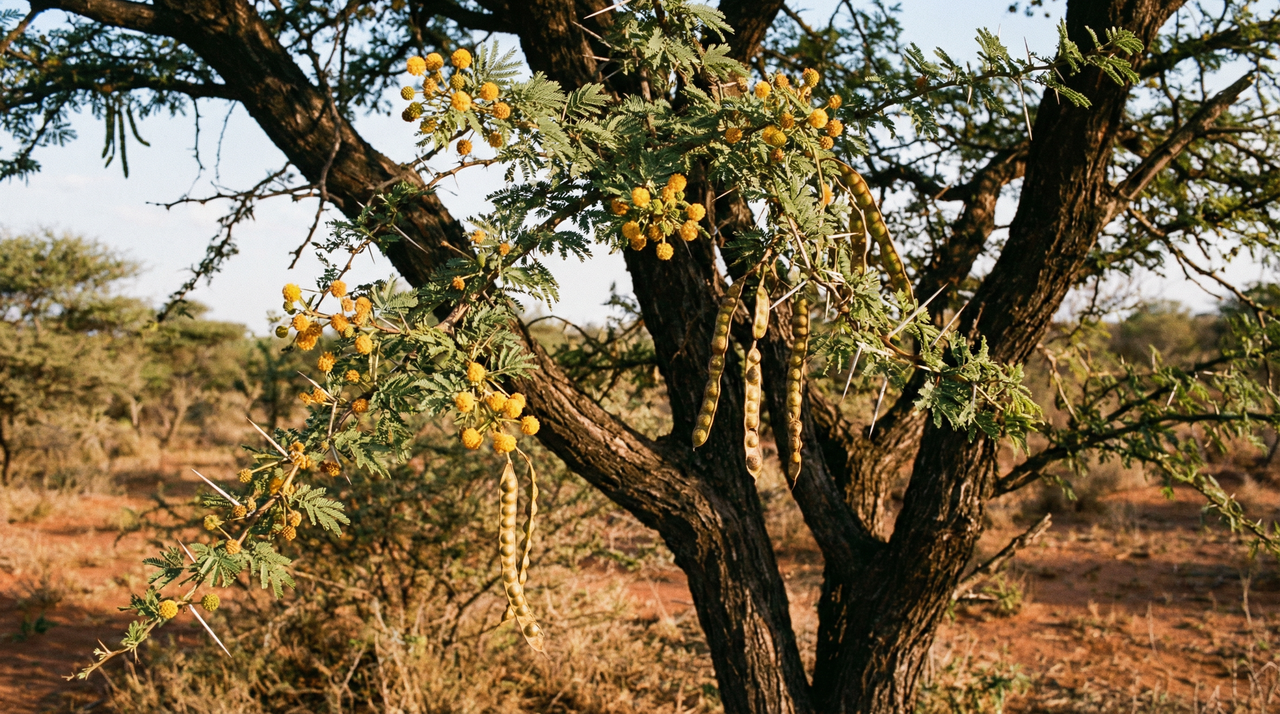
The first time I caught the scent of Sweet Acacia in bloom, I stopped walking. It's one of those smells that doesn't make immediate sense in a landscape full of thorns and dust: intensely sweet, almost narcotic, somewhere between jasmine and warm honey. Then I looked at what was producing it: a thorned, scrubby tree covered in tiny yellow puffball flowers, growing at the edge of a dry wash where almost nothing else was thriving. That contradiction is really the whole story of Vachellia nilotica. This is a tree that has partnered with humans for at least four thousand years, that ancient Egyptians used in mummification and Ayurvedic physicians prescribed for wound healing, that fixes nitrogen in soils too poor for most crops. It's also a federally listed noxious weed in the United States.
What most people don't realize is that "Sweet Acacia" isn't just a single tidy species you can drop into any warm-climate garden. It's a complex, ecologically powerful organism with a global footprint, a contested taxonomy, and a genuinely split personality depending on where you plant it. Understanding which side of that personality you're working with is the difference between a keystone tree in a food forest and a very expensive, very thorny mistake.
Sweet Acacia Origin and History
Few trees carry as much ecological and cultural weight as Vachellia nilotica, a name that itself reflects a relatively recent chapter in the plant's long story. Until 2005, this tree was classified as Acacia nilotica, and you'll still find it listed that way in older reference texts and seed catalogs.[1] The reclassification into the genus Vachellia better reflects its genetic relationships within the Fabaceae family, though the common name sweet acacia and the regional name babul persist across the literature without much confusion. What makes this tree remarkable isn't just its taxonomic history but its sheer staying power: individuals can live 50 to 200 years, flowering and fruiting repeatedly throughout their lives, which in permaculture terms means you're planting something with generational impact.[2][3]
The tree's native range is enormous, spanning sub-Saharan Africa from Senegal to South Africa, across the Arabian Peninsula, and into the Indo-Pakistan subcontinent.[1][4] Within that range, it favors semi-arid savannas, dry woodlands, and riparian edges where rainfall can be anywhere from 200 to 1500 mm annually.[5] The deep taproot system, which can extend 15 to 18 meters or more to reach groundwater, with lateral roots spreading up to 30 meters, explains how it survives where most trees would struggle.[6] I've seen close relatives used as living fences in subtropical landscape projects, and the consistent lesson is to evaluate site hydrology carefully before you plant: these roots find water sources that are simply invisible at the surface level. As a nitrogen-fixing legume forming symbioses with Bradyrhizobium and Rhizobium, it functions as a pioneer species in savanna ecosystems, stabilizing soil and building fertility over the very long timescales its lifespan allows.[7][8]
Botanical Background and Visual Characteristics
The sweet acacia silhouette is unmistakable once you've seen it a few times: a spreading, often umbrella-shaped canopy sitting atop deeply fissured dark bark, armed with paired stipular thorns up to 10 centimeters long. The tree typically reaches 5 to 20 meters in height with a canopy spread of 6 to 15 meters.[9] The bipinnate leaves are made up of tiny 2 to 5 mm linear-oblong leaflets, and the flowers are brilliant yellow spikes 5 to 10 centimeters long that bloom in spring and summer, or nearly year-round in tropical settings.[10] Pods are leathery, 10 to 20 centimeters long, containing 8 to 15 hard, flattened dark brown seeds.[4]
There are seven recognized subspecies, and the morphological differences between them matter practically. Subspecies nilotica, common in Sudan, tends toward shorter pods (5 to 12 cm) and white thorns, while subspecies indica, prevalent in India, produces longer pods (10 to 20 cm) and thorns reaching 7 centimeters.[11] Environmental plasticity is real here too. Trees I've observed in drier landscape settings stay more compact with noticeably smaller leaves, exactly as the research predicts, which is genuinely useful information when you're assessing what form you're working with in a guild.[12]
Traditional and Cultural Uses
The human relationship with this tree stretches back at least 4,000 years. Ancient Egyptians used its gum for mummification, inks, adhesives, and medicinal pastes, with documentation appearing in the Ebers Papyrus around 1550 BCE.[13] The tree itself was sacred to Osiris, symbolizing resurrection, and its rot-resistant wood went into coffins and ritual objects.[14] There's something I find quietly compelling about how ancient cultures selected the toughest, most durable woods for their most sacred constructions. That same instinct guides good permaculture design today.
On the Indian subcontinent, babul's Ayurvedic legacy is documented in the Charaka Samhita from roughly 300 BCE to 200 CE, where it appears as a treatment for diarrhea, dysentery, oral health, and rheumatism, among other conditions.[15][16] Hindu traditions link it to Lord Shiva, incorporating it into fire altar rituals and offerings.[17] In the 11th century, Avicenna described its astringent and antidiarrheal properties in his Canon of Medicine.[18] Across Africa, the Maasai, Somali, and many other communities have relied on it for malaria treatment, respiratory ailments, livestock fodder, and in folklore representing endurance and fertility.[19][20]
Modern pharmacology has validated much of this, confirming anti-inflammatory, antimicrobial, and antidiabetic activity tied to the tree's tannins, flavonoids, and polyphenols.[21] The shadow side is that intensive harvesting for gum, tannins, and medicine has pushed populations toward overexploitation in parts of Sudan and Nigeria, a reminder that even a resilient keystone species has limits under sustained extraction pressure.[22]
Fun Facts and Ecological Significance
The vachellia tree does produce gum arabic, though it accounts for less than 5% of global commercial supply; Acacia senegal dominates that market, with Sudan producing 70 to 80% of world gum arabic overall.[23] The gum serves the tree itself first, aiding water retention and defending against pathogens, which is a good reminder that the most useful plant products usually started as survival strategies.
The combination of soil-building nitrogen fixation and mutualistic ant partnerships makes sweet acacia a genuinely powerful pioneer in its native range. Ants of the genus Crematogaster live in hollow swollen thorns called domatia, receiving nectar in exchange for aggressively defending the tree against herbivores and disease.[24] Elephants, giraffes, and antelopes browse its pods, leaves, and bark, making it a cornerstone of savanna food webs.[25] In a permaculture guild design, I balance this kind of ecological generosity against the need for thoughtful management, particularly fast-growing ground covers to prevent thicket formation.
Outside its native range, however, the picture changes dramatically. Vachellia nilotica has become invasive in Australia, where it covers more than 100,000 hectares in Queensland alone, as well as in Florida, Texas, the Caribbean, Hawaii, and South Africa, where it displaces native vegetation and alters hydrology.[26][27] Control depends on mechanical removal, herbicides, grazing management, and seed-feeding bruchid beetles, while birds like hornbills and weavers continue to disperse seeds naturally.[28] In Central Florida, regulations already restrict planting of Vachellia nilotica and close relatives, and I always advise clients to contact their county extension office before even researching sources, because once this tree establishes a seed bank, persistence is its defining trait.
Sweet Acacia Varieties and Sourcing
The taxonomy here has shifted enough to cause real confusion in nursery catalogs and seed packets alike. If you are researching this plant across databases, you'll encounter both names for the same tree. The species itself breaks into seven recognized subspecies: subsp. nilotica, subsp. indica, subsp. adstringens, subsp. cupressiformis, subsp. kraussiana, subsp. leiocarpa, and subsp. tomentosa.[29][30] That's not a trivial distinction for anyone doing serious restoration or research work.
Notable Subspecies of Vachellia nilotica
Subspecies performance varies significantly, which matters when selecting for a specific site. Subsp. indica, native to India and Pakistan, grows at 1 to 2 meters per year (comparable to some of the faster mesquites I've specified for clients in hot, dry zones) and tolerates salinity levels up to 8 to 10 dS/m, making it suited to degraded arid lands where other trees struggle.[31][32] It also produces 5 to 7 kg of pods per tree annually, with fodder quality running 20 to 30 percent higher than other subspecies.[33] Subsp. nilotica, widespread across African savannas, leans toward drought tolerance and yields 1 to 2 kg of gum per tree annually, commanding over 50 percent of the gum market.[31][33] Subsp. africana, concentrated in East Africa, adapts better to seasonal wetlands and periodic flooding.[31][34] These distinctions are genuinely useful context for restoration planners working in the species' native ranges, though the practical question for most U.S. readers is whether any of this is legally obtainable at all.
Sourcing Sweet Acacia in the United States
The short answer is: probably not, and legally it shouldn't be. Vachellia nilotica is listed as a federal noxious weed by USDA APHIS, and state-level bans in Florida, Texas, California, and Hawaii add additional regulatory layers on top of that.[35][36] Commercial nurseries essentially don't carry it, and importation or interstate movement requires permits that are almost exclusively granted for research or educational purposes.[37][35] Every time I take on a design project in Florida, my first step is pulling up the current APHIS and state noxious weed lists before I even start recommending legume species, because the regulatory picture changes and ignorance isn't a defense.
Specialty seed vendors occasionally list seeds under the old name Acacia nilotica for $5 to $15 per packet, but mislabeling is genuinely common across the taxonomic transition.[38] I've seen mislabeled packets cause real problems for restoration projects; always cross-reference the supplier's botanical name against POWO or World Flora Online before purchasing anything. For most U.S. gardeners, the practical path is toward noninvasive relatives that deliver similar nitrogen-fixing and multipurpose value without the legal exposure.
Sweet Acacia Propagation and Planting Guide
The decision tree for sweet acacia propagation really comes down to one question: are you growing for scale, or are you trying to lock in specific traits? Seeds are cheap, abundant, and workable for most growers. Vegetative methods are slower and more demanding, but they're the only way to reliably reproduce a high-yielding or exceptionally drought-hardy individual. I've grown this tree both ways, and neither approach is wrong. They're just answering different questions.
Seed Characteristics, Dormancy, and Germination
The pods are hard to miss: dark brown, cylindrical, 10-20 cm long and visibly constricted between each seed, like a string of lumpy beads.[39][40] Each pod holds 8-12 seeds,[39] and once you crack one open you'll find small, flattened, reddish-brown seeds with a satisfyingly smooth, shiny coat.[6] That shiny coat is also your first problem: it's essentially waterproof without intervention.
One thing I genuinely love about this species is polyembryony. Each seed can contain 2-5 embryos derived from both zygotic and nucellar tissue,[41][42] which means a single scarified seed can surprise you with a cluster of seedlings pushing up together. The nucellar embryos are clones of the mother plant; the zygotic ones carry recombined genetics. That distinction matters if you care about uniformity, because seed-grown plants will vary meaningfully in growth rate, thorniness, and drought tolerance. For a permaculture designer, that variability can actually be useful for screening local adaptability, but don't expect consistency.
Physical dormancy is the bigger challenge. Without scarification, untreated seeds germinate at only 10-20%. Properly treated seeds routinely hit 70-95%.[8][43] You have three practical options: mechanical nicking with sandpaper or a file; a hot water soak (near-boiling water, allowed to cool over 24 hours); or sulfuric acid for 10-30 minutes followed by thorough rinsing and a 24-hour warm water soak.[44] I've found that a 20-minute acid soak with thorough rinsing gives me the most consistent results above 80% with home-collected seed, compared with mechanical nicking alone. Mechanical nicking works, but it's slower to execute at any real volume and you risk crushing the seed if you're not careful. Once scarified, germination is hypogeal, meaning the cotyledons stay underground,[45] so don't panic when the first thing to emerge is a single arching shoot rather than a pair of seed leaves.
Vegetative Propagation Methods
Seed propagation is the dominant commercial approach for large-scale plantings precisely because it's practical and inexpensive.[8] But if you've identified a tree with exceptional pod yield or unusual drought hardiness and want to reproduce it faithfully, vegetative methods are what you reach for. In my own test plots, seed-grown individuals produced a useful spread of drought tolerance that helped me identify strong performers over a few dry seasons, while grafted material from a selected clone delivered predictable yields from the start.
Semi-hardwood cuttings taken at 10-15 cm and treated with IBA at 2000-5000 ppm, kept in a sand-perlite mix at 25-30°C and 85-90% humidity, achieve 40-70% rooting success, with summer and bottom heat being meaningful contributors.[46] Grafting, whether cleft, whip-and-tongue, or bud, during active growth pushes success rates to 60-80% and brings fruiting forward compared to seedlings.[47][48] Air layering on branches over 1 cm diameter during the monsoon season with IBA gets you 50-80% success,[49] and root suckers, if your tree produces them, can be detached and planted directly, typically rooting within 4-6 weeks in well-drained soil.[49] Tissue culture via nodal explants can reach 90% shoot multiplication and somatic embryogenesis from cotyledonary nodes is feasible,[50][51] but that's research territory rather than something most growers will pursue at home.
Soil, Site, and Climate Requirements
Before you scarify a single seed, confirm your site is actually appropriate. Sweet acacia needs full sun, at least 6-8 hours of direct light daily, and well-drained soil.[9] It tolerates sandy, loamy, or clay soils with a pH range of 5.0-9.0, though 6.0-8.0 is the sweet spot.[9][8] Its nitrogen-fixing symbiosis with rhizobia means it actively improves low-fertility soils over time,[8][52] so don't let poor soil organic matter deter you from planting in a marginal site that otherwise suits the tree.
Once established, this is a genuinely tough tree. Its deep taproot, which can reach 1-3 m routinely and up to 10-15 m on favorable sites, accesses groundwater that shallow-rooted plants can't touch, and it thrives on 200-1200 mm annual rainfall with an optimal window around 400-800 mm.[9][53] It also handles salinity up to 10 dS/m and moderate compaction, though prolonged waterlogging is a real problem.[6] Watching the young trees in my plots gradually shift from needing weekly irrigation to surviving weeks without water, purely on deep root access, remains one of the most rewarding transitions I've observed in any arid-adapted species.
Sweet acacia is suited to USDA zones 9-11,[9] but I'll be direct here: in parts of Florida and Texas this species is regulated as a noxious weed, and its long-lived seed bank makes removal extraordinarily difficult once it's established.[54] I always check local ordinances before propagating. If you're in a state where it's restricted, the varieties section covers the alternatives worth considering instead.
Planting Spacing, Technique, and Establishment
Mature trees reach 5-20 m tall with canopy spreads of 12-15 m,[55] and the thorns make access a real consideration. In agroforestry rows, 6-8 m between rows with 3-5 m within rows (yielding 400-1100 trees per hectare depending on configuration) gives enough room for canopy development without excessive canopy collision.[8] For landscape or kitchen garden settings, 4-6 m between trees is more appropriate.[56] I've seen growers crowd them and regret it: competition stress in the first few years shows up as slower canopy fill and reduced early pod set, and thinning later around thorned trees is unpleasant work.
Planting holes should be 30-60 cm deep and 30-45 cm wide in soil with at least 1-2 m of workable depth below.[11] In heavy clay, work in organic matter to improve drainage rather than fertility. During the first 1-2 years, young trees need 20-30 liters of water per week; after establishment, irrigation can step back dramatically as the taproot takes over.[8] Early pruning to establish a clear leader and manageable branch architecture makes maintenance around the thorns far more manageable later, though the specifics of that pruning belong to the care discussion.
Timeline to Maturity
Scarified Vachellia nilotica seeds sown 1-2 cm deep in well-drained sandy loam at 25-30°C germinate in 7-21 days with 70-95% success under good conditions.[44][57] From there, expect first flowering in 2-4 years and meaningful pod production by years 3-5 under optimal conditions. Grafted plants shorten that window by 1-2 years.[8][58] In practice, soil warmth and rainfall patterns push those numbers around considerably. Trees on warm, well-draining sites with consistent establishment irrigation tend to hit the earlier end of those ranges; plants on heavier soils in cooler zone 9 conditions often lean toward the later end. The investment in getting establishment right, spacing, irrigation, and site selection, pays off measurably in how quickly the tree moves from a water-dependent juvenile to the drought-resilient, self-sufficient tree it's capable of becoming.
Sweet Acacia Care Guide
Most trees this useful require serious maintenance in return. Sweet acacia is the exception. Once you understand that this tree spent millennia adapting to some of the harshest, driest conditions on the planet, most of your care decisions become obvious. Work with its biology and it rewards you with minimal inputs. Fight it, and you'll create problems that didn't need to exist.
Water Needs and Drought Tolerance
The secret to sweet acacia's drought resilience is underground. It develops a persistent taproot system capable of tapping groundwater sources completely unavailable to shallower-rooted plants.[59][60] Once that system is established, the tree can endure dry periods of six to eight months and thrive on annual rainfall as low as 200 mm.[60][61] The tree also prefers well-drained sandy or loamy soils and tolerates a wide pH range of 5.0 to 8.5, with an optimum around 6.5 to 7.5.[59]
Getting to that drought-resilient state is where growers earn their keep. In my experience, the single biggest determinant of long-term performance is how you water during years one and two. Deep watering every 7 to 14 days, delivering roughly 20 to 50 liters per plant, is what drives the taproot down rather than keeping it near the surface where the next dry spell will find it.[62][63] Once a tree is mature, you can largely step back, supplementing only during prolonged droughts every four to six weeks.[64] The goal throughout is to maintain soil moisture at 20 to 40 percent field capacity; soggy soil causes root rot, yellowing, and fungal problems just as surely as neglect does.[62][9] I changed how I install these trees in client landscapes once I understood that shallow, frequent watering was creating exactly the surface-dependent root systems I was trying to avoid.
Fertility and Feeding Requirements
Sweet acacia fixes its own nitrogen. Through its symbiotic relationship with Rhizobium bacteria, it generates profound soil fertility, which effectively eliminates the need for external nitrogen inputs after establishment.[65][66] I've consistently observed healthier nodulation and better overall vigor when I avoid synthetic nitrogen entirely after the establishment phase. Push excess nitrogen and you disrupt the very symbiosis that makes the tree self-sufficient, while also suppressing gum production.[67]
The tree does genuinely need phosphorus at planting. Phosphorus drives early root development and nodulation, with recommended rates around 40 to 60 kg per hectare in field settings, while potassium (30 to 60 kg per hectare) supports drought tolerance.[6] My local extension soil tests have consistently confirmed that a modest phosphorus boost at planting is often the only amendment sandy soils actually need; after that, the tree takes care of itself. Always run a soil test before adding anything because over-application is a real risk.[67][8] Organic amendments are preferred throughout; if you see pale yellow leaves, suspect nitrogen; dark green or purple leaves with weak stems point to phosphorus deficiency; interveinal chlorosis usually signals iron.[68]
Heat Tolerance and High-Temperature Care
Sweet acacia is genuinely at home in heat that would stress most landscape trees. Its optimal temperature range runs from 15 to 40°C, and it tolerates sustained temperatures up to 50°C, placing it comfortably in AHS heat zones 8 through 12.[8][69] The mechanisms behind this are genuinely impressive: beyond the deep roots, the tree reduces water loss through small leaves, closes stomata under heat load, and deploys antioxidant enzymes including superoxide dismutase and catalase to prevent cellular damage while maintaining photosynthesis.[70][71] Seedlings show over 80% survival at 40°C, which tells you something about the tree's constitution from day one.[72]
Heat stress does show up, though. Look for wilting, scorched leaf margins, and canopy thinning under extreme or prolonged conditions, symptoms that remind me of what I see on nearby citrus when a heat dome settles in. A 4 to 6 inch organic mulch layer, deep infrequent irrigation, full sun exposure (shade actually worsens the problem), and temporary windbreaks during the first season are the practical tools to carry a young tree through its most vulnerable period.[73] In Arizona and similar desert-edge climates, this tree is genuinely in its element.
Frost Tolerance and Cold Protection
Cold is where sweet acacia's limits become very clear. Damage begins below 0 to -2°C, and while mature trees can tolerate brief dips to around -6°C, young plants and new growth are far more vulnerable.[74][75] USDA zones 9a through 11 represent the practical range for in-ground planting. Frost damage reads as leaf browning or blackening starting at the tips, wilting, shoot necrosis, and eventually bark cracking; prolonged exposure below -5°C can kill a tree outright or force regrowth from the base.[75][76]
In my work with subtropical landscapes, even a brief dip below 0°C can blacken new growth on seedlings in a single night. I now routinely use frost cloth or move potted saplings under cover until they reach 1 to 2 meters tall, at which point the woody tissue handles light frost much better. For growers in marginal zones, a warm south-facing microclimate, container culture with indoor overwintering, and deep root mulching give the best odds.[77] Some subspecies show slightly better cold tolerance than others, so provenance matters if you're pushing the zone boundaries.[78]
Seasonal Growth Patterns and Maintenance
Sweet acacia is deciduous in dry seasons, dropping leaves roughly between November and March in its native ranges as a water conservation strategy, then flushing new growth when rains return.[11] Flowering happens at the dry-to-wet season transition, with timing varying by region, followed by pod development and maturation across a window of several months.[11] Rather than following a fixed calendar, I watch the tree itself: leaf flush signals the opening of the active growth window, which is when water and any supplemental feeding have the most impact.
Full sun is non-negotiable for good form and strong gum production; insufficient light causes etiolation and weakens branching structure.[79] Pruning is minimal maintenance for most growers. I favor light shaping in the dormant or early growth phase rather than heavy cuts during active growth, which stresses the tree and invites problems. The sweet acacia thorns are real, so appropriate gear matters; beyond that, the tree's savanna origins translate into a preference for being largely left alone once sited correctly, which is exactly the kind of maintenance schedule most permaculture gardens are designed around.
Harvesting Sweet Acacia
Sweet acacia teaches patience in a way that few trees do. Seed-grown specimens typically won't offer their first pod harvest until years three or four, with meaningful gum production arriving somewhere between years four and six, and peak yields not hitting until the tree is ten to fifteen years old.[8][80] Grafted plants shave a year or two off that wait, reaching pods in two to four years and gum in three to five.[81] I think of it the way I think about carob or certain figs: the long-lived trees always have something to teach you about delayed gratification, and with sweet acacia, the payoff is genuinely worth it.
When to Harvest Sweet Acacia Pods and Gum
The phenological calendar here is tightly tied to heat and drought. Flowering typically runs March through May, triggered by temperatures in the 20 to 35°C range and low rainfall.[82][8] After that, count roughly four to six months for pod maturation, which puts harvest somewhere between June and September in the native range, though warmer sites can compress that window to around 120 days while cooler conditions stretch it toward 180.[83][84] I've found that watching the local weather pattern is more reliable than sticking to calendar dates. When the dry heat settles in, the tree responds.
Gum follows a different cue entirely. It peaks during the dry season, November through May in most of the native range, under temperatures of 30 to 40°C with less than 200 mm of rainfall, either through natural drought stress or deliberate tapping.[85][86] In subtropical zones like the southern US, the seasonal window shifts but the principle stays the same: harvest gum during your driest months.[87]
How to Harvest and Expected Yields
With sweet acacia seed pods, timing is everything. You're looking for pods that have turned leathery brown or yellowish-brown and are just beginning to split at the seams. Pick them at that moment, before full dehiscence drops the seeds. The interior seeds should be hard and dark, and moisture content around 10 to 15% tells you you've hit the sweet spot.[88][47] That stage also happens to be when tannin and polysaccharide concentrations are highest, which matters both for gum extraction quality and for the processing steps that make the plant safe to eat.[89]
Flavor at Harvest and Yield Expectations
The gum is the star here. When harvested at the right moment, it carries a mild, sweet-balsamic flavor with woody, resinous, earthy undertones, genuinely lovely and unlike anything you'd get from a more common landscape tree.[88] The pods themselves are sweet-tangy with a bit of sourness, and seeds roasted properly make a convincing coffee substitute or flour addition.[47][58] I always roast the seeds before using them; it drops the tannin load and removes the bitterness that can cause real digestive upset if you skip that step.[8] Yields climb steadily as the tree matures, so older specimens become progressively more generous, a pattern I've seen in other long-lived permaculture trees like honey locust and carob. The investment in time is real, but so is the return.
Sweet Acacia Preparation and Culinary Uses
Culinary Uses and Edible Parts
Across Sudan and the Sahel, dried sweet acacia pods have been ground into flour and cooked into porridge or flatbread during food shortages for as long as people have lived alongside this tree.[90][8] That's not a quaint historical footnote. It's the reason this plant earns serious respect from anyone thinking about food security in arid landscapes.
The gum is the most accessible edible part and the one I'd point most people toward first. Dissolve it in water, filter out debris, and you have a mild, slightly sweet thickener with balsamic, woody undertones[91][92] that functions similarly to gum arabic as a stabilizer or emulsifier.[91][8] I've used acacia-type gums in herbal syrups and found that the purification step makes a real difference in mouthfeel; skipping it leaves a slightly gritty, resinous quality that most people find off-putting.
Young and immature pods form the next tier down. Raw, they're sweet, sour, and mucilaginous with a slippery texture that reminds me of okra, plus a bitter tannin edge that sharpens fast.[91][93] Roasting or boiling is non-negotiable before eating them in any real quantity. Traditional preparations across Africa, India, and the Middle East all use heat for a reason.[10][91] Seeds need the same treatment: roasting at 150–200°C for 10–15 minutes drives off antinutrients and develops a nuttier, almost coffee-like aroma.[94] Around 175°C for 15 minutes is where I find the flavor really opens up. Unprocessed seeds carry documented toxicity risks, so skipping that step isn't a judgment call.[94] The nutritional payoff for doing the work is substantial: the processed pods, seeds, and leaves deliver dense concentrations of protein, fiber, and essential minerals when boiled for at least 10–20 minutes to tame the astringency.[90][8] I always err on the side of caution with high-tannin plants and never offer unprocessed pods to children or pregnant friends. The gallotannins that accumulate here can cause gastrointestinal distress and worse at high doses, and the plant has documented uterine-stimulant effects that make it genuinely contraindicated during pregnancy.[95][96]
Medicinal Preparations and Traditional Remedies
Ayurvedic, Unani, and African traditional medicine systems have drawn on virtually every part of this tree, typically as decoctions of bark or pods for digestive complaints and wound care, powdered gum in topical preparations, and leaf infusions for inflammation. These aren't fringe applications; they represent centuries of conservative, dose-calibrated use by practitioners who understood the plant's potency. The deeper pharmacological story belongs to the health benefits section, but the practical takeaway here is that traditional healers always processed these materials carefully and rarely used them in isolation. Anyone exploring these preparations today should treat standardized human clinical data as thin and defer to a qualified practitioner for dosing guidance.
Non-Food Applications and Practical Uses of Sweet Acacia
The sweet acacia uses that have sustained communities longest aren't culinary at all. The tannin-dense bark has been central to leather tanning and natural dyeing across its native range for generations, and the wood itself is dense, durable, and slow-burning, making it a valued source of fuel, charcoal, fence posts, and small tools. Bark fiber has traditionally been twisted into rope. The gum, beyond food, shows up in adhesives and pharmaceutical binders, filling a role similar to commercial gum arabic. I find it useful to think of this tree the way I think of mesquite in the American Southwest: nothing is wasted.
In agroforestry systems across Africa and South Asia, sweet acacia earns its place through nitrogen fixation and soil stabilization as much as through direct yield. During a dry stretch when surrounding forage collapsed, I watched goats on a nearby property strip every other available shrub bare while leaving the babul trees as their last reliable fodder source. That kind of observation sticks with you. Its role as a living fence, courtesy of those formidable paired thorns, adds another layer of utility without any additional inputs. In Egypt and parts of India the tree carries sacred associations stretching back millennia, connected to Osiris and offered in Shiva devotion, which speaks to how deeply woven into human culture it became. All of these uses depend on harvesting sustainably and, in any region where sweet acacia is regulated or listed as invasive, on understanding the legal landscape before planting.
Sweet Acacia Health Benefits and Medicinal Uses
If you've spent any time with traditional medicine systems across Africa, the Middle East, or the Indian subcontinent, Babul shows up constantly. Diarrhea, dysentery, infected wounds, skin conditions, diabetes -- the list of ailments treated with sweet acacia bark, pods, gum, and leaves spans continents and millennia.[97][98] What unifies all of those applications is the tree's extraordinary chemistry, and modern pharmacology has spent the last few decades catching up to what Ayurvedic, Unani, and African healers figured out through observation and practice.
Traditional Medicinal Importance of Babul
Across its native range, Vachellia nilotica (reclassified from Acacia nilotica in 2005) has served as an astringent remedy for gut complaints, a wound dressing, an antimicrobial poultice, and a treatment for metabolic conditions like diabetes.[99][100] That astringency isn't incidental; it's the sensory signal that tannins are present in abundance, and tannins are what make Babul medicinally relevant. A short bark decoction tastes a lot like a very strong oak bark infusion -- intensely drying on the palate, with some bitterness underneath. I've experimented with steeping time considerably, and a briefer extraction keeps bitterness manageable while still delivering a meaningful tannin load. Traditional practitioners learned similar lessons through generations of use.
Which plant part you work with matters a great deal here. Sweet acacia bark is most associated with anti-inflammatory and antidiabetic applications, leaves show stronger antimicrobial activity, and pods are where antioxidant capacity tends to concentrate.[101][102] That kind of organ-specific specialization in a single tree is part of what makes it so deeply embedded in traditional medical systems rather than being a one-trick remedy.
Key Phytochemicals and Their Roles
The medicinal story of sweet acacia is really a tannins-and-flavonoids story. Tannins (hydrolyzable and condensed) make up 12-30% of dry leaf and bark weight; flavonoids including quercetin, rutin, and kaempferol run 15-50 mg/g; phenolic acids like gallic and ellagic acid, terpenoids such as lupeol and β-sitosterol, saponins, and alkaloids round out the profile.[103][104] Concentrations shift with season -- phenolics run higher in the dry season -- and with geography, where plants from more arid regions tend to carry heavier tannin and alkaloid loads.[105]
This connects to an ecological dynamic I find genuinely fascinating about this tree. The same drought and herbivory stress that makes Babul's native savanna habitat so harsh is what pushes the plant to produce more of these defensive compounds.[106][107] Tannins deter grazers by binding proteins and reducing forage digestibility; flavonoids handle UV defense and antimicrobial threats. Plants I've worked with from drier provenances have noticeably more bite to them. Ecologically, those compounds protect the tree; medicinally, they're what we're after.
Supported Pharmacological Actions
The three best-characterized actions are anti-inflammatory, antioxidant, and antimicrobial. On inflammation, extracts inhibit NF-κB signaling, reduce TNF-α and IL-6, and suppress COX-2 and iNOS expression in macrophage studies -- a credible mechanistic pathway that matches what traditional healers were observing when they used it for wounds and swelling.[108] Antioxidant activity runs through Nrf2 pathway activation, upregulating protective enzymes like HO-1 and NQO1, with ethanolic extracts showing DPPH IC50 values of 20-50 μg/mL -- solid numbers in the preclinical world.[109] Antimicrobially, the gallotannins and catechins physically disrupt bacterial membranes, showing activity against both Staphylococcus aureus and E. coli, with some synergy alongside antibiotics like ciprofloxacin.[110][111]
The antidiabetic evidence is particularly interesting from a design perspective. Flavonoids inhibit α-amylase and α-glucosidase (IC50 around 50-100 μg/mL), slowing carbohydrate absorption in a way that mirrors pharmaceutical enzyme inhibitors.[112] A clinical trial using 500-1000 mg/day of sweet acacia bark extract found 15-25% HbA1c reductions over 12 weeks in 60-120 participants.[113][114] That's a meaningful signal, though larger randomized controlled trials are still needed before this becomes a clinical recommendation. When I'm consulting on plants for metabolic support gardens, I always cross-reference trial size and design before drawing conclusions, and this one warrants watching.
Beyond those core actions, preclinical research describes hepatoprotective effects in chemically-induced liver damage models (reduced liver enzyme markers, restored glutathione, inhibited CYP2E1), and cardioprotective effects via PI3K/Akt pathway activation.[115][116] Wound healing is well-supported mechanistically: TGF-β and VEGF upregulation, enhanced collagen synthesis, and angiogenesis, with tannins contributing clotting and antimicrobial action simultaneously.[117] Anticancer apoptosis induction in MCF-7 breast cancer cells has been documented in vitro, though that data is early-stage and nowhere near clinical translation.[118] A range of other actions -- ACE inhibition comparable to captopril in vitro, analgesic and antispasmodic effects in rodent models, diuretic activity, antimalarial β-hematin inhibition, and sedative/anxiolytic properties from flavonoids -- have preclinical support, but human data are limited or absent for most of them.[119][120][121]
Nutritional Profile of Edible Parts
Sweet acacia produces four edible fractions, each with a distinct nutritional character. The gum exudate is 80-90% soluble fiber with minimal protein and fat, and it's FDA-recognized as safe at typical food additive doses.[122][123] Seeds run 20-30% protein with a fat profile rich in oleic and linoleic acids; pods contain 15-25% protein, 50-60% carbohydrates, and around 50-70 mg vitamin C per 100g; leaves push protein to 15-20% and offer impressive mineral density, with calcium around 1780 mg/100g and potassium near 1200 mg/100g, plus significant vitamins A and C.[124][125]
Those numbers are impressive on paper, but the catch is that every edible part except the gum carries anti-nutritional factors -- tannins, saponins, lectins, alkaloids -- that bind minerals, reduce protein digestibility, and can cause GI distress if eaten raw.[126] Boiling, fermenting, or roasting changes this considerably. I've found roasted seeds dramatically more palatable than raw ones; the bitterness drops substantially, and the texture becomes something you'd actually want to eat. Traditional African and Indian communities knew this -- they weren't eating raw pods in bulk, they were cooking and processing them. Think of these parts as traditional famine foods and seasonal dietary supplements rather than daily staples, and in serving-size terms that means 20-30g seeds, 50g pods, 20g leaves at a time.[127]
Safety Considerations and Contraindications
The gum is the safest starting point: it's FDA-recognized, shows no acute toxicity up to 5g/kg in safety studies, and has a long track record in food processing.[122][126] Bark, pods, and seeds are a different conversation. Those parts concentrate tannins, saponins, alkaloids, lectins, and cyanogenic glycosides -- compounds that at therapeutic doses have medicinal value, but at high doses can cause GI upset, reduced nutrient absorption, and with chronic overuse, potential strain on the liver and kidneys.[128] Acute oral LD50 runs above 2000 mg/kg in rodent models, which signals low acute toxicity at therapeutic levels, but that ceiling doesn't mean unlimited safety.[129][130]
I'm direct with clients about this: avoid raw bark or raw seed consumption, use prepared extracts rather than improvised preparations, and loop in a practitioner familiar with herb-drug interactions before using sweet acacia medicinally. That last point matters because the plant carries real contraindications. Possible uterine stimulant activity means it's contraindicated in pregnancy; limited safety data warrants avoiding it during lactation and in children under 12.[97][131] People on antidiabetic medications should be aware of potential additive hypoglycemia; anticoagulant users need to account for antiplatelet activity; and anyone on medications metabolized by CYP enzymes should flag possible interactions with their prescriber.[97] Allergic reactions are also possible, from pollen-induced respiratory symptoms to contact dermatitis from thorns or sap, particularly in people with sensitivities to other Fabaceae species.[132][133] Proper preparation through decoction, boiling, or fermentation reduces most risks considerably, and that wisdom comes straight from the traditional systems that worked with this plant responsibly for thousands of years.
Sweet Acacia Pests and Diseases
Natural Defenses and Pest Resistance
Sweet Acacia comes to the pest conversation better armed than most trees in the garden. Its thorns are obvious, but the real defense runs deeper: a suite of tannins, phenolics, alkaloids, flavonoids, and saponins that make the foliage genuinely unpleasant to eat.[134][135] Those same tannins I wrote about in the health benefits section bind proteins and reduce nutritional availability, so generalist insects get a meal that barely feeds them and move on.[136] On top of that, established trees often host ant colonies that actively patrol the branches and remove insect pests before they establish.[137] I've watched mature trees with a good ant presence sail through seasons when young transplants nearby were fighting aphid and scale pressure. That mutualism takes time to develop, so giving seedlings a few seasons to settle in is part of the management strategy.
Resistance is real, but it's not absolute. A long roster of insects can and do attack sweet acacia: seed weevils (Caryedon serratus), bruchid beetles, aphids, scale insects, termites, leaf miners, bark beetles, longhorn borers, pod borers, and bagworms, among others.[138][139] The damage ranges from cosmetic leaf curl and reduced photosynthesis to seed loss, structural boring, and serious root destruction by termites in dry regions.[140] Seedlings and stressed trees are consistently the most vulnerable, and provenance matters more than people expect: material from arid-adapted seed sources handles drought stress and the subsequent pest pressure that drought invites far better than trees grown from wetter-climate stock.[141] I've seen this play out directly when sourcing seed, and it's a strong argument for tracking down locally adapted material whenever possible.
No commercially available resistant cultivars exist for sweet acacia, so the practical path is integrated pest management combined with thoughtful ecotype selection.[142] In my designs, I prioritize cultural practices first: proper spacing, good air circulation, and avoiding anything that stresses the tree unnecessarily. A healthy tree in a diverse guild rarely needs much beyond basic sanitation. The chemical defenses do the heavy lifting when we don't undermine them.[143]
Common Diseases and Management
Sweet acacia has moderate overall disease resistance, and its drought tolerance is a genuine asset since most of its fungal threats need moisture to get a foothold.[31] The fungal roster is long: leaf spot (Cercospora spp., Pestalotiopsis), powdery mildew, anthracnose, rust (Uromycladium tepperianum), stem canker, Fusarium and Verticillium wilts, and Ganoderma root rot.[144][145] Bacterial disease is comparatively rare, showing up mainly under poor drainage conditions.[146] The tree's thick bark and tannin content provide a real barrier to canker formation, which helps explain why a well-sited specimen often goes years without incident.
Overwatering is the single fastest way to invite trouble. I've watched a waterlogged sweet acacia develop root rot within a season while a neighboring tree on a slight rise in the same guild stayed completely clean. Stress and wet conditions also weaken the tree's defenses enough that pest damage can open the door to secondary fungal infection, compounding problems quickly.[147] Provenance variation shapes disease outcomes here too: trees originating from drought-prone ecotypes show consistently better resilience when conditions get difficult.[148]
Management follows the same cultural-first hierarchy as pest control. Prune for air circulation, maintain proper spacing, remove infected debris promptly, and skip overhead irrigation.[149] If fungal pressure is severe enough to warrant intervention, copper-based compounds or azoxystrobin can be used selectively. Breeding programs in India and Africa are working on marker-assisted selection for improved resistance to leaf spot, wilt, and gummosis, but commercially available resistant selections remain limited for now.[150] Until that changes, choosing regionally adapted seed stock and keeping the tree out of wet spots does more than any spray program ever will.
Sweet Acacia (Vachellia nilotica) in Permaculture Design
Every permaculture tree earns its place on a site, and sweet acacia earns its place the hard way: with caveats attached. That's not a knock on the tree. It's one of the most ecologically productive nitrogen-fixers I've encountered for hot, dry climates. But it demands honest assessment before it goes in the ground, starting with where it can actually survive.
Climate Adaptability and USDA Hardiness Zones
Vachellia nilotica is reliably hardy in USDA zones 9 through 11, with some established specimens pushing into zone 8b and tolerating brief dips to around -9°C.[91][151] That resilience in mature specimens doesn't extend to young plants, which take frost damage below about 5°C and can be killed outright if temperatures drop below -2°C to -4°C before the root system is well established.[91][152] I've had to tuck young trees against a south-facing wall through their first couple of winters here in zone 9b, and I'd give that same advice to anyone pushing the northern edge of its range. Once they're past that juvenile vulnerability, the story changes dramatically: a broad temperature tolerance spanning roughly 5°C to 50°C,[91] drought tolerance that kicks in across rainfall regimes from 200 to 1,500 mm per year,[91][153] and adaptability to soils ranging from saline to alkaline to periodically waterlogged.[154][152]
Before you go any further in your design planning, check your state's invasive species list. Sweet acacia is listed as invasive in Florida and Hawaii and is considered a serious ecological threat in Australia.[155][156][157] Because this species is listed as Category II in Florida, I only recommend it for contained systems or after checking the current FLEPPC status. Better safe than spending years managing volunteer seedlings in a landscape you designed to be regenerative.
Ecological Functions and Guild Contributions
If you've cleared those regulatory hurdles and you're working in a semi-arid or subtropical zone where this tree belongs, the ecological payoff is substantial. As a nitrogen-fixing legume, Vachellia nilotica forms rhizobial symbioses capable of contributing somewhere between 100 and 200 kg of nitrogen per hectare per year.[158][159] That's serious fertility generation. Paired with taproots that can descend 10 to 20 meters,[158] the tree functions as a dynamic accumulator, drawing up minerals from well below what most companion plants can reach. Those same roots stabilize soils, reduce erosion, support groundwater recharge in riparian zones, and contribute to carbon storage over the tree's long life.[160][161]
Above ground, it's a pollinator magnet. During dry-season bloom, those bright yellow flower heads draw dense clouds of bees, flies, beetles, thrips, and ants.[162][6] I've stood under a flowering specimen and just listened to the hum. It's also a windbreak, a wildlife habitat, and a reliable nectar source for honey production.[160][162] Seeds are dispersed by mammals and birds, which is part of why containment matters if you're in a zone where naturalization is a risk.[162]
Here's the nuance that every permaculture designer working with this species needs to sit with: sweet acacia releases allelopathic compounds including gallic acid that can suppress germination and growth in nearby plants.[158][163] I've seen it suppress grasses under established specimens in a guild I designed, and it caught me off guard the first time. The same chemistry that builds soil fertility can shut down sensitive neighbors. I treat this tree as a deliberate design element rather than a background plant precisely because of that dual role.
Forest Layer Placement and Companion Guilds
Structurally, sweet acacia is a flexible mid-to-upper canopy tree, typically 5 to 20 meters tall with a spreading umbrella canopy reaching up to 10 meters wide.[164][165] In agroforestry systems, it performs as a canopy anchor providing dappled shade and soil nitrogen for understory companions like pigeon peas, sorghum, and other cereal crops that can handle both partial shade and modest chemical competition.[159][160] The thorny branches add a protective edge to a guild's perimeter; thorns reaching up to a centimeter make casual browsing by large mammals very unattractive.[164]
The deep taproot is where the management calculus gets complicated. That same root architecture responsible for its drought resilience competes aggressively for water with anything growing in its shadow.[159][166] It reminds me of working around mature mesquite in dryland food forests: the tree wins the water competition, full stop, so companions need to be chosen for tolerance rather than sensitivity. Stick with deep-rooted or drought-adapted species in the understory, and give generous spacing between the canopy edge and any companions you care about.
My honest position on this tree is that it belongs in designs where the designer is paying attention. Site it deliberately, monitor for spread, and choose guild companions that can tolerate its chemistry and compete for limited water. Where those conditions are met, and where you're outside a jurisdiction that lists it as invasive, sweet acacia delivers an ecological return that few pioneers can match.
The Tree That Taught Me to Respect a Plant's Whole Story
I came to Sweet Acacia through its functions, nitrogen fixation, gum, and astonishing drought tolerance, but stayed because of its contradictions. A tree venerated by ancient Egyptians and Ayurvedic healers that is now a federal noxious weed in my own country doesn't let you be lazy in your thinking. It asks you to hold the whole story at once. That's the kind of plant that makes you a better designer.
Sources 166
- Vachellia nilotica (L.) P.J.H. Hurter & Mabb. ↩
- Acacia nilotica ↩
- Vachellia nilotica ↩
- Vachellia nilotica ↩
- Acacia nilotica subsp. nilotica ↩
- Root System of Acacia nilotica in Arid Regions ↩
- Morphology and Ecology of Vachellia nilotica ↩
- Ecological Role and Lifespan of Vachellia nilotica ↩
- Vachellia nilotica (L.) P.J.H. Hurter & Mabb. ↩
- Vachellia nilotica ↩
- Vachellia nilotica (L.) P.J.H. Hurter & Mabb. - A Review ↩
- Morphological Variation in Acacia nilotica Subspecies ↩
- The Ebers Papyrus: A New English Translation ↩
- The Acacia Tree in Ancient Egyptian Mythology ↩
- Traditional Uses and Scientific Validation of Vachellia nilotica ↩
- Charaka Samhita: A Treatise on Ayurveda ↩
- Sacred Trees in Indian Folklore and Religion ↩
- Medicinal Plants in the Canon of Medicine by Avicenna ↩
- Ethnobotanical Survey of Vachellia nilotica in Sudan ↩
- Traditional Uses of Acacia nilotica by Maasai ↩
- Pharmacological Properties of Vachellia nilotica Gum ↩
- Overexploitation of Acacia nilotica in Sudan: Implications for Sustainability ↩
- Gum Arabic Production and Uses ↩
- Ant-Plant Interactions in Vachellia nilotica ↩
- Forage Value of Vachellia nilotica for African Herbivores ↩
- Prickly Acacia (Vachellia nilotica) - Invasive Species ↩
- Vachellia nilotica ↩
- Biological Control of Prickly Acacia ↩
- Vachellia nilotica ↩
- Vachellia nilotica (L.) P.J.H. Hurter & Mabb. ↩
- Growth Performance and Tolerance of Vachellia nilotica Variants ↩
- Taxonomy and Distribution of Acacia nilotica Subspecies ↩
- Vachellia nilotica: A Multipurpose Tree of Global Importance ↩
- Flora of Tropical East Africa: Leguminosae ↩
- Federal Noxious Weed List ↩
- Vachellia nilotica (Prickly Acacia) ↩
- Vachellia nilotica ↩
- Acacia Nilotica Seeds ↩
- Plants of the World Online - Vachellia nilotica ↩
- Acacia nilotica - Seed Morphology and Pod Characteristics ↩
- Seed Morphology and Embryology of Acacia nilotica ↩
- Polyembryony in Legumes: A Review ↩
- Seed Dormancy and Germination in Acacia nilotica ↩
- Propagation Techniques for Vachellia nilotica ↩
- Flora of Tropical East Africa: Leguminosae ↩
- Propagation of Acacia nilotica by Cuttings: Influence of Growth Regulators and Media ↩
- Propagation of Vachellia nilotica: Grafting and Budding Methods ↩
- Grafting Techniques for Acacia Species in Arid Regions ↩
- Vegetative propagation of Acacia nilotica through air layering and suckers ↩
- Micropropagation of Acacia nilotica subsp. indica using nodal explants from mature trees ↩
- Somatic embryogenesis and plant regeneration in Acacia nilotica ↩
- CABI Compendium - Soil Preferences of Acacia nilotica ↩
- Vachellia nilotica ↩
- Invasive Species Profile: Acacia nilotica ↩
- Agroforestry Species: Acacia nilotica ↩
- Royal Horticultural Society - Vachellia nilotica ↩
- Seed Germination Protocols for Multipurpose Trees ↩
- Babul Tree (Acacia nilotica) Cultivation Guide ↩
- FAO - Acacia nilotica in Dryland Management ↩
- USDA PLANTS Database - Vachellia nilotica ↩
- Gum Arabic Tree (Vachellia nilotica) - World Agroforestry ↩
- Gum Arabic Tree Cultivation Guide - FAO ↩
- Acacia nilotica (prickly acacia) | CABI Compendium ↩
- Irrigation Management for Acacia nilotica - ICARDA ↩
- Acacia nilotica - An Invasive Species in the United States ↩
- Nitrogen Fixation in Acacia Species: Implications for Fertilizer Management ↩
- Cultivation Practices for Acacia nilotica ↩
- Acacia nilotica (Vachellia nilotica) - Nutrient Management ↩
- Kew Science: Vachellia nilotica ↩
- Physiological Responses of Acacia nilotica to Heat Stress ↩
- Antioxidant defense mechanisms in Acacia nilotica under abiotic stresses ↩
- Temperature effects on seed germination and seedling growth in Vachellia nilotica ↩
- Cultivation of Acacia Species in Hot Climates ↩
- Vachellia nilotica ↩
- Frost Tolerance in Acacia Species ↩
- Cold Hardiness of Tropical Trees in Temperate Zones ↩
- Vachellia nilotica - Plant Profile ↩
- Acacia nilotica subsp. adstringens ↩
- Gum Arabic Tree: Growth and Physiology ↩
- Acacia nilotica subsp. indica: Growth and Yield Studies ↩
- Gum Production in Vachellia nilotica: Timelines and Techniques ↩
- Phenology of Acacia nilotica in India ↩
- Phenology of Acacia nilotica in Northern India ↩
- Reproductive Biology of Vachellia nilotica ↩
- Gum Arabic Production and Marketing ↩
- Gum Arabic Production and Trade in Africa ↩
- Cultivation of Gum Arabic Trees in the Southern US ↩
- Harvesting and Processing of Acacia Nilotica Pods ↩
- Gum Arabic Production Guide: Pod Maturity Indicators ↩
- Vachellia nilotica: Ethnobotany and Food Uses in Africa ↩
- Vachellia nilotica - Useful Tropical Plants Database ↩
- Chemical Composition and Sensory Properties of Acacia nilotica Gum ↩
- Volatile Compounds in Edible Pods of Vachellia nilotica ↩
- Processing Methods for Acacia Seeds ↩
- Toxicity studies of Acacia nilotica in rats ↩
- Vachellia nilotica: A review on its phytochemistry and pharmacological activities ↩
- Pharmacological Review of Acacia nilotica ↩
- Ethnobotanical Uses of Vachellia nilotica in Traditional Medicine ↩
- Traditional Uses for Wound Healing and Diarrhea with Gum Arabic Tree ↩
- Vachellia nilotica: A Review on Its Phytochemistry and Pharmacological Activities ↩
- Pharmacological Review on Vachellia nilotica ↩
- Medicinal Properties of Acacia nilotica: A Review ↩
- A Review on Phytochemistry and Pharmacology of Acacia nilotica ↩
- Seasonal Variation in the Content of Secondary Metabolites in Vachellia nilotica ↩
- Geographic Variation in Phytochemical Composition of Acacia nilotica ↩
- Secondary Metabolites of Vachellia nilotica: Their Role in Plant Defense and Ecology ↩
- Tannins and Flavonoids in Acacia nilotica: Ecological and Medicinal Implications ↩
- Anti-inflammatory activity of Acacia nilotica ↩
- Antioxidant mechanisms of Vachellia nilotica ↩
- Antimicrobial tannins from Acacia nilotica ↩
- Antimicrobial synergy of Acacia nilotica extracts ↩
- Antidiabetic effects via α-amylase inhibition ↩
- Clinical Trial on Antidiabetic Effects of Acacia nilotica Pods ↩
- Antidiabetic potential of Acacia nilotica pods: A review ↩
- Hepatoprotective effects in CCl4 model ↩
- Cardioprotective PI3K/Akt pathway activation ↩
- Wound healing via TGF-β and VEGF ↩
- Anticancer apoptosis induction by Acacia nilotica ↩
- ACE inhibition for antihypertensive activity ↩
- Antimalarial activity against Plasmodium ↩
- Anxiolytic and antidepressant-like effects of Acacia nilotica in rodents ↩
- Gum Arabic Safety Assessment ↩
- Nutritional Value of Gum Arabic ↩
- Nutritional Composition of Acacia nilotica Leaves and Pods ↩
- Nutritional Composition of Acacia nilotica Pods and Seeds ↩
- Toxicity and Anti-nutritional Factors in Acacia Species ↩
- Traditional Uses and Nutritional Value of Vachellia nilotica in Arid Regions ↩
- Phytochemical and Pharmacological Profile of Acacia nilotica ↩
- Toxicity Studies on Vachellia nilotica ↩
- Toxicity Profile and Safety Assessment of Vachellia nilotica Extracts ↩
- Toxicity Profile of Acacia nilotica ↩
- Allergic Reactions to Acacia nilotica Pollen ↩
- Contact Dermatitis from Vachellia nilotica ↩
- Chemical and morphological defenses in Acacia nilotica against insect herbivores ↩
- Secondary metabolites of Acacia nilotica and their role in plant defense ↩
- Phenolic compounds in Vachellia nilotica leaves and resistance to pests ↩
- Ant-plant mutualism in Vachellia nilotica: Protection from arthropod herbivores ↩
- Insect Pests of Acacia Species: A Review ↩
- Insect Pests of Acacia nilotica ↩
- Pests and Diseases of Acacia nilotica in Egypt ↩
- Pest Resistance in Babul Tree (Acacia nilotica) ↩
- Babul Tree Cultivation Guide - ICAR ↩
- IPM Strategies for Gum Arabic Trees ↩
- Fungal Pathogens Affecting Vachellia Species in Tropical Regions ↩
- Vachellia nilotica - Pest and Disease Management ↩
- Diseases of Acacia nilotica in India ↩
- Pest and Disease Management in Gum Arabic Production ↩
- Provenance Variation in Vachellia nilotica for Disease Resistance ↩
- Integrated Pest Management for Acacia nilotica ↩
- Genetic Improvement of Babul (Acacia nilotica) for Multipurpose Use ↩
- Acacia nilotica (Prickly Acacia) - CABI Compendium ↩
- CABI Compendium - Vachellia nilotica ↩
- Ecological Requirements of Acacia nilotica ↩
- Missouri Botanical Garden Plant Finder ↩
- Florida Exotic Pest Plant Council (FLEPPC) - Category II ↩
- Hawaii Invasive Species Council (HISC) ↩
- Invasive Species Compendium: Vachellia nilotica ↩
- Nitrogen Fixation and Allelopathy in Acacia nilotica ↩
- Vachellia nilotica: A Multipurpose Tree for Agroforestry ↩
- Vachellia nilotica: A multipurpose tree species for arid regions ↩
- Ecological roles of Acacia nilotica in savanna ecosystems ↩
- Nitrogen fixation and biodiversity impacts of Vachellia nilotica ↩
- Ecological Impacts of Vachellia nilotica in Savanna Ecosystems ↩
- Acacia nilotica (Prickly Acacia) ↩
- Vachellia nilotica ↩
- Nitrogen Fixation in Acacia nilotica ↩