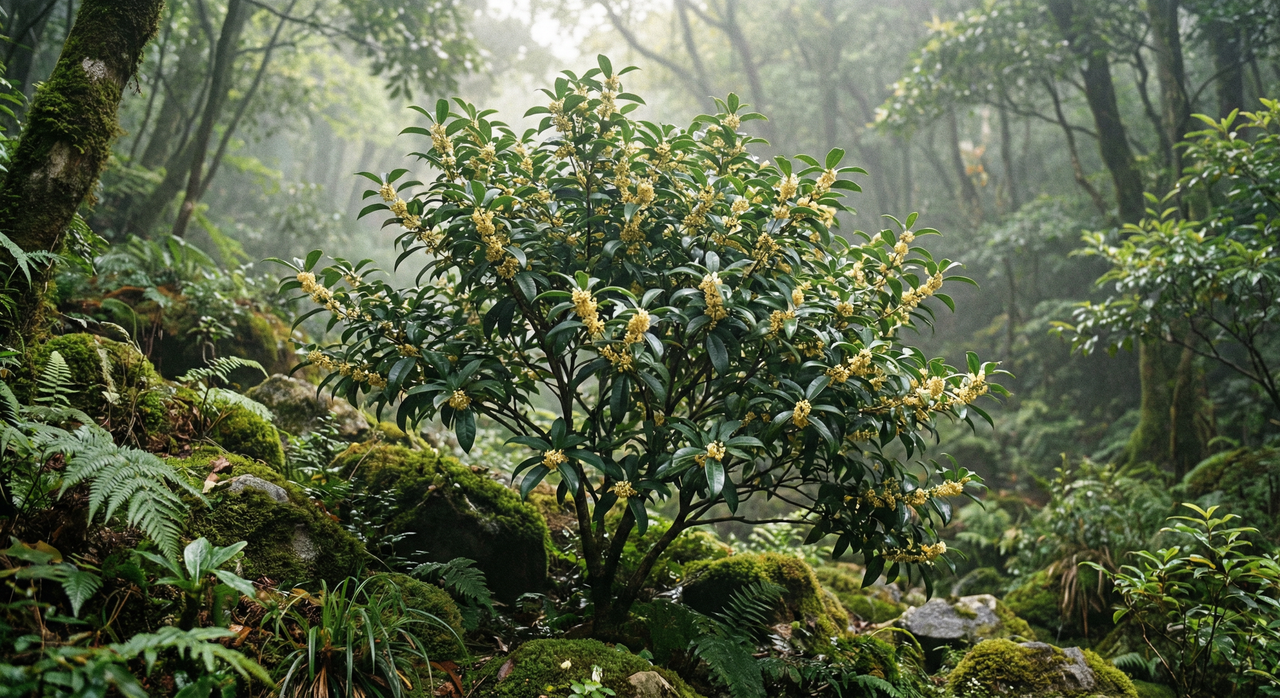
You can smell tea olive before you see it. That's not a poetic exaggeration; it's a literal, disorienting experience the first time it happens to you. I was walking through a neighborhood in Savannah one October afternoon, no garden in sight, when this wave of something hit me, apricot and honey and something almost floral-spiced that I couldn't quite name. I turned around, looked up, looked across the street, and finally spotted it: a modest, unassuming shrub tucked behind a fence, maybe eight feet tall, covered in clusters of tiny cream-colored flowers so small I had to squint to confirm they were there. The scent from those flowers was absurd. Disproportionate. Almost unfair.
What gets me is how completely tea olive defies the usual rules. We expect fragrance to come with a show, with big blowsy blooms and drama. Osmanthus fragrans gives you flowers measured in millimeters and a scent trail that can carry a hundred feet on still air.[1] It's been grown in Chinese imperial gardens since the Han Dynasty, threaded through classical poetry, and turned into one of the most important flavoring ingredients in East Asian cuisine, and yet somehow most Western gardeners walk right past it at the nursery without a second look. That's the gap I want to close here.
Tea Olive Origin, History, and Cultural Significance
Botanical Background and Native Range
Tea Olive, known botanically as Osmanthus fragrans, is a perennial evergreen shrub or small tree native to a broad sweep of eastern and southeastern Asia, from the Himalayas east through central and southern China to Taiwan, southern Japan, Korea, and northern Vietnam.[2][3][4] That's a long native range, and it hints at the plant's adaptability. Cultivation goes back even further than you might expect: imperial gardeners in China were growing it during the Han Dynasty (206 BCE–220 CE), and it later moved into the scholar gardens of the Tang and Song periods before arriving in Europe and North America in the 1800s for ornamental planting.[3] Under good conditions, a cultivated plant can easily live 20 to 50 years, and there are wild specimens thought to exceed 200 years. I've grown both the straight species and common hybrids, and I'd argue the fragrance alone justifies whatever space you give them.
Two related species sometimes enter the conversation. Osmanthus decorus, native to Turkey and the Caucasus, carries Endangered status on the IUCN Red List due to habitat loss[5][6] and is taxonomically distinct, whatever the occasional synonymy debates suggest. I always check current POWO and Kew nomenclature before specifying plants for clients because this genus has a habit of shifting underfoot. Then there's Osmanthus × fortunei, the hybrid between O. fragrans and O. heterophyllus introduced to the West by plant hunter Robert Fortune in the 1840s.[7][8] Both are useful plants, but neither carries the same cultural weight or aromatic intensity as the true sweet olive.
Visual and Sensory Characteristics
Knowing what you're actually planting matters, especially with a genus this easy to mislabel at the nursery. In the landscape, Osmanthus fragrans develops into a dense, upright to rounded evergreen that can reach 10 to 40 feet at maturity, with a spread of 6 to 12 feet and a slow to moderate growth rate that means establishment often takes 5 to 10 years.[2][9] The leaves are leathery, lustrous dark green, opposite, and ovate to lanceolate, running 4 to 10 cm long with smooth young stems that age to grayish-brown.[2][10] Crush a leaf and you get a faint citrus signal; that alone is a reliable identification cue.
The flowers are what everyone comes for. Tiny, five-petaled, borne in axillary clusters, they range from white to yellow, orange, or red-orange depending on cultivar, and they produce a fragrance completely disproportionate to their size.[2][11] The first time I smelled an autumn bloom, I genuinely understood why Chinese poets called it the noble flower. After the flowers, small oval drupes ripen to deep blue-black or purple, single-seeded and eventually bird-dispersed, carried on a shallow fibrous root system that spreads horizontally near the soil surface.[12][4]
Traditional and Cultural Uses Across East Asia
The written record for this plant stretches back over 2,500 years. It appears in the Shijing (Book of Odes) from the Zhou Dynasty[13] and later in Li Shizhen's Bencao Gangmu (1596 CE) alongside earlier Tang and Song medical texts.[14] Han Dynasty imperial gardens cultivated it as a mark of status, and the symbolism accrued from there: nobility, prosperity, romance, the reunion warmth of the Mid-Autumn Festival.[15][16] The culinary traditions are just as deep: osmanthus tea, guihua wine, mooncakes, pastries, and flower jams have been documented since the Song Dynasty. I keep a small shelf of historic garden texts, and experimenting with guihua syrup every fall has become one of my favorite ways to connect with that living heritage.
Traditional Chinese medicine used the flowers to address coughs, phlegm, sore throats, and digestive complaints, while in Japan, where it's known as kinmokusei and has been cultivated since the Nara period, tea ceremonies, wagashi sweets, and temple gardens all drew on its presence.[17][18] Trade routes carried it from China through Korea, Vietnam, and into communities as far as the Hmong diaspora, each culture weaving its own uses around the same essential fragrance.[19]
Interesting Facts and Modern Context
That signature scent is no accident of chemistry. The essential oil, extracted by enfleurage or steam distillation, is built around linalool, α-ionone, β-ionone, linalyl acetate, and γ-decalactone, a floral-fruity combination that has made Osmanthus fragrans a foundation ingredient in high-end perfumery for centuries.[20][21] The blooms peak in late summer through autumn, primarily September and October in temperate regions, drawing bees, moths, and butterflies before the resulting drupes get carried off by birds.[22][23] In my Central Florida garden, on warm humid autumn evenings the fragrance carries an impressive distance, which is exactly how the plant earned its common name.
That same bird dispersal creates a modern wrinkle. In New Zealand, Osmanthus fragrans has shown invasive potential through seed spread into natural areas.[24] When I plant near wildland edges, I'm careful about siting, choosing locations where birds are unlikely to carry seeds far, or selecting cultivars less prone to heavy fruiting. It's the kind of stewardship detail that matters in a responsible food forest design. Fragrance intensity also varies by cultivar and microclimate; I've noticed considerably stronger scent from plants grown in full sun with consistent moisture than from those tucked into drier or shadier spots, which is worth factoring into cultivar selection from the start.[25][26]
Tea Olive Varieties and Cultivars
Every Tea Olive delivers that signature scent, but the underlying chemistry explains why some stop you in your tracks from twenty feet away while others are more politely fragrant up close. The aroma of Osmanthus fragrans comes from a cocktail of volatiles dominated by β-ionone and α-ionone, with linalool and nerolidol rounding out the profile; ionones alone can account for up to 40% of the essential oil across more than 100 identified compounds.[27][28] That apricot-peach-violet character is the baseline. What cultivar selection does is dial certain qualities up or down without losing the thread.
Notable Cultivars of Osmanthus fragrans and Related Species
The species itself reaches 15 to 25 feet tall in time, with a dense rounded habit and glossy dark leaves that range from finely serrated to nearly smooth depending on the form.[29][30] Cultivars give you more control over size, flower color, and fragrance intensity without sacrificing the plant's general toughness.[31][32] I've grown several side by side in my own Central Florida landscape, and the differences are real and worth considering at purchase time.
'Aurantiacus' is the orange-flowered form, and in my experience it consistently delivers the heaviest, fruitiest apricot punch of any cultivar I've grown, especially during hot humid summers.[32][33] 'Fudingzhu' is the beloved Chinese selection with an impressive fragrance reputation and small white flowers, while 'Conger Yellow' goes brighter with intense yellow blooms. 'Graham Blandy' trades floral showiness for a tight, columnar form that fits neatly into narrow spaces, while 'Variegatus' brings cream-edged foliage interest, though I've noticed it tends to flower a bit more reluctantly than the plain-leaved selections. 'Thunbergii' sits at the other end of the spectrum with narrow leaves and pale, restrained blooms.[32][34] The white-flowered forms tend to carry slightly greener, more floral notes compared to the warmer, richer scent of the orange selections.
If you're in Zone 7 or want something that tops out closer to shrub scale, Fortune's Osmanthus (Osmanthus × fortunei) is the practical answer. This hybrid of O. fragrans and O. heterophyllus emerged in 19th-century European horticulture and grows 6 to 15 feet tall with holly-like leathery leaves and highly fragrant white to pale-yellow flowers blooming September through November.[2][35] 'San Jose' is the cold-hardy workhorse of the group; 'Morning Sun' offers early blooms with orange-red buds and variegated foliage; 'Morgan's Fragrant Cloud' earns its name with exceptional scent intensity.[35][36] I've used Fortune's Osmanthus in multiple client designs over the years without any ecological concerns; it behaves itself in the landscape the way a well-mannered evergreen shrub should.[37]
For tight spaces or a foliage-first planting, Osmanthus decorus is a genuinely distinct species, not a synonym for O. fragrans, maintaining a similar structural bushiness and growing to around 3 to 4 meters with fragrant white autumn flowers.[38][39] Cultivar selection here leans heavily on leaves: 'Aureus' splashes golden-yellow, 'Aurora' and 'Variegatus' give cream or white margins, and 'J.K.' stays compact for container or border work.[38][40] All three species share the same basic site preferences: well-drained, slightly acidic soil around pH 5.5 to 6.5, full sun to part shade, and moderate drought tolerance once established.[41][42]
Sourcing Tea Olive Plants and Seeds
Osmanthus fragrans is widely available in Zones 7 through 10, sold through garden centers, specialty nurseries, and online retailers in 1 to 5 gallon containers, typically priced $15 to $50 for smaller sizes and up to $100 or more for larger specimens.[43][44] There are no USDA APHIS restrictions or federal invasive listings to worry about, and it's cultivated freely in Florida, California, and beyond.[45][46] Seeds are out there too, around $5 to $15 per packet, but they require 30 to 60 days of cold stratification and still only germinate at 50 to 70% under good conditions, with many packets imported due to limited domestic supply. I've had much better luck mimicking natural autumn cooling in a refrigerator rather than relying on Florida's mild winters to do the work for me.
The one catch with buying Tea Olive is labeling. Mislabeled plants are genuinely common; "sweet olive" gets applied loosely at retail, and I once brought home a plant tagged 'Radiant' that turned out to be a plain green form with no distinguishing cultivar traits at all. Now I always look for tags with specific cultivar names, ask to see photos of the flowers if they're not in bloom, and give the plant a close look before loading it into the car. Dense, vivid green foliage, clean stems, and roots that aren't circling the bottom of the container are your indicators of a healthy, well-grown specimen.[47] A plant already in bloom at the nursery is worth a slight premium; you'll enjoy the fragrance that first season rather than waiting two or three years to find out what you actually bought.
O. decorus is a different sourcing story entirely. It's primarily a specialty-nursery find in the US, available through growers focused on rare or Asian ornamentals, and you should expect to pay $25 to $40 for a one-gallon and $50 or more for a larger specimen.[48][49] Neither species carries federal restrictions, so the extra effort is about finding the plant at all, not navigating red tape.
Tea Olive Propagation and Planting Guidelines (Osmanthus fragrans)
Every Tea Olive in my garden started as a cutting. That's not an accident or personal preference so much as biology forcing my hand. Once you understand how the seeds behave, vegetative propagation stops feeling like a shortcut and starts feeling like the obvious choice.
Understanding Tea Olive Seed Biology and Why Cuttings Are Preferred
Osmanthus fragrans seeds are recalcitrant, meaning they can't be dried down or chilled the way orthodox seeds can without dying.[50][51] This is true across the genus, including Fortune's Osmanthus and Osmanthus decorus.[52] The practical consequence is that viability drops fast after harvest, germination is irregular even with fresh seed, and plants grown from seed take 5-10 years to flower while rarely coming true to the named cultivar you were hoping to replicate.[53][54] I still try it once every few years out of curiosity, but I stopped relying on it after waiting three years for a flat of seedlings to tell me nothing about their fragrance potential.
Cuttings are where the reliability lives. Semi-hardwood cuttings taken in late summer or early autumn root at 50-80%, and you preserve every trait of the parent plant including the scent.[53][2] I've found late August cuttings root faster in my humid subtropical climate than June softwood because the wood has just enough firmness to resist rot while still pushing roots. Take 4-6 inch pieces from the current season's growth, treat with IBA at 1000-3000 ppm, and stick them in a 1:1 perlite and peat mix. Keep humidity high, temperatures around 65-75°F, and expect roots in 4-8 weeks.[53][55] I always start more than I need because even a 70% success rate means losing three cuttings out of every ten, and I'd rather have extras to share than come up short. Air layering in spring or summer is a solid backup method with 70-85% success when you wound the stem, apply rooting hormone, and wrap the site in moist sphagnum moss.[56] Grafting onto Osmanthus heterophyllus for vigor is also done in commercial nurseries, though most home growers won't need to go there.[57]
Soil and Site Requirements for Successful Establishment
The single thing that kills more Tea Olives than anything else is wet feet. These plants evolved on well-drained slopes and limestone terrains in China and the Himalayas, so their roots simply aren't built for waterlogged conditions.[58] A fertile, loamy or sandy-loam soil with pH between 5.5 and 7.5 is the target; anything heavy and poorly draining invites Phytophthora or Pythium root rot before the plant has a chance to establish.[2][25] If your native soil is heavy clay, amend generously with organic matter and aim for at least 24 inches of workable rooting depth before you put anything in the ground. For light exposure, Tea Olive flowers best with 4-6 hours of morning sun or bright dappled light; afternoon shade protects the foliage in hotter climates without sacrificing bloom.[59]
The early warning signs of root trouble are easy to miss if you're not watching for them. Yellowing older leaves on a plant in moist-feeling soil is the red flag I've learned not to ignore. I've pulled plants that looked almost normal above ground only to find the roots had already turned to mush.[60][61] If you see that combination of symptoms alongside wilting and stunted growth, don't wait; investigate drainage immediately.
Spacing, Planting Technique, and Aftercare
Mature Osmanthus fragrans reaches 6-15 feet tall and wide, so specimen plants need 8-12 feet of clearance between them.[2][62] For hedges, 4-6 feet works, and I tend to plant on the tighter end of that range to gain quicker privacy, though I always keep a little extra space to allow airflow and reduce fungal pressure in humid climates. Osmanthus decorus is the compact option for tighter sites, typically averaging around 10 feet spread and spacing comfortably at 3-6 feet for a hedge.[49]
Spring after last frost and early fall are the two windows I use for planting, giving roots time to settle before facing temperature extremes.[2] Dig the hole twice as wide as the root ball but no deeper than the container height; setting the plant slightly high in heavy soil is better than letting it sink into a basin. Backfill with amended native soil, lay 2-3 inches of mulch out to the drip line (keeping it away from the trunk), and water deeply to settle the roots.[63] After that, let the soil dry slightly between waterings to push roots downward rather than keeping things perpetually moist at the surface.
Germination Timeline and Expectations
If you do decide to try seed, go in with accurate expectations. Fresh seed needs 60-90 days of cold stratification at around 40°F before sowing, and even then you're looking at irregular germination over a 1-3 month window at 68-77°F, with success rates somewhere between 30-70% depending on seed freshness.[53][64] Viability under moist cool storage holds for maybe 6-12 months before dropping sharply, so don't sit on collected seed.[65] Osmanthus decorus follows the same general pattern: collect ripe berries in autumn, sow fresh in acidic well-draining mix, and wait.[53] The real obstacle isn't germination, though; it's the 5-10 years those seedlings will spend growing before they bloom.[66] Rooted cuttings, by comparison, can start flowering in 2-3 years, and that gap is why I reach for the cutting tray first every time.
Tea Olive Care Guide: Growing and Maintaining Osmanthus fragrans
My experience with Tea Olive can be summed up simply: the gardeners who struggle with it are almost always doing too much. Over-watering, over-fertilizing, planting in the wrong light. The ones who thrive with it treat it like the woodland edge shrub it actually is, which means replicating the conditions of a humid East Asian mountain slope rather than a fertilized, irrigated border bed.
Sunlight Requirements and Light Management
Tea Olive wants morning sun and afternoon shade, especially in hot climates.[67][68][69] I've grown several cultivars in a humid subtropical setting and the plants getting western afternoon sun consistently showed scorched brown leaf margins and visibly muted fragrance compared to the ones tucked behind a structure or tall canopy tree. That connection between siting and scent quality is real. In my hottest summers, afternoon shade is non-negotiable for keeping leaves glossy and fragrance strong.
Too little light causes its own problems: fewer than four hours of sun leads to etiolated, leggy stems, yellowing foliage, and reduced or absent flowering.[70][62] Too much direct sun scorches leaf tips, bleaches foliage, and suppresses blooming.[71][72] Young plants are especially vulnerable to both extremes. Established specimens handle light variation more gracefully, but getting the siting right from day one saves years of recovery.
Water Needs and Irrigation Practices
Its native habitat tells you everything: humid mountain forests in southern China, Japan, and Korea, with well-drained slopes and seasonal rainfall.[73][74] Drainage is the foundation. Roots that sit in wet soil rot; roots in fast-draining, moisture-retentive soil thrive.
Newly planted Tea Olives need roughly an inch of water weekly through their first growing season to build a strong root system.[2][75] After one to two years, they become genuinely drought-tolerant, needing supplemental water only during prolonged dry periods, and even then you should let the top two to three inches of soil dry before watering again.[2] I check with my finger. It takes about thirty seconds and has saved more plants than any irrigation timer I've ever used.
Drought stress shows up as wilting, browning tips, leaf drop, and reduced flowering. Overwatering looks deceptively similar at first, but the tell is yellowing despite moist soil, combined with a pattern of general decline and susceptibility to root rot and fungal issues.[76][77] Overwatering kills these shrubs faster than almost anything else. On water quality, Tea Olive tolerates hard water and mild coastal salt spray reasonably well, but prolonged high-chlorine irrigation can cause leaf-tip burn on young plants.[78][70]
Feeding and Soil Fertility for Tea Olive
Tea Olive is a moderate feeder from woodland habitats with loamy, slightly acidic soils, and it responds best to restraint.[79][62] I've seen more Tea Olives damaged by too much fertilizer than by too little. The few times I over-fertilized early in my career, I got exactly what the research predicts: leggy soft growth, reduced flowering, and salt-burned leaf edges.[80][81]
If you do feed, apply a balanced slow-release fertilizer (10-10-10 or 12-6-6) in early spring at one to two pounds per hundred square feet around the drip line, keeping it away from the trunk.[82][83] A lighter mid-summer application is fine for young plants; stop feeding after August to avoid pushing frost-vulnerable new growth. Established plants in mulched, fertile soil often need nothing beyond an annual top-dressing of compost.
Soil pH matters more than fertilizer rate. Tea Olive prefers a pH of 6.0 to 7.0, and in alkaline soils above 7.5 it develops iron chlorosis, recognizable as yellowing between the veins on young leaves while the veins stay green.[62][84] If you see that pattern, don't just add general fertilizer. Test your pH first, then use chelated iron or aluminum sulfate to bring the soil down to 6.0 to 6.5. I've corrected this on several client landscapes with exactly that approach and seen the yellowing resolve within a season.[85][86] A soil test every two to three years keeps you ahead of most fertility problems.[87]
Frost Tolerance and Winter Protection
Tea Olive is reliably hardy in USDA zones 7 through 10, with the sweet spot being zones 8 and 9.[2][88] Established plants can handle brief dips to around 10°F to 0°F with protection, but young plants and exposed sites are considerably more vulnerable.[89] I think of its cold sensitivity as roughly comparable to gardenia or sweetbay magnolia: it survives short cold snaps but doesn't forgive hard prolonged freezes at exposed sites.
In zone 7, siting near a south-facing wall or within an evergreen windbreak makes a real difference. Before the first frost, apply two to four inches of organic mulch around the base, water deeply, and have frost cloth or burlap ready for sudden cold snaps.[90][91] Frost damage shows as blackened leaf tips, wilting, and stem dieback; prune to live wood in spring after all frost risk passes, then fertilize lightly to support recovery. Avoid late-season pruning, since that stimulates tender new growth right before winter.[89] For gardeners on the colder edge of zone 7, Osmanthus decorus is worth considering; its Mediterranean background makes it slightly hardier, tolerating down to around 0°F to 5°F.[92]
Heat Tolerance and Summer Care
Coming from subtropical and temperate Asia, Tea Olive handles heat zones 8 through 10 and can tolerate daytime highs around 95 to 100°F, ideally with 60 to 80 percent relative humidity.[43][62][93] Prolonged temperatures above 104°F without nighttime cooling push it into genuine stress territory.
Heat stress symptoms include leaf scorch with brown edges, wilting, blossom drop, and reduced fragrance, since high temperatures suppress the terpene biosynthesis responsible for that signature apricot scent.[94][95] Seedlings and plants in active bloom are the most vulnerable, so my strategy in hot summers is consistent two to three inch mulch, early-morning deep watering, and an east-facing site or partial afternoon shade. Those three things together keep plants producing fragrant flowers even when summer temperatures are brutal.[96] If you're in a region with intense western afternoon sun, a 30 to 50 percent shade cloth during peak summer is a reasonable short-term mitigation for young plants not yet established enough to handle full exposure.
Pruning, Maintenance, and Seasonal Rhythm
The single most important pruning rule with Tea Olive: do it immediately after flowering, not before, and never in late fall.[64][71] I learned this by cutting mine back one winter and wondering why the following autumn produced almost no flowers. Late pruning removes the buds for next season's fragrant display. For most O. fragrans, that means pruning in late spring or early summer after the main bloom cycle finishes.
Beyond timing, the philosophy is minimal intervention: remove dead or crossing branches, pinch young shoots in spring to encourage bushiness, and for hedges do a light trim twice yearly.[97] Avoid heavy shearing, which turns an elegantly layered shrub into a lollipop and weakens the interior structure. Mulch with two to four inches of organic material around the base each year, keeping it away from the stems, to retain moisture, moderate soil temperature, and slowly release nutrients.[82][98] Established plants in well-mulched soil need little else beyond occasional thinning for airflow; container plants are the exception and need closer attention to both watering and feeding.
Tea Olive follows a reliable seasonal rhythm: spring vegetative growth and shoot elongation, summer bloom preparation, fall fragrance peak for O. fragrans, and a quiet winter semi-dormancy.[99][83] Get the siting, water, and pruning timing right and these plants can live 40 to 60 years or more. That long-game payoff is, honestly, one of the reasons I keep planting them.
Tea Olive Harvesting Guide: Timing, Technique, and Yield
When to Harvest Tea Olive Fruits: Timelines from Planting to Maturity
If you're growing Tea Olive for its fruits, patience isn't just a virtue -- it's the whole job description. Grafted specimens typically begin flowering in two to three years and deliver reliable fruit harvests somewhere between years 3 and 6.[100][101][102] I've grown both in my landscape, and my grafted plant flowered reliably in year three and produced its first small crop of fruits the following autumn. That's a realistic benchmark for zones 7-9 under good conditions. I think of it like waiting on a young citrus tree -- you know the fruit is coming, you just have to let the plant build enough structure to get there.
Once your plant does bloom, the fruit development clock starts. From late-summer or autumn flowers to ripe fruits runs roughly 6-8 months, putting the harvest window in September through November for most zone 7-9 gardens.[103][104][105] I mark bloom dates on my calendar every year so I'm not guessing when to check the fruits -- regional variation and cultivar differences mean the calendar is just a rough guide anyway. What matters more is watching the plant. Ripe fruits turn from green to a deep purple-black, measure about half a centimeter to one centimeter across, and yield slightly under gentle pressure.[106][107] Those tactile and visual cues will serve you far better than any fixed date.
How to Harvest Tea Olive: Techniques for Flowers and Fruits
Both harvests are refreshingly simple. For flowers, pick by hand at full bloom, handling the tiny blooms gently to preserve their fragrance -- honestly, flower harvest is one of my favorite moments in the garden, just burying my nose in a branch as I work. Fruits get the same treatment: hand-picked individually, each small drupe containing a single seed. No special tools, no ladders for a mature shrub in a home garden, just a bowl and some patience.
Expected Yield, Flavor, and Uses of Tea Olive Fruits
A mature Tea Olive in the home landscape produces modest fruit yields, enough for occasional personal use, traditional tea preparations, or propagation -- not commercial volumes.[108] Related species like Osmanthus decorus produce comparable drupes used in teas, which gives you a sense of genus-wide patterns if you're growing multiple species for diversity. After waiting years for fruit, I now set aside a portion of each harvest for seedlings -- a slow but deeply satisfying way to integrate this plant into a long-term permaculture system. The flavor is its own reward: a subtle sweet-tartness with just a whisper of that same aromatic quality as the flowers, though the real culinary story belongs to the blooms.
Tea Olive Preparation and Uses
Culinary Uses of Tea Olive Flowers
Tea Olive flowers are the whole point. Osmanthus fragrans has been a culinary staple in Chinese and East Asian kitchens for centuries, prized for flavoring teas, syrups, jams, wines, desserts, and the sweet filling of traditional mooncakes.[109][110] The flavor is genuinely distinctive: sweet apricot up front, soft peach notes underneath, with a lingering floral aftertaste that can hang around for two to five minutes in a cup of tea.[111][112] Fresh petals are delicate and slightly velvety; dried flowers go brittle but regain a subtle chewiness once rehydrated or cooked into something.[109]
After growing several cultivars side by side, I've noticed that my white-flowered plants produce a noticeably more intense, ionone-driven fragrance in tea blends during fall, while the orange and pink types lean more linalool-forward with a slightly warmer, softer profile.[113] If you're fermenting flowers into wine or a sweetened liqueur, that chemistry shifts further: fermentation deepens the fruity esters and pulls back the bright fresh-floral notes into something richer and more complex.[114] For simple culinary use, I shade-dry my harvest rather than oven-drying; the gentler method preserves the delicate volatiles that make the flowers worth using in the first place.[115] Pairing-wise, vanilla, citrus zest, and star anise all work beautifully alongside the apricot core.[115]
The fruits ripen to blue-black and are technically edible, but they're bitter enough that most cooks leave them alone.[109] Leaves aren't typically used culinarily and can cause mild irritation in quantity.[116] O. × fortunei flowers are edible with a similar sweet-fruity profile, while O. decorus, though it shares related volatile compounds, is really grown as an ornamental with almost no culinary tradition behind it.[115][117] One thing I've learned the hard way as a landscape designer: label your young shrubs carefully. Osmanthus fragrans can be confused with Ilex, Elaeagnus, and Sarcococca when plants are immature, and correct identification before any foraging is non-negotiable.[83][2]
Medicinal Preparations from Tea Olive
Traditional Chinese medicine has long dried the flowers of Osmanthus fragrans and simmered them into concentrated decoctions for targeted clinical applications.[118] The same tradition extends to O. × fortunei, where flowers appear in preparations for respiratory and skin issues and the leaves or bark are occasionally used for wound healing.[119] Standard preparation guidance for dried flowers runs roughly 3 to 10 grams per decoction taken once or twice daily; tinctures are typically used at 1 to 2 ml two or three times daily; and topical essential oil preparations are diluted to 1 to 2 percent in a carrier oil before any skin application.[119][120]
My own practice is simple: I use shade-dried flowers to make a gentle infusion when seasonal throat irritation shows up, and the same preparation that makes the tea delicious seems to make it soothing. Practically speaking, I don't use the essential oil undiluted or in large medicinal amounts myself. The preclinical evidence underlying the health benefits is genuinely interesting, but large human trials are sparse, and Oleaceae family sensitivities are real enough to take seriously. Culinary flower use is low-risk for most people; concentrated preparations are a different conversation, and one worth having with a healthcare provider, especially if you're pregnant or managing any Oleaceae allergy.
Tea Olive Health Benefits and Medicinal Uses
If you grow Tea Olive primarily for its fragrance, you're already capturing some of its most useful properties without even trying. The same volatile compounds that stop people in their tracks when they walk past a blooming shrub have been employed medicinally for over a thousand years, and modern phytochemistry is starting to explain why that reputation was earned.
Traditional Chinese Medicine Uses of Osmanthus fragrans (Gui Hua)
In Traditional Chinese Medicine, the dried flowers of Osmanthus fragrans are known as Gui Hua and classified as a warm, acrid herb that enters the lung and spleen meridians. Practitioners have long used them to address respiratory complaints, particularly coughs with phlegm, colds, and flu, along with digestive discomfort and general inflammation.[121][122][123] When I brew a cup of Tea Olive flower tea, there's something genuinely soothing about it, a quality that reminds me of a gentler version of thyme or holy basil, both of which I also grow for respiratory support. The comfort isn't just psychological; the chemistry backs it up.
Key Phytochemicals in Tea Olive: Essential Oils, Flavonoids, Phenolics, and Iridoids
The flower essential oils, which represent 0.1 to 0.5% of fresh weight, are dominated by linalool (comprising 25 to 60% of the oil), alongside geraniol, nerol, β-ionone, and γ-decalactone.[124][125] These aren't just scent molecules; they're the same compounds responsible for documented antioxidant and antimicrobial activity. Beyond the volatiles, the flowers carry an impressive phytochemical toolkit: flavonoids including quercetin, kaempferol, luteolin glycosides, and rutin; phenolic acids like chlorogenic, caffeic, and acteoside (verbascoside); and iridoid glycosides including oleoside, ligstroside, and geniposide.[126][127][128]
One thing I've noticed in my own Central Florida garden is that flowers harvested after a hot, humid summer have a noticeably stronger fragrance and a more complex flavor than those from cooler or drier years. Research confirms this is real, not imaginary: volatile content and flavonoid concentrations peak in autumn, and drought stress can reduce linalool levels by up to 30% while simultaneously pushing some phenolics higher.[129][130] I harvest in late autumn for this reason. The leaves contain even higher phenolic concentrations, with acteoside running 1 to 5 mg/g and total phenolics reaching 5 to 15% of dry weight, though seeds should be avoided entirely.[131]
Antioxidant, Anti-inflammatory, and Antimicrobial Research
The strongest preclinical evidence clusters around three activities. Antioxidant capacity is well-documented, with DPPH IC50 values around 20 to 50 μg/mL achieved through free radical scavenging and upregulation of endogenous antioxidant enzymes via the Nrf2 pathway.[132][133] Anti-inflammatory activity is equally consistent, with extracts inhibiting pro-inflammatory cytokines TNF-α and IL-6 through NF-κB and COX-2 pathway modulation; Osmanthus × fortunei shows a 45 to 60% reduction in rat paw edema models at 100 to 200 mg/kg.[134][135] Antimicrobial activity against Staphylococcus aureus and Escherichia coli has also been demonstrated, with essential oils disrupting bacterial cell membranes and inhibiting efflux pumps at MIC values of 0.5 to 2 mg/mL.[136][129]
Emerging Research: Neuroprotective, Anti-diabetic, Hepatoprotective, and Anticancer Potential
Beyond those better-established actions, a wave of in vitro and animal studies points in intriguing directions. Neuroprotective effects include protection against amyloid-beta-induced toxicity in Alzheimer's models via Nrf2 activation and acetylcholinesterase inhibition.[137][138] Anti-diabetic potential involves α-glucosidase and DPP-4 inhibition along with improved insulin sensitivity through GLUT4 translocation, while hepatoprotective action mediated by acteoside reduces liver enzyme markers ALT and AST in oxidative damage models.[137][139] In vitro anticancer studies show apoptosis induction in HepG2 and A549 cell lines via caspase activation and PI3K/Akt pathway modulation.[140] Analgesic and antispasmodic effects from ethanol extracts have also been documented in animal pain models and isolated guinea-pig ileum studies.[134]
While this is genuinely promising, essentially all of it comes from in vitro or animal studies, and large-scale human clinical trials are scarce.[141][142] I grow Tea Olive as an aromatic culinary herb first. The flowers go into teas, desserts, and syrups. If the phytochemistry delivers some low-level anti-inflammatory and antioxidant benefit along the way, wonderful, but I'm not treating it as a concentrated medicine.
Nutritional Profile of Tea Olive Flowers
The flowers are the primary edible part, used fresh, dried, or infused in teas, wines, and traditional preparations; fruits and seeds should be avoided.[143] A typical serving of flower tea runs 5 to 10 g of dried flowers per 250 ml cup, which delivers roughly 10 to 20 mg of polyphenols along with modest vitamin C (about 20 to 30 mg per 100 g fresh weight), a useful potassium load, and antioxidant phenolics in the range of 80 to 250 mg gallic acid equivalents per 100 g dry weight.[144][145] This isn't superfood territory, but it's a genuinely nourishing cup, more along the lines of a good chamomile than a green tea. The subtle apricot-like flavor makes it easy to drink daily, which is where the cumulative nutritional benefit actually comes from.
Safety Profile and Cautions for Tea Olive
Here's where I can speak from repeated personal experience: Tea Olive is one of the more benign plants in my food forest. Osmanthus fragrans is considered non-toxic to humans, dogs, cats, and horses by ASPCA standards, and toxicology studies show very high LD50 values, above 5,000 mg/kg in animal models.[146][147] I routinely use 5 to 10 g of dried flowers in tea without any digestive upset, and the plant has been non-toxic to every pet that has wandered through my landscape. Traditional Chinese Medicine practice uses 3 to 9 g dried daily with no reported toxicity at those amounts.[148][149]
Anyone with Oleaceae family sensitivities may experience rhinitis or contact dermatitis, since the essential oil components linalool and geraniol are known sensitizers in susceptible individuals.[150][151] The essential oils themselves should not be taken undiluted internally. Avoid the seeds, which may contain irritating compounds in larger quantities. My propagation seedlings can look deceptively similar to other Oleaceae plants in their first year, so it's worth carefully labeling your rows to distinguish Tea Olive from toxic look-alikes like privet, holly, or daphne. Pregnant individuals and anyone with known allergies should consult a healthcare provider before regular use; as with most botanicals, human clinical data remain limited.[152][119]
Tea Olive Pests and Diseases
If you're searching this section hoping to find a long list of problems, I'll save you some worry: Tea Olive is genuinely one of the lower-maintenance flowering shrubs I work with. [153][154] Part of that resilience comes from the plant itself: those leathery, waxy leaves physically discourage feeding insects, and the volatile compounds (linalool, flavonoids, terpenoids) that give Tea Olive its famous scent also function as deterrents to herbivores. [129][155] I think of it a bit like rosemary or lavender: the same chemistry that draws you in tends to push pests back out.
Common Pests of Tea Olive
The insects you're most likely to encounter are scale, spider mites, and aphids, with whiteflies, thrips, and root-knot nematodes appearing occasionally. [156][86] Scale is the one I watch most closely in spring, because the waxy leaf surface that protects the plant also makes those early armored scale colonies easy to miss. I learned to flip a few leaves every week during the warm-up months and look for the telltale crusty or cottony patches on the undersides. Catch scale early and a firm spray of horticultural oil handles it cleanly. Spider mites, on the other hand, tend to show up during hot, dry stretches; bumping irrigation frequency and misting the foliage usually discourages them without reaching for a miticide. [156][86]
Aphid pressure is more common in warm, humid climates, and that regional context matters. [64] If you're choosing plants for a client who wants the absolute shortest spray schedule, I consistently recommend 'Fudingzhu' or 'Aurantiacus', both of which show better tolerance to aphids, mites, and scale than some of the other popular cultivars. [157] My approach is straightforward: good airflow, healthy soil, and regular monitoring allow lady beetles and predatory mites to do most of the cleanup if you're not over-spraying and disrupting the beneficial insect community. I rarely reach for anything beyond horticultural oil or insecticidal soap, because keeping conditions right does the bulk of the work.
Diseases of Tea Olive and Prevention
Tea Olive shows solid resistance to powdery mildew, Verticillium wilt, and Botrytis under typical garden conditions, [158][62] though humid, stagnant sites can nudge powdery mildew and fungal leaf spots into play. [86] The fungal leaf spots (Cercospora, Septoria, anthracnose) are primarily triggered by prolonged wet foliage and poor air circulation; they look alarming but rarely threaten the plant. If you're seeing spots regularly, the fix is almost always positional: open up the canopy, switch from overhead irrigation to base watering, and the problem typically retreats on its own.
Phytophthora root rot is the one disease I take seriously. I lost a young Tea Olive to it years ago in a heavy clay bed that held water after every rain. Since then, I plant on a slight mound or in a bed amended with coarse organic material, and I haven't lost one since. Cultivars like 'Fudingzhu' and 'Gordons' show better tolerance to Phytophthora than some others, so if your drainage is imperfect, cultivar choice matters. [159] The related native Devilwood (Osmanthus americanus) can suffer 70-80% root rot mortality in waterlogged soils, but that risk drops sharply with raised beds, a reminder that drainage isn't negotiable for any Osmanthus. [160]
The real disease management framework here is cultural, not chemical. Well-drained soil, moderate humidity, good spacing, and avoiding environmental stress (drought swings, overwatering) keep Tea Olive healthy in ways that no fungicide schedule can replicate. [161][162] If you do reach for fungicides, chlorothalonil for leaf spot and phosphonates for Phytophthora are the tools extension programs recommend, but only preventively or at the first sign of infection. [163] A well-sited, well-drained Tea Olive almost never needs them.
Tea Olive in Permaculture Design
There's a reason Tea Olive keeps showing up in my landscape designs for the Gulf Coast and warmer Southeast: it does several jobs at once, quietly, without demanding much in return. But before you can take advantage of any of that, you need to know whether your site will actually support it.
Climate Adaptability and Hardiness Zones
Osmanthus fragrans is reliably hardy in USDA zones 8 and 9, and it will tolerate minimum temperatures down to around 0-10°F once it's well established.[164][62] Zone 7 gardeners can grow it, but I'd treat that as a siting exercise rather than a guarantee: southern exposure, heavy mulch over the root zone, and protection from desiccating winter winds make the difference between a plant that sails through and one that sulks or dies back. I lost a young specimen to a surprise deep freeze early in my career before I learned that lesson, and now I consider winter mulching non-negotiable for any plant going into a marginal zone 7 spot.
In terms of site conditions, the plant prefers 40-50 inches of annual rainfall, moderate humidity, and well-drained soil in the pH 6.0-7.5 range; it handles full sun to part shade, with afternoon shade genuinely helpful in zone 9 heat.[43][165][166] Once established, it shows decent drought tolerance and handles coastal salt spray and urban air pollution reasonably well, which makes it practical across a wider range of real-world sites than the zone map alone suggests.[62][167] For colder gardens, Osmanthus decorus is worth knowing: it pushes hardiness down into zone 6, stays more compact at 6-15 feet, and handles urban stress well, so it fills the shrub-layer role where O. fragrans simply won't survive.[2][168]
Ecosystem Functions and Wildlife Support
What I love most about Tea Olive from a design perspective is how much ecological work it does in the shoulder seasons, when most other shrubs have gone quiet. The dense evergreen canopy provides year-round cover for birds, insects, and small mammals, and those small purple-black drupes are actively dispersed by avian frugivores, which matters if you're trying to build a self-sustaining food web rather than just a pretty garden.[169][170] The autumn blooms, small as they are, reliably draw honeybees, bees, hoverflies, butterflies, and especially moths drawn in by the nocturnal fragrance.[171] I've watched the moths arrive at dusk in my designs near the Gulf Coast when almost nothing else was flowering, and it's a genuine reminder that late-season pollinator support is something most landscapes completely neglect.
I'm also careful never to spray anything near a blooming Tea Olive. The nocturnal visitors are easy to miss and easy to kill, and losing them means losing a significant portion of the fruit set that feeds birds the following season. Pollination studies back this up: isolated plants can show 20-30% lower fruit set compared to clustered plantings, so grouping two or three shrubs within pollinator range of each other is a simple design decision with real ecological payoff.[172] Below ground, the root system stabilizes slopes and controls erosion, while the leaf litter breaks down to build organic matter and feed soil microbial communities.[173] The essential oils in the foliage also appear to have some repellent effect on aphids and whiteflies, which is a small but welcome bonus in an integrated pest management approach.[174]
Placement in Forest Gardens and Guilds
In its native East Asian mixed forests, Osmanthus fragrans occupies the shrub-to-small-tree layer, typically topping out at 10-20 feet, with mycorrhizal associations that help it access phosphorus in the typically leaner soils it evolved in.[109][175] That ecology translates directly to food forest design: it belongs beneath a canopy of broadleaf evergreens or oaks, where it fills the mid-story with fragrance, structure, and wildlife value without competing aggressively with its neighbors.[176]
In practice, I use it most often as a fragrant privacy hedge that doubles as a pollinator corridor, pruned lightly after bloom to maintain shape without sacrificing next season's flowers. Guild companions I've had good results pairing it with include shade-tolerant perennials like hostas and hellebores underneath, ericaceous shrubs like rhododendrons and pieris at the same layer, and nitrogen-fixing shrubs on the sunnier margins to feed the guild over time.[43][83] I'd frame those pairings as observed associations rather than guaranteed polyculture data; species-specific guild studies for Osmanthus are limited, but the structural and light-level logic is sound. Prunings go straight to the compost or serve as mulch, so nothing is wasted.[177]
Where space is tight or climate pushes into colder territory, O. decorus at 6-15 feet or Osmanthus × fortunei at 8-15 feet both slot into the same shrub-layer role with their own useful attributes: greater cold hardiness in the former, hybrid vigor and adaptability in the latter, which has even been incorporated into layered agroforestry systems alongside tea and legume crops in parts of Asia.[178][179] The genus as a whole gives permaculture designers real flexibility. One well-sited specimen, or a small cluster of three, can anchor the shrub layer of a food forest for decades by: feeding pollinators, sheltering birds, stabilizing soil, and perfuming the entire garden every autumn.
The Shrub That Taught Me to Slow Down and Smell the Season
I planted my first tea olive years before I really understood what it was doing for me. It wasn't fruiting yet, wasn't filling any obvious guild role; it was just growing, quietly, at the edge of the food forest. Then one October evening I walked past it in the dark and stopped cold. That scent, coming from nowhere I could see, was the moment I stopped treating the garden like a production system and started treating it like a place worth being in.
Sources 179
- University of Florida IFAS: Osmanthus fragrans ↩
- Missouri Botanical Garden - Osmanthus fragrans ↩
- Plants of the World Online - Osmanthus fragrans ↩
- USDA PLANTS Database - Osmanthus fragrans ↩
- IUCN Red List: Osmanthus decorus ↩
- Plants of the World Online - Osmanthus decorus ↩
- Robert Fortune and the Introduction of Osmanthus to the West ↩
- Kew Science - Plants of the World Online - Osmanthus fragrans ↩
- Royal Horticultural Society - Osmanthus fragrans ↩
- Flora of China: Osmanthus ↩
- Royal Horticultural Society (RHS) - Osmanthus fragrans ↩
- Kew Science - Osmanthus fragrans ↩
- The Book of Songs (Shijing) ↩
- Compendium of Materia Medica (Bencao Gangmu) ↩
- The Cultural Significance of Osmanthus in China ↩
- Cultural Symbolism of Flowers in Chinese Literature ↩
- Osmanthus fragrans - An Updated Review on Ethnobotany, Phytochemistry, Pharmacology and Quality Control ↩
- Osmanthus fragrans in Japanese Culture ↩
- Ethnobotany of Osmanthus fragrans in China ↩
- Chemical composition of the essential oils of Osmanthus fragrans flowers ↩
- Volatile constituents of Osmanthus fragrans and their biosynthetic pathways ↩
- Phenology and reproductive biology of Osmanthus fragrans ↩
- Pollination Ecology of Osmanthus fragrans ↩
- Osmanthus fragrans in New Zealand: An Emerging Invasive ↩
- Growing Sweet Olive (Osmanthus fragrans) ↩
- Fragrant Osmanthus Cultivars ↩
- Volatile Compounds of Osmanthus fragrans Flowers - PubMed ↩
- The Fragrance of Osmanthus - The Perfume Society ↩
- RHS Plant finder: Osmanthus fragrans ↩
- University of Florida IFAS Extension: Osmanthus fragrans ↩
- Missouri Botanical Garden Plant Finder: Osmanthus fragrans ↩
- Royal Horticultural Society: Osmanthus fragrans ↩
- Osmanthus fragrans - Missouri Botanical Garden ↩
- Japanese Osmanthus Cultivars - Journal of Japanese Botany ↩
- Tea Olives (Osmanthus spp.) ↩
- Osmanthus fortunei ↩
- Osmanthus x fortunei ↩
- Osmanthus decorus ↩
- Osmanthus decorus ↩
- Cultivars of Osmanthus Species ↩
- Osmanthus Fragrans ↩
- Osmanthus spp. ↩
- Osmanthus fragrans ↩
- Osmanthus fragrans: Sweet Olive ↩
- Importing Plants and Plant Products into the United States ↩
- Osmanthus fragrans ↩
- Osmanthus fragrans - UF/IFAS Extension ↩
- Osmanthus decorus - Sweet Olive ↩
- Osmanthus decorus in USDA PLANTS Database ↩
- Kew Science: Seed Storage Behaviour of Woody Plants ↩
- Recalcitrant Seeds: Their Storage and Prospects for Conservation ↩
- Osmanthus fragrans Seed Germination and Storage ↩
- Royal Horticultural Society: Propagation of Osmanthus ↩
- Genetic Diversity in Osmanthus fragrans Seedlings ↩
- University of Florida IFAS Extension: Propagation of Osmanthus fragrans ↩
- University of Florida IFAS: Air Layering Woody Ornamentals ↩
- University of Florida IFAS: Propagation of Woody Ornamentals by Grafting ↩
- Flora of China: Osmanthus fragrans ↩
- Ecological Preferences of Osmanthus fragrans in China ↩
- Missouri Botanical Garden: Root Rot in Osmanthus ↩
- Penn State Extension: Phytophthora Root Rot of Woody Ornamentals ↩
- North Carolina Extension Gardener Plant Toolbox: Osmanthus fragrans ↩
- University of Florida IFAS: Planting Trees and Shrubs ↩
- University of Florida IFAS: Growing Sweet Olive from Seed ↩
- Germination and Storage of Osmanthus Seeds ↩
- University of Florida IFAS: Osmanthus Propagation and Cultivation ↩
- Royal Horticultural Society Plant Profile ↩
- University of Florida IFAS Extension ↩
- Missouri Botanical Garden Plant Finder ↩
- Sweet Olive (Osmanthus fragrans) - University of Florida IFAS Extension ↩
- Osmanthus fragrans Care Guide ↩
- Leaf Scorch in Ornamental Plants ↩
- USDA PLANTS Database ↩
- Kew Gardens - World Checklist of Selected Plant Families ↩
- Royal Horticultural Society - Osmanthus fragrans ↩
- Osmanthus fragrans - Royal Horticultural Society ↩
- Overwatering Symptoms in Evergreen Shrubs like Sweet Olive ↩
- Plant Tolerance to Salinity (Texas A&M AgriLife) ↩
- USDA Plants Database - Osmanthus fragrans ↩
- Fertilizer Burn in Ornamental Plants ↩
- Nutrient Management for Woody Ornamentals ↩
- Fertilizing Osmanthus - University of Florida IFAS Extension ↩
- How to Grow Osmanthus ↩
- Soil pH for Ornamental Plants ↩
- Nutrient Deficiencies in Woody Ornamentals ↩
- Chlorosis in Osmanthus: Causes and Remedies ↩
- Nutrient Management for Osmanthus ↩
- USDA Plant Hardiness Zone Map ↩
- Cold Hardiness of Osmanthus Species ↩
- Protecting Plants from Frost - University of Maryland Extension ↩
- Winter Care for Evergreen Shrubs ↩
- Osmanthus decorus ↩
- AHS Plant Heat Zone Map ↩
- High Temperature Stress Alters Floral Scent Emission, Transcriptome and Metabolome of Sweet Osmanthus (Osmanthus fragrans) ↩
- Osmanthus, Sweet Olive ↩
- Growing Sweet Olive in Hot Climates ↩
- Pruning Evergreens - University of Florida IFAS Extension ↩
- Missouri Botanical Garden - Osmanthus fragrans ↩
- Osmanthus decorus ↩
- Osmanthus fragrans - Growing and Care Guide ↩
- Osmanthus fragrans ↩
- Osmanthus fragrans ↩
- Osmanthus fragrans - RHS Gardening ↩
- Plant Finder - Missouri Botanical Garden ↩
- Phenology of Osmanthus fragrans ↩
- Plant Finder Details - Osmanthus fragrans ↩
- Fruit Development in Osmanthus Species ↩
- Fruiting of Osmanthus in Temperate Climates ↩
- Osmanthus fragrans - Wikipedia ↩
- Missouri Botanical Garden - Osmanthus fragrans ↩
- Volatile Compounds of Osmanthus fragrans - PubMed ↩
- Flavor Chemistry of Osmanthus Flowers ↩
- Variation in Essential Oil Yield and Composition of Osmanthus fragrans Lour. Flowers from Different Cultivars ↩
- Fermentation impacts on the volatile profile of Osmanthus fragrans ↩
- Volatile Compounds in Osmanthus Flowers: Flavor Variability and Drying Effects ↩
- Flora of North America - Osmanthus fragrans ↩
- Botanical Description of Osmanthus × fortunei ↩
- Phytochemical and pharmacological review of Osmanthus fragrans ↩
- Ethnobotany of Osmanthus Species in China ↩
- Essential Oils of Osmanthus: Uses and Safety ↩
- Osmanthus fragrans: Chemistry, Pharmacology, and Potential Applications ↩
- Traditional Uses and Pharmacological Activities of Osmanthus fragrans ↩
- Traditional Medicinal Uses of Osmanthus Species in China ↩
- Chemical Composition and Antioxidant Activity of Essential Oils from Flowers of Osmanthus fragrans ↩
- Volatile Compounds from Flowers of Osmanthus fragrans and Their Attractiveness to Pollinators ↩
- Flavonoids from the Flowers of Osmanthus fragrans and Their Antioxidant Activities ↩
- Phenolic Compounds and Antioxidant Properties of Osmanthus fragrans Flowers by HPLC-ESI-MS/MS ↩
- Iridoid Glycosides from Osmanthus fragrans Flowers ↩
- Seasonal Variation of Essential Oil Yield and Composition in Osmanthus fragrans ↩
- Seasonal Variation in Flavonoids and Phenolics of Osmanthus fragrans Leaves ↩
- Phenolic Compounds in Leaves of Osmanthus fragrans: Identification and Bioactivity ↩
- Antioxidant and Anti-inflammatory Properties of O. fragrans Flavonoids ↩
- Antioxidant and Anti-inflammatory Activities of Osmanthus fragrans Extracts ↩
- Pharmacological Activities of Osmanthus fragrans ↩
- Anti-inflammatory Effects of Verbascoside from Osmanthus fragrans ↩
- Antimicrobial Activity of Osmanthus fragrans Extracts ↩
- Neuroprotective and Hepatoprotective Activities of Osmanthus fragrans ↩
- Acetylcholinesterase inhibitory activity of plant phenolics including Osmanthus species ↩
- Iridoids from Osmanthus fragrans: Isolation and Bioactivity ↩
- Anti-cancer Effects of O. fragrans Extracts on Apoptosis ↩
- Anti-Inflammatory Properties of Osmanthus fragrans: Review of Studies ↩
- ClinicalTrials.gov Search Results for Osmanthus ↩
- Royal Horticultural Society - Osmanthus fragrans ↩
- Nutritional Composition and Antioxidant Properties of Osmanthus fragrans Flowers ↩
- Nutritional Composition and Antioxidant Properties of Osmanthus fragrans Flowers ↩
- ASPCA Toxic and Non-Toxic Plants ↩
- Toxicity Profile of Osmanthus Species ↩
- Safety and Antioxidant Effects of Osmanthus fragrans in Human Volunteers ↩
- Osmanthus fragrans in Chinese Medicine ↩
- Oleaceae Pollen Allergens - An Overview ↩
- Allergic Contact Dermatitis from Fragrances: A Review ↩
- Safety of Herbal Teas in Pregnancy ↩
- Osmanthus fragrans - Fragrant Tea Olive ↩
- Pests and Diseases of Osmanthus ↩
- Defensive Metabolites in Osmanthus Species ↩
- Osmanthus Diseases and Pests ↩
- Cultivar Selection for Pest Resistance in Osmanthus ↩
- Osmanthus Diseases and Pests ↩
- Osmanthus fragrans ↩
- GA-NPS-2021 - Georgia Native Plant Society Susceptibility Bulletins ↩
- Osmanthus fragrans: Propagation and Production ↩
- Missouri Botanical Garden Plant Finder - Osmanthus americanus ↩
- Integrated Pest Management for Osmanthus ↩
- Missouri Botanical Garden - Osmanthus fragrans ↩
- University of Florida IFAS Extension - Osmanthus fragrans ↩
- Osmanthus fragrans for California Gardens - University of California Agriculture ↩
- Tea Olive (Osmanthus) in the Gulf South - LSU AgCenter ↩
- USDA Plants Database: Osmanthus decorus ↩
- The Biology and Ecology of Osmanthus fragrans ↩
- Ecosystem Services Provided by Native Plants in Asian Forests ↩
- Osmanthus fragrans - Flower Morphology and Pollination ↩
- Pollination Ecology of Osmanthus fragrans in Fragmented Landscapes ↩
- Ecological Roles of Native Shrubs in Temperate Asia ↩
- Essential Oils as Insect Repellents ↩
- Mycorrhizal status of some Osmanthus species ↩
- Flora of China - Osmanthus fragrans ↩
- Osmanthus in Permaculture Design ↩
- Osmanthus x fortunei ↩
- Layered Agroecosystems in Chinese Orchards: Incorporating Ornamental Shrubs ↩