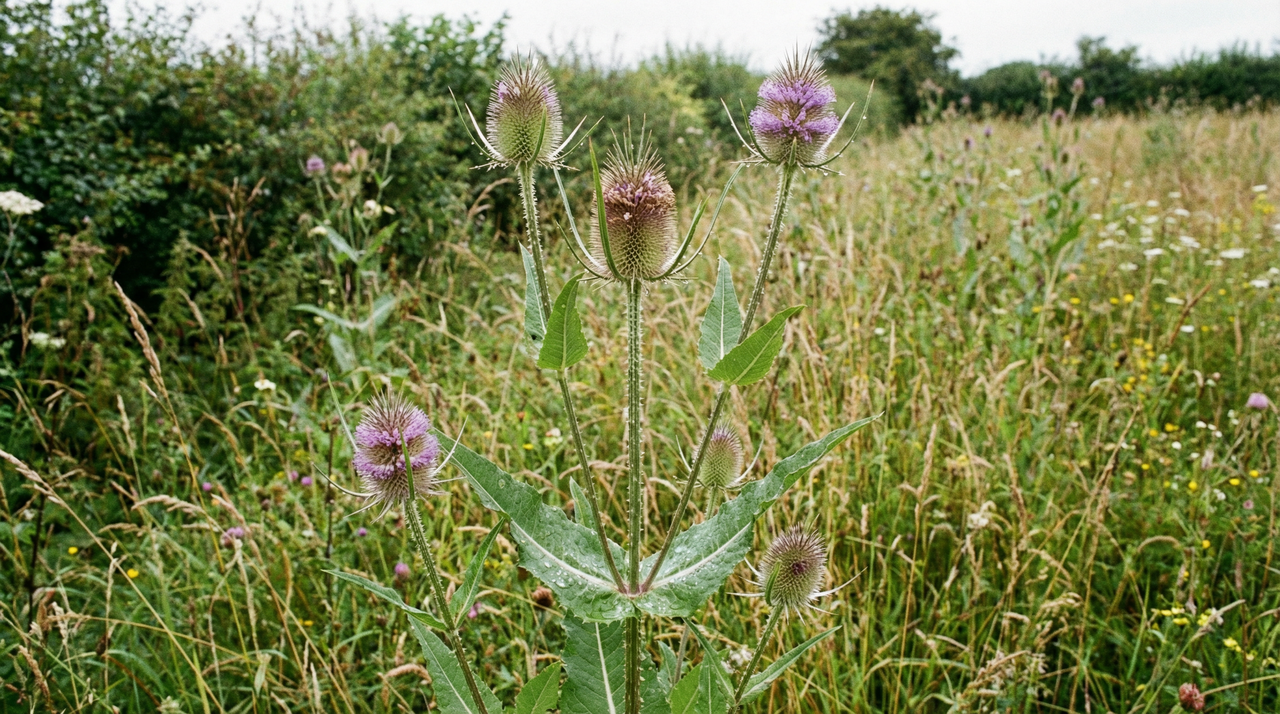
Fuller's teasel was so valuable to the medieval wool trade that English law once regulated who could grow it and where. Think about that for a second: a "weed" with a legal protection order. The same plant that today earns a spot on noxious weed lists across North America was, for centuries, irreplaceable enough that textile workers hauled it across continents just to keep their mills running. The dried flower heads, covered in stiff recurved bracts, were mounted onto wooden frames and dragged across woven wool to raise the nap into that familiar soft finish. No metal comb or wire card did it better, and some luxury fabric producers still use them today.[1] A plant so precisely engineered by evolution that humans spent centuries failing to improve on it.
I find that contradiction genuinely hard to shake. Because if you've watched teasel march through a disturbed meadow in the upper Midwest, crowding out natives and reseeding itself with ruthless efficiency, the idea of valuing it feels almost uncomfortable. That tension is exactly what makes it worth understanding carefully, not just as a curiosity, but as a plant with a real and complicated relationship to human landscapes past and present.
Teasel Origin, History, and Botanical Background
There's a moment every spring when I find myself crouching over a flat, spiny rosette in some disturbed corner of a landscape, mentally running through my biennial checklist. Teasel (Dipsacus fullonum) is one of those plants that announces itself quietly in year one, then towers over you in year two. A monocarpic biennial in the Caprifoliaceae family, it spends its first season building a basal rosette anchored by a deep taproot, overwinters in that form, and then bolts the following year to produce a flowering stem that can reach 2.5 meters before it dies after that single reproductive event.[2][3][4] That boom-and-bust strategy is deceptively effective, as any land manager who has dealt with a roadside colony can tell you.
Botanical Characteristics and Lifecycle of Teasel
The flowers bloom sequentially from the base of each spiny, cone-shaped head upward over several weeks in summer, producing achenes within four to six weeks of fertilization.[4][5] Native to temperate Europe, western Asia, and northern Africa, teasel has since been introduced to North America, Australia, New Zealand, and parts of South America, where it thrives in exactly the disturbed habitats it prefers at home: roadsides, old fields, construction margins.[6][4][7] It does best in full sun on moist, well-drained loamy soil with a pH of 6.0 to 7.5, though seedling survival tends to be low, often only 10 to 20 percent, with competition and herbivory limiting establishment.[8][9] What those numbers don't capture is how efficiently the survivors compensate. I've watched teasel colonize freshly graded soil within a single season after construction cleared the competition, which is precisely the kind of early-successional niche it was built to exploit.
Visual Identification Features of Teasel
If you've ever brushed past a mature teasel stem, you know exactly why it was useful in textile mills. The second-year stem is hollow, striated, and fitted with longitudinal wings edged in downward-pointing spines that catch clothing with a grip that feels almost intentional.[2][7][4] In the first year, the opposite, lanceolate leaves can reach 50 cm, their spiny margins clasping the stem; in the second year, that same architecture escalates into oval to cylindrical flower heads, 2 to 7 cm long, carrying lavender-to-purple tubular flowers. A common teasel-vs-thistle confusion in the field dissolves once you notice the paired leaves fusing around the stem to form distinctive water-holding cups, a structure no thistle produces.[6][10] The persistent seed heads, 5 to 10 cm long and studded with stiff bracts, hold up to 2,000 dark achenes each. Fuller's teasel (Dipsacus sativus), often considered a cultivated form selected for sturdier heads, shares similar morphology; ornamental cultivars like 'Atrosanguineus' with deep burgundy heads exist for those drawn to it as a garden plant.[11][12]
Traditional and Cultural Uses of Teasel
Teasel's cultural history is inseparable from wool. Pliny the Elder documented the use of its spiny heads around 77 AD, and by the medieval period, fulling mills across England, Flanders, and Germany were running teasel-studded frames across wet woolen cloth to raise the nap in a way that no metal tool could replicate without snagging.[13][14][15] The plant became a symbol of craftsmanship in wool-guild culture. European folklore also assigned it protective power: dried heads hung in homes or on roofs to ward off lightning, witchcraft, and thieves.[16][17] European herbalists used the root as a diuretic and externally for warts and wounds, though none of those uses have solid clinical backing today.[18] The more substantiated medicinal tradition actually belongs to the closely related Dipsacus asper, used in Traditional Chinese Medicine as Xu Duan to tonify the liver and kidneys and treat musculoskeletal conditions; that's a distinct species and a distinct body of evidence.[19][20] I only share what the documented record supports, and that record ties D. fullonum firmly to European textile labor, not to indigenous traditions in any of its introduced ranges.[21][7]
Fun Facts and Ecological Insights on Teasel
One of the stranger things I've come across during summer plant surveys is crouching beside a teasel in full rosette and finding small insects drowned in the water-filled cups formed by the fused leaf bases. Those cups aren't just a curiosity; the plant appears to absorb supplementary nutrients from the trapped debris, exhibiting what researchers have described as partial carnivory in nutrient-poor soils.[22][23] Then there's the seed math, which sobers you up quickly. A single plant can produce up to 20,000 seeds, viable in the soil for ten or more years, dispersing by wind and by hitching onto animals via those spiny heads.[24][25] It's a long-lived seed bank problem in a single season's worth of standing heads.
In its native European range, teasel genuinely earns its keep: goldfinches work the seed heads through winter, pollinators visit the flowers in summer, and small mammals shelter in the dried stems.[24][26] Brought to North America in the 1700s for wool processing, it lost those ecological checks and can now reduce native plant diversity by 50 to 80 percent in the stands it forms.[24][26] Managing established populations means mowing before seed set, targeting rosettes with herbicide, and restoring native vegetation to close the gaps it exploits.[24][27] As a regenerative designer, I find teasel genuinely fascinating, but fascinating doesn't override responsible stewardship. It's a plant with a rich craft heritage and a complicated ecological present.
Teasel Varieties and Sourcing
Notable Varieties of Teasel
If you go looking for named cultivars of Common Teasel, you won't find much. Dipsacus fullonum carries no widely recognized or registered varieties in major horticultural databases, including the Royal Horticultural Society and Missouri Botanical Garden.[28][29][30] You're almost always growing the straight species, full stop. I've noticed that flower head size can vary noticeably between seed batches from different suppliers, but that's natural variation, not intentional selection.
The one meaningful comparison worth making is with Fuller's Teasel, Dipsacus sativus. That's a genuinely distinct species, bred over centuries for industrial textile use, with larger and more uniform heads, stouter stems, and hooked bracts engineered for raising the nap on wool cloth.[31][32] Even sativus has only a handful of selections, including a white-flowered 'Alba', and most propagation still runs through seed rather than clonal stock.[33][34] For most gardeners, the variety question is essentially settled before it begins.
Where to Source Teasel Plants and Seeds
Seeds of Dipsacus fullonum are available online through suppliers like Prairie Moon Nursery, Everwilde Farms, American Meadows, and Sheffield's Seed Company, with peak seasonal supply running August through October after harvest.[35][36][37] Seed packets typically run $5 to $15, and live plants, where available, range from $8 to $25 each.[38][39][40] Cold stratification for 30 to 60 days improves germination considerably, nudging rates into the 50 to 70 percent range.[36] I label every flat carefully, because first-year rosettes can look deceptively similar to other biennials I'm starting at the same time.
Before you order anything, check your state's current noxious weed list. I always do, and I tell every client to do the same, because the restrictions are real and they vary. Teasel is banned from sale and distribution in Washington and Oregon, and it's regulated in California, Colorado, Illinois, Iowa, Kansas, Massachusetts, Montana, New York, and several more.[41][10][42] A wild teasel plant produces seeds prolifically, and this biennial's capacity to self-seed and colonize disturbed ground is exactly why regulators take it seriously.[43][41] Where it is legal, teasel finds its best justification in pollinator guilds, winter bird forage, or dried-flower projects where you're committing to managing the seed heads before they scatter.[44] Responsible sourcing, here, is the whole point.
Teasel Propagation and Planting (Dipsacus fullonum)
Teasel is, at its core, a seed plant. Everything about how you grow it, manage it, and ultimately contain it flows from that fact and from the biennial rhythm that governs its two-year life.
Understanding Teasel's Biennial Life Cycle
Sow teasel this year and you'll have a rosette. A big, flat, architecturally striking rosette that will sit there all season looking like it's biding its time -- because it is. Year two is when it bolts into that unmistakable flowering column, sometimes reaching 2 meters, blooms from June through August, and sets seed by late summer or early fall.[45][24][46] I always mark my first-year plants with a stake or flag because those rosettes look remarkably like wild carrot or a young thistle, and I learned the hard way that well-meaning helpers will pull them before they ever get the chance to bloom. Label your flats carefully and mark your transplants in the ground. You'll thank yourself in spring.
Seed Propagation: Stratification, Sowing, and Germination
Growing teasel from seed is genuinely straightforward once you respect its dormancy requirements. The seeds have physiological dormancy, sometimes with a physical component, that needs 30 to 90 days of cold moist stratification at around 4°C before they'll cooperate.[47][46] I've done this both ways: damp paper towel in a labeled zip-lock bag in the back of the refrigerator, and direct fall sowing outdoors to let winter do the work. The fridge method gave me more consistent results; the outdoor method was easier and still produced usable germination, but emergence was staggered over several weeks depending on what that particular winter threw at us.
Once stratified, surface sow the seeds and leave them there. They need light to germinate, so burying them is just burying your success rate.[48][49] Keep temperatures in the 15 to 21°C range and expect germination in 10 to 21 days, with rates of 70 to 90% under good conditions.[46][10] I've hit the upper end of that range consistently by sowing in flats, keeping them evenly moist, and putting them under lights. The stratification timeline (30 to 60 days) is similar to what many native milkweed or prairie forb species require, so if you've already done cold stratification for those, you know exactly how this works.
One thing worth understanding before you sow: these seeds are built to persist. They're orthodox, meaning they tolerate drying down, and they can remain viable in the soil for 5 to 10 years, potentially far longer under controlled storage conditions.[24][50] Each seed head can produce up to 2,000 small, ridged achenes equipped with structures that aid wind, animal, and human dispersal.[24][51] That persistent seed bank is exactly why teasel is such an aggressive colonizer once it escapes management. You're not just sowing a plant; you're potentially seeding a decade of volunteers.
Vegetative propagation -- cuttings, root division, the odd tissue culture approach -- is technically possible but rarely worth pursuing.[52][53] For a monocarpic biennial that blooms once and dies, the logistics just don't add up. Seed is how this plant thinks, and it's how you should propagate it.
Soil, Site Selection, and pH Requirements for Teasel
Teasel wants full sun, at least six hours of direct light daily, and well-drained loamy or sandy-loam soil with modest organic matter.[54][10] Target a soil pH of 6.5 to 7.5; it'll tolerate a broader range of 5.5 to 8.0, but outside those sweet spots you'll start to see problems.[31] Below pH 6.0, manganese and aluminum can reach toxic levels and you'll see yellowing between the leaf veins; above 7.5, iron deficiency shows up as chlorosis on new growth.[55] I've seen both. In my beds where soil pH drifts toward acidity, that interveinal yellowing shows up reliably until I work in a light lime application. A simple soil test before planting saves a lot of diagnostic guesswork later.
The taproot is the other non-negotiable. Teasel naturally colonizes disturbed, mesic sites with decent rainfall, and it puts down a root that needs a minimum of 12 to 18 inches of soil depth to develop properly.[56][57] If you're growing in containers, go deep or don't bother. Shallow pots produce stunted, stressed plants that won't perform in year two. In the ground, that same taproot makes it a decent aerator in compacted soils, which is part of its value at sunny food forest edges where the ground gets trafficked.
Spacing, Planting Technique, and Invasiveness Considerations
Mature teasel reaches 1 to 2.5 meters in height with a spread of 0.5 to 1 meter, and the first-year rosette alone can take up considerable ground space.[58][59] Space transplants 18 to 24 inches apart with rows 24 to 36 inches apart.[60] I consistently plant toward the wider end when I'm interplanting with shorter guild companions, because that second-year column will cast real shade and crowd anything underneath it that needs light.
Now, the part that matters most: teasel is considered invasive across much of North America, spreading readily via wind and machinery-dispersed seed and forming persistent seed banks that are genuinely difficult to eliminate once established.[61][10] I watched it move along a disturbed fenceline in one season after I let a single plant go to seed longer than I intended. One plant, 2,000 seeds, favorable conditions. The math is not in your favor if you're careless. Check your state and county invasive species lists before you plant teasel anywhere, and treat that check as a hard prerequisite, not a suggestion.[62] Where it's allowed and already present, it can earn its place. Where it isn't, no amount of pollinator value justifies the introduction.
Teasel Care Guide: Growing Dipsacus fullonum
Everything about caring for teasel flows from one fact: it's a biennial. Year one is all about the rosette, building that deep taproot and storing energy for the explosive bolt to come. Year two it flowers, sets seed, and dies. Once you internalize that two-year rhythm, every decision about watering, feeding, and pruning starts to make sense. Miss it, and you'll either coddle a plant that doesn't need it or neglect the one window you have to prevent a self-seeding problem.
Sunlight Requirements
Teasel wants full sun, at least six hours of direct light daily, and it will tell you when it's not getting enough.[63][64] Pale, yellowish leaves and stems reaching weakly toward the sky are classic etiolation; if your teasel looks leggy and washed out, it needs more light, full stop. In my experience, the plants that get the most sun produce the sturdiest stems and the largest, most architectural seed heads. They'll tolerate partial shade, especially in their first year when the rosette is establishing, but come year two, shade-grown plants flower poorly and the stems flop.[10]
Watering Needs
The watering story changes dramatically between year one and year two. A young teasel plant needs consistent moisture, roughly once every five to seven days without rain, to push that taproot deep into the soil.[65][66] Once that root system is established, the plant becomes remarkably self-sufficient, handling two to four weeks of dry conditions without much drama, and needing deep watering only when the top inch or two of soil is dry.[10] Think of it like rudbeckia: high-maintenance as a seedling, nearly indestructible once it's settled in. On water quality, teasel prefers a neutral to slightly alkaline pH and does best with rainwater over chlorinated tap water when you have the choice.[67]
Feeding and Soil Fertility
Teasel is a genuine low-feeder. In wildflower or naturalistic settings it thrives without any supplemental fertilizer at all, which makes sense for a plant that colonizes roadsides and disturbed ground for a living.[8][68] If you incorporate compost at planting, you've done the heavy lifting. I've found that if lower leaves on a teasel rosette start going pale and yellowish, a light compost top-dressing corrects it faster than any bag fertilizer.[69][70] Purplish leaves with sluggish root development signal phosphorus shortage; marginal browning on leaf edges usually points to potassium.[69] If soil testing shows a genuine deficit, a balanced low-nitrogen fertilizer like 5-10-10, applied sparingly at one to two pounds per hundred square feet in early spring, is plenty.[71] Avoid high-nitrogen formulas: they push leafy growth at the expense of flowers and, importantly, can increase invasive potential.[68][72]
Frost Tolerance and Winter Protection
Hardy across USDA zones 4 through 9, and potentially to zone 3 with some help, teasel can handle lows down to around -20°F once established.[8][73] The winter rosette hunkers down low to the ground and the deep taproot insulates from below; it's an elegant system. Young plants, flower buds, and open blooms are the vulnerable points, prone to scorching and necrosis in a hard freeze.[74] My most reliable method is a two-to-four-inch layer of straw or leaf mulch applied after the first hard frost, which has seen first-year rosettes through late spring surprises more times than I can count.[73] For exposed sites or colder climates, a burlap wrap or fleece cover over young plants adds meaningful protection.[31] Good drainage matters more than most people realize; wet, compacted soil in winter kills more plants than the cold does.
Heat Tolerance and Summer Care
Teasel handles heat well as a Eurasian species adapted to a wide range of summer conditions, tolerating temperatures over 100°F and thriving across AHS Heat Zones 4 through 9.[24][75] Optimal growth sits between 59 and 77°F; above 86°F or so, seedlings and flowering plants start to show the strain, with leaf scorch, wilting, and reduced seed set.[76] In hotter climates, about an inch of water per week during dry spells and a layer of organic mulch to keep roots cool will prevent most of those symptoms.[77] I've had better flower retention in brutal summers by giving plants afternoon shade; it's a small intervention that keeps the teasel flower heads from aborting early.
Pruning, Maintenance, and Invasiveness Management
Pruning is essentially non-existent as a routine task. Don't cut back a first-year plant; you'll interrupt the biennial cycle it needs to flower. In year two, the real maintenance job isn't shaping, it's seed control.[58] I've learned the hard way that one missed seed head can generate dozens of teasel seedlings the following spring. I now cut stems back before the heads fully dry, without exception.[78] If plants are growing in a windy spot and stems are reaching close to two meters, staking prevents them from toppling and scattering seed even earlier. For any plants growing outside contained areas, hand-pulling rosettes before they bolt is the most practical control method; targeted herbicides like glyphosate or 2,4-D are options for larger infestations, but mechanical removal should always be the first move.[79] Always check your state's regulations before you plant.
Seasonal Rhythm
Year one: seed germinates in spring, the teasel rosette establishes through summer, and the plant overwinters as a low, flat cluster with a deep taproot anchoring it in place. A wet spring dramatically improves establishment; drought in this phase can kill young plants before they ever hit their stride.[8] Year two: the plant bolts in late spring, pushing stems anywhere from one to two and a half meters, blooming from June through August, then setting a prolific seed load before dying.[80] Understanding this rhythm prevents the two most common mistakes I see: over-pruning the rosette in year one because it looks untidy, and forgetting to deadhead in year two because the seed heads are so striking. Both decisions have consequences. The whole care strategy shifts between those two years, and keeping the lifecycle clearly in mind is what separates a well-managed teasel from a spreading problem.
Harvesting Teasel Seeds and Shoots
With teasel, timing the harvest is the difference between a well-stocked seed bank and an unplanned carpet of volunteers across your entire property. I learned that the hard way one autumn when I let the heads stand just a little too long, and spent the following spring pulling seedlings from beds I hadn't intended to plant.
When and How to Harvest Teasel Seeds
The window runs roughly August through October in temperate Northern Hemisphere gardens, with August to September being optimal in most zones.[81][82] From the end of bloom to full seed maturity takes about 45 to 60 days,[81] so if you track your bloom dates, you've got a workable forecast. The cues I rely on: heads that have turned tan-brown and feel papery when you squeeze them, seeds that are dark, hard, and rattle slightly when you tip the head.[24][83] Now I aim to cut when 50 to 75% of the heads on a plant are brown,[24][67] before shattering starts. Don't wait for perfect uniformity across all the heads; you'll miss the window entirely.
Young shoots represent an entirely separate harvest, arriving in spring during the plant's first year as a basal rosette.[18] That's its own undertaking, discussed below, and it has nothing to do with the seed story.
Edible Young Shoots and Flavor Profile
Teasel shoots are a marginal wild edible at best. I've tried them a few times out of curiosity, and I'd describe the experience as asparagus-adjacent, with a bitter, earthy finish that lands somewhere between dandelion greens and something you're not quite sure you like.[18][84] Fresh, they're crisp and juicy; cooked, they soften nicely. The problem is that bitterness intensifies fast as the plant ages, so there's a narrow spring window before the spines harden and the flavor turns genuinely unpleasant.[18] Unlike dandelion, where you can grab young leaves relatively casually, teasel requires an extra peeling step to deal with those spine-edged leaf margins. I skipped that step my first spring and ended up with scratched fingers and a mediocre stir-fry. Learn from my mistakes.
One field trick I use for ID confirmation: rub a young shoot between your fingers. There's a mild herbaceous, faintly terpenic scent[85] that's subtle but distinctive once you've caught it a few times. It won't replace a full identification check, but it's a useful secondary cue when you're in the field.
Post-Harvest Handling and Storage
Once you've cut the seed heads, hang them upside down in a warm, well-ventilated space for two to three weeks. This finishes the drying process without losing seeds to shattering on the ground. After that, store in airtight containers somewhere cool and dark, ideally between 0 and 5°C. Viability holds well for up to three years, then starts to decline. I label every jar with the harvest year and treat anything older than two to three seasons as replanting stock rather than primary seed. A teasel seed bank is only useful if the seeds actually germinate, so rotating stock on a regular basis is worth the small effort it takes.
Teasel Preparation and Uses
Most plants I write about have a generous culinary story. Teasel does not, and I think it's important to say that plainly before anyone heads out with a basket.
Limited Culinary Uses of Teasel
Young spring leaves and shoots are technically edible when properly prepared, peeled of their spines, and boiled to reduce bitterness and the saponins that cause digestive discomfort if eaten raw.[86][87] I tried a small spring sauté once, boiled the shoots first, drained them, then cooked them again with olive oil and garlic. Still bitter. Still oddly fibrous. The experience confirmed what the foraging literature quietly admits: this is a survival-tier wild green, not a dinner party one. The USDA, Kew, the Missouri Botanical Garden, and Flora of North America do not recognize teasel as a food plant at all; edibility claims live almost entirely in foraging guides rather than official botanical references.[10][82][88][7] The roots have occasionally been roasted as a caffeine-free coffee substitute, with tannins giving the resulting tea a mild bitterness,[86][89] but the harvest effort versus reward is genuinely poor compared to dandelion or nettles, which grow right alongside it in most disturbed habitats and need far less fuss to prepare. The phytochemical profile (iridoids, tannins, saponins, phenolics) explains why cooking is non-negotiable,[90] and even the modest vitamin C, iron, and calcium content in edible parts[91] doesn't justify regular harvest given the GI irritation risk, spine hazard, and the necessity of confident species ID to avoid look-alikes.[92][24] Pregnant individuals should avoid it entirely.[93] I always harvest wearing thick gloves, and even then I rinse immediately because the spines find their way onto skin whether you plan for it or not.
Traditional Medicinal Preparations
European herbalism has used teasel for centuries to address urinary complaints, rheumatism, and inflammation, usually as leaf or root infusions using roughly 1 to 2 grams of dried material per cup of water.[94] Root decoctions are the most commonly referenced preparation: simmer 1 to 2 teaspoons of dried root for 10 to 15 minutes, taken up to three times daily. Tinctures follow a 1:5 ratio in alcohol, typically dosed at 2 to 4 ml three times daily. I've made root tea a handful of times out of genuine curiosity about traditional remedies, always starting at the lowest suggested dose and stopping at any sign of digestive upset. It's mild and slightly astringent, and I approach it the way I'd approach any herb with thin clinical backing: respectfully, occasionally, and not as a replacement for better-studied options.
Industrial and Non-Food Applications of Teasel
Here is where teasel's real story lives. The spiny flower heads of Dipsacus fullonum were used from Roman times through medieval Europe in fulling mills, where the dried heads were used to raise the nap on woven wool.[95][96][97] When I hold a mature teasel head and feel how the hooked bracts flex and spring back without breaking, I understand why textile producers carried this plant deliberately across continents. The leaves and flowers also yield greenish or yellowish natural dyes,[98] and stem fibers have seen occasional traditional use in rough cordage. Learning that history changed how I see this plant entirely. It's not a weed that escaped, it's an industrial tool that outlived its factory.
Teasel Health Benefits and Medicinal Uses
Teasel is one of those plants where the chemistry is genuinely fascinating and the clinical evidence is nearly nonexistent. That gap matters. Before getting into what the research does and doesn't show, it helps to understand why so many herbalists and phytochemists find this plant worth studying at all, and that starts with what's actually inside it.
Key Phytochemicals in Teasel
Reviews collating more than fifty identified metabolites show that Dipsacus fullonum is chemically dense across almost every major secondary metabolite class: phenolic acids like chlorogenic and caffeic acid, flavonoids including quercetin, kaempferol, rutin, and hyperoside, iridoid glycosides such as loganin and cantleyoside, triterpenoid saponins, sesquiterpene lactones, tannins, coumarins, lignans, and low-yield essential oils carrying monoterpenes and sesquiterpenes like germacrene D.[99][100][101][102] Where the compounds concentrate matters: roots carry the highest iridoid load (roughly 1.5 to 3.0 percent dry weight) and most of the saponins, while leaves and stems lean more heavily toward flavonoids and tannins, and flowers and fruits hold a greater share of sesquiterpene lactones and volatile oils.[99][103][104] Those concentrations also shift with the seasons and where the plant grows, with aerial phenolics peaking in summer and Mediterranean-sourced plants showing higher iridoid levels.[105][106]
Many of these compounds serve the plant rather than us. The sesquiterpene lactones deter herbivores through bitterness and irritation; the phenolics provide UV tolerance and suppress competing plants, which partly explains why teasel colonizes disturbed ground so aggressively.[107][108] Understanding that ecological context actually helps make sense of the pharmacological potential, because the same bitter iridoids that discourage deer and the same phenolics that stave off UV damage are the compounds driving most of the reported health effects in laboratory settings.
Traditional and Research-Backed Medicinal Properties
European herbalism has used teasel root decoctions for centuries, primarily as diuretics, astringents, and liver tonics, and topically for bruises, sprains, wounds, and rheumatic pain.[109][110][111][112] The closely related Dipsacus asper (Xu Duan) in TCM is used specifically for bone healing and arthritis. Preclinical research has since offered plausible mechanisms for several of these traditions: phenolic and flavonoid extracts show moderate antioxidant activity (DPPH/ABTS IC50 around 20 to 100 μg/mL), and anti-inflammatory effects have been demonstrated through NF-κB inhibition, COX-2 downregulation, and reduced TNF-α and IL-6 in cell models.[113][114][115] Antimicrobial screening against Staphylococcus aureus and Candida albicans returned MIC values of 0.5 to 2 mg/mL, wound healing was accelerated through enhanced collagen deposition in rat models, and analgesic and antispasmodic effects have also been observed in animals.[116][117][118] The osteogenic data is particularly interesting: the iridoid glycoside dipsacoside B promotes osteoblast differentiation and mineralization in vitro via BMP-2/Smad and Wnt/β-catenin pathways, which provides a biochemical rationale for the traditional bone-healing associations.[113] Hepatoprotective effects and diuresis comparable to furosemide have been reported in rodent studies as well, attributed largely to saponins.[119]
Here's where I have to pump the brakes. No registered human clinical trials exist for Dipsacus fullonum.[120][111] It holds no monograph from German Commission E, ESCOP, or WHO. I grow or work with a lot of plants where preclinical data has gotten well ahead of clinical validation (elder and yarrow come to mind), but with teasel that gap is especially wide. In my own garden, I treat it primarily as an architectural and ecological element. The teasel root benefits and teasel medicinal uses discussed online deserve skepticism proportional to the thin evidence base they rest on.
Nutritional Profile of Teasel
Standard nutritional databases have no verified macro- or micronutrient data for teasel. Foraging literature estimates that young shoots run roughly 20 to 30 kcal per 100 grams, with modest vitamin C (10 to 20 mg/100 g), calcium (120 to 150 mg/100 g), iron (1.5 to 2.5 mg/100 g), magnesium (40 to 60 mg/100 g), and potassium (250 to 350 mg/100 g), though these numbers shift with soil and maturity and shouldn't be treated as reliable figures. The more consistent nutritional story is in the phytochemistry: leaf and shoot extracts contain high total phenolics (50 to 100 mg/g) and flavonoids (10 to 30 mg/g), and antioxidant capacity is measurable and repeatable in lab assays.[121][122] So the honest framing is: this is a low-calorie wild green whose value, such as it is, comes from phenolics rather than exceptional macronutrients. My early attempts at eating young shoots taught me quickly that the spines need thorough removal before the leaves are anywhere close to palatable, and even then "mild and spinach-like" is generous. It's a foraging curiosity, not a nutritional powerhouse.
Safety Considerations and Contraindications
Anyone who has spent time weeding a mature stand of teasel knows the primary hazard immediately: the spines. I've handled this plant many times in restoration work and I still wear thick leather gloves, because those bracts are unforgiving and contact dermatitis from the spiny material has been documented in the literature.[123] Chemically, though, teasel is relatively benign: acute toxicity studies put the LD50 above 2 g/kg, and ASPCA lists it as non-toxic to dogs, cats, and horses.[124][125] High doses can cause mild nausea, vomiting, or diarrhea, and pollen from related species may irritate sensitive airways.[8]
Pregnancy and lactation are a firm caution. The related Dipsacus asper is used in TCM as a tocolytic to calm the uterus, and given the absence of clinical safety data for any Dipsacus material, all forms should be avoided without professional supervision during pregnancy.[126][127] The diuretic and antihypertensive-like pharmacological profile also raises reasonable concern about potential interactions with diuretics, antihypertensives, and anticoagulants, though the mechanisms haven't been fully worked out. I don't use teasel internally in my own practice, and I always direct anyone asking about teasel root and Lyme disease (a popular internet claim with essentially no peer-reviewed support) toward a qualified herbalist or physician rather than self-treatment. Before foraging any part of the plant, get a solid ID: Field Scabious (Knautia arvensis) is a common look-alike that lacks the pronounced spines, and stem texture is the quickest way to separate them.[128]
Teasel Pests and Diseases
Teasel is not what I'd call a problem plant in the garden, at least not where pests and diseases are concerned. Its reputation for toughness is well-earned, and in my experience it holds up. A healthy, well-sited plant in full sun with decent drainage is going to shrug off most of what comes its way. That said, "mostly fine" isn't the same as "immune," and knowing what to watch for saves a lot of guesswork.
Common Pests of Teasel and Its Natural Defenses
Those formidable spines aren't just architectural drama. Teasel demonstrates moderate insect resistance primarily through its physical structure, and I've noticed firsthand that plants with serious armature attract far less casual browsing than softer perennials nearby.[129][130] Fuller's teasel also produces phenolic compounds, tannins, and iridoids that act as feeding deterrents, adding a chemical layer on top of the physical one.[131][132] The plant is better described as tolerant of insect pressure than genuinely resistant, though, so don't count on it being untouchable.[129]
The insects that do breach those defenses include aphids (particularly Myzus persicae and the Dipsacus aphid), flea beetles in the Chrysomelidae family, stem-boring weevils like Lixus cardui and the teasel bud weevil Eustenopus villosus, and a handful of caterpillar species including the teasel moth.[133][134] Aphids are the most common trouble, causing curled leaves, stunted new growth, and the sticky residue that invites sooty mold.[134] I watch the first unfurling leaves in spring carefully; catching aphid colonies early with a firm jet of water or a release of beneficial insects is far easier than dealing with a full infestation a month later. Leaf beetles punch small irregular holes in the foliage, while stem borers and caterpillars do the most damage to young rosettes and second-year flowering stalks, sometimes affecting seed production noticeably.[134][135] Pest pressure reliably climbs in crowded or stressed plantings, which is another reason good spacing and site selection matter so much.[134]
One wrinkle worth flagging: Eustenopus villosus is used as a biological control agent against invasive teasel populations, but if you're growing cultivated Fuller's teasel near natural areas, that same weevil can turn up on your plants uninvited.[136][134] Thinking in whole-system terms means keeping that kind of cross-context interaction on your radar.
Fungal Diseases Affecting Teasel
Teasel shows moderate disease resistance overall, though the biennial stress window right before second-year flowering can leave it more vulnerable than it would be in its first-year rosette stage.[137] The good news is that I rarely see catastrophic disease when drainage and airflow are right. When conditions aren't right, powdery mildew is the most likely culprit, primarily driven by Erysiphe cichoracearum and related species.[138][139] From there, the next tier of concerns includes leaf spots (Phoma oleracea, Alternaria spp., Septoria dipsaci), rust caused by Puccinia species, stem rots from Sclerotinia sclerotiorum, and root rots involving Fusarium and Rhizoctonia solani.[138][140] Bacterial soft rots and viral infections like cucumber mosaic virus are less common and usually secondary to aphid feeding activity,[138] which is one more reason to stay on top of aphid management.
Prevention and Management Strategies
Cultural prevention does most of the heavy lifting here. Full sun, well-drained soil with a pH between 6.0 and 7.5, and spacing plants 2 to 3 feet apart for genuine airflow will head off the majority of fungal problems before they start.[10][141] I give teasel the same generous spacing I use for other tall biennials like hollyhocks, and in humid summers that spacing has kept powdery mildew to a minimum when neighboring plants were showing it clearly. Avoid overhead watering, and pull out infected debris rather than letting it break down in place.
If a fungal outbreak does get out of hand, sulfur-based products or triazole fungicides like myclobutanil can be used as a last resort, following label instructions and any applicable local regulations.[141] But in a restoration or naturalized setting, there's an interesting flip side: encouraging natural fungal pressure on invasive teasel populations can actually function as a soft form of biological control, no intervention required.[142] Good siting really is the 80 percent solution, and it aligns with how this plant wants to grow anyway.
Teasel in Permaculture Design
I do not plant teasel. After watching a single rosette escape a managed pollinator strip and dominate a quarter-acre meadow within three years, I stopped recommending it even for wildlife gardens. Dipsacus fullonum has been documented as invasive in at least 35 states, with particularly aggressive spread in the Northeast, Midwest, and Pacific Northwest, and in many jurisdictions it's classified as a noxious weed with legal restrictions on its sale and cultivation.[10][78][51][143] Check your local regulations before doing anything else. Everything I say about this plant's ecological functions below comes with that warning attached.
Climate and Hardiness Zones
Understanding why teasel is such a successful invader starts with its climate tolerance. It's hardy in USDA zones 4 through 9, surviving winter lows down to -29°C (-20°F), with some sources noting marginal survival into zone 3.[10][11][144] Performance is best in zones 5 through 7, where distinct cold winters provide the vernalization a biennial needs to transition from rosette to flowering stem. That requirement explains why the plant has such a strong temperate bias, but it doesn't limit its range nearly enough to be reassuring.
It thrives on annual rainfall between 750 and 1250 mm (30 to 50 inches), tolerates a range as wide as 500 to 1500 mm. Once its deep taproot is established, it handles drought surprisingly well.[67][145] Growing-season temperatures between 10 and 25°C (50 to 77°F) suit it best, with moderate heat tolerance up to 30°C (86°F), and it needs full sun of at least six hours daily.[67][146] The closely related Fuller's teasel (Dipsacus sativus) extends the genus further, tolerating heat up to 35°C and thriving from sea level to 2400 m elevation.[147][148] That kind of adaptive range tells you exactly why this genus establishes so readily across such a broad swath of North America.
Ecosystem Functions and Guild Roles
There are real ecological services here, and I think it's important to name them honestly rather than dismiss the plant entirely. The flower heads are genuinely excellent late-season forage. Bumblebees, honeybees, hoverflies, painted ladies, skippers, and even nocturnal hawk moths work the blooms, which open sequentially from center outward through June to September.[149][150] I've watched goldfinches methodically dismantling dried teasel heads on managed sites in late winter, extracting seeds with that precise teasing motion that supposedly inspired the plant's common name. The persistent structure also provides shelter for solitary bees and wasps.[151][152] That's genuinely useful. But I only allow it to stand through winter on sites where I've been diligent about deadheading before seeds mature, which requires more vigilance than most gardeners are prepared to give.
The taproot reaches one to two meters deep, aerating compacted soils and accumulating calcium, potassium, and silica from subsoil layers that can technically be returned via biomass decomposition.[67][153] I've seen permaculture writers compare it to comfrey for this reason, and I understand the enthusiasm. I've grown comfrey extensively, and the parallel is superficially appealing. The critical difference is that comfrey stays where you put it. Teasel doesn't. And unlike comfrey, teasel produces allelopathic root and leaf chemicals that actively inhibit neighboring plant germination and growth, disrupting rhizosphere microbial communities including native mycorrhizal networks.[154][155] In a guild where you're carefully balancing dynamic accumulators with nitrogen-fixers and fungal partners, introducing an allelopathic species that reseeds prolifically is a poor trade. It's also not a nitrogen-fixer, so the soil-building story is limited from the start.[7]
Placement in Forest Layers and Guilds
In structural terms, teasel is a tall herbaceous biennial, reaching one to two and a half meters, with a first-year basal rosette and second-year hollow, spiny, square stems.[10][156] In a permaculture design it would sit in the herbaceous layer or at a sunny forest edge, preferring well-drained soils in the pH 6.0 to 7.5 range. The problem is that in those same conditions, forest edges and disturbed guilds, it doesn't play nicely.[157][158] Dense stands reduce native biodiversity, alter local hydrology, and suppress surrounding plants through allelopathy. These aren't edge-case outcomes; they're what teasel does when conditions suit it.
If you need late-season pollinator support in that forest-edge or sunny herbaceous layer, ironweed (Vernonia) and cup plant (Silphium perfoliatum) offer similar or superior wildlife value without the ecological liability. I reach for those first, every time. The historical textile use of teasel's spiny heads is genuinely clever botany,[159] and I appreciate it as a piece of craft history, but in a regenerative context the ecological cost isn't justified when a wool comb or a native alternative plant will do the job without the risk. My recommendation stands: only work with this plant where it has already arrived, and focus your energy on managing it rather than expanding its footprint.
The Plant That Taught Me to Sit With Ambivalence
I still have a dried teasel head on my potting bench, collected years before I fully understood what I was dealing with. I keep it there on purpose. Some plants push me toward a clean answer, plant it or don't, and teasel refuses to offer that comfort; it just stands there, architectural and ancient and quietly insistent, reminding me that ecological responsibility and genuine admiration can occupy the same hand at the same time.
Sources 159
- Teasel in textile finishing: historical and contemporary use ↩
- Dipsacus fullonum ↩
- Dipsacus fullonum L. ↩
- Dipsacus fullonum (Wild Teasel) ↩
- Dipsacus fullonum L. ↩
- Dipsacus fullonum ↩
- Dipsacus fullonum ↩
- Biology and Ecology of Common Teasel (Dipsacus fullonum) ↩
- Demographic Analysis of Dipsacus fullonum in Old Fields ↩
- Dipsacus fullonum L. ↩
- Dipsacus sativus (Fuller's Teasel) ↩
- Dipsacus sativus L. ↩
- Fuller's Teasel: History and Uses ↩
- Natural History ↩
- The Role of Teasel in Medieval Wool Production ↩
- Flora Britannica ↩
- Plants in British Traditional Customs ↩
- Fuller's Teasel (Dipsacus fullonum) ↩
- Xu Duan (Dipsacus asper) in Chinese Herbal Medicine ↩
- Pharmacological Review of Dipsacus asper ↩
- USDA PLANTS Database - Dipsacus fullonum ↩
- Flora of North America: Dipsacus fullonum ↩
- Carnivory in Dipsacus fullonum L. (Fuller's Teasel) ↩
- Common Teasel (Dipsacus fullonum L.) ↩
- Dipsacus fullonum (common teasel) ↩
- Common Teasel ↩
- Teasel: Impacts and Management ↩
- Dipsacus fullonum ↩
- Dipsacus fullonum ↩
- Dipsacus fullonum ↩
- Dipsacus sativus - Fuller's Teasel ↩
- Fuller's Teasel - Kew Science ↩
- Dipsacus fullonum - Teasel | RHS Gardening ↩
- Teasel Species and Varieties - Missouri Botanical Garden ↩
- Teasel Wildflower Seeds ↩
- Teasel - Dipsacus fullonum ↩
- Dipsacus fullonum - Fuller's Teazel ↩
- Fuller's Teasel Seeds ↩
- Fuller's Teasel Seeds ↩
- Fuller's Teasel Live Plants ↩
- Invasive Plant Atlas of the United States ↩
- State Noxious Weed Lists ↩
- Dipsacus fullonum (Fuller's Teasel) ↩
- Dipsacus fullonum ↩
- Dipsacus fullonum (wildflower) ↩
- Dipsacus fullonum ↩
- Seed Dormancy and Germination in Wild Teasel ↩
- Dipsacus fullonum - Plant Finder ↩
- Seed Production and Nursery Management of Temperate Forbs for Pollinators ↩
- Millennium Seed Bank: Storage Guidelines for Herbaceous Species ↩
- Pacific Northwest Weed Management Handbook - Teasel ↩
- Propagation Techniques for Herbaceous Perennials ↩
- Vegetative Propagation Techniques for Teasel ↩
- Dipsacus fullonum ↩
- Chlorosis in Ornamental Plants ↩
- Dipsacus fullonum (Fuller's Teasel) ↩
- Plants of the World Online ↩
- Dipsacus fullonum ↩
- Missouri Botanical Garden Plant Finder ↩
- Dipsacus fullonum (Teasel) - University of Missouri Extension ↩
- Invasive Species Report - Common Teasel ↩
- Invasive Plant Atlas - Cutleaf Teasel ↩
- Dipsacus fullonum ↩
- Dipsacus fullonum (Common Teasel) ↩
- Dipsacus fullonum Plant Profile ↩
- Dipsacus fullonum ↩
- Dipsacus fullonum (common teasel) - USDA PLANTS Database ↩
- Growing Fuller's Teasel: Care and Cultivation Guide ↩
- Nutrient Deficiency Symptoms in Wild Plants ↩
- Diagnosing Nutrient Deficiencies in Plants ↩
- Cultivation of Teasel for Cut Flower Production ↩
- Fertilizer Toxicity in Ornamental Plants ↩
- Dipsacus fullonum ↩
- Dipsacus fullonum ↩
- Dipsacus fullonum ↩
- Missouri Botanical Garden Plant Finder - Dipsacus fullonum ↩
- Royal Horticultural Society - Dipsacus fullonum Page ↩
- Fuller's Teasel (Dipsacus fullonum) Control ↩
- Invasive Plant Management: Fuller's Teasel ↩
- Dipsacus fullonum ↩
- Royal Horticultural Society: Plant Page for Dipsacus fullonum ↩
- Dipsacus fullonum ↩
- Dipsacus Fullonum Handbook ↩
- Wild Edible Plants of Western North America ↩
- Volatile Compounds in the Teasel Plant Family ↩
- Teasel: Dipsacus fullonum ↩
- Dipsacus fullonum ↩
- Dipsacus fullonum ↩
- Edible Wild Plants: A North American Field Guide ↩
- Phytochemical and Pharmacological Review of the Genus Dipsacus ↩
- Edible Wild Plants: Eastern/Central North America ↩
- Dipsacus fullonum ↩
- Herbal Medicine Safety ↩
- Traditional Herbal Remedies in Europe ↩
- Missouri Botanical Garden Plant Finder - Dipsacus fullonum ↩
- Dipsacus sativus - Wikipedia ↩
- Fuller's Teasel (Dipsacus fullonum): Uses and Benefits ↩
- Natural Dyes from Plants: Teasel Applications ↩
- Phytochemical Investigation of Dipsacus fullonum L. ↩
- Secondary Metabolites from the Roots of Dipsacus fullonum ↩
- Flavonoids and Phenolic Acids in Dipsacus Species ↩
- Essential Oil Composition of Dipsacus fullonum L. from Serbia ↩
- Secondary Metabolites in Dipsacus Species: A Review ↩
- Iridoid Glycosides from Dipsacus fullonum ↩
- Secondary Metabolites in Teasel: Seasonal and Geographic Variations ↩
- Phytochemical Profile of Dipsacus fullonum L. – A Review ↩
- Chemical Defense in Dipsacus fullonum: Role of Sesquiterpene Lactones ↩
- Phenolic Compounds and Flavonoids in Dipsacus spp.: Ecological Functions ↩
- Dipsacus fullonum L. - A Review of Its Traditional Uses, Phytochemistry and Pharmacology ↩
- Ethnobotany of Weeds: Fuller's Teasel in Traditional Medicine ↩
- Pharmacological Review of Dipsacus Species ↩
- Fuller's Teasel (Dipsacus fullonum) - Medicinal Uses ↩
- Pharmacological Activities of Dipsacus fullonum: A Review ↩
- Antioxidant Properties of Phenolic Compounds in Teasel Root (Dipsacus fullonum) ↩
- Anti-inflammatory and Antioxidant Activities of Dipsacus fullonum Extracts ↩
- Antimicrobial Screening of Dipsacus Species ↩
- Wound Healing Effects of Dipsacus fullonum in Rat Models ↩
- Analgesic and Antispasmodic Effects of Dipsacus fullonum ↩
- Diuretic Potential of Dipsacus fullonum in Experimental Models ↩
- ClinicalTrials.gov Search Results for Teasel ↩
- Phytochemical and Pharmacological Properties of Dipsacus fullonum ↩
- Antioxidant Activity of Teasel Plant Extracts ↩
- Contact Dermatitis from Dipsacus fullonum ↩
- Fuller's Teasel (Dipsacus fullonum) ↩
- Dipsacus fullonum: A Review of Its Phytochemistry and Pharmacology ↩
- Teasel Root (Dipsacus sativus) - Uses, Side Effects, and More ↩
- Dipsacus Species: Ethnopharmacology, Phytochemistry, and Pharmacology ↩
- Flora of North America - Dipsacus fullonum ↩
- Insect Herbivory on the Invasive Plant Dipsacus fullonum ↩
- Chemical and Structural Defense in Dipsacus fullonum ↩
- Secondary Metabolites in Teasel Plants ↩
- Herbivore Resistance in Dipsacus Species ↩
- Pests and Diseases of Teasel ↩
- Insect Pests of Teasel (Dipsacus spp.) ↩
- Pest and Disease Management in Teasel Species ↩
- Biological Control of Invasive Teasel - USDA Forest Service ↩
- Missouri Botanical Garden Plant Finder: Dipsacus fullonum ↩
- Diseases of Dipsacus fullonum ↩
- Powdery Mildew on Ornamentals ↩
- Fungal Pathogens of Dipsacus spp. ↩
- Powdery Mildew on Ornamentals ↩
- Fungal Diseases of Teasel (Dipsacus fullonum) ↩
- Missouri Botanical Garden Plant Finder - Dipsacus fullonum ↩
- Royal Horticultural Society - Fuller's Teasel ↩
- CABI Invasive Species Compendium - Fuller's teasel ↩
- Royal Horticultural Society - Teasel Cultivation ↩
- Missouri Botanical Garden Plant Finder - Dipsacus sativus ↩
- Kew Science - Dipsacus sativus ↩
- Pollination Biology of Dipsacus fullonum ↩
- Reproductive Biology and Pollination Ecology of Dipsacus fullonum in North America ↩
- Ecological Roles of Teasel in Pollination and Habitat Provision ↩
- Royal Horticultural Society - Dipsacus fullonum ↩
- Teasel in Permaculture - Permaculture Research Institute ↩
- Allelopathic Effects of Dipsacus fullonum on Native Plant Species ↩
- Mycorrhizal Associations in the Rhizosphere of Invasive Dipsacus spp. ↩
- Kew Science - Dipsacus fullonum ↩
- Invasive Teasel and Its Impact on Forest Understory Communities ↩
- Ecological Interactions of Dipsacus fullonum in Agroforestry and Edge Habitats ↩
- Horticultural Notes on Dipsacus fullonum ↩