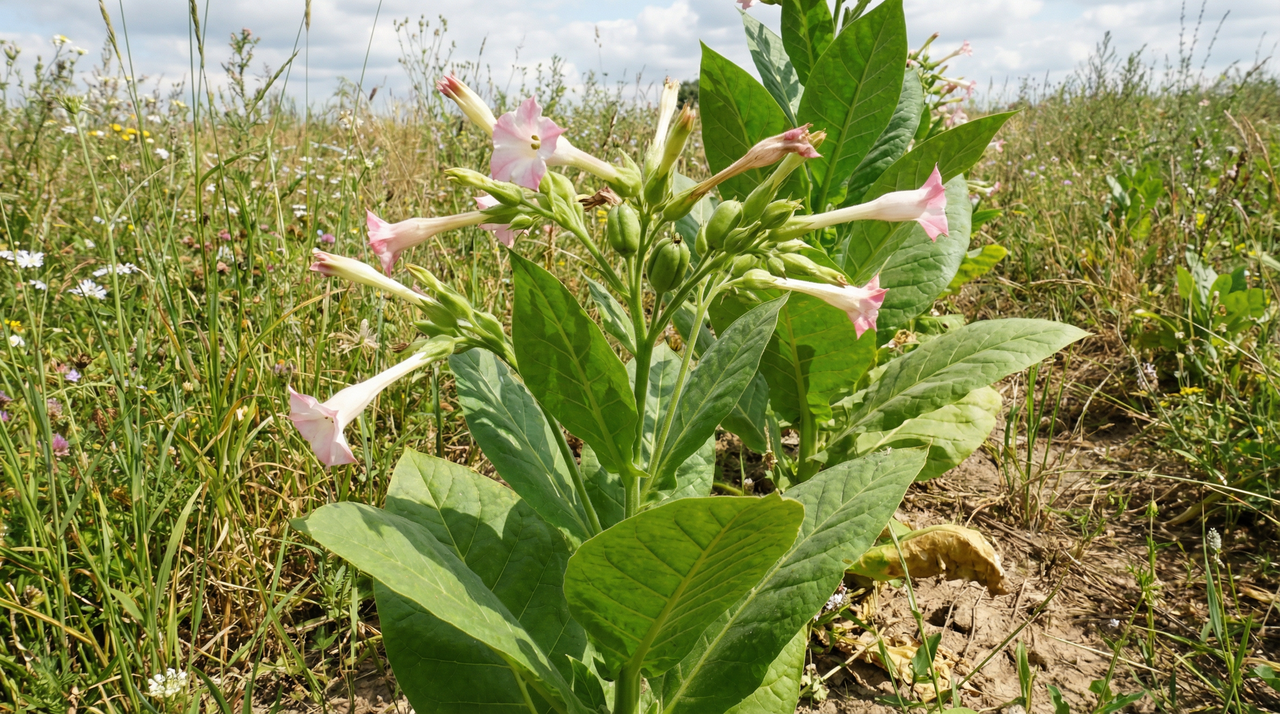
Nobody grows tobacco by accident. Every other plant in this database has ended up in someone's garden because it feeds people, fixes nitrogen, feeds bees, or just looks beautiful tumbling over a wall. Tobacco gets grown because someone decided, deliberately, to grow tobacco, and that choice carries a weight most edible perennials simply don't. I've grown it twice: once in a trial bed in coastal Carolina, once tucked into the back corner of a Georgia food forest as a pest-deterrent experiment, always with gloves, always with distance from anything I planned to eat. What surprised me both times wasn't the plant's notorious chemistry. It was how genuinely beautiful it is, big architectural leaves sticky with fine hairs, flowers that open at dusk and smell faintly of jasmine, a whole pollinator drama playing out after the sun goes down.[1]
The contradiction at the center of this plant is real and worth sitting with: something this toxic is also this ecologically sophisticated, this historically layered, this genuinely useful to a designer who understands what they're working with. Tobacco didn't become one of the most consequential plants in human history because people were careless with it. They were obsessed with it, and that obsession has a story worth understanding before you ever put a seed in the ground.
Origin and History of Tobacco (Nicotiana tabacum)
Botanical Background and Origins
Tobacco's story begins not with a farmer or a field, but with a genetic accident roughly 200,000 years ago in the Andes. Nicotiana tabacum is an allotetraploid species (2n=48) that arose through natural hybridization between two wild relatives: Nicotiana sylvestris as the maternal parent and Nicotiana tomentosiformis as the paternal parent.[2][3][4] That doubled genome is no minor detail. It's why the plant carries such a potent phytochemical arsenal and why it's adapted so readily to cultivation across wildly different climates. The center of origin spans what is now Bolivia, Peru, Ecuador, Colombia, Argentina, Paraguay, and Brazil, and today N. tabacum has no extant wild populations anywhere, existing only as a cultivated crop.[5][6][7] Technically a short-lived perennial, it's almost universally grown as an annual, completing seed to seed in 120 to 180 days under optimal conditions.[8][9] I often compare that cycle to other long-season Solanaceae I use in food forest designs; it's roughly in line with peppers and eggplant, long enough to require real planning but short enough to fit a single warm growing season in most climates.
Traditional and Cultural Uses
Indigenous peoples of the Americas began cultivating and using tobacco around 5000 BCE, possibly earlier, and the relationship was never casual.[10][11] Sacred smoke, offerings to deities, diplomatic ceremony, shamanic vision work, wound poultices, pain relief: tobacco occupied a central role in spiritual and medicinal life across an enormous range of cultures and ecosystems.[12][13] That depth of relationship took millennia to develop. It deserves to be named first, before the colonial story.
Europeans first encountered tobacco in 1492 when Columbus's crew observed Taíno people smoking rolled leaves.[14][15] Jean Nicot promoted the plant across Europe for its supposed medicinal virtues in 1559, and yes, nicotine is named after him. By 1612, tobacco had become colonial Virginia's defining cash crop, reshaping an entire continent's economy and accelerating the horrors of the transatlantic slave trade to fuel its labor demands.[16] A sacred plant became a commodity, and the transformation was swift and brutal.
Today, traditional ceremonial uses persist among many Indigenous communities, often in forms that look nothing like commercial tobacco.[17] As someone who works to honor the original stewards of the plants I grow, I'd encourage anyone curious about traditional tobacco knowledge to seek out indigenous-led resources rather than the usual colonial-era accounts. The living traditions are still there; they just tend to get drowned out by the marketing.
Visual Characteristics
The plant announces itself. Nicotiana tabacum grows as an erect herbaceous annual reaching one to two meters tall, its thick stems covered in glandular trichomes that release a sticky, resinous sap and a pungent, unmistakable scent.[18][19] I've grown ornamental Nicotiana relatives as dramatic backdrop plants in pollinator borders, and the first time I brushed against a tabacum leaf I was startled by how much resin came off on my hand. That stickiness isn't incidental; it's the plant's chemistry advertising itself. The leaves are enormous, up to 45 centimeters long, ovate to lanceolate, with the same glandular texture on the underside.[20][21] The flowers are tubular, white to pale pink, sweetly fragrant, and borne in terminal panicles; in my Central Florida landscape I've watched them draw hummingbirds and nocturnal moths with reliable enthusiasm. The fruit is a small ovoid capsule packed with tiny, kidney-shaped seeds.[18] The plant does double duty as an ornamental and the world's primary commercial tobacco source, but every part of it is toxic due to nicotine content and demands careful handling.[18][22]
Fun Facts
Under drought stress, tobacco can shift toward CAM-like photosynthesis, a metabolic flexibility that reflects the resilience built into its hybrid genome.[6] It prefers a soil pH of 5.0 to 6.5, and in some regions where it naturalizes it leaches nicotine into the soil, affecting local pollinators and soil chemistry in ways researchers are still working to fully understand.[23] The same alkaloid that indigenous healers recognized as powerful medicine is, at landscape scale, an ecological disruptor. Tree Tobacco (Nicotiana glauca), a related species, is now invasive in arid parts of California and Australia, a cautionary reminder that the Nicotiana genus has ecological reach well beyond the garden.[24]
Tobacco Varieties and Types
Botanical Description and Hybrid Origin of Nicotiana tabacum
Stand next to a mature tobacco plant in late summer and it's immediately striking. Depending on the type you're growing, it might reach anywhere from two feet to well over six, with broad, heavily textured leaves that feel distinctly sticky if you brush against them. That's the pubescence, those dense surface hairs that give every part of the plant a resinous, almost glandular feel. In full sun and genuine heat, the stickiness intensifies noticeably, and the flowers open into a sweetly intense scent with jasmine-like notes driven by benzyl acetate, linalool, and phenylethyl alcohol.[25][26][20] Virginia types tend to hit that 4-6 foot range, Burley stays in the middle at 3-4 feet, and Oriental types are the compact ones at 2-3 feet.[25][27]
That range of growth habits across cultivars makes more sense once you understand the plant's genetics. N. tabacum is an allotetraploid, meaning it originated from an ancient hybridization event between two wild species, Nicotiana sylvestris on the maternal side and Nicotiana tomentosiformis on the paternal, a merger that happened roughly 200,000 years ago.[28][29] Carrying two full genomes gives it enormous plasticity, which is exactly why thousands of years of indigenous selection and modern breeding have yielded types so distinct in chemistry, size, and behavior that they almost feel like different plants.
Major Tobacco Types by Curing Method: Virginia, Burley, Oriental, and Dark
The main organizing framework for tobacco cultivars isn't botanical; it's the curing method, and that distinction has direct consequences for leaf chemistry and how the plant actually behaves in your garden.[30][31] Virginia (flue-cured) types are fast-growing and finish in 120-140 days, accumulating high sugars (20-25%) with relatively modest nicotine (1-3%), and they want a well-drained, slightly acidic soil in the pH 5.8-6.5 range.[32][33] In my experience growing a flue-cured selection in a hot climate, the sugar development under sustained heat is genuinely remarkable, resulting in a sweetness you can detect just from handling the fresh leaves.
Burley types take longer (130-150 days), yield less than Virginia, and essentially invert that sugar profile, finishing with less than 1% sugar but substantially higher nicotine in the 2-5% range.[34][32] That low sugar is why Burley absorbs added flavorings so readily and became a cornerstone of American blended cigarettes. Oriental types are the compact, slow-yielding ones: small leaves, spicy and aromatic, with moderate nicotine and sugars in the 10-20% range, grown primarily in Mediterranean climates where dry summers do much of the curing work naturally.[35][32] Dark fire-cured types (USDA Types 21-23) and air-cured Maryland (Type 32) occupy narrower niches, while cigar production has produced specialty cultivars like 'True Connecticut Shade,' bred for a smooth, mild wrapper leaf, and Louisiana 'Perique,' a fermented dark tobacco with genuinely intense, pungent character.[30][36]
Modern Breeding Focus and Niche Cultivars
Contemporary tobacco breeding has moved well beyond yield maximization. The focus now falls heavily on disease resistance, particularly against tobacco mosaic virus and black shank, along with climate adaptation and the development of low-nicotine lines for regulatory compliance.[37][38] For garden growers, that means there are now cultivars with meaningfully better disease tolerance than older heirlooms, worth seeking out if your site has a history of soilborne problems. The full range of maturation runs 90-150 days depending on type and climate, and frost sensitivity is consistent across cultivars; all of them are grown as annuals in temperate zones.[25]
Sourcing Tobacco Plants and Seeds for Gardeners
In the horticultural trade, N. tabacum is sold primarily for ornamental and educational growing rather than commercial leaf production, and seeds are far more common than live plants.[39][18] Baker Creek Heirloom Seeds, Johnny's Selected Seeds, Seed Savers Exchange, and Territorial Seed Company all carry selections, typically at $3-5 per packet of 100-200 seeds.[40][41][42] Seedlings and mature plants, when available, run $5-10 and $10-20 respectively.[43]
Home cultivation for personal, non-commercial use is legal in most U.S. states with no federal prohibition on purchasing seeds or growing the plant, but local regulations vary and you need to verify your own before planting.[44][45] One more thing worth saying plainly: every mature and juvenile part of this plant contains nicotine. I keep it well away from children and pets and wash my hands thoroughly after handling the leaves. It's not a warning to be tucked at the end of a paragraph; it's the first thing to take seriously before you put a single seed in the ground.
Tobacco Propagation and Planting Guide
Few crops start from seed as humbling as tobacco. The seeds are barely visible, kidney-shaped specks measuring 0.5 to 1.0 mm long and 0.3 to 0.6 mm wide, dark brown to near-black with a finely reticulate surface.[18][46] A single capsule can hold up to 20,000 of them.[47] That number explains why a single well-timed packet goes a long way, and also why careful labeling matters: I've grown Nicotiana tabacum from seed many times, and those first true leaves look deceptively similar to tomato, pepper, and other Solanaceae seedlings. Mark your flats the moment you sow.
Seed Biology and Viability
What makes tobacco seed especially interesting is its orthodox storage behavior. Kept at 4 to 10°C with 15 to 30% relative humidity and hermetically sealed, these seeds routinely hold viable for 20 to 50 years; germination rates of 80 to 90% after a decade are well documented.[48][49] At room temperature that window shrinks to 5 to 10 years, so proper storage matters more than most people realize. I keep a small stash of three to four year old seed in the back of the refrigerator in a sealed glass jar and still pull 75% germination without any trouble. That lines up with the Kew data and gives me confidence to save open-pollinated varieties without worrying every season.
The genetic reality is worth knowing, though. Because Nicotiana tabacum is an allotetraploid with 5 to 20% natural outcrossing, seed-grown populations show meaningful variability.[50][51] For home gardeners curious about the plant's growth and form, that variability is part of the charm. For anyone chasing a specific cultivar's leaf chemistry or curing profile, it matters.
Propagation Methods
Seed is the default for most home growers, and with good reason: it's inexpensive, widely available, and requires no specialized equipment. The key is light. Tobacco seed exhibits minimal dormancy broken readily by light exposure; no cold stratification is needed.[52] Surface-sow onto sterile media and press gently, or bury no more than 1/8 inch.[53][54] An optional 24-hour pre-soak can improve germination uniformity if you're working with older seed. Keep the medium at a pH of 5.8 to 6.5 and temperatures between 70 and 85°F, provide 14 to 16 hours of bright indirect light daily, and mist lightly every one to two days without waterlogging. Under those conditions you can reasonably expect 70 to 90% germination success.[55][56] The main early threats are damping-off fungi (Pythium and Rhizoctonia), aphids, and flea beetles; sterile media, good airflow, and avoiding splash watering handle most of that risk.[55]
Stem cuttings are the most accessible vegetative route when you want to clone a specific plant. Take 4 to 6 inch sections from healthy, non-flowering semi-hardwood stems in spring or summer, treat with IBA rooting hormone at 1,000 to 3,000 ppm, and place in a mix of perlite and peat moss under 80 to 90% humidity at 70 to 80°F.[57][58] Rooting typically takes two to four weeks with success rates matching those of seed under optimal conditions. Grafting onto Nicotiana benthamiana rootstock is sometimes used commercially for disease resistance, and tissue culture exists at the laboratory scale, but neither belongs in a home-garden conversation.[18][59] One reminder that should come before any of this: nicotine is absorbed through skin during leaf and stem handling, so gloves are non-negotiable. Check your local regulations on growing tobacco before you sow a single seed.
Germination Timeline and Seedling Care
At 75°F (the sweet spot inside the 70 to 85°F range), tobacco seed germinates in 7 to 14 days.[60][61] Start seeds indoors 6 to 10 weeks before your last expected frost date; commercial flue-cured schedules often compress this to 4 to 6 weeks, but home growers benefit from the longer runway to get stocky seedlings rather than leggy ones.[62] Transplant only once all frost danger has passed and nighttime temperatures hold reliably above 50°F. Seedlings should be 6 to 8 inches tall at transplant time.
Hardening off is where impatience costs you. I move flats outside gradually over 7 to 10 days, starting with an hour or two of morning shade and building toward full sun exposure. Rushing that process has taught me that tobacco leaves, as tough as they look once mature, scorch quickly when tender seedlings hit unfiltered afternoon sun or a stiff breeze for the first time. Take your time here.
Soil, Site, and Sun Requirements
Tobacco performs best in well-drained sandy loam, loam, or silt loam with 1 to 3% organic matter and a pH between 5.8 and 6.5.[63][64] Flue-cured types prefer the lower end of that range (5.5 to 6.0); burley types lean toward 6.0 to 6.5. Below pH 5.5, aluminum toxicity and nutrient lockout become real problems; above 6.5, micronutrient availability drops off.[65] I always test and amend before planting, since a pH below 5.5 is the fastest route to stunted, chlorotic plants that no amount of fertilizer will fix after the fact.
Drainage is equally non-negotiable. Waterlogged or compacted soils cause root hypoxia, wilting, and dramatically increased risk of black shank and root rot.[66][67] Deep tillage of 8 to 12 inches in fall or early spring creates the friable, aerated seedbed this crop needs. On heavier clay soils I'd always choose raised beds or work in generous amounts of coarse sand and compost. For container starts, a mix of two parts peat moss, one part perlite, and one part vermiculite or coarse sand gives seedlings the drainage they need without drying out too fast.[67][68]
Full sun is not optional. Tobacco needs a minimum of 6 to 8 hours of direct sunlight daily; partial shade reduces yields by 20 to 30% and invites foliar disease.[69][70] Transplant depth should be just enough to cover the root ball and the base of the lower stem, roughly 2 to 5 cm.[67]
Spacing, Transplanting, and Establishment
Mature plants reach 4 to 7 feet tall with a canopy spread of 18 to 24 inches, so the spacing decisions you make at transplant follow you all season.[60] For home growers, 18 to 24 inches between plants within a row and 36 to 48 inches between rows is a workable range. Commercial flue-cured plantings typically use 38-inch rows with 20 to 22-inch in-row spacing (roughly 5,500 plants per acre), while burley tends toward 42-inch rows with 24-inch spacing at 4,000 to 4,500 plants per acre.[71][67]
Those numbers exist for a reason. Adequate spacing keeps humidity down around the foliage, which directly reduces incidence of blue mold, tobacco mosaic virus, and other foliar diseases.[72][73] I think of it the same way I think about indeterminate tomatoes: give the plants the breathing room a vigorous Solanaceae needs and you'll sidestep most of the foliar problems that plague crowded plantings. In high-rainfall climates or on fertile soils where plants push especially hard, err toward wider spacing. Topping and suckering practices, which redirect the plant's energy toward leaf development, work best when they're not fighting a canopy too dense to dry out between rains.
Tobacco Care Guide: Growing Nicotiana tabacum Successfully
Tobacco is not a forgiving crop when you cut corners on the fundamentals. I've watched beautifully started transplants limp through summer because a grower assumed it would behave like tomatoes, its Solanaceae cousin. It won't. Every part of the care routine, from how much sun it gets to when you stop feeding nitrogen, connects directly to leaf quality and plant health in ways that commercial extension research has mapped out in unusually fine detail. That research is your best friend here, as long as you know how to translate acre-scale recommendations to a backyard bed.
Sunlight Requirements for Optimal Leaf Production
Tobacco needs full sun, and I mean proper full sun: at least 6-8 hours of direct light daily, with optimal intensity around 2,000-5,000 foot-candles.[73][70] Nicotine biosynthesis is tightly coupled to photosynthetic activity, so a shady spot doesn't just slow growth, it actually reduces the secondary metabolite production that defines this plant. Light-starved plants stretch, go spindly, and produce small chlorotic leaves.[74] That said, in hot climates during the first week or two after transplanting, I'll drape 30-50% shade cloth over new transplants to reduce shock while roots establish.[75] Once they're settled in, the cloth comes off.
Watering Needs and Irrigation Best Practices
The rule I keep in my head is one inch per week, and it holds up surprisingly well as a baseline.[76] What matters more than the number, though, is how you apply it. Deep watering to 12-18 inches encourages the root architecture that lets tobacco handle dry spells; a daily light sprinkle trains shallow roots and guarantees stress later.[77] Once past the seedling stage, vegetative plants want closer to 1.5-2 inches weekly, then you can ease back slightly as leaves approach maturity.[78] Overwatered plants wilt even in moist soil and invite fungal problems; underwatered ones curl their leaf margins and show necrotic edges.[79] Both are avoidable with consistent moisture and genuinely well-drained soil.
Feeding and Nutrient Management for Heavy Feeders
This is where tobacco separates itself from most garden plants. It's a heavy feeder with a specific appetite that shifts over the season, and a soil test before planting is non-optional if you want predictable results.[80] Nitrogen drives vegetative leaf development, so earlier applications lean higher; then you shift emphasis toward potassium as plants approach flowering to support leaf quality and wall thickness.[81] Split applications are important here, not just for efficiency, but because excess nitrogen sitting in the soil near harvest actively promotes black shank, one of tobacco's most destructive diseases.[82]
Knowing what deficiency looks like saves a lot of guesswork mid-season. Nitrogen shortage shows first as pale yellowing on older lower leaves progressing upward. Potassium deficiency produces marginal chlorosis and a bronzed, scorched look on older foliage. Phosphorus shortage shows up as purplish-red discoloration on leaf undersides with stunted roots. For micronutrients: boron deficiency causes brittle stems and hollow pith; zinc produces interveinal chlorosis with shortened internodes.[83] After watching my own lower leaves pale out in an early test plot, I started mid-season petiole sap testing to fine-tune sidedress timing rather than relying on calendar dates alone. It's made a real difference.
Frost Tolerance and Cold Protection Strategies
Tobacco is frost-tender, full stop. In most of North America it behaves as an annual (USDA zones 3-8), though in zones 9-11 it can persist as a short-lived perennial if protected.[64] Sustained temperatures below 41°F (5°C) cause real damage; a hard freeze at 32°F (0°C) is typically fatal.[69] Cold-stressed plants sometimes show purple discoloration, which is a milder, variety-dependent response, distinct from the crispy brown necrosis of a genuine frost event.[84] Never transplant before your last frost date, and keep row covers, cloches, and mulch on hand for late-spring cold snaps that catch even experienced growers off guard.[85]
Heat Tolerance and Stress Mitigation
Coming from subtropical origins, tobacco genuinely likes heat, thriving between 70-85°F (21-29°C) across AHS zones 1-9.[86] The vulnerability window is flowering: above 95-104°F, pollen viability drops and flowers abort, which matters if you're saving seed.[87] I've found that 40% shade cloth combined with early-morning drip irrigation at 1-1.5 inches per week keeps leaf quality high through midsummer where unshaded plants show scorched margins by July.[88] Two to four inches of organic mulch makes a meaningful difference to both soil temperature and moisture retention during hot spells.
Pruning, Maintenance, and Seasonal Rhythm
Topping is the single highest-impact maintenance practice you'll do. Once a flue-cured plant has developed 18-20 leaves (burley types go to 22-24), you remove the flower bud to redirect the plant's energy entirely into leaf production, boosting yield by 15-30%.[89] This typically happens 4-6 weeks after transplant. After topping, axillary suckers emerge aggressively and need weekly removal; skip a week and you're fighting the plant's hormonal drive to reproduce.[60] I've learned to time topping precisely at that 18-20 leaf mark on my flue types; going earlier in warmer zones triggered premature suckering that made the whole season harder than it needed to be.
The full seasonal arc moves from a vegetative phase of 45-60 days through flowering at 60-90 days post-transplant, with seed set following 30-60 days after that if you leave any plants untopped for seed saving.[8] Weed pressure is real early in the season when plants are small; cultivate or hand-weed every 2-3 weeks until the canopy fills in. One note I always pass along: because every part of the plant contains nicotine, wear gloves during topping and sucker removal. The research on dermal absorption is unambiguous, and a long session in a mature stand without protection will leave you with a headache at minimum.
Tobacco Harvesting and Leaf Curing Guide
Before anything else: tobacco leaves are not food. The nicotine content in fresh Nicotiana tabacum leaves is high enough to cause acute poisoning through skin contact alone, let alone ingestion. In my work with clients and from reviewing the research, I always stress that these leaves are potent and not for eating, brewing, or casual experimentation. Any medicinal interest demands professional guidance, full stop. Everything in this section assumes the harvest is destined for curing and smoking products, or for the kind of scholarly curiosity that keeps its gloves on.
When to Harvest: Maturity Signs and Timelines
I've grown Nicotiana tabacum in Central Florida landscapes, and the color shift that signals maturity is genuinely dramatic once you've seen it. Leaves that were deep, glossy green gradually pale to a light yellow-green, tips and margins going first, like the plant is drawing inward. That visual cue, combined with full leaf expansion and the appearance of suckers at the axils (the plant redirecting energy the way a bolting basil does when it's done with vegetative growth), tells you more than a calendar ever will. Technically, leaves are considered optimal at about 80-90% yellowing; waiting until they're fully yellow usually means flavor and yield have already peaked and declined.[90][91] For flue-cured types, that window opens around 60-90 days after transplanting; burley types run longer, typically 90-120 days, with the full cultivation cycle stretching anywhere from 90-150 days depending on variety and conditions.[92][61]
Harvesting Techniques and Post-Harvest Handling
Harvest on a dry morning, after any dew has lifted, on a day with no rain in the forecast. Humidity is the enemy of good curing, and wet leaves going into any barn or drying space invite mold fast.[93][90] Flue-cured varieties are harvested by priming: working upward from the lowest leaves over 4-6 weeks, taking a few leaves per pass as each tier matures. Burley and other air-cured types are typically cut whole-plant at the stalk. After either method, sort and clean leaves immediately, remove sand and debris, and get air moving around them to prevent the soft, moisture-heavy tissue from spoiling before curing begins.[94]
From Fresh Leaf to Cured Product: Flavor, Aroma, and Texture Transformation
A freshly harvested tobacco leaf smells green, grassy, and a little harsh, high in moisture, soft enough to bruise easily.[20][95] What curing does to that raw material is genuinely complex chemistry. Enzymatic breakdown and, in flue-cured types, applied heat convert precursor compounds into over 200 identified volatiles, producing the hay-like notes (from aldehydes), earthy undertones linked to microbial activity and geosmin, spice from pyrazines, and smoke from phenolic compounds like guaiacol in fire-cured types.[96][97] Virginia flue-cured types end up bright and sweet, with sugar content reaching 15-25% and a hay-and-fruit character from solanone and megastigmatrienone. Burley air-cured leaves lose almost all their sugar (dropping below 1%) while nicotine climbs to 2-4%, producing a nutty, full-bodied profile. Oriental types, sun-cured and small-leafed, run lower in nicotine and carry floral, spicy notes from eugenol. Fire-cured tobacco is exactly what it sounds like: smoky and assertive, with a bacon-like character from phenolic compounds.[98][99] The texture transforms too: flue-cured leaves become bright, elastic, and supple, while air-cured leaves darken, thicken, and develop a drier, more fibrous chew, with cured leaves showing 20-50% higher tensile strength than fresh.[100][99]
Store cured leaf at 60-70°F with 60-70% relative humidity, in dark, airtight containers with good airflow, away from pests and direct light. Under those conditions, shelf life runs 12-24 months or longer with aging; mold, musty odor, brittleness, or discoloration mean the batch is compromised.[101] Commercial yields can reach 3,000 kg per hectare under optimal conditions,[102] but home-scale growers should expect a fraction of that. When I include tobacco in a planting design, it's almost always for its architectural form and the hummingbirds it draws in, not leaf production. Realistic expectations matter here.
Tobacco Preparation and Uses
Why Tobacco Is Not Edible: Nicotine Toxicity and Processing Limits
No part of Nicotiana tabacum or its ornamental relative Nicotiana alata is safe to eat.[103][104][105] I grow N. alata in my Central Florida pollinator gardens and I label every single seedling, because the foliage looks deceptively harmless to anyone who doesn't know the plant. Nicotine levels in N. tabacum leaves run 0.5 to 9% of dry weight, and even the milder N. alata carries 0.1 to 1%.[106][107] Those numbers aren't anywhere near safe for ingestion, and ingesting tobacco can cause nausea, vomiting, rapid heart rate, seizures, and potentially death.[108][109][110]
If you're wondering whether cooking it down changes anything, it doesn't. Drying, boiling, curing, and fermentation don't reduce nicotine to safe levels.[111] The raw leaves taste intensely bitter precisely because of that alkaloid load,[112] which is the plant's way of telling animals to stop. There's a real nutritional paradox here: despite the dangerous alkaloid profile, green tobacco leaves possess dense mineral and vitamin loads,[113][114] but those facts are biologically interesting and practically irrelevant. The toxicity overrides everything.
As a landscape designer who plants for families, I take look-alike risks seriously. Common plants that can be confused with tobacco include jimsonweed, black nightshade, horse nettle, brugmansia, and petunia.[115][116] I've read the ethnobotanical literature on rare traditional practices where minute quantities of processed leaves appeared in ceremonial beverages or historical flavorings among specific indigenous groups,[117][118] and I honor those traditions by not attempting to replicate them. They're anthropological records, not recipes.
Traditional, Ceremonial, and Non-Food Applications
The actual story of tobacco use is thousands of years deep. Indigenous peoples across the Americas developed ceremonial, medicinal, and social relationships with this plant long before European contact, and N. alata specifically was used by Guaraní and other South American communities for respiratory complaints, wound treatment, and as an insecticide.[119][120] Those traditional medicinal applications, pain relief, wound care, and respiratory uses, persisted across many cultures but aren't recommended today given what we know about systemic toxicity.[121]
Commercially, leaves are processed through four curing methods: air-curing over 4 to 8 weeks in ventilated barns, flue-curing with controlled heat over 4 to 7 days, fire-curing via smoke exposure for 3 to 7 days, and sun-curing in direct light for 2 to 4 weeks.[122][123] Each protocol transforms that green, grassy harshness into hay, earth, leather, spice, or smoke profiles, depending on the variety and method. Cigar tobacco goes further still, through fermentation at 90 to 120°F and then aging in hogsheads for months or years at carefully controlled humidity,[124] which explains why I find the chemistry of curing genuinely instructive for understanding post-harvest handling of other Solanaceae herbs.
Beyond smoking products, there are emerging non-food applications worth knowing. Stem fiber, brown leaf dyes, and biomass for biofuel are all documented possibilities, and related species like N. glauca can yield up to 1.5 tons per hectare per year of biomass suitable for bioenergy.[125][126] As a regenerative designer, though, I can't overlook the sustainability burden of commercial tobacco farming: pesticide overuse, soil degradation, water pollution, and deforestation are well-documented consequences of growing it at scale.[127] In any permaculture context, I keep tobacco strictly ornamental or educational, well away from edible beds, and I look to nitrogen-fixers and dynamic accumulators for the ecological heavy lifting that commodity tobacco was never designed to do.
Tobacco Health Benefits and Medicinal Uses
This is not a section about how to use tobacco as medicine. It's a section about why a pharmacologically extraordinary plant demands serious respect, careful handling, and an honest reckoning with what its chemistry actually does to living things. Growing Nicotiana tabacum has deepened my appreciation for plant secondary metabolites in ways that few other species have, and that appreciation is inseparable from genuine caution.
Phytochemical Profile of Tobacco: Nicotine and Beyond
Tobacco didn't develop its chemical arsenal to satisfy human curiosity. It evolved it to survive. Because of its doubled genome, the species inherited sophisticated biosynthetic pathways, and nicotine sits at the center of that chemistry as a neurotoxic insect deterrent.[128][129] The leaves accumulate nicotine at 0.5 to 5 percent of dry weight, sometimes reaching 8 percent depending on cultivar and growing conditions, alongside a supporting cast of flavonoids (rutin, quercetin, kaempferol), phenolic acids (chlorogenic, caffeic, ferulic), terpenoids like solanesol, and additional compounds including saponins, tannins, and coumarins.[130][131]
Nicotine itself is synthesized in the roots, then translocated upward and concentrated in the leaves.[132][133] Roots contain 0.1 to 1 percent, flowers 0.1 to 0.5 percent, and seeds under 0.1 percent, which is why the leaves are always the primary concern. I've noticed something in my own plantings that aligns with the research: leaves from plants grown in more alkaline conditions tend to be stickier, more intensely aromatic, and coated with heavier resin than those grown in slightly acidic soil. That tracks with data showing soil pH influences alkaloid accumulation, with alkaline conditions pushing nicotine levels higher and acidic conditions pulling them down.[113][134] Upper leaves harvested in summer consistently carry the highest concentrations, so the same plant can present very different alkaloid profiles depending on which leaf position and what time of year you're handling.
Traditional Medicinal Uses and Modern Research
Indigenous cultures across North America used tobacco long before anyone understood nicotinic acetylcholine receptors. Pain relief, wound poultices, respiratory treatments, and topical applications for skin infections were all documented uses, and related species like Nicotiana glauca appeared in traditional insect repellent preparations.[135][136] These practices operated through empirical knowledge built over generations, not biochemical theory, and they existed within cultural frameworks that regulated use carefully. That context matters.
Modern research has since explained some of the mechanisms behind those observed effects. Nicotine acts as an agonist at nicotinic acetylcholine receptors, with α4β2 subtypes mediating dopamine release and driving addiction, and α7 receptors triggering an anti-inflammatory cholinergic pathway.[106][137] Preclinical studies have shown analgesic effects comparable to standard agents in rodent models, antioxidant activity from tobacco's phenolics and flavonoids, and antimicrobial activity against Gram-positive bacteria including S. aureus.[138][139] There are also neuroprotective signals from nicotine in Parkinson's disease models, some antidiabetic potential, and promising early data on cotinine (nicotine's primary metabolite) for cognition and anti-inflammation.[140][141]
The one area where clinical evidence is genuinely solid is nicotine replacement therapy for smoking cessation, which has been shown to roughly double quit rates in controlled trials.[142] Exploratory work on ulcerative colitis, ADHD, Tourette syndrome, and Alzheimer's has produced mixed results at best, and human trials for any whole-plant application remain essentially absent because the toxicity profile makes them too dangerous to pursue.[143] After reviewing the Cochrane reviews and the relevant PubMed literature, my position is straightforward: nicotine therapies belong under medical supervision, full stop. The preclinical data is genuinely interesting. It does not translate into a home remedy.
Nutritional Composition and Non-Food Status
No Nicotiana species is safe to eat. I want to say that plainly before offering any compositional data, because the numbers can look deceptively interesting. Fresh tobacco leaves are 85 to 90 percent water, with modest macronutrients of roughly 3 to 5 grams each of protein and carbohydrates per 100 grams fresh weight, and dry leaves show substantial mineral content: potassium at 2,210 mg, calcium at 460 mg, magnesium at 370 mg, phosphorus at 330 mg, and iron at 20 mg per 100 grams dry weight, alongside variable vitamin C, B vitamins, and vitamins A, E, and K.[144][145][146] Seeds contain up to 30 to 40 percent oil by weight, and leaves carry notable flavonoids including rutin at up to 1.5 mg per gram.[147][148]
I sometimes compare this situation to the broader Solanaceae family. Tomatoes, peppers, and eggplant all carry glycoalkaloids in their leaves and unripe fruit, compounds that we accept without eating the foliage. Tobacco is a more extreme version of that dynamic: the attractive-looking mineral and phytochemical profile exists inside tissue loaded with nicotine at concentrations that make consumption genuinely dangerous. Processing reduces nicotine levels but does not eliminate them, and historical indigenous use, even in scarce times, never treated tobacco as a dietary staple.[147] Tree Tobacco (Nicotiana glauca) shares this non-edible status, with anabasine as its dominant alkaloid rather than nicotine, and no safer nutritional profile.[149] The nutritional numbers are context for understanding the plant's phytochemistry as an agricultural and pharmaceutical subject. They are not an invitation.
Safety Considerations and Toxicity Risks
Tobacco leaves contain up to 9 percent total alkaloids, with nicotine comprising approximately 95 percent of that fraction.[150] Minor alkaloids including nornicotine, anabasine, and anatabine are present at levels below 0.1 percent, and while low-nicotine cultivars exist, they reduce rather than eliminate the risk.[106] In adults, acute poisoning can begin at ingested doses of 30 to 60 mg, producing nausea, vomiting, dizziness, elevated heart rate, and seizures, with severe cases progressing to respiratory failure and death.[110] Chronic exposure drives addiction, cardiovascular disease, COPD, and cancers via tobacco-specific nitrosamines like NNK and NNN.[151][152]
Nicotine crosses the placenta readily, creating risks of fetal growth restriction, preterm birth, developmental problems, and congenital anomalies, making it absolutely contraindicated during pregnancy.[153][154] It's also contraindicated following recent heart attack, in severe arrhythmias, and in adolescents. Drug interactions are real and clinically significant: nicotine metabolism runs primarily through CYP2A6, with genetic variation affecting how quickly it clears and how it interacts with methadone, caffeine, warfarin, and antipsychotics; tobacco smoke separately induces CYP1A2 and CYP2E1, creating additional interaction risks distinct from nicotine alone.[155][156]
For anyone growing this plant, handling precautions are non-negotiable. Gloves, long sleeves, eye protection, and a respirator when working with cured or dusty material are the baseline.[157] Early in my career I handled wet tobacco leaves without gloves on a humid morning, and the resulting nausea, headache, and dizziness that came on within the hour taught me about green tobacco sickness more effectively than any textbook. Dermal absorption from wet leaves is fast and the symptoms are unpleasant. Environmental stress like drought further concentrates alkaloids in the plant tissue, so leaves that looked manageable in a wet spring can be significantly hotter by late summer.[158]
Tree Tobacco deserves a separate word of caution. Nicotiana glauca is more acutely toxic than N. tabacum because its dominant alkaloid is anabasine at 0.5 to 1.4 percent dry weight, which is more potent than nicotine and present at higher concentrations than the 0.02 to 0.4 percent trace found in N. tabacum.[159][160] It carries teratogenic risk and has caused livestock abortions and deaths. There is no specific antidote; treatment is supportive. I mention this partly because Tree Tobacco shows up frequently in disturbed landscapes and warmer climates, and it can be confused with Datura by less experienced growers. The growth habit is distinct once you know both plants well, but accurate identification matters here in a way it rarely does with ornamentals. If you're uncertain what you're handling, don't handle it until you're sure.[161]
Tobacco Pests and Diseases
Tobacco has a complicated relationship with the creatures trying to eat it. The plant invests heavily in its own defense, yet it still attracts a roster of highly specialized pests and pathogens that have had thousands of years to work around those defenses. Understanding that dynamic makes pest management feel less like a constant battle and more like working intelligently within a biological system.
Natural Defenses Against Pests
The first line of defense is nicotine itself, a potent neurotoxin that disrupts nerve transmission in insects, deterring, paralyzing, or outright killing a wide range of generalist herbivores.[162][163] Complementing that chemistry, glandular trichomes coat the leaves and stems, creating sticky physical barriers that trap small soft-bodied insects on contact.[164] I've noticed this in my own plantings: when I include tobacco in an ornamental guild, tiny insects that wander onto the foliage often never wander off. It's a visible, hands-on demonstration of integrated physical and chemical defense that I find genuinely elegant. Wild relatives like N. attenuata and N. sylvestris push this even further, carrying higher baseline alkaloid levels and stronger induced defense responses than cultivated N. tabacum.[165][166] The cultivated crop has traded some of that wild-type armor for yield and leaf quality, which is exactly why growers can't rely on chemistry alone.
Common Insect Pests and Their Management
Despite its defenses, tobacco faces serious pressure from Lepidopteran specialists. The tobacco hornworm (Manduca sexta), tobacco budworm (Heliothis virescens), and beet armyworm can cause significant defoliation, and once those caterpillars reach the fourth instar they eat with alarming speed.[167][168] I've walked clients through early-season scouting specifically for hornworm eggs, which look like tiny pearls on the undersides of leaves. Catching them there, before hatching, consistently prevents the kind of rapid, ugly damage that shows up seemingly overnight once large larvae take hold. Aphids (Myzus persicae, Aphis gossypii) and whiteflies (Bemisia tabaci) present a different problem: they can vector viruses even though the plant's alkaloids reduce their feeding efficiency.[167][169] Thrips, leafminers, and leafhoppers round out the lower end of the pressure spectrum, though resistance to leafhoppers in particular relies almost entirely on chemical intervention rather than varietal genetics.[167][170]
Cultivar selection provides a meaningful head start. K326 carries partial resistance to aphids, TN90 handles root-knot nematodes and TMV well, and burley types NC 2000 and TN 90 have had hornworm and budworm resistance bred in through gene introgression.[171][172] Beyond variety choice, a solid IPM program layers cultural controls (crop rotation, residue destruction, weed management) with biological allies like lady beetles, lacewings, Trichogramma parasitoids, and Bt for caterpillars.[173][174] I only recommend targeted chemical applications like spinosad or indoxacarb after scouting confirms economic thresholds are actually crossed. Blanket sprays are how you end up with the resistant whitefly populations I've seen in poorly managed landscapes, and USDA and extension field data indicates that good IPM can cut chemical inputs by 30 to 50 percent without sacrificing yield protection.[175][176]
Disease Resistance and Major Pathogens
Disease resistance in tobacco is never a simple yes or no. Which cultivar, which pathogen race, which region, and what environmental conditions are all in play simultaneously, which is why local extension services remain essential for cultivar-specific recommendations.[177][178] Tobacco mosaic virus is the most familiar threat. TMV spreads through mechanical damage, is highly contagious, and has no cure once established; fortunately, the N gene conferring hypersensitive resistance is now present in roughly 90 percent of flue-cured cultivars, including K326, NC95, and Burley 21.[177][179] Choosing a TMV-resistant variety is genuinely similar to choosing disease-resistant roses: not foolproof, but it dramatically reduces the need for intervention and shifts the odds in your favor.
Bacterial wilt (Ralstonia solanacearum) spreads through soil and water; burley lines and LA Burley 21 show moderate to high resistance, rated 7 to 9 on a 1-to-9 scale, supported by fumigation and strict sanitation.[180] Black shank (Phytophthora nicotianae) thrives in wet soils and can cause total crop loss in severe cases; cultivars K346, NC95, NC196, and VA200 carry good resistance through the PHP gene and polygenic pathways, but rotation is still non-negotiable because race-specific resistance has known limits.[181] Fusarium wilt resistance runs higher in dark and oriental tobaccos than in bright leaf types, while most U.S. cultivars show only low-to-moderate Verticillium resistance.[177] Downy mildew (blue mold) is addressed in hybrids carrying Rpp genes, and VA200 provides strong field tolerance against root-knot nematodes, the same cultivar that also features in multi-resistant breeding programs alongside PD 986 and NC 710.[177][182][183]
Within the Solanaceae family, N. tabacum sits at moderate overall resistance, handling certain viral and fungal threats better than tomato or potato thanks to bred-in genes like N, yet still carrying clear vulnerabilities to the pathogens that co-evolved alongside it.[184] Globally, tobacco diseases cause 10 to 30 percent annual yield losses, with TMV running 20 to 50 percent, black shank potentially reaching 100 percent in severe outbreaks, and Tomato Spotted Wilt Virus landing in the 30 to 70 percent range.[185][186] Those numbers make the breeding investment obvious.
Integrated Management Strategies
The most reliable disease management stack combines a 2 to 3 year rotation away from any solanaceous crops, strict sanitation of tools and debris, certified disease-free seed, and resistant cultivars selected with local extension guidance.[187][188][189] I apply the same sanitation standard I use with any nightshade in a permaculture setting, because contaminated tools transmit TMV effortlessly and no gene in the world compensates for a grower who doesn't wash their hands between plants. Rotation disrupts the soil-borne cycles of black shank and bacterial wilt, while removing crop residues eliminates overwintering sites for fungal spores and insect pupae alike. Registered fungicides fill gaps when cultural measures aren't enough, but they work best as one layer in a system rather than the whole strategy.[190] The goal is always to work with the plant's own considerable defenses rather than substitute chemistry for the biological intelligence that's already there.
Tobacco in Permaculture Design
Tobacco is one of those plants that makes a permaculture designer stop and think carefully before placing it anywhere. There's genuine ecological value here, but it comes bundled with toxicity, allelopathic aggression, and enough chemical complexity that careless siting can cause real harm. I approach it as a specialist tool rather than a workhorse guild plant.
Climate Preferences and Suitable USDA Zones for Tobacco
Nicotiana tabacum is fundamentally a tropical plant that tolerates temperate summers but never forgives frost. It grows as a true perennial only in USDA zones 9-11; everywhere from zones 5-8, it behaves as an annual, which is exactly how most U.S. growers treat it across the tobacco belt from North Carolina and Kentucky down through Georgia and Florida.[191][64][192] The temperature window is specific: daytime highs of 70-85°F with nights holding between 60-65°F are ideal, growth stalls below 60°F, and any frost at or below 32°F is lethal.[193][194] I've grown tobacco in my Central Florida garden for years, and the thing I notice every spring is how dramatically the seedlings change pace once nights reliably stay above 65°F. Before that threshold, they just sit there. After it, the broad leaves seem to double in size within days.
On the moisture side, tobacco wants 20-40 inches of annual rainfall, ideally spread evenly through the season, with peak demand during vegetative growth.[195][196] Relative humidity between 40-70% with good airflow helps keep fungal problems in check, and the plant needs at least 120-150 frost-free days to complete its cycle.[197][198] Soil preferences lean toward well-drained, fertile sandy loam in the pH 5.8-6.5 range, with full sun non-negotiable; in coastal exposures, protection from salt spray and persistent wind becomes necessary, and in marginal zones, row covers or indoor starts buy the days it needs.[69][199] In zone 9b, my main challenges aren't hard frost but heat spikes above 95°F in August combined with brief cool snaps in January; more on managing those appears in the care guide. For arid or saline sites, Tree Tobacco (N. glauca) is more drought-tolerant and handles sandy or rocky soils better, though its invasive status in California, parts of Australia, and elsewhere makes it a plant to approach with serious caution.[200][201]
Ecosystem Functions and Guild Contributions
The flowers are something else at dusk. Those long, trumpet-shaped tubes with sucrose-rich nectar, UV nectar guides, and sticky pollen are tuned for hawk moths (Sphingidae) and hummingbirds, and I watch the giant Sphingid moths arrive right at sunset every year, hovering in a way that still surprises me even after seeing it many times.[113][21] The ecological service is real, even if cultivated varieties are more than 90% self-pollinating due to protogyny.[202] Pairing tobacco with marigolds or other pollinator flowers in the surrounding planting can increase overall insect visitation across the broader system.[203]
That same chemistry driving the moth attraction is also what makes tobacco genuinely dangerous to every mammal that might contact or ingest it. All plant parts contain toxic alkaloids, predominantly nicotine, capable of causing nausea, seizures, or respiratory failure in humans, pets, and livestock.[204][205] I keep all Nicotiana well away from my vegetable beds, and I've taught my children never to put any part of the plant near their mouths. That is not a precaution I take with many ornamentals.
Ecologically, tobacco's alkaloids do double duty. The same compounds that deter herbivores create allelopathic effects in the soil, inhibiting neighboring plants, suppressing weeds, slowing litter decomposition, and shifting microbial community structure.[206][207] Think of it the way you'd think about black walnut: there's a zone of chemical influence radiating from the plant that suppresses competitors, and you need to design around that zone rather than ignore it. Its extensive root system does accumulate potassium, phosphorus, and nitrates, and there's phytoremediation research showing uptake of cadmium and lead from contaminated soils, though I'd treat both claims as suggestive rather than settled science.[208][209] One clear practical benefit: leaf preparations and extracted nicotine function as a natural insecticide and trap crop for aphids, flea beetles, and whiteflies, and I've observed that the sticky trichomes on tobacco leaves do physically trap small insects just through incidental contact.[210] More detail on applying that defensively appears in the pests and diseases section.
Forest Layer Placement and Companion Guilds
Tobacco belongs in the herbaceous layer of warm-climate permaculture systems, reaching 1-2 meters and preferring the open sun of forest edges and disturbed areas rather than canopy shade.[211][21] That placement is where its roles as a pollinator resource, trap crop, and short-cycle biomass contributor make the most sense. The honest caveat is that guild design around tobacco is constrained at every turn by its allelopathy and toxicity. An agroforestry field study demonstrated it can reduce yields in nearby crops or trees by up to 30%, and that includes species growers might not expect to be sensitive.[212][213] Chop-and-drop with tobacco biomass needs careful timing because allelochemicals persist in decomposing material; I wouldn't use fresh or recently chopped tobacco leaves as mulch anywhere near edibles or sensitive perennials.
Its legitimate roles in a designed system are narrow but real. As a border plant or isolated trap crop, it draws aphids and flea beetles away from more valued plantings.[214] Biomass from tobacco plants can go into a hot compost pile, though that compost should stay well away from food production areas. Wildlife value is minimal because the alkaloids deter most herbivores, and integration near any livestock area is simply not an option.[215] I'd characterize tobacco as an experimental element in permaculture design, one that rewards careful siting in zones 8-11, strict separation from edible guilds, and ongoing monitoring of its chemical footprint in the soil. If you grow ornamental nicotiana relatives as I do, pull any volunteers promptly; in Florida especially, letting them naturalize is irresponsible given how aggressively some Nicotiana species establish outside cultivation.
The Plant I Grow With Both Eyes Open
I keep a single Nicotiana tabacum in my demonstration garden every season, not for the leaf, but because it forces every visitor to sit with discomfort. Something this beautiful, this ecologically generous to moths and hummingbirds, this ancient in human hands, also carries real harm. That tension doesn't resolve. It just teaches you to look honestly at every plant you invite in, and that's a lesson I think every permaculturist needs.
Sources 215
- Nicotiana tabacum floral scent and pollinator interactions ↩
- Origin and Evolution of the Allotetraploid Nicotiana tabacum ↩
- Kew Science Plants of the World Online ↩
- Genetic and Archaeological Evidence for the Origin of Cultivated Tobacco ↩
- Nicotiana tabacum ↩
- USDA PLANTS Database: Nicotiana tabacum ↩
- IUCN Red List: Nicotiana tabacum ↩
- Tobacco Production Guide - North Carolina State University Extension ↩
- Growth Stages of Tobacco - FAO ↩
- Native American Tobacco Use ↩
- The Early History of Tobacco in Eastern North America ↩
- Traditional Uses of Tobacco Among Indigenous Peoples ↩
- Ethnobotany of Tobacco in the United States - PMC ↩
- History of Tobacco ↩
- Christopher Columbus and the Tobacco Plant ↩
- Tobacco in Colonial Virginia ↩
- The Ethnobotany of Tobacco in North America ↩
- Missouri Botanical Garden: Nicotiana tabacum ↩
- Glandular Trichomes in Nicotiana - NCBI ↩
- Nicotiana tabacum - Royal Botanic Gardens, Kew ↩
- Flora of North America: Nicotiana tabacum ↩
- Nicotiana tabacum ↩
- Plants of the World Online ↩
- Missouri Botanical Garden Plant Finder ↩
- Nicotiana tabacum - Missouri Botanical Garden Plant Finder ↩
- Volatile Organic Compounds in Nicotiana tabacum Flowers ↩
- Tobacco Plant Description - University of California Agriculture and Natural Resources ↩
- The Origin of the Allotetraploid Tobacco Nicotiana tabacum L. ↩
- Genetic Evidence for the Hybrid Origin of Tobacco ↩
- USDA Tobacco Types and Varieties ↩
- Tobacco Curing Methods - NC State Extension ↩
- Tobacco Leaf Chemistry - Sugar and Nicotine Content ↩
- North Carolina State University - Flue-Cured Tobacco Information ↩
- Burley Tobacco - University of Kentucky ↩
- Oriental Tobacco - Wikipedia ↩
- FAO (Food and Agriculture Organization) - Tobacco Production Methods ↩
- USDA Agricultural Research Service (ARS) - Tobacco Breeding Programs ↩
- Tobacco Mosaic Virus Resistance in Nicotiana tabacum - Research Paper ↩
- Plant Profile: Nicotiana tabacum L. ↩
- Nicotiana Tobacco Seeds ↩
- Nicotiana Seeds ↩
- Tobacco (Nicotiana tabacum) ↩
- Tobacco Seeds ↩
- Tobacco Production | USDA ↩
- Growing Tobacco at Home: Legal Considerations ↩
- Seed morphology of Nicotiana tabacum L. ↩
- The Biology and Taxonomy of Tobacco ↩
- Millennium Seed Bank: Nicotiana tabacum ↩
- Tobacco Seed Storage and Viability ↩
- Allopolyploid Origin of Nicotiana tabacum ↩
- Genetics and Breeding of Tobacco ↩
- Seed Dormancy and Germination in Tobacco ↩
- Seed Morphology and Germination in Nicotiana tabacum ↩
- RHS: Seed Germination of Nicotiana Species ↩
- Tobacco Production Guide ↩
- Propagation Success Rates in Nicotiana ↩
- Propagation of Tobacco by Cuttings ↩
- Rooting Stem Cuttings of Tobacco ↩
- In Vitro Propagation of Nicotiana tabacum ↩
- Flue-Cured Tobacco Production Guide ↩
- Tobacco Growth and Development ↩
- Burley Tobacco Production Guide ↩
- Soil Management for Tobacco ↩
- USDA PLANTS Database: Nicotiana tabacum ↩
- Flue-Cured Tobacco Soil Requirements ↩
- Tobacco Plant Diseases and Pests ↩
- Tobacco Production Guide ↩
- University of Florida IFAS Extension: Tobacco Production Guide ↩
- Nicotiana - RHS Gardening ↩
- Tobacco Plant Care ↩
- Burley Tobacco Production Guide ↩
- Virginia Cooperative Extension: Flue-Cured Tobacco Production Guide ↩
- FAO: Tobacco Cultivation Guidelines ↩
- Plant Physiology: Etiolation in Low Light Conditions ↩
- Tobacco Production Guide ↩
- Nicotiana tabacum - Missouri Botanical Garden Plant Finder ↩
- Tobacco Irrigation Management ↩
- Tobacco Production Guide - Water Management ↩
- Water Stress Effects on Tobacco (Nicotiana tabacum L.) ↩
- Nutrient Management for Tobacco ↩
- Tobacco Fertilization - NC State Extension ↩
- Fertilizer Recommendations for Tobacco - University of Kentucky ↩
- Nutrient Deficiencies in Tobacco ↩
- Symptoms of Low-Temperature Injury in Tobacco ↩
- Frost Injury to Tobacco ↩
- Missouri Botanical Garden Plant Finder: Nicotiana tabacum ↩
- Heat Stress Effects on Tobacco (Nicotiana tabacum L.) Physiology and Yield ↩
- Symptoms of Heat Stress in Field Crops Including Tobacco ↩
- Tobacco Topping and Sucker Control ↩
- Tobacco Harvesting and Curing ↩
- Missouri Botanical Garden Plant Finder ↩
- Flue-Cured Tobacco Production Guide ↩
- Georgia Tobacco Harvest Recommendations ↩
- University of Florida IFAS Extension - Tobacco Agriculture ↩
- Tobacco Leaf Anatomy and Development ↩
- Tobacco Aroma Chemistry Review (Journal of Agricultural and Food Chemistry) ↩
- Volatile Compounds in Different Tobacco Types - Food Chemistry ↩
- Chemical Composition of Tobacco Leaves - Journal of Agricultural and Food Chemistry ↩
- Curing Methods and Tobacco Quality ↩
- Mechanical Properties of Tobacco Leaves ↩
- Curing and Storing Tobacco Leaves ↩
- USDA Tobacco Production and Commerce Report ↩
- Missouri Botanical Garden Plant Finder - Nicotiana tabacum ↩
- Tobacco Plant Toxicity - Poison Control ↩
- Nicotiana alata - Wikipedia ↩
- Nicotine Content in Tobacco Leaves ↩
- Toxicity of Nicotine and Tobacco Alkaloids ↩
- CDC: Poison Control Center - Nicotine Toxicity ↩
- NIH: Nicotine Toxicity - MedlinePlus ↩
- Nicotine Poisoning from Plant Ingestion - Poison Control ↩
- Processing Effects on Tobacco Constituents ↩
- Flavor Chemistry of Tobacco ↩
- Mineral Composition of Tobacco Leaves ↩
- Phenolic Compounds in Tobacco ↩
- Missouri Botanical Garden - Datura stramonium ↩
- Datura vs. Nicotiana Identification - The Spruce ↩
- Historical Uses of Tobacco by Native Americans ↩
- Ethnobotany Research and Applications - Tobacco in Indigenous North American Foods ↩
- Tobacco Use by Native North Americans: Sacred Smoke and Silent Killer ↩
- Medicinal Plants of Argentina: Nicotiana Species ↩
- Traditional Uses of Tobacco in Medicine ↩
- Flue-Cured Tobacco Production Guide ↩
- Burley Tobacco Air-Curing Methods ↩
- Cigar Tobacco Fermentation and Aging ↩
- Kew Science - Nicotiana tabacum ↩
- Columbia University - Biomass Production of Tree Tobacco ↩
- Environmental Impacts of Tobacco Cultivation ↩
- Evolution of Nicotine Biosynthesis in Nicotiana ↩
- Allotetraploid Origin and Alkaloid Pathways in N. tabacum ↩
- Secondary Metabolites of Nicotiana tabacum L. ↩
- Phytochemical Profile of Tobacco Plant ↩
- Biosynthesis and Accumulation of Alkaloids in Tobacco ↩
- Distribution of Nicotine in Tobacco Plant Parts ↩
- Environmental Influences on Tobacco Alkaloids ↩
- Ethnobotany of Tobacco in North America ↩
- Traditional uses and bioactive compounds of Nicotiana glauca ↩
- Alpha7 Nicotinic Receptor Anti-inflammatory Pathway ↩
- Analgesic and antioxidant activities of tobacco leaf extracts ↩
- Cytotoxicity and antimicrobial studies on Nicotiana tabacum ↩
- Neuropharmacology of Nicotine: A 2023 Update ↩
- Therapeutic Potential of Nicotine and Cotinine ↩
- Clinical Trials of Nicotine Replacement Therapy ↩
- Nicotine Therapy for Ulcerative Colitis: A Review ↩
- Tobacco Leaf Composition - Agricultural Handbook ↩
- Nutritional Analysis of Nicotiana tabacum ↩
- USDA FoodData Central - Tobacco Leaves ↩
- Phytochemicals in Tobacco Leaves and Their Health Implications ↩
- Flavonoids and Phenolic Acids in Nicotiana Species ↩
- Toxicity and Composition of Tree Tobacco (Nicotiana glauca) ↩
- USDA Agricultural Handbook: Chemical Composition of Tobacco ↩
- Health Effects of Cigarette Smoking ↩
- IARC Monographs on the Evaluation of Carcinogenic Risks to Humans: Tobacco Smoke ↩
- Tobacco Use and Pregnancy ↩
- Nicotine Replacement Therapy ↩
- Nicotine Chemistry, Metabolism, Kinetics and Biomarkers ↩
- Drug Interactions with Tobacco Smoking ↩
- OSHA Nicotine Exposure Standards ↩
- Phytochemistry and Ecology of Nicotiana Alkaloids ↩
- Anabasine and Nicotiana glauca Poisoning - Journal of Toxicology ↩
- Nicotiana glauca (Tree Tobacco) Toxicity ↩
- Missouri Botanical Garden Plant Finder: Nicotiana glauca ↩
- Nicotine as an Insect Deterrent in Tobacco ↩
- Peer-Reviewed Literature on Plant Defense Mechanisms (e.g., nicotine toxicity) ↩
- Whitefly and Tobacco Plant Interactions ↩
- Induced Defenses in Nicotiana attenuata Against Herbivores ↩
- Comparative Alkaloid Profiles in Nicotiana Species ↩
- Tobacco Insect Pests - University of California IPM ↩
- Insect Pests of Tobacco - USDA ARS ↩
- Insect Pests of Tobacco ↩
- Nicotiana tabacum Pest Management - NC State Extension ↩
- Tobacco Cultivar Resistance to Diseases and Pests ↩
- Nematode Resistance in Burley Tobacco ↩
- Tobacco Pest Management Guide - NC State Extension ↩
- Biological Control in Tobacco IPM - Clemson University ↩
- Managing Tobacco Insects - Virginia Tech Extension ↩
- USDA Tobacco Production Handbook ↩
- Tobacco Disease Management Guide ↩
- Breeding for Disease Resistance in Tobacco ↩
- TMV-Resistant Tobacco Varieties Including K326 ↩
- Ralstonia solanacearum Resistance in Nicotiana ↩
- Black Shank Resistance in Tobacco Cultivars - Phytopathology Journal ↩
- Nematode-Resistant Tobacco Varieties - USDA Southern Piedmont REC ↩
- Tobacco Cultivar Resistance to Diseases ↩
- Disease Resistance in Solanaceous Crops: A Review ↩
- Tobacco Diseases and Their Control ↩
- Global Tobacco Production and Losses ↩
- University of Kentucky Tobacco Extension ↩
- North Carolina State University Extension ↩
- Tobacco Mosaic Virus Management - NC State Extension ↩
- Black Shank of Tobacco - APSnet ↩
- USDA Plant Hardiness Zone Map - Nicotiana tabacum ↩
- USDA Economic Research Service: U.S. Tobacco Production Regions ↩
- Tobacco Production Guide - Temperature Requirements ↩
- Optimal Growth Conditions for Tobacco (Nicotiana tabacum) ↩
- Tobacco Cultivation and Water Requirements ↩
- FAO Guidelines on Tobacco Production ↩
- Royal Horticultural Society - Nicotiana tabacum Factsheet ↩
- North Carolina State University Extension - Tobacco Production Guide ↩
- FAO Tobacco Cultivation Guidelines ↩
- USDA PLANTS Database ↩
- Missouri Botanical Garden Plant Finder ↩
- Pollinators of Cultivated Tobacco ↩
- Companion Planting for Pollinator Attraction in Crops ↩
- Toxicity of Nicotiana tabacum - ASPCA ↩
- Nicotiana tabacum - Missouri Botanical Garden ↩
- Allelopathic Effects of Nicotiana tabacum ↩
- Allelopathy in Nicotiana glauca: Effects on Soil Microbes ↩
- Dynamic Accumulators ↩
- Phytoremediation Potential of Tobacco ↩
- Tobacco as Insecticide ↩
- USDA PLANTS Database - Nicotiana tabacum ↩
- Interactions of Tobacco with Other Plants in Agroforestry Systems ↩
- Allelopathic Potential of Nicotiana tabacum L. on Weed Suppression ↩
- Companion Planting with Tobacco - The Old Farmer's Almanac ↩
- Tobacco in Permaculture - Permaculture Research Institute ↩