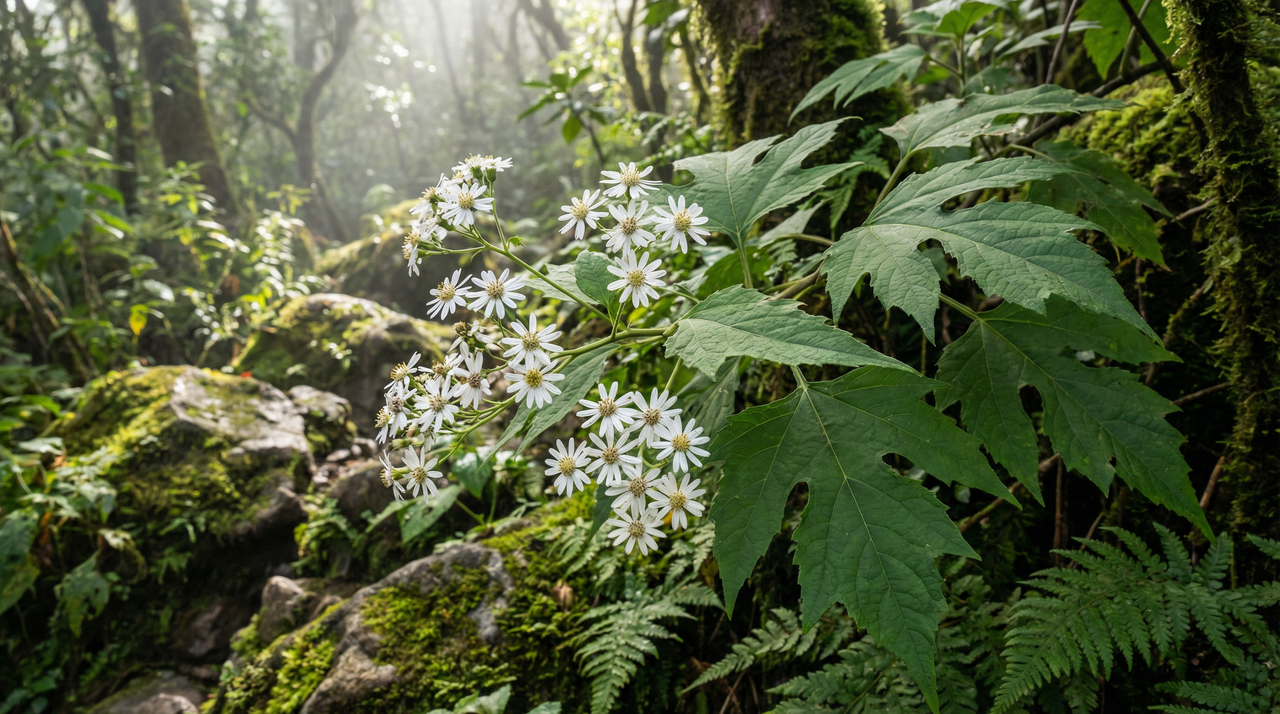
Most plants earn their place in a food forest by feeding something: people, pollinators, soil microbes. Tree Daisy feeds all three, and then adds something I didn't expect the first time I grew it in a humid subtropical guild: it blooms when almost nothing else does. Late summer into fall, when the garden is exhausted and half my other shrubs have given up, this thing is absolutely covered in small white daisies, humming with bees. That alone would be enough to justify the space. But what stopped me in my tracks wasn't the flowers. It was learning what indigenous communities in highland Mexico and Central America had known for generations: that this soft-wooded, fast-growing shrub carries a potent pharmacological punch that Western science is only now beginning to take seriously.
Here's the contradiction that keeps pulling me back to this plant. It looks completely harmless. Cheerful, even. Those daisy flowers, the big soft leaves, the way it grows like it's in a hurry and just wants to be useful. Nothing about it signals "powerful uterotonic herb with preclinical anti-inflammatory activity comparable to indomethacin."[1] And yet, there it is. This plant has a serious story under that cheerful face, and understanding it changes how you grow it, how you place it, and who you warn away from it entirely.
Origin and History of Tree Daisy (Montanoa atriplicifolia)
Botanical Background and Native Range
Tree Daisy is formally known as Montanoa atriplicifolia B.L.Rob. & Greenm., a name first published in 1912, with the synonym Perrenia atriplicifolia occasionally appearing in older references.[2][3] It belongs to the Asteraceae family and occupies an interesting morphological middle ground: perennial and herbaceous at the base, but capable of developing a woody, shrub-to-small-tree structure depending on climate and growing conditions.[4][5] You'll also find it sold under the common names Daisy Tree, White Daisy Tree, and Wheel Tree, which gives you some sense of just how visually dominant those flowers are.
Its native range stretches from central and southern Mexico (Guerrero, Oaxaca, and Chiapas) south through Guatemala, Honduras, El Salvador, Nicaragua, Costa Rica, and Panama.[5][6][7] In those countries it favors montane cloud forests and oak-pine woodlands, typically at elevations between 1,000 and 3,000 meters, in shaded, moist conditions.[8][9] I find it useful to hold that elevation context in mind when growing it at sea level here in Central Florida, because it explains a lot about what the plant expects from a garden and where it starts to struggle. Those high-altitude origins also mean it's used to cool nights and seasonal moisture patterns that we have to approximate, rather than replicate perfectly.
Unlike monocarpic plants that put everything into one spectacular bloom and then die, Tree Daisy is polycarpic, flowering repeatedly over its lifespan without any single reproductive event being terminal.[10] Related species like Montanoa karwinskii share this same strategy.[11] For a permaculture grower, that's genuinely good news; you're investing in a long-term contributor, not a one-season wonder.
Visual Characteristics and Growth Habits
Mature specimens typically reach 6 to 15 feet tall and wide, though some can climb closer to 30 feet.[4][12] The habit is upright and spreading, with an almost architectural quality when the plant is well sited. What I love about similar Asteraceae shrubs I've grown is how the foliage alone makes a statement before a single flower opens. With Tree Daisy, that's especially true: the leaves are large, triangular-ovate, up to 30 cm long, and covered on their undersides with a soft, woolly pubescence that catches morning dew and gives the whole plant a silver glow in low-angle light.[4][13] The specific epithet atriplicifolia literally means "orache-leaved," a reference to the resemblance of these leaves to Atriplex, which is a decent mnemonic once you know it.
Come bloom time, the plant produces abundant clusters of small white to pale yellow composite flower heads with yellow disc florets arranged in terminal panicles.[4][9] In cultivation that bloom runs primarily from spring through autumn; in its native tropical habitat, flowering can persist year-round.[14][15] The overall effect, a large leafy shrub covered in sprays of small daisies, is exactly what earns it the "Wheel Tree" nickname.
Traditional and Cultural Uses
Tree Daisy carries deep ethnobotanical significance across Mesoamerica. Indigenous peoples including the Nahua, Otomi, Mixtec, Rarámuri, and Maya have documented uses of this plant in their traditional healing systems.[16][17] The applications cluster around three areas:
- gastrointestinal complaints (stomach aches, dysentery, diarrhea)
- reproductive health (inducing menstruation, easing labor, relieving menstrual pain)
- respiratory issues like coughs
A word of caution on naming: the term "zoapatle" appears frequently in Mexican herbal tradition and is sometimes associated with this species, but it more precisely refers to Montanoa tomentosa and can cause real confusion in the literature. I defer to the documented ethnobotanical research here and strongly encourage anyone interested in therapeutic applications to consult a qualified practitioner rather than rely on shared common names across species. The traditional knowledge is genuinely fascinating, and it deserves that respect.
Beyond medicine, human cultivation spread Tree Daisy to tropical and subtropical gardens worldwide, primarily as an ornamental.[19] That ornamental appeal and traditional utility traveled together out of the cloud forests, which is a pattern I find repeating across so many useful plants in this family.
Fun Facts and Conservation
Growth rate is one of the first things that surprises new growers. Under good conditions, Tree Daisy can put on more than 2 meters (about 6.5 feet) of new growth in a single season.[20] Early in my gardening life I gave a similar fast-growing subtropical shrub what I thought was plenty of room, only to face a 10-foot specimen that needed hard pruning by its second summer. I plant Tree Daisy with that lesson firmly in mind now. It's suited to USDA zones 9 through 11 and won't tolerate frost at all, which puts it in the same category as plumeria or angel's trumpet for anyone gardening at the margins of zone 9.[8][21]
Those abundant flowers attract bees, butterflies, and hummingbirds, giving the plant genuine ecological value beyond aesthetics.[22][23] On conservation: the species is currently assessed as Least Concern on the IUCN Red List, and it's not considered invasive in the United States.[24][2] It's represented in major botanical collections at Kew Gardens and the Missouri Botanical Garden,[4] which speaks to its legitimacy as a horticultural subject. I always source nursery-grown plants rather than wild-collected material, both because wild populations deserve protection and because nursery stock is simply better adapted to garden conditions. That's a habit worth building with any plant that carries traditional cultural weight.
Tree Daisy Varieties and Sourcing
Why Tree Daisy Has No Named Cultivars
Montanoa atriplicifolia goes by a handful of common names depending on who's selling it: anise daisy tree, daisy tree, and the genuinely confusing "white pine daisy tree."[25][26] That last one has actually caused real headaches. There is no cultivar called 'White Pine,' no pine genetics involved, and no botanical reason for the name; it simply misleads buyers into thinking they might be getting a conifer hybrid of some kind.[25][27] I once tossed a perfectly good plant I'd received as a gift because I thought it might be a misidentified pine seedling. Hard-learned lesson: always look up the scientific name first.
What you'll find when you do is that no named cultivars or recognized varieties of this species exist anywhere in the major botanical databases.[25][28][29][30] There's natural variation across its Mexican and Central American range, but nothing that's been formally classified or selected for commerce. In practice, this means every plant you source carries the same vigorous, fast-growing, abundantly blooming character. That's a feature, not a limitation.
Where to Buy Authentic Montanoa atriplicifolia
Tree Daisy is genuinely rare in U.S. horticulture.[31][32] My go-to source has been San Marcos Growers in Fallbrook, California; I've ordered from them more than once and I always call ahead because their stock moves fast in spring.[33] For seeds, Strictly Medicinal Seeds is worth checking.[34] Expect to pay $20 to $50 for a nursery plant and $5 to $15 for a seed packet.[35] The plant is not on any invasive species list in California or Florida and carries no federal prohibition, so ordering across state lines or through international specialty nurseries is straightforward under standard ornamental import protocols.[36][37][38]
A few buyer-beware notes I've picked up the hard way: always verify the full scientific name before purchasing, because vendors do mislabel other Montanoa species or, worse, apply the "white pine" name to completely unrelated conifers.[27] When plants arrive, check that they've been properly hardened; I now pot up any stressed arrivals and keep them sheltered for a few weeks before planting out.[39] The extra patience is worth it once you see that first flush of blooms open across a warm-climate guild.
Tree Daisy Propagation and Planting (Montanoa atriplicifolia)
Tree Daisy gives you three ways in: seeds, semi-hardwood cuttings, and air layering.[40][4] In practice, most gardeners will reach for seeds or semi-hardwood cuttings, and honestly, I've shifted heavily toward cuttings over the last few seasons. When I take semi-hardwood stems in early summer and give them bottom heat, they're rooting in about three weeks. Stored seed just doesn't move that fast, and uniformity can be hit or miss.
Propagation Methods: Seeds, Cuttings, and Air Layering
For cuttings, take stems 10-15 cm long from healthy, non-flowering growth in spring or summer, dip the base in IBA rooting hormone, and stick them in a mix of perlite and peat or sand and peat.[41][42] Bottom heat around 21°C (70°F) and a humidity tent make a real difference. Skip the misting bench and you'll wait much longer. Seeds, covered in more detail below, have their own quirks worth understanding before you commit a full tray to them. Air layering works on larger, established specimens, but success rates are lower than with the other two methods, so I treat it as a last resort when I need to propagate a particular plant I can't cut.[40]
One genuinely cool thing about Tree Daisy seed: it exhibits nucellar polyembryony, meaning a single achene can produce multiple embryos, all genetically identical to the mother plant.[3][43] I noticed this after sowing a single late-summer batch and then comparing the seedlings side by side over several months. They all looked identical, same leaf shape, same growth rate, same everything. It's essentially cloning without the tissue-culture lab.
Seed Morphology, Viability, Storage, and Germination Timeline
The seeds themselves are tiny cypselae, 1-2 mm, obovoid to ellipsoid, dark brown to black with a grayish-brown pappus.[3][44] They behave as orthodox seeds, meaning they tolerate drying and cold storage, and fresh seed tested by tetrazolium shows 70-85% viability.[45][46] That said, I follow the Kew orthodox-seed guidelines (storing at -18 to -20°C with 3-7% moisture content) while still testing small batches from my own plants each year, because species-specific storage data for Montanoa atriplicifolia remains thin and most of what we have is extrapolated from Asteraceae family patterns.[47][48] Viability does drop without proper care, so don't assume a packet from a seed house has been handled well.
For germination, leave seeds uncovered or barely pressed to the surface because they need light.[49] A 4-6 week cold stratification at 4°C can help break physiological dormancy, especially with stored seed; after pretreatment, expect germination in 14-28 days at 20-25°C with reported success rates of 60-80% under good conditions.[50][51] Plants grown from seed reach reproductive maturity in 1-2 years under good conditions.[52] The plants I started from seed two seasons ago are only now showing their first daisy-like flower heads. If you need a flowering screen quickly, cuttings are the smarter route.
Soil, Site Selection, and Planting Technique
In its native range, Tree Daisy grows on rocky slopes and pine-oak woodlands at 500-2000 m in central Mexico, often over limestone or volcanic substrates with excellent natural drainage.[9][39] That ecology tells you everything you need to know about site selection. It wants well-drained sandy loam, loamy, or gravelly soil, a pH of 6.0-7.5, full sun to partial shade, and moderate water without any standing wet.[4][44] Heavy clay and compacted ground are a recipe for failure, and the roots need at least 60-90 cm of workable depth.[53]
I lost two young plants to Phytophthora during a wet Central Florida summer before I started amending aggressively. Now every planting mix I use is roughly 50% garden soil, 30% coarse sand or grit, and 20% perlite or pumice, and I never plant in a spot where water pools after rain.[4][54] That extra grit is cheap insurance against Pythium and Phytophthora, which will move fast on waterlogged roots.[4]
Spacing and Establishment
Tree Daisy can reach 1.8-6 m tall and nearly as wide in cultivation, and it naturally forms thickets by suckering.[55][4] For a hedge or screen, 1.5-2 m between plants is workable; for a specimen or a naturalistic planting where you want the plant to develop its full form, give it 2-3 m or more.[56][57] In Florida's humid summers I always err toward the wider end because that airflow genuinely reduces fungal pressure. The suckering habit means gaps fill in over time anyway.
Because Tree Daisy is frost-sensitive and best suited to USDA zones 9-11, wait until after your last frost date to plant out, and aim for spring establishment so roots have a full warm season to settle before any cold arrives.[4][58] A plant that goes into the ground in April with good drainage, amended soil, and adequate spacing will be a completely different story by October than one rushed in during midsummer heat.
Tree Daisy Care Guide
Growing Tree Daisy successfully comes down to understanding where it comes from. Montanoa atriplicifolia is a highland Mexican shrub, native to rocky slopes and dry oak-pine woodland edges at elevation, and that ecology explains almost every care decision you'll make. The plant wants sun, good drainage, and moderate fertility. Give it those three things and it rewards you with a flush of white daisies in late summer that few shrubs of similar toughness can match.
Sunlight Requirements for Tree Daisy
Tree Daisy needs at least six hours of direct sun daily for strong growth and reliable flowering.[4] In full sun it stays compact and blooms freely; shade nudges it toward leggy, sparse growth and reduced flower production.[4] The same pattern holds across related species like Montanoa grandiflora, which confirms it's a consistent genus-wide preference rather than a quirk of one population.[59]
That said, in brutal July heat, full sun all day can tip into heat stress, showing up as scorched leaf margins, wilting, or premature leaf drop.[60] I've found that giving mine a bit of afternoon shade during the hottest weeks noticeably improved flower retention, which makes sense given that the plant's highland origins mean it never evolved for relentless lowland summer heat. A position with morning sun and dappled afternoon shade suits it well in USDA zones 9 and 10 during peak summer; just don't keep it in low light long-term, or you'll trade heat stress for etiolation.
Watering Needs and Drought Tolerance
In its native range, Tree Daisy receives 600 to 1,200 mm of rain annually, almost all of it concentrated in summer months.[61] That seasonal pulse followed by a dry rest is baked into its physiology. Established plants are genuinely drought-tolerant, but getting them to that point requires patience. During the first two years, water consistently, letting the top inch or two dry out between sessions and aiming for every seven to ten days in the growing season.[57][12] I've noticed that plants given steady moisture early but then allowed to experience mild dry spells develop noticeably deeper root systems and handle dry summers far better than those kept consistently wet.
Overwatering is the more common error. Yellowing or browning lower leaves, mushy stems, and perpetually soggy soil all point to too much water, which leads quickly to root rot.[62][63] Underwatered plants tell a different story: inward-curling leaves, drooping, and stunted growth that recovers with gradual rehydration. The plant prefers loamy or sandy soil at pH 6.0 to 7.5, and it actually responds well to rainwater or soft water since it's sensitive to hard-water mineral buildup.[39] A layer of mulch helps maintain even moisture without creating the high humidity the plant dislikes.
Soil and Fertilizer Requirements
Tree Daisy doesn't need heavy feeding, and overfeeding is a real trap. I've learned the hard way that pushing these plants with high-nitrogen fertilizers produces lush, beautiful foliage at the complete expense of the late-summer flowers that are the whole reason to grow the thing. A balanced slow-release formula (something like 10-10-10 or 14-14-14) at half strength every four to six weeks during the spring and summer growing season is plenty; stop in late summer to let the plant harden off before cooler weather arrives.[64][65][66]
Deficiency symptoms to watch for include uniform yellowing of older leaves (nitrogen), interveinal chlorosis on young leaves (iron), and interveinal chlorosis on older leaves (magnesium); all three are more common in alkaline soils or container-grown plants and respond to targeted amendments or foliar sprays.[67][68] On the other end, over-fertilization produces salt buildup, leaf-tip burn, and the leggy six-to-fifteen-foot sprawl that ruins the plant's naturally attractive form.[67] In Florida's variable sandy soils especially, I'd consider soil testing a non-negotiable first step before committing to any feeding schedule. Compost worked into the planting hole at establishment is a good baseline that supports structure without pushing excessive vegetative growth.
Heat and Frost Tolerance
Because of its high-altitude origins, its sweet spot is moderate: optimal growth falls between 15 and 30 °C (roughly 59 to 86 °F), with nights reliably above 50 °F.[8] Above 30 to 35 °C the plant shows heat stress similar to what I see in my tibouchina or plumbago during peak Central Florida summer: scorching, wilting, and disrupted flowering.[69] Afternoon shade, consistent soil moisture, and root-cooling mulch are the practical fixes for that window. Most reliably placed in USDA zones 9 to 11, it can be attempted in zone 8 with extra effort.[4][44]
Frost is the harder limit. Young tissues, stem tips, and flower buds are most vulnerable, and a single night in the low 20s °F can blacken the tender growth in a way that looks almost identical to what I've seen on unprotected brugmansia after a surprise freeze.[4][70] Extended freezes can kill the plant outright; minimum tolerance is roughly 10 to 25 °F depending on duration, microclimate, and how well-established the root system is. In zone 8 I'd treat it like a tender salvia: heavy root mulch, fleece ready to throw on when the forecast dips, and container culture with greenhouse overwintering as the safest long-term strategy.[71][72] A sheltered south-facing wall microclimate buys meaningful insurance in marginal zones.
Pruning, Maintenance, and Seasonal Rhythm
The natural calendar for Tree Daisy follows the wet-dry rhythm of its Mexican homeland: strong vegetative push from May through October, flower peak from late summer into fall (August through November), then a quieter dry-season rest.[73] In cultivation, that rhythm translates to a predictable sequence you can plan around. After flowering winds down, prune to shape and control size, cutting back about one-third of the plant; this encourages a bushier habit and prepares it for winter without the heavy fall pruning that can reduce cold hardiness.[57] Any dead wood cleanup happens in late winter or early spring before new growth surges.
Left unpruned, this shrub can reach six to fifteen feet.[69] In smaller garden spaces, judicious annual pruning keeps it manageable while actually improving the late-summer daisy display. Good airflow through an open framework also reduces the fungal issues that can develop in humid climates. If stems die back under cold stress, don't panic; the rootstock often pushes new growth once temperatures settle.[73] Follow the plant's own seasonal cues and it will tell you what it needs.
Harvesting Tree Daisy (Montanoa atriplicifolia)
What I appreciate most about growing Tree Daisy is that it doesn't demand a precise harvest window. There's no two-week scramble before the fruit drops or the seeds scatter. Instead, this plant gives you months.
When to Harvest Tree Daisy Flowers
The flowering period runs from June through October in the Northern Hemisphere, a generous spread of profuse white daisy-like blooms that keeps the plant useful in the landscape long after most ornamentals have gone quiet.[74][75] Individual flowers last only 3 to 5 days, but the plant just keeps producing, cycling through new blooms across a 4 to 6 month season.[69] That continuous habit is the real gift. I've learned to stagger my harvests across the whole season rather than cutting heavily at once, partly to keep the garden looking full and partly to avoid stressing younger specimens that are still establishing their woody framework.
If you do want to collect seed, the bloom-to-maturity timeline for Asteraceae family members runs roughly 21 to 42 days.[76][77] Precise seed-maturity data specific to Montanoa atriplicifolia is thin, so I watch the developing seed heads for firmness and color change, drawing on my experience with chamomile, feverfew, and other daisy relatives. For most gardeners, though, seed collection isn't the point. The flowers themselves are.
How to Harvest Tree Daisy
Pick flowers when they're fully open, and do it early in the morning.[78] I follow this rule with all my daisy-type flowers in the Central Florida heat because the sun hits them and the light volatile compounds simply evaporate. By mid-morning, you've already lost something. Unlike chamomile or feverfew where I just pinch with my fingers, Tree Daisy's woody stems require a clean cut with pruners. A few snips per branch, leave the rest for the bees and butterflies, and the plant barely notices. Given how profusely it blooms across those months, heavy harvesting is almost never necessary anyway.
Tree Daisy (Montanoa atriplicifolia) Preparation and Uses
Culinary Uses and Edibility
Tree Daisy offers no culinary utility. Missouri Botanical Garden, Plants of the World Online, and USDA records all list Montanoa atriplicifolia strictly as an ornamental and traditional medicinal species, with no documented culinary uses and no confirmed edible plant parts whatsoever.[79][80][81] Leaves, stems, roots, flowers, fruits, seeds: none of them.[82] As someone who specifies this plant in subtropical guilds for its spectacular late-season blooms, I always label it clearly and tell clients upfront that it belongs in the ornamental and medicinal layers of a food forest, never the kitchen garden.
Part of why I make that point firmly is that the crushed foliage carries a faint chamomile-like aroma that can mislead a curious visitor into thinking it might be edible. It isn't. The actual flavor is bitter, astringent, and deeply unpleasant, with a medicinal aftertaste typical of bitter Asteraceae that would deter anyone who tried. I've learned to trust the authoritative databases over superficial sensory cues every time.
Ethnobotanical records from southern Mexico do mention that the related species Montanoa grandiflora has some traditional history of young leaves and flower buds being consumed as vegetables.[83][84] Even there, major botanical databases list no confirmed edibility, the reports are limited and unverified, and the species is entirely distinct from Tree Daisy. I mention it only to demonstrate the difference between documented use and anecdote, not to suggest any experimentation.
Medicinal Preparations and Traditional Applications
The established preparation tradition for Tree Daisy is herbal medicine, specifically the indigenous Mexican gynecological practice centered on zoapatle. Leaves and stems, sometimes leaves and flowers together, are the primary plant parts used, prepared as decoctions or infusions for reproductive health applications.[85][86] Roots and bark appear occasionally in ethnobotanical records when a stronger remedy was sought. Traditionally, dosages described in the literature run roughly one to two cups of decoction daily, one to two grams of dried leaf simmered per cup and taken one to three times daily, or five to ten grams of plant material prepared as a decoction.[87][88]
None of those dosages are clinically standardized, and I want to be plain about that. In my reading of the ethnobotanical literature and in conversations with herbalist colleagues, I strongly advise against using Tree Daisy medicinally without guidance from a qualified practitioner. The documented uterotonic effects that make this plant historically significant in indigenous gynecological practice are precisely what make self-medication genuinely risky. From my seat as a landscape designer, Tree Daisy earns its place in a subtropical medicinal guild for its showy flowers and its remarkable cultural depth, but those beautiful blooms are where my personal involvement with it ends.
Tree Daisy Health Benefits and Medicinal Uses
Tree Daisy has a reputation built on centuries of indigenous use rather than clinical trials, and understanding that distinction matters before you grow it, let alone use it medicinally. As a member of the Asteraceae family,[89] this plant carries the same family chemistry that makes chamomile soothing, echinacea immunomodulating, and feverfew notorious for triggering contact dermatitis in sensitive growers. With Tree Daisy, that Asteraceae chemistry gets dialed up considerably.
Phytochemical Profile of Tree Daisy
The leaves and aerial parts of Montanoa atriplicifolia contain an impressive roster of bioactive compounds: sesquiterpene lactones (including germacranolide and parthenolide-like derivatives), flavonoids such as luteolin, quercetin, and kaempferol derivatives, phenolic compounds including chlorogenic and caffeic acid, essential oils dominated by α-pinene and β-caryophyllene, plus saponins, tannins, alkaloids, and triterpenoids.[90][91][92] The sesquiterpene lactones sit at the top of that list because they drive most of the documented biological activity, particularly the anti-inflammatory and uterotonic effects.
Flavonoid content in the leaves runs roughly 15 to 25 mg per gram of dry weight, essential oils make up about 1 to 2 percent of leaf dry weight, and phenolic concentrations peak during dry seasons and vegetative growth stages, with northern populations tending toward higher sesquiterpene lactone levels.[93][94] In my experience growing related Asteraceae species in full sun and fast-draining soil, the foliage becomes noticeably more pungent and bitter under those conditions, which likely reflects exactly this kind of secondary metabolite variation. Geography, season, and growth stage all shift the phytochemical picture, so treat any concentration figures as useful ballpark ranges rather than fixed values.
Medicinal Research and Traditional Uses
Among Mazatec, Nahuatl, and Otomi peoples, Montanoa species have been known as zoapatle since pre-Columbian times, used primarily as an emmenagogue, a labor inducer, a postpartum herb, and an abortifacient, with secondary applications for dysmenorrhea and amenorrhea.[95][17] Related species like Montanoa hibiscifolia extend that traditional profile into gastrointestinal complaints, respiratory ailments, and topical wound poultices, though the anchor species here is best understood through its reproductive health applications.
Preclinical research gives those traditions some pharmacological grounding. Extracts have shown significant anti-inflammatory activity in rat carrageenan-induced paw edema models, working through inhibition of COX-2, the NF-κB pathway, and pro-inflammatory cytokines, with sesquiterpene lactones doing most of that work.[96][97] DPPH and ABTS assays confirm potent free radical scavenging from the phenolic and flavonoid fractions, and moderate antimicrobial activity against Staphylococcus aureus and Candida albicans has been recorded at MIC values of 50 to 100 μg/mL.[98] There's also preliminary in vitro cytotoxicity against breast and colon cancer cell lines, though that carries zero clinical weight at this stage.
The uterotonic effects are the most thoroughly documented piece of this picture. Specific diterpenes, montanin A and B, cause measurable uterine smooth muscle contractions, which explains both the traditional labor-induction use and the serious abortifacient risk.[99][100] As someone who finds the anti-inflammatory and antioxidant data genuinely promising, I still have to be direct: the complete absence of human clinical trials means none of this translates into dosing confidence or safety validation.[101] Modern pharmacology has confirmed the plausibility of what indigenous healers observed for centuries, but it hasn't yet delivered the clinical evidence needed to use this plant with any standardized confidence.
Nutritional Composition of Tree Daisy Leaves
Tree Daisy is not a food plant, and I want to be clear about that framing before presenting any nutritional data. It doesn't appear in USDA FoodData Central,[102] and the proximate analysis figures that do exist come from limited studies under variable conditions: roughly 15 to 20 percent protein, 40 to 50 percent carbohydrates, 10 to 15 percent fiber, and 2 to 5 percent fat on a dry weight basis, with vitamins A and C, calcium, and iron present.[91] Those numbers aren't bad on paper, and they're not unlike what you'd find in a dandelion or chicory leaf, both of which I grow in my food forest guilds. But Tree Daisy belongs in a completely different category. The phenolic and flavonoid content (that 15 to 25 mg/g range) is where the real leaf value sits,[103] and those same compounds are inseparable from the medicinal risks that follow in the next section. Think of the nutritional profile as context for its phytochemical richness, not as a reason to add it to a salad.
Safety Considerations for Tree Daisy
I treat Tree Daisy's uterotonic properties with the same seriousness I bring to rue or pennyroyal. If there is any possibility of pregnancy, this plant stays out of the garden plan and out of the teapot entirely. The diterpenes and sesquiterpene lactones that drive uterine smooth muscle contractions create a genuine risk of miscarriage or reproductive harm, and this is not a theoretical caution.[104][105] Anyone who is pregnant, planning pregnancy, or breastfeeding should avoid medicinal use of this plant without exception.
Beyond pregnancy, the picture is considerably less alarming. Animal studies put acute toxicity at an LD50 above 2000 mg/kg, which is relatively low toxicity, and overuse side effects appear limited mainly to nausea, vomiting, and diarrhea.[106] As with many Asteraceae, the sap can cause contact dermatitis in sensitive individuals, and pollen carries moderate allergenic potential, so gloves during pruning are a sensible habit.[107] It's not listed as toxic to pets,[108] and deer tend to pass it by, which anyone growing in browsing-pressure zones will appreciate.
Traditional preparation runs to 1 to 2 grams of dried leaves or bark as a short-term tea or decoction,[105] but there are no standardized doses, no human safety data worth citing, and real potential for interactions with oxytocic or hormonal medications.[109] Consult a qualified practitioner before any medicinal application. That's not a boilerplate disclaimer; with this plant, it genuinely matters.
Tree Daisy Pests and Diseases
There are no dedicated studies evaluating disease resistance or specific pathogen pressure for Montanoa atriplicifolia.[110][111] That research gap sounds like a liability, but after growing this plant through several humid Central Florida seasons, I've come to read it differently. The absence of a pest horror story in the literature, combined with my own largely uneventful experience, suggests that cultural management is the reliable path here, not hoping for genetic silver bullets we can't yet verify.
Common Pests of Tree Daisy
The pest list reads like the standard Asteraceae roster: aphids, spider mites, and whiteflies are the ones worth watching, capable of causing leaf distortion and sooty mold if populations get ahead of you.[112] Think of it the way you'd think about a tall rudbeckia or a big-leafed helenium; the susceptibility profile is similar, and the same conditions that stress those plants bring the bugs. The plant is generally resistant,[57][12] but humid, nitrogen-pushed growth is where aphids and spider mites tend to move in. A strong spray of water handles early infestations. I've never needed to reach for anything stronger on mine.
Disease Resistance and Prevention for Tree Daisy
As a member of Asteraceae, Tree Daisy likely shares the family's vulnerability to powdery mildew, rusts, and fungal leaf spots like Alternaria and Cercospora when grown in humid, poorly ventilated spots. Waterlogged conditions can also invite Verticillium wilt and rust, especially in heavy or compacted soils.[113] Root rot and powdery mildew are the two I'd call genuinely preventable with good site decisions.[114][112]
In my garden, the first sign of trouble is always yellowing lower leaves after a stretch of heavy summer rain. Improving drainage has fixed that problem more reliably than any fungicide I've tried. The same sandy-loam, well-drained soil that produces vigorous growth is your real disease prevention. I've also learned to give plants at least six to eight feet of space at planting; the rapid summer flush means dense plantings quickly lose airflow, and powdery mildew follows immediately. Yellowing and wilting that can't be blamed on a specific pathogen almost always trace back to overwatering or compaction rather than any organism.
Get the drainage right, keep foliage dry with morning rather than evening watering, and don't crowd the canopy. When those conditions are met, Tree Daisy proves remarkably trouble-free, exactly what you'd hope for in a long-season pollinator anchor.
Tree Daisy in Permaculture Design
Before placing any plant in a food forest or restoration guild, I want to understand where it comes from. Tree Daisy evolved in the high-altitude montane environments of Central America, meaning it expects distinct seasonal shifts.[115][116][117] That altitude context matters more than people realize. This isn't a lowland tropical plant that revels in punishing heat and year-round humidity. Its native climate is a subtropical highland type, with average temperatures running between 10 and 25°C, seasonal rainfall of 800 to 1,500 mm, and a distinct dry season that shapes its root behavior and drought response.[118][8]
Climate Preferences and Suitable USDA Zones
In cultivation, Tree Daisy slots comfortably into USDA zones 9 through 11, with zones 9 and 10 being the sweet spot.[4][12] Hardiness bottoms out around 20°F (-7°C), and zone 8 performance is genuinely marginal without serious winter intervention.[119] I lost a couple of young plants to an unexpected Central Florida frost before I figured that out the hard way. Now I site Tree Daisy on the south side of a structure or beneath light canopy, and I pull 10 to 15 cm of mulch over the root zone before the first cold snap of the season. That combination has kept mine healthy through our occasional winter dips into the mid-20s Fahrenheit. If you're gardening in zone 8 and determined to grow it, treat heavy root mulching as non-negotiable rather than optional.
Central Florida sits in a reasonable overlap zone for this plant, sharing that subtropical warmth while presenting one important departure from native habitat: our summer humidity runs far higher than a Mexican highland dry season. That means drainage and airflow become more critical than they would be in the species' homeland, but I'll leave the soil and siting specifics for the care guide. The climate foundation here is simply that Tree Daisy rewards gardeners in warmer subtropical and Mediterranean-style climates, and it earns its keep once you respect that frost-sensitivity threshold.
Ecosystem Functions and Biodiversity Support
Tree Daisy's floral architecture anchors its role in a designed ecosystem. Each plant produces large, flat-topped inflorescences reaching up to 20 cm across, loaded with white ray florets surrounding yellow disc florets that offer genuine nectar and pollen rewards.[120] The plant draws a broad pollinator assemblage including bees, butterflies, and flies.[121][113] In my own plantings, the late-summer and fall blooms reliably bring in clouds of syrphid flies and small native bees, long after most of my other Asteraceae perennials have finished for the season. Papers on related Montanoa species list an impressive range of hymenopterans and lepidopterans, but the direct research on this specific species is thin, with much inferred from genus-level and family-level patterns.[121] Local conditions shape the exact cast of visitors, and I'd trust your own observations over any species list.
The reproductive biology adds another layer worth understanding for anyone placing multiple plants. Tree Daisy is protandrous, meaning disc florets release pollen in the male phase before the stigmas become receptive, which promotes outcrossing and genetic diversity.[121][122] The plant appears to be largely self-incompatible, so placing at least two individuals nearby improves seed set. In fragmented habitats with reduced pollinator traffic, seed production can drop by as much as 50%,[123] which is a reasonable reminder that this plant performs best when it's embedded in a genuinely diverse system rather than isolated.
Beyond pollination, Tree Daisy functions as a dynamic accumulator, with its leaves returning potassium and calcium to the soil as they break down.[113][124] I find the leaf litter breaks down readily in humid subtropical conditions, feeding understory herbs without requiring any intervention on my part. Think of it as a gentler, less aggressive version of comfrey for this role; the minerals come back to the system without the runners and spreading that make comfrey a management project. Its root system also provides genuine erosion control on slopes and hillsides, and the species has been used in ecological restoration of degraded dry forests and scrublands for exactly this reason.[124][113]
Forest Layer Placement and Guild Roles
Tree Daisy typically grows as a shrub or small tree in the 2 to 6 meter range, with an upright habit and moderate shade tolerance that makes it genuinely flexible for forest garden placement.[22][113] I've used it most successfully as a mid-layer element, slotting in beneath taller canopy on the south-facing edges where it gets enough light to bloom freely. It handles partial shade without complaint, though deep shade shuts down flowering. On a sloped berm in a client food forest, it stabilized bare soil quickly and started self-seeding into gaps within the first two seasons, doing the kind of regenerative work that saves you significant effort down the line.
As a pioneer species, it belongs in forest succession discussions alongside faster-growing Asteraceae relatives.[125][126] It establishes readily in disturbed areas, builds canopy quickly, supports insects and birds, and improves soil structure while slower-maturing fruit trees get established around it.[127] I draw from observed performance rather than a well-documented guild recipe here; the specific companion plant research for this species is sparse, so I treat it as part of a restoration-style mosaic rather than prescribing exact plantings.
If you're exploring the genus more broadly, Montanoa grandiflora is worth knowing as a contrast. It reaches up to 8 meters with larger lobed leaves up to 20 cm long and spreads through shallow fibrous roots and rhizomes that enable colony formation.[128][129] That rhizomatous habit makes it a candidate for a spreading groundcover layer role where space permits, though it demands more room to roam than most suburban food forest designs can offer. For tight designs or sites where you need upright structure without aggressive spread, Montanoa atriplicifolia remains the more manageable and better-suited choice.
The Plant That Made Me Rethink "Just Ornamental"
I almost passed on Tree Daisy the first time I saw it listed in a specialty catalog, honestly, because anything with that many medicinal caveats felt like more responsibility than I wanted in a food forest. But those flowers in late summer, when the rest of the garden is exhausted and the bees are still working every open bloom, changed my thinking. Some plants earn their place not by feeding you directly, but by keeping the whole system alive long enough to feed everything else.
Sources 129
- Anti-inflammatory activity of Montanoa species, Journal of Ethnopharmacology ↩
- Montanoa atriplicifolia ↩
- Flora of North America: Montanoa ↩
- Montanoa atriplicifolia ↩
- Montanoa atriplicifolia ↩
- Montanoa atriplicifolia ↩
- Global Biodiversity Information Facility: Montanoa atriplicifolia ↩
- Montanoa atriplicifolia ↩
- Flora of North America: Montanoa ↩
- Reproductive Biology of Montanoa atriplicifolia (Asteraceae) ↩
- Montanoa karwinskii - Plants of the World Online (Kew Science) ↩
- Montanoa atriplicifolia ↩
- View all details for Montanoa atriplicifolia - Kew Science ↩
- Montanoa atriplicifolia ↩
- Montanoa atriplicifolia ↩
- Ethnobotany of Montanoa atriplicifolia in Mexican Traditional Medicine ↩
- Ethnobotany of Montanoa Species in Mexican Traditional Medicine ↩
- Medicinal Plants of Mexico: Zoapatle ↩
- Plants of the World Online ↩
- Plant Detail - Montanoa atriplicifolia - Missouri Botanical Garden ↩
- Montanoa atriplicifolia ↩
- Montanoa atriplicifolia ↩
- Montanoa atriplicifolia ↩
- IUCN Red List: Montanoa atriplicifolia ↩
- Montanoa atriplicifolia ↩
- Montanoa atriplicifolia - Daisy Tree ↩
- Common Naming Errors in Ornamental Plants ↩
- Asteraceae: Montanoa ↩
- Plants of the World Online ↩
- Tropicos ↩
- Tropicos Botanical Database ↩
- PLANTS Database ↩
- San Marcos Growers - Montanoa atriplicifolia ↩
- Zoapatle (Montanoa tomentosa) Seeds ↩
- Montanoa atriplicifolia - Daisy Tree ↩
- California Invasive Plant Council Inventory ↩
- Florida Prohibited Aquatic Plants ↩
- International Trade: Plants for Planting ↩
- Montanoa atriplicifolia: Taxonomy and Cultivation ↩
- Propagation of Mexican Shrubs: Montanoa atriplicifolia ↩
- Propagation of Medicinal Plants: Montanoa atriplicifolia ↩
- Growing Mexican Daisy Tree in California Gardens ↩
- Polyembryony in the Compositae: Nucellar Origin in Montanoa Species ↩
- Seed Morphology of Montanoa atriplicifolia (Asteraceae) ↩
- Seed Information Database ↩
- Tetrazolium Testing for Seed Viability in Asteraceae ↩
- Seed Storage of Orthodox and Recalcitrant Species ↩
- Plants of the World Online: Montanoa atriplicifolia ↩
- Propagation and Cultivation of Mexican Daisy Tree ↩
- Dormancy and Germination in Asteraceae Species ↩
- Propagation Techniques for Montanoa Species ↩
- Montanoa atriplicifolia: A Study in Growth and Reproduction ↩
- Root Architecture in Arid-Adapted Shrubs ↩
- University of Minnesota Extension - Gardening Resources ↩
- Montanoa atriplicifolia ↩
- Montanoa atriplicifolia ↩
- Montanoa atriplicifolia - Plant Profile ↩
- Plants Profile: Montanoa atriplicifolia ↩
- Montanoa grandiflora - Royal Horticultural Society ↩
- Missouri Botanical Garden Plant Finder ↩
- Montanoa atriplicifolia: A Medicinal Plant from Mexico ↩
- Montanoa atriplicifolia Care Guide ↩
- Overwatering Symptoms in Drought-Tolerant Shrubs ↩
- Fertilization Tips for Tropical Shrubs ↩
- Fertilizing Ornamental Shrubs ↩
- Fertilizing Ornamental Shrubs like Montanoa ↩
- Nutrient Deficiency Symptoms in Ornamental Plants ↩
- Signs of Over-Fertilization in Shrubs ↩
- Growing Montanoa atriplicifolia ↩
- Montanoa atriplicifolia ↩
- Frost Tolerance of Tropical Shrubs ↩
- Montanoa hibiscifolia - Plant Finder ↩
- Phenology of Woody Plants in Mexican Tropical Dry Forests ↩
- Montanoa atriplicifolia - Daisy Tree ↩
- Montanoa atriplicifolia ↩
- Plants of the World Online ↩
- Lady Bird Johnson Wildflower Center ↩
- Montanoa atriplicifolia: Traditional Uses and Cultivation ↩
- Montanoa atriplicifolia ↩
- PLANTS of the World Online ↩
- Montanoa atriplicifolia ↩
- Montanoa atriplicifolia ↩
- Missouri Botanical Garden Plant Finder ↩
- USDA PLANTS Database ↩
- Zoapatle: A Forgotten Mexican Medicinal Plant ↩
- Ethnobotany of Montanoa Species in Mexico ↩
- Ethnopharmacological Survey of Montanoa Species in Mexico ↩
- Ethnobotany of Montanoa hibiscifolia ↩
- Plants of the World Online: Montanoa atriplicifolia ↩
- Sesquiterpene Lactones from Montanoa atriplicifolia and Their Anti-Inflammatory Activity ↩
- Phytochemical Analysis of Montanoa atriplicifolia Leaves and Their Antioxidant Activity ↩
- Phytochemical investigation and antioxidant activity of Montanoa atriplicifolia ↩
- Quantitative Determination of Flavonoids and Saponins in Mexican Medicinal Plants ↩
- Seasonal Variation in Secondary Metabolites of Montanoa Species ↩
- Zoapatle (Montanoa tomentosa and M. atriplicifolia) and its traditional use in Mexican medicine ↩
- Anti-inflammatory activity of Montanoa atriplicifolia extracts ↩
- Antioxidant and Anti-inflammatory Activities of Mexican Medicinal Plants ↩
- Phytochemical Investigation and Biological Activities of Montanoa atriplicifolia ↩
- Uterotonic principles of Montanoa tomentosa ↩
- Ethnopharmacological Survey of Montanoa Species in Mexico ↩
- Missourian Botanical Garden: Montanoa atriplicifolia Profile ↩
- USDA FoodData Central Search ↩
- Nutritional composition and bioactive compounds in leaves of Montanoa species ↩
- Montanoa atriplicifolia - An Overview of Traditional and Pharmacological Uses ↩
- Ethnobotany of Montanoa atriplicifolia in Mexican Traditional Medicine ↩
- Toxicity Evaluation of Montanoa Extracts ↩
- Allergies to Compositae (Asteraceae) Plants ↩
- ASPCA Toxic and Non-Toxic Plants List ↩
- Zoapatle (Montanoa atriplicifolia): A Traditional Mexican Herb ↩
- Plant Finder - Missouri Botanical Garden - Montanoa atriplicifolia ↩
- Plants of the World Online - Montanoa atriplicifolia ↩
- Common Pests and Diseases of Daisy-like Plants ↩
- Montanoa atriplicifolia - Useful Tropical Plants Database ↩
- Pests and Diseases of Daisy Family Plants ↩
- Flora of North America - Montanoa atriplicifolia ↩
- Kew's Plants of the World Online - Montanoa atriplicifolia ↩
- Montanoa atriplicifolia - Useful Tropical Plants Database ↩
- Montanoa atriplicifolia Ram. ex DC. ↩
- USDA PLANTS Database - Montanoa atriplicifolia ↩
- Montanoa atriplicifolia ↩
- Pollination Ecology of Montanoa (Asteraceae) in Mexican Cloud Forests ↩
- Reproductive Ecology and Pollinators of Zoapatle (Montanoa atriplicifolia) ↩
- Asteraceae in Mexico: Ecology and Distribution ↩
- Permaculture Plants: Montanoa Species for Erosion Control ↩
- Montanoa atriplicifolia ↩
- Agroforestry Potential of Daisy Tree (Montanoa atriplicifolia) ↩
- Ecology and Uses of Montanoa Species in Mesoamerican Forests ↩
- Montanoa grandiflora - Plants of the World Online | Kew Science ↩
- Montanoa grandiflora - Royal Horticultural Society ↩